Old Grafton Road
We have used Mulligans camp as a base for a day to explore the Old Grafton Road. It runs from a turnoff about 10 km outside Grafton on the Gywdir Hwy and then rejoins the Gywdir about 35 km from Glen Innes. All up about 175 km.
The road was opened in 1887 and was the main access road from the Tablelands to the Coast until the Gywdir was developed in the early 1960s.
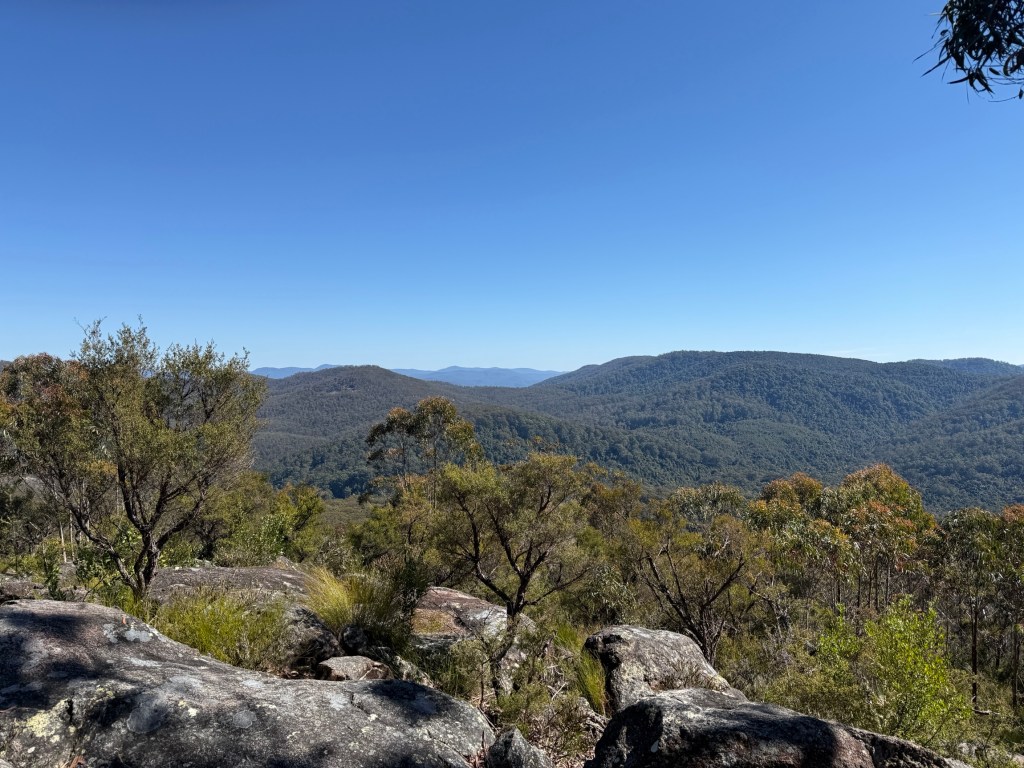
We left Mulligans around 8.30am and headed down to the Grafton turnoff, 65km. There was a brief stop at the day use area of the Washpool NP and a short walk to the lookout there.
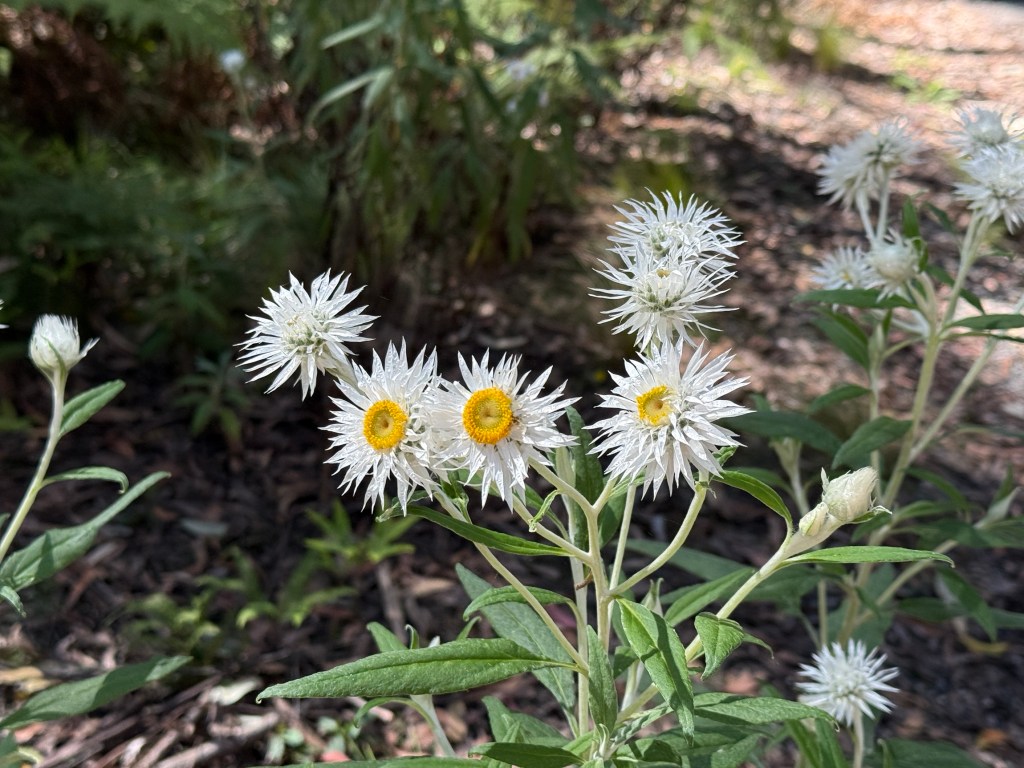
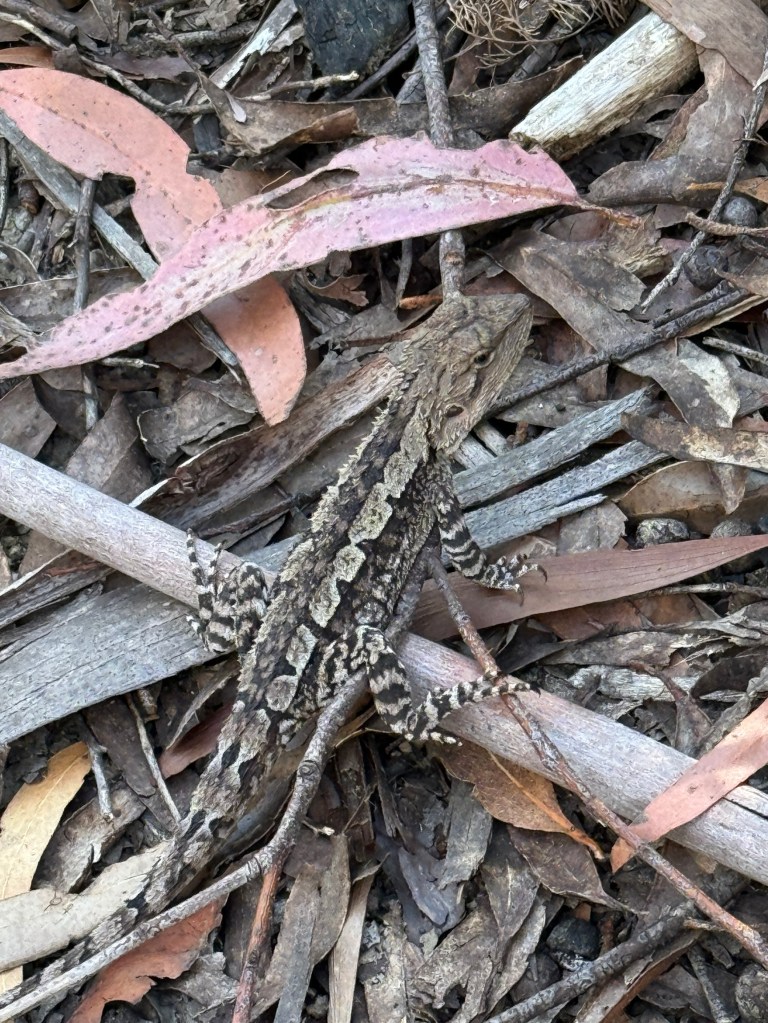
We were hoping to see a Gibraltar Waratah, endemic to the Gibraltar Ranges. But we are too early in the flowering season which starts towards the end of Spring.
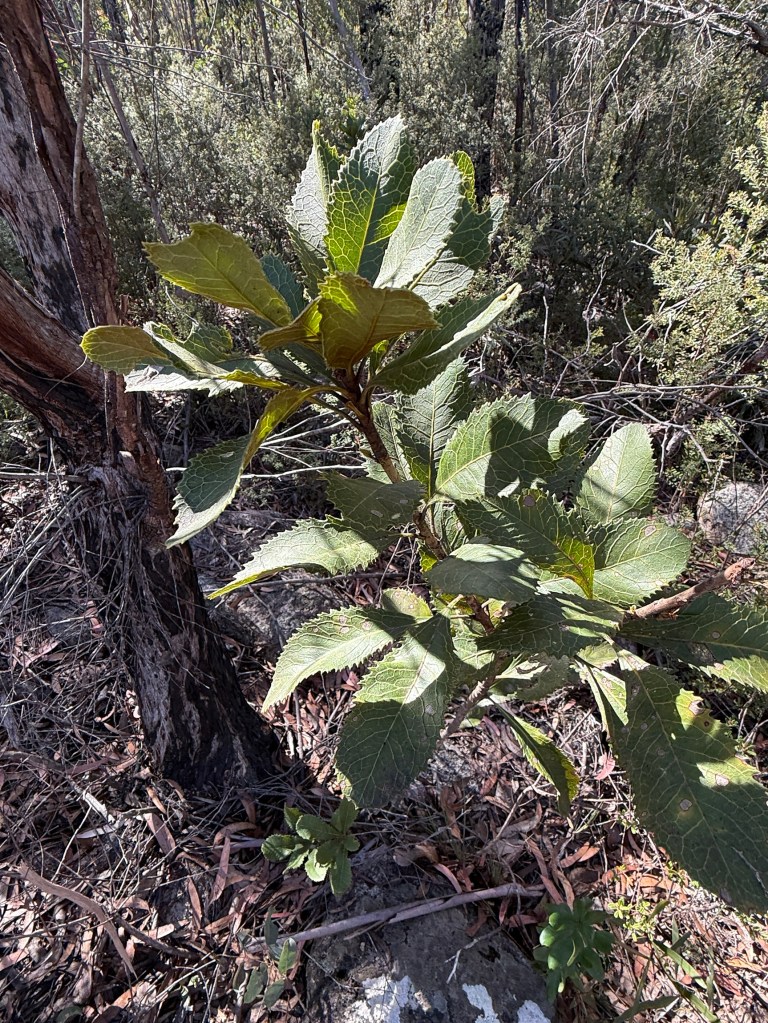
We did see a flowerless plant, so maybe we will come back again sometime and see the flower.
In the early days the Old Grafton Road developed in response to population build up due to gold discoveries and later timber getting when the gold ran out. At the height of the gold rush 20,000 people occupied the valley in several towns. They are long gone and not much remains of their time here. Today farming and grazing are the main activities along the river flats and nearby scrubland. There are not many people in these parts and zero traveller’s services.
At either end of road there is about 40km of bitumen of varying quality. The Grafton end is easily driven. The Glen Innes end though rises steeply and in parts narrowly, with numerous hair pins, for 17 km from the Mann River.
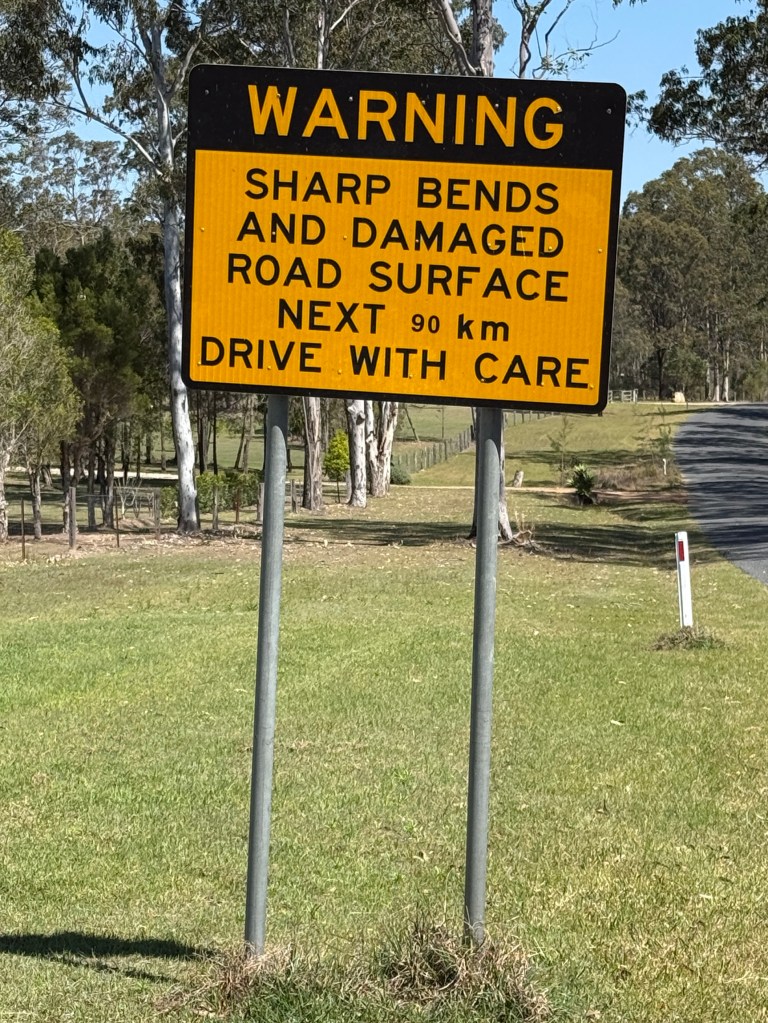
Now, the bit in between these two ends is the real interesting part and why we did it! The sign indicated an adventure was at hand!
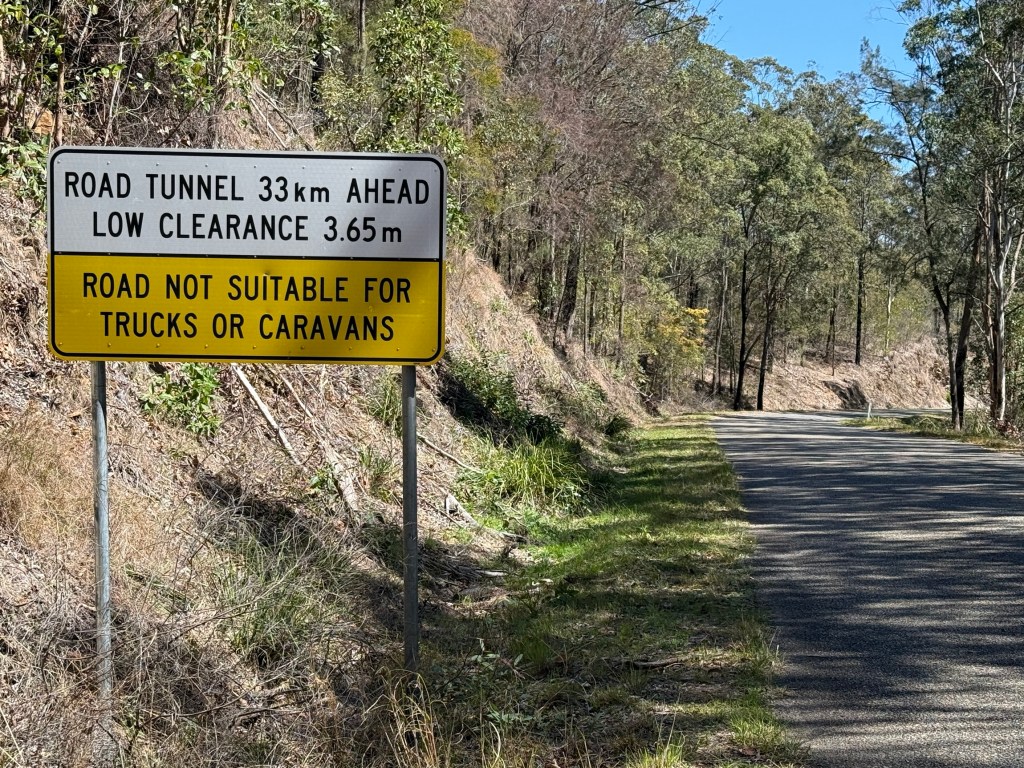
The middle section is 90 km of fairly rough narrow twisting gravel road. Sometimes running high above the rivers below with steep drop offs in some places. In parts one lane only with occasional passing places. There were of course some very pleasant sections as well to enjoy the views.
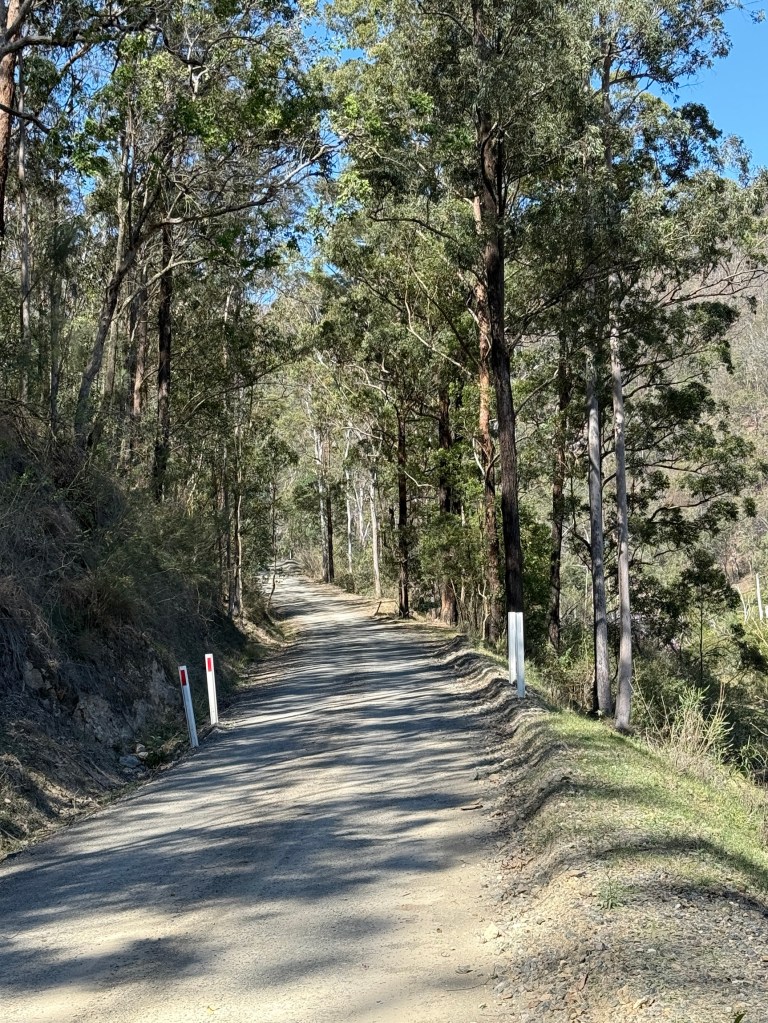
We encountered about 10 cars during the day coming the other way and by good luck it was on wider sections! So no hairy manoeuvres were required.
We crossed the Nymboida River at Buccarumbi one of the old towns with little remaining, a couple of houses overlooking the river.
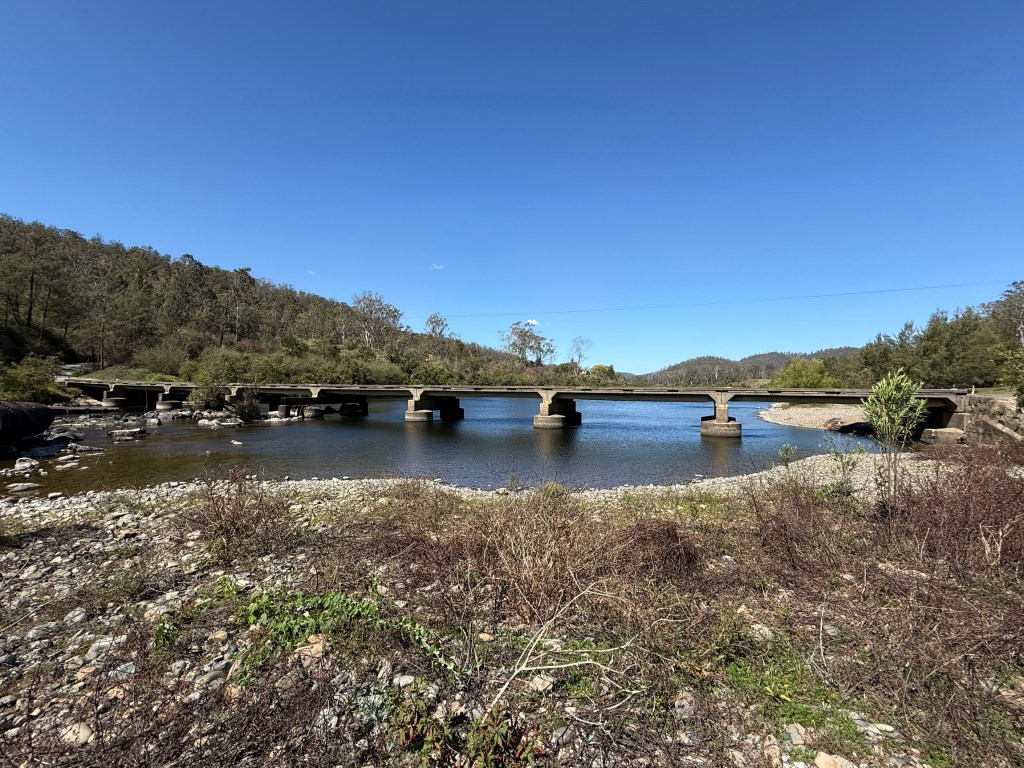
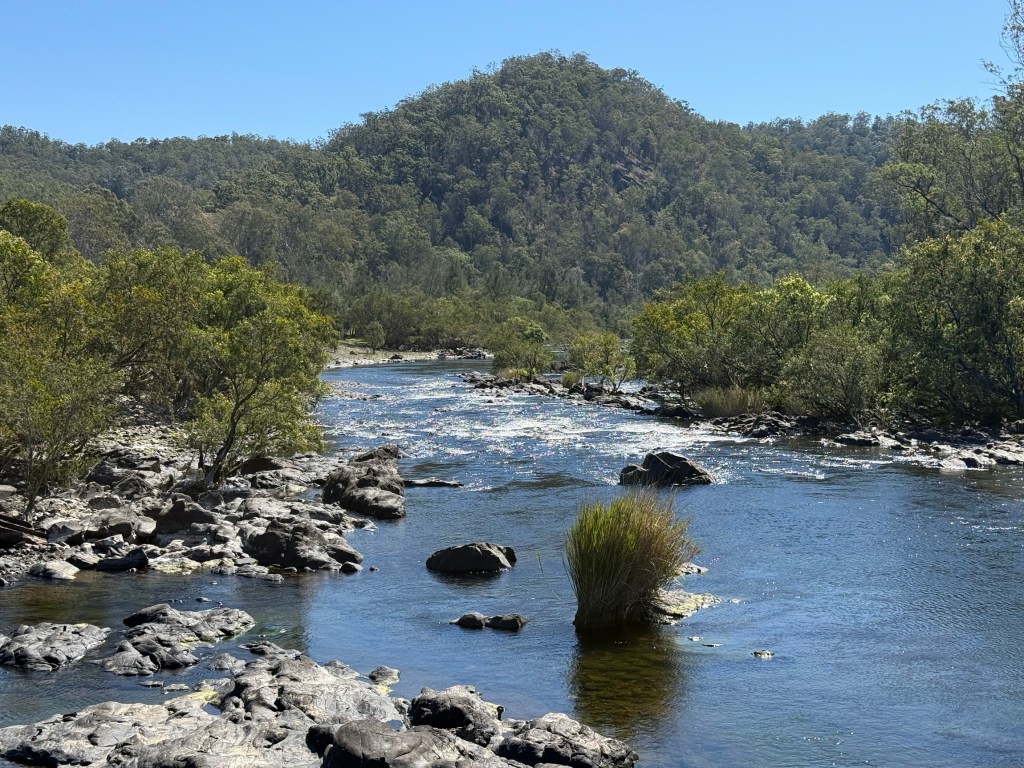
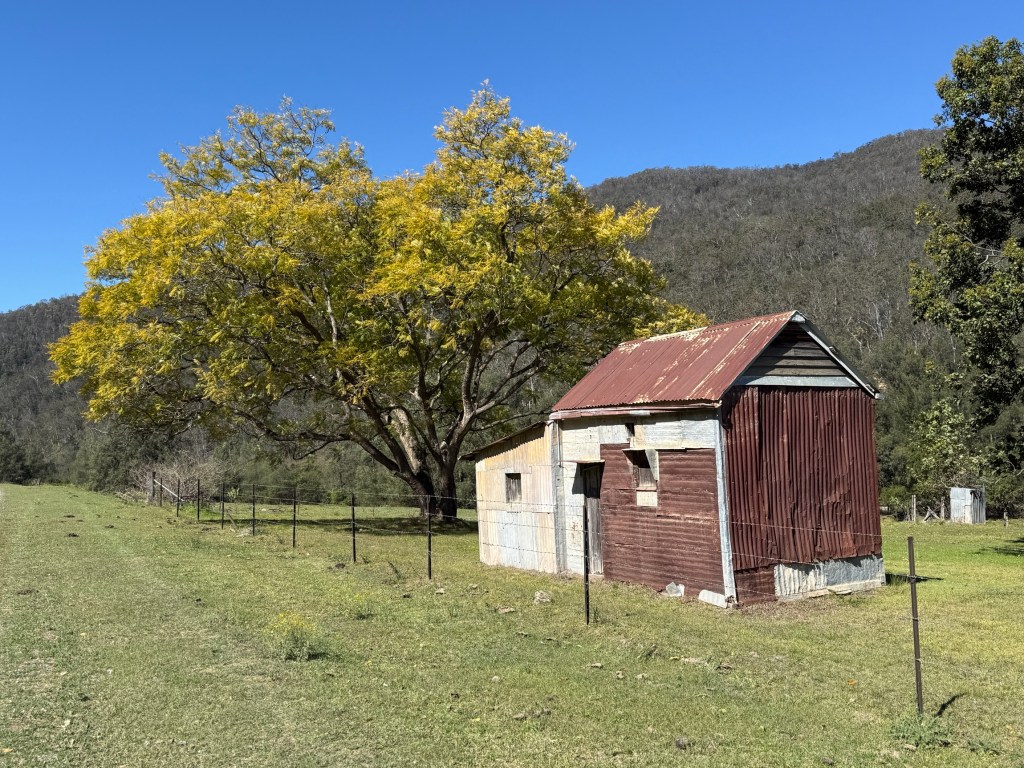
A little further along we came to the site of Dalmorton, a few old buildings remain. Ghost town like.
After Dalmorton we encountered one of the major features of the road. The forewarned tunnel.
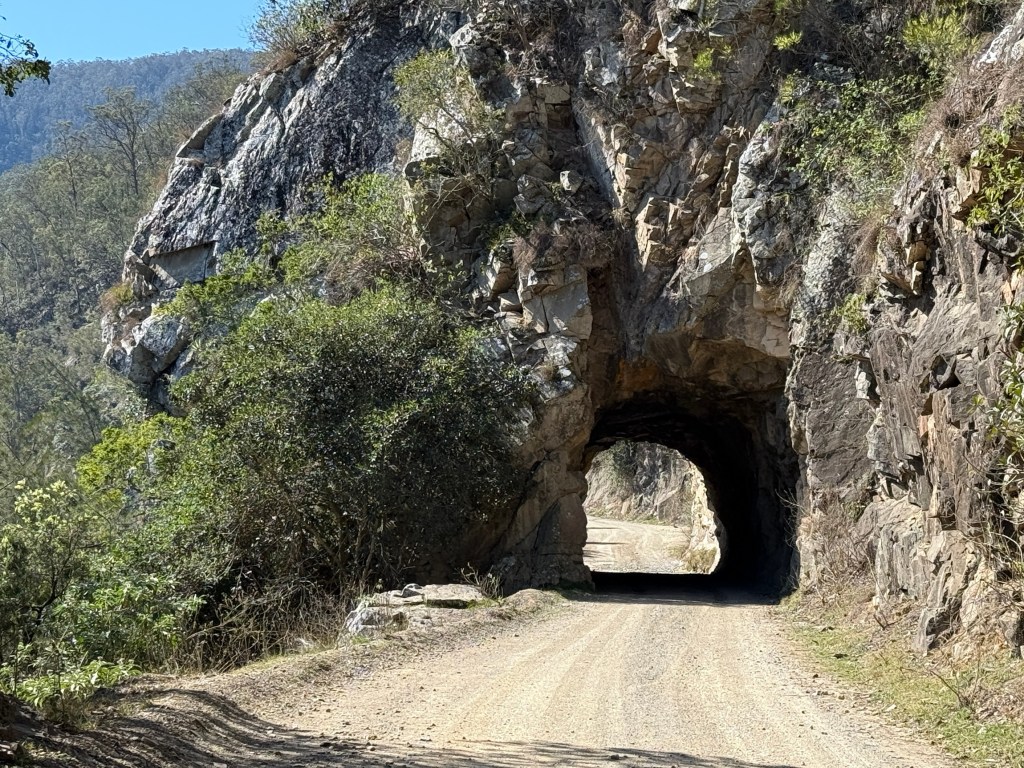
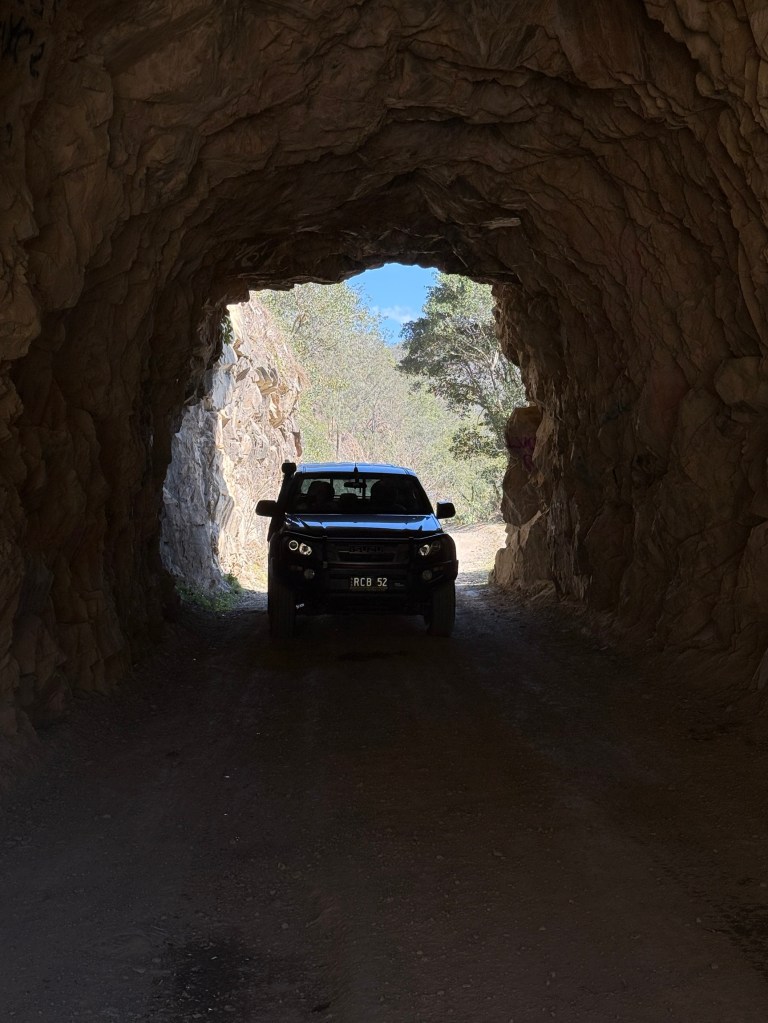
The impressive 20 metre hand cut tunnel has a clearance of 3.3 metres. The clearance seemed more than this, the suspicion being that periodic road grading increases it! Definitely one way and would be a challenge for some larger caravans.
We paused for a late picnic lunch on a grassy bank beside a slow moving creek, more a back water.
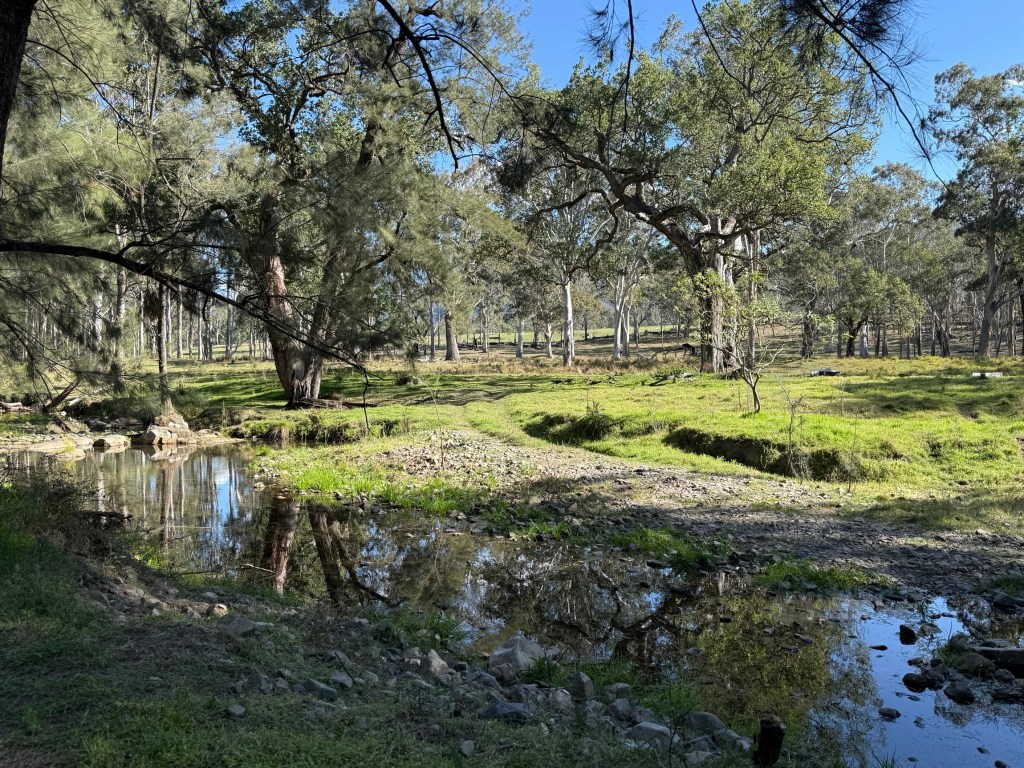
It is difficult to get close to the river banks because much of the land between the road and river is private property. We had passed up a couple of good spots earlier at Dalmorton for a riverside lunch. After lunch we moved on past an area known as Newton Boyd, the Boyd River is nearby.
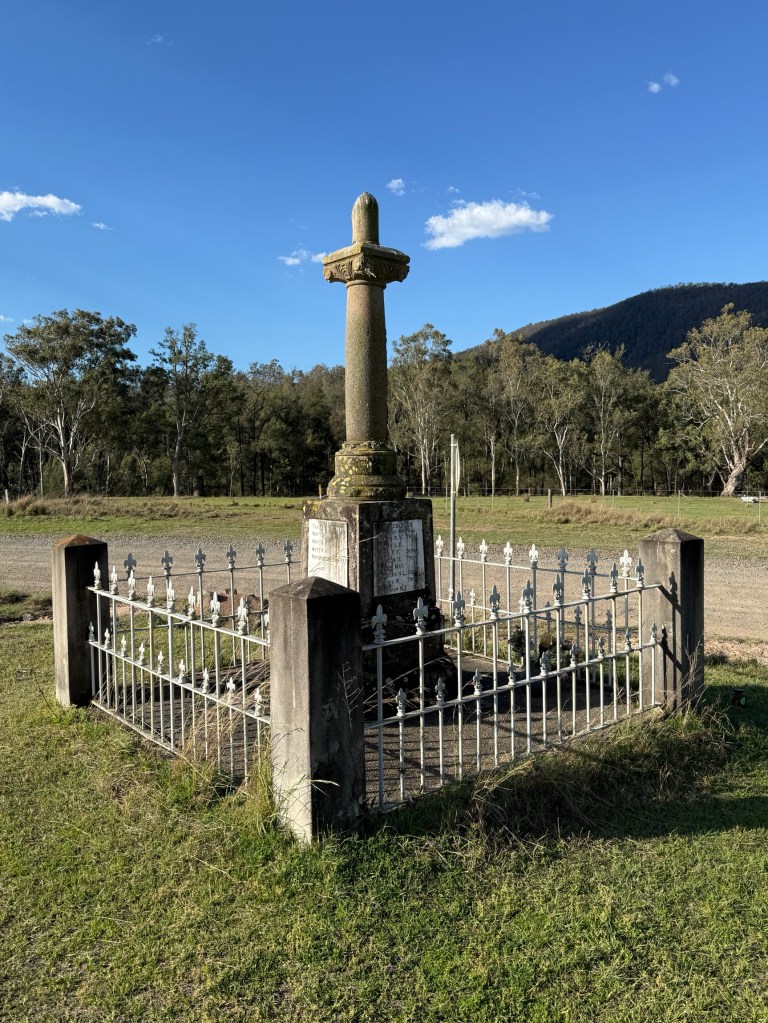
Here there is a memorial to some 30 young men who left Newton Boyd farms to enlist in WW1. Only one returned to the valley and was ironically later killed in a rock slide.
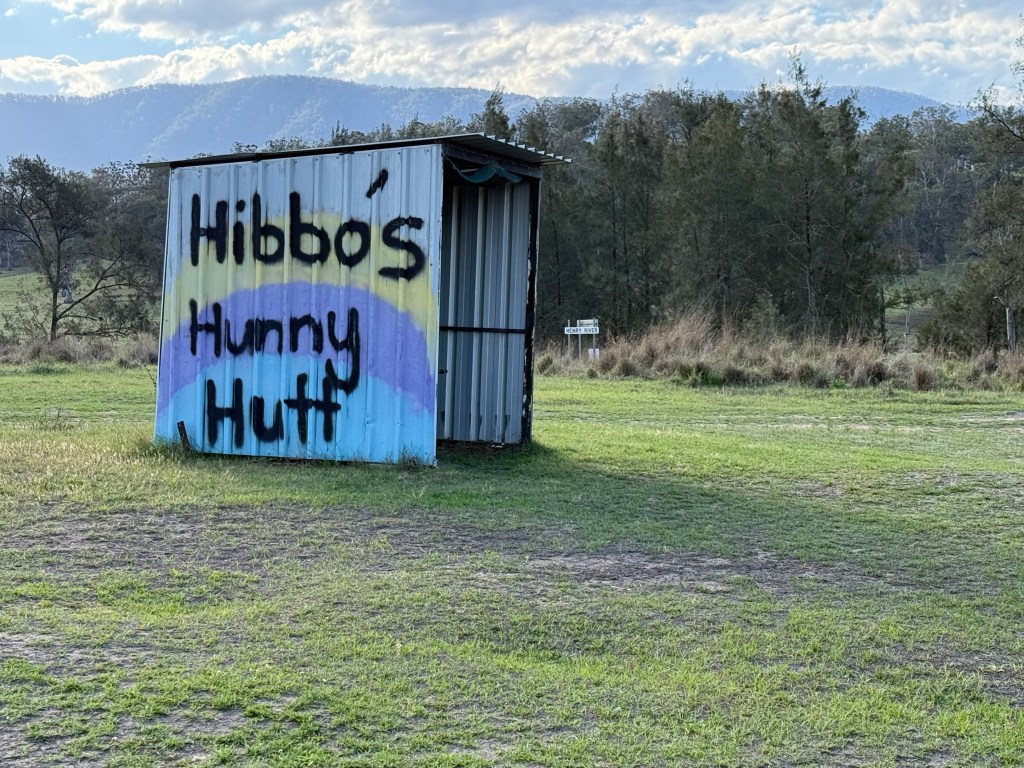
Couldn’t resist getting a souvenir from Hibbos Hunny Hutt. The stall was stacked with various honey products, goat soap, candles and infused salts. The raw Stringy Bark honey could not be resisted.
After Newton Boyd the road meandered on through some rolling cattle countryside before descending to the Mann River, there is a National Park Nature Reserve here with a few campsites overlooking the river. A pleasant spot.
We had rejoined the blacktop a few kilometres before reaching the Mann River bridge. From here the road climbs for 17 kms out of the valley up to the Gwydir Highway with many twists and turns, hairpins a plenty.
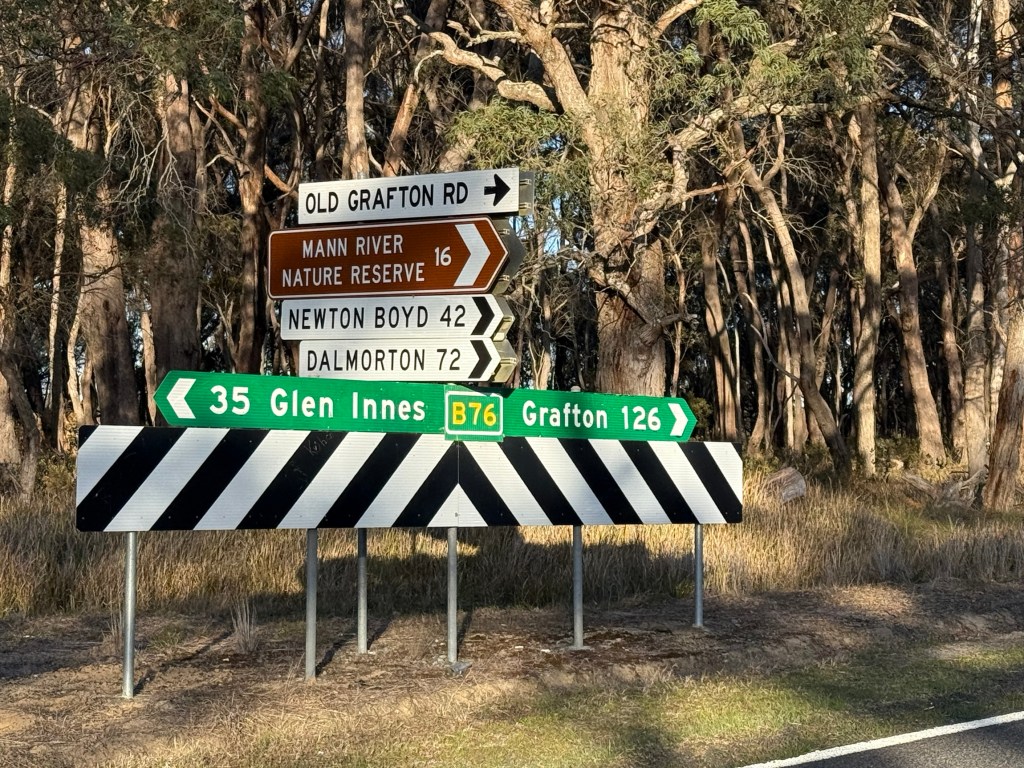
When we reached the highway it was back to Mulligans Campsite, about 35 kms. Got back about 5pm, a long day on the road.
Why did we do this adventure? Because it had to be done. After all its not the destination its the journey!

Posted on September 7, 2026, in New England Hwy 2026. Bookmark the permalink. Leave a comment.


Leave a comment
Comments 0