Monthly Archives: May 2026
No more stones
Leaving Glen Innes we took the Gwydir Hwy as planned through the Gibraltar Range NP. At its highest point the road is about 1100 metres above sea level. It was rather twisty and narrow in places, with a fair bit of roadwork going on to slow things down. There was also a thick layer of low level cloud on the ranges reducing visibility in some sections. We couldn’t actually get into the NP as it was closed, later finding out that the closure was for urgent pest control work. Will just have to go back again, maybe spring time when the wildflowers are all out.
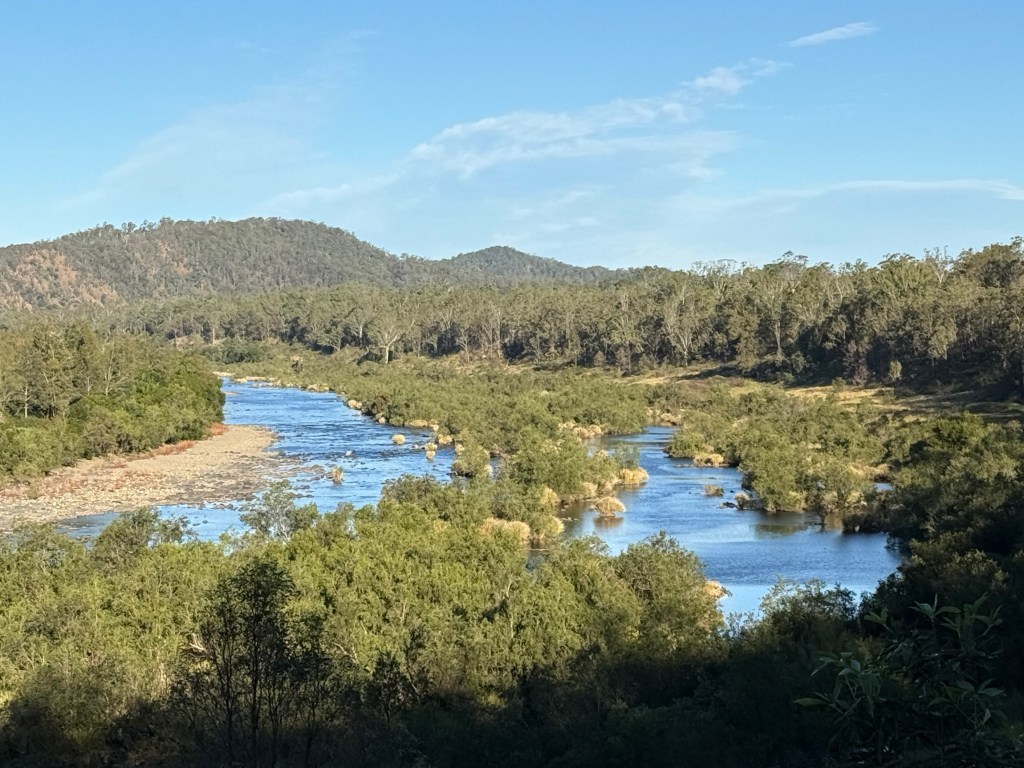
Jackadgery is about 60 km from Glen Innes and is at the bottom of the Ranges beside the Camm River, a major tributary of the Clarence River. Descending the Ranges there were some great views of the river making its way to the Clarence.
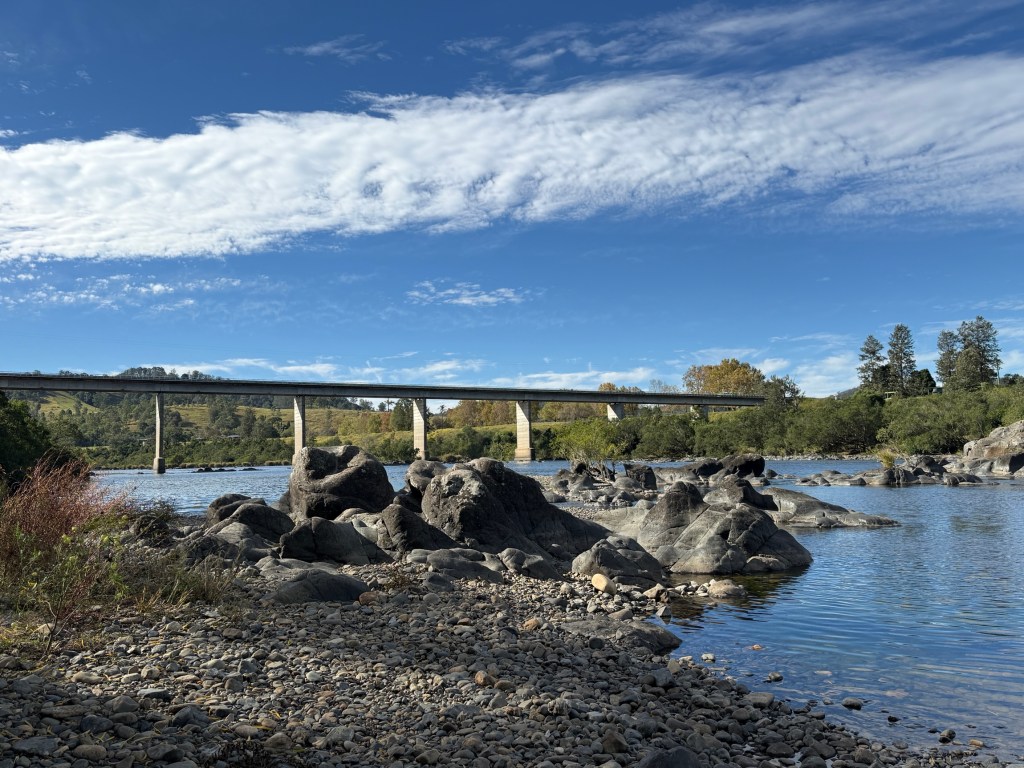
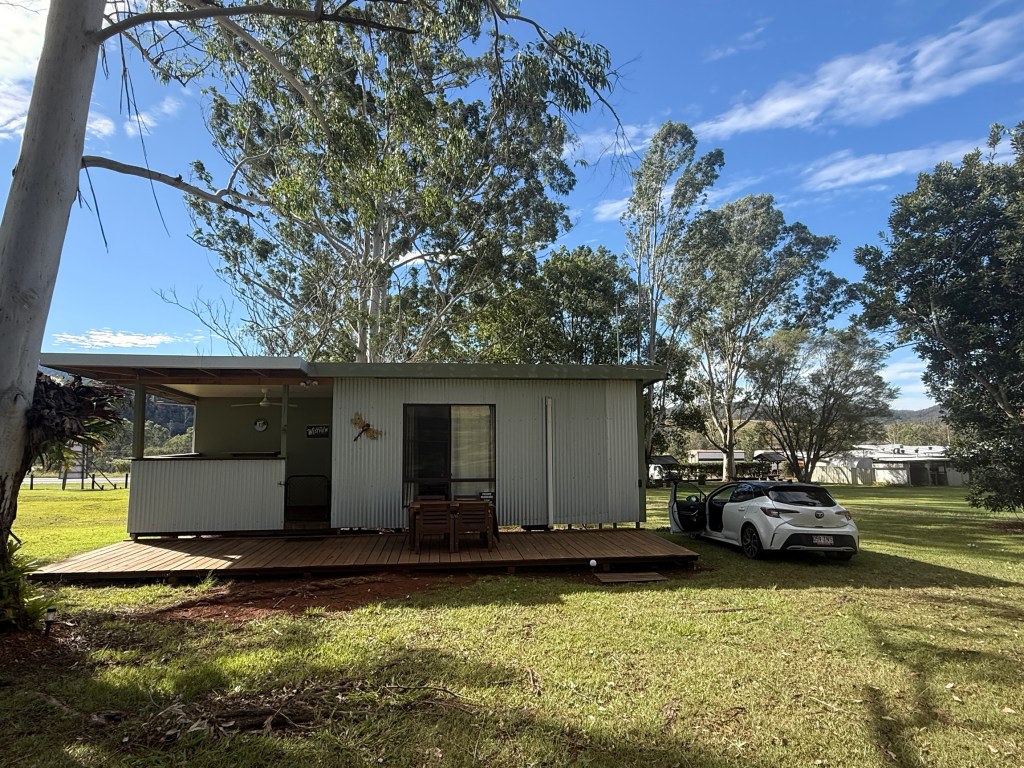
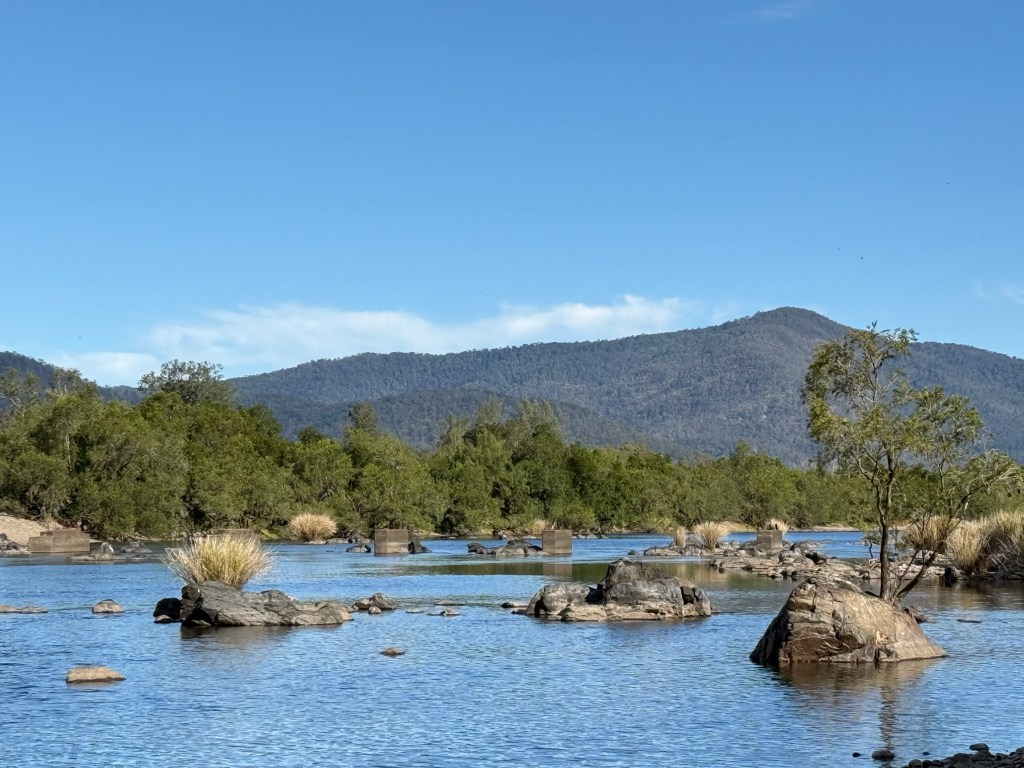
We had managed to get a cabin in the Camm River Caravan Park for a couple of nights. It is the only establishment at Jackadgery. Very quiet, but a good spot for those wanting to stay outside the NP.
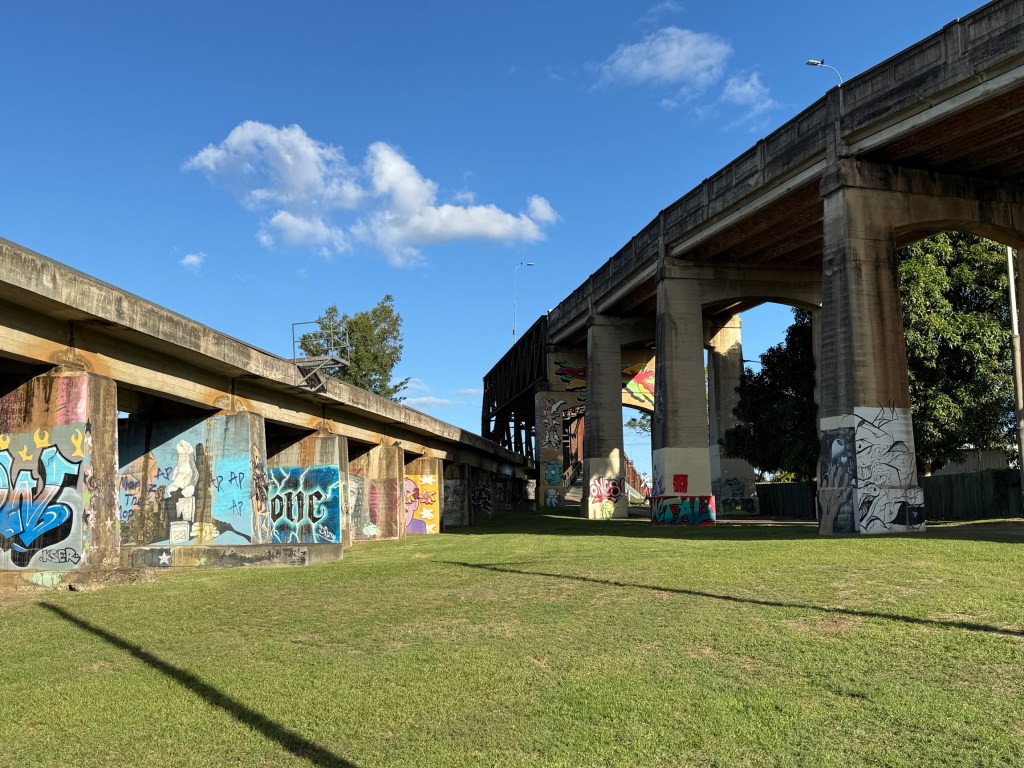
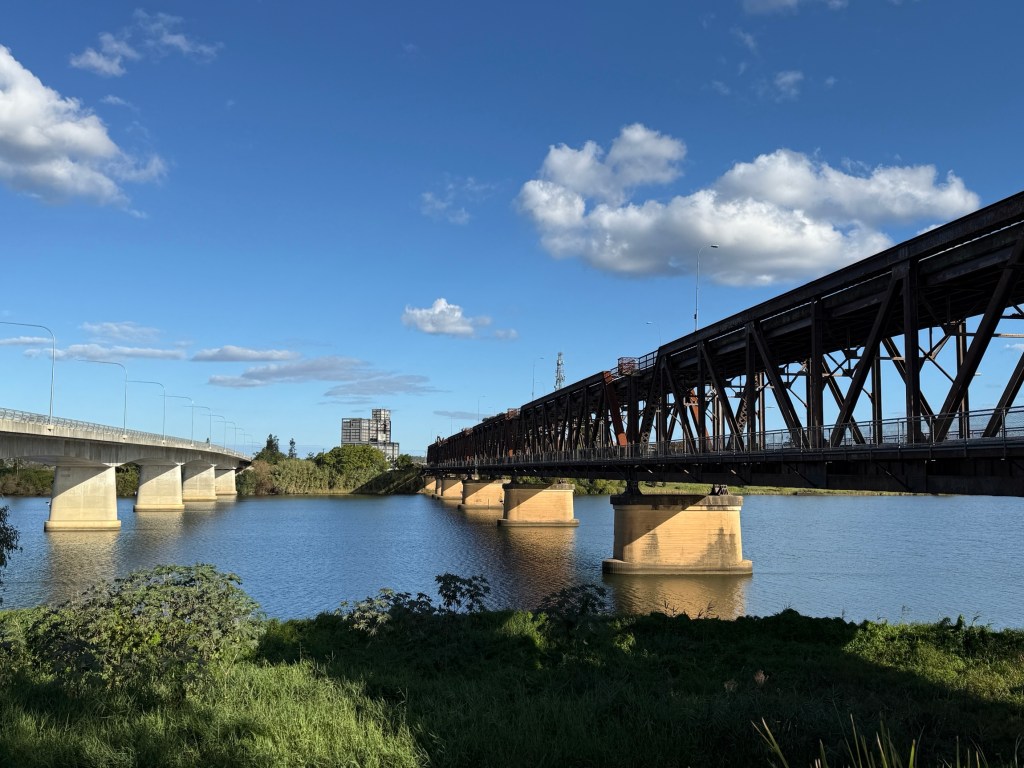
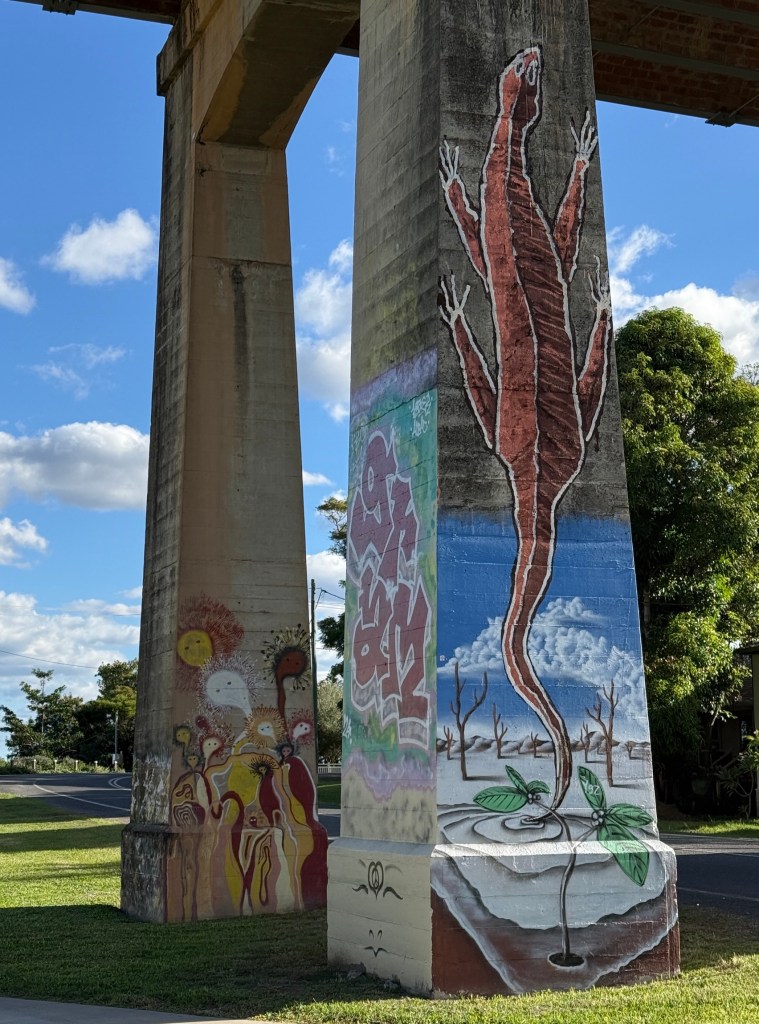
We were quite happy though to move on to the next stop at Grafton, about 45 km to the east. Despite passing through South Grafton, on the other side of the Clarence River, numerous times on trips up and down the Pacific Hwy we have never lingered in Grafton itself.
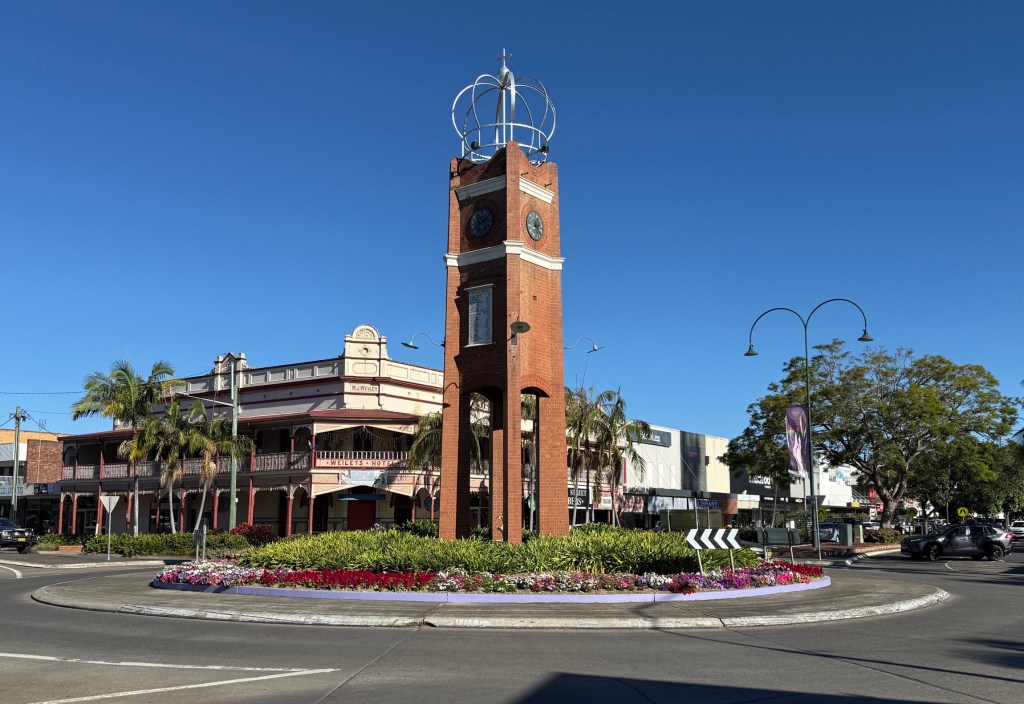
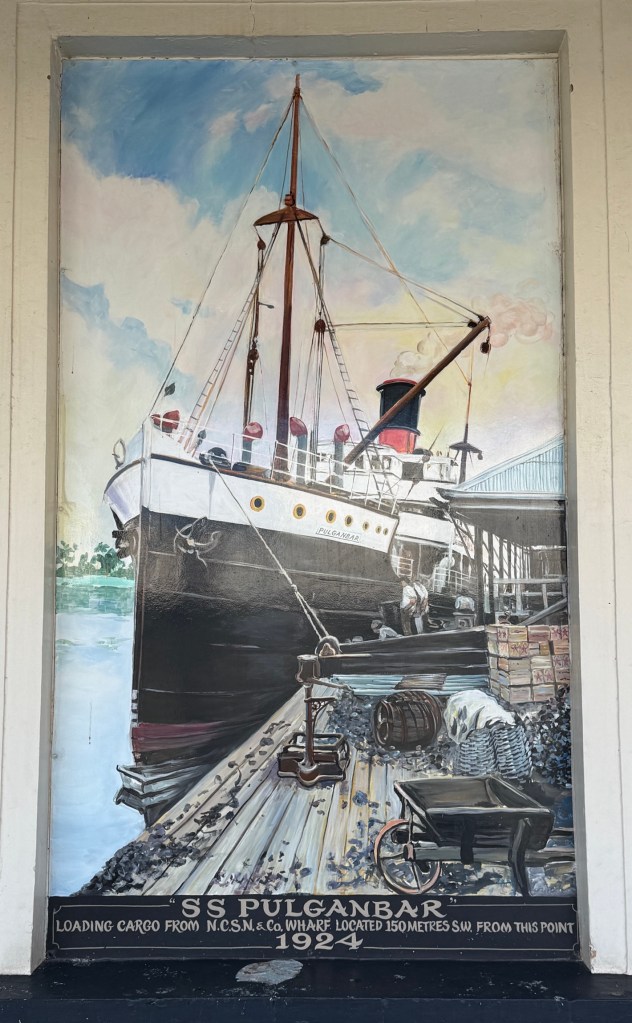
Grafton was proclaimed a city in 1885 and acted as a port on the Clarence River from the mid 1800s up until its gradual replacement by the railways and road transport in the 1900s. It was mostly used for the transport of timber, sugar and wool out of the Clarence River Valley and the New England tablelands.
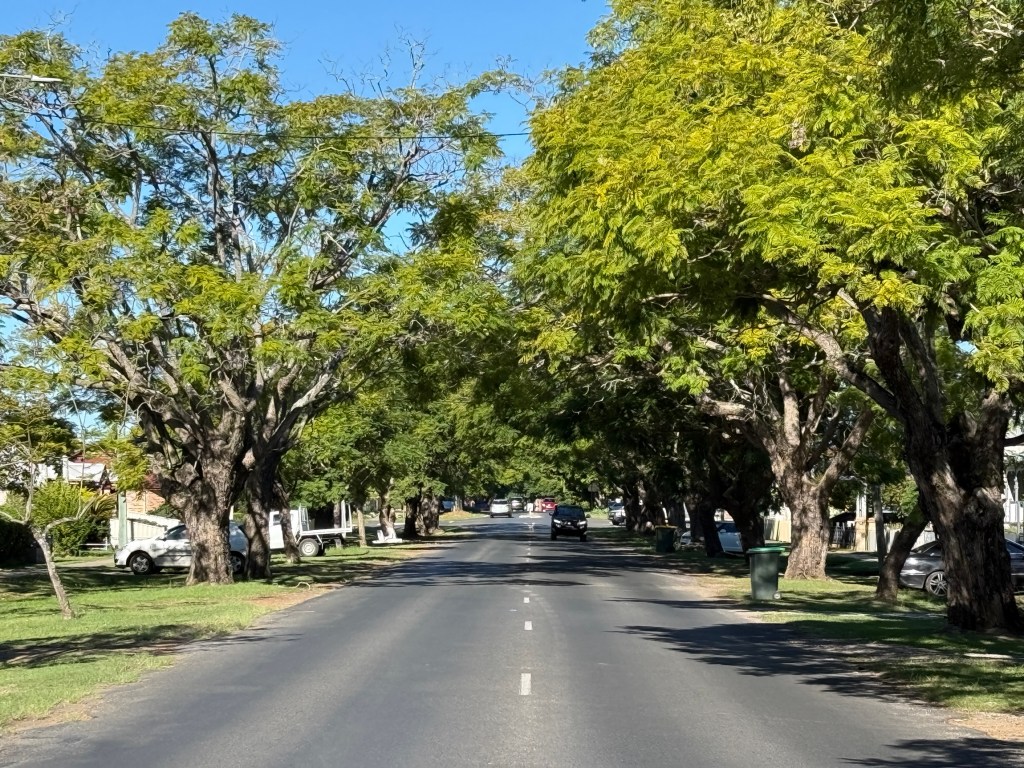
The City is famous for its Jacaranda Festival, held in October/November since 1935. The trees are very prominent in the streetscape, along with massive fig trees that are over 100 years old. Maybe a festival to come to in the future?
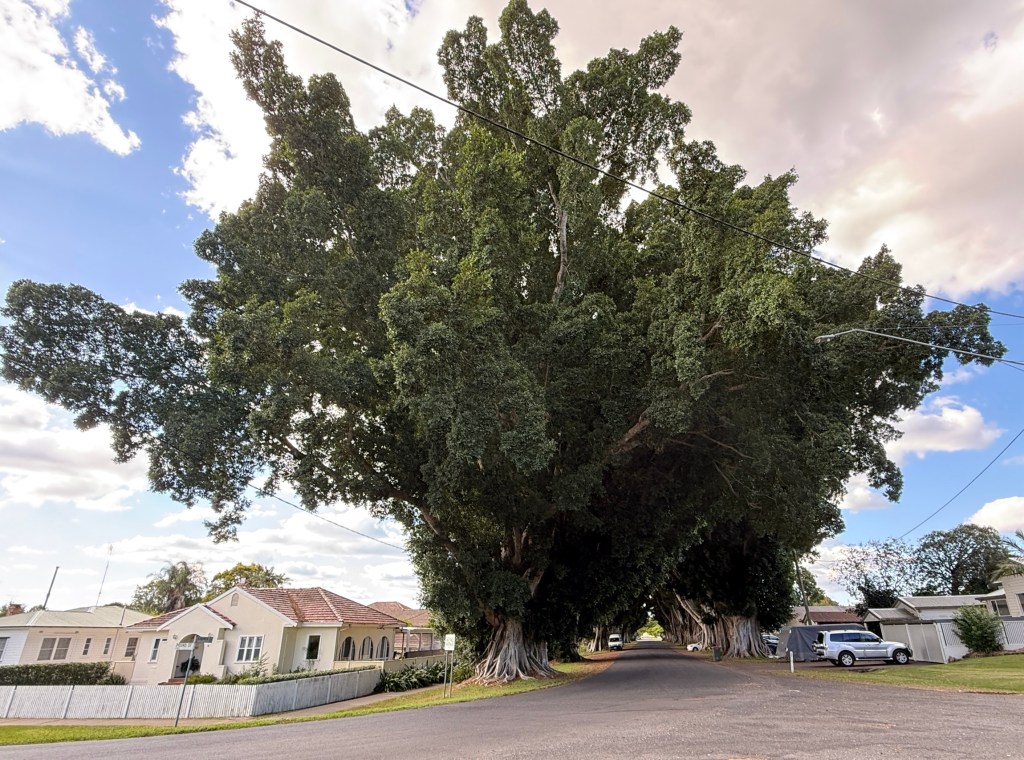
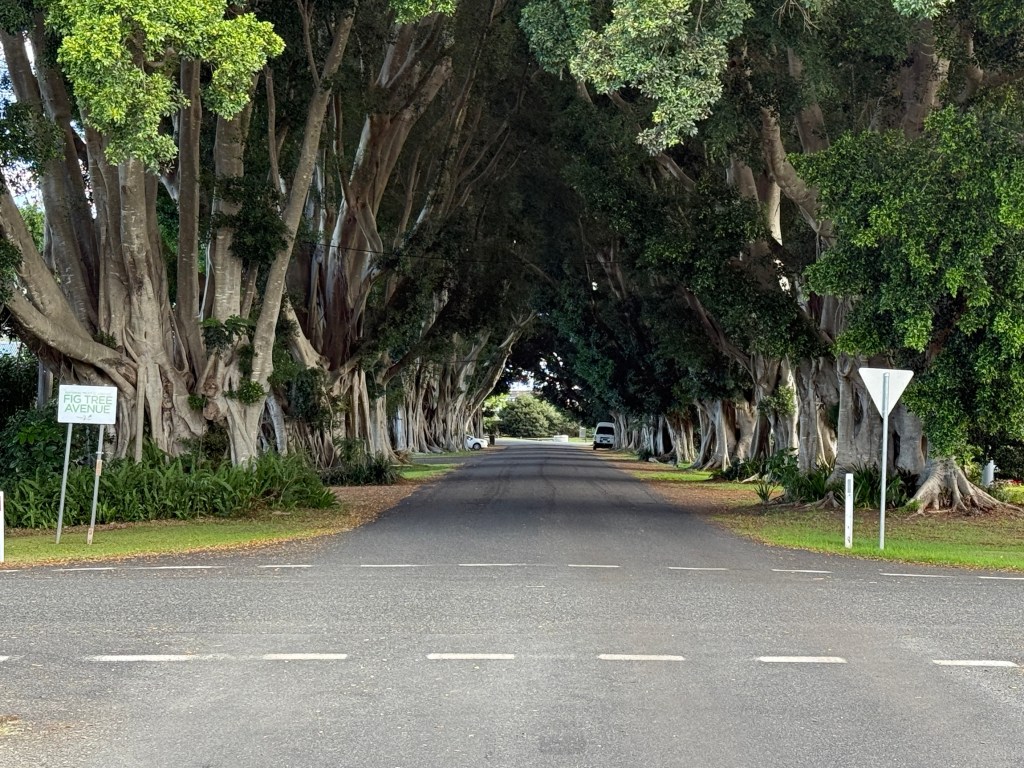
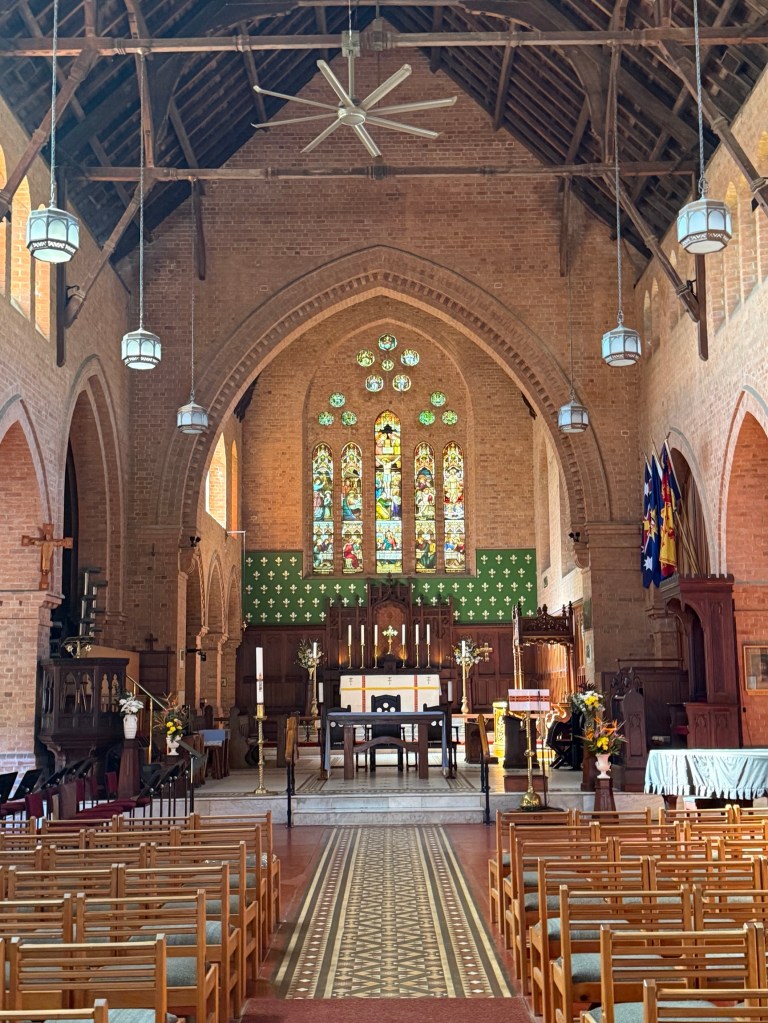
Had a stroll and drive around looking at the historic sites and buildings.
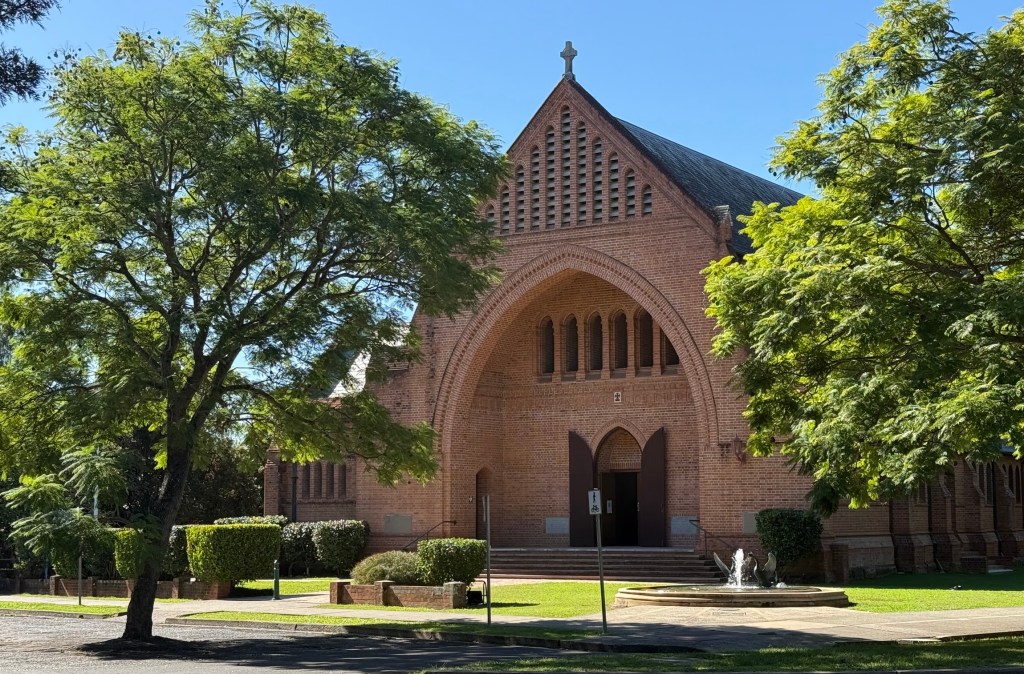
We stayed for a couple of nights in the old Crown Hotel overlooking the River.
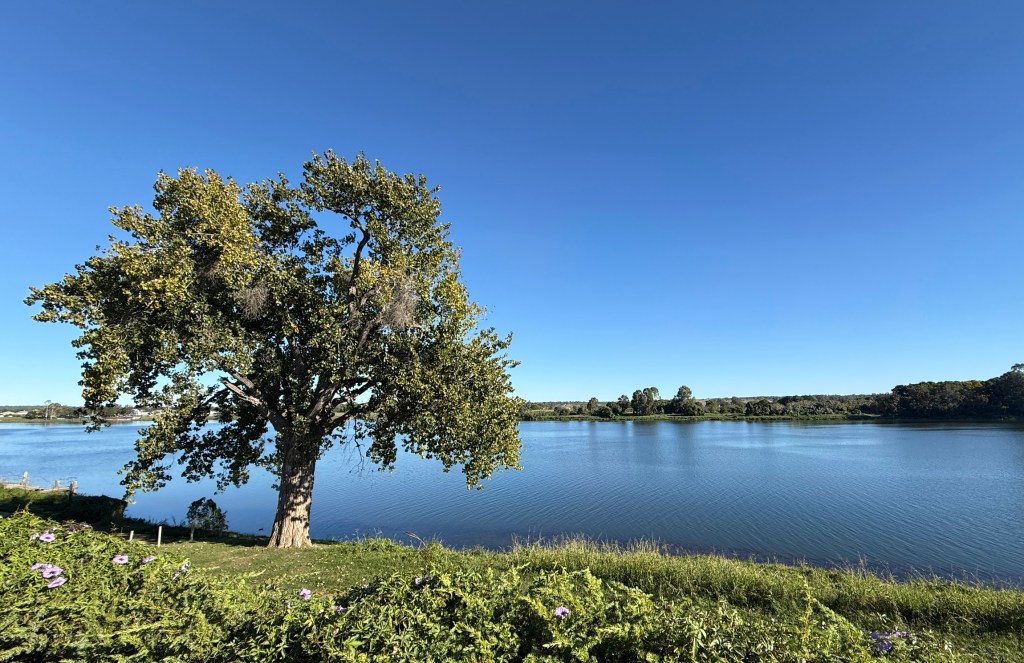
Nice outlook, the motel room we were in though has become a little ragged. The current building has been here since 1929 (since renovated as well), replacing the 1871 version that was burnt down in a fire. A common problem with old hotels it seems!
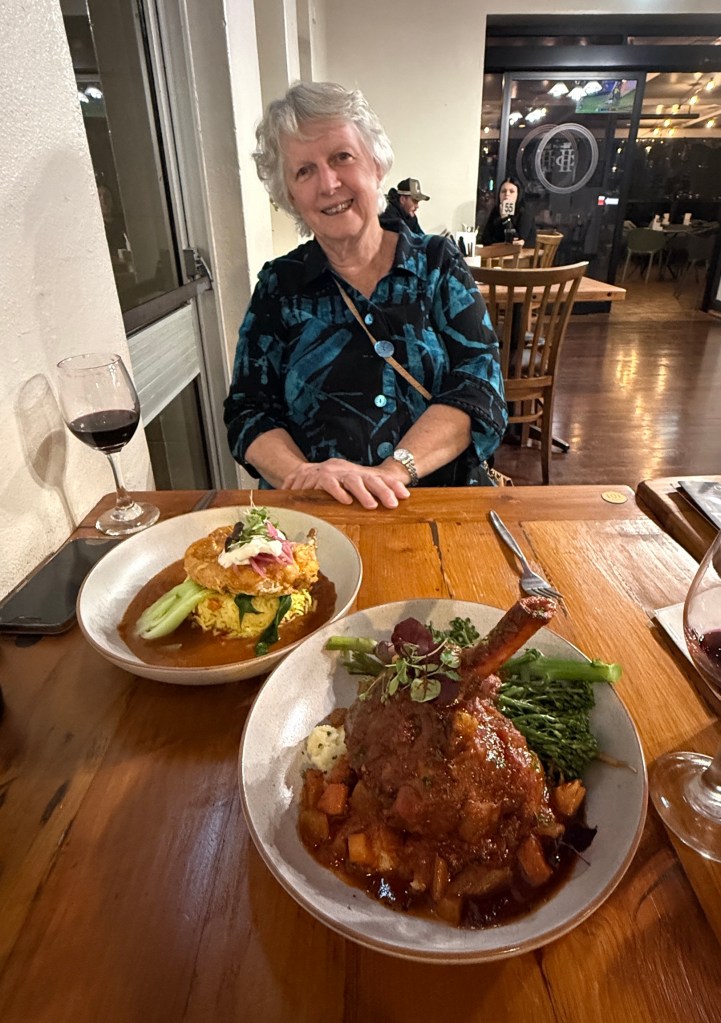
Meals were excellent, particularly out on the big verandah overlooking the river.
We had intended to move on from Grafton and spend a few days on the coast at Broom’s Head and later Yamba on the way home. But the coastal weather is turning to several days of forecast rain and windy conditions. Not good for fun beside the seaside! So we turned for home and have been back for a couple of days.
We will return to the New England Hwy to go further south, hopefully sometime soon when the Iranian troubles are resolved and diesel fuel supplies are secure.
A few more stones
Glen Innes has a number of fine old buildings along its main street. The Town Hall the standout and very central to the Festival’s opening ceremony and parade. The old banks have been done up and serve other commercial enterprises. The NAB though still operates from its restored 1890 building.
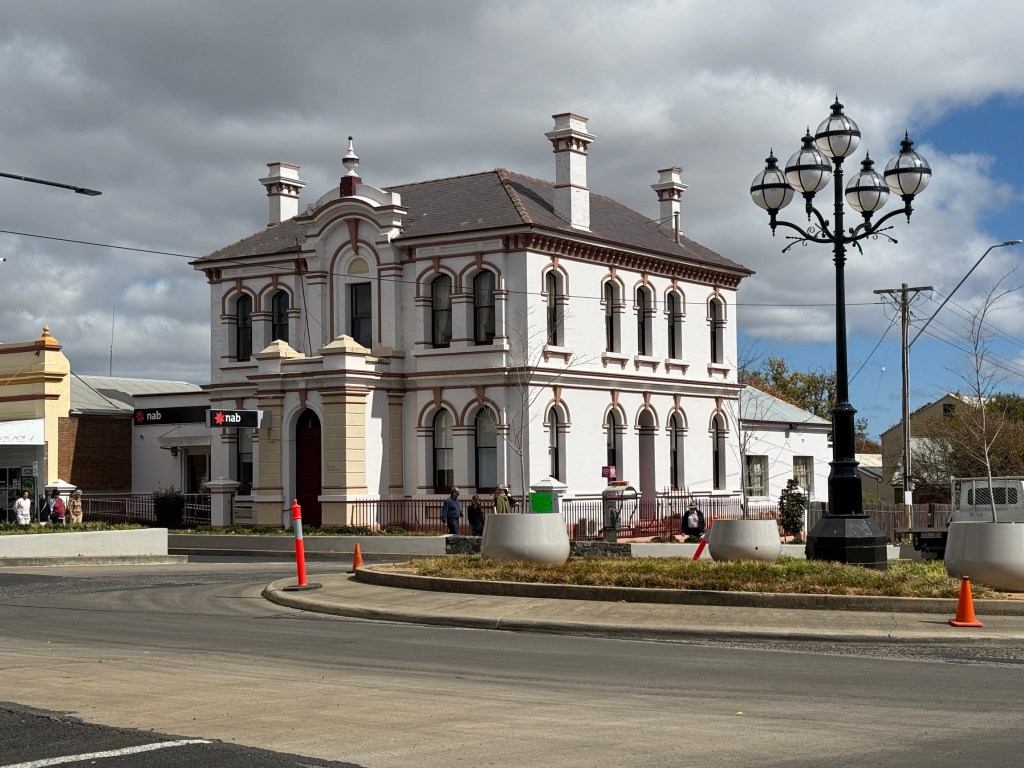
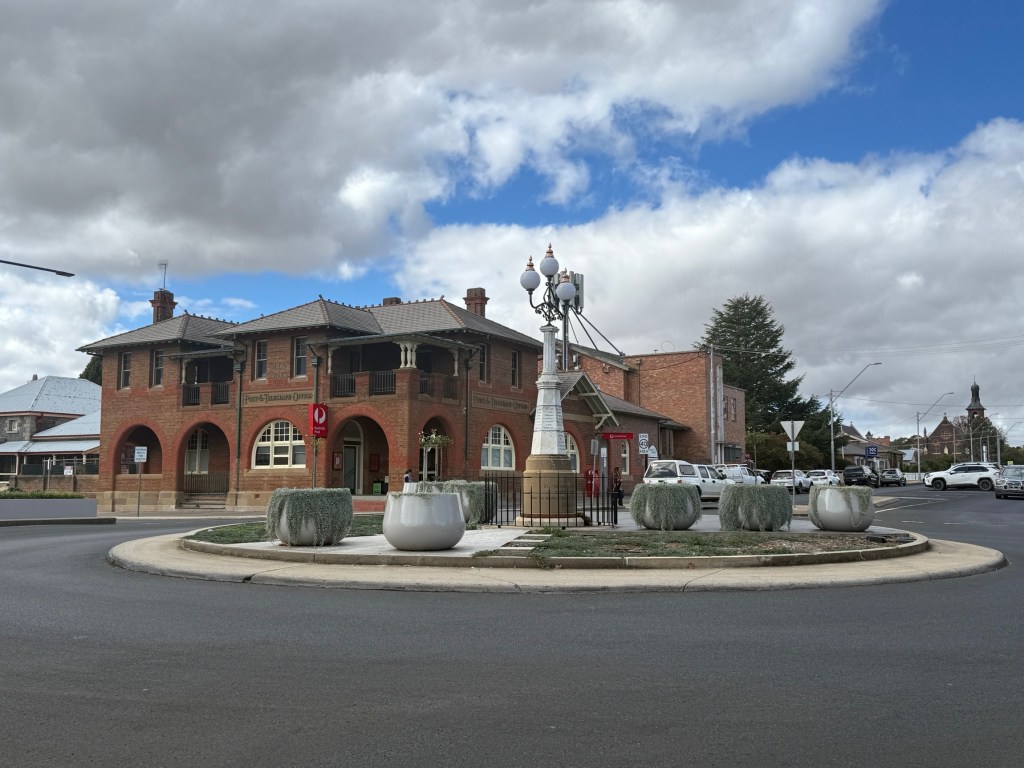
The weather has continued to be great here in Glen Innes. So we decided to head off on an exploration of some of the surrounding high country. The early settlers around here definitely had a Scottish bent.
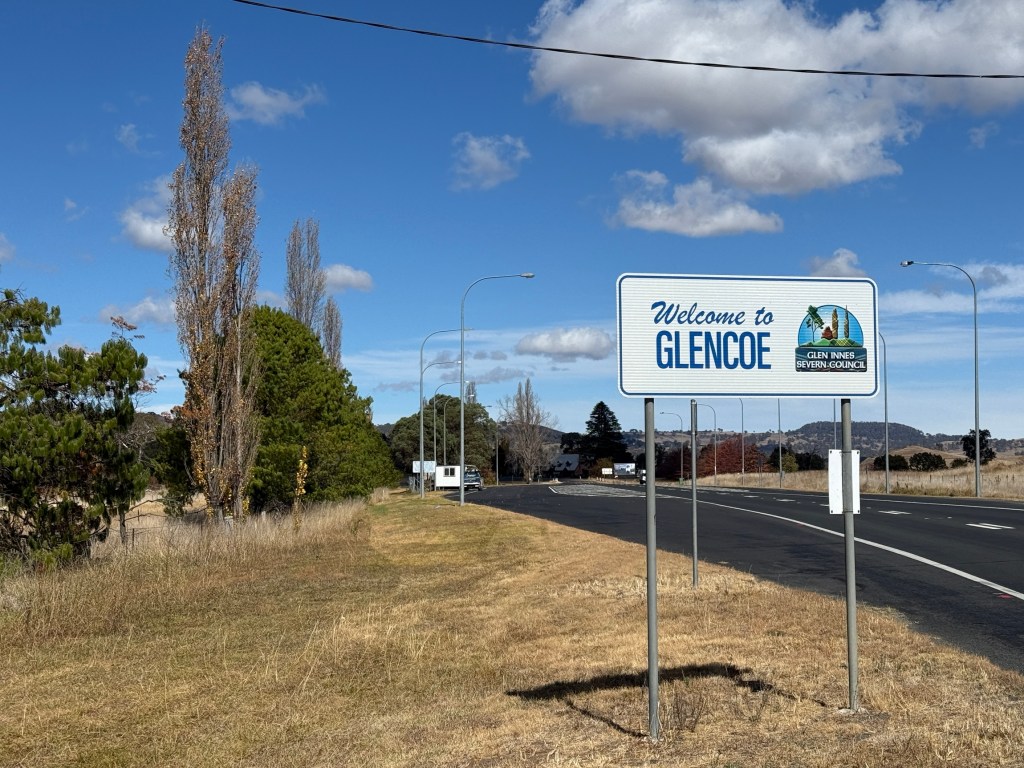
On the outskirts of GI are places like Glencoe and then up in the mountains is Ben Lomond.
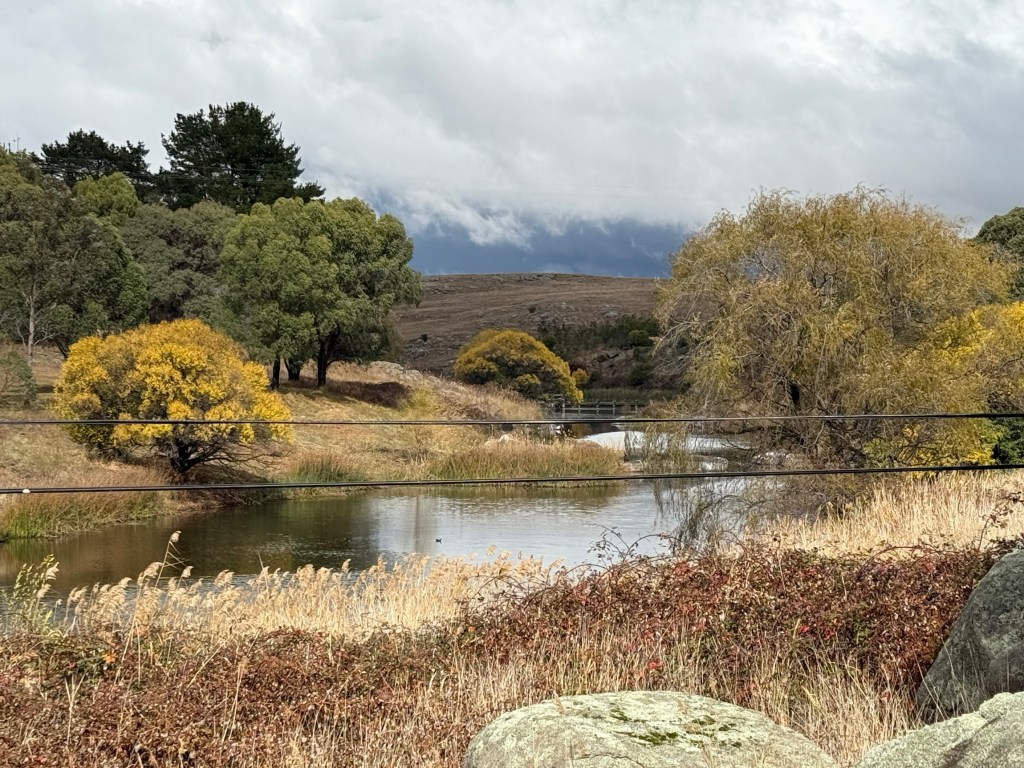
A name you see around GI is ‘beardies’. The little river that runs through the town is called Beardy Waters, ‘Beardy Waters, dam and Woodlands’ is a pleasant park beside the stream. The local museum is called ‘Land of the Beardies History House’.
We paid a short visit to the museum which is housed in the old hospital building. Allthego finds these regional town museums a bit frustrating, they tend to be packed full of stuff from yesteryear, with little to guide one through it all.
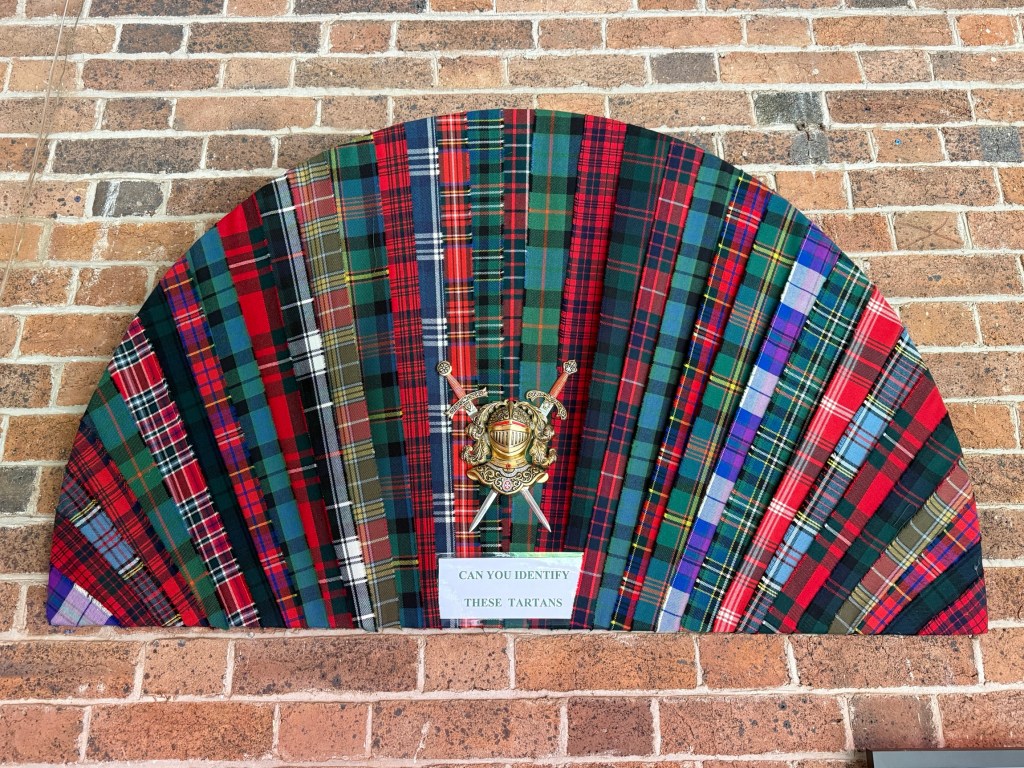
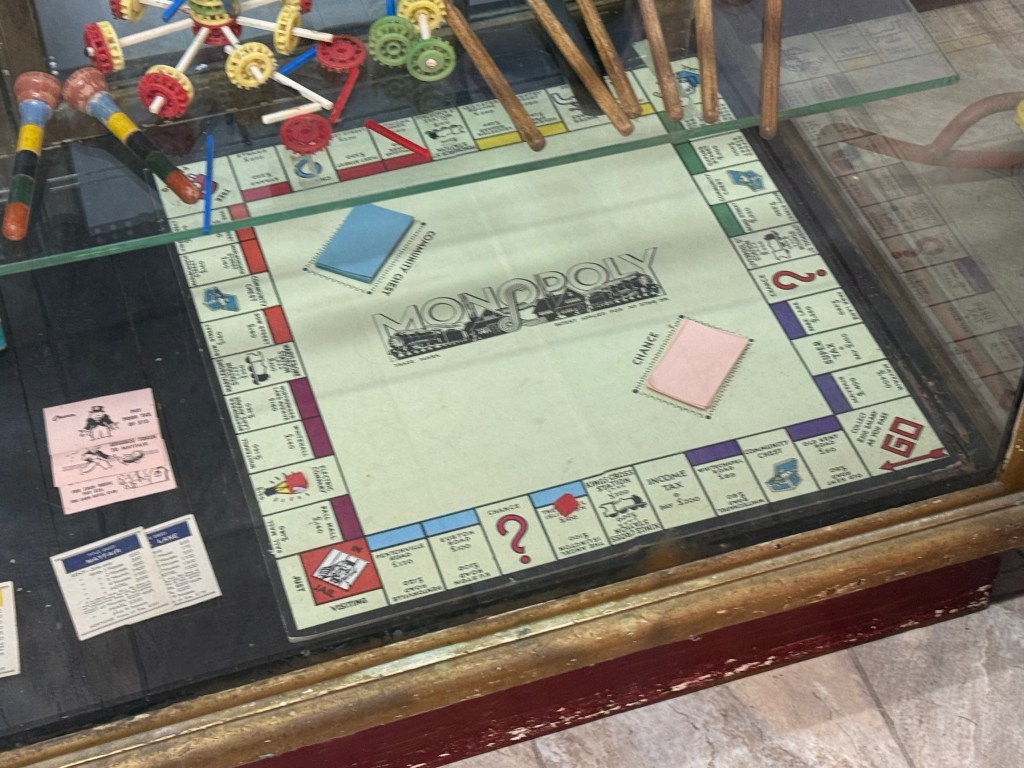
At least this one has it thematically organised in the hospital rooms, so it is easy to pass by the stuff that doesn’t grab you. Maybe it dates you but we are finding a lot more of the stuff in these places recognisable from our near past.
Why all this ‘beardie’ stuff? Well it is simple. Back in 1838 a couple of Scottish stockmen with long flowing beards guided the first settlers into the region and it became known as Beardie Plains, later Beardy Plains. The river flowing through it became Beardy Waters. Many of these first settlers were from Scotland, Ireland and Wales. The cooler up land weather and landscape attracting them and perhaps reminding them of home.
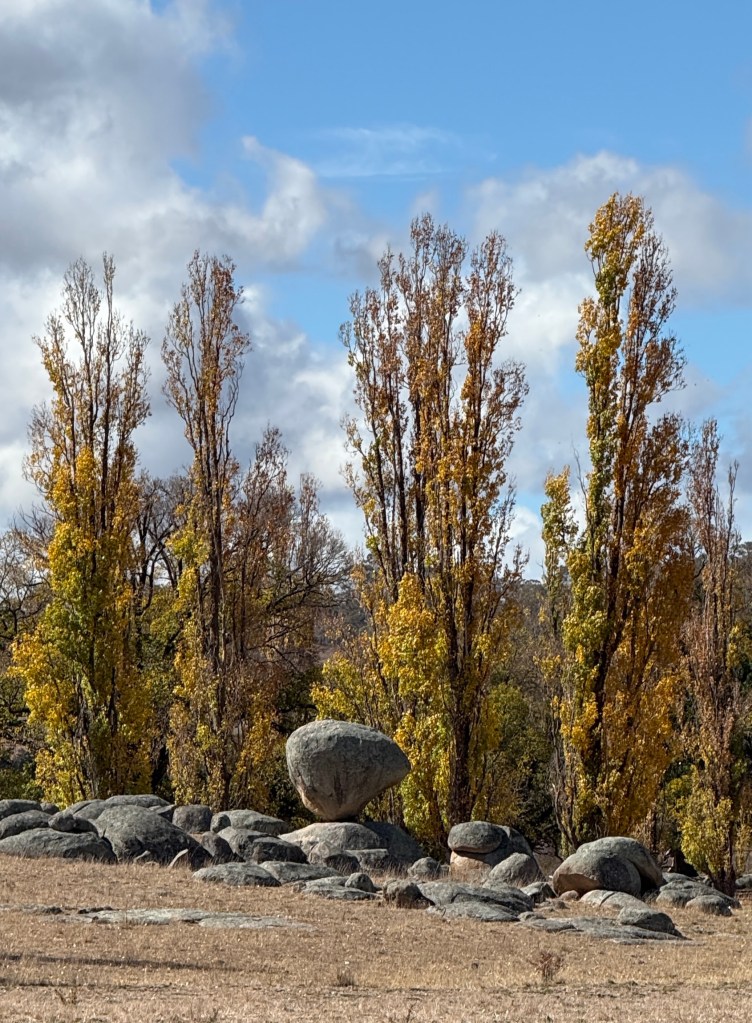
Our journey into the hinterland took us down the New England Hwy through the small village of Glencoe. Along the way Stonehenge Park and the Balancing Rock are compulsory photo stops.
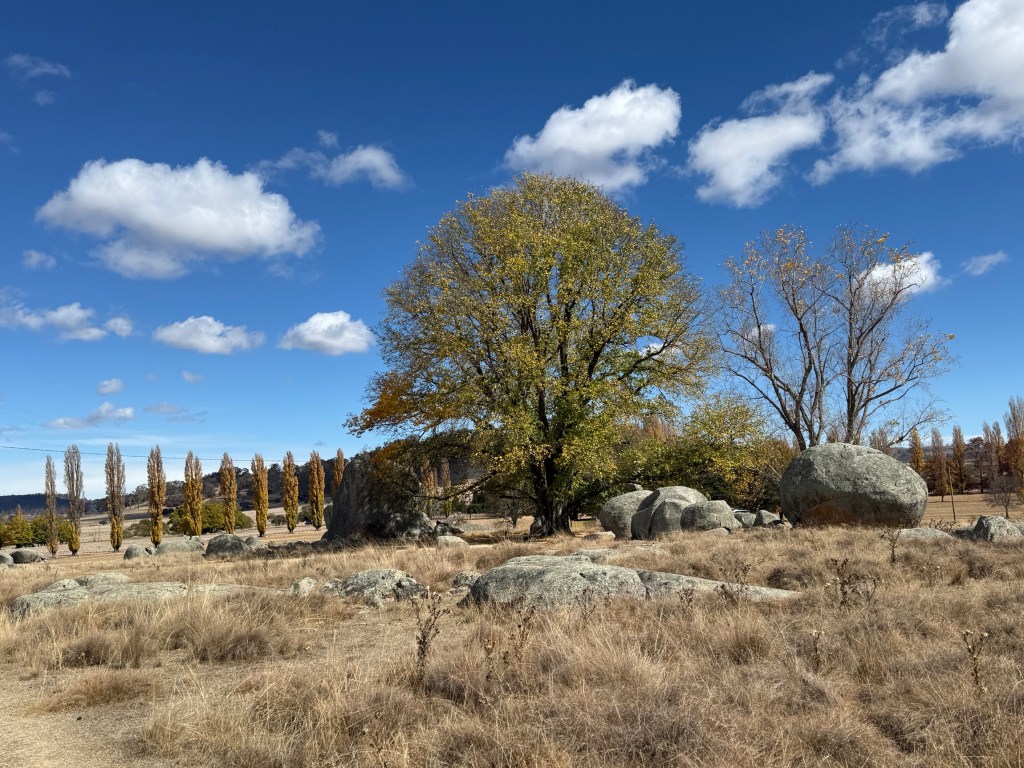
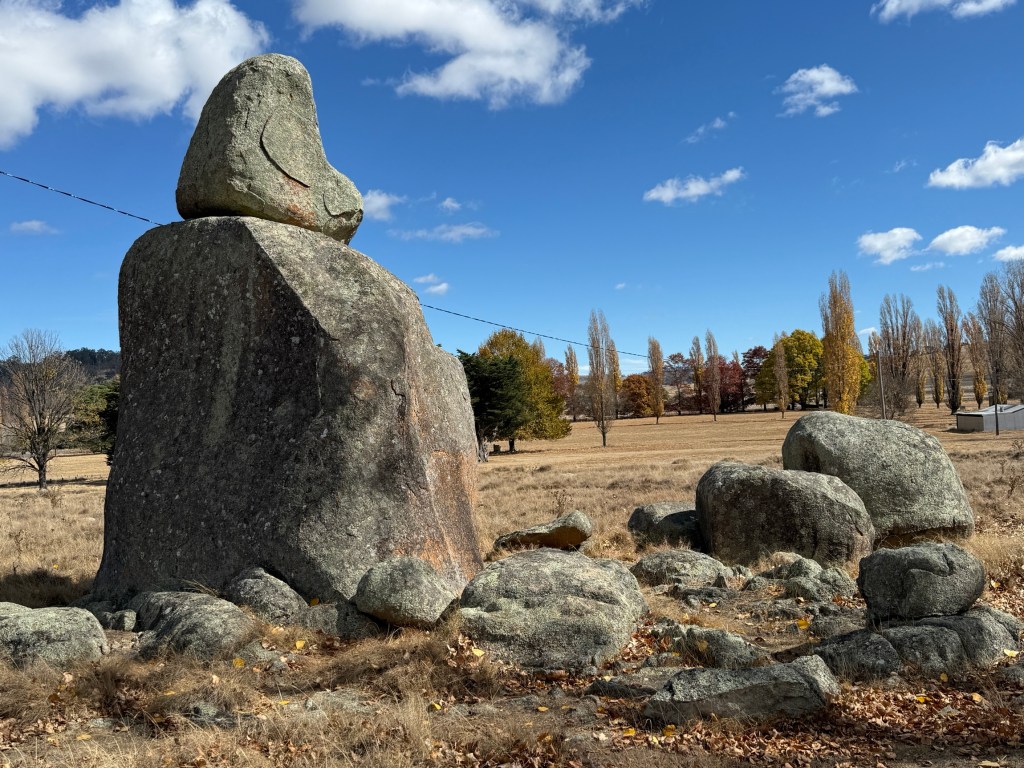
More rocks set in golden Autumn landscapes.
A little further along we took a turnoff to Ben Lomond, a gentle gravel road. Ben Lomond (1370m) is an old railroad town at the top of the Great Dividing Range on the now disused Great Northern Line.
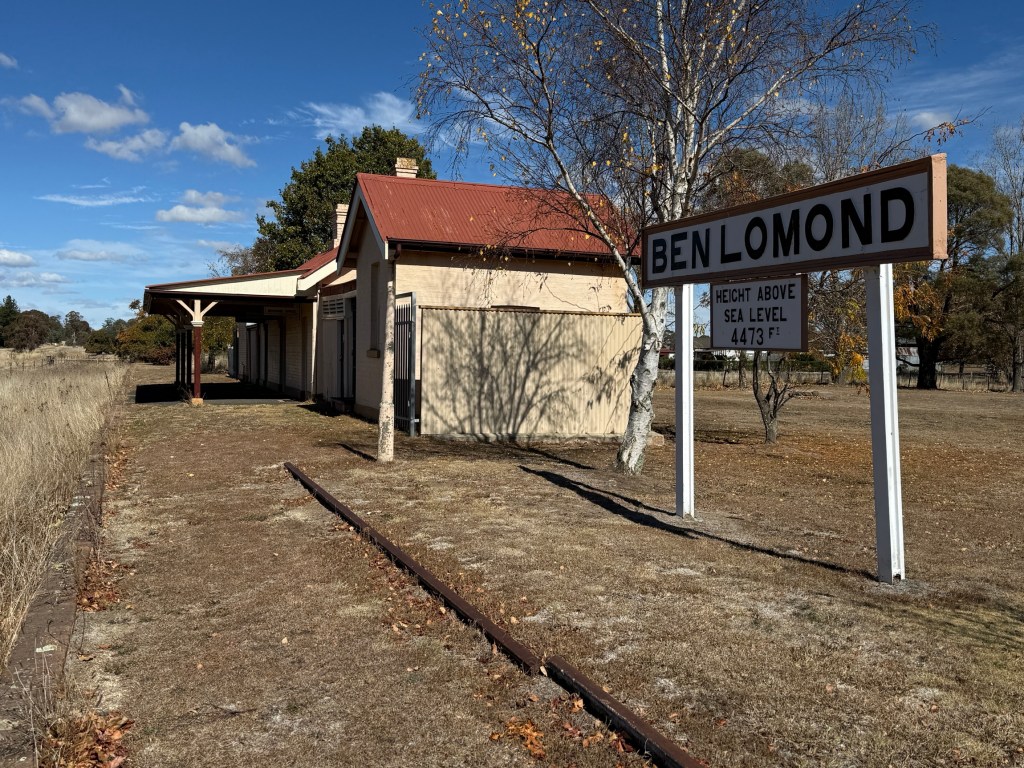
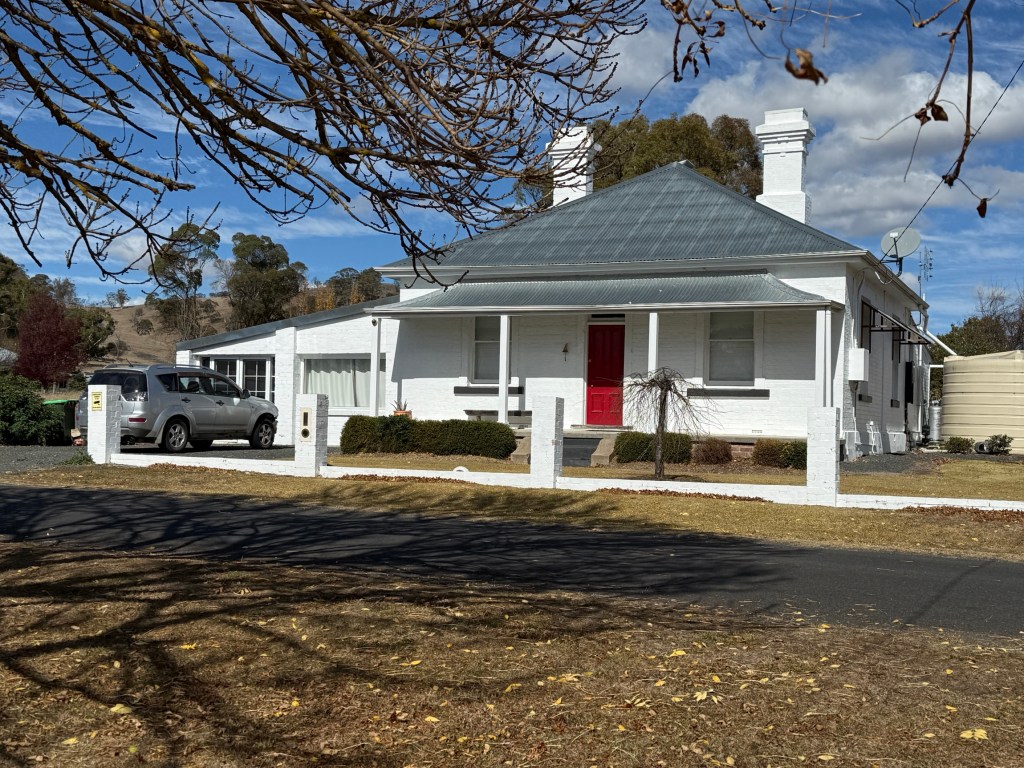
Ben Lomond was the highest point on the line that connected Sydney to Brisbane through Tamworth, Armidale, Glen Innes, Tenterfield and Wallangarra (at the border). It is now closed north of Armidale and slowly falling into ruin.
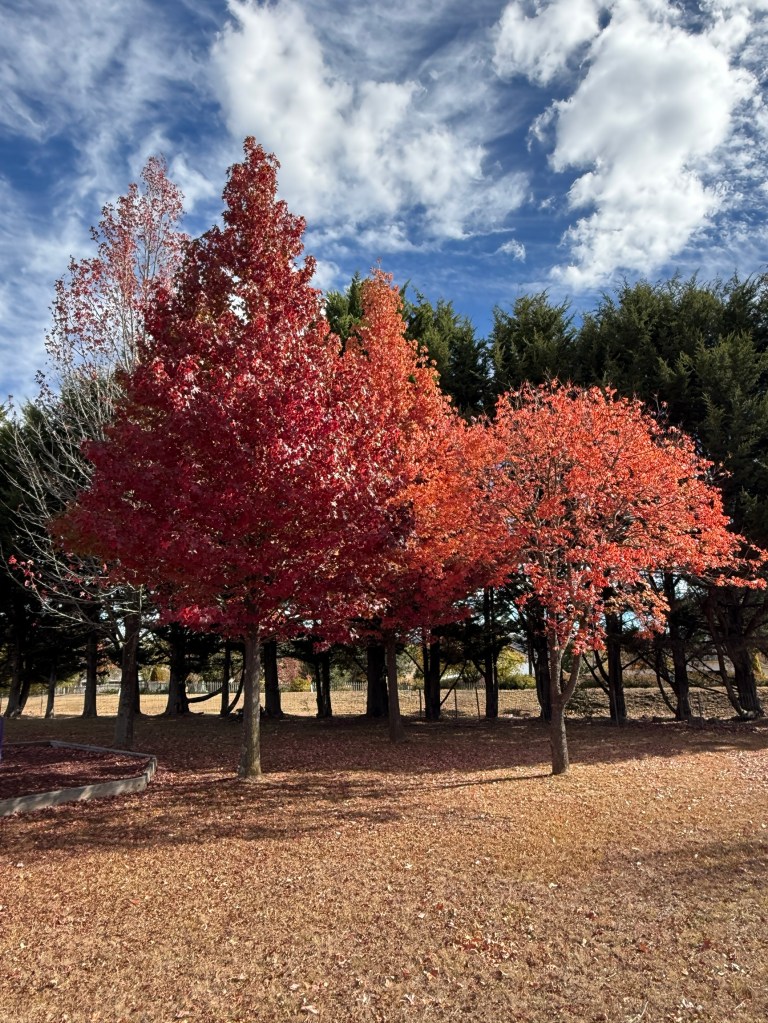
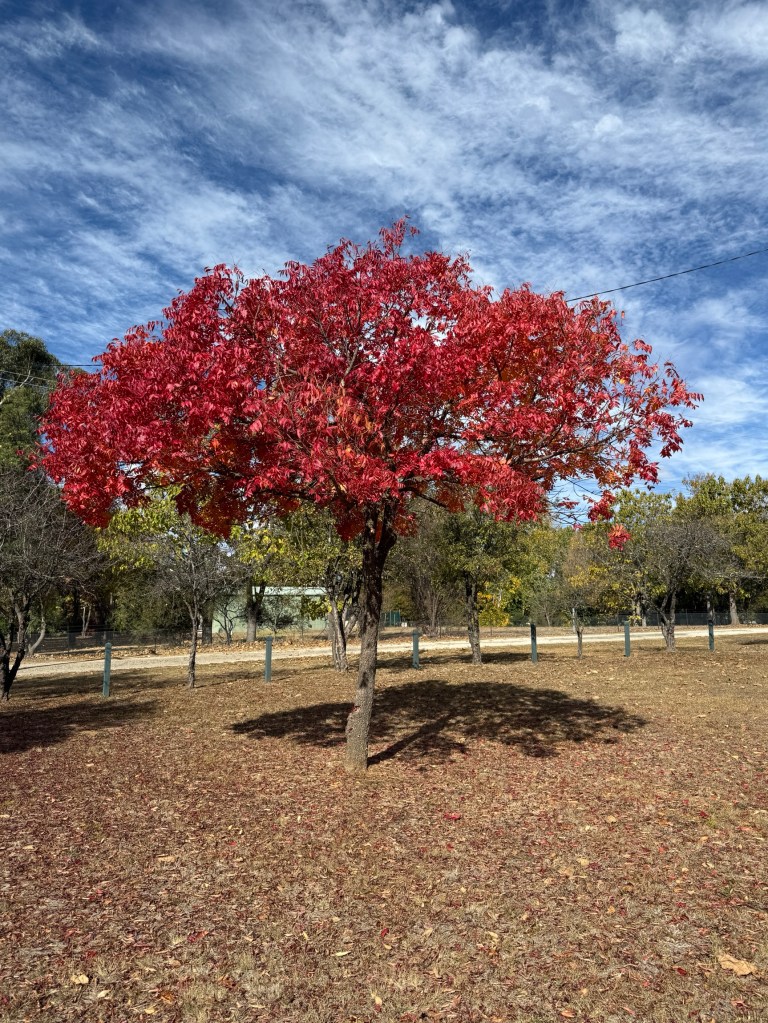
After poking around Ben Lomond for a little while we returned to the highway on a short sealed road and made our way back to Glencoe. Before returning to GI we had a picnic lunch in the local park among the Autumn colours.
We are moving on from Glen Innes in the morning and are heading for Grafton via the Gwydir Highway, through the Gibralter Range NP. Planning to stop at Jackadgery, a bit over half way.
Stone Country
Before the start of the Celtic Festival we went on a short loop drive in the hinterland of Tenterfield. Stone Country.
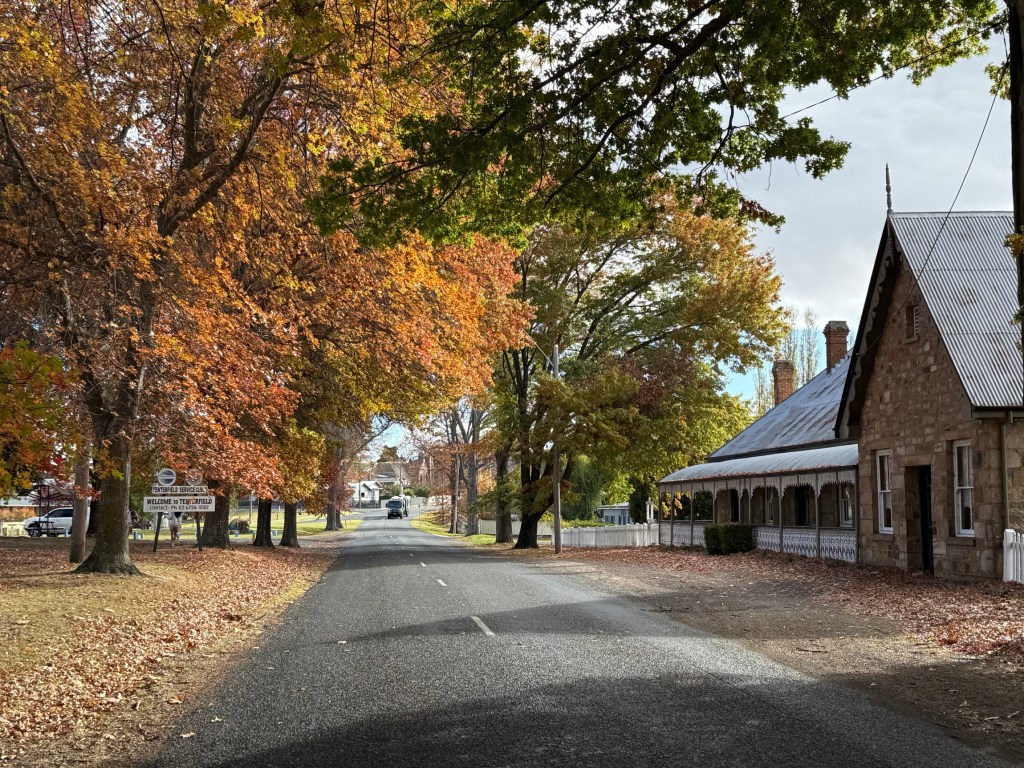
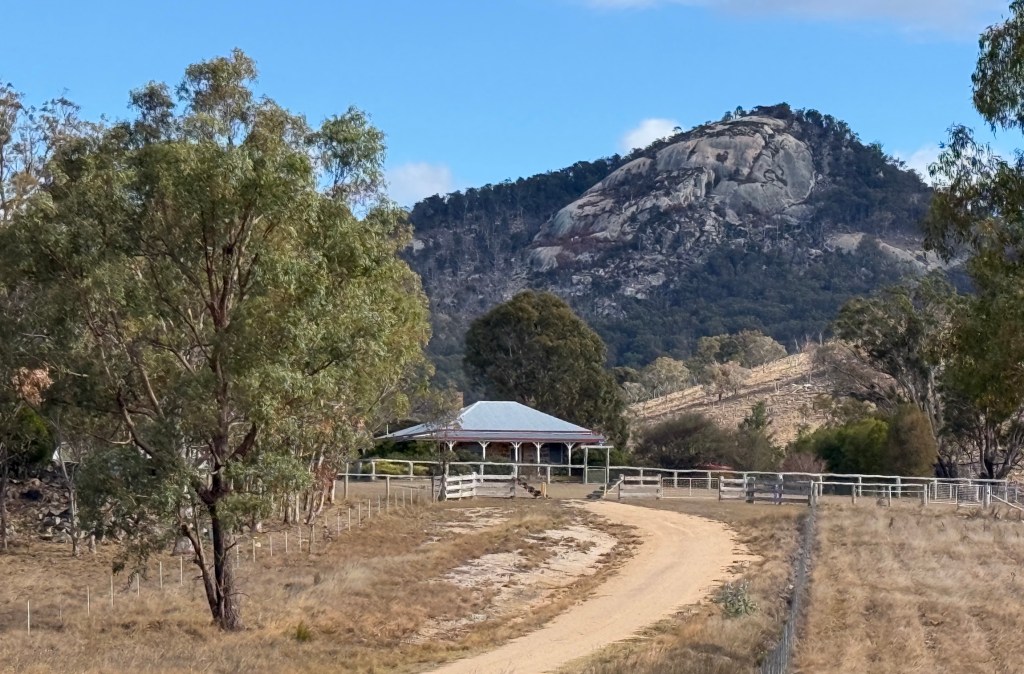
The region is fairly dry. The locals complain of drought conditions, many of the creeks are dry and the paddocks browned off.
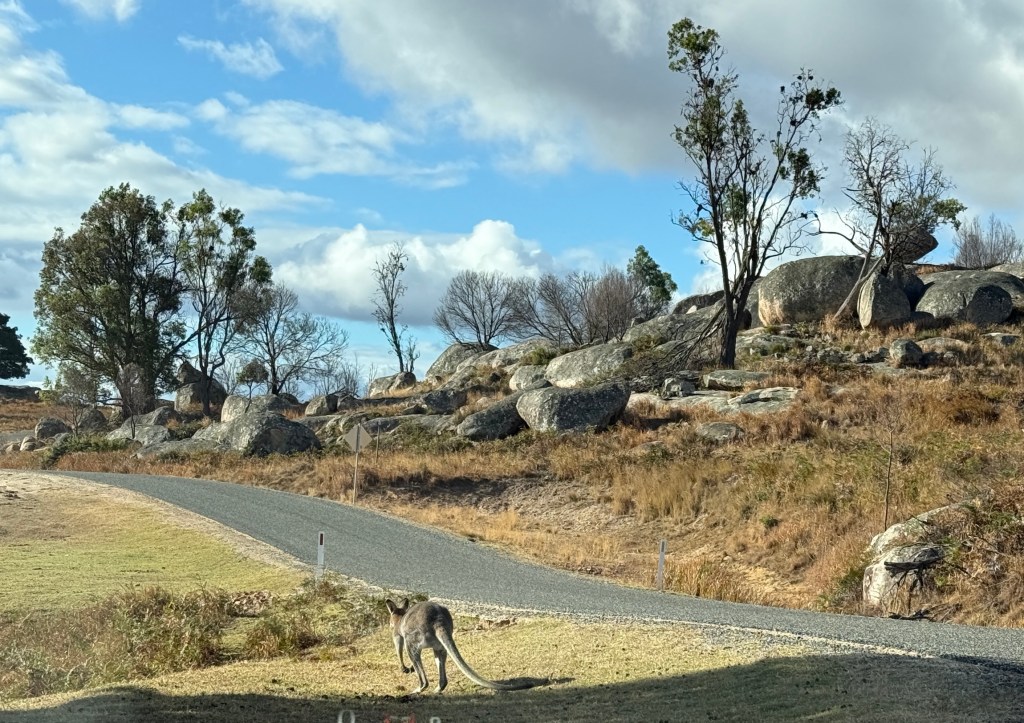
The graziers have their Black Angus (probably) on the roadside verges munching away like lawn mowers on the longer grass. Maybe being fattened up for market!
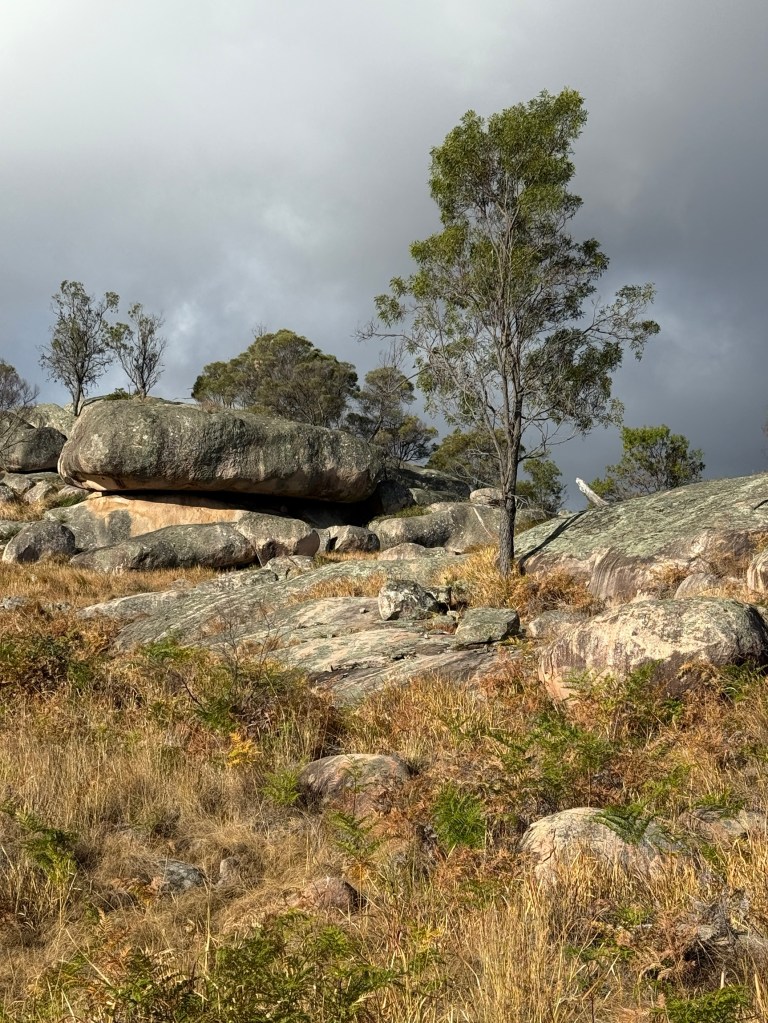
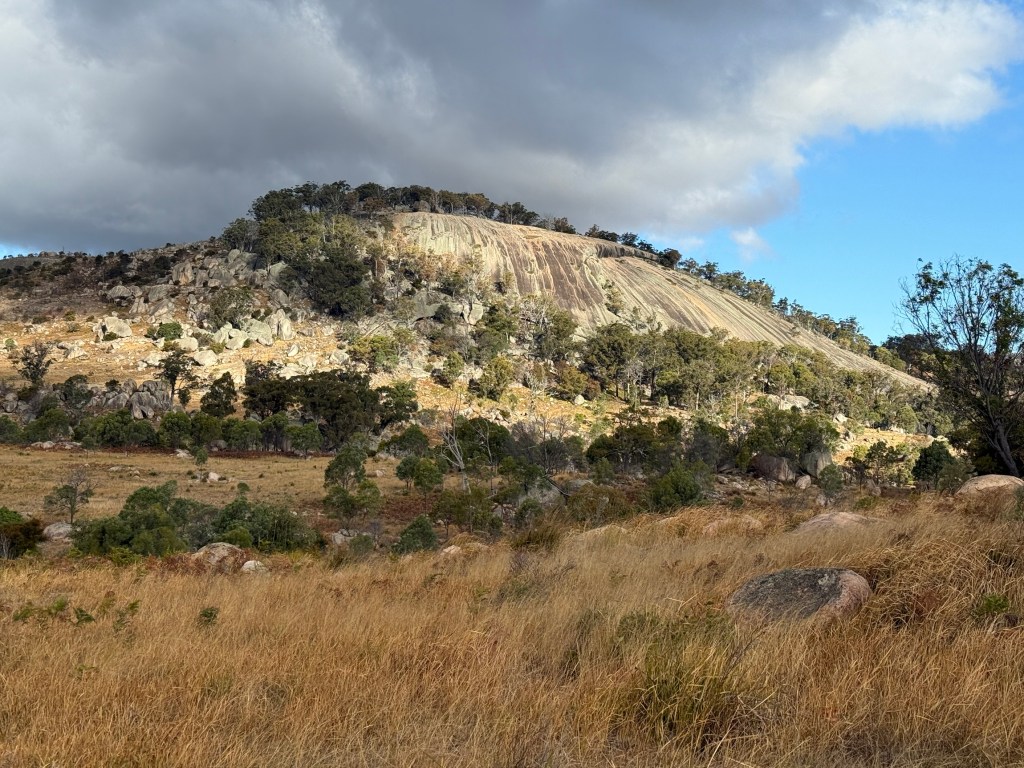
The granite outcrops and boulders are everywhere you look and make this a dramatic landscape. Australia’s standing stones!
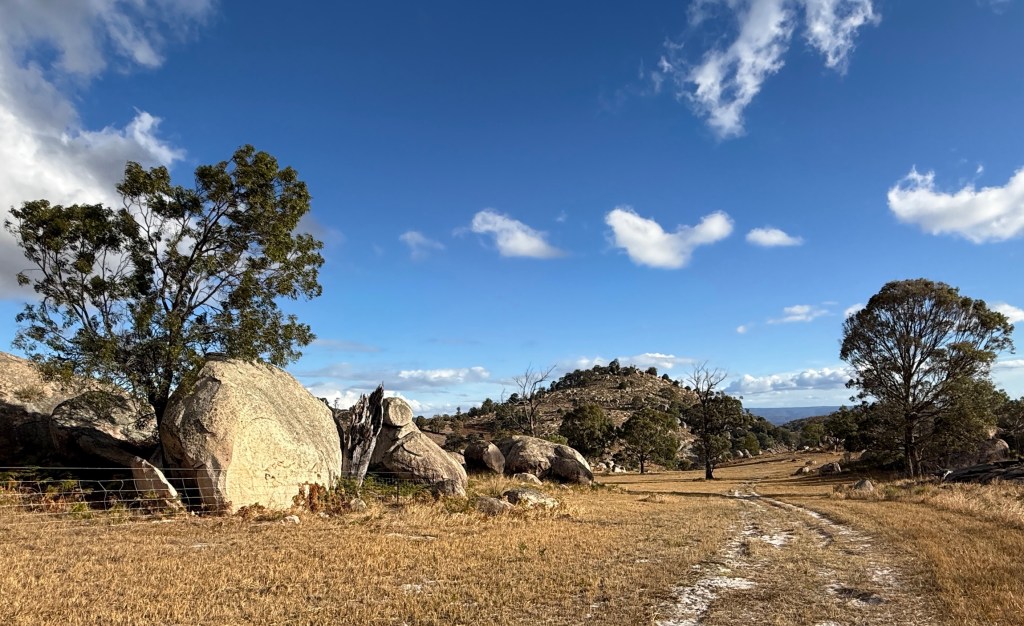
The road took us to the top of Mt McKenzie and a lookout over Tenterfield.
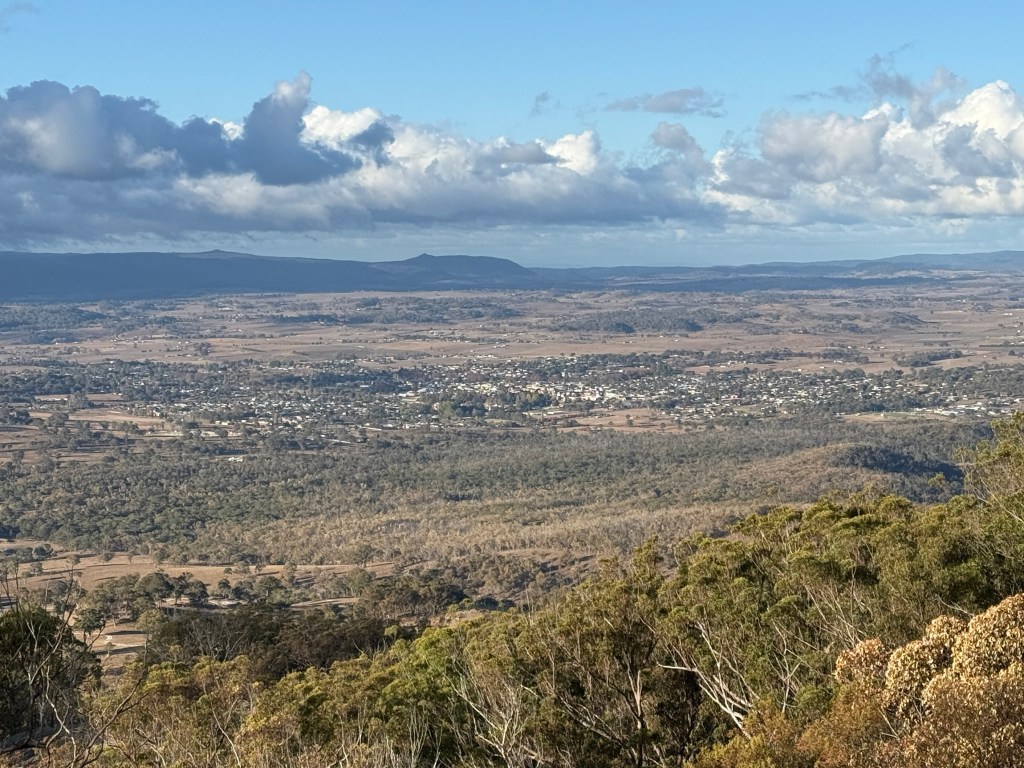
The town seemed a long way away, buildings specks on the landscape.
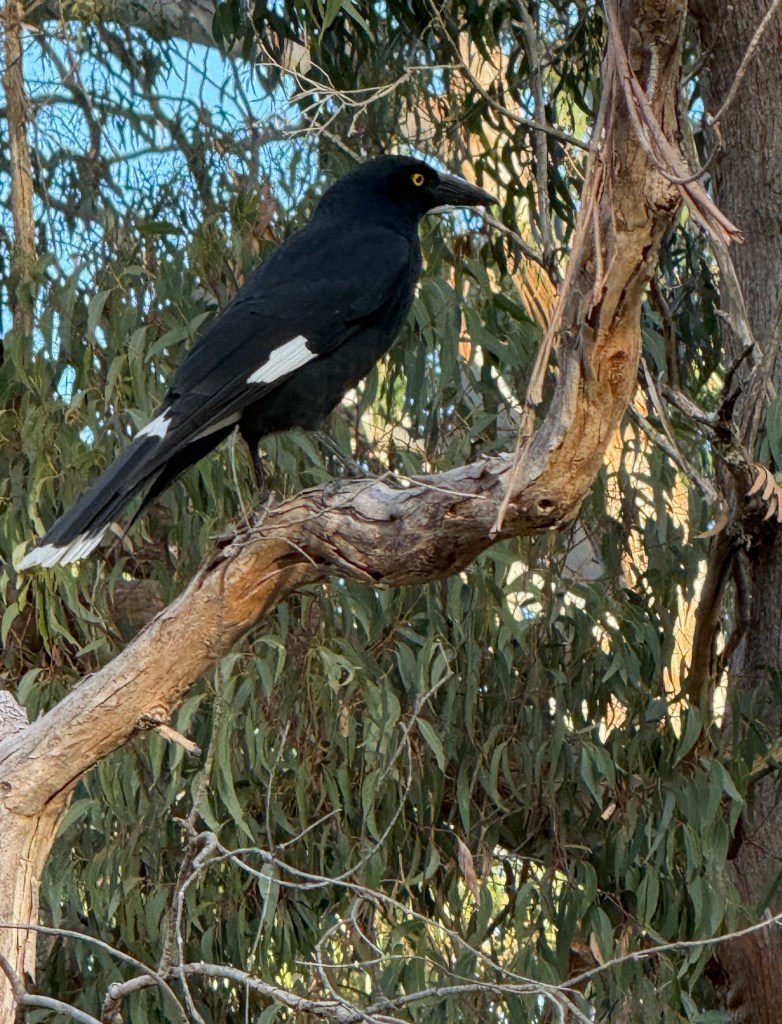
The Currawong was uninterested in the view.
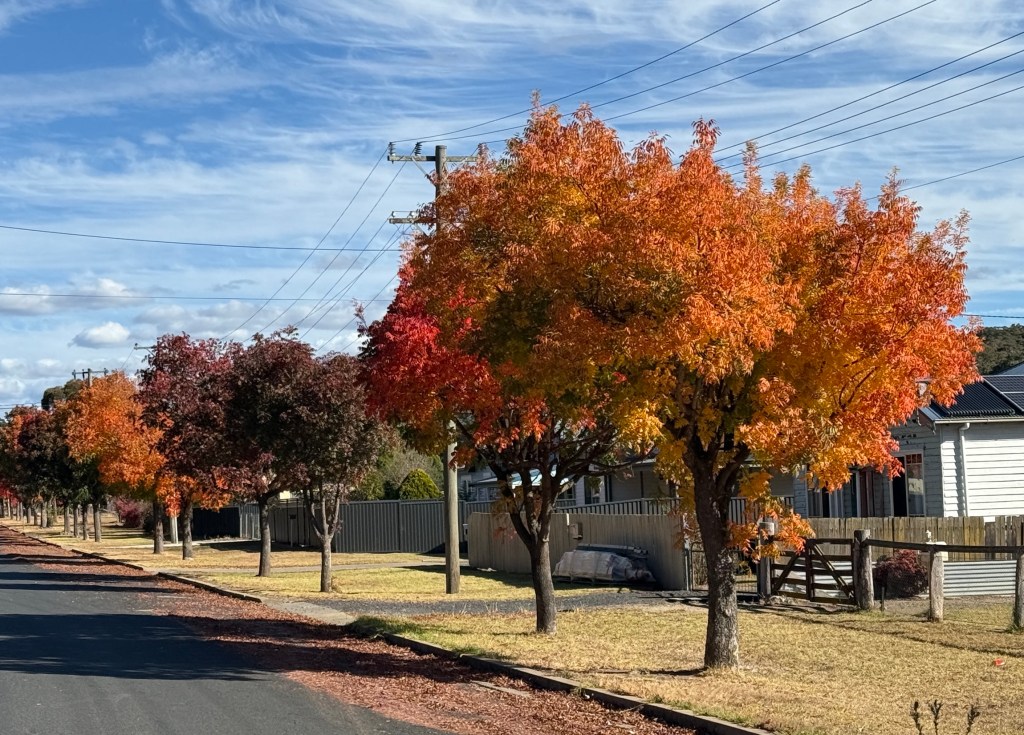
Skipping ahead we are in Glen Innes and the Festival is over for another year. The town, like Tenterfield, is ablaze in Autumn colours.
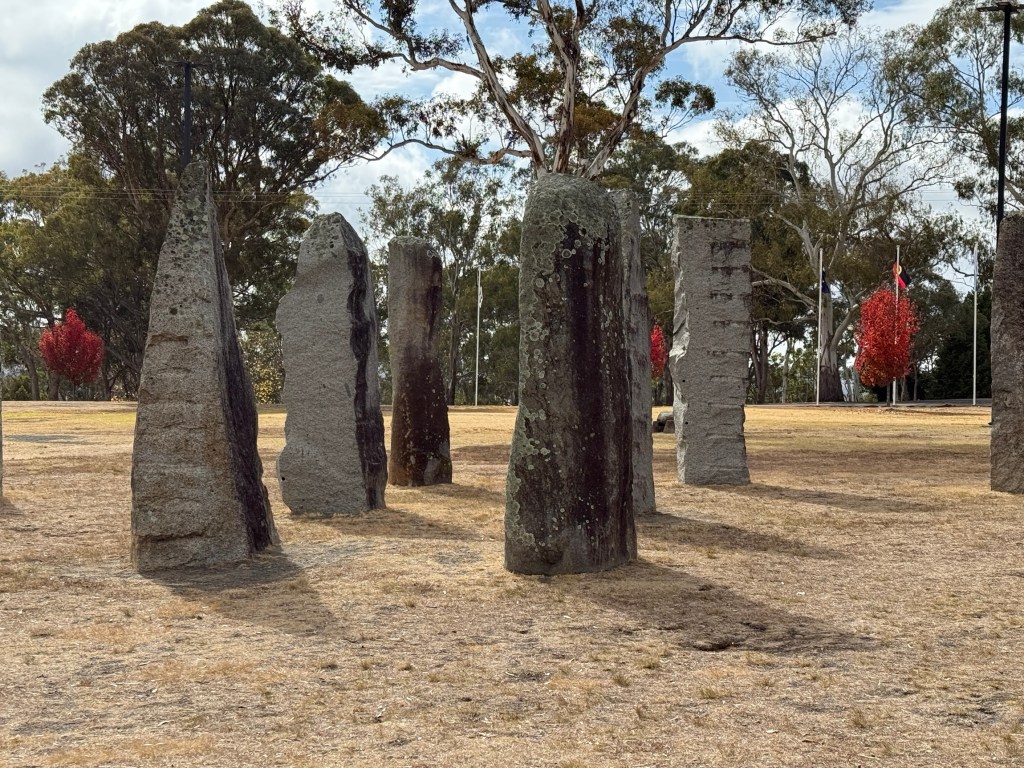
We have made a trip up to the Standing Stones, they are actually referred to as the Australian Standing Stones. All the evidence that a Festival might have been held here is mostly gone, a few remaining bits of the big performance tents are being packed up. In previous blogs I think I have referred to the festival as the Glen Innes Celtic Festival. In fact it is the Australian Celtic Festival.
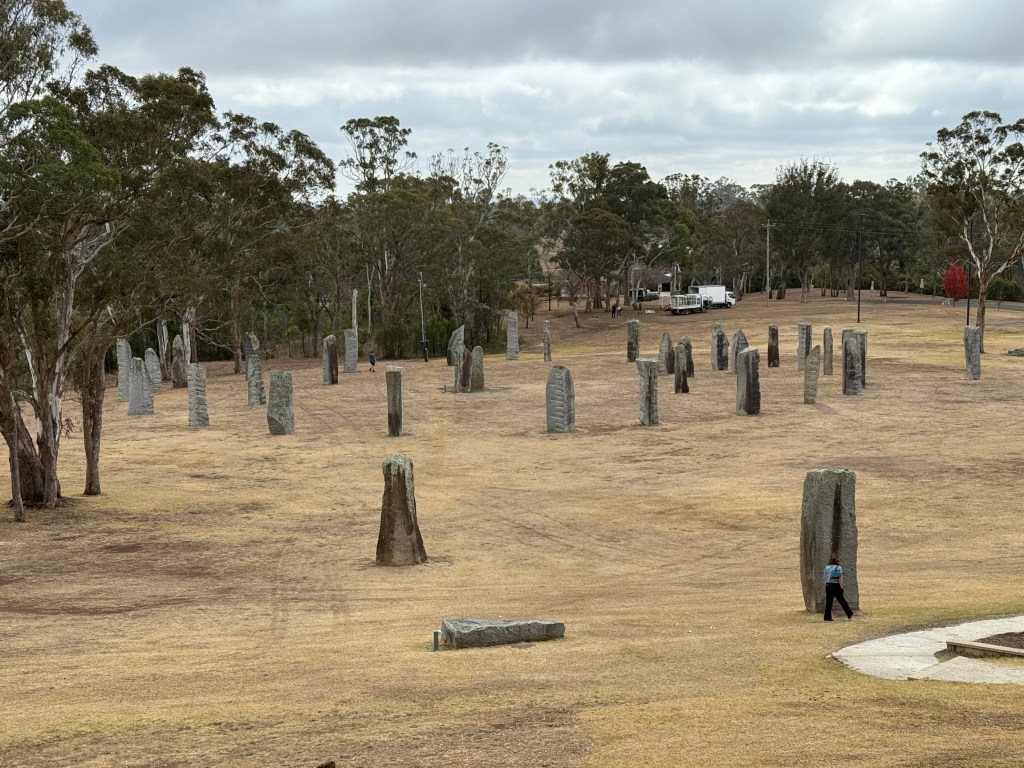
In 1988 Glen Innes won a Bi-Centenary competition to construct the Stones in recognition of the part played by the Celtic peoples in the development of Australia post English colonisation. The Stones were cut from the surrounding granite boulders and laid out in a similar pattern to the Ring of Brodgar in Scotland’s Orkney Islands.
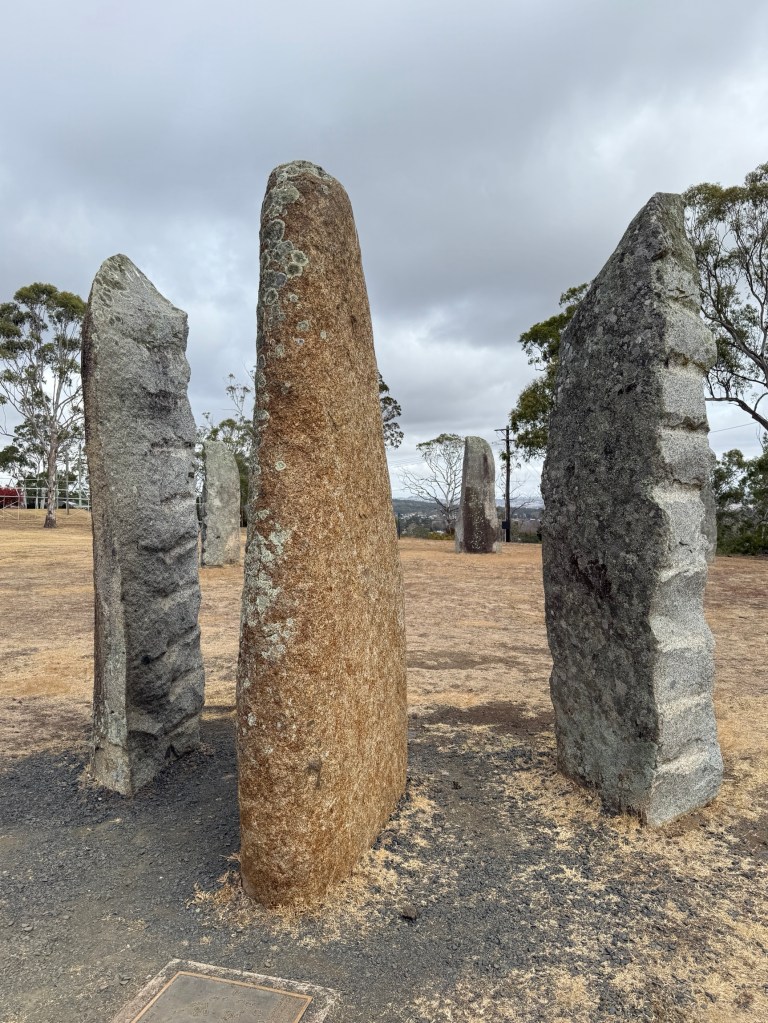
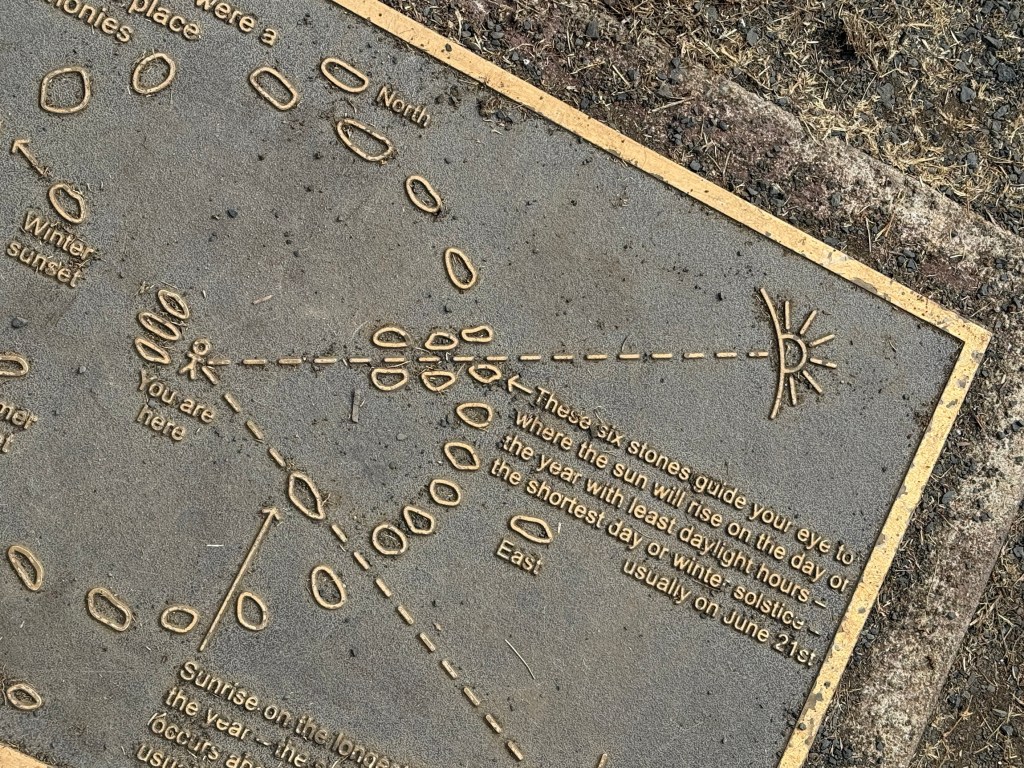
The Stones have the same orientation (varied for the Southern Hemisphere) as the ancient Ring of Brodgar which served as a working calendar for farmers as to when to sow and plant.
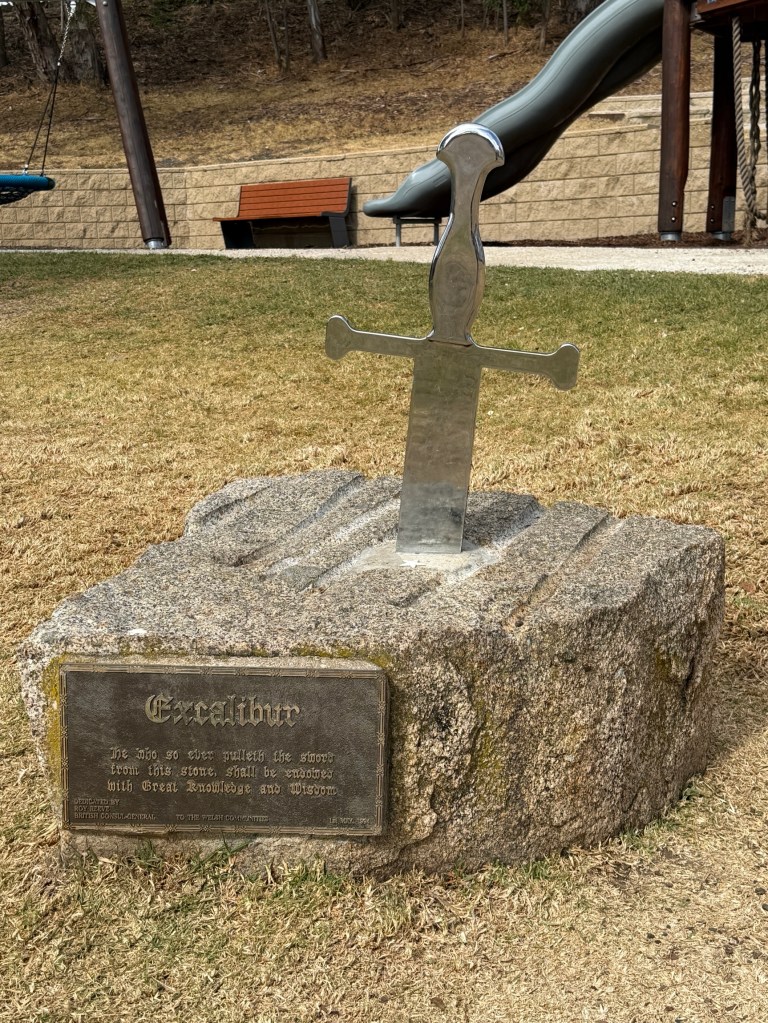
There are a few other random stones around the site, including the Excalibur stone, complete with embedded sword awaiting extraction.
In the Celtic Wall there is a display of small stones contributed by Celts from around Australia and the world.
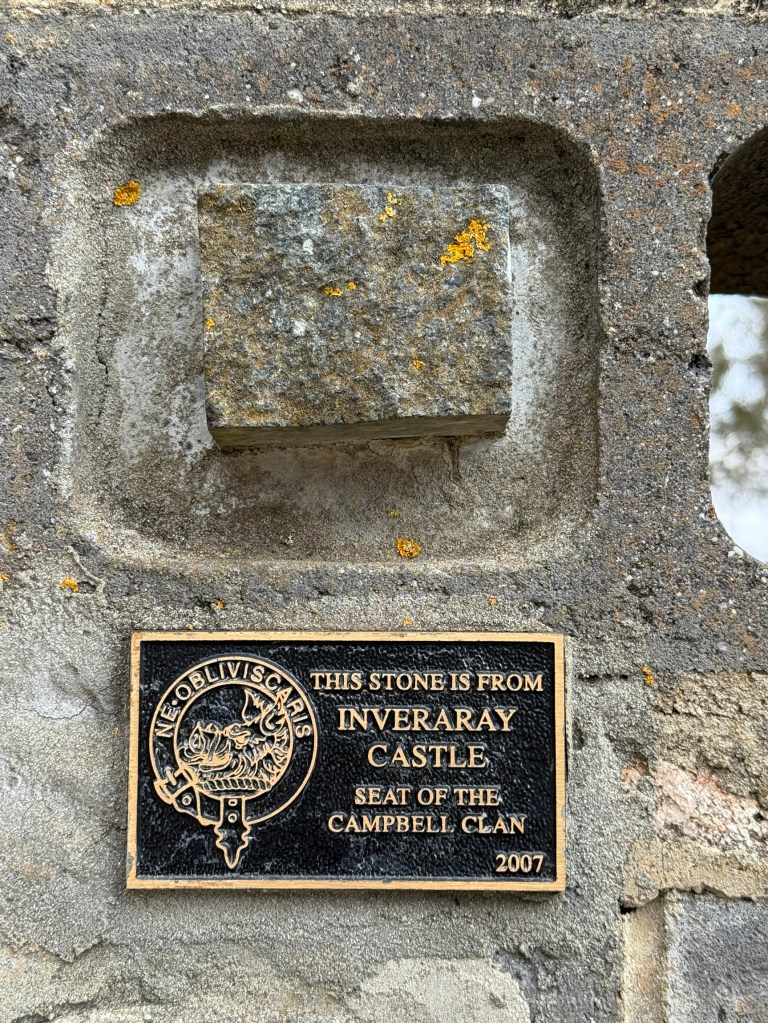
One in particular caught the eye. It was from the ruins of Inveraray Castle beside the Caledonian Canal in central Scotland. We had wandered through these a few years back when boating on the canal.
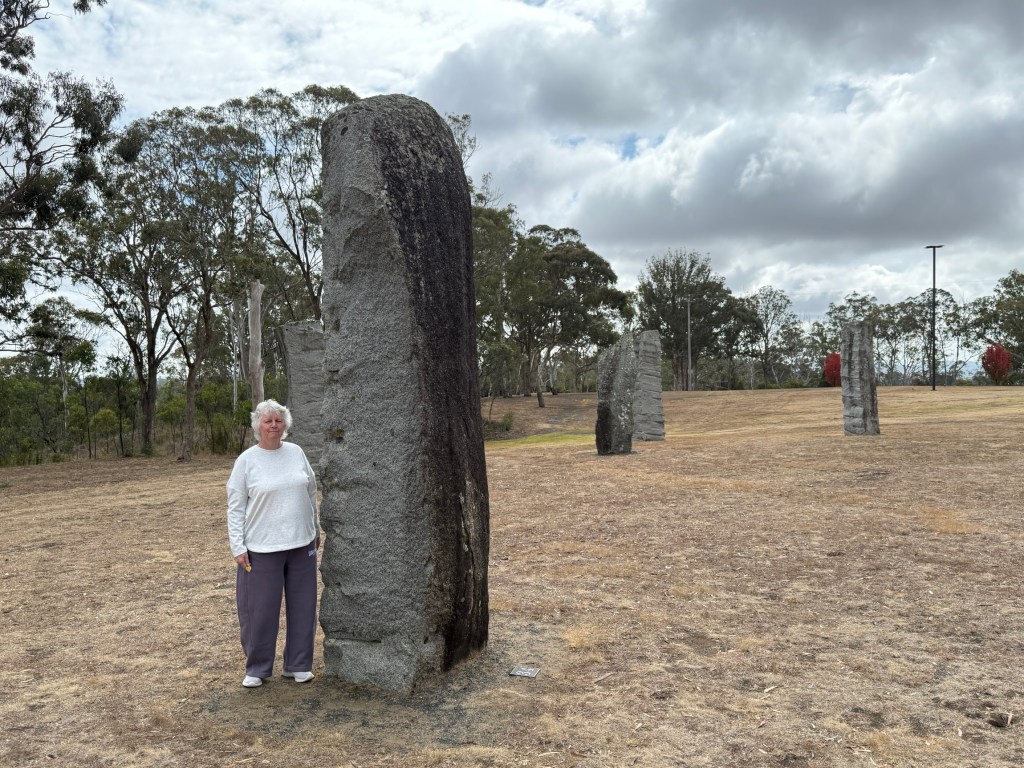
We are off next time on a short drive around the Glen Innes hinterland.
Festival wrap up
The last blog covered a couple of days (Saturday and Sunday) of ‘physical’ activities at the Festival. On the Saturday night back in Tenterfield our little group of six enjoyed dinner at the Royal Tenterfield Hotel after a long day at the Street Parade and later the Standing Stones venue.
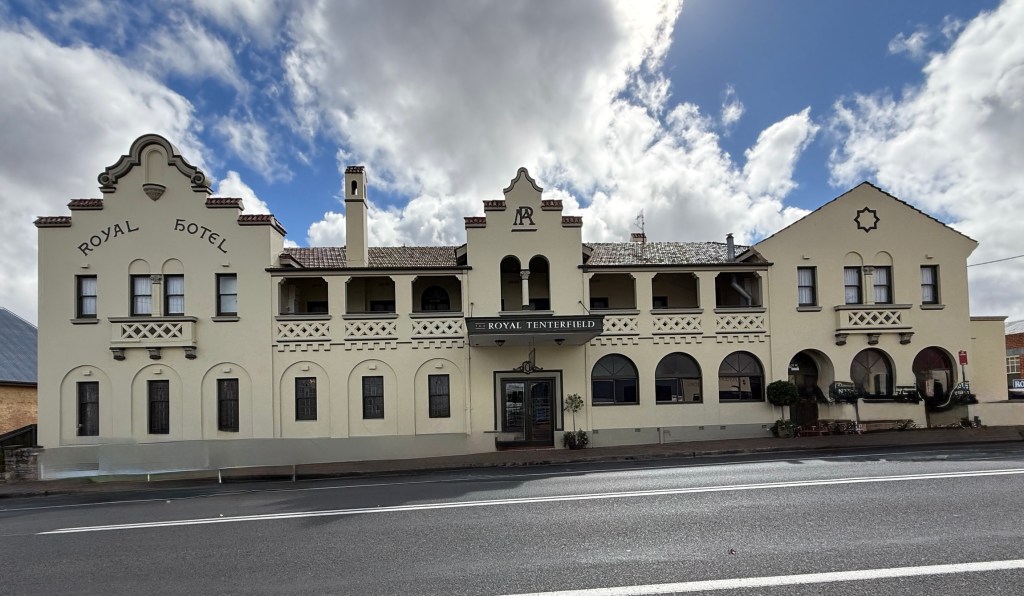
The Royal has a long history stretching back into the 1800s and has recently undergone a renovation, whilst retaining its old world charm.
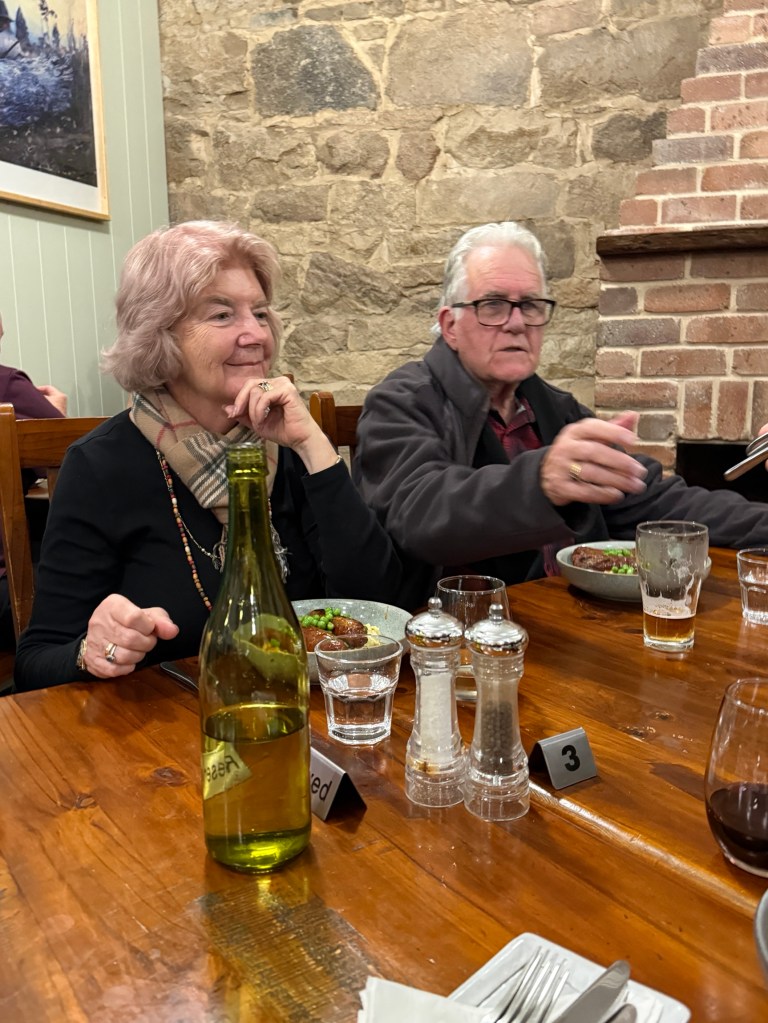
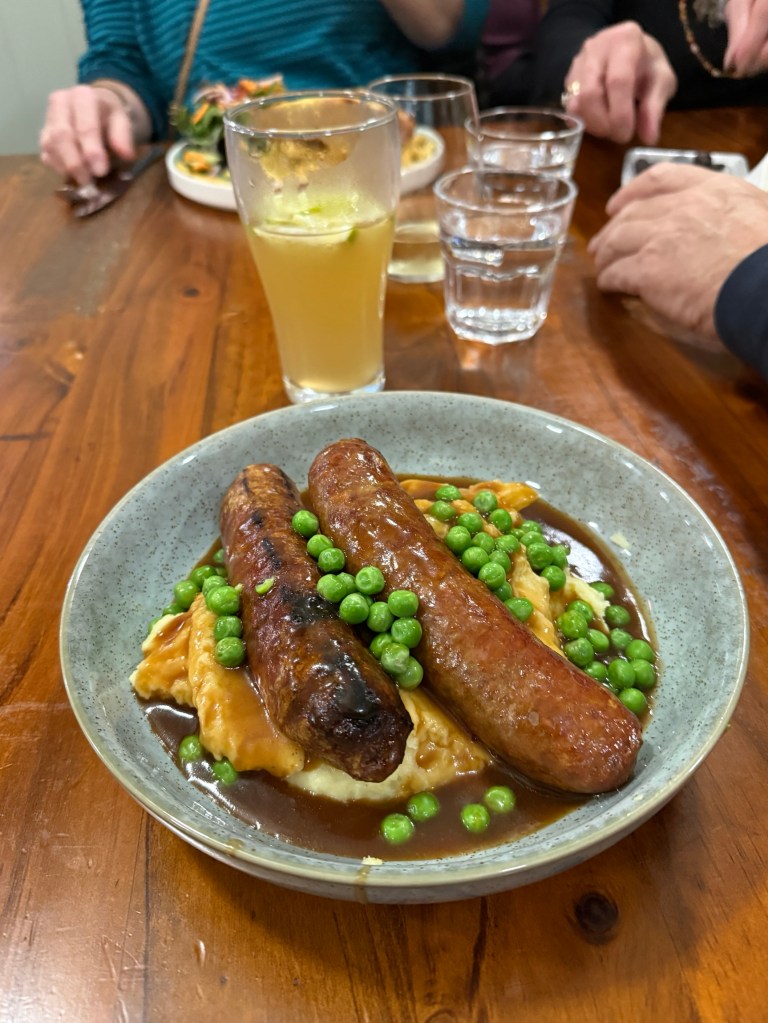
The kitchen does the usual pub favourites but with a modern twist and presentation. A few of us had Bangers and Mash, others Lamb Shanks and Chicken Parmie.
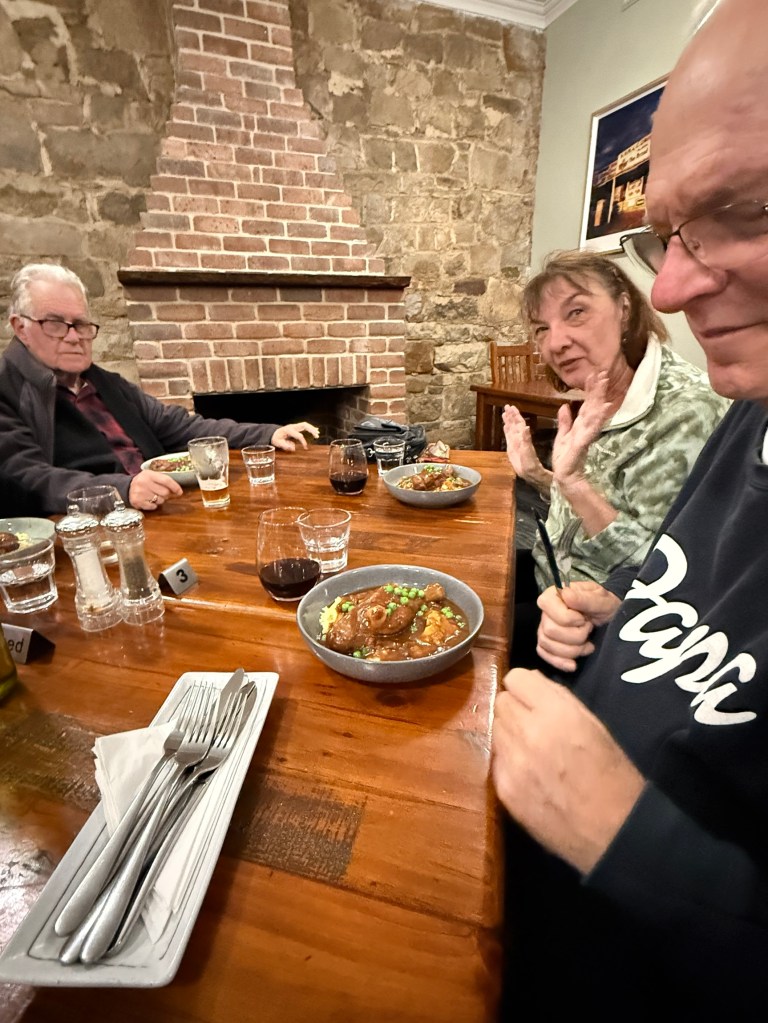
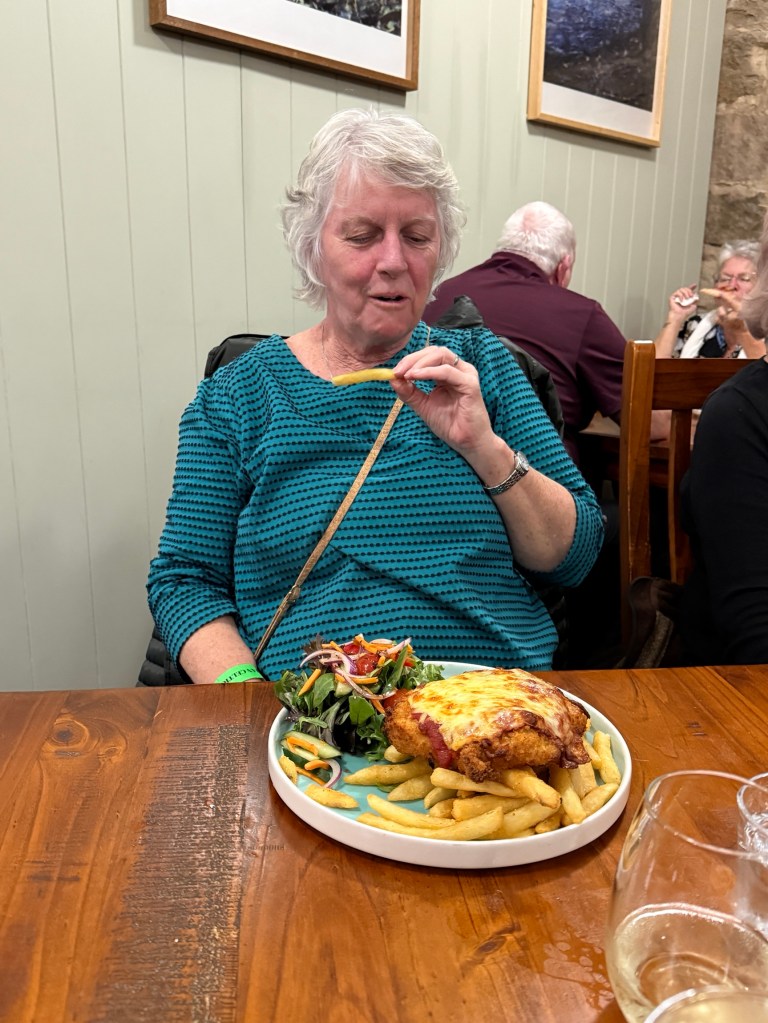
All very tasty. If ever in Tenterfield you can’t go wrong tucking in here!
The other four were heading home in the morning (Sunday) after a latish breakfast at a local cafe. We were heading off back to Glen Innes for the last day of the festival and then stay on there for a couple of days to recover!
All of us had spent some time listening to the Festival music on the Saturday and we (R and L) did so again on the Sunday. No videos this time, running out of storage space for them on the blog.
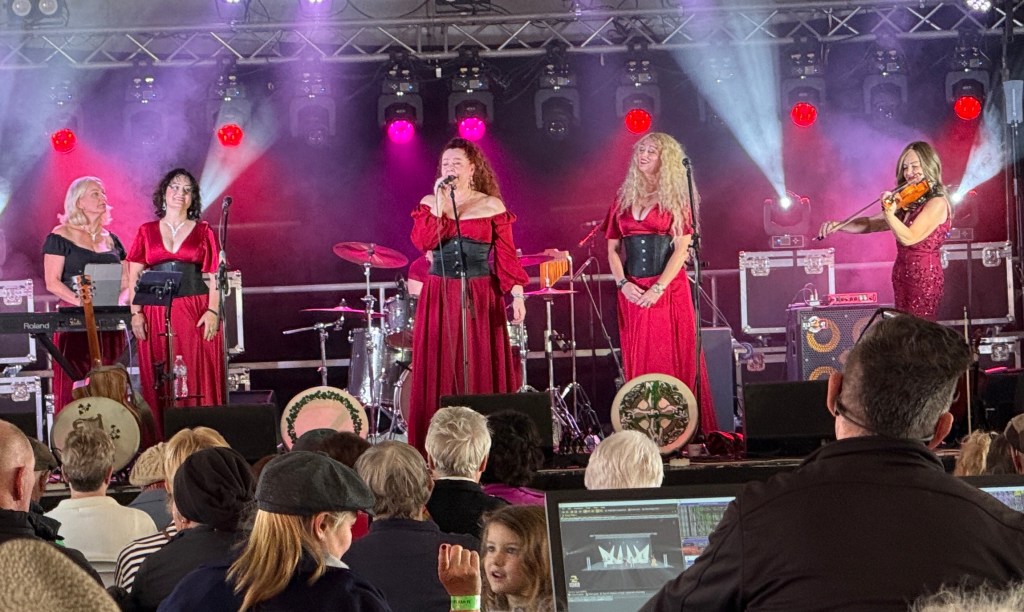
It was quite a wide variety of performances, frequently with Celtic dancing thrown in. Some traditional stuff, some traditional stuff with modern performance twist and some just edgy stuff.
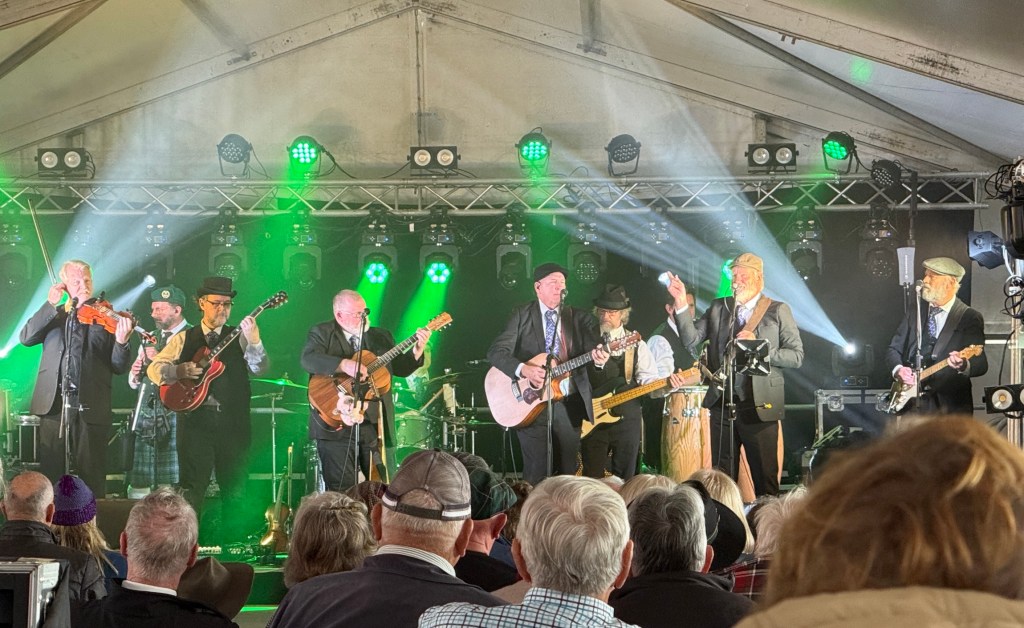
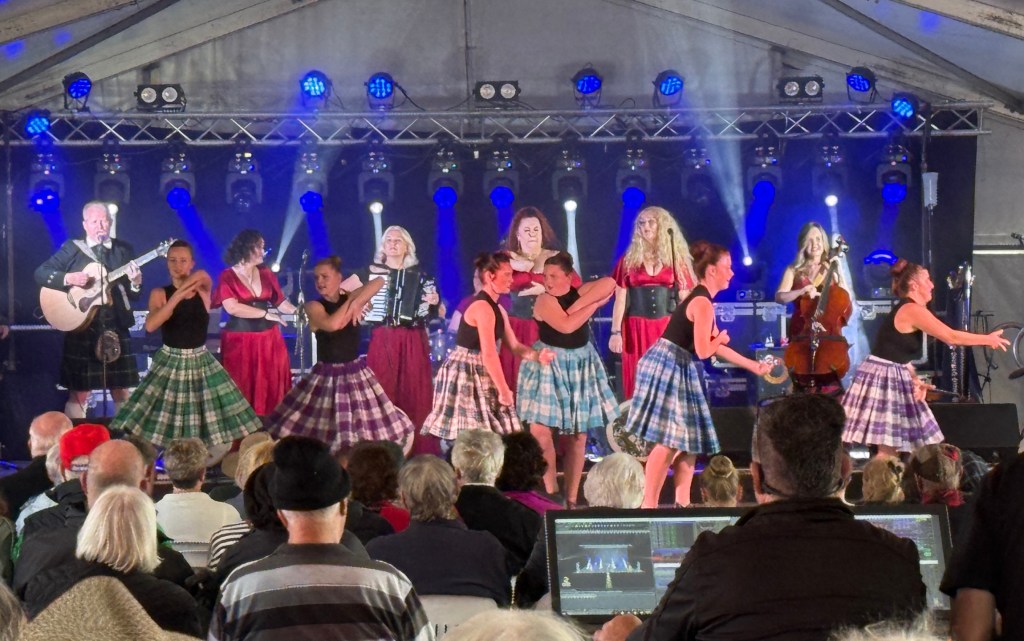
Mostly Scottish but some couldn’t resist throwing in Irish ballads as well.
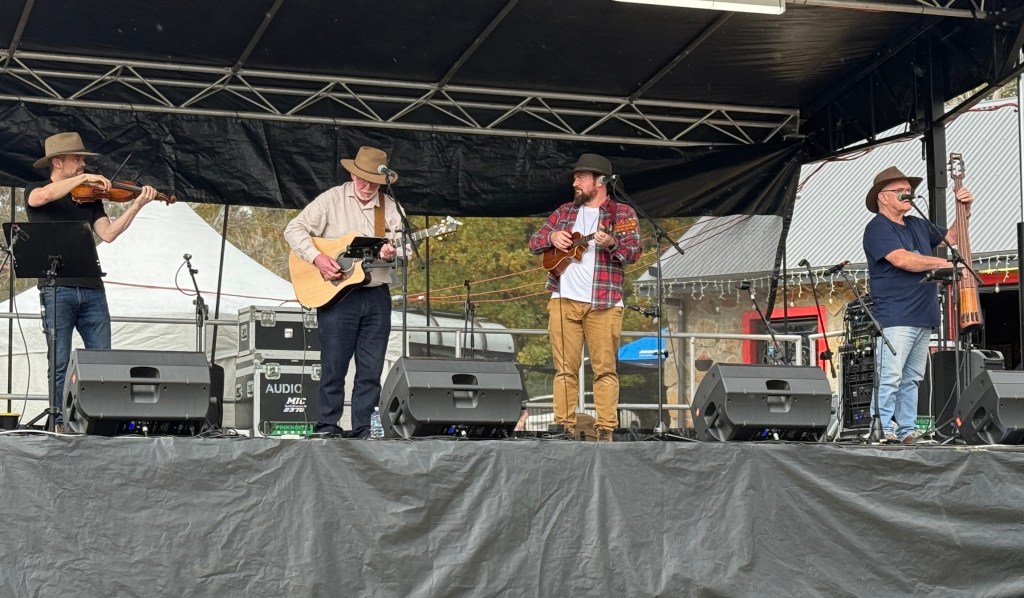
The Shamrocks, a very ‘green’ group, managed to fit in a John Denver classic ‘Country Roads’ for variety.
It was a great weekend with friends and Festival activity. We are now staying in Glen Innes for a couple of days to check out the local area. Including a visit to the Standing Stones,without all the Festival goings on, to have a look at them in a little more detail.
Celts are tough characters indeed
After our breakfast, it was actually more like a brunch, we retreated to the Info Centre to catch the shuttle bus up to the Standing Stones. More about the Stones in a later post. The Stones are the site of the Festival activities. There are a few videos in this post, those reading via an email should go back and click on the link at the top of the email ‘read on blog’ to see the videos. You should do this anyway!
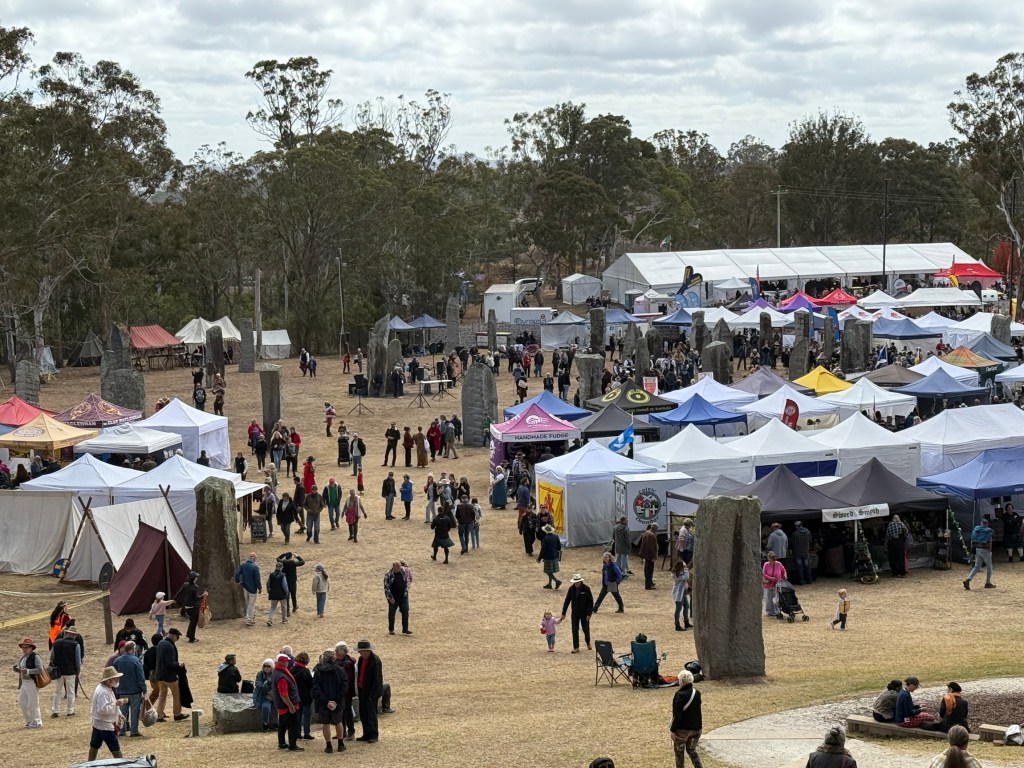
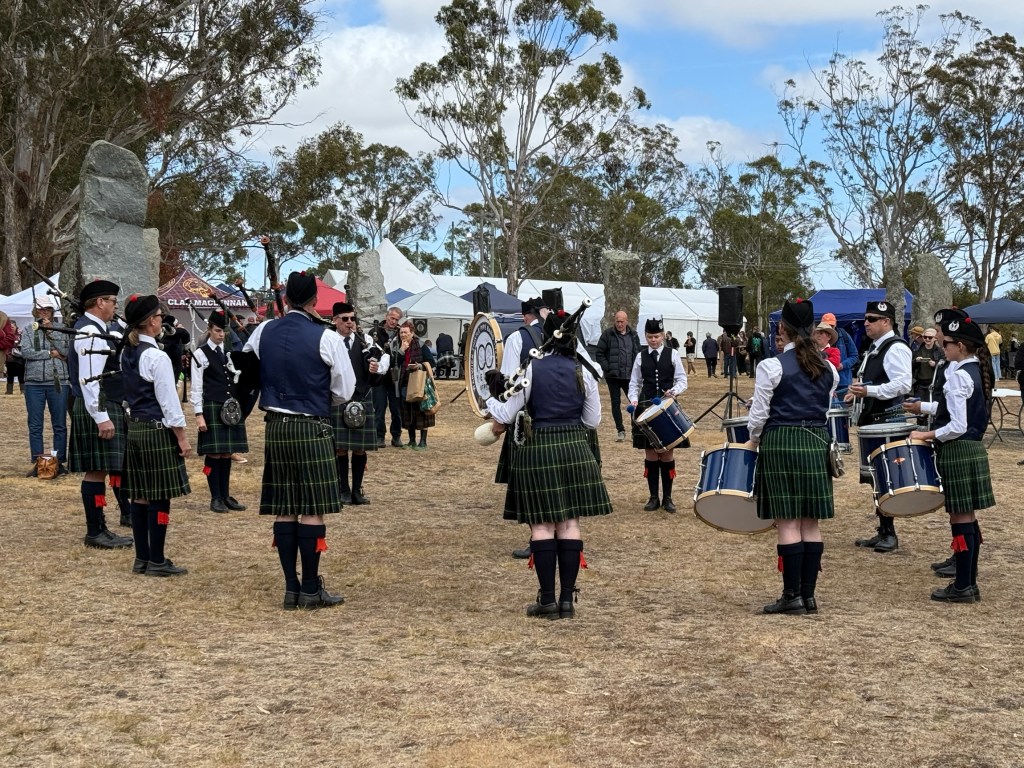
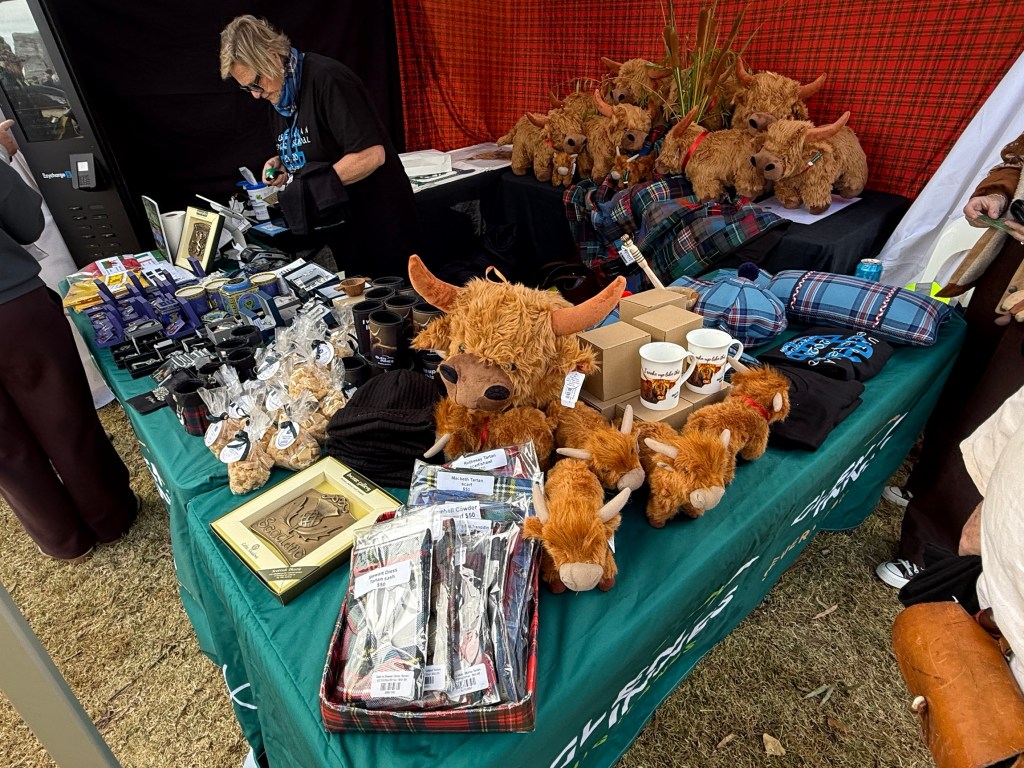
Now, festivals have a number of common elements. Food, drinks, music and stallholders trying to sell you stuff.
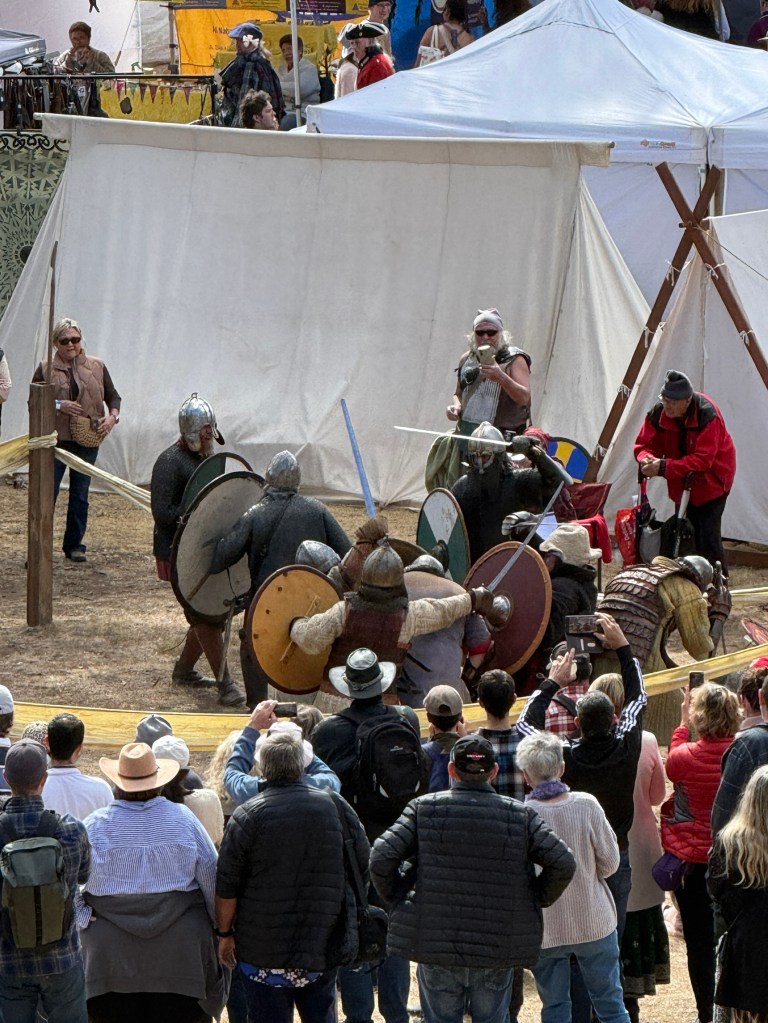
The Festival also tries to have a unique activity going on to attract people. The Celtic Festival does this so well. Some Highland Games events, jousting and medieval hand to hand combat!
After that breakfast/brunch we didn’t concern ourself with food, drink or the people trying to sell you stuff.
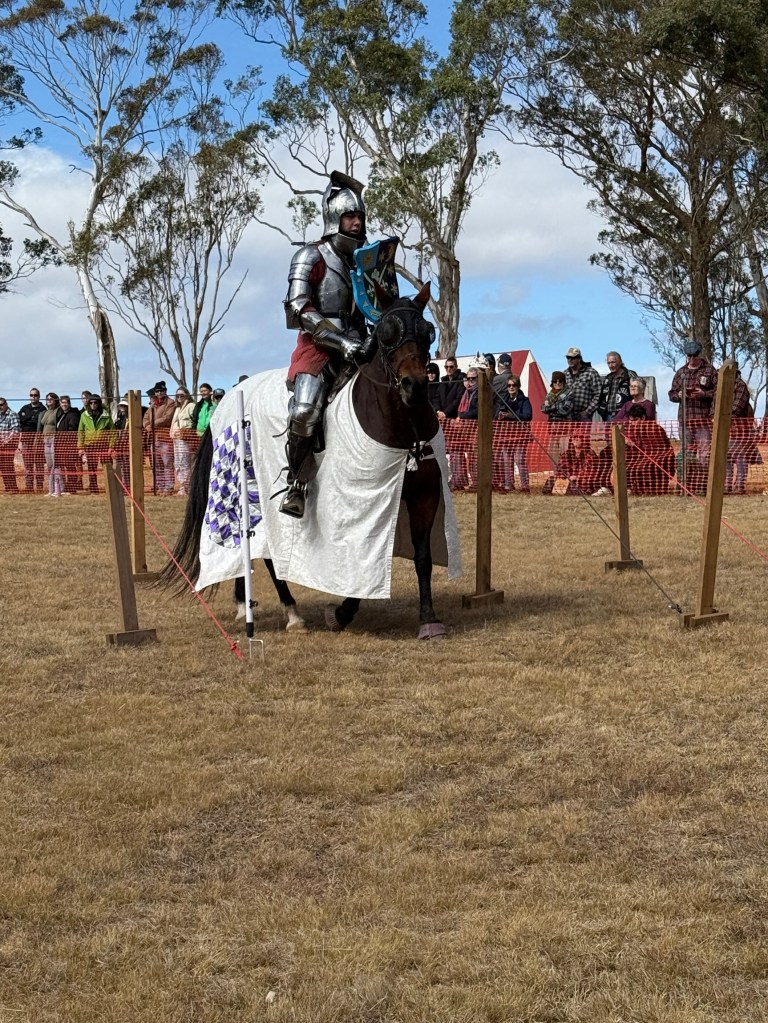
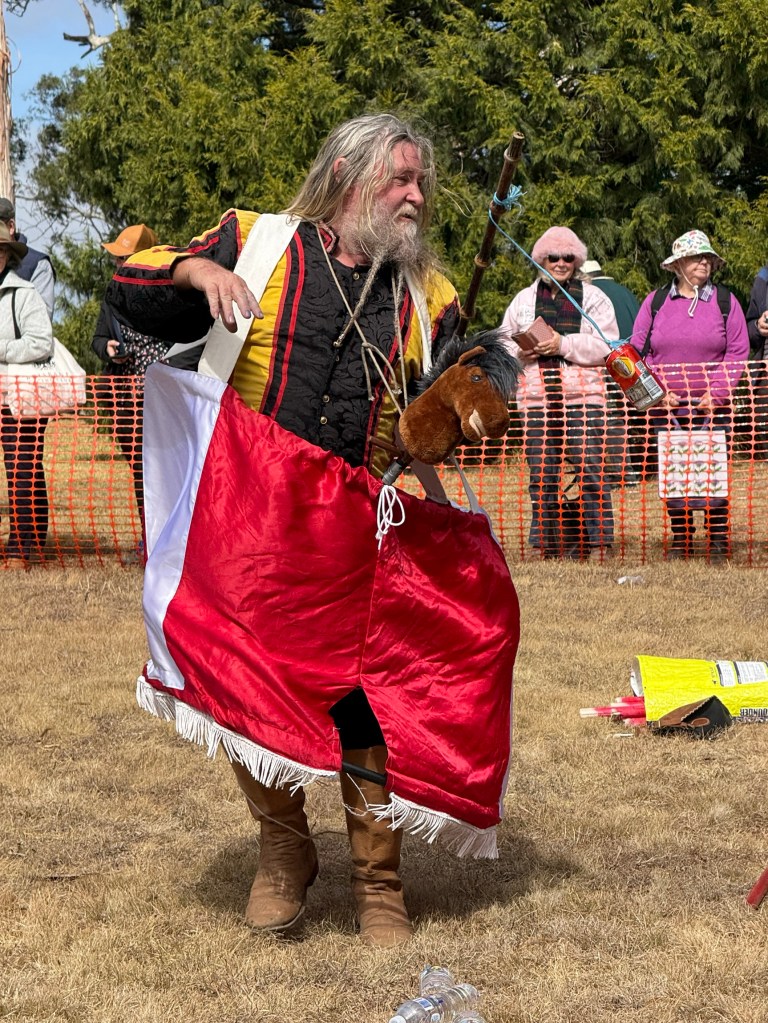
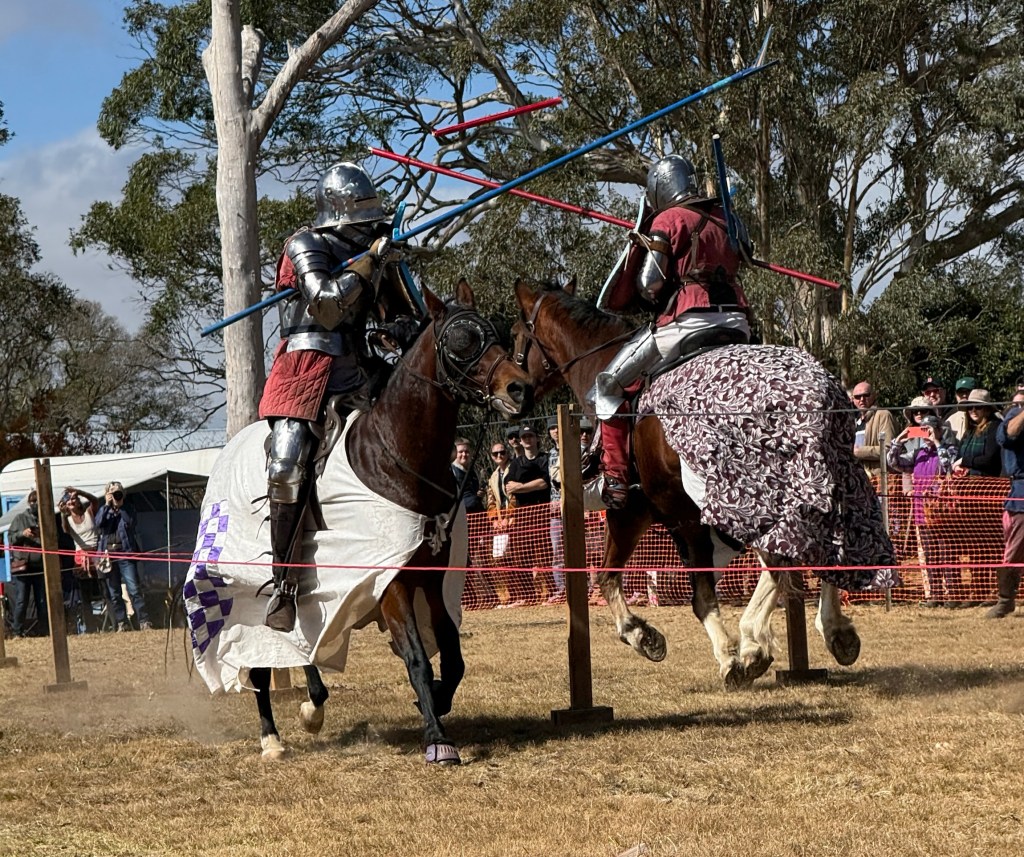
We took to the jousting, hand to hand combat and highland games, plus of course the music!
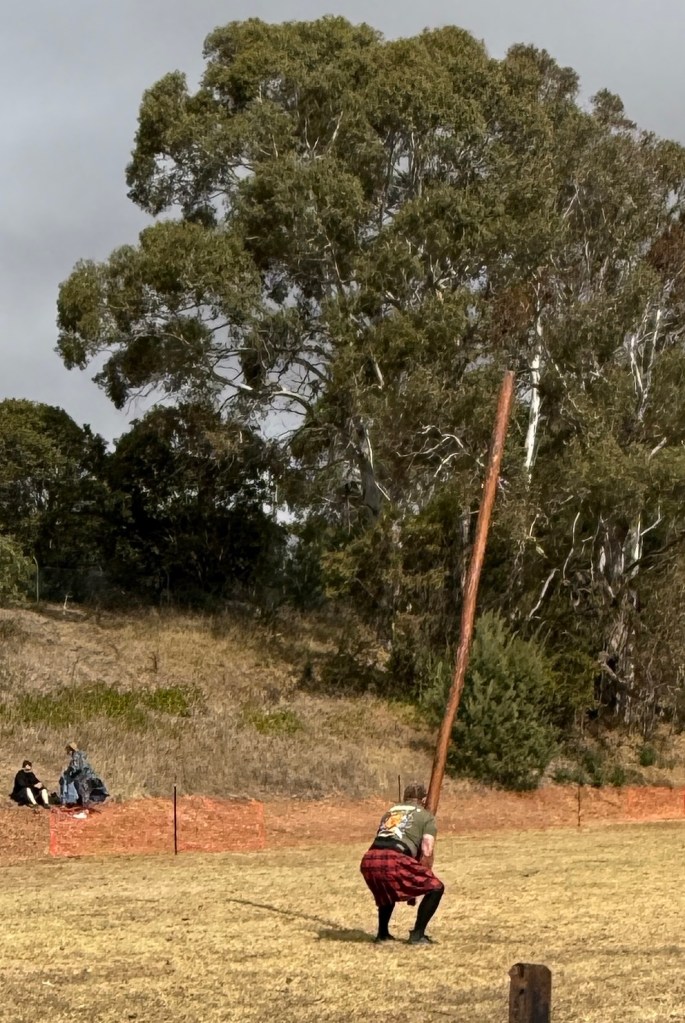
Here is some of the caber tossing on the next day.
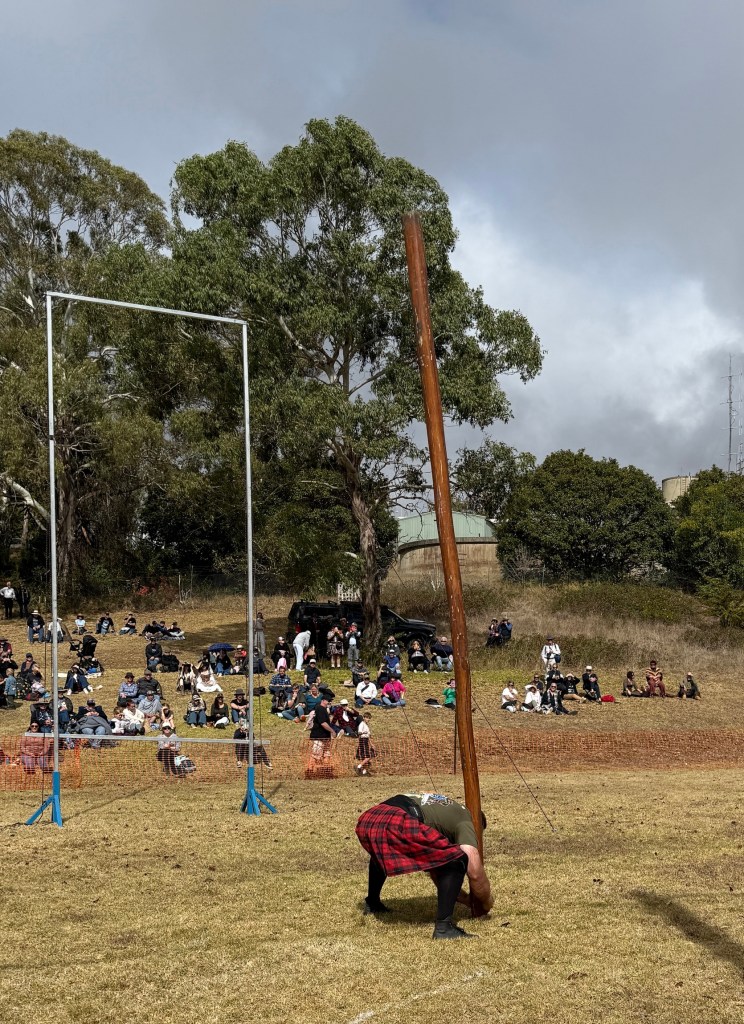
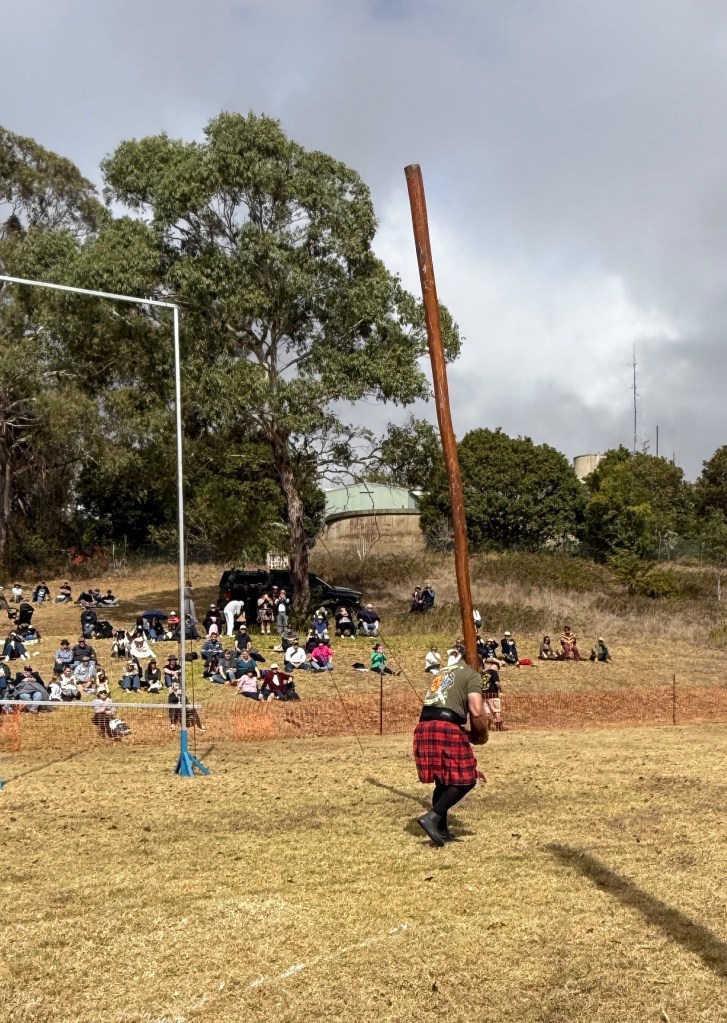
Following the Caber Tossing was the ‘weight for height’ event. A bit like a high jump except you toss a weight over the high bar, not yourself. In the open event the weight is 56 lbs (25kg) in the over 40s age it is 42 lbs (19 kg). The colours of the weights ensure there is no confusion! We watched a few characters have a go at this. Some succeeded and some fell short. Bit of strength is involved in this! The ladies have a go at this too for some reason, half the men’s weight.
Here are some pics and video, pictures tell it all!
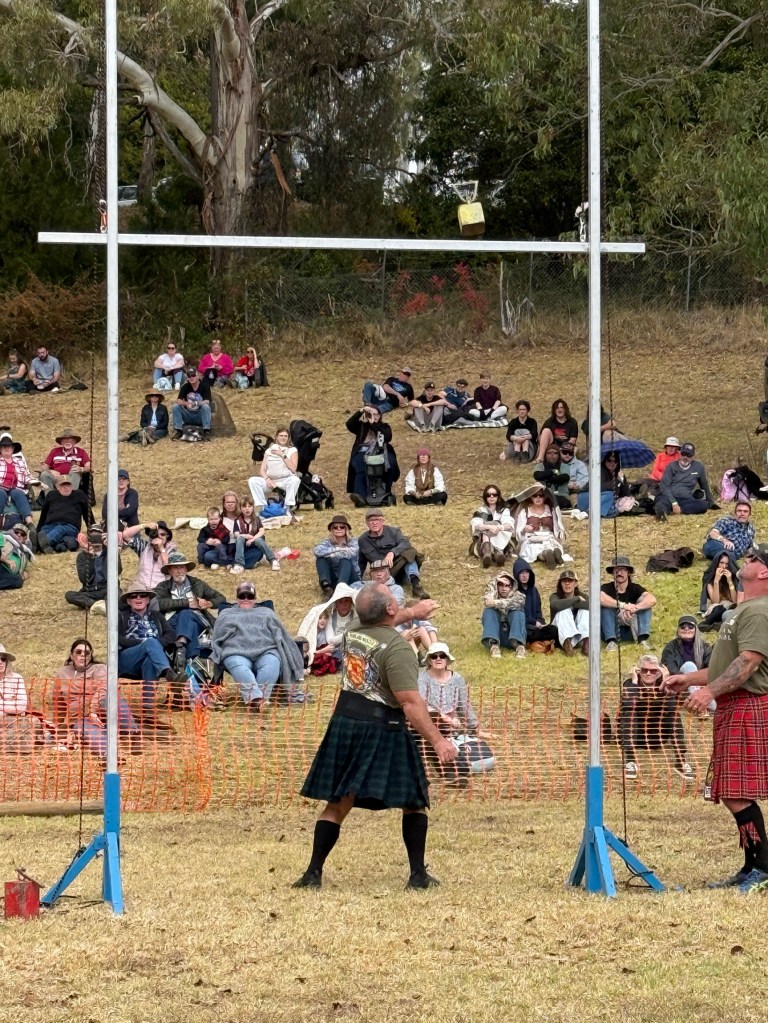
Now some video to show the technique!
The world record for this category is 19.5 ft, Terry had a go! 19 kg toss (?).
All pretty hectic. The music will have to wait till next time folks.!
Festival all the go
Saturday May 2 is the day Festival things in Glen Innes start to get going.
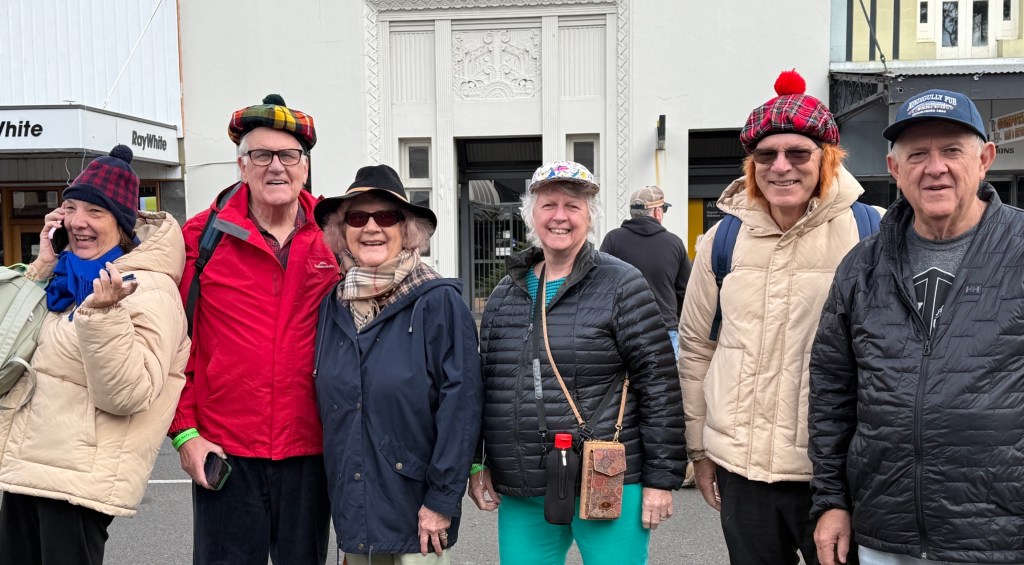
Our little group had got together in Annie’s place, the Air BnB, the day before and enjoyed a pre festival in house dinner in front of the fire. May 2 saw us on our way south to Glen Innes, after early morning tea and coffee, for the 9 am Festival Street Parade and Massed Bands.
We had planned to fit a breakfast in after the Parade before heading by a Festival bus to the site among the Standing Stones, on a hill overlooking Glen Innes.
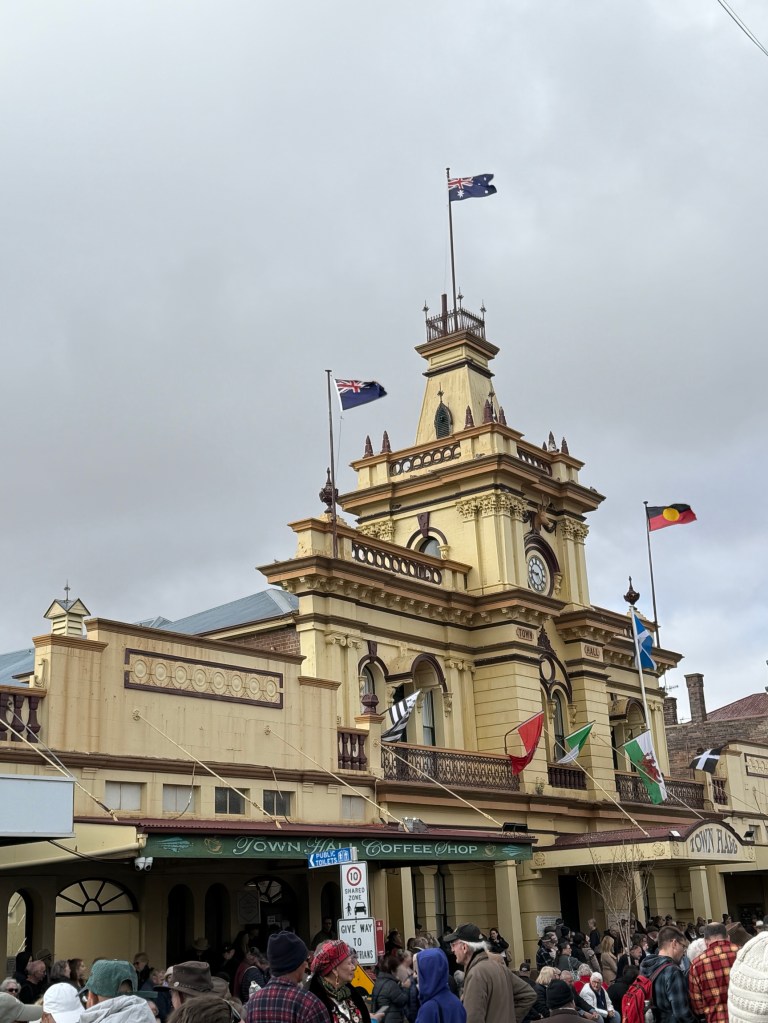
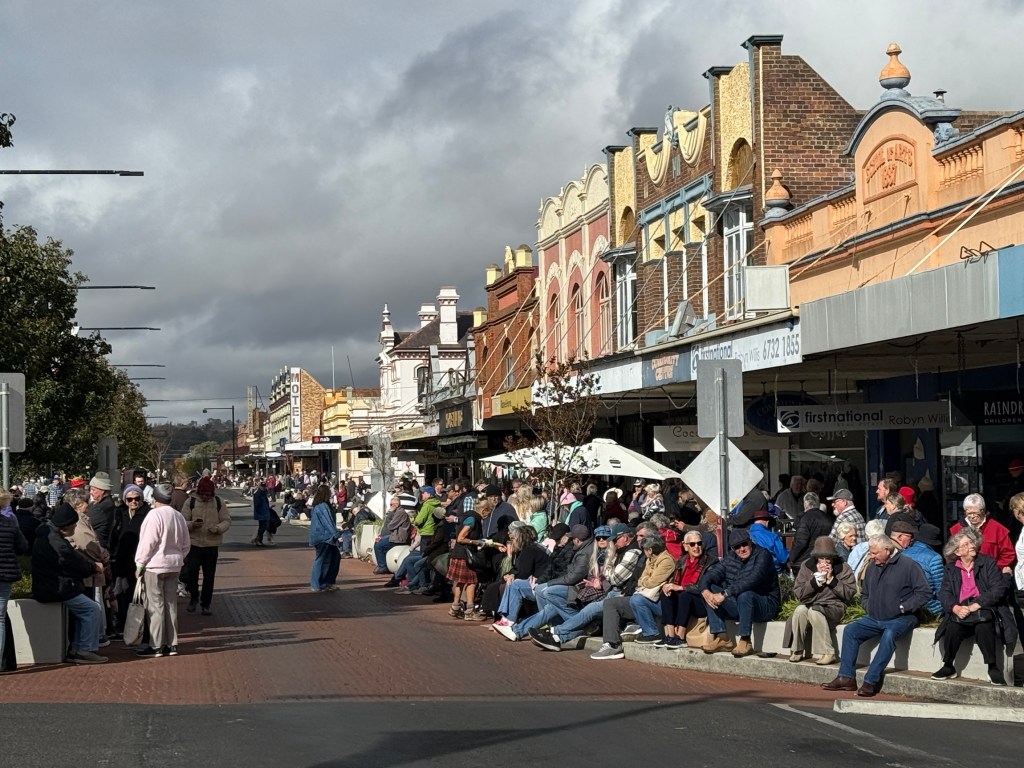
We made it to the Parade site in good time and took up what we thought was a good pozzie near the middle of the Town Square, the road went either side of us so we could see things coming on one side and going on the other side.
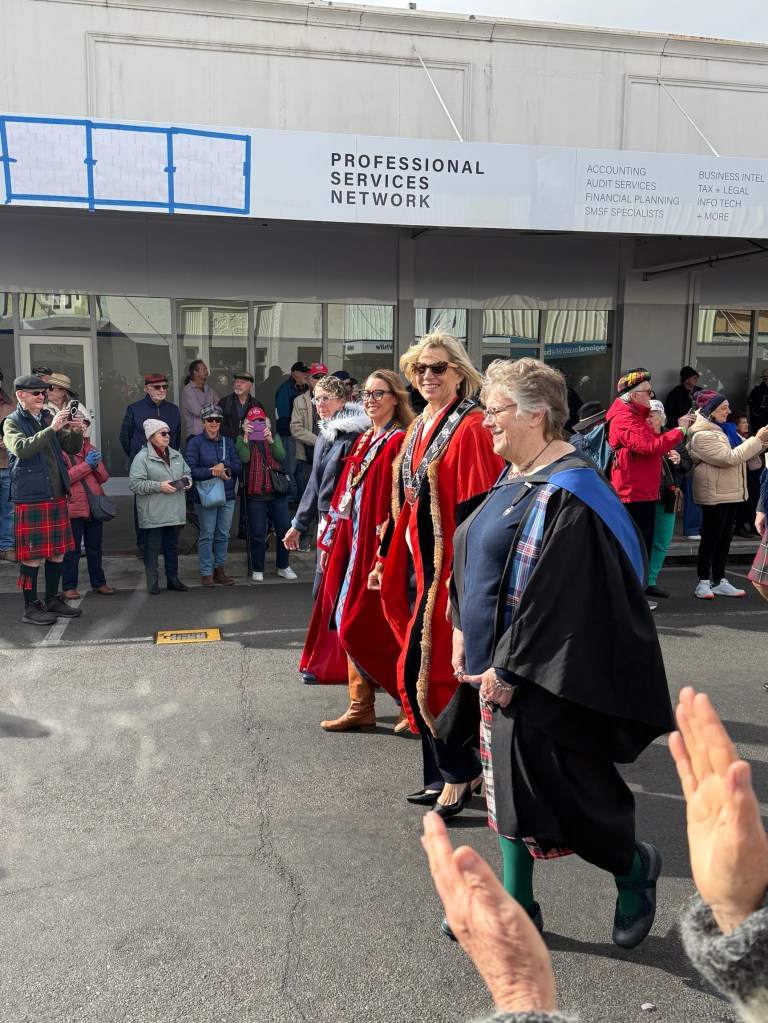
Here are a few pics of the proceedings, which eventually got underway about half an hour later than scheduled.
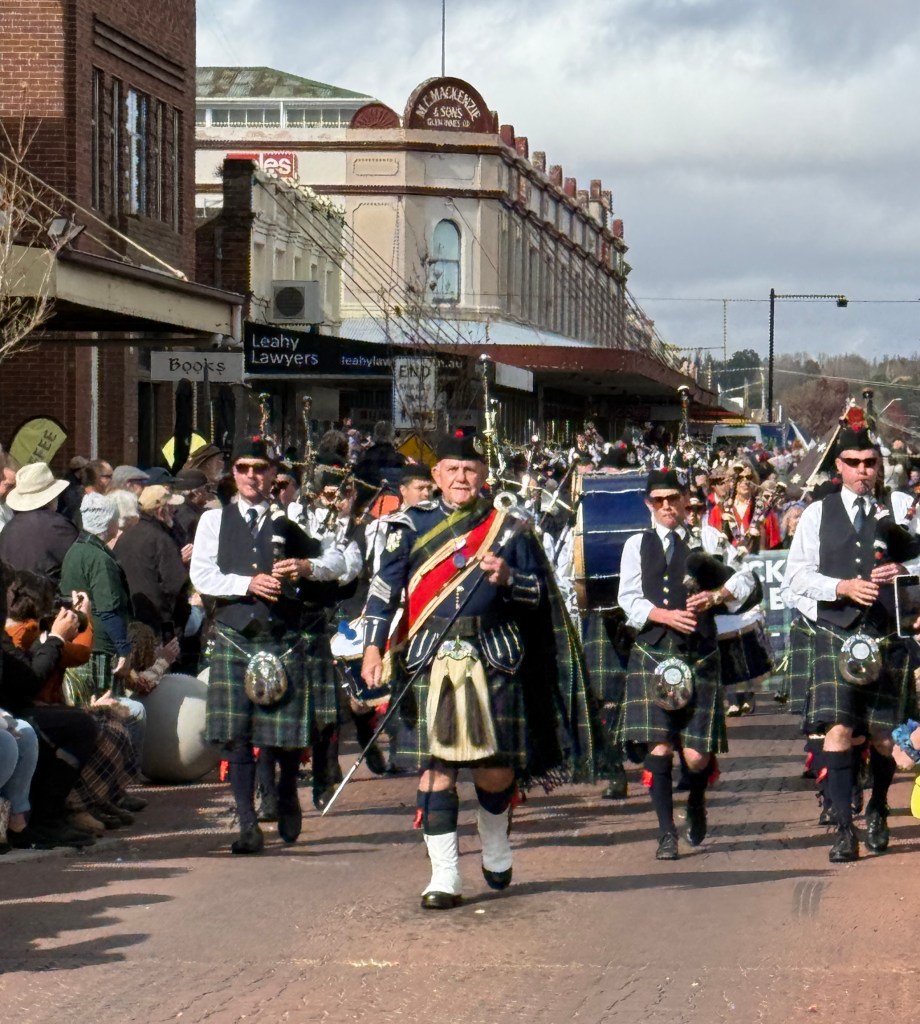
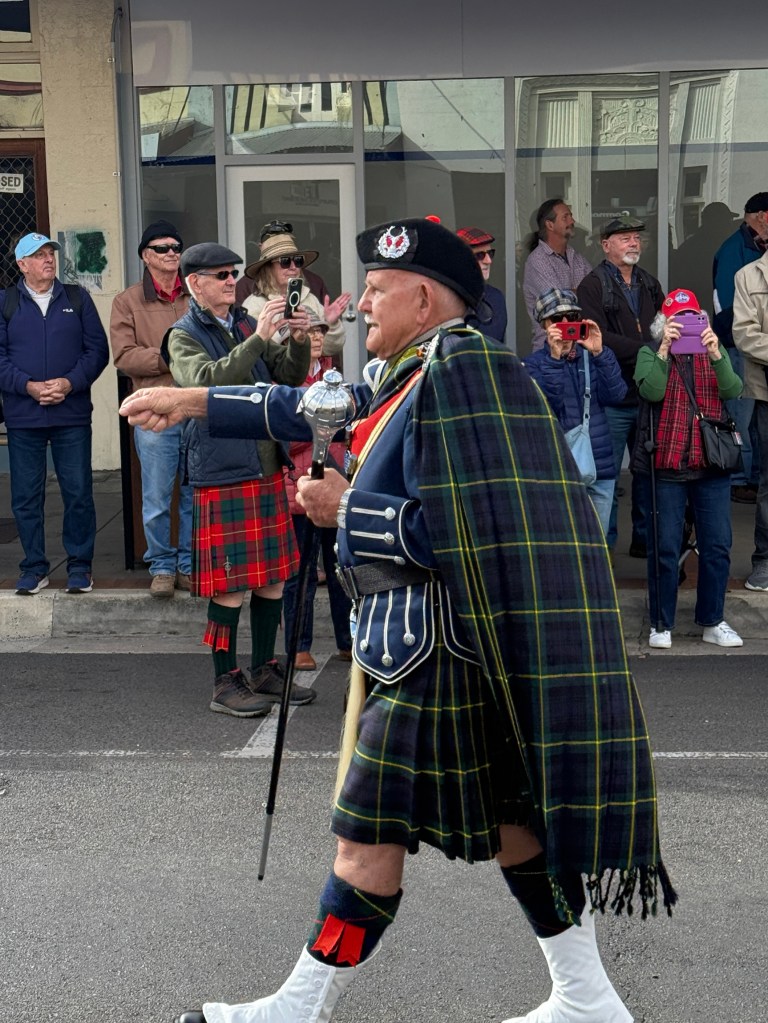
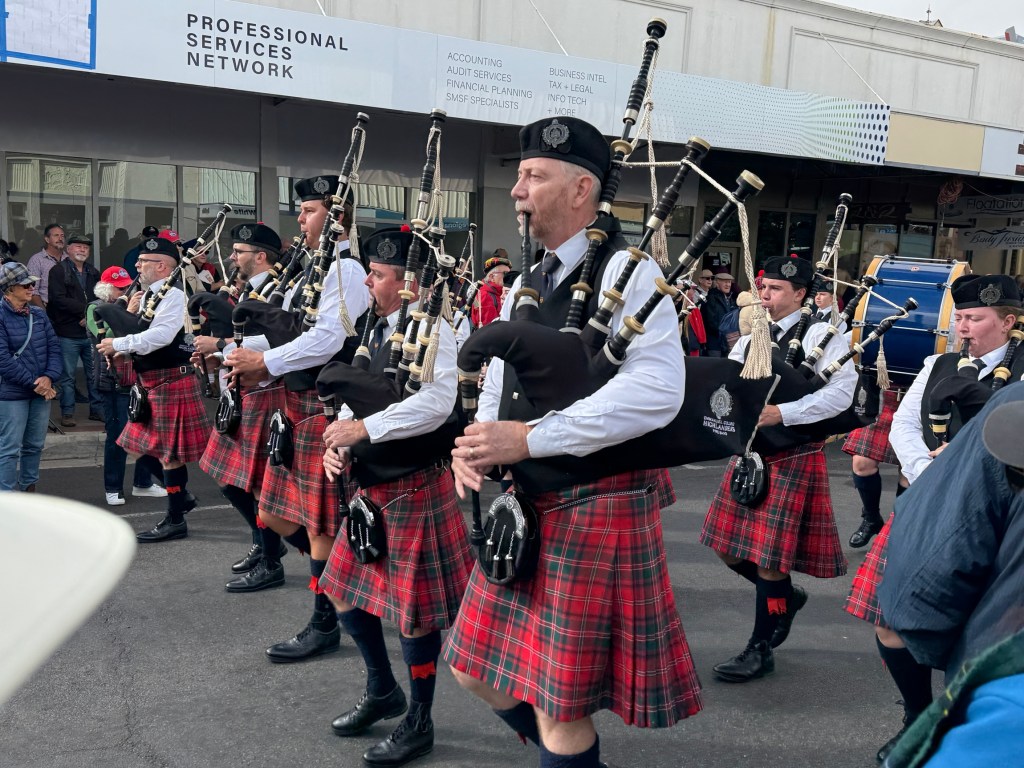
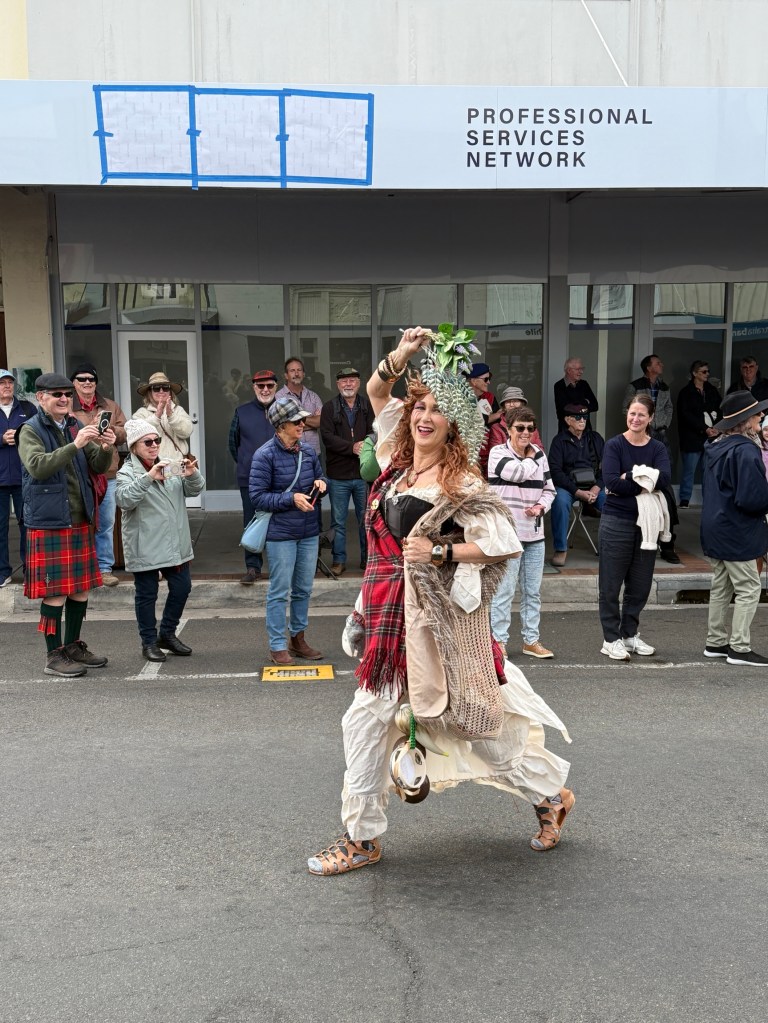
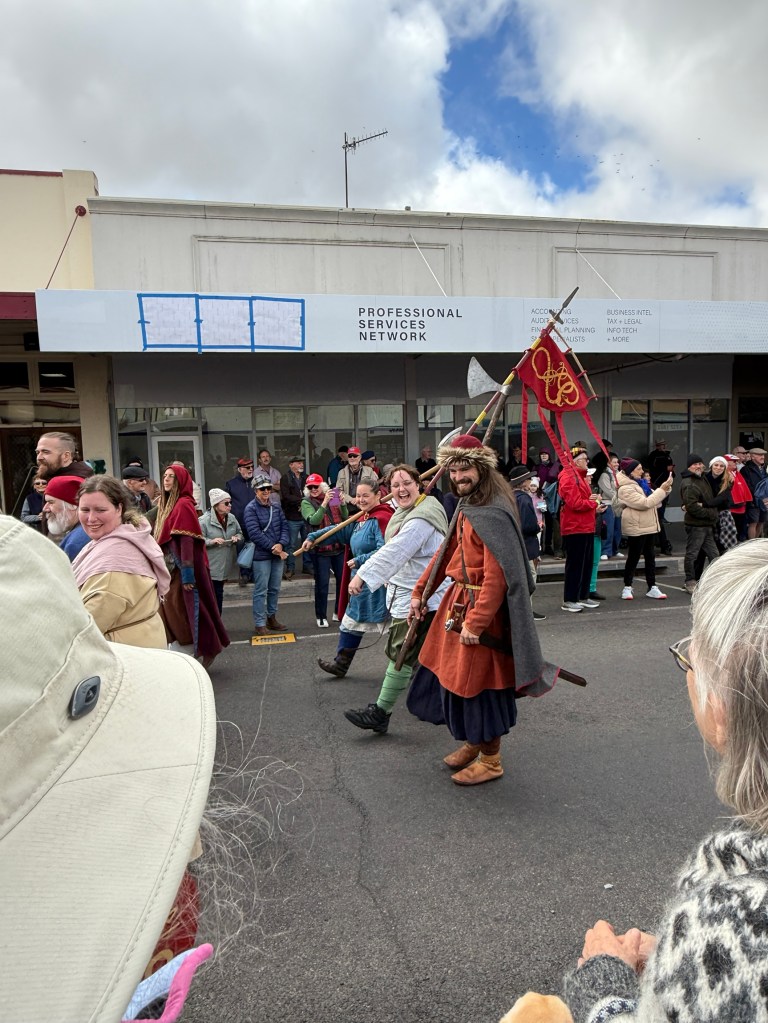
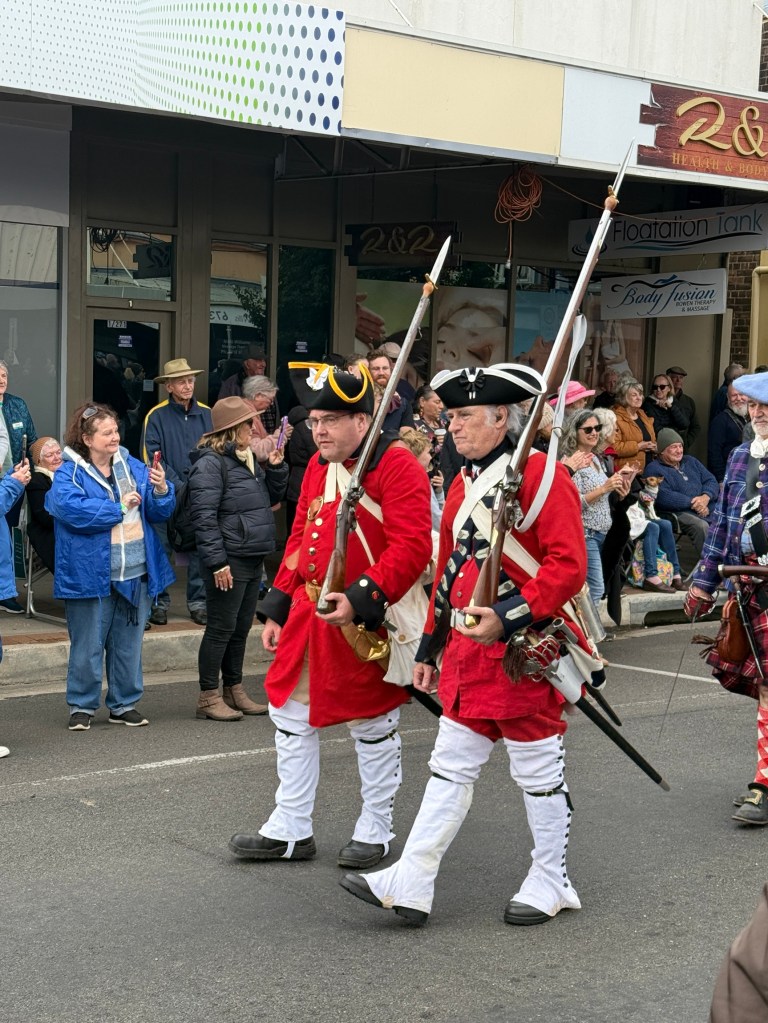
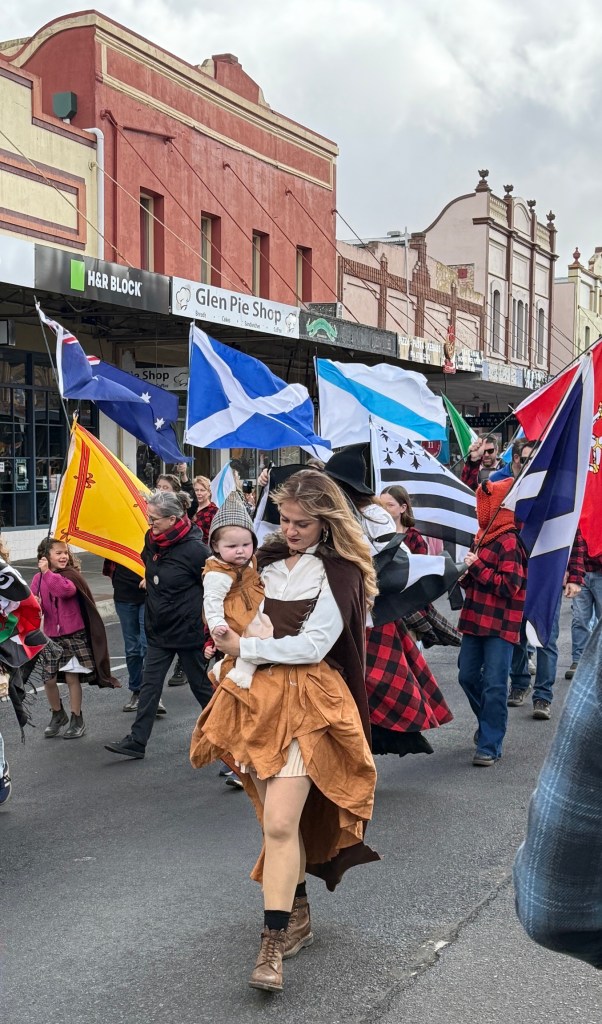
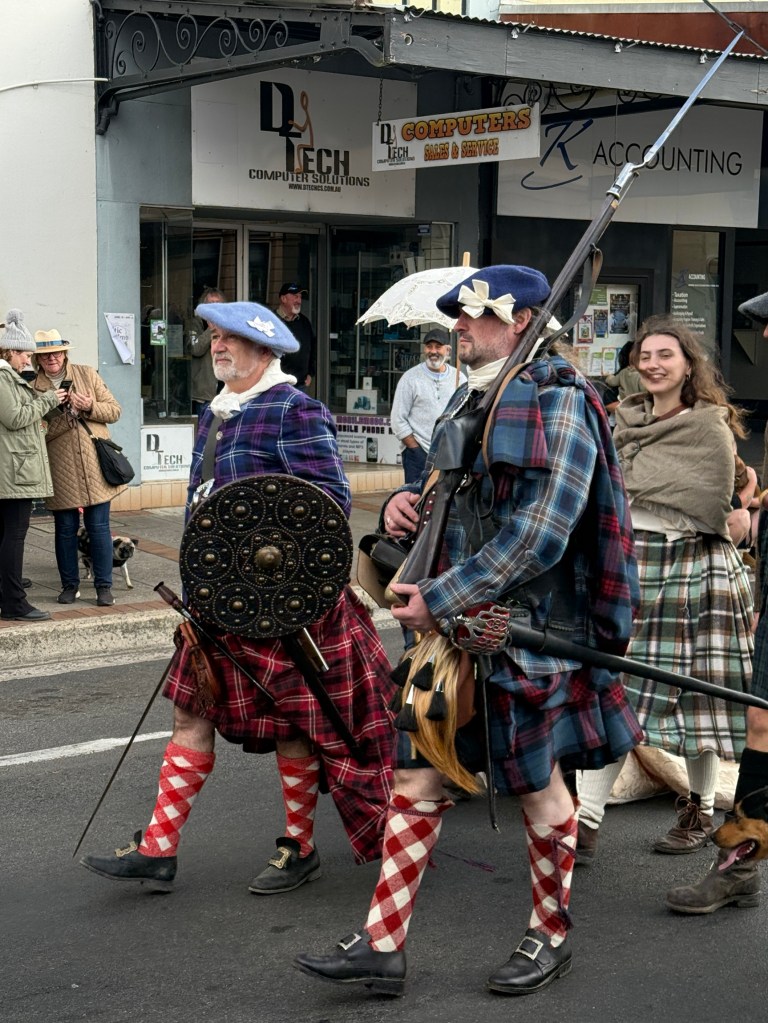
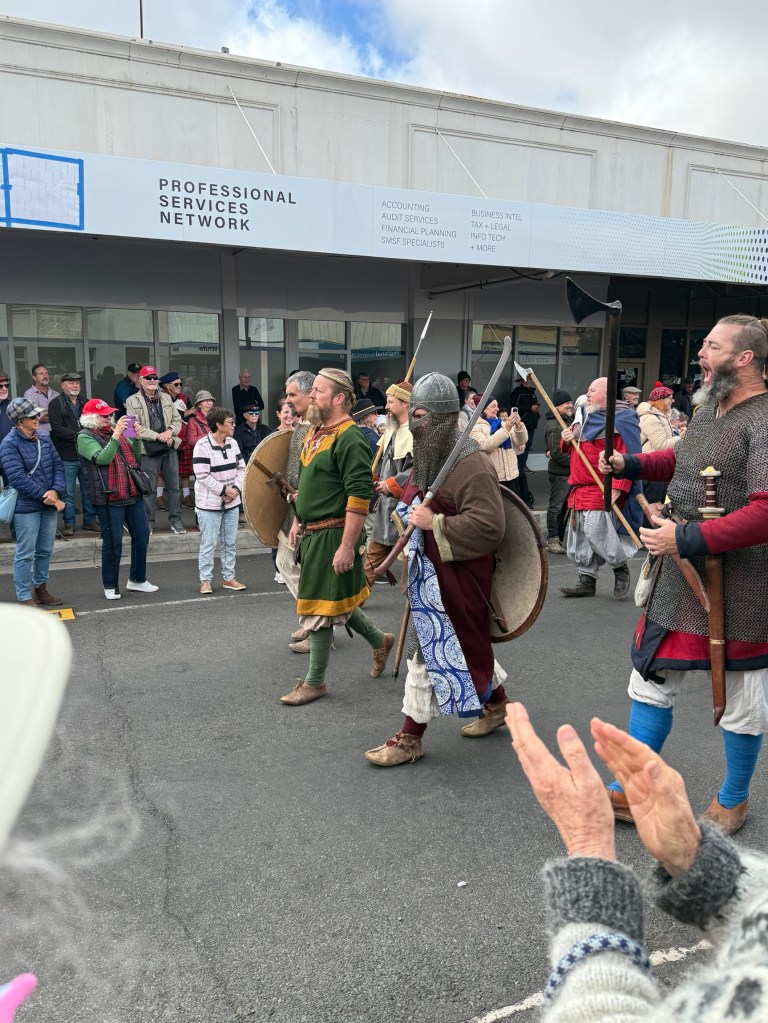
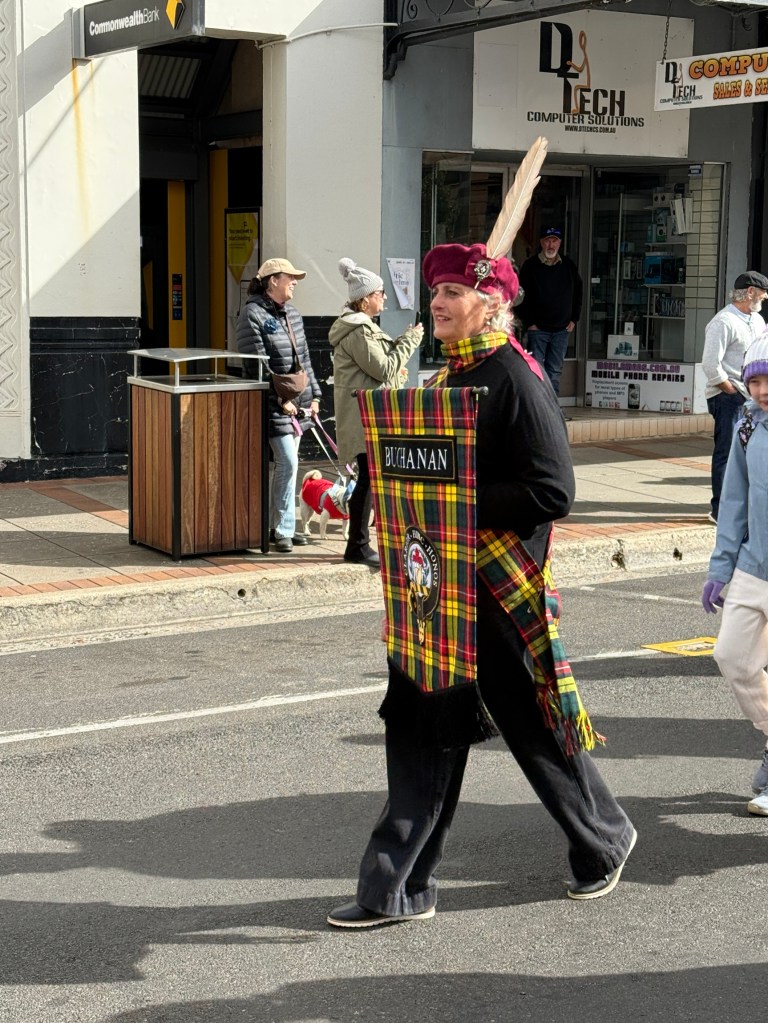
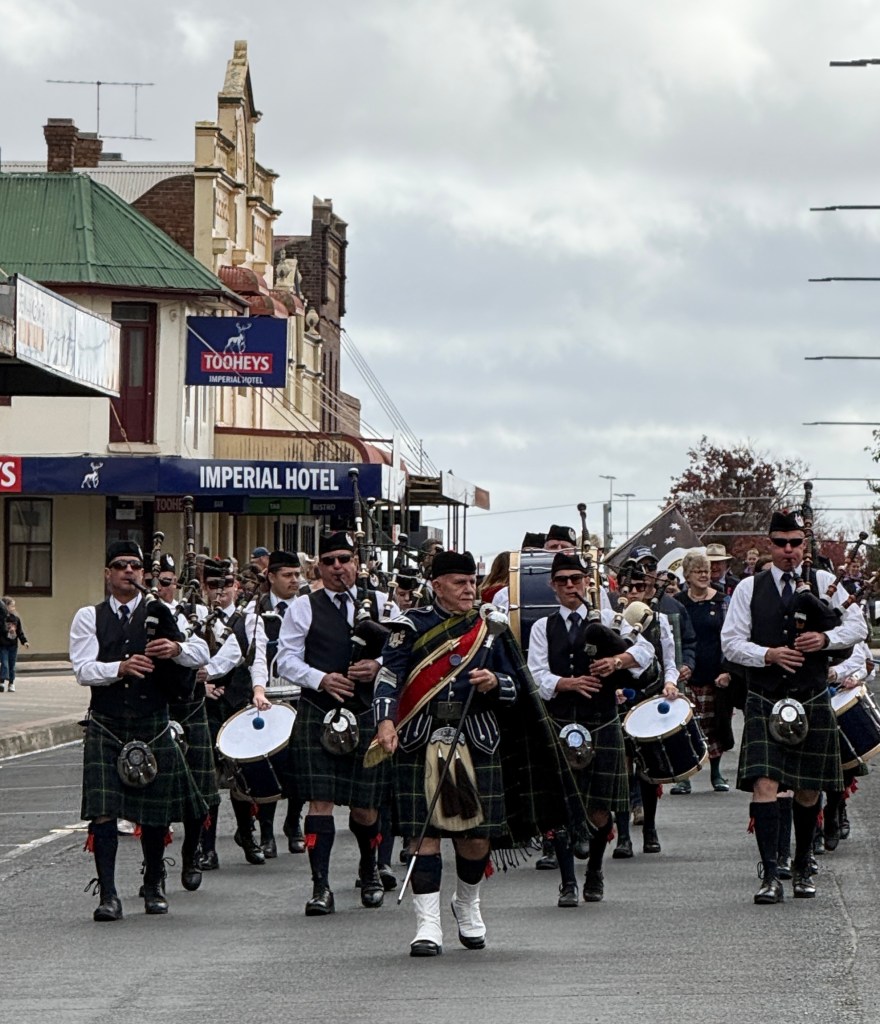
It was a great parade that set the scene for the rest of the weekend. We did have that breakfast and then caught the bus up to the Festival grounds. But more of that next time!
Festival opening ceremony
We made the 90 km trip down to Glen Innes for the opening ceremony on Friday, 1 May.
About 10 km south of Glen Innes is a huge granite rock overlooking the New England Highway. It was named St Swithin’s Bluff in 1842 by a couple of early settlers. It is now referred to more simply as Bluff Rock.
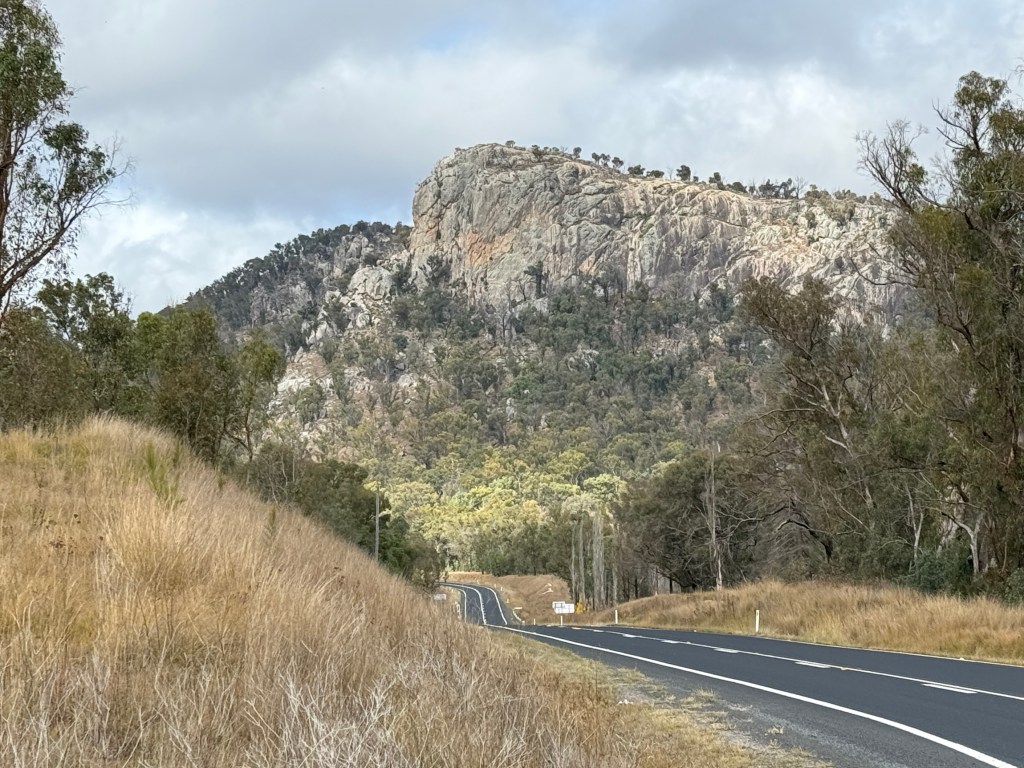
The area surrounding the rock is infamous for a massacre of indigenous people around 175 years ago in retribution for the killing of a shepherd and sheep on a nearby property. The event and evidence is shrouded in time and narrative. But it is said that numerous aboriginal people were either shot or thrown from Bluff Rock. There is a plaque in a park on the roadside telling of the event.
We did not linger long at Bluff Rock, the opening ceremony was scheduled for 11am, but the story continues to add to the quantum of these sorts of places that we have come across during our travels.
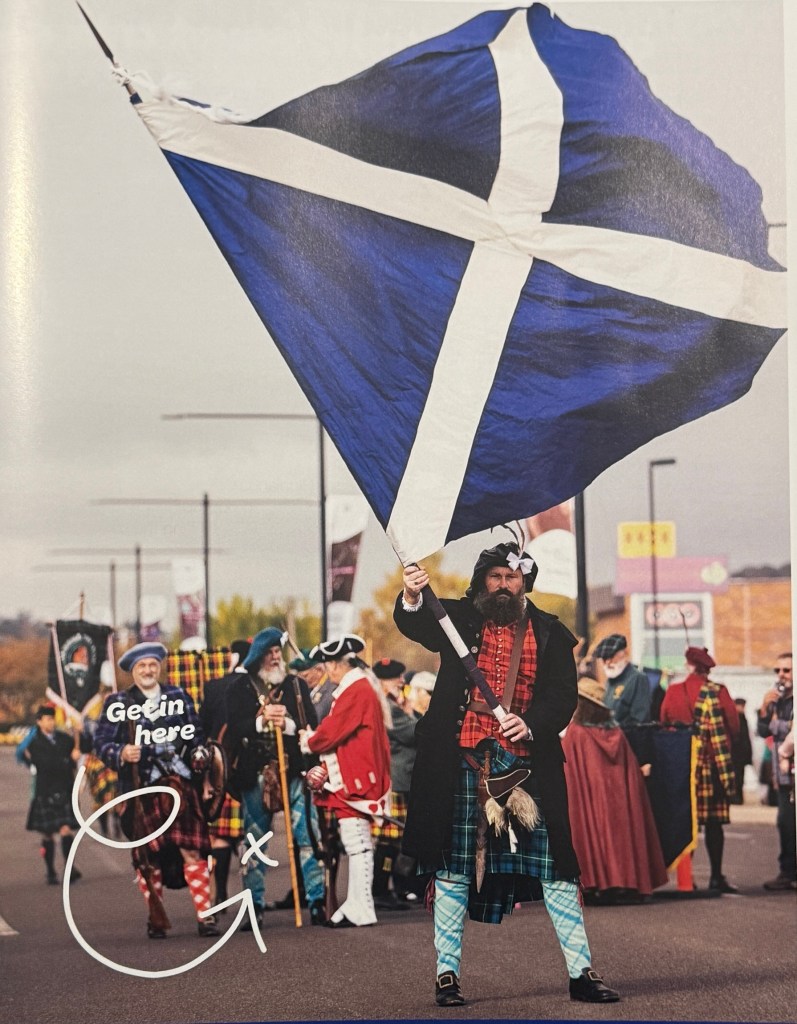
This year the Celtic Festival is dedicated to Scotland, next year it is Ireland and the Isle of Man.
The ceremony took place in the Town Square outside the 1887 Town Hall, flags of all the Celtic Nations flying together with the Australian, Aboriginal and NSW flags. Quite a sight.
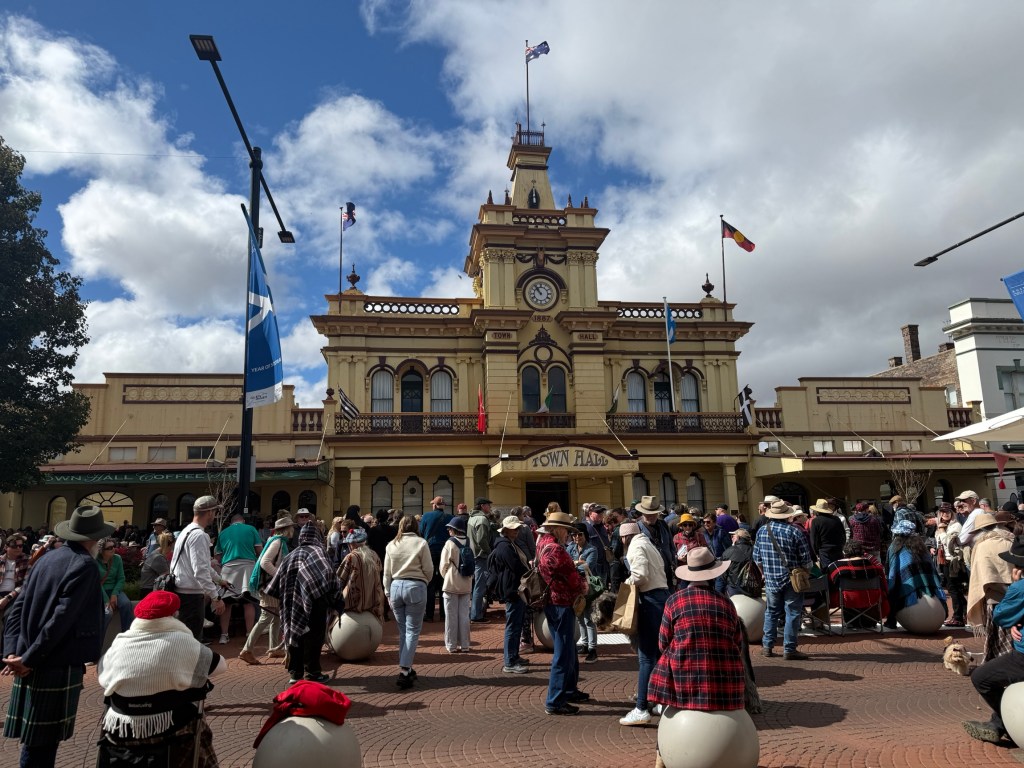
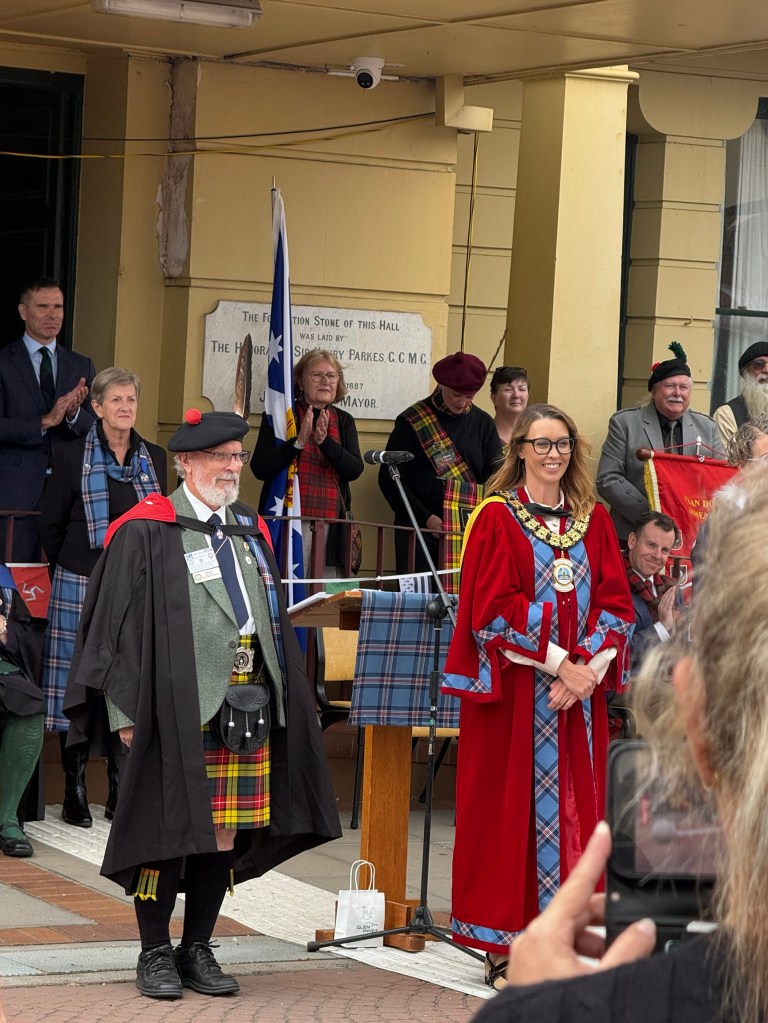
The Lord Mayor and other guests receive the Celtic nations flag bearers, piped in. They were followed by various Clan representatives in full celtic dress with their banners.
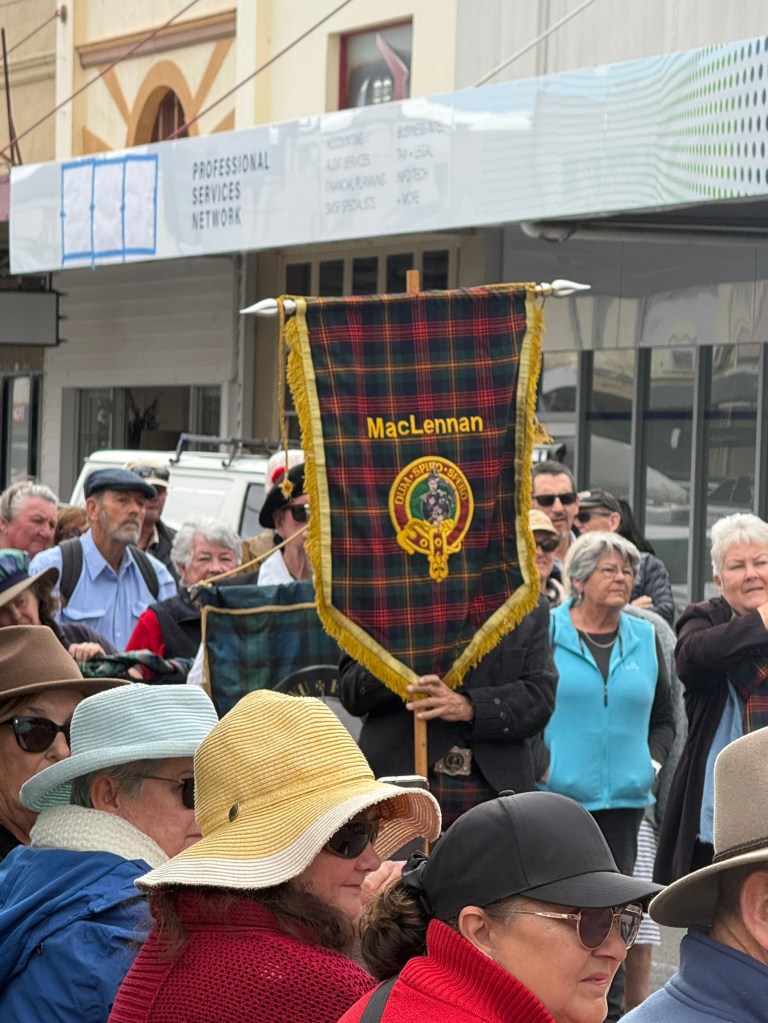
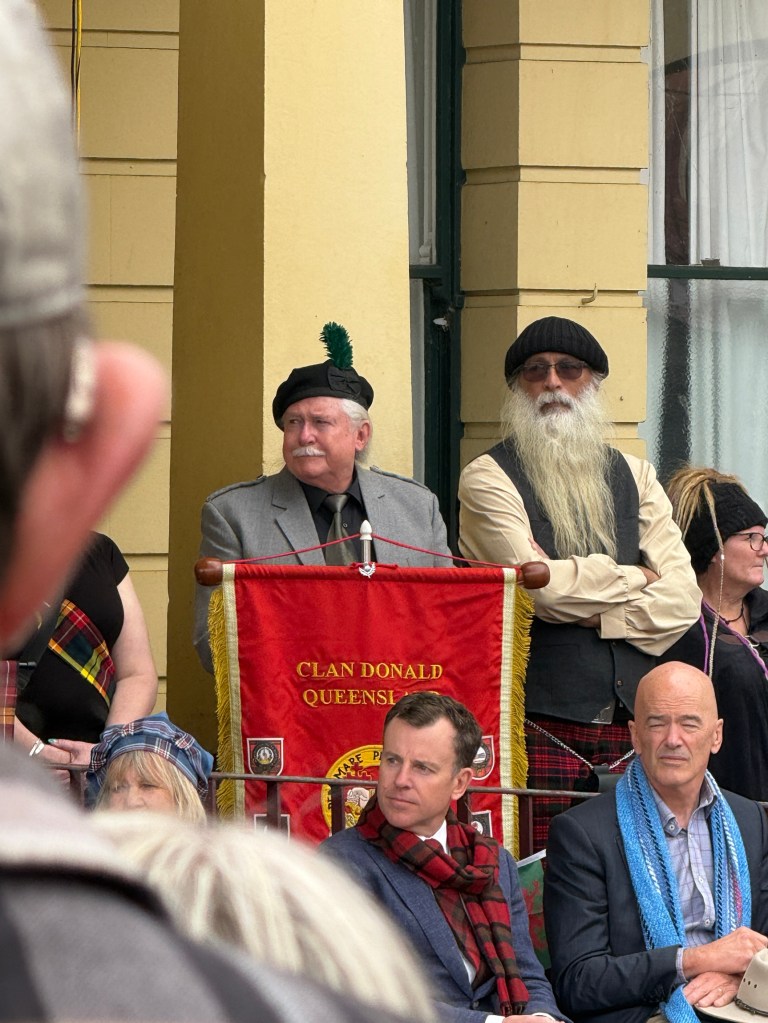
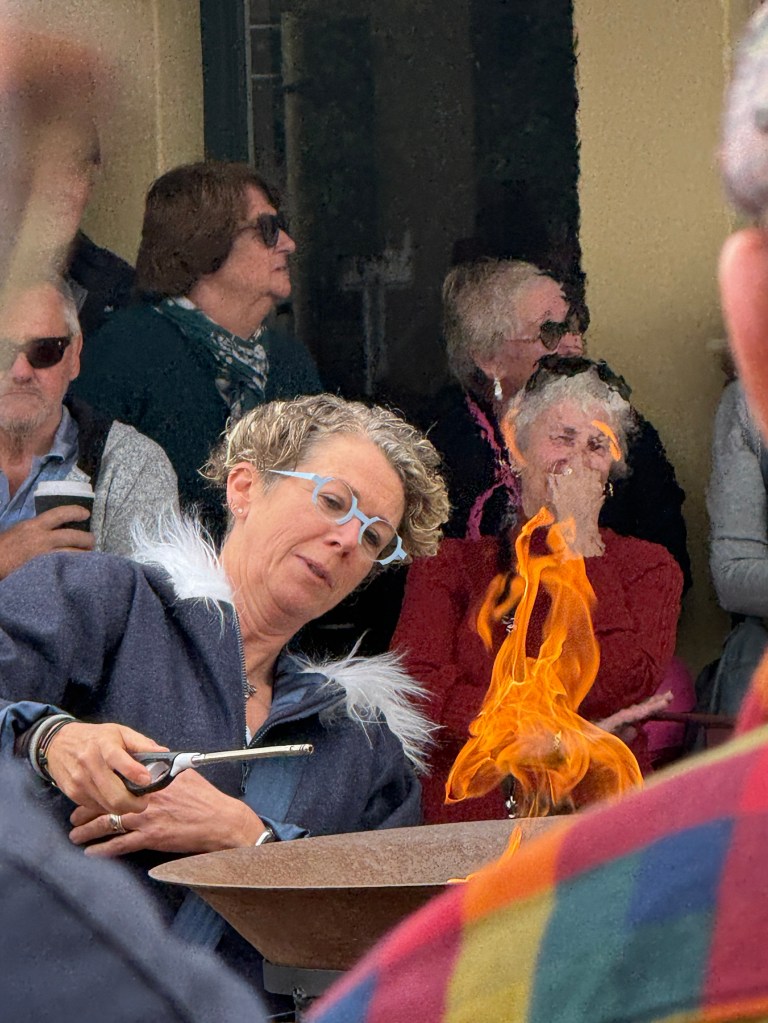
We then had the Australian National Anthem and The Flower of Scotland, performed by Australian Celtic Women.
The crowd dispersed and so did we, headed back to Tenterfield.
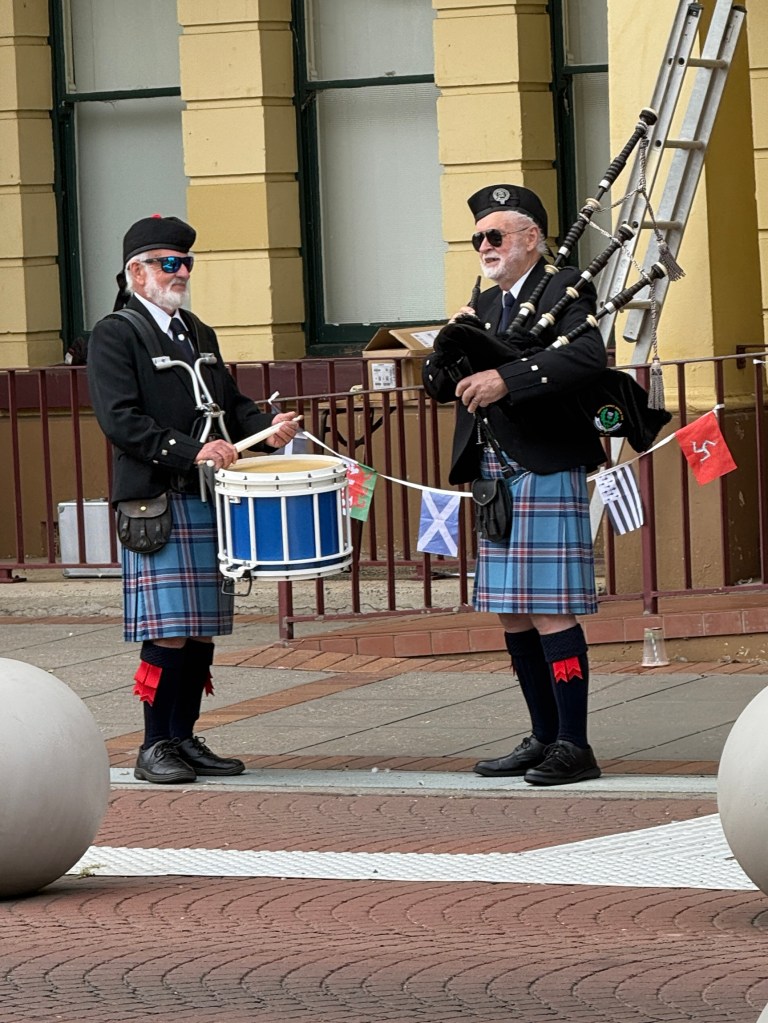
We changed lodgings from the Peter Allen Motel to Annie’s Place, an AirBnB. Friends from Brisbane were joining us there for a couple of nights and the Festival on Saturday.
Along the way we called into Deepwater, about halfway between Glen Innes and Tenterfield. Deepwater is a small village, it has a pub at one end and another pub at the other end. So you know when you have arrived and when you have left town, whether you are driving north or south.
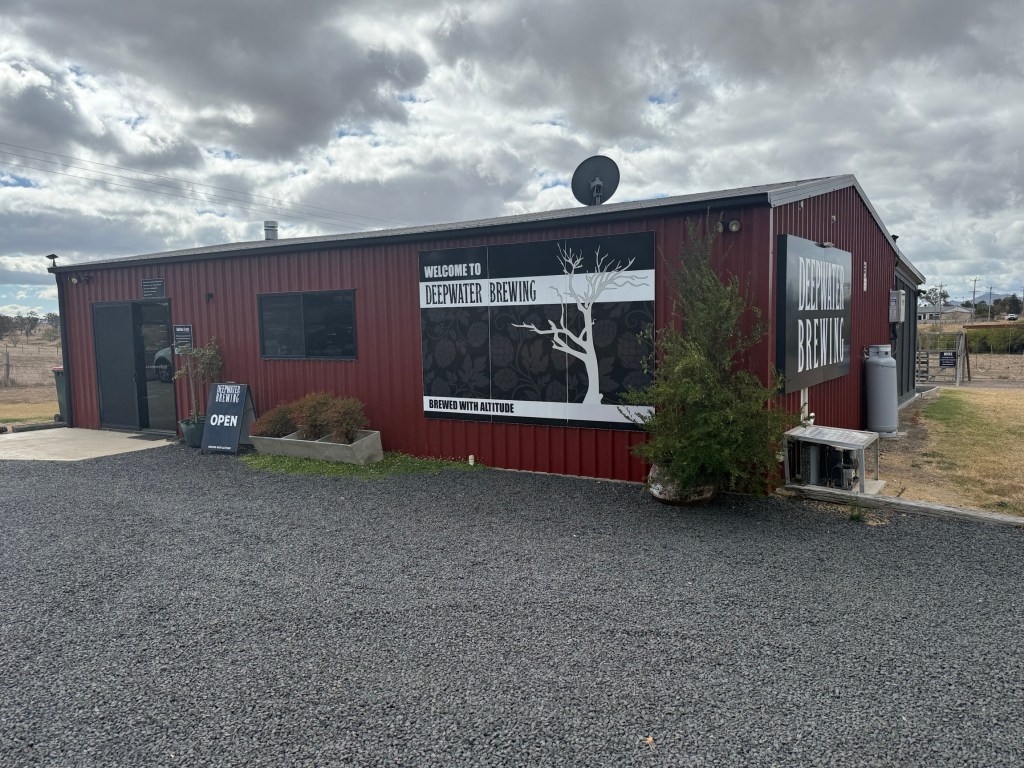
Our target though was not the pubs but the Deepwater Brewing Company on the outskirts of town.
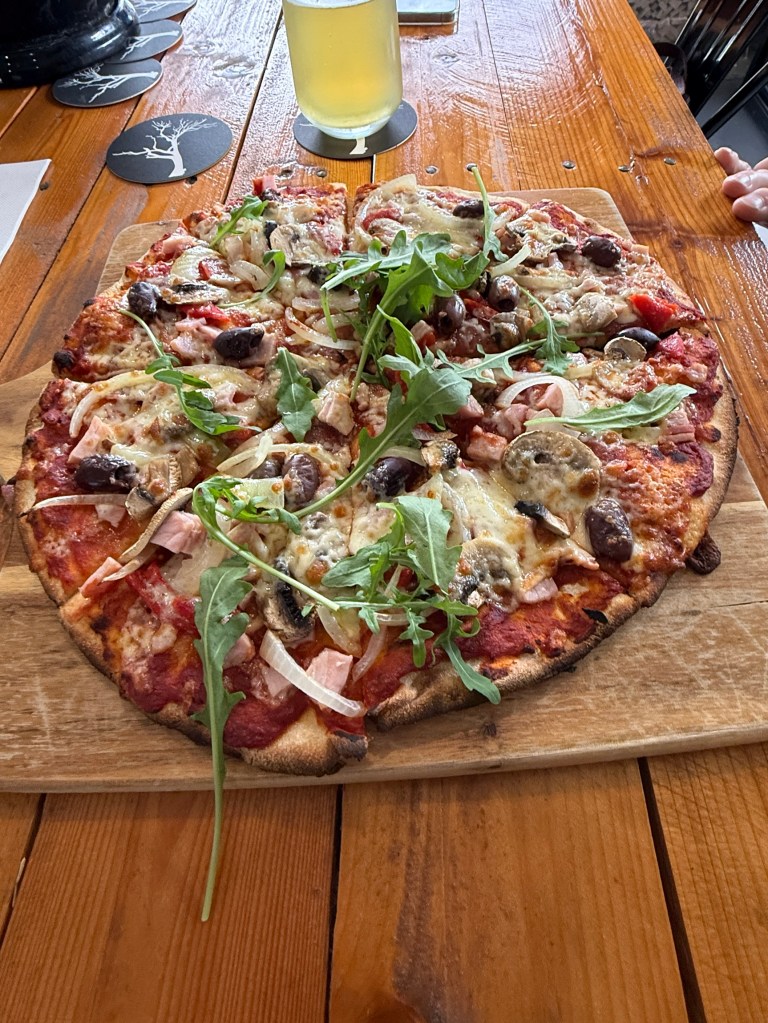
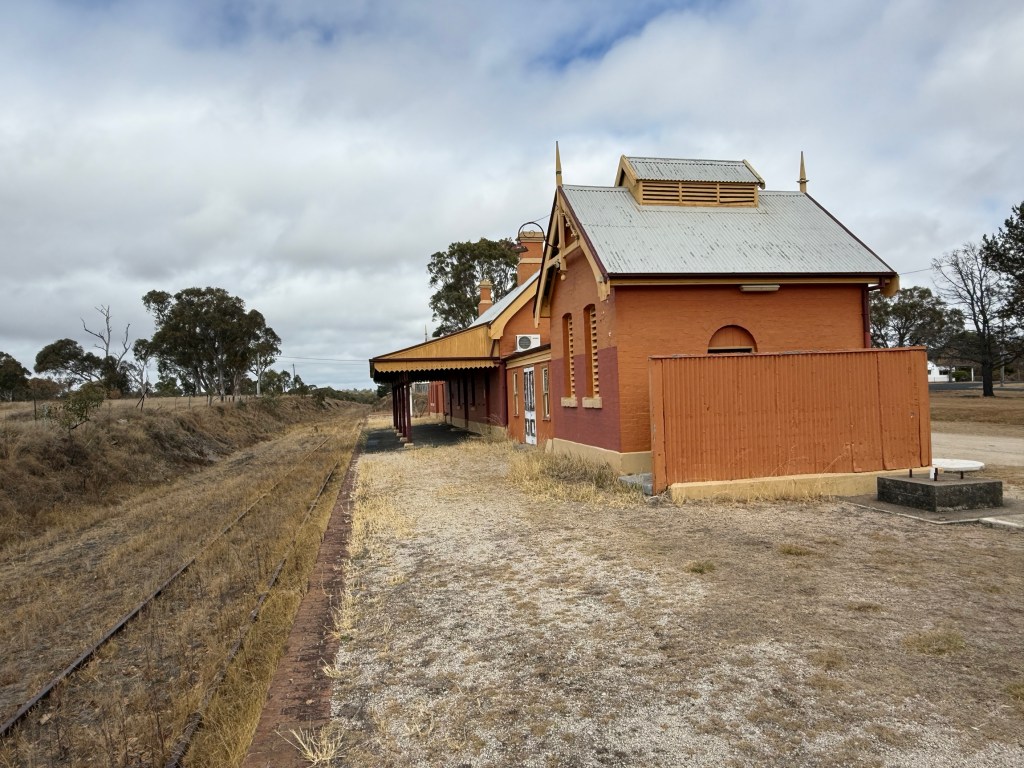
Their craft beer and lunchtime pizza is gaining wide recognition. The beer was ok and the pizza was excellent! While in town we checked out the heritage listed Railway Station.
Tenterfield called and on we went to Annie’s Place.
Celtic Festival starts
Or it did four days ago when we had a bus trip from Glen Innes out to a property called Ben’s Falls for a Celtic Festival inspired lunch. This was the first of four drives we made down to Glen Innes from Tenterfield. The festival is now over and we are recovering in Glen Innes for a couple of days. So the next few blogs will be a catch up of what has happened.
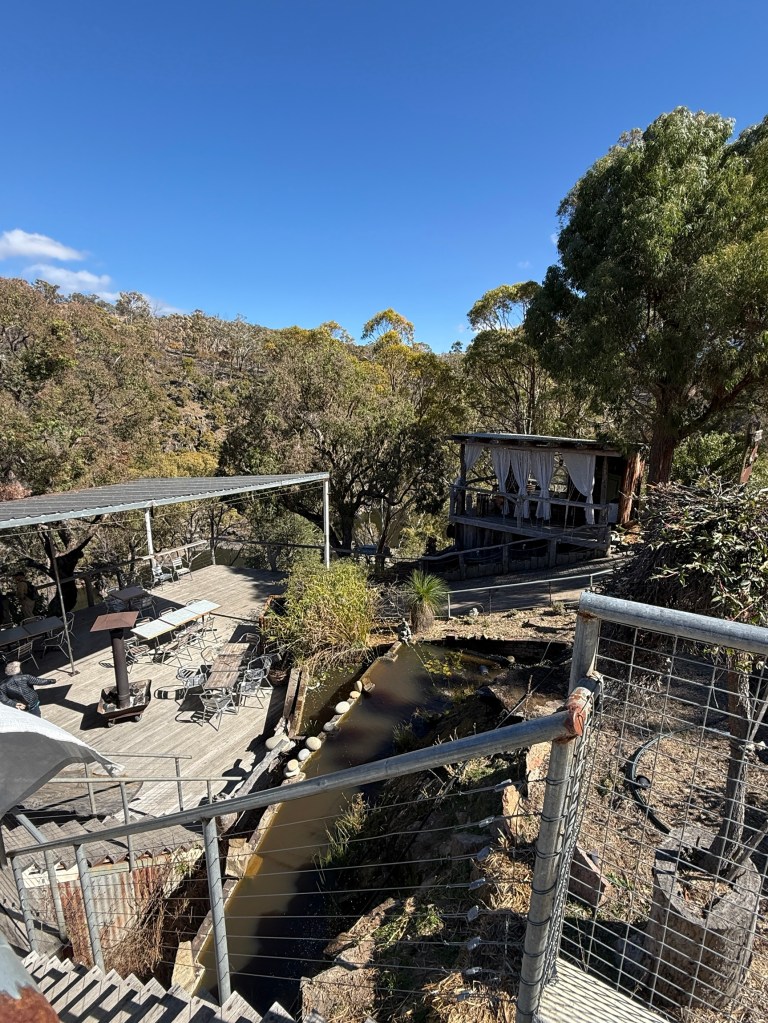
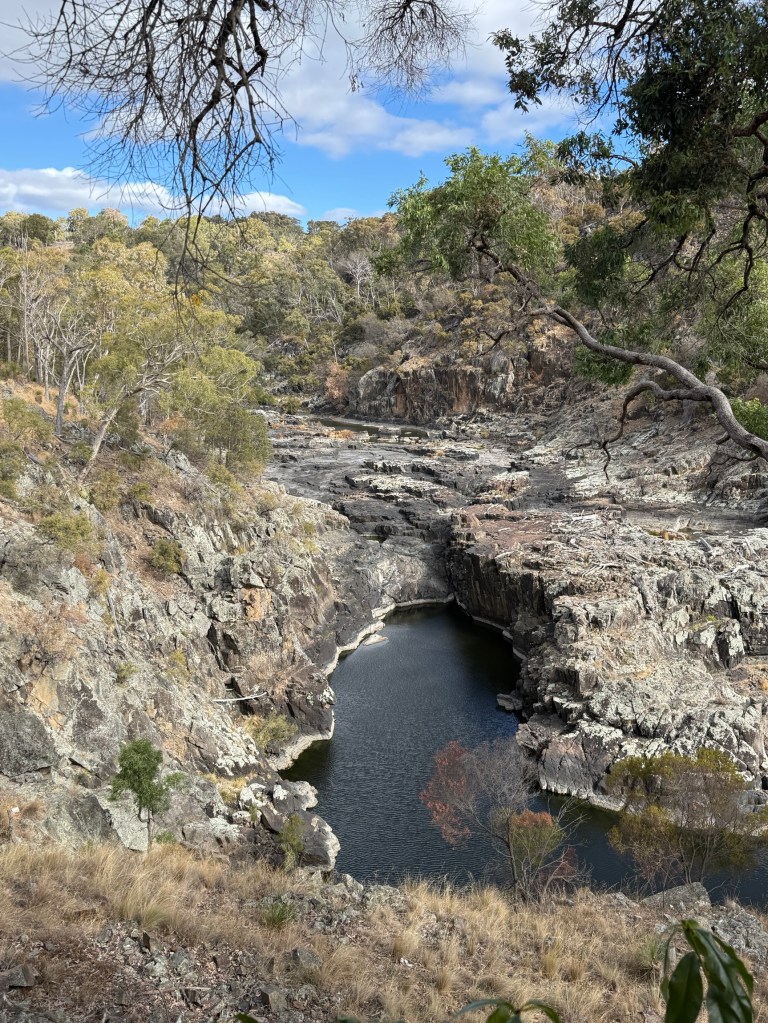
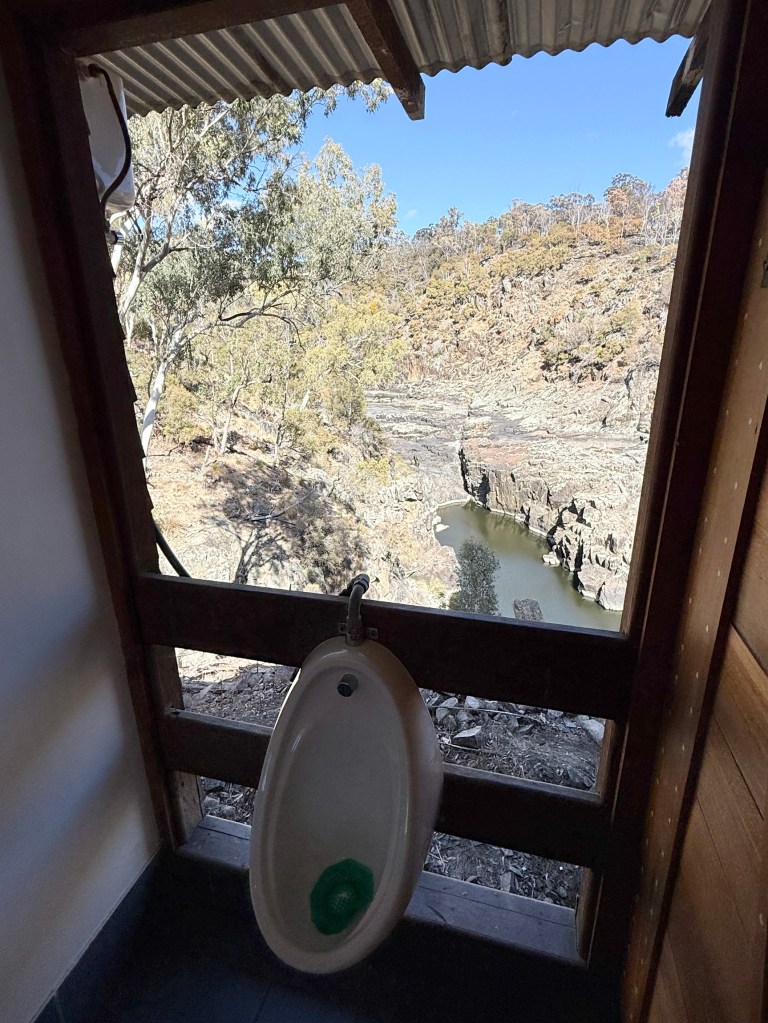
Ben’s Falls is a retreat, wedding function, party type property about an hours drive north west of Glen Innes. A fairly remote spot on the way to the old tin mining town of Emmaville. The property is built on the side of a ravine looking down into a big water hole below some water falls. The falls are dry at the moment, but would be spectacular when the river was flowing.
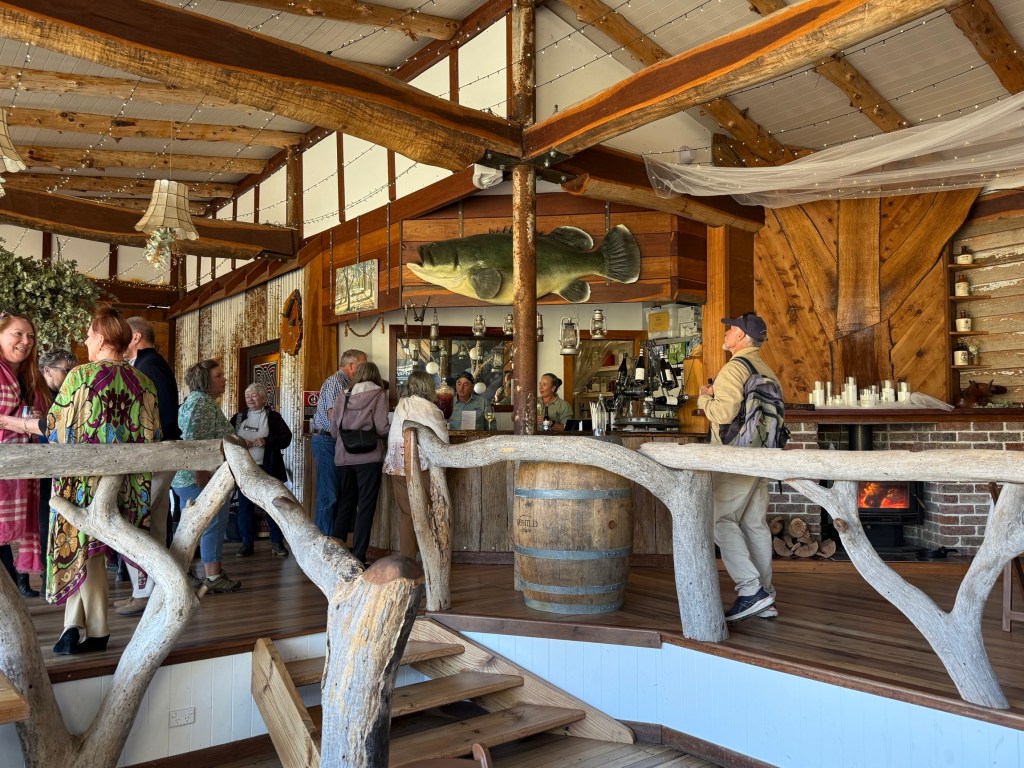
There were about fifty people at the lunch from all parts. It was supposedly a Scottish culinary experience with a modern twist to the food.
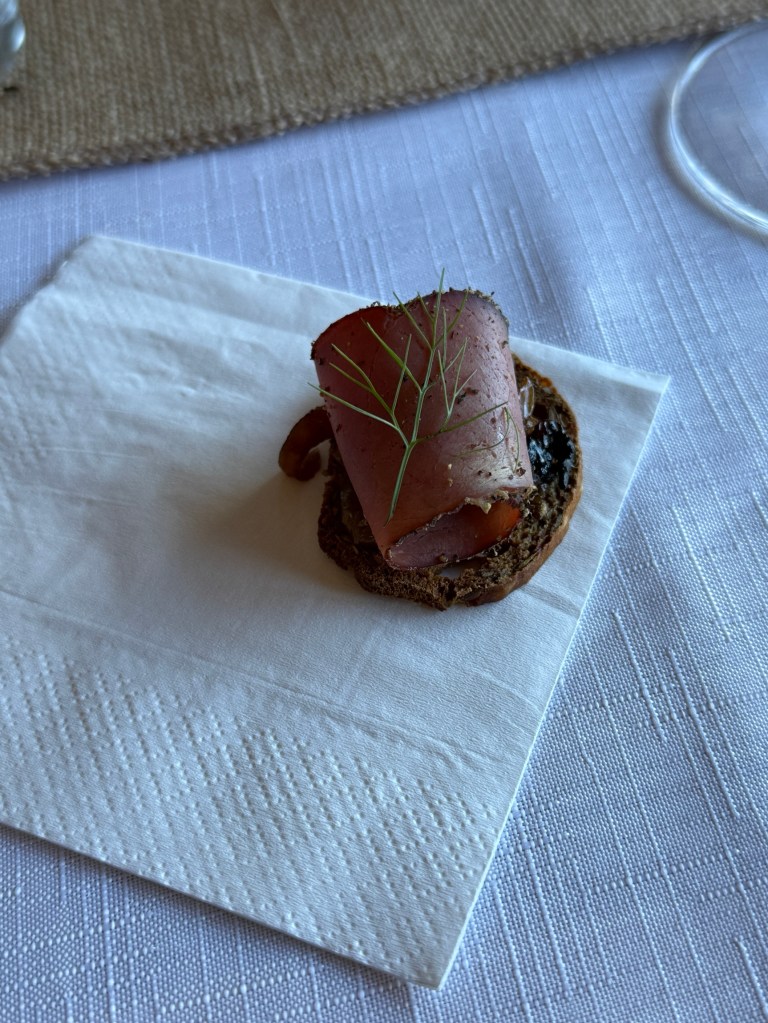
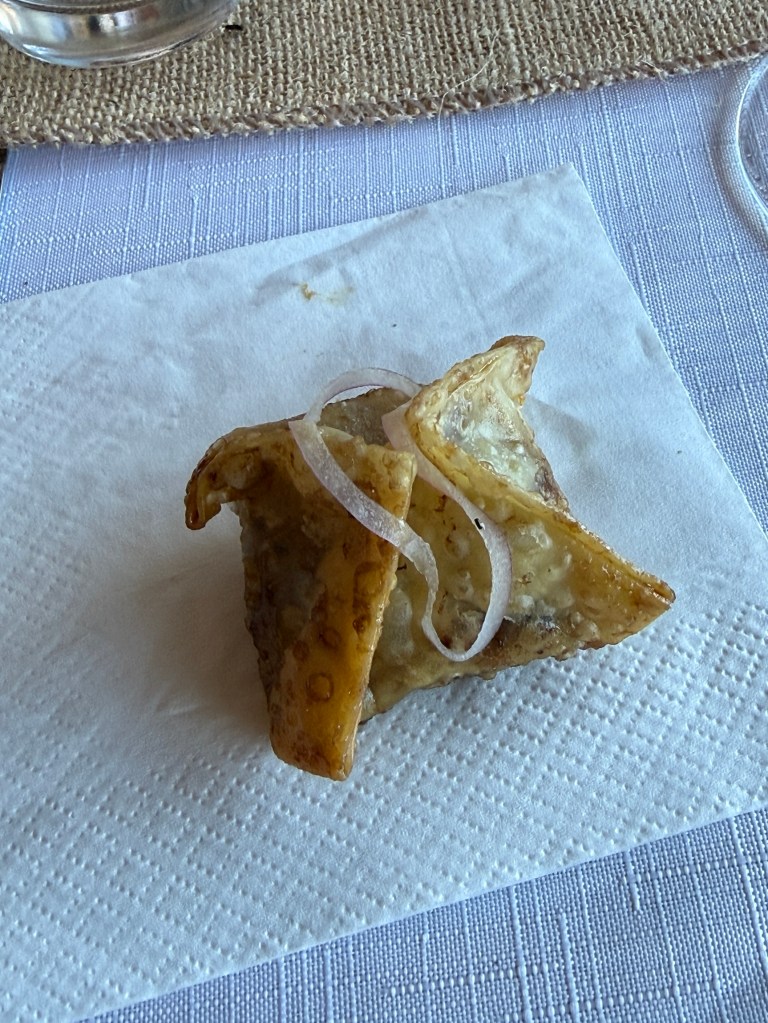
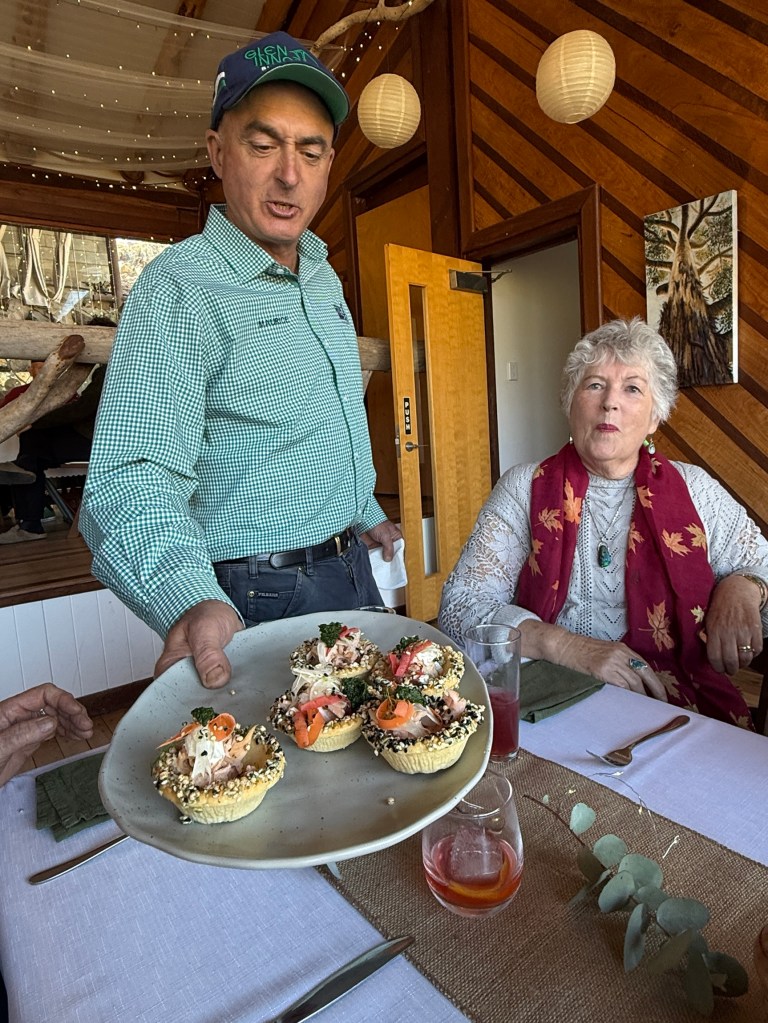
So there were some interesting canapés, a venison with a touch of chutney nibble, steak ‘n ale won ton, then a colourful salmon tartlet.
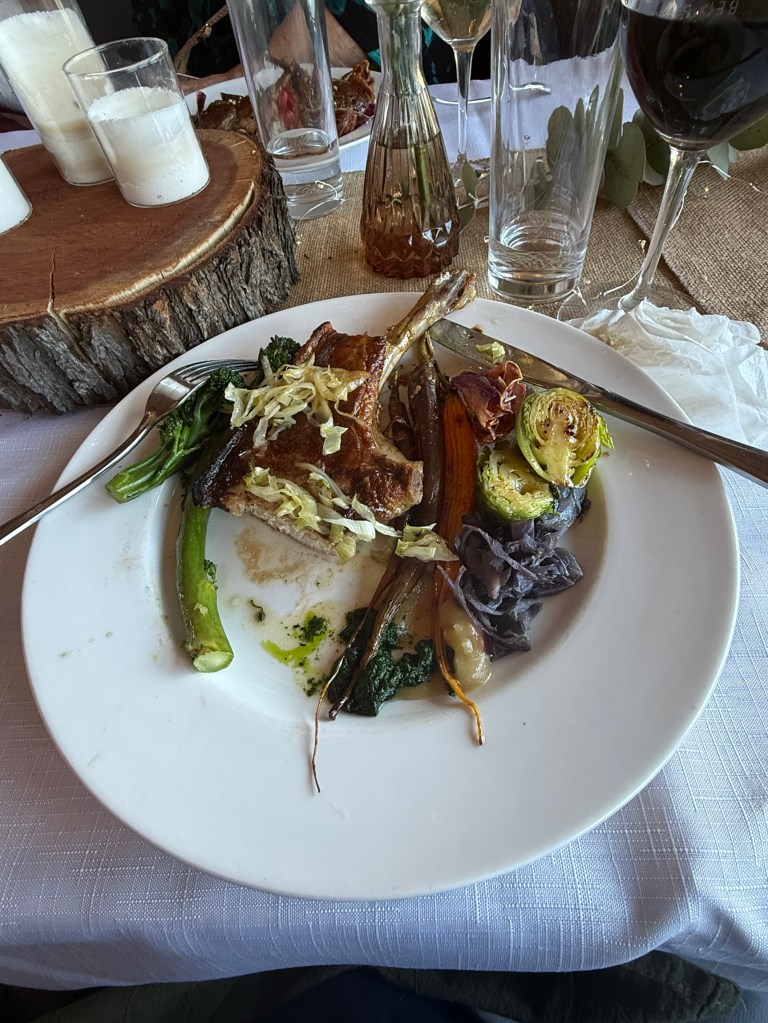
Alternate drops of lamb or pork chops followed with roasted root vegetables, greens and gravy.
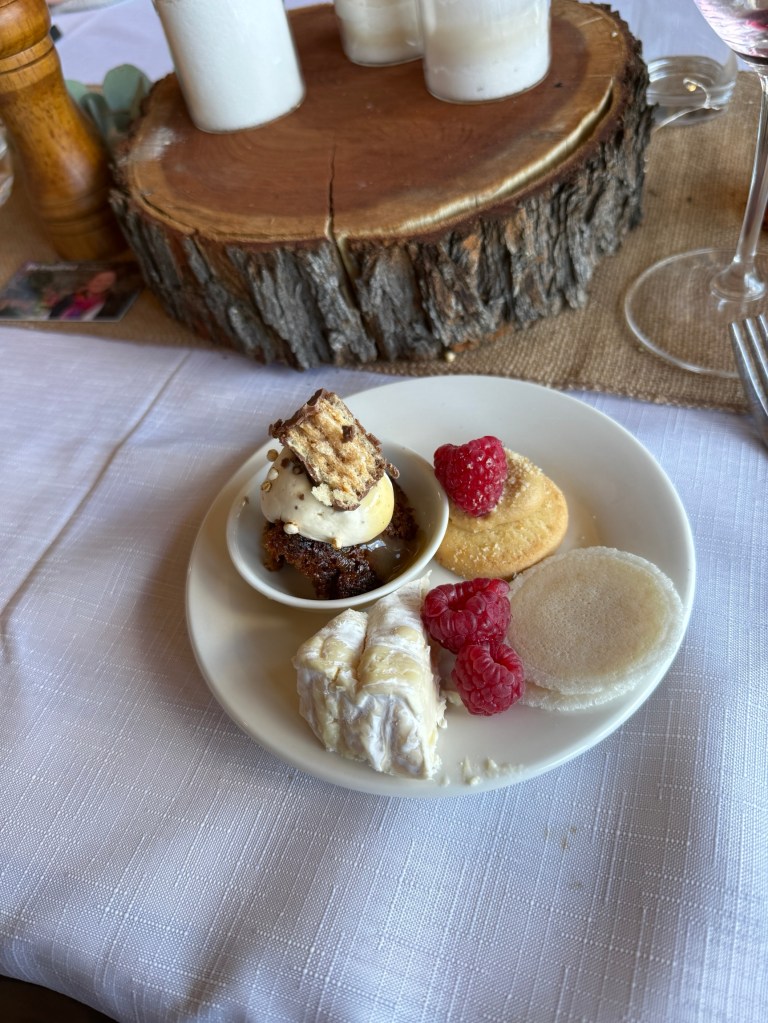
A little cheese and desert bar concluded the food.
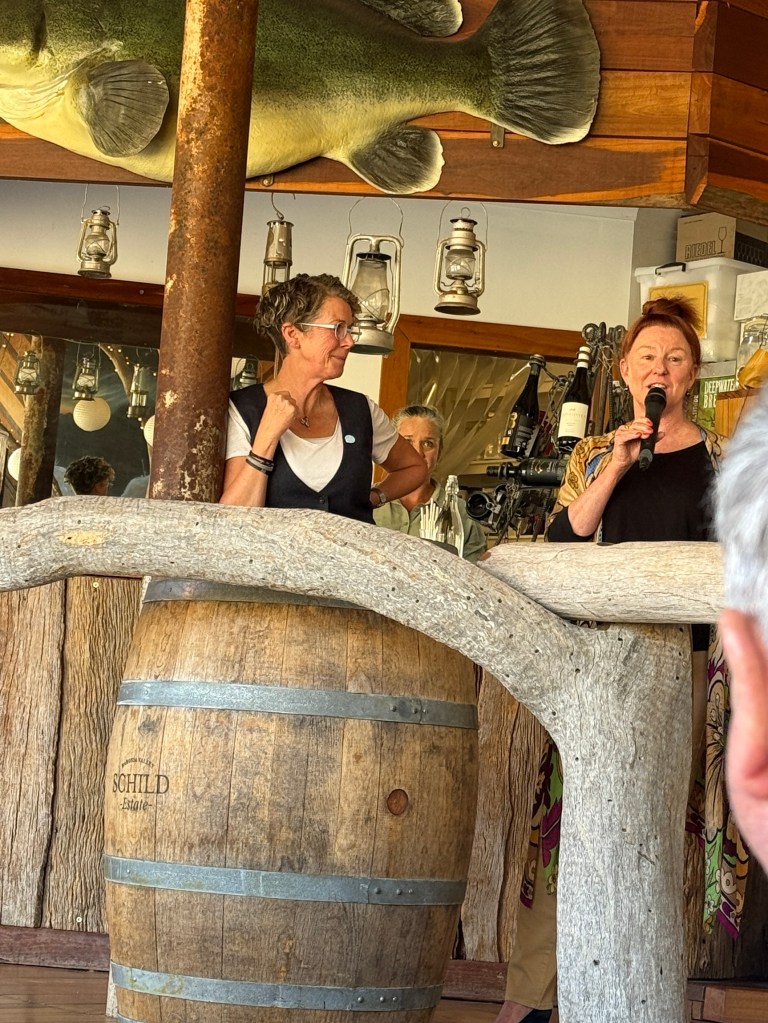
There were a couple of Festival guests in attendance, one was Ali Stoner aka the Rovinghaggis.com she has been a contestant on Masterchef. The other guest was Roberta Muir, another cook. They both gave a chat on modern day Scottish food.
Allthego managed to win one of the lucky draws, Homealone was thrilled to have another Italian (Sardinian) cookbook to put some where.
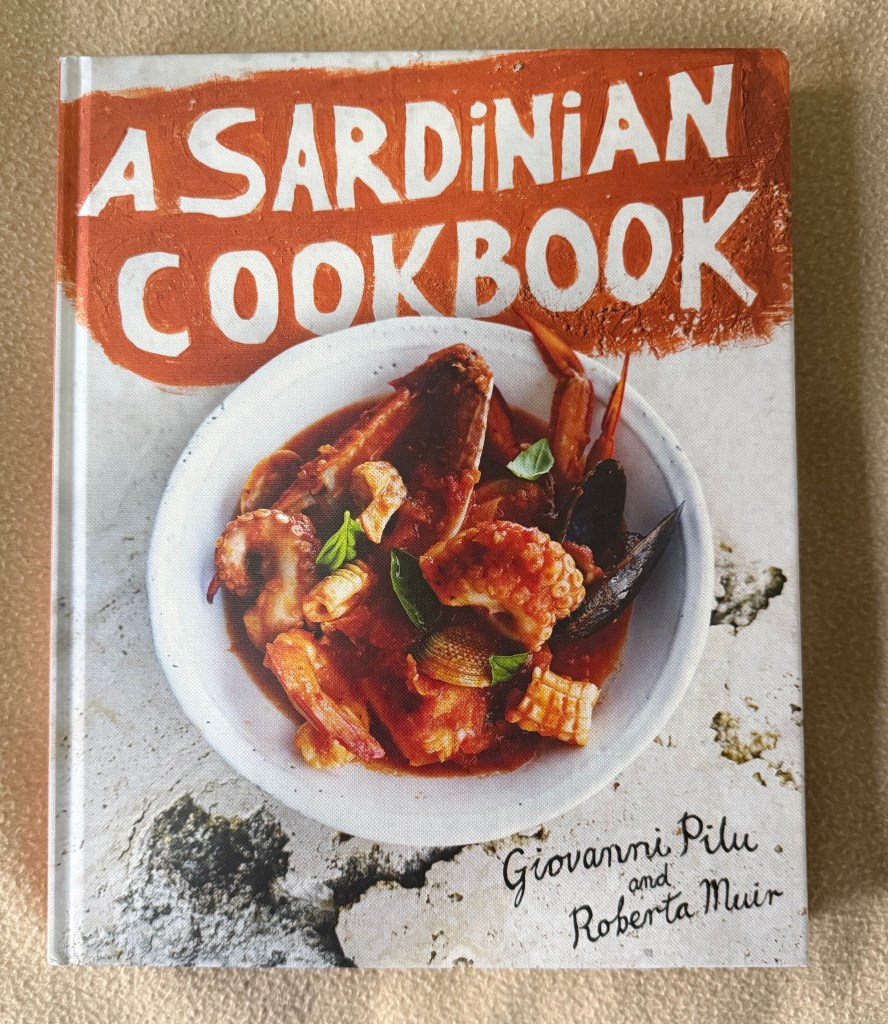
Looks interesting though, and autographed by Roberta Muir with a personal message to me! Very impressive, although I believe unautographed cookbooks are scarcer and more valuable.
It was a great lunch in an impressive location. We made it back to our motel in Tenterfield in time for a late snack for dinner. The next day would be back to Glen Innes for the Official Festival Opening Ceremony in the Town Square.
Tenterfield
We are here in Tenterfield for a few days prior to the start of the Celtic Festival in Glen Innes, about 90km south.
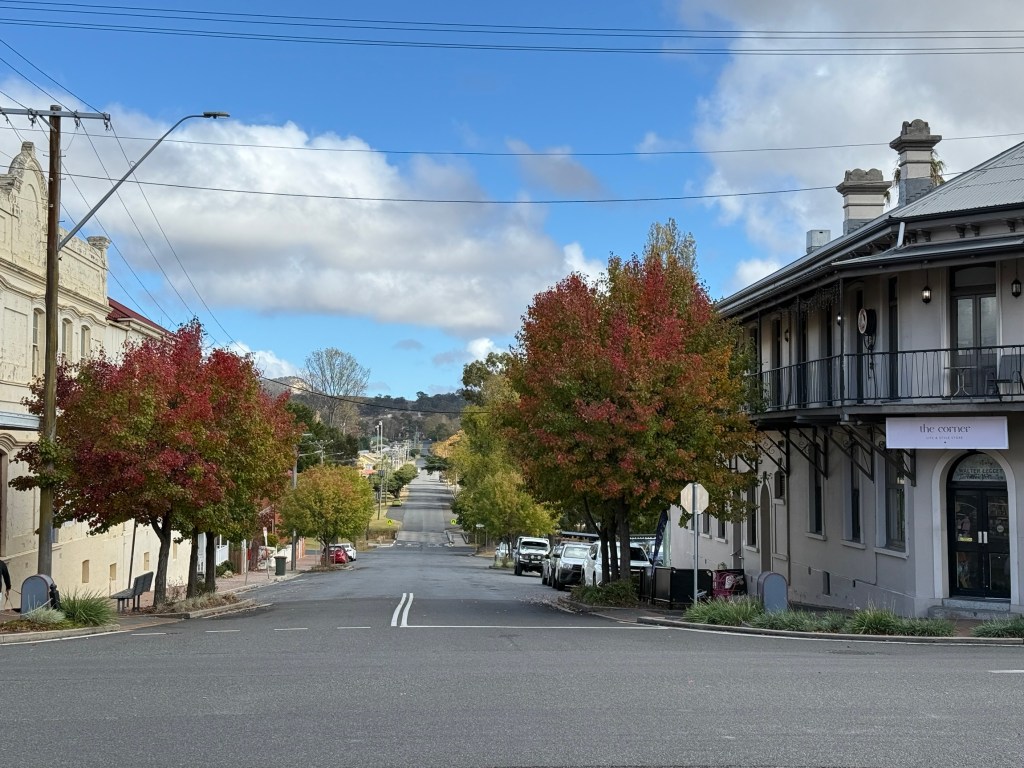
Tenterfield has a few claims to fame, but two standout.
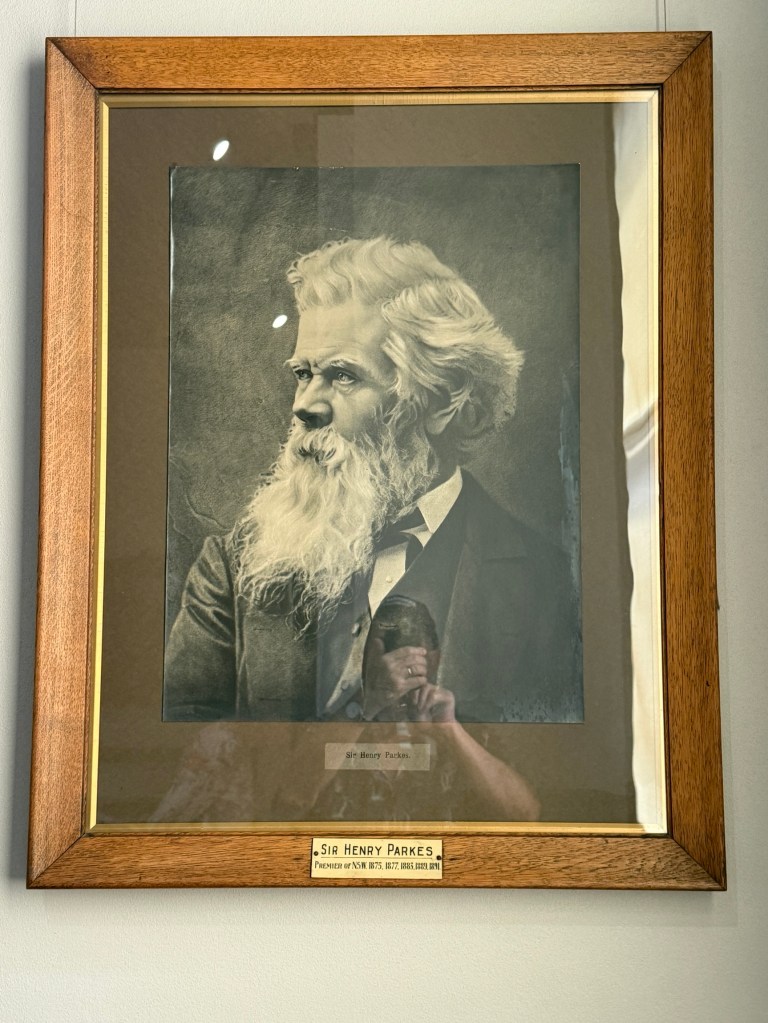
It was here in 1889 that the then Premier of the Colony of NSW gave an impassioned speech (the Tenterfield Oration) for the establishment of the Australian Federation. He is known as the Father of Federation.
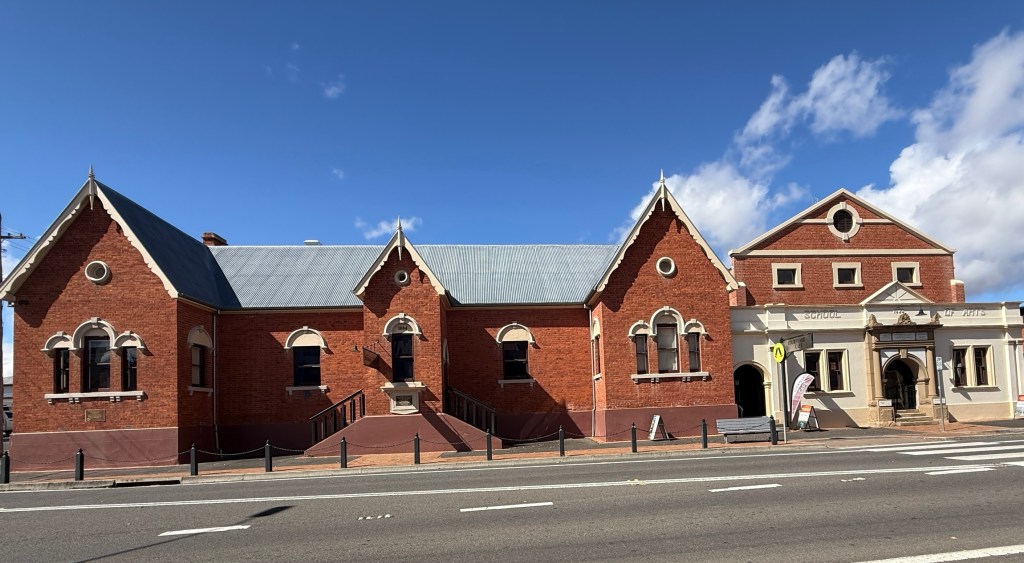
The School of Arts, built from 1876, where the speech was given has been turned over to commemorate Sir Henry and the Federation movement.
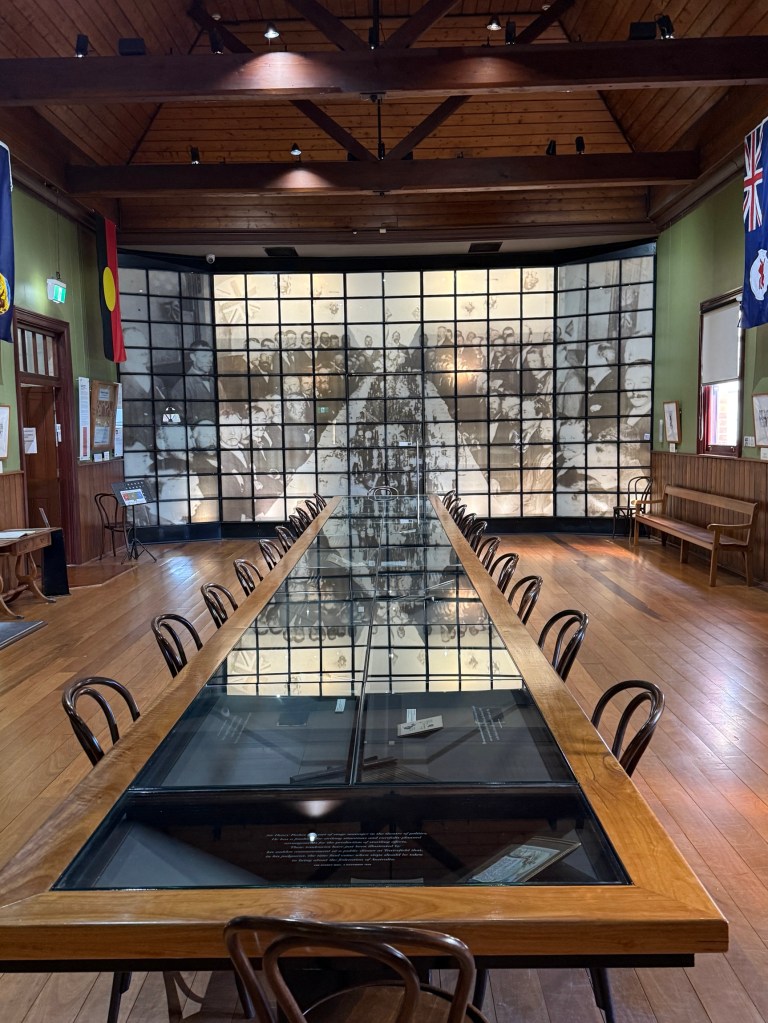
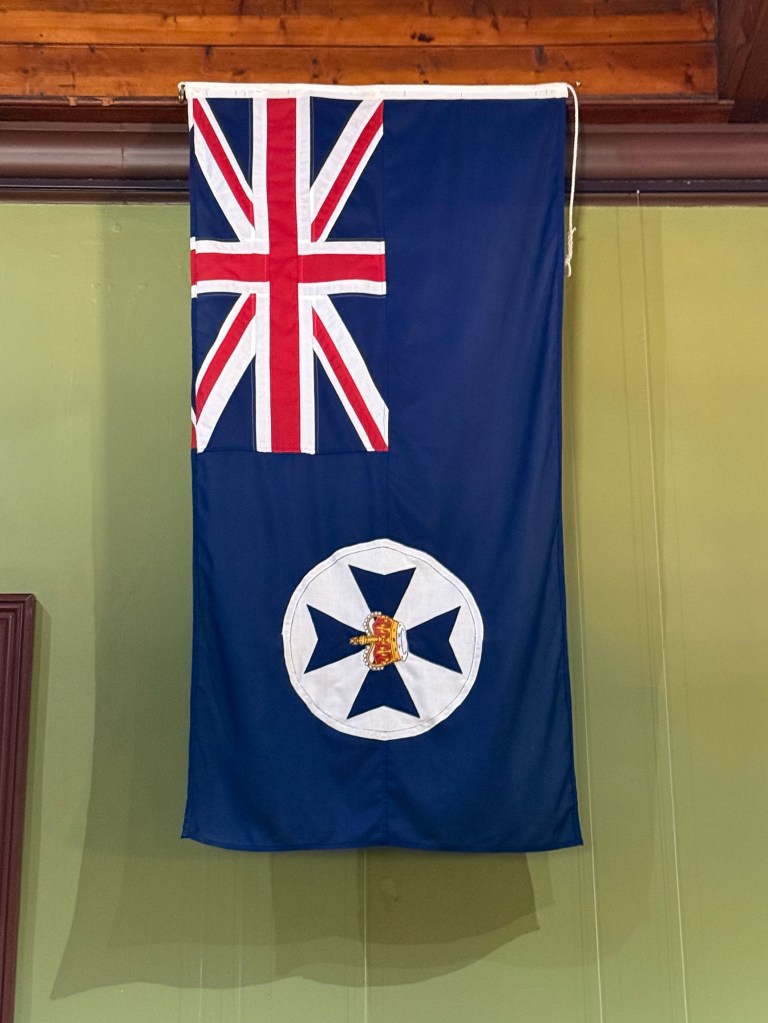
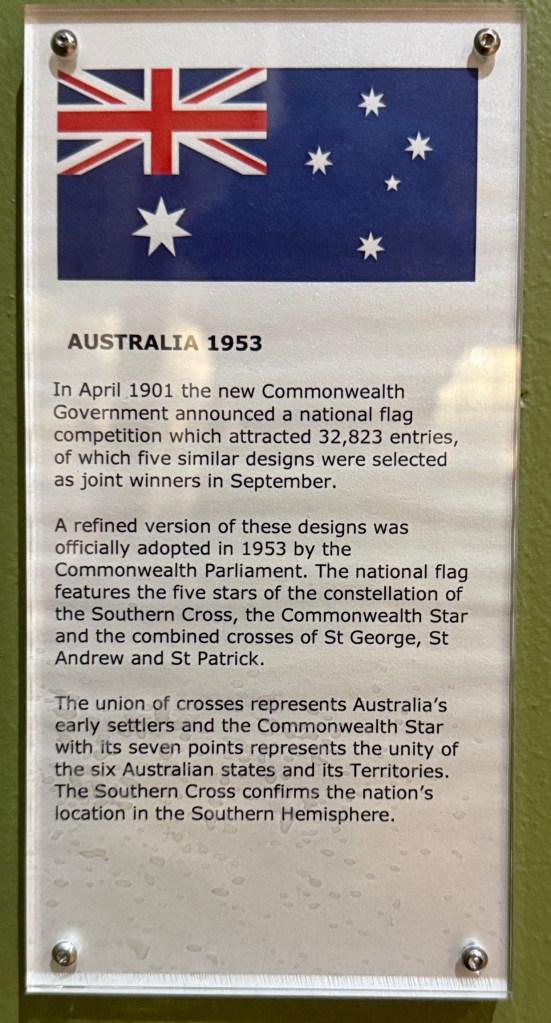
There is an interesting collection of flags inside, each of the colonies through to the Aboriginal flag of today. Tit bits about each of them. Allthego got a surprise in finding out that our current flag was only adopted by the Parliament in 1953. It was the ultimate outcome of a competition that started in 1901! In the 50 years it took it seems we used the Red Ensign as our flag (?) Things back then took their time, why are we surprised that times haven’t changed?
The other claim to fame is that it is the birth place of one of its favourite sons, Peter Allen who died in 1992. Many songs to his credit. Probably, the two best being ‘I Still Call Australia Home’ and ‘The Tenterfield Saddler’. The later being the immortalisation of his grandfather George Woolnough, who was the Tenterfield Saddler for something like 50 years.
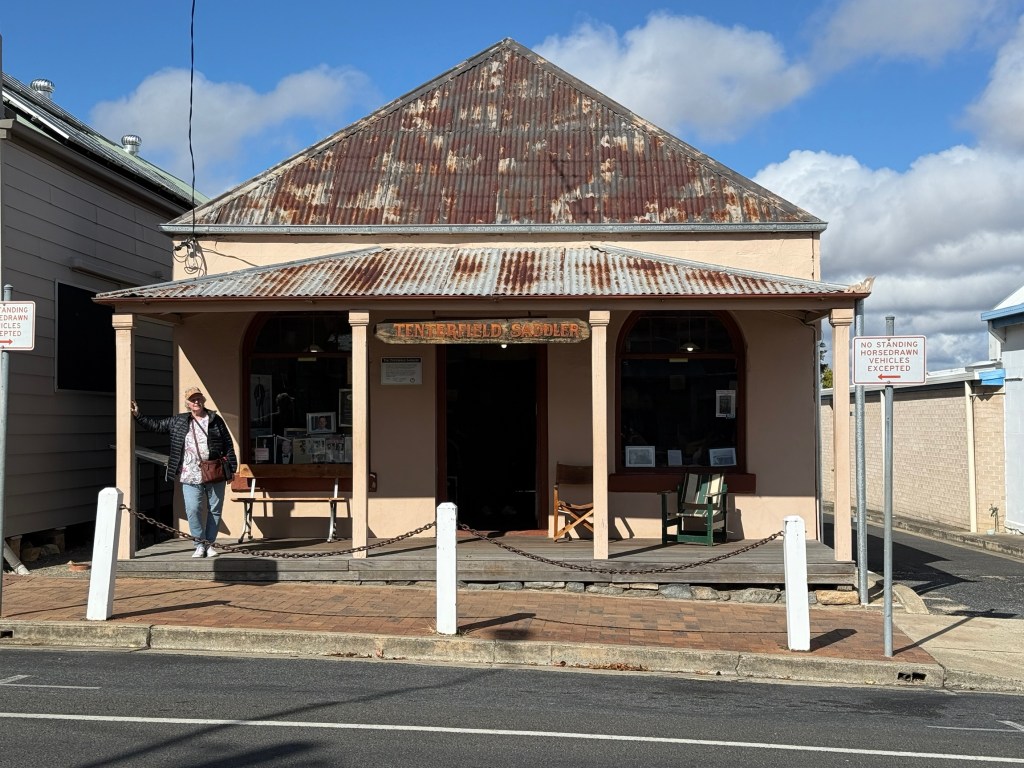
The workshop is still there, classified as an historic building, now a museum.
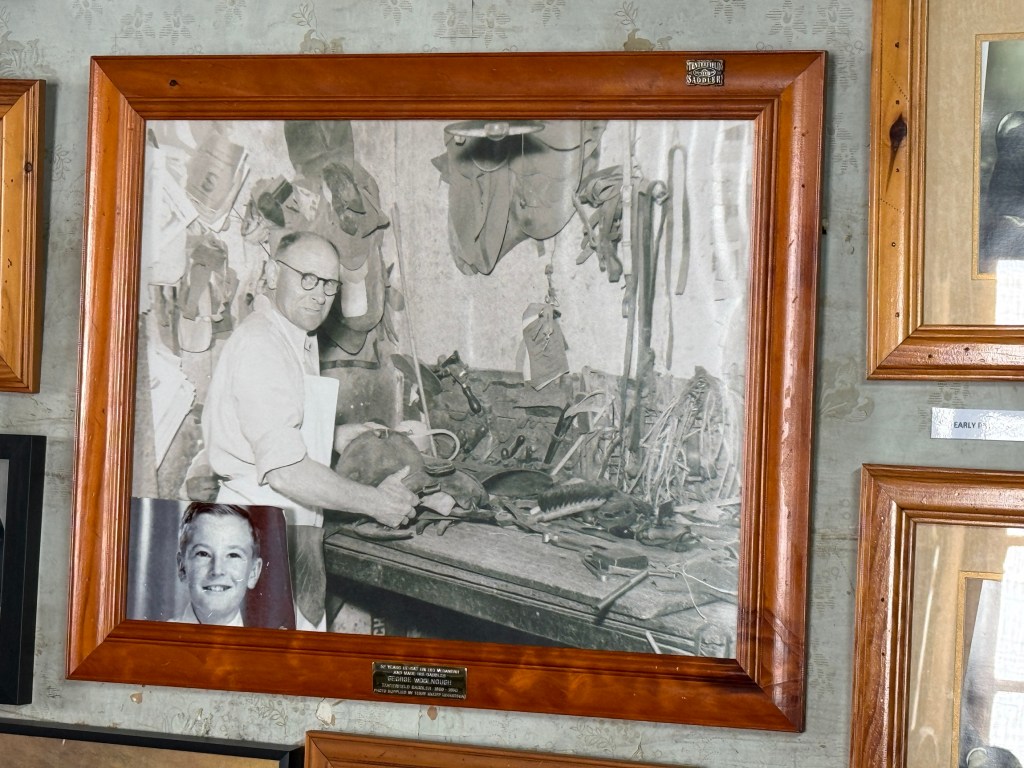
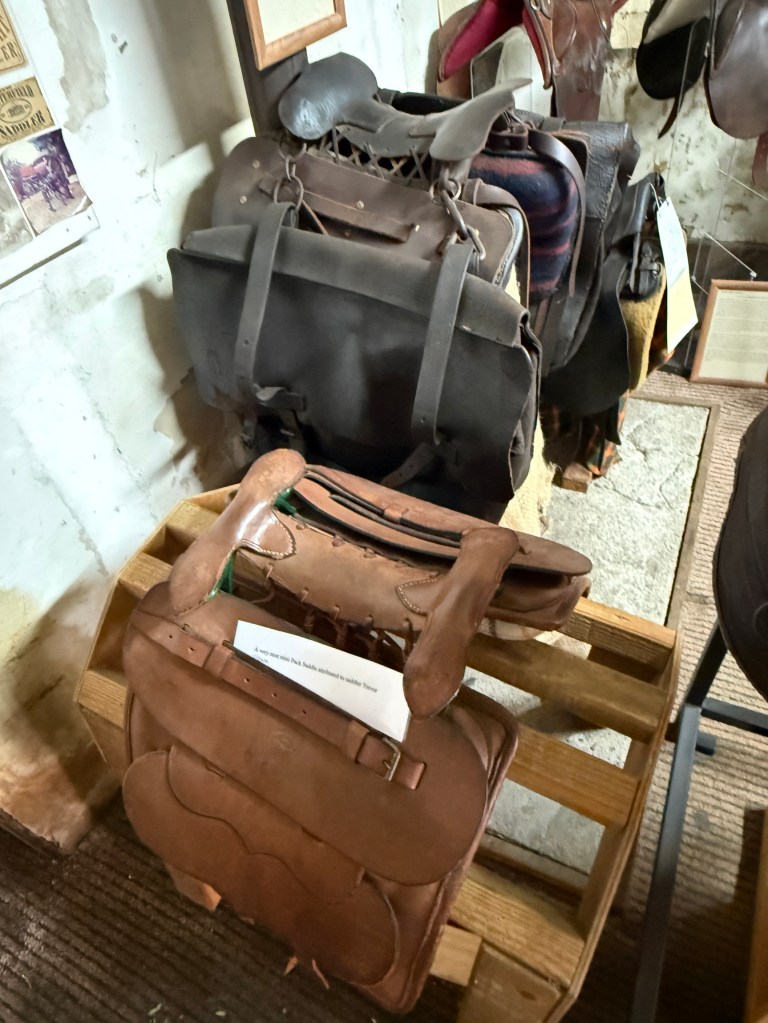
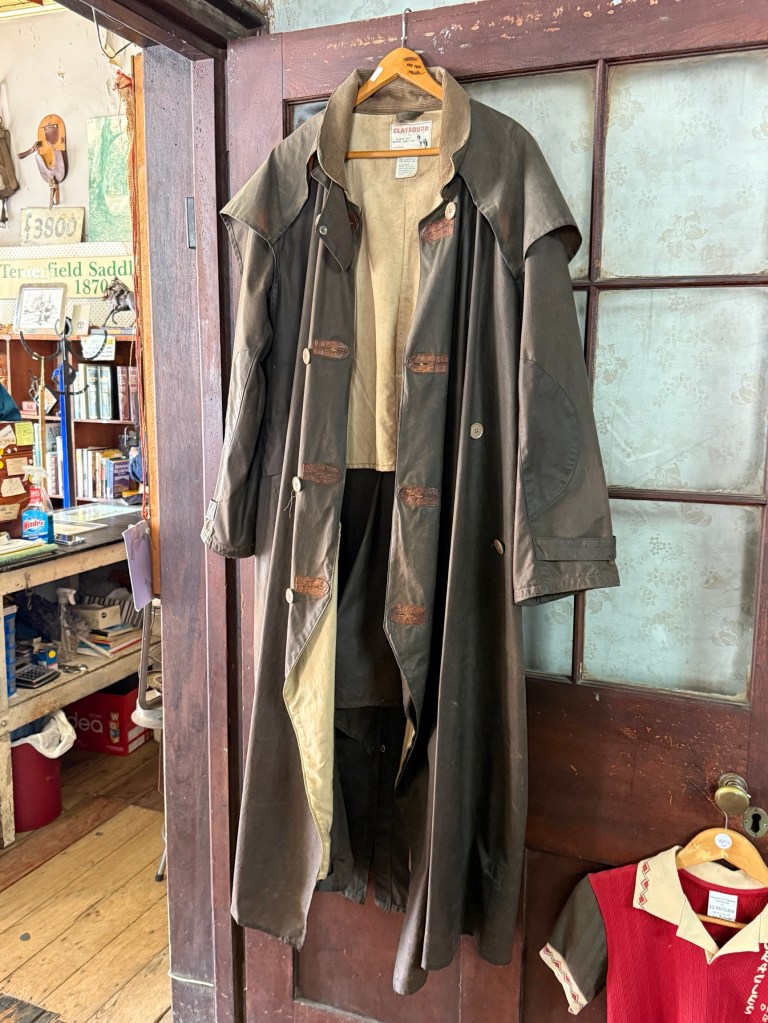
Lots of old saddle and leather stuff and Peter Allen and Tenterfield memorabilia.
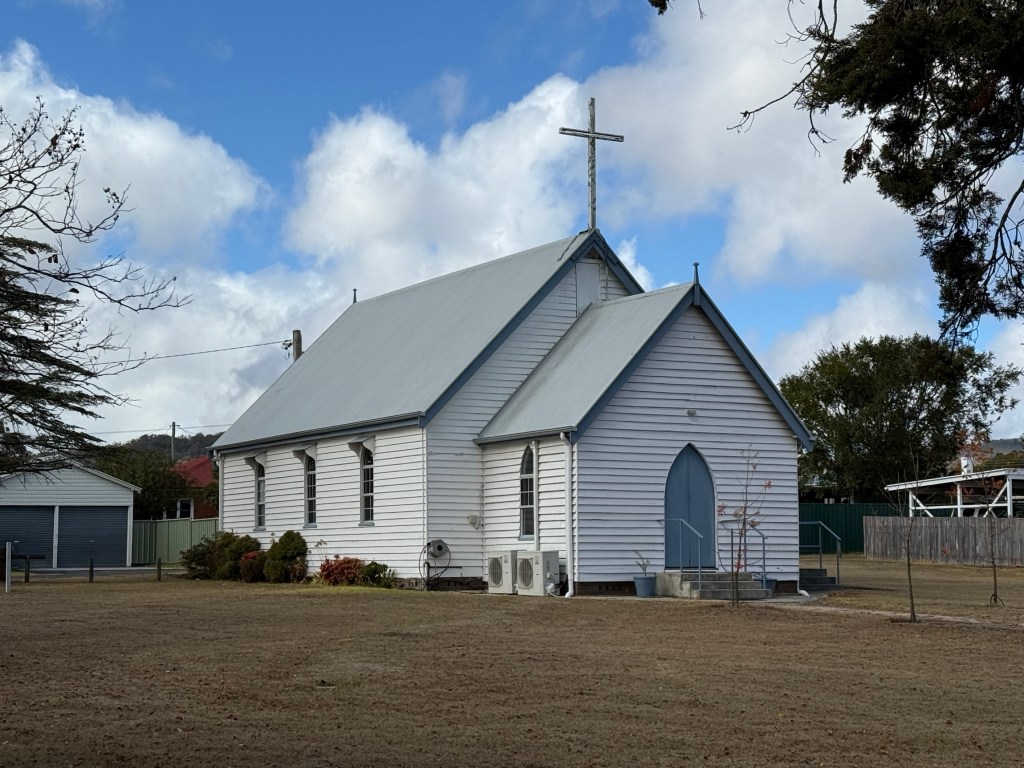
A couple of other famous people also feature in the town’s history. Banjo Patterson was married here in 1903, to a local pastoralists daughter. The wedding was in the 1885 built wooden Presbyterian Church.
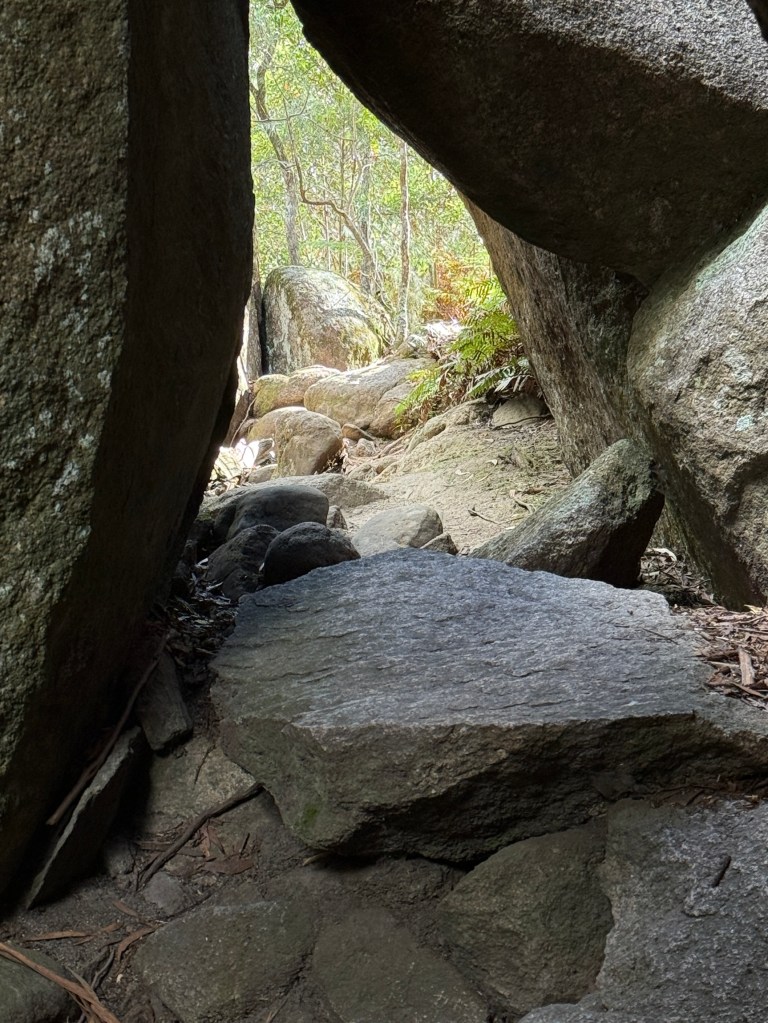
Fred Ward, the bushranger Captain Thunderbolt, wandered around these parts in the mid 1800s. We had a little wander to one of his claimed hideouts among the granite boulders just out of town along the Mt Lindsay Road.
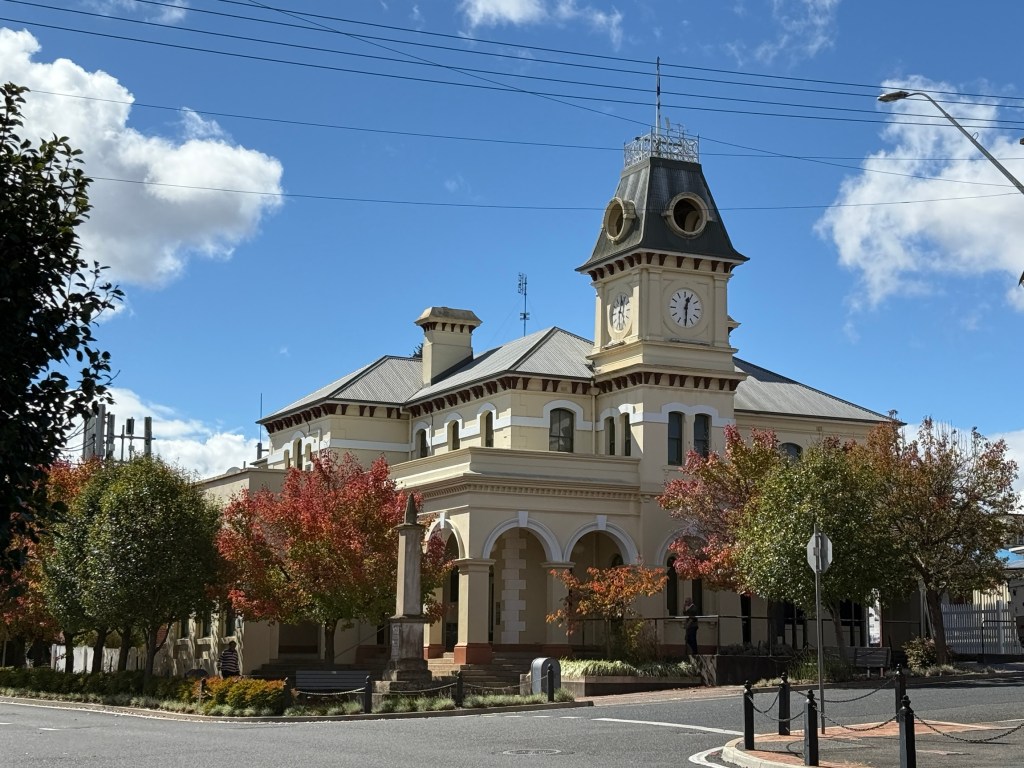
There are many old commercial buildings and homes in the town, generally repurposed but retaining their facades.
Among them is the Royal Tenterfield Hotel, originally built in 1849 as the George Inn. It has been added to and remodelled in various styles over the years.
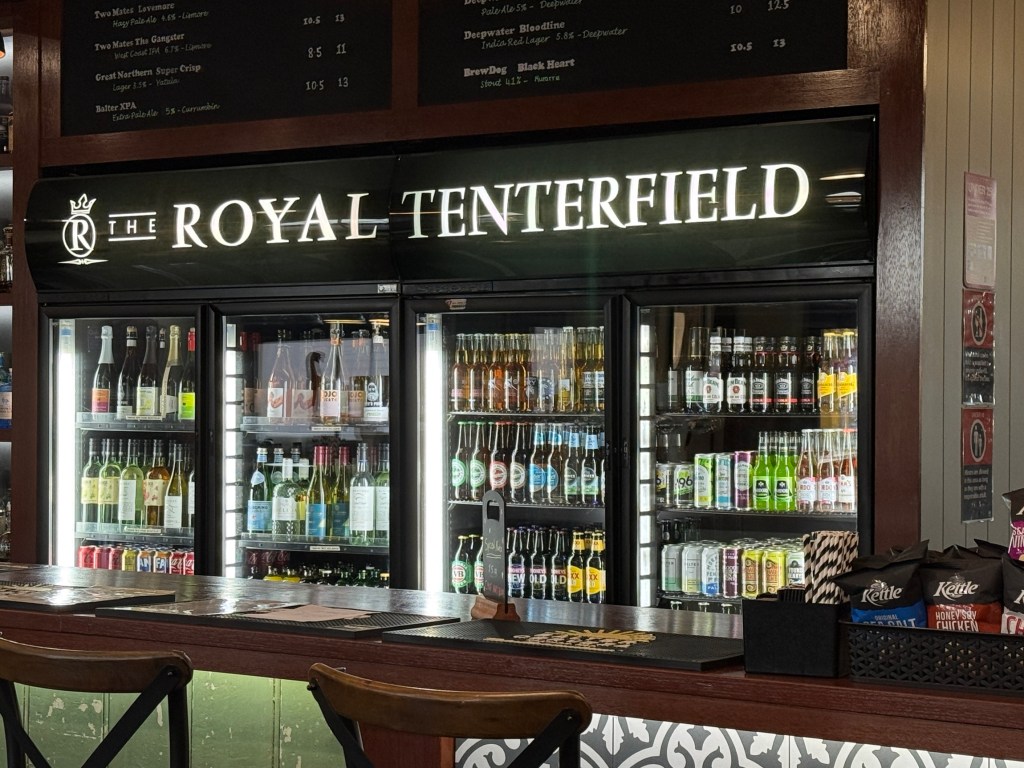
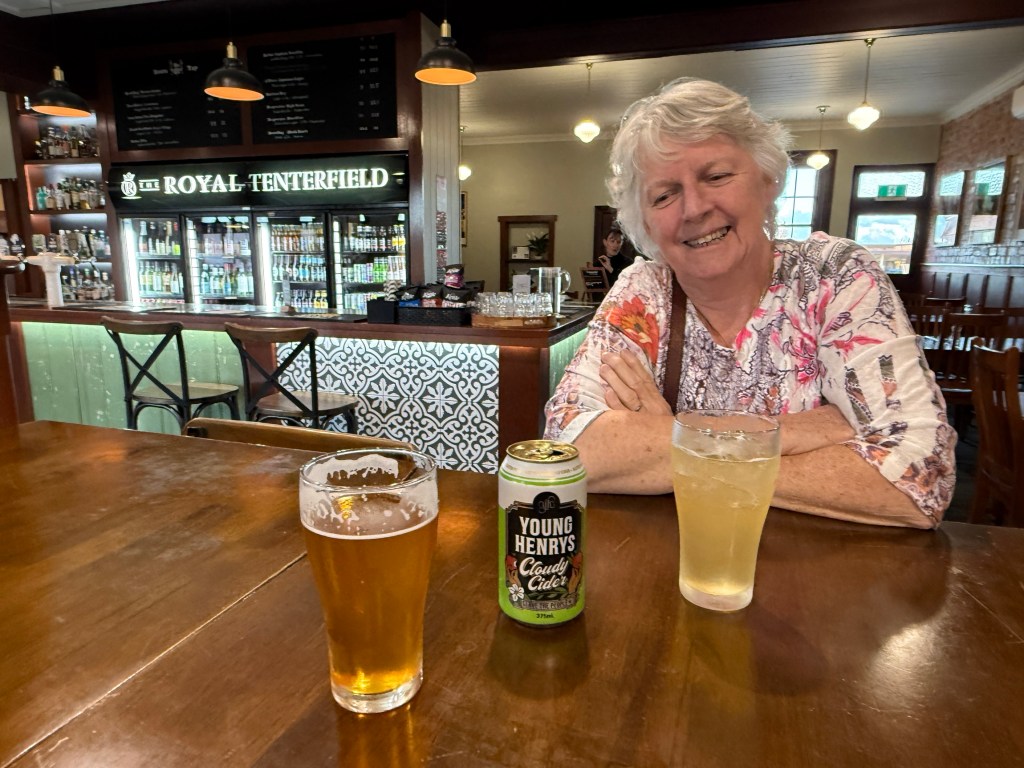
Recently restored with a modern interior twist. We had a pre dinner drink there after walking around the town. Back to the Peter Allen Motel for the evening.

