The Great River Road
This is the name that the travel consultants have given to the drive from Khancoban to where the Murray banks up against the Hume Dam about 15 km from Albury. Goodness knows what they were paid for the fancy logo! But it is not a bad one.
We have left Tom Groggin and headed back down the Alpine Way to Khancoban, getting used to this drive. It has been a chilly couple of days in the mountains, no internet. Solar power and gas keeps us going and the tanks hold enough water for sparten hot showers. Isolated from the daily news barrage, have not missed the political classes struggle on the hustings and the media drivel that follows them.
After topping up with water and emptying the potty at the dump point at Khancoban we move on . I don’t have any pictures of the dump point process but will take some at the next available opportunity to share them with my dear readers, who may not be familiar with the activity.

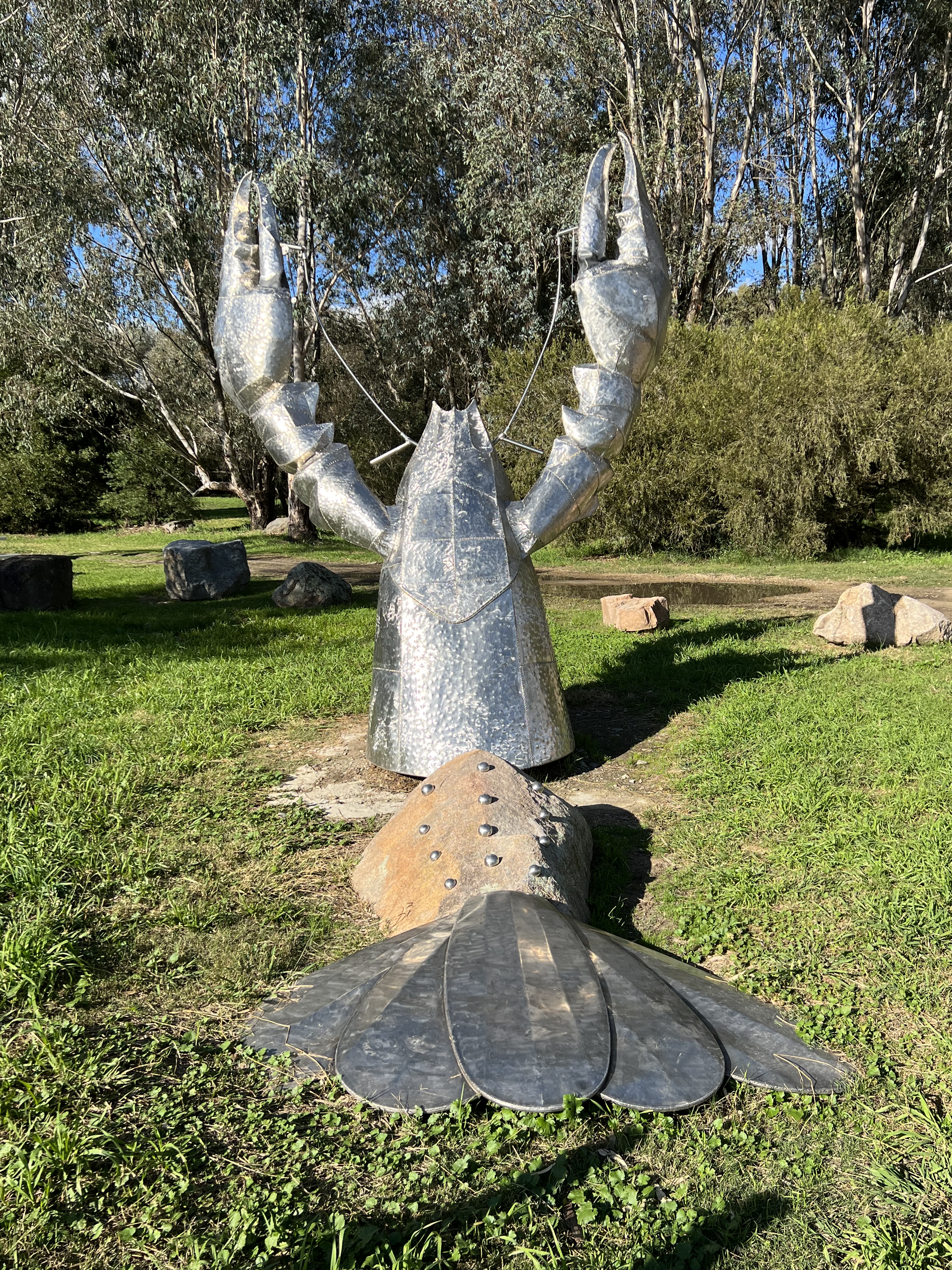
We cross the Murray and enter Victoria for the first time on our journey at the Bringenbrong Bridge. It is a great little spot showcasing the Murray as it continues the rush downstream. Along The Great River Road a number of sculptures have been placed highlighting aspects of river life. Here it is the Murray River Crayfish, a sort of big yabbie. It is I believe the second largest fresh water crayfish in the world, it can be caught (subject to seasonal and bag limits) and features on regional menues along the river.
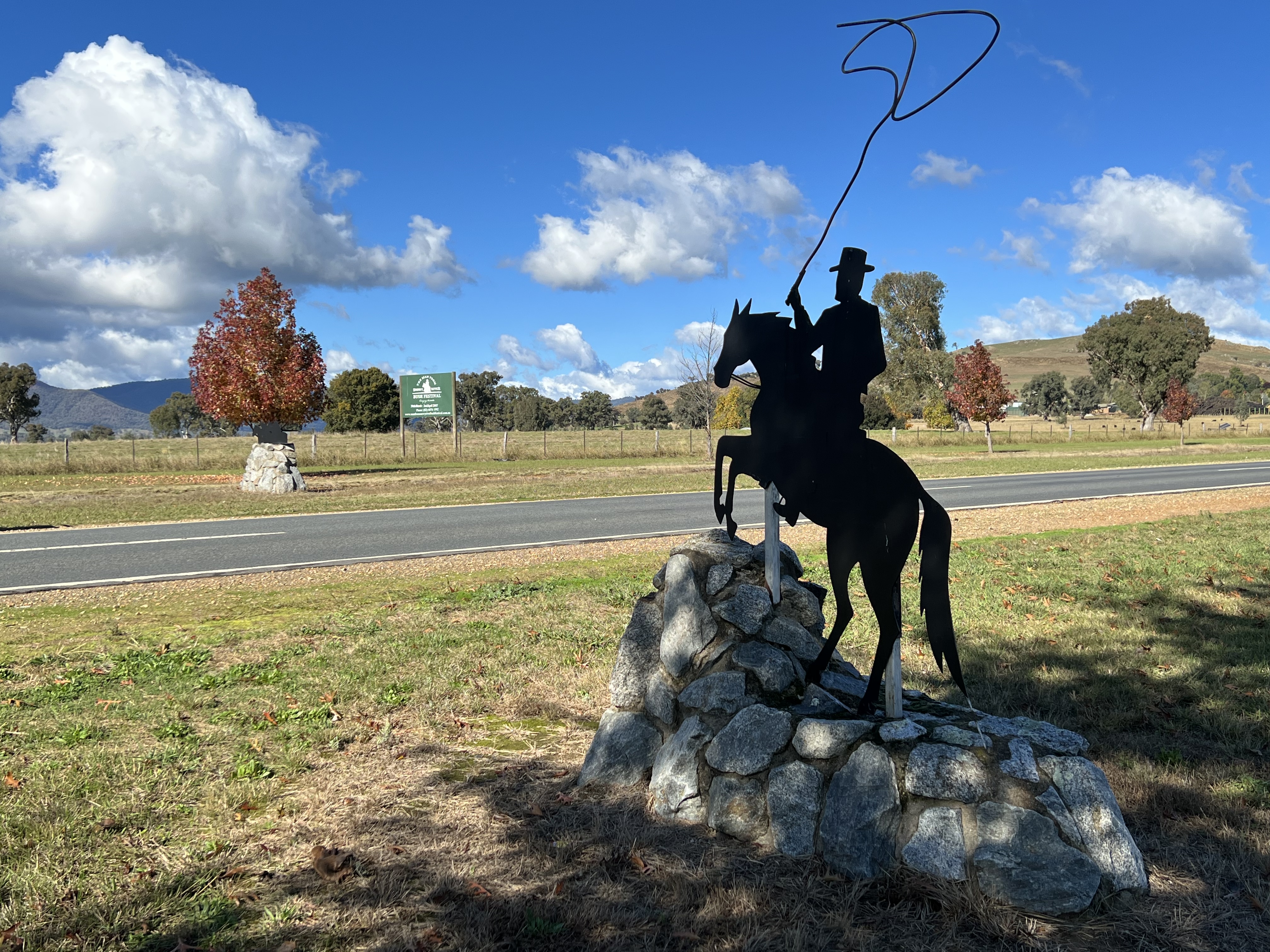
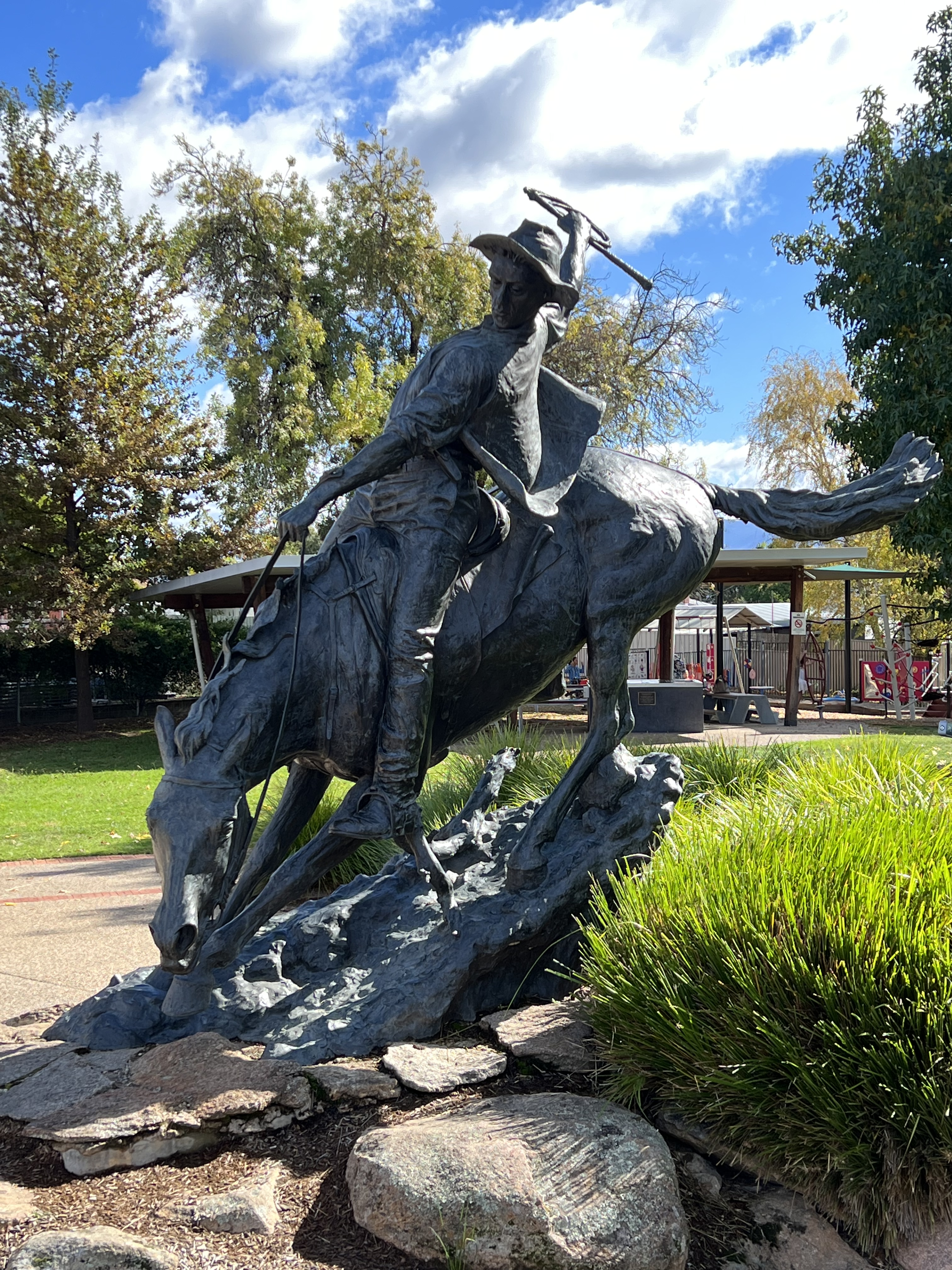
Further along we take a side trip off the road and drop into Corryong, The Man from Snowy River (MFSR for short) Bush Festival takes place here each year. Corryong is the MFSR capital of north east Victoria. it has a stranglehold on the poem written by Banjo Patterson, ‘The Man from Snowy River’ not to be confused with ‘Clancy of the Overflow’. Allthego struggles with this not being a student of the poem(s), or perhaps ‘tales’ is a better description. There are a few sculptures, murals and other oblisques around the town commemorating the story and its central character.
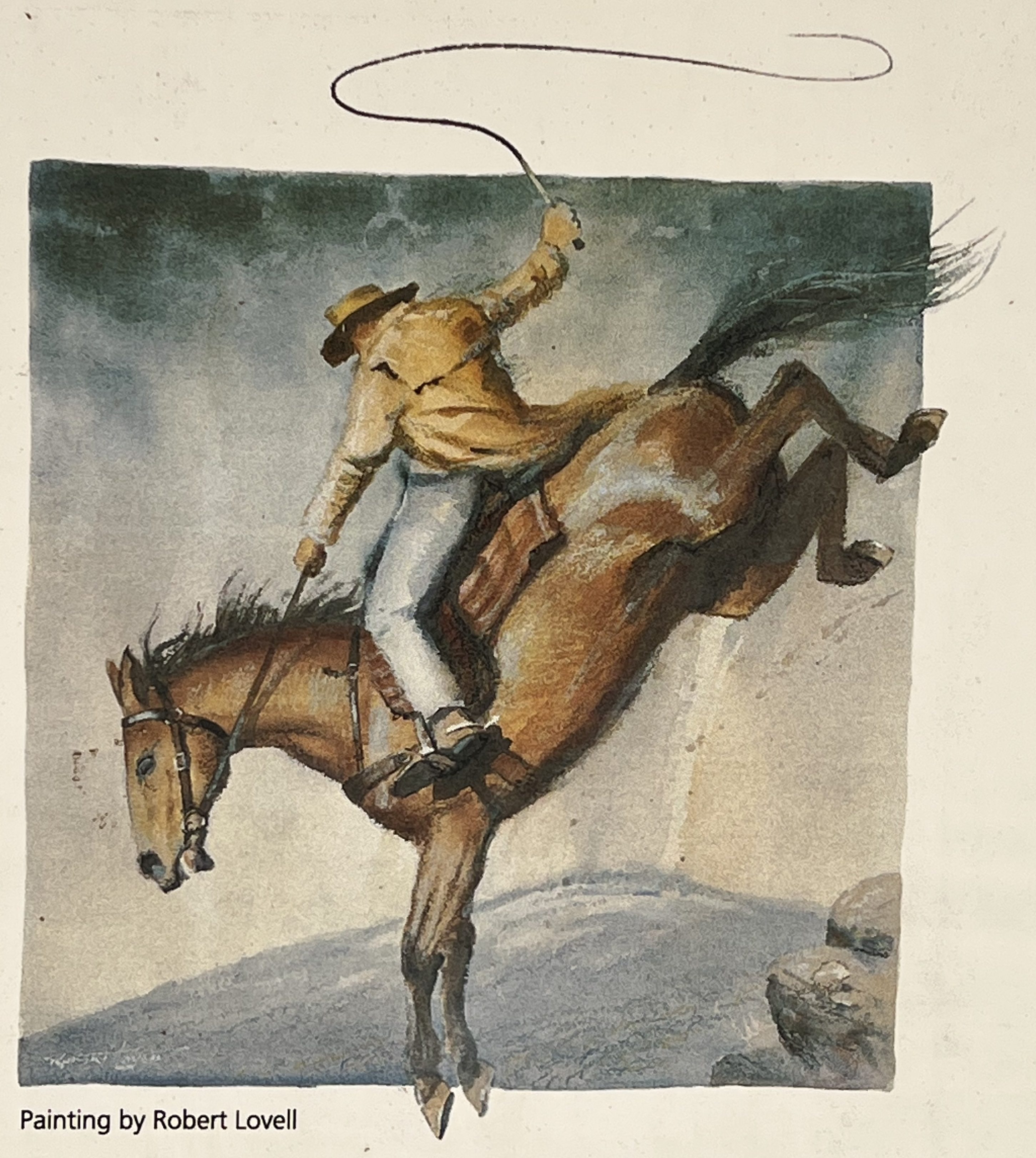
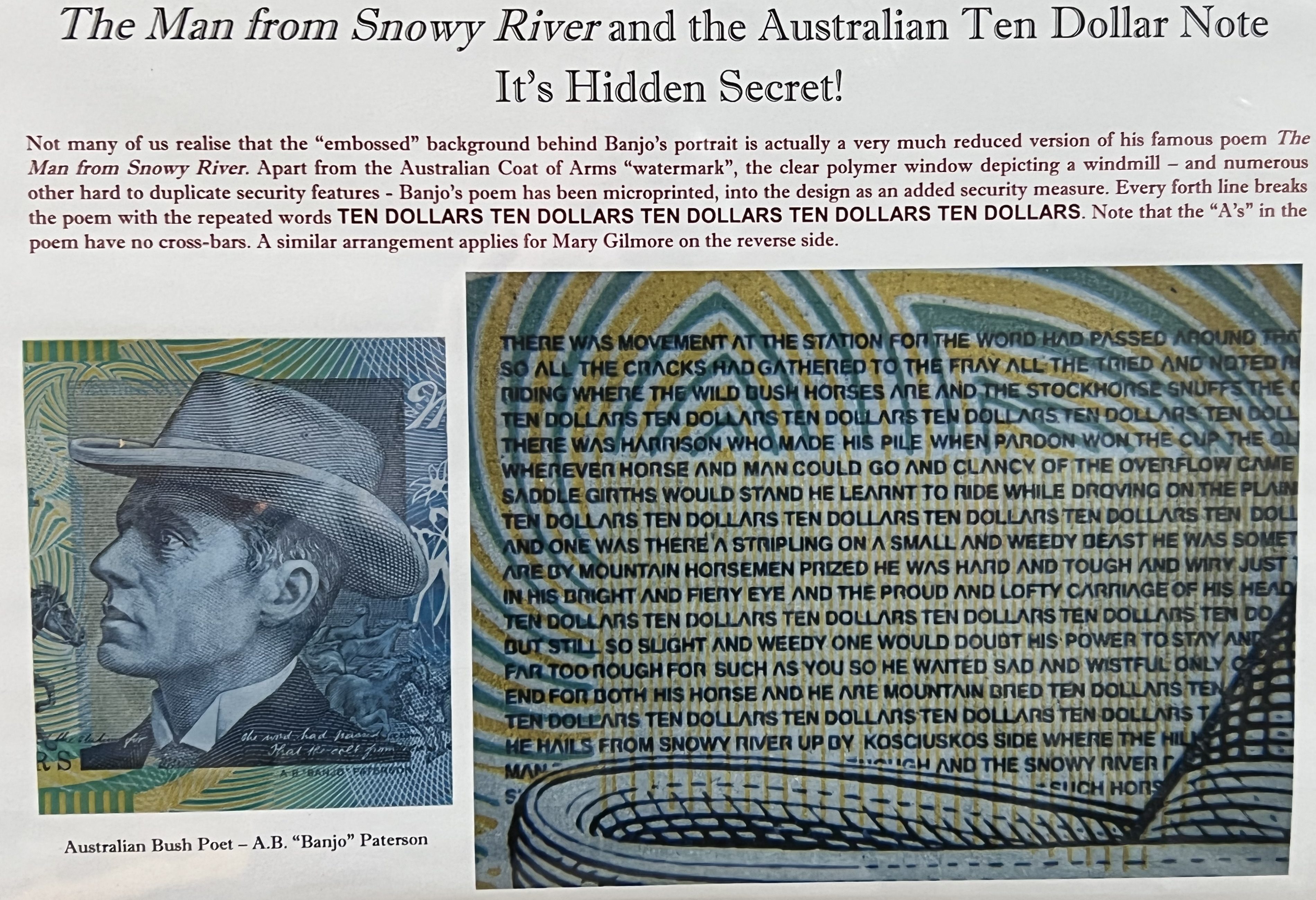
Even our $10 note has Banjo’s tale immortalised behind his portrait.
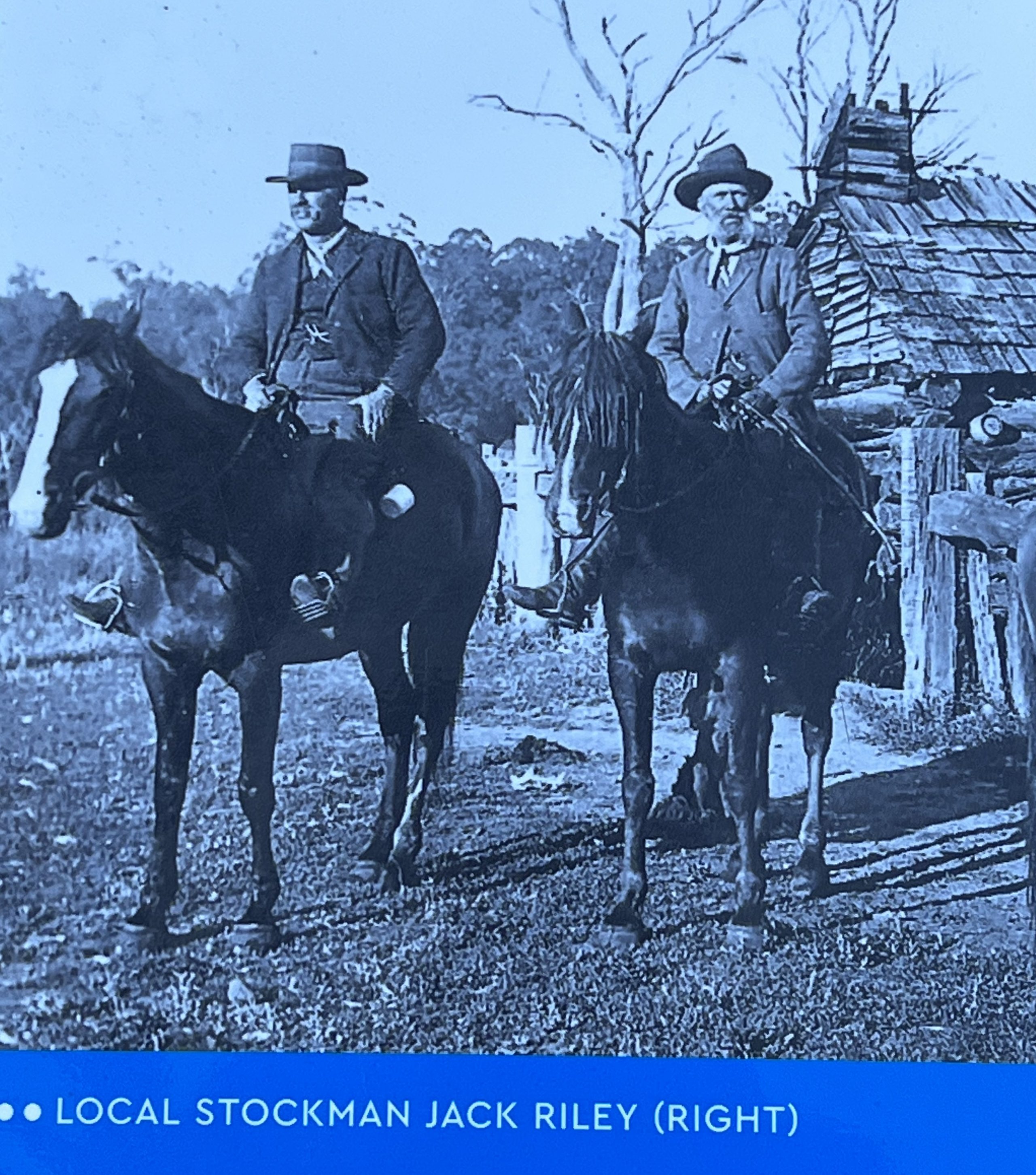
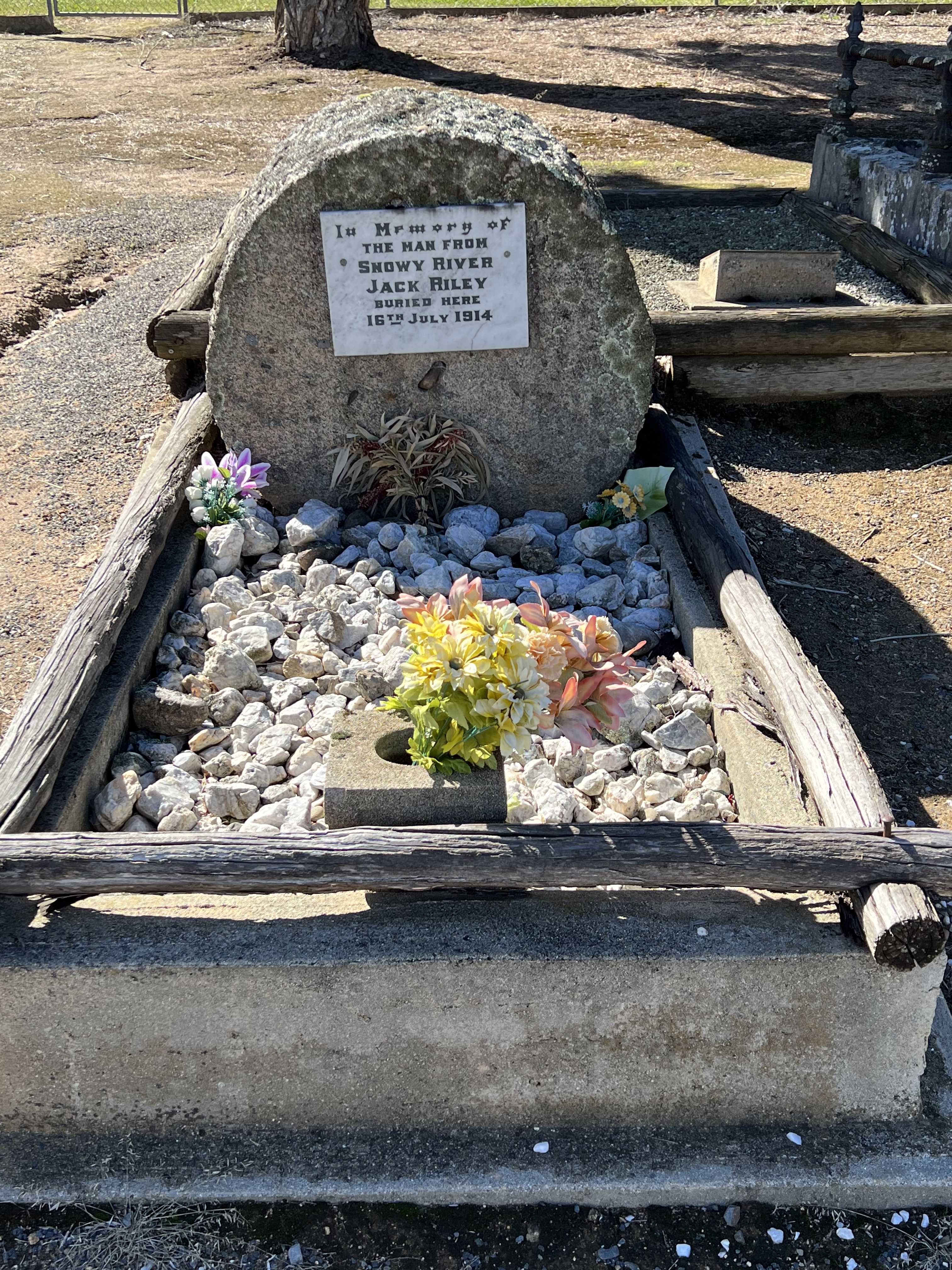
We headed off up to the local cemetery to see the grave of Jack Riley. Riley was a mountain recluse and lived in the high country, a tough old coger who died while being brought down to a doctor in terrible conditions. Patterson had visited Riley at his hut on Tom Groggin Station in 1890 and it is thought that one of Riley’s stories was the inspiration for the famous poem. Prior to his death Riley said that ‘Yes , he was the man, but Clancy wasn’t there’. Well who knows. It is a good tale!
But, we have to move on for lunch at the Bottom Hotel, this establishment is at the bottom end of the town. We didn’t check if there is a Top Hotel at the other end of town. At the Bottom Hotel though Allthego enjoyed a Rainbow Trout and Homealone a chicken parmie. Allthego last had a Rainbow trout something like 50 years ago when he was camping with an old mate, Robert Ebert, at Jindabyne. Caught one way back then and had it grilled. It really is a sweet fish, great with a bit of salt and lemon.

So it was then back on the road and we will see where that takes us next time.
At the spot, but not quite, but close enough.
We have made it to Tom Groggin Campground. A pleasant enough drive along the Alpine Way from Khancoban, 52 km or so. It is another 58 km onto Thredbo. The road was fine, steep and a bit narrow in sections. Some great views out over the ranges and valleys below.
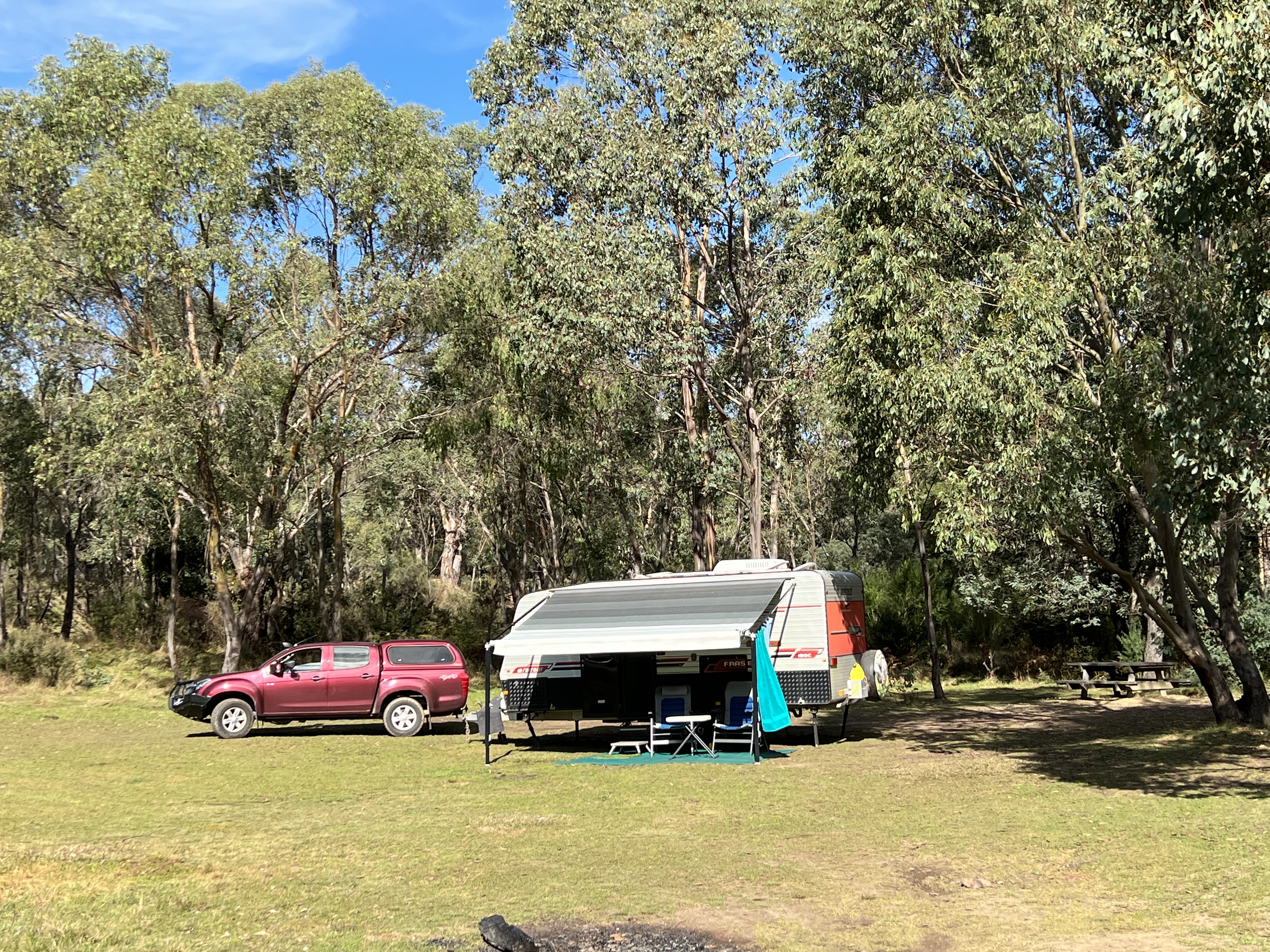
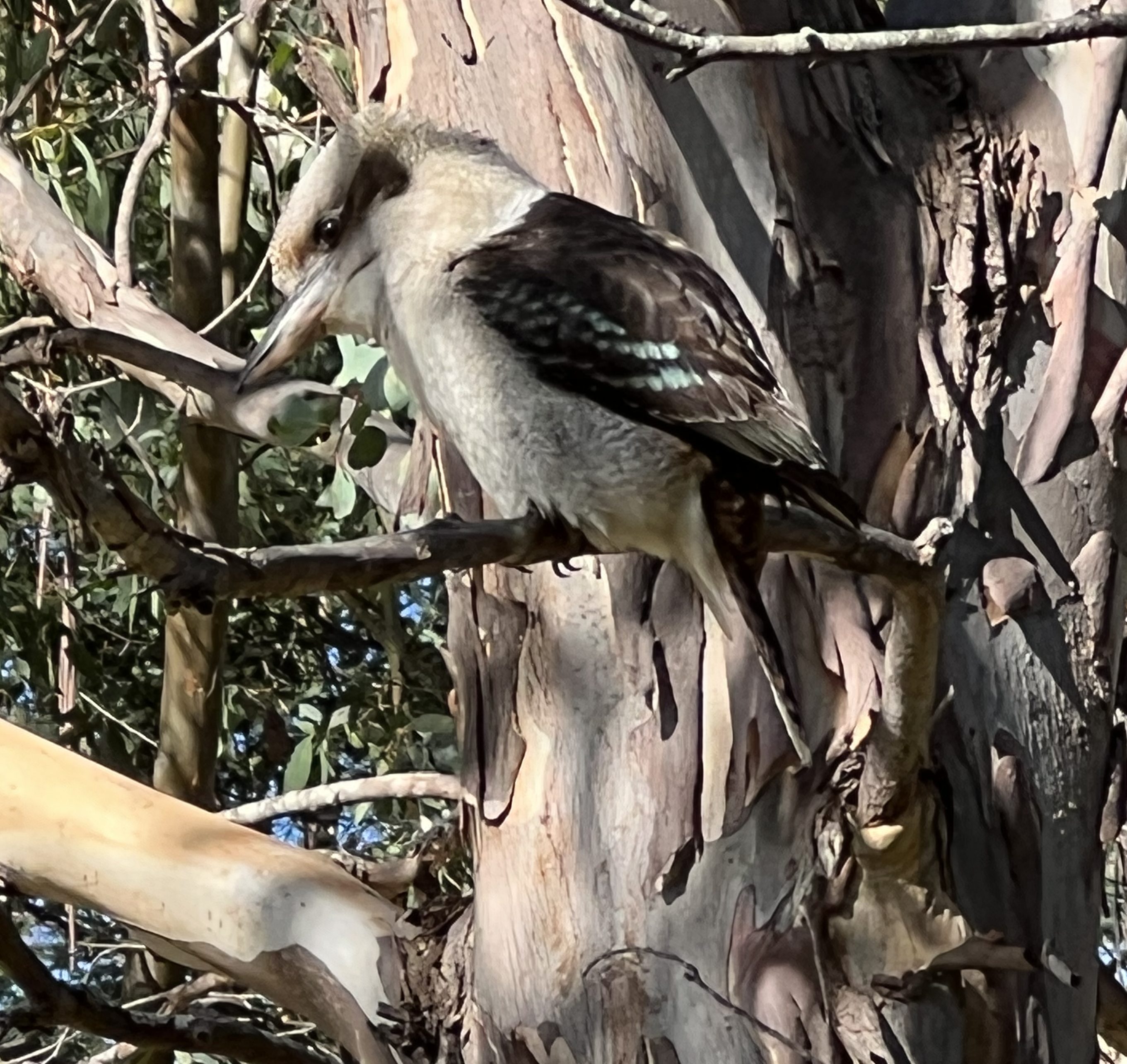
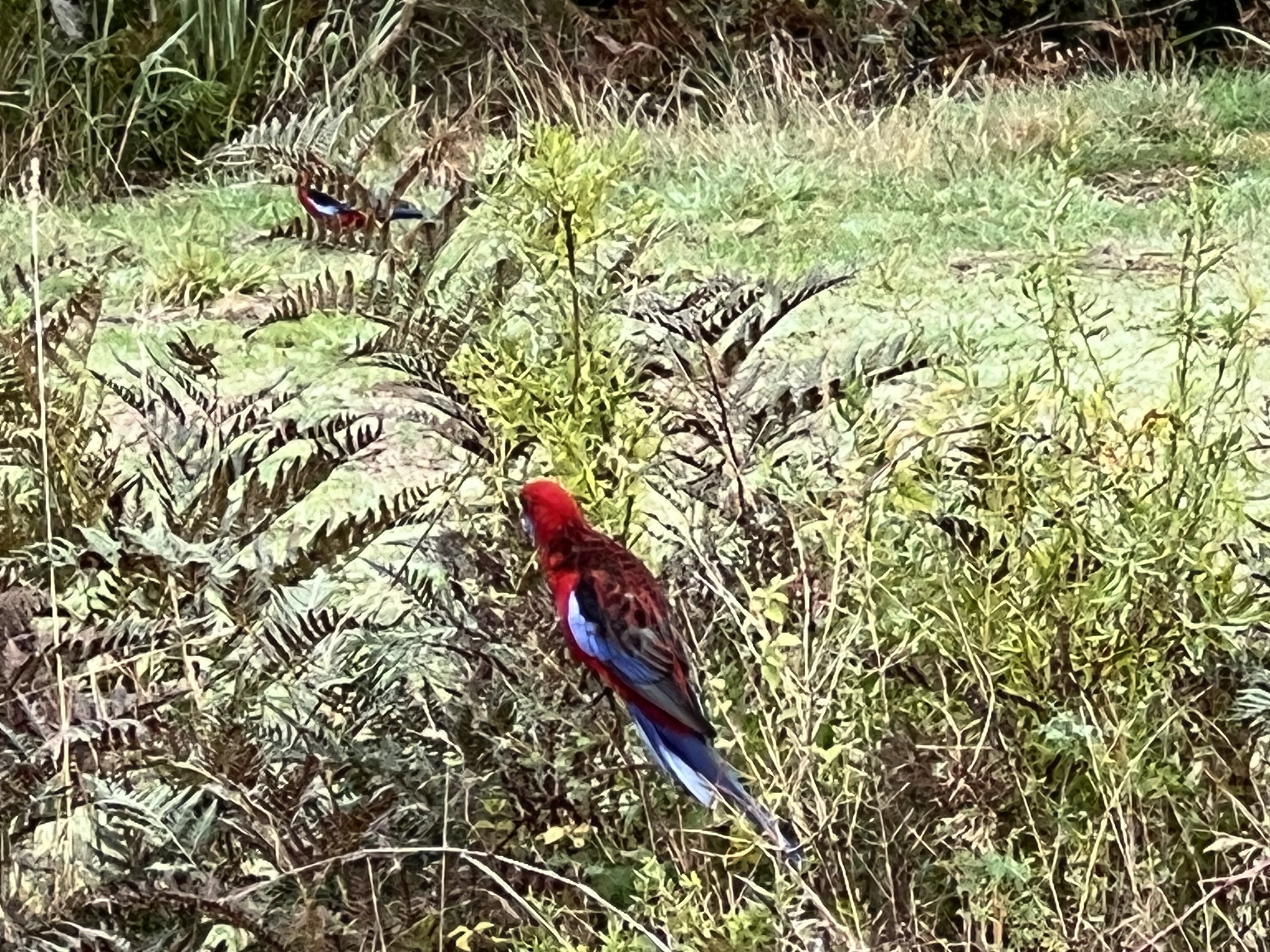
We had the campground at Tom Groggin mostly to ourselves, a couple of other campers were there, but they came and went after a night stopover. The campground is the most accesable point to the Murray River from its source which is more than several km further upstream in the vicinity of ‘The Pilot’, a 1580m peak that sits out on its own. One can drive up a bit closer on mountain tracks but then face an overnight hike to the source at what is known as the ‘Indi’ spring.
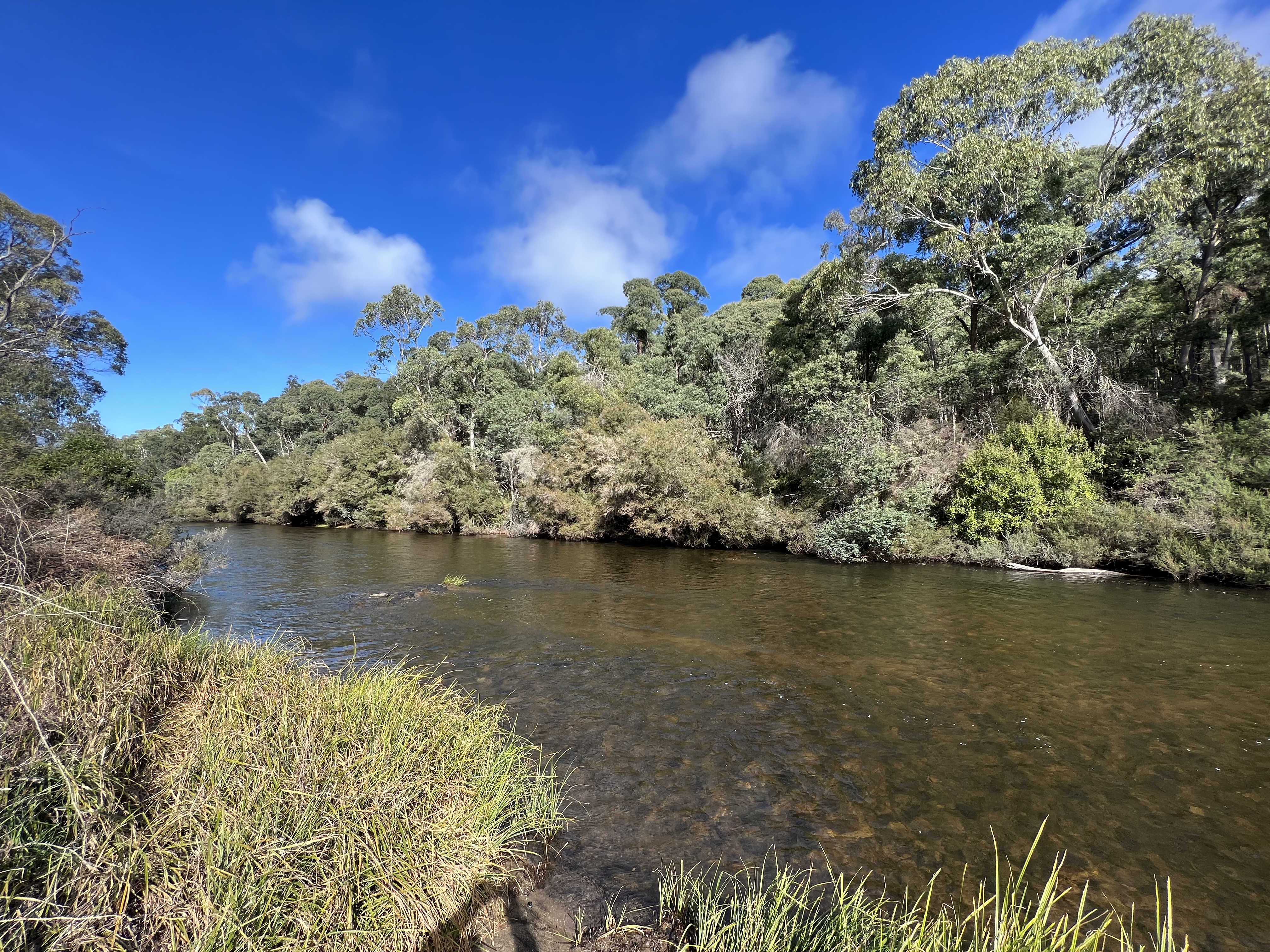
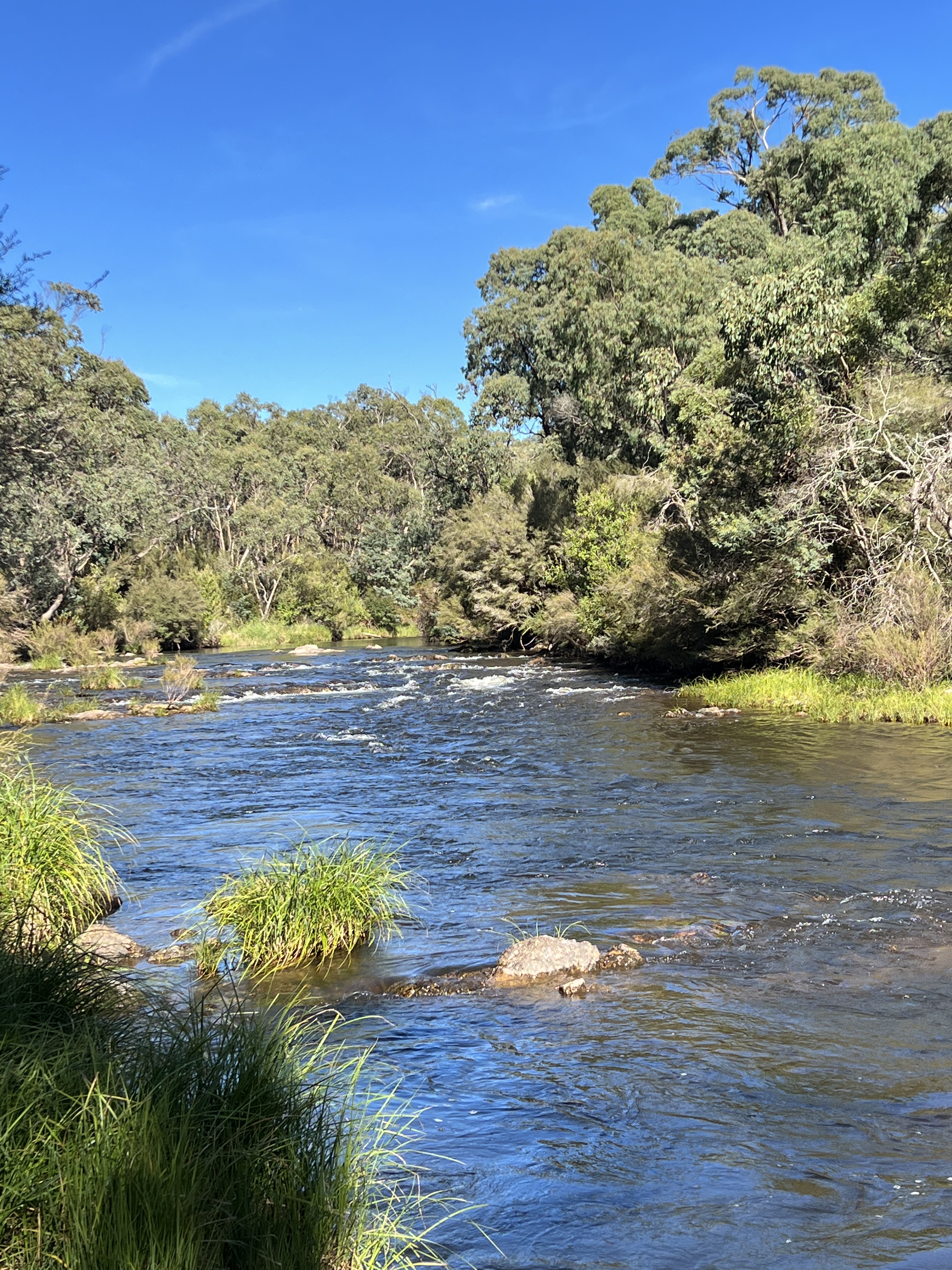
The river at Tom Groggin is swift flowing and only a metre or so deep, but it is a great spot, smoother flowing waters upstream and some mini rapids below the campground. All very tame though.
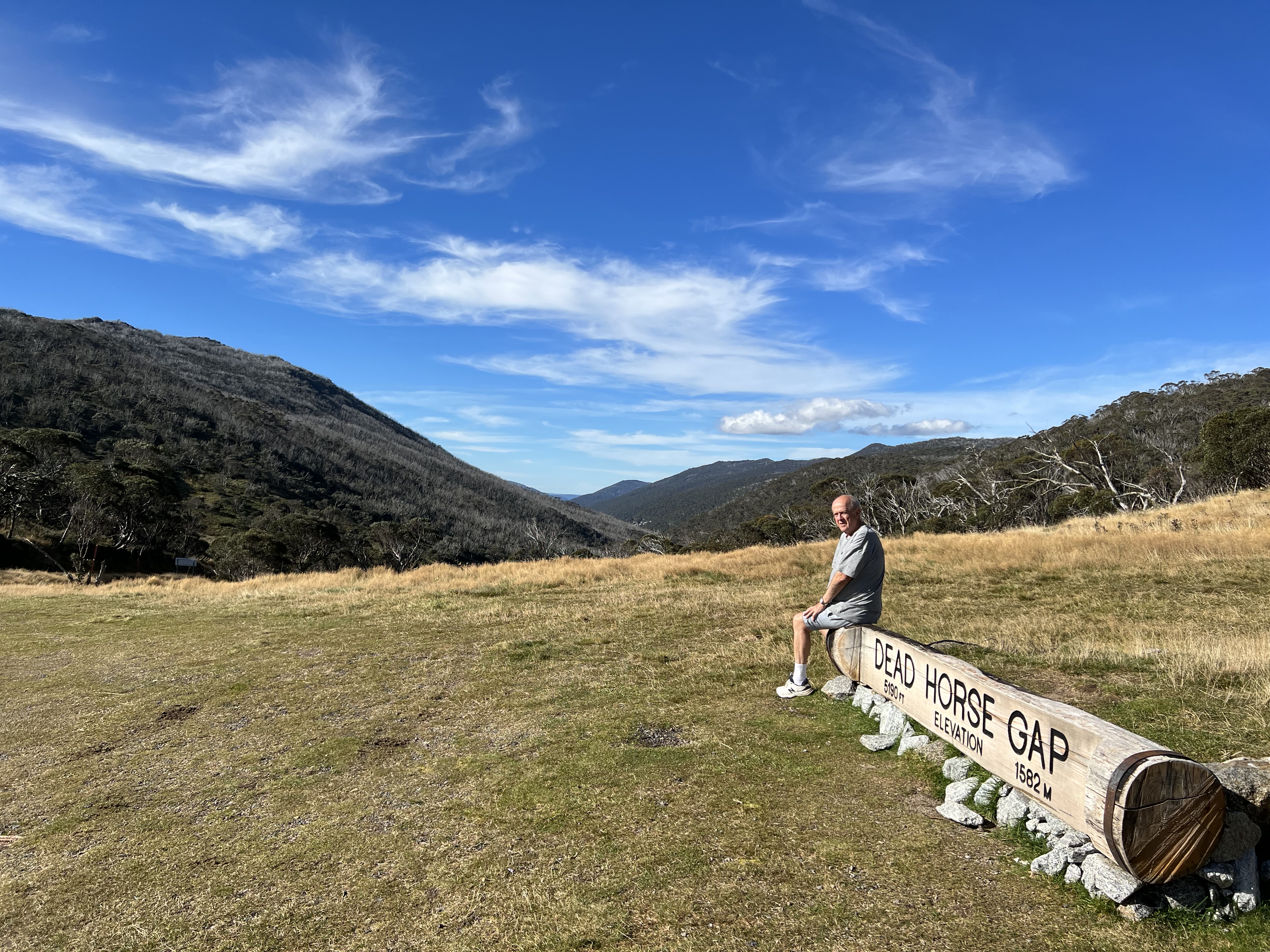
We have used Tom Groggin as a base to head further along the Alpine way to Thredbo, ultimately going down to Jindabyne to get fuel, Sundays are not a good day for fuel at Thredbo. Along the way we passed the ‘Pilot’ lookout, we felt no desire to pursue the source of the Murray further in its direction. Coming into Thredbo the road passes through Dead Horse Gap, requisite photo taken on the log looking down into the valley below. We retraced our steps to Tom Groggin, these sort of testing drives always seem easier on the return, one knows the bends I suppose!
We have no power or water at the campground so are reliant on the sun to top up our batteries and the water tanks to last. Renewables have proven a boon for campers but you do really hope the sun shines. We don’t have one of those diesal generators as support or for that matter a EV battery charger point to rely upon. Oh, well, lets rely on the sun for the time being others seem willing to do!
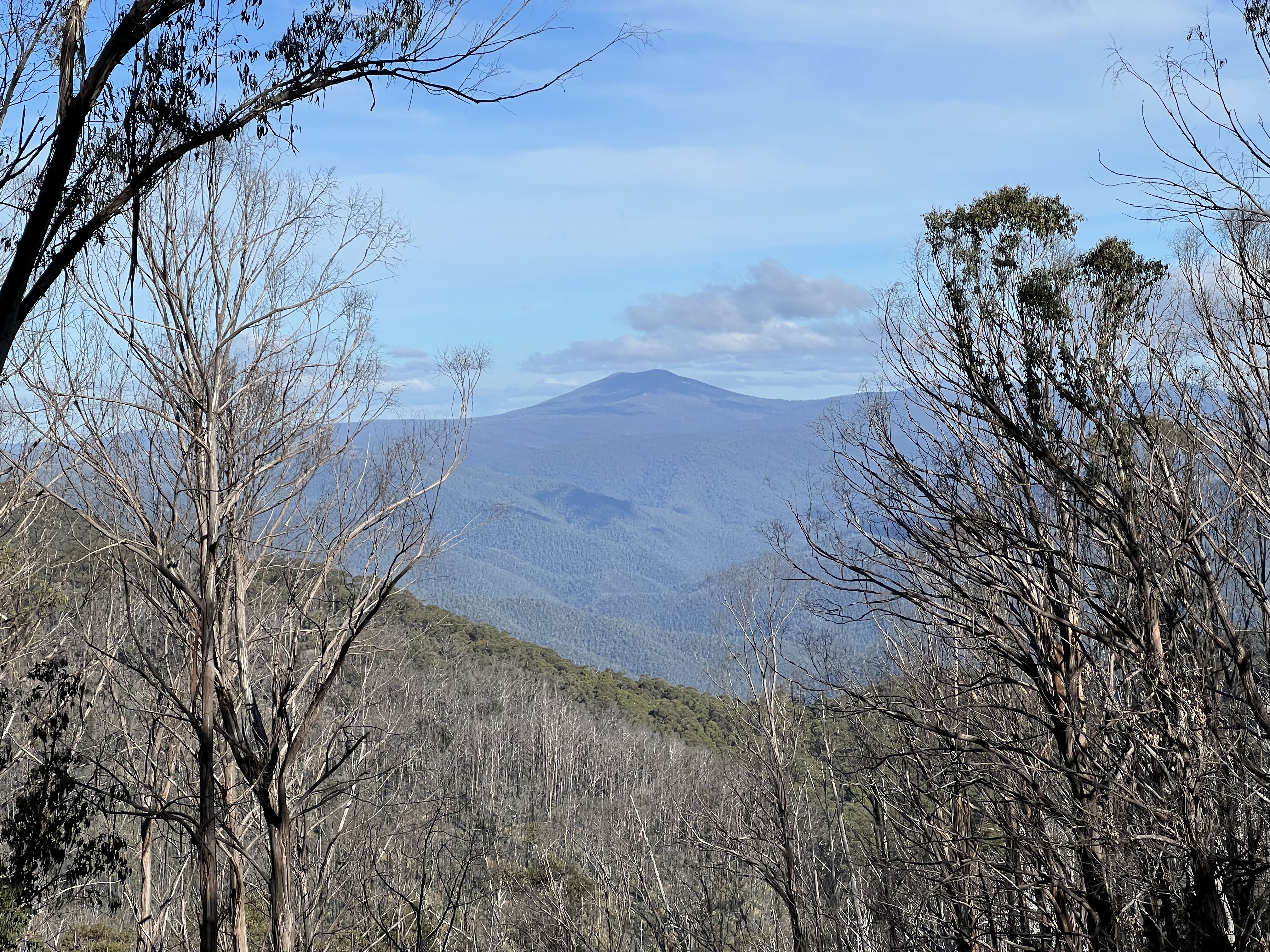
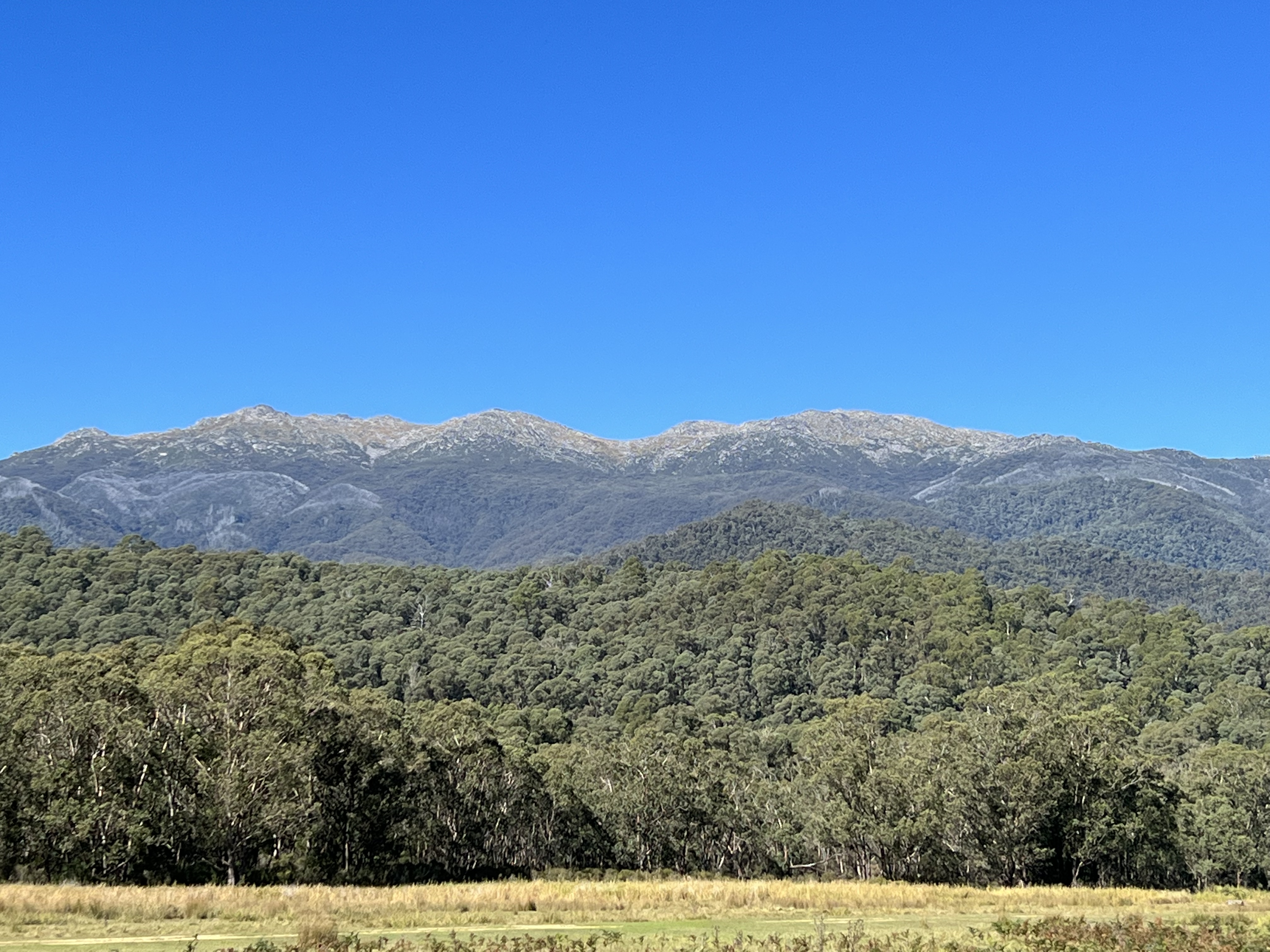
Along the Alpine Way there are a number of lay by points which allow views over the ranges and valleys below. A number of side tracks take one to lookouts, Scammels Spur and Olsens Lookout provide great views of the main range, Mt Kosciuszko albiet hidden behind another peak on the right. The Swampy Plains River is crossed at the Geehi Camping area, a great riverside camp spot.
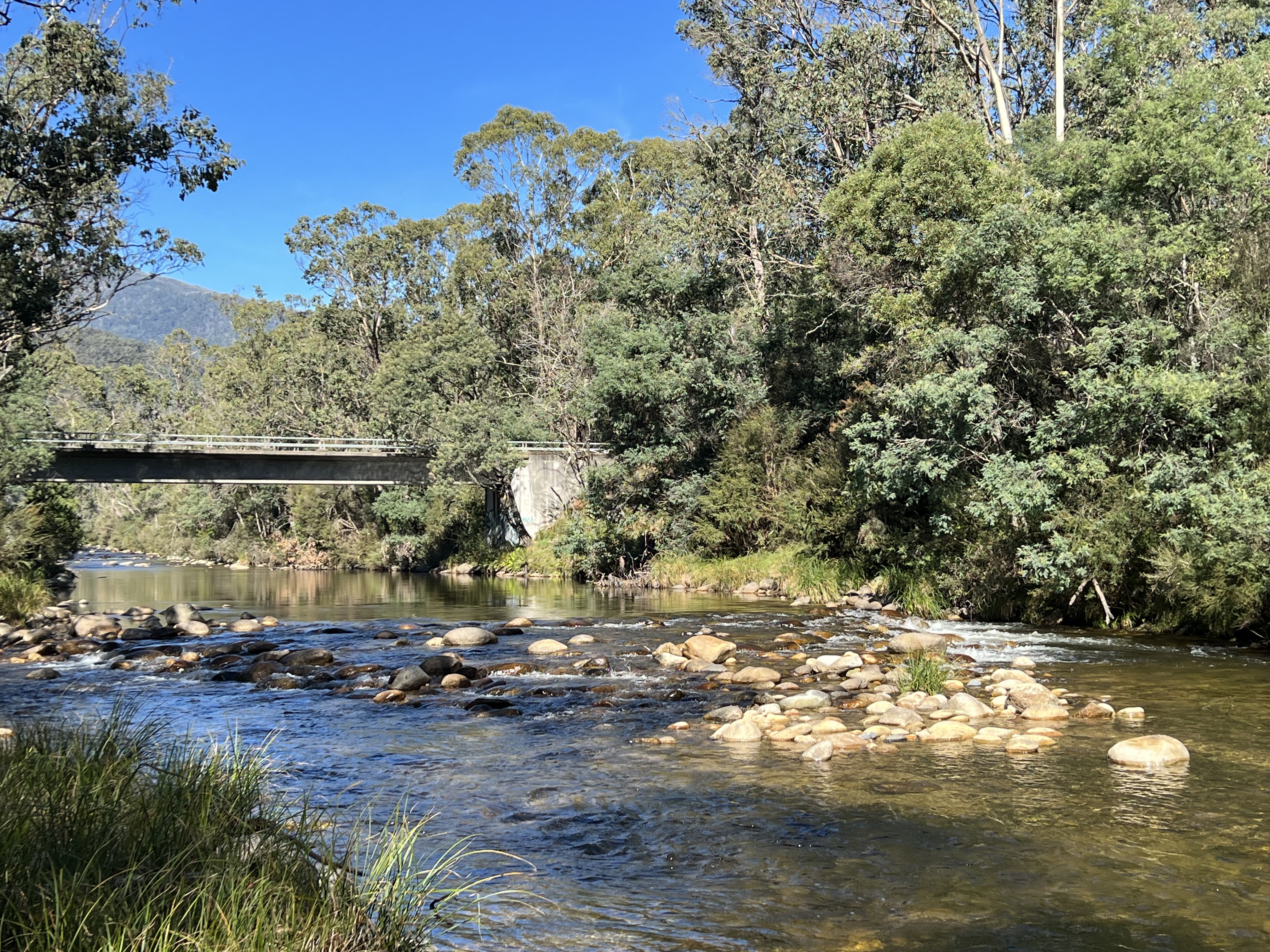
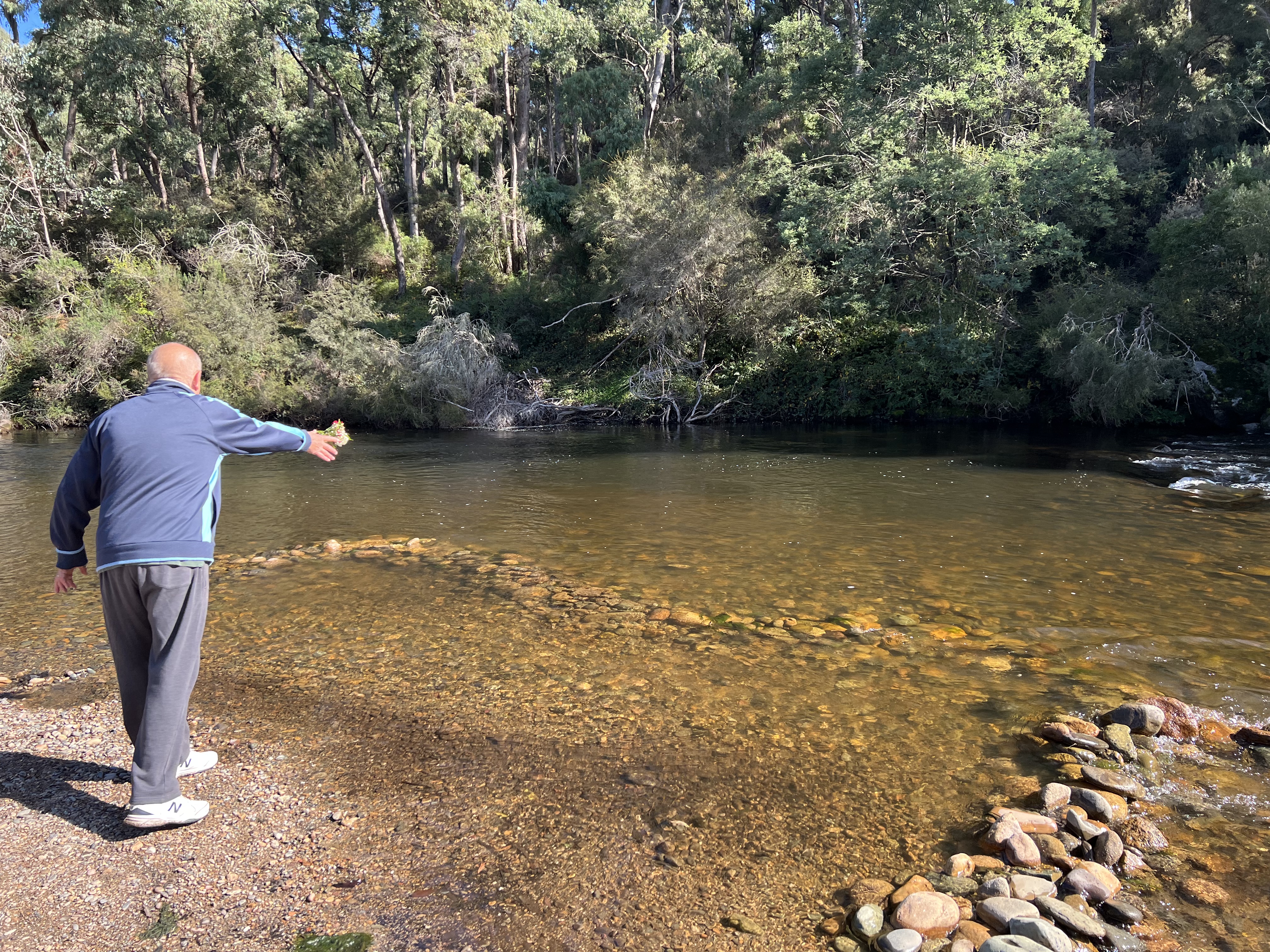
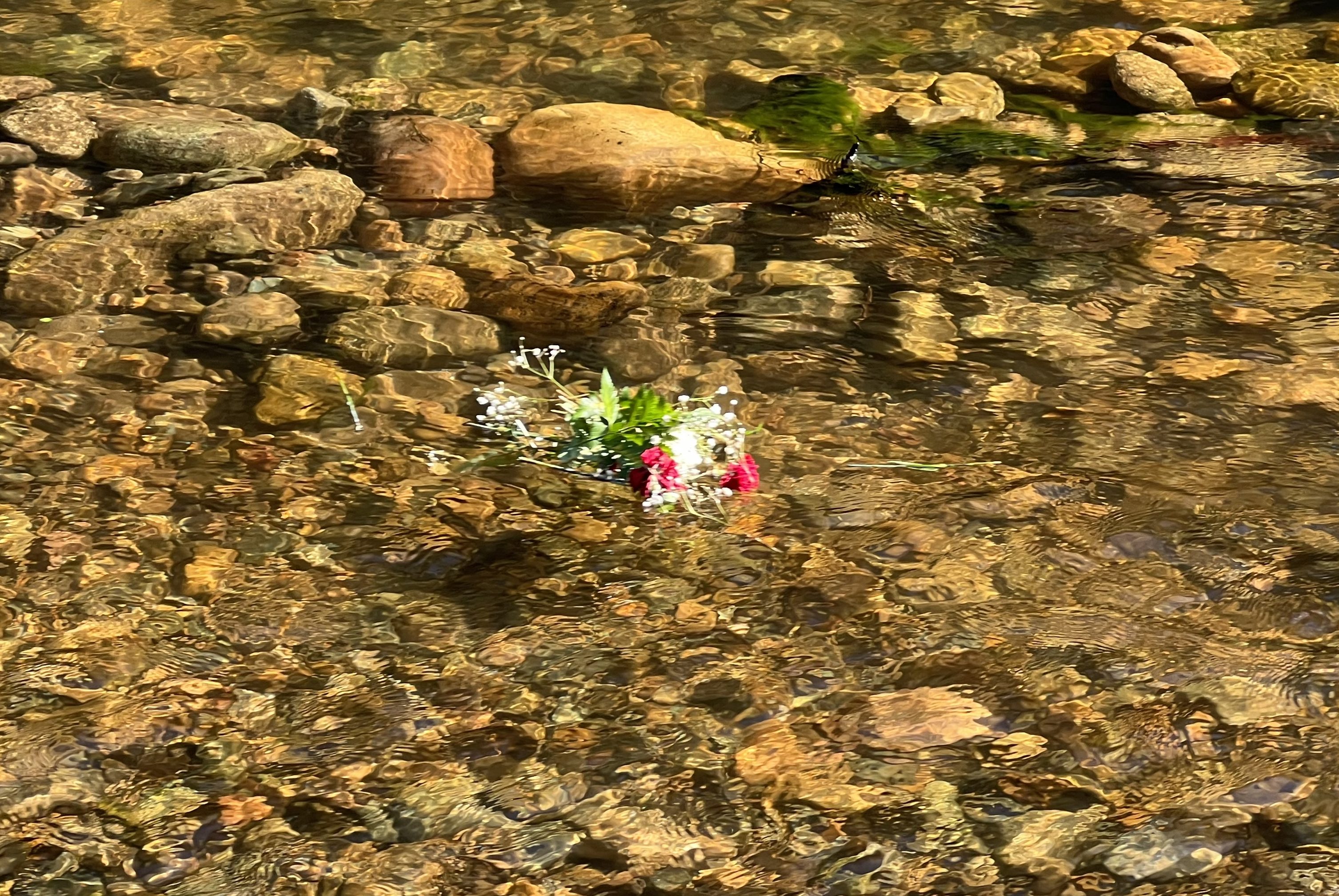
A couple of days before we set off on this journey it was the time of our wedding anniversary. The old romantic had picked up some flowers to help celebrate the occasion. The flowers proved resiliant and Allthego thought it appropriate to take them on the road. As might be expected thay withered and at Tom Groggin it was acknowledged that their time had come. So Allthego tossed them into the Murray and they set off on a long passage to the sea in South Australia. Maybe they would wash onto a bank along the way and we would stumble upon them?

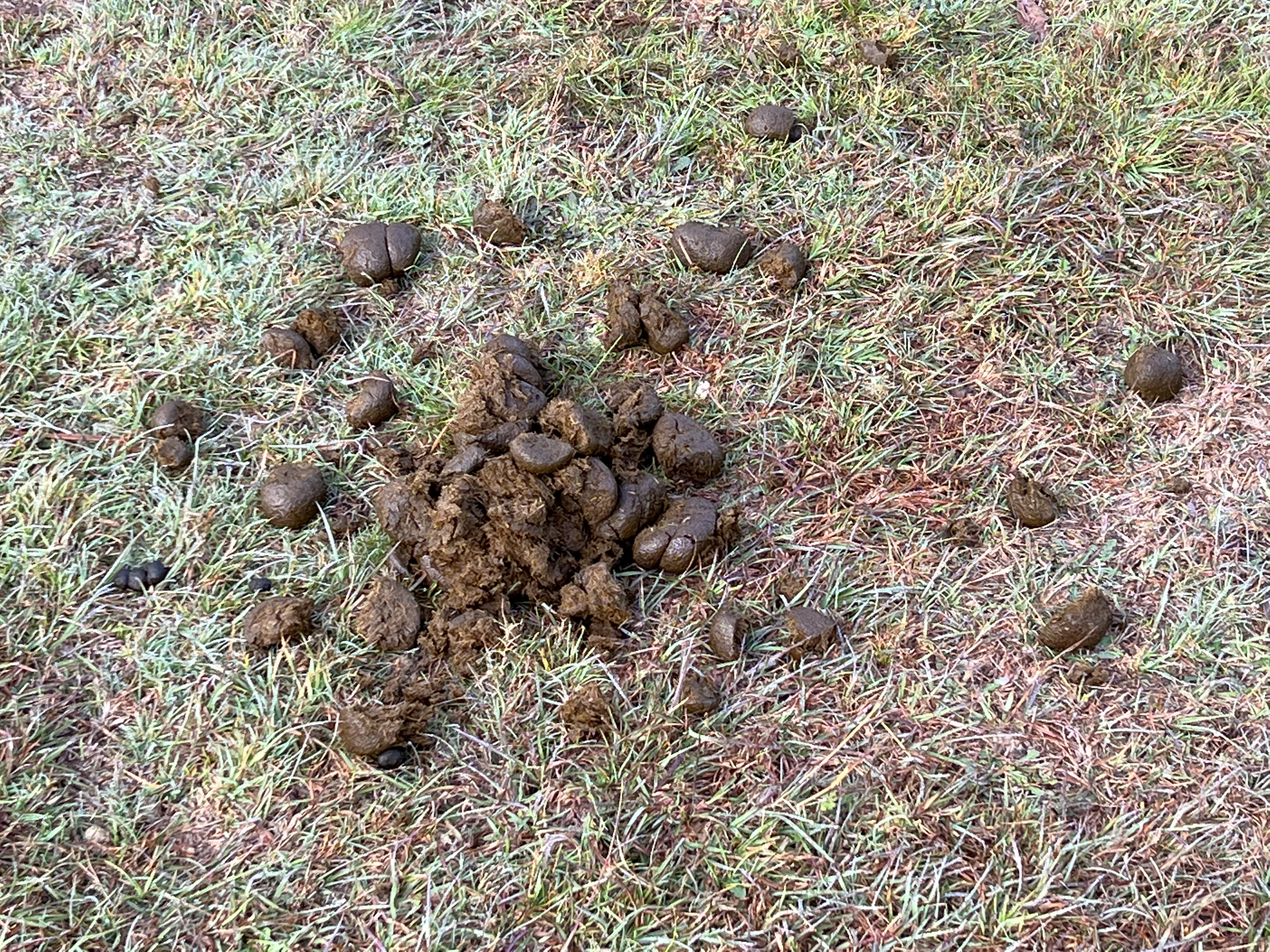
We have taken the opportunity at Tom Groggin to have some fires, in part to keep warm but also to experience that great outdoors feeling of heat and a bit of smoke. Had some steak one night over the fire and the other a freshly made meat lovers pizza in the Weber and then enjoyed by the fire. It was a pretty cool night; doona, blanket and rug keep the chills at bay! Some brumbys charged through the campimg ground during the early night hours, they lingered it seems and left tell tale signs of their passage.

Tom Groggin is the start of our Murray River passage, but we need to head back the way we have come to Khancoban and then continue along what is known as “The Great River Road’ beside the Upper Murray.
Khancoban and where all the waters run.
Khancoban is an interesting little town beside Lake Khancoban, it is really one of the Snowy Scheme dams built about 60 years ago, say it quick and it doesn’t seem that long ago.
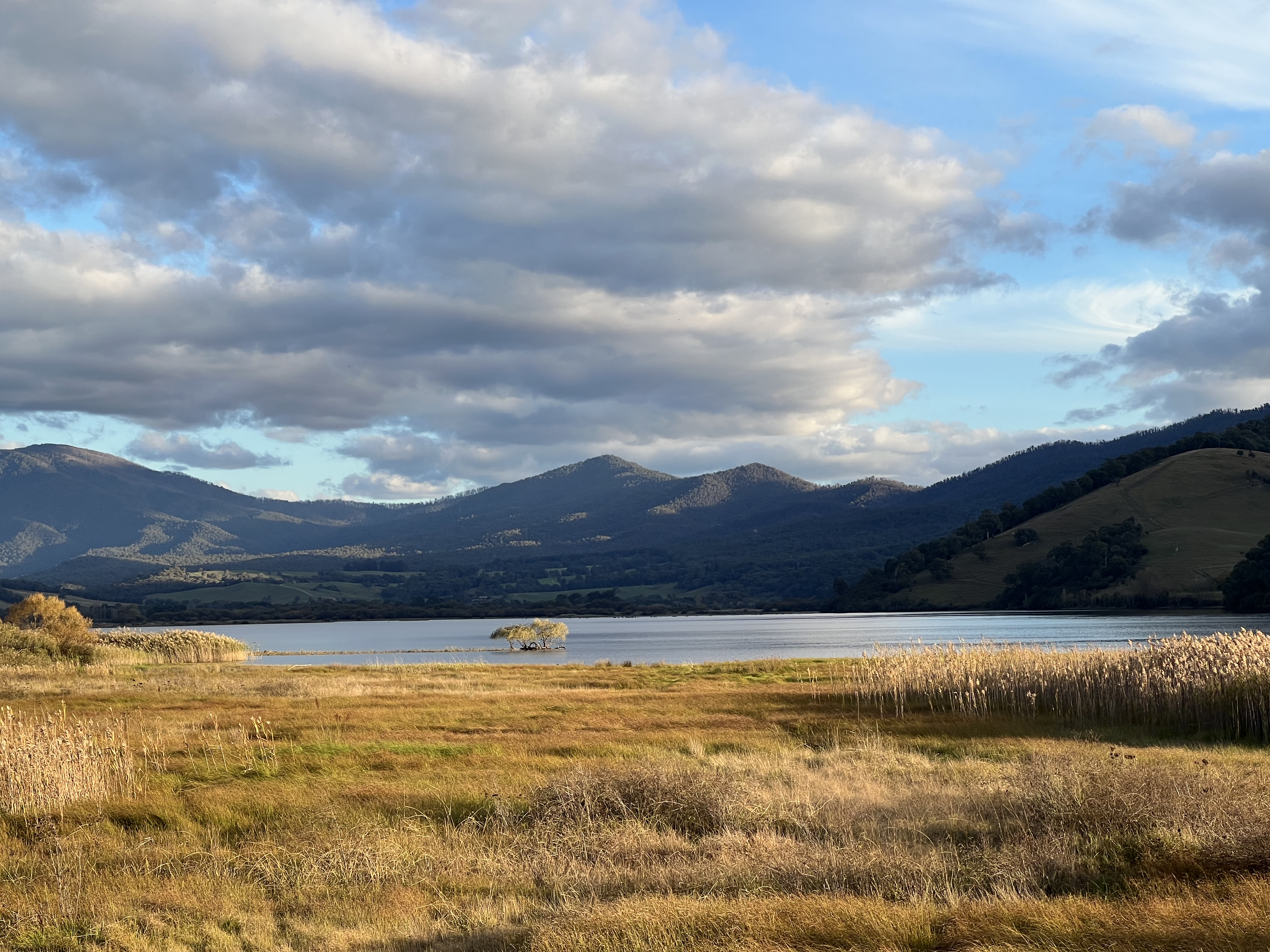
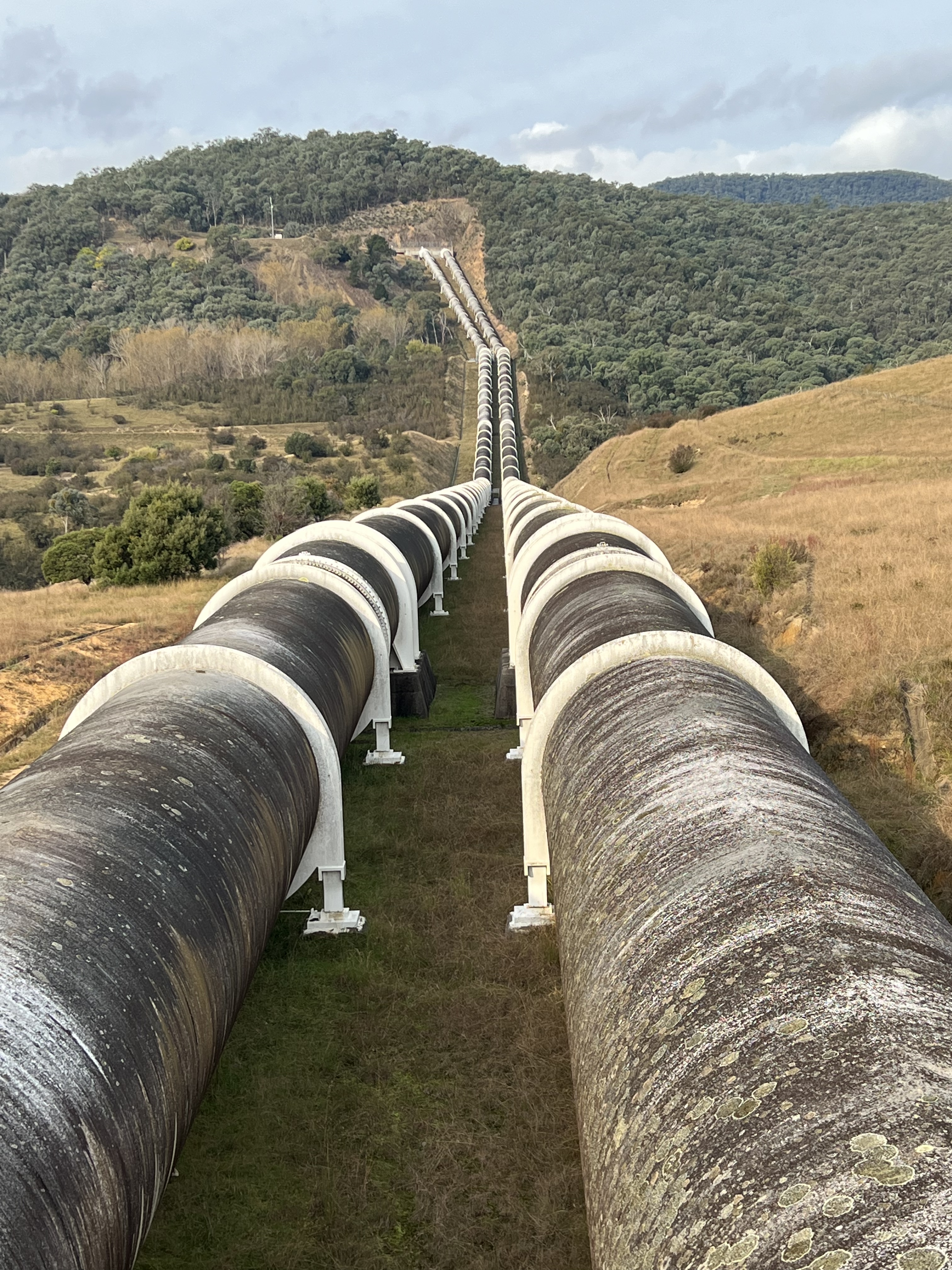
We are using Khancoban as a base to do some touring around the area before heading into the ‘high country’ up to Tom Groggin along the Alpine Way. Khancoban sits on the western flank of the Snowy Mountains and the waters that flow into the dam are headed for South Australia. The two main streams are the Geehi and Swampy Plains Rivers, these rivers are prominent features as you drive around, as well as the power stations and pipelines descending from high above.
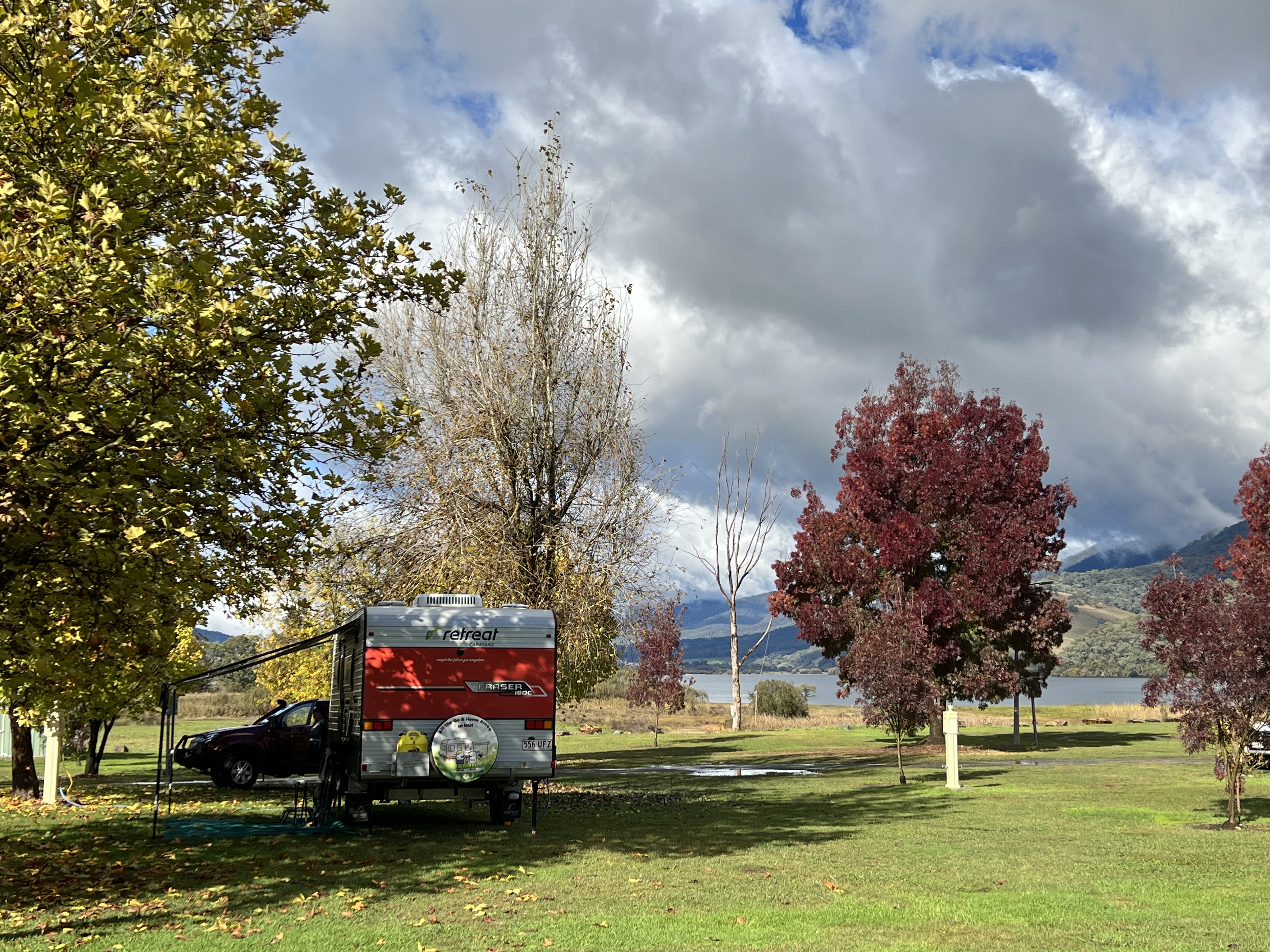
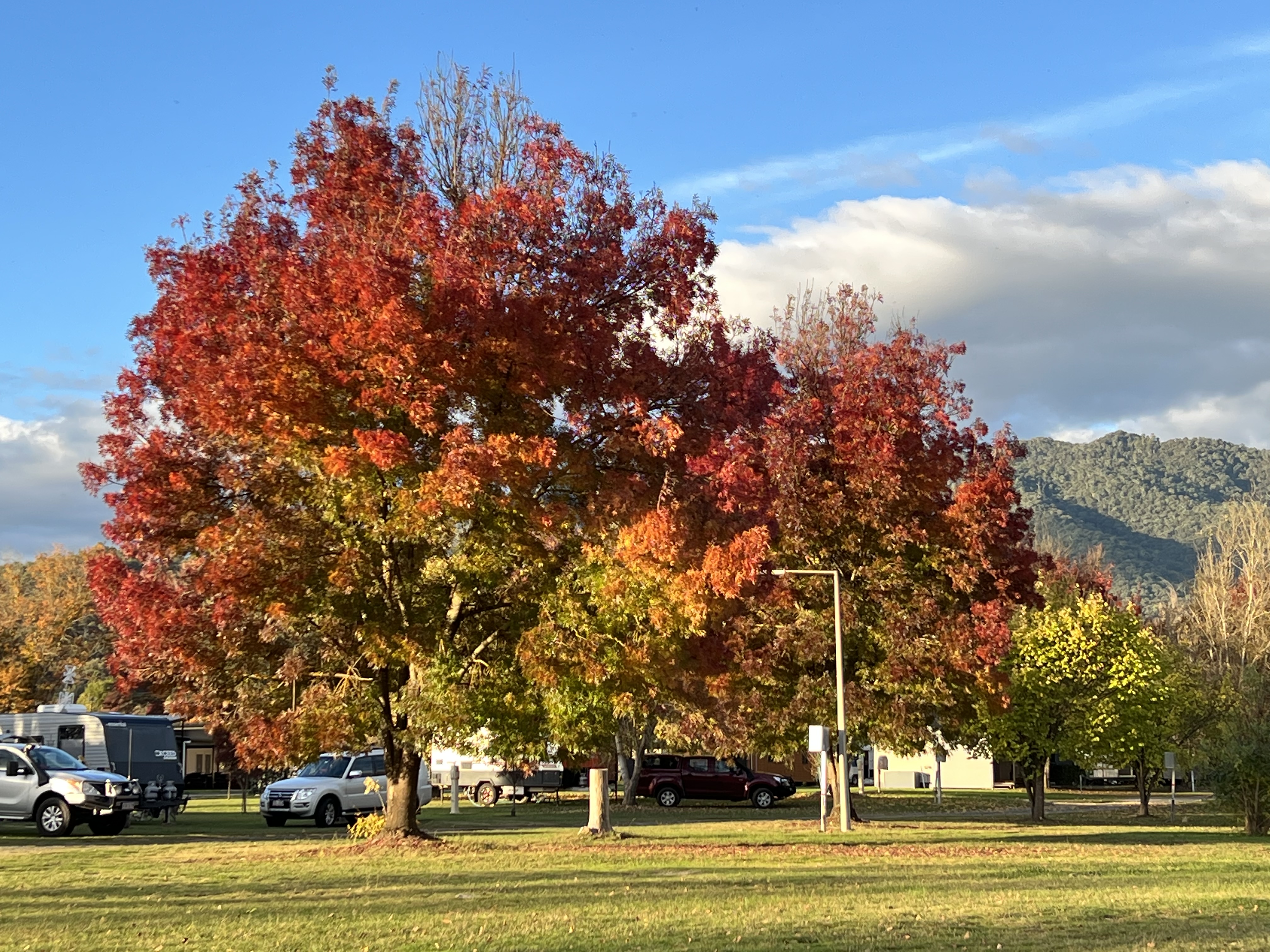
Over on the eastern side of the range the Snowy River rises, the source of which (like the Swampy Plains River), is in the shadow of Mt Kosciuszko and it runs east and then south ultimately into Bass Strait. In recent years we have added a ‘z’ into Kosciuszko. To do with properly reflecting the name of the Polish patriot after which it was named, (I think this is the reason). Didn’t have a ‘z’ in it when I was at school, but I was never much of a speller back then anyway. The Snowy runs down and it’s waters are collected in the Jindabyne Dam. Here water is pumped through tunnels and ultimately ends up in Khancoban Lake, some is allowed to flow down the course of the Snowy River below the Jindabyne dam wall. There is great argument about these flows and the environmental impacts.
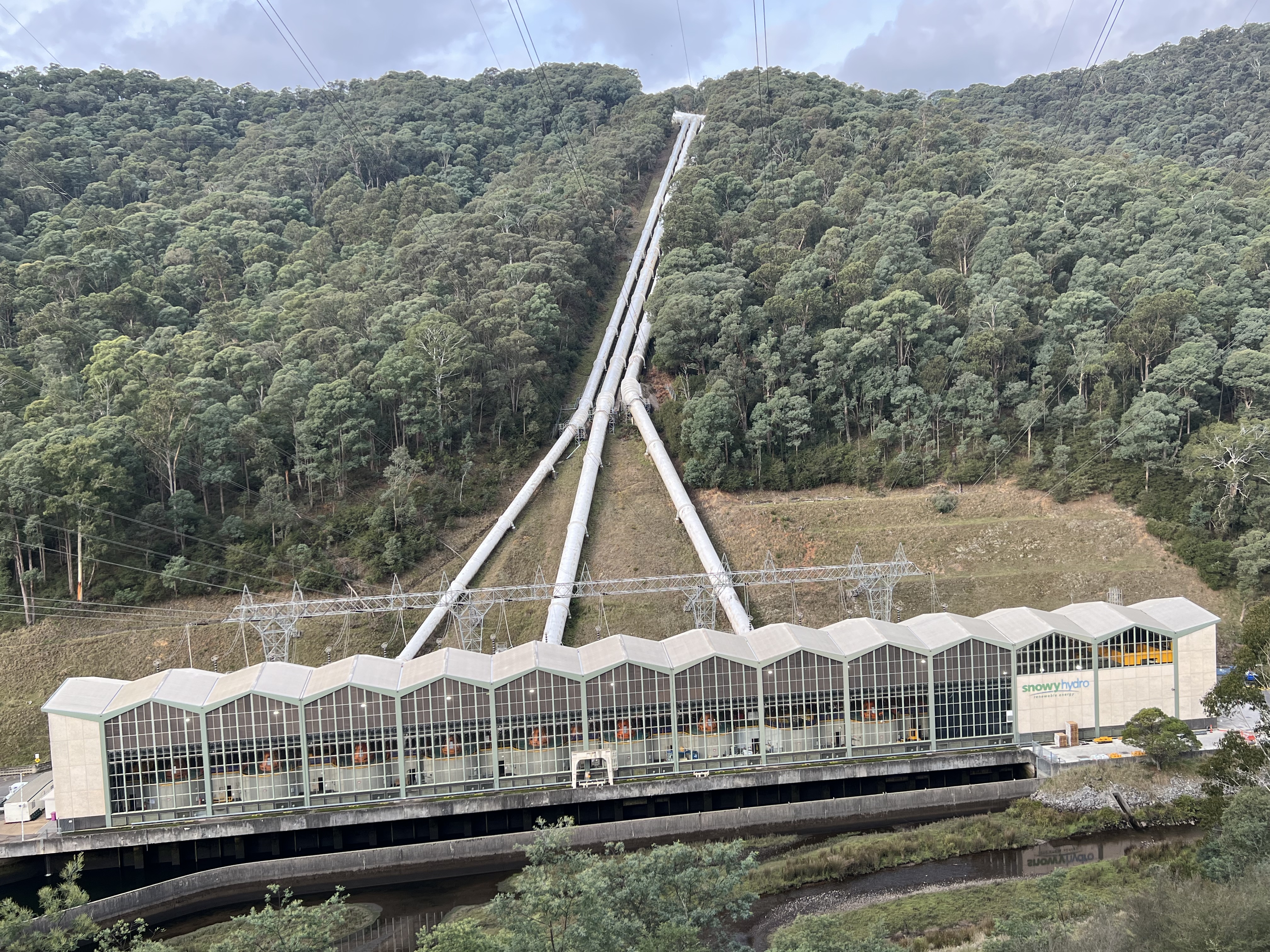
Allthego must apologise to his readers for this little treatise, it is very brief, omits much and probably suffers from the odd inaccuracy of detail. But who cares I an trying to give some context to where we are. Here is a little map to help put things in perspective.
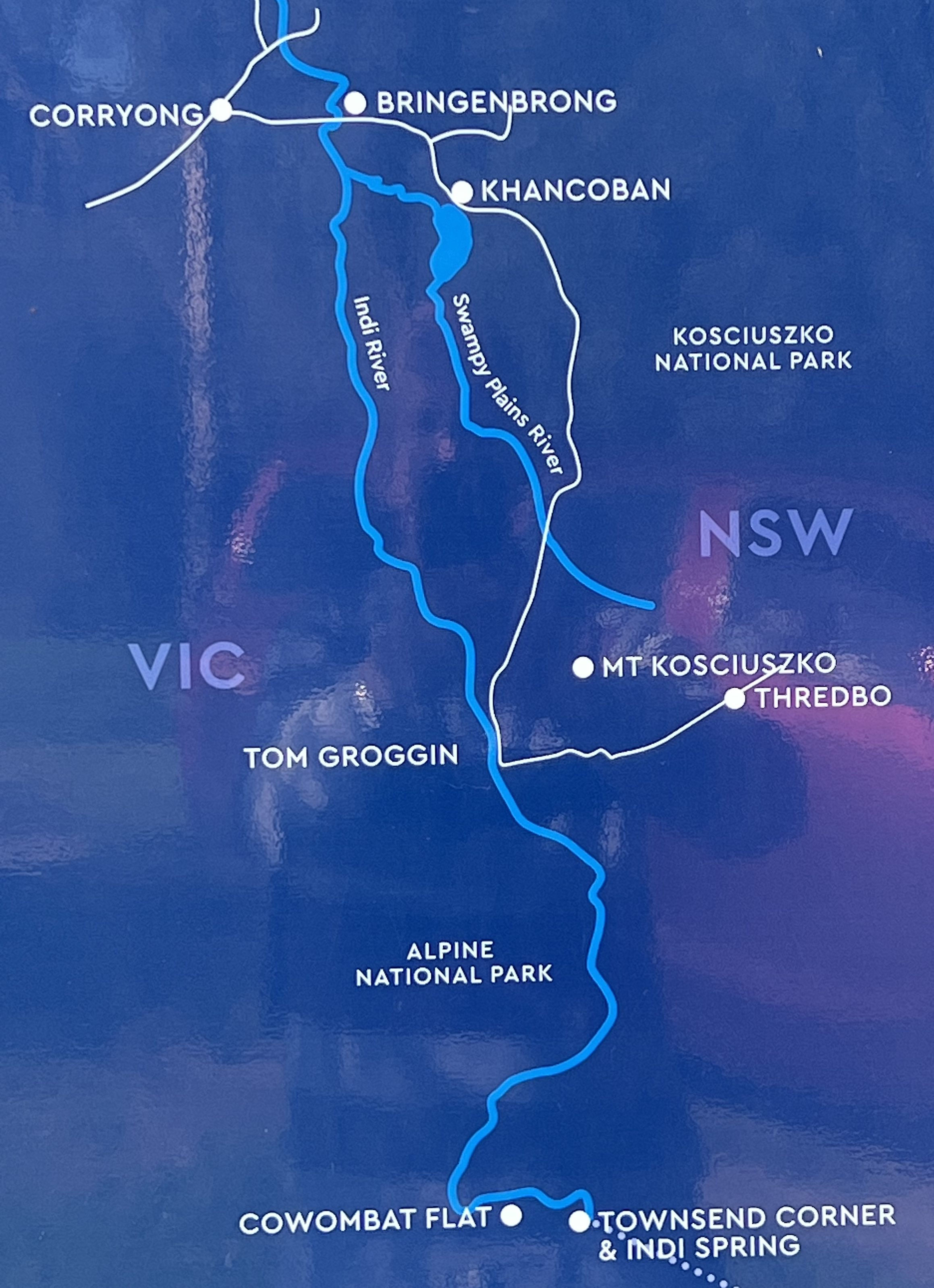
Back in Khancoban the Swampy Plains River flows out of the spillway of the dam and meanders along for awhile before joining the Murray River near Bringenbrong. The bridge over the Murray here is a starting point for many canoe etc type trips on the river. So the interesting thing about the Upper Murray is that it is a free flowing river and its waters were not harnessed by the Snowy Scheme.

The Murray, also known up here as the ‘Indi’, an indigenous name perhaps meaning ‘you’, rises on the western side of the range in quite remote country near a mountain named The Pilot, but more about this later from Tom Groggin.
On the morning that we were to head off to Tom Groggin we had the pleasure to farewell a young couple heading off on an adventure of a life time with two horses and two kids. The mum and dad weren’t riding the horses but the kids were riding the mum and dad! The horses seemed to be carrying everything else that was needed for this excursion, hope they had enough nappies.
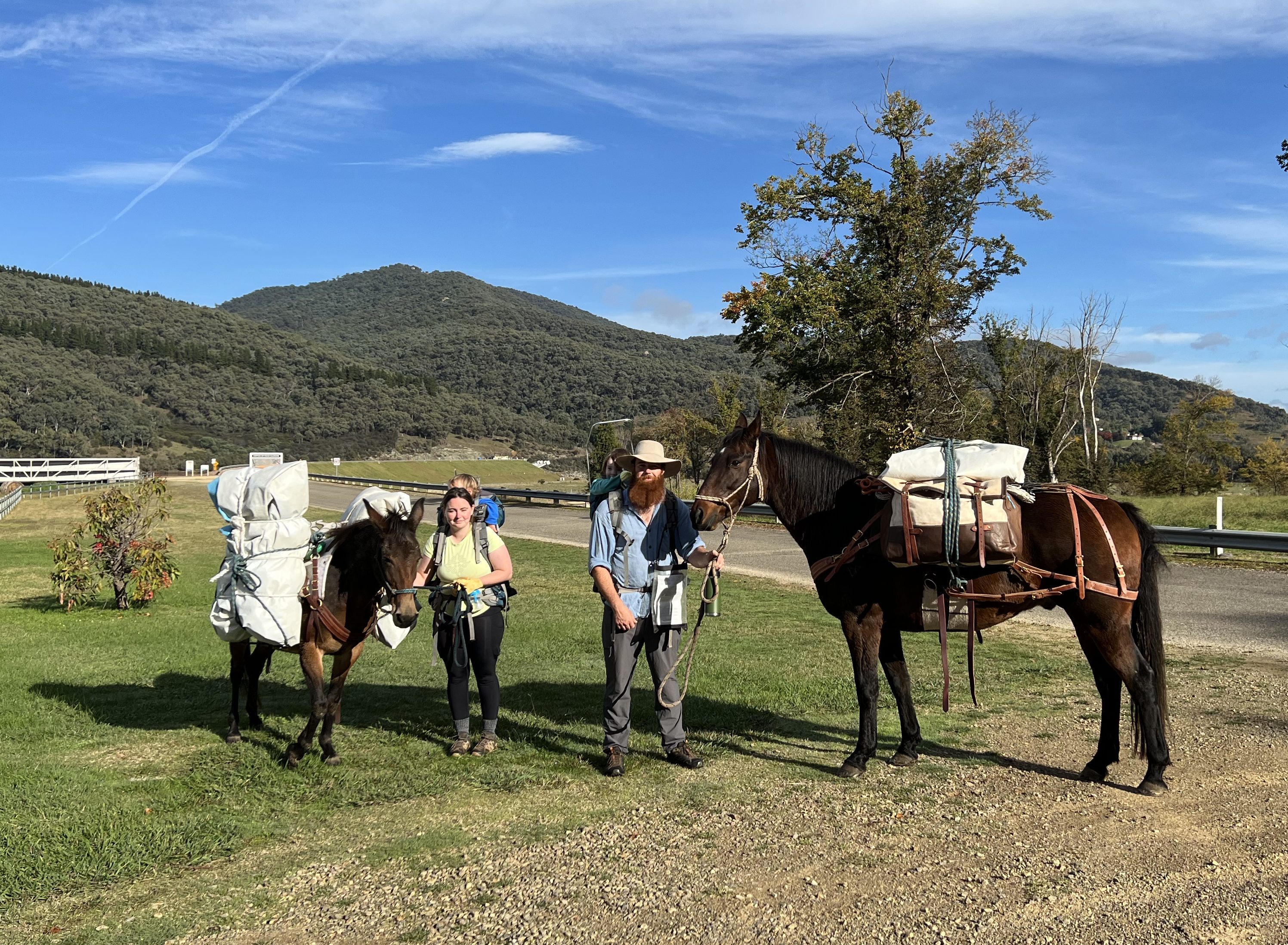
The family were setting off on a six week trek from Khancoban through the mountains and over the NSW western plains finishing in the Blue Mountains, west of Sydney. Well on that note that is definitely enough for the moment!
Tumut to Khancoban
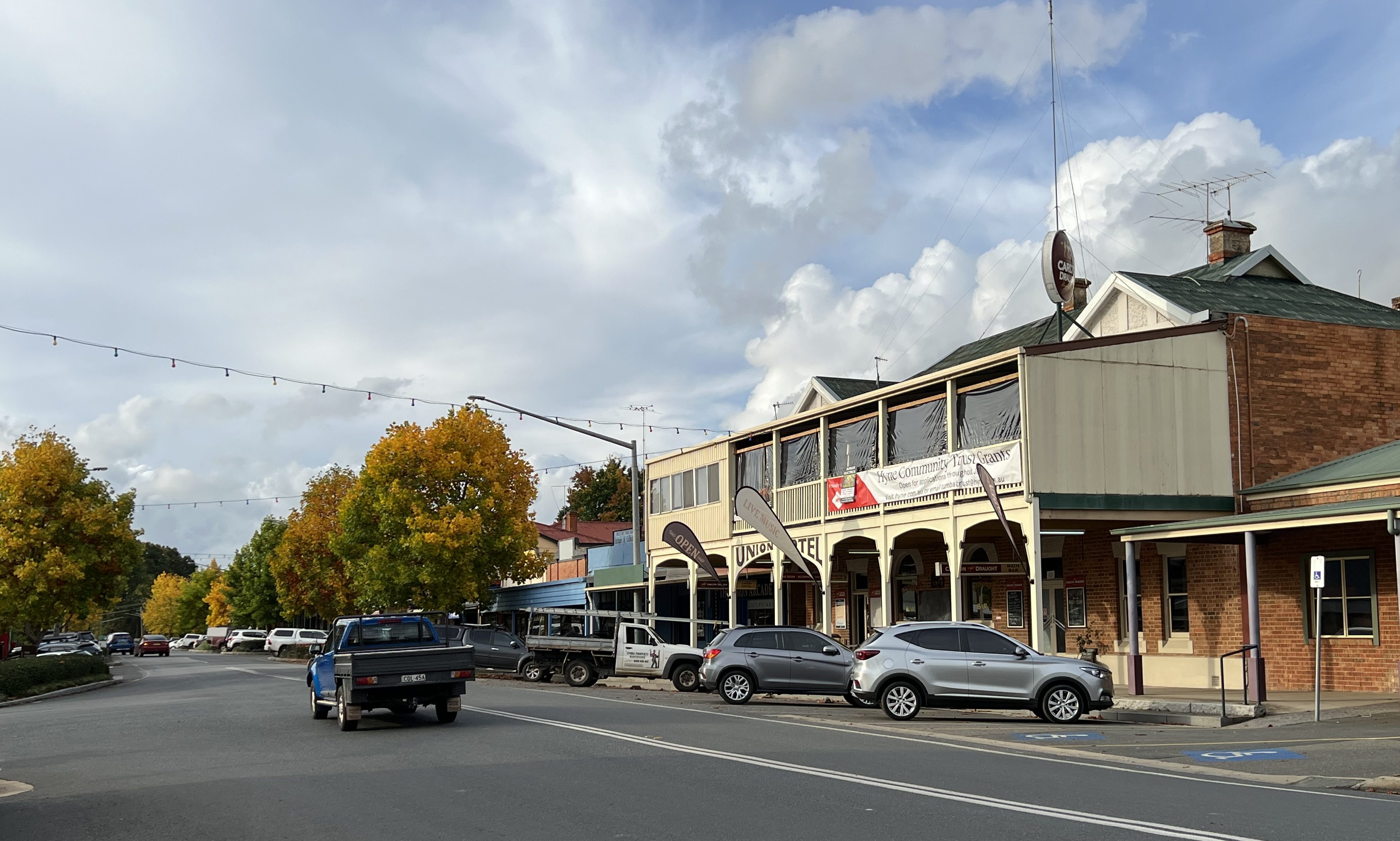
It is a short hop, skip and a jump to Khancoban, 142 km, but we decided to stop about half way at Tumbarumba. The weather was not looking good further along so we decided to hole up here to see if it would pass. We wanted fine weather up in the high counntry at Tom Groggin so an overnight stop at Tumbarumba might just allow that timing slot. We will see.
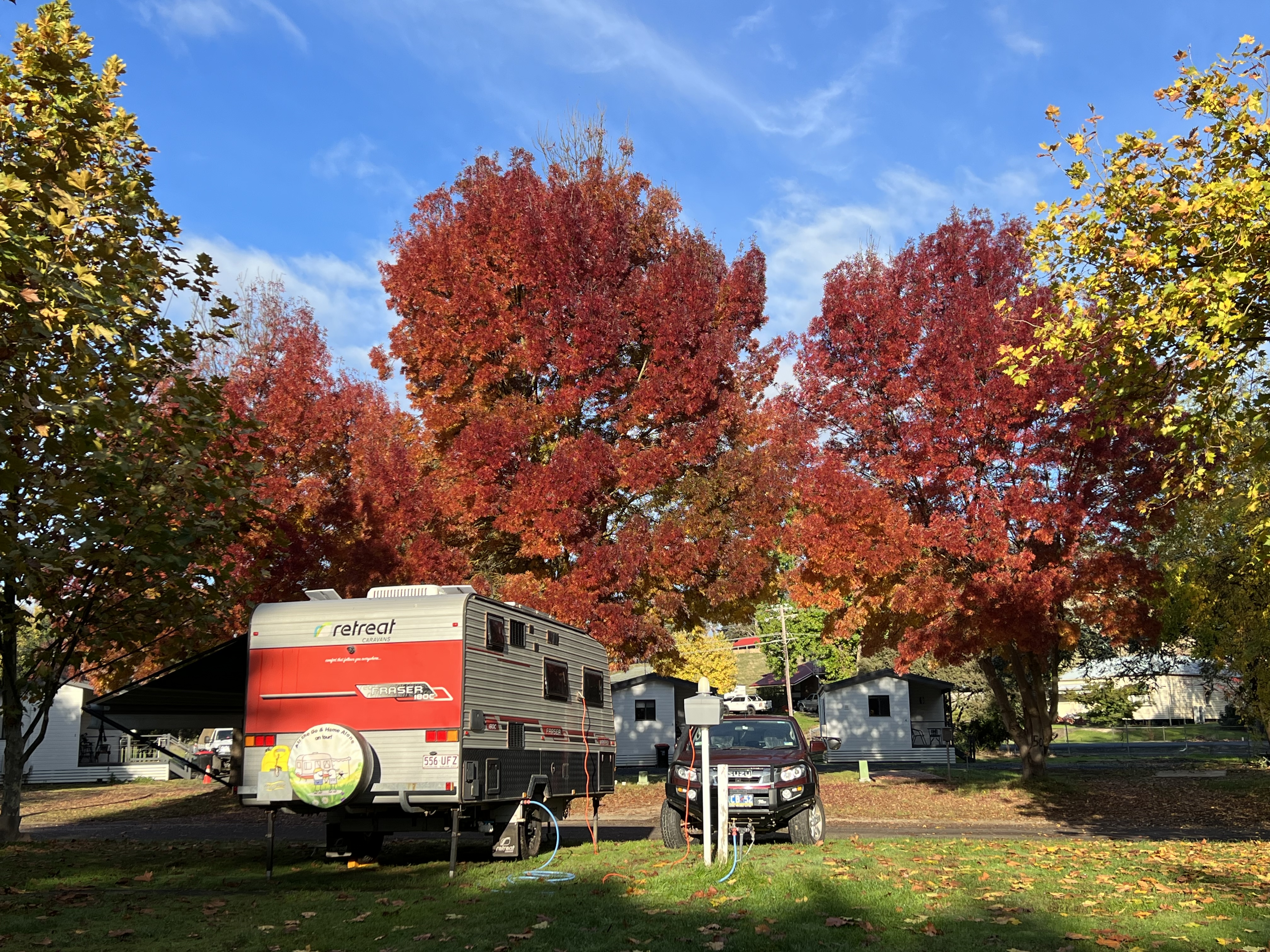
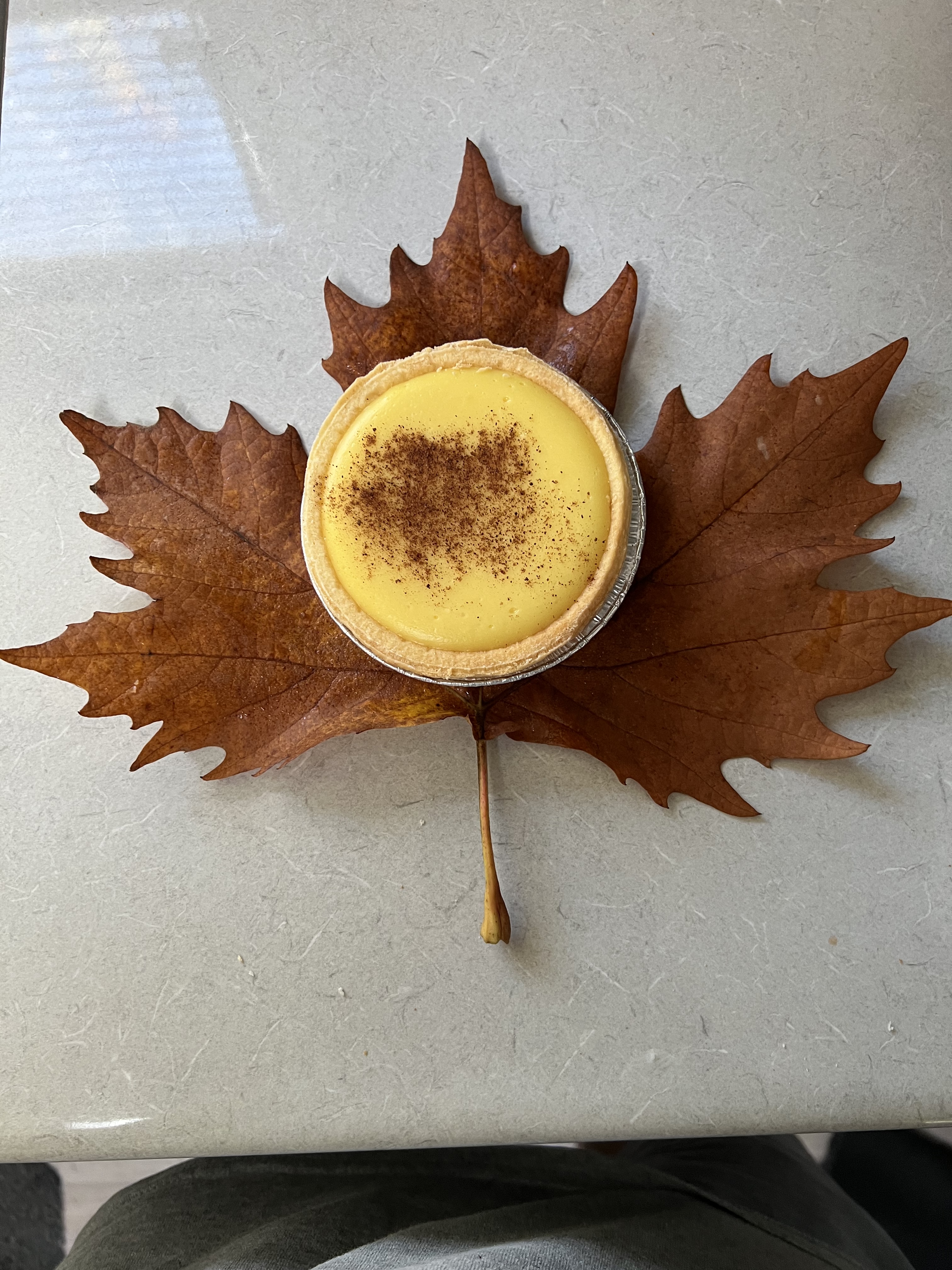
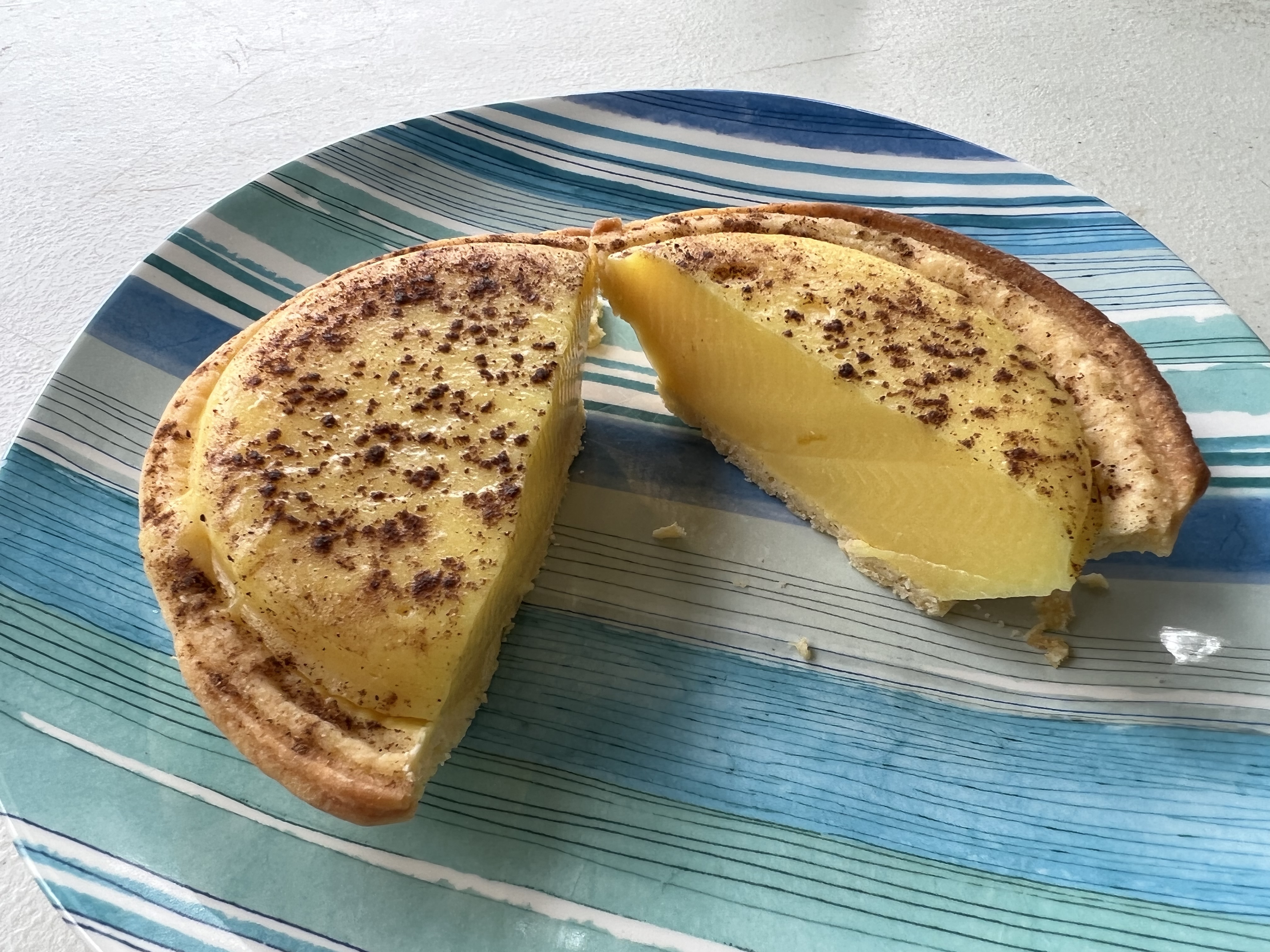
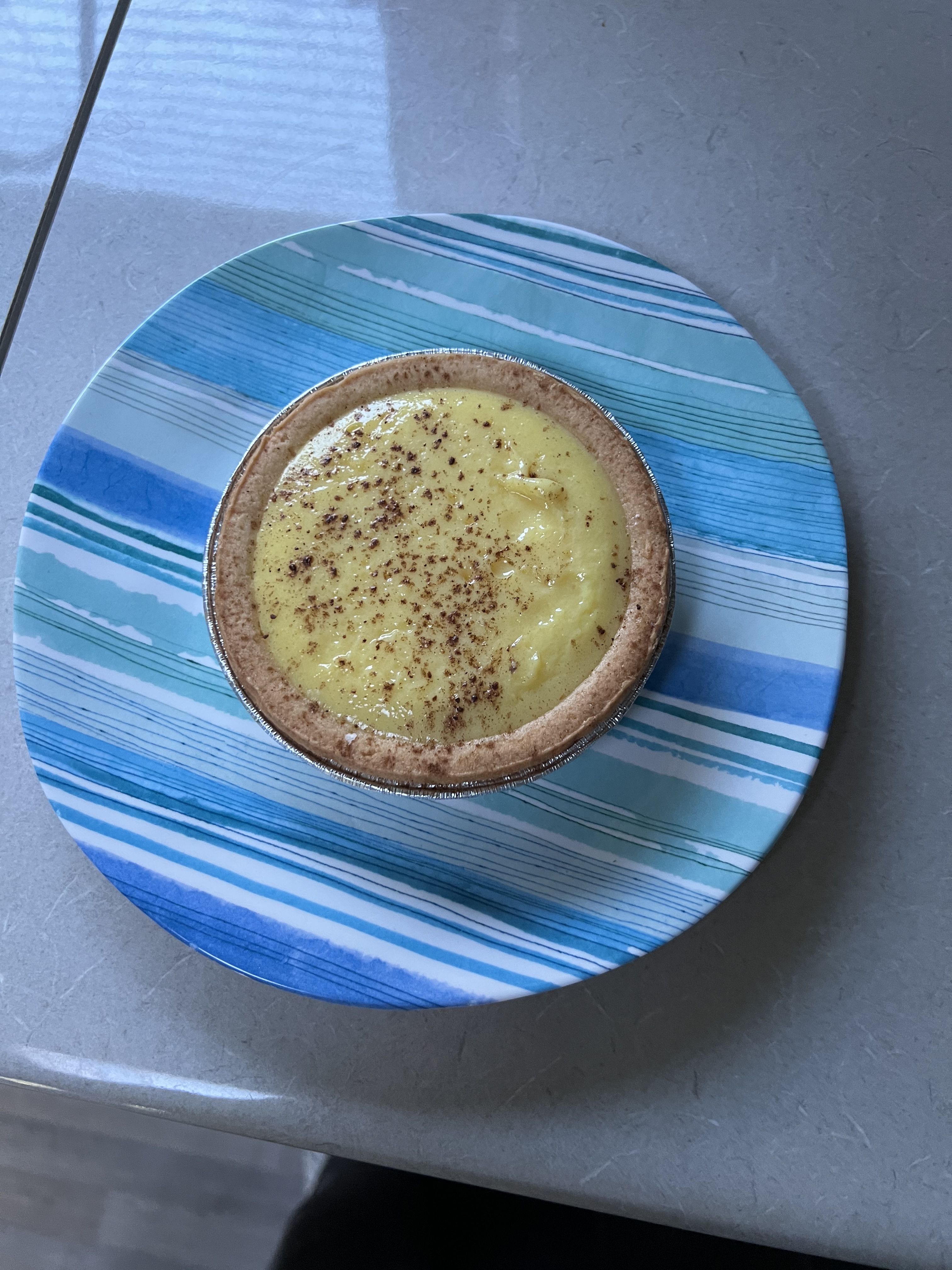
Great little caravan park not far from the centre of town, plenty of trees around us in full colour. Not to mention an enticing bakery. There was a choice of two sizes in custard tarts, a big one (the normal size I suppose) and a slightly smaller one. Allthego selected the larger one because it is shared with Homealone. Not a bad tart….there was a splash of nutmeg rather than a dusting which made it distinctive. Quite tasty. Nice and firm.
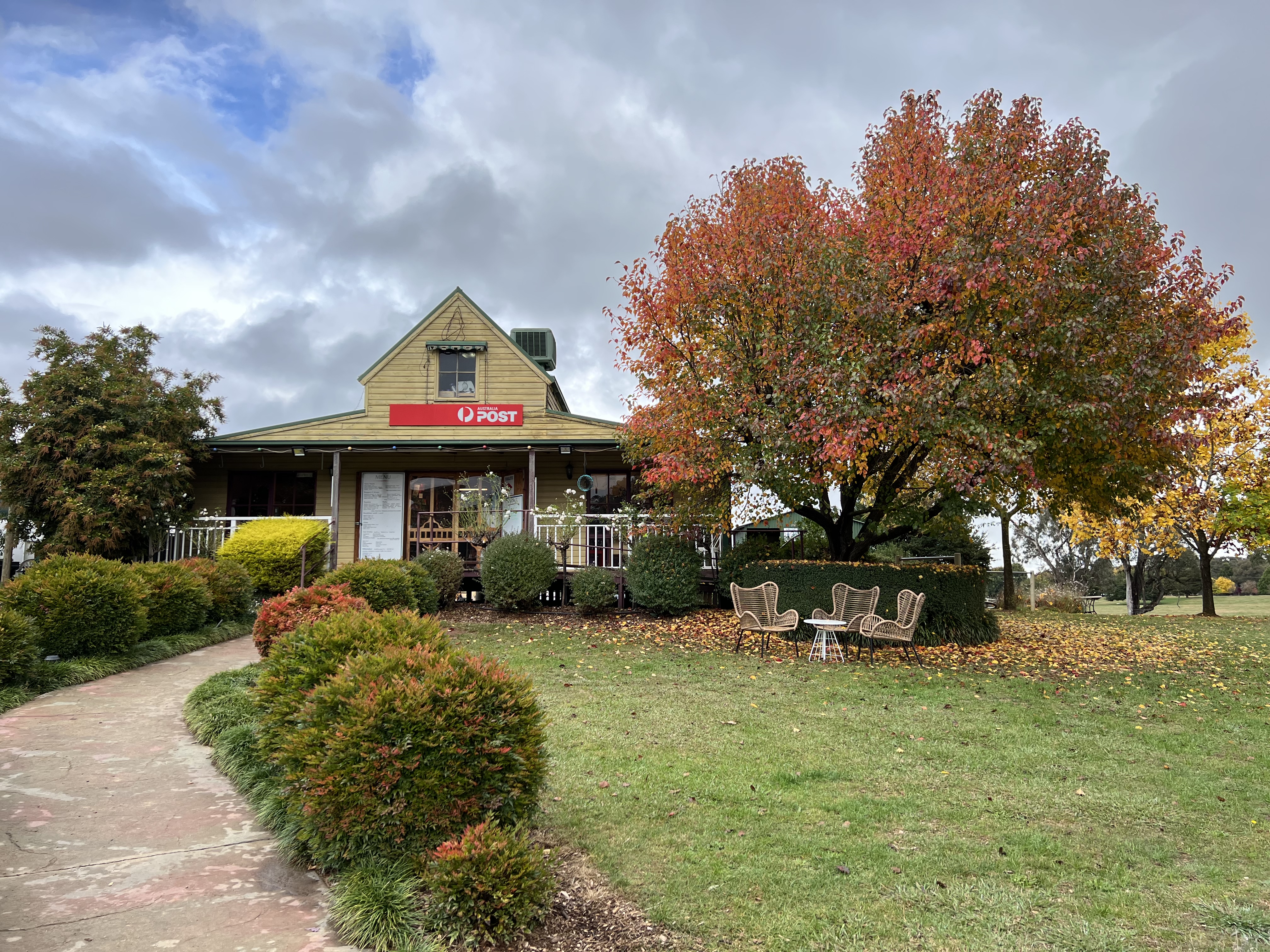
Took the short drive out to the nearby hamlet of Rosewood for lunch at a nursery, ‘Gone Barny’. Great spot and a nice cafe type lunch. Tumbarumba to Rosewood is a popular 20 or so kilometre rail trail for cyclists, along the old railway line from Albury, long closed of course. Rural scenery special, plenty of horses in paddocks.
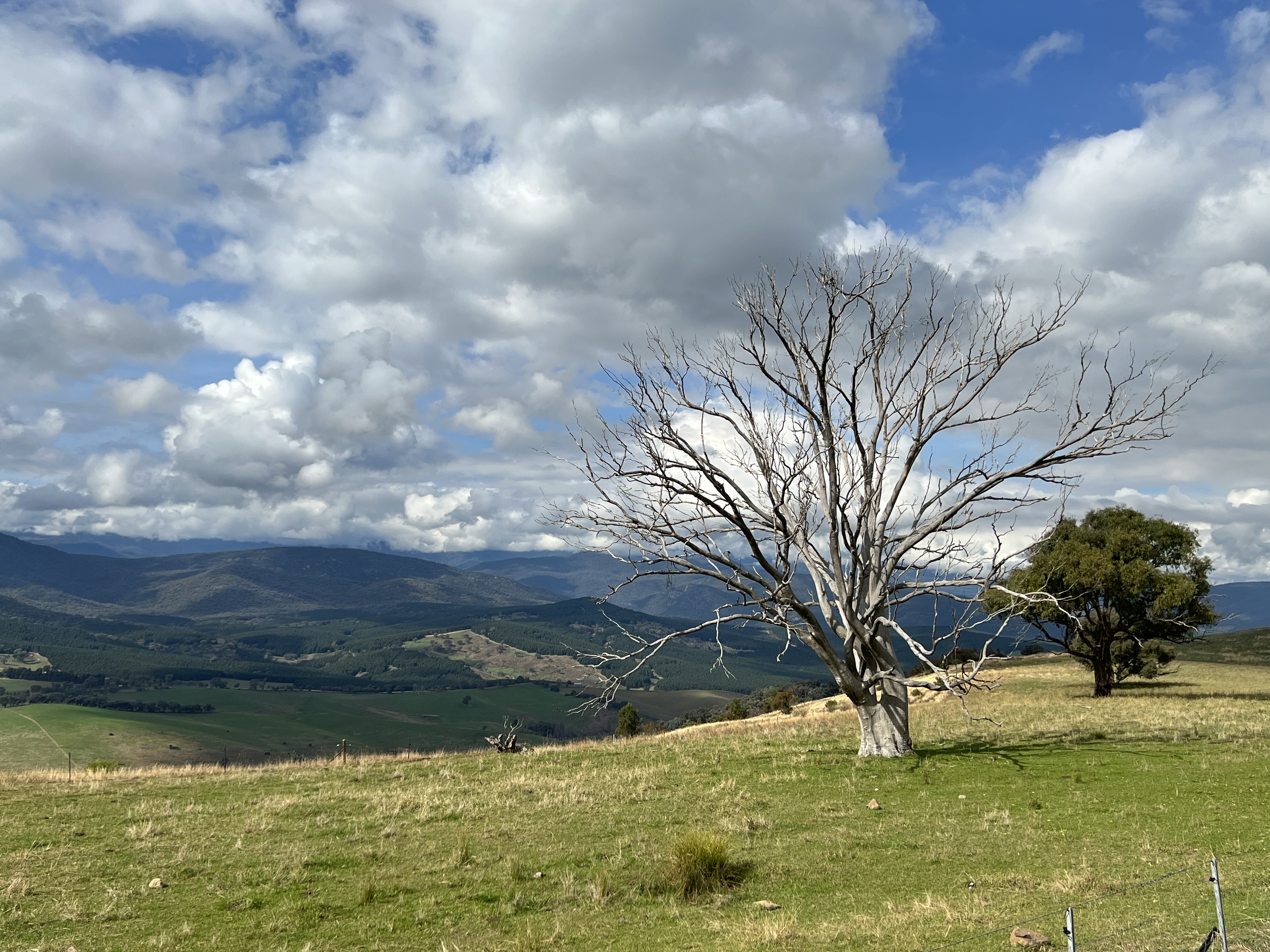
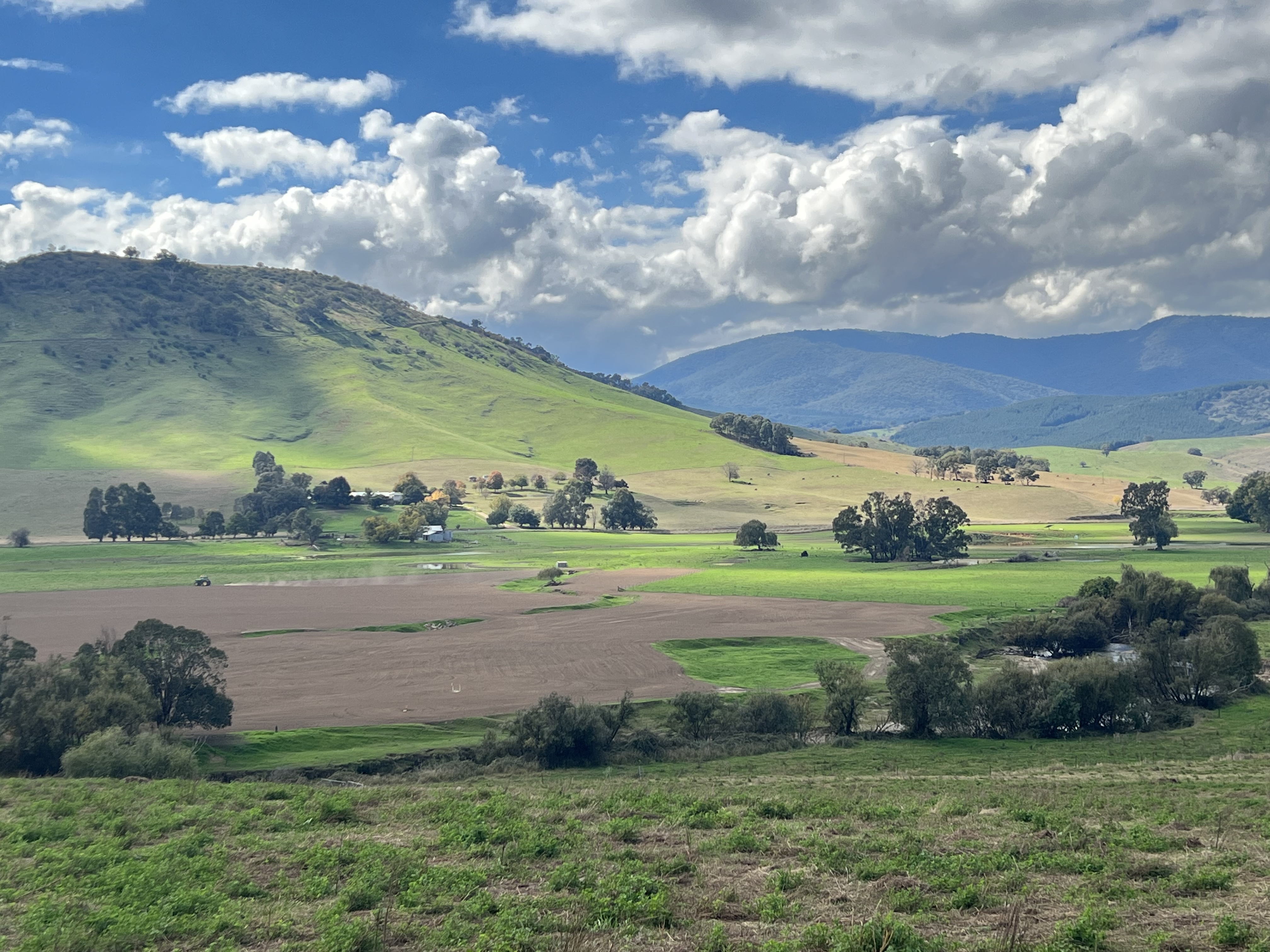
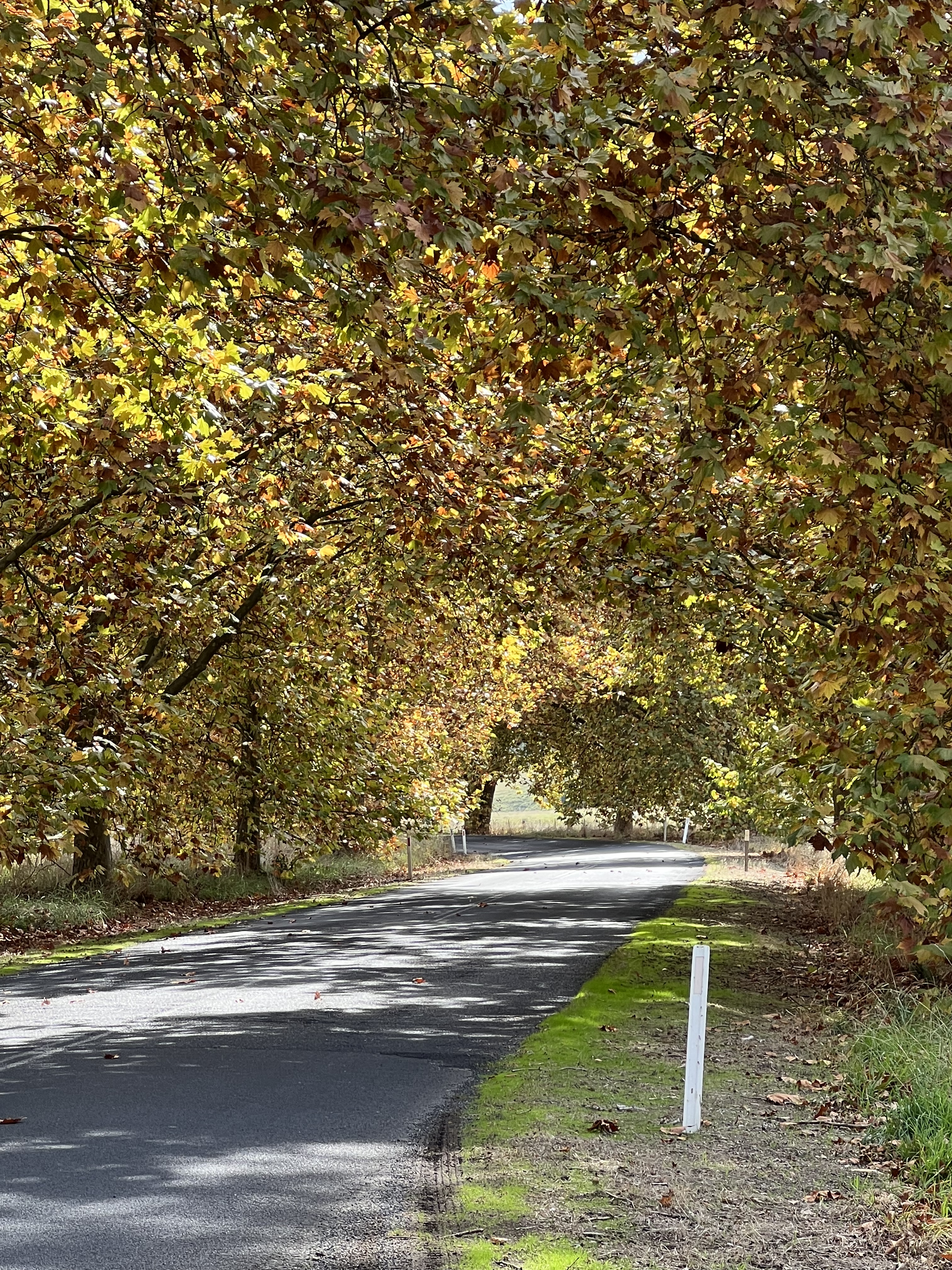
Next morning it was back on the road to Khancoban which is on the western side of the Snowy Mountains. It is the last town on the Alpine Way before entering Kosciuszko National Park and sits beside Lake Khancoban, really one of the Snowy Scheme dams. There are some great views of the High Country along the way. Sections of the road are lined by poplars and other varieties.
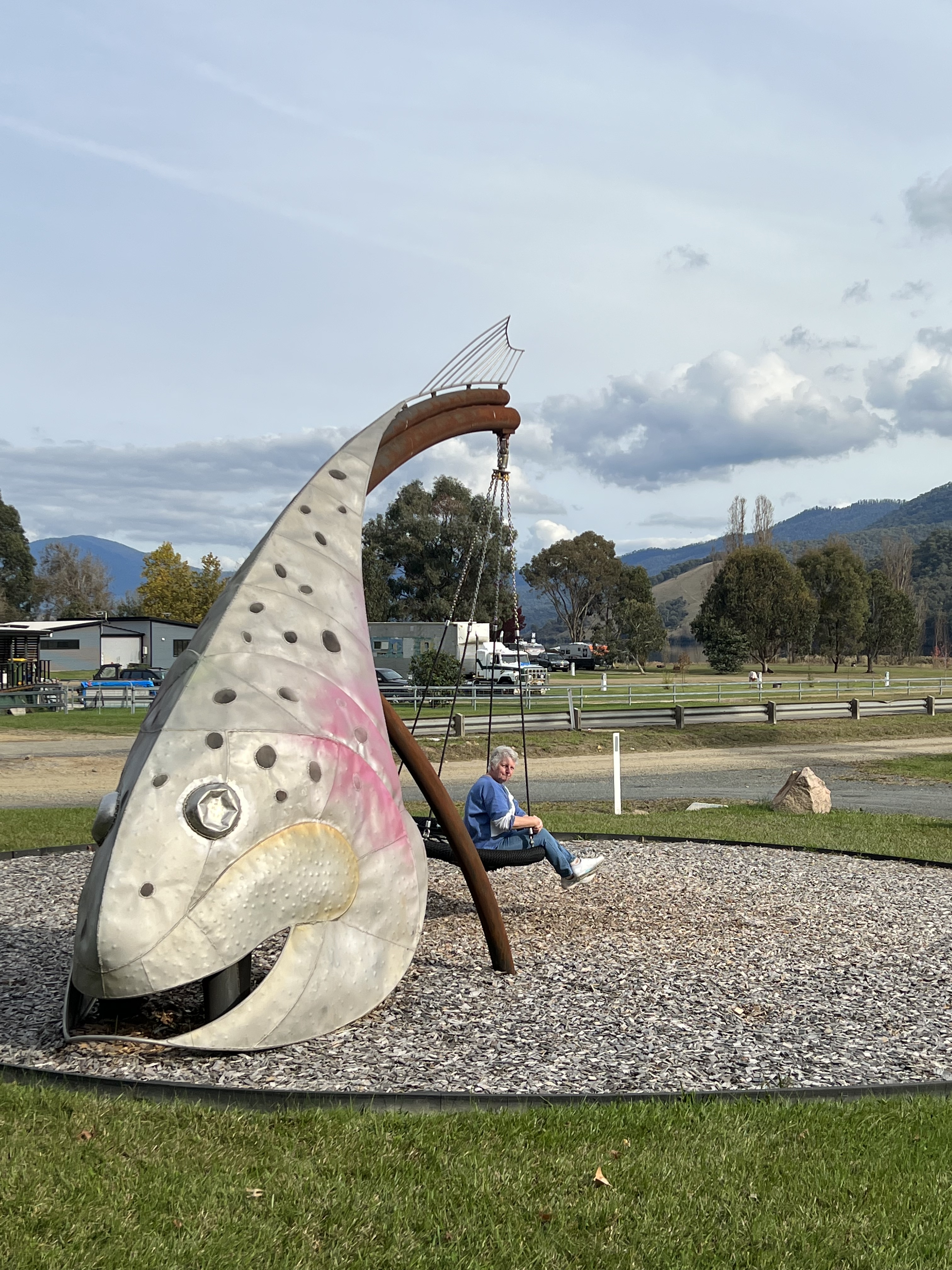
Our campground is beside the lake and we are greeted there by a rainbow trout sculpture. Further up the Alpine Way is Tom Groggin Campground beside the upper reaches and not far from the source of the Murray River, known as the Indi River in this section of its course. Tom Groggin is our next destination, weather permiting for two nights, for the start of our run down the Murray.
Tumut
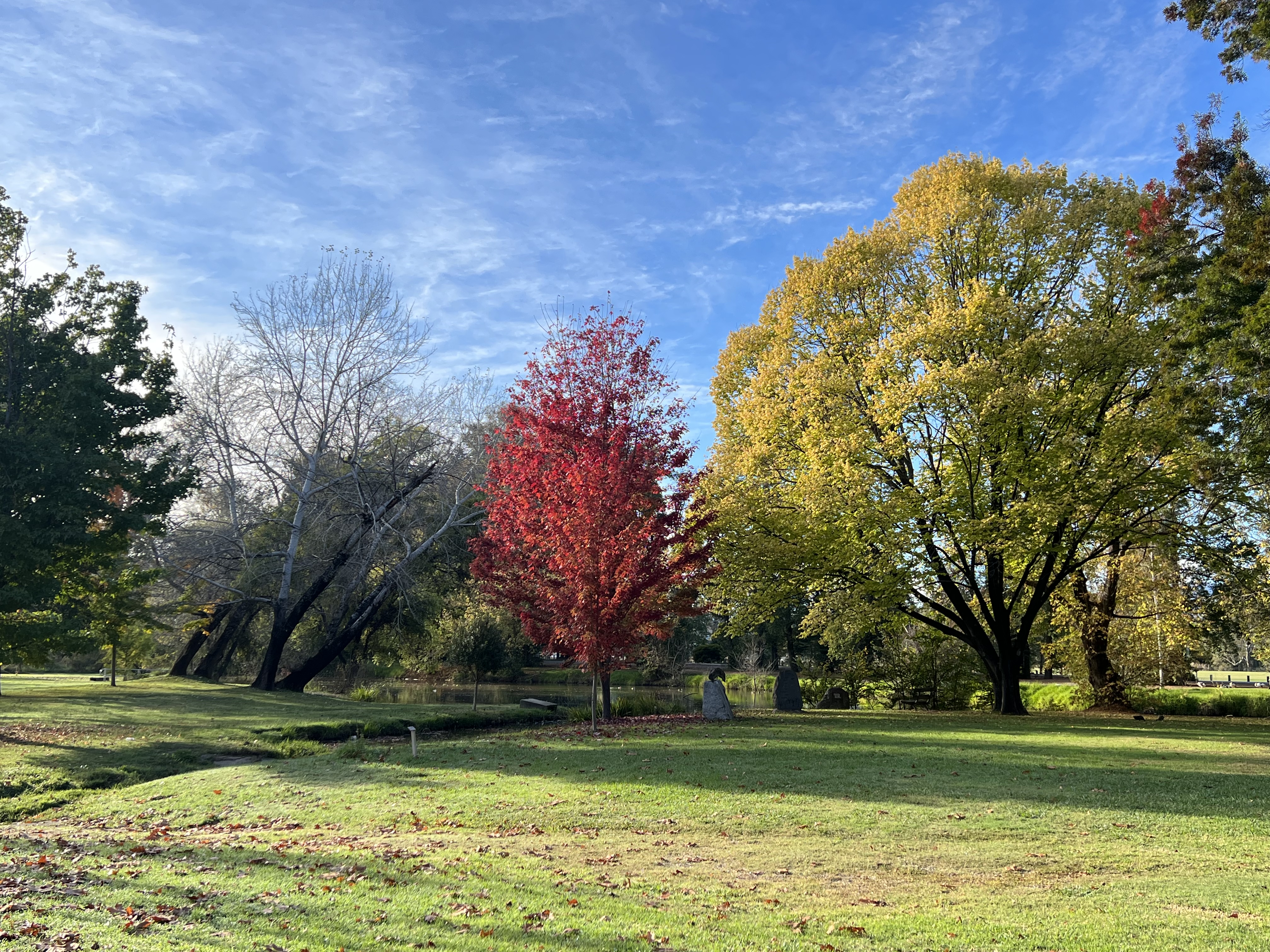
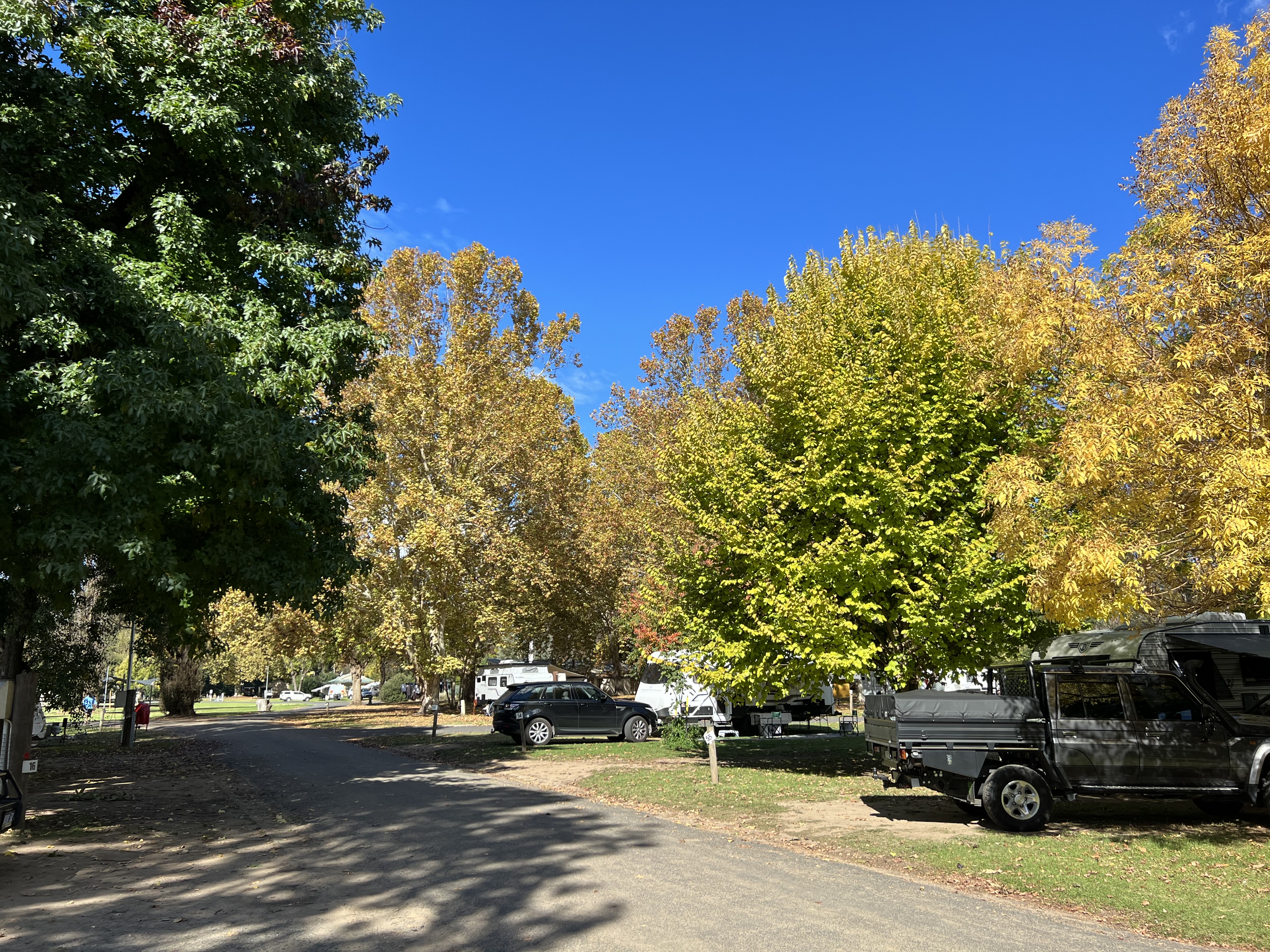
We have made it to Tumut. This is a neat little town and we are camped on the banks of the Tumut River a few hundred metres from the centre of town. Sort of too far to walk but not far enough to drive. So it depends what mood you are in and what you have to carry back of course! Allthego set off early one morning along the river walk, very pleasant stroll into town. The objective was to pick up a loaf of bread for breakfast from the local bakery, but what does one find at a bakery, all sorts of goodies. So back he came with some bacon and cheese topped buns and a custard tart, as well as the bread of course. Carting this stuff back resulted in the bread being a little crushed in order to save the rolls and the buns. The buns though were excellent along with some bacon and eggs for breakfast beside the shallow swift flowing river. This part of the world is now showing the full colours of the autumn transformation. The poplars, elms and liquid ambers are golden in colour with splahes of orange and red here and there. Fallen leaves cover the campsite.
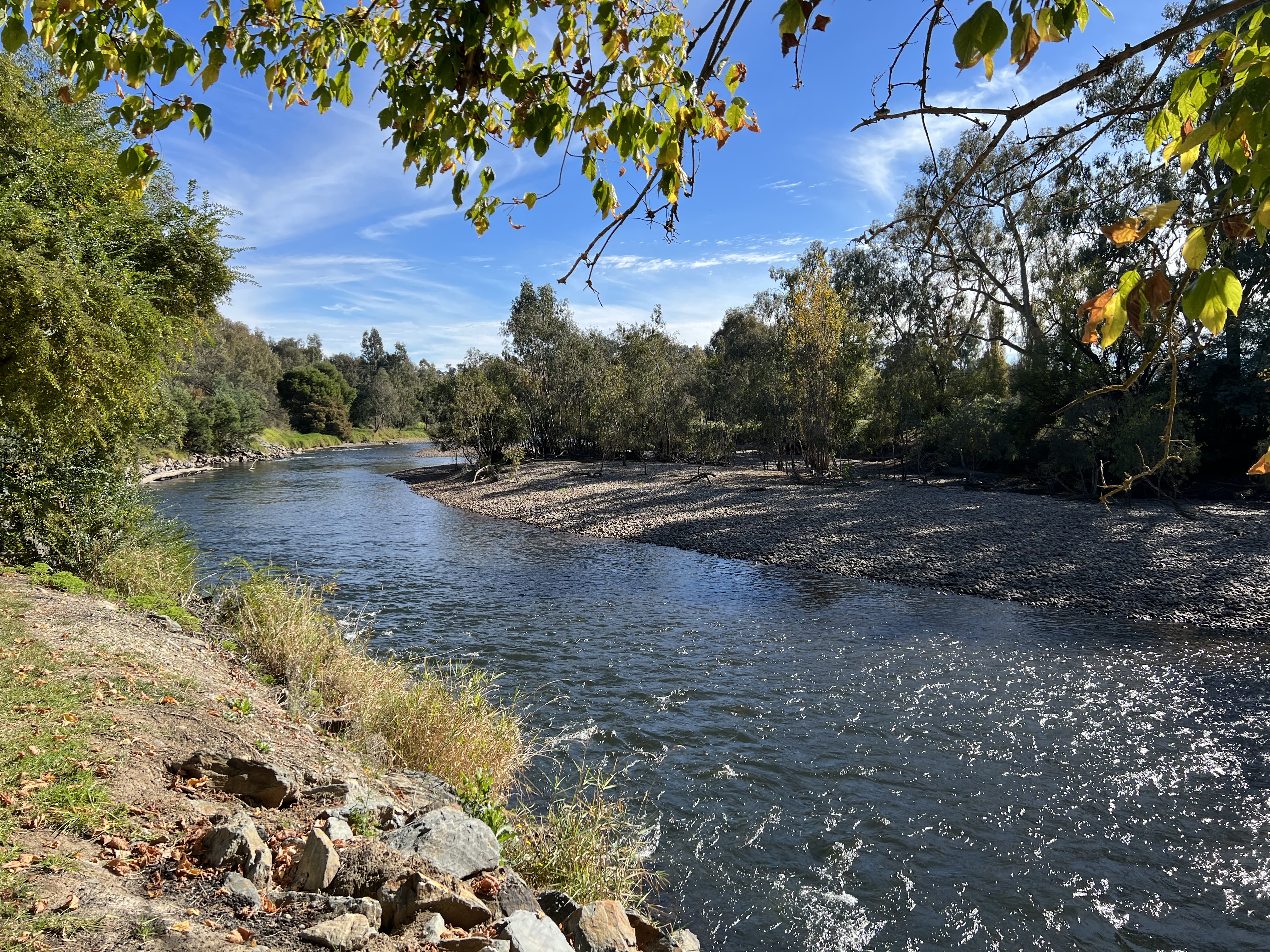
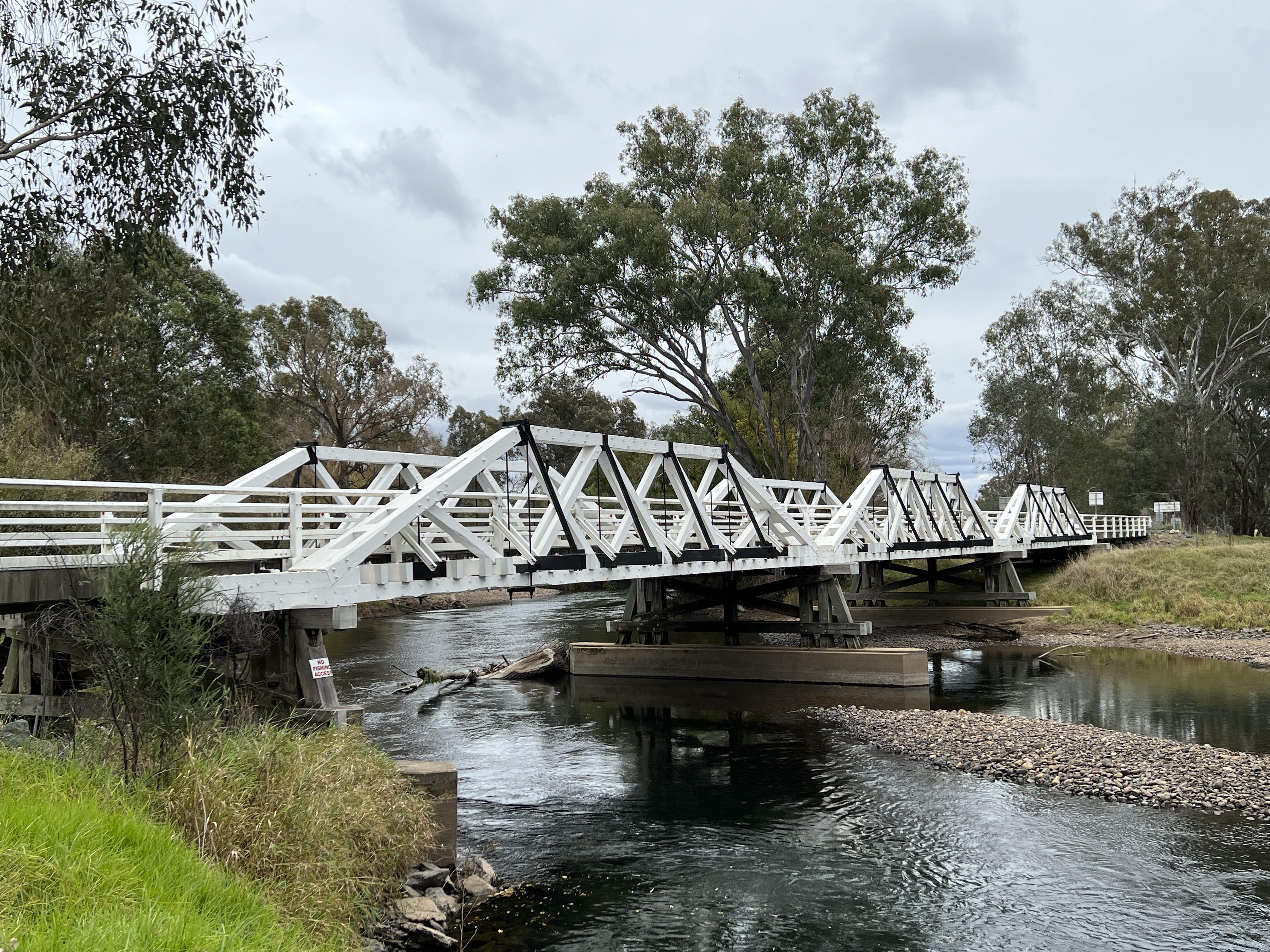
Tumut is a very outdoors sort of place being in the foothills of the Snowy Mountains. The Tumut River is a tributary of the Murrumbigee River, Australia’s second longest river. The headwaters of the Tumut, as well as its tributaries, have been harnessed by the Snowy Scheme for hydro electricity production through a series of power stations. The water ultimately collects in Blowering Dam a few kilometres away from the town before being released downstream, past our caravan site, to ultimately join the Murrumbigee to supply irrigation waters for the Riverina agricultural region. The Murrumbigee River later joins the Murray at Boundary Bend, near Balranald.
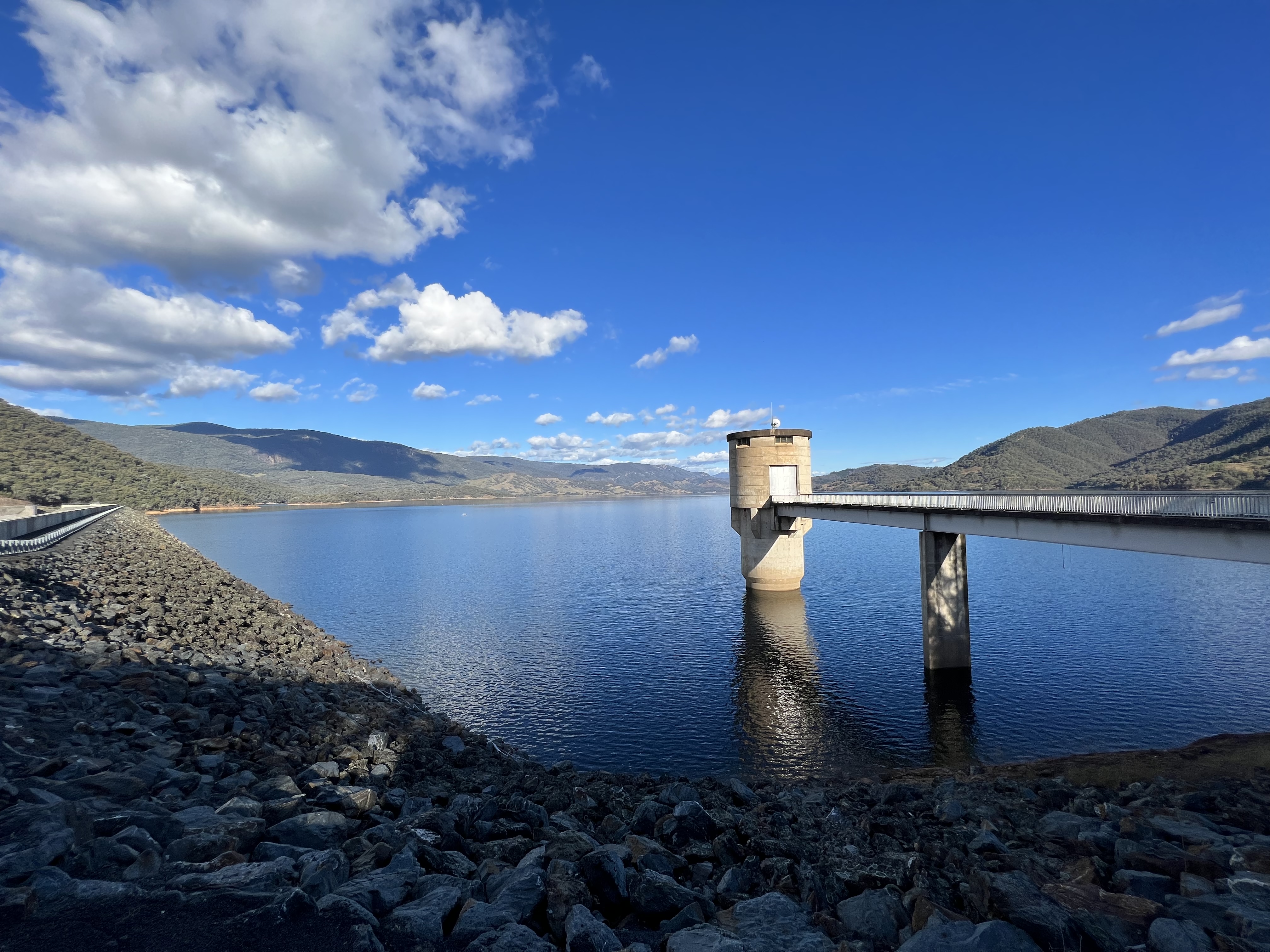
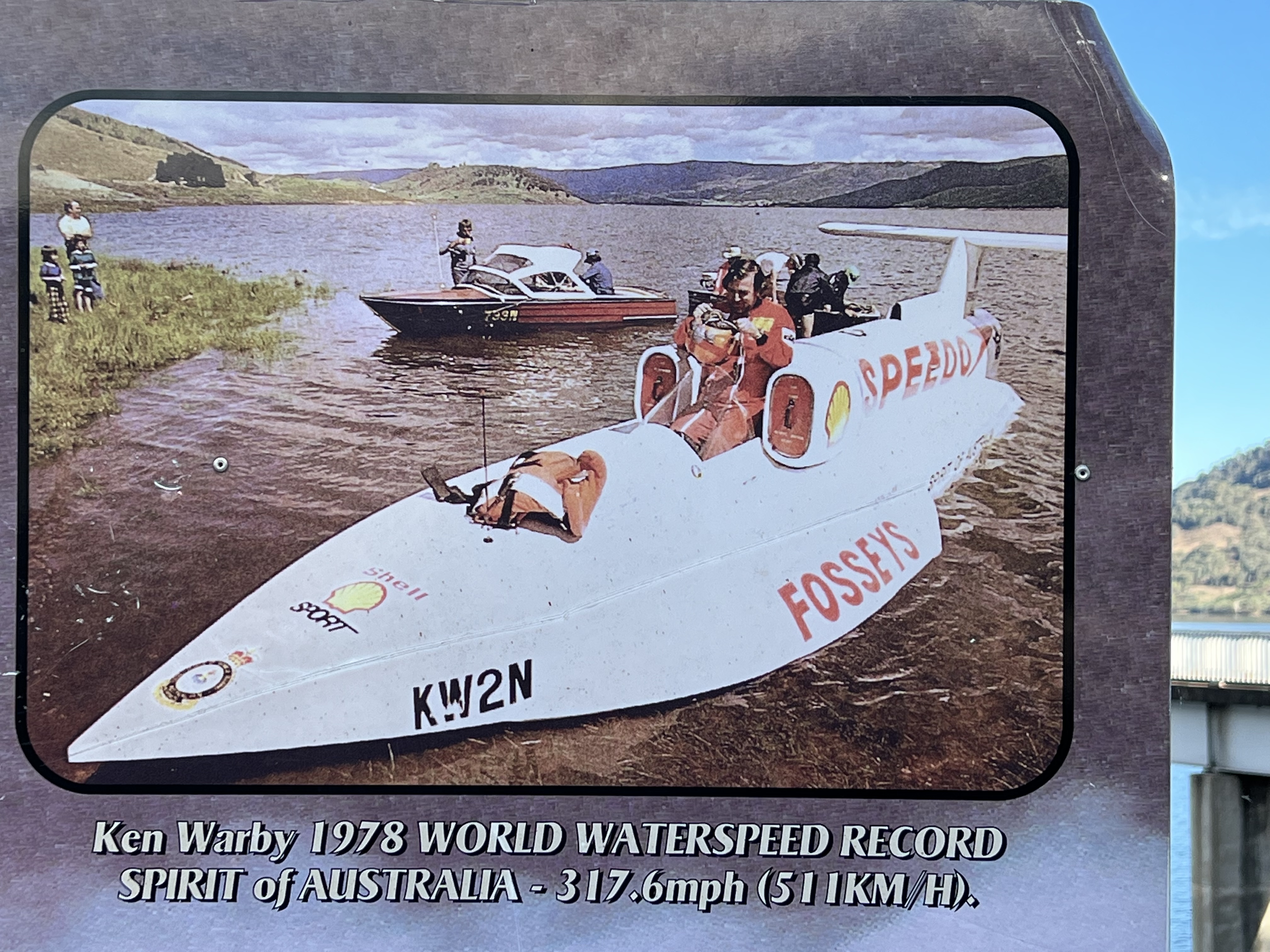
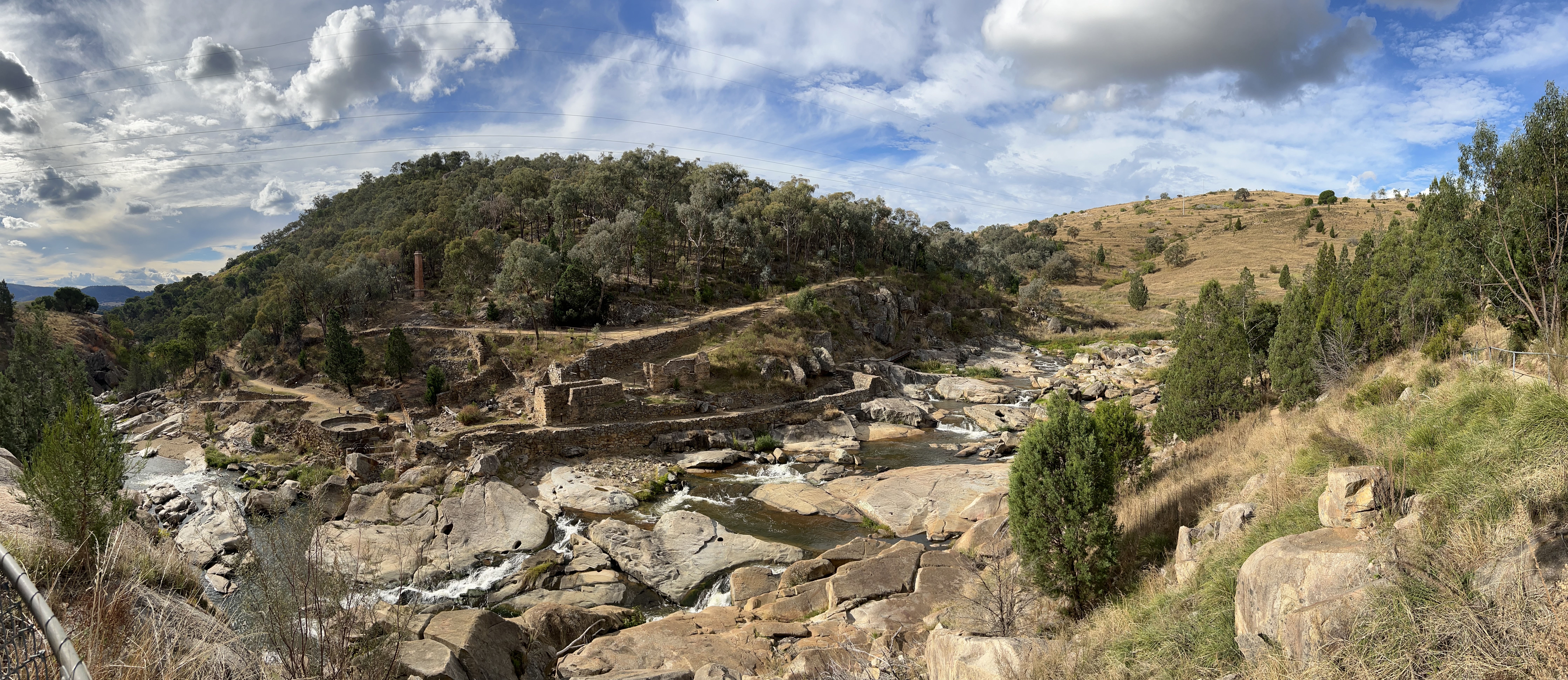
We have had good weather to date. Sunny, dry and blue skies but the forcasters are pointing towards some rain. So we set off to look around the district with an afternoon trip to Blowering Dam and along the Snowy Mountains Highway for awhile towards Talbingo. Next day it was off to nearby Batlow to check out the apples and cider. We came back to Tumut via a loop road through Adelong, a small town famous for its gold mining heritage in the Adelong Gorge. Here, along the gorge banks are the remnant stone works of a major 19 th century gold mining enterprise. Quite an interesting site to view from the top looking down. It must have been a hive of activity a hundred and sixty years ago.

Have finally managed to get to that custard tart for morning tea after a walk around the camp ground. The custard was a nice deep yellow, maybe organic eggs? Plenty of nutmeg on top too for flavour. Quite stiff as well with a nice crusty pastry. A top custard tart from Tumut, superior to the one from Inglewood.
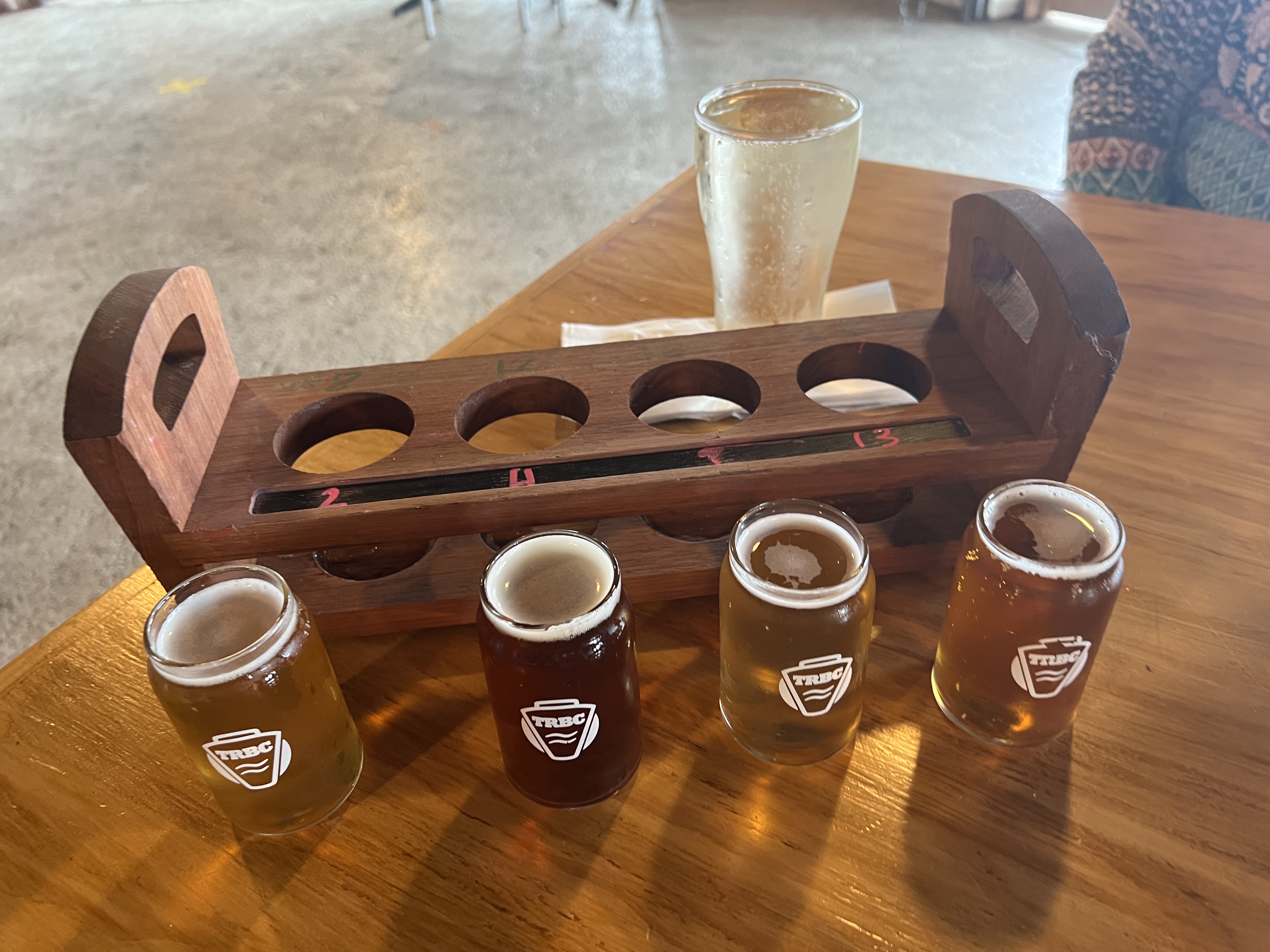
Have had lunch today at the Tumut River Brewing Company, an enterprising spot with a good range of craft beers and ciders. We enjoyed a meat lovers pizza to help with the liquids.
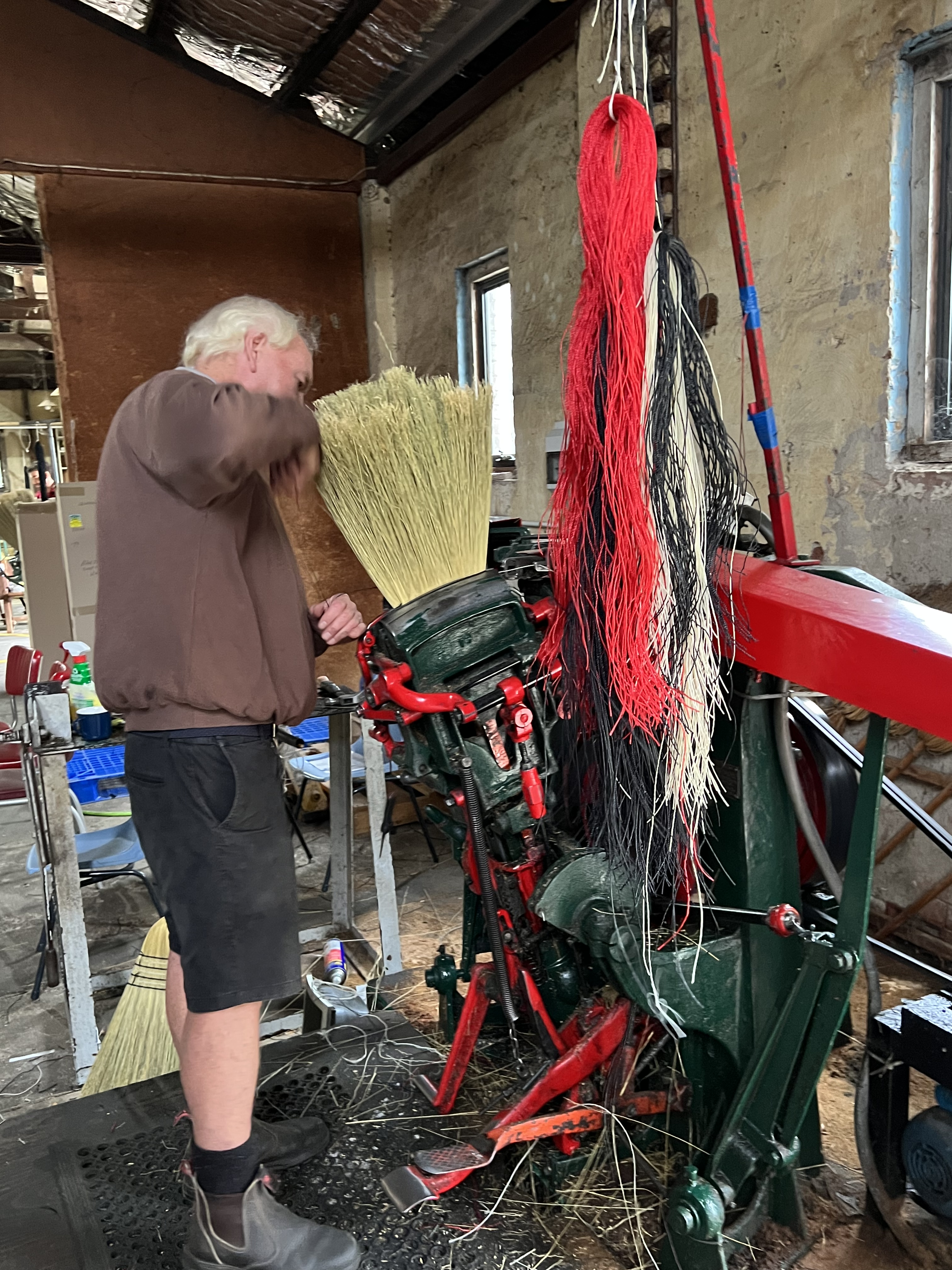
Next door is the Tumut Broom factory which has been making millet brooms since 1946. It is a bit of a cottage industry which now relies on the import of millet from Mexico. Back in the old days Australia produced a lot of millet but sadly our local production is quite small and can’t support this business. The brooms are distributed through hardware groups such as Mitre 10. It seems most people who stop by here leave with a broom! A bus load of grey nomads on tour was here when we arrived and many brooms left with them. Also with us, it will be very useful sweeping the mat outside the van. Got to find room for it somewhere though!
Our last day here in Tumut has been dampened by the onset of drizzle which is forecast to continue for a few days until late in the weekend when the sun returns. We leave in the morning and are not sure of where our next stop will be. We are hoping to time the weather so that we will be high in the mountains near the source of the Murray with some sunshine and blue skies.
Grenfell
It is not far from Forbes to Grenfell, about 65 km. Bob was wrong, two nights is required in Grenfell, unless you wanted to go out and do a few bushwalks in the Weddin Mountains NP, in which case you would need another night or two!
Now, one of the things we have come to learn in our travels is that Australian country towns really like to highlight famous sons and daughters. Grenfell lays claim to four. In no order of importance, Stan McCabe, Jan O’Neill, Ben Hall and Henry Lawson. The last two are quite prominent.
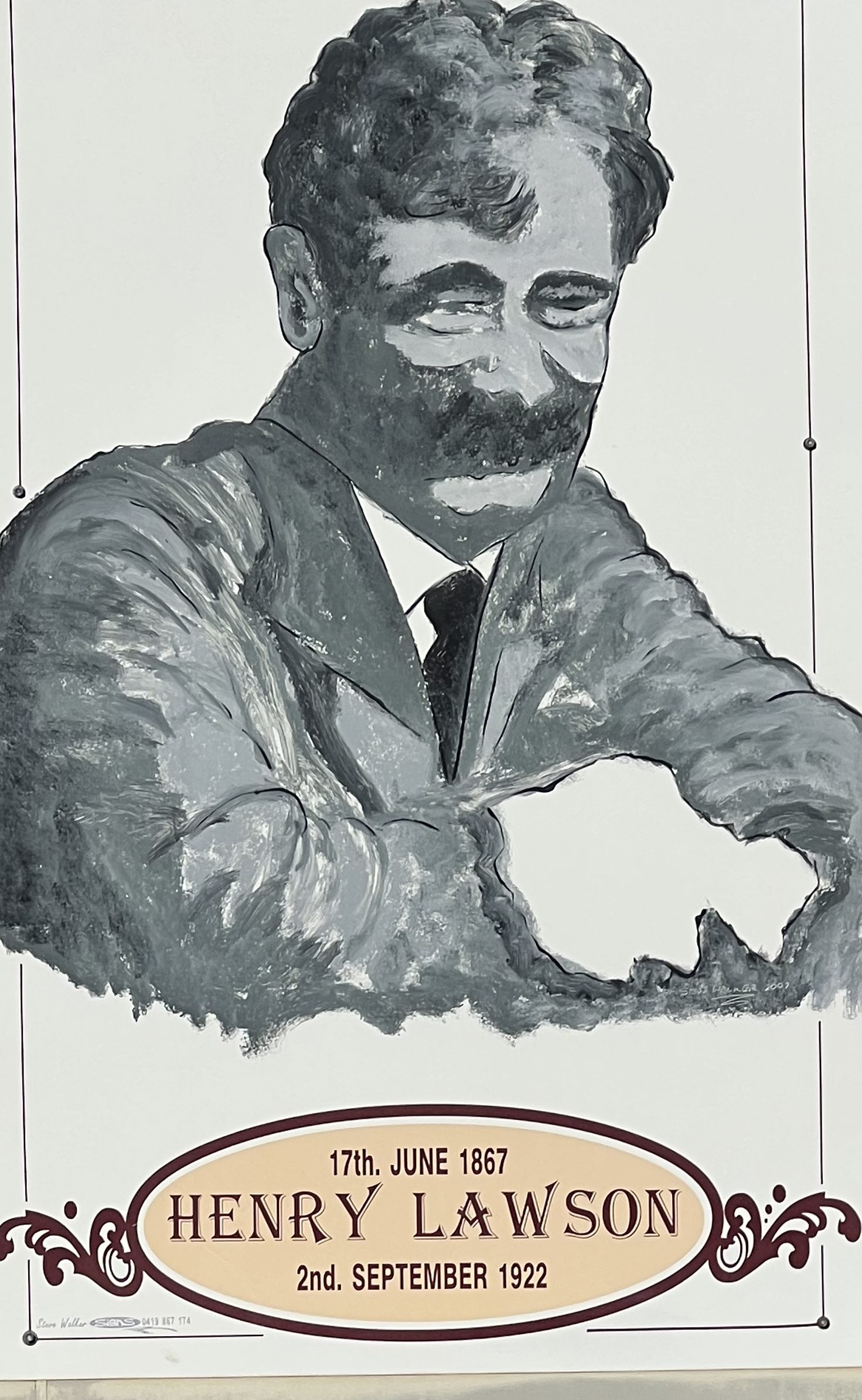
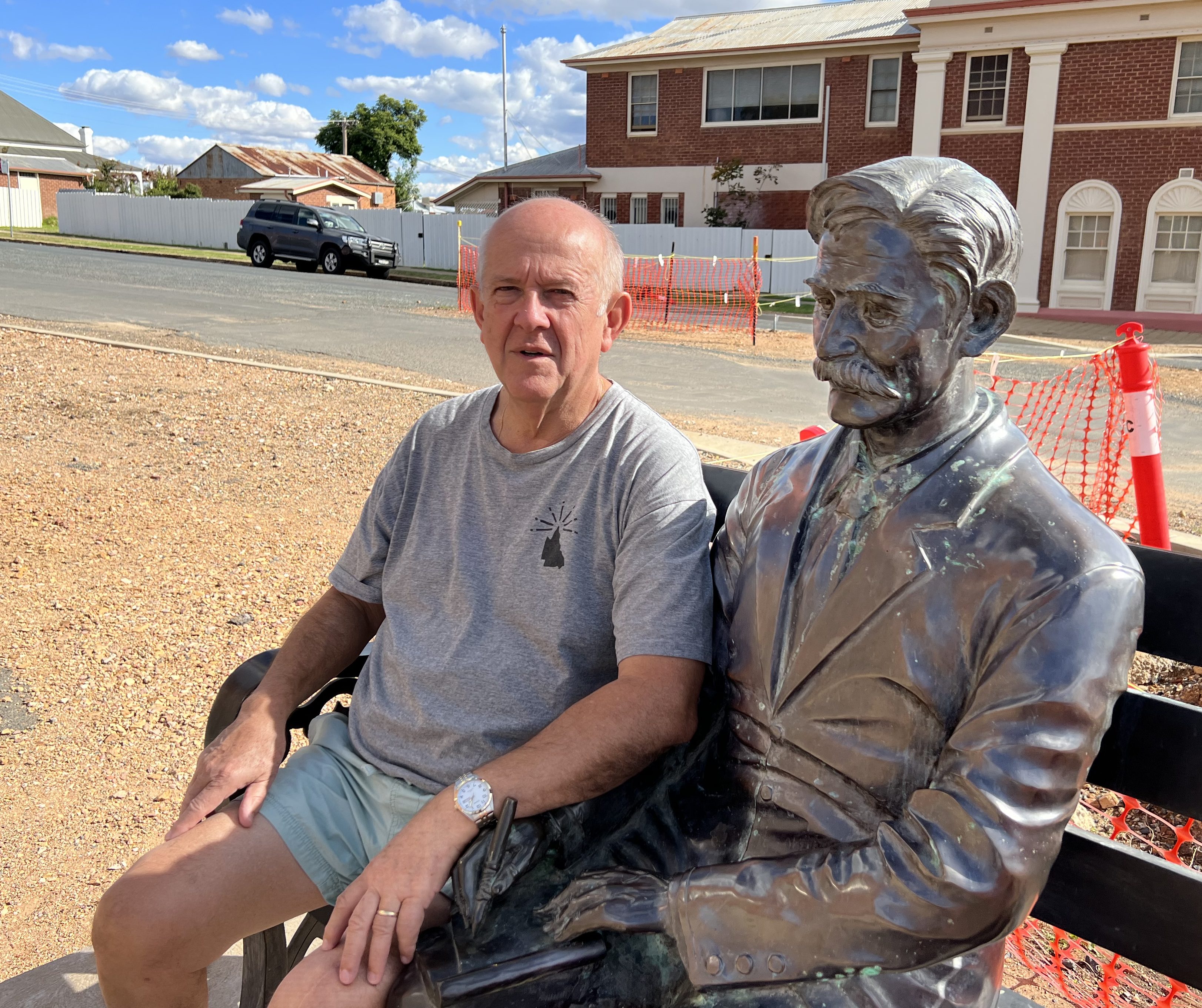
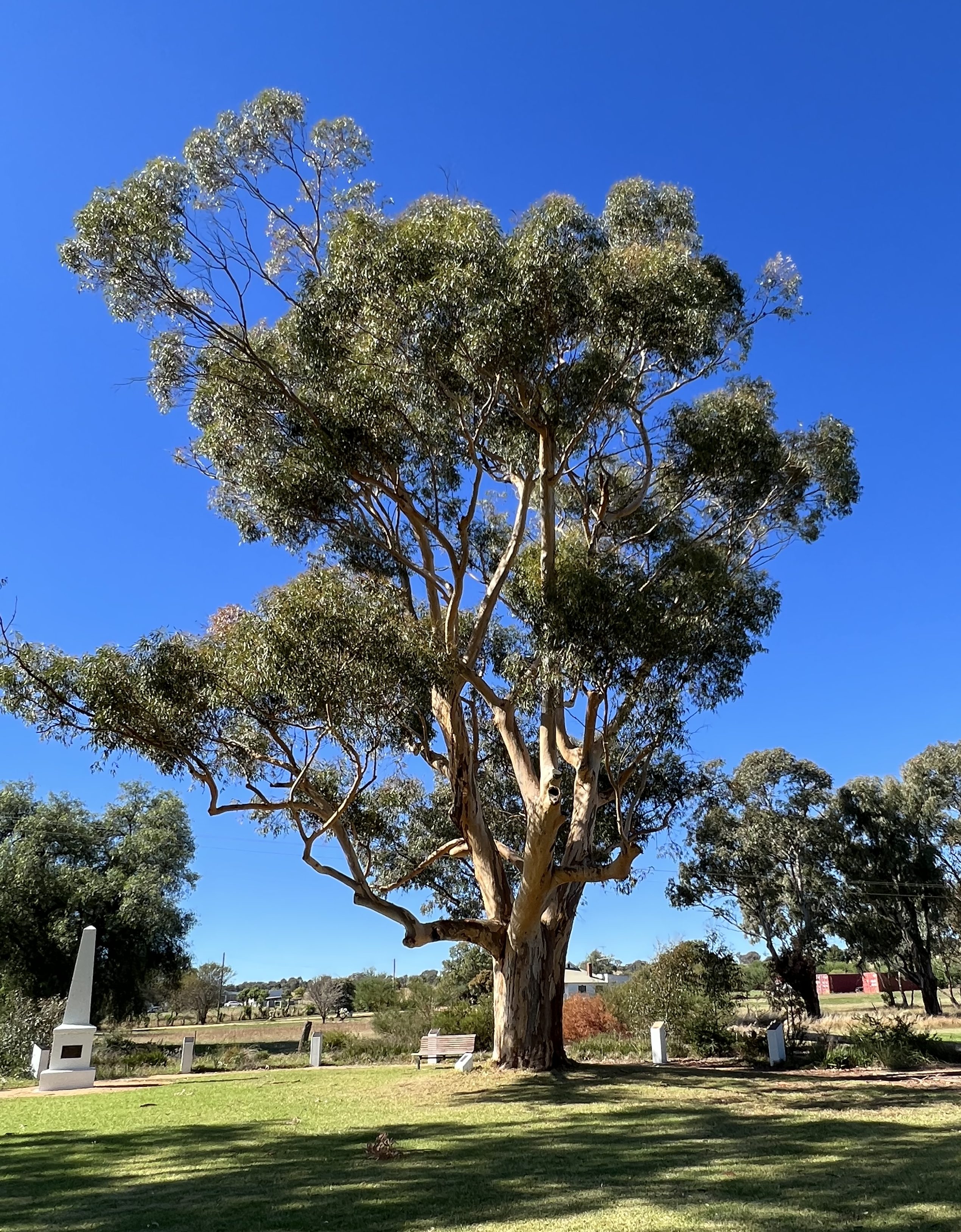
The town has the annual Henry Lawson Festival. Lawson was born on the gold fields in Grenfell in 1867. He left, never to return, several months later as a child in arms. After leaving town as a youngster he became profoundly deaf after illness and with limited formal education he went on to be one of our celebrated late 19th Century early 20th Century poets and story tellers. Much is made by Grenfell of the Lawson heritage. There is a sugar gum planted in 1924, near where he was born, that is growing strongly today nearly 100 years later. It looks like it will live for many years yet to come. A statue to sit by on a street corner and a bust with buttons to push that play some of his poetry and tales (only during daylight hours of course!).
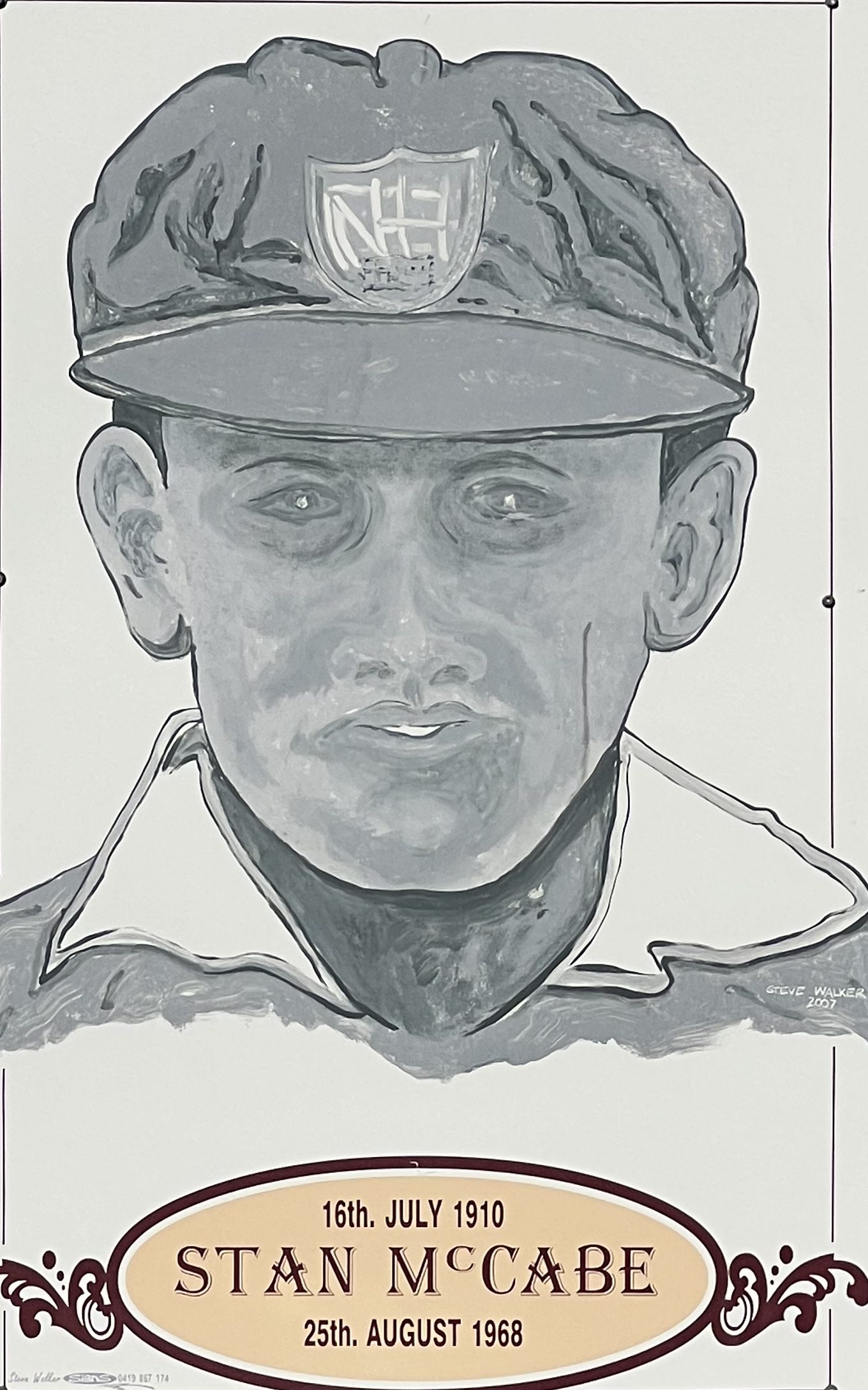
Stan McCabe was born in Grenfell in July 1910. Cricket tragics of Allthego’s vintage will know the name, if not the record. He was a contemporary of Donald Bradman in the Australian Test team during the 1930s. He played 39 tests for Australia and averaged 48. Not bad. There is an oval in the town named after him, nothing much else. Prominent in the town museum though!
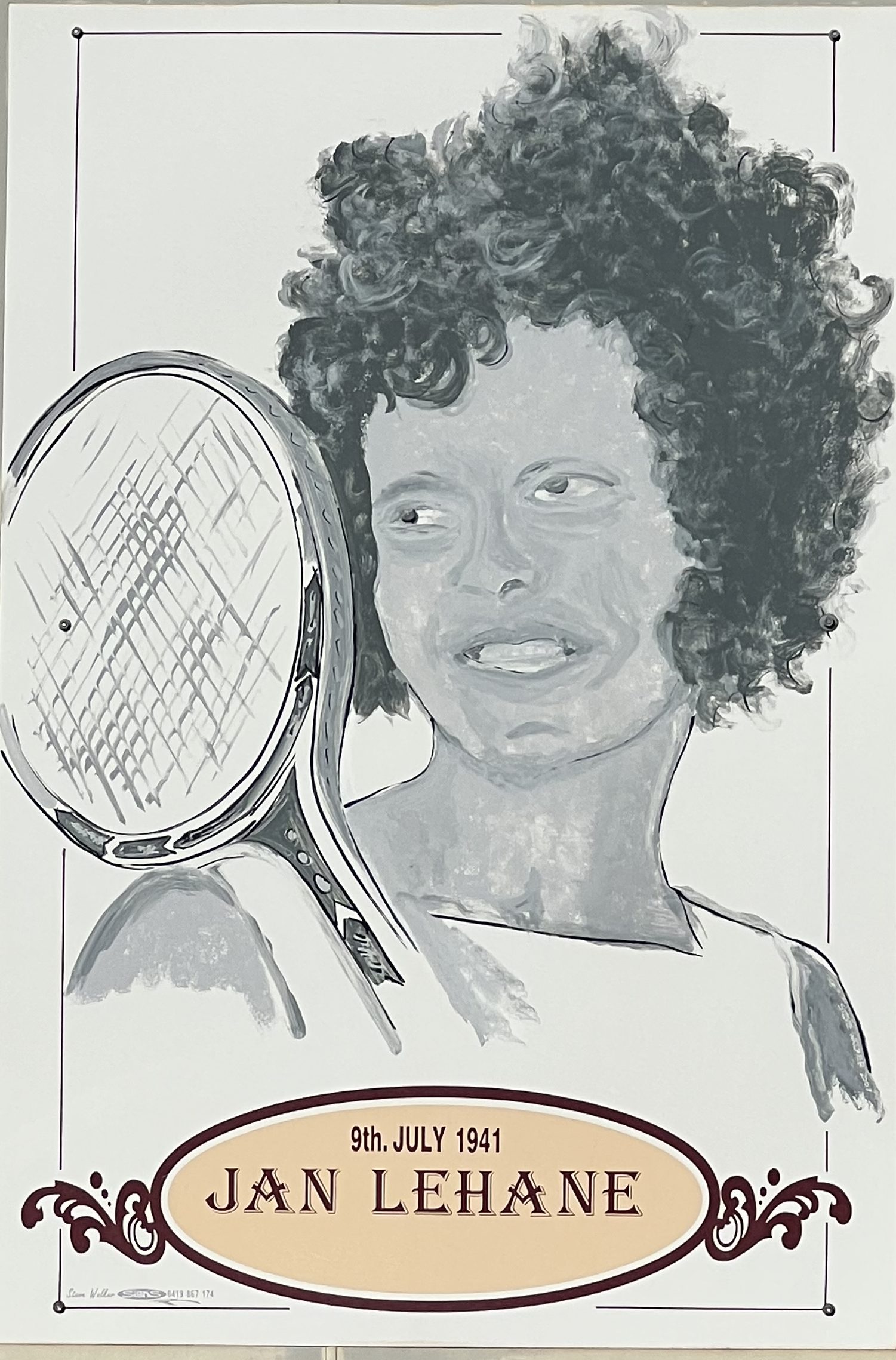
Jan (Lehane) O’Neill was born near Grenfell in 1941 and went on to be one of our leading Australian female tennis players in the late 1950s early 1960s, she reached a career ranking of 7 in 1963. She won a number of Australian junior tournaments and went on to win overseas, but never the big ones. She was a contemporary in the Australian women’s team with Margaret (Smith) Court. She was beaten by Smith in the final of the Australian championships four years in a row, 1960-63. She was the first leading female with a double-handed backhand.
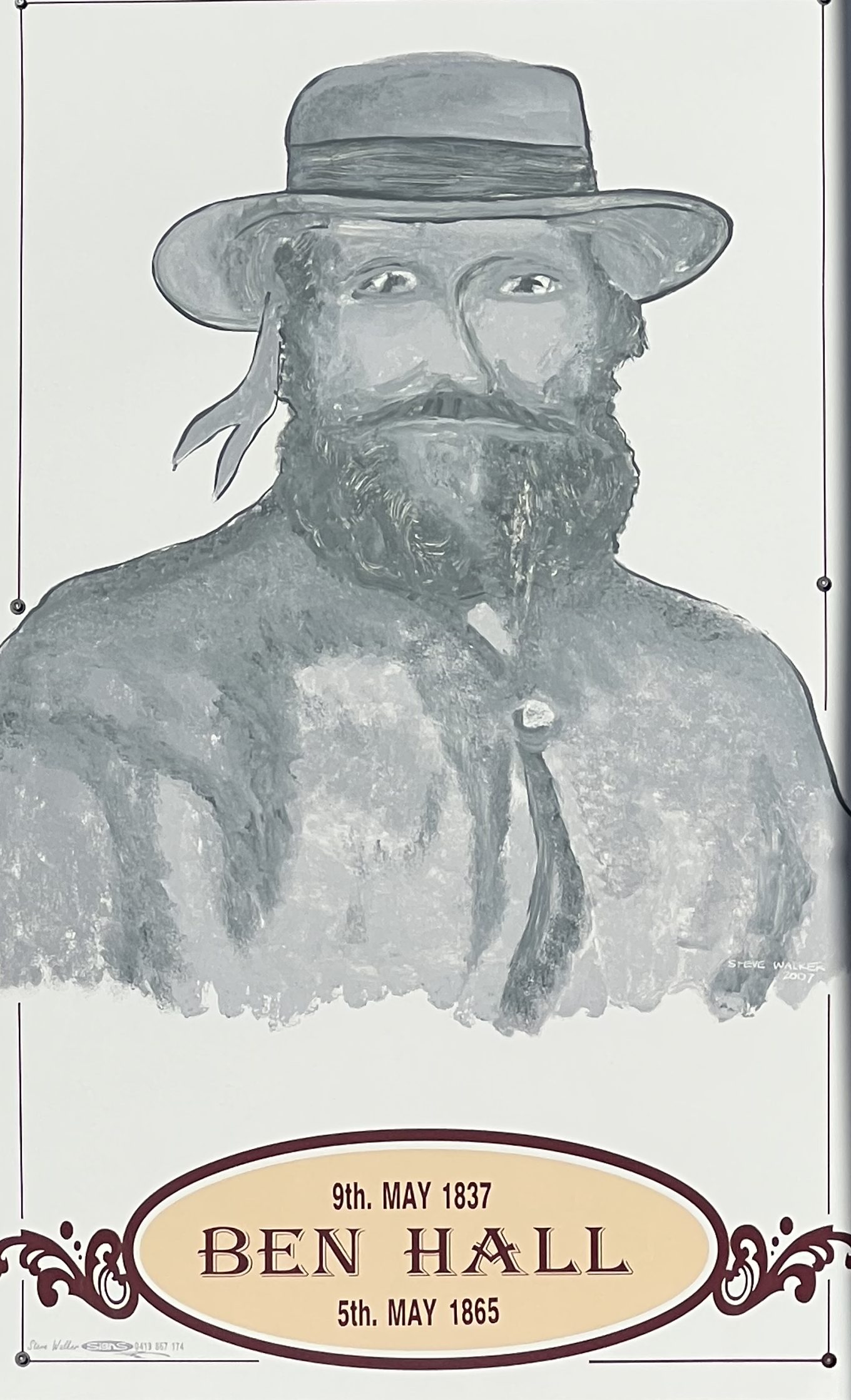

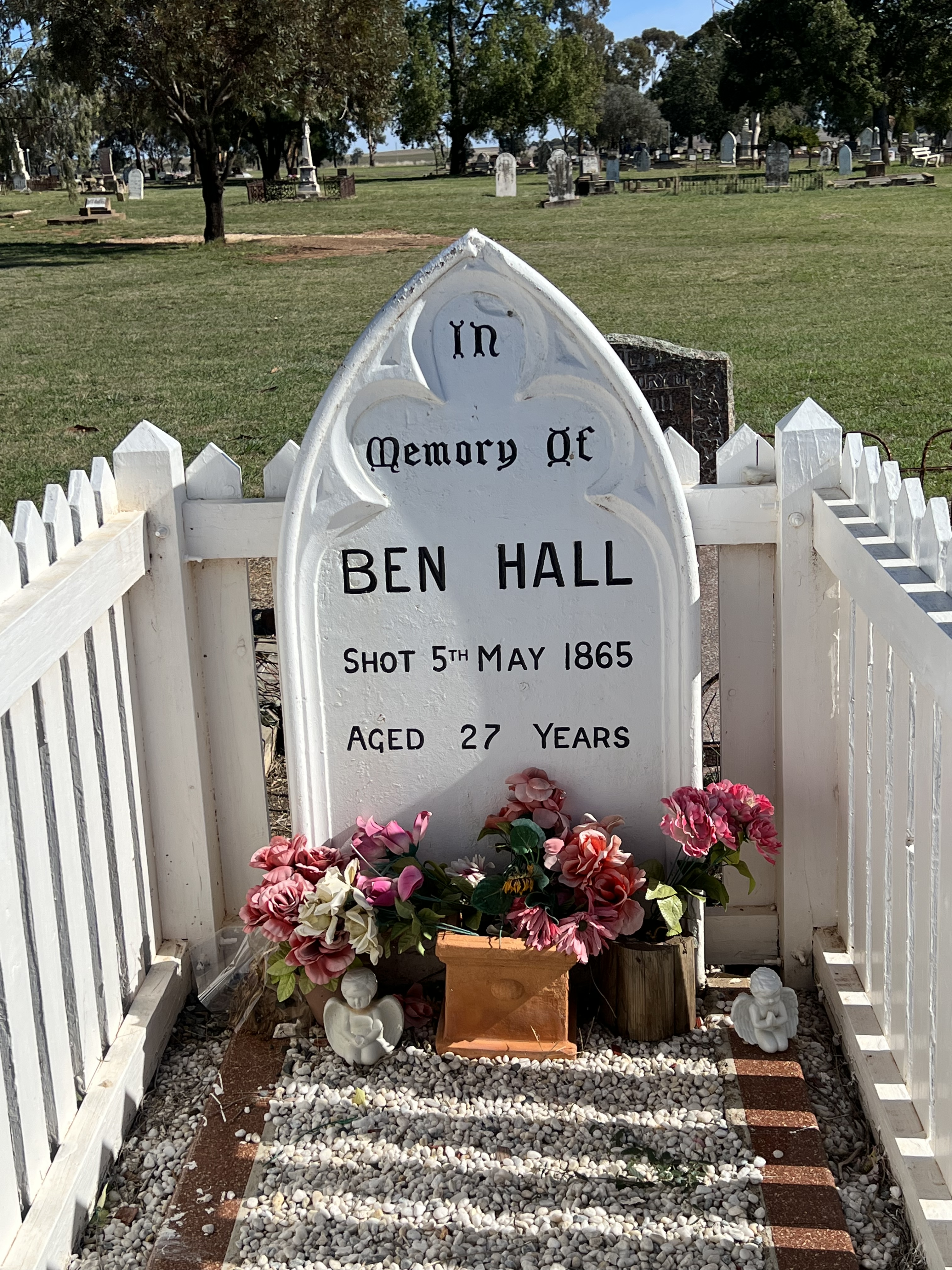
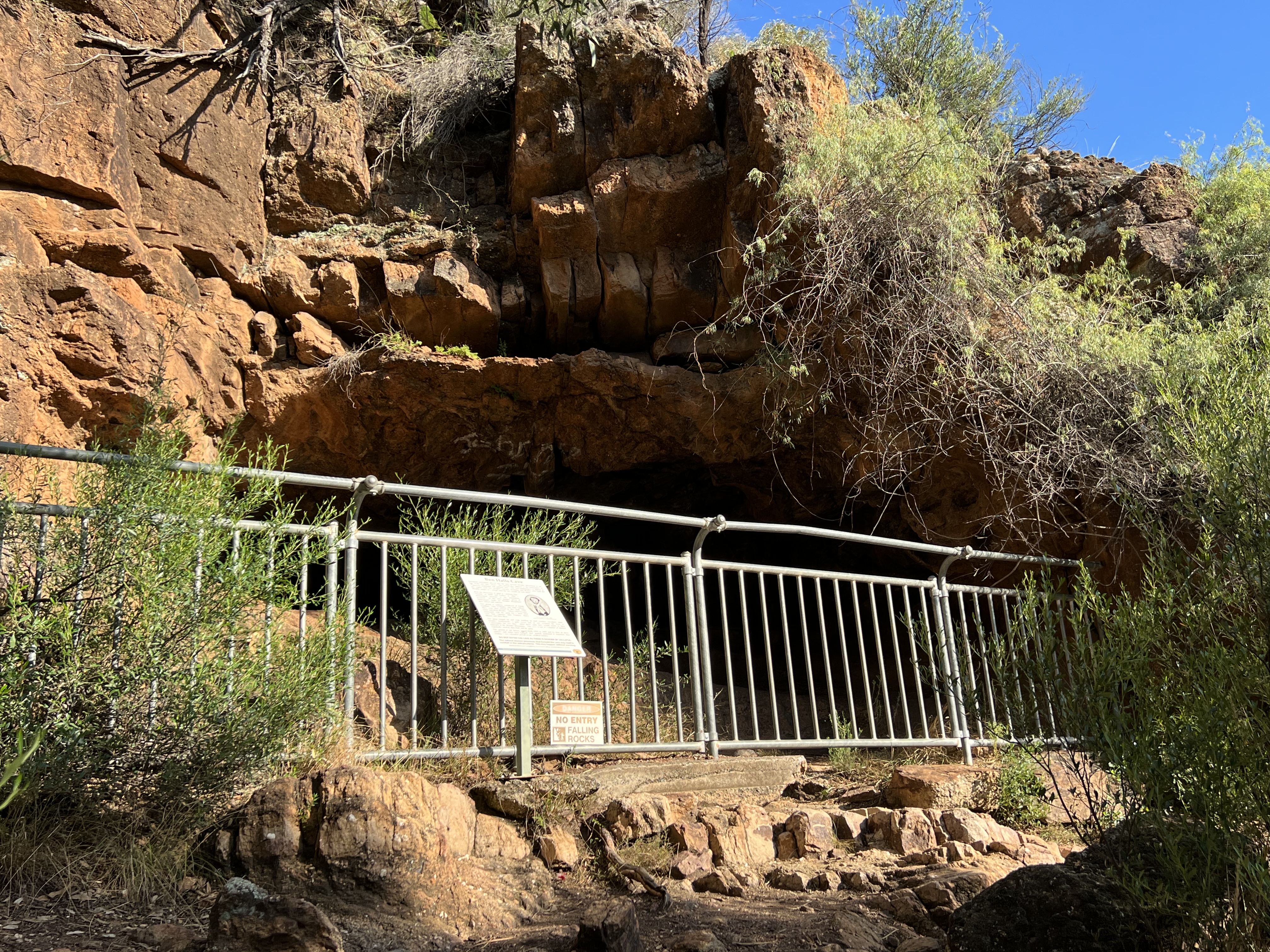
Ben Hall, the bushranger was shot in 1865 in Forbes at the age of 28. Over hundred robberies were attributed to Hall and his associates. We saw his grave in the Forbe’s cemetary. He was a Grenfell identity though and frequented the region, using the area as a base for his activities. A cave in the Weddin Mountains is thought to be one of his hide-outs, we did the short walk up the escarpment to its location. Interesting spot, a good look out for approaching police!
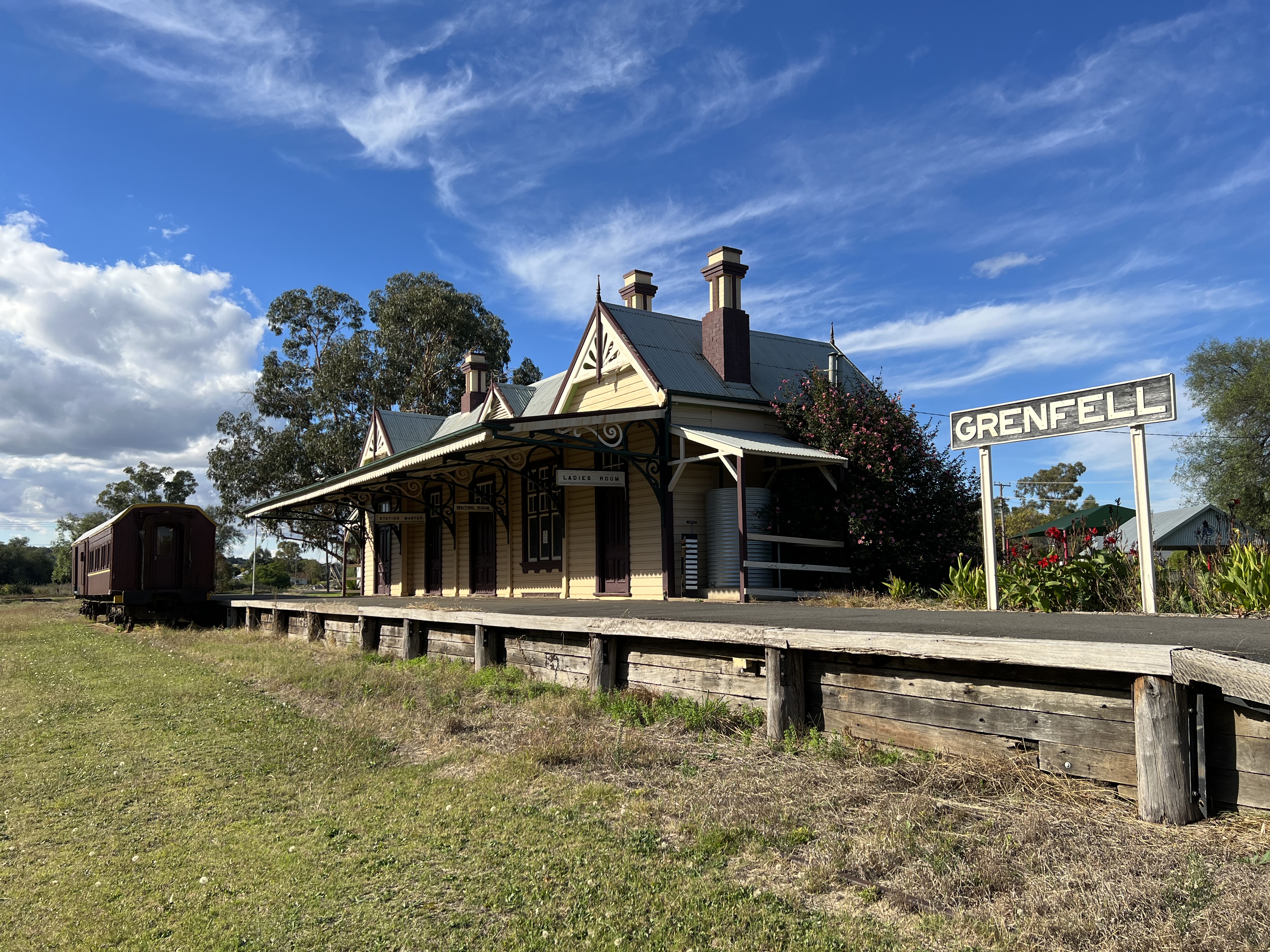
Gold was big in Grenfell too in the 1860s and remnants of the mines are on display on O’Briens Hill. A couple of open shafts and old equipment lie around the workings. There were more than ten thousnad people working on the diggings when Henry Lawson was born. Something like thirty hotels lined the town’s streets, ten banks as well, some of the grander buildings remain today. Trains no longer come to Grenfell to carry away wool and grain, but the restored heritage station and its precincts stand, nearby the free camp site for van travellers.
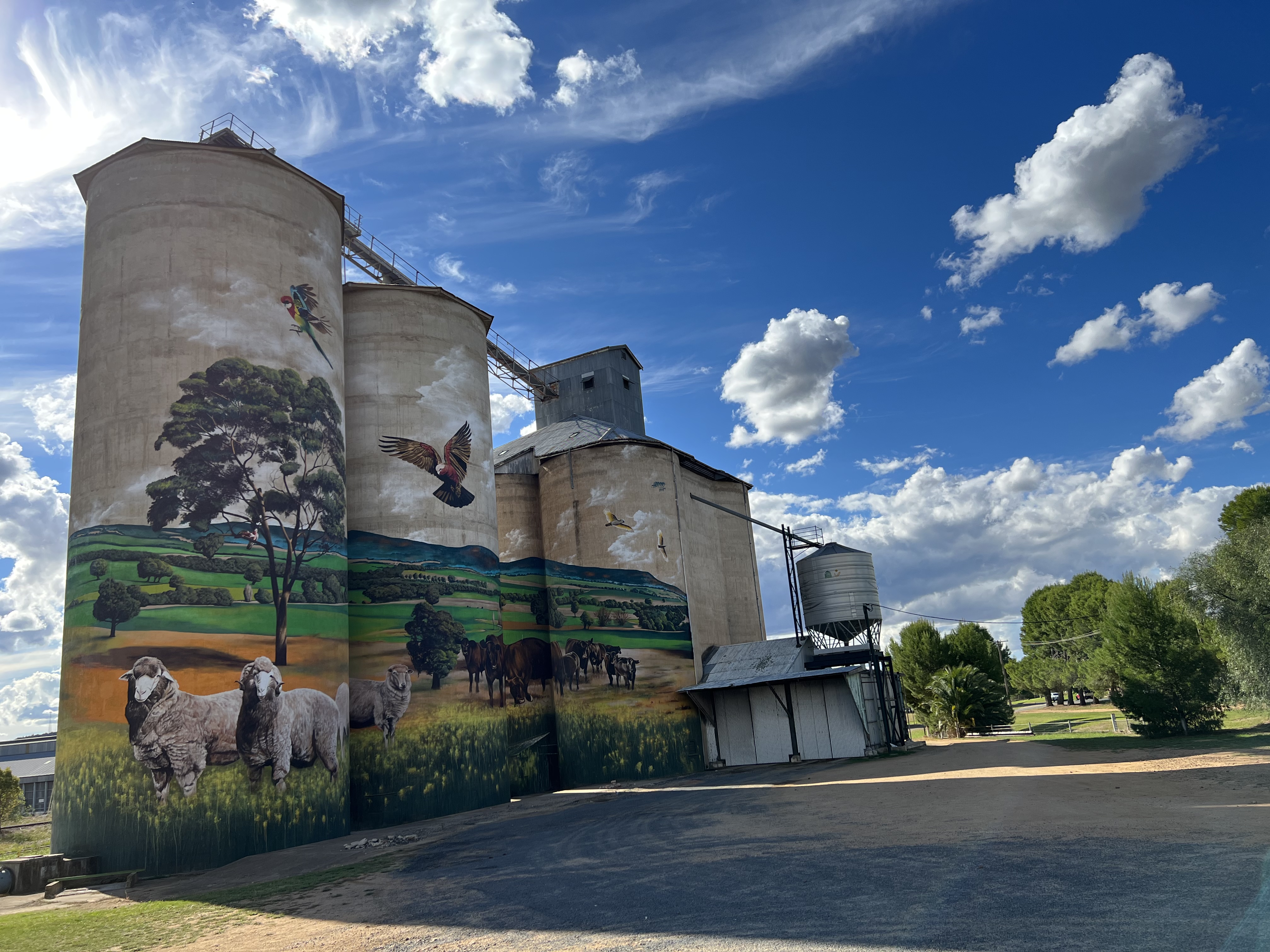
The latest tourist magnet for the town is a painted grain silo. A bit of a gem this is and something to be admired. How these artists paint these panoramic instatallations is amazing, they are only feet from the silo and several metres above the ground, with paint brushes and cans of spray paint. How do they get the perspective? Allthego sent the drone up for a photo, getting a different angle.
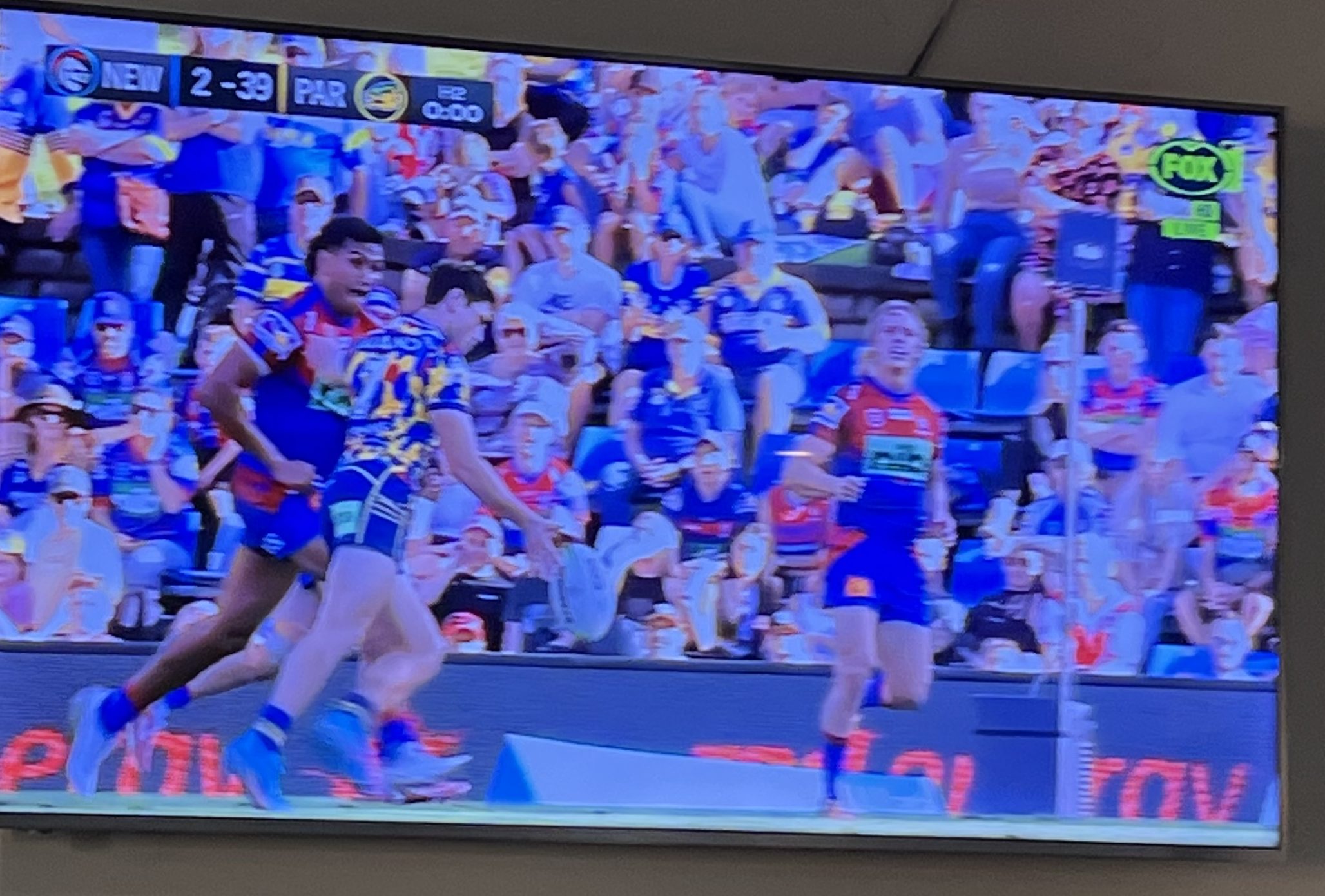
It was a couple of busy days in Grenfell and Allthego almost missed seeing the Parramatta Eels clean up the Newcastle Knights 39-2. The final ten minutes were caught on the big screen late on the Sunday at the Criterion Hotel, with Mitch Moses kicking that last second field goal!
We now head off to Tumut, it is tempting to stay another day! Haven’t checked out the cemetery or had the time to try a local custard tart!
Murray River times
We have escaped the cave after having a dose of COVID and doing the isolation thing. It is off down south to the Murray River, Australia’s longest river at 2,508 km and interestingly, it is navigable for almost 2000 km making it the third longest navigable river in the world; after the Amazon and Nile. Allthego has long thought that it would be an adventure to follow the river from near its source in the Snowy Mountains to where it empties into the sea in South Australia.
So, we are off with the van in tow making our way down the Newell Highway, after heading west from Brisbane through Warwick and Goondiwindi. This is the usual path we follow when going south through central NSW stopping first at a great free camp spot in Inglewood, followed by the John Oxley Caravan Park in Coonabarabran and then the free camp beside the lake at Forbes. Inglewood has an excellent bakery, great bread rolls and a selection of inspiring pastries. On this occasion we had to try their custard tart, it looked very tempting. We are going to test out some other bakeries on this journey and see if their custard tarts are as good as the Inglewood one was. It seems that in Australia we follow the English tradition of custard tarts, the base being a baked egg custard in a crust pastry topped with nutmeg. The Portuguese claim to make a great custard tart but theirs is housed in puff pastry topped with cinnamon, haven’t come across one of these.
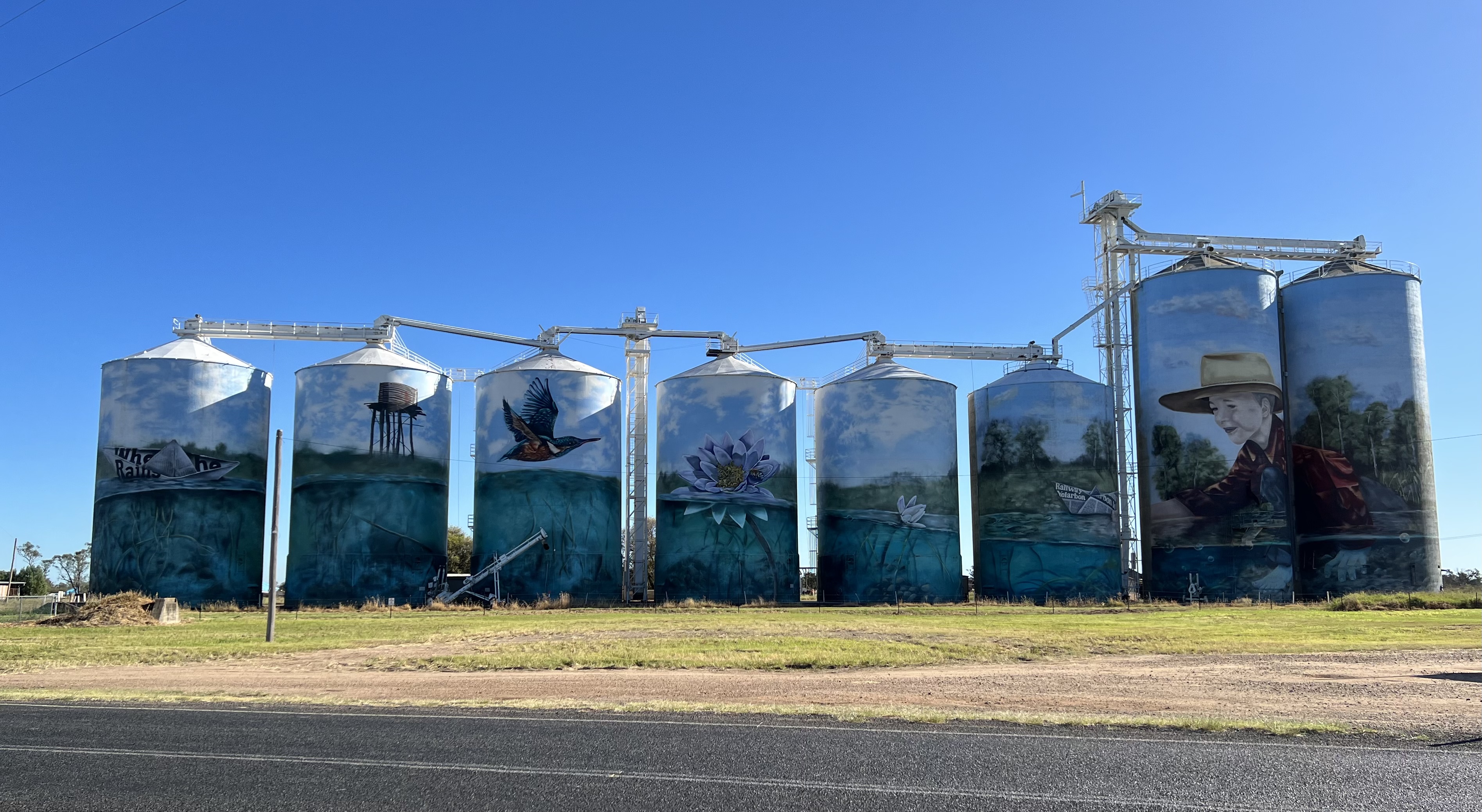
After leaving Inglewood we stopped to have a look at the silo art installation at Yelarbon, about 50 km from Goondiwindi. We were last by this way about three years ago and only four (or was it five?) of the silos had been completed, now all eight are done and it is quite an impressive panorama representing the surrounding region.
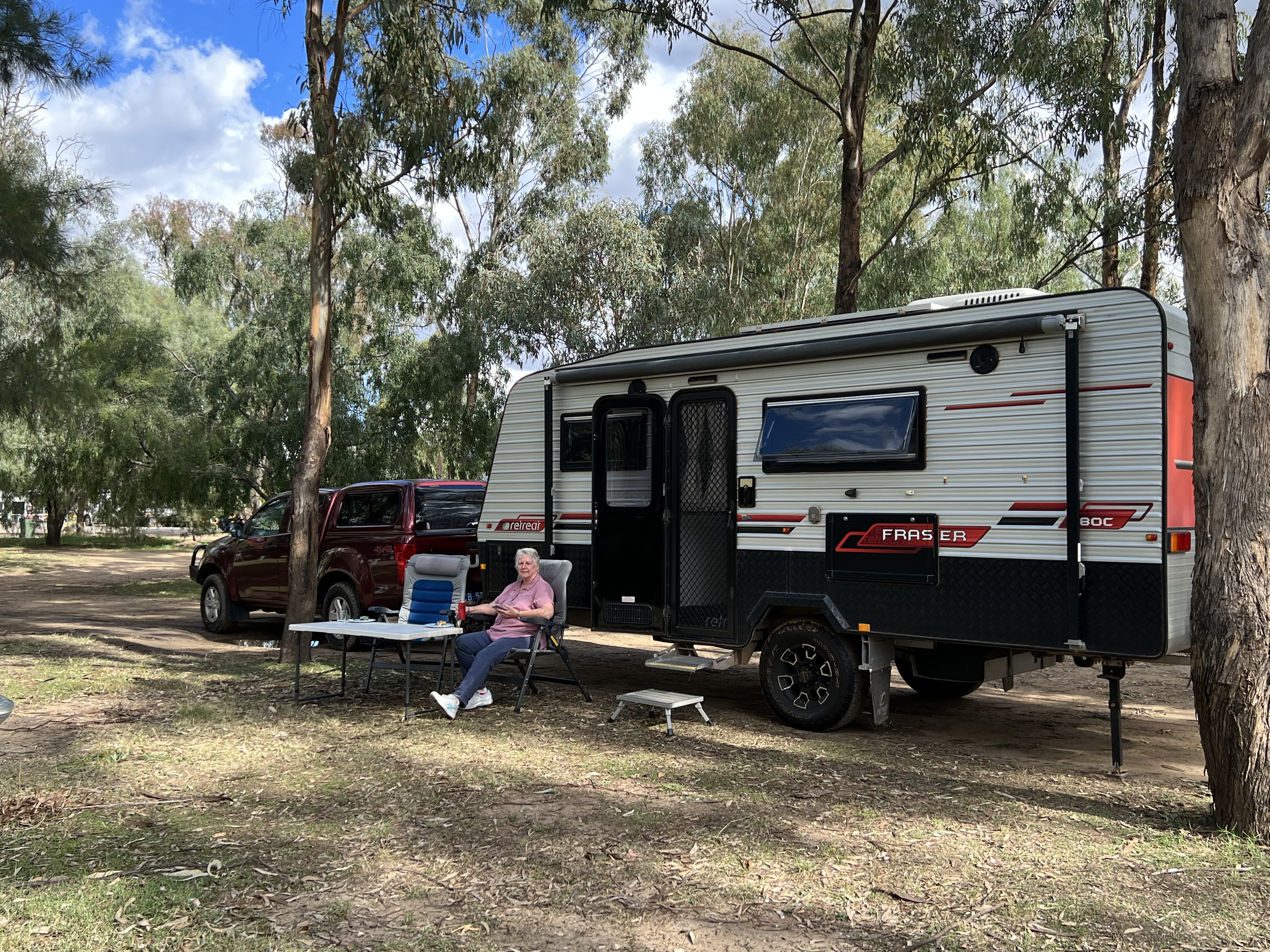
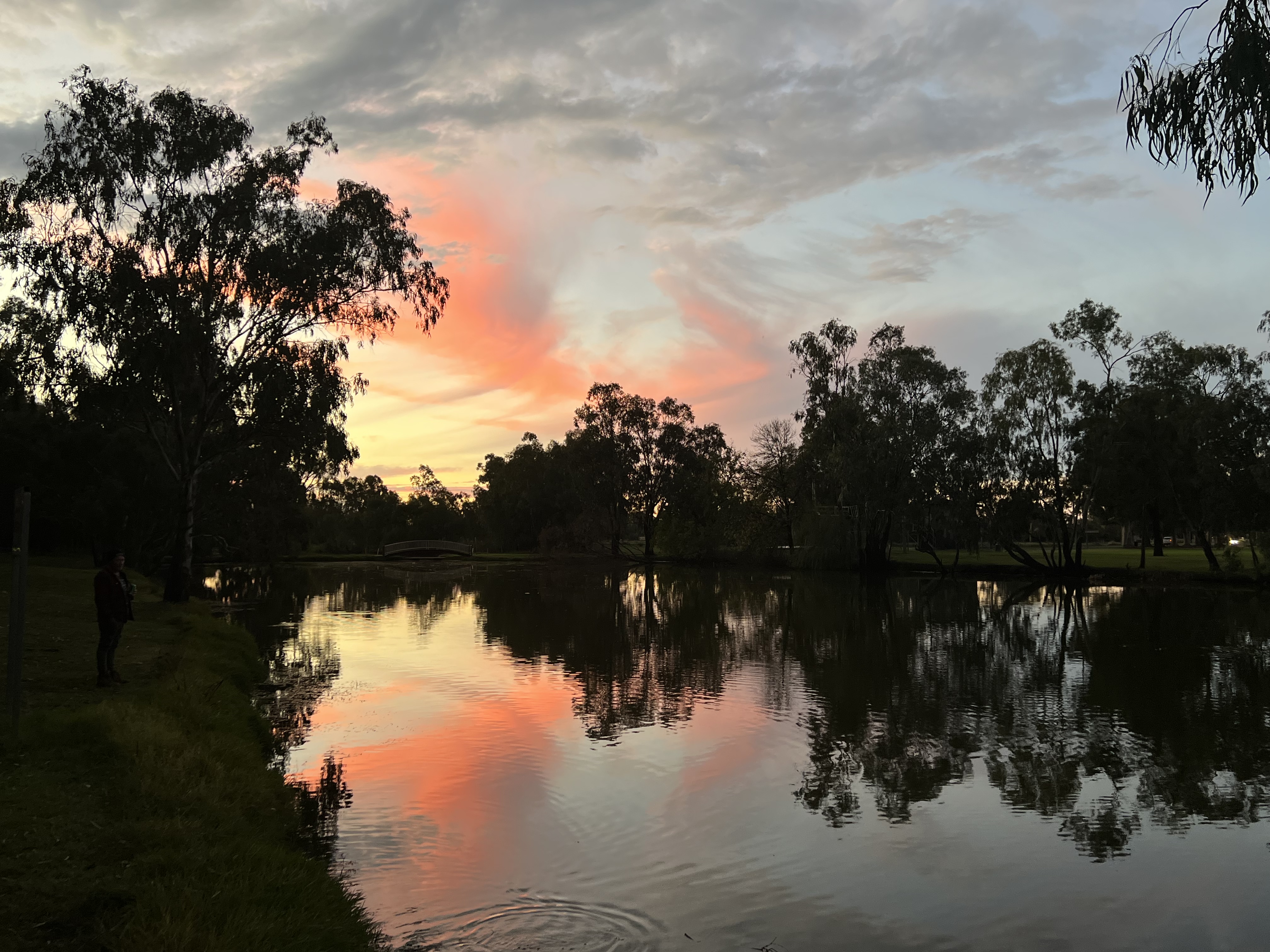
Down in Forbes we are beside the Forbes Lake in the free camp along with a number of other vans of all shapes and sizes. It is a pretty spot with the sun going down throwing up a colourful sunset, last time we were here we looked across the lake at a huge dust storm. It turned out that Leanne’s brother Stuart and his wife Maree were in town visiting Maree’s father Bob. All three joined us for a short happy hour as the sun started to go down. Nearly three years since we had last seen them.
We are now heading off down to Grenfell for a couple of nights, never been there before. Bob wasn’t sure we needed two nights there to see things.
The Overland Track-Cradle Mountain to Lake St Clair
Thinking it might be his last meal of bacon and eggs, Allthego ordered them for breakfast on the morning of the start of the 60 km walk from Cradle Mountain down to Lake St Clair. Breakfast was at 6am and we then had to gather at 6.40am to meet the others and get set up for the walk. The bacon and eggs were good! Around 8am or so we were off in the bus for the 2.5 hour drive up to Romney Creek, a little way from Dove Lake which sits beneath Cradle Mountain. Allthego, had earlier fessed up to our guides that he was experiencing a little left heel pain and may not trot along at the right pace. There was some concern about this and they said they would need to review progress along the way (there is an opportunity about half way along to walk out). I said fine, but that I was pretty determined to do it.
There are seven (2 blokes and 5 ladies) of us on the walk, supposed to be eleven but four didn’t show up! This made it a good group for the two guides to manage. Two young ladies Sakura and Danah , obviously very fit. They were carrying 20kg (?) packs, compared to our 8 or 9kg (mostly clothes, lunch and water). They were carrying the fresh food, salad vegetables and some meats as well as safety gear, first aid kits and other gadgets. The oldest in our party was celebrating her 70th birthday, a spritely individual and very well travelled/walked. The next oldest was Allthego, not quite 70. The other five were around 50-60, all quite experienced walkers. Some more fit than others.

Here is a sketch map of our route and overnight stops. Each of the six days involved walking an average of about 10km a day, the first two days were the longest at 12 km each. It felt a lot further! Additional kms were done on a number of side trips off to special features such as water falls, lakes and mountain tops. My guess is that I walked and climbed about 65km. It seemed that about 15% of the journey was on boardwalks, no idea really. The rest a series of gravelly paths, rocks of various sizes and shapes, water and mud, tree roots, steps up and down of various depths and heights (some easy some challenging on the knees), hops across small creeks.


We are staying in five ‘private huts’ along the way; hot showers, warm beds, some nice dinners with a little wine and fresh baked bread each morning. There are a number of other groups and individuals on the track as well, carrying tents or sleeping in the ‘public huts’ nearby ours. There is plenty of water and facilities (no hot showers!) at these public huts.


In terms of physical effort the toughest day was the first. It was a long haul up the track past Crater Lake, followed by the climb up Marions Lookout , the steepest section of the whole walk. The posts and chains along this section were of great assistance in getting up the deep steep rocky steps to the top. Up the top there was supposed to be a great view down over Crater Lake, Dove Lake and the up to the spires of Cradle Mountain. Crater Lake was great but Dove Lake and the spires were whited out with mist, fog and light drizzle. So we suited up in wet weather gear and plodded off down the track, arriving at Kitchen Hut where we had lunch. Just as we were leaving Kitchen Hut, the skies cleared and the spires of Cradle Mountain made a magnificent appearance, Dove Lake was no longer in view.


Onwards we went down to Waterfall Valley and our hut for the night. Allthego was at the back of the pack, someway back being followed by one of the guides who kept the pressure up to keep going. We arrived at the hut around 6pm, it had been a long day. The hot shower, cheese platter and Pinot Noir followed by grilled salmon with a salad pleased all. Off to bed about 9pm, looking forward to starting off the next day around 8.30am after breaky and being strapped up (each day) by fellow walker Janet, a physio. Made a huge difference to my heel problem, forever in gratitude for her care!


And so that is what happened roughly for the next five days. The glaciated landscape and vegetation ever changing, from button grass plains, cool temperate rainforest with mosses, lichens and all sorts of ancient trees. Bit of dry scrub too. It rained heavily for most of our second night but cleared the next morning before we set off. The rain livened up the streams and little waterfalls making it quite special. No more rain for the rest of the walk, cloudy skies and patches of sun made it great walking weather in short sleeves. Some great sunsets reflecting on the ancient mountains, glowing red almost like Uluru.


Some of the group climbed Mt Ossa, Tasmania’s highest peak. Allthego passed on that climb, going as far as the ‘Japanese’ garden below Mt Dorris for lunch, a special alpine place indeed.
The track went up and down, long downhill stretches followed by long uphill stretches. The trip notes described it as ‘undulating’. Allthego plodded along at the back, got a reputation for this. But like the tortoise eventually arrived at the huts not too far behind. So they let me finish!


It was a great experience and I could go on and on, but will not. On reaching Lake St Clair it was onto the ferry for the twenty minute journey down Lake St Clair. Allthego will not forget the last three or so kilometres of track down to the ferry. Somewhat behind the pack and closely followed by Secura I was urged to lift my pace significantly, we wouldn’t make it in time otherwise. I sensed she wasn’t being humorous and so I lengthened my stride and upped it a bit. Arriving at the wharf just on 1pm, departure time. No lunch! I suggested to the group it was good timing. And it was, although a bit stressed and sore.

After an hour at the Visitors Centre at Lake St Clair the bus arrived and we returned to Entally Lodge, through the Central Highlands, about a three hour trip.

The Lodge has a neat restaurant with a great side room and a cattle head staring down at the table. I enjoyed a steak before heading back to Brisbane after a memorable time!
More of Flinders
We continue to wander around the Island taking in the sites and some of the food of course. There are four main places to eat on the Island it seems. The Flinders Interstate Hotel in Whitemark (not far from the airport and our Yurt) has been there since 1911, the Furneaux Tavern at Lady Barron (over on the south east coast and where the port is), The Wharf ( a new establishment on the site of the old Whitemark pier complex) and next door to the Yurt the Mountain Seas Lodge.


We took the opportunity to eat at all four. All good. The hotel in Whitemark did a very steak. Probably Flinders beef. There is currently no abattoir on Flinders, although a small one is due to reopen soon. The cattle go to Tasmania to be dealt with and are then sent back to Flinders to eat. The locals try to get the Flinders meat back but it is not guaranteed. The Furneaux did some good fish n chips as did the Wharf ( a little more sophisticated with some fancy salad to go with the gummy shark). Mountain Seas Lodge has a great position and views, Homealone was very pleased with her lamb shanks. Conclusion, food on the Island is in good hands and worth trying!


We have seen a couple of Australian icons in the wild. Cape Barron Geese and Wombats, a few of these not just one! Coming back to the Yurt in the late evening we were guaranteed to see one of these fellows basking in the warmth of the late sun. A great sight, they scuttled off into the scrub if you got too close.


The coastline though is what continues to amaze, some great scenes along the way. Trousers Point and Lilly’s Beach were standout spots to visit.


We did the Trousers Point walk around the coastal cliff line, great lichen covered boulders and wind and salt adapted vegetation clothed the track. Took us a little over two and a half hours to complete. The frequently cloud covered Strzelecki Peaks in the background.


Allthego was tempted to do the Strzelecki climb, but thought better of it in order to preserve himself for the Cradle Mountain walk! So he just climbed over and the back across the fence at the start of the walk to get the feel of it. Maybe another time?

Our time at Flinders has come to an end and we left the Island today, flying back to Launceston. Homealone departed for Brisbane and Allthego headed off to the Entally Lodge on the outskirts of town to join the walking party for Cradle Mountain. Allthego will return with something on the walk in a week, no internet out in the wilds!
The north of Flinders
Flinders Island is really an island in two halves. The south is more developed and has most of the island’s social infrastructure and economic activity. The north is more ‘au naturel’, a few small settlements on the coast with scattered farm houses and a growing number of tourist accommodations; some rough and some very nice with great views. We are staying in a Yurt at the bottom of the island near Trousers Pt beneath the Strzelecki Range peaks. Mt Strzelecki at 756m is the tallest peak in the range and is a five hour walk to the top and back.


A yurt ‘house’, in the traditional sense is of Mongolian origin, is lived in traditionally by semi nomadic people. Of circular shape and made of skins etc the yurts were portable whilst being sturdy and protective from the elements. Our Yurt is twelve sided, a large single room with side annexes for bathroom, kitchenette and store rooms, cupboards. Not portable! It looks out over two small ponds that supply water to the property. Drinking water is filtered rain water, recommended to be boiled. In the old days Allthego used to drink unfiltered rainwater from tanks and never boiled it!
Following the island’s discovery by Europeans in the early 1800s it’s main claim to fame was as a site for sealing. The sealers were so ‘successful’ that they effectively wiped the seals out, they are only now slowly returning, we didn’t see any.


Flinders is also the location of a place that is infamous in the European treatment of the Tasmanian aboriginal. Wybalenna, on the west coast, is the location of a settlement to which upwards of 140 aboriginals were brought between 1833 and 1847 to ‘escape’ the elimination and removal programs of the Tasmanian authorities. The majority died from poor living conditions over a three year period, after the failure of the settlement the remainder (47) were returned to Tasmania. All that remains of the Wybalenna settlement is the restored chapel and graveyard.
Mutton birds call Flinders home and thousands of them return here annually after their long flight from the Bering Sea in the far north Pacific. Mutton birding is a continuing industry on the Island, with a short recreational and commercial season. Mutton bird chicks are ‘collected and milked’ for their oil, then snap frozen for human consumption. A lot are exported to New Zealand. We tried a mutton bird arancini as an entree, before some fish n chips. Harmless but wouldn’t rave about it!


There are numerous wallabies around, quite small fellows, and one has to have an eye out for them on the road lest they meet their maker. Most cars have bull bars! Some menus we saw featured ‘wallaby rump’ and there was a wallaby sausage roll. So there is a bit of industry here in wallaby meat as well!
In the early 1900s there was much land clearing and today sheep and cattle are everywhere.
We were filled in on numbers: around 950 humans, 30,000 cows and 3,000,000 wallaby. The wallabies are winning.


The coastline certainly has some wonderful features of lichen covered granite rock shelves and boulders. The water is crystal clear and the beaches postcard sights. Castle Rock is particularly impressive and a prominent feature on the shoreline. More coastline next time!
Off to Tassie
We are setting off for a bit of an adventure in Tasmania. It is a short trip to do two things. Visit Flinders Island, largest island in the Furneaux group, at the eastern end of Bass Strait. This is another instalment in our quest to visit Australia’s islands. We have done a few now and the pleasure goes on. Homealone, will return to Brisbane on the big island after five days on Flinders to be homealone and get back to craft! Allthego is to head to the small island to undertake the Overland Track walk from Cradle Mountain to Lake St Clair, all up about sixty kilometres of walking over six days and five nights.


Virgin takes us down to Launceston and after a short stopover Sharp Airlines makes the 35 minute flight across Bass Strait to Flinders. Take off was a little rocky but the flight very pleasant with a good view of the islands on the approach to Flinders.


The planes windows were rather dirty and scratchy making photos problematic, so there aren’t any! After landing we picked up our Corolla hire car and headed off to our accommodation, a short drive from the airport in the shadows of the Strzelecki Range.
Something about nothing
We have been here at Rainbow Beach for five days. Doing nothing, or perhaps, more correctly, very little. No site seeing, museums, tours etc. Largely just sitting around crafting or reading. Allthego has gone down to the beach for a swim each day. Rainbow Beach is a busy little town, taking advantage of it’s gateway status to Fraser Island and being at the end of the long beach drive up from Noosa to Double Island Point.


We are staying at a Big4 Breeze campground. It is about 3 km out of town at Carlo Point on the Tin Can Bay side of the peninsular. We have stayed at Tin Can Bay before. Allthego finds one annoying thing about these campgrounds, beside still water and tidal sand flats. Midgies. They like Allthego and attack aggressively as the sun goes down. They eat Bushmans spray for entree. Legs and arms covered with itchy bites. Here at Carlo Point it is no different. They ignore Homealone because of her daily intake of Vegemite, or so she claims.

The camp is undergoing some significant capital works. Allthego suspects it has not been long acquired by Big 4 and they are now tarting it up to meet their market. In other words they are spoiling it by building rows of box filing cabinets for people to stay in and will be relegating vans and campers to less salubrious areas of the park. Also installing games rooms, TV rooms and jumping pillows. The kids do get outside though and ride around in bikes and various carts.

At least they let us have a fire where we are holed up and we have grilled some rump over the embers, flame wood grilled beef beats gas fires hands down. You do have to let the flames subside though for best results.

We have had some entertainment with the local goanna, being chased around the grounds by a couple of magpies. Perhaps the goanna has got at their eggs or maybe the little magpies at some stage. It hid under our truck for a while before making a dash to some trees. Two Sulphur Crested Cockatoos also joined the chase as it scuttled off into the bush. We managed an out of focus long distance photo during the action.


Have had a meal at the local surf club overlooking the beach and up and down the coastline. Some nice Barra and chips and a Turkish melt, with prawns and avocado. The beach is a little unusual in that it runs almost east-west and has the sun on it most of the day. There is little shade at the back of the beach as the sun slips away in the afternoon. The storm clouds gather late in the day. Apart from one night when we had a fair amount of rain, but no wind, they never came to much. Put on a good show though in the early night sky.


Earlier Allthego climbed a section of the Carlo sand blow that is slowly edging back into Rainbow Beach suburbia. It will take a few years and maybe climate change and rising sea levels will beat it, then again the sand blow might hold the sea back!
On arrival here we were between two other rigs for a couple of days. They have departed and we have had the area to ourselves, apart from workers coming and going on the redevelopment. It has been a nice break but we now head back home to Brisbane and the festive run in to Christmas.
A short walk
The weather had certainly improved on our last day at Lake Cootharaba and after lunch Allthego set off on the short loop walk to Mill Point. About 5.5 km, say an hour or so. Homealone remained behind for some quiet time.

Mill Point is where, in the mid late 1800s, there was a saw mill on the shores of the lake. Timber felled in the Hinterland was transported there to be cut and barged down the Noosa river and then by sea to Brisbane.

Some 60 families lived here in very basic accomodation. The Mill closed in 1898 and the area was given over to dairy and cattle growing. Allthego diverted down another track a kilometre to the old cemetery, a grassy patch surrounded by forest.


No headstones or burial mounds, but a memorial rock engraved with the names of those buried there. A quiet place to reflect on the times.
The grazing stopped in 1973 when the area became a national park. National Parks has done a lot of revegetation work and the area is reverting slowly to its former state. Still a lot of weeds and pests. There are some big stands of paperbarks beside the track.


All that remains of the old mill is a rusting boiler and some pipes being consumed by vegetation. Some fence posts and rails can be seen in amongst the trees. A brick chimney and stone steps are all that remain of a dairy building.

The diversion to the cemetery and the reading of the information boards has turned the one hour stroll into a two and a bit wander. Some perspiration and thirst had also been worked up and back in camp CootharaBAR called for a cold Amber ale before dinner.
We now head off for Rainbow Beach, one of the gateways to Fraser Island.
Bakery
As we headed off to Boreen Point it started to team down with rain. Absolutely cats and dogs. A few ducks as well. There is no bakery at Boreen Point. So we headed to Pomona, kept raining even harder at times. Water was lapping the side of the road in spots.
In Pomona we initially couldn’t find the bakery. So called into the IGA store for the milk and see what the bread was like. Waited in the truck for a while to see if the rain would ease up, it didn’t so Allthego went for a slow dash through the puddles. Got the milk and left the shop. Rain had stopped suddenly and the sun was trying to make an appearance. Found the bakery too. Next door to the Pomona Hotel in which we had stayed for a night 15 years or so ago.

We were at Pomona then, with some people from the Brisbane Club’s movie interest group, to see a silent movie at the town’s Majestic Theatre. A Rudolph Valentino classic from the 1920s, ‘ The Son of the Sheik’. An organist played along with the movie for the dramatic effects. They still play the movie now on the first Thursday of the month, although now paused for a short time.


Their Christmas movie is Holiday Inn, Bing Crosby, Fred Astaire and others. A must see! Maybe we will come up for it.

But, back to the bakery. Apart from a loaf of bread and some buns Allthego was tempted by a french vanilla slice, as opposed to an ordinary vanilla slice. The french vanilla slice has a layer of cream on top of the custard and no icing with the swirls of chocolate like the ordinary one. We took this back to the van for afternoon tea. A sausage roll was also acquired to fill a hole, it was getting well past lunch time. This was excellent, nice flaky pastry.


We then headed back to the campground for lunch to be followed by the vanilla slice. It was pretty gooey and oozed out between the pastry, which was a bit chewy. Have had better.

We were getting some late afternoon sun and a pink sunset over the lake. “Red sky at night, shepherd’s delight”, maybe the weather is turning for the better?
Setting off in the rain
We are off again but it is with the threat of plenty of rainy days. This is going to be a short outing in our near backyard. We are heading north for a few days at Lake Cootharaba. The lake is north of Noosa and is quite shallow, no more than 2m. It is more or less a big pool of water in the upstream Noosa River channel. We may then head further north to Rainbow Beach before returning home.
As we set off from Bedwell Pl the weather was not too bad, warm and steamy. Stopped for a quick sandwich lunch along Steve Irwin Way in the shadow of Mt Tibrogargan, one of the Glasshouse Mountains. There was a cairn here marking the spot where Matthew Flinders camped in 1799. He had intended to climb the mountain, but didn’t as he was put off by the steepness of the climb.

Arrived at the habitatnoosa everglades ecocamp (a mouthfull) beside the lake mid afternoon, it is a few km from the Boreen Point township, out from Pomona. Five nights for the price of 3, a good deal for grey nomads. This is a great spot.

Besides van and tent sites there are a large number of glamping tents. The admin block houses the cleverly named ’CootharaBAR’ and a restaurant. Craft beer made on the spot too! Not a lot of people around. Would be crowded come school holidays. Have had a good burger for lunch at the restaurant, plenty of chips fortunately, or perhaps unfortunately.


We are now midway through the stay and the weather has turned out as forecast, cloudy with on and off drizzle. Quite heavy one night. Patches of sunshine though. Relaxing though under the awning, plenty of birds around as well as a resident goanna.

About to head to Boreen Point to stock up on milk and bread at the bakery, maybe something else as well.

