Greenoch, the port for Glasgow, is near the mouth of the River Clyde estuary. Greenoch is an old port town and during the 1800/1900s was a hive of shipping activity acting as the import/export hub for the industrial city of Glasgow. Today it is a lot quieter.
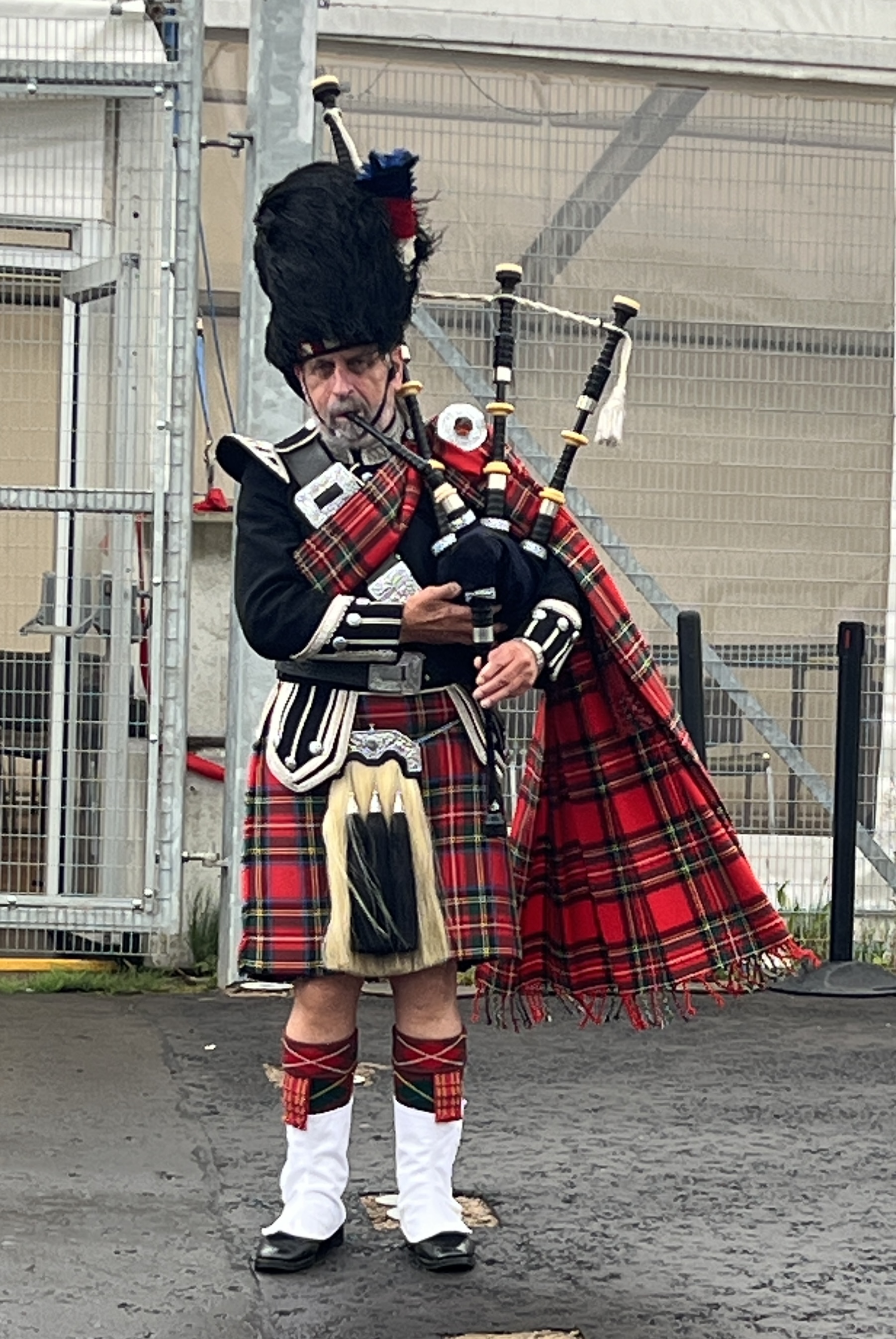
Piped ashore in Greenoch
We have been to Glasgow city in the past and so have decided to head out into the nearby coastal Highlands and the sea lochs that are scattered along the coast.
Loch Lomond
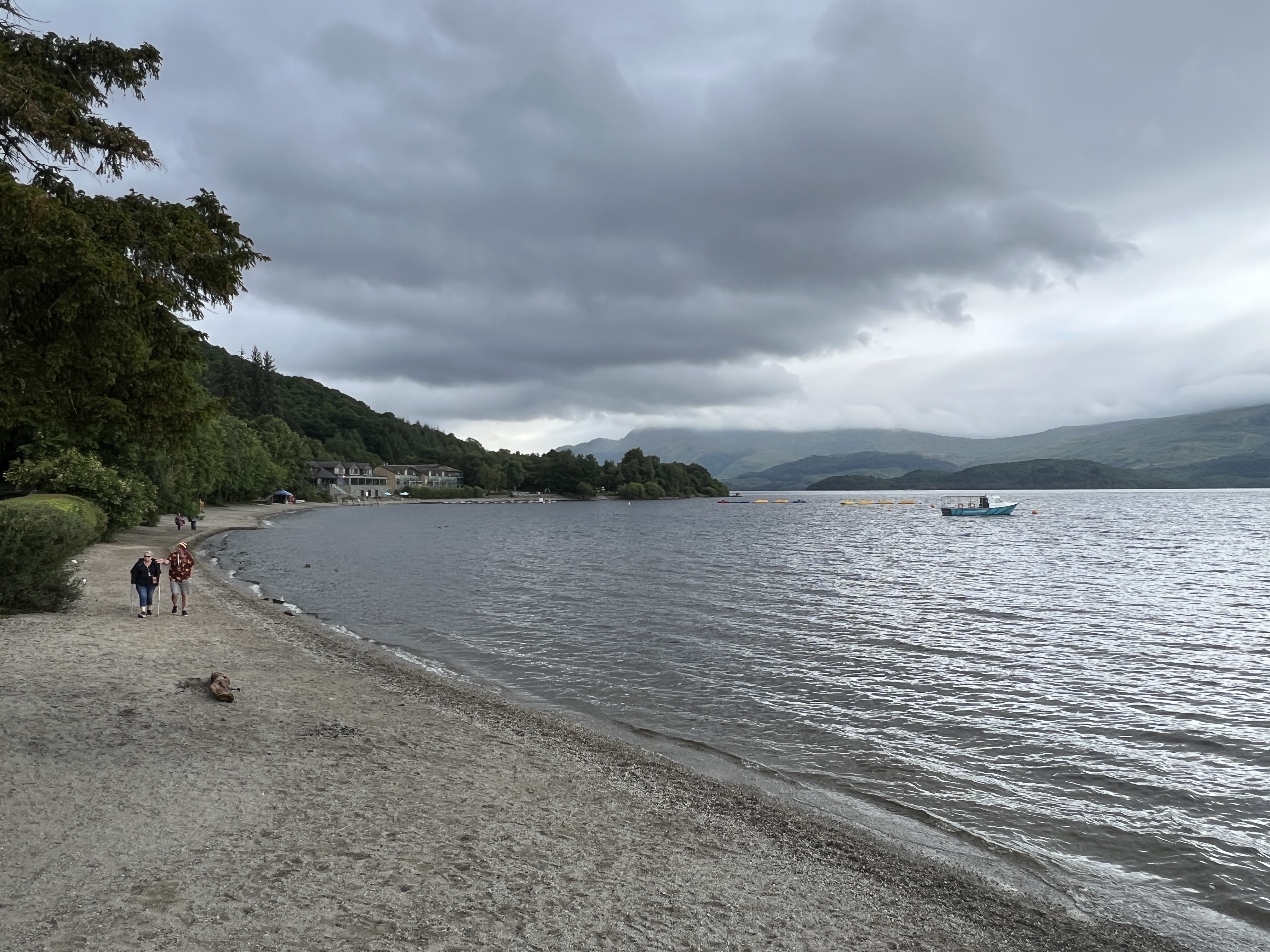
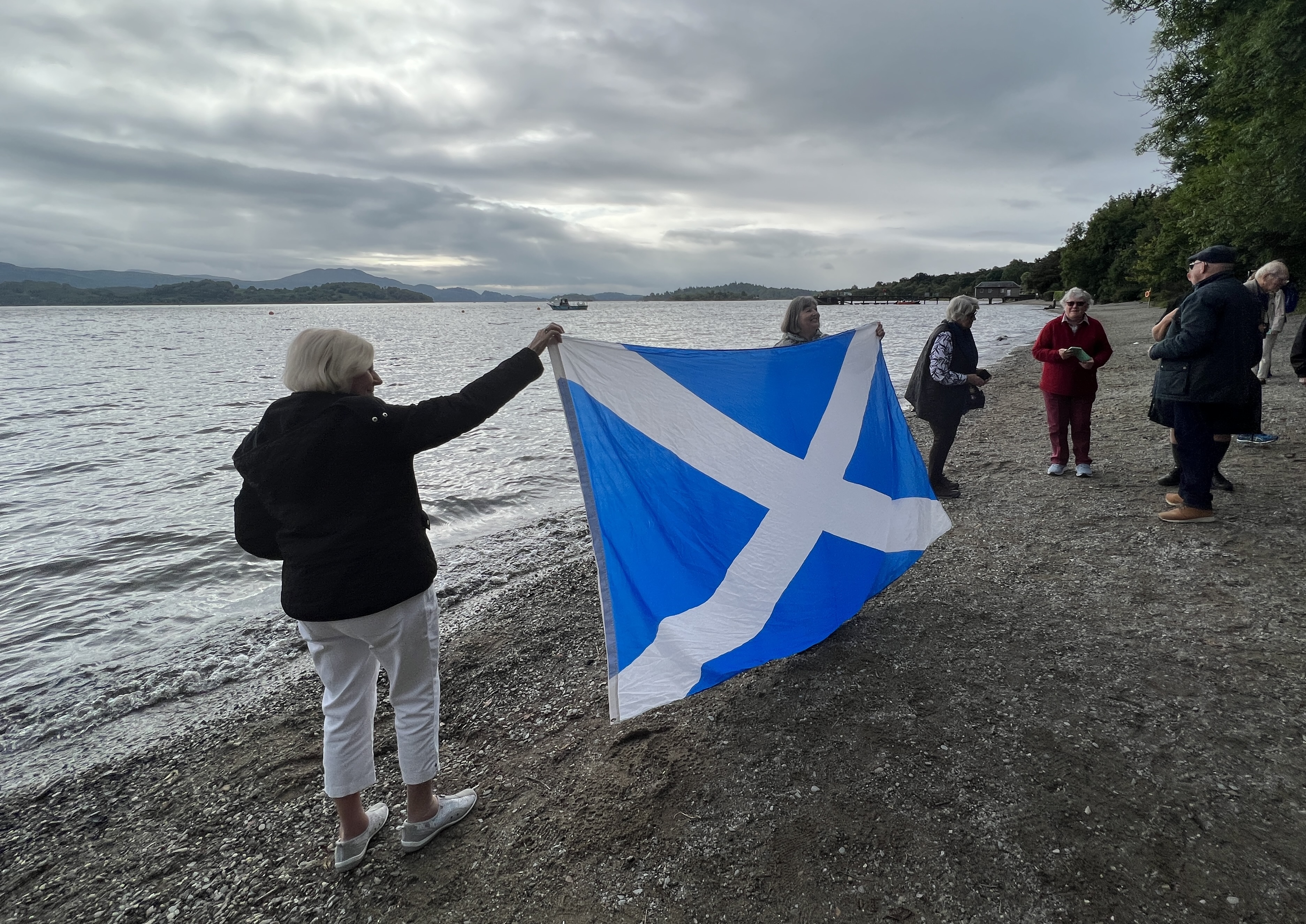
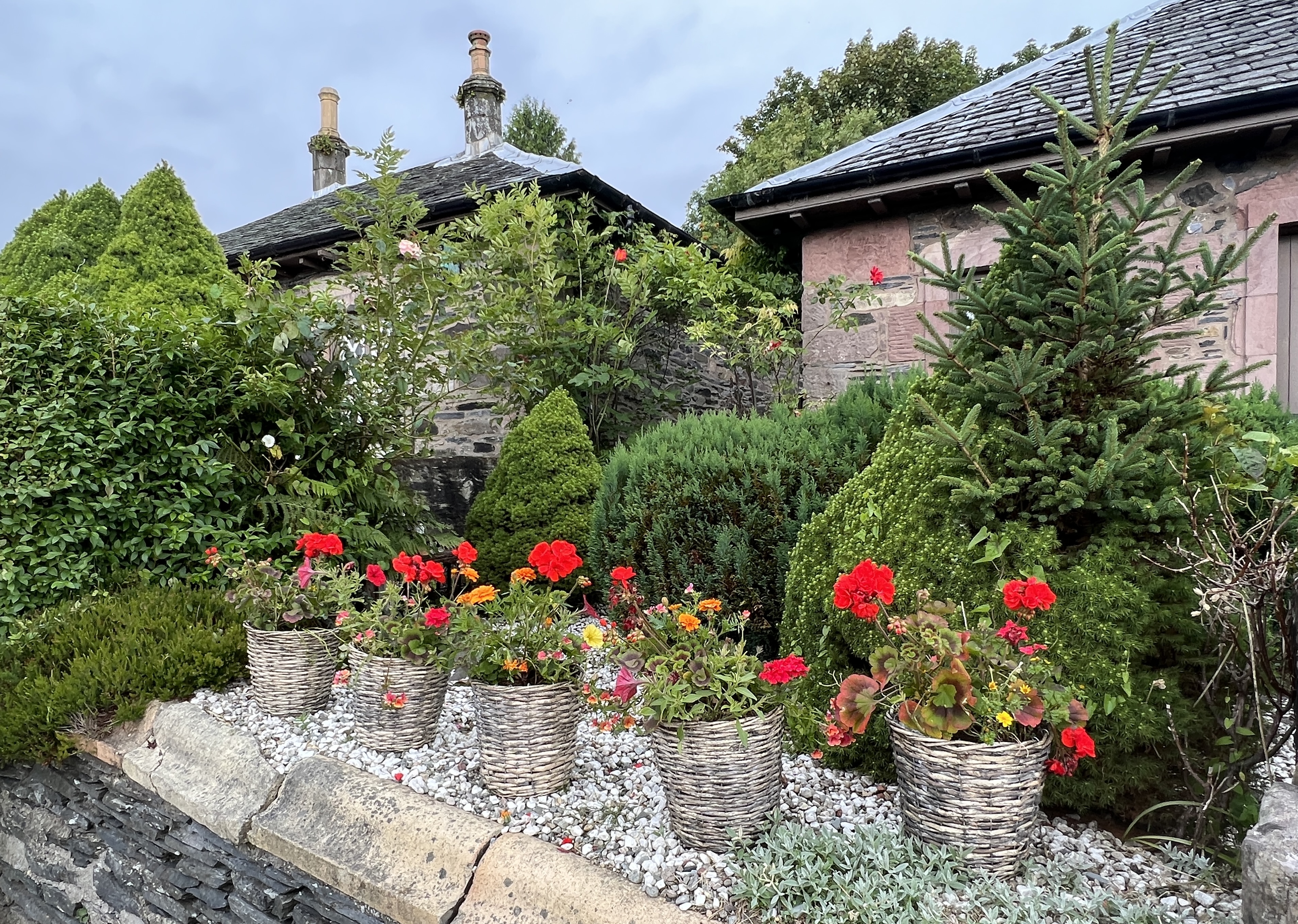
The first stop was at Loch Lomond, in the small village of Luss. It was early, just before 9am and none of the handful of shops were open. The Loch is Scotland’s largest fresh water loch by surface area. The overcast sky made for a sombre atmosphere as we raised the Scottish flag at the water’s edge.
Loch Lomond flag raising.
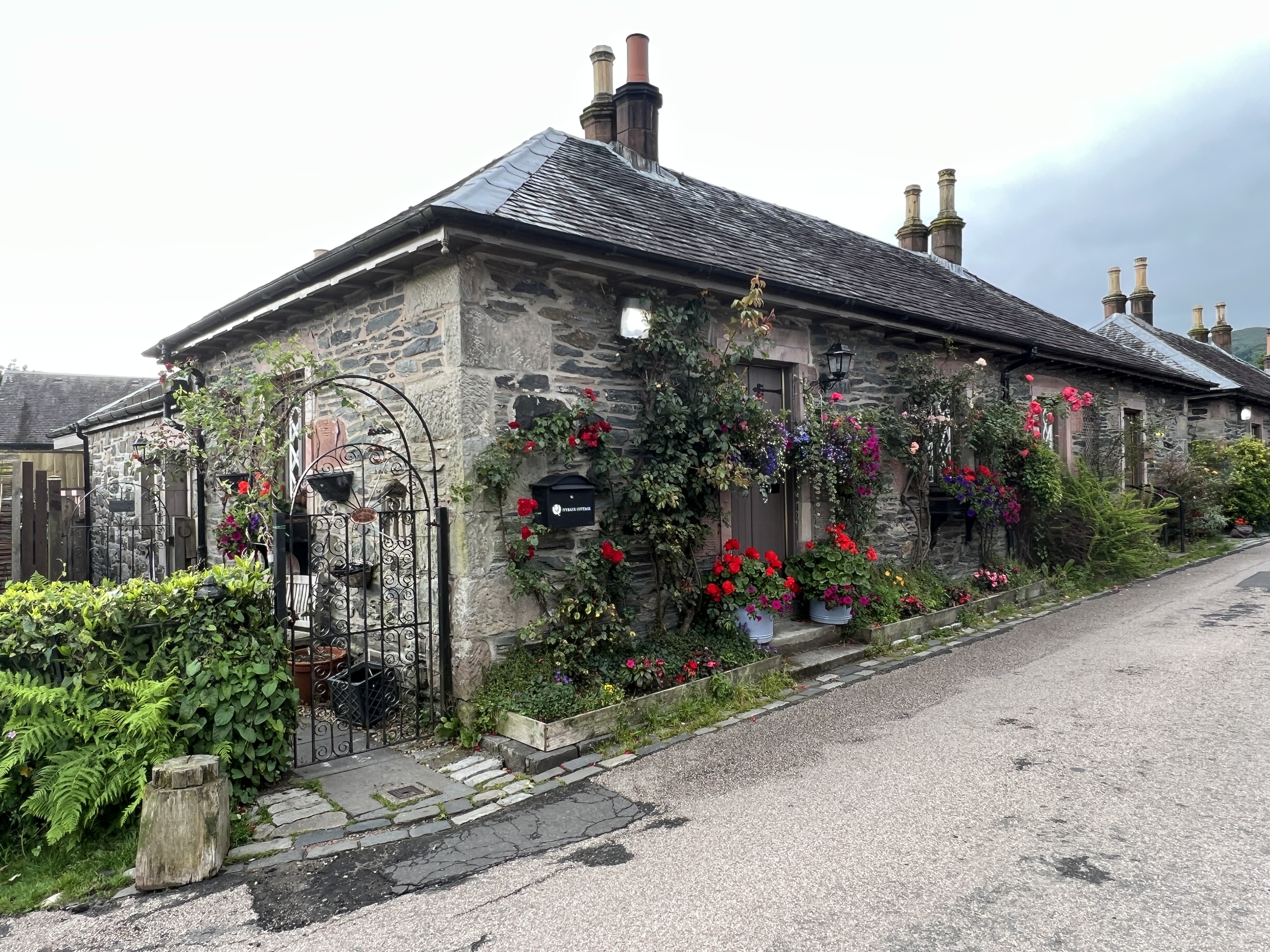
LussLuss
Our enthusiastic kilt wearing guide is a German chap, an honorary Scotsman having migrated to the UK thirty years ago. He leads us on a short walk around the village and waterside trails.
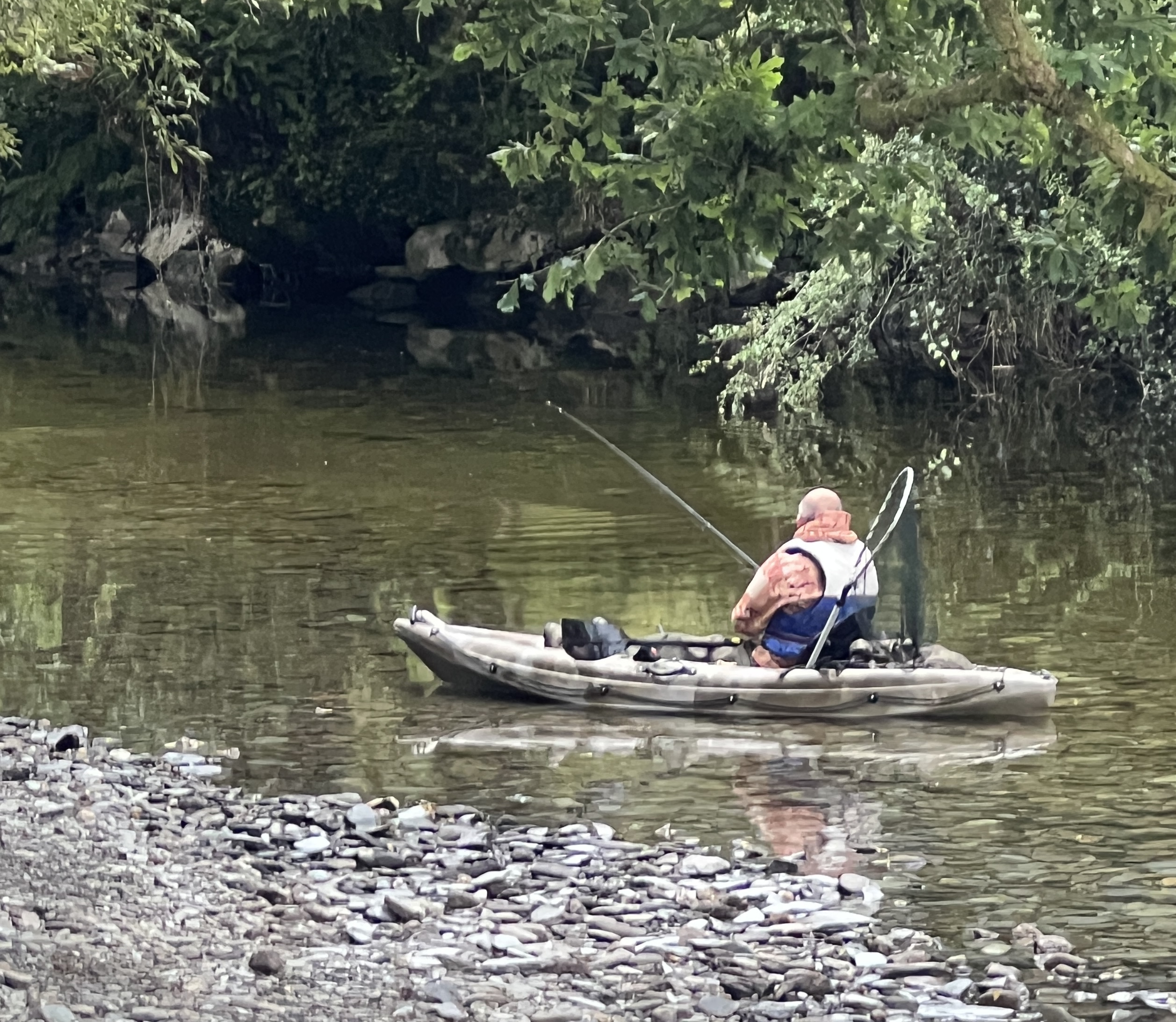
Elusive trout or perch in a creek at Luss.
Luss would make a good base for a few days to explore this part of the Highlands!
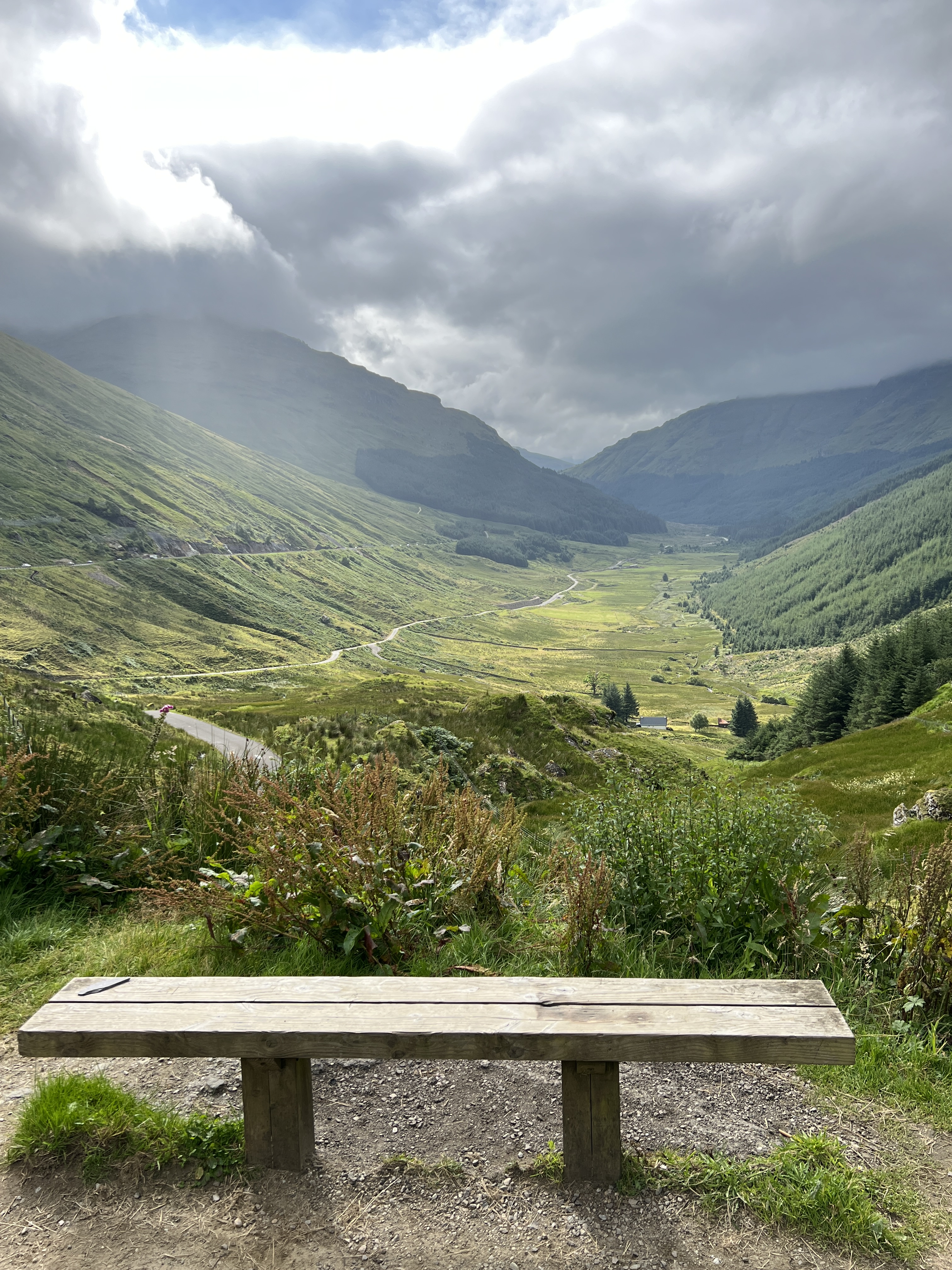
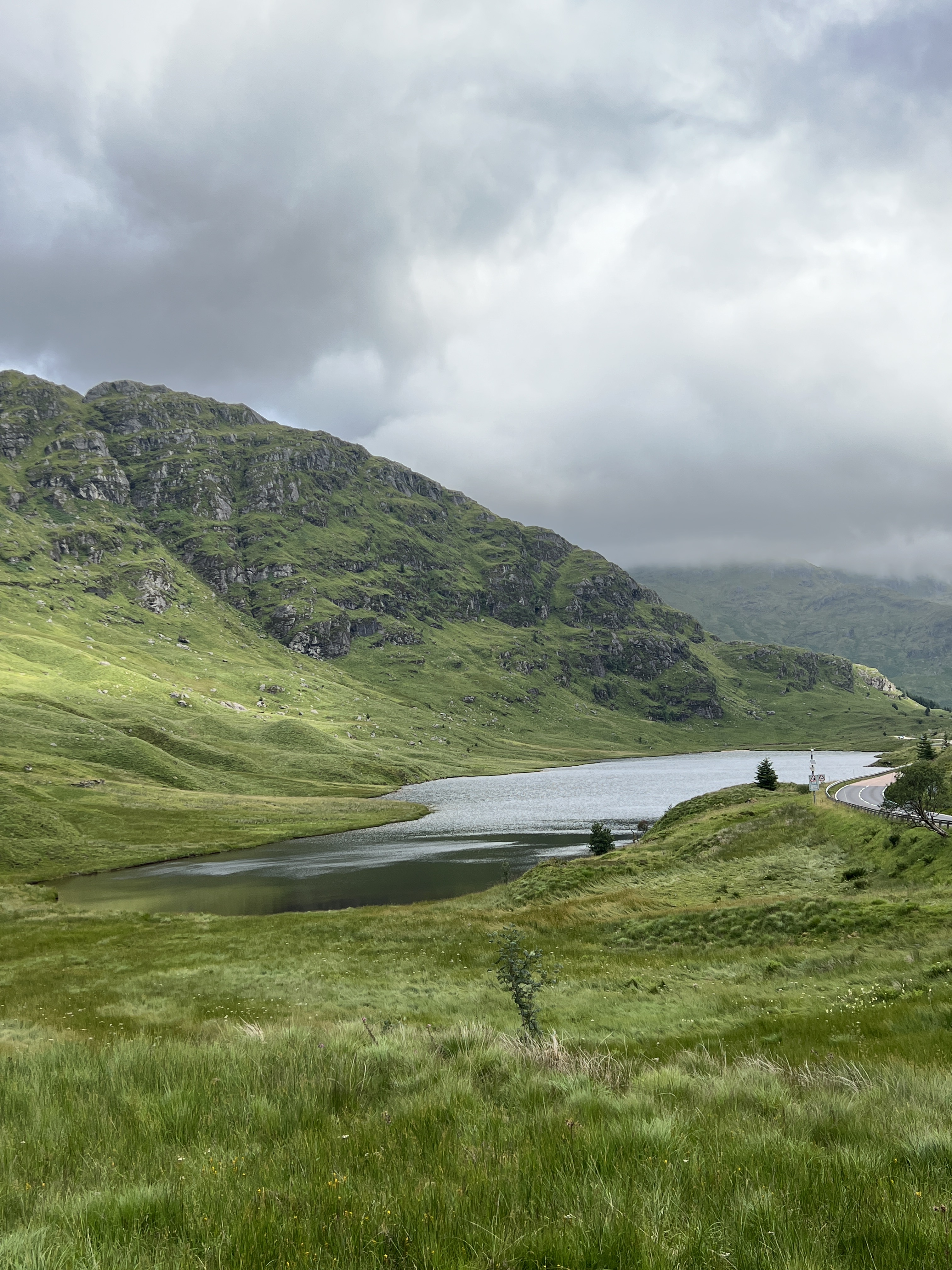
We then headed off into the Highlands on the way to Inveraray, situated on a sea loch down the other side. We stopped along the way for a view down the glen we had travelled up and the tarn that was nestled beneath a mountain on the way towards Inveraray.
View down the glen.Tarn near Argyle Forest park.
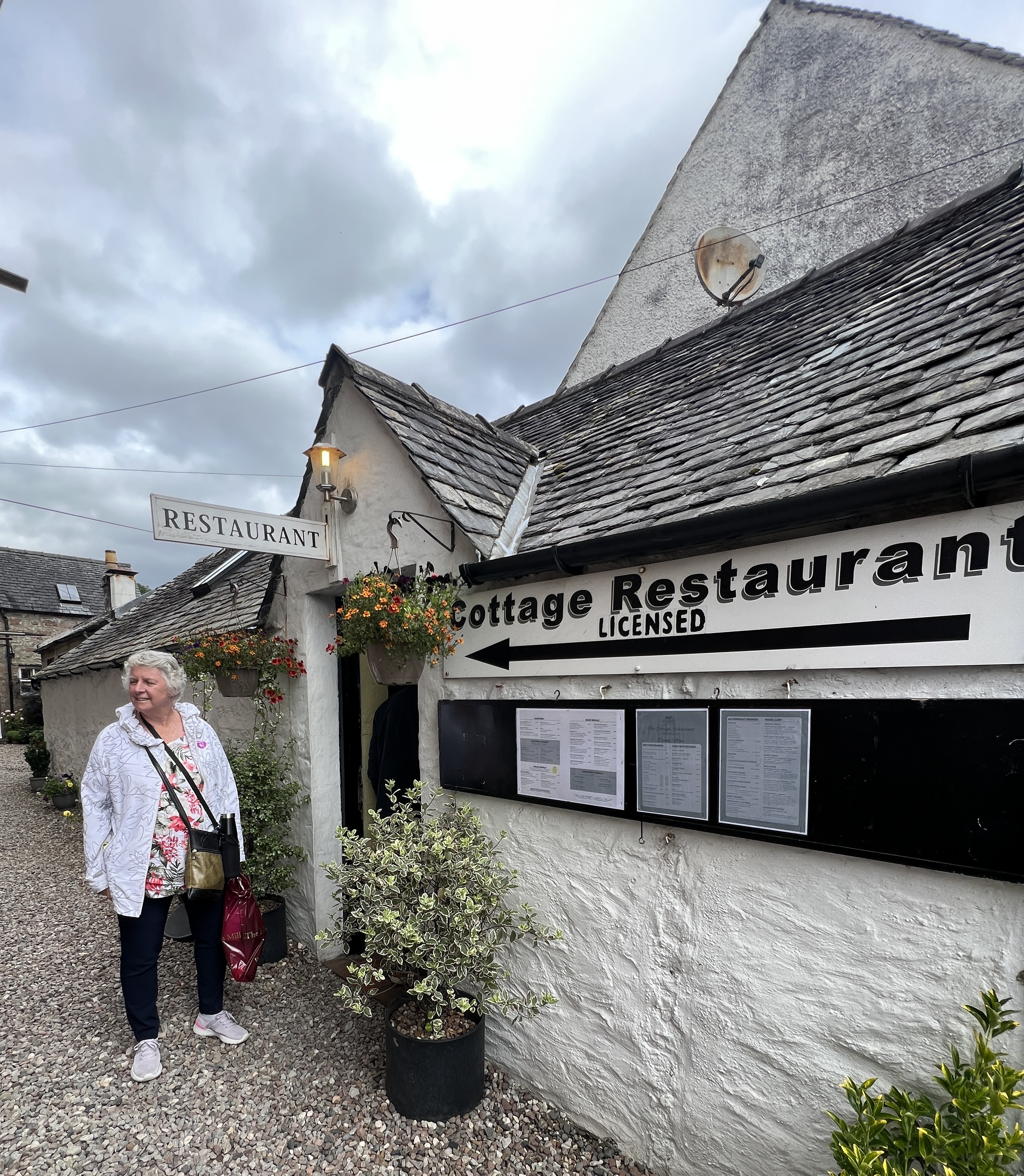
We stopped in Inveraray for a look around the town and to have lunch together in a small restaurant up a lane way.
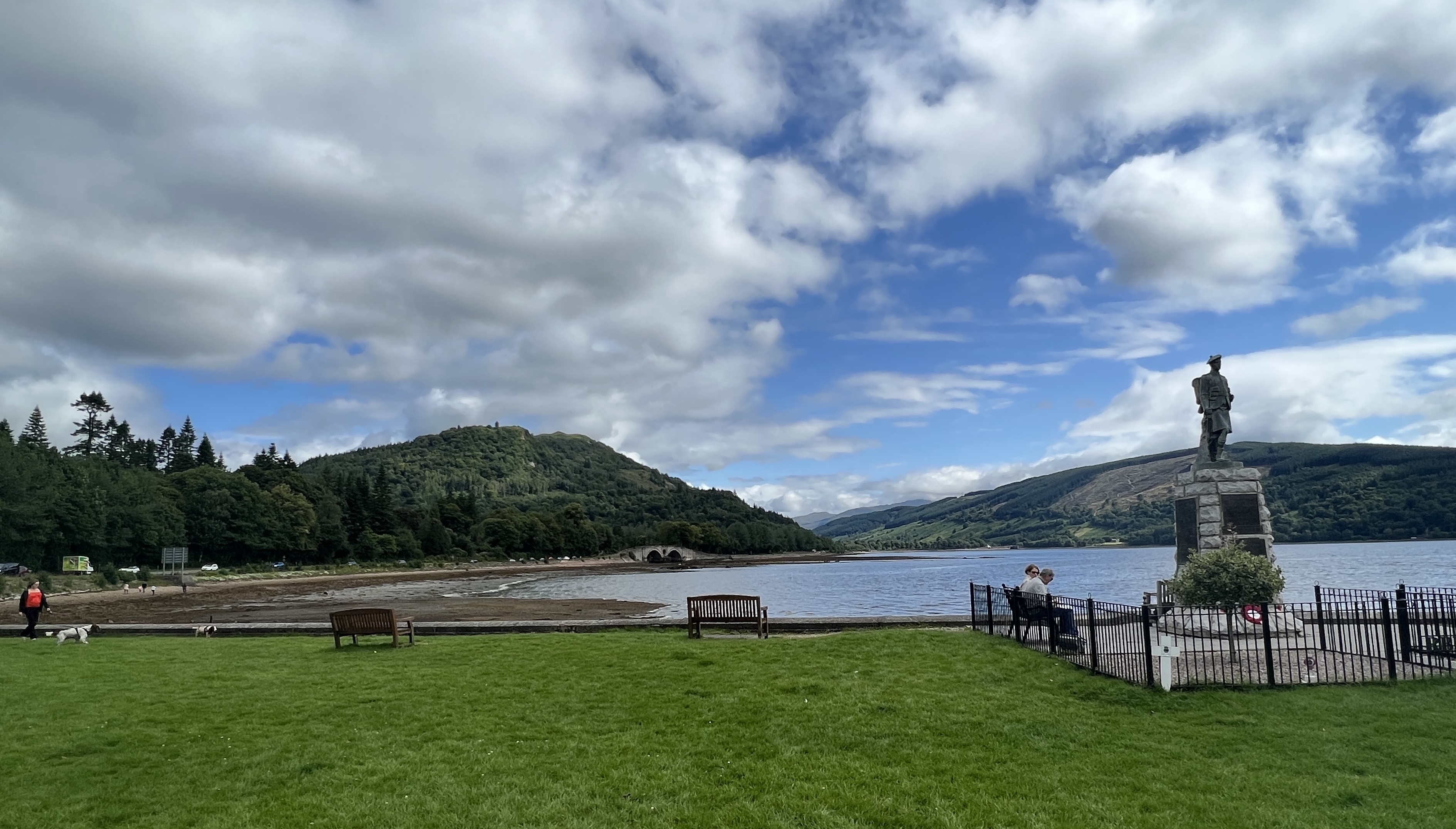
War memorial Inveraray loch.An old warhorse on the loch at Inveraray.
The town was quite compact and clearly geared to the tourist. A big old hotel looks out over the loch, nice spot to stay for a couple of days!
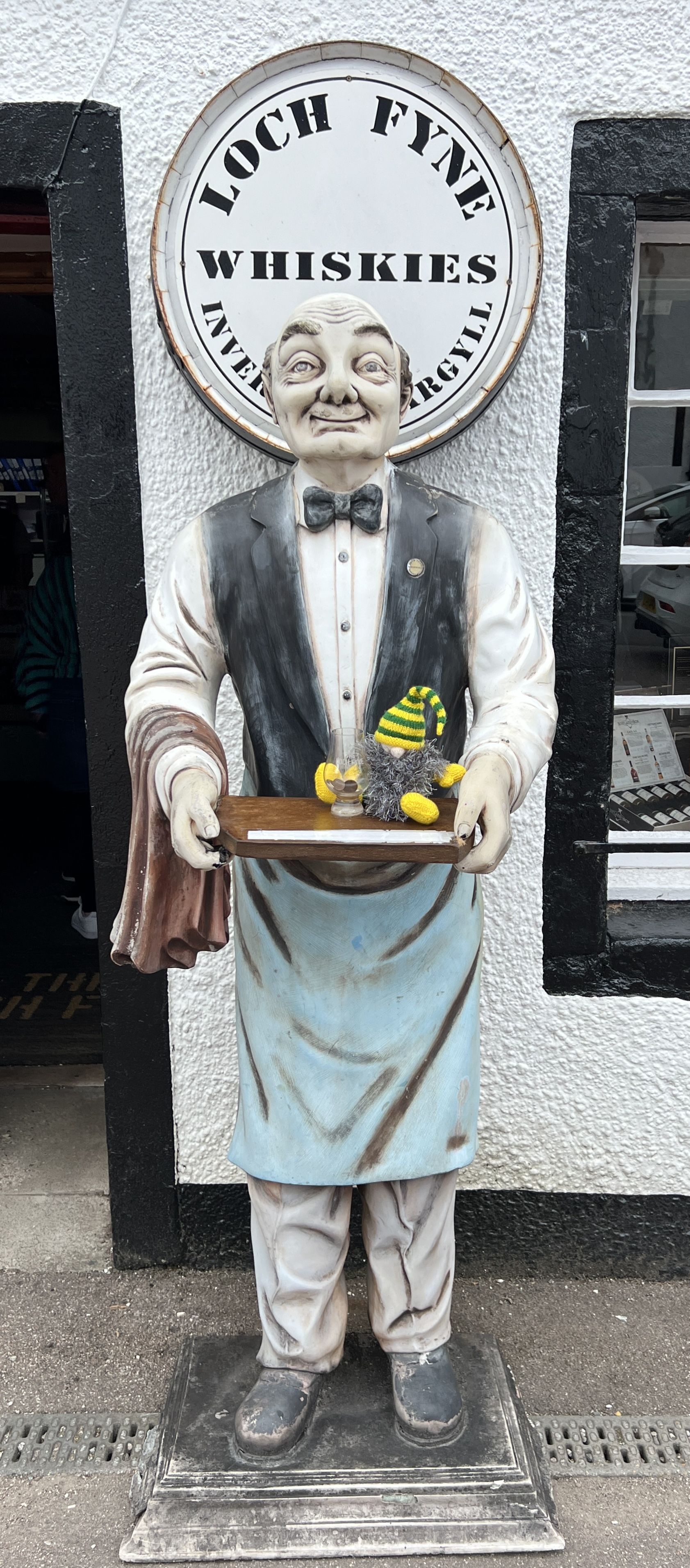
Inveraray lunch location, great steak n ale pie and berry crumble.Slobro was keen to drop in here for a look.
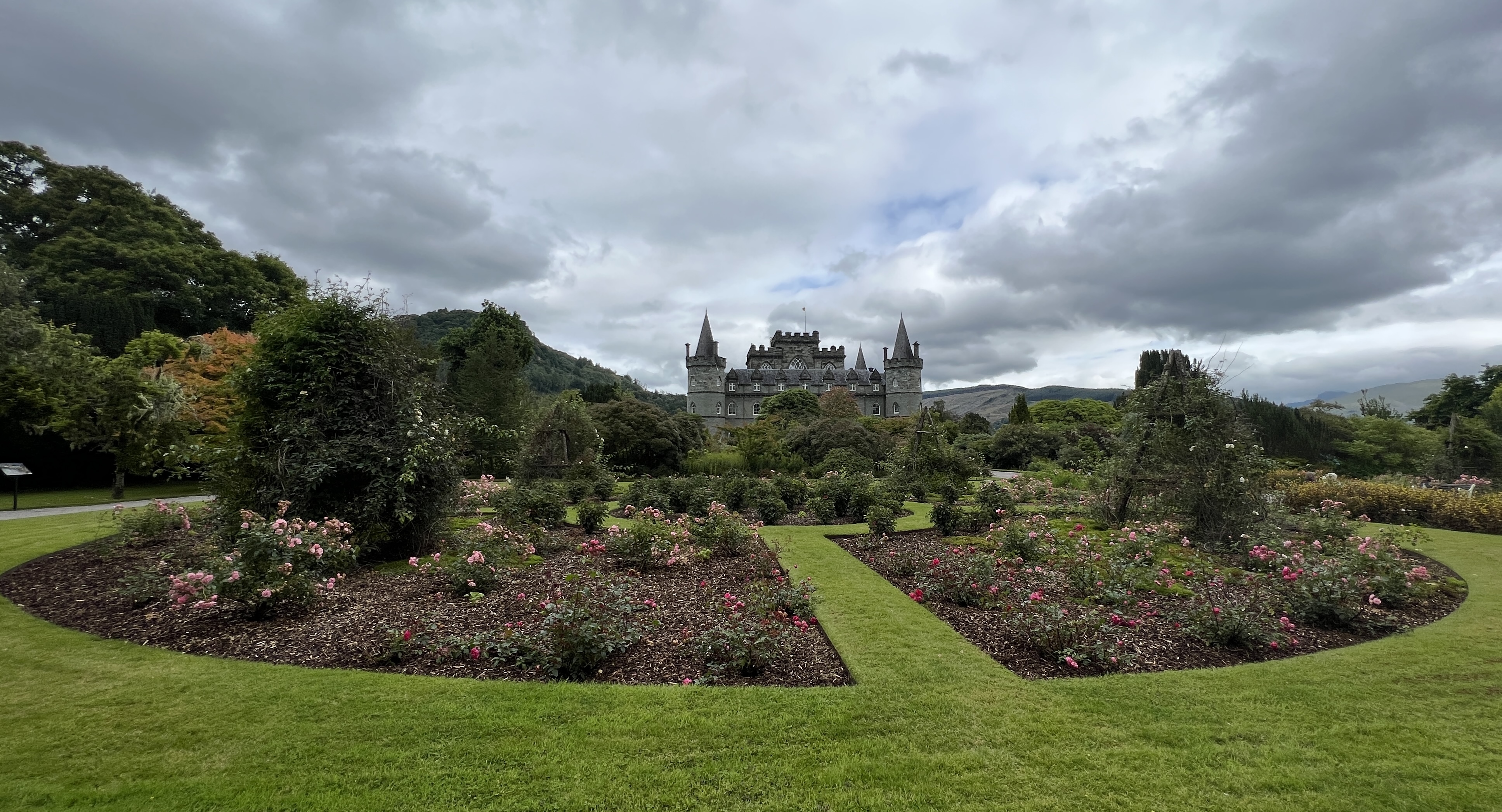
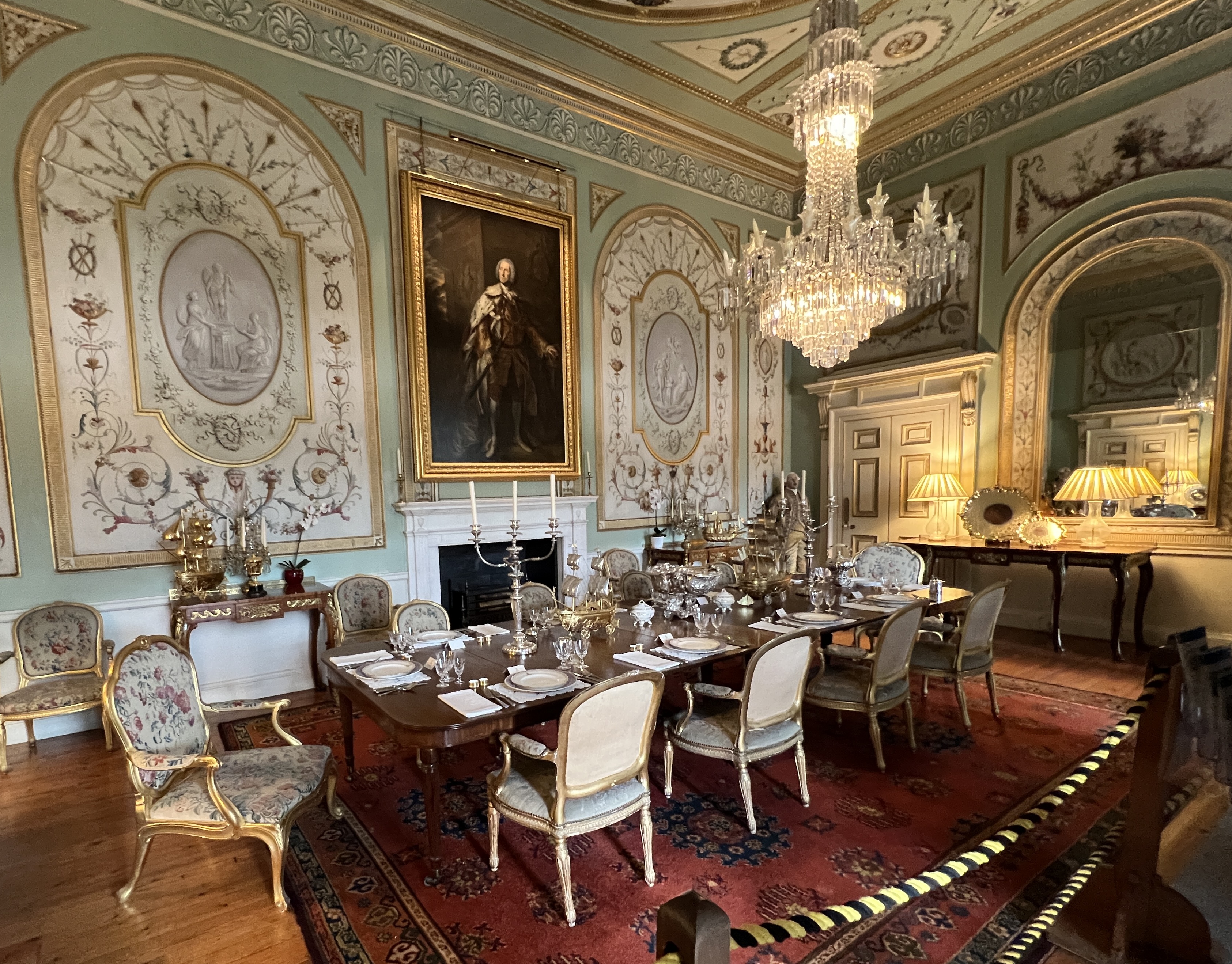
It was then on for a tour of Inveraray Castle, the local digs of the 13th Duke of Argyle. He is also the top dog of Clan Campbell and is the keeper of the clan quaich. Together with his wife and three kids they live from time to time in a private section of the castle.
Inveraray Castle
The public rooms are all decked out with period furniture and numerous paintings of the line of dukes and others. The armoury room quite impressive with its display of weapons. The Campbells were a very politically important clan in Scotland. They were careful to be on the right side of any conflicts and were handsomely rewarded with land and titles by kings for their input!
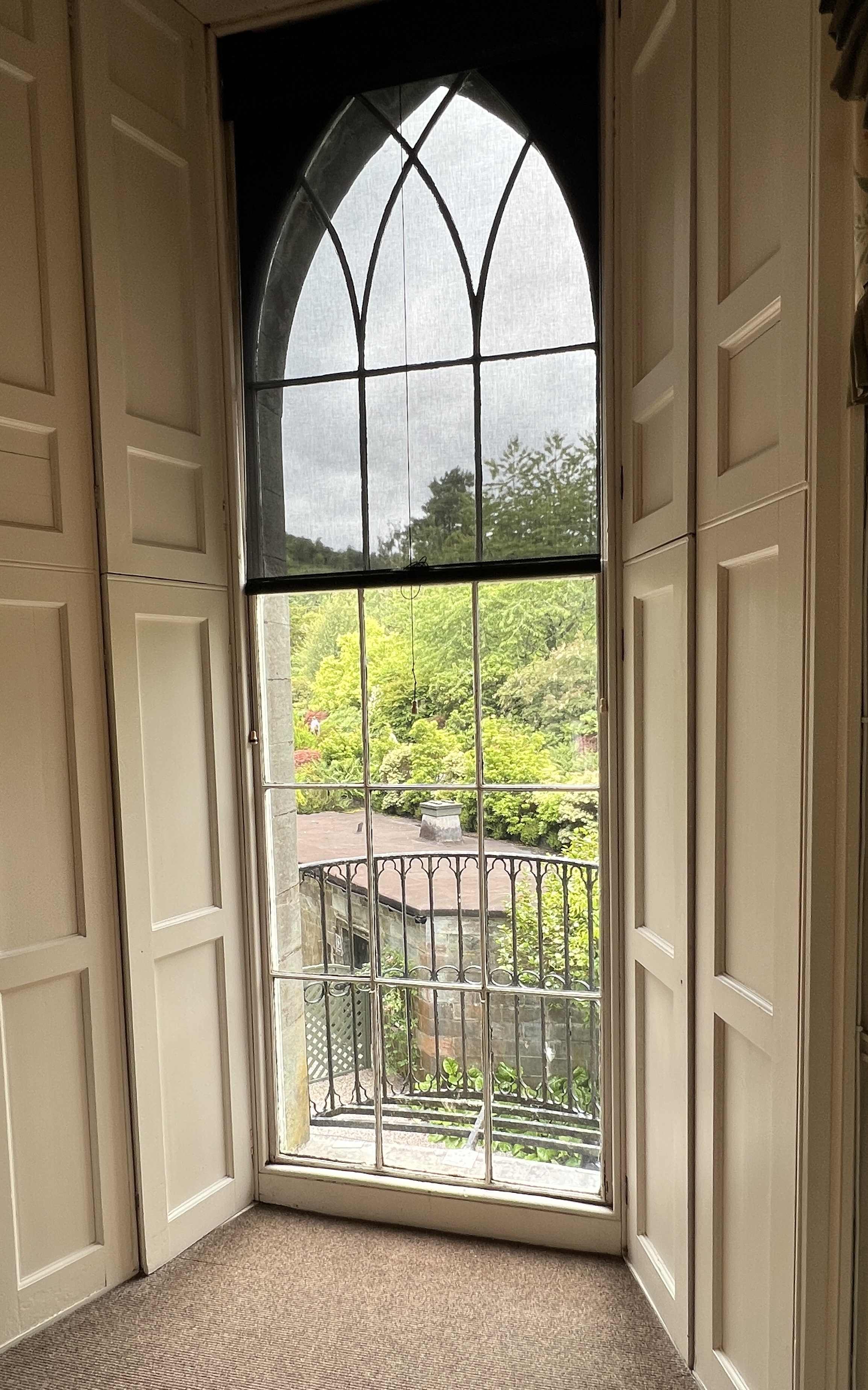
Dining room at Inveraray Castle.Garden view from Inveraray Castle.
There was time to wander around the Castle’s gardens before heading back to Greenoch. We returned a different way along the coast and around a series of headlands and sea lochs, great views. Caught a ferry across the Clyde to reach the ship at the dock.
There is now a day at sea ahead of us as we work our way back down the Irish Sea to Cork in Ireland.
Overnight we have moved up to Belfast. The day is little dreary, a bit of light drizzle. As the day moved on it cleared a little for the sun to come through at times. As down in Holyhead it is much cooler up here in Belfast 13 C, and almost winter like. A cool breeze too, how different to back in the Mediterranean!
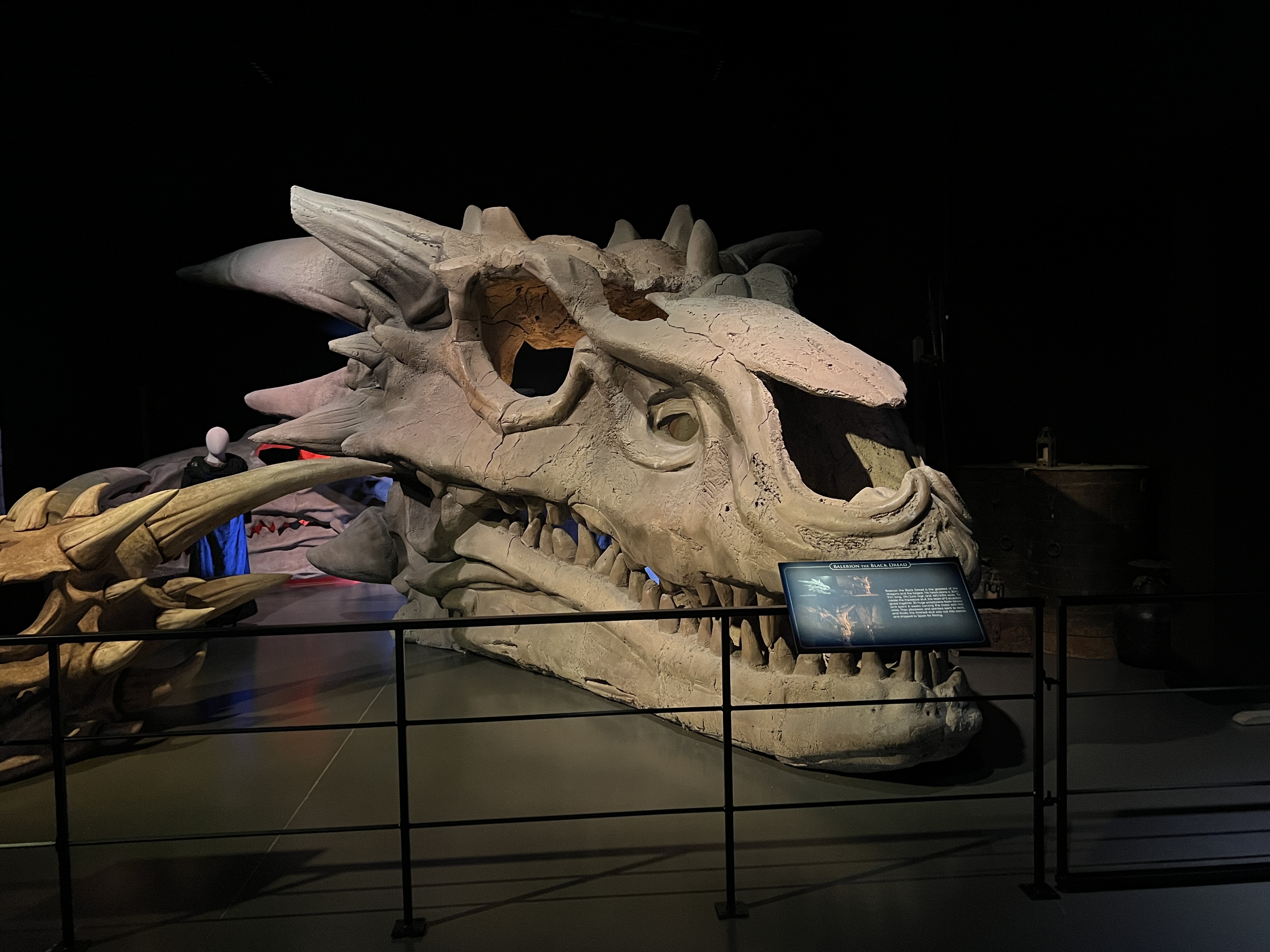
We have a short tour planned for today that visits the Game of Thrones studio housed in former linen mills at Banbridge. Many of the outdoor scenes in the TV series were shot around Belfast and the surrounding countryside.
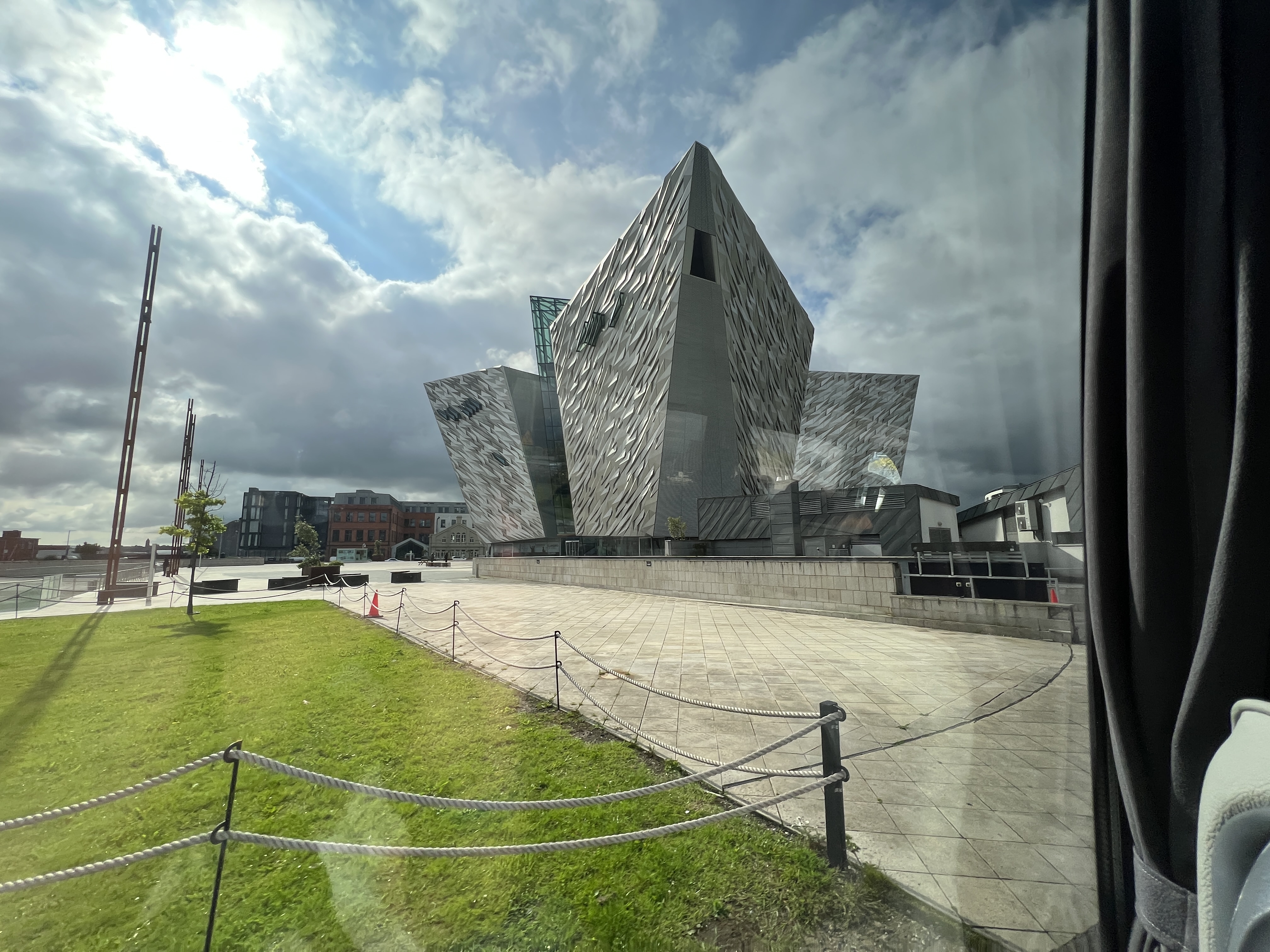
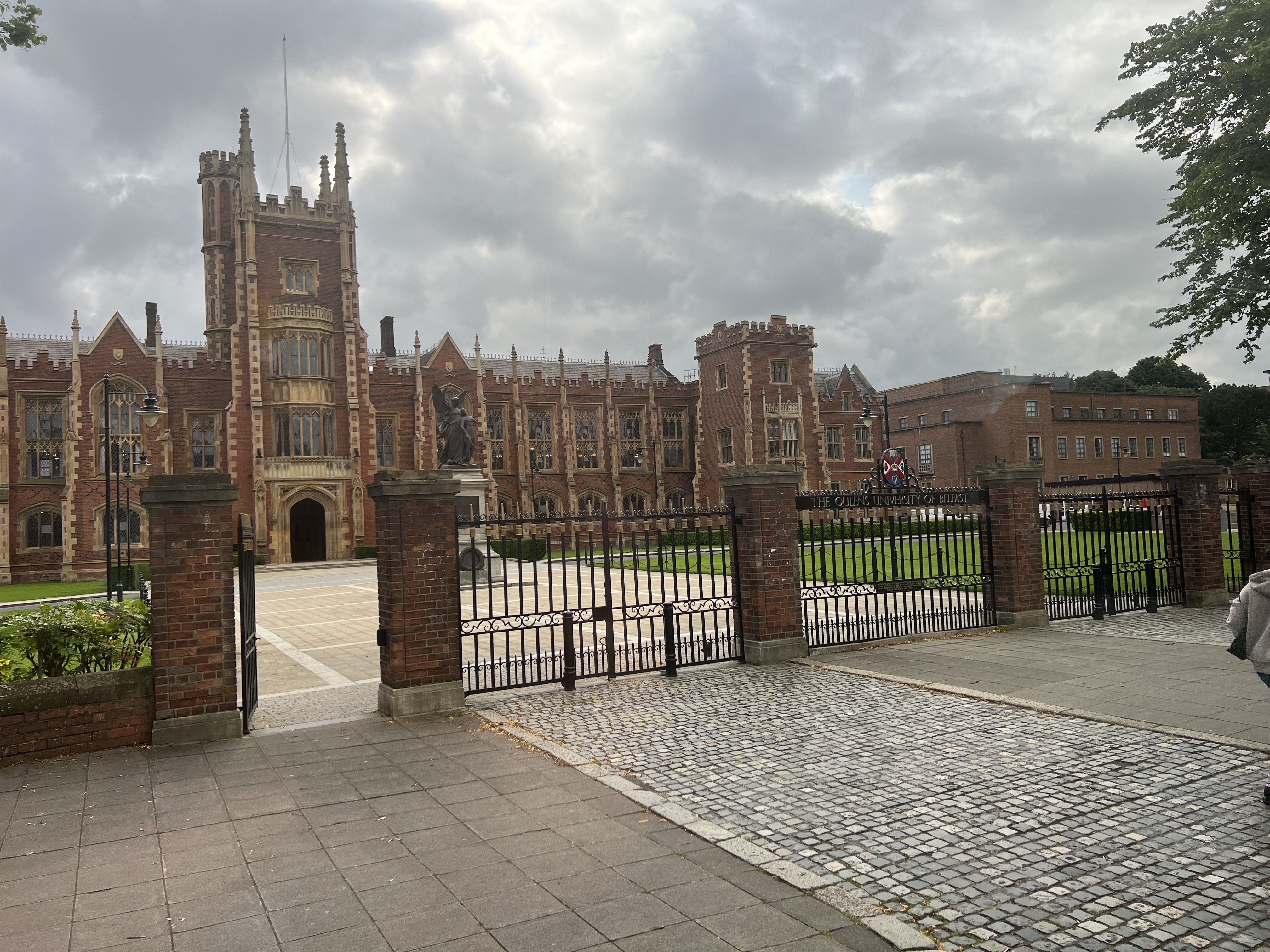
Titanic experience, the brow of the ship points toward the camera.Queens University
But first we have a spin around the city taking in some of the main sights. We had been to Belfast back in 2007, quite a few changes in the intervening years. Including a big new Titanic Centre and the old hotel we stayed in back then has changed its name from Days Inn to Holiday Inn. Still looked the same!
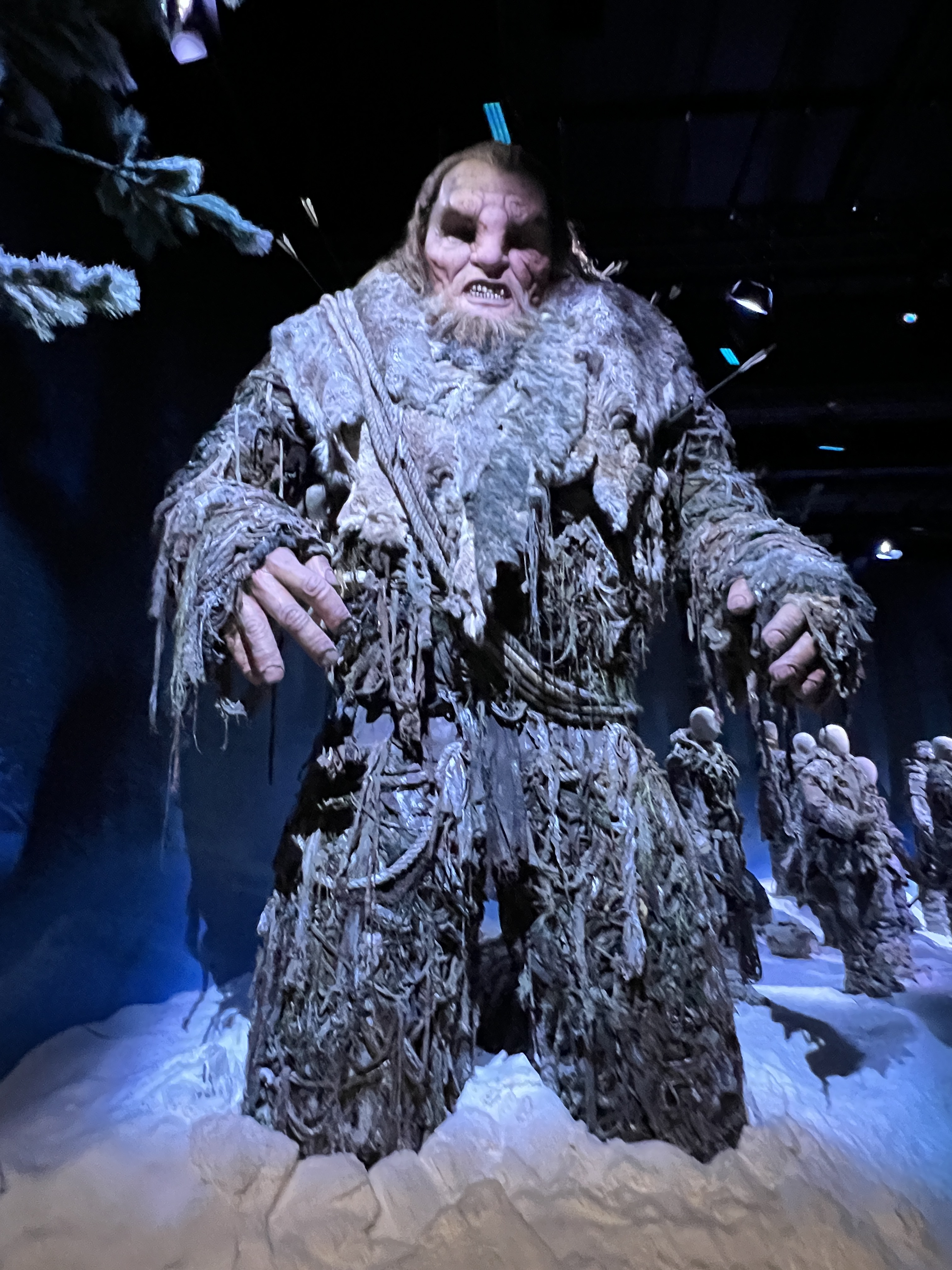
The Night King and Master of the Army of the Dead!Wun wun
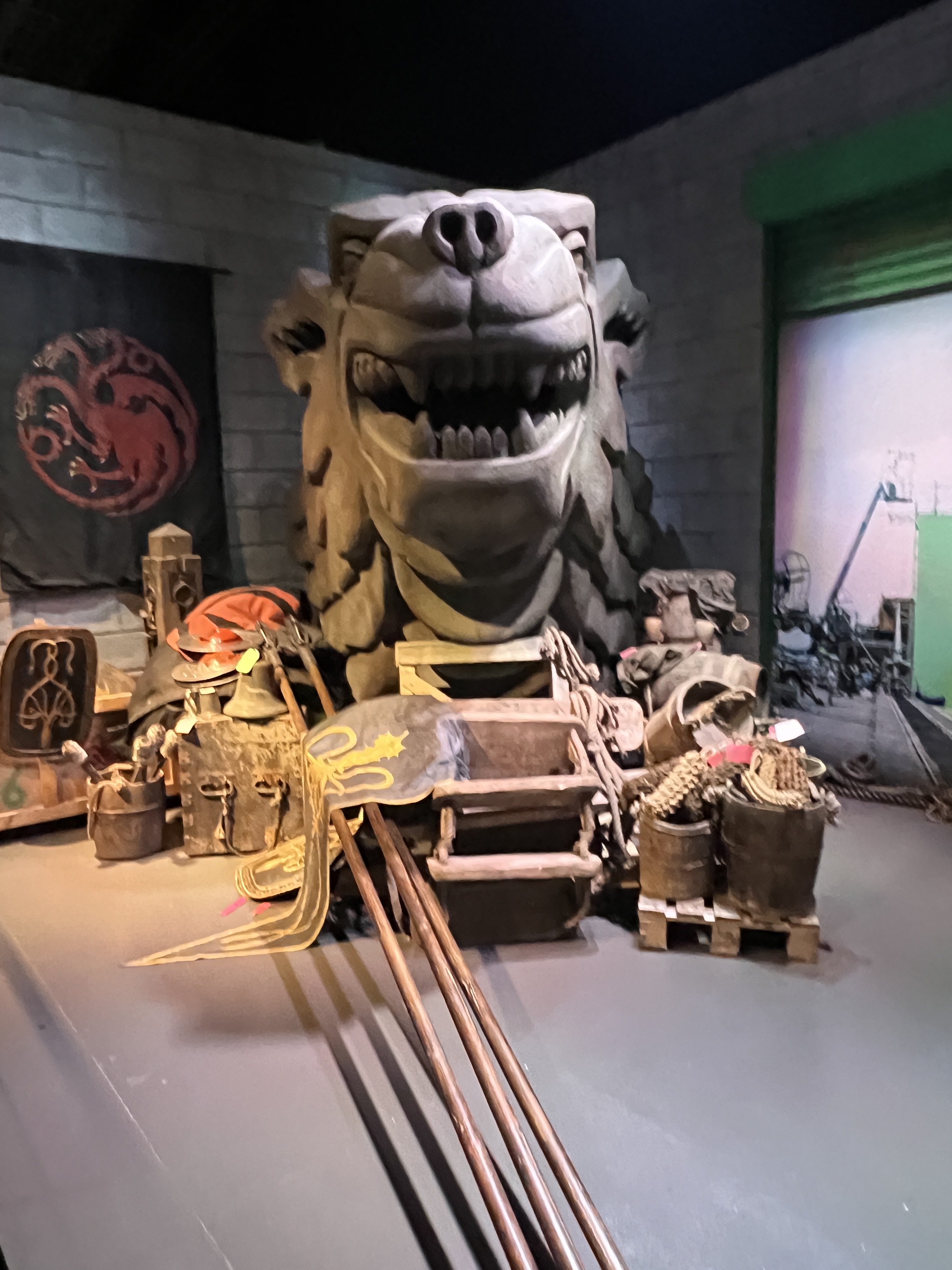
Allthego is a bit of a Game of Thrones tragic, one has to look through some of the more violent and unsavoury scenes. The studios were an eye opener to modern TV production.
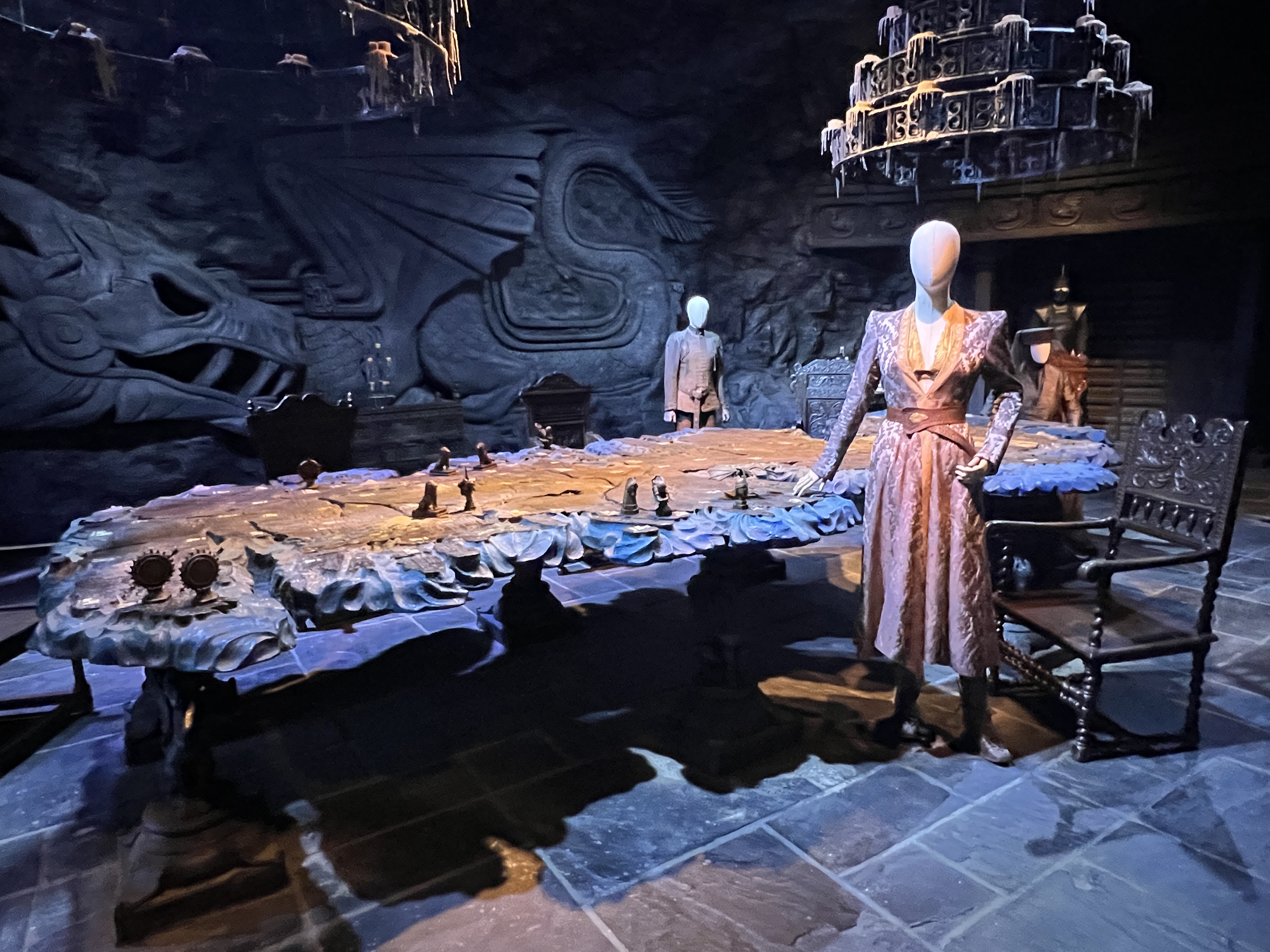
Plotting in the Map Room
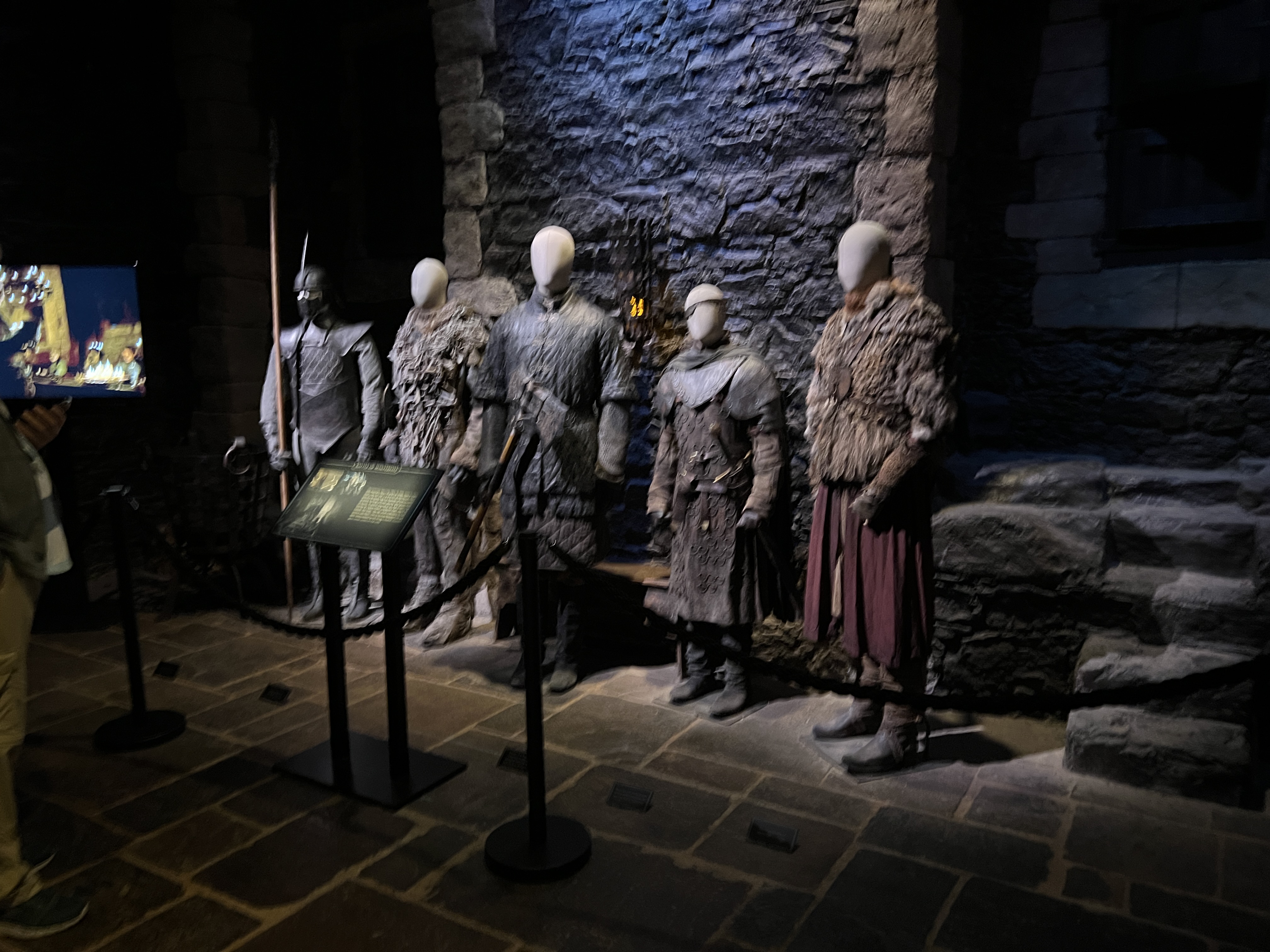
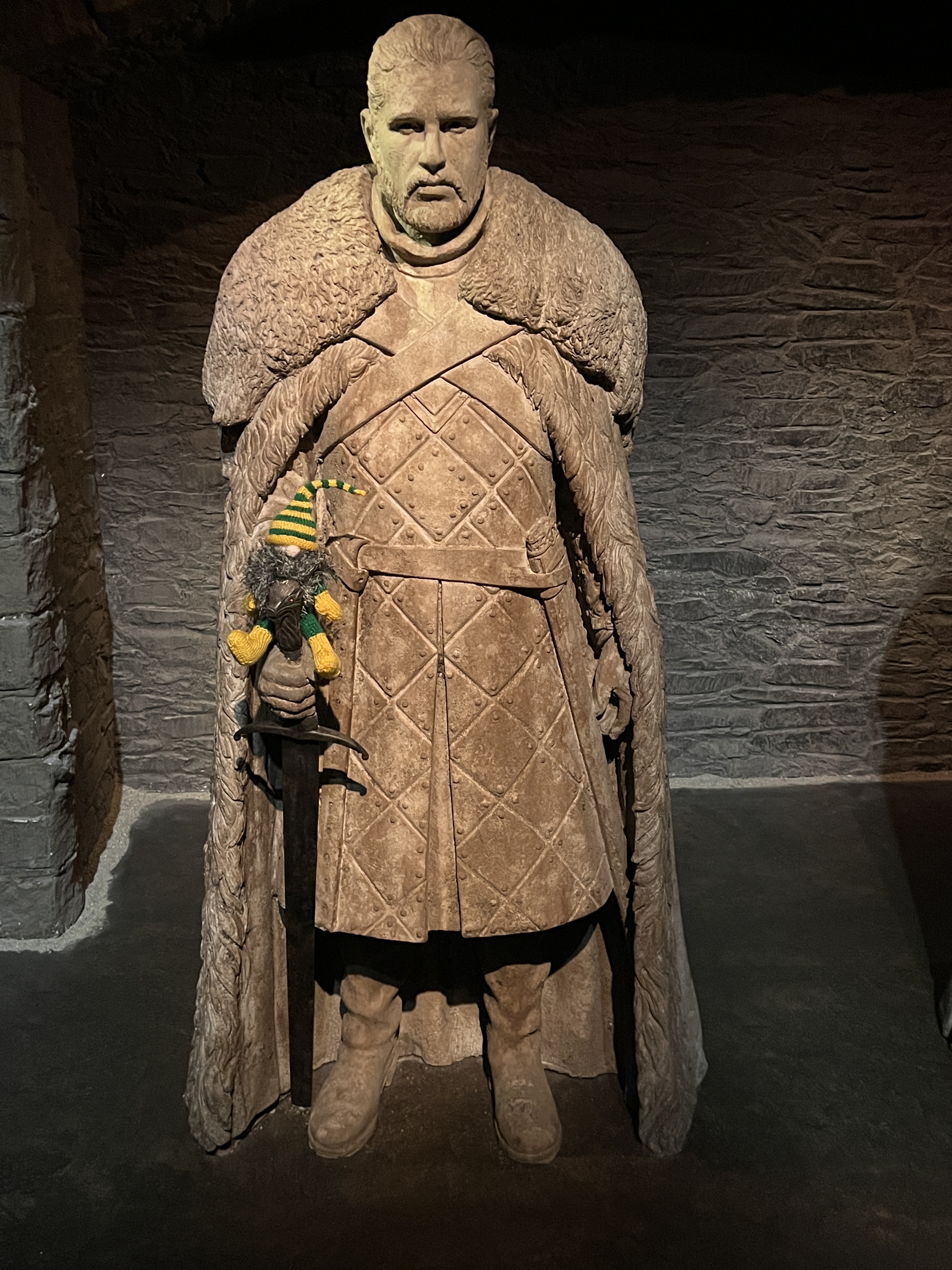
The tour takes you through major scenes and themes of the TV series, interspersed with costumes and props. One of these themes is ‘Winter is Coming’.
Jon Snow and Slobro
The Night King who is Master of the Living Dead has a mission to bring ‘winter’ from the deep cold north to the south. The south spend most of the series fighting themselves and only at the end seek some sort of common unity to defeat the Living Dead, the White Walkers. Enough of GOT!
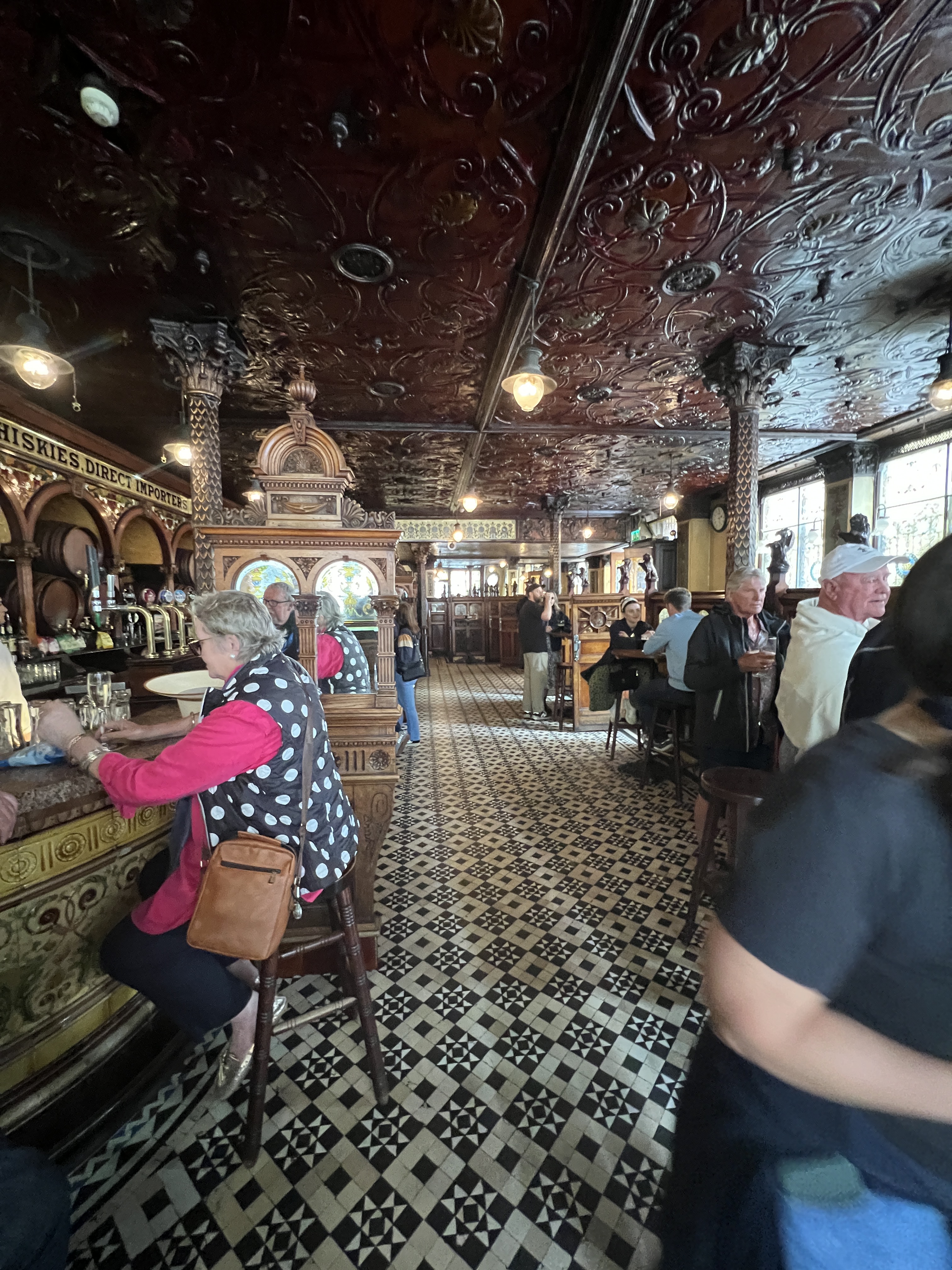
The Crown’s ornate interiors and metal pressed ceiling.
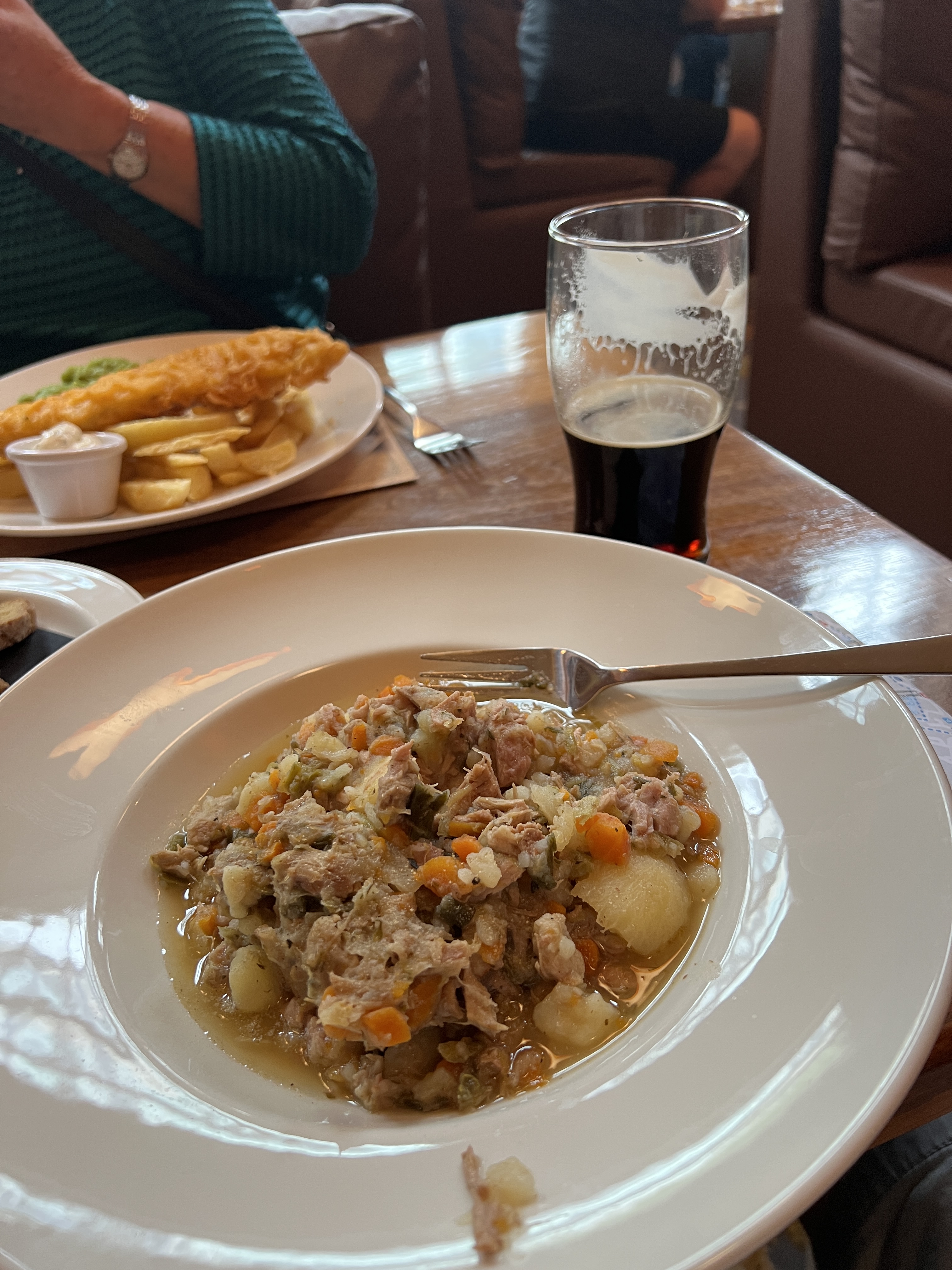
We returned the ship and then returned to the city centre for a late lunch and wander. Found the old pub The Crown, but it was packed so headed next door to Robinsons another old establishment that had been recommended for a feed. Weren’t disappointed with the Fish n Chips and Irish stew.
Irish stew for lunch at Robinsons another iconic Belfast pub.
The weather closed in again and we had some light rain on the way back to the ship.
Next stop is at Greenock, mouth of the River Clyde, Glasgow’s port.
Having left Lisbon we made good pace up the Portuguese and Spanish coasts on two sea days before making landfall at Holyhead on the Welsh coast. The Bay of Biscay was a mill pond, belying it’s reputation for a stormy crossing.
Holyhead is a true old port town, being the ferry transport hub to Ireland. Looks a bit drab. Dublin lies almost directly opposite across the sea.
It is here we start the jig around the Irish Sea. Over the next seven days we are dropping into Wales, Northern Ireland, Scotland, Ireland and then back around Lands End to Dover in England.
But first it is Wales. We have been around this part of the UK before exploring the Welsh coast and the Snowdonia Mountains. However, back then we avoided seeing any of Edward 1 string of castles he had built following his conquest of Wales in the 13th century. We had already had our fill of castles elsewhere!
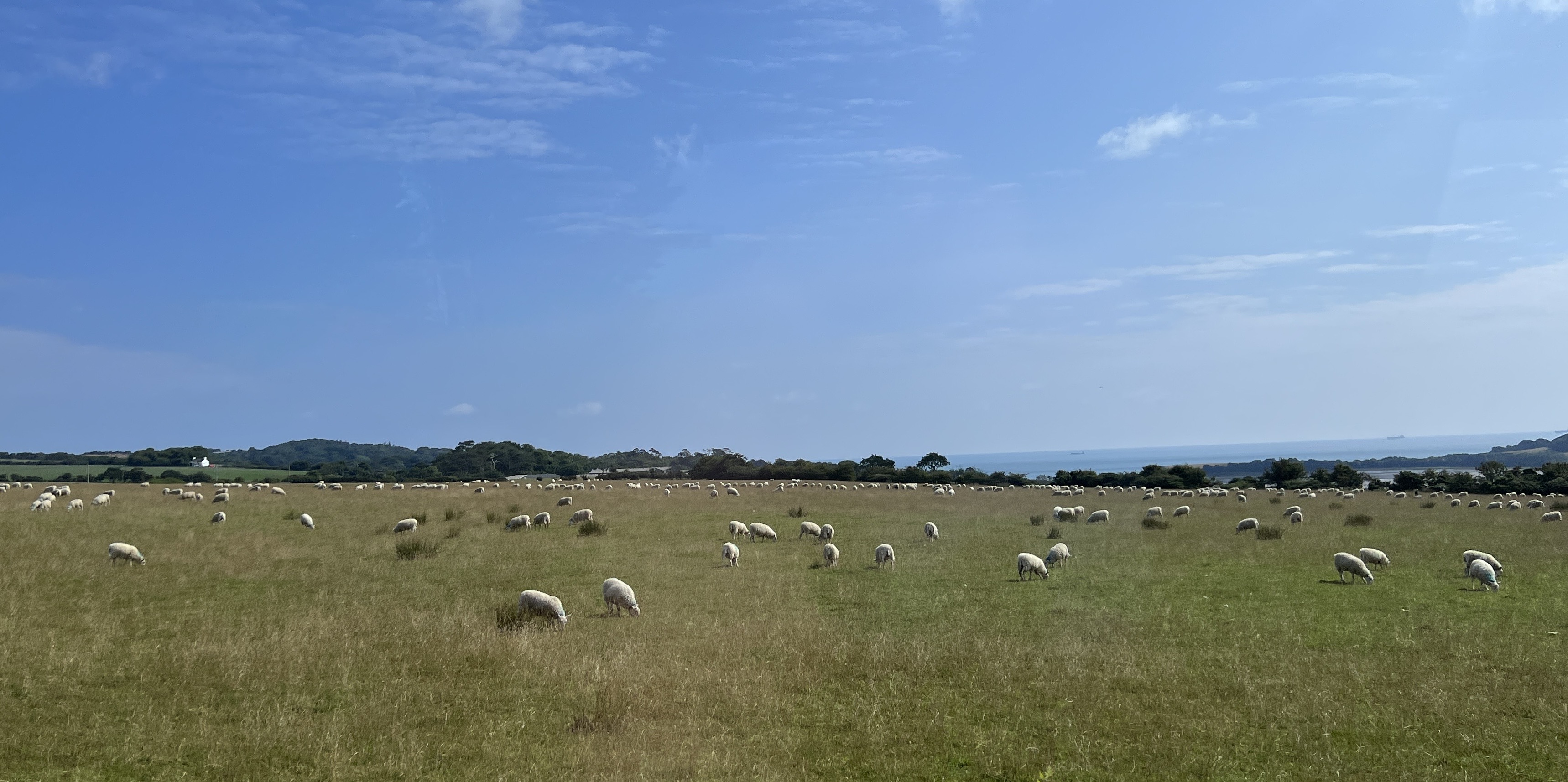
Conwy (‘Conway’) Castle was the tour choice. Holyhead is on the large island of Anglesey, separated from the Welsh mainland by the Menai Straits. Anglesey is mostly an agricultural area, sheep, cattle and grains.
Sheep everywhere on Anglesey!
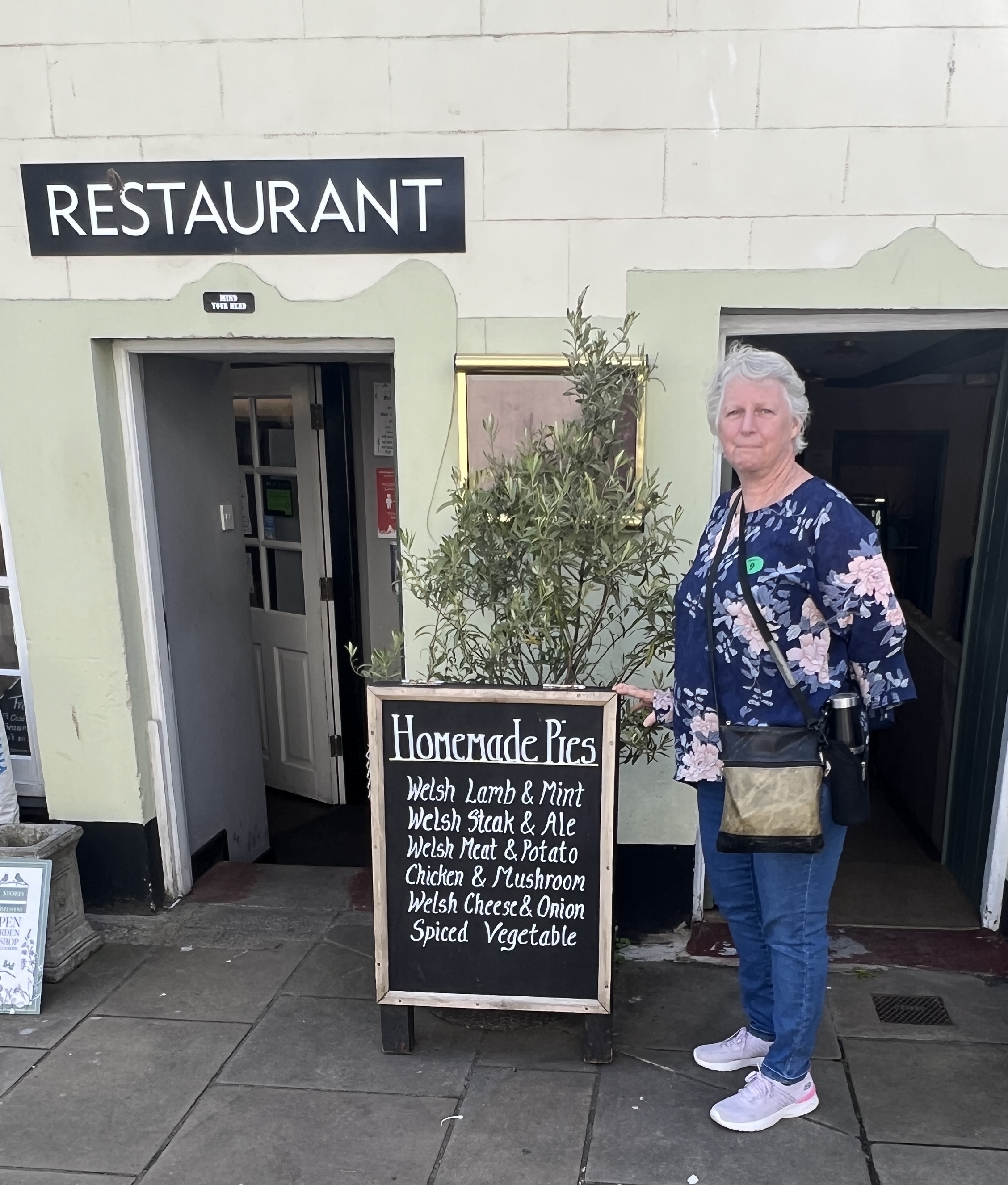
We stopped for an early lunch on the island at Beaumaris and to also see Edward 1 incomplete, but well preserved moated castle beside the Menai Strait. Had some local pies here, as always rather good with a nice crunchy pastry.
Beaumaris castleLunch!
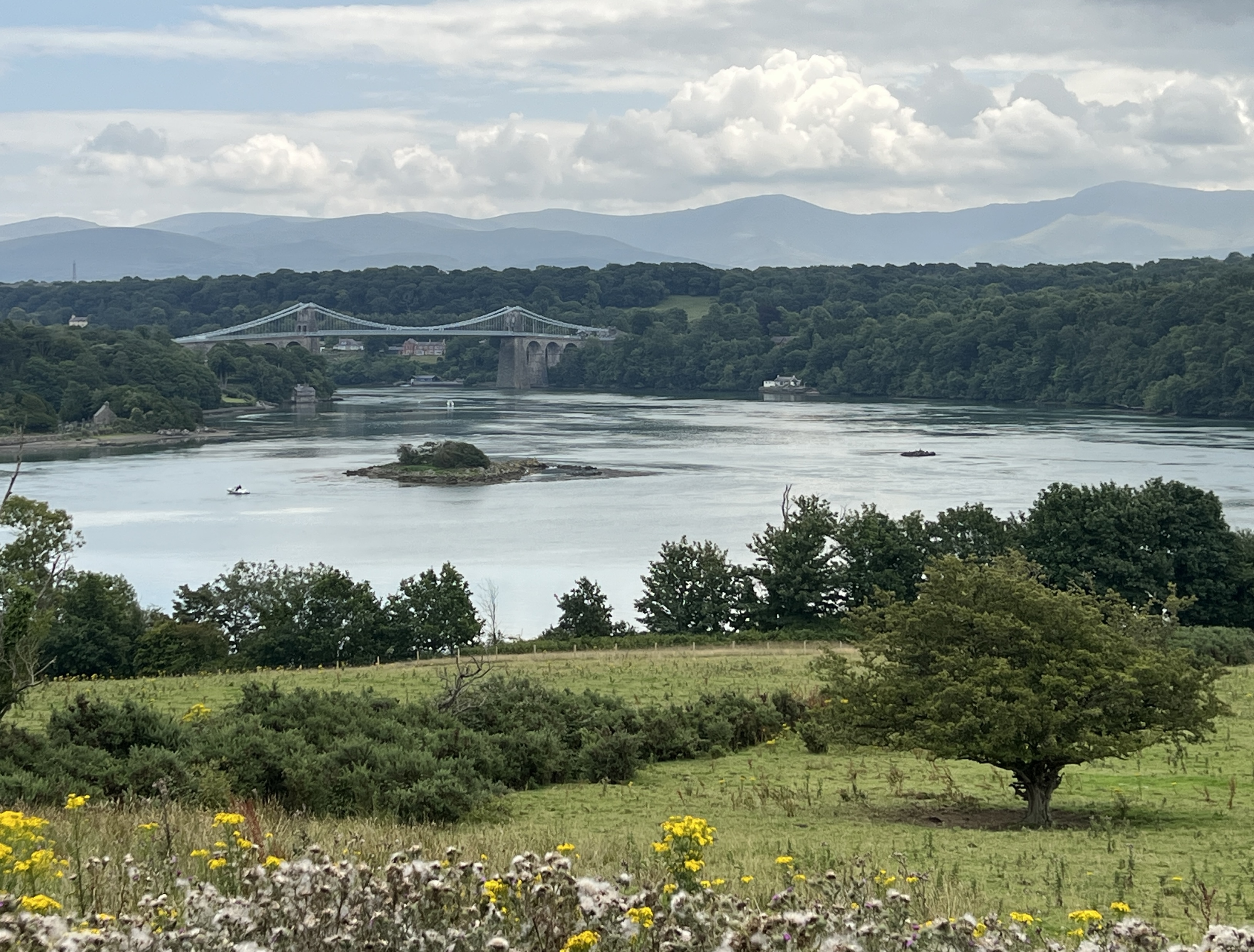
The Menai Strait is a challenging crossing by water due to different tide times at either end creating strong eddies and whirlpools. Our bus crosses over it on a suspension bridge built in 1826 by Thomas Telford, the famous inventive engineer of the times.
Telford’s 1826 suspension bridge over the Menai Straits.
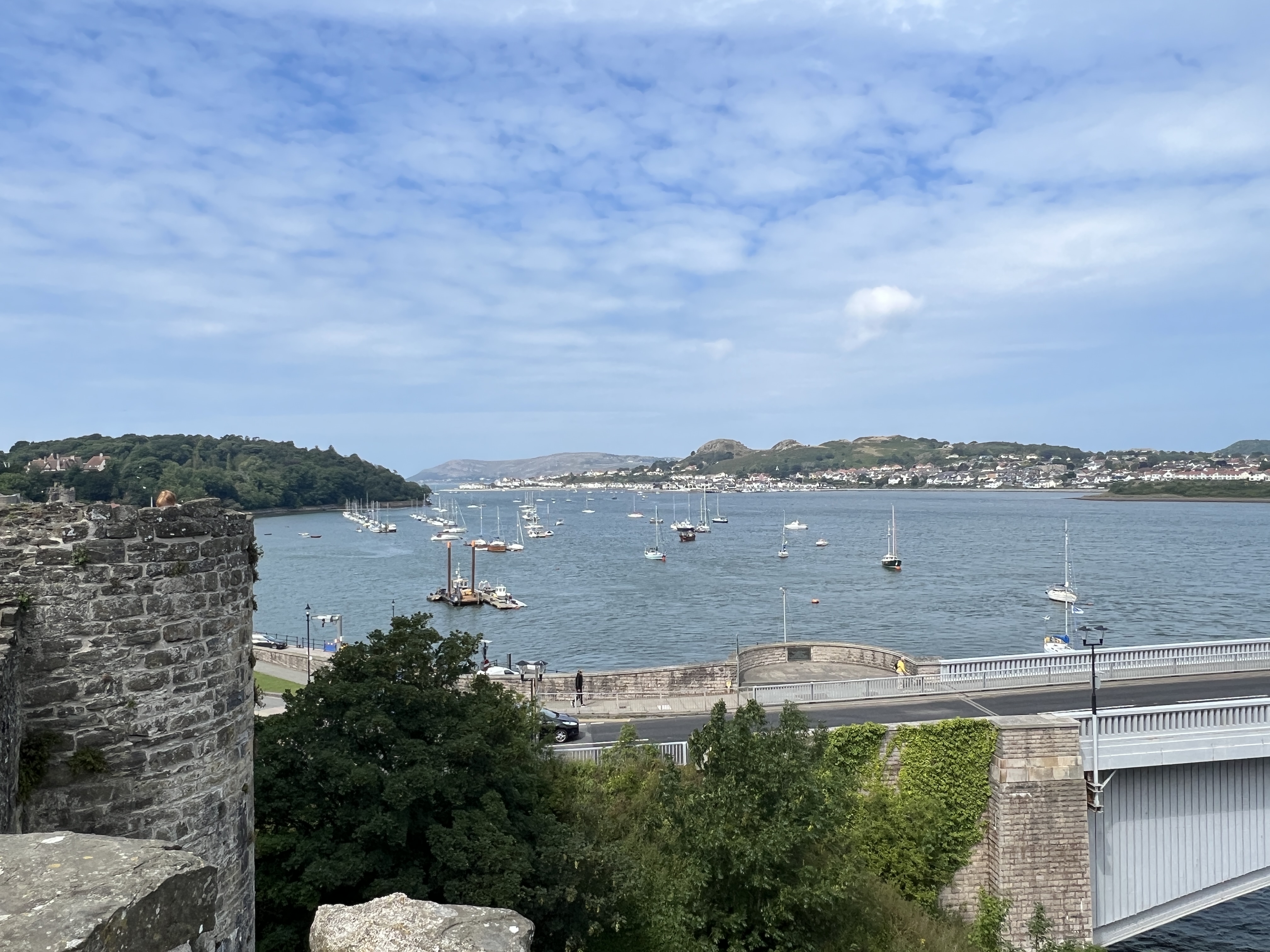
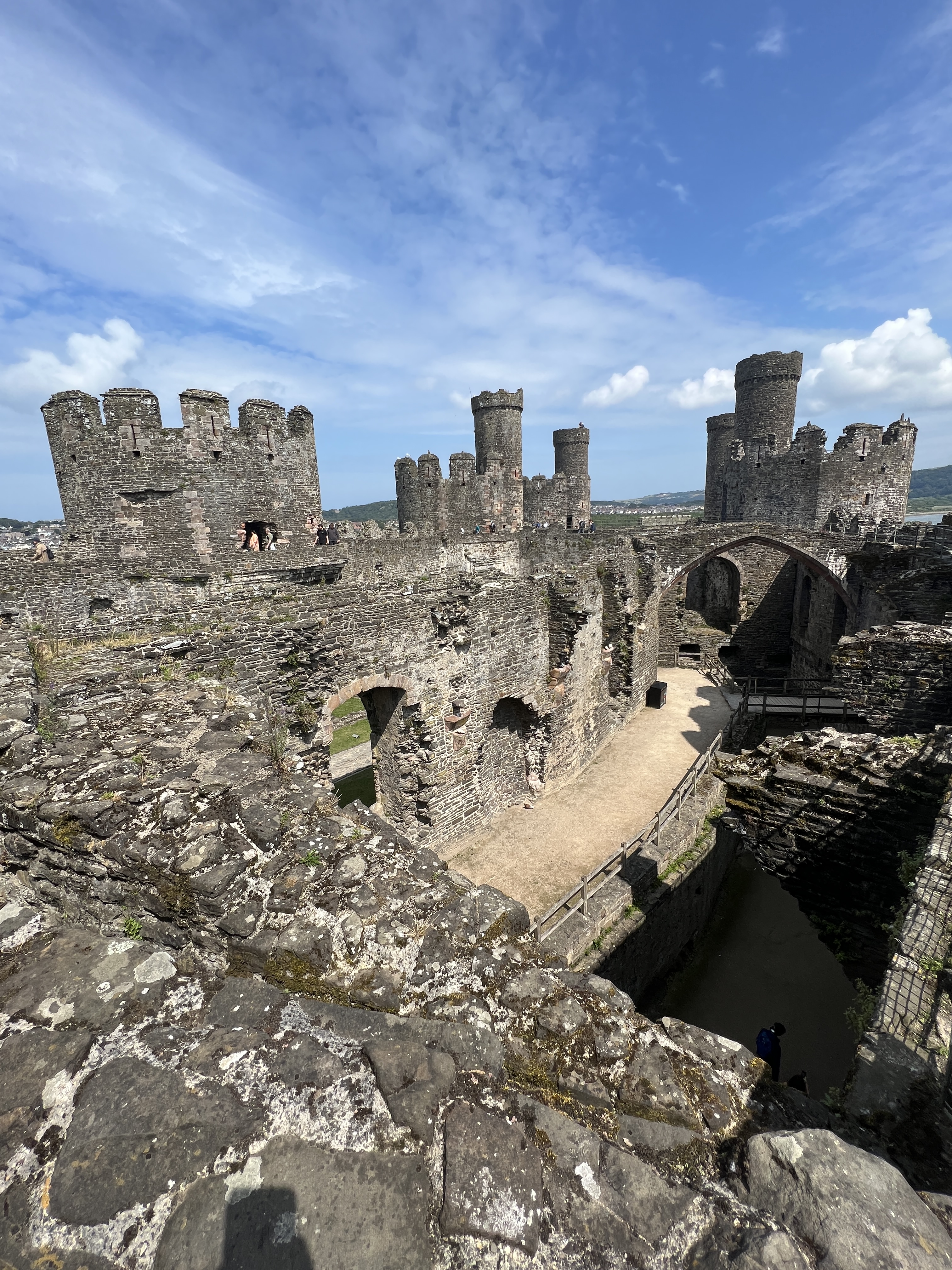
It was then onto Conwy for the tour through the castle that is perched on a ridge line right beside the Conwy River. Great spot for a defensive position. We were late getting there because of a big traffic snarl on the motorway. Sheep were loose on the roadway and some had got into a tunnel causing the problem.
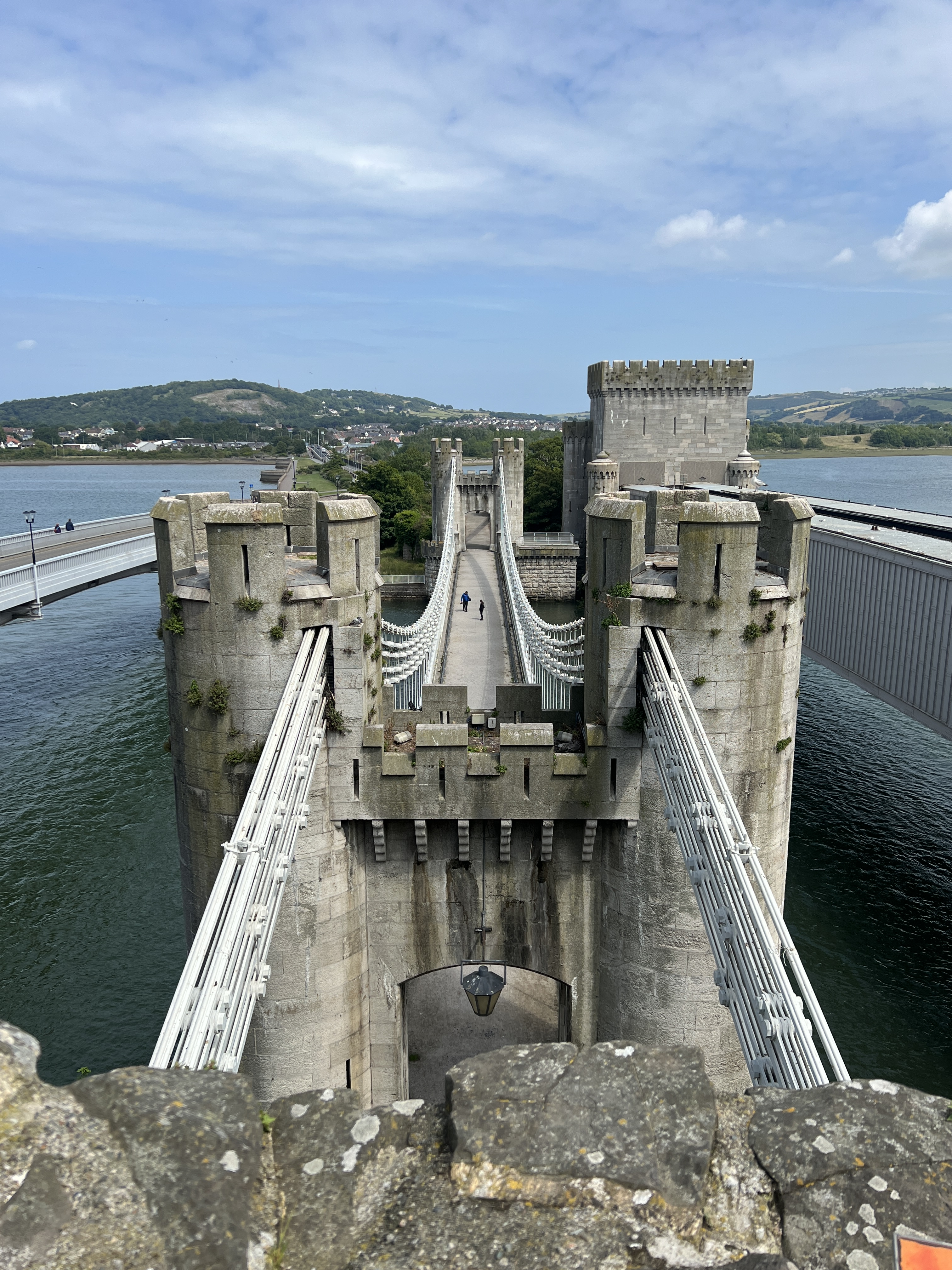
Bridges across the Conwy River into Conwy.
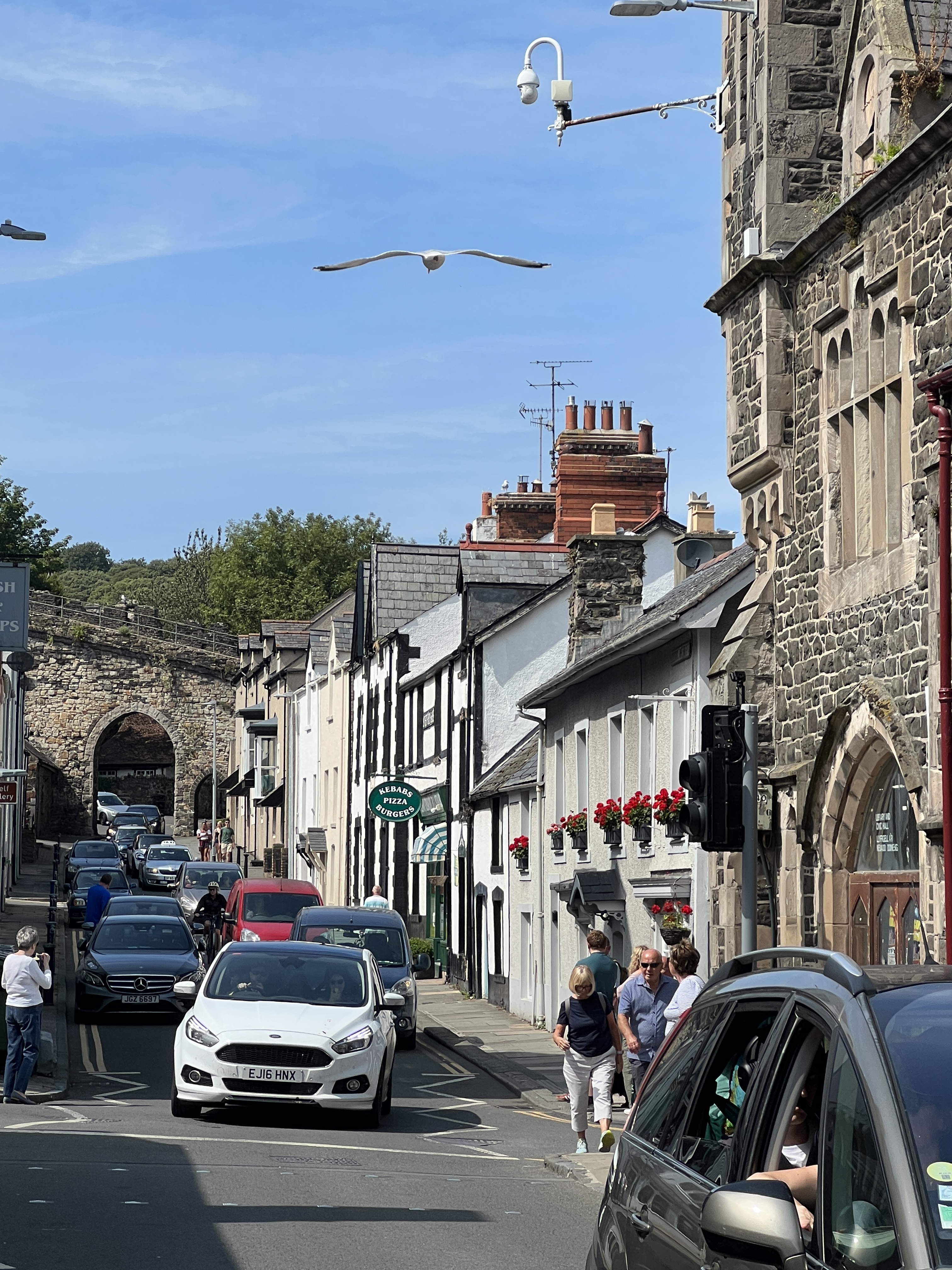
The Conwy Castle is also linked to the walls that encircle the town. Edward as part of the Welsh colonisation planted an English settlement beside the castle. They needed the wall to keep the Welsh out, who weren’t impressed by the invasion.
Town walls encircle the town.Conwy River from the castle walls.
Allthego climbed up the stairs to the top of the Castle walls, great views of the castle construction and the town. Homealone stayed below to look after Slobro who didn’t like the look of the steps up.
Conwy Castle walls.The main street with one of the city gates.
We were then back on the bus for the return to ship, the sheep had been cleared from the road and tunnel, and to move on overnight to Belfast.
Sailing out into the Atlantic we are now on the way up the Spanish and Portuguese coasts. The sea is making a moderate swell of about two metres and there is a strong wind. It is significantly cooler than it was back in the Mediterranean, about 18 C, little humidity. The arrival time in Lisbon is later than normal and we start making our way up the Tagus River around 10am.
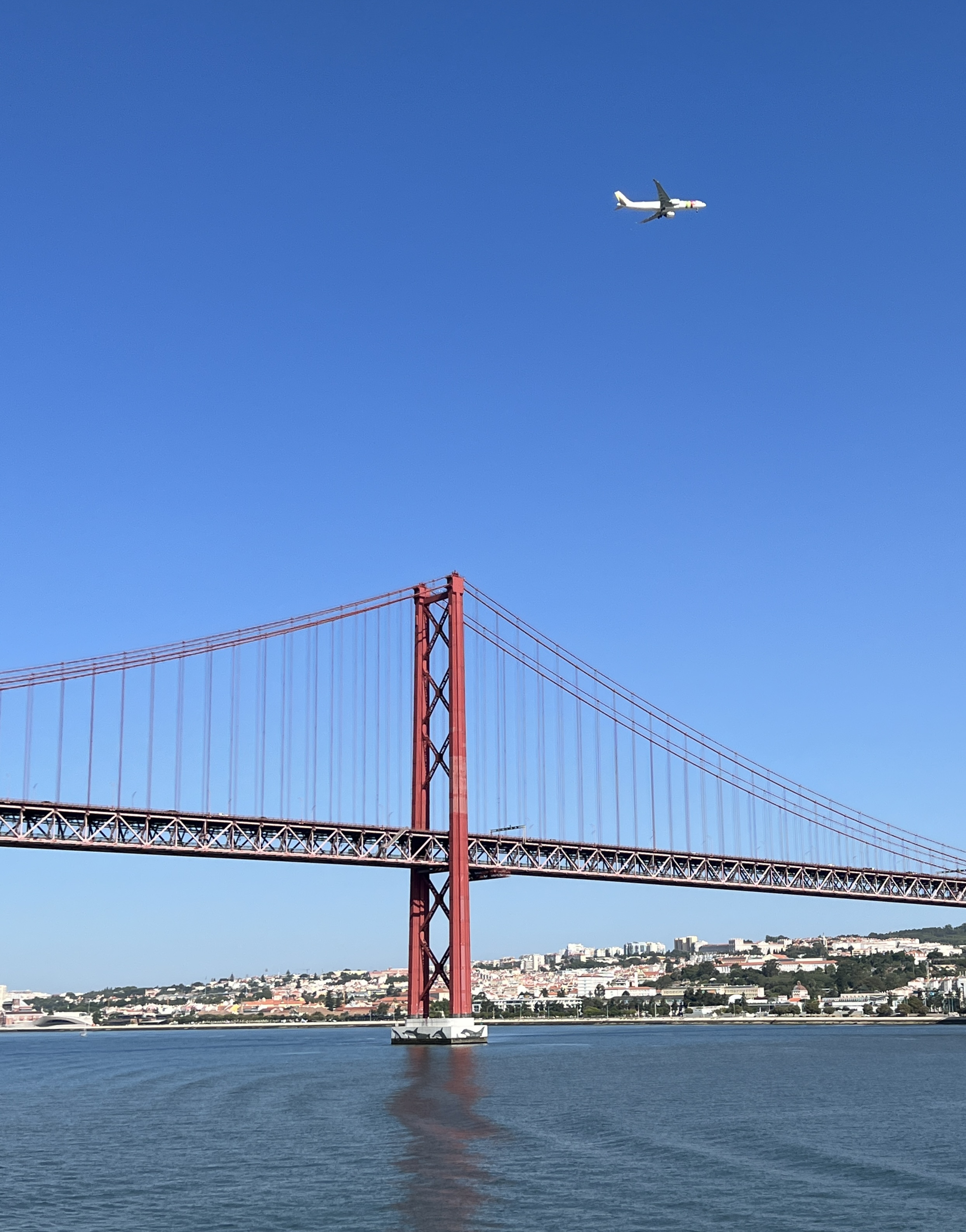
Coming into port under the 25th April bridg
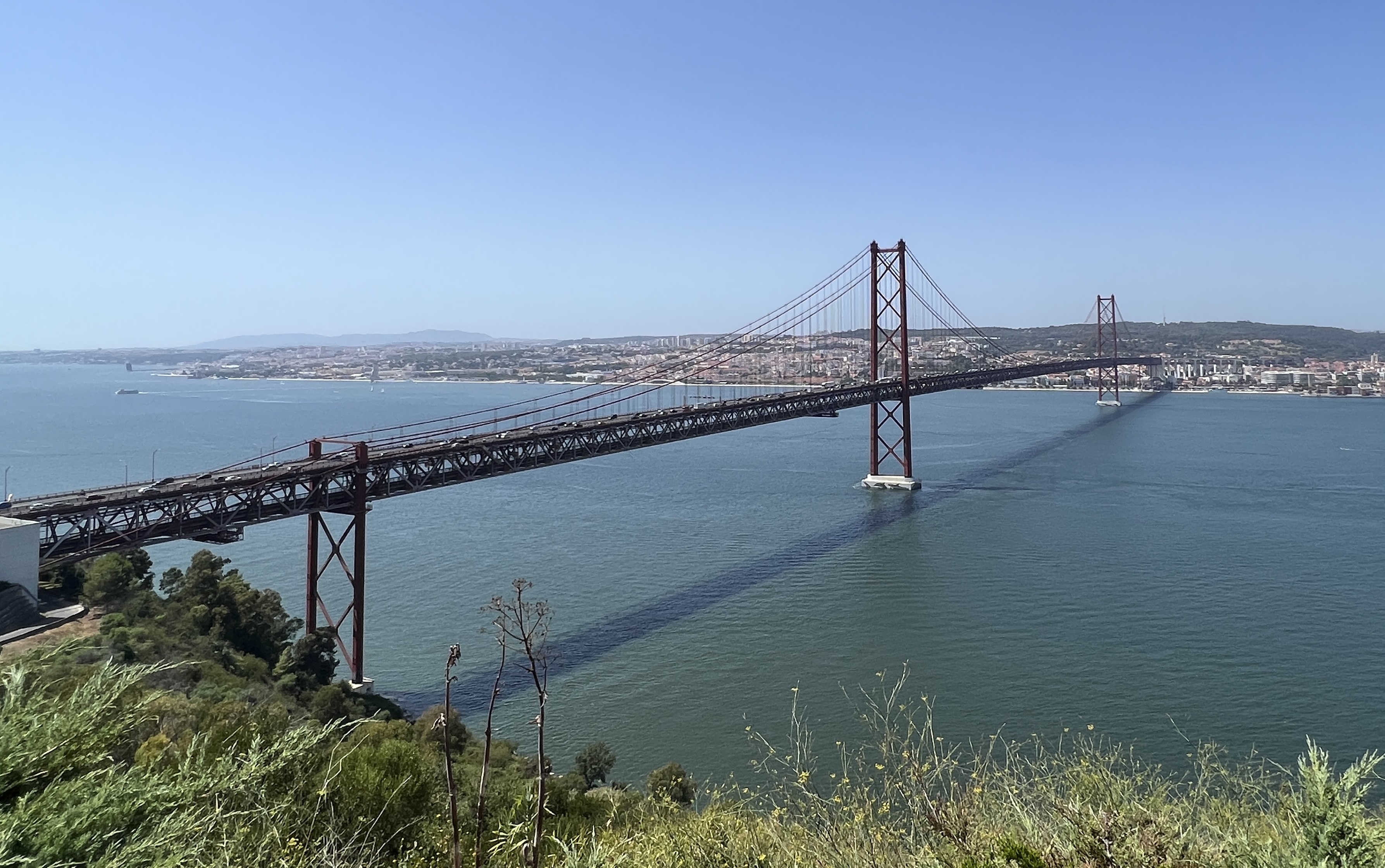
It is a great sail up the river, narrowing as we move further up stream and pass under the ‘25th April’ bridge. It is so named because it was on that day in 1974 that there was a ‘peaceful’ revolution against the long time dictator, Salazar, and the establishment of the current democratic parliamentary system.
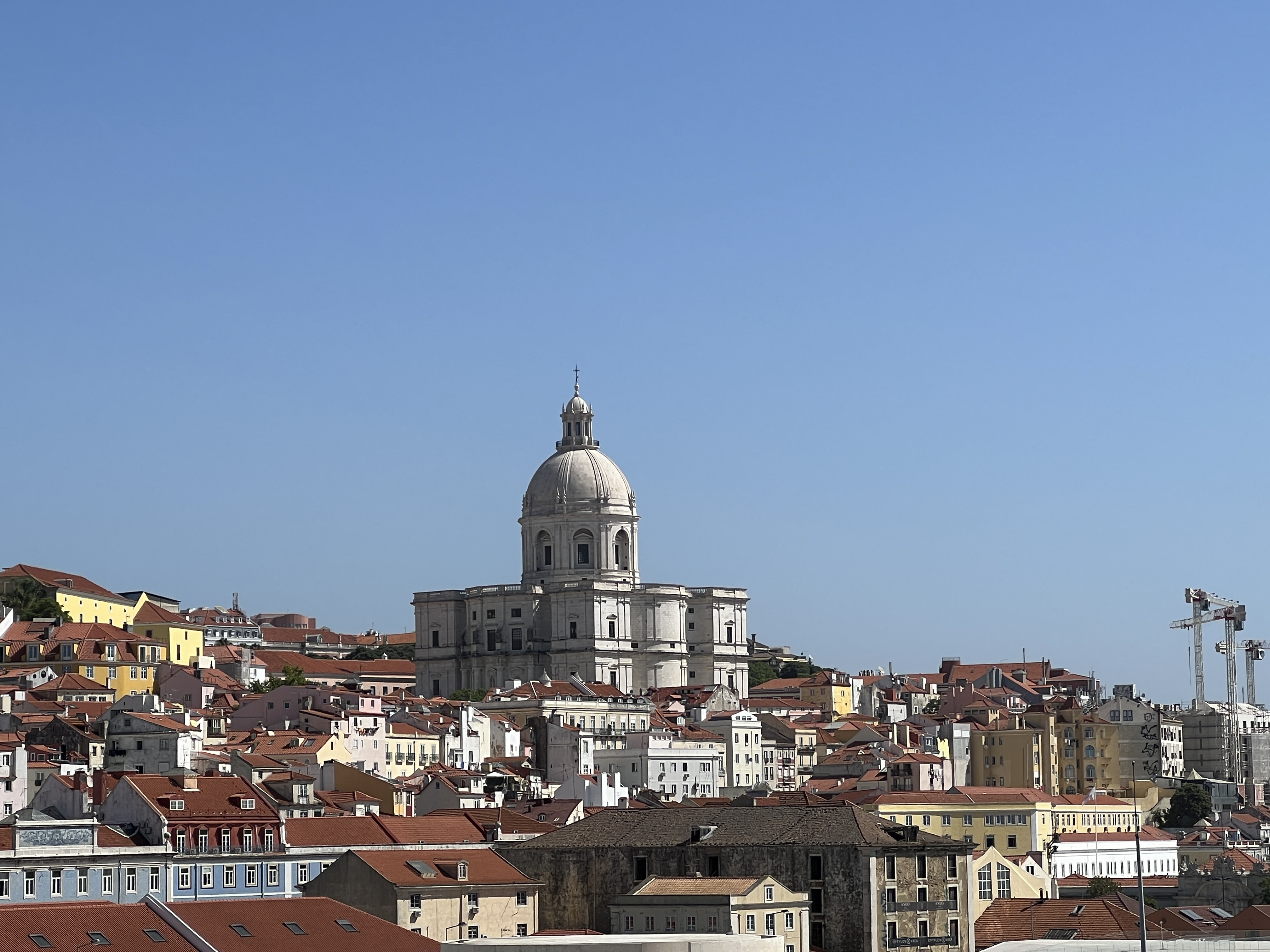
Originally the Church of Santa Engracia, this is now the National Pantheon where prominent Portuguese are buried. It is one of the buildings that dominants the view from the ship.
After going through the docking process we were able to get ashore for a couple of hours and have a look around what is known as the Commercial Square, with the old Palace and Arch dominating the view. Plenty of tourist activity here, restaurants etc. The Pope is due in town in about three weeks and there is a lot of cleaning up and barricades being erected. There will be a big crowd here in the Square.
The main Square beside the Tagus, La Praça de Comércio.
We returned to the ship for lunch before our tour in the afternoon to see some of the major sights. The tour took us to the other side of the Tagus River across the 25th April bridge. It is built in the style of San Francisco’s Golden Gate bridge but has two decks, one for the railway and the other road traffic.
25th April bridge across the Tagus River.
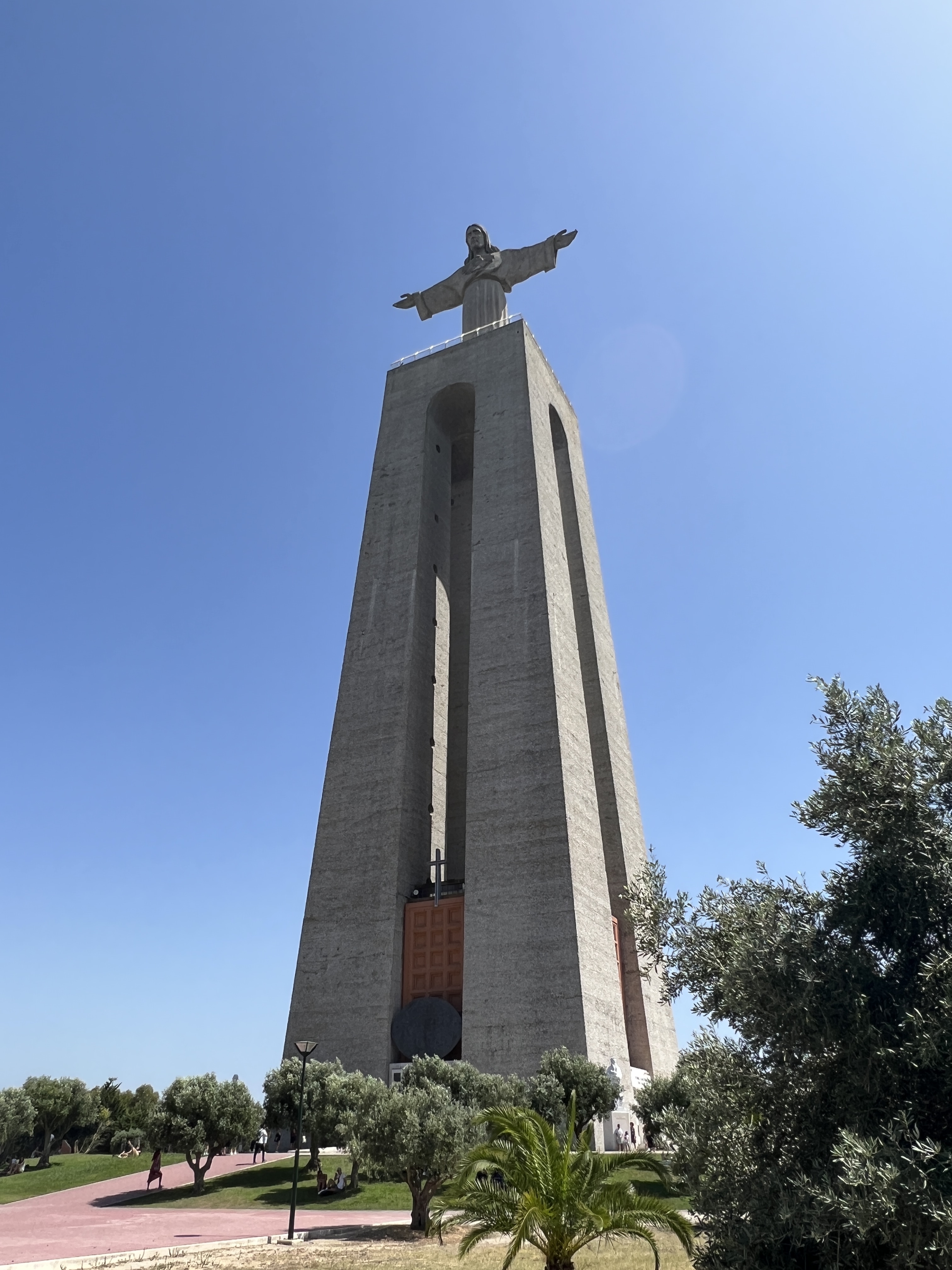
Looking down on the city from the other side is the Christ statue, a big but I think smaller version of the one in Rio. Still impressive. Great view from here of the city and the 25th April bridge.
The Christ statue overlooking the Tagus River.
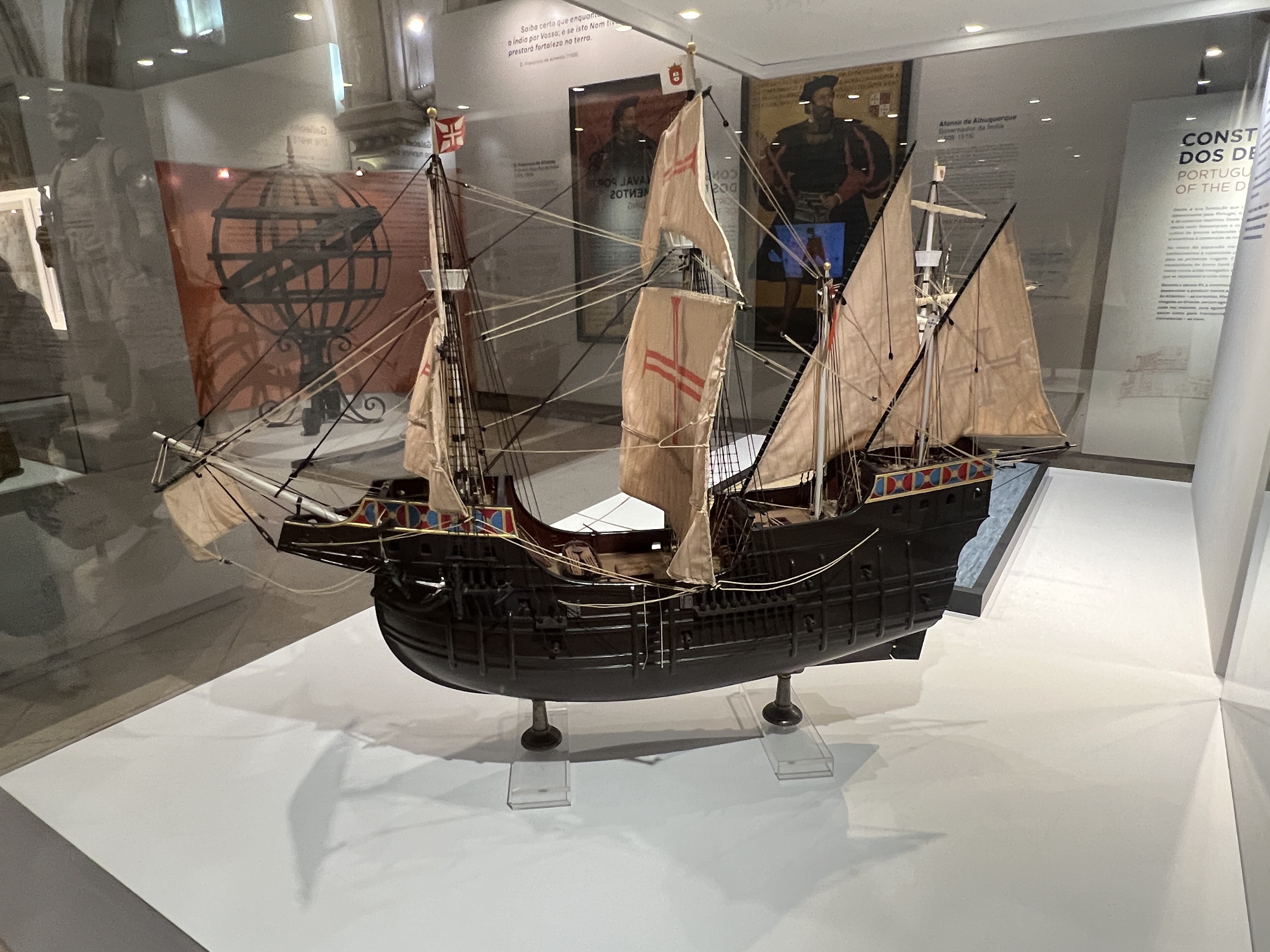
Back on the other side we headed for the Maritime Museum housed in the Jerónimos Monastery. The guide goes through this fairly quickly, but it is a great overview of the contents documenting Portugal’s maritime history of the 15th to 17th centuries.
Entry to the 16th century Jerónimos Monastery, a major landmark. Vasco da Gama, the famous explorer is buried here.
Our guide was a fairly enthusiastic promoter of Portugal’s leading place, ahead of the Spanish and Dutch, as the earliest European navigators, map makers etc. He sited some recent studies suggesting they made it to Australia ahead of the Dutch.
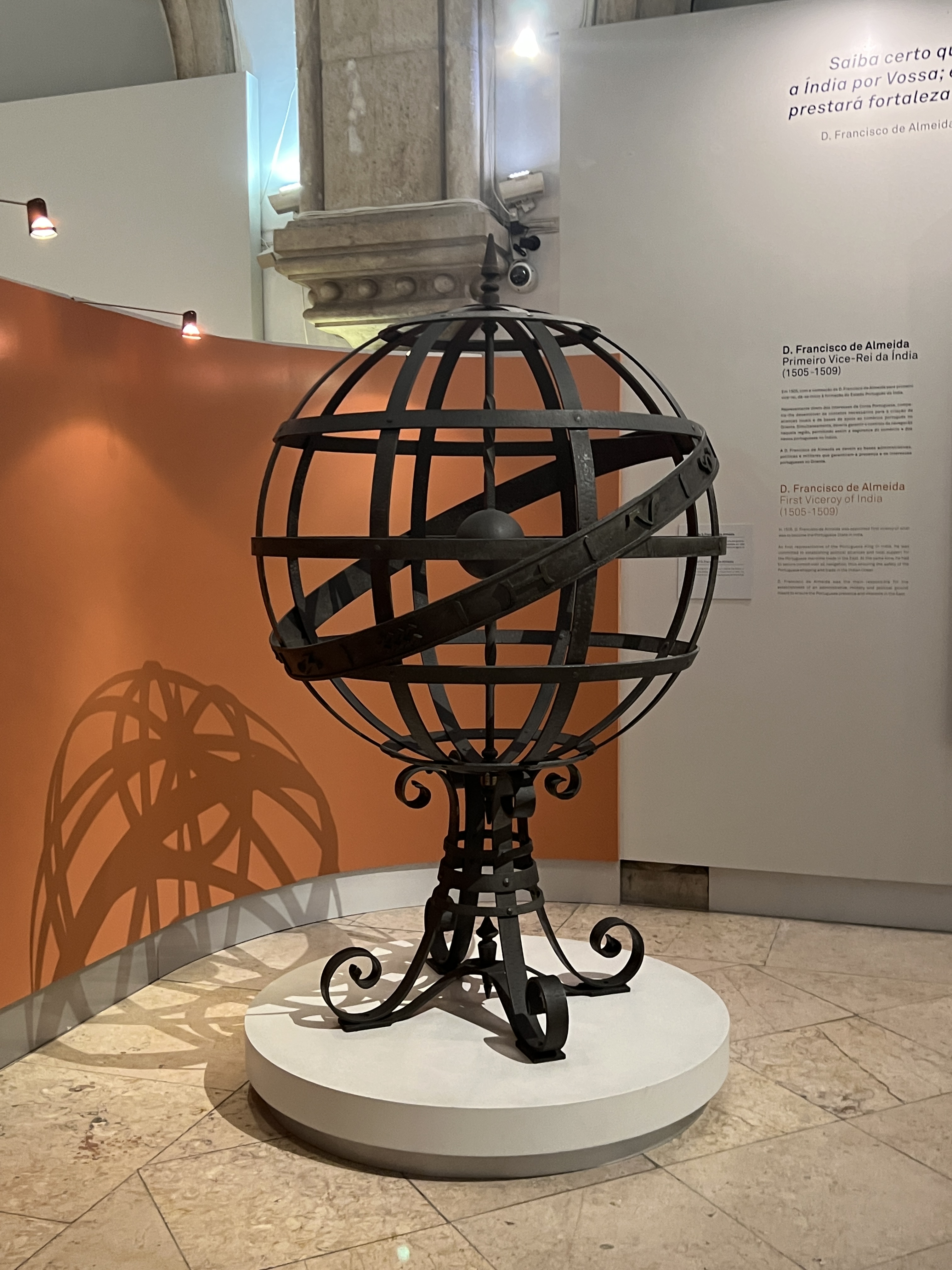
Model of early square rigged ship.Astrolabe, used among other things to determine latitude, the forerunner of the sextant which could also determine longitude, onboard ships at sea.
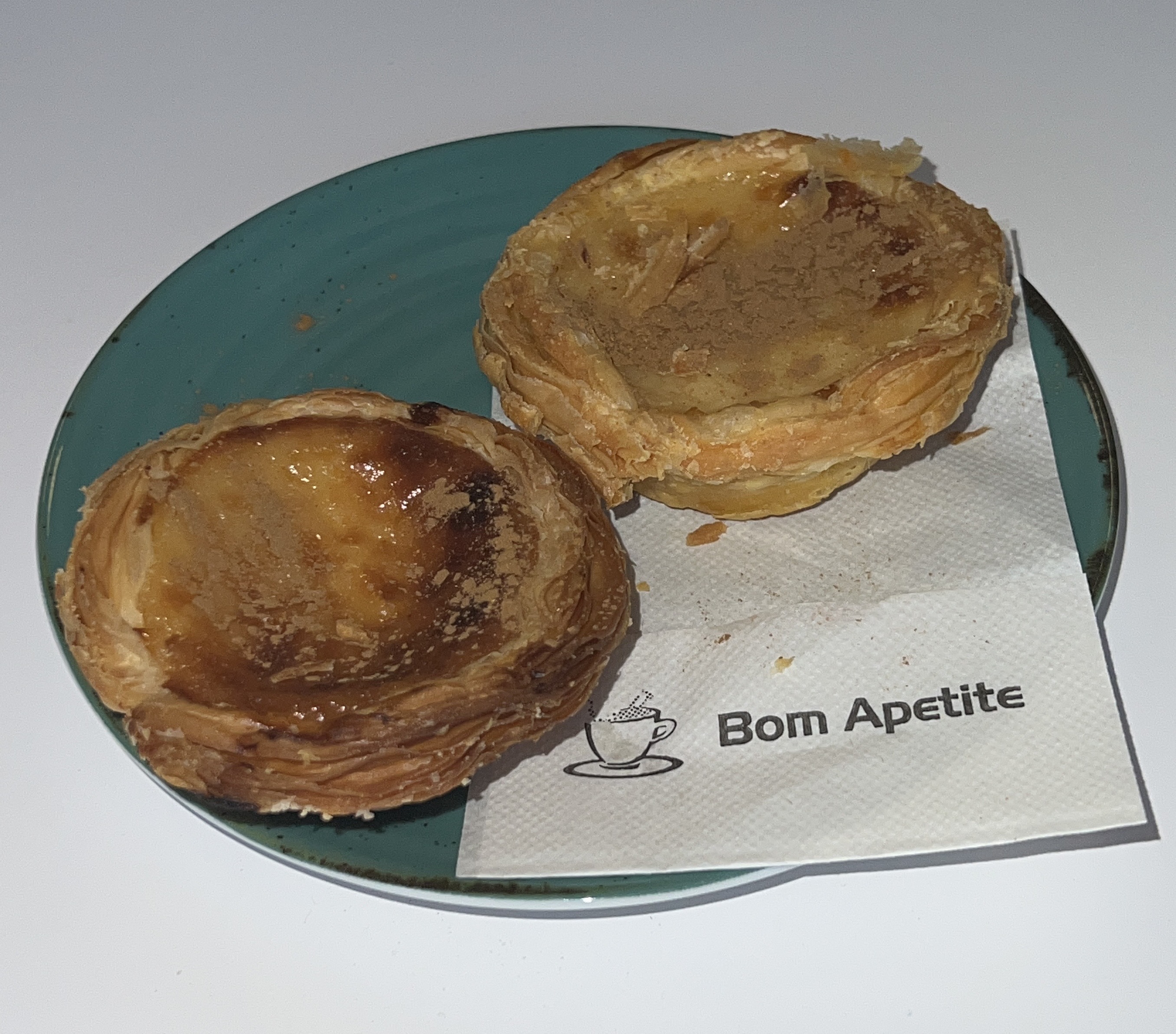
We had a light snack in the Museum cafe, a genuine Portuguese Tart. This is their answer to the vanilla slice! The tart had a crispy pastry shell and commendable contents. A worthy challenger!
Portuguese tarts.
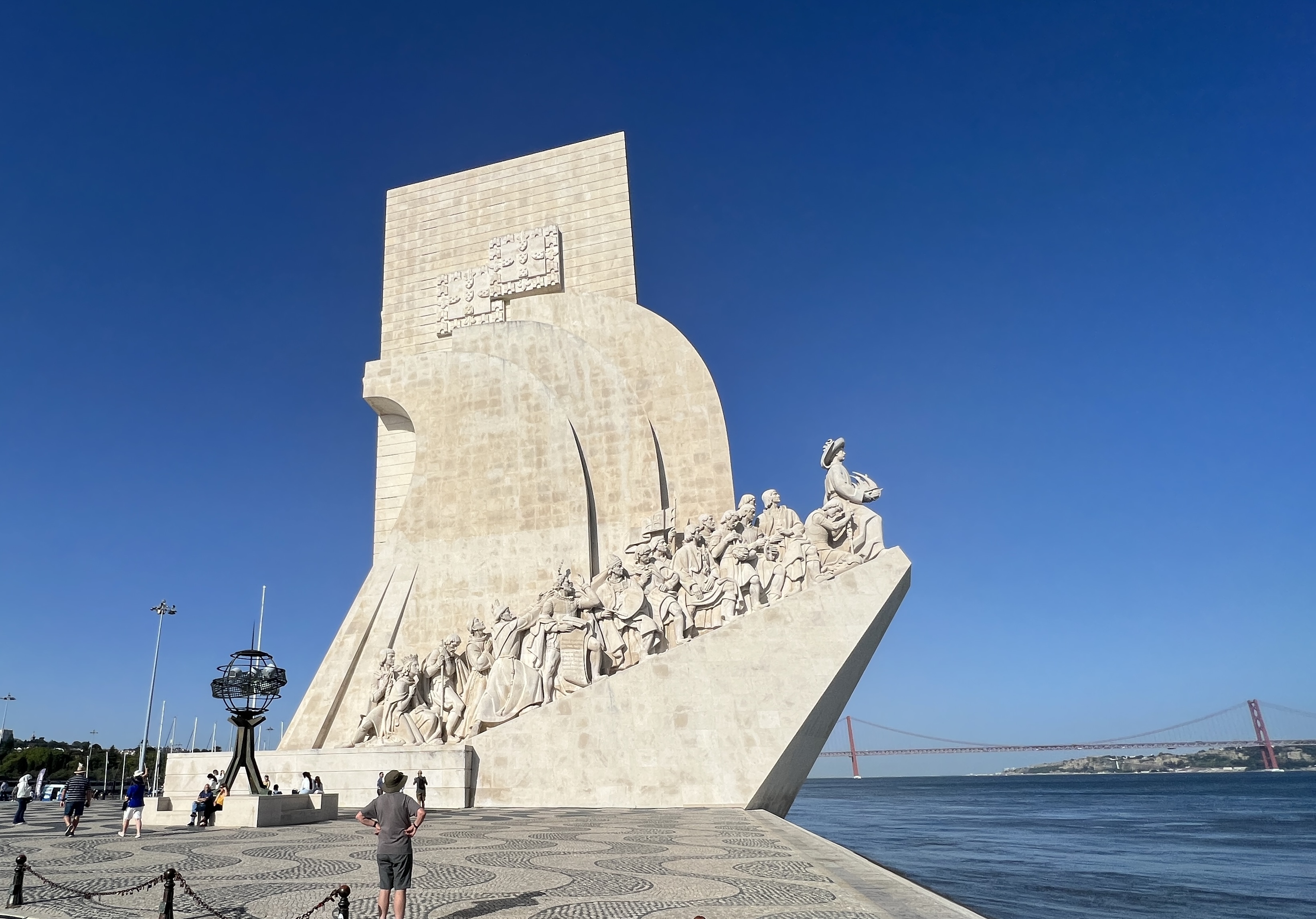
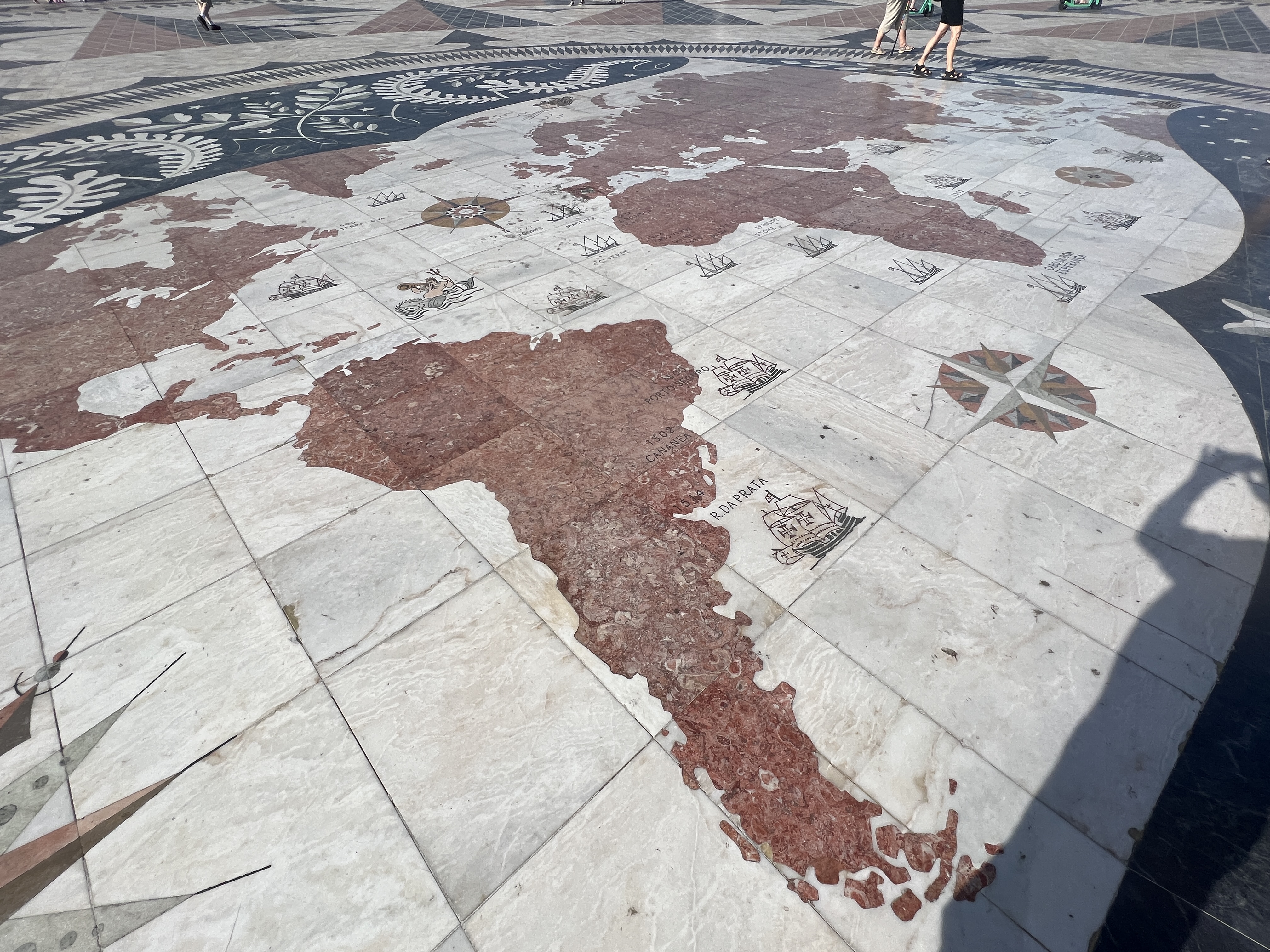
Across the road on the banks of the Tagus is the impressive Monument to the Discoveries and plaza map.
Monument to the Discoveries, looks down the Tagus River out to sea where the great Portuguese seafarers ventured.Map of the known world showing the voyages of Portuguese explorers imbedded in the plaza near the Monument to the Discoveries. Quite impressive display.
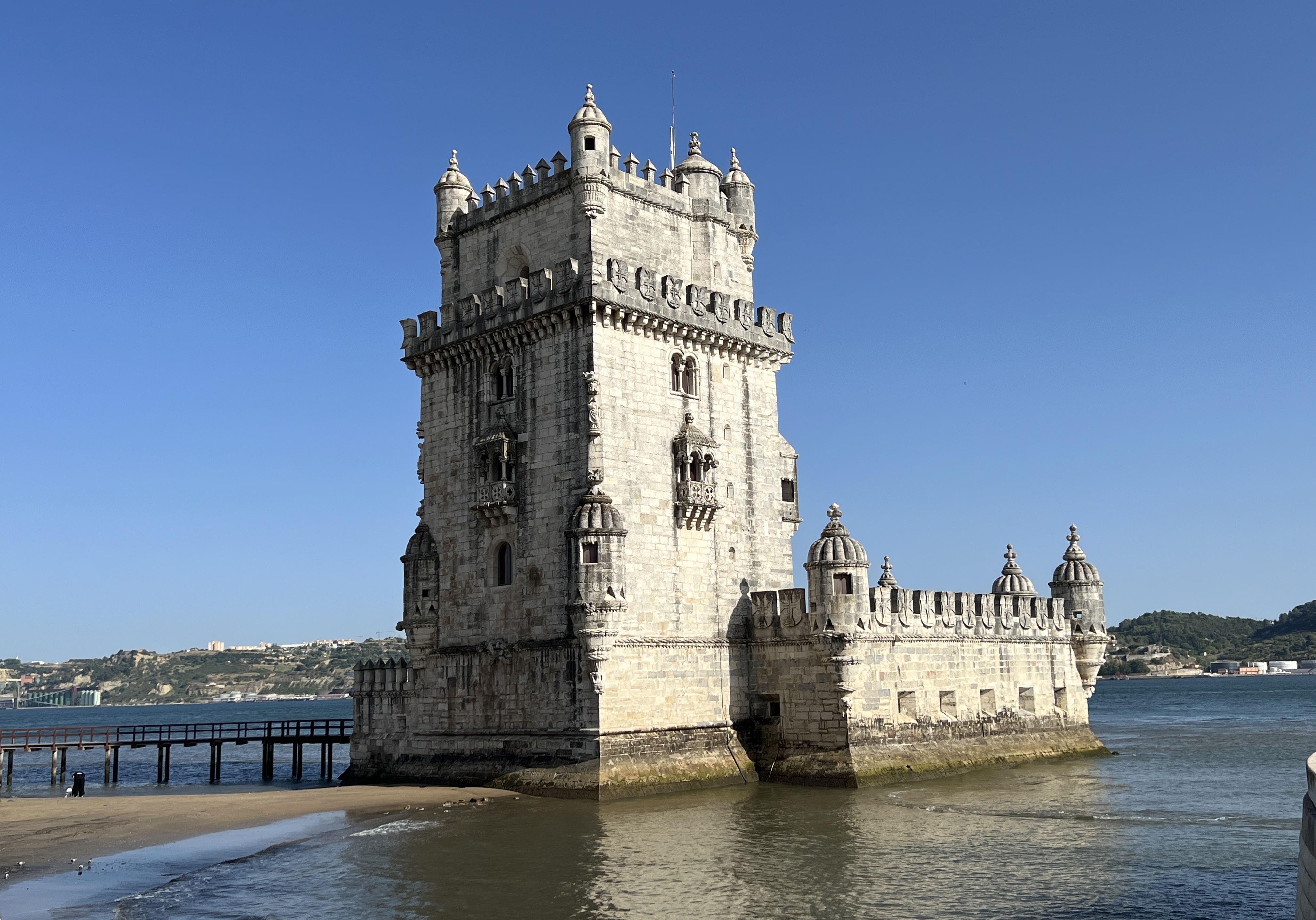
Further down the river is the last remaining 16th century fort, the Belém tower. This area was the starting point for many of the exploration voyages.
Belém tower. There were 3 of these across the Tagus River. One on each bank and this one out in the river, but now beside the bank due to land reclaimation. The other two towers long gone.
Back on board the ship the sail away at around 10 pm under the 25th April bridge in the twilight was memorable. Great views of the buildings and lights coming on as we headed off north into the Atlantic.
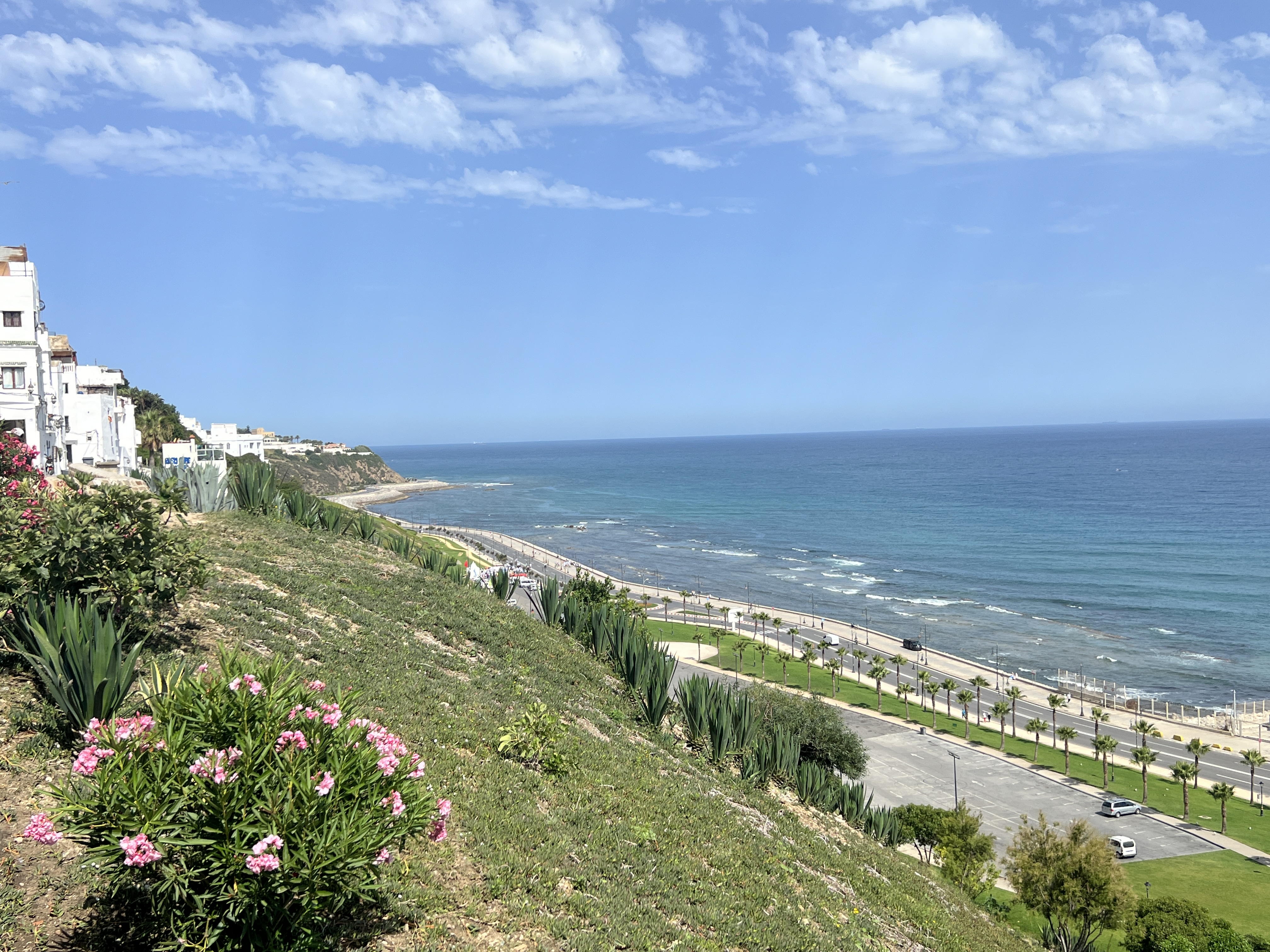
Tangier is situated on the north west tip of Africa, in Morocco just across the Strait of Gibraltar from Spain but poking out into the Atlantic. Sailing out later in the day we could see the Rock of Gibraltar back down the Strait. Unfortunately, it was a bit hazy and murky and not a clear view of the coast.
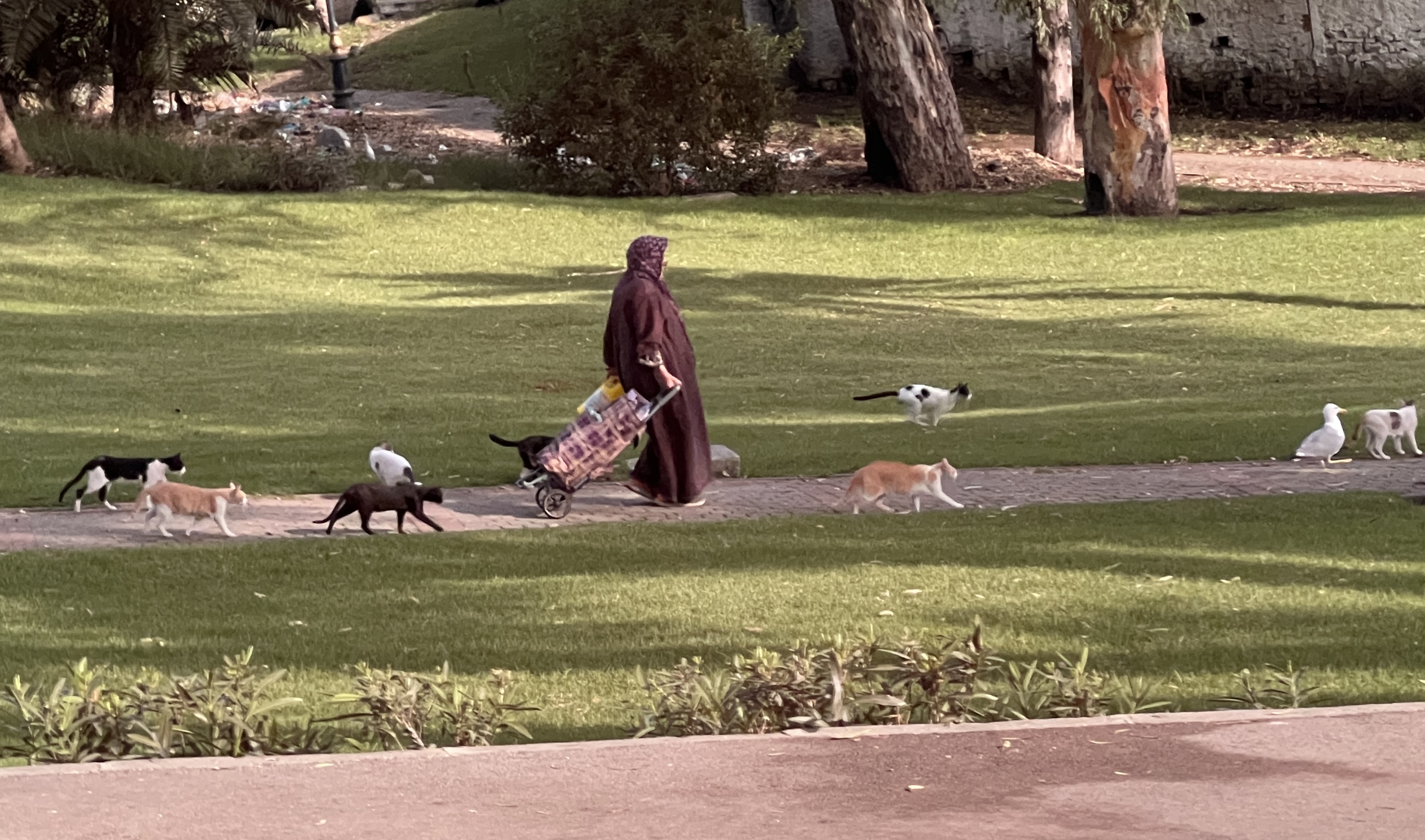
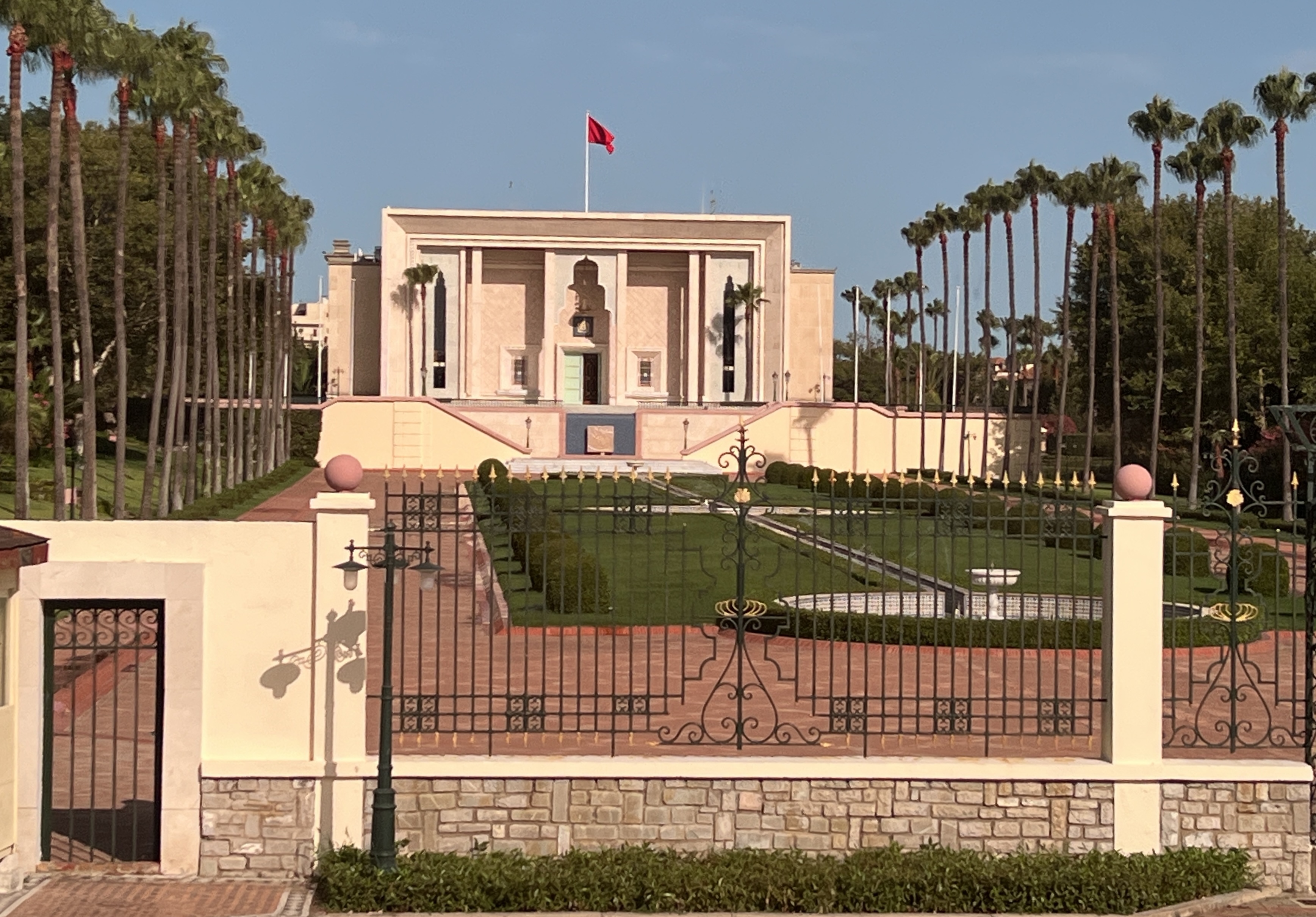
Cats are everywhere, this woman feeds them so we are told and later see.The King’s Palace.
Our tour here took us first to the top of hills surrounding the port, this is the ‘modern’ Tangier and reflects the great interest Europe and the US had in the city. Positioned where it is makes it a strategic point for entry into the Mediterranean Sea. The Romans were also here long before recognising the same advantage. The area on top of the hills is sort of segmented into various quarters; the English, the Dutch, the French, the American etc. Quite a few, each trying to exercise influence over the locals.
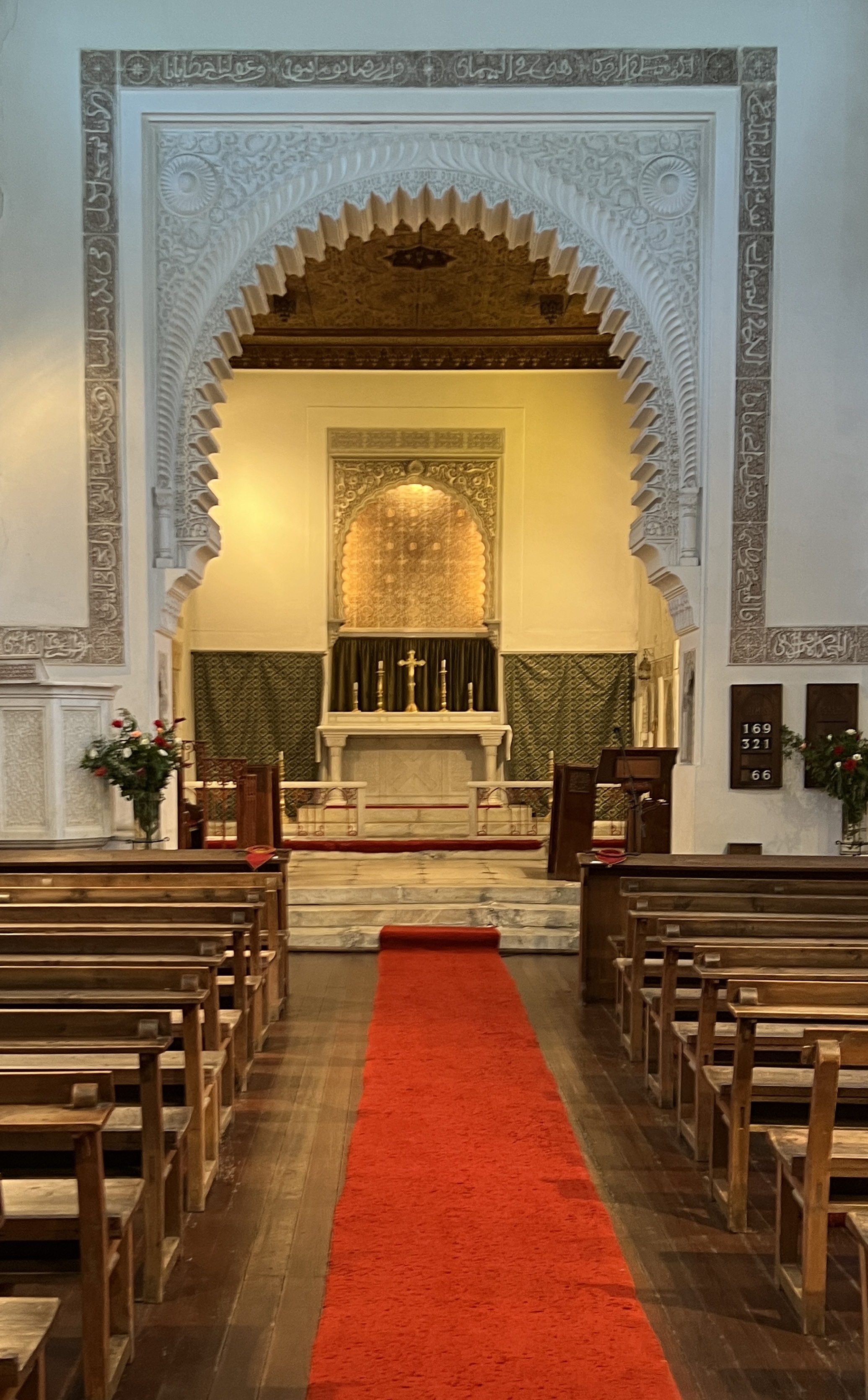
The English Anglican Church, quite austere compared to others we have seen of late! Note the Moorish ‘key hole’ and mosaics into the sanctuary.
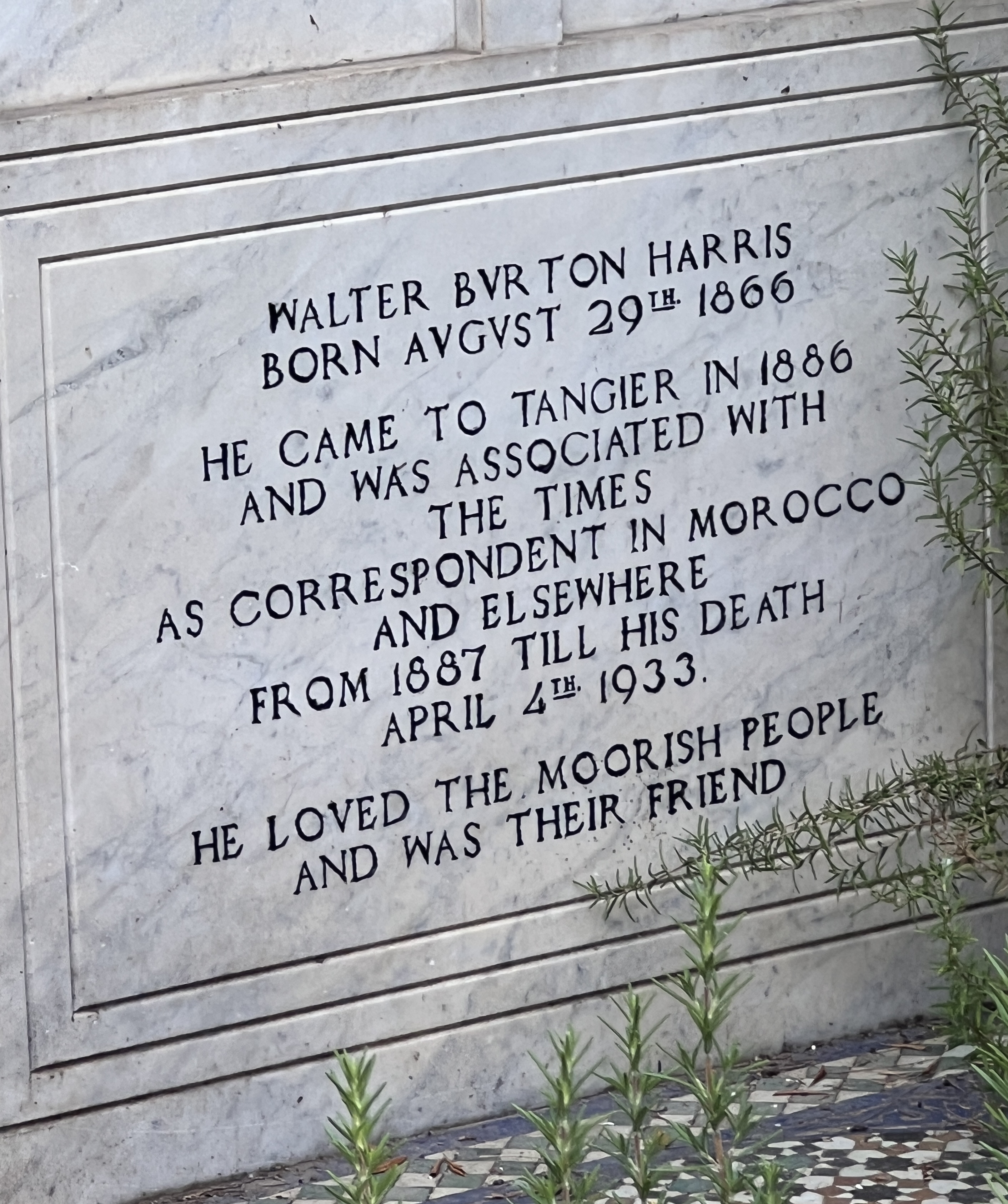
There is an English Anglican Church, in a garden setting that was constructed with ‘help’ from Queen Victoria. It is built a bit like a mosque. Numerous graves of English residents amongst the garden. One is of a chap who was a great friend of the locals, but is now thought to have been a British spy (according to the guide). A bit James Bondish.
Friend or spy?
Tangier was also a playground for the European and American elites in the last half of the 1800s and into the 1900s. Winston Churchill frequented Tangier as well as Marrakesh. Our guide said Churchill was so frequent here, as well as in most other parts of the world, that he left his initials behind ‘WC’. Well.
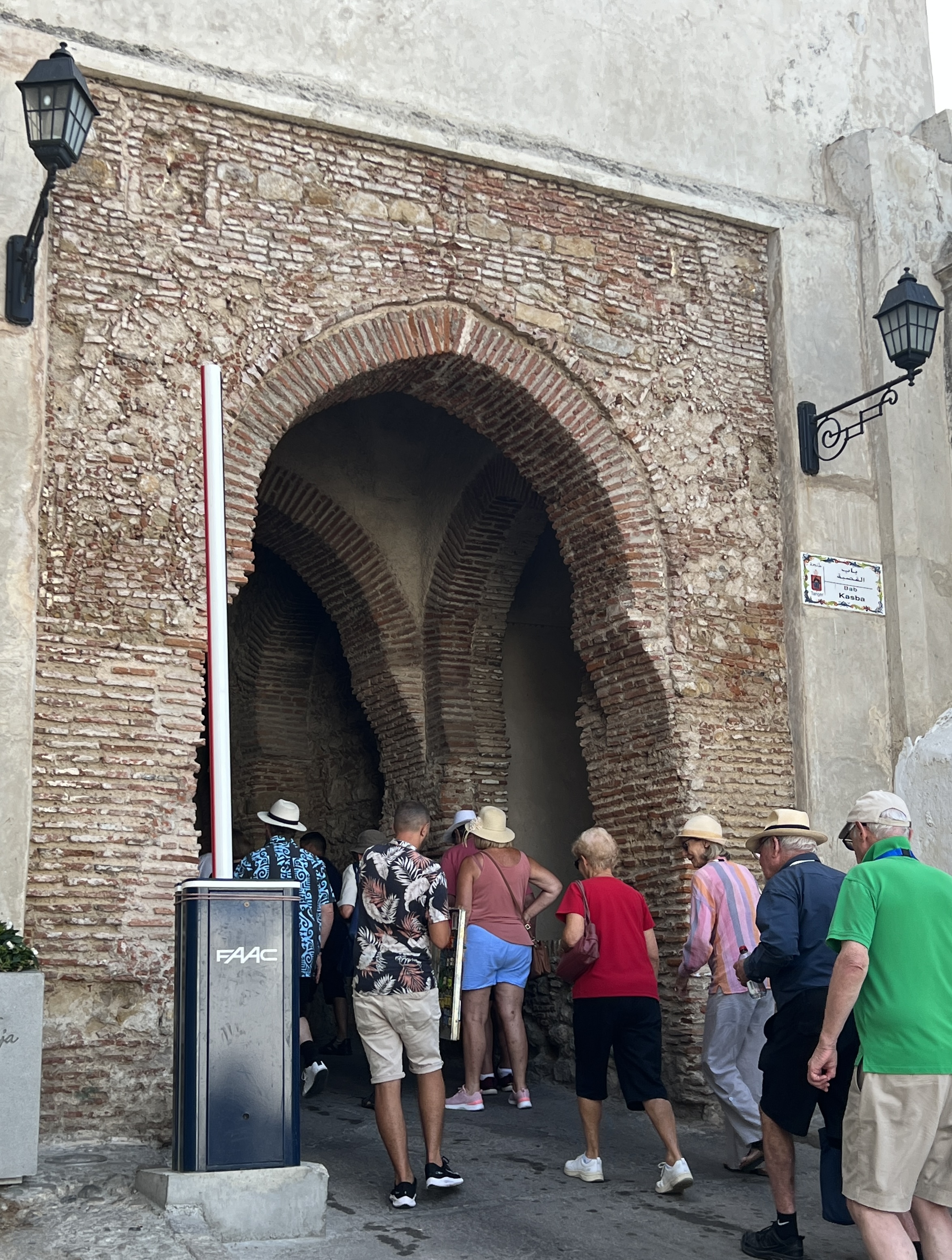
Our Gate into the Kasbah.Kasbah street.
Our tour took us down through a gate in the walls into the Kasbah. The guide was full of interesting tit bits. The Kasbah was not the ‘market’ type place depicted in movies but the residential and administrative area for the local elites, the rif raf was kept out. They resided in the old town, or Medina, where the markets were located.
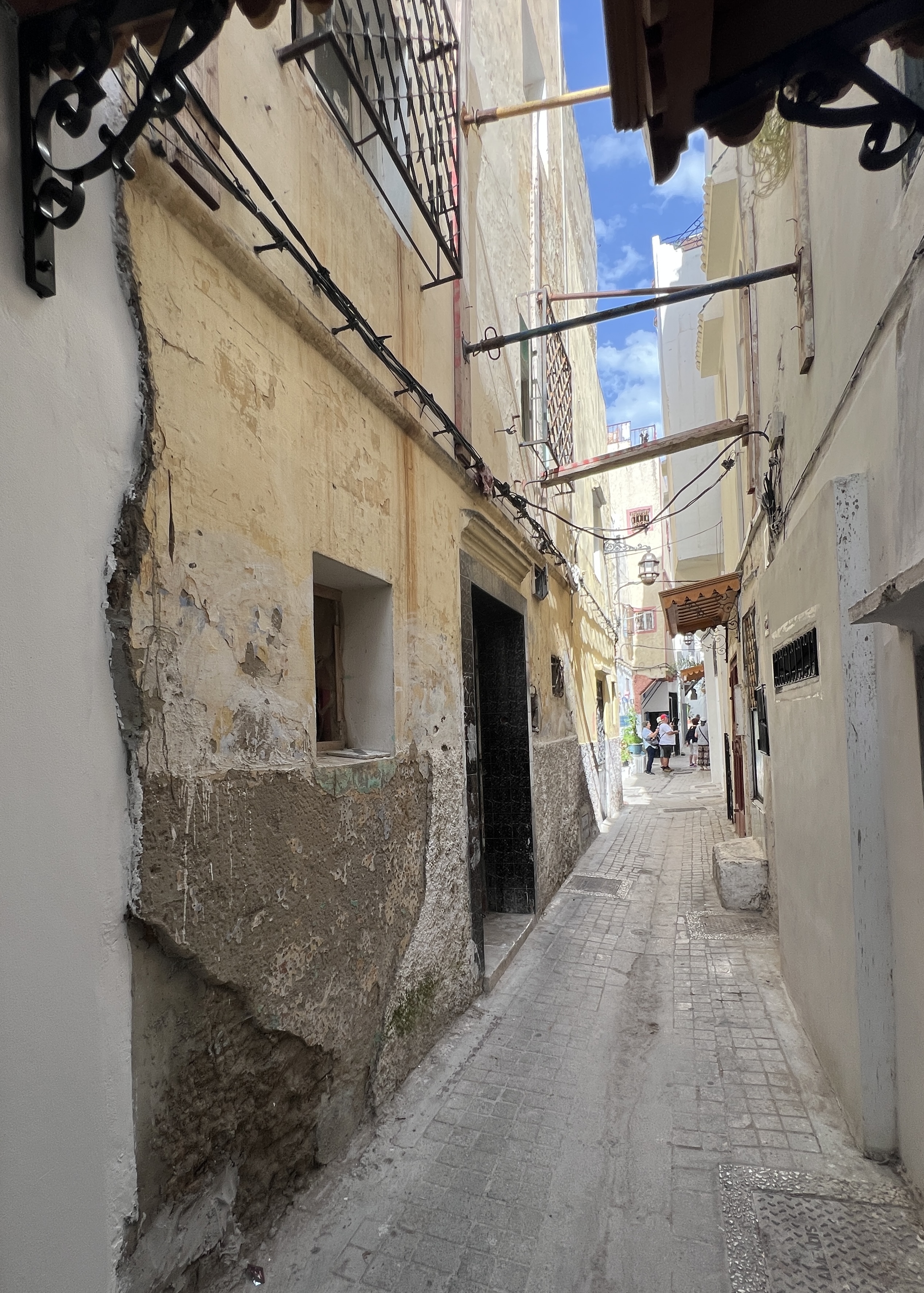
Another street, note the structural supports! The guide said the white washed houses were generally owned by foreigners for rent or AirBNB’s. Unwashed ones were locals, who cared more for the inside.
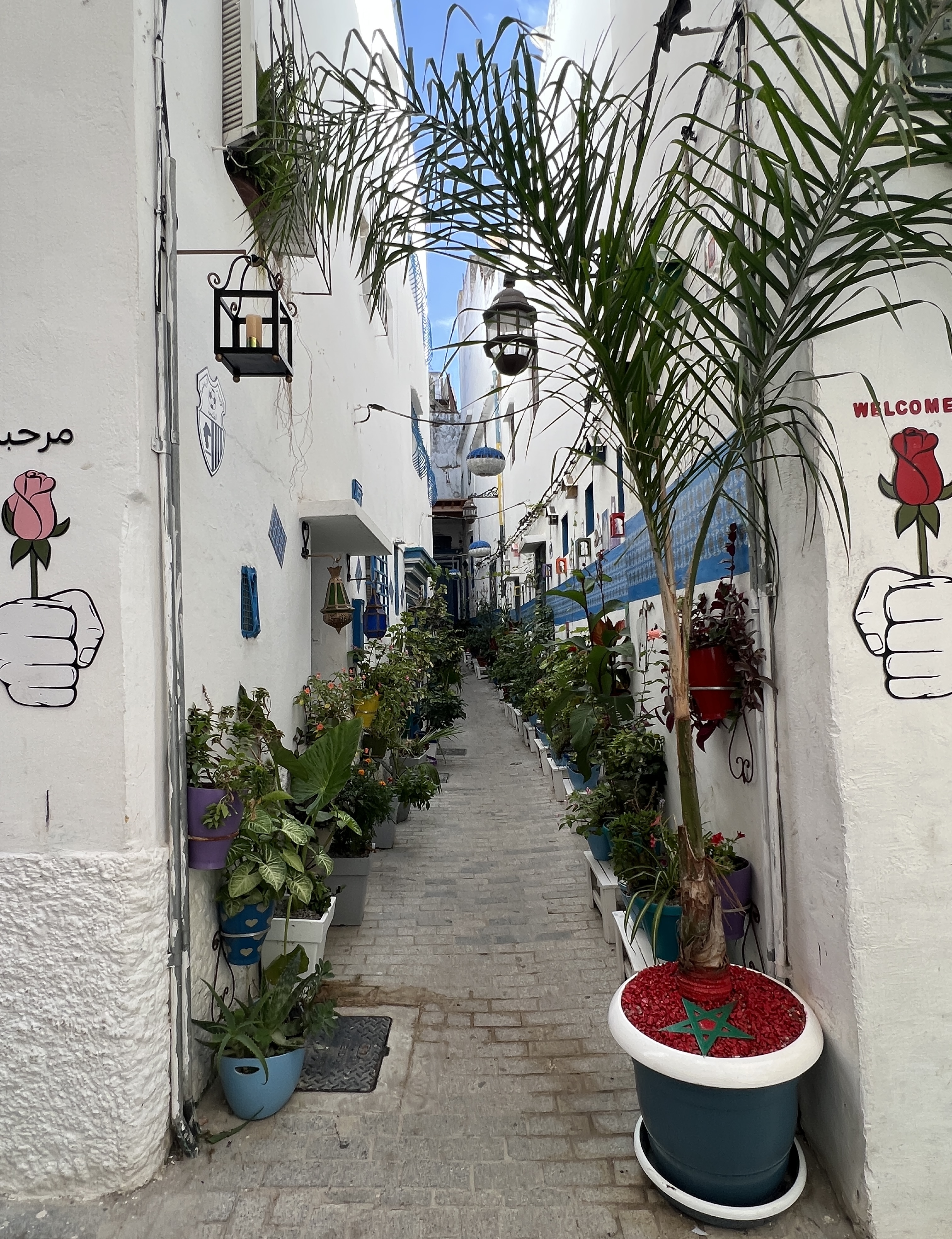
So, we strolled down through the maze of narrow alleys. Many white washed walls, colour blue dominates, and flower boxes, a mosque here and there.
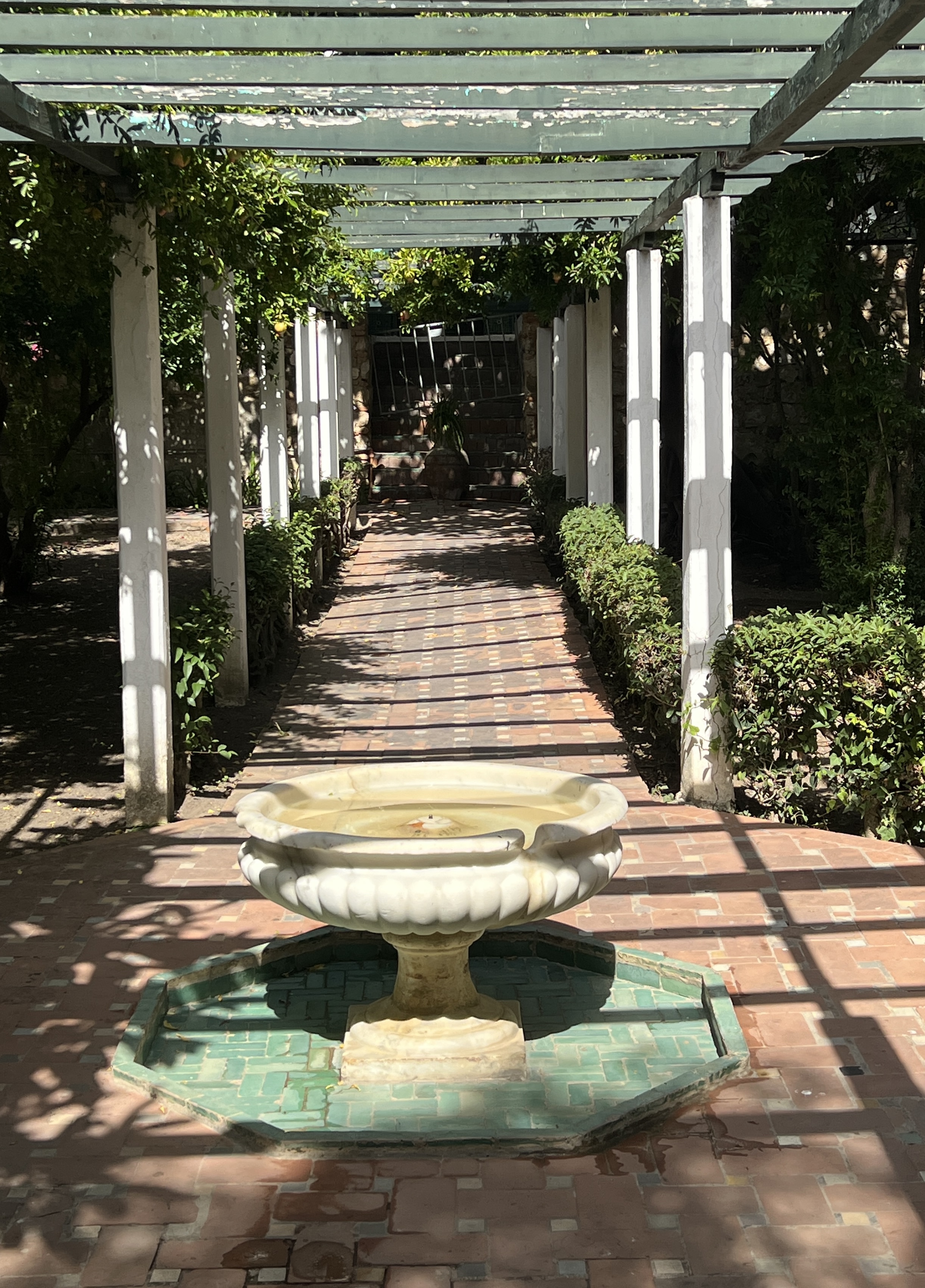
Garden inside the museum complex View from the Kasbah walls before going into the Old Town, or Medina.Gate out of the Kasbah into the Medina.
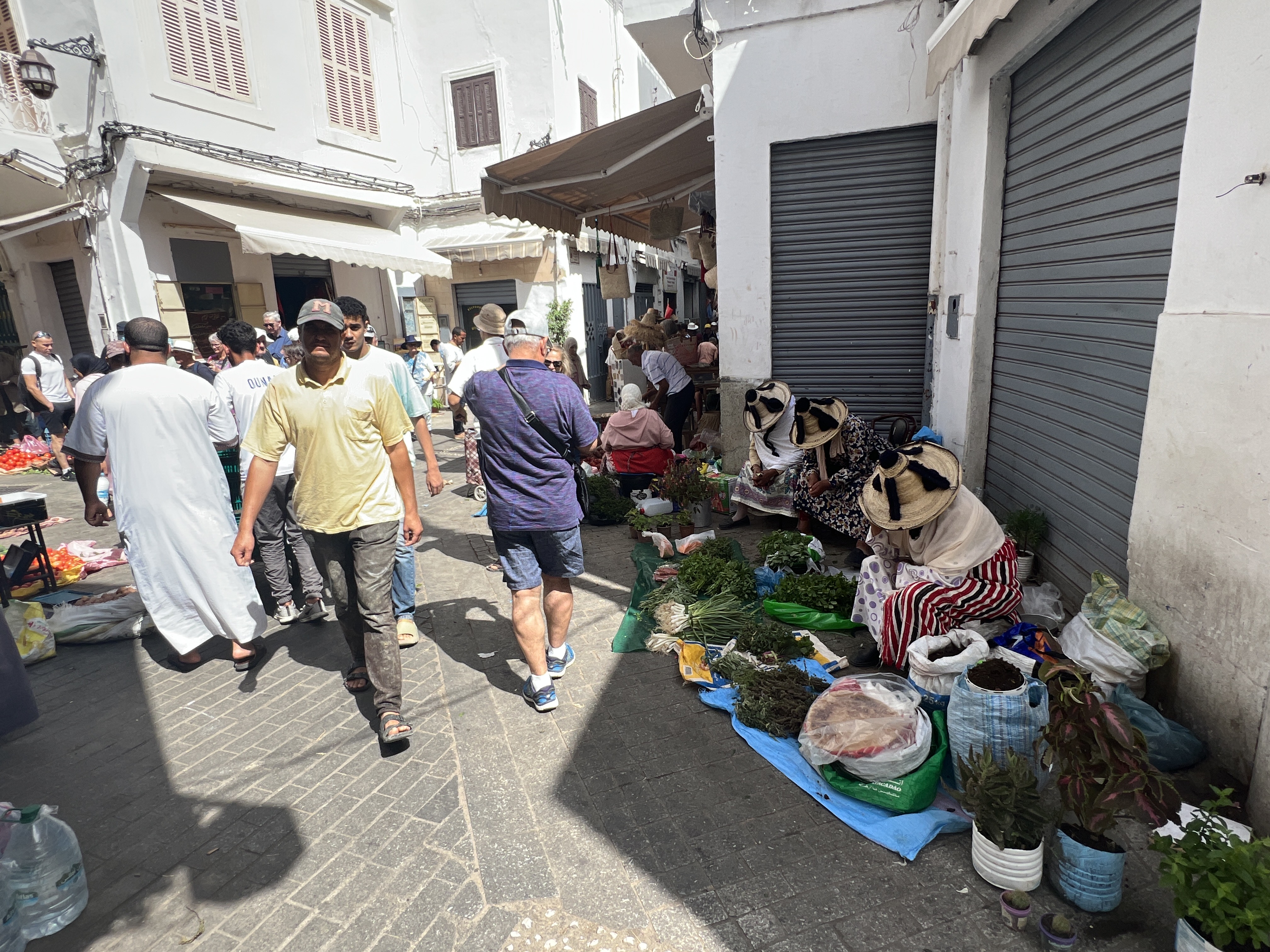
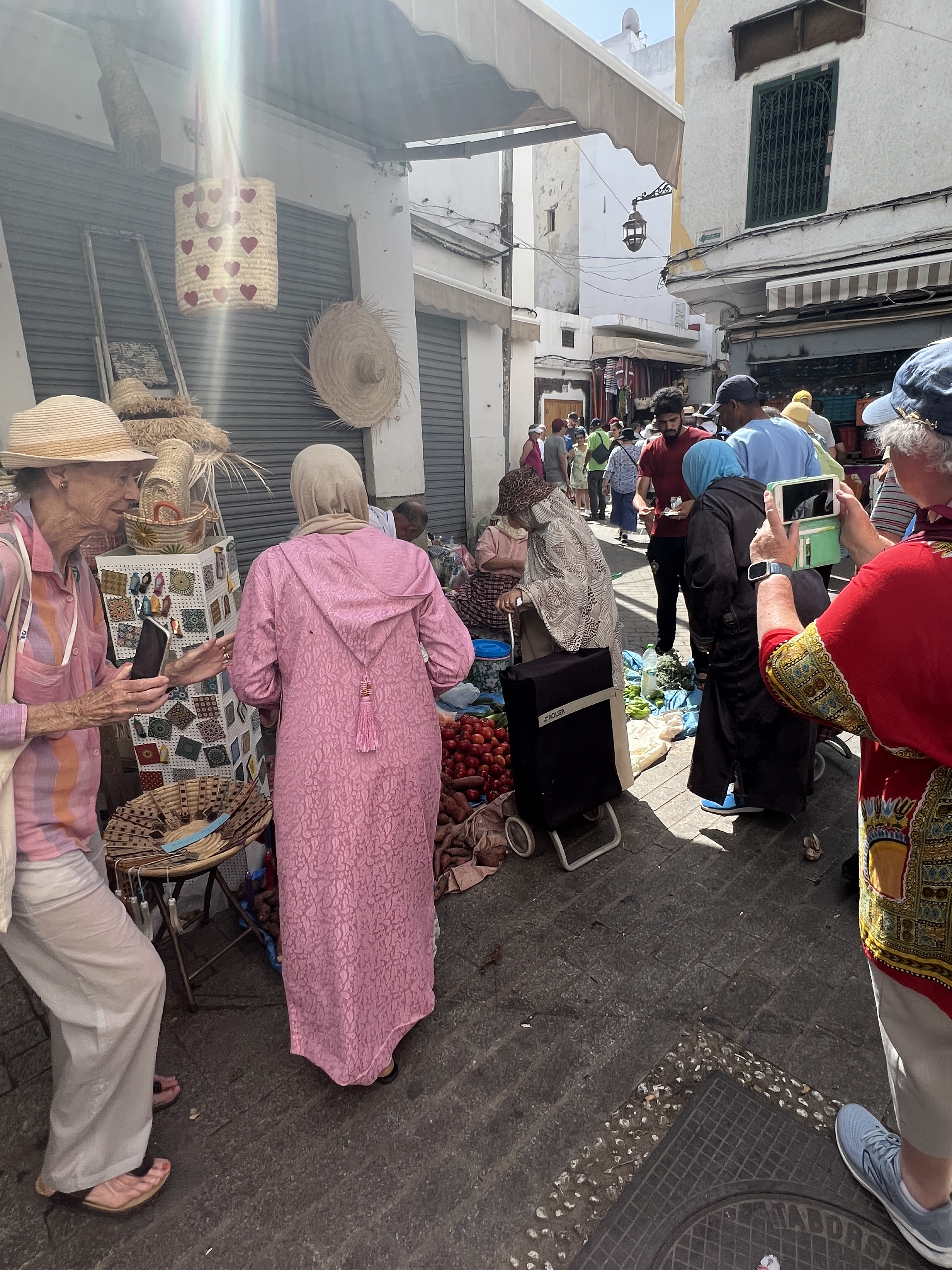
Leaving the Kasbah and entering the Medina was where the fun and games started. Retail harassment on a grand scale. Hard to escape, but Allthego and Homealone were stoic. No pieces were acquired to adorn mantelpieces or walls!
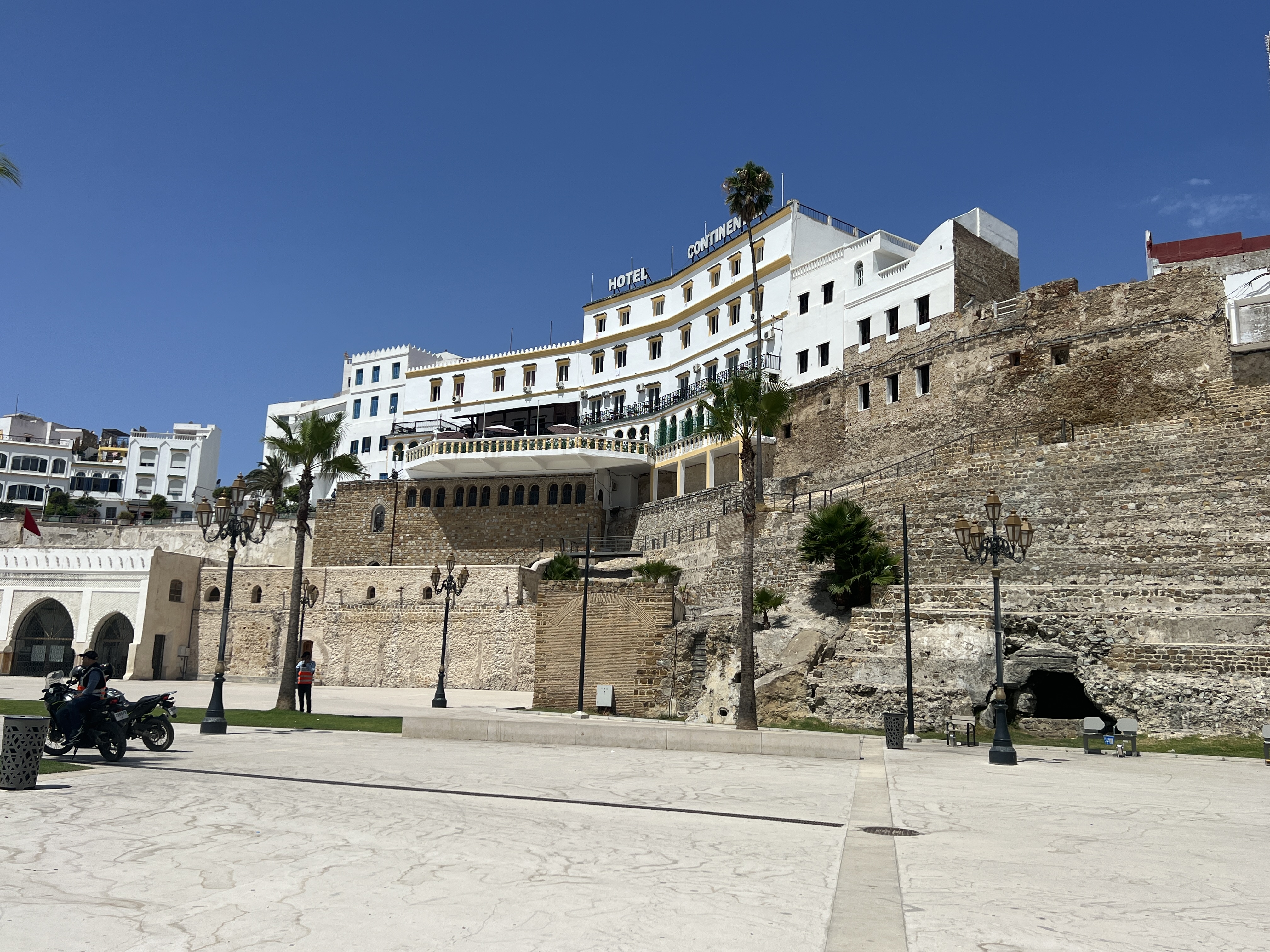
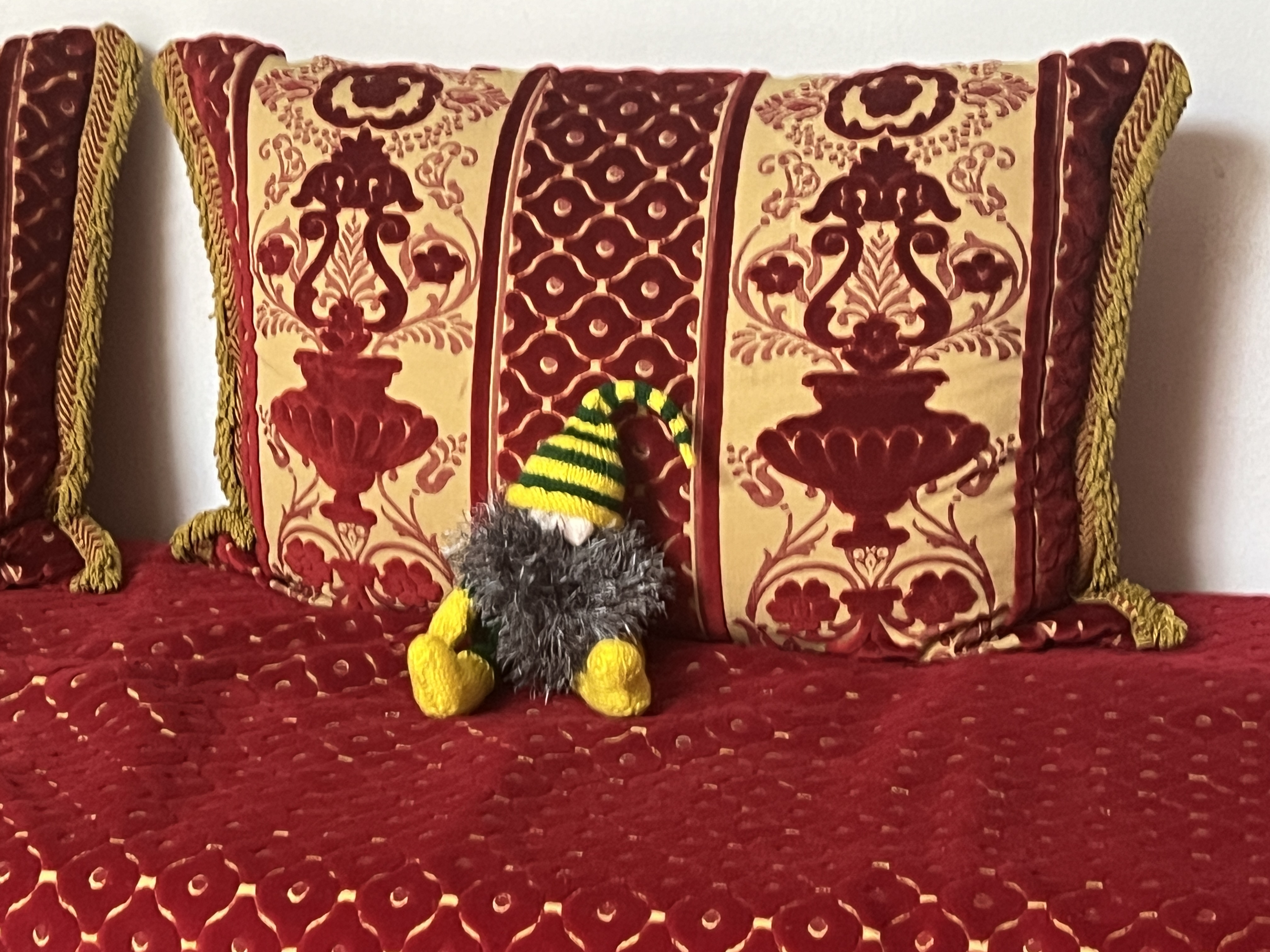
The trading starts. Three traditional Berber women at right, selling their vegetable produce. Heads bowed to avoid camera (I think) although we were told we could take photos.Traders along the way Hotel Continental overlooks the port from the city walls.Slobro at rest.
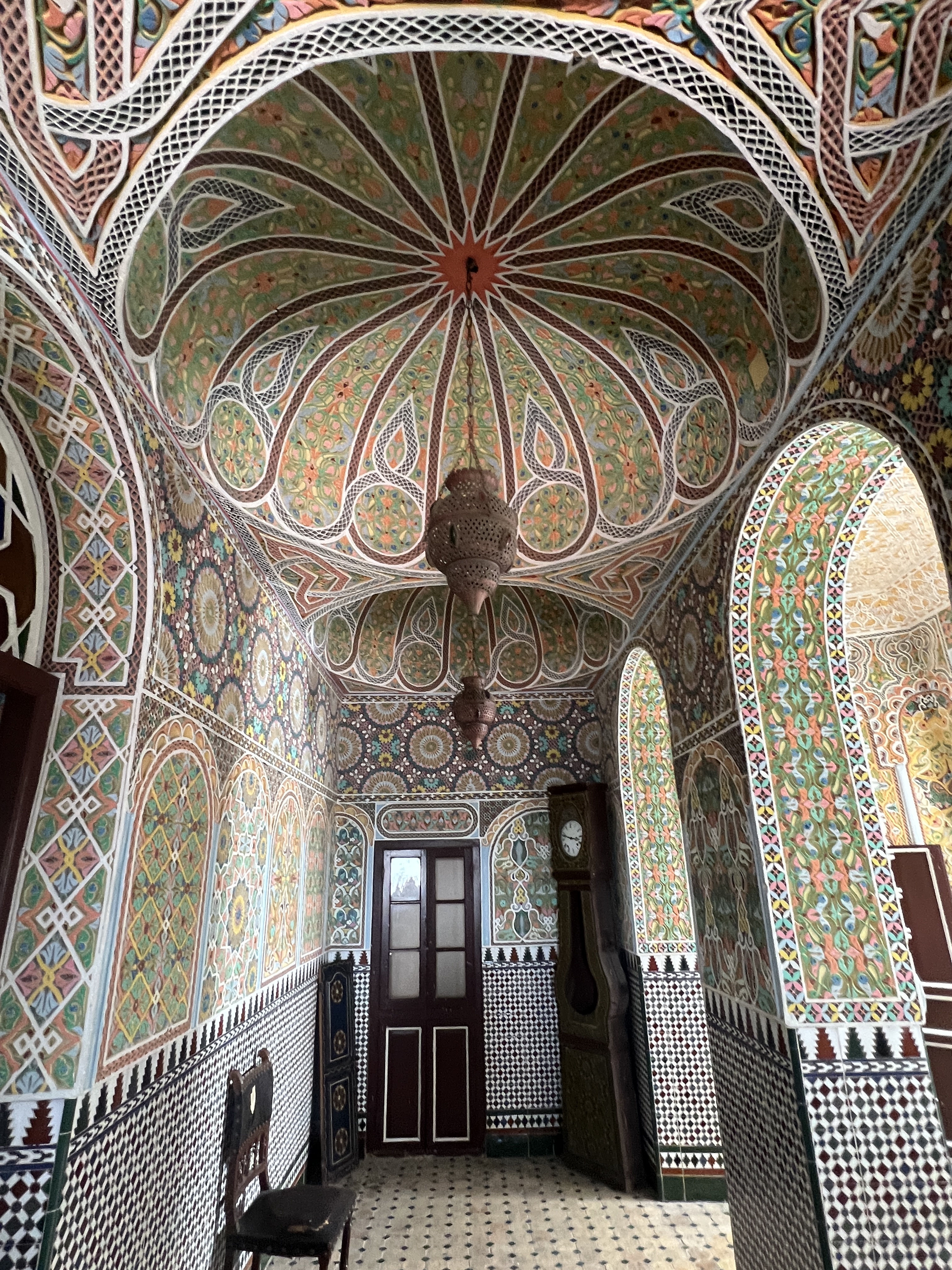
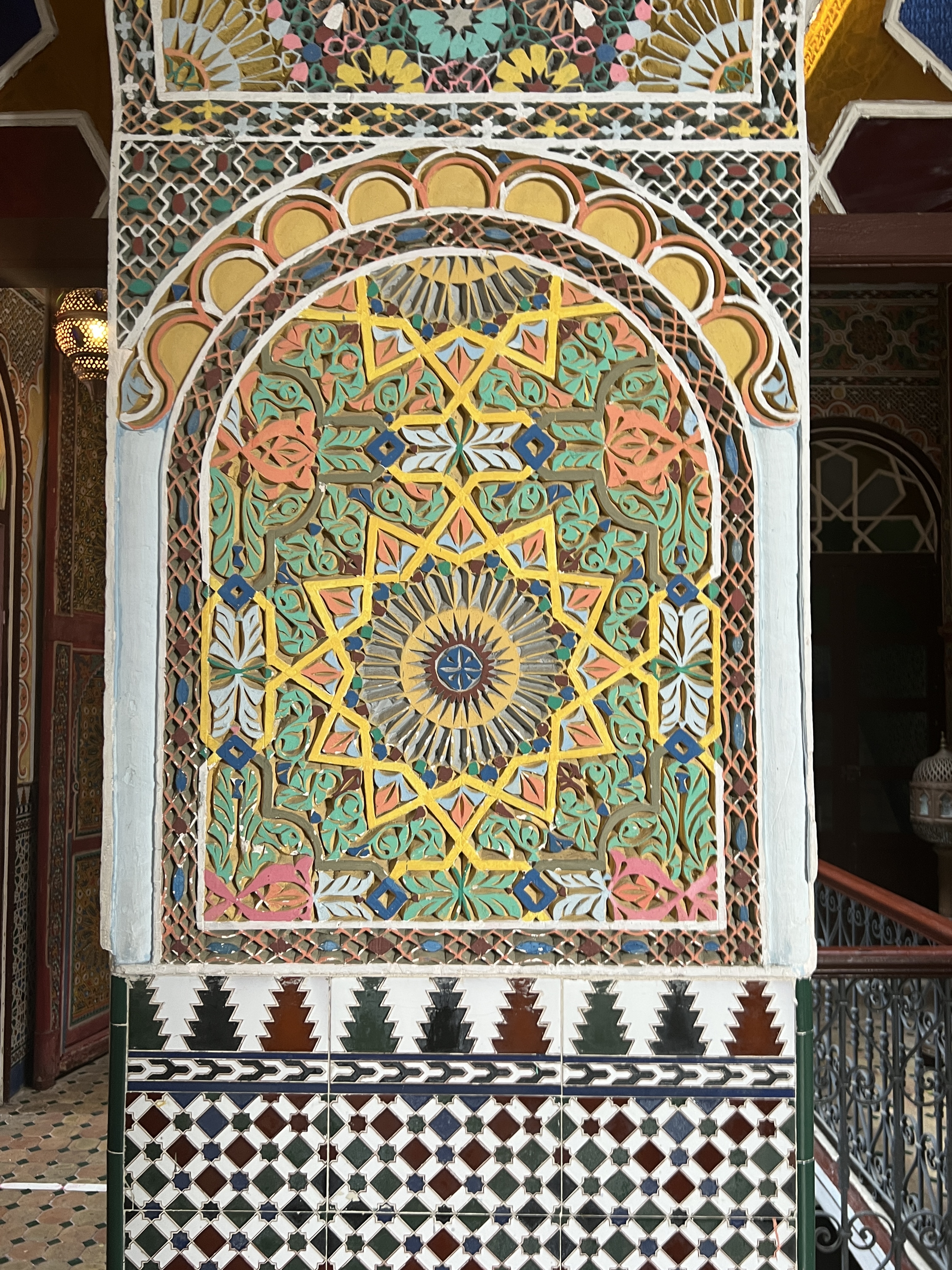
At the end we were relieved to pause in the Hotel Continental overlooking the port, taking in the views and the amazing mosaics in the hotel’s side rooms and hall ways. Quite amazing work.
Mosaics in the HotelIntricate mosaics adorn the walls.
Back to the ship for a well earned period of recuperation, there was no urge to return ashore. Great experience in this port. The Blog continues to be in Blog time we are now about a week behind what is real time, cruising down the Irish Sea having been in the Scottish highlands out of Glasgow a day ago.
We have had a welcome day at sea after a busy period of being in six ports. Time to reset and prepare for another three ports in the coming days. Leaving Barcelona the ship kept fairly close to the Spanish coast and we had some far views of coastal mountain ranges shrouded in haze from our cabin. The sea remains quite calm, although the wind is getting up and it continues to be quite warm out on the deck. We have some time to catch up on trivia and craft activities.
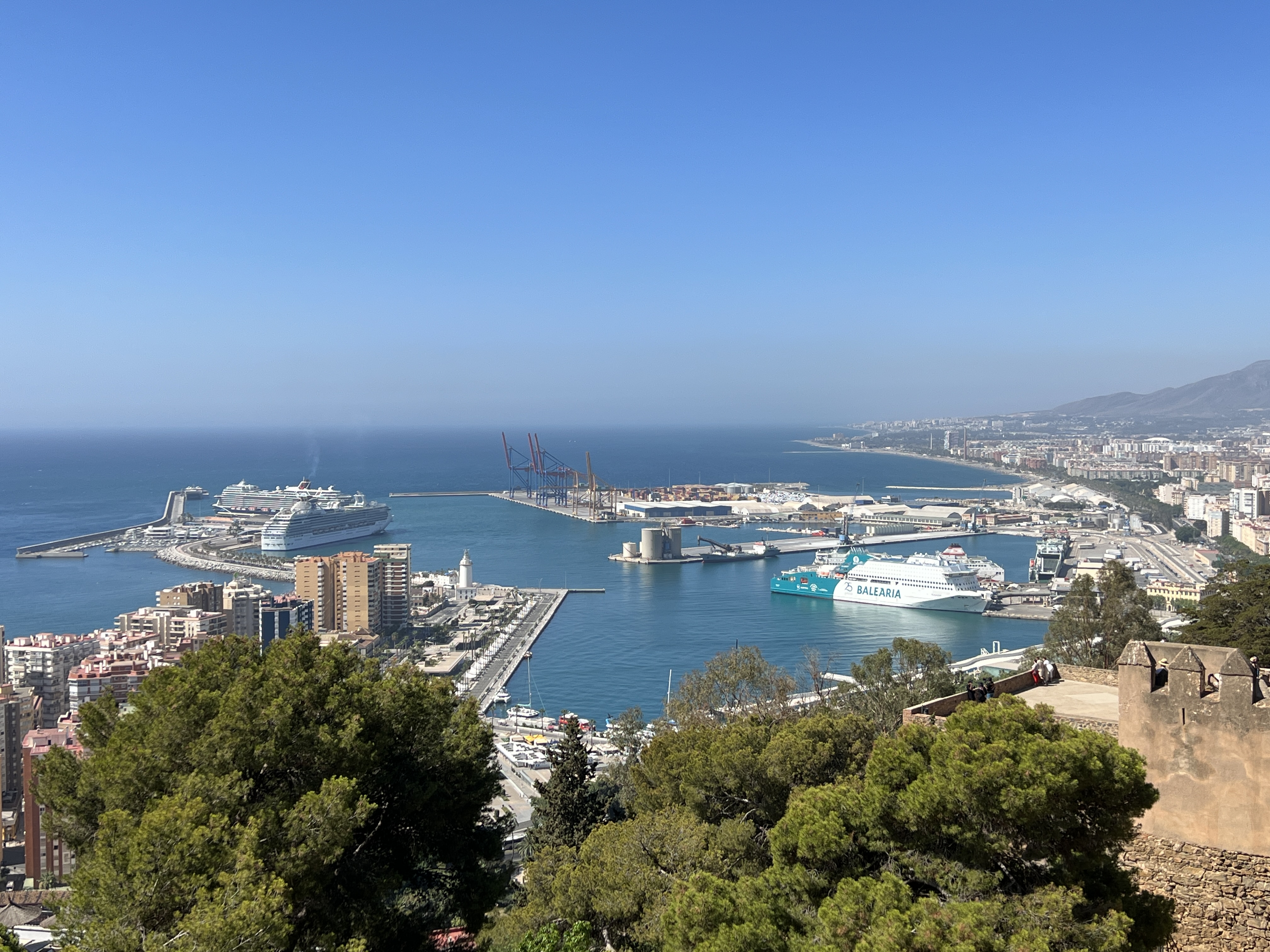
Looking down on the port from Gibralfaro
Malaga is a town with a long and varied history. It was founded by the Phoenicians in 770 BC, the Romans arrived 500 years later followed by a Moorish invasion in the 700s. The Spanish states ultimately united and kicked the Moors out around 1500. All this activity resulted in a great diversity of architecture and cultural life. Today, Malaga is part of the Spanish Sunshine Coast or the Costa del Sol. Many of the shore tours take people away from the town into the countryside to Granada and down the coastline. We have decided to do our own thing and use the Big Red Bus as a means of getting around the sights.
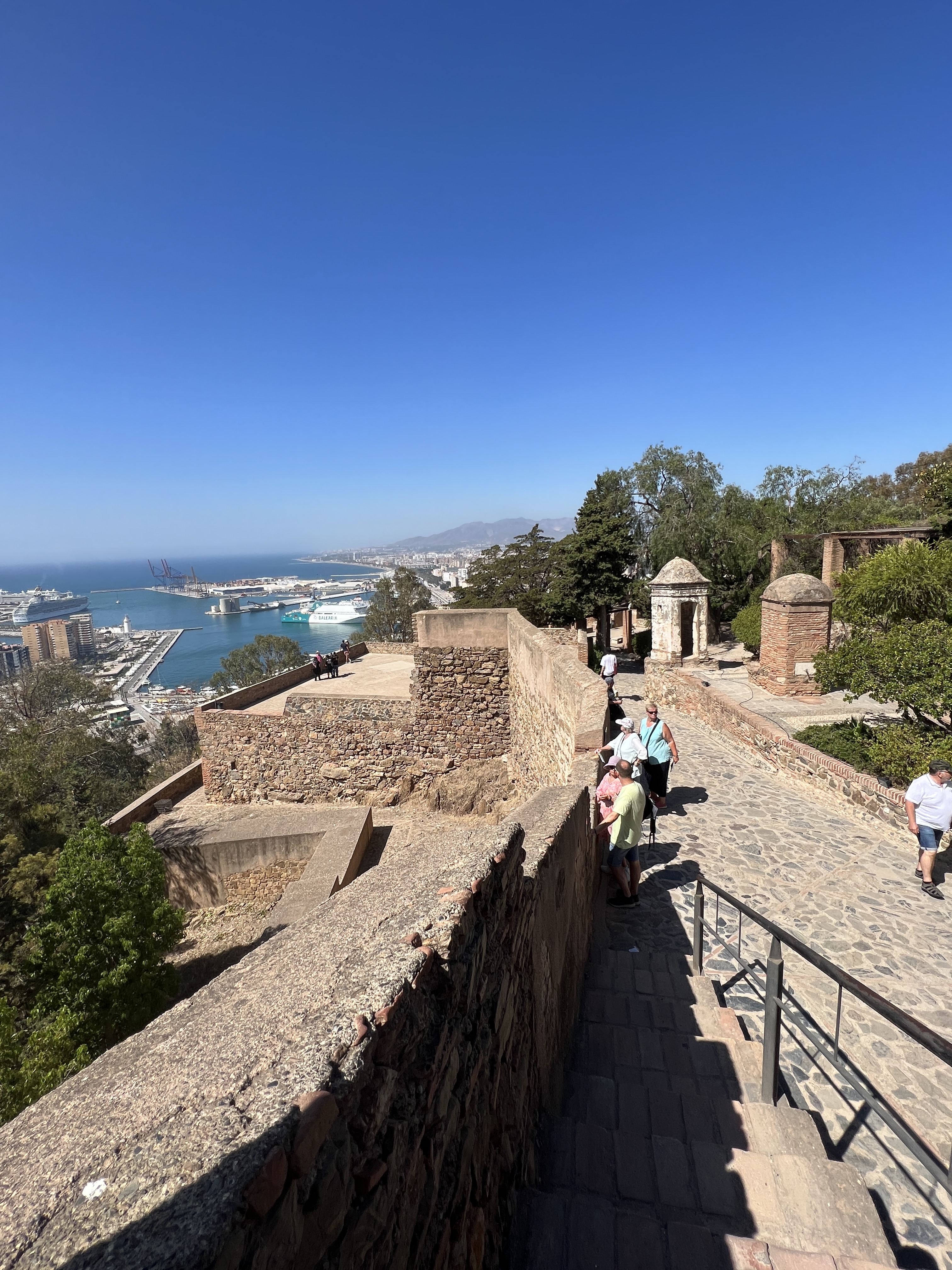
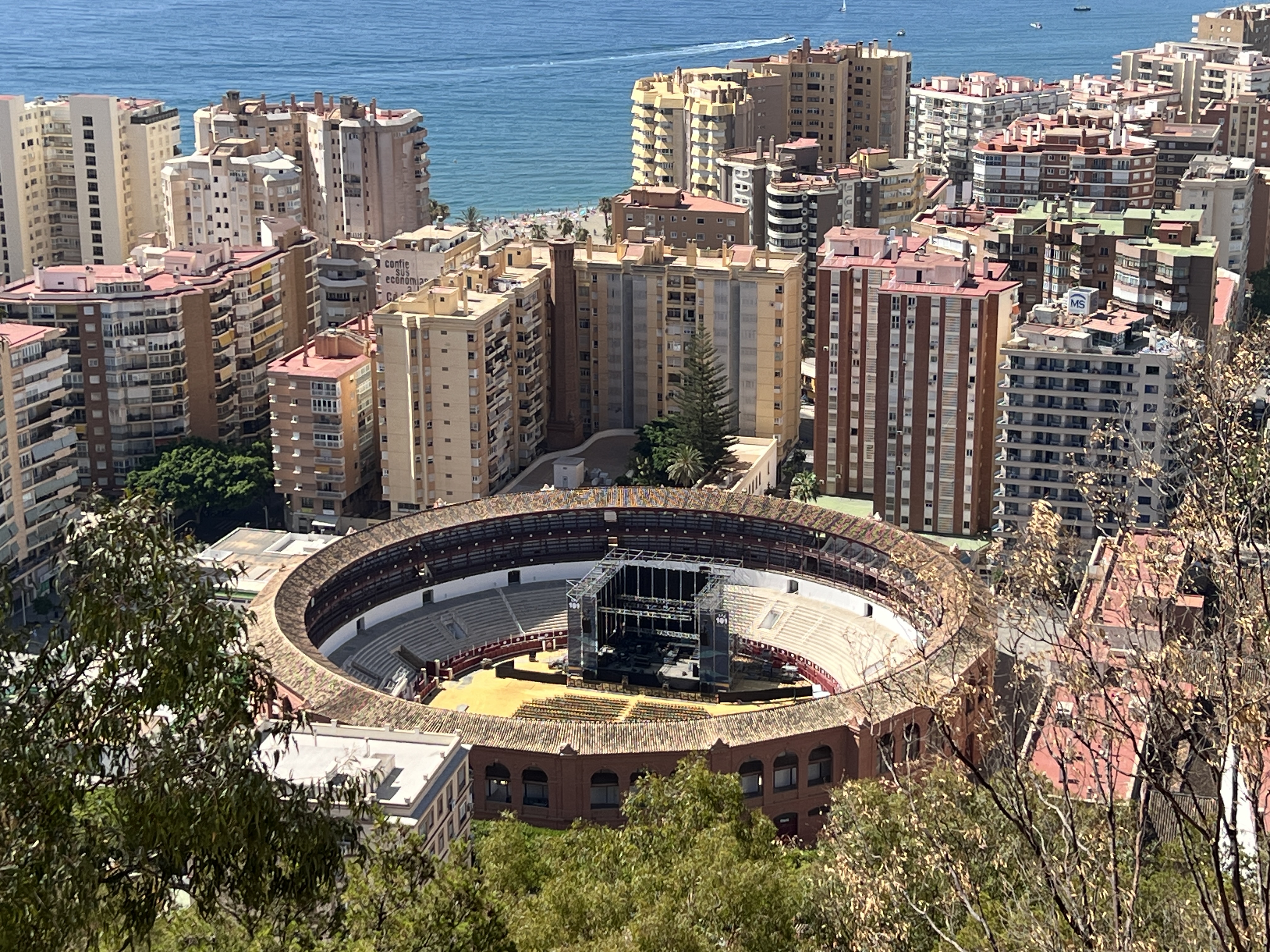
A view from the ramparts of GibralfaroLooking down in the Malaga bull ring, they do fight them here! But set up for a concert.
Our first stop was at the 14th century Moorish fortress, Castillo de Gibralfaro. The fortress sits high on a hill overlooking the town, great views from its ramparts in all directions. Further down the hill the bus stopped near Alcazaba a moorish fort and palace built in the 8th century.
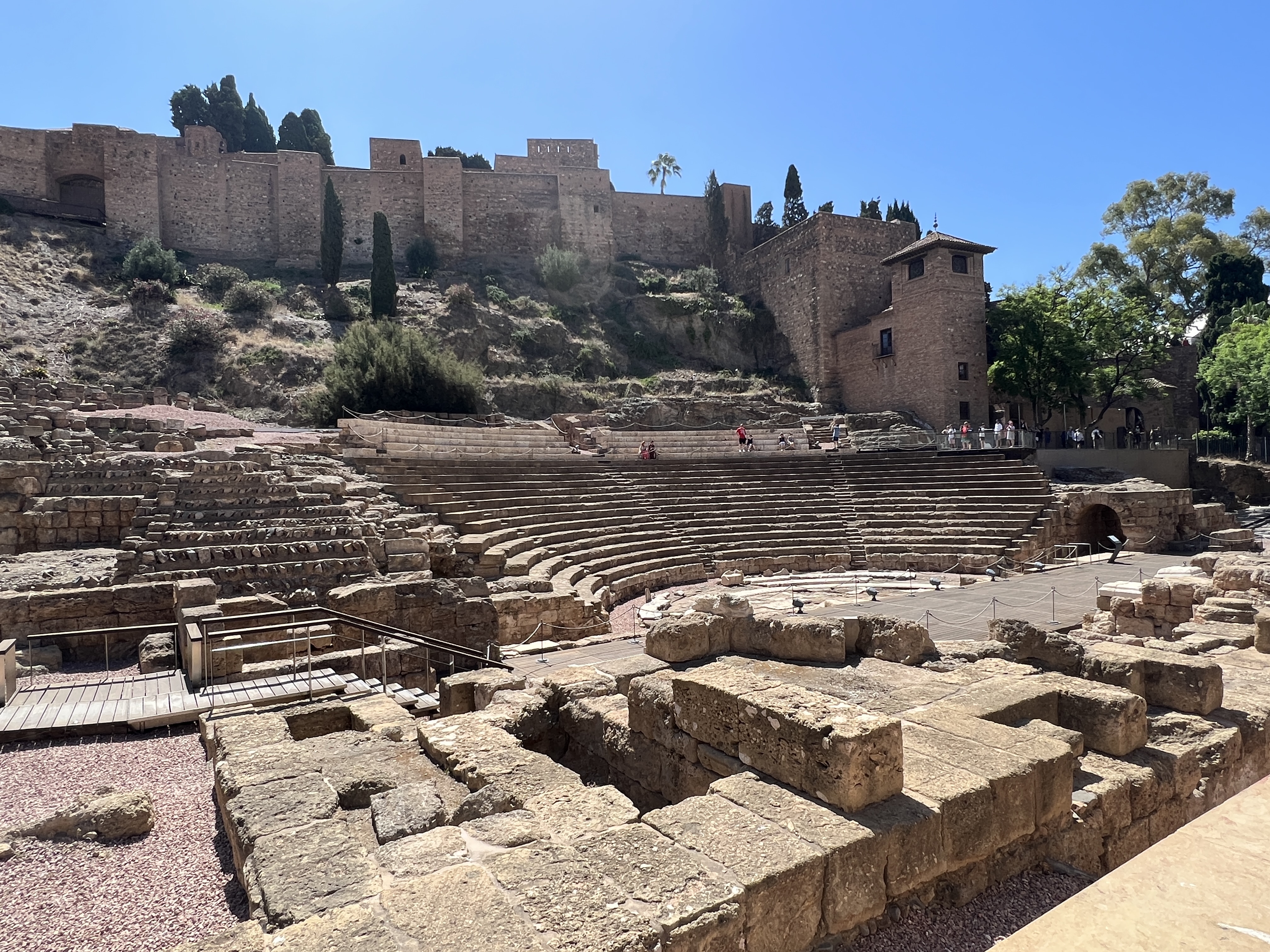
Alcazaba on the hill and the Roman theatre.Park along the waterfront area.
This place also has great views and sits above a much earlier Roman theatre that has been excavated from under hundreds of years of dirt and rubble.
StreetscapeMalaga Cathedral with the incomplete tower in the foreground.
Close by is the 16th century Cathedral of Malaga. The cathedral was designed with two towers, the second though has never been completed due to a lack of funds. It looks a little odd standing over a square now filled with open air restaurants and bars.
On the lookout for the restaurant.
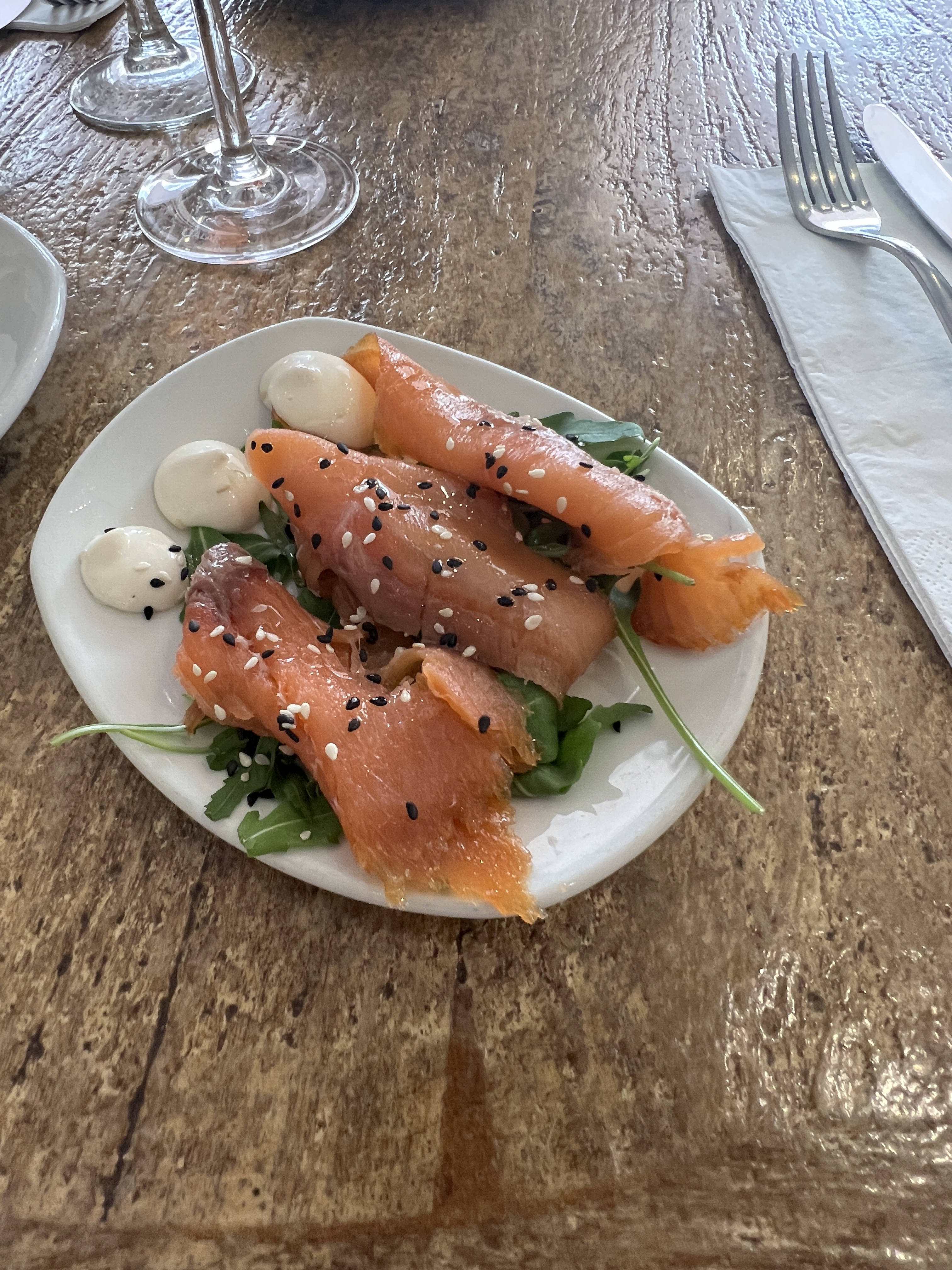
We had been tipped off about a good tapas bar for lunch, but not its exact location. So we wandered around a bit trying to locate it. Giving up we settled for a nice looking place called ‘illari’ where we tried a selection of tapas pieces.
Salmon tapas
Our first genuine Spanish tapas experience! Quite good. As we left we looked up and a few yards down the street was the place that had been recommended, a bit bigger and noisier. Maybe it was lucky we missed it!
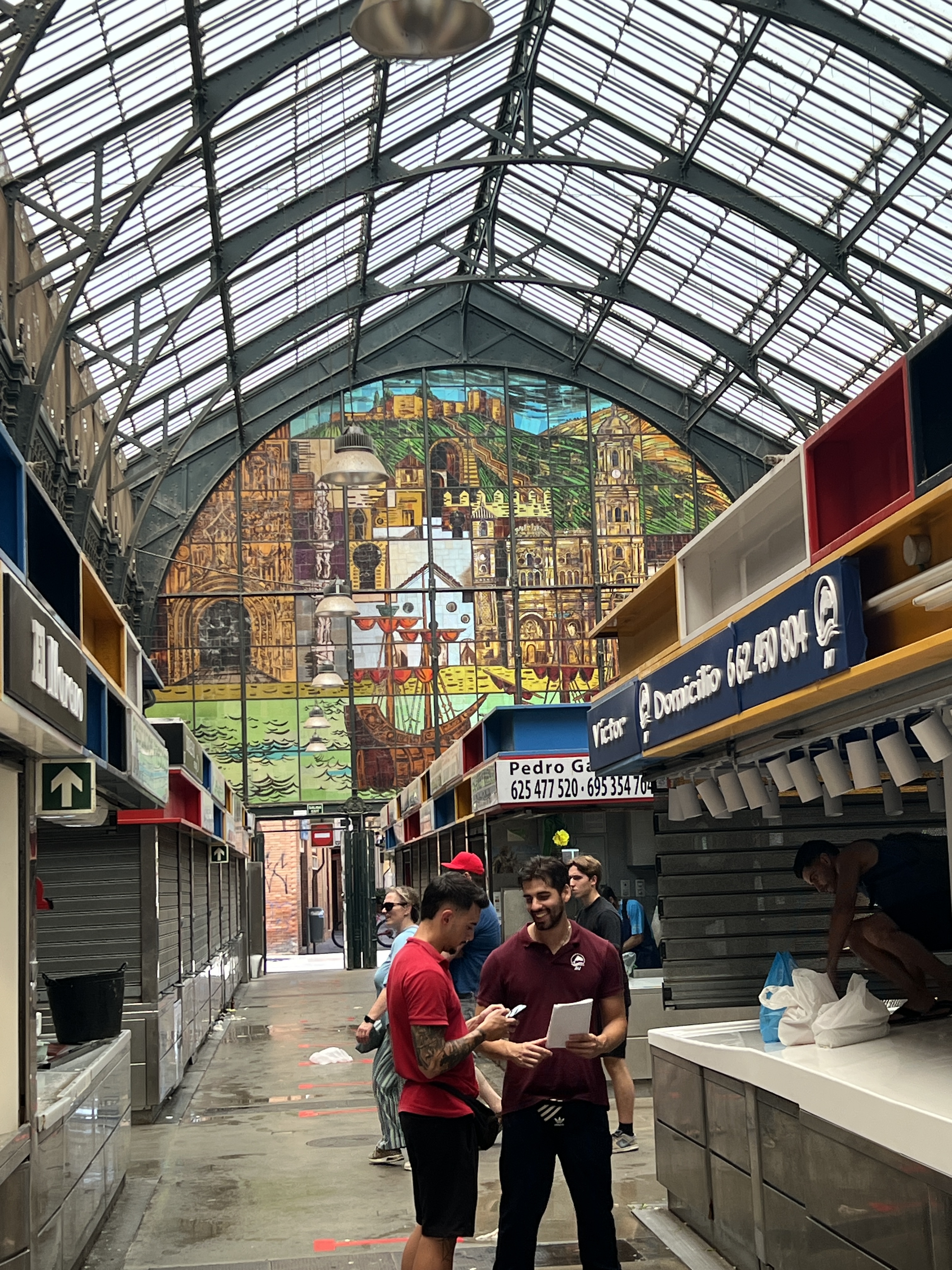
Checking the numbers after a days trading?
Great mural as a backdrop!
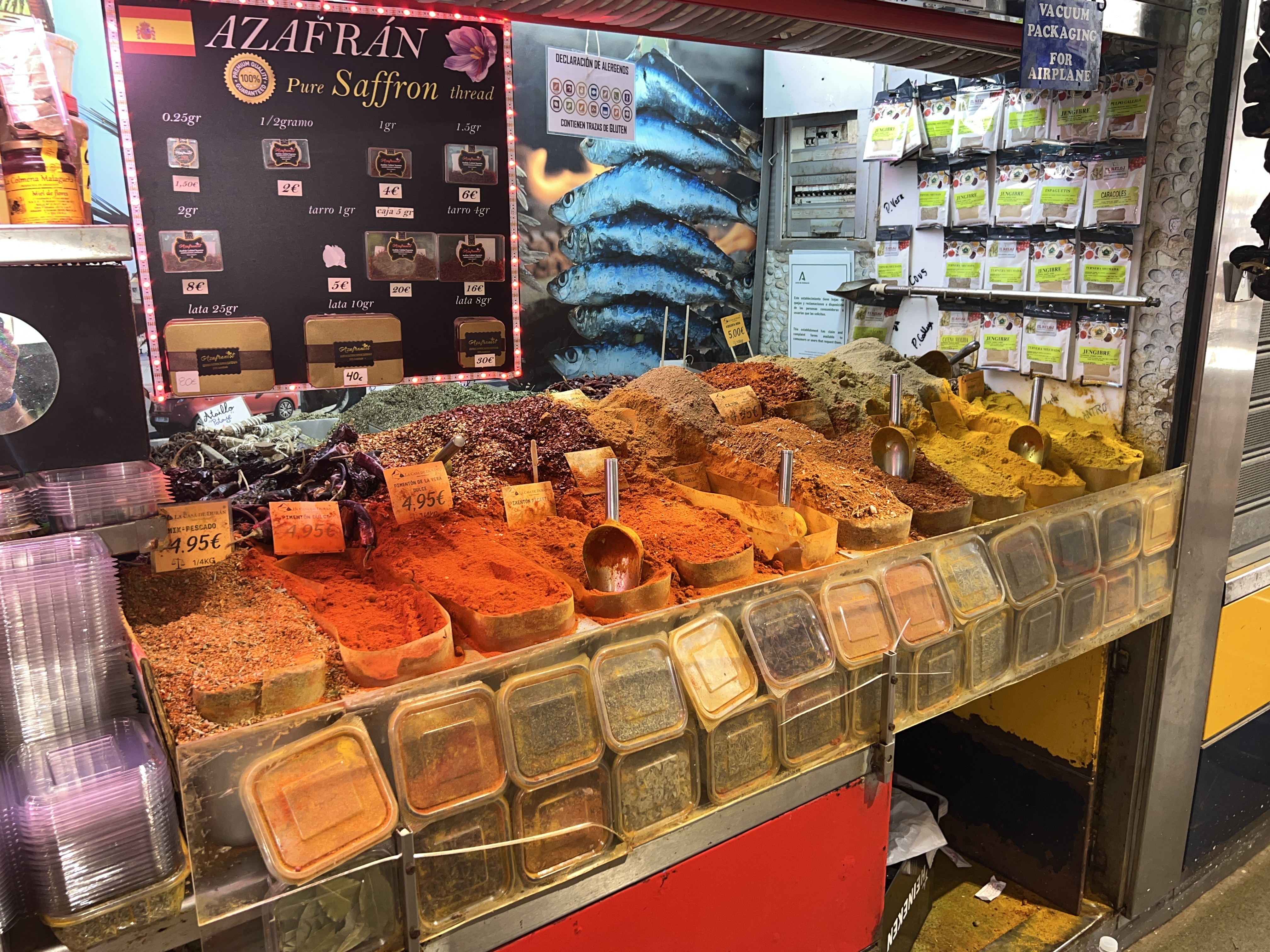
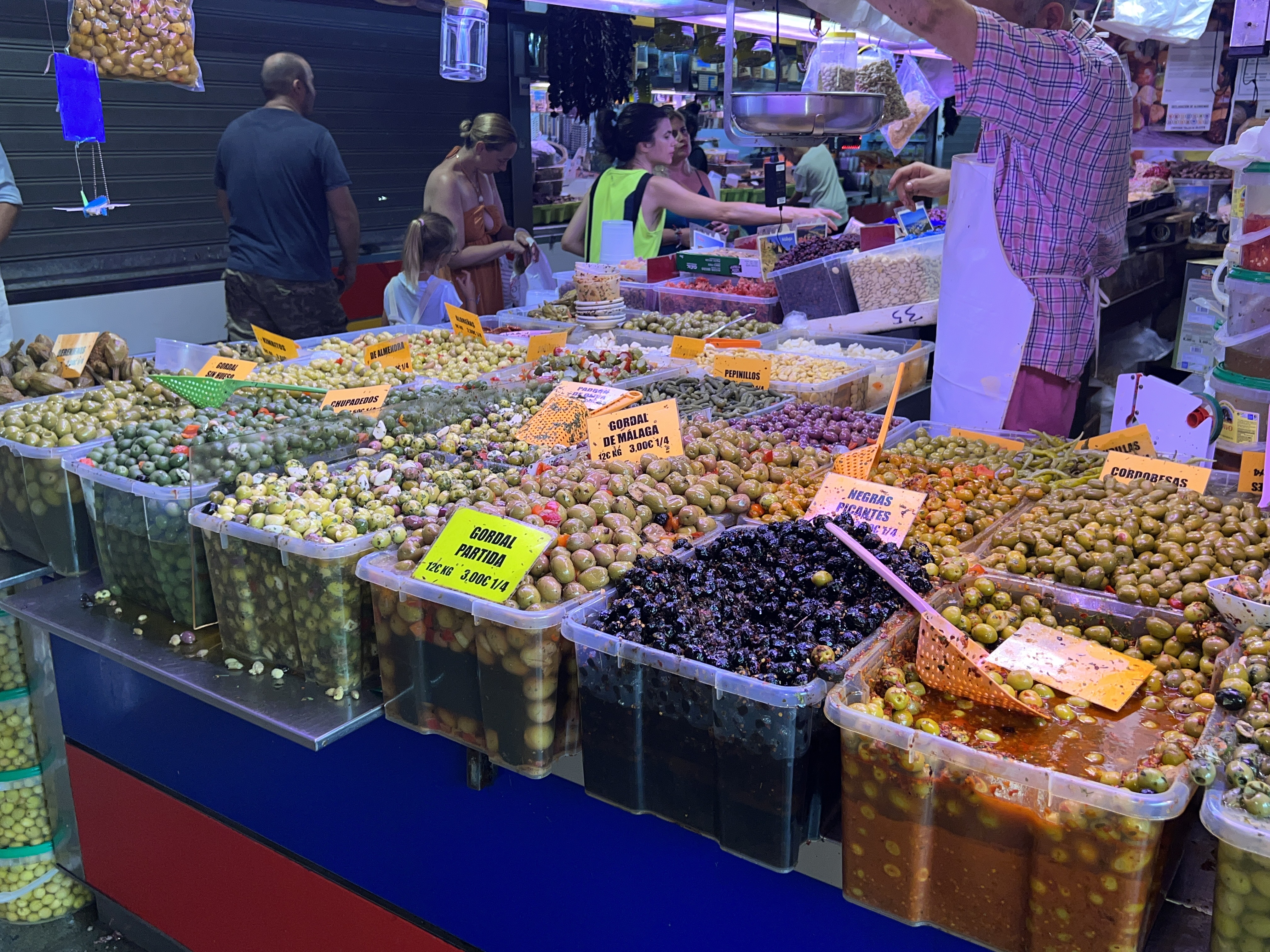
We then set off to find the local market. There was a bit of back and forth in this also. Found it eventually, it was late in the afternoon and some of the stalls were closing down. As usual for these Mediterranean markets there were great displays of fruit snd vegetables. Also spices, olives, pasta and nuts.
Spice rack, amazing aromaCan’t see Coles putting up an olive selection like this at Mt Ommaney!
It was time now to rejoin the bus and complete the circuit before returning to the ship for dinner. During the night we would sail to Tangier in Morocco, passing through the Strait of Gibraltar.
Barcelona is our sixth port stop in six days and there seems to be a general questioning among the older set aboard as to why are we doing this so fast? Need to catch our breath. It has been quite hot and humid but not the ‘crisis’ portrayed in the media. Then, again we are by the water which cools things down a bit. It could be a different story inland and in the north. Speaking of the ‘older set’, many are still getting out and about in the sunshine, others though are happy to remain on board. The average age onboard has it seems dropped to just below 70! Some younger people appear to have got onboard in Dubai, and there are the four who have sadly dropped off the perch, perhaps affecting the averaging. Feeling a little older.
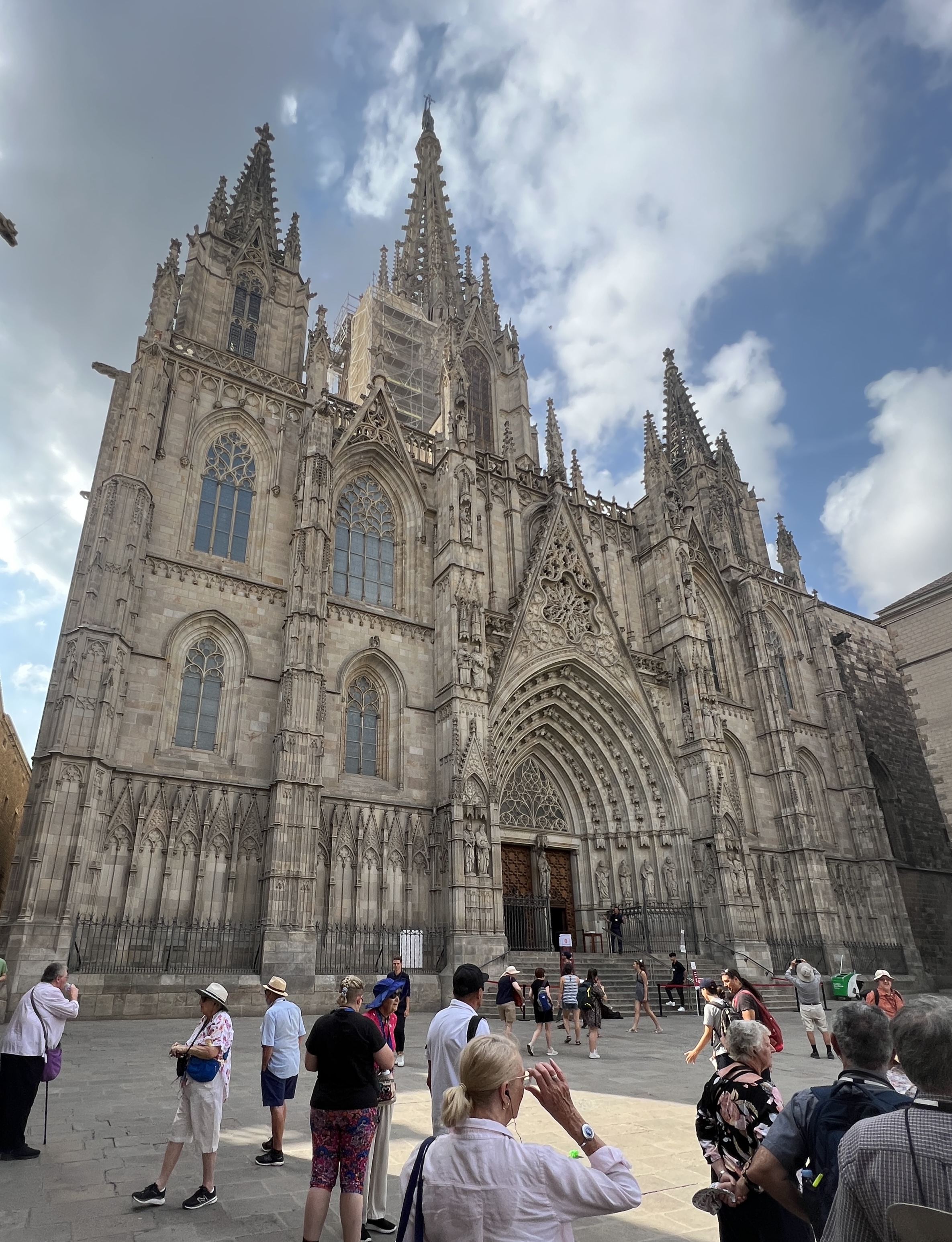
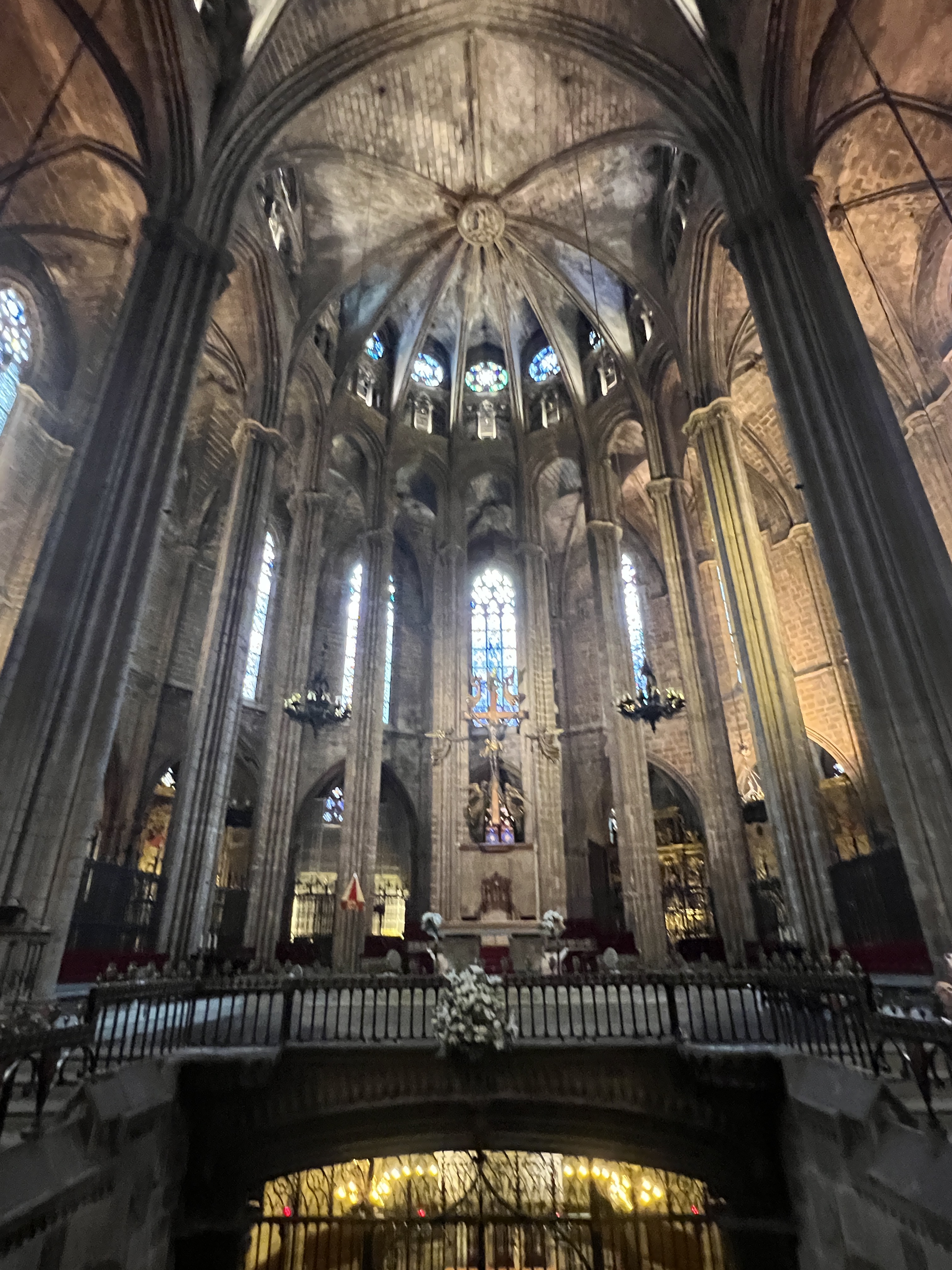
Cathedral of BarcelonaInside the Cathedral
Barcelona is too big to do everything in one day. So it is off to see a couple of the main sites and viewing points. Our guide takes us through into the Old City’s Gothic quarter and a viewing of the Cathedral of Barcelona. The Cathedral is in the Gothic style and is quite dark inside, some 600 years old.
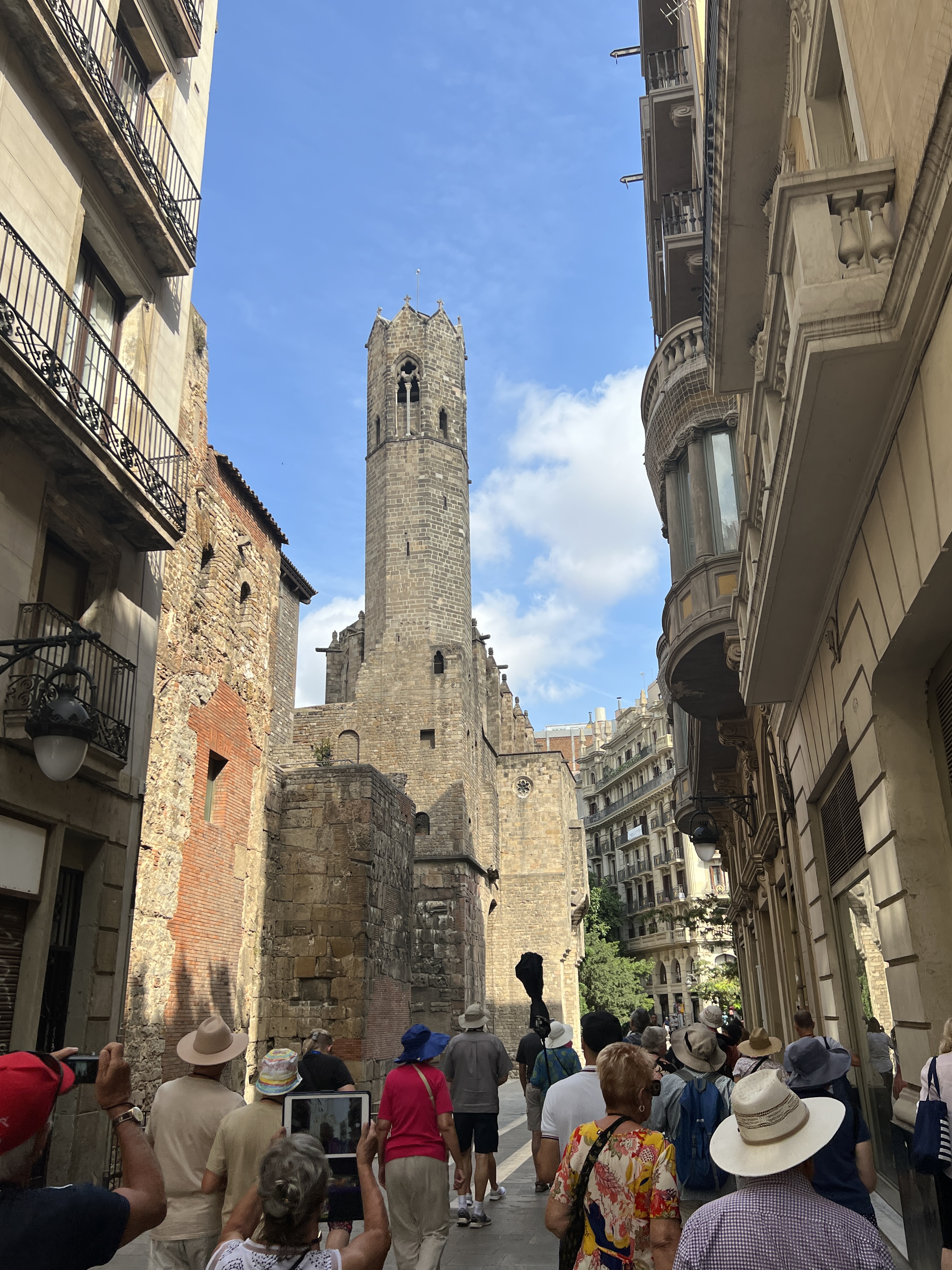
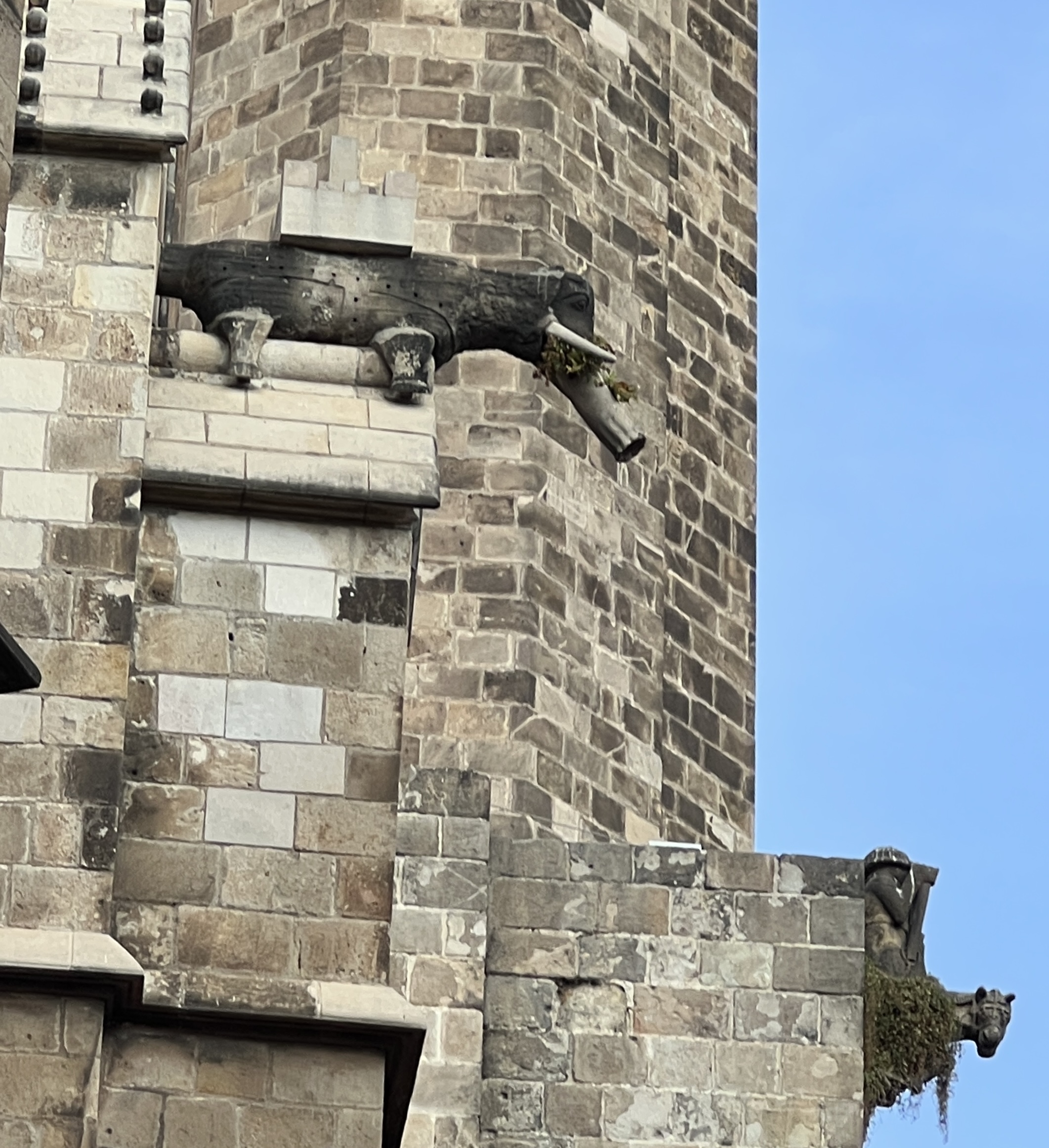
Roman wallsElephant gargoyle in the Gothic Quarter
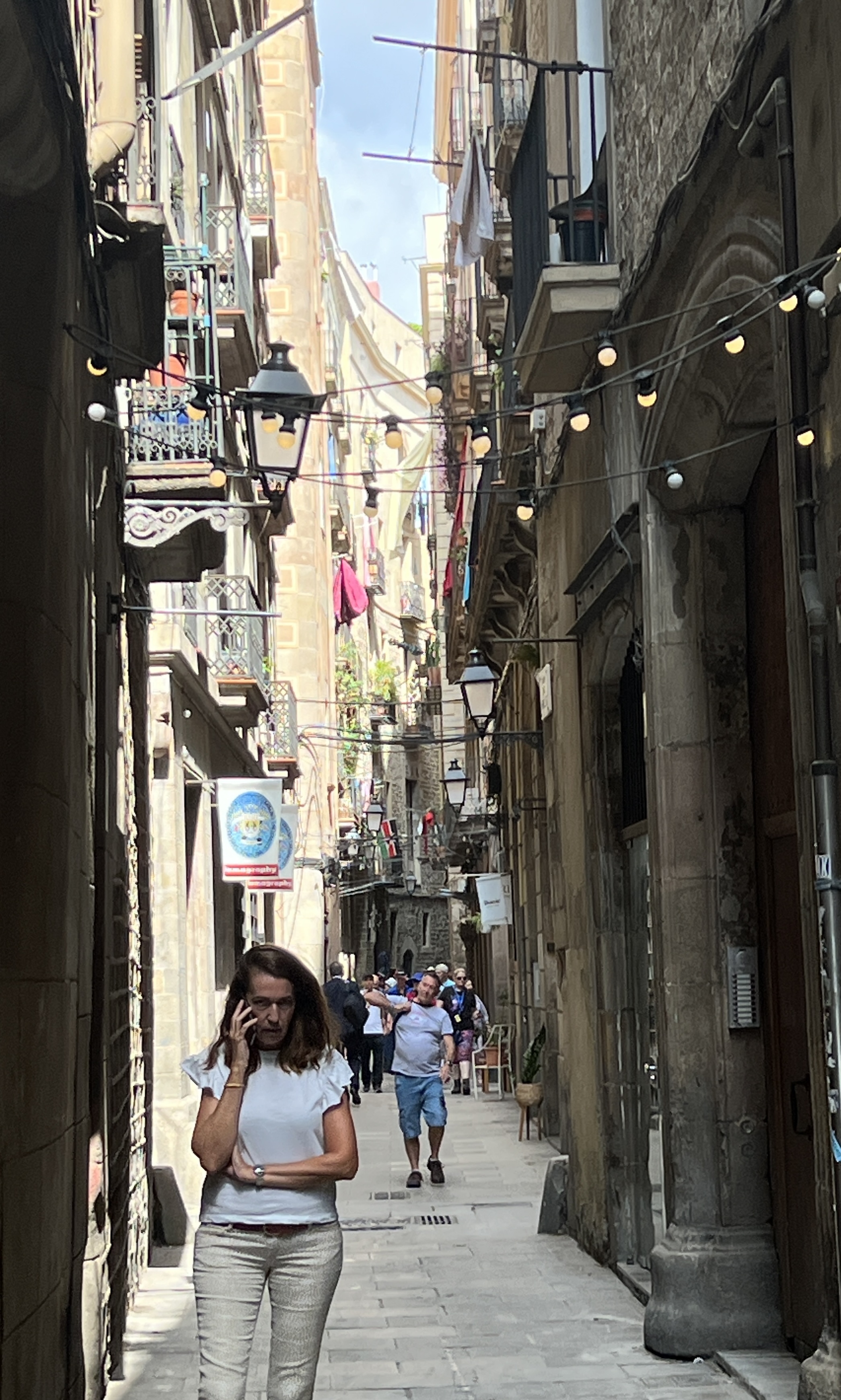
We have a walk up and down some of the old narrow streets dating back to medieval and Roman times.
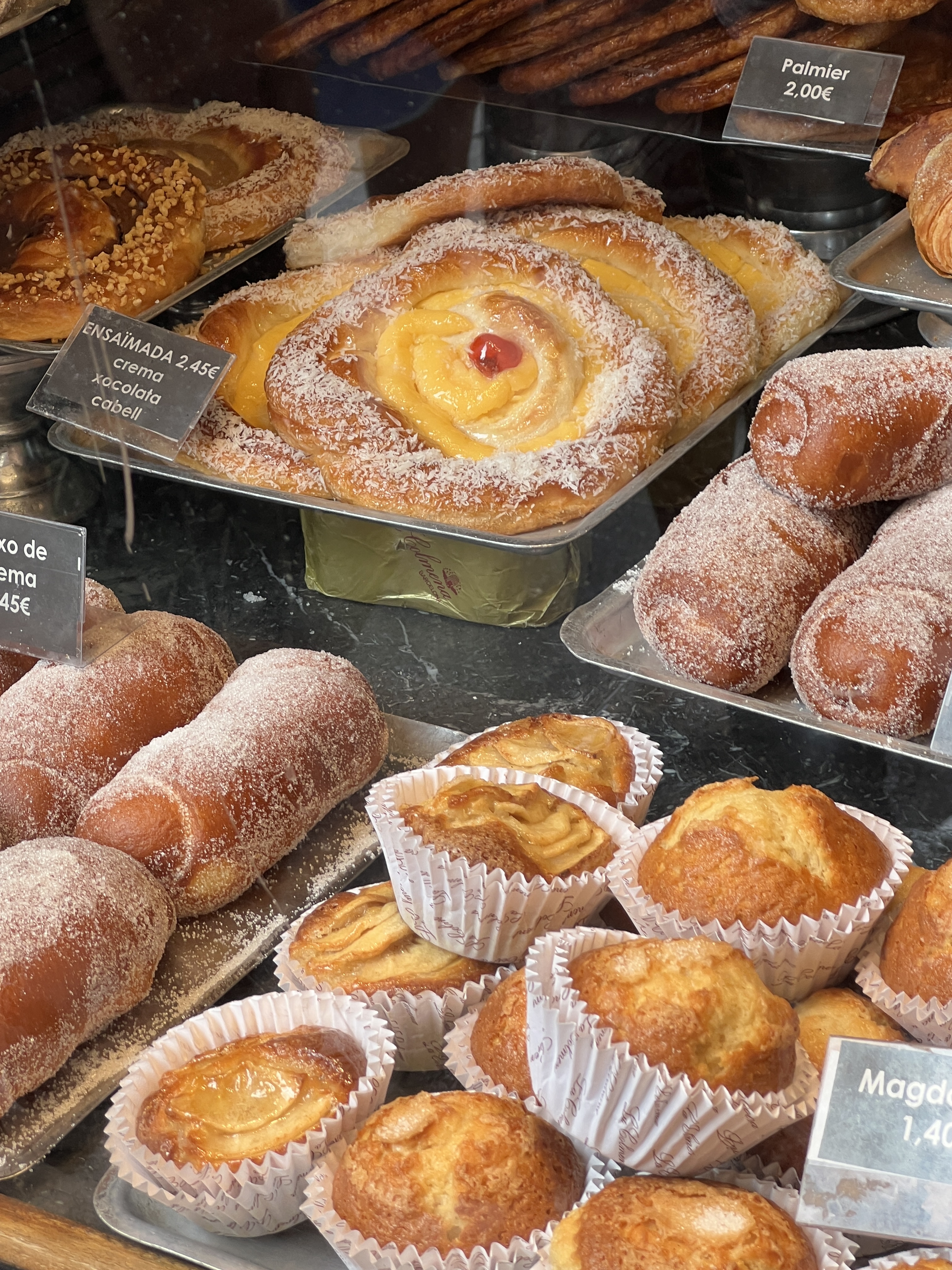
Street in the Gothic QuarterPastries galore
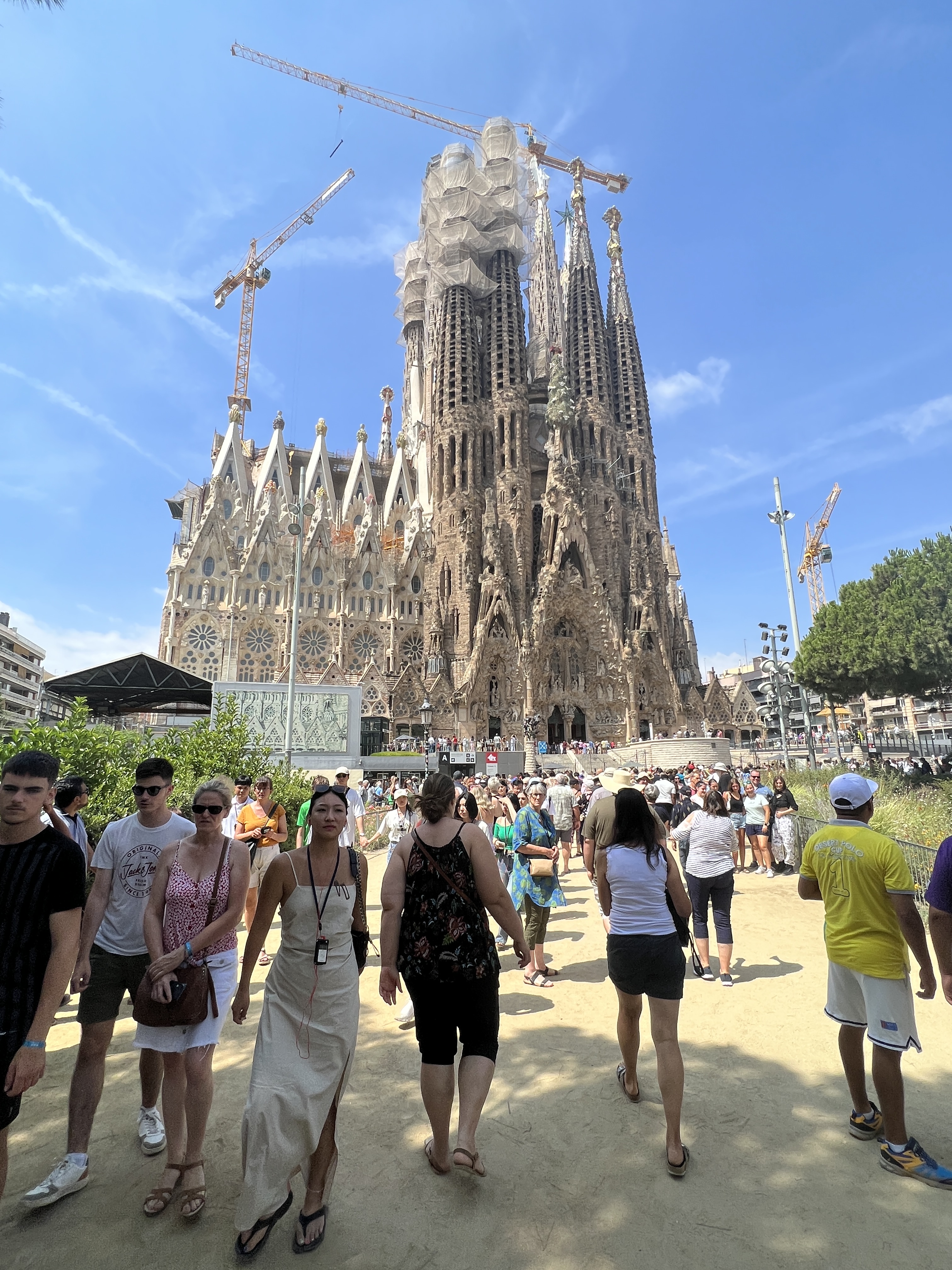
Back on the bus for the drive to La Sagrada Familia. This is something of a spectacle designed by Spain’s famous architect Antoni Gaudi. It has been under construction since 1882 or thereabouts. Gaudi died in 1926 and others have been faithfully forging ahead since then.
Sagrada Familia
Pre COVID the objective was to have it completed by 2026 for the centenary of his death. But, like many other things COVID has been the gremlin in the time line and it seems that it will not be completed till 2032, 150 years after it was started. Meanwhile cranes and scaffolding abound.
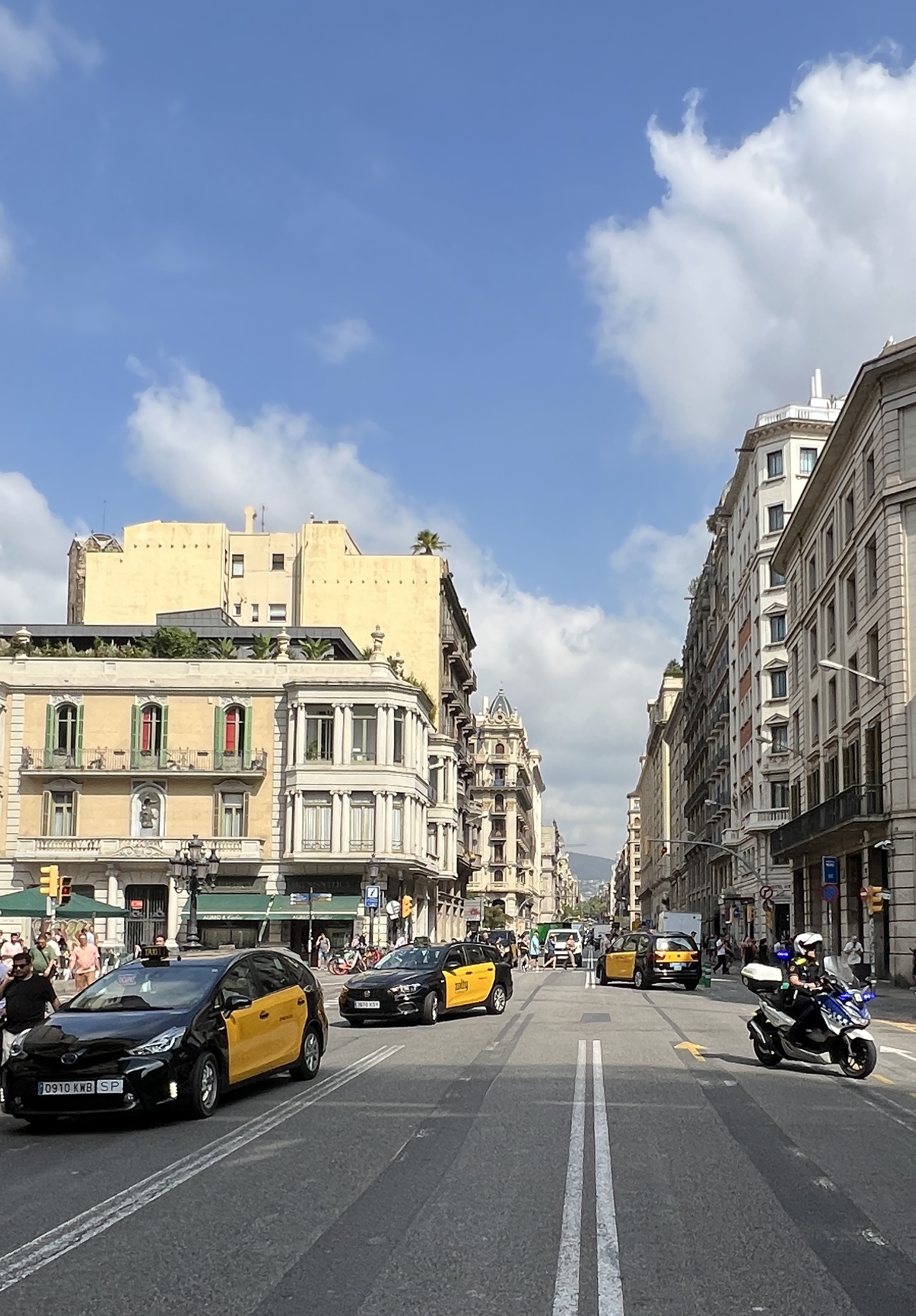
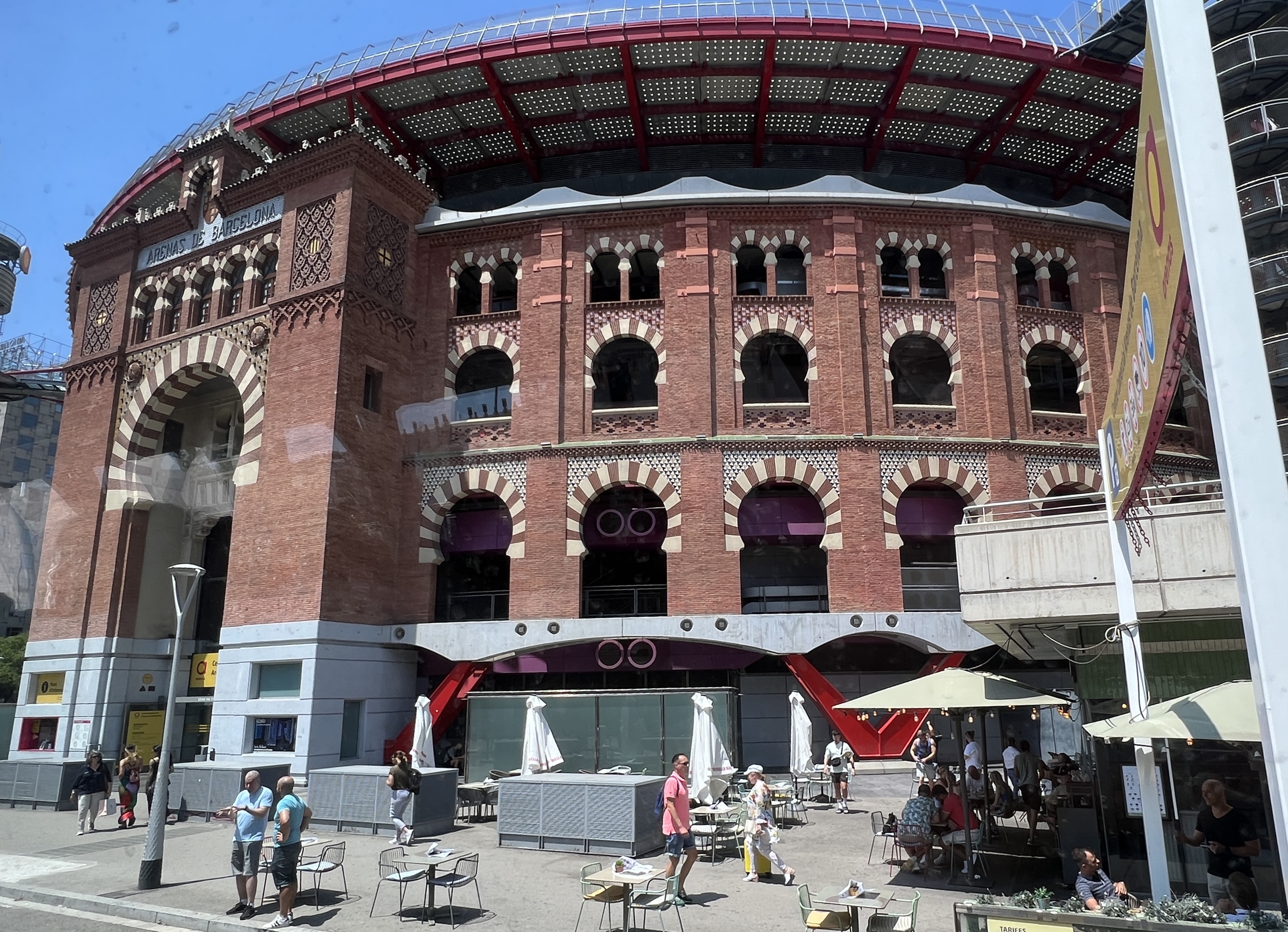
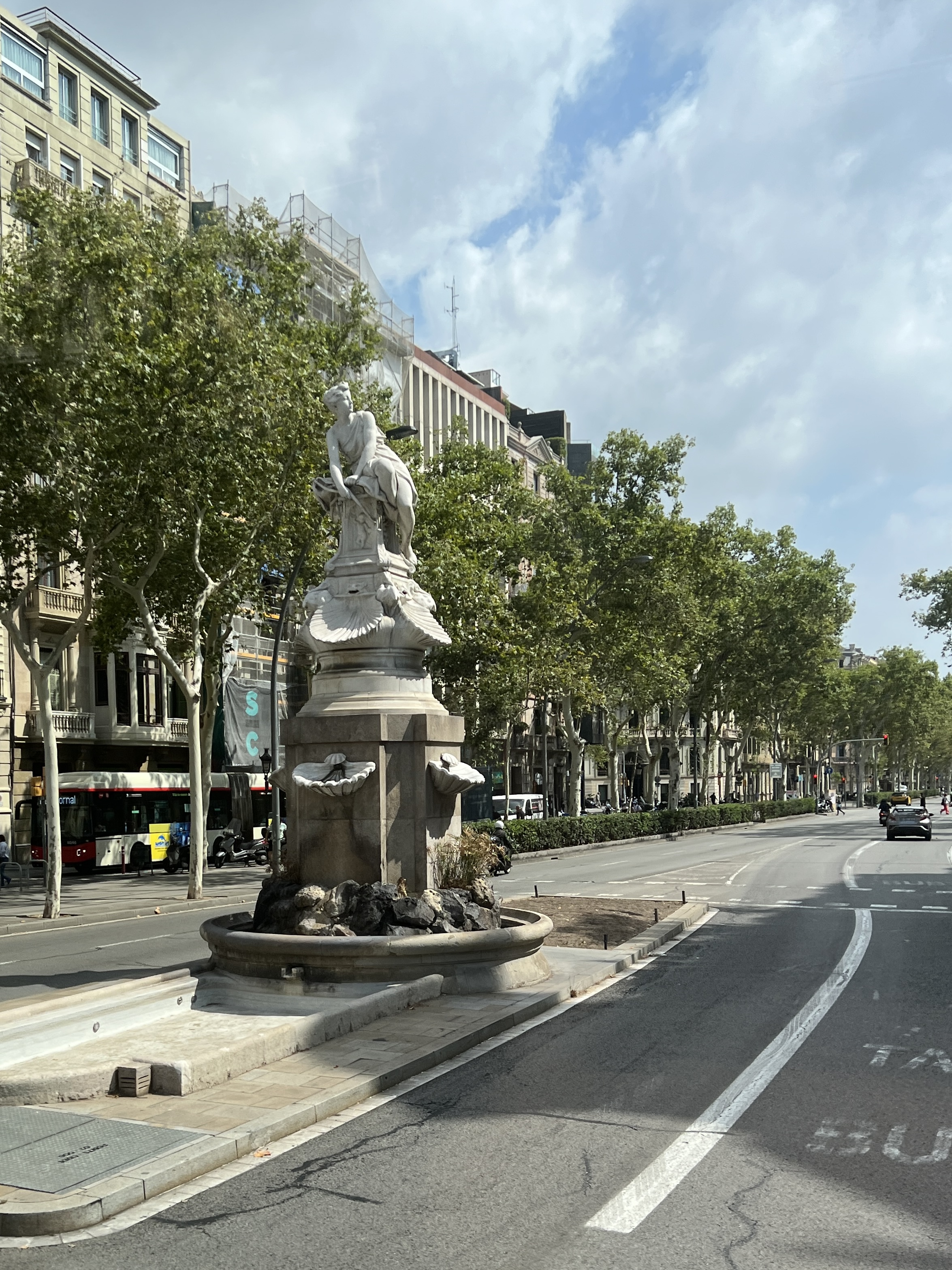
One of the main boulevards Former bull ring
Rejoining the bus we continue on a scenic drive around town on the way to Montjuic Mt for a look over the city from on high. We pass by the city’s bull ring, the ornate Plaza de Toros Monumental de Barcelona. Bull fighting was banned in the Catalan region of Spain in 2011, although overturned a few years later there hasn’t been a bull fight here since. The building now serves as an entertainment stadium.
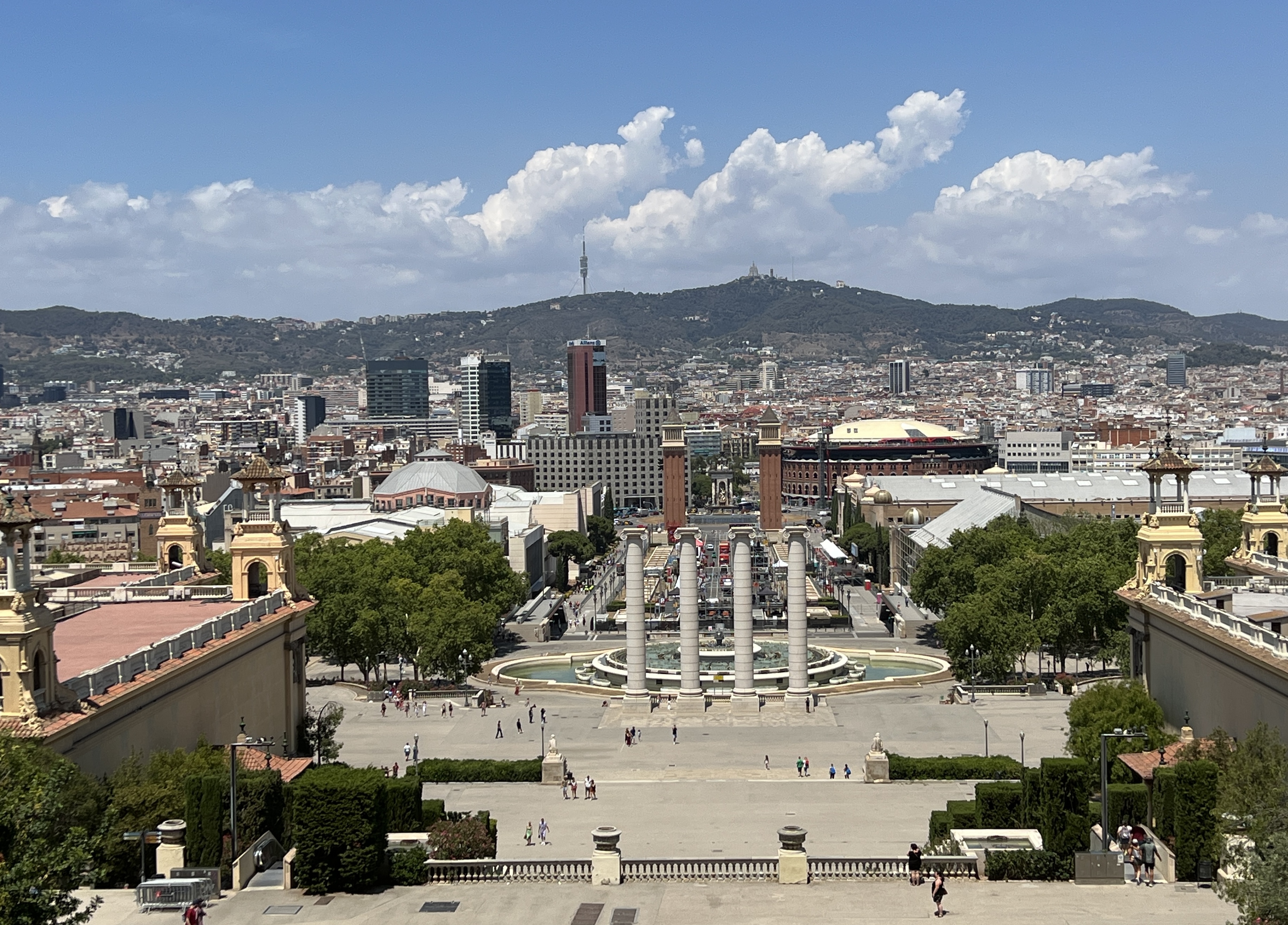
One of the many tree lined streets.View from Montjuic Mt. Overlooking the Venetian towers and old Bull Ring.
The view from the top of Montjuic is panoramic, capturing the entire city. Quite a special outlook.
Although we are in port here till quite late at night it is back to the ship for a late lunch snack and then put the feet up for a bit of R & R.
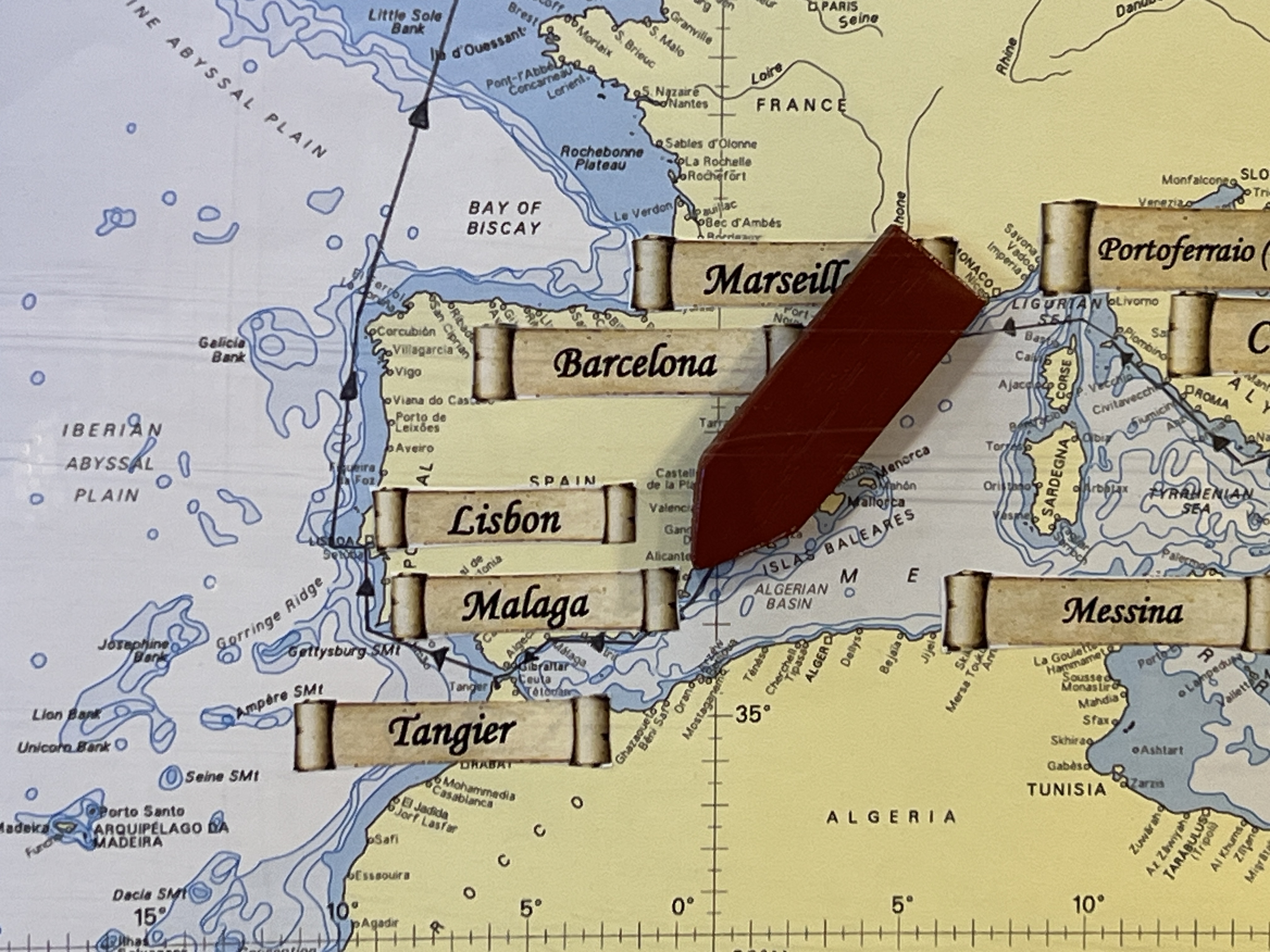
Coming down the Spanish coast, Malaga the stop after Barcelona.
All this activity has caused the Blog to slip behind our actual schedule by a few days. In Blog time we now have a day at sea before arriving at Malaga further down the coast towards Gibraltar. In actual time we are out in the Atlantic about to head, later this evening, across the Bay of Biscay. So, Allthego has a bit of work to get up to date.
We have now made our way out of Italian waters to Marseille, the second largest city in France and can be thought of as a gateway to the Provence region of Mediterranean France. Provence is one of the foodbowls of France and also one of the poorer regions economically. But it is a picture perfect region of rolling hills, fields and small towns. Great ‘peasant’ food and hospitality. Allthego and Homealone have spent time in this part of France before, including having had a great trip along the Canal du Midi, generally to the north of Marseille, with our friends the Watts back in 2017.
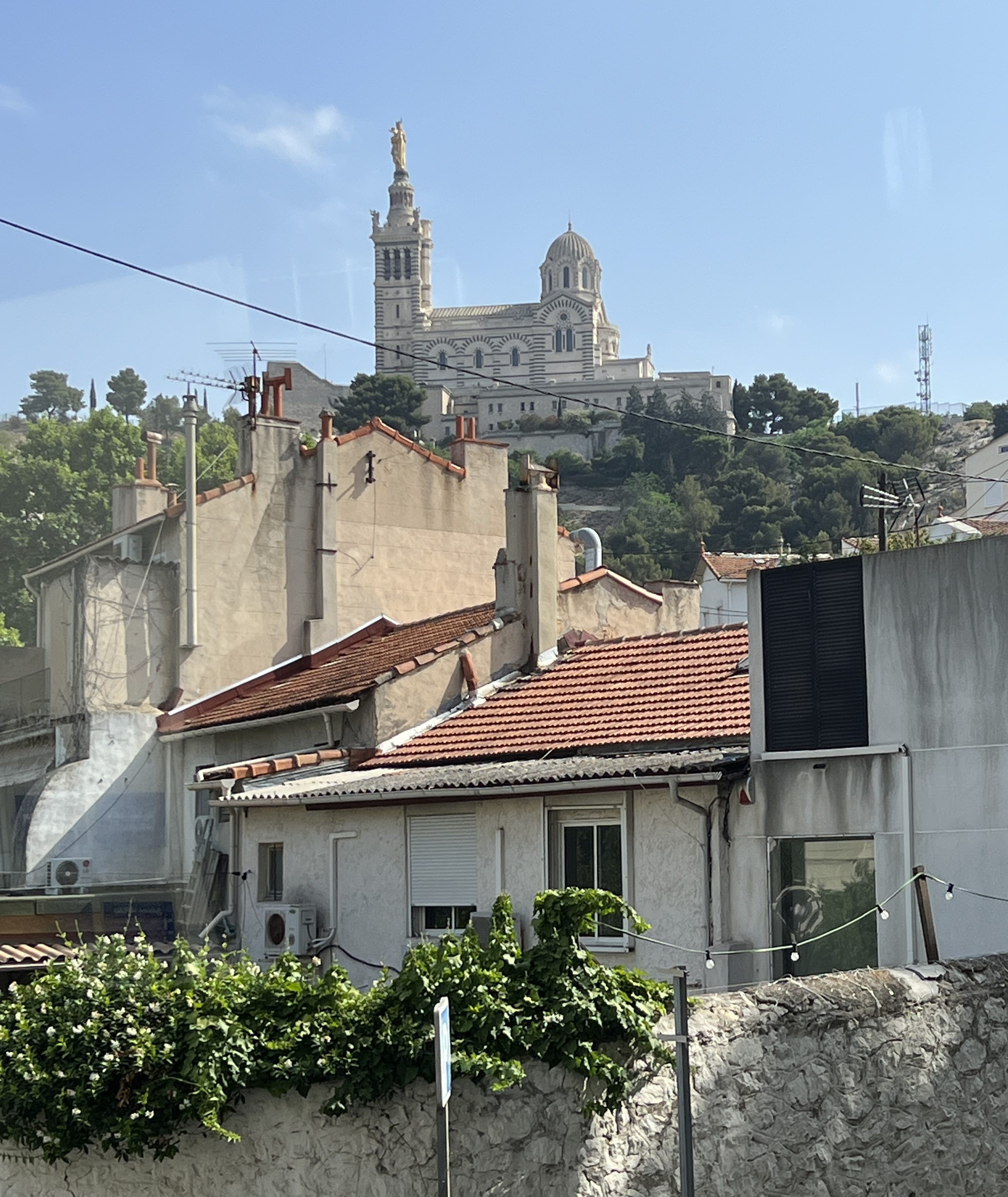
Notre-Dame de la Gard
Most of the excursions off the ship took people out of Marseille to the countryside and Avignon. So we decided to do the city. It was a pretty busy place, 10,000 extra people being dropped into the touristy areas due to three cruise ships arriving. Us with 1800 aboard and two others of 4000 each.
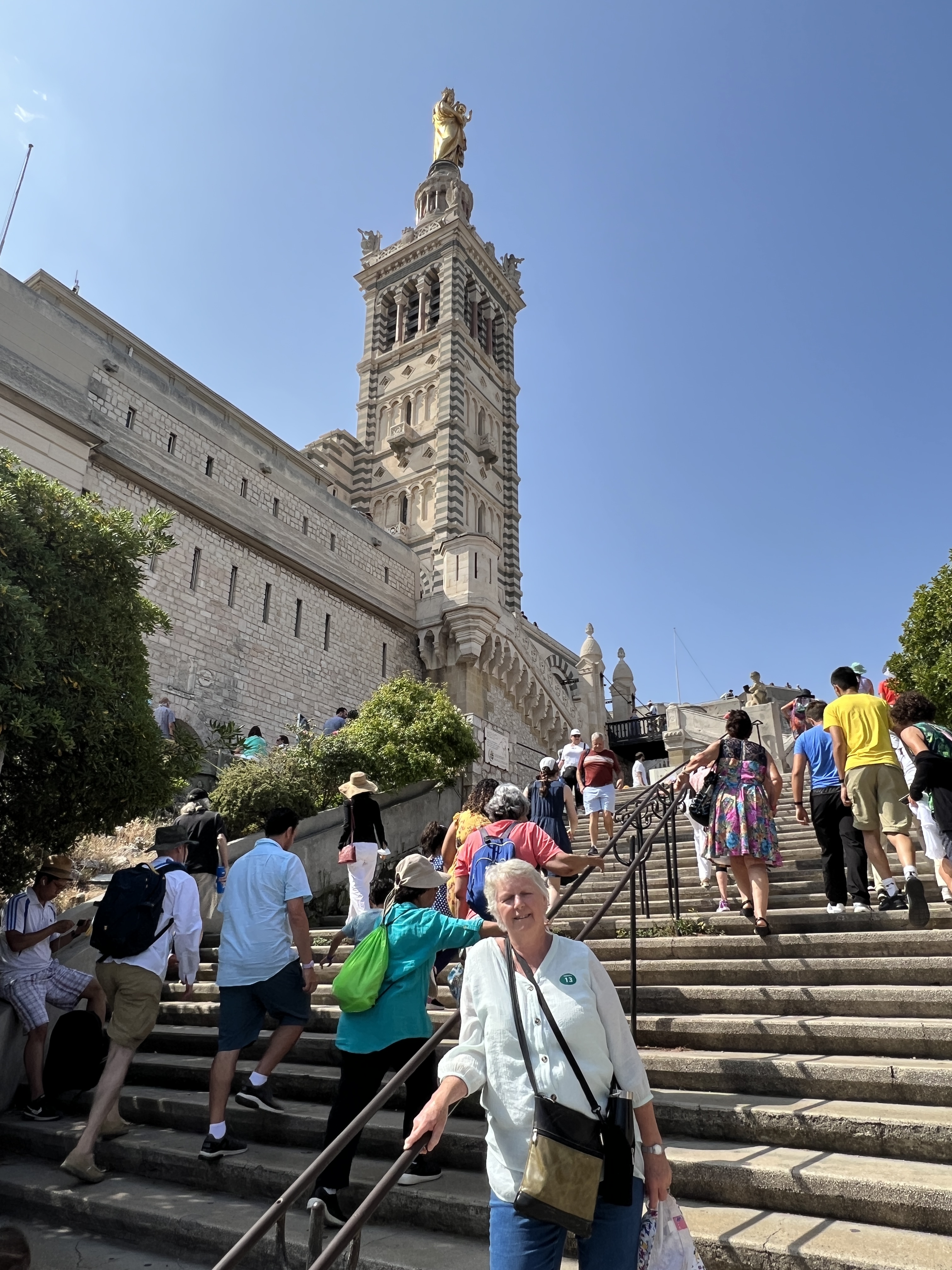
A few steps going up to the Notre-Dame de la Garde.
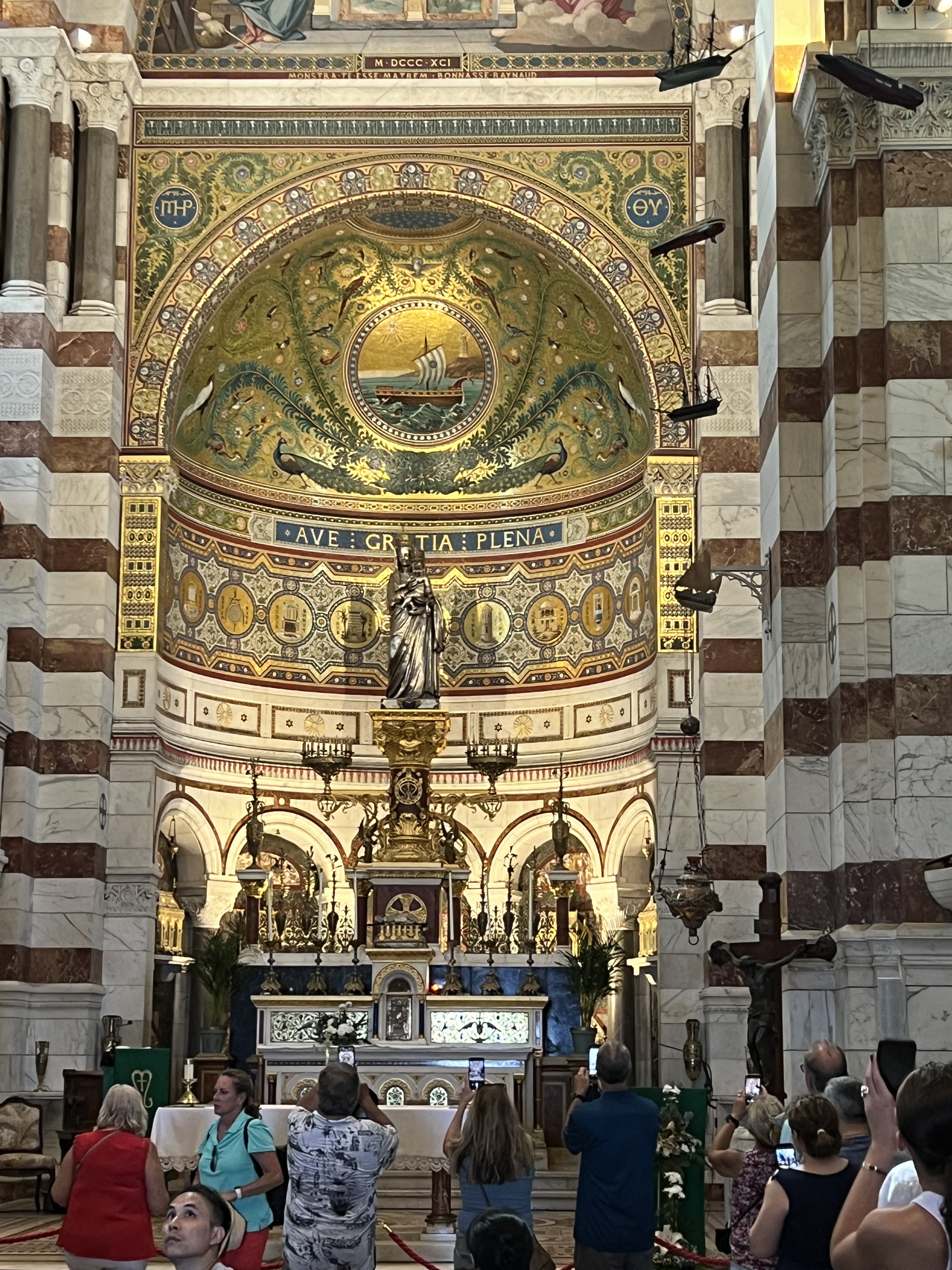
Our tour took us to some of the city’s highlights. The most prominent was the Notre-Dame de la Garde church perched on a high hill overlooking the town. Dedicated to the Virgin Mary, a chapel was built on the hill, called La Garde (the guard) in the early 1200s. Hence the name ‘Our Lady of the Guard’. It has a nautical theme as well.
The altar
The hill was also a prominent defensive position against the Germans in WW11. Getting to the top was a bit of drama with all the traffic in the narrow streets.
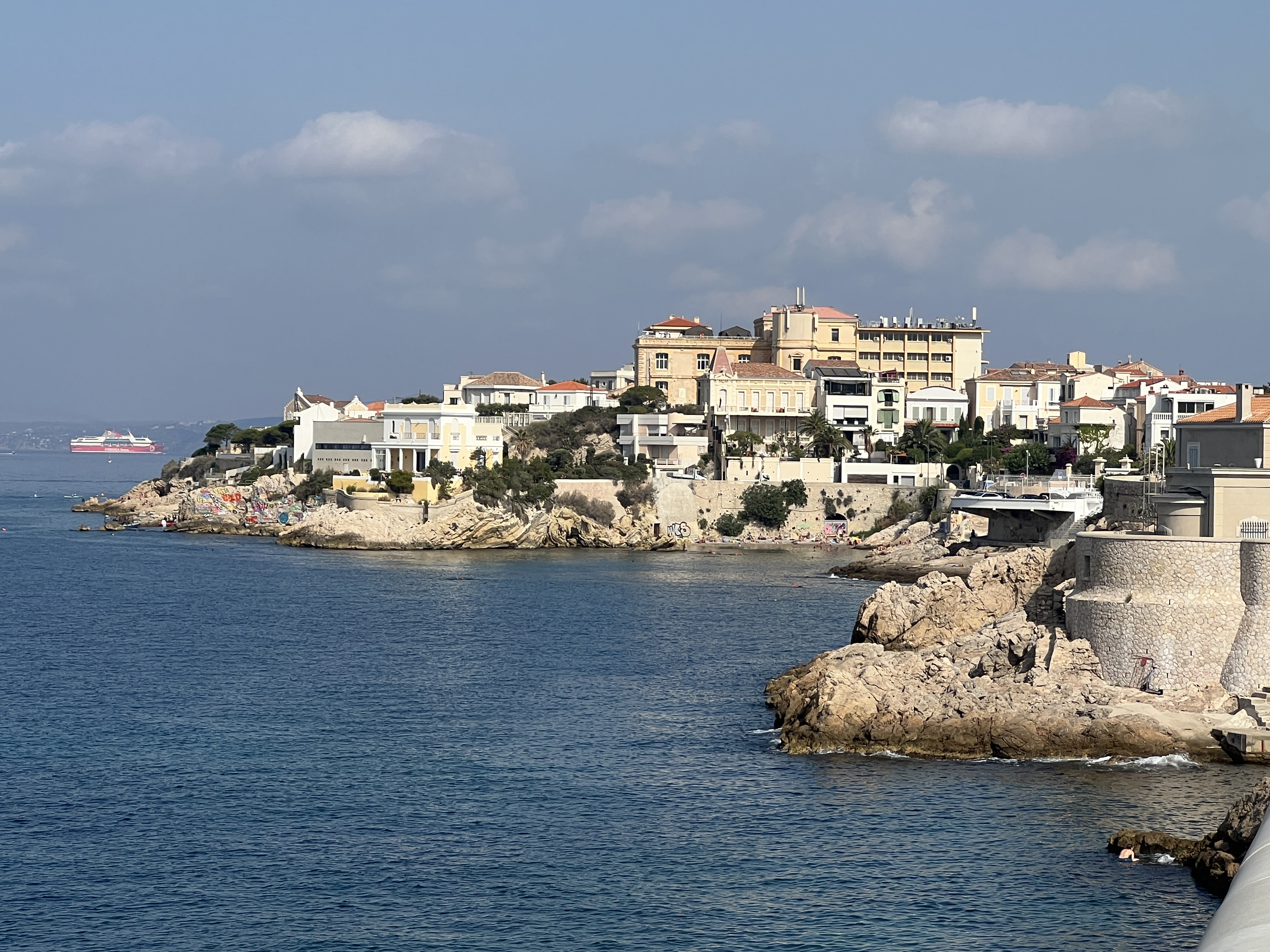
These properties have great water views, along the southern coast.
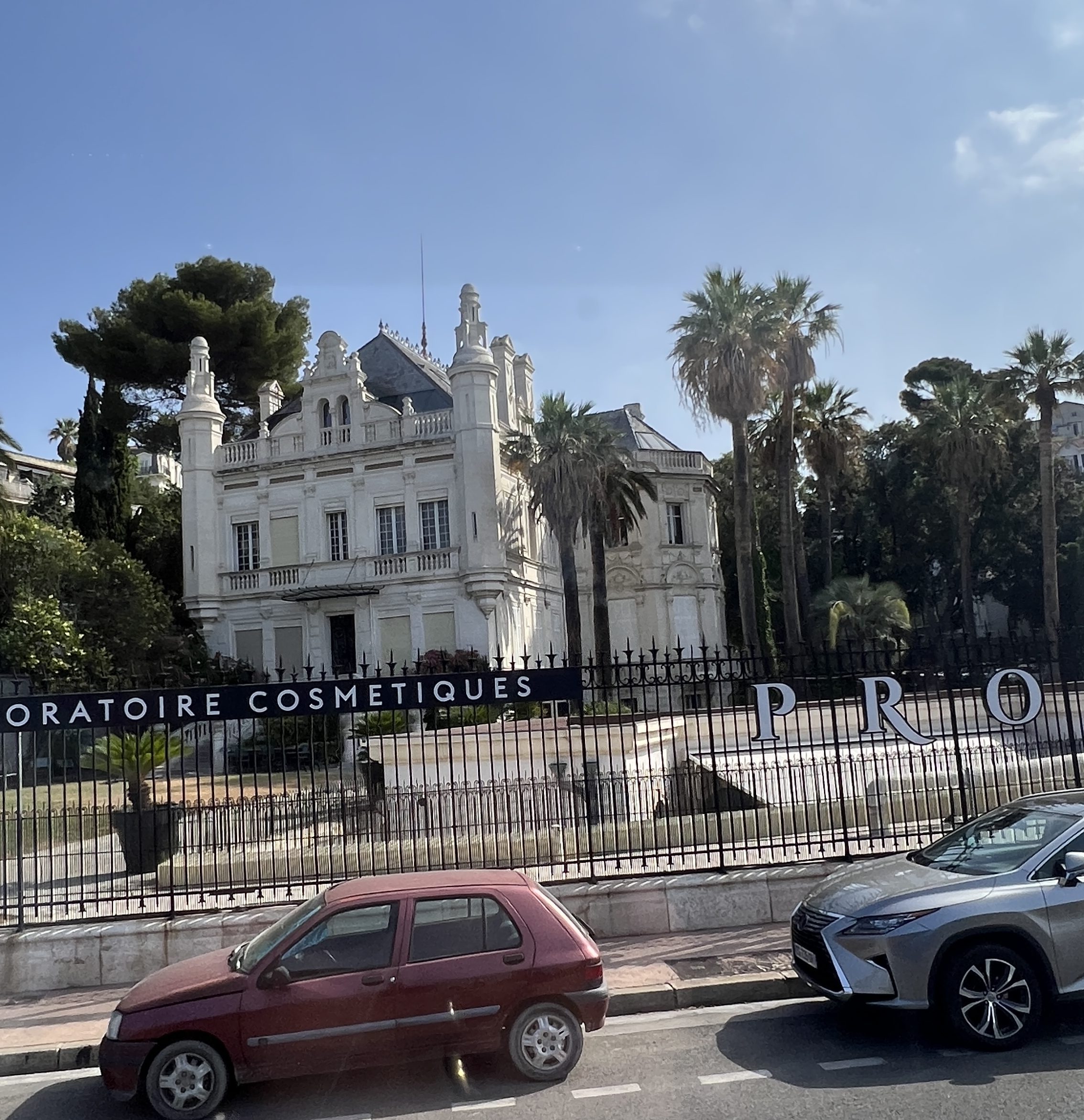
The southern waterfront area was very photogenic. Great big old houses fronting the Mediterranean and the offshore islands.
One of the many old mansions overlooking the sea.
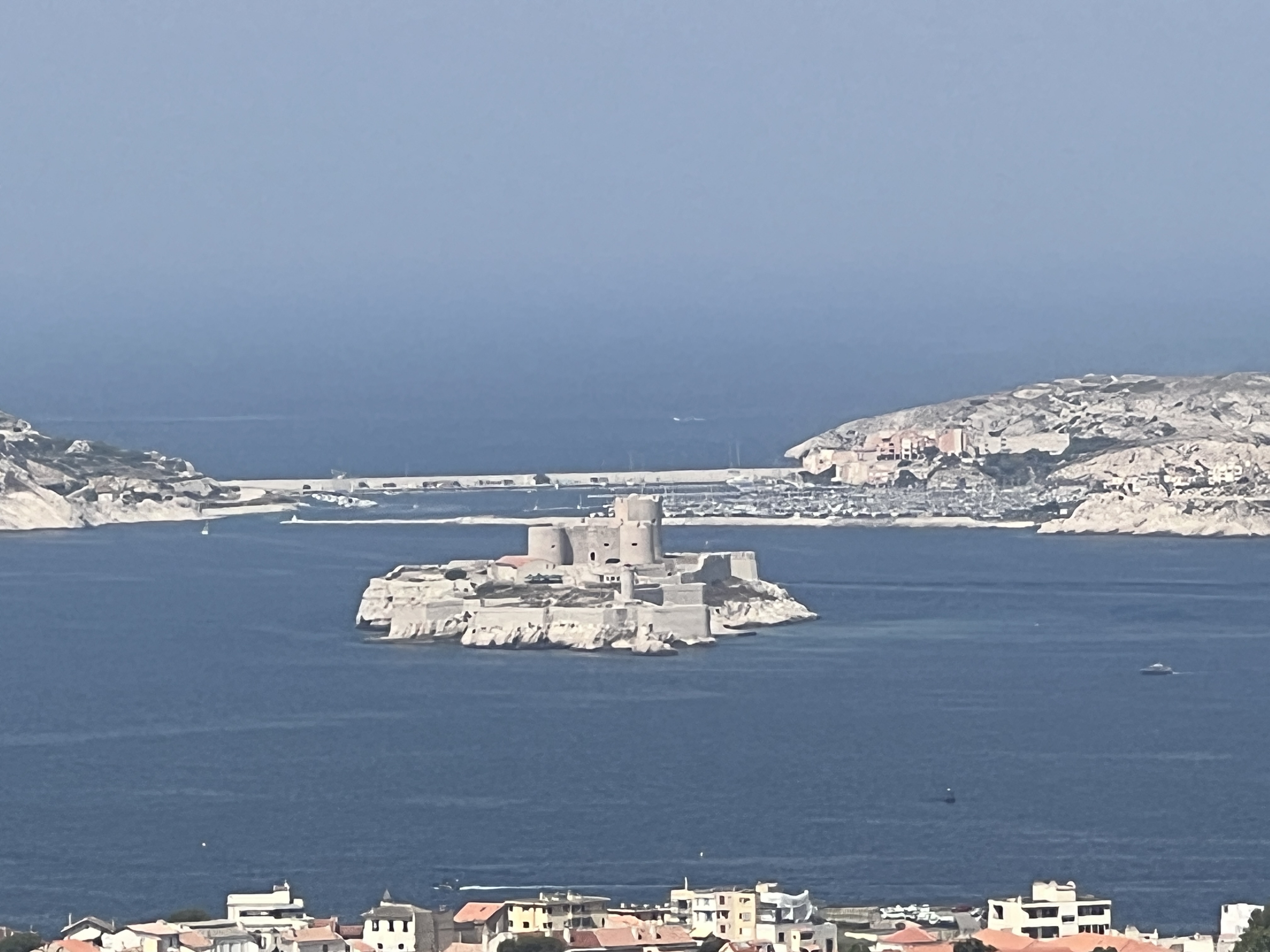
Off the coast is a group of small islands. One hosting the Chateau D’If. It was here that Louis XIV imprisoned his twin brother Phillippe, ‘The Man in the Iron Mask’.
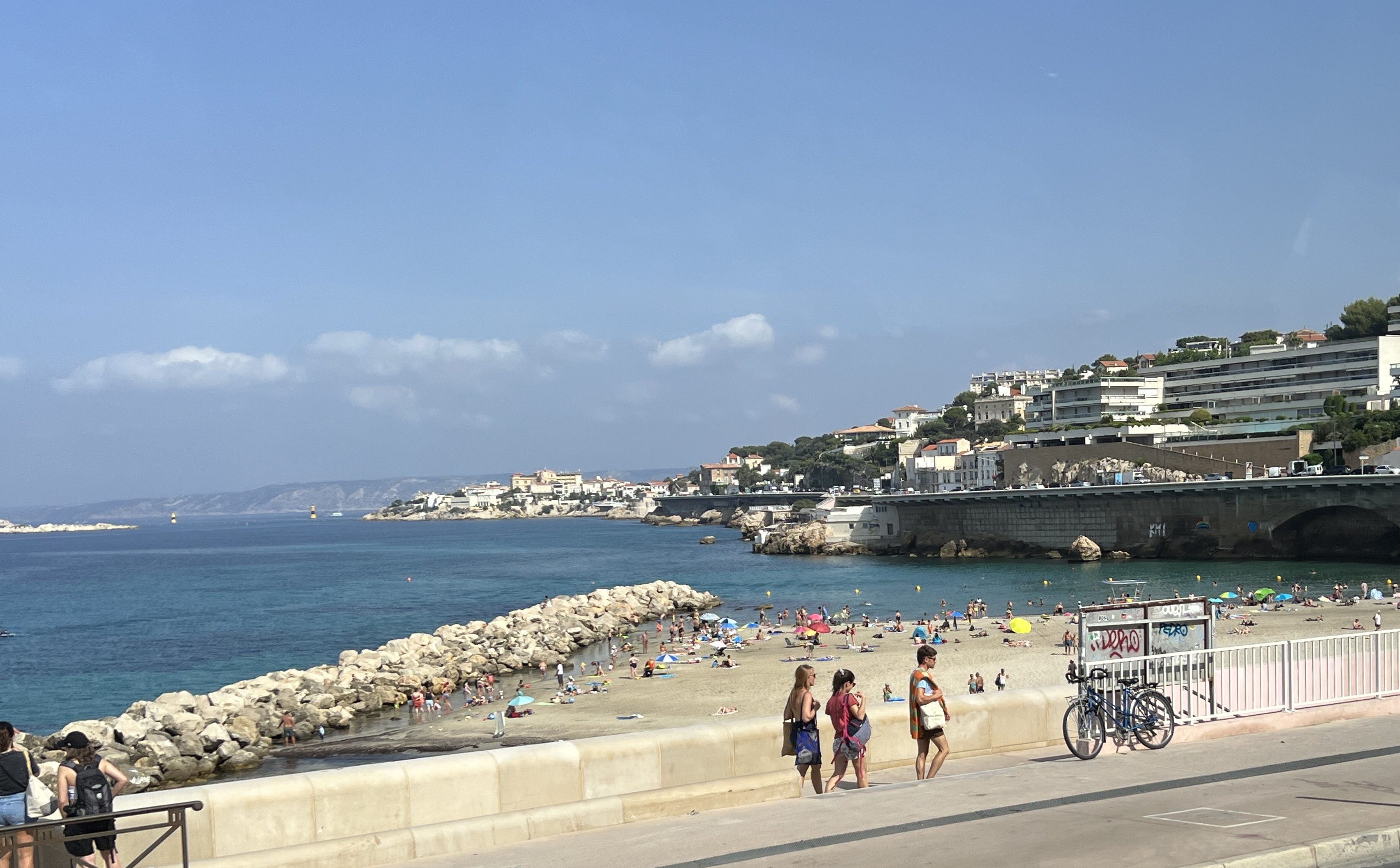
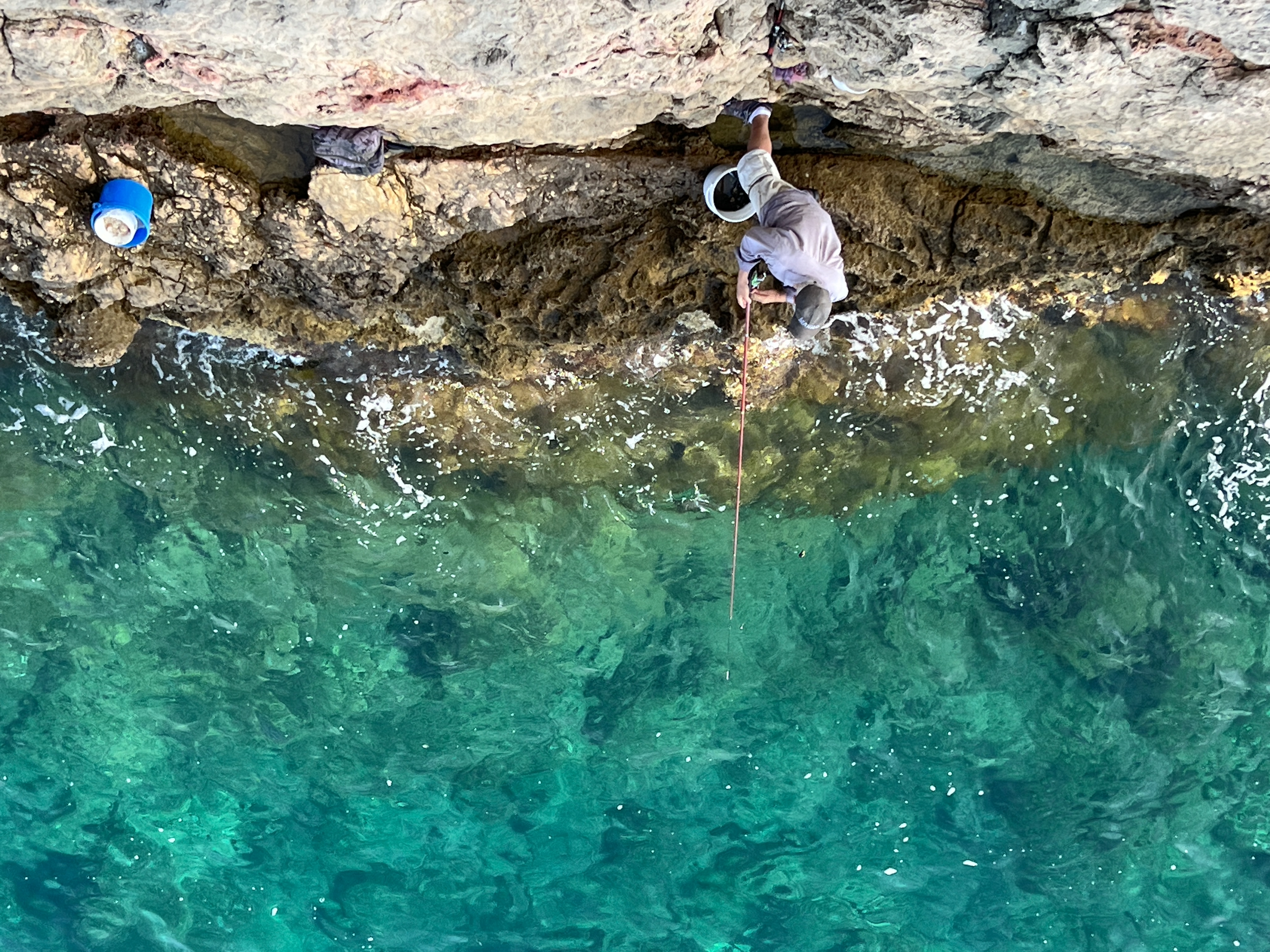
Chateau d’lf island fortress.One of Marseille’s popular beachesFishing in emerald waters off rocks below the sea wall.
We had some free time around the old port area, including lunch. There were numerous options to choose from. The city is a cultural melting pot, a heavy North African influence pervades. We settle for lunch in a food hall, turned out to be Italian choices!
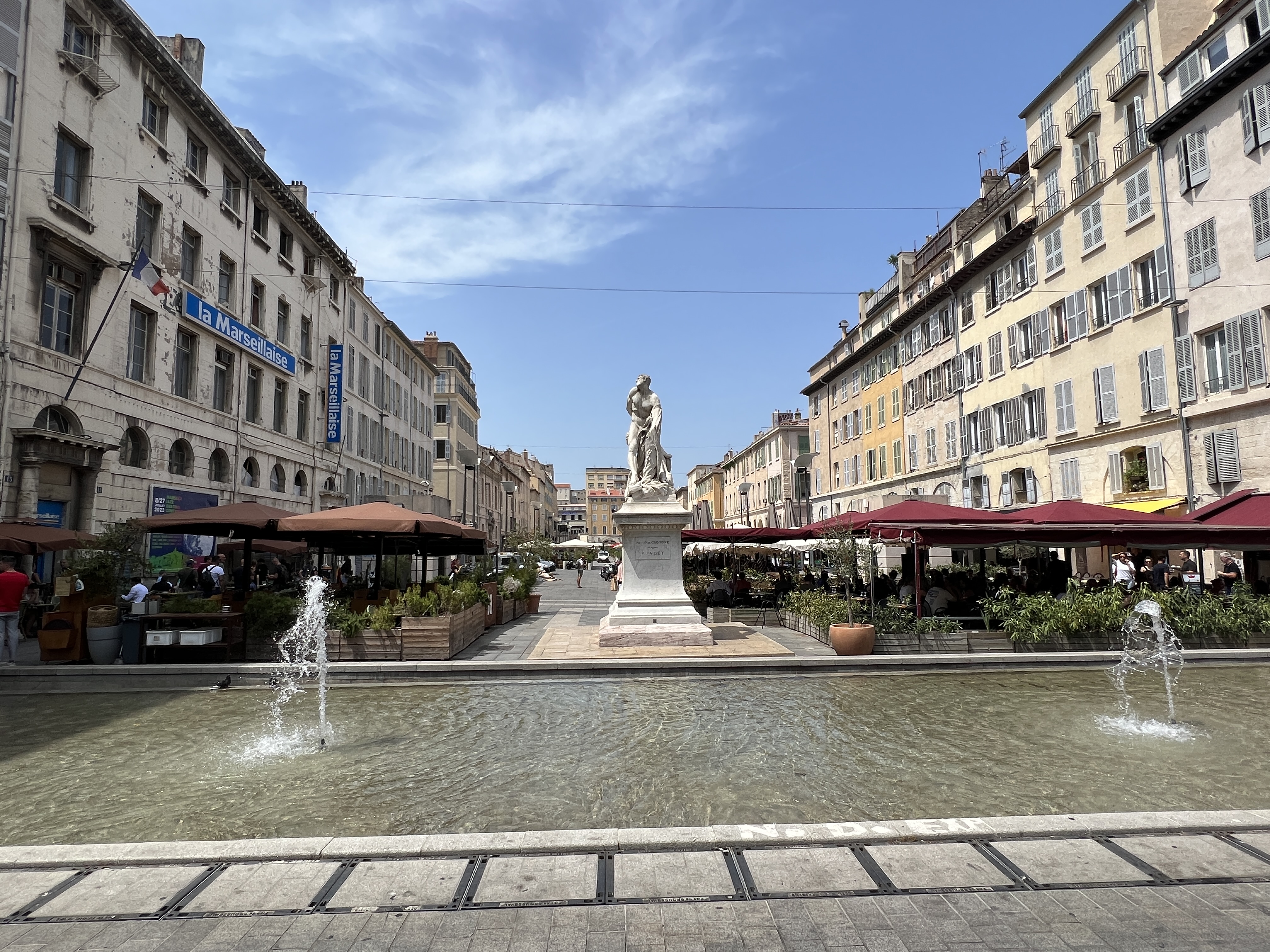
Restaurants everywhere in this plaza, including our food hall.Lunch bar in food hall
Marseille has been the fifth port in this section of travel. Nine ports in ten days, so we are half way through and it has been a bit hectic. It has also been quite hot and humid. A few of our fellow passengers are a bit worse for wear, there have been some falls which dampens the experience for those affected.
We are in Marseille on Wednesday 12 July. Our guide mentioned that there was to be a general strike the next day (Thursday), protesting about the increase in the pension age from 62 to 64, in Australia it has just gone to 67! Just happens that Friday 14 is Bastille Day, so a 4 day break. Very French timing!
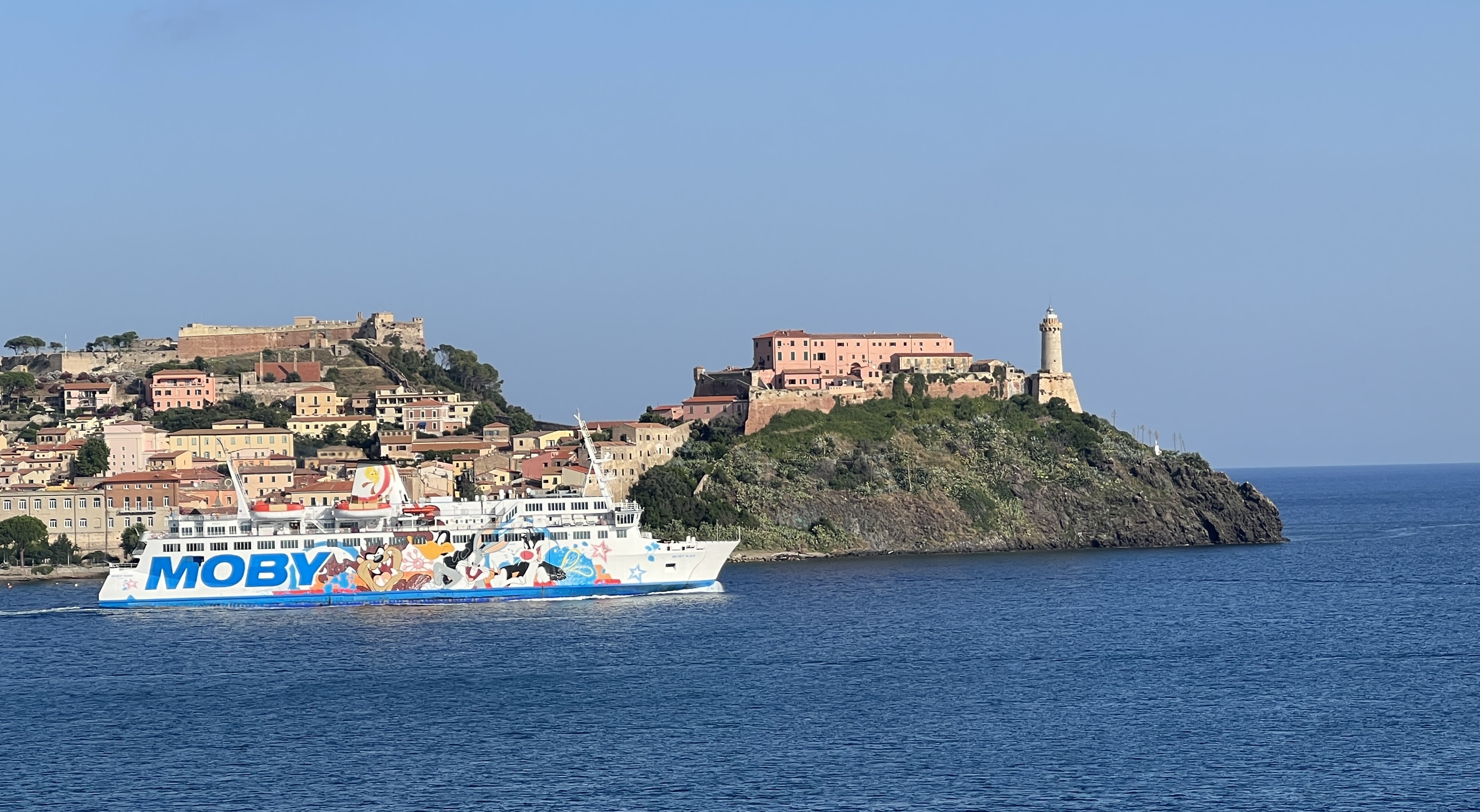
Elba Island lies off the Tuscan coast of Italy and is regarded as part of Tuscany. We arrived into the port town of Portoferraio at around 7 am. Impressive lighthouse on the hill coming into the bay, where we anchored.
Lighthouse on the cliffs at Portoferraio
Apart from Komodo Island this is the first port we have had requiring water shuttles to get to the pier. The sea was quite calm and there were no dramas, just stepping from the ship across into the tender shuttle. Plenty of helpers getting in the way for us mobile individuals! Slobro had to time his step carefully.
We were doing time ashore from about 10.30 am (we let the rush get away before us) by ourselves with a wander around the town and lunch. Had to be back to the ship on the last tender at 4pm.
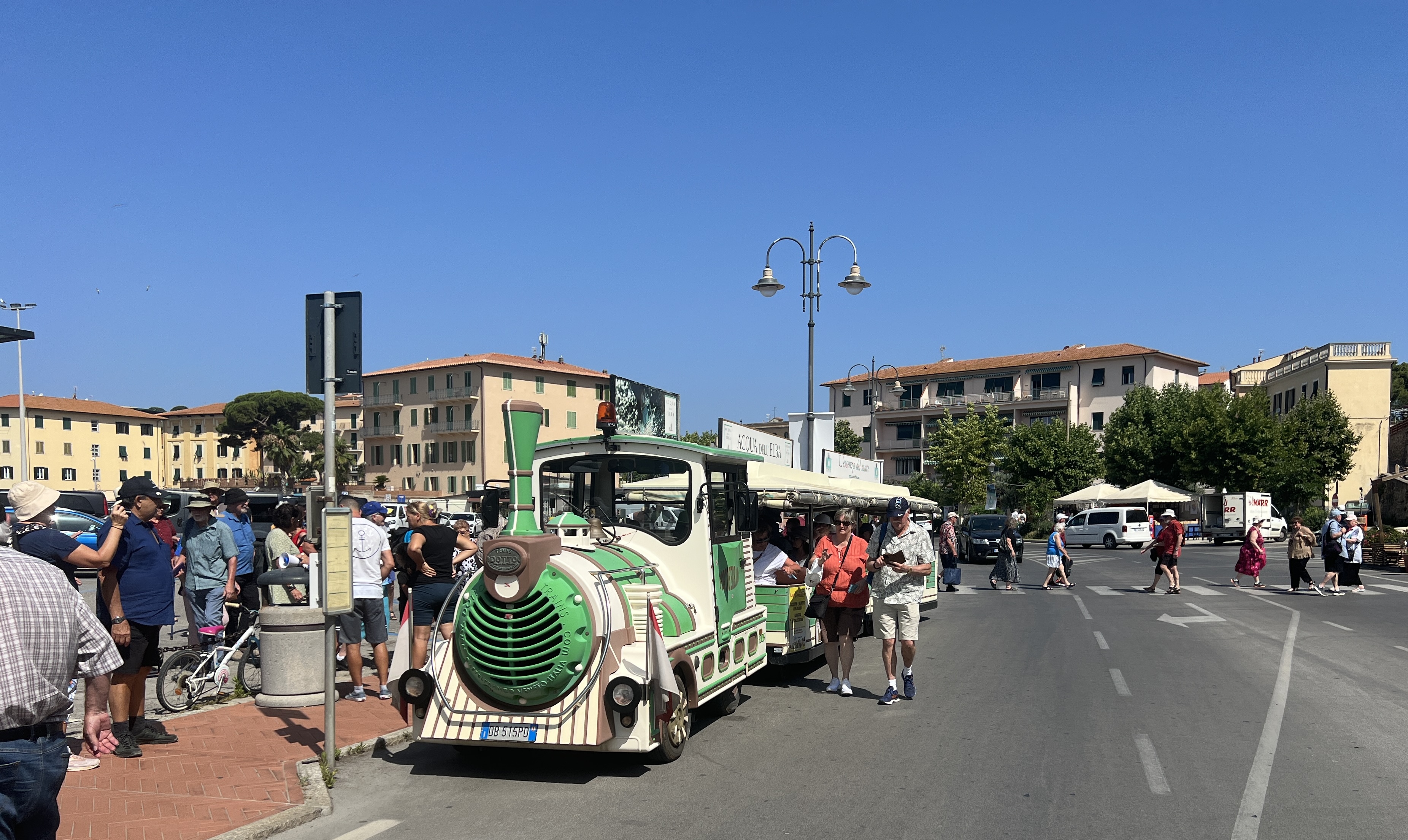
The little train
The little train was parked right where we came ashore, so we got on board this and headed off on a 20 minute panoramic trip around the town.
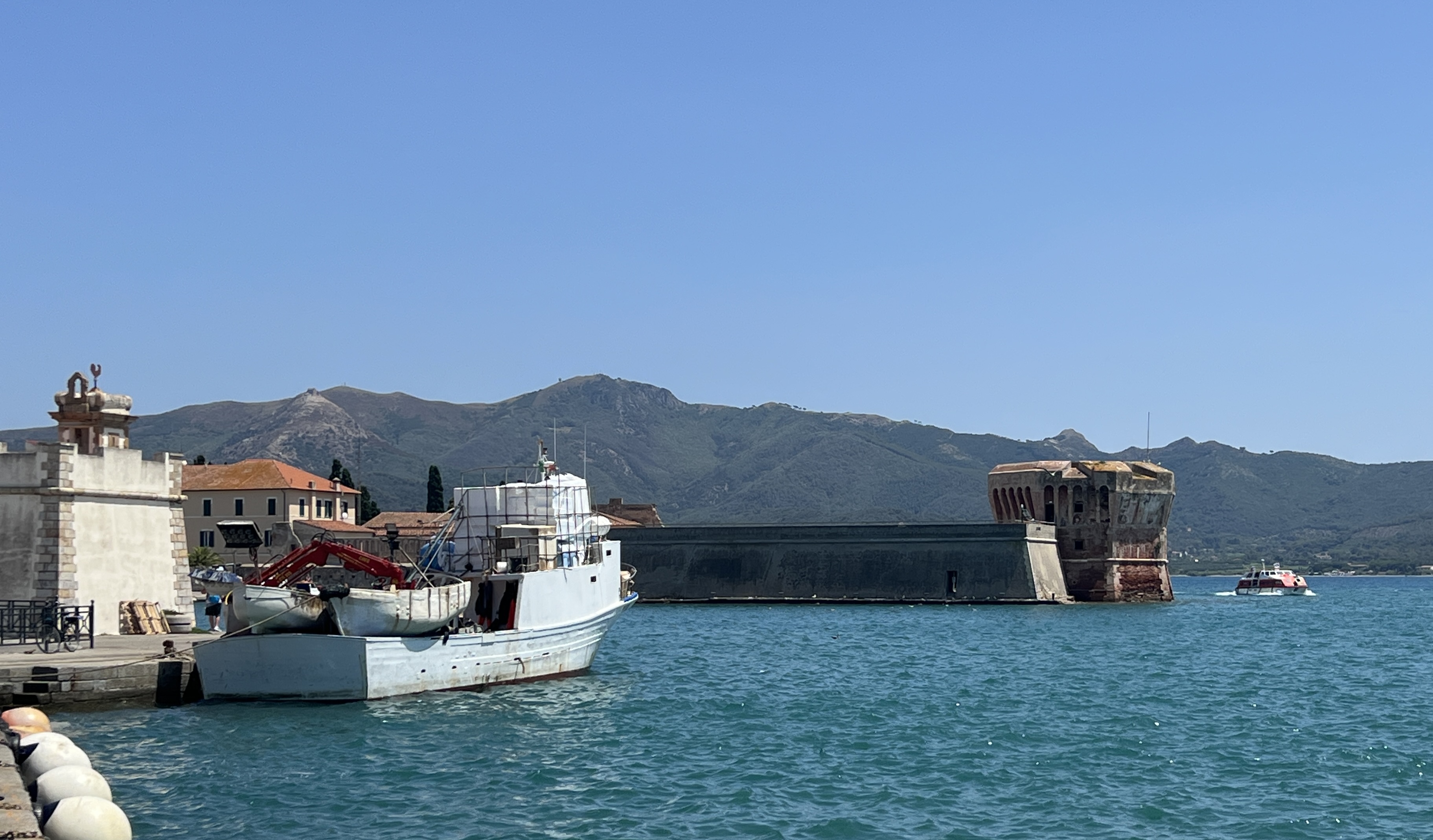
Entrance into the old port, impressive octagonal structure.
This was along the water front, checking out the old fort and then up and down some back streets. Interesting. It did give us the lie of the land and pointers as to where we would go for lunch. Some most impressive sail and motor boats in the crowded Marina.
Back street in townImposing apartment block
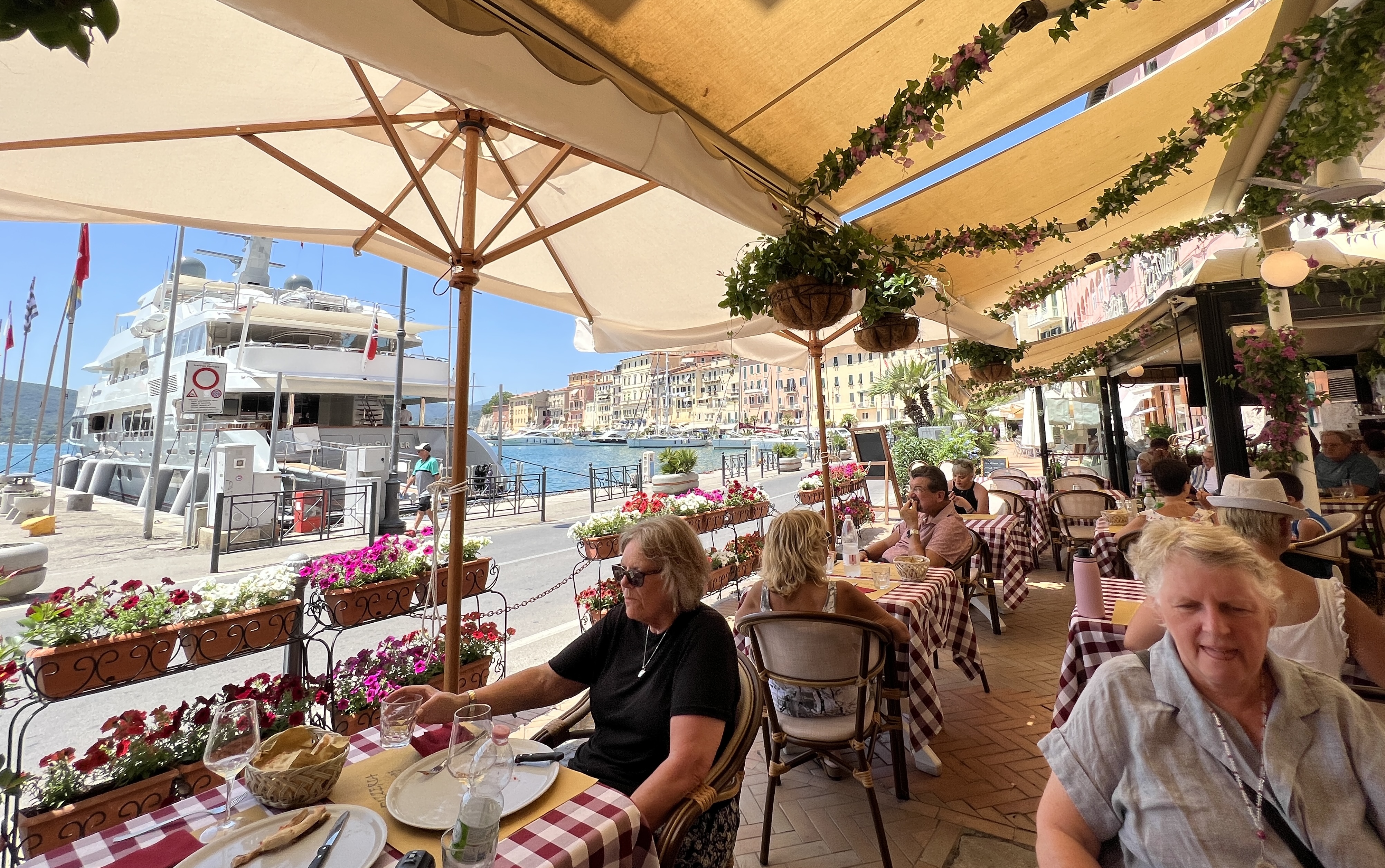
Slobro was keen for a pizza. So we walked up and down the waterfront before settling on ‘Il Garibaldino dal 1895’. Now, Garibaldi was an Italian revolutionary leader who was instrumental in the mid 1800s in unifying the Italian states. A ‘Garibaldino’ was one of his followers or soldiers.
Lunch time overlooking the port.
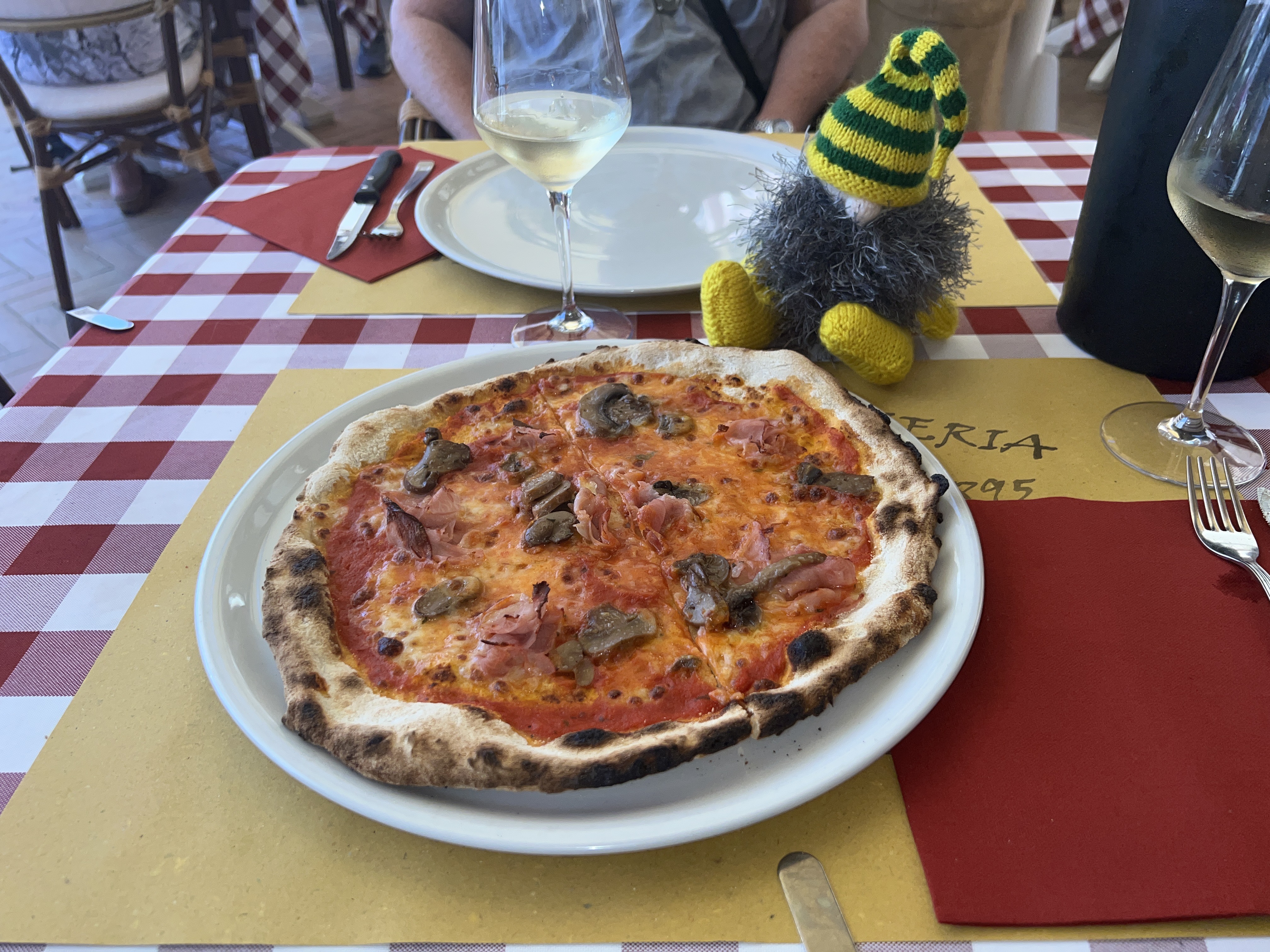
So this little restaurant is suggesting in its name that it is a revolutionary sort of spot and it’s been open since 1895! Believable. The pizza was salami and fungi. Very good.
Slobro was eager to get into the pizza.
After lunch we had some more time along the waterfront checking out the sail and motor boats in the crowded marina. A lot of money floating around!
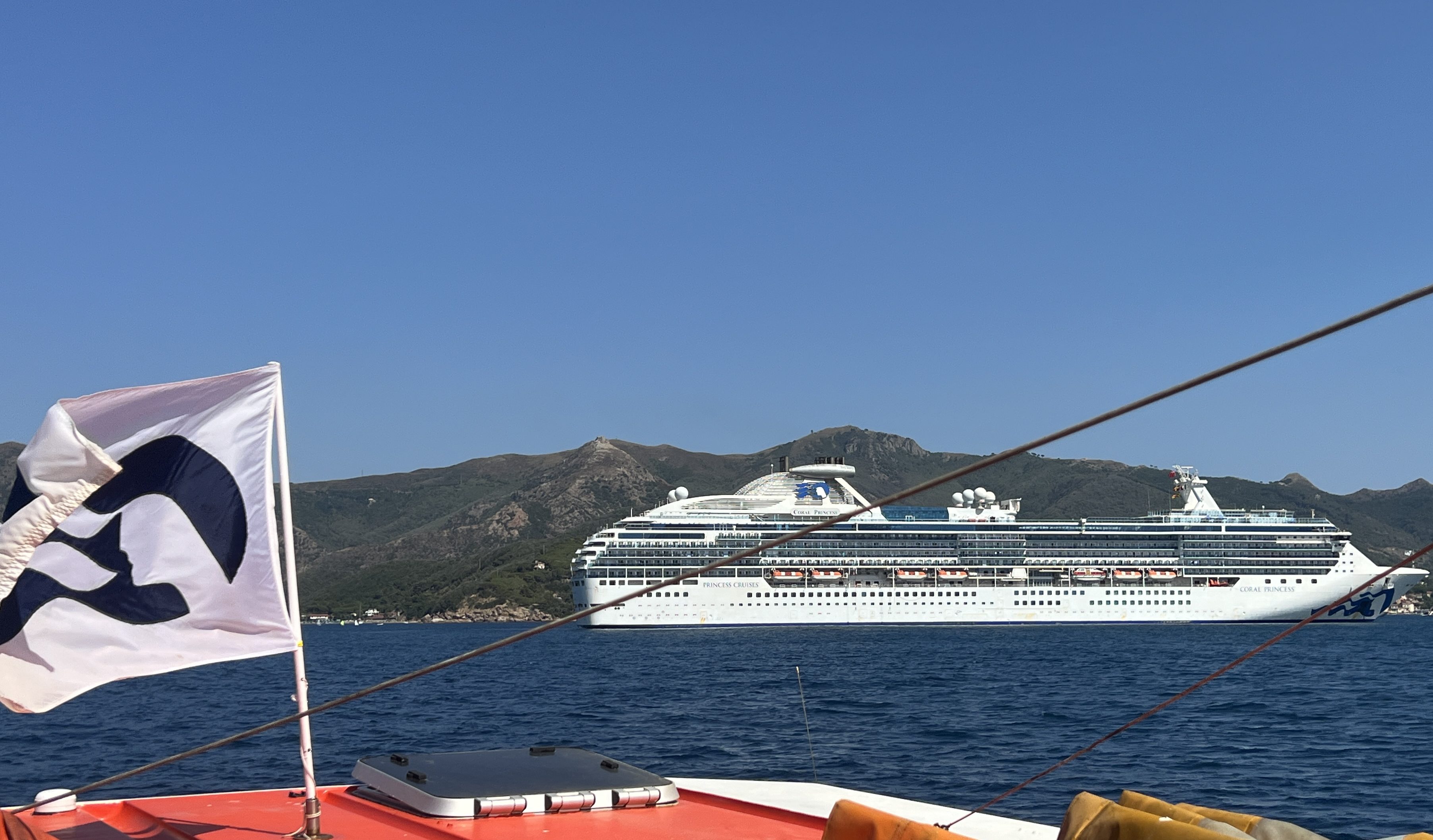
Aboard the tender shuttle returning to the Coral Princess at anchor in the bay.
Headed back to the ship on one of the last shuttles for the sail away from Italian waters. Headed for Marseille.
We made it overnight to Civitavecchia, the port of Rome, from Salerno.
Rome is about an hour and half’s bus drive down the freeway from the port. So it is a big chunk of the day taken up in travel, cuts in to sight seeing time. Allthego and Homealone have been to Rome before for short stays but have never made it to the Vatican to have at look at St Peters Basilica or the other sights.
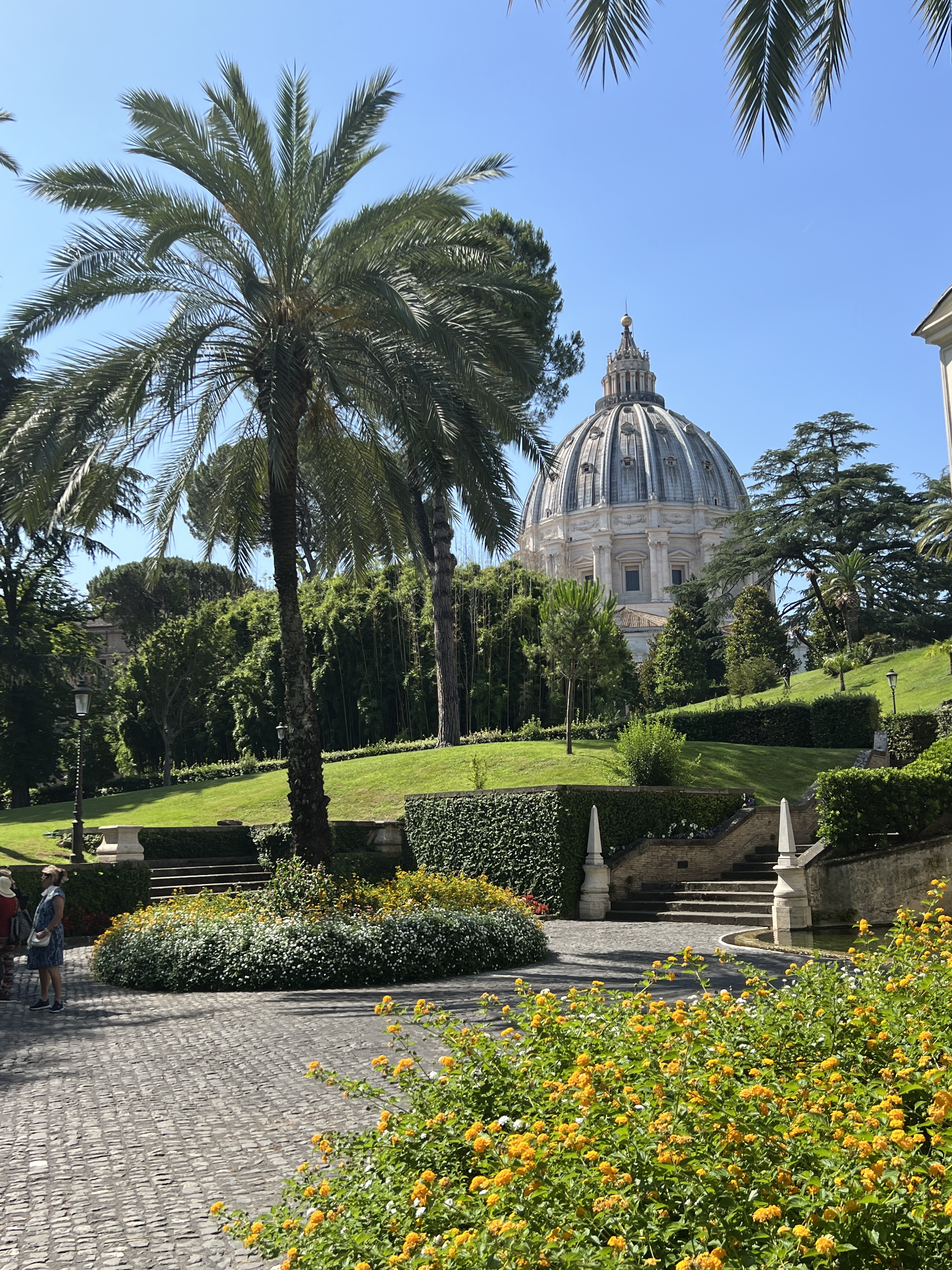
Dome of the Basilica from the Vatican Gardens.
So we decided to face the drive and see what we could see. These building are just so unique and irreplaceable, they need to be seen if one is able. The drive in went fairly well but we encountered some traffic snarls along the way, not unexpected.
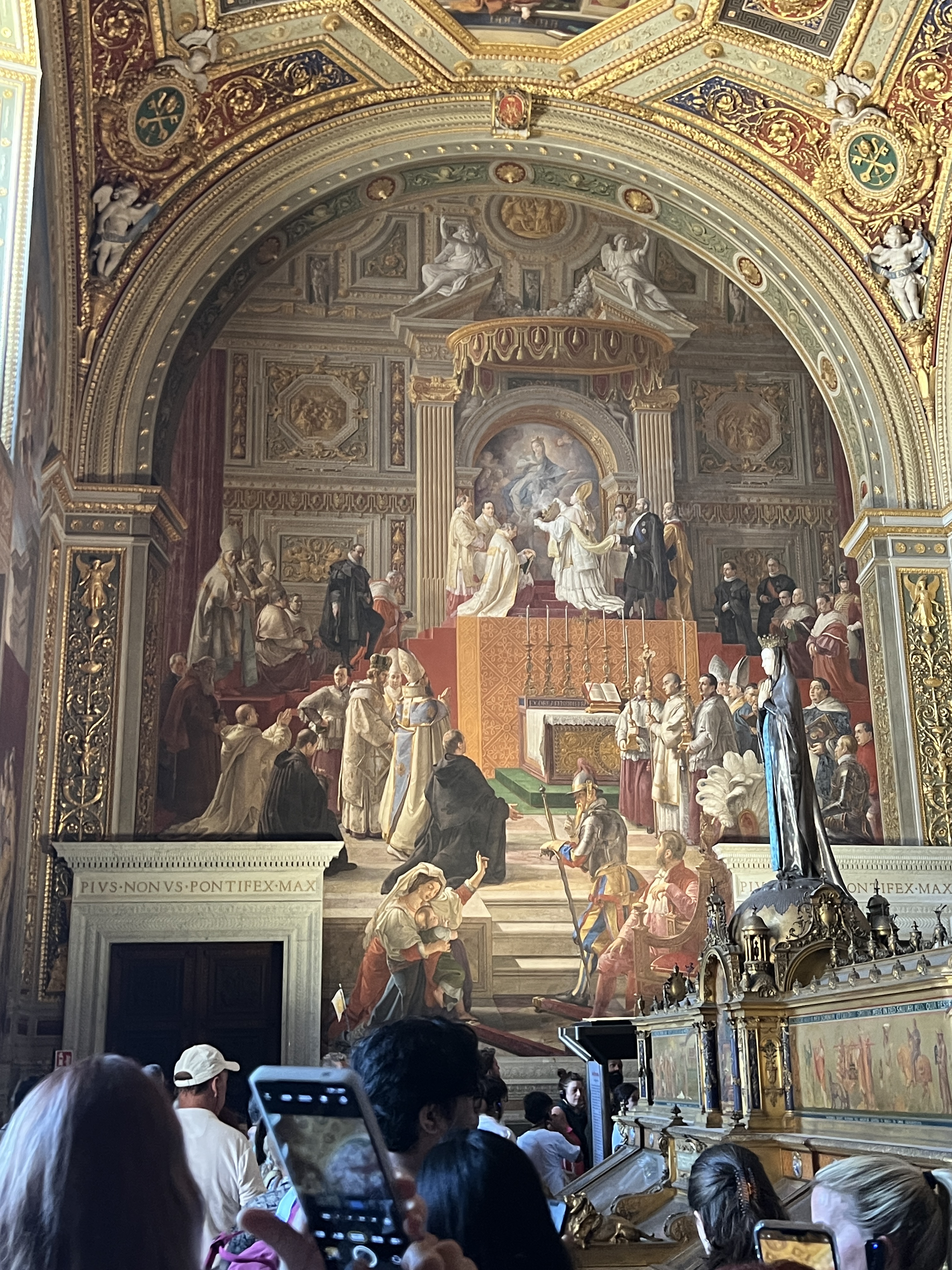
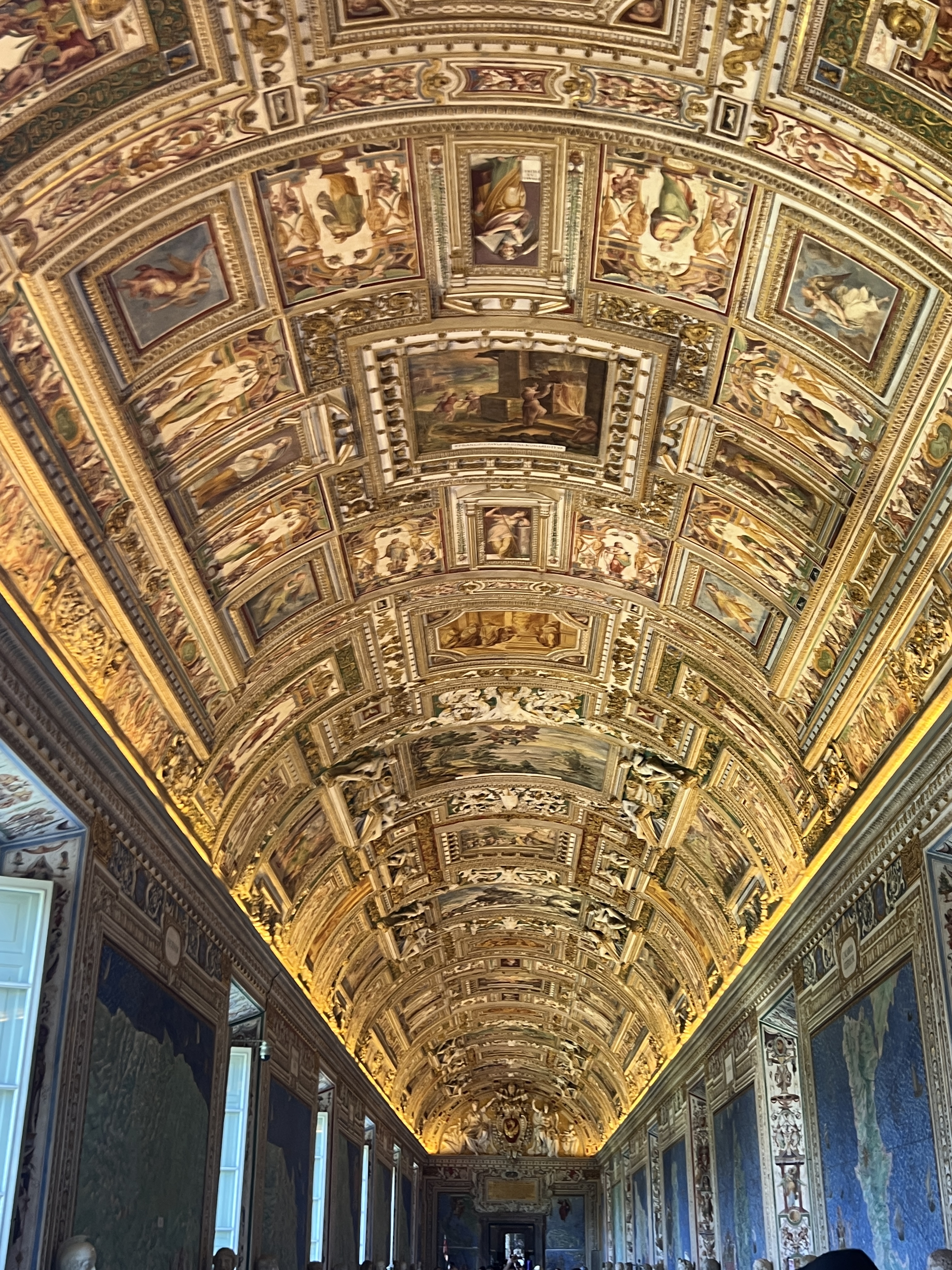
A monumental painting in the Museum Galleries.Ceiling in the Museum Galleries.
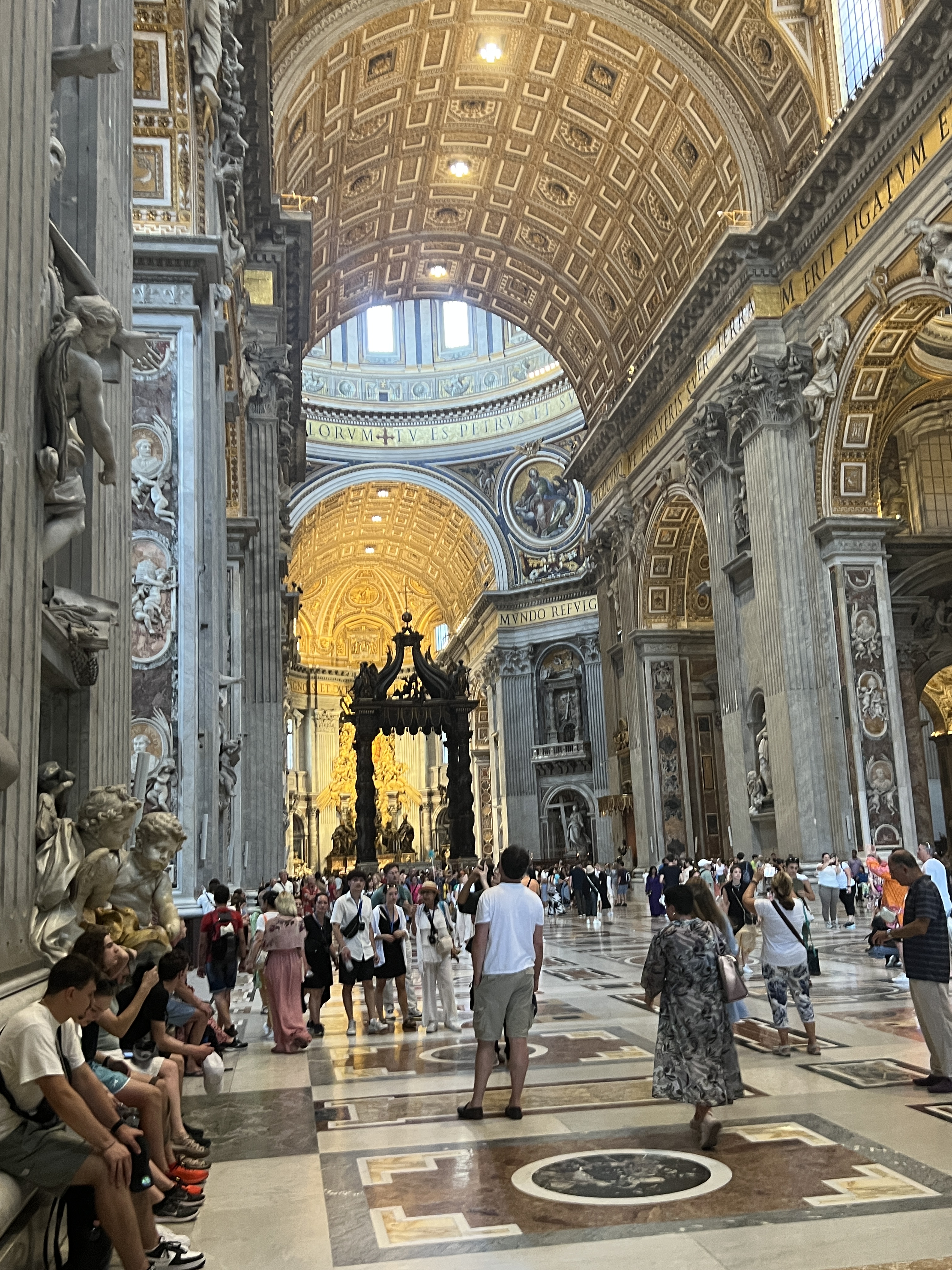
The excursion was divided into four parts. The first was through the Vatican Gardens, then into the Museum Galleries, followed by the Sistine Chapel and then St Peters Basilica.
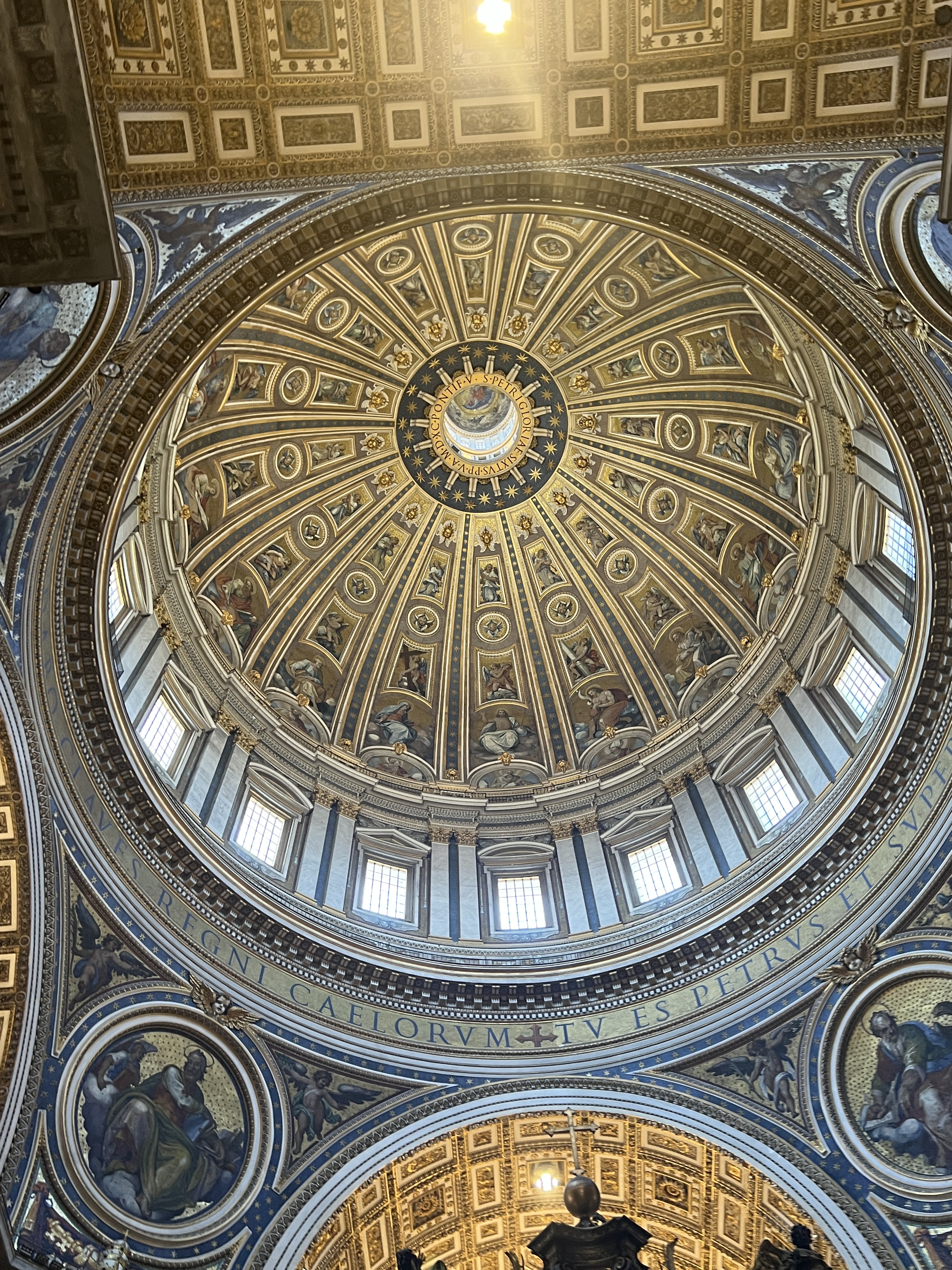
The central nave of the Basilica. It is enormous, 46 metres high and end to end is 186 metres. The interior of Michelangelo’s dome of St Peters.
The guide managed to get through this in about four hours. Photos could be taken everywhere without flash, except in the Sistine Chapel. Silence was expected in the Chapel, but there was constant hum requiring periodic PA announcements to keep quiet! Quite remarkable experience.
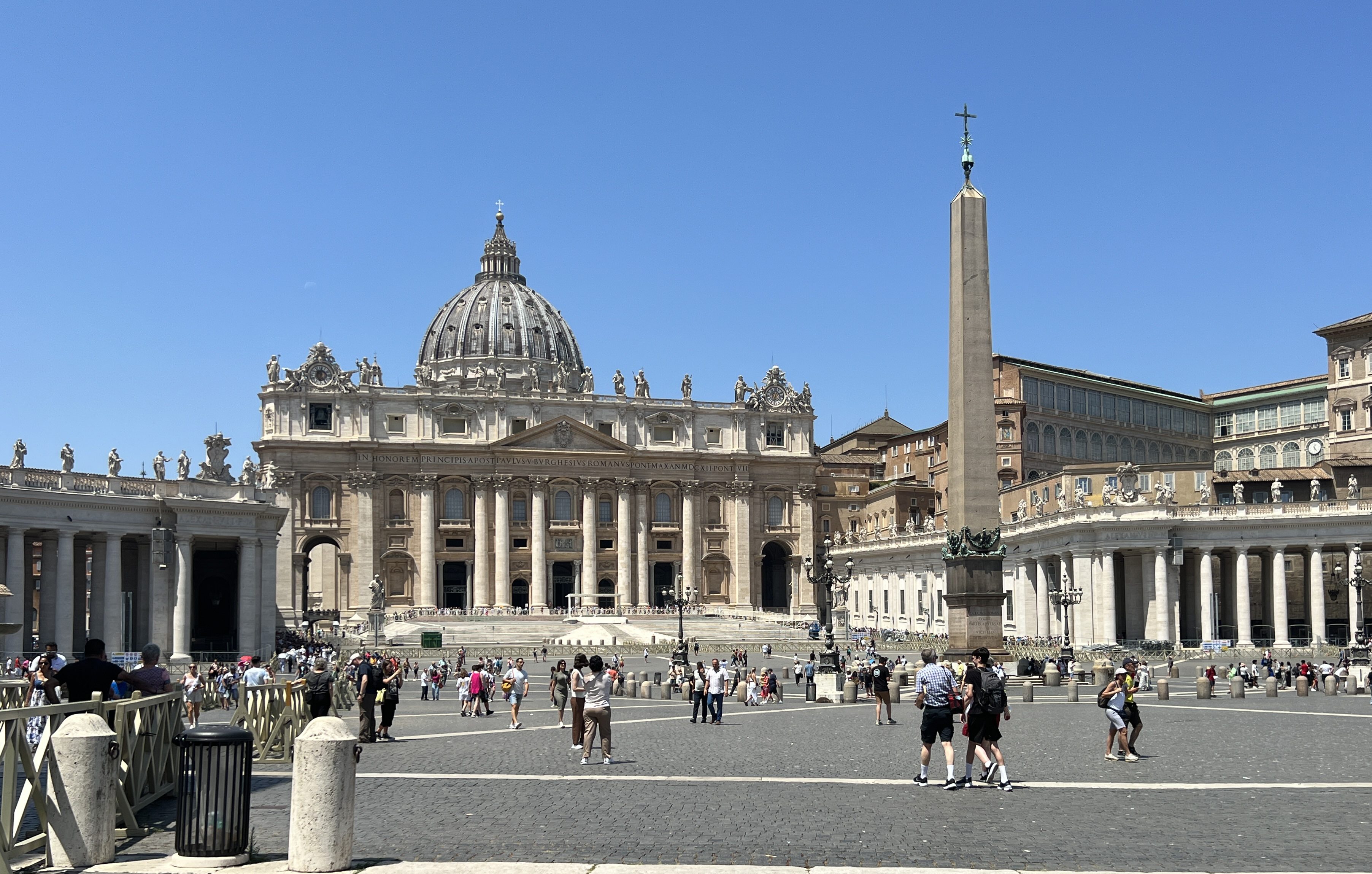
After this we had some free time looking around St Peter’s Square trying to avoid the souvenir shops and street hawkers that abound. After a nice lunch in a side street we headed back to the bus for the trip back to the port. Managed to get two postcards in the mail!
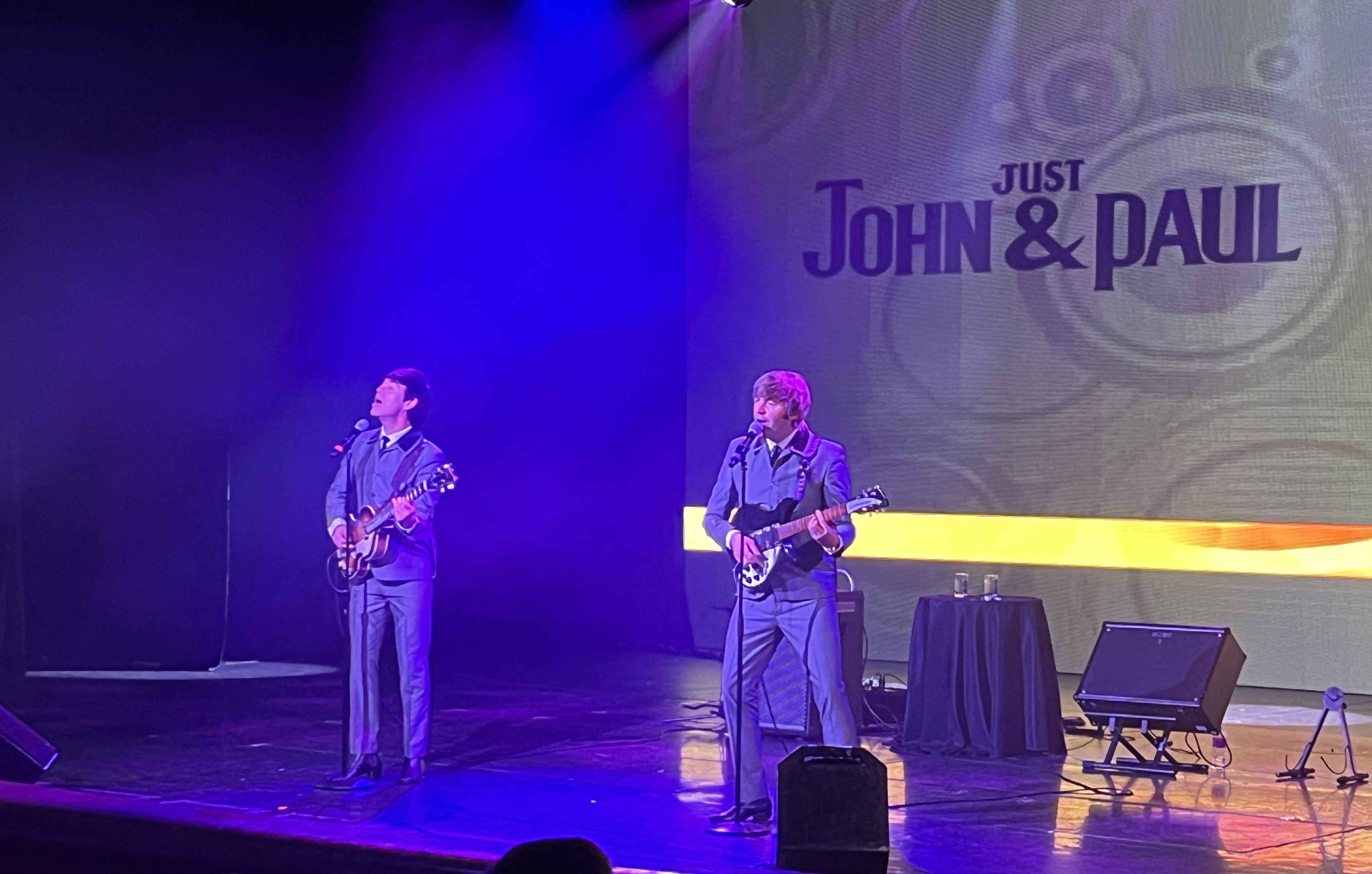
Back on the ship we had a light dinner and then enjoyed the sounds of ‘John & Paul’, a rather good Beatles tribute group from Liverpool.
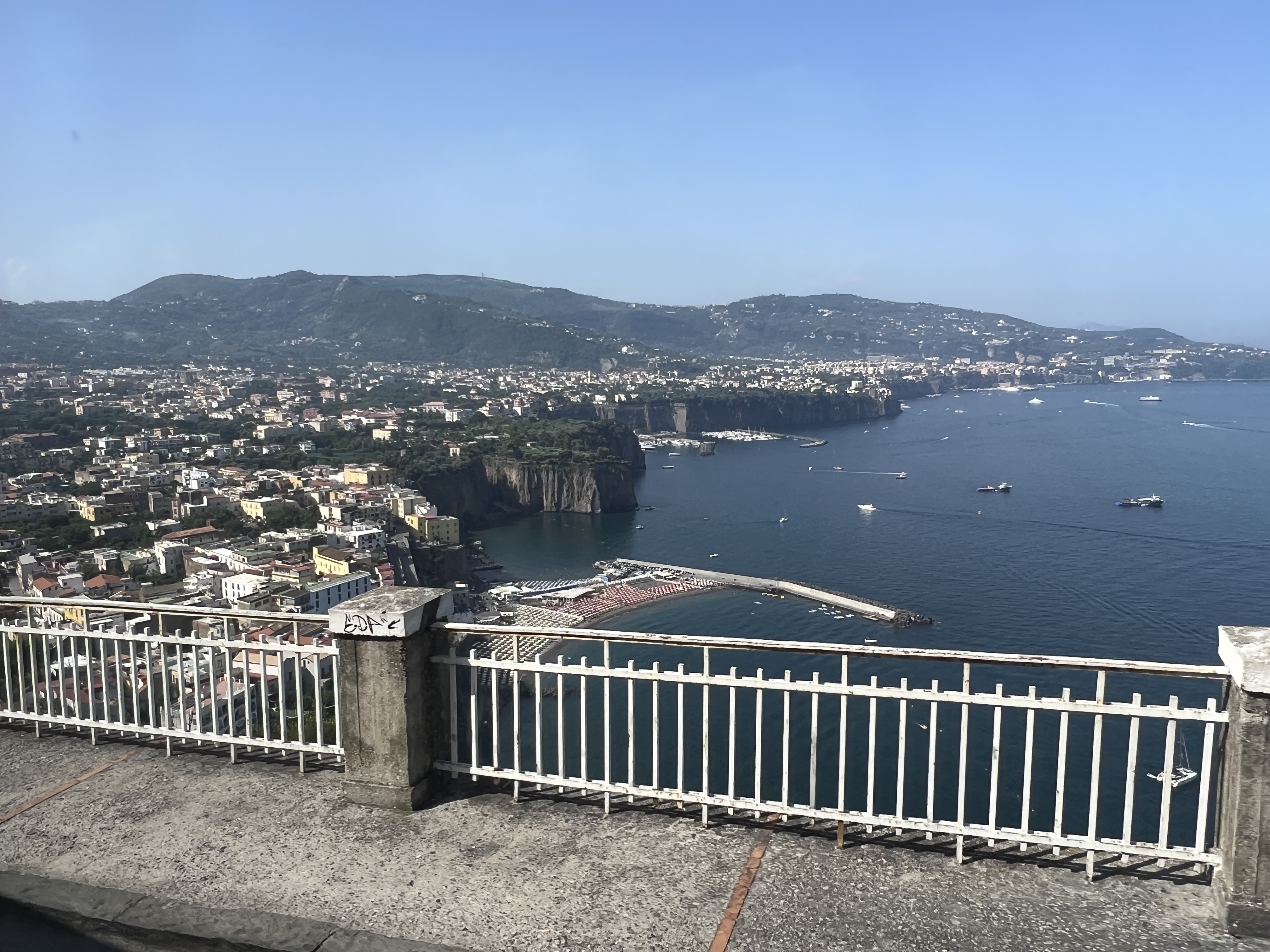
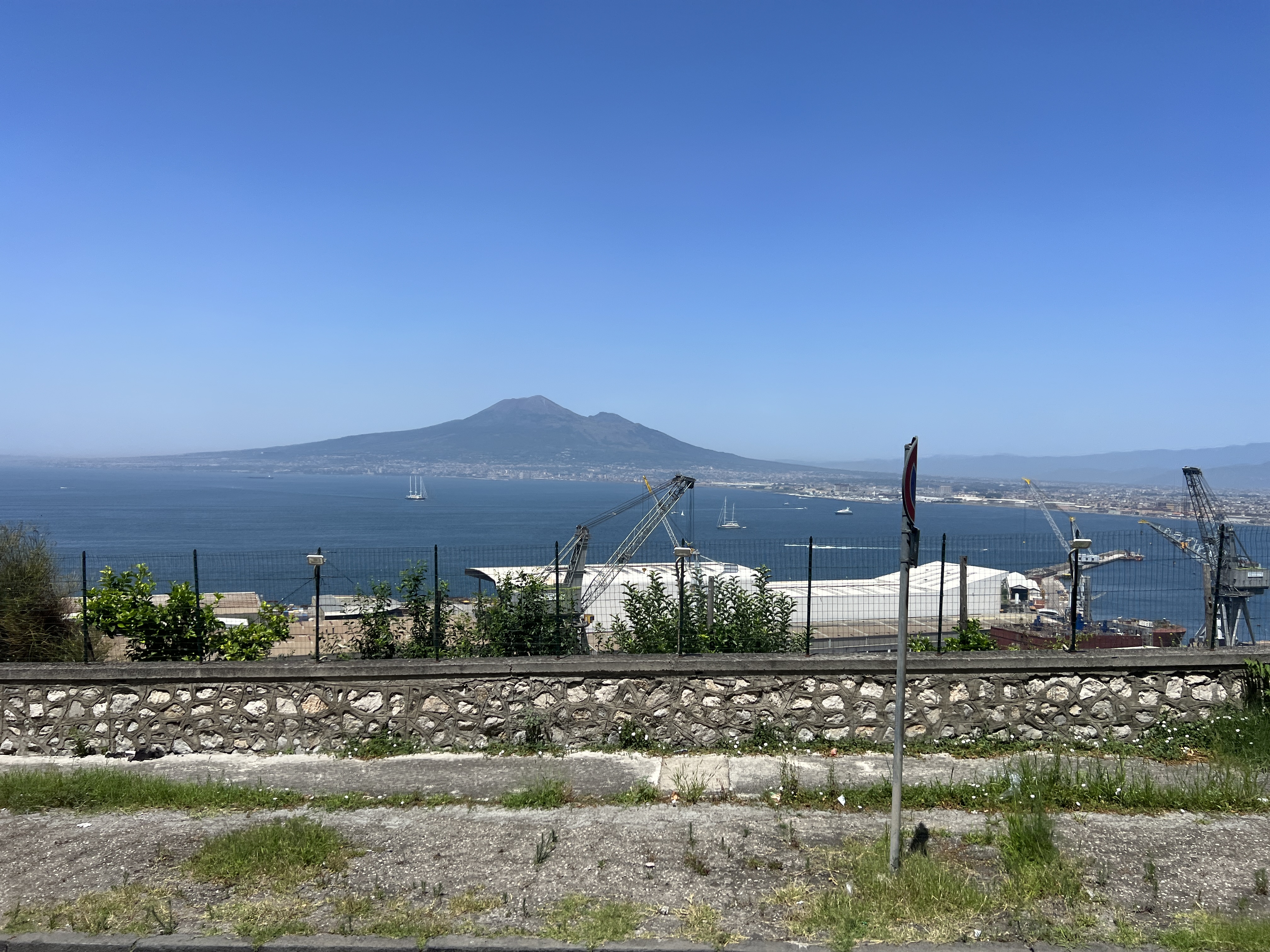
Our next stop around the northern Mediterranean coast was Salerno. This is a gateway port for us to make a trip north to Sorrento and Pompei. Sorrento sits on cliffs overlooking the Bay of Naples, away in the distance Mt Vesuvius lurks on the horizon. Some great views of the coastline from the bus.
Sorrento coastline from our bus.Mt Vesuvius and the Bay of Naples.
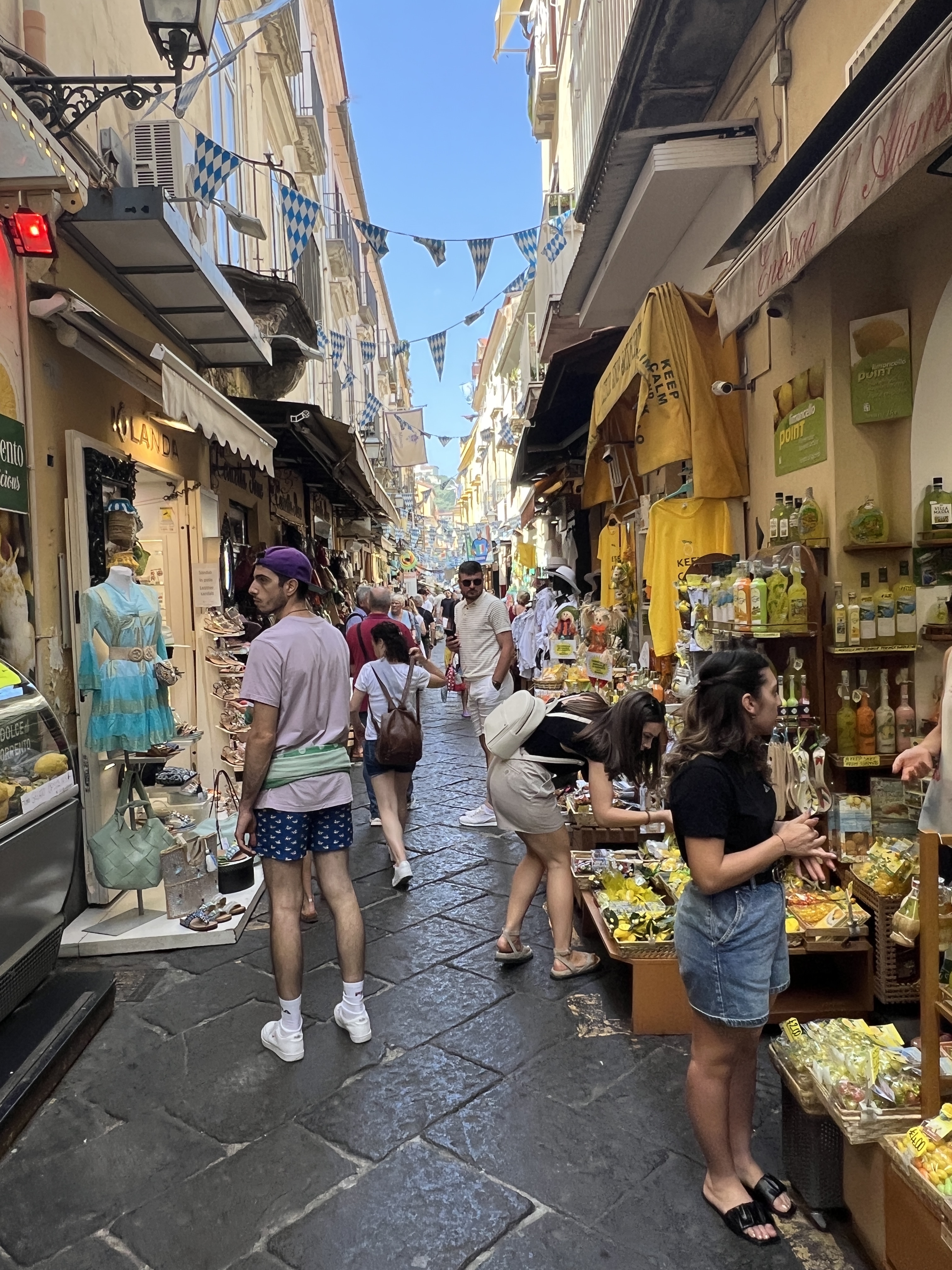
We have a couple of hours looking around a small touristy area of central Sorrento. Very busy being well into the summer season.
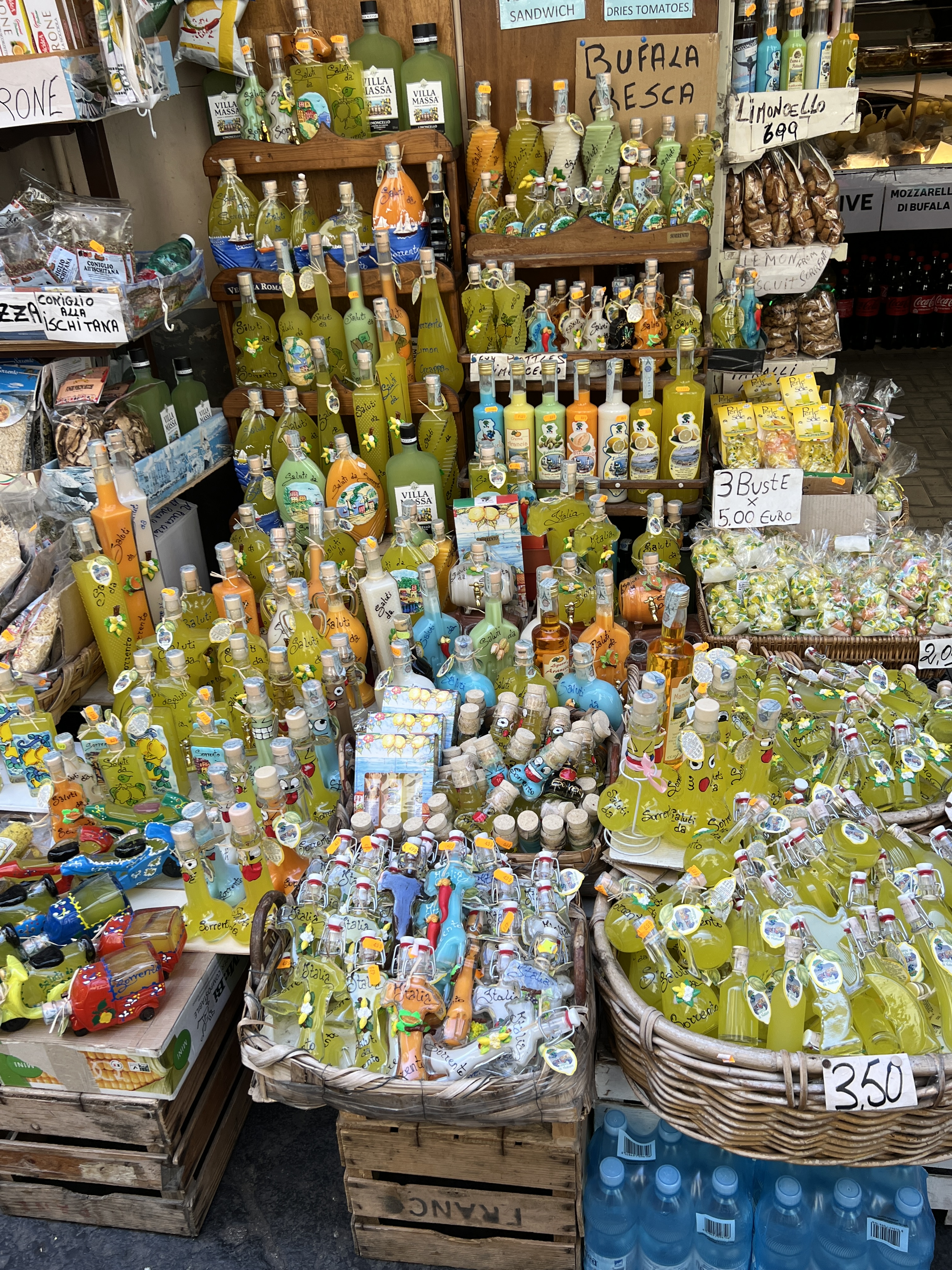
Tourist trap!Bottles of Limoncello, the region’s famous lemon liqueur.
After trawling through a narrow street packed with everything a tourist would want, including postcards, we retired to a cafe for a Margarita pizza and a glass of rose.
Margarita pizza, they just had to give us some chips as well!
Naples and the surrounding towns are famous for their Margarita pizzas. We were not disappointed. Slobro was very keen to put his feet up and enjoy people watching in the piazza.
It was soon time to move on to Pompei. Part of the deal it seems on these excursions is the need to drop into some ‘factories’ to check out local time honoured customs and production techniques. So we spent some time in shop that was full of wooden pieces, small tables, platters, music boxes, jewel cases and chess sets. These were made with ‘inlaid’ pieces of wood, quite intricate designs. Allthego was tempted by a very nice chess board. Thought twice about it and realised that at 400 Euros he would need to play an awful lot of chess to amortise the outlay! It would also probably end up in a garage sale down the track so it was passed up.
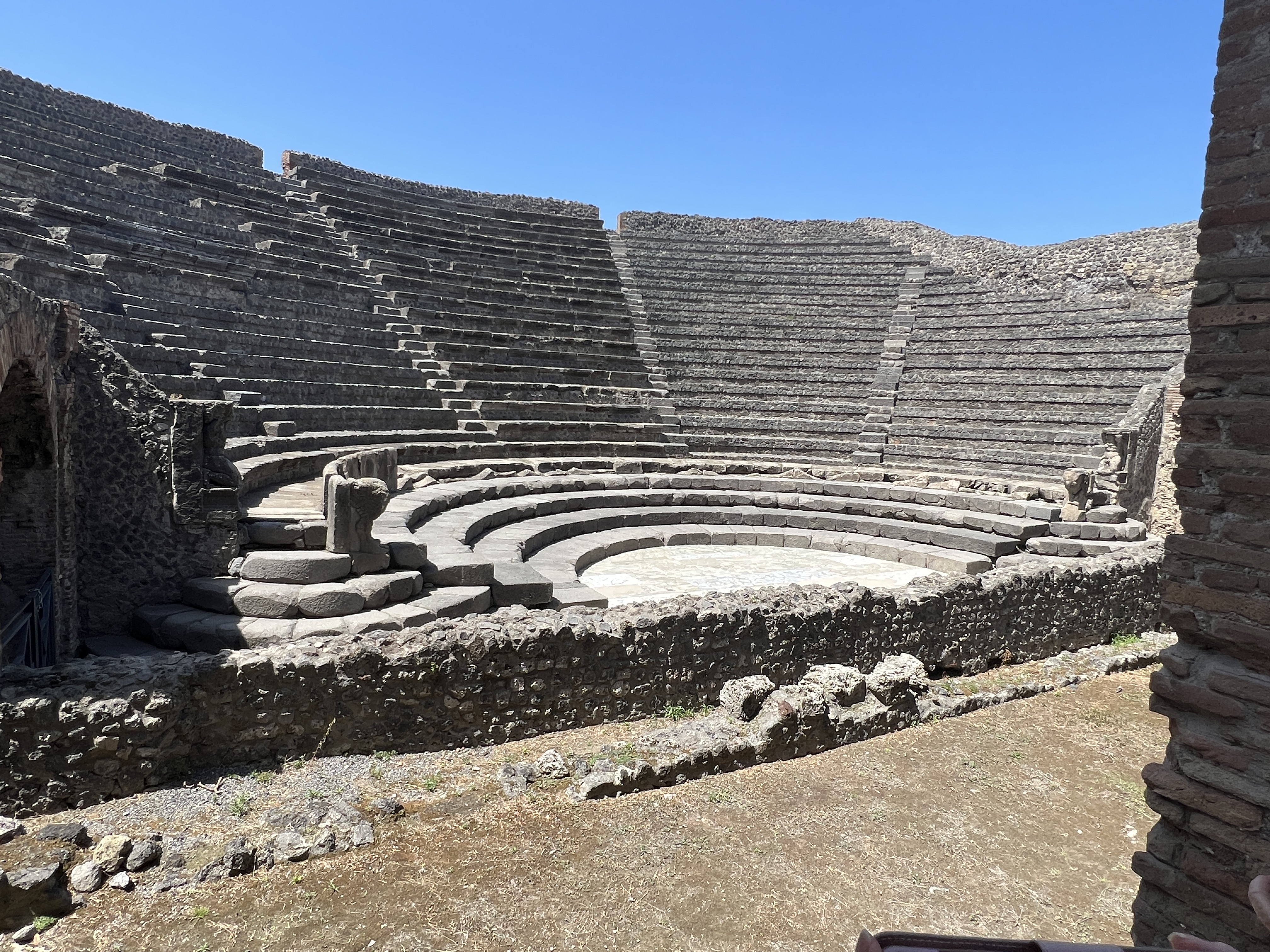
The Theatre
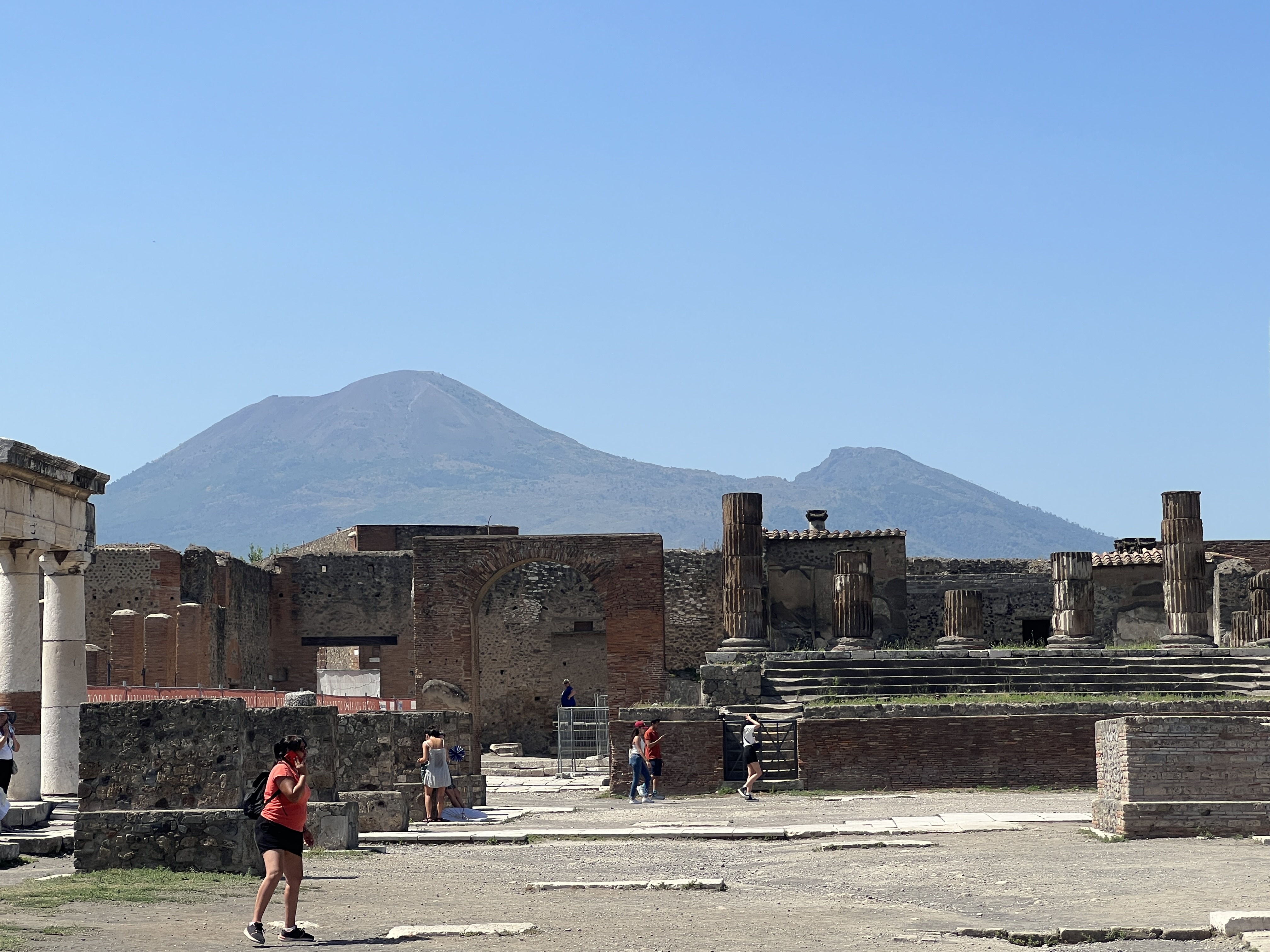
Slobro said that all the blog readers would know about Pompei and there was no need to go on and on about it in any detail. So my only observation is that Mt Vesuvius would have towered over old Pompei and the surrounding countryside.
Mt Vesuvius backdrops Pompei Forum
Today the mountain has two peaks, but it is thought that when it exploded in 79AD it was one much higher conical type peak. The top was just blown off leaving it as it is today. The people must have got one hell of a fright before they suffocated and were swamped by the mud flows, ash and other debris . It last erupted in 1944. Today, the mountain is considered active and pressure is apparently very slowly building up. Maybe it will blow off again sometime in the near future. I wouldn’t want to be one of the 700,000 people who today live around it’s base!
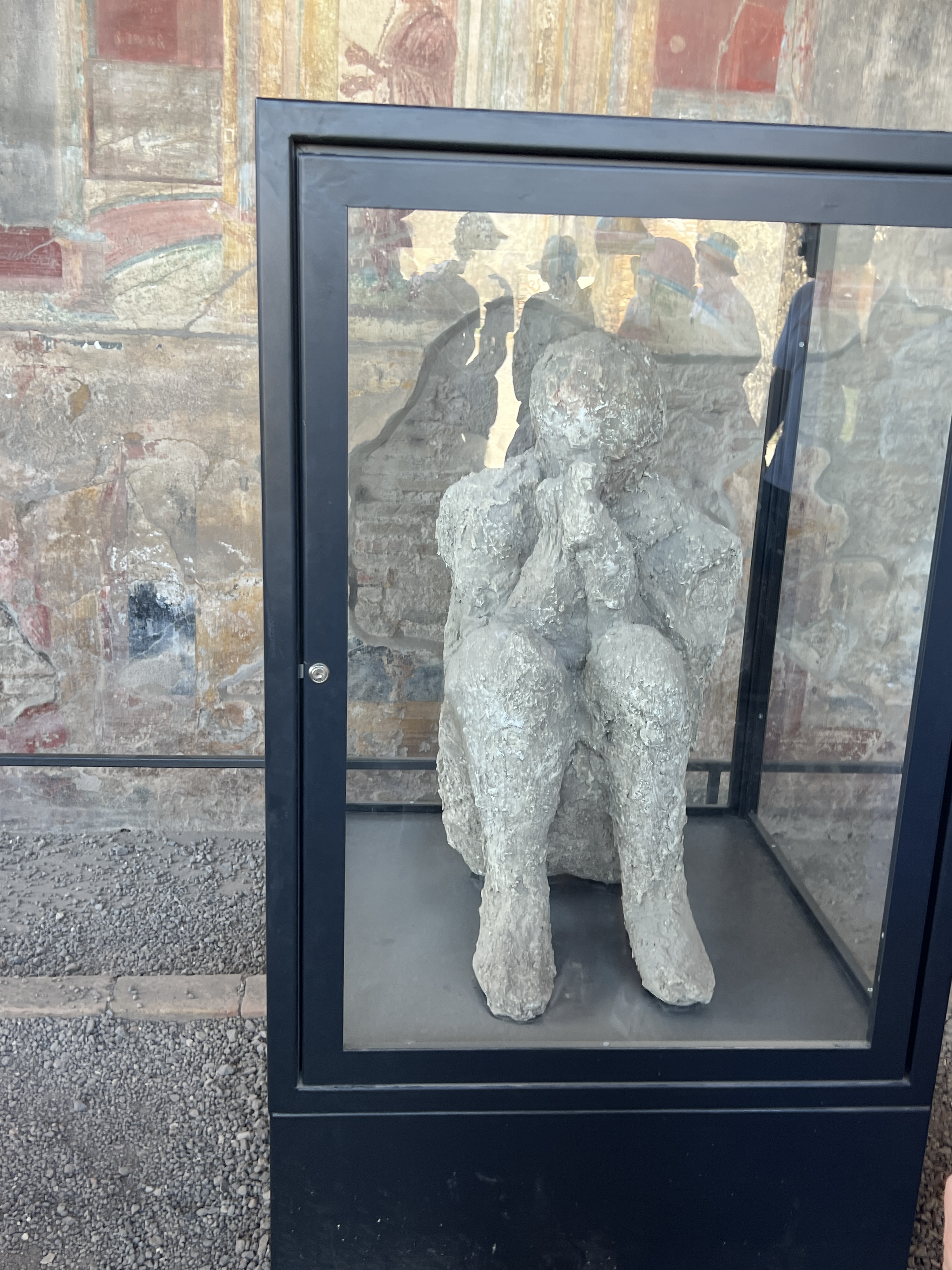
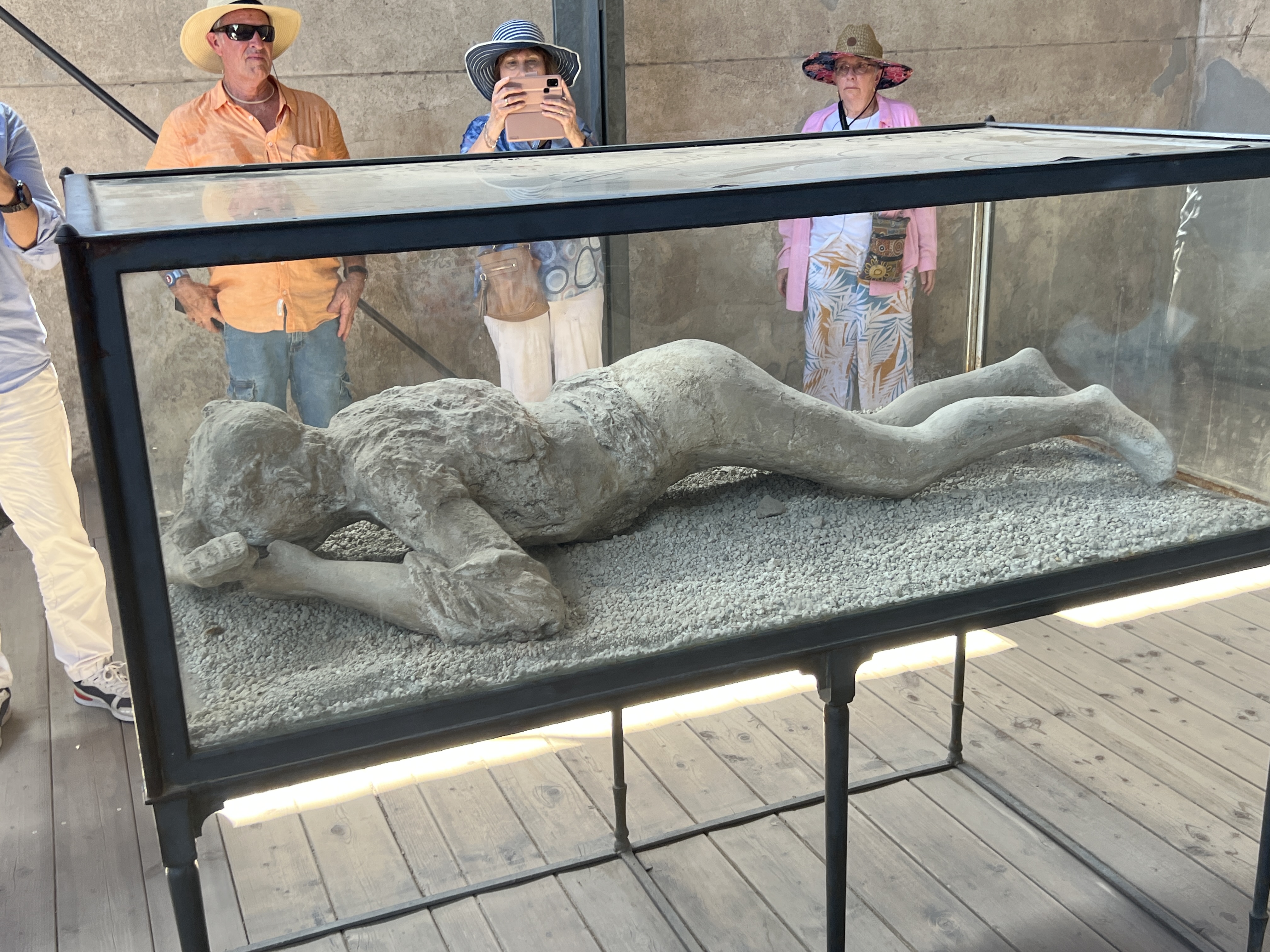
Plaster cast of a victim, the skeleton is inside.Another plaster cast.
We had an hour and a half with our guide looking at the excavations, quite amazing what has been uncovered here.
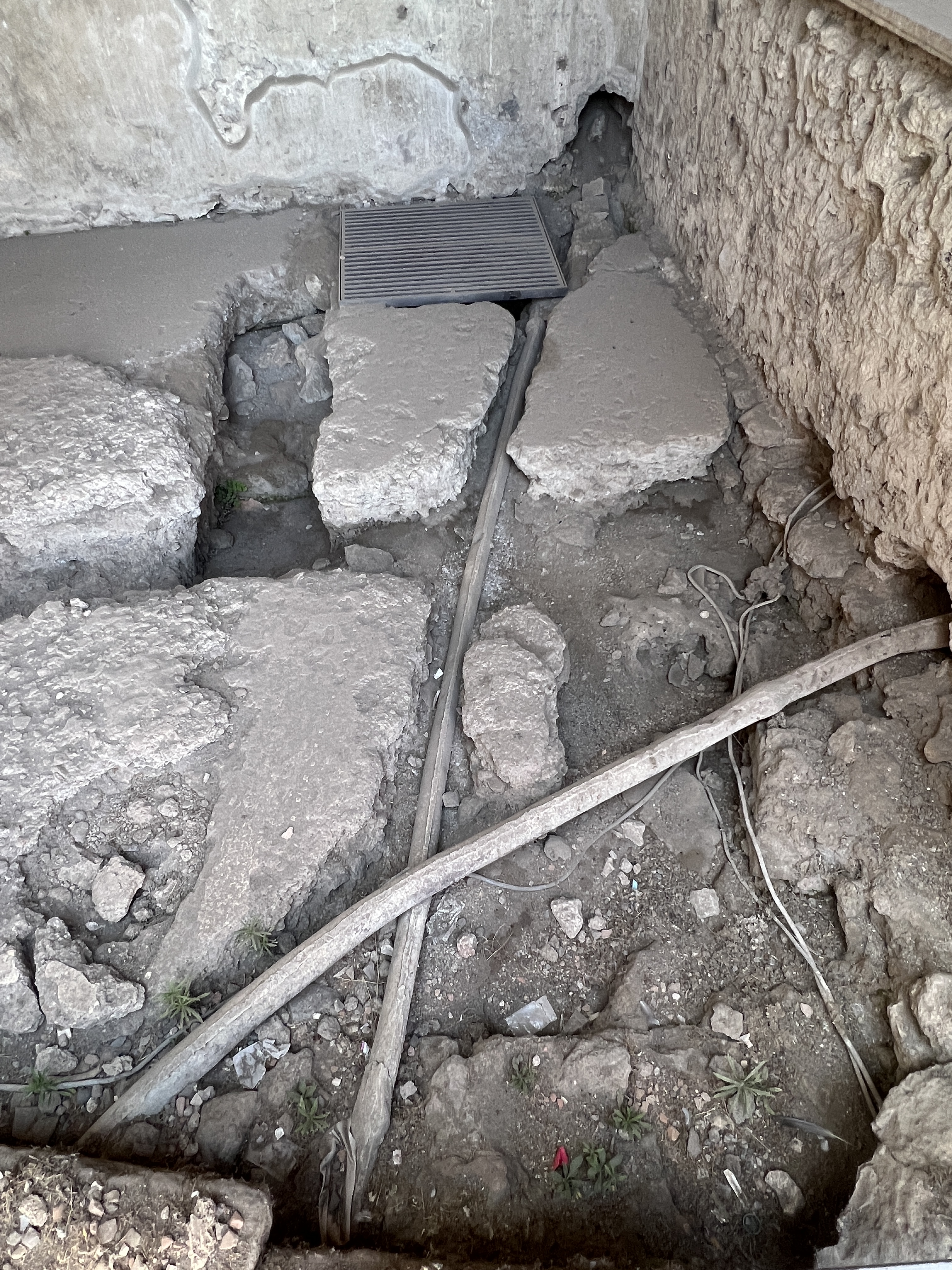
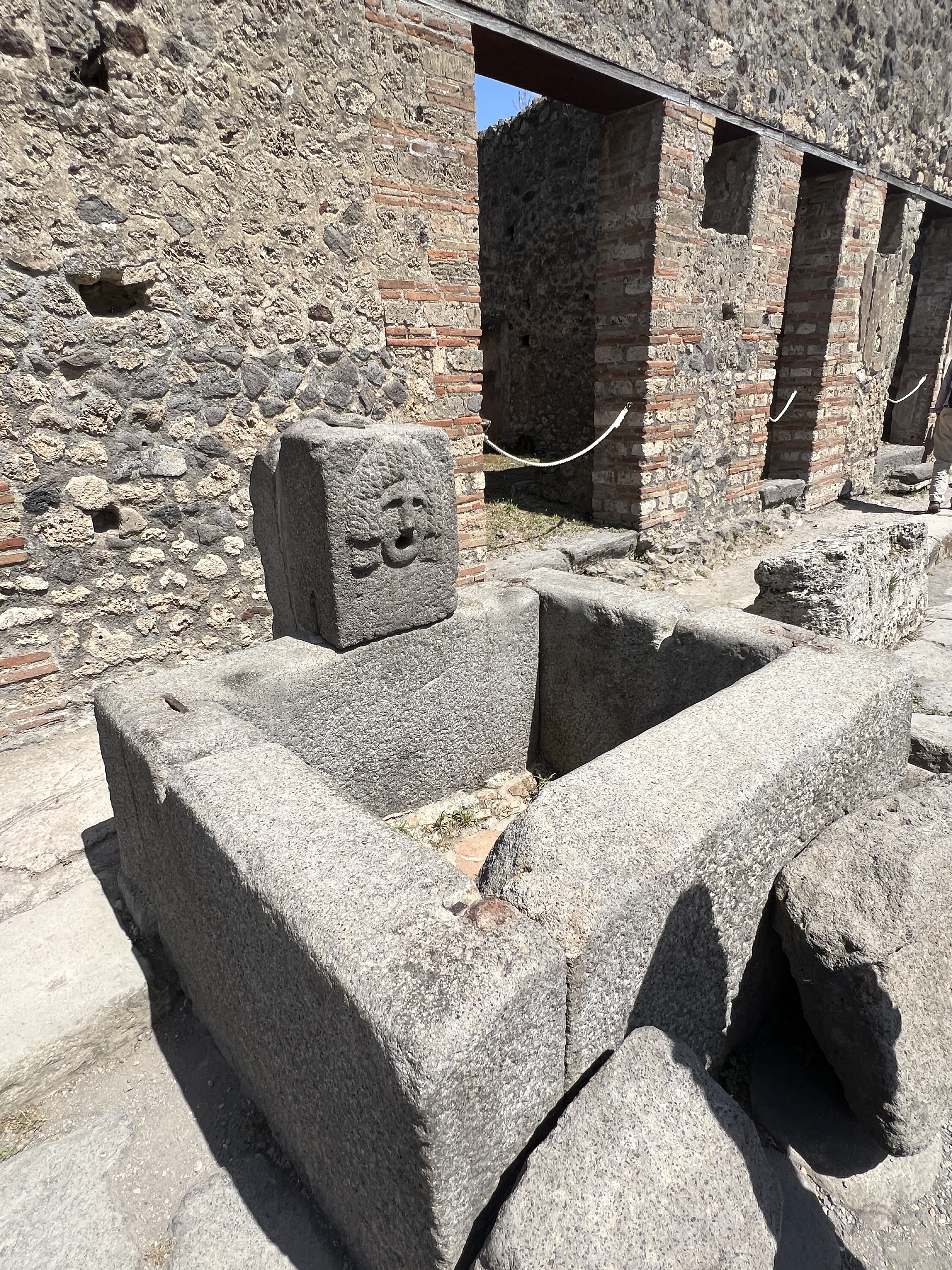
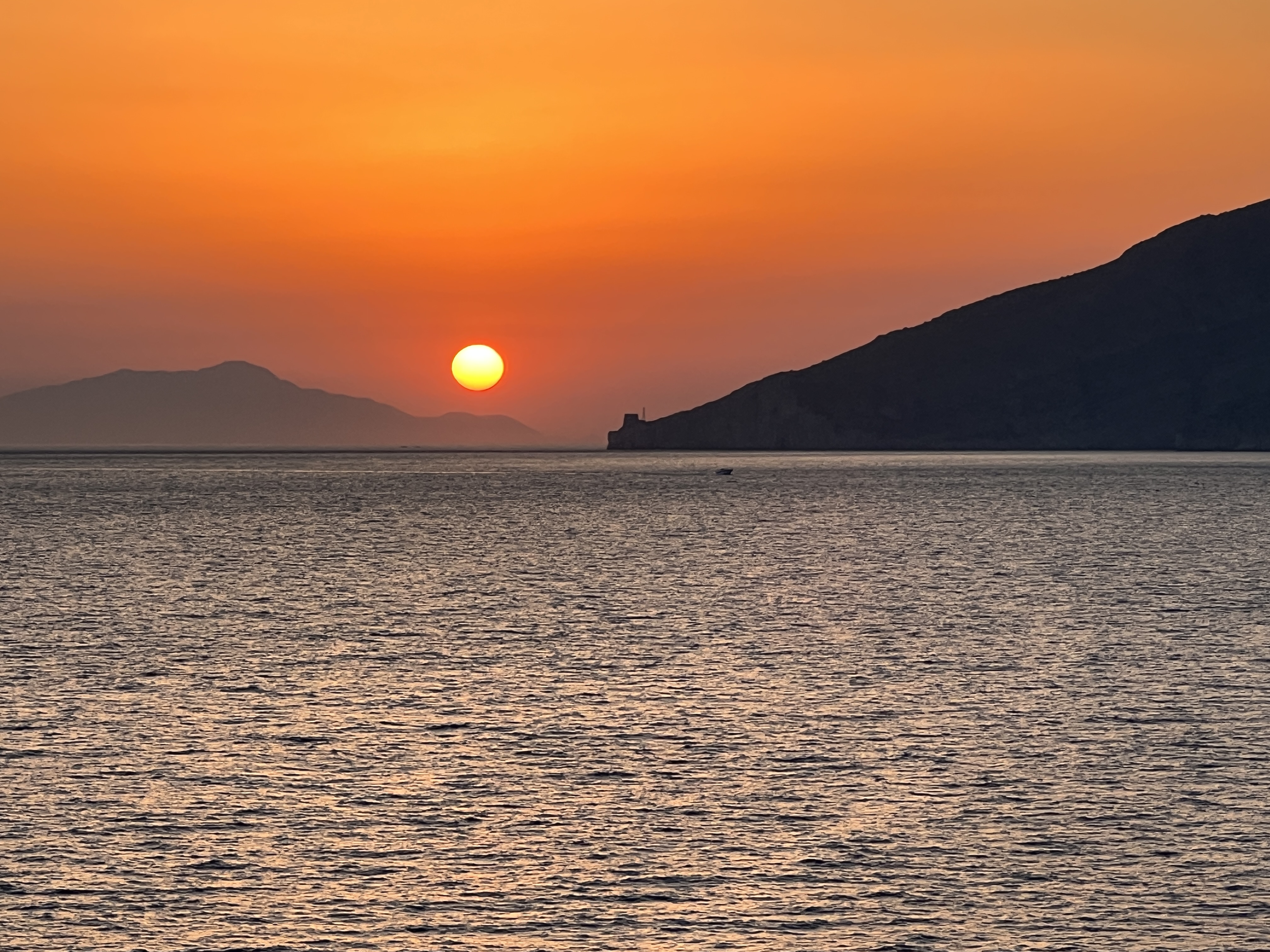
Lead pipes moved water around the town.A fountainAnother sunset over Naples
A bucket list experience ticked off our list! Back to the ship and the overnight sail north to Civitavecchia, Rome’s port.
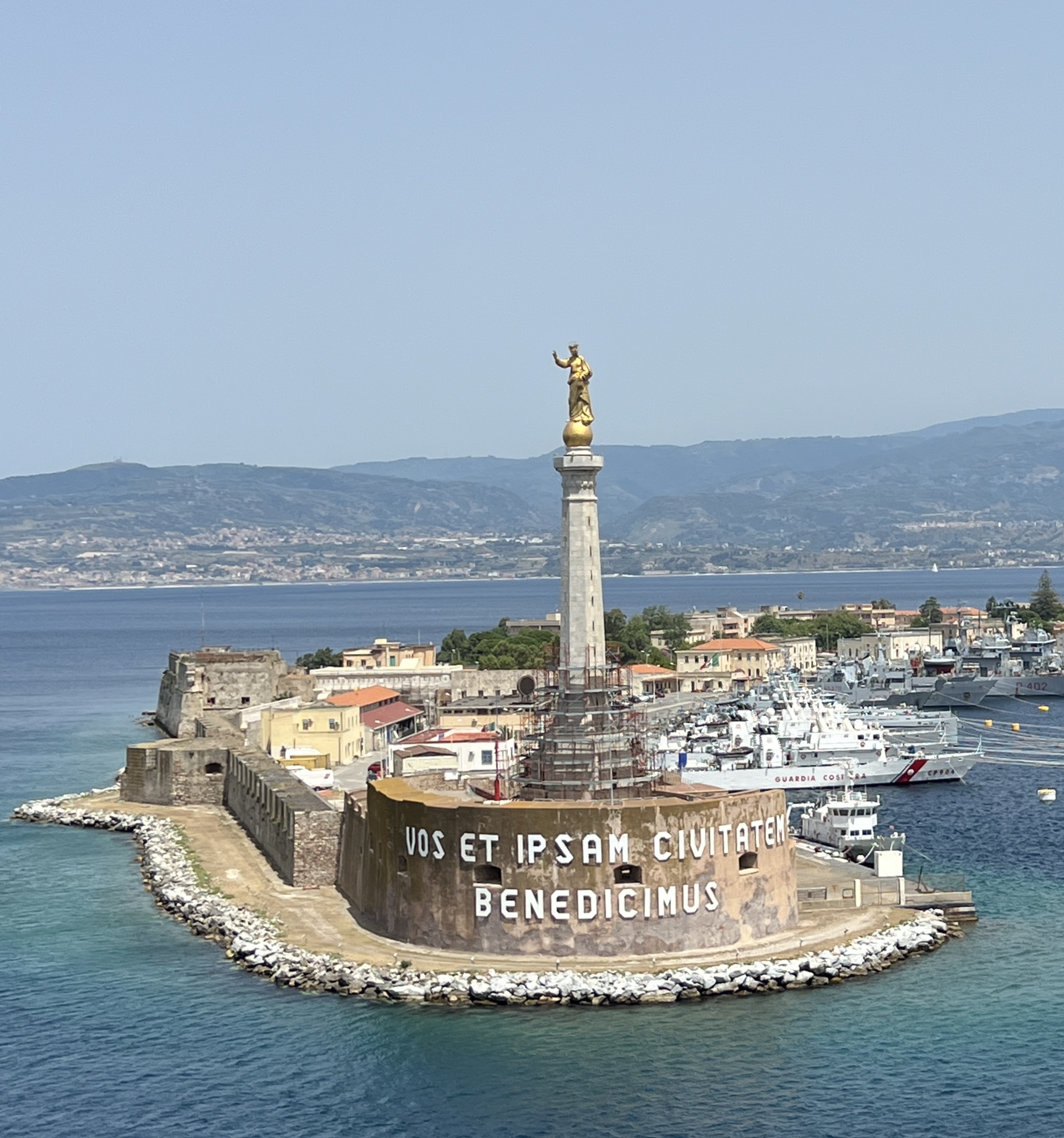
We have had a short but entertaining stop in Messina, on Sicily. The Madonna is a great landmark on the way into the port, sits alongside ships of the Italian navy.
The Madonna overlooking the port entrance.
The Straits of Messina seperate the island of Sicily from mainland Italy. There is not a big gap to span and a bridge has long been planned between the island and the mainland. Plans have been drawn and abandoned over the years, the area is quite prone to seismic events which appear to have put authorities off the proposal. Recent studies also show that Sicily and Italy are actually slowly ‘drifting’ apart on seperate tectonic plates which make bridge construction problematic. So, they just have to keep using the ferries.
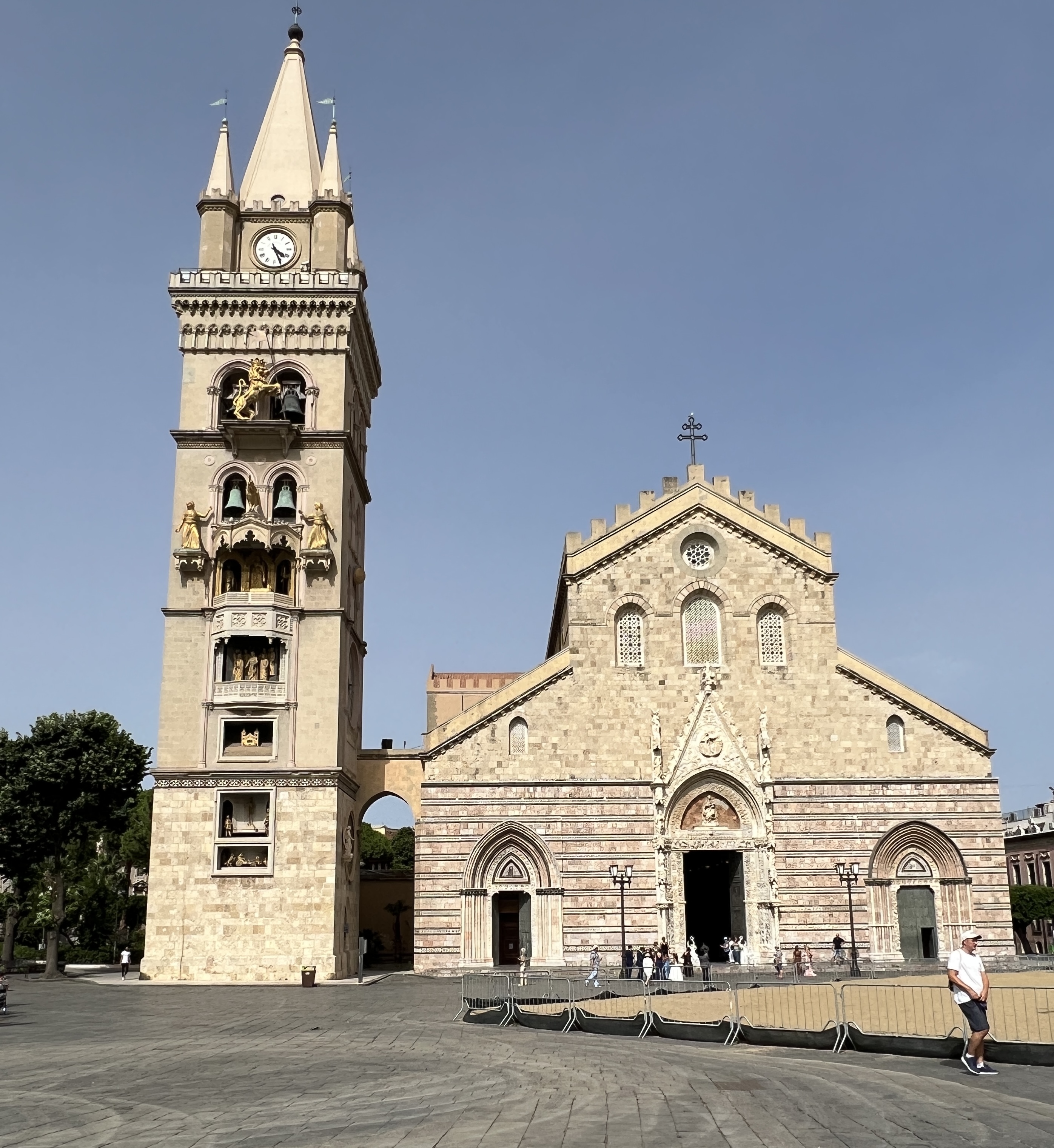
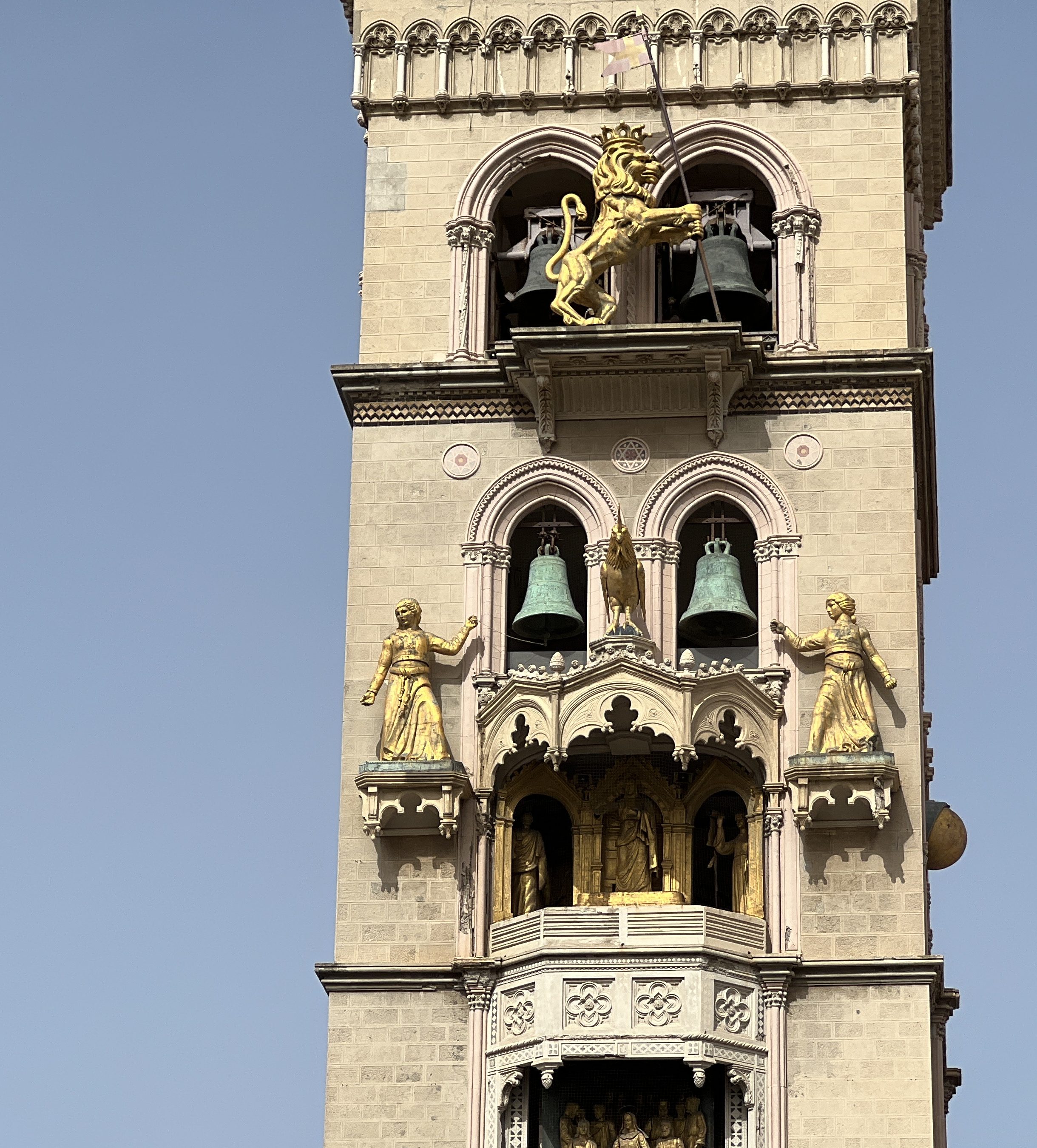
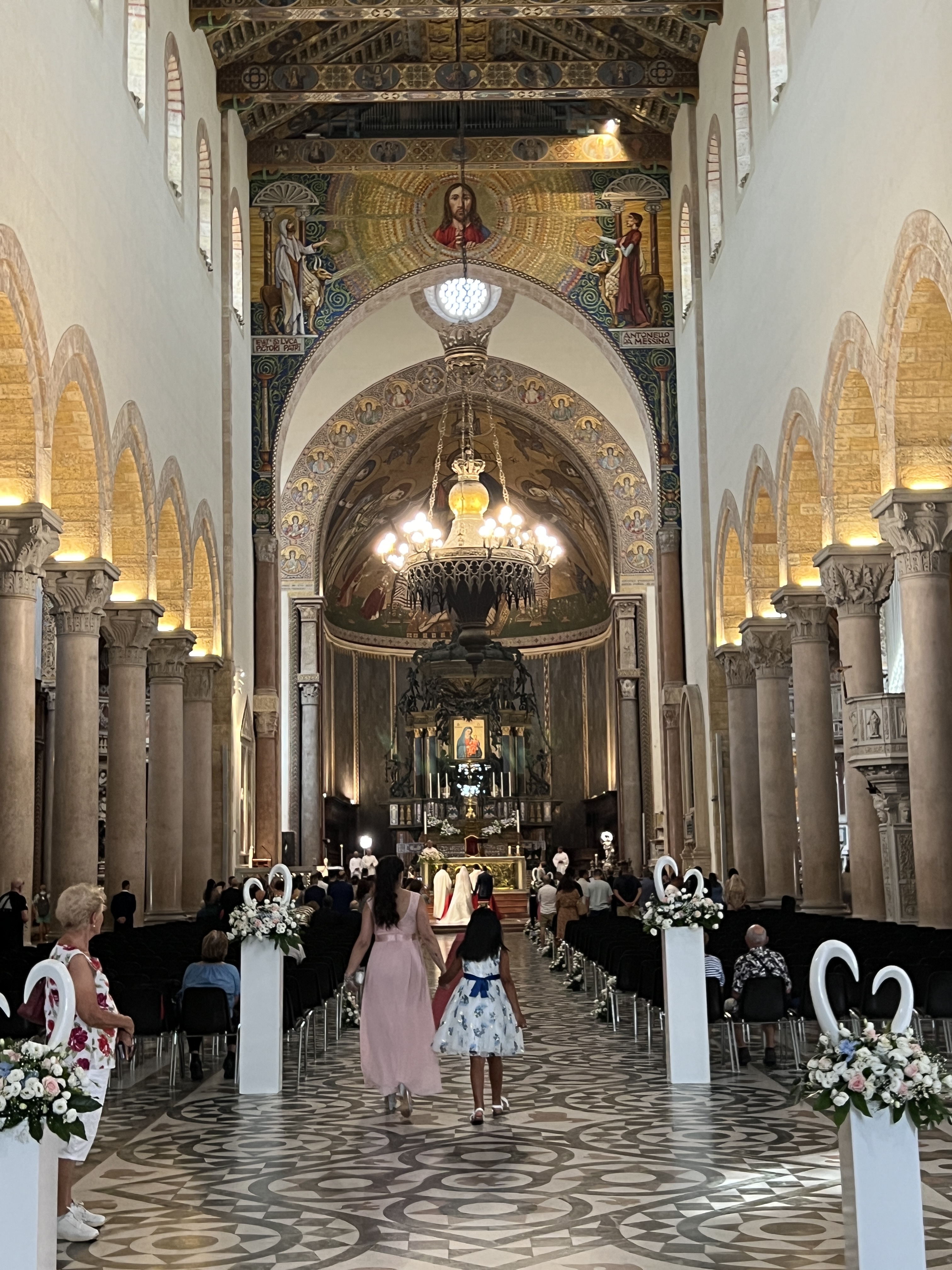
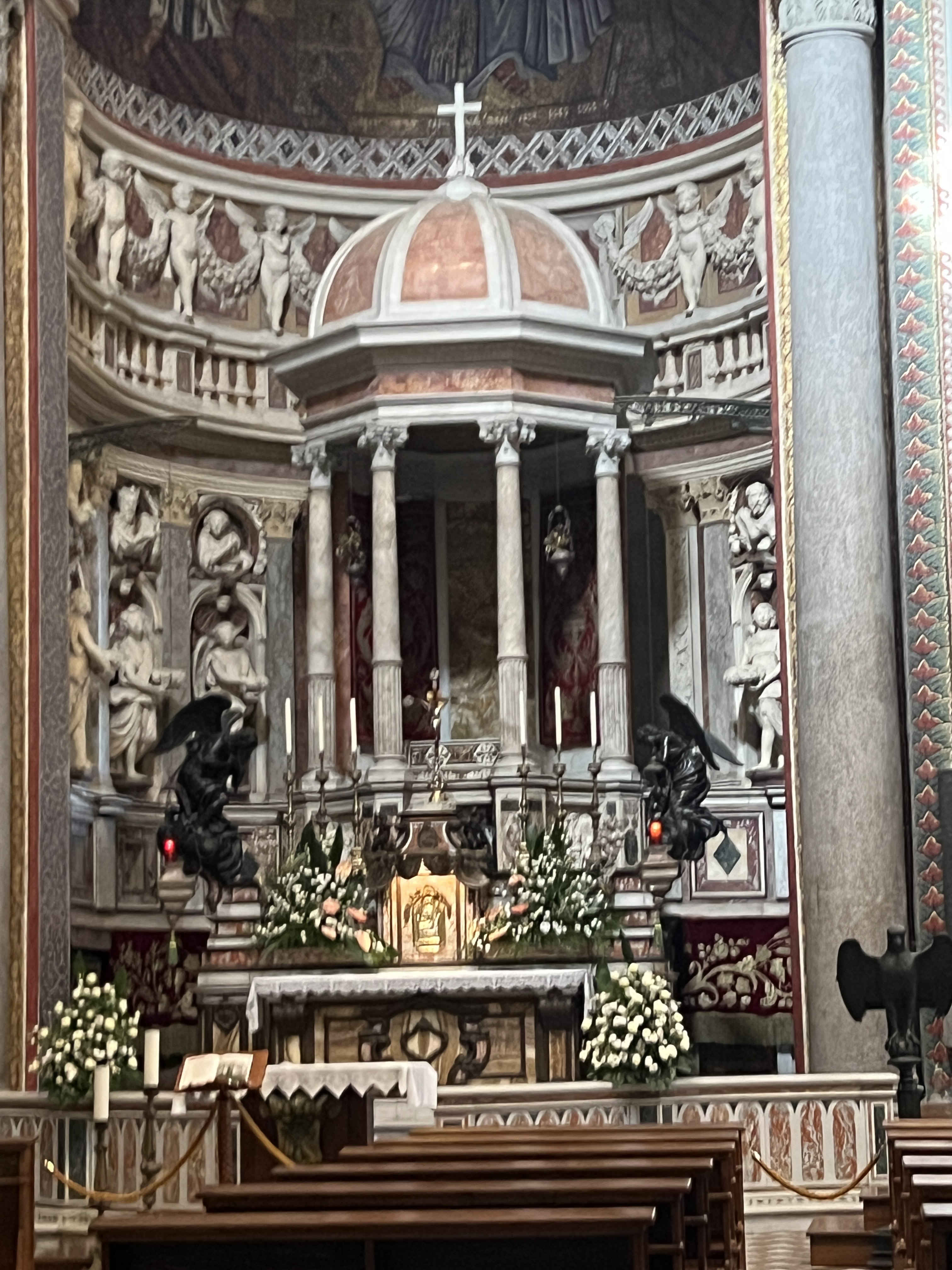
Messina Carhedral and Clock Tower.Some of the Clock ‘characters’ that perform on the quarter hour:Wedding in progress.A side chamber in the Cathedral
We had a short exploration around town, visiting the 12th century Cathedral and the more recent astronomical clock tower with all its characters doing their thing on the quarter hour. The church is quite spectacular, a great vault with all the European Catholic traditions. We were captured in the moment of a wedding in the Cathedral, the full thing, quite special experience. Homealone took a short video of the proceedings.
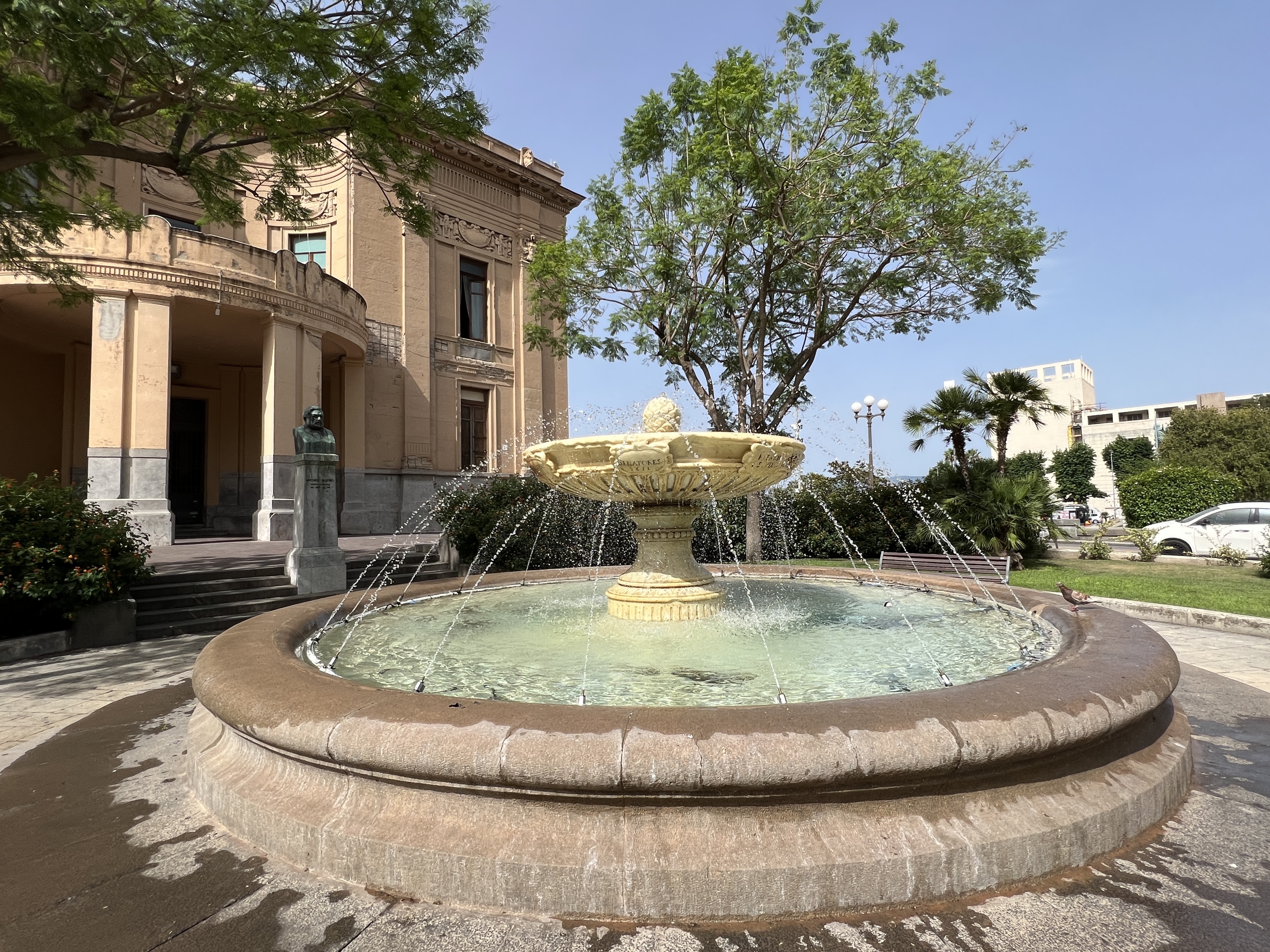
One of the many fountains.
Messina was greatly damaged by a major earthquake in 1908 and much of the town has been rebuilt on the ruins. Statues and fountains are liberally scattered around the town.
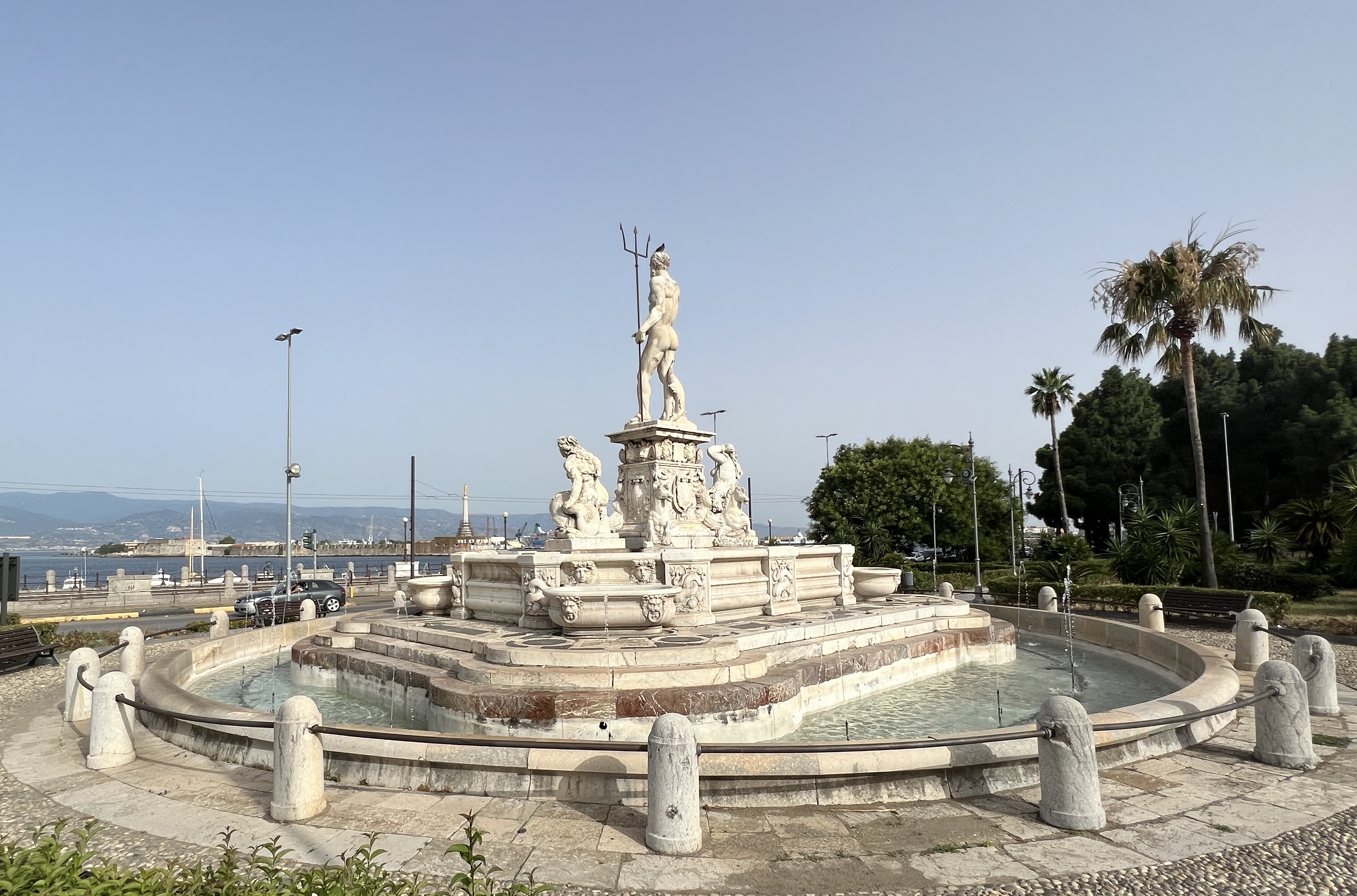
Neptune overlooking the Straits of Messina.
Neptune looking out over the Straits to Italy is quite impressive. Neptune apparently ‘ripped’ Sicily away from the clutches of the heel of Italy and is quite revered.
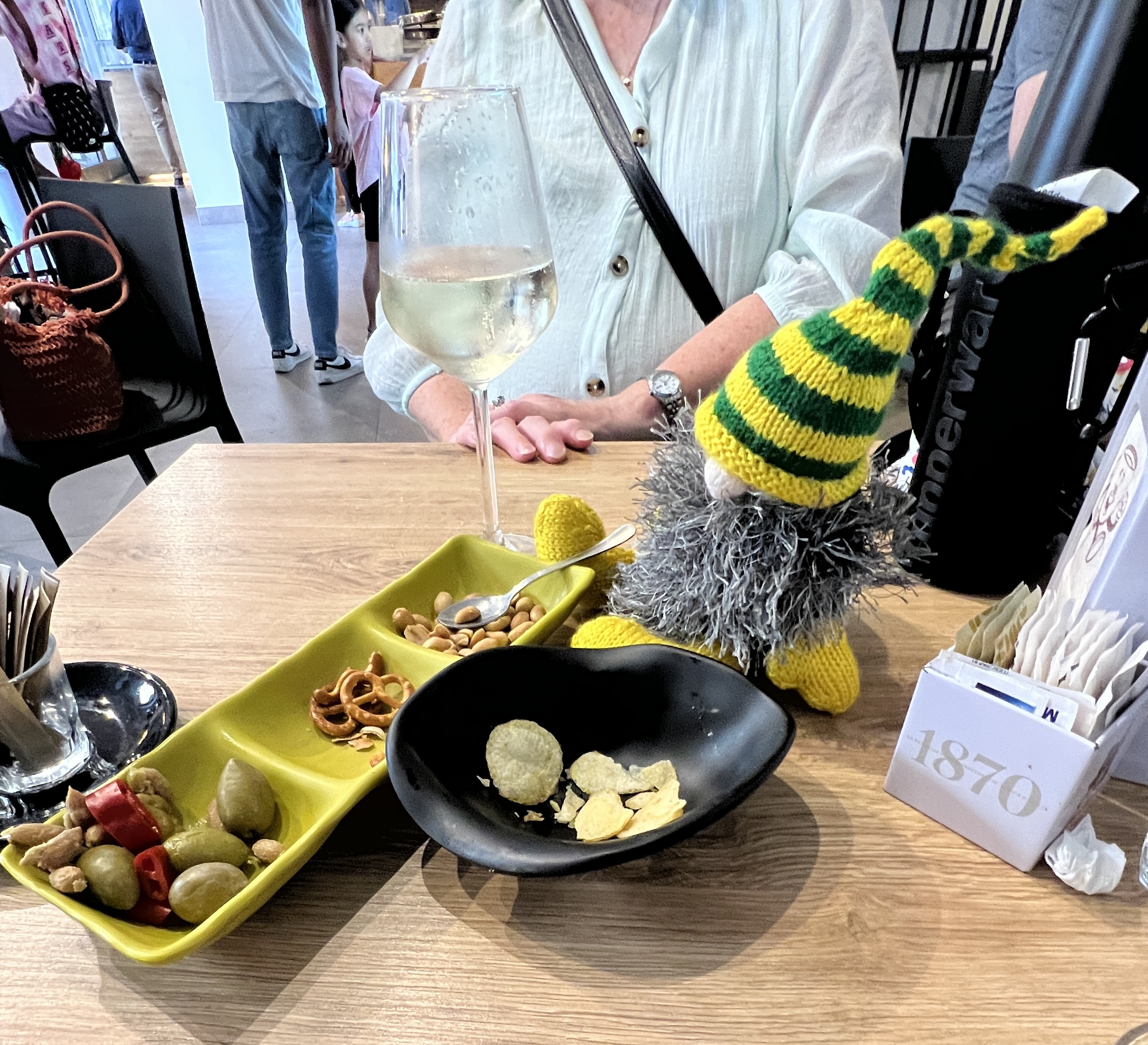
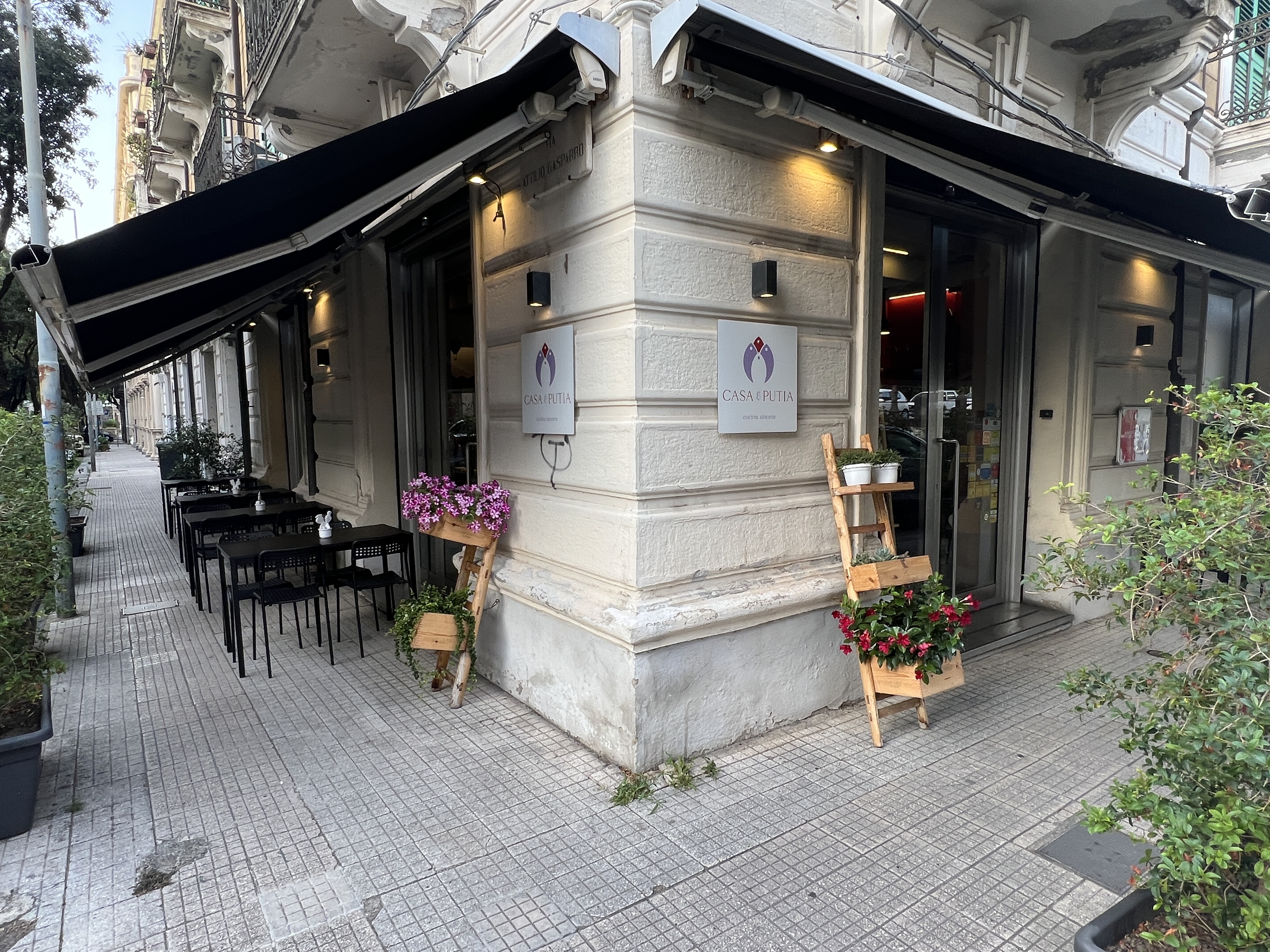
We all had a glass of Prosecco at ‘Eden’ while waiting for Casa & Putia to open at 7pm.Casa & Putia
One of our objectives here in Messina was to have a meal in local restaurant, away from those pesky tourists! Allthego had researched a place called ‘Casa & Putia’ (House & Home), a family affair.
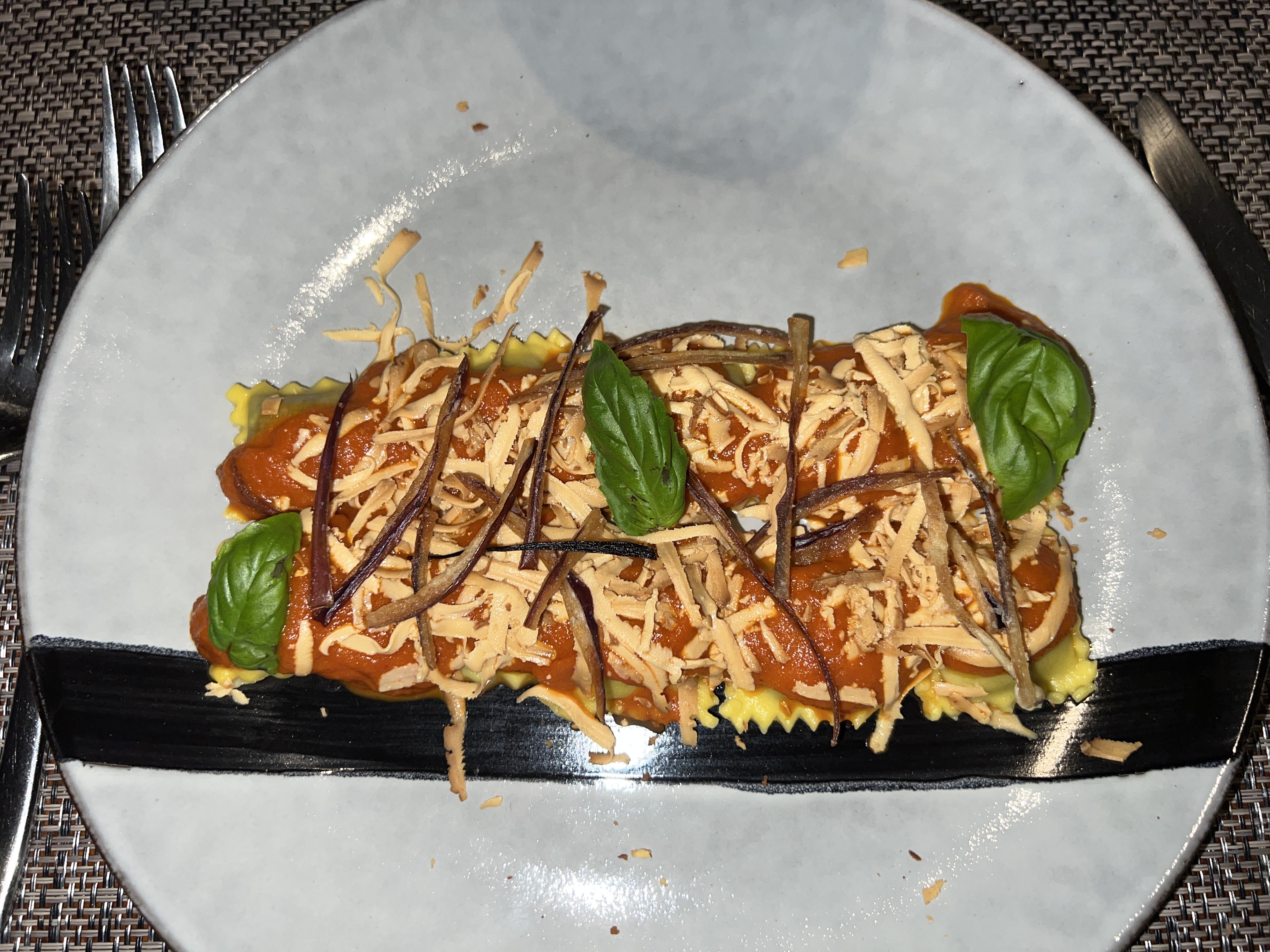
Allthego had this decorative ravioli type pasta of egg plant and tomato sauce, a local specialty.
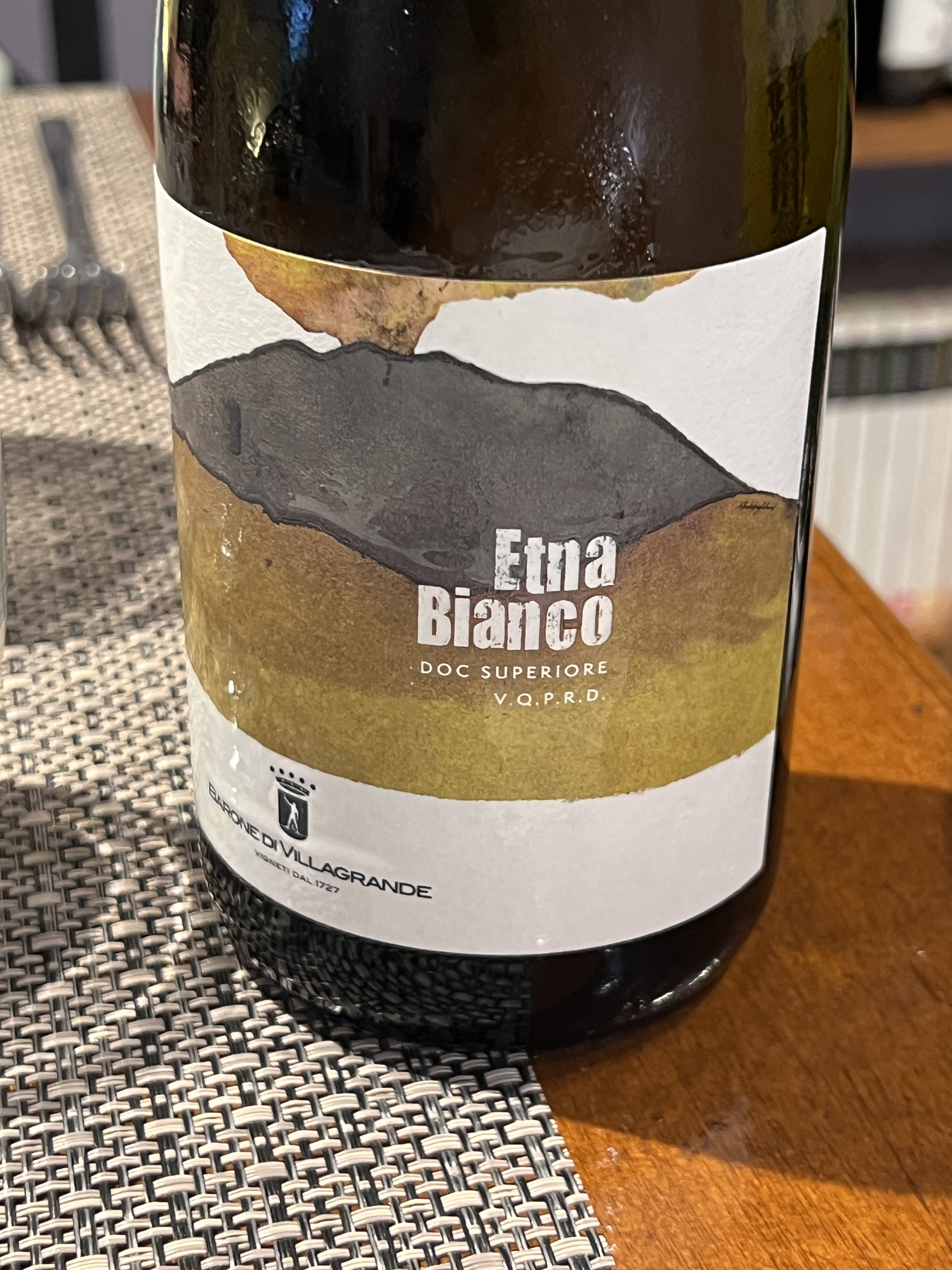
Rather nice too, Homealone a bit disappointed with her choice but the white wine from the slopes of Mt Etna made up for it. We were a hop step and a jump from the ship and made it back on board with 15 minutes to spare. Timing is everything! We are now on our way to Salerno.
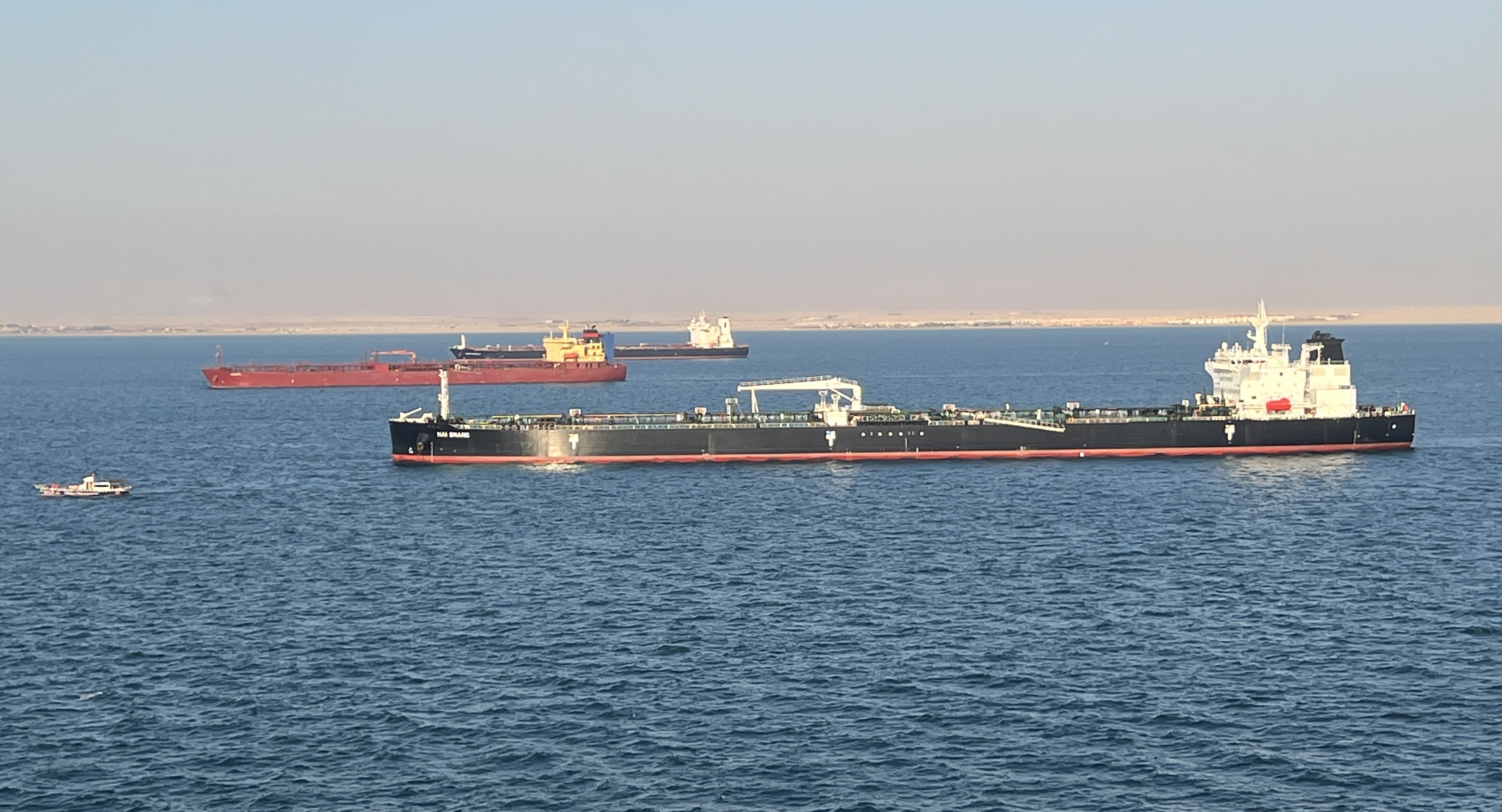
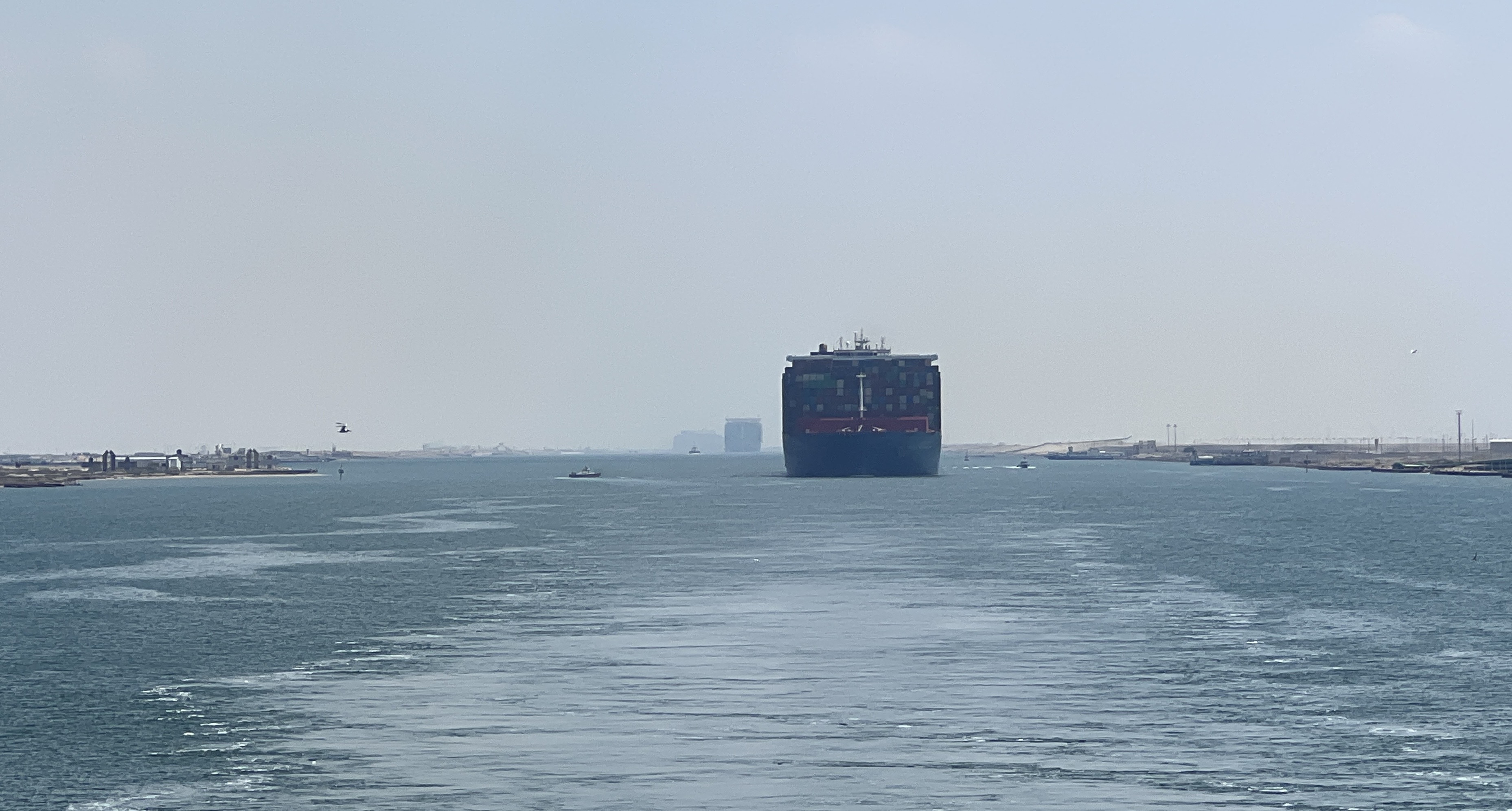
Our transit of the Canal was set to start at 4 am, after being at anchor all night. Our convoy was assembled, 38 ships lined up waiting for the last vessel to come out of the canal from the north. It is one way and we are number three in the convoy. We have big car carrier in front and behind is huge container vessel.
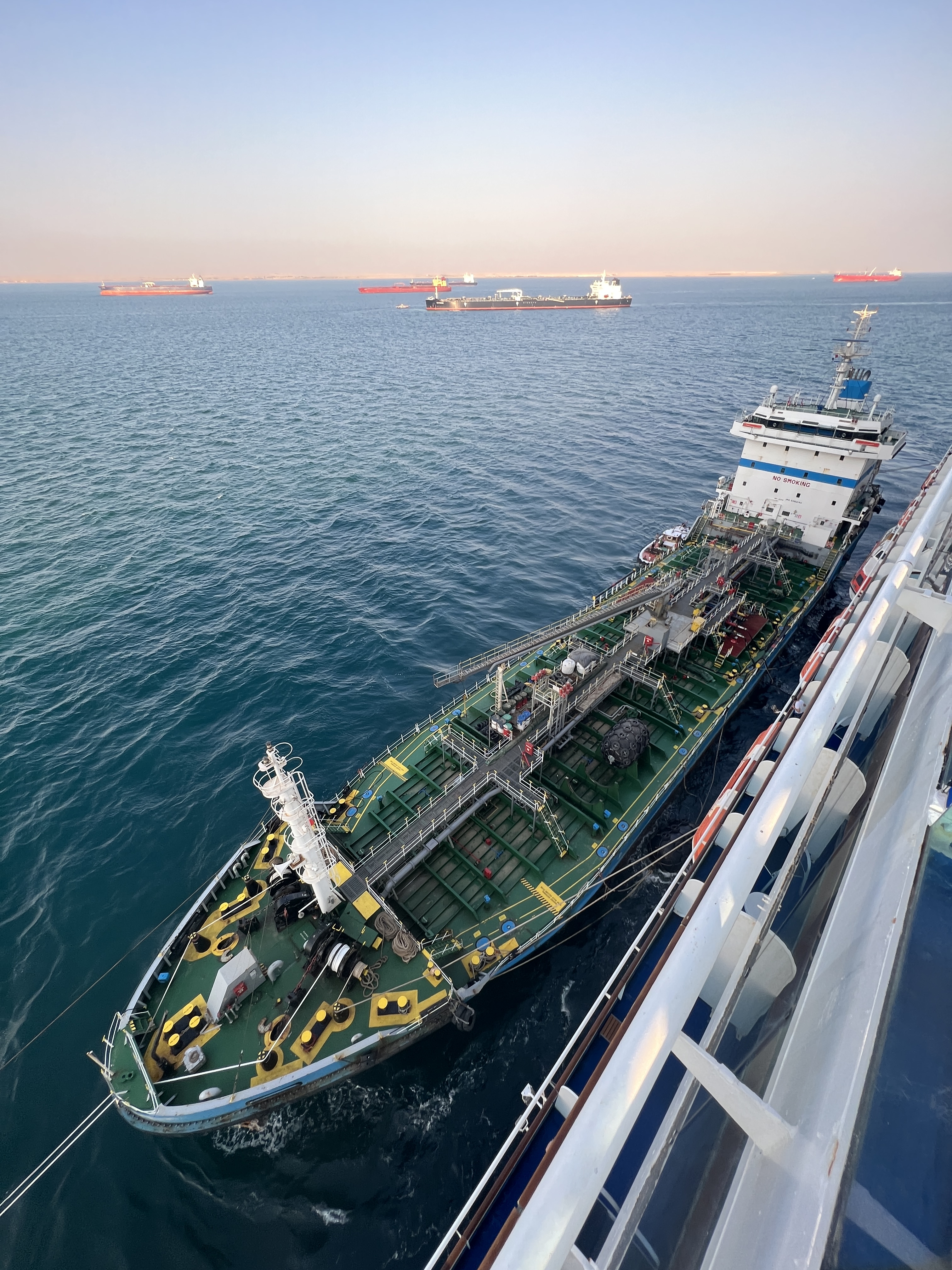
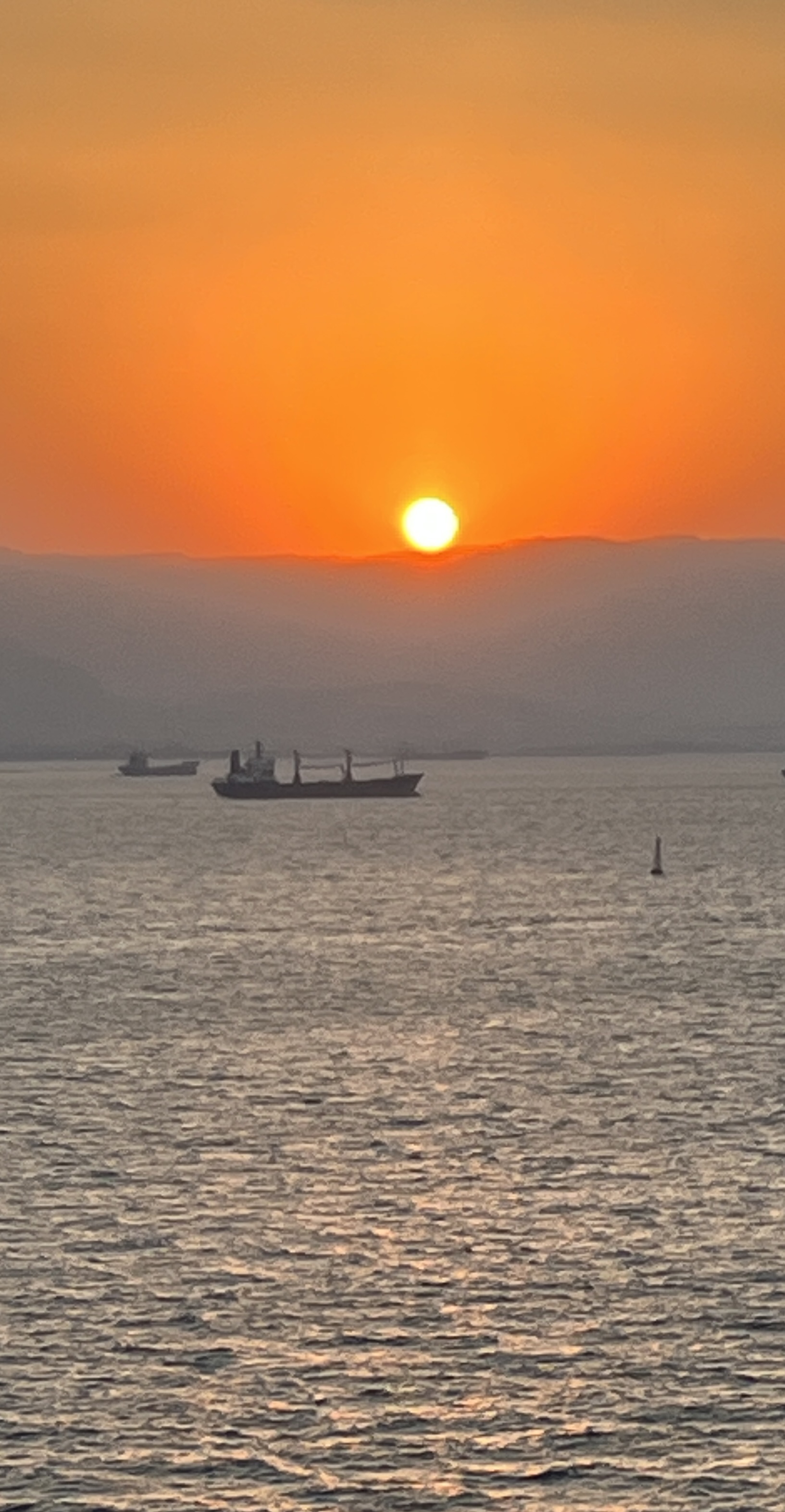
Ships lined up beside usTaking some fuel on board.Sunset at anchor
Slobro was a bit sluggish getting out of bed which meant that we just missed the entrance into the Canal, despite it being 45 minutes later than planned. We saw the sun come up, over the Sinai Peninsular, as we passed the Canal sign.
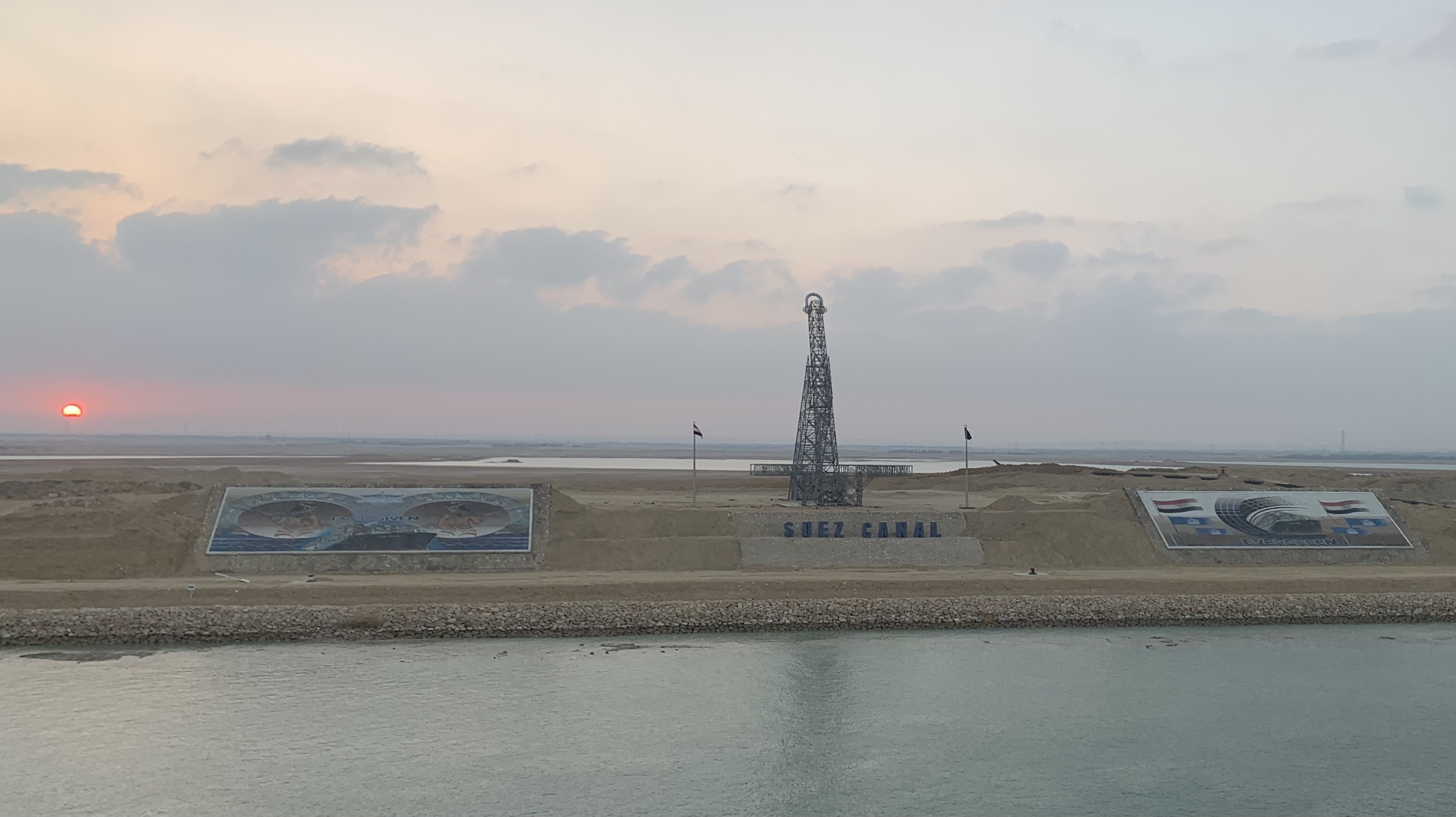
Suez Canal sign!
It took some nine hours to travel up the Canal to Port Said at the Mediterranean Sea, averaging about 8 knots. Quite spectacular journey, much activity along the Canal particularly on the western side where significant infrastructure is underway for much of the entire length of the Canal.
Evergreen commemorative mural
A mural marks the spot where the Evergreen ship got stuck, blocking the Canal for weeks, a few years back.
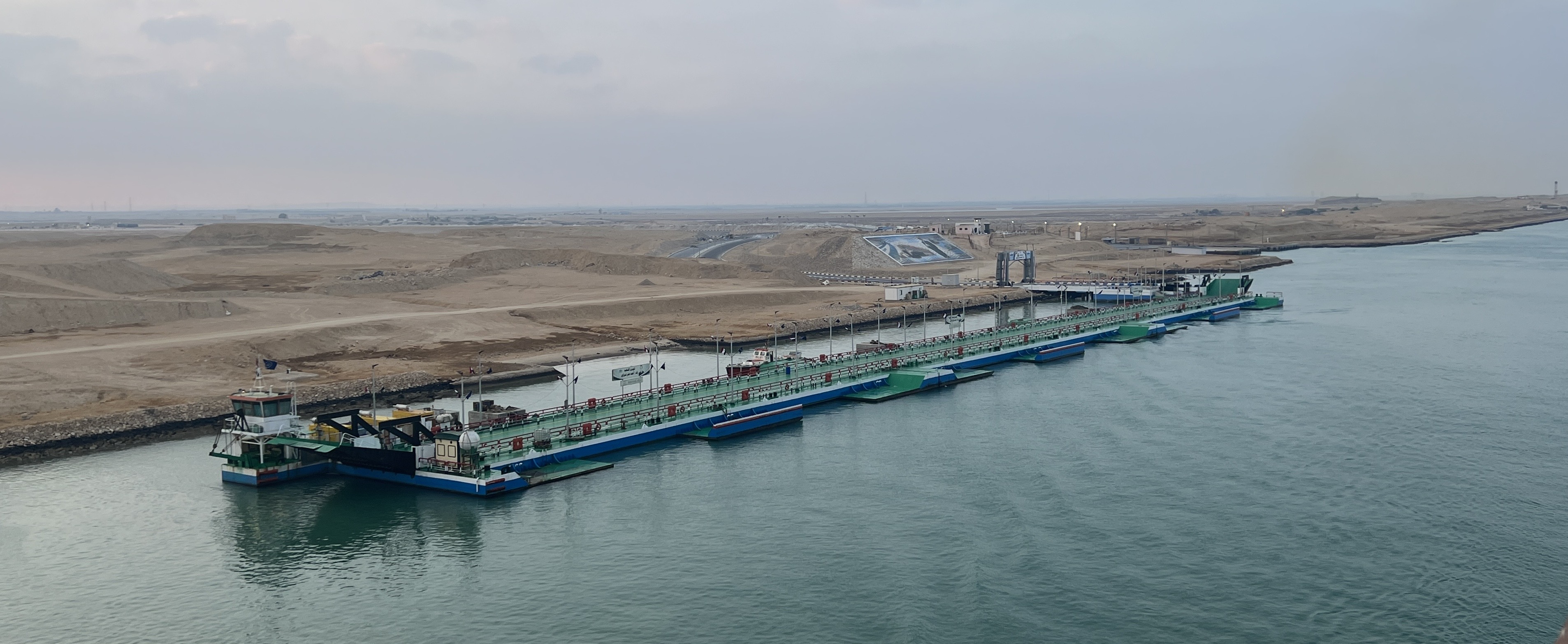
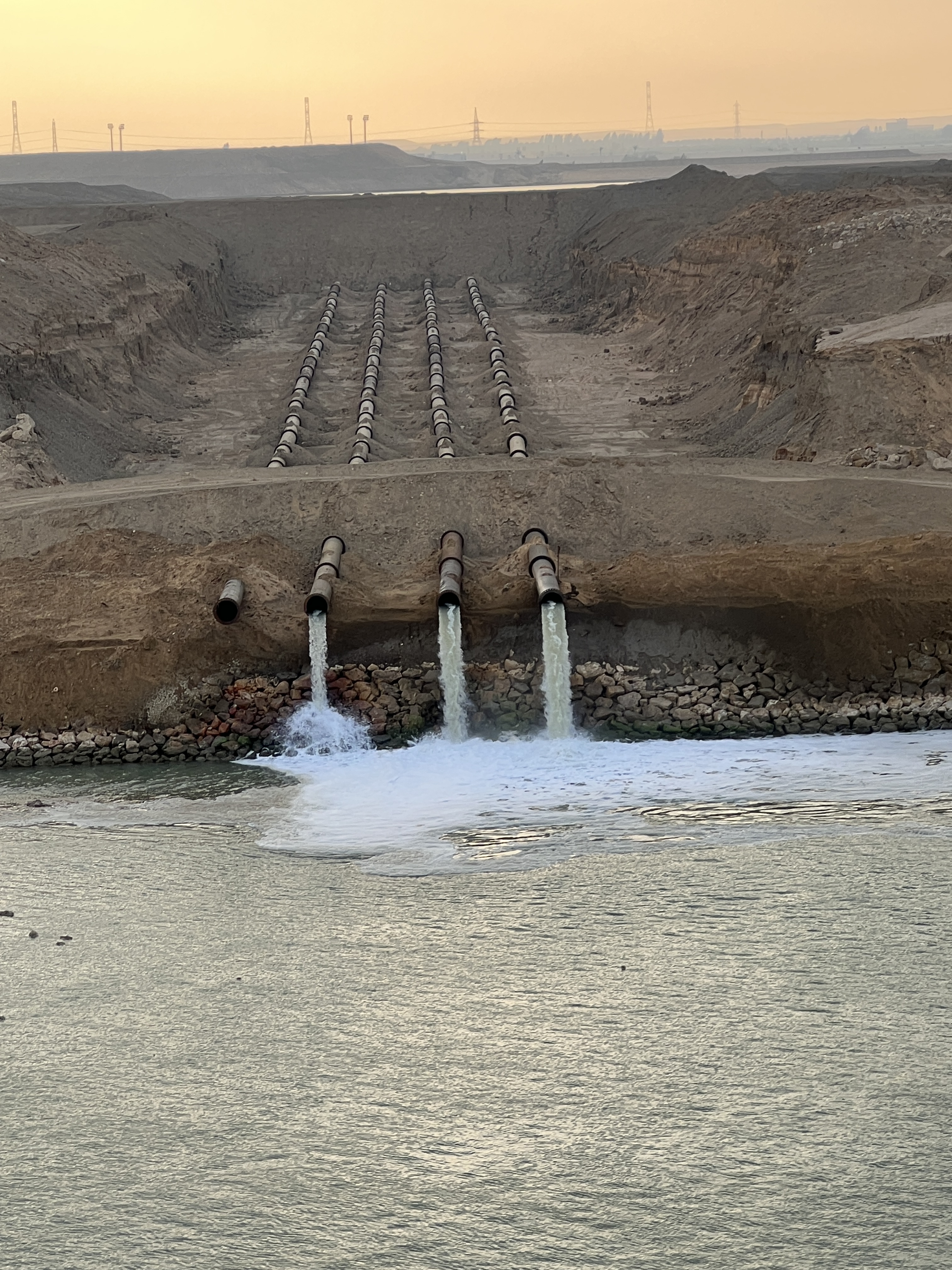
Solar powered floating bridge Dredge at work A drainage project of some sort!
Vehicle and rail tunnels have recently opened, as well as an irrigation tunnel taking water from the Nile River under the Canal to the west. A big industrial hub is being constructed on the Sinai side, supporting it is a new city under construction. Only, 220,000 units in hubs along the Canal aiming to have 340,000 in place by I think the end of 2025.
New city, one of the accomodation hubs along the Canal.
The buildings just go for kilometres along the Canal front. They seem to know how to get things done over here. Maybe, our politicians should have a study tour. Can’t see such a development on the upper reaches of the Brisbane River to address our housing issues getting the go ahead!
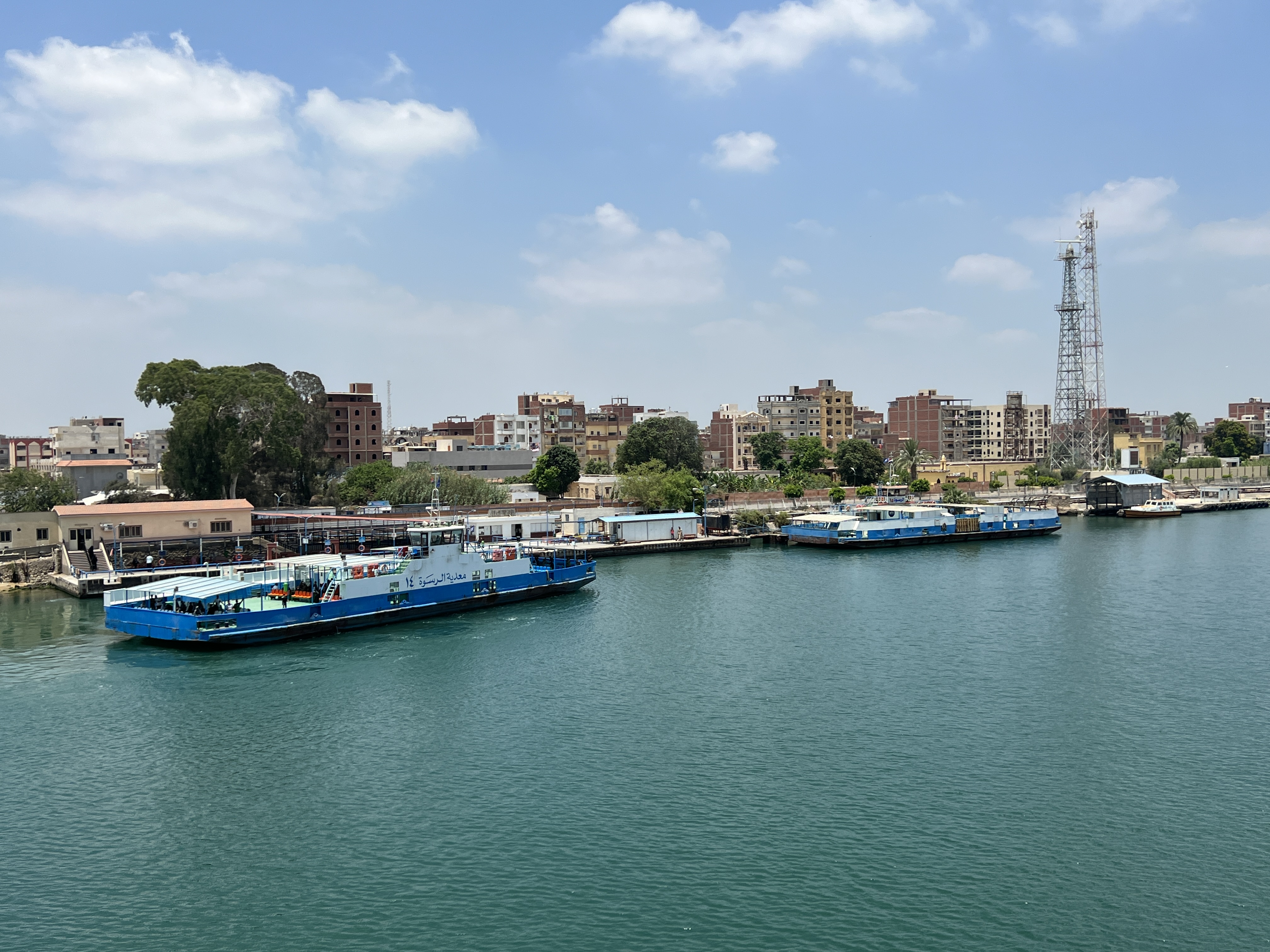
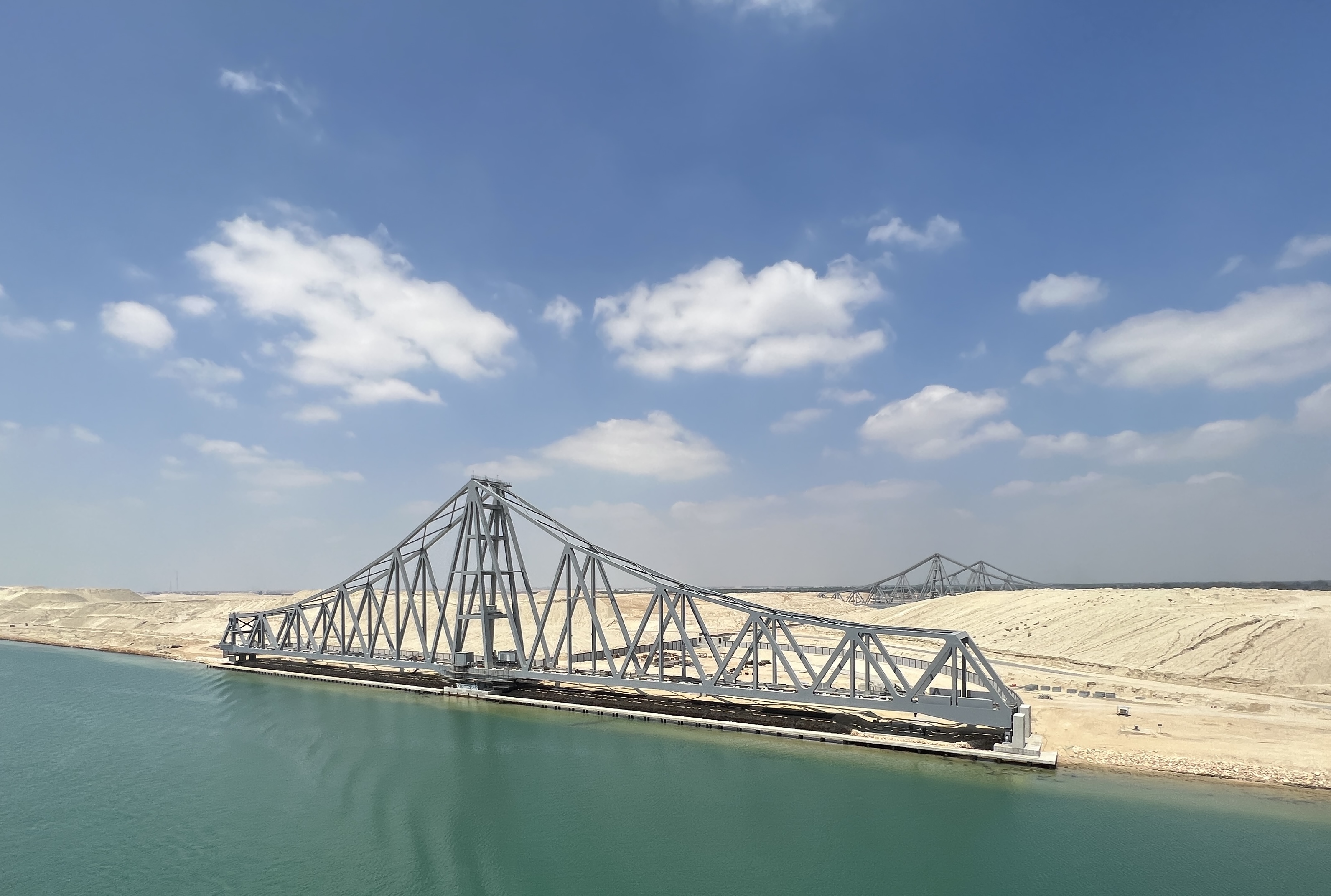
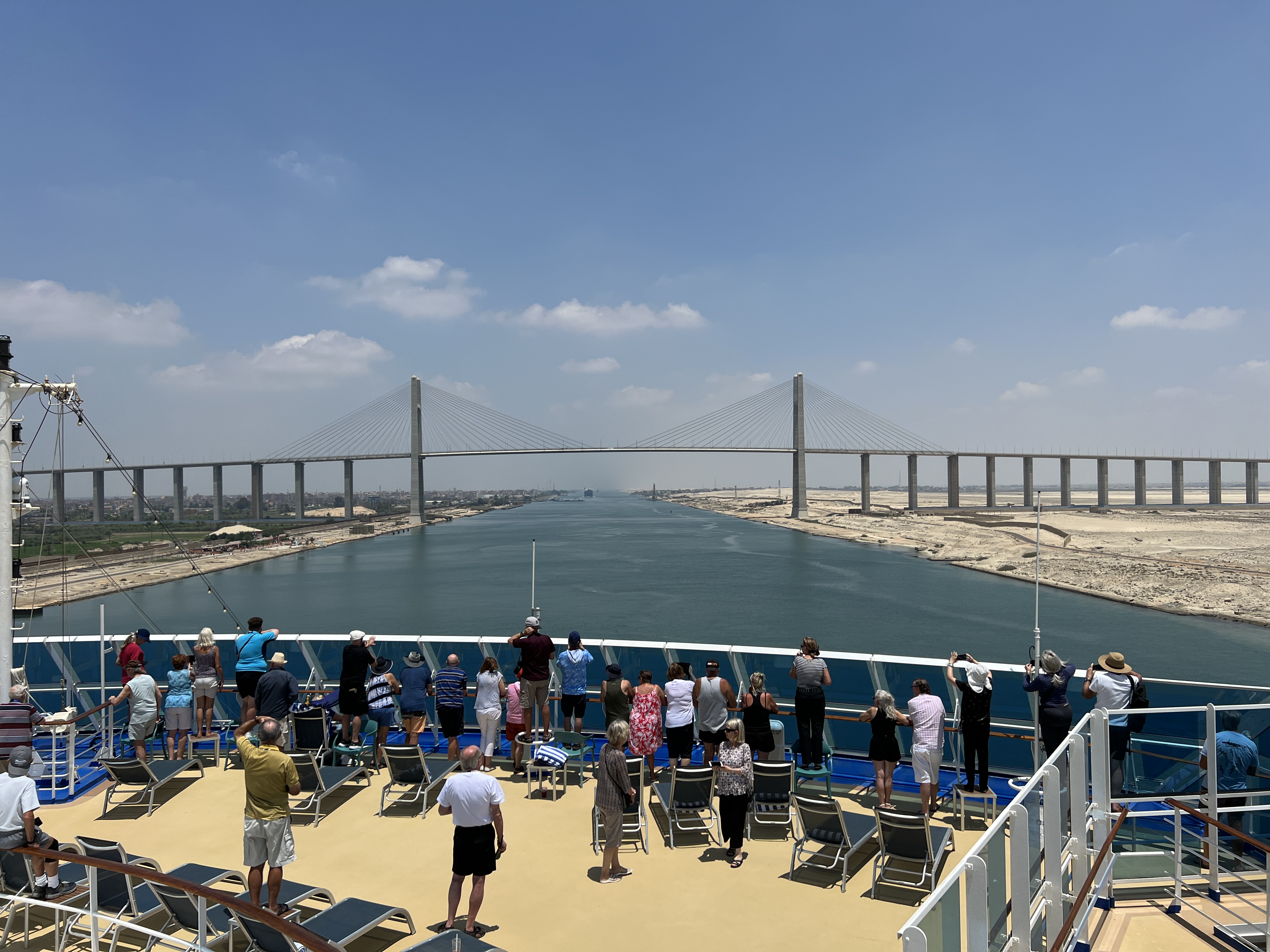
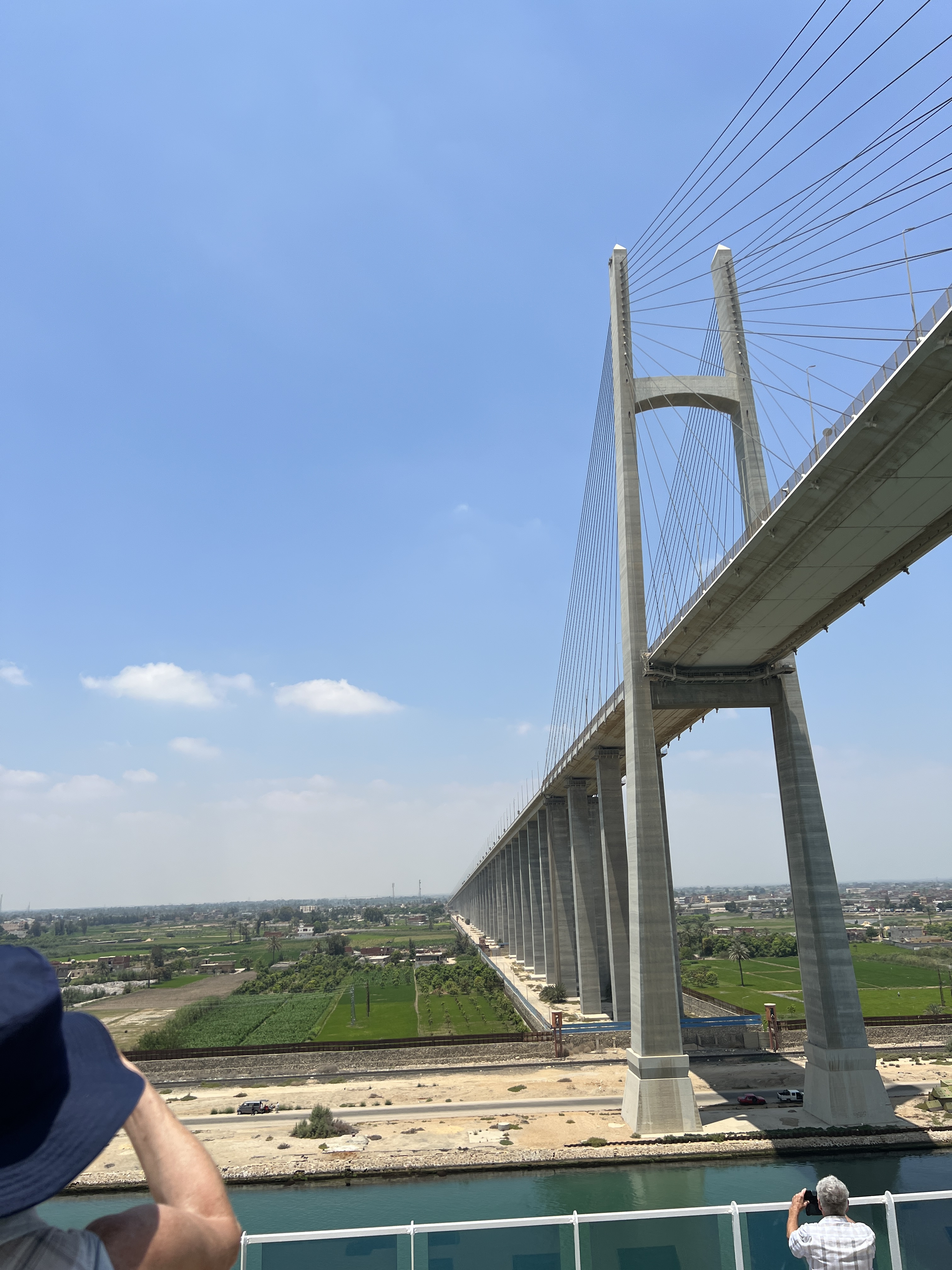
Ferries at Ismailia, a city on the eastern side about half way up the Canal.Swing railway bridge across the canal. In the distance is the swing bridge across the parallel canal.The Egyptian – Japanese Friendship Bridge.Western approach to the bridge
One could go on and on about what we saw along the Canal, Slobro said not to! Photos do a better job!
Heading out into the Mediterranean.
As we ventured out into the Mediterranean (above photo is looking back down the Canal) one might wonder what the builders of the Canal in the 1850/60s would think of it today. The Canal hastened the transformation of shipping from sail to steam, cutting weeks off the journey from Europe to Asia.
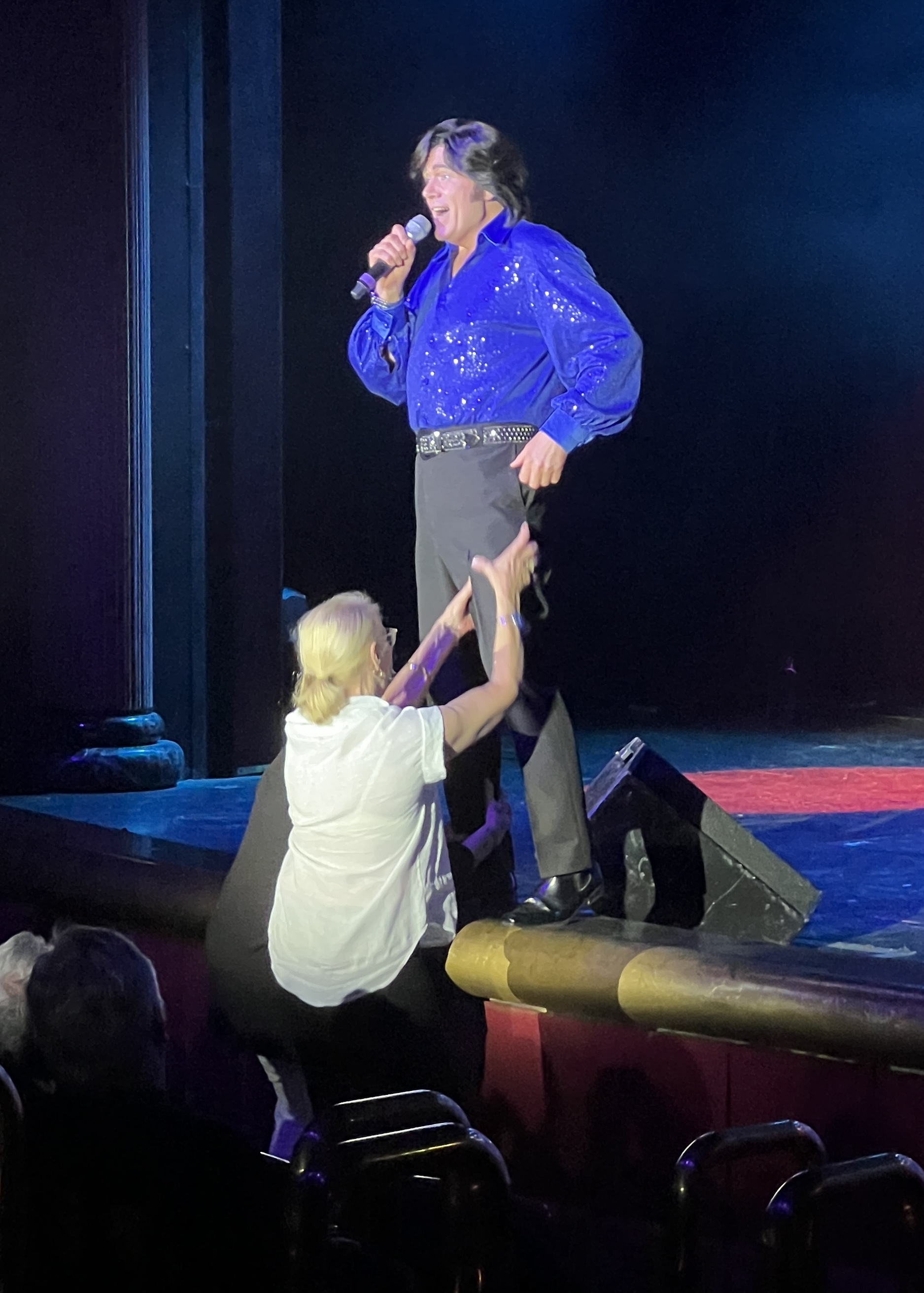
Neil Diamond mosh pit.
We are now out in the Mediterranean not far from Messina on Sicily, our next stop. Last evening we enjoyed a Neil Diamond tribute performer, some ladies got excited and stormed the mosh pit, Homealone resisted the urge. A memorable end to the Canal transit!
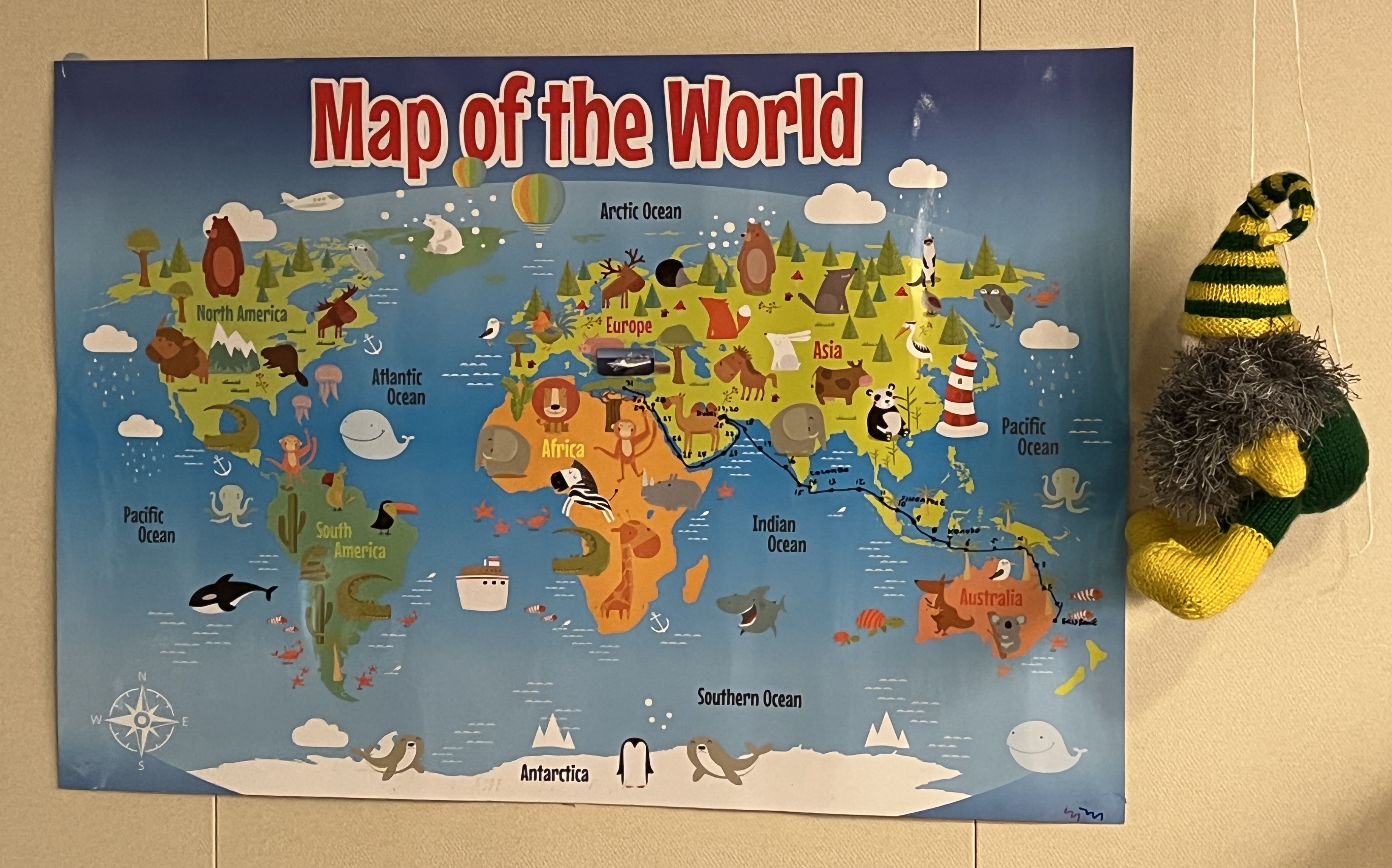
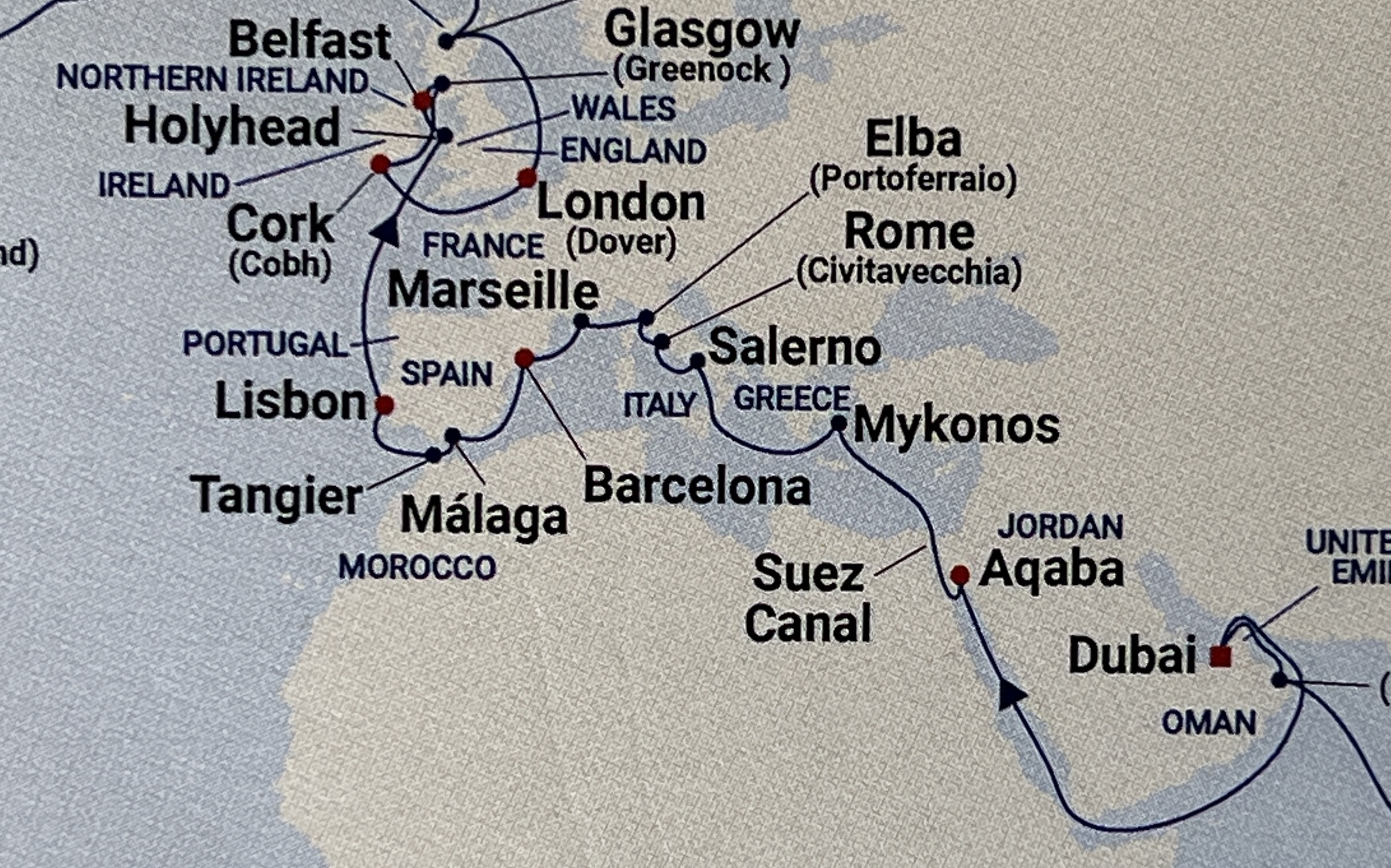
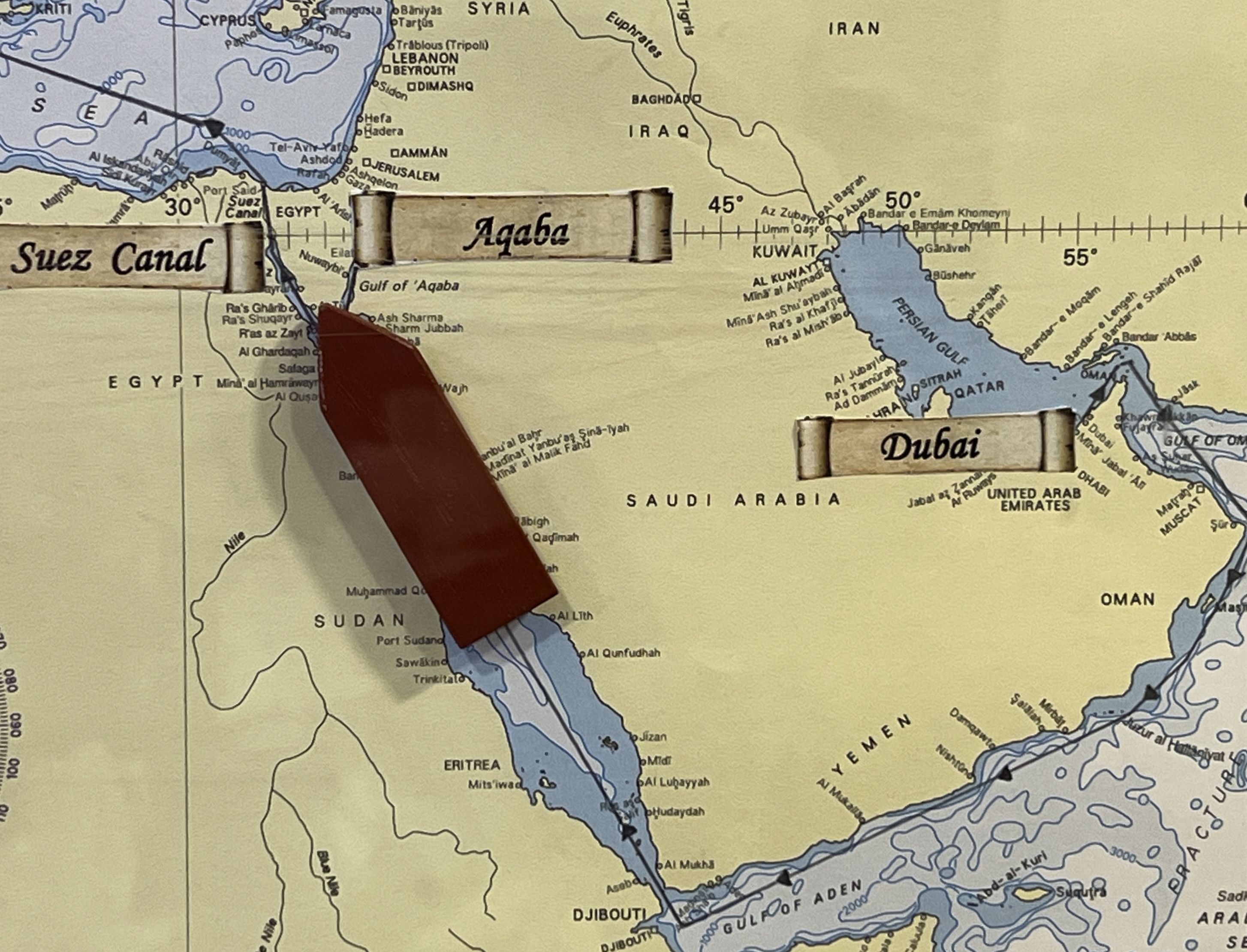
Slobro’s map
Slobro is eager to put up his map of the journey so far, quite proud of it he is. Such careful annotations!
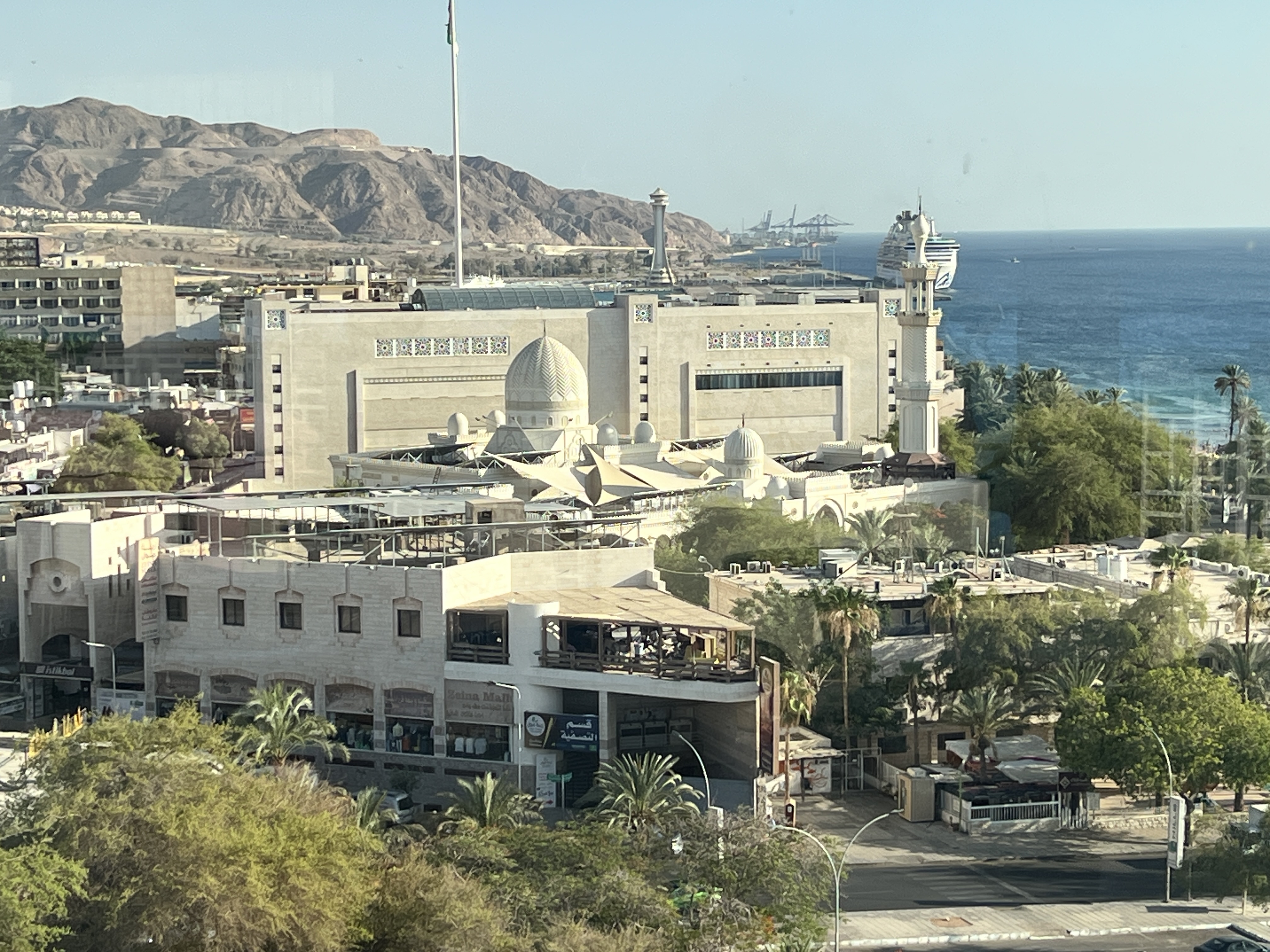
Well the ship seems to have got its mojo back and we can get along at the right pace. Arrived at the Aqaba pier at the appointed time of 7am, we had a quick breakfast before lining up at 8am for our excursion to Wadi Rum. Many others were heading off to Petra for the day. We had been there some years ago on a trip to Israel and Jordan, in April from memory. Much cooler then, it going to push into the high 30s this time.
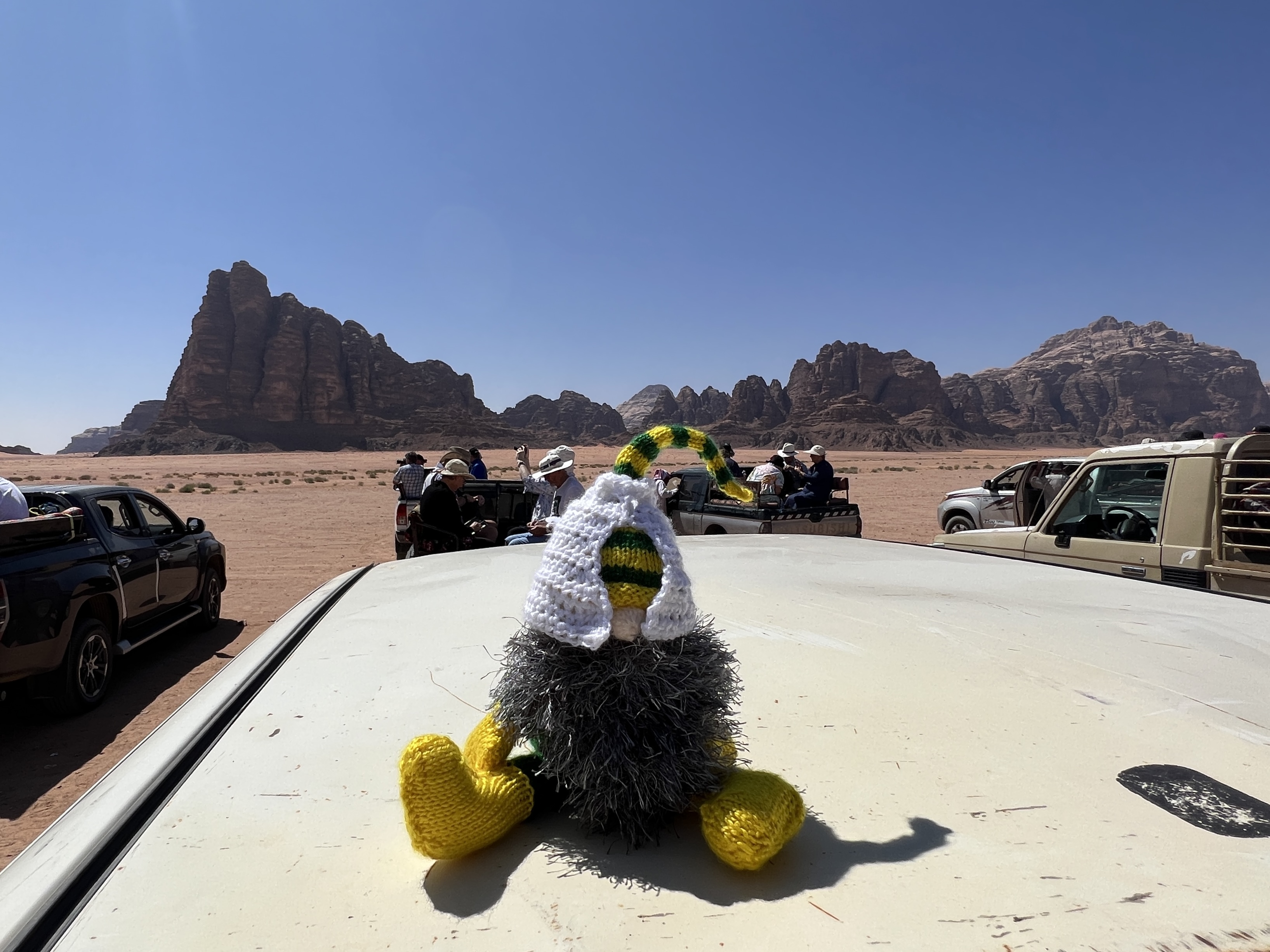
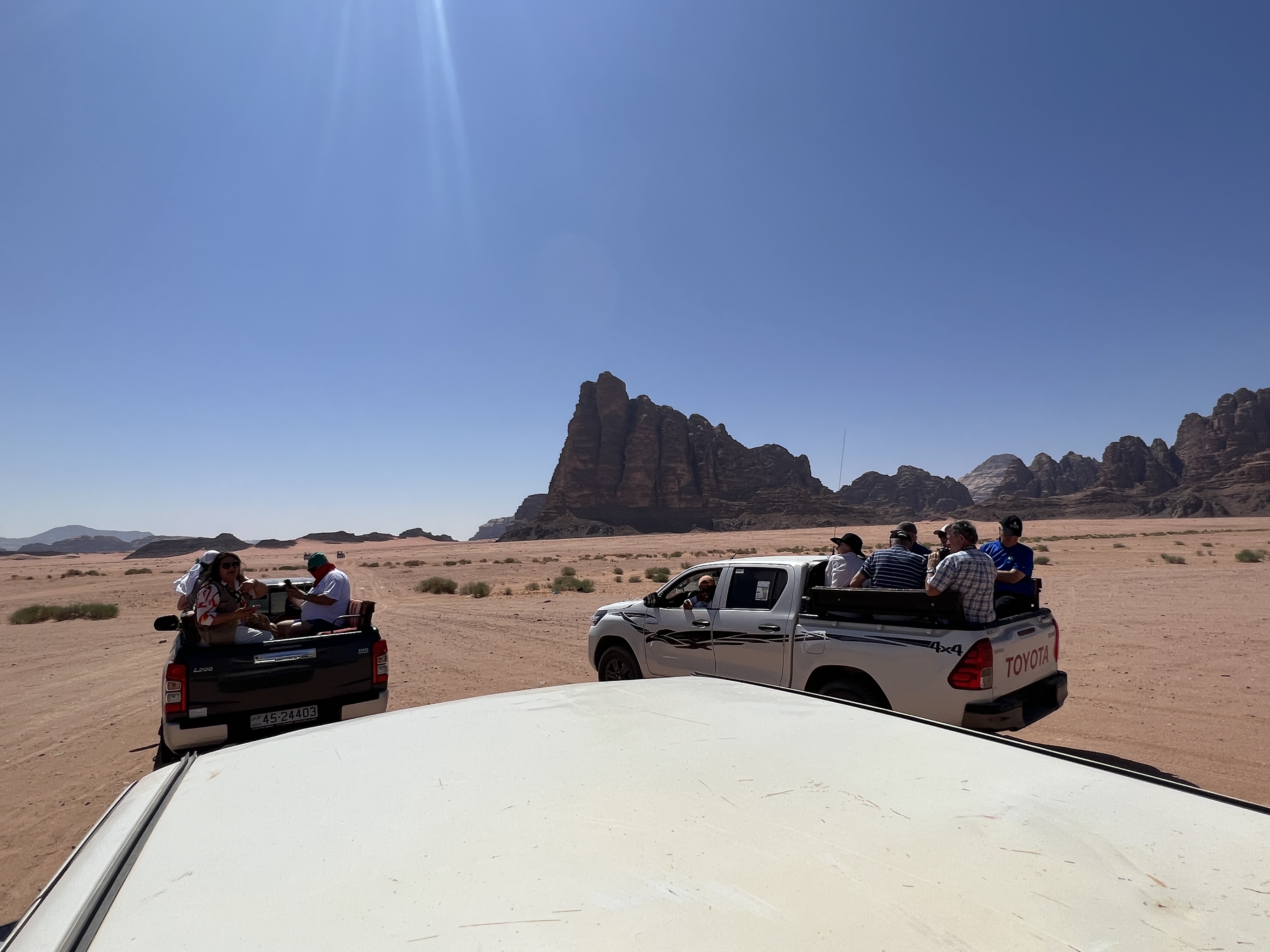
Slobro anxious to get going! Seven Pillars of Wisdom in the background.Heading towards the Seven Pillars of Wisdom.
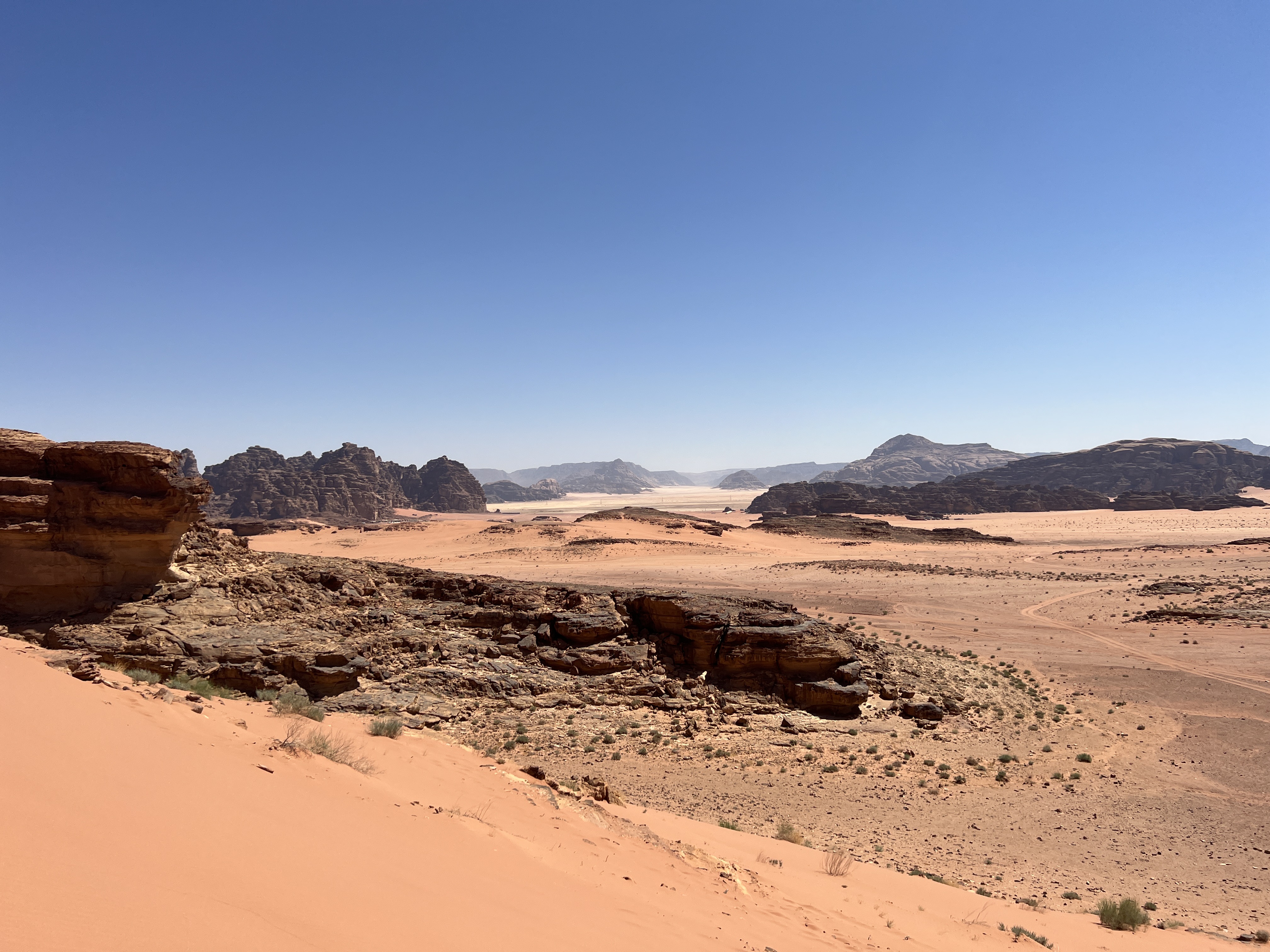
Wadi Rum is a desert reserve surrounded by dry mountains and gorges. In the past, home to nomadic Bedouin. Now these peoples are very adept at dealing with tourists. Either expensive camel rides or Bedouin trinkets and crafts displayed in genuine Bedouin tents while you sit around sipping on a local tea or coffee. All very crafty too with various currencies and conversion rates to seal the deal.
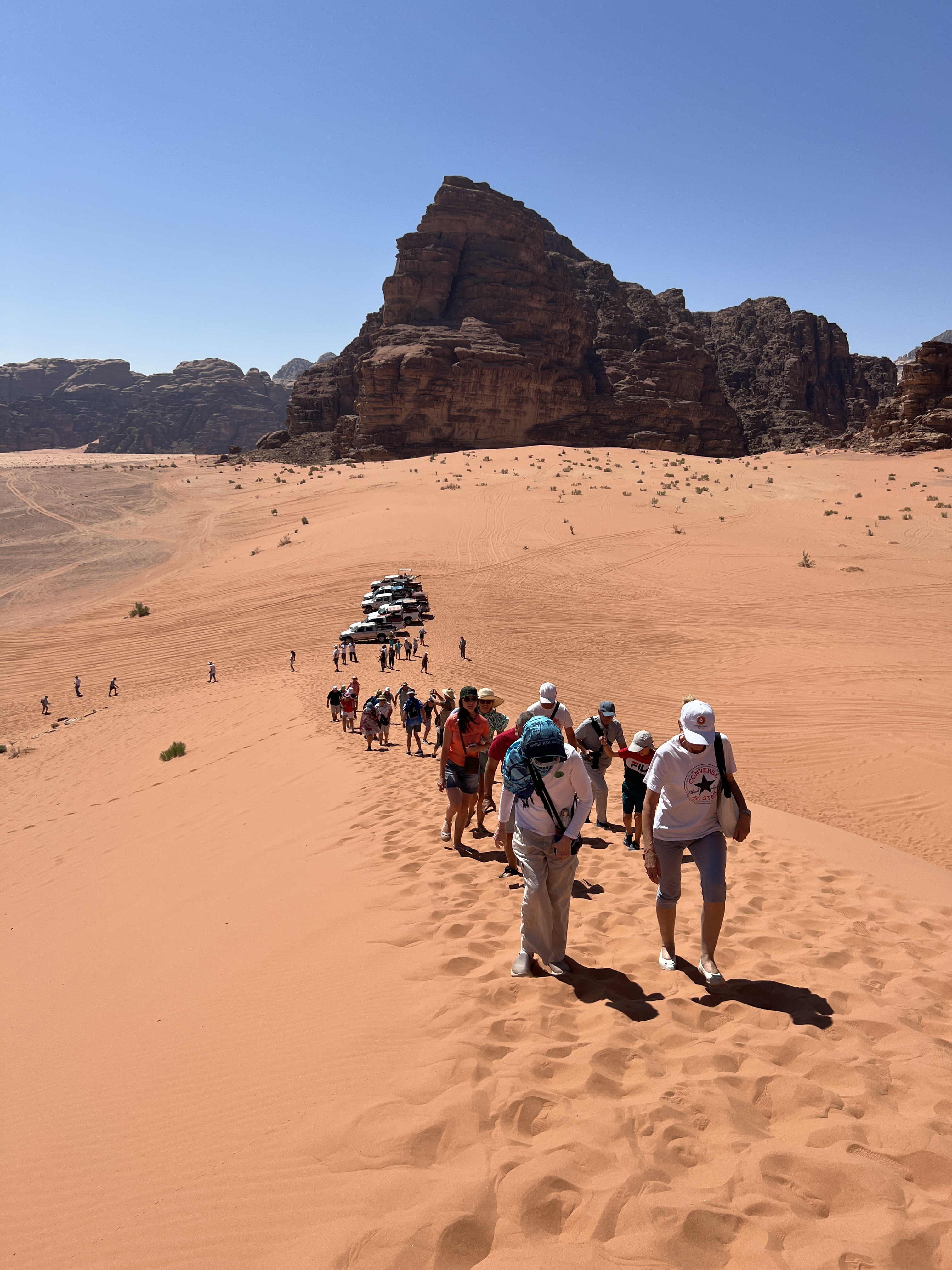
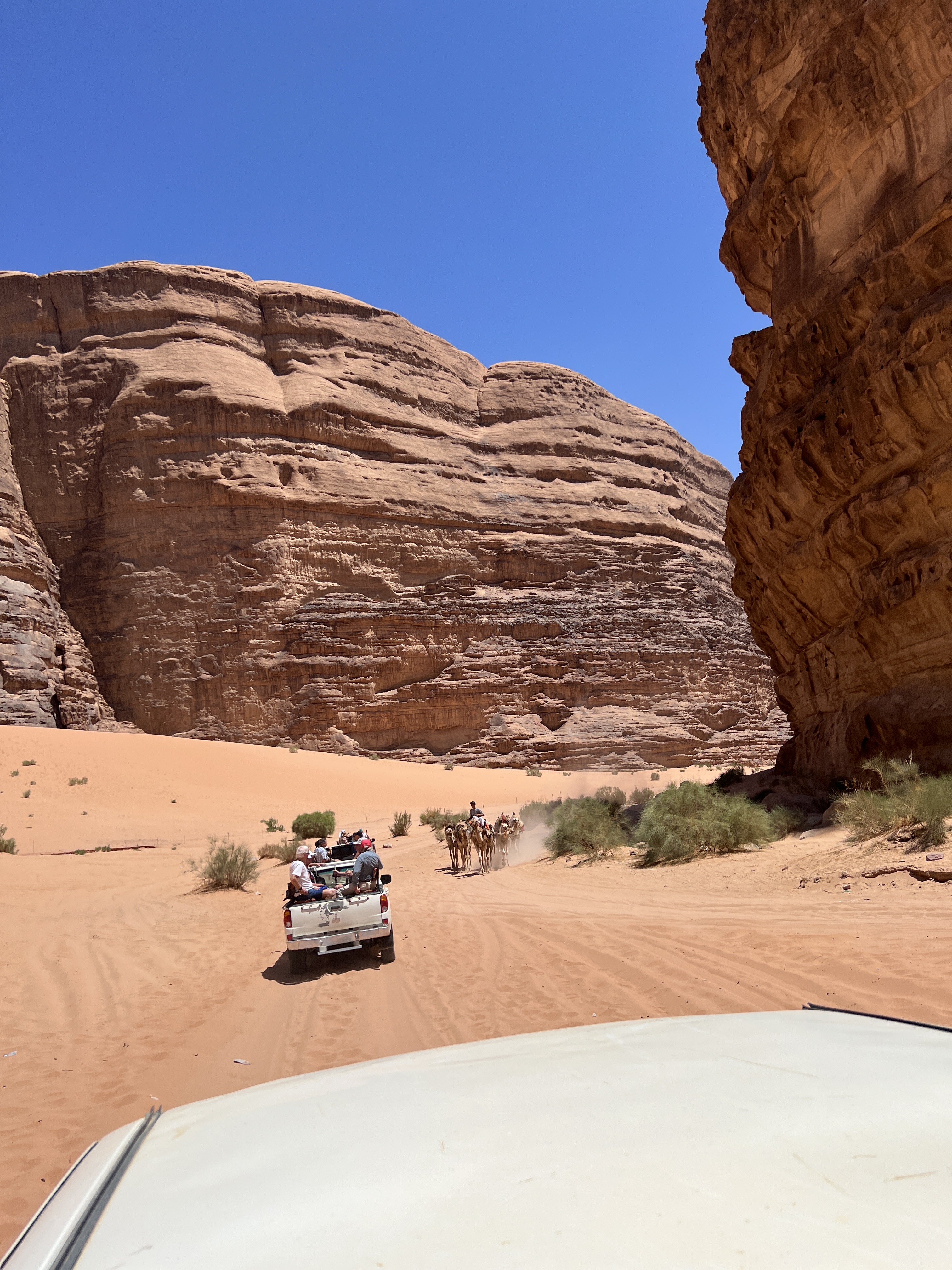
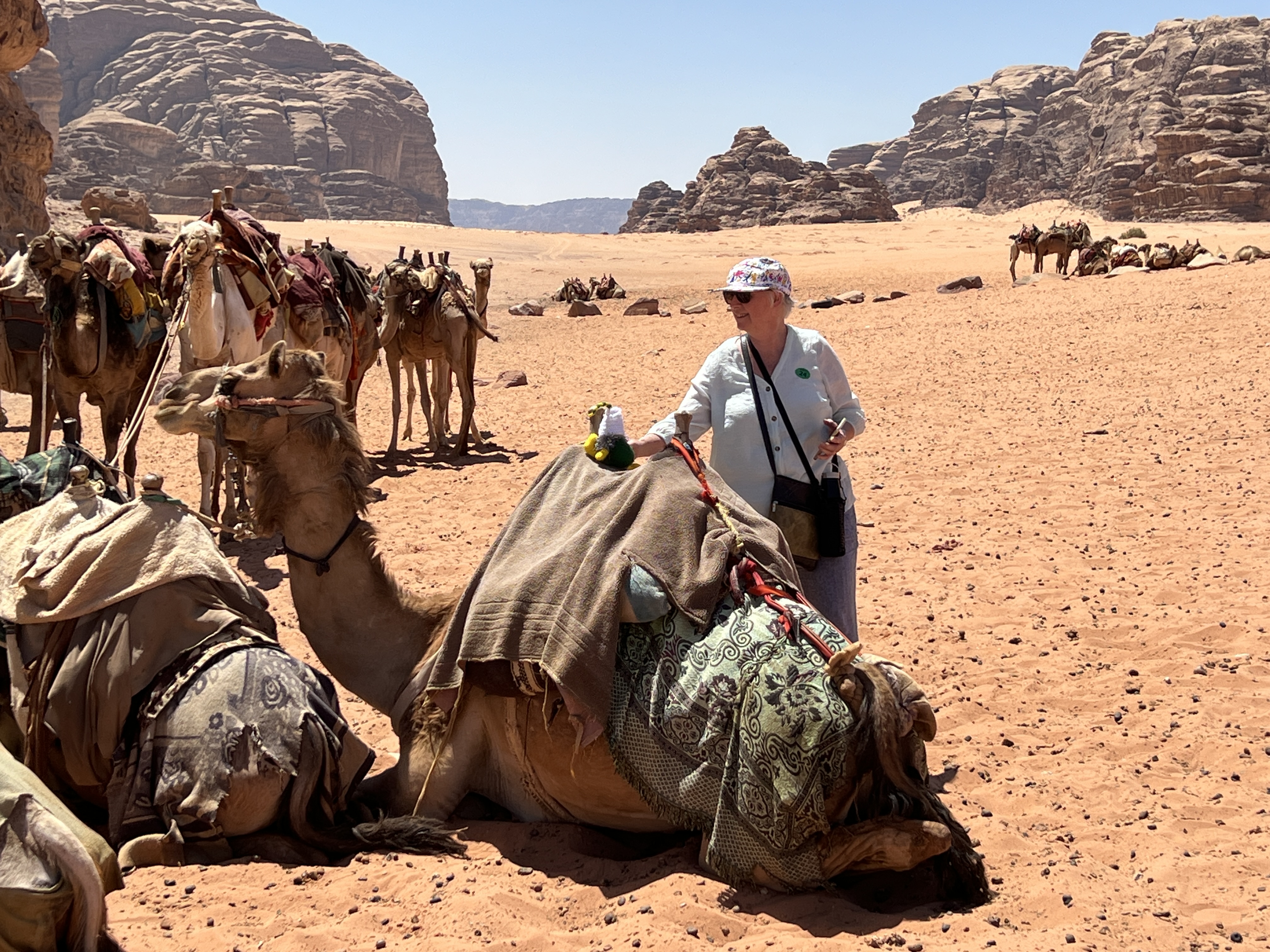
The photo opportunity was at the top.View of ‘Valley of the Moon’.Here come a flock of camels or is it a scorn of camels.
Hope that helps for your next trivia quiz!
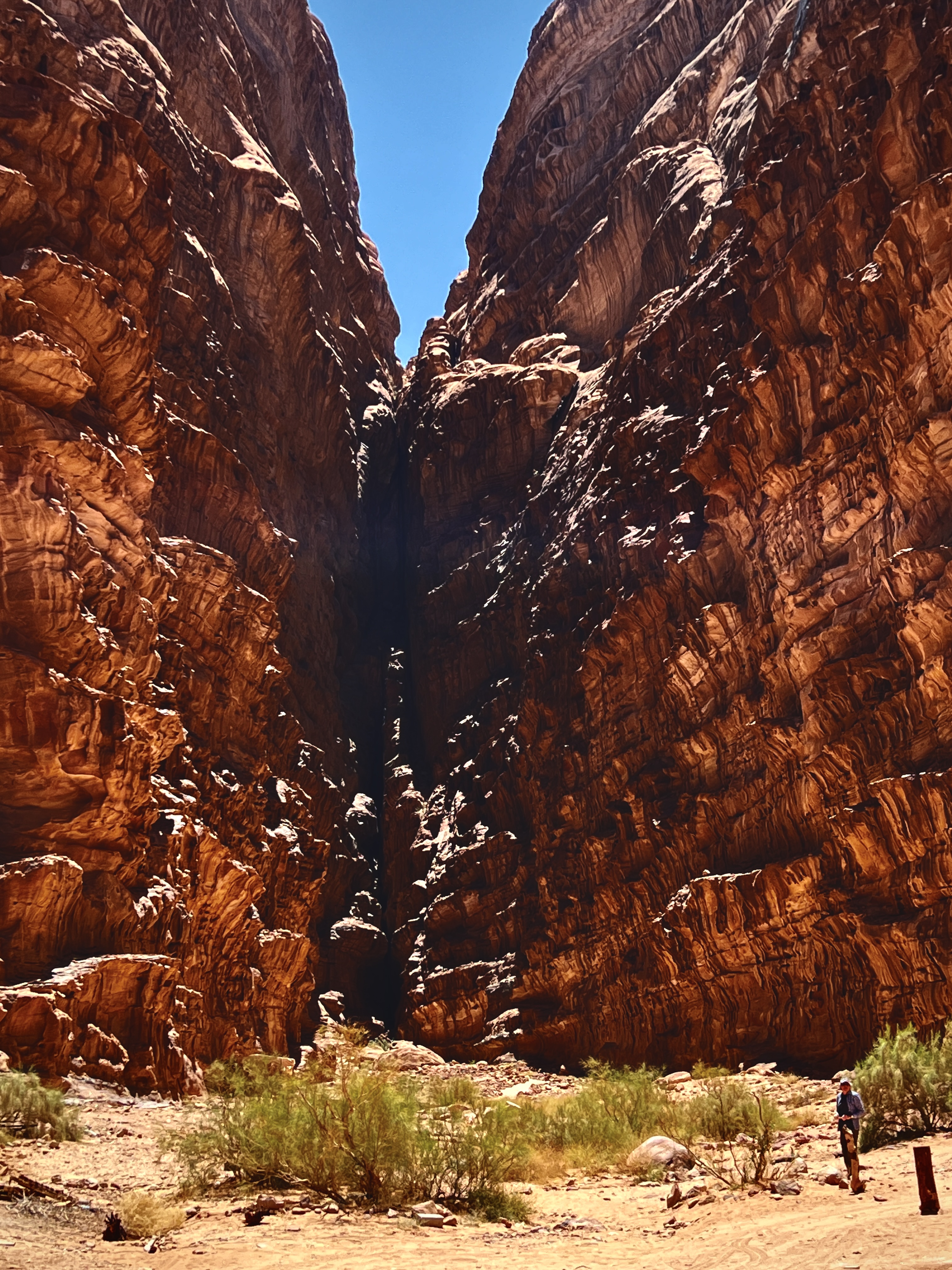
Gorge at midday, sundown would be cool!
But our 4WD tour through the desert area was quite entertaining and the scenery was great. Wadi Rum, ‘Valley of the Moon’ ,was where the Peter O’Toole movie Lawerence of Arabia was filmed. The Englishmen, T E Lawrence actually did have camps in Wadi Rum when he lead the Arab revolt against the ruling Turks in 1917.
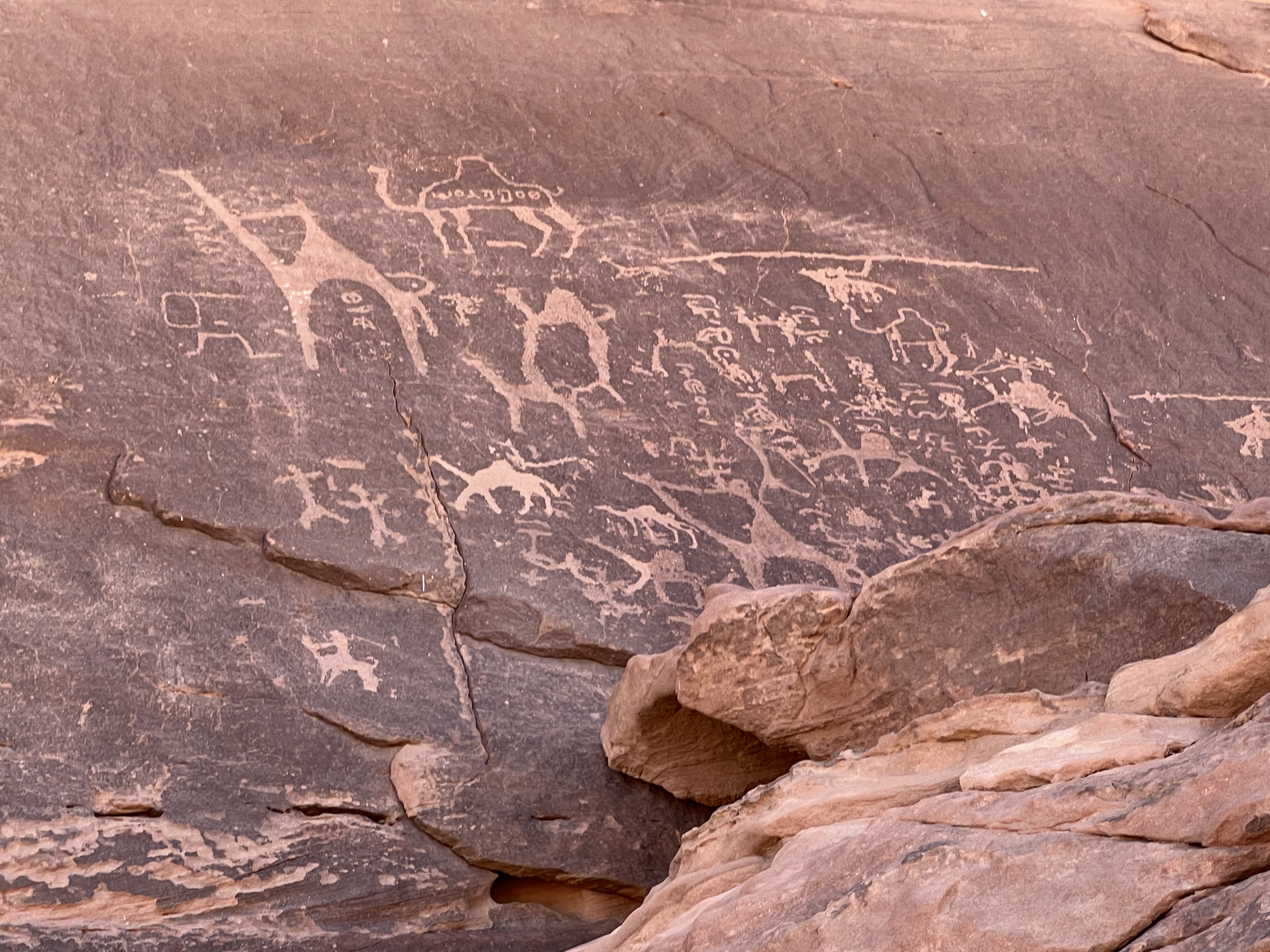
Slobro wanted a ride on a camel, so he sat here for awhile.3000 year old markings
There were about 30 Toyota (or similar) 4WD utes conveying us on this adventure. 6 of us squeezed onto the ute tray. The utes were in various states of repair, obviously having done this track before. Not sure that this trip would be possible in good old Aus with our rules and regulations. We whipped along at a moderate pace on the well compacted desert sands, no slipping or sliding.
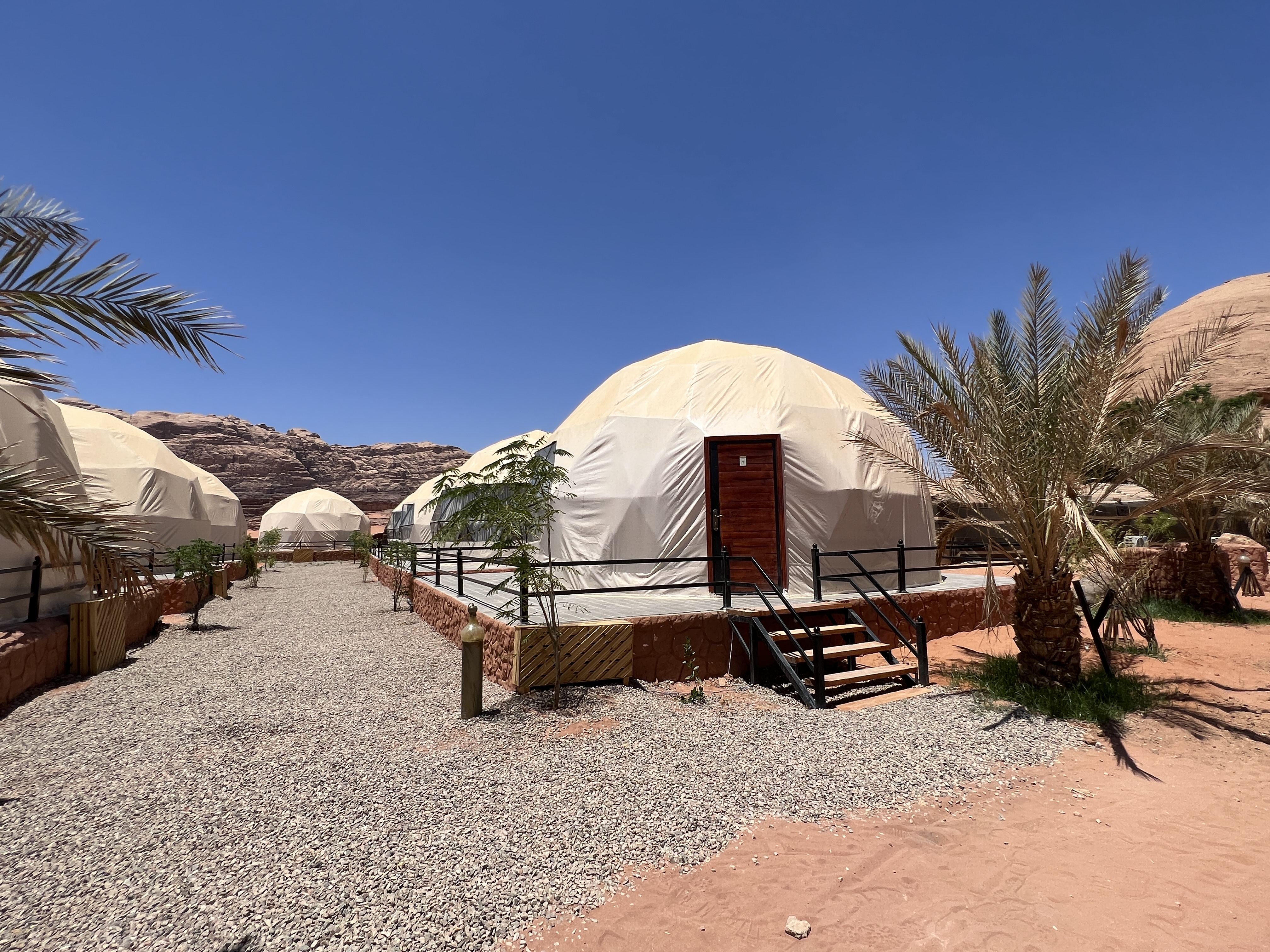
Glamping camp
Dotted through the desert park were a range of glamping tent facilities, quite sophisticated places with solar power and oasis like appearances. We stopped off at one for a short break.
Time went quickly and we were back at the ship for a late lunch. After a short siesta we took the shuttle back into town for a walk around the waterfront area and to have a look at the old fort . Admirable objective but execution poor. One of the things that gets under Allthego’s skin is being harassed by taxi drivers, who speak little or very accented English and want to take you and show you things you don’t want to see for a price that is incomprehensible at the time. We got our dose of these guys, all very polite and helpful of course, just not what Allthego needed.
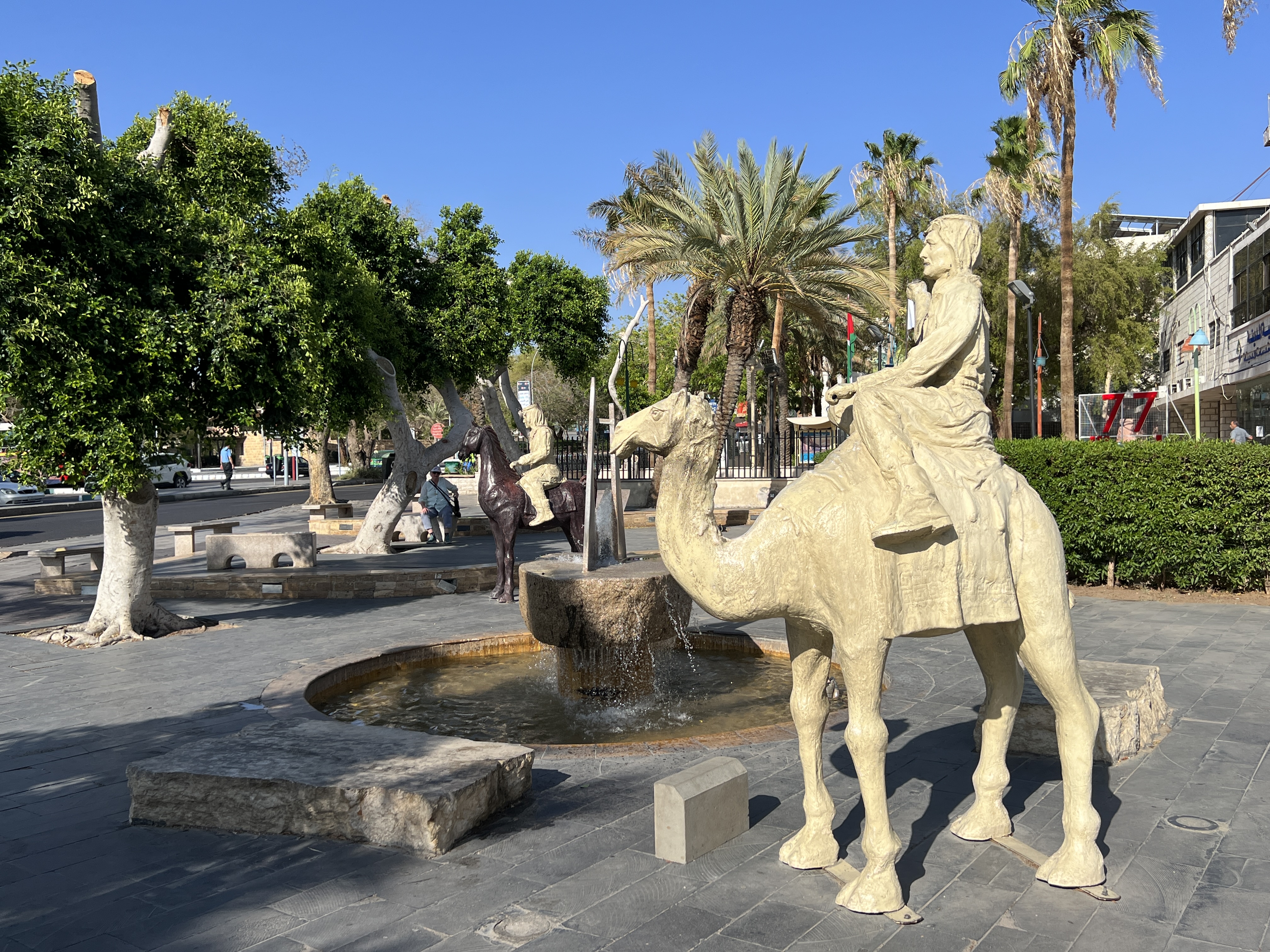
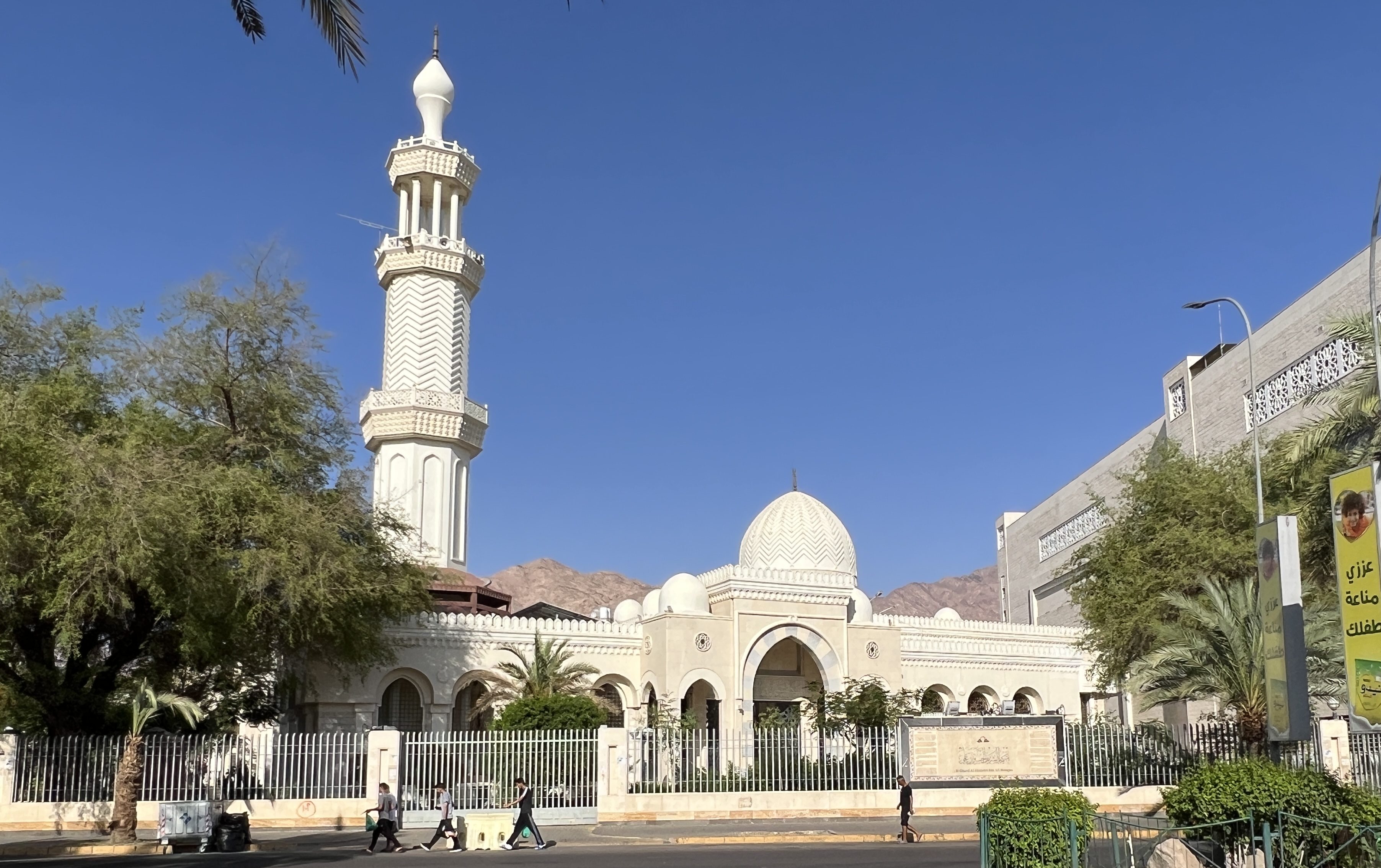
Lawrence of ArabiaAl-Hussain Bin Ali Mosque
So we took off ourselves from the drop off point and it seems in hindsight went in the opposite direction to which we should. Wandered around for an hour or so aimlessly, getting frustrated. Ultimately, we hailed a taxi and got in. Turns out the guy can’t speak English, shows us a picture of a cruise ship and wants to take us to the pier. Much saying ‘no no’, just want to ‘go to the water’! Finally, we stop the cab and get out. Ripped off then in change from $US to Jordanian Dinah. Allthego puts it down to more experience. Anyway, by accident we are actually back where we started! So the wandering resumes, Homealone adamant that we are not wandering too far. The objective to buy a postcard and stamp. Stopped for a freshly squeezed OJ and minted lemon, both very good. Finally, got the postcard and also a stamp but couldn’t find anywhere to post it!
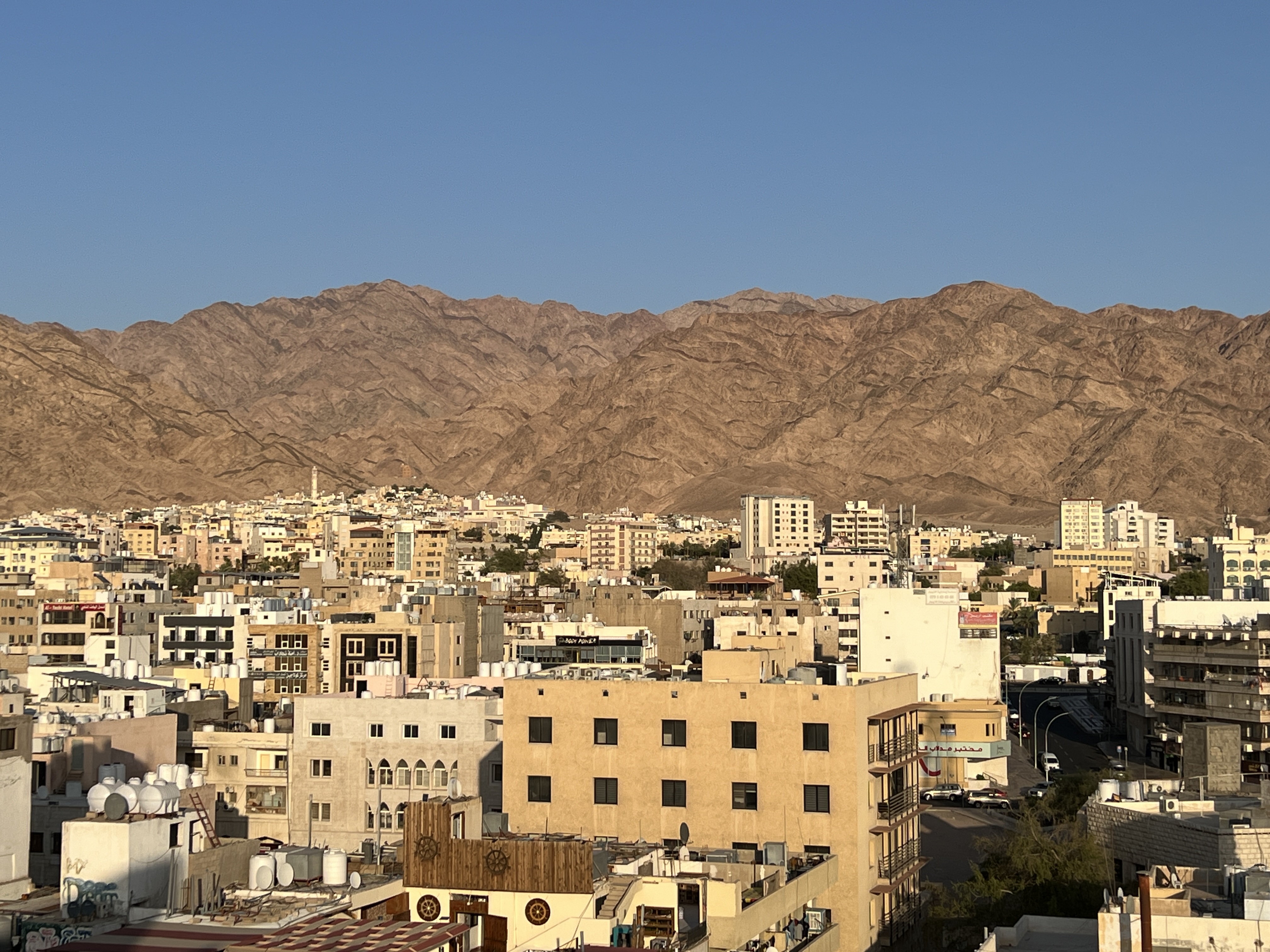
Aqaba town and hills at sunset from the rooftop of Double Tree Hilton Hotel.View from the Double Tree Hilton.
After all this exertion Allthego convinced Homealone that the Double Tree Hilton roof top bar would be a good place to watch the sun set over Aqaba (a recommendation from on board). And it was. We finished there around 7 pm and caught the shuttle back to the ship, after posting the card off in the hotels mail box! Very convenient.
Sailed off about 10 pm to position the ship the next day for the transit of the Suez Canal.
Dubai was the end of Stage 1 of the cruise. Stage 2 takes us to Dover in England.
Stage 2: Dubai to Dover (for London).
Leaving Dubai and sailing southwest around the coastline of the Arabian peninsular past Oman and Yemen has been a slow plod for the Coral Princess. Still suffering from some engine issues, almost rectified according to the Captain’s announcements, and facing a southwesterly wind and rough swell we have lost time on this leg. The sea calmed down as we entered the Gulf of Aden and made our approach to the narrow ‘choke’ to enter the Red Sea. Slobro has been waking each morning and asking Homealone, ‘are we there yet’.
The waters around the coastlines of Yemen and Somalia are known for modern day piracy.
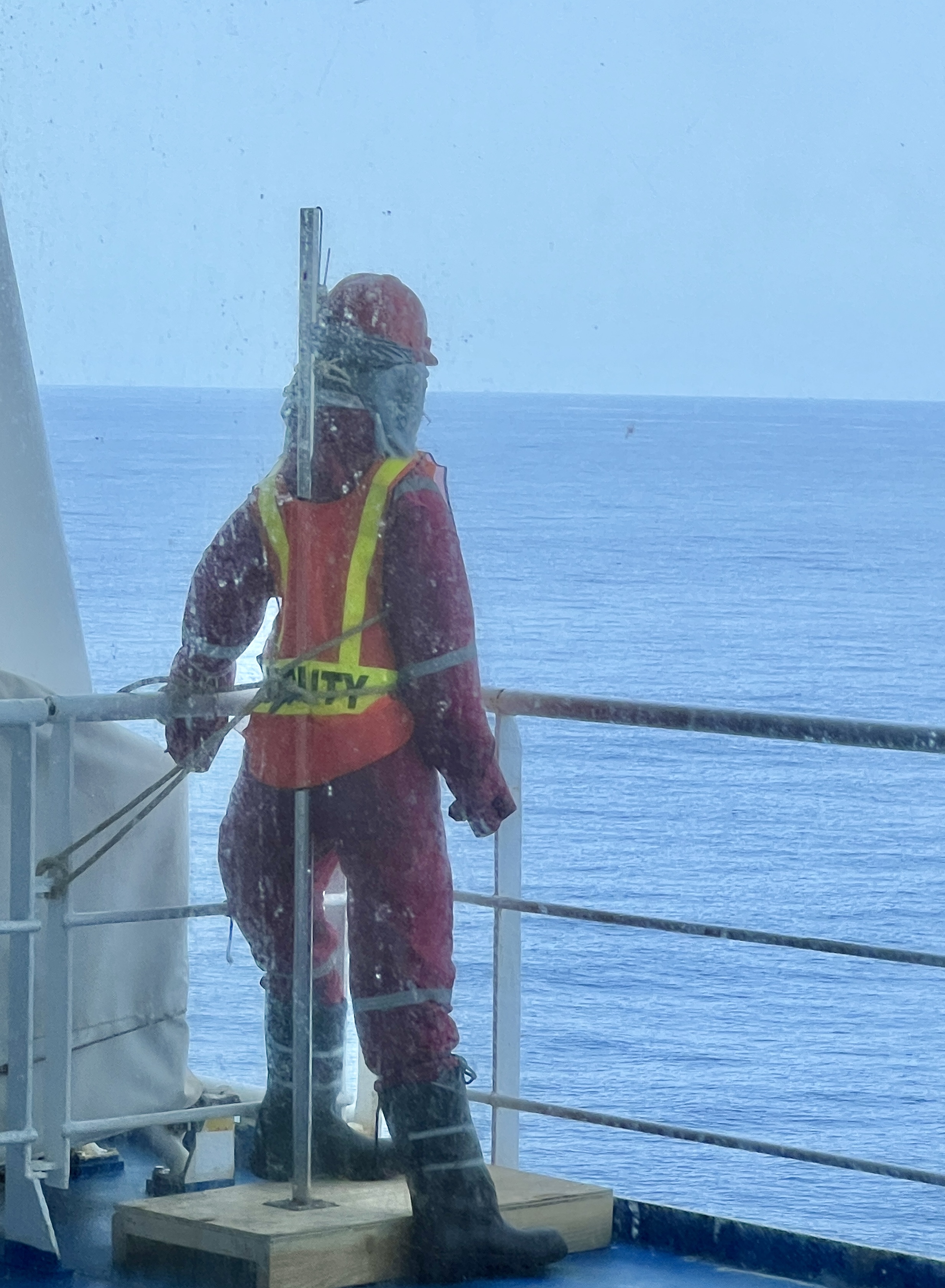
Security pirate lookout
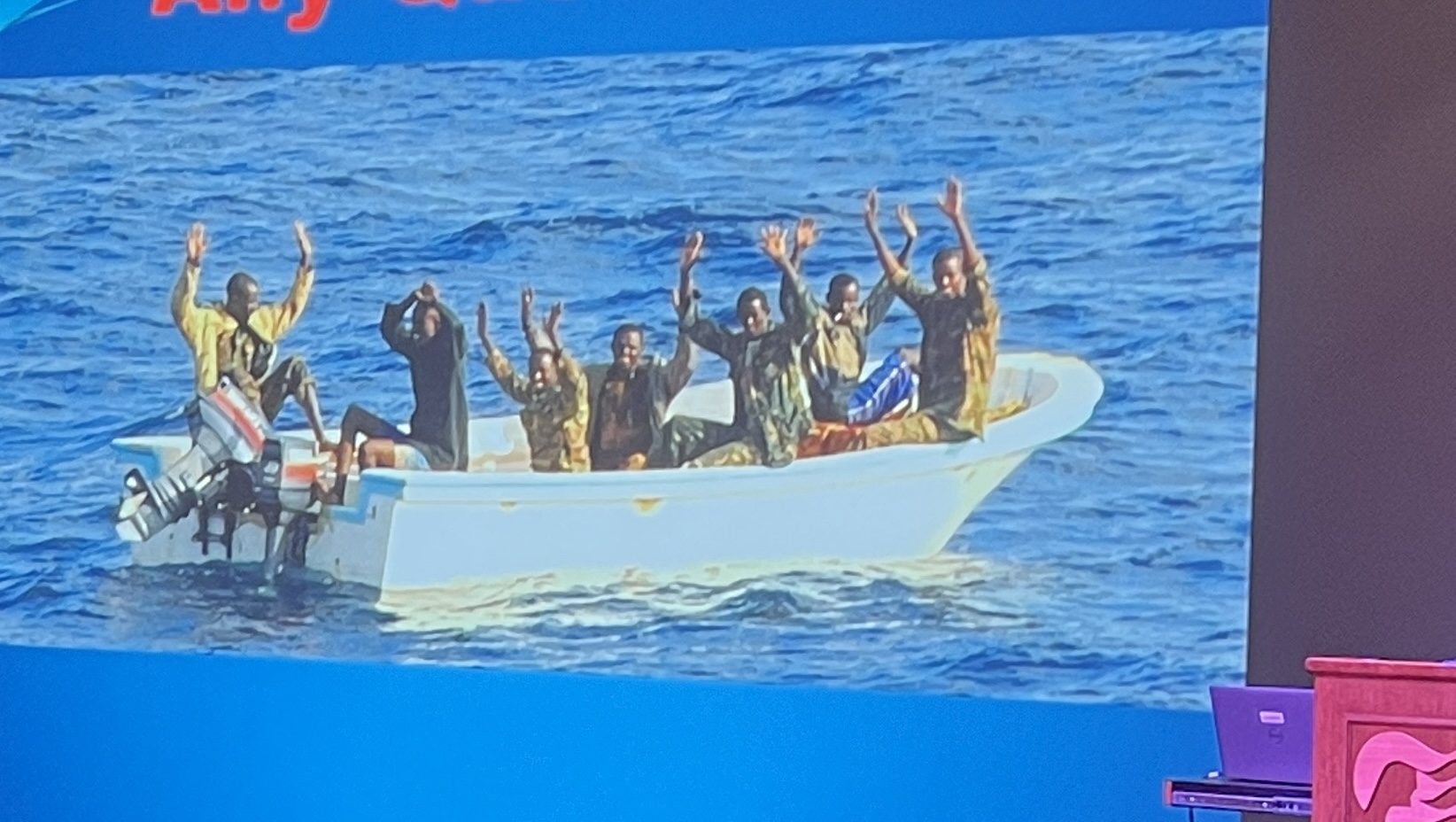
We have had an entertaining chat from the ship’s Head of Security about modern day piracy in general and the way it is being combated. There hasn’t been a significant attack in these waters for over ten years due in large measure to the patrolling of the waters by US and British naval vessels and actions taken by ships themselves. He was quite confident in the ability of our ship to ward off any pirates making an attempt. Basically our ‘freeboard’ (the railing and open deck area around the ship on Deck 7) of over 10 metres makes it difficult for any attempt at boarding. There is a range of other things to provide deterrence, including lookouts, water hoses and a sonic boom thingo that emits sound at levels humans cannot tolerate.
Pirates surrender
One of our fellow passengers asked whether the ship would rescue pirates! The Head of Security offered a strange look and said he wasn’t in favour of rescuing pirates. Much applause.
We are now well into the Red Sea making for Aqaba, it is nearly a month since we left Brisbane. Apart from a day in Singapore, half day in Colombo and two days in Dubai we have been ambling along the sea lanes in mostly smooth conditions for 24 days.
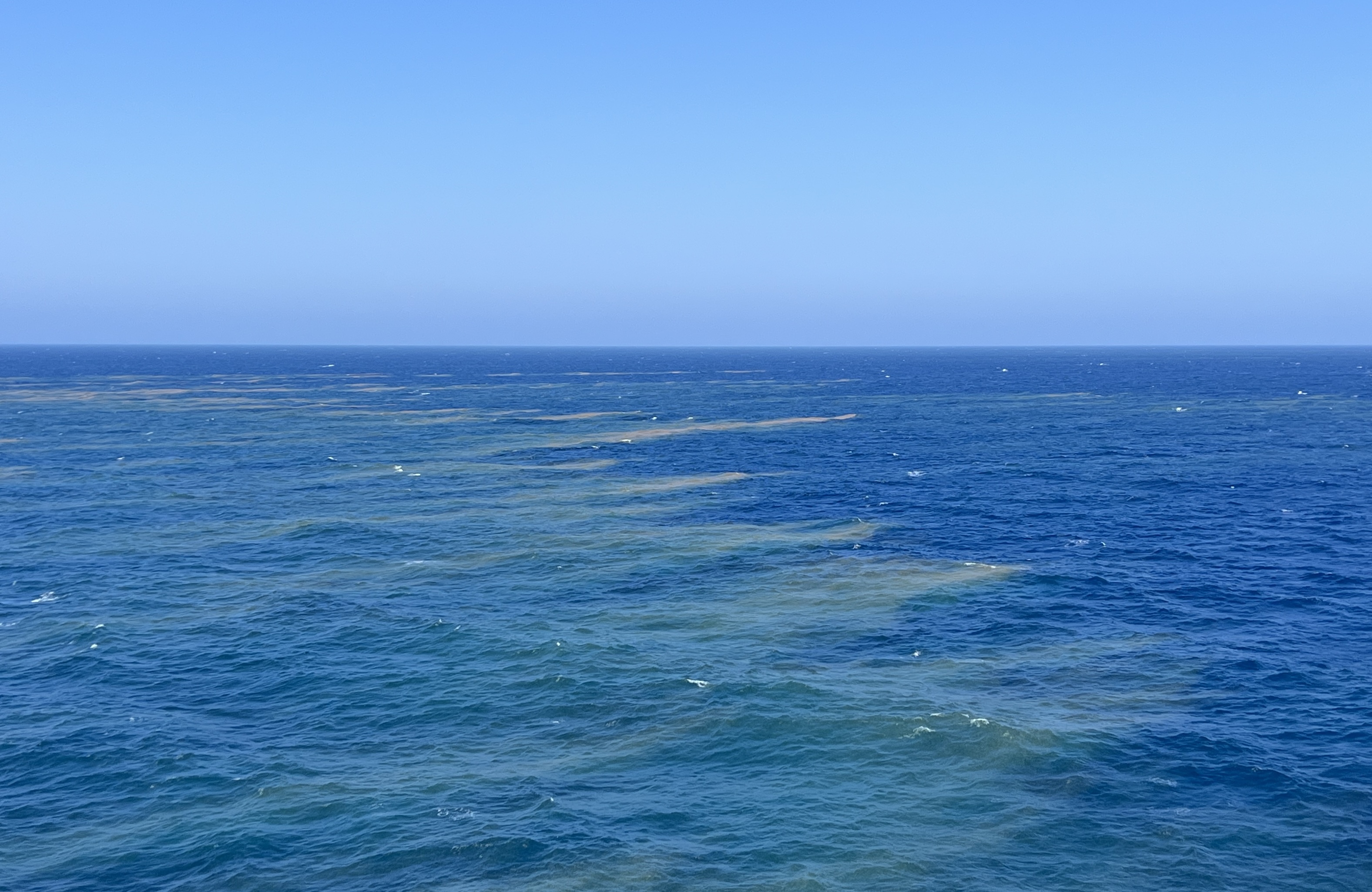
Oil slicks on the Red Sea, patches of these have been quite common on the way north.
Allthego and Homealone are looking forward to getting ashore, even Slobro is a bit edgy for landfall. For many on board though it seems days at sea are what it is all about. Someone said that it is about the journey and not just the destination, or something like that. Allthego thinks it would be great to have a destination appear soon! Well whatever pleases you, but it does show that it takes time to cruise from Australia to the edge of Europe. Sitting in the lounges in these calmer seas away from windows, one senses no movement of the ship. You wouldn’t know it is ploughing along at 15 knots pushing water out of the way. Time could be standing still, even though we have turned the clock back an hour seven times to date.
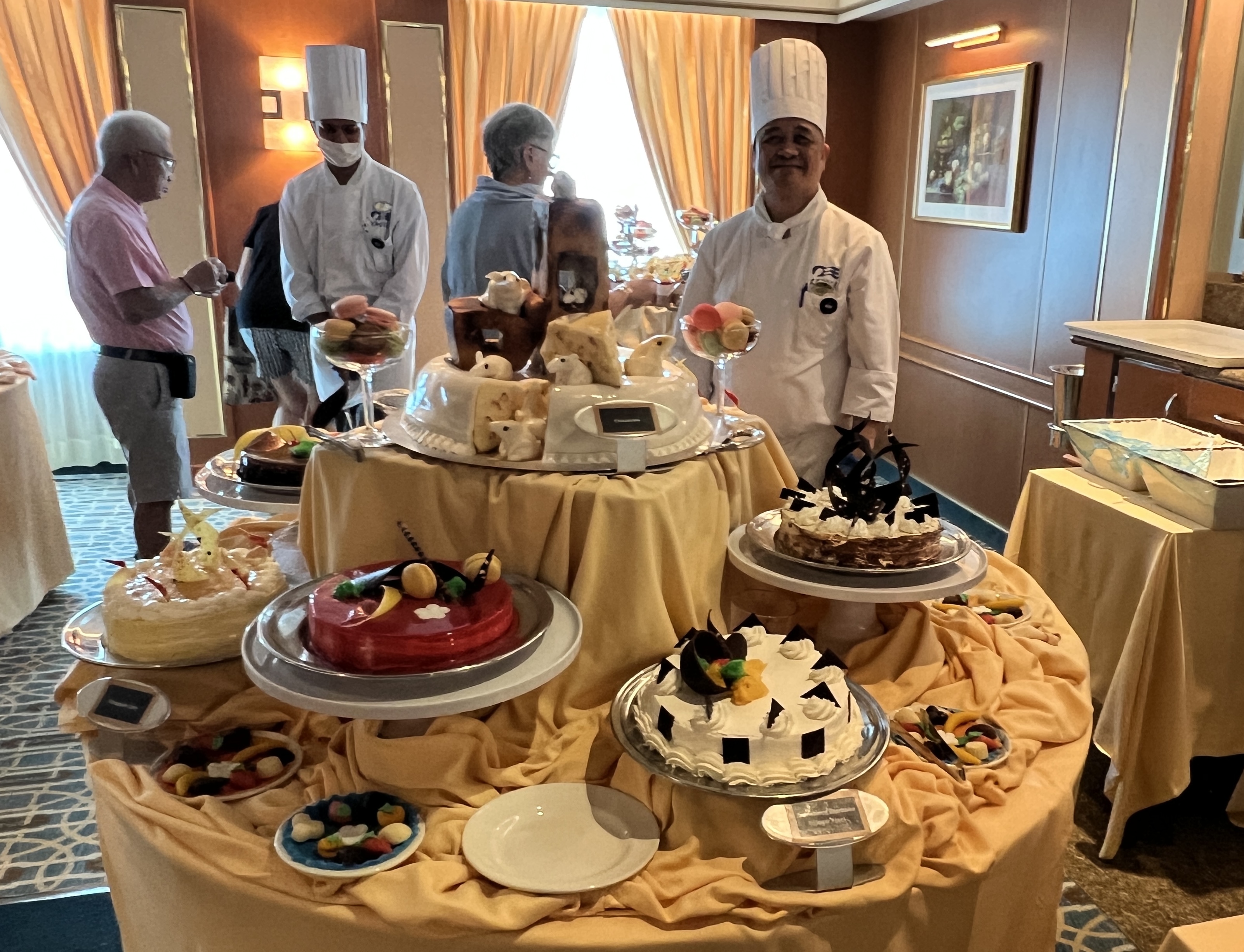
One of the Brunch cake tables
Allthego has dozed off reading a book. Supposed to be relaxing but one could get exhausted from eating! Some great food on board and the nightly entertainment excellent. The entertainers know their target market well: 50s, 60s, and 70s.
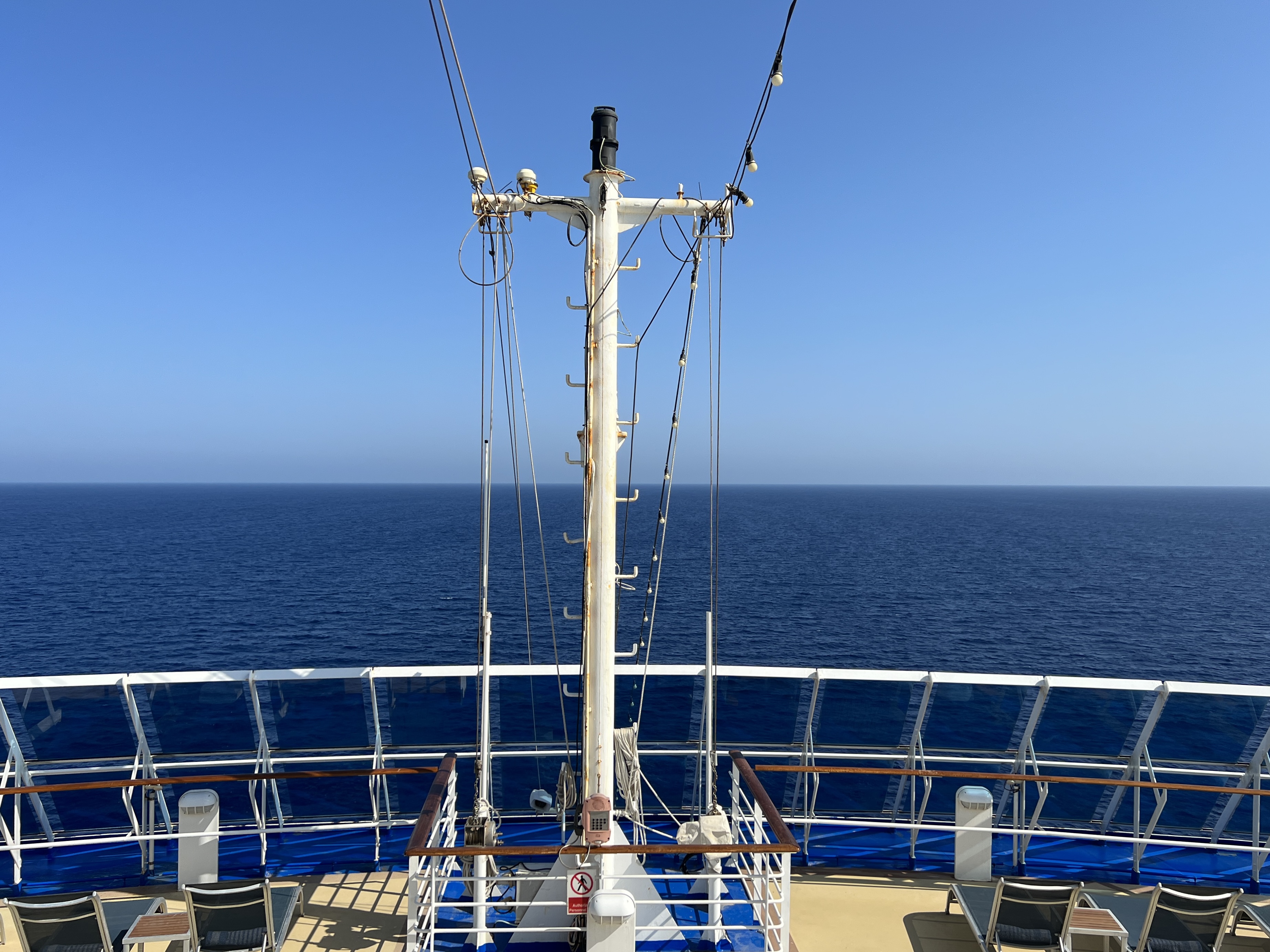
Looking forward over the bow.
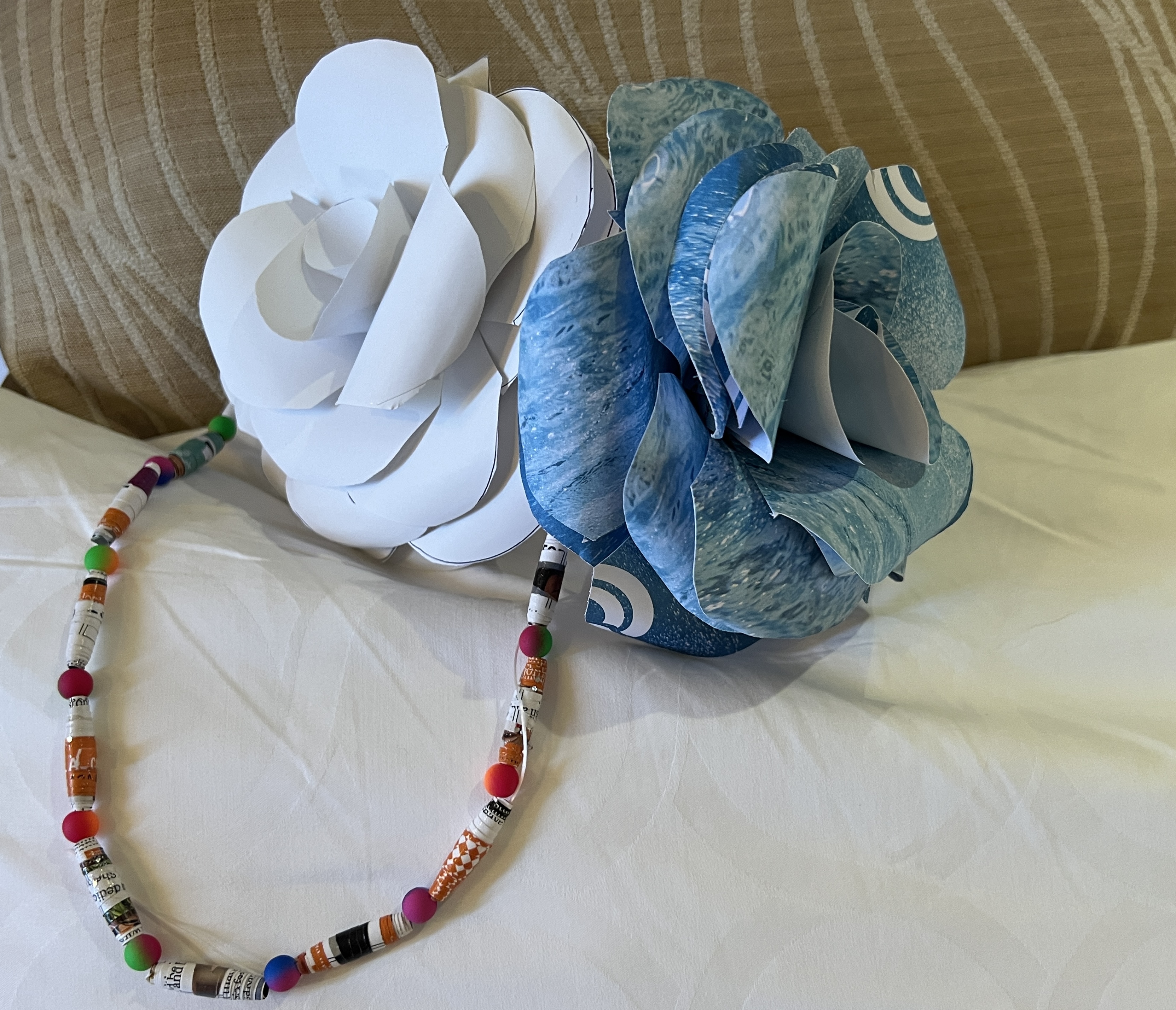
Homealone is enjoying her craft and periodic trips to the laundry. It is amazing what you learn in the laundry about what is going on aboard!
Crafty paper flowers and paper bead string
‘Getting there’ has turned out to be not possible for another two guests (in addition to the earlier one in Singapore) who have sadly passed away, one it appears from over exertion on the dance floor. In the other case the wife off boarded the poor chap in Dubai and has continued the cruise, her son having joined her aboard. Practical arrangement. There has been an unconfirmed 4th death. Homealone needs to ask more questions in the craft group, or perhaps the laundry.
A consequence of the slow going is that we have lost a day and will be getting to Aqaba a day late. To catch up we are to forgo the following stop at Mykonos and make for Messina in Sicily as a substitute (albeit shorter) stop. We are not overly disappointed in this having been to Mykonos before.
Nearly there
Slobro has again just asked whether we are nearly there. YES is the answer. Tomorrow morning!








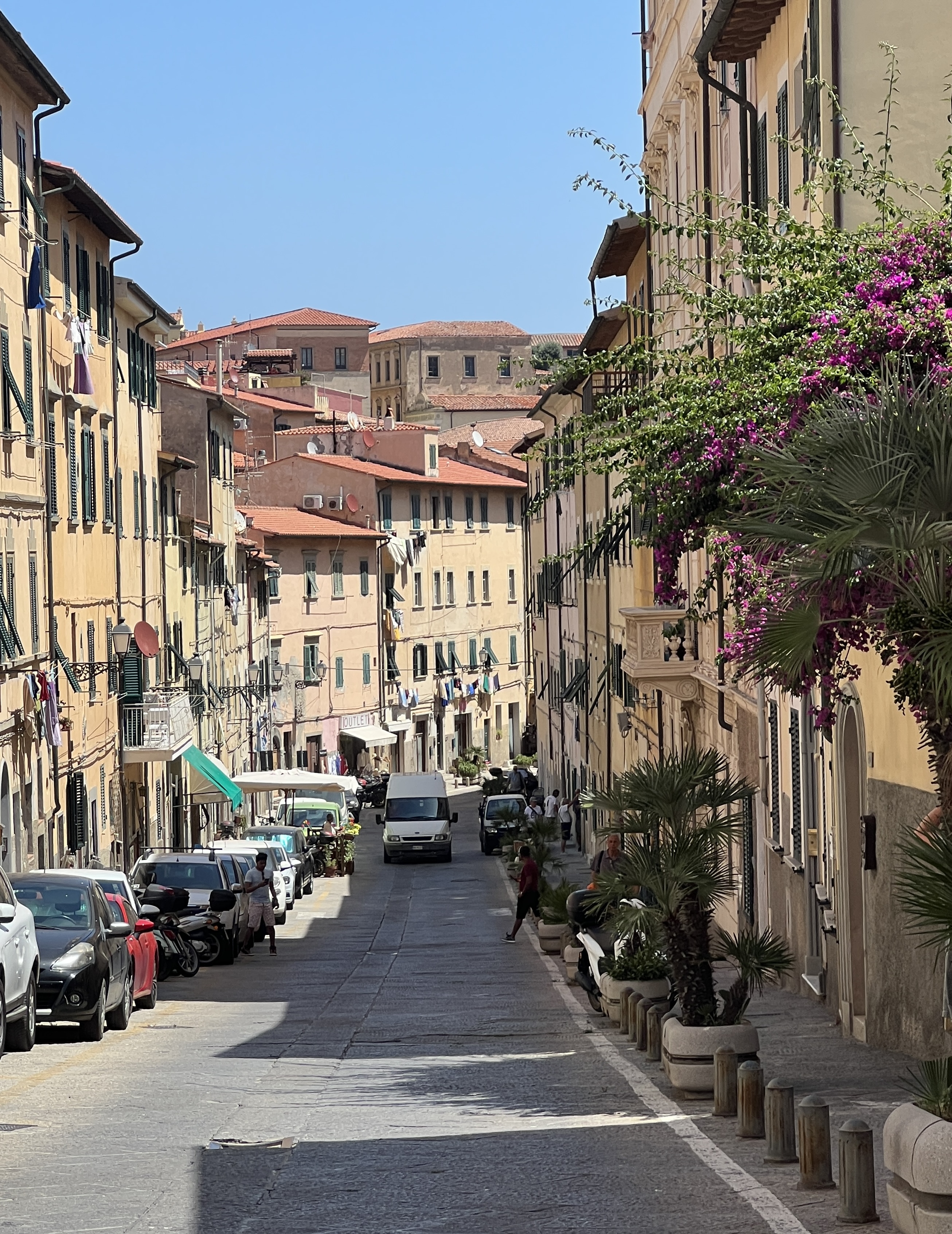
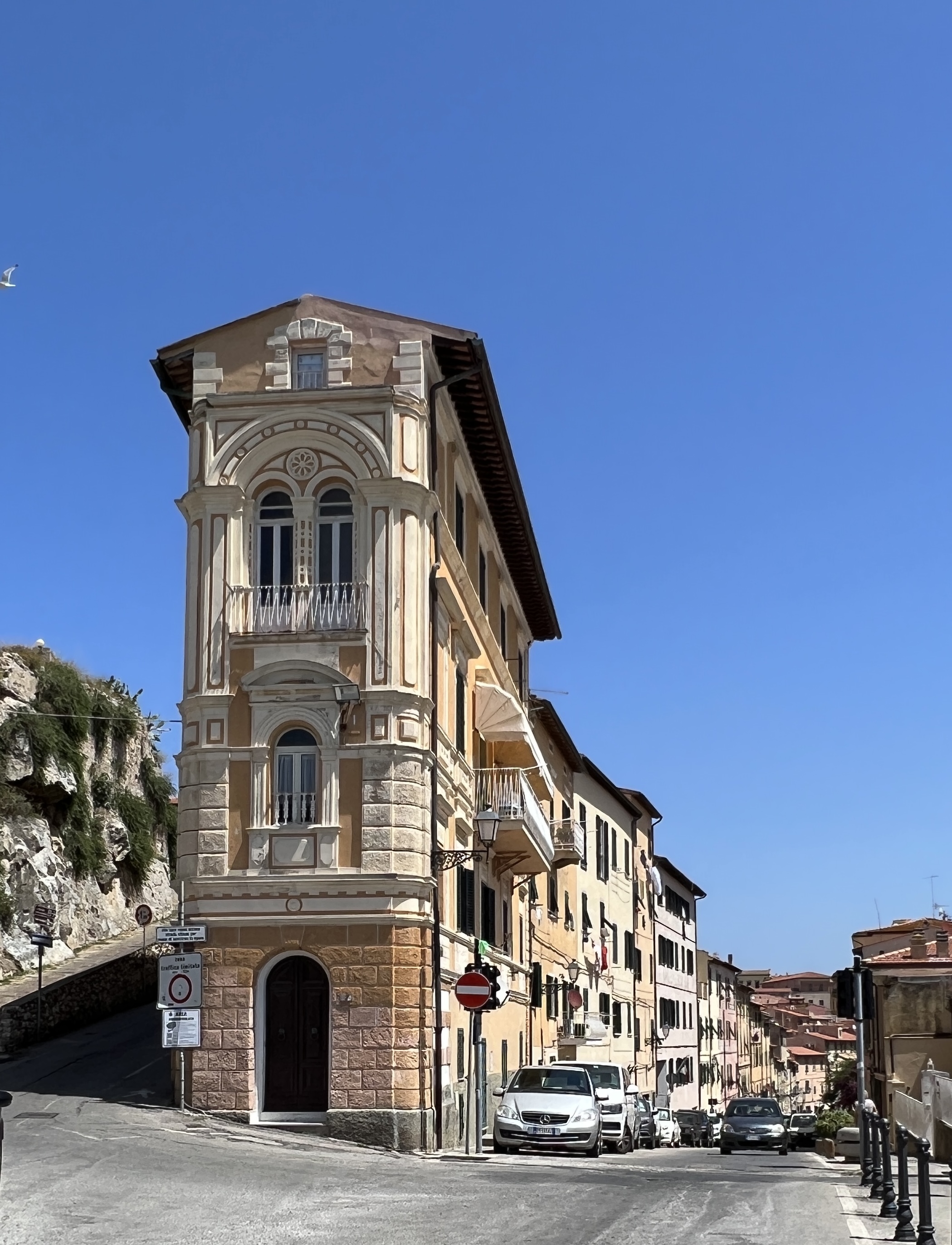




 Allthegobro