Author Archives: allthegobro
Kununurra bound
Daly Waters Pub to Katherine was the final stretch of our time on the Stuart Hwy. At Katherine we turned to the west on the Victoria Hwy and stopped for a couple of nights at the Riverside Campground not far from the Katherine Hot Springs.
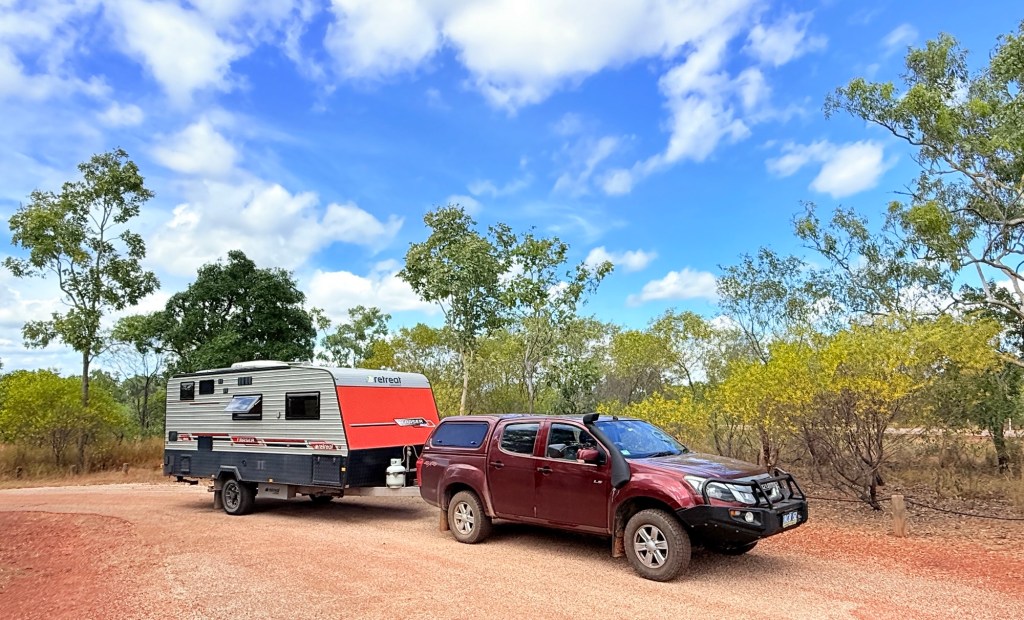
Coming up the Stuart from Daly Waters we called into Laramah, an old army town from WWII days. Apart from a war museum and a few locals, the old pub and caravan park is all that is left.

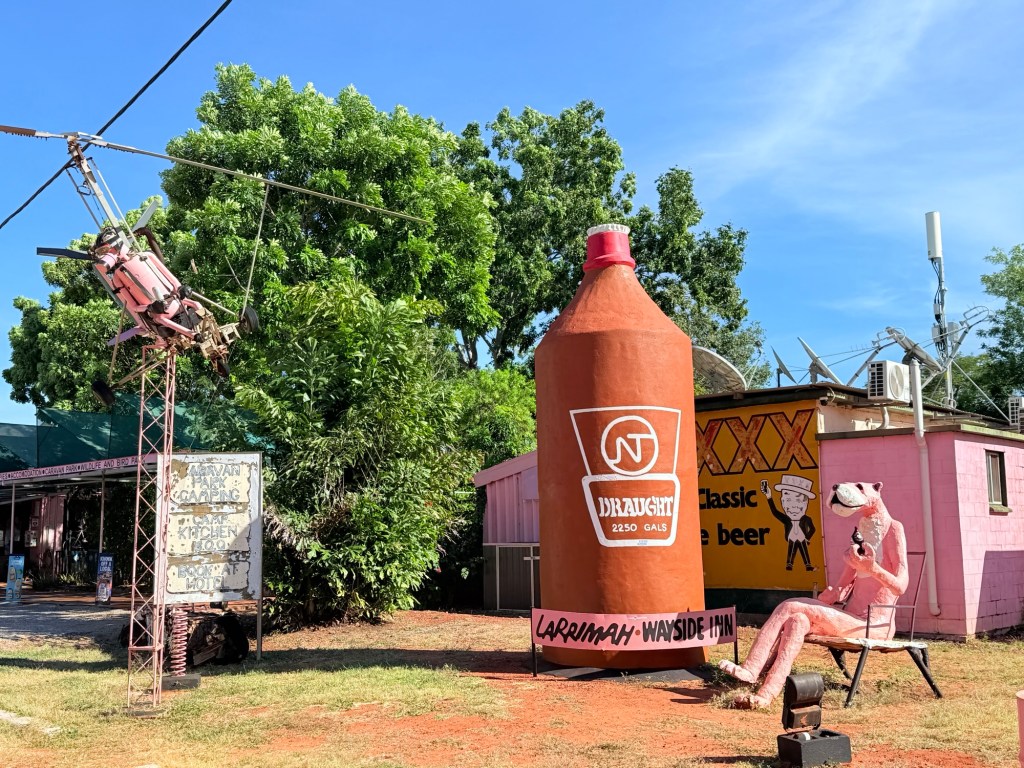
More recently, Laramah has come into prominence because of the mysterious disappearance of ‘Paddy’ (one of I think 12 locals at the time) a few years back and a TV show documenting the surrounding events.
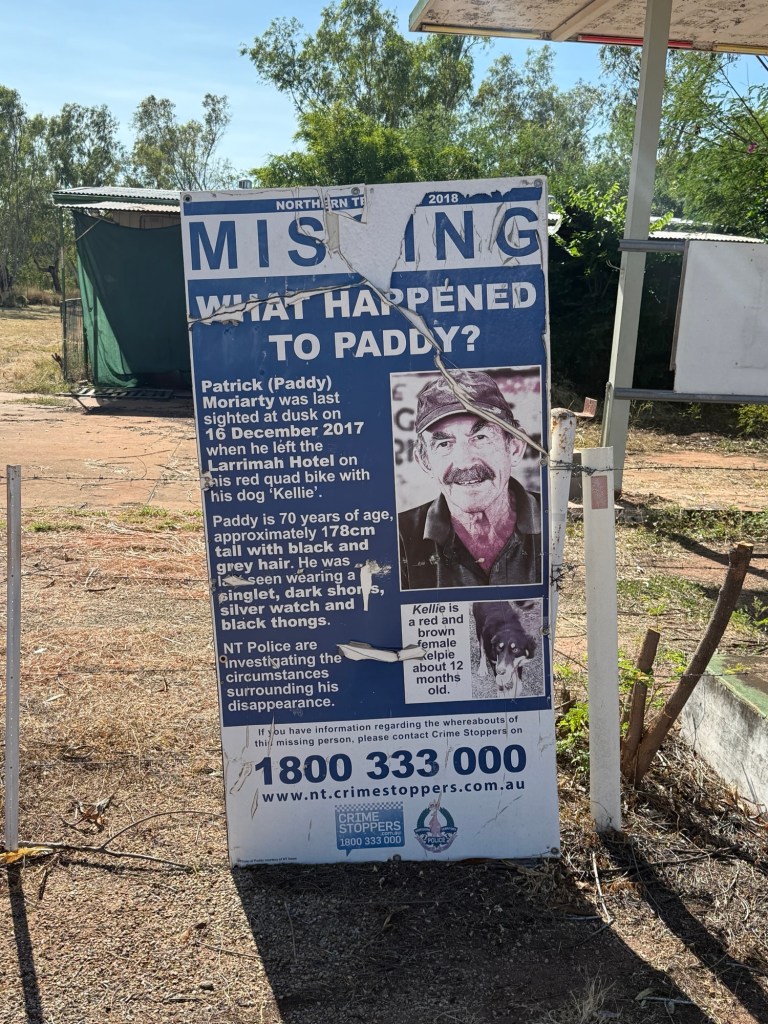
The disappearance has never been solved, all sorts of bizarre scenarios have been canvassed.
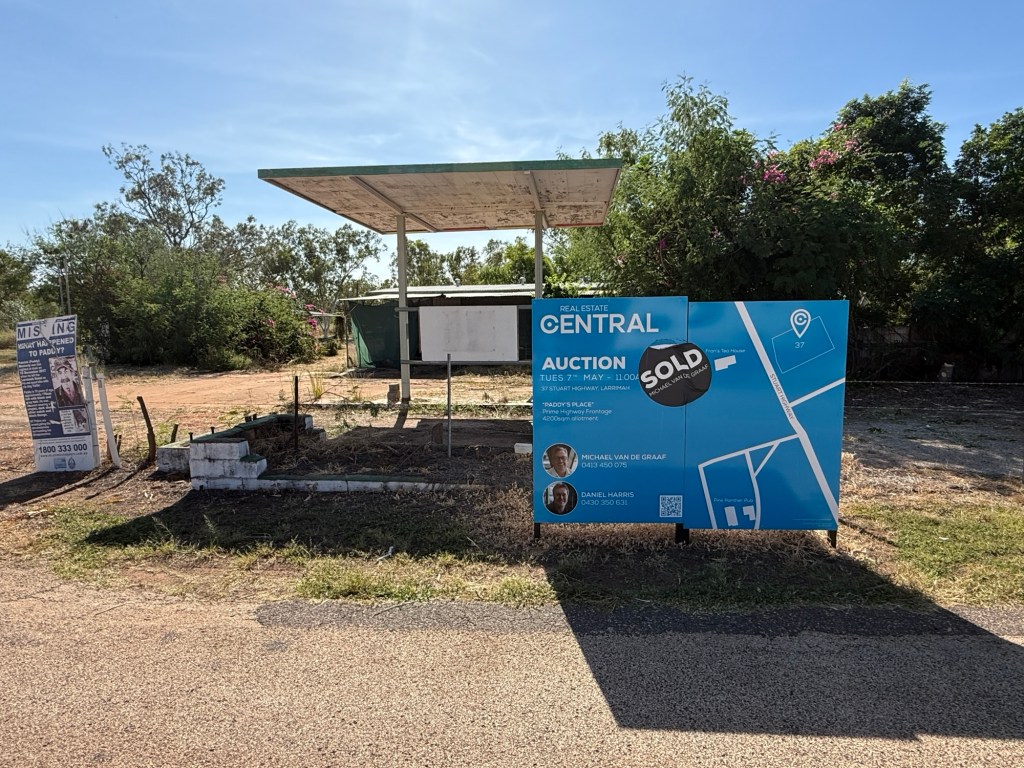
Anyway, ‘Paddy’s’ run down house has recently been sold as a wonderful development site.
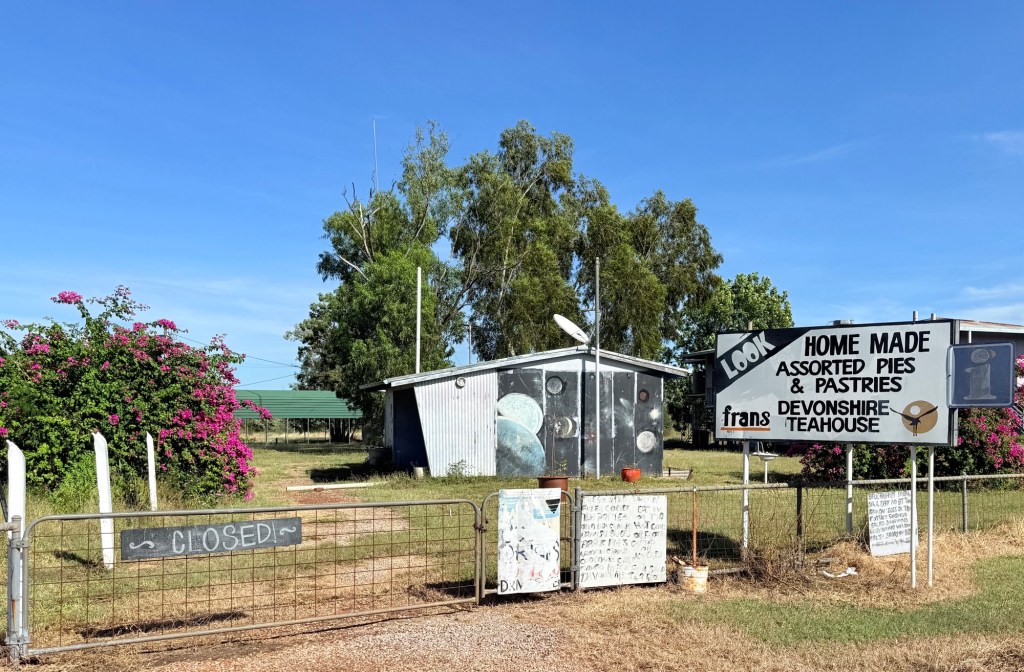
More importantly, Fran’s roadside cafe is closed, I think she has gone to a nursing home, and her marvellous pies and tarts are no more. Apparently she denied strongly that Paddy might have been in one of the pies.We partook several years ago on a trip to Kakadu. She will be missed!
After a brief stop at Mataranka for some supplies we made quick time to Katherine and the campground.
Katherine is on the river of the same name and is some 30 km south from the famous gorge. We have visited there before but this time our main focus is south west to Kununurra.
Below our campsite are the Katherine Hot Springs. 350 metres away. They are quite undeveloped thankfully. The spring rises from a smallish ‘hole’ in the bank and flows into a deep pool and then along a creek into a pool lower down. Ultimately the creek joins the Katherine River. Croc warning signs are up everywhere, but it looked clear to me, so in I went.

Very refreshing, Homealone decided to take some ‘snaps’ and a couple of short videos of the action before we headed back to camp.
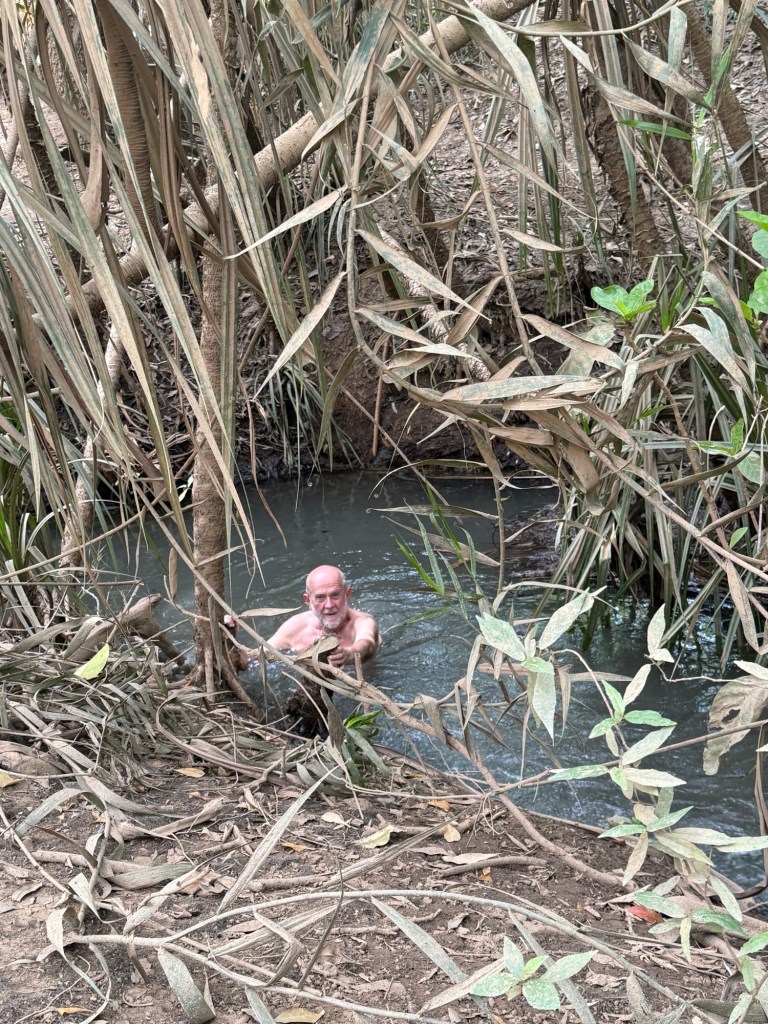
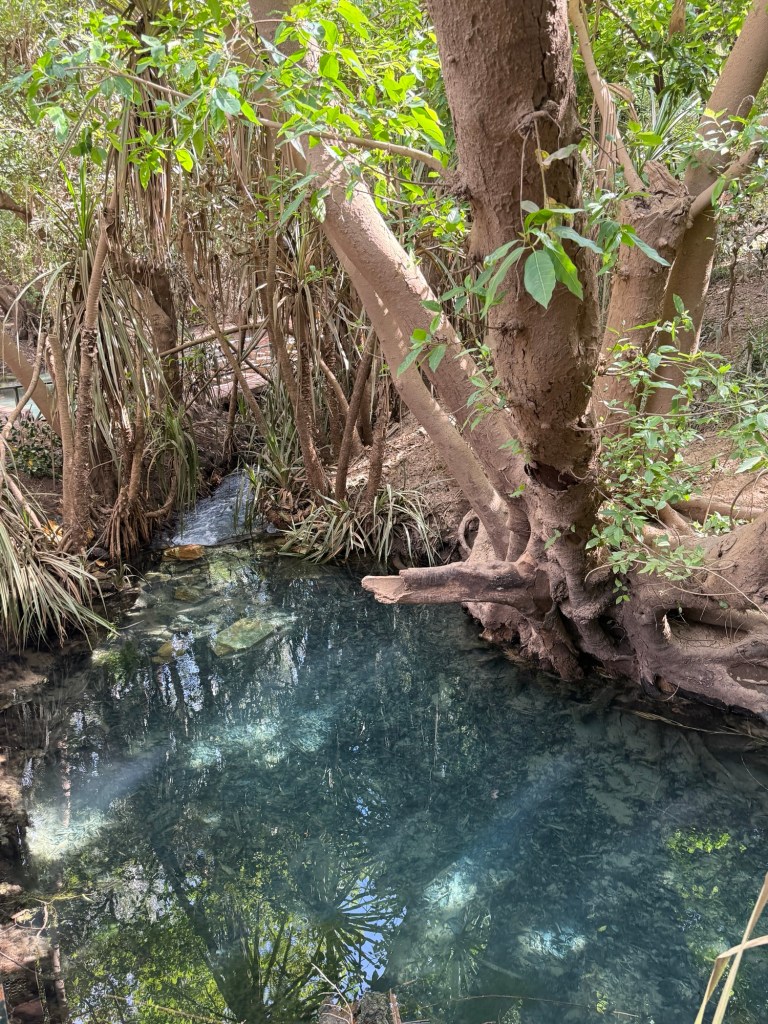
And here are a couple of short videos of the action.
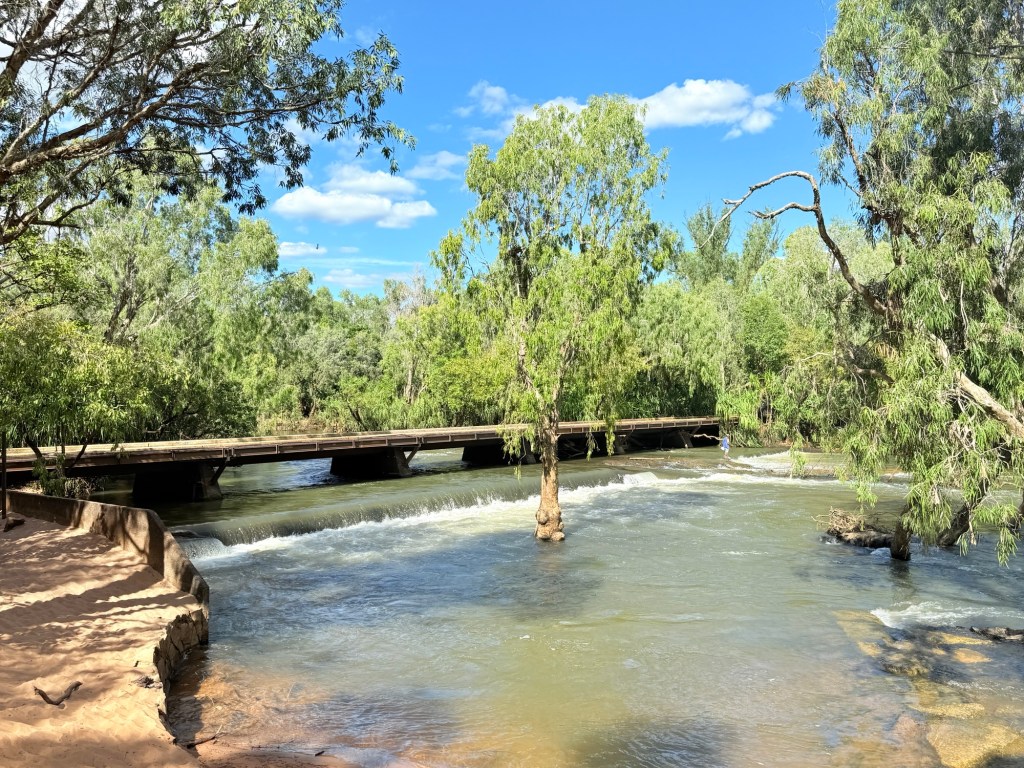
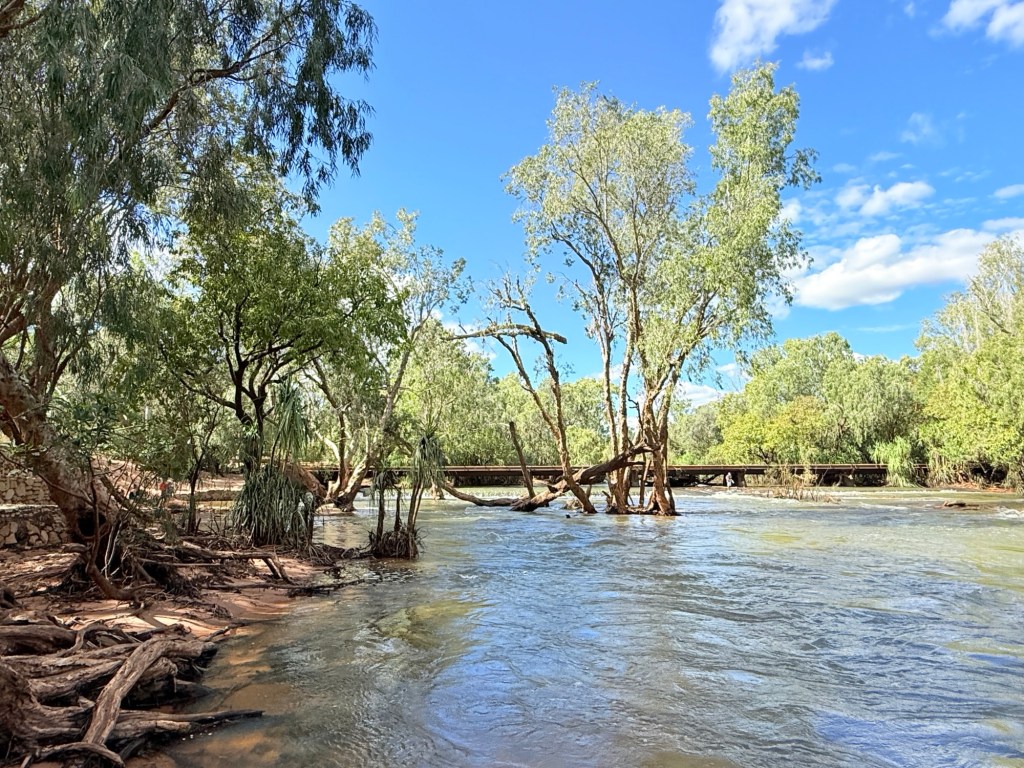
There are two other spots along the Katherine River at either end of the town giving great views and providing pleasant picnic spots. Notwithstanding Crocodile warning signs everywhere!
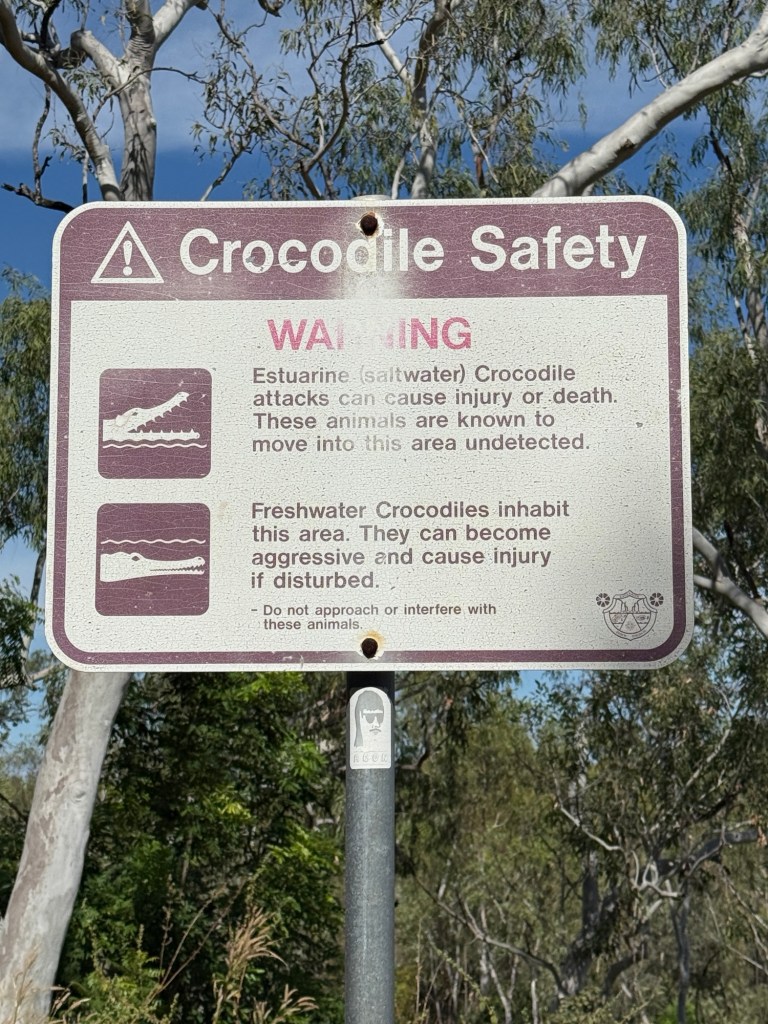
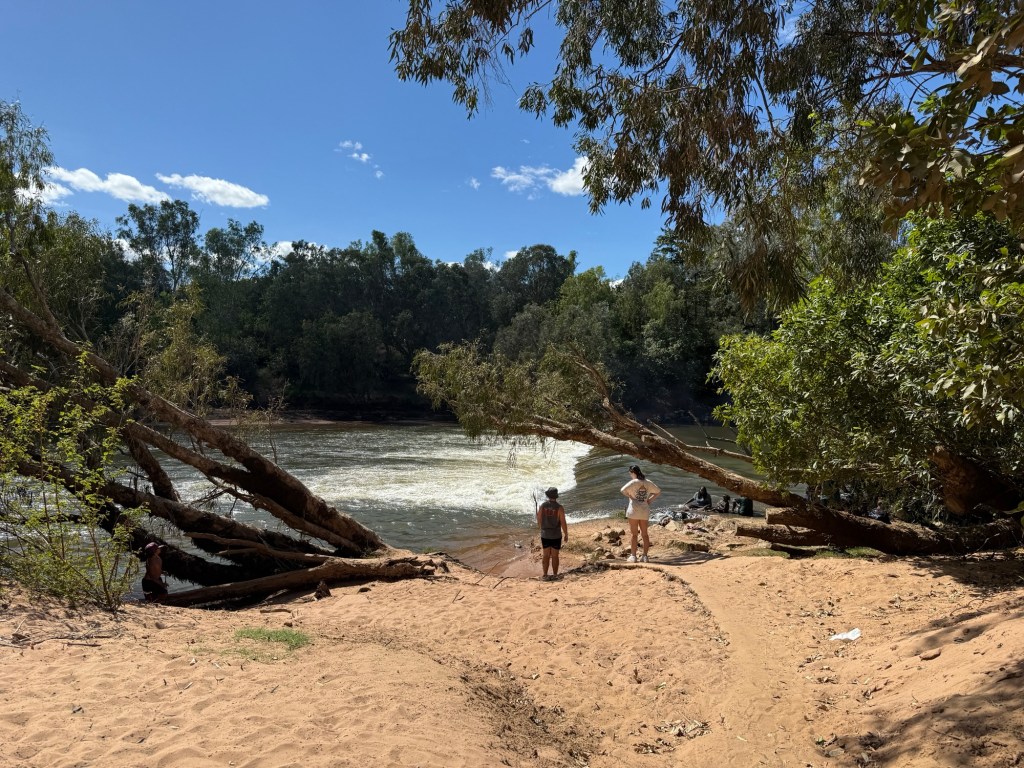
One is at Knotts Crossing the site of the first Katherine settlement. At the other end of town is the Low Level Bridge crossing parklands, great spot beside the river.
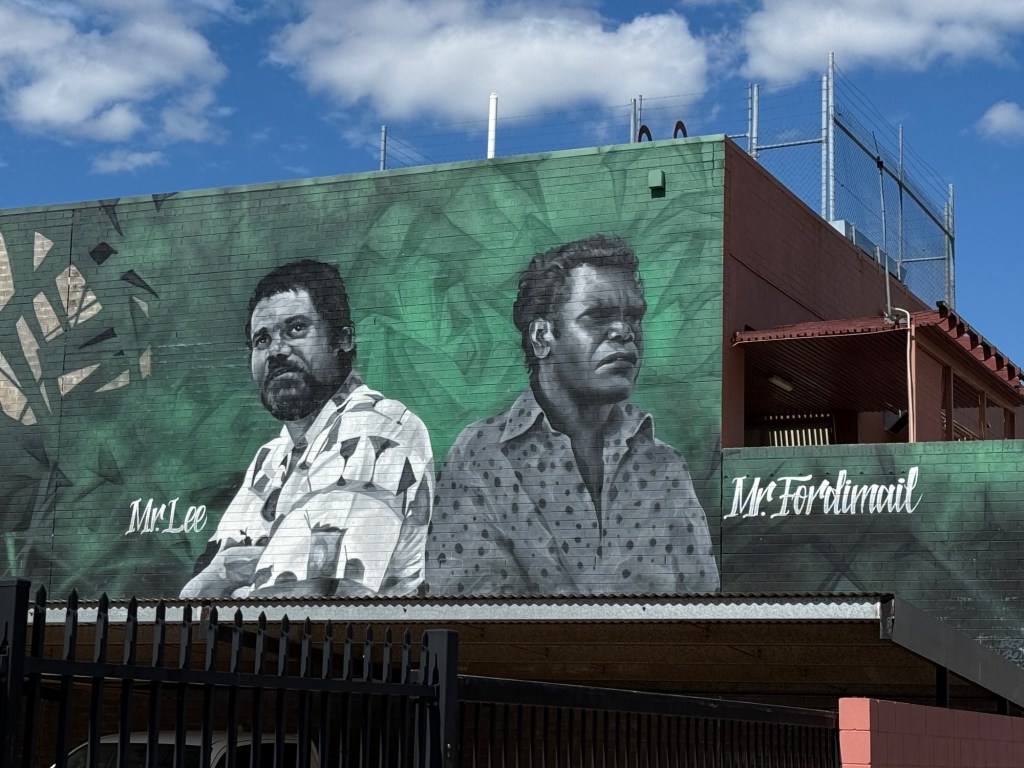
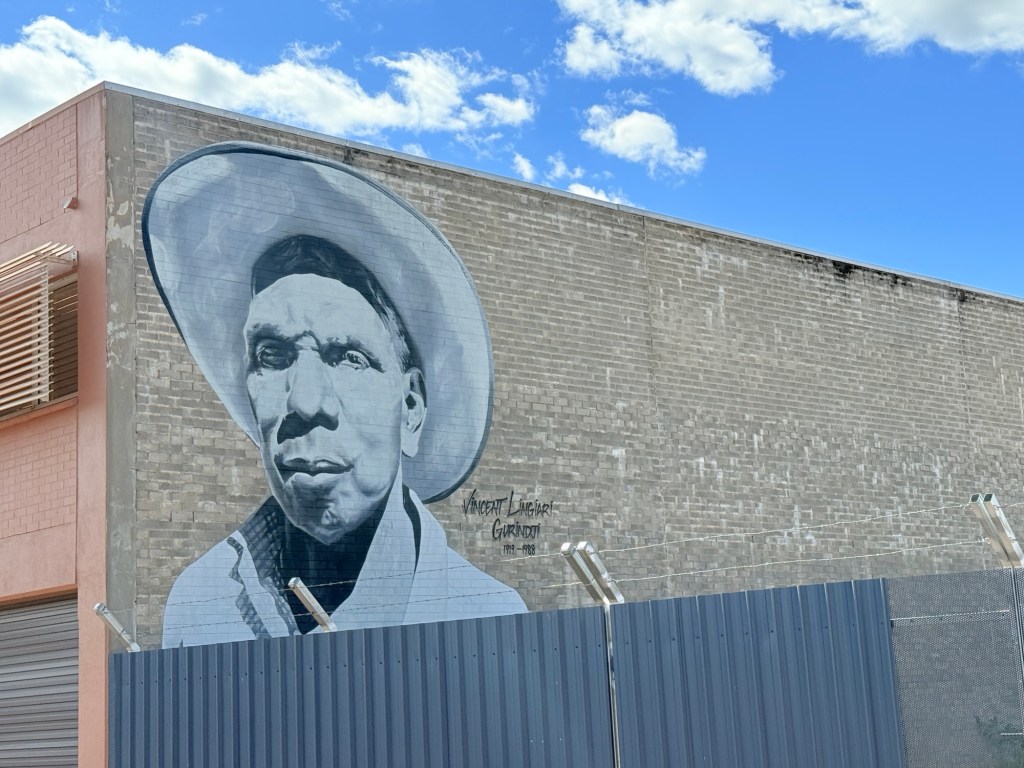
Around the Katherine business area are a number of mural portraits of influential indigenous leaders. Some great stories.

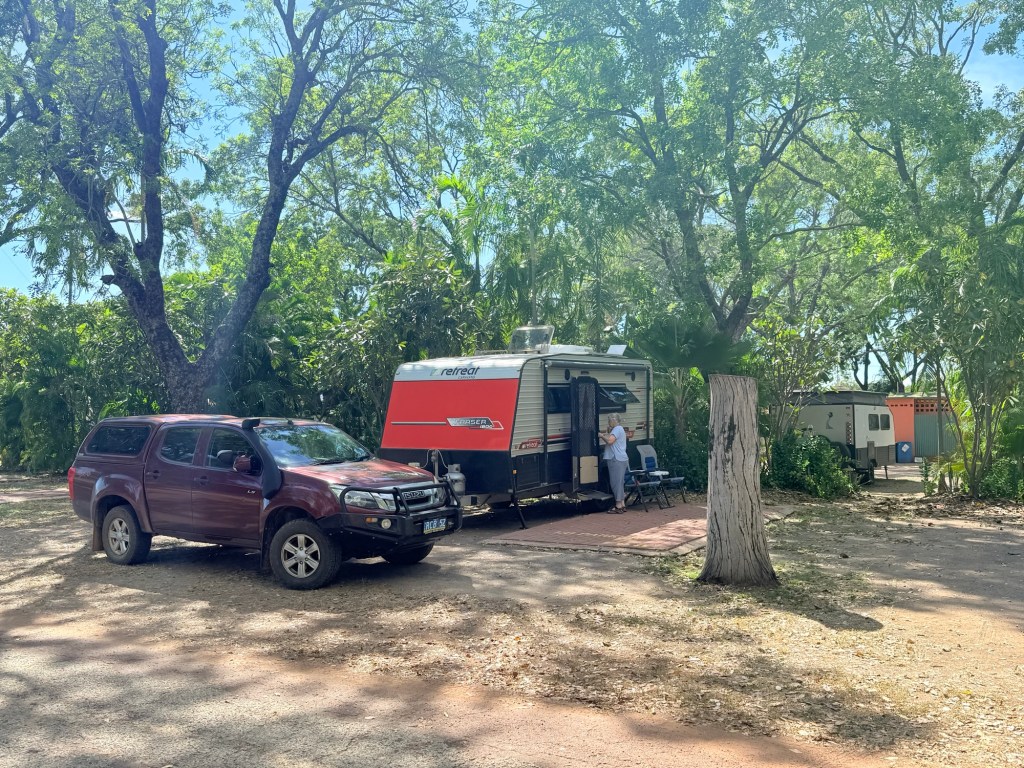
It has been quite hot and humid here in Katherine, particularly at night. We have succumbed to air con in the van! Off west tomorrow towards Kununurra, but a couple of stops before getting there!
North on the Stuart Highway.
We had a good takeoff from the van park in Camooweal. Quite a few vans in but still plenty of room. Maybe we have gotten away early from Brisbane and beaten the rush of nomads north.
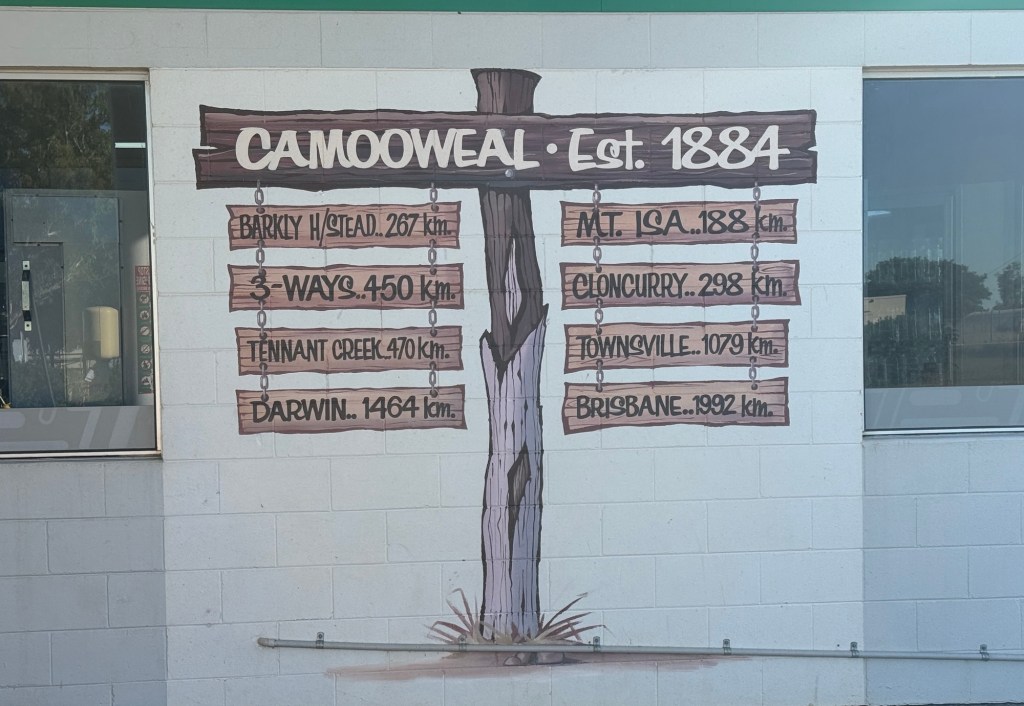
Arrived at Barkly Homestead, about 270km west from Camooweal at 12.30 or so, benefiting from the half hour time gain. Very flat country getting across the Barkly Tablelands, quite green grasslands and the creeks with plenty of water. Stopped for morning tea about 50 km out of the Homestead, felt like a long way from nowhere, plenty of flies out and about. Hopefully they will disappear as we get further into winter.
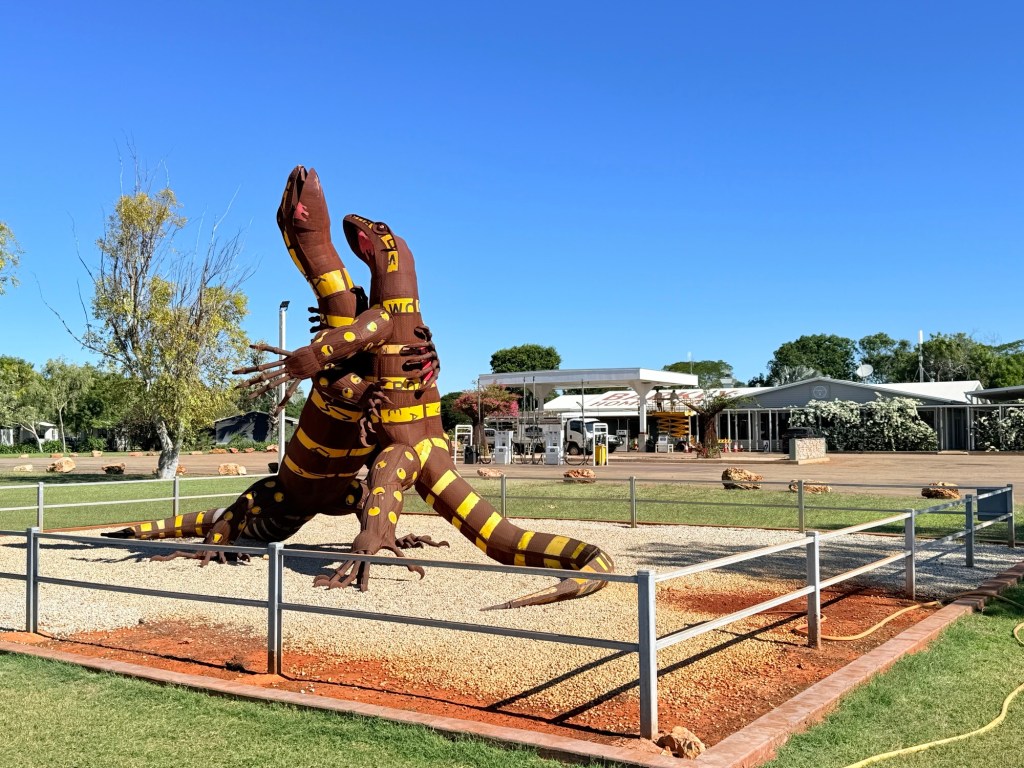
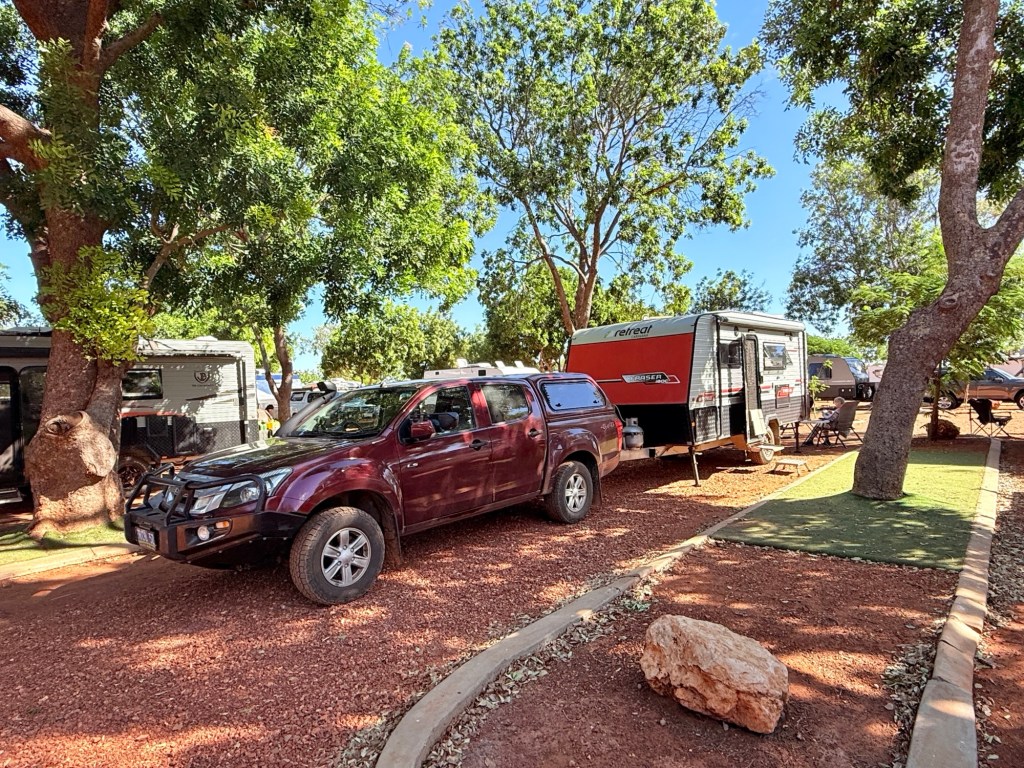
The Barkly Homestead is an oasis along the highway and a great place to stop for the night. Well laid out grounds and facilities, some artwork to go with it too! We have had a relaxing afternoon in the shade, flicking flies away.
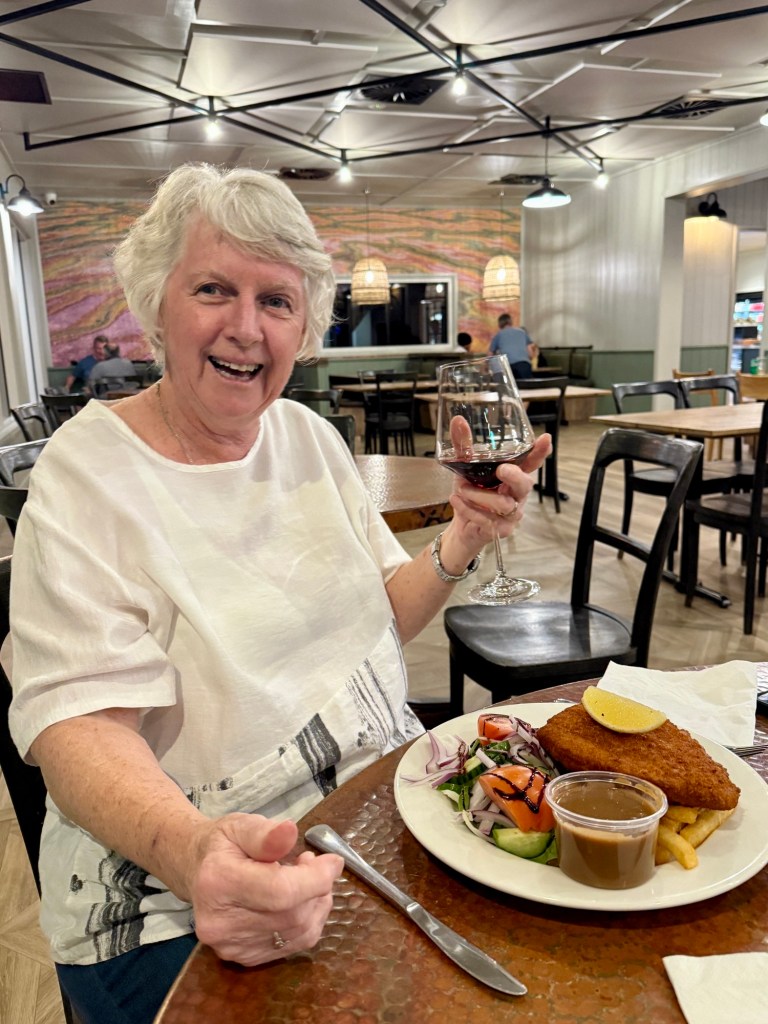
In the evening we had a bite to eat in the Roadhouse cafe. Quite an extensive menu for the most remote Roadhouse in Australia. Allthego settled on a parmie and Homealone a straight schnitzel. Not huge meals but not small either, excellent!
Hitting the road again at around 9am in the morning our next stop was at Banka Banka (BB). BB is on the Stuart Hwy about 60km north of where the Barkly Hwy terminates, 160 km on from the Homestead. It is a long stretch of uninspiring country! Tennant Creek is to the south of the junction.
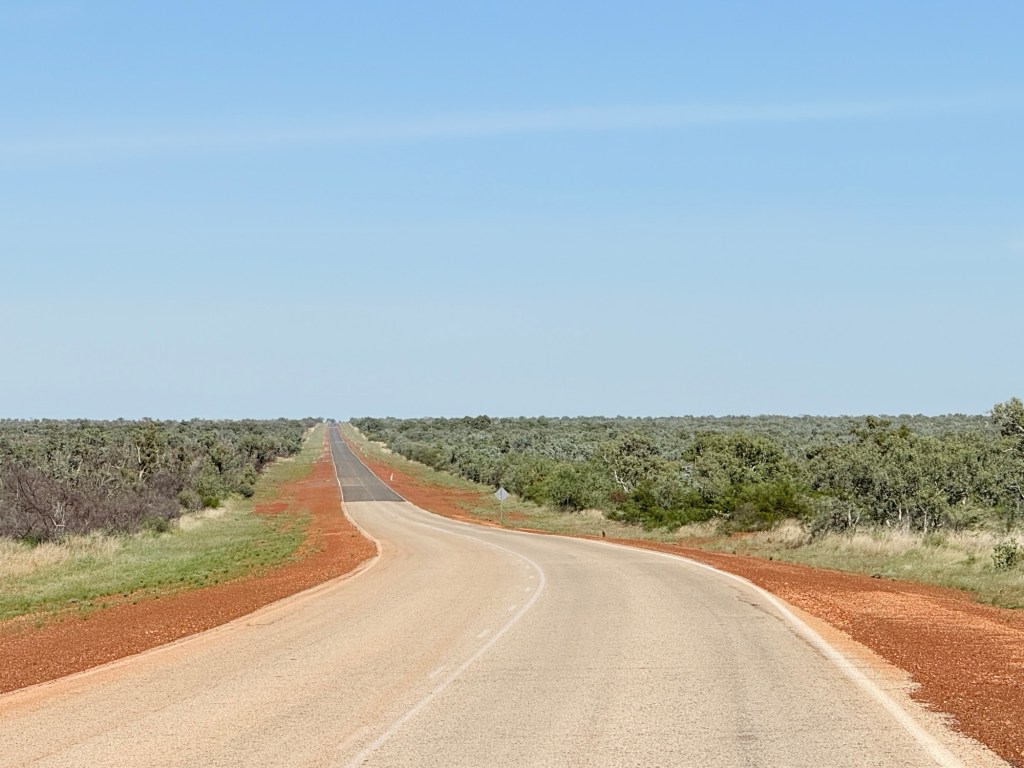
Heading for BB on the Stuart we had a first time experience of every caravaner’s nightmare. A tyre blowout.
Not ours!
We passed some tyre remnants on the road and up around the next bend was the truck and van in the ditch, upright. It must have only happened minutes before. We stopped and checked the guy out, he was an old bloke, looked about 70-75 (mmmmm). All ok, but the van was on its wheel rim dug into the gravel up to its suspension. Not a pretty sight. We took his details and upon arrival at BB rang his roadside assistance people who declined to assist, saying it was an insurance job. Nice. Thankfully, the BB people assisted and drove down to get him going taking several jacks for the job. All worked out ok in the end.
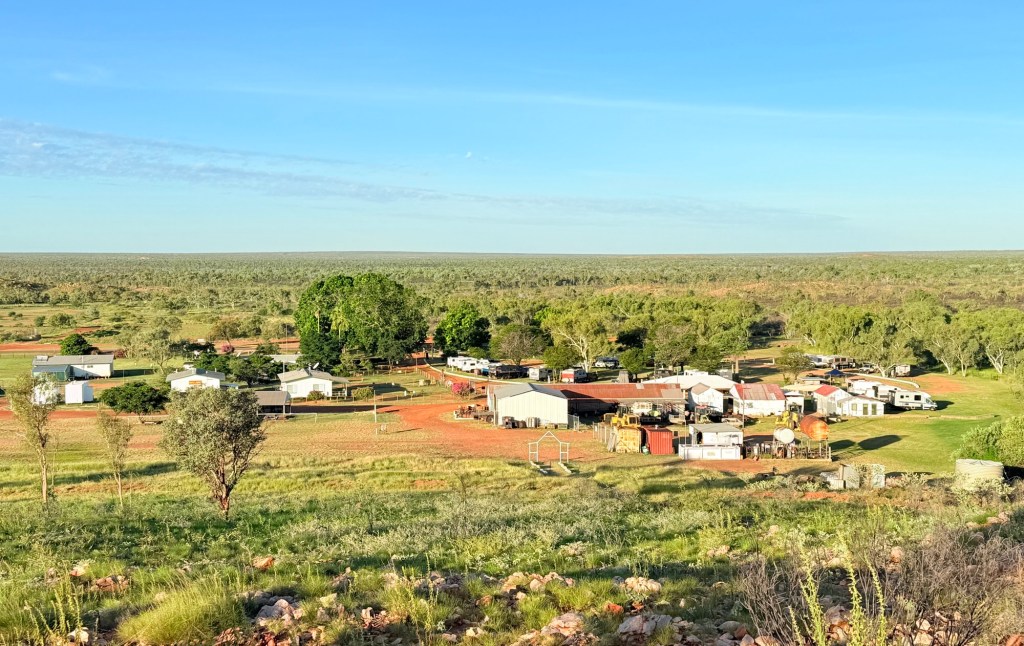
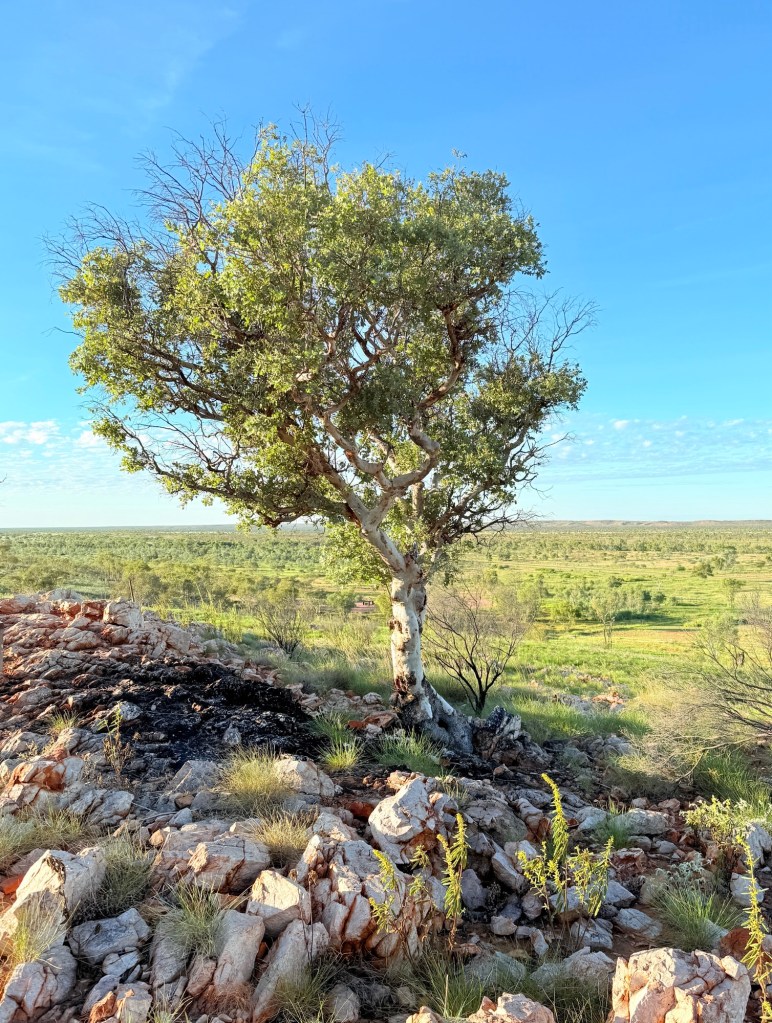
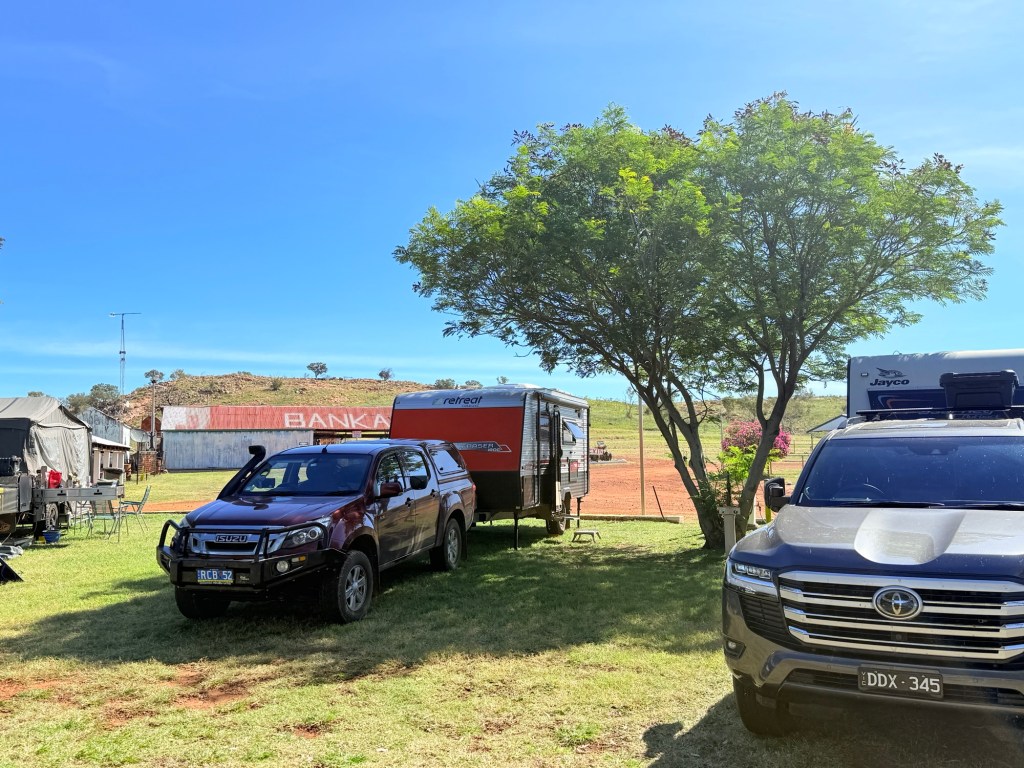
BB is an indigenous cattle station that also provides camping facilities for about 40 vans. Very comfortable spot. We settled in for the afternoon. Late in the day Allthego climbed the nearby hill for a look over the landscape. Great view of the campground and surrounding countryside.
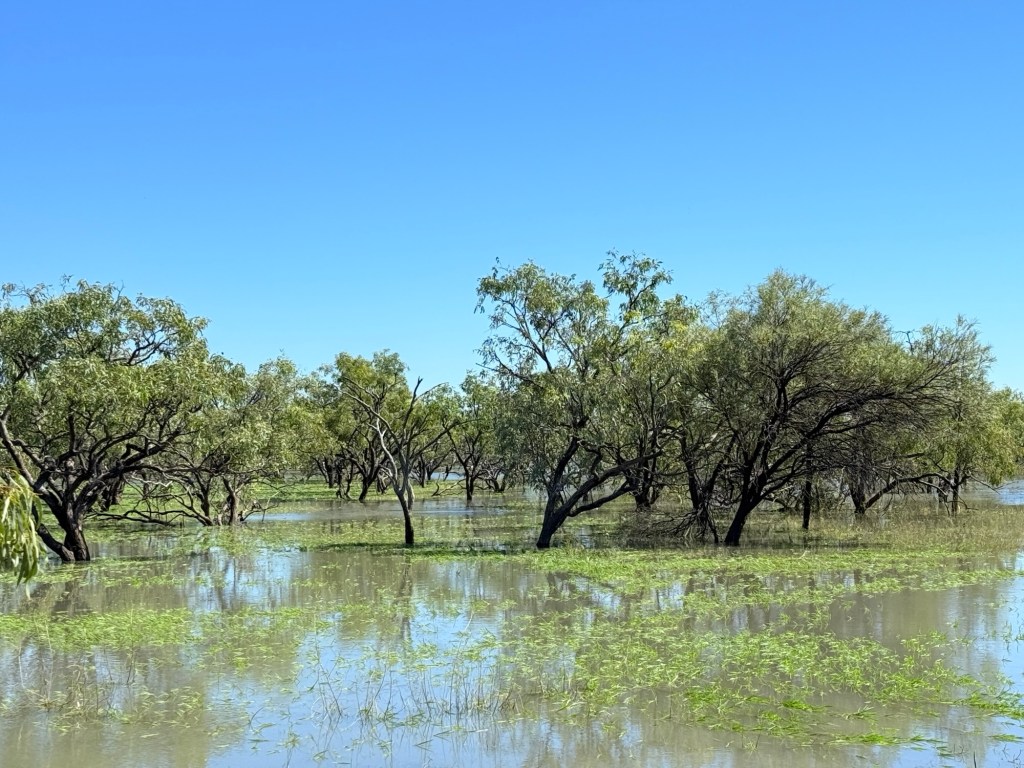
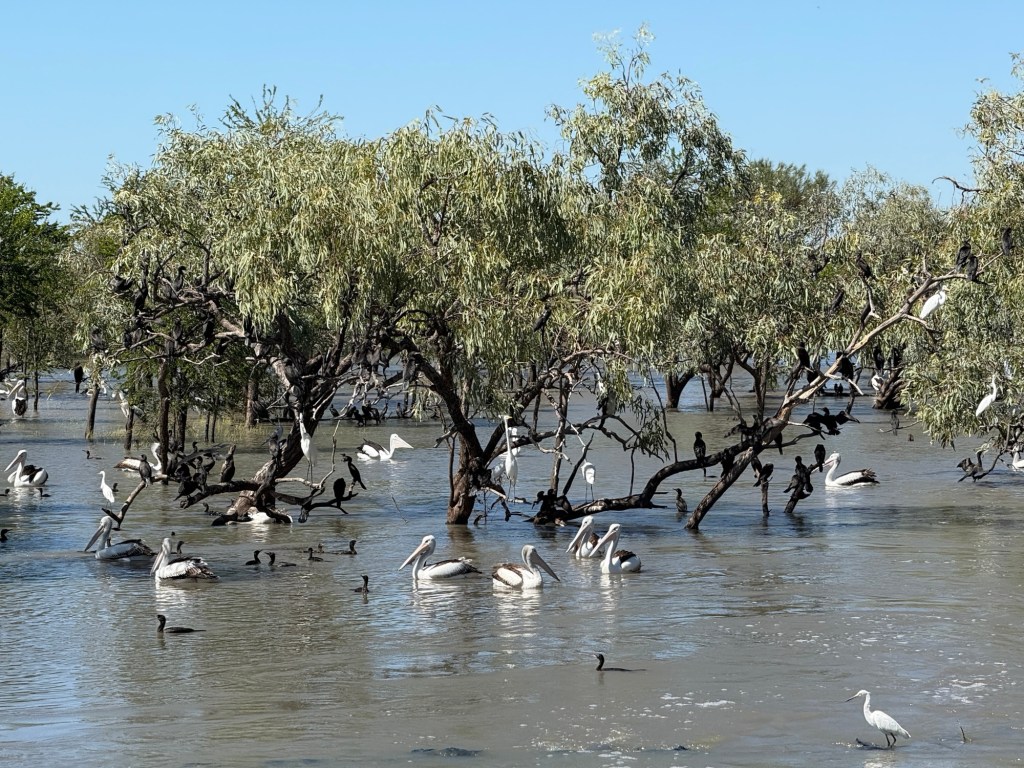
Moving on from BB the trip up the Stuart to the Daly Waters Pub was uneventful compared to the previous days tyre blow out. We stopped for a while at Newcastle Waters, a bit of a ghost town after being a drovers meeting point in the 1800 and early 1900s. The ‘waters’ were brimful and teeming with bird life, pelicans, cormorants, herons, ducks and others.
At the pub we got our site and made a bit of a meal in positioning the van between the trees. Almost collecting them at times. Bit of guidance from a neighbour helped and all was good! Daly Waters is in the middle of nowhere, several hundred kilometres south of Darwin and several hundred north of Tennant Creek. It is about 5 km off the highway and so out of the way. A significant airport was built here pre the Second World War and it was a staging point for early Sydney to London flights. Its remnants remain today for exploration.
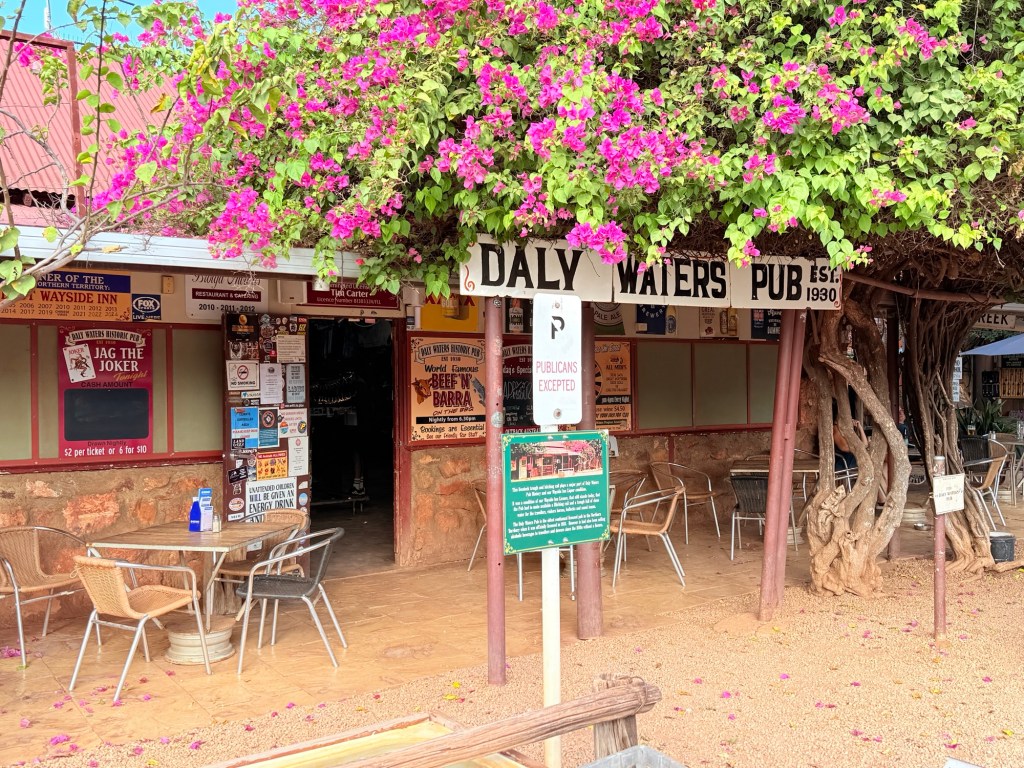
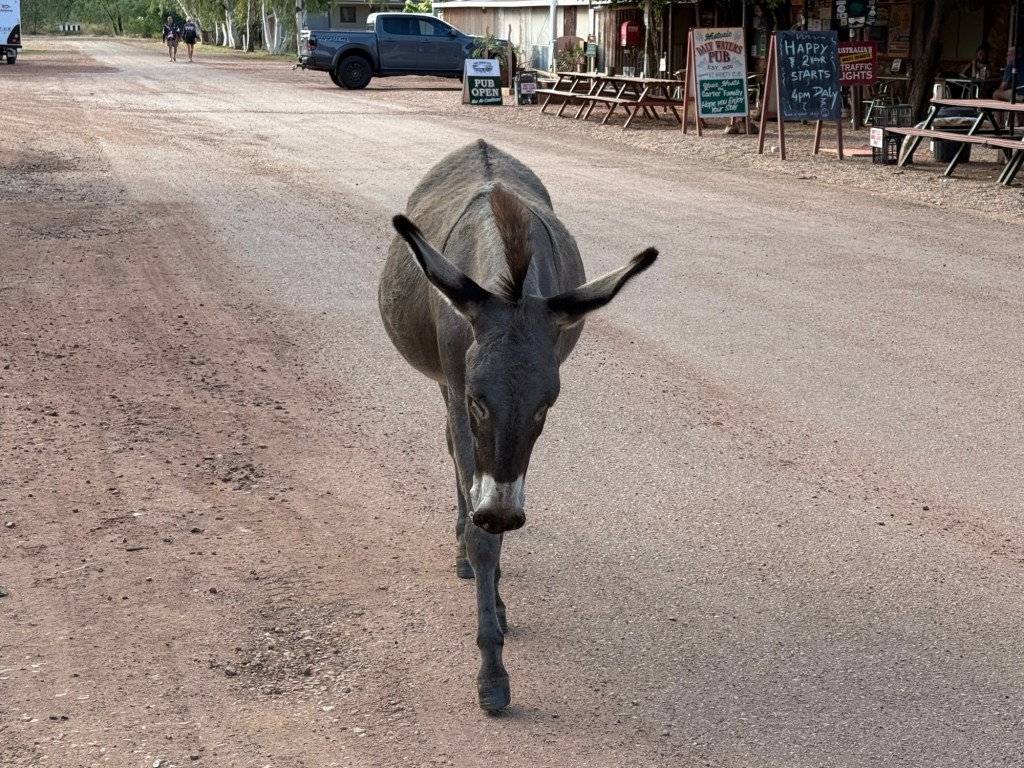
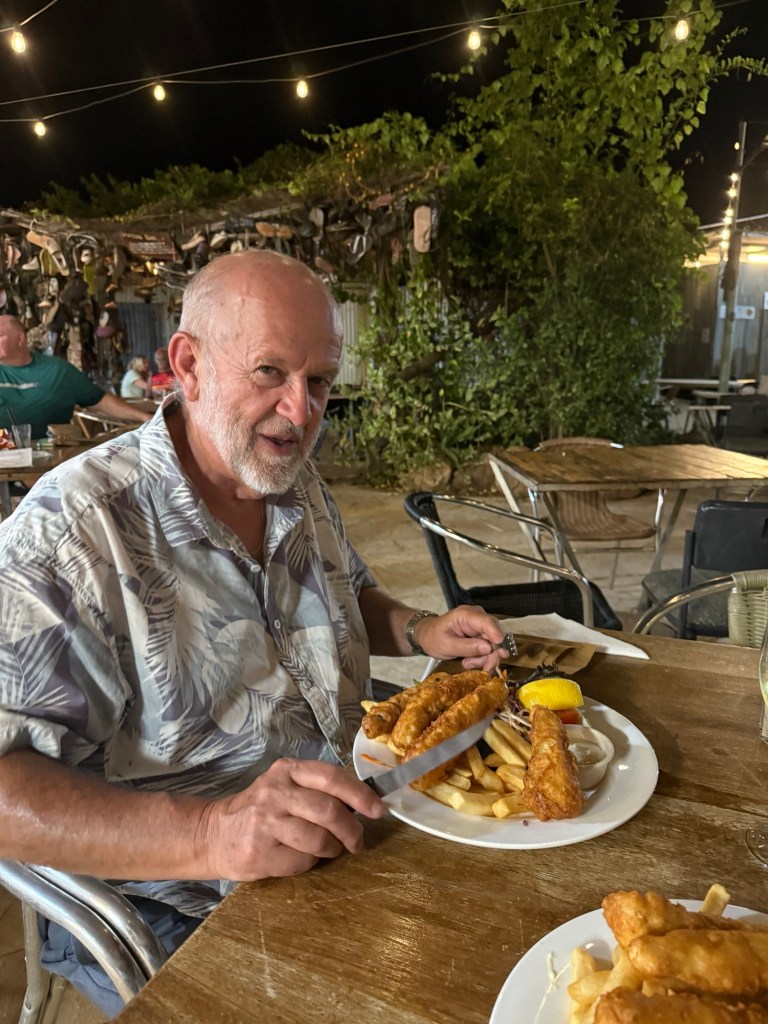
Pleasant afternoon in the shade beside the van relaxing. The pub is famous for its barra meals and dinner didn’t disappoint.
Head off now for Katherine in the morning.
How to gain half an hour
By crossing the border from Queensland into the Northern Territory a little to the west of Camooweal…….
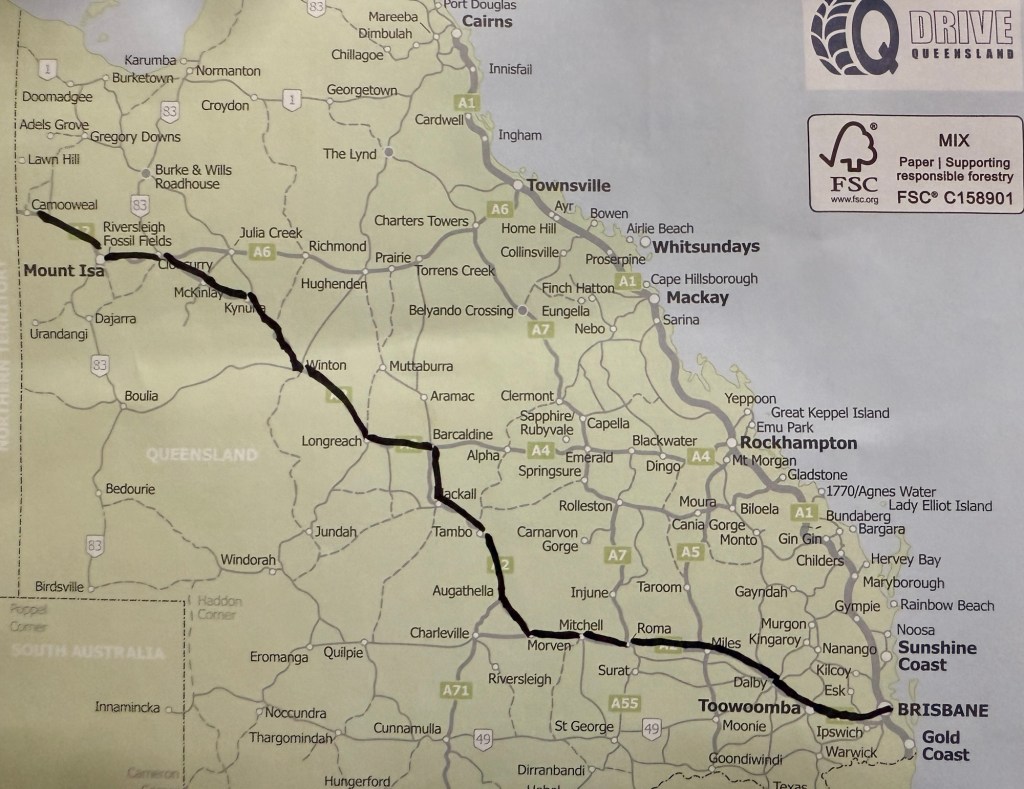
Here is a map of the journey so far, Brisbane to Camooweal. This route is a little over 2,000 km.
We left Winton at 8am, quite early for us. It was a long drive up the last section of the Landsborough Highway to Cloncurry. The road took us past Kynuna and McKinlay, home to the Walkabout Hotel of Crocodile Dundee fame.
In Cloncurry we made a brief stop to take in the sights from the local lookout which also has a new mural (at least for us). Quite impressive artwork reflective of the indigenous connections with the land.
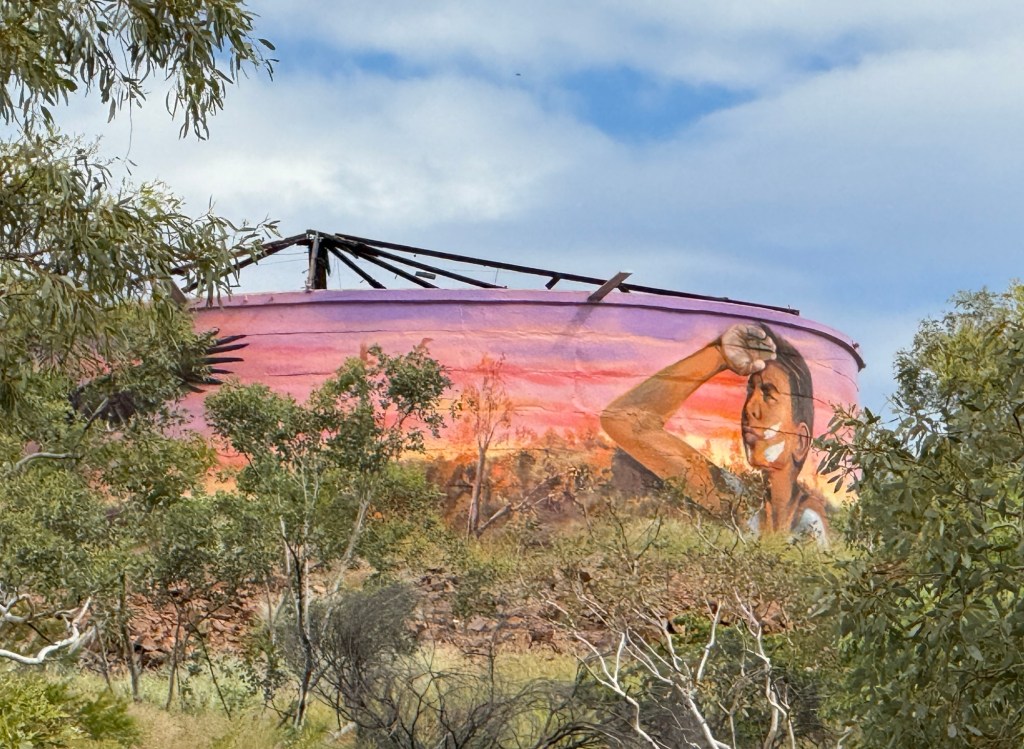
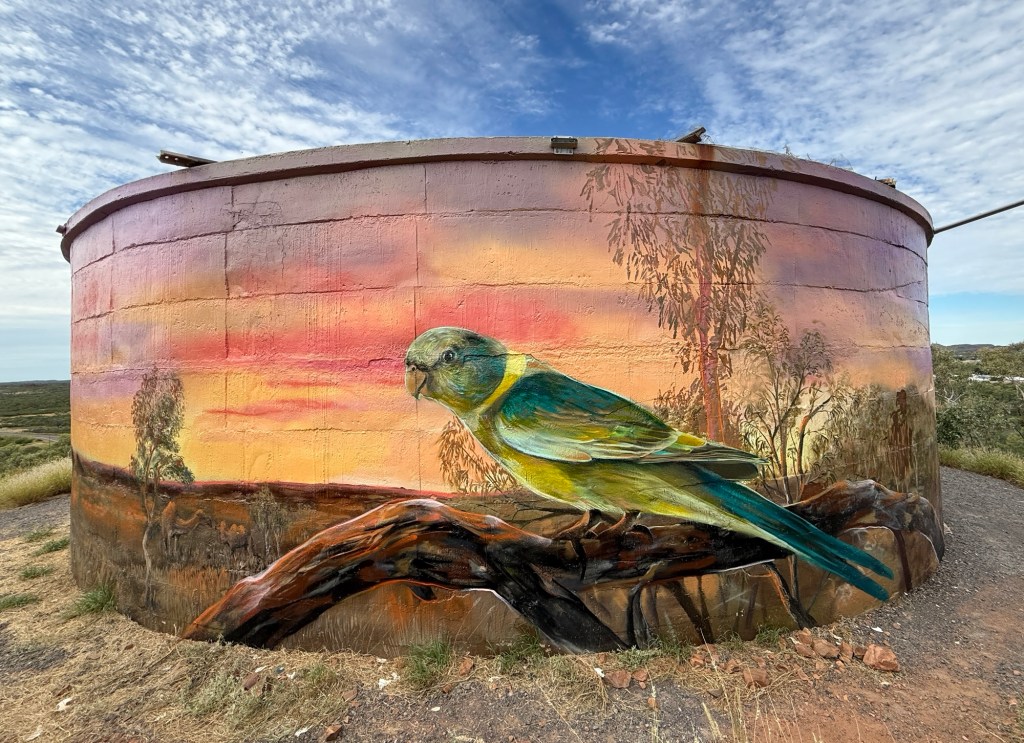
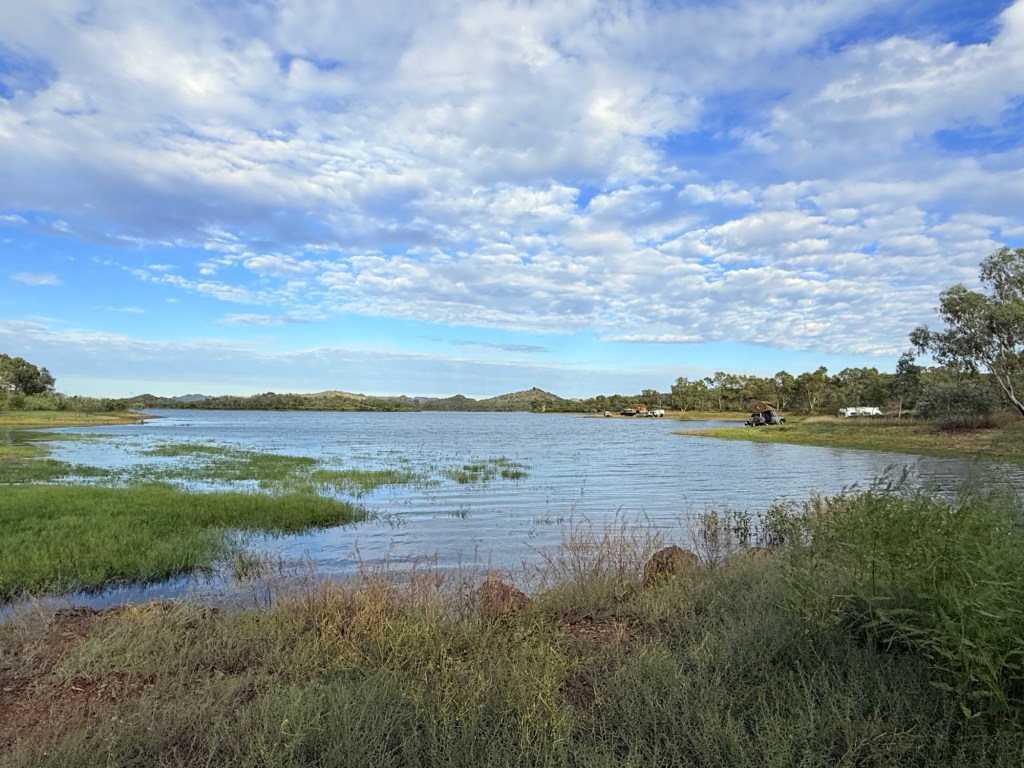
Corella Dam was to be our free camp spot for the night, about 60km on from Cloncurry. The dam was the water supply for the now deserted Mary Kathleen township, the site of the former uranium mine.
Whilst Corella was a good place for a stopover, the bugs were out in force. As well as a few flies.
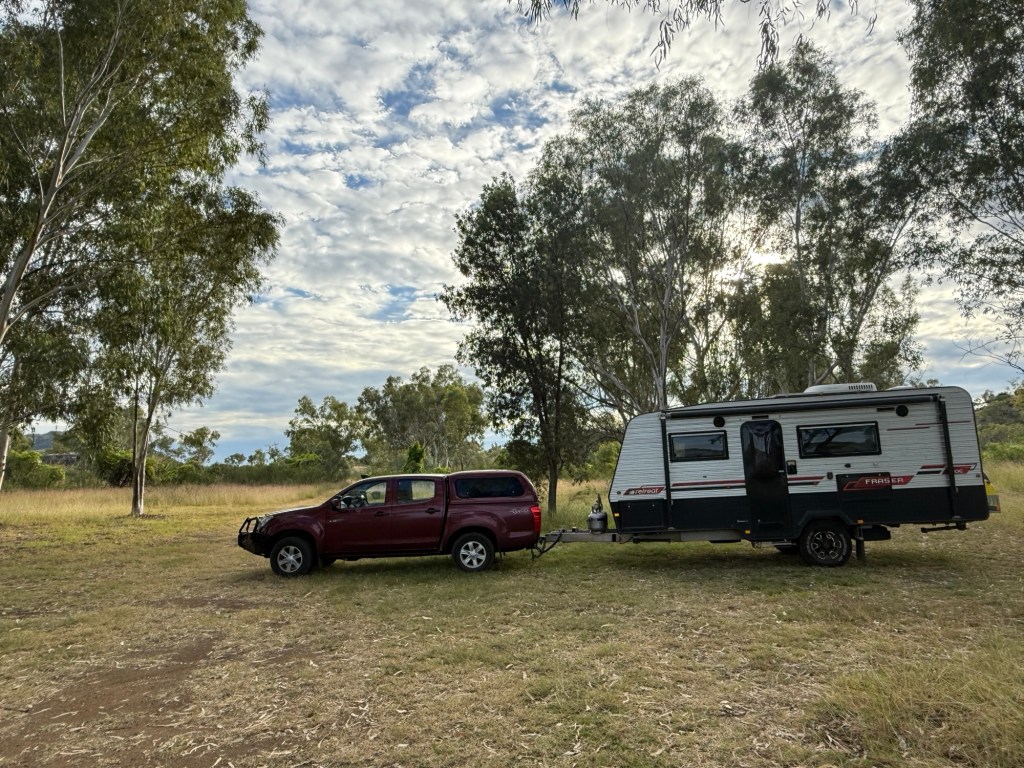
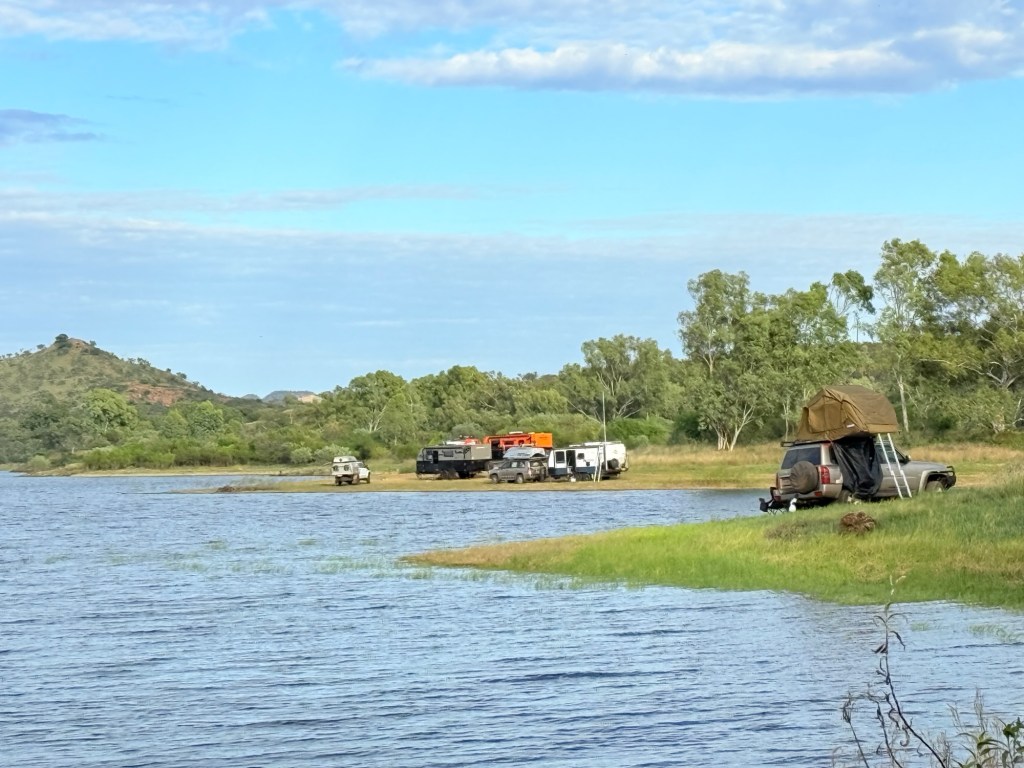
It seems all the wet weather and residual dampness we have had has brought forth a breeding frenzy in these parts. Lengthy grasses also contribute. Russell was attacked by the little blighters, like a seaside midge onslaught.
Good to get on the road to Mt Isa and Camooweal the next morning.
Camooweal seems to be really battling at the moment, the post office/mini supermarket closed at the end of March. Apart from the hotel and service station no other commerce is here. One wonders how the residents will get their supplies, long drives to Mt Isa and maybe the servo will step up with daily needs like milk, bread etc. The pub might hope for the locals to live on beer alone.
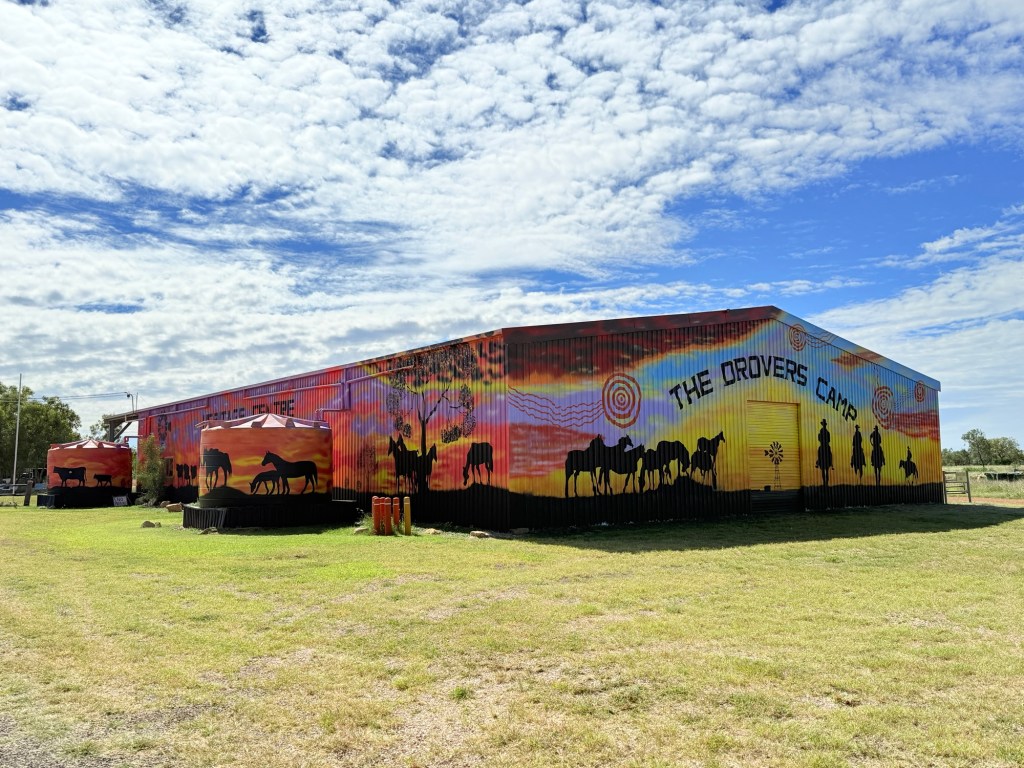
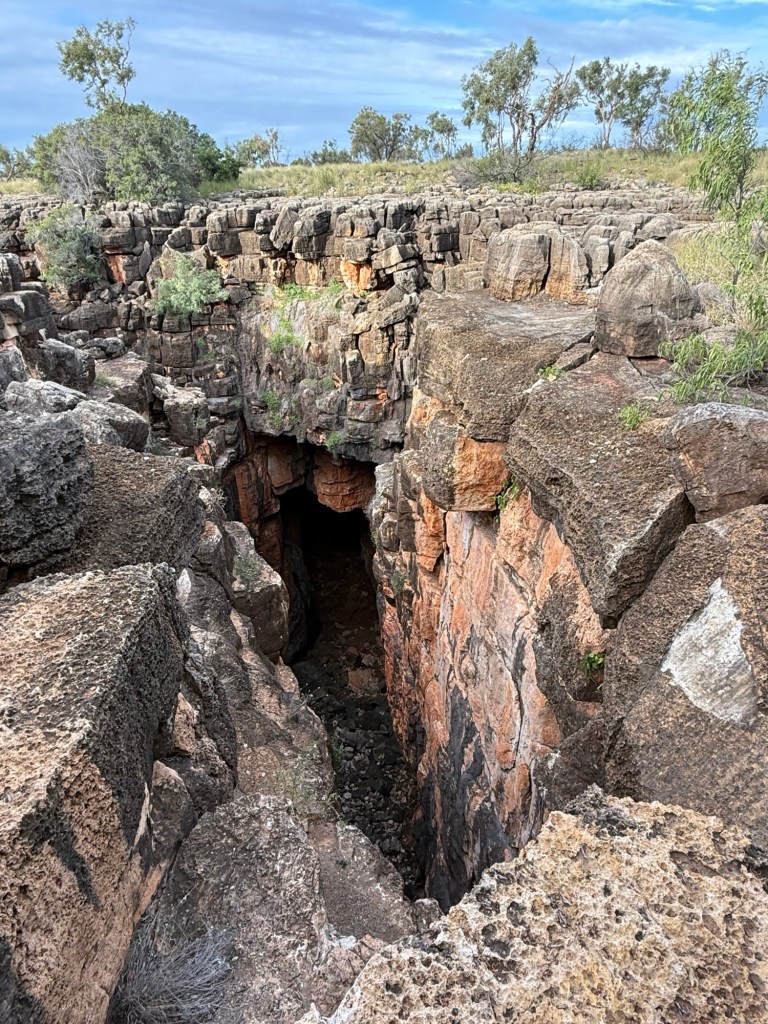
The Camooweal caves are one of the attractions.It is a dusty 16 km drive to the National Park site. An interesting deep hole in the ground and a pleasant billabong are at the end of the road. We made it back to the van park late in the afternoon after a short look see.
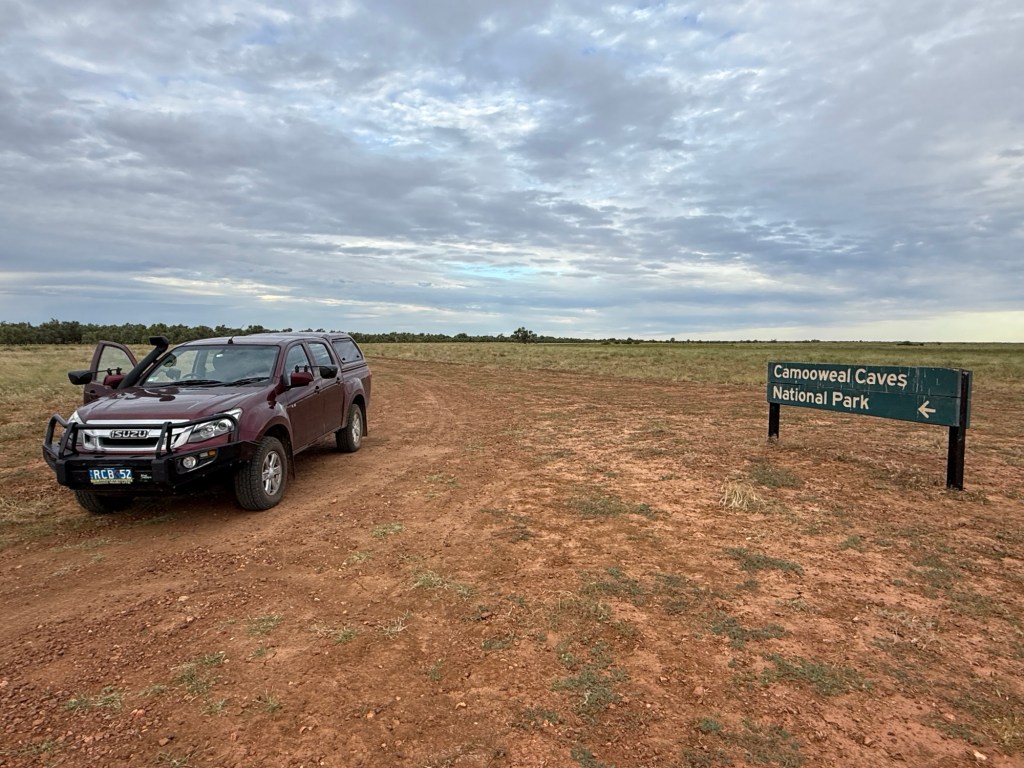
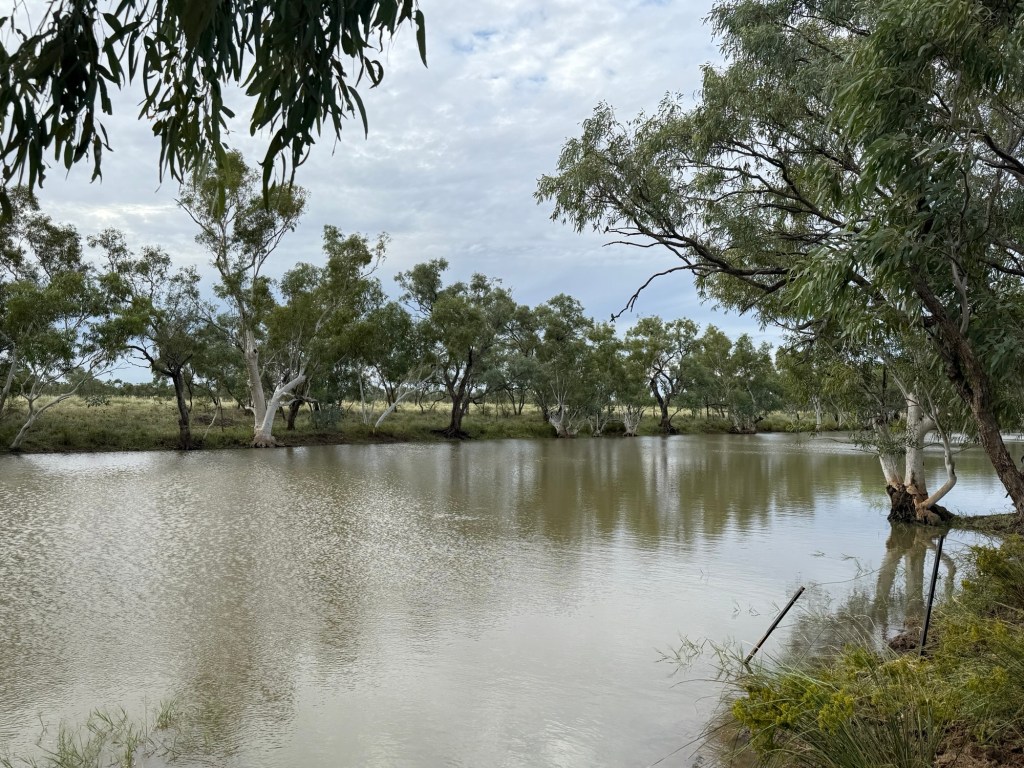
We leave in the morning on the next stage of the trip. Crossing into the NT , gaining that half hour. We intend to have the night at the Barkly Homestead Roadhouse, midway across the Barkly Hwy, before heading up the Stuart Hwy to Katherine over the following three days.
Winton
We have now been at Winton for two nights after the drive from Barcaldine and Longreach. The countryside is amazing. So green after all the rain.
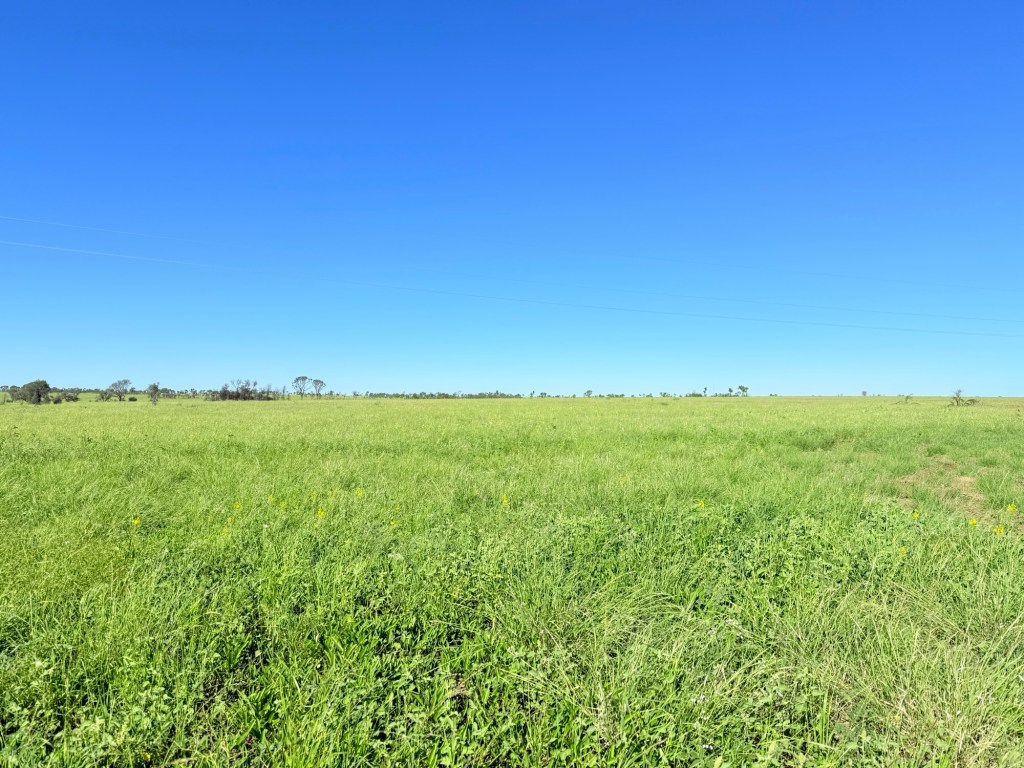
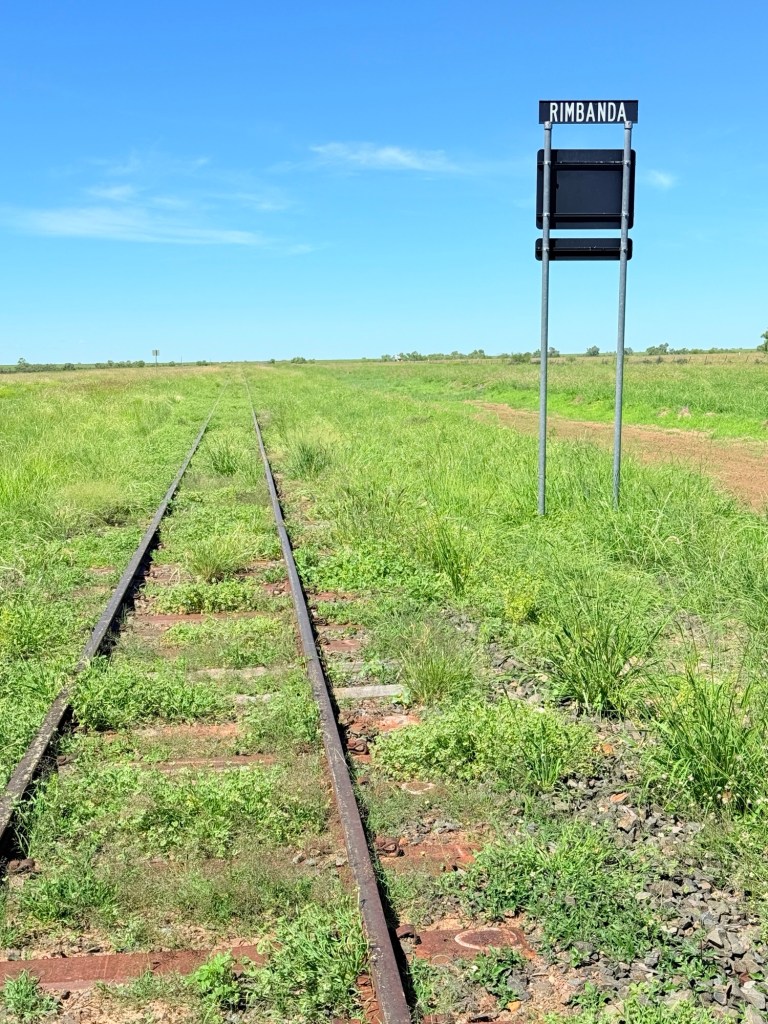
The road to Winton for the most part follows the old train line from Longreach to Winton. I think the line is now only used for freight.
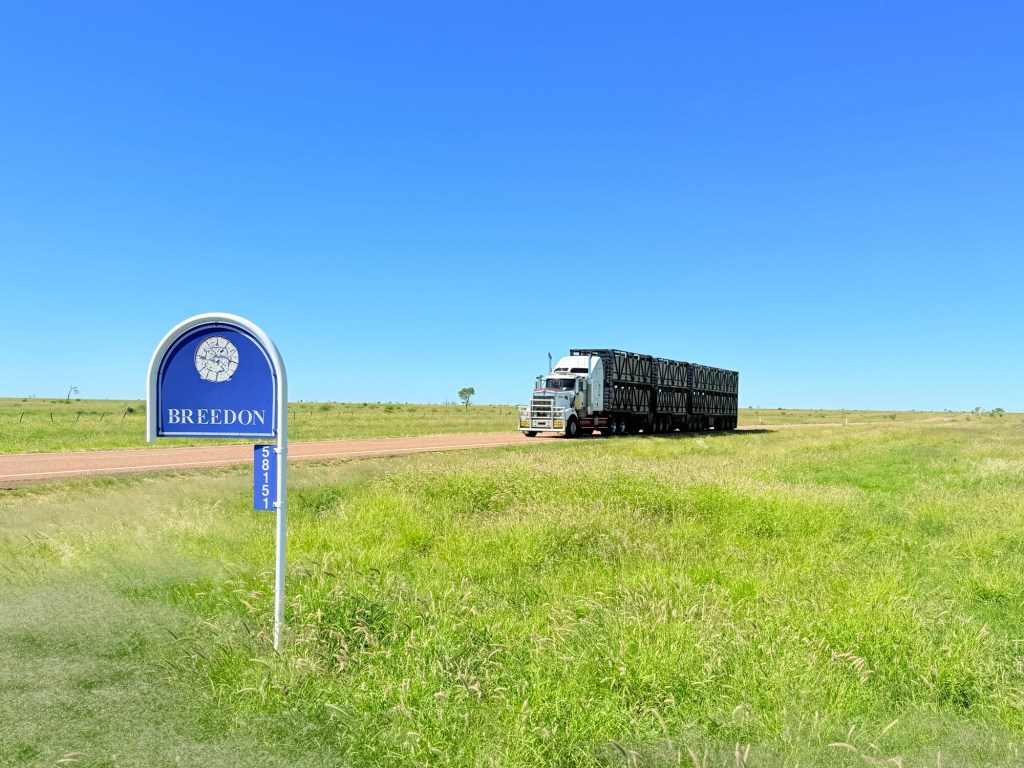
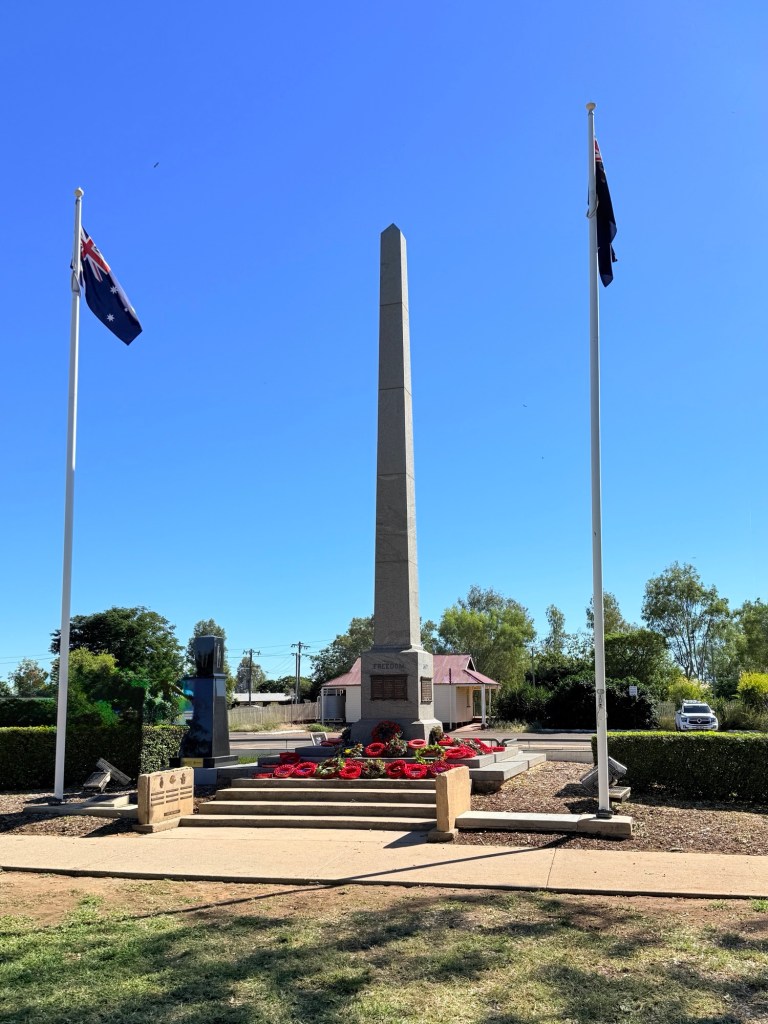
Winton continues to amaze with its energy to do stuff. Some great attractions here and things to do and see in the outback. We have been here before, but it was nearly 13 years ago. Doesn’t seem like it was that long ago. Back then we charged around seeing all the stuff to be seen. This time we have been a bit more focussed.
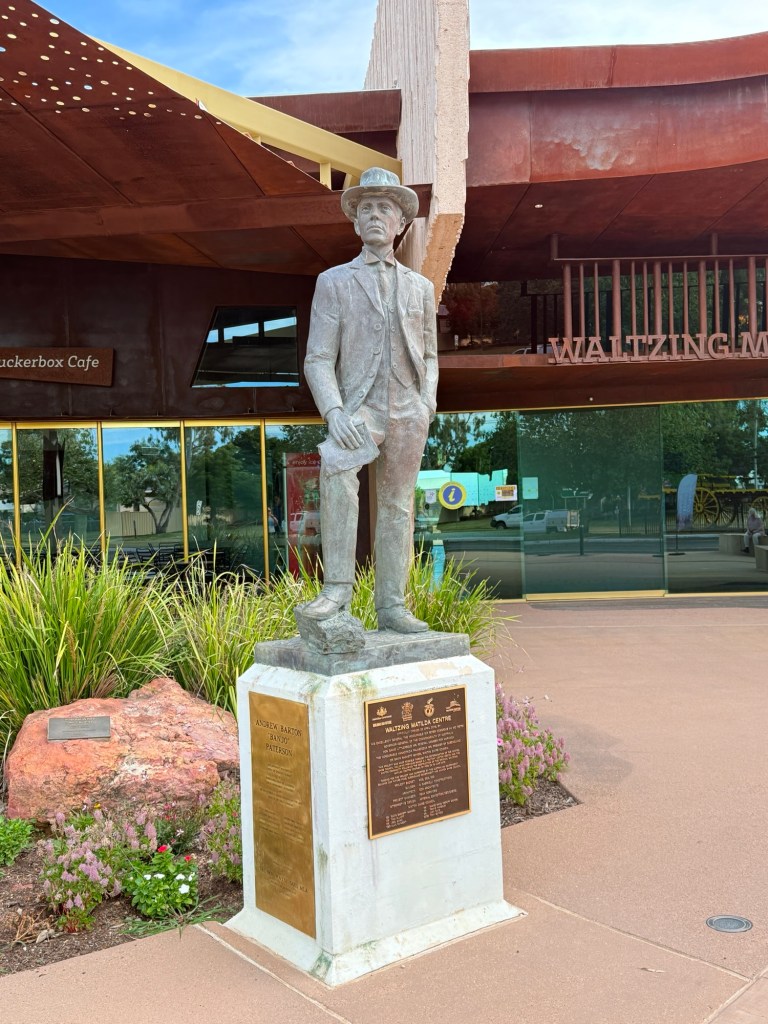
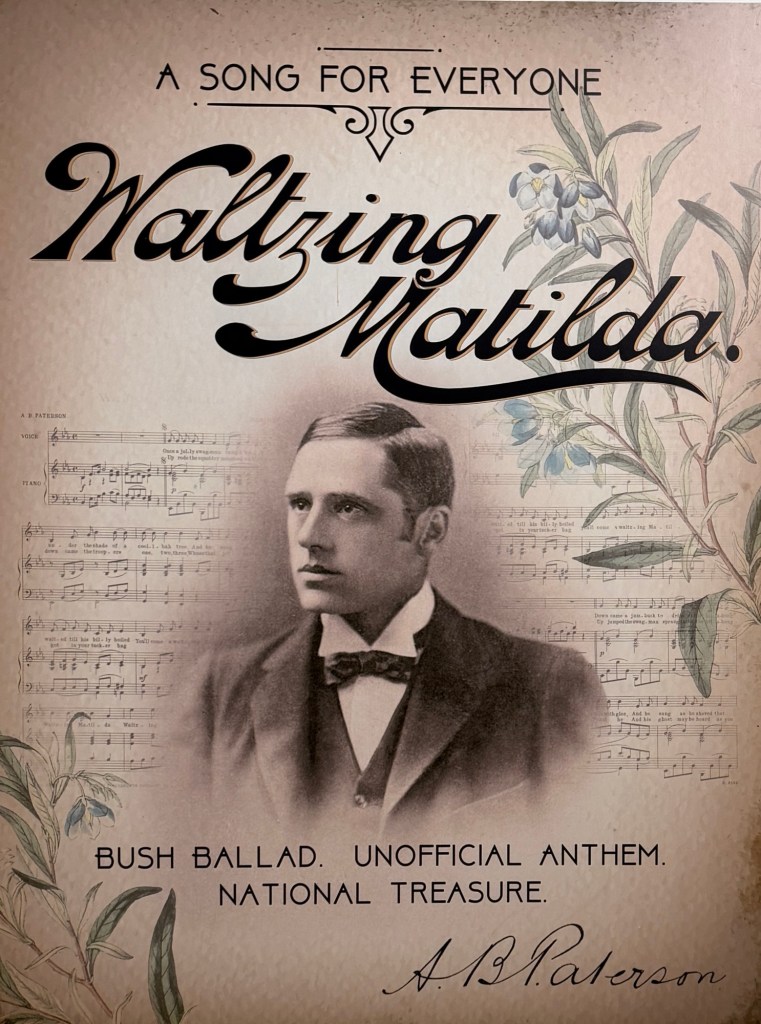
The Waltzing Matilda Centre had burnt down and new one constructed. Must say it is pretty good for a two hour look see, very focussed on seeing the Winton region and its ‘treasures’ through the lens of Banjo Patterson’s ‘Waltzing Matilda’. Very 2025 tech too in the displays.
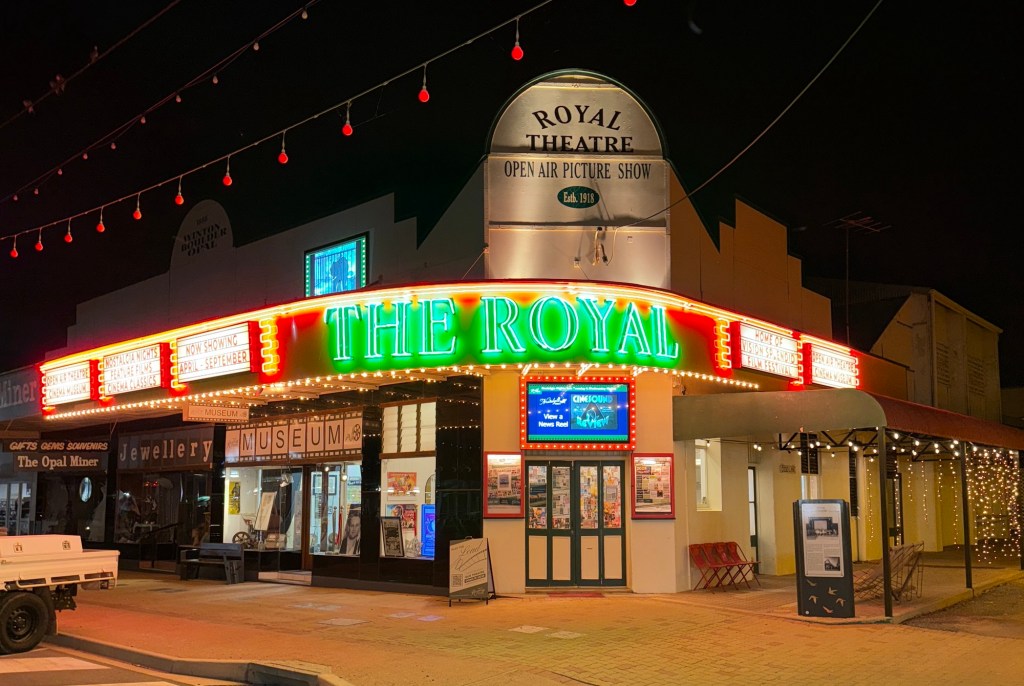
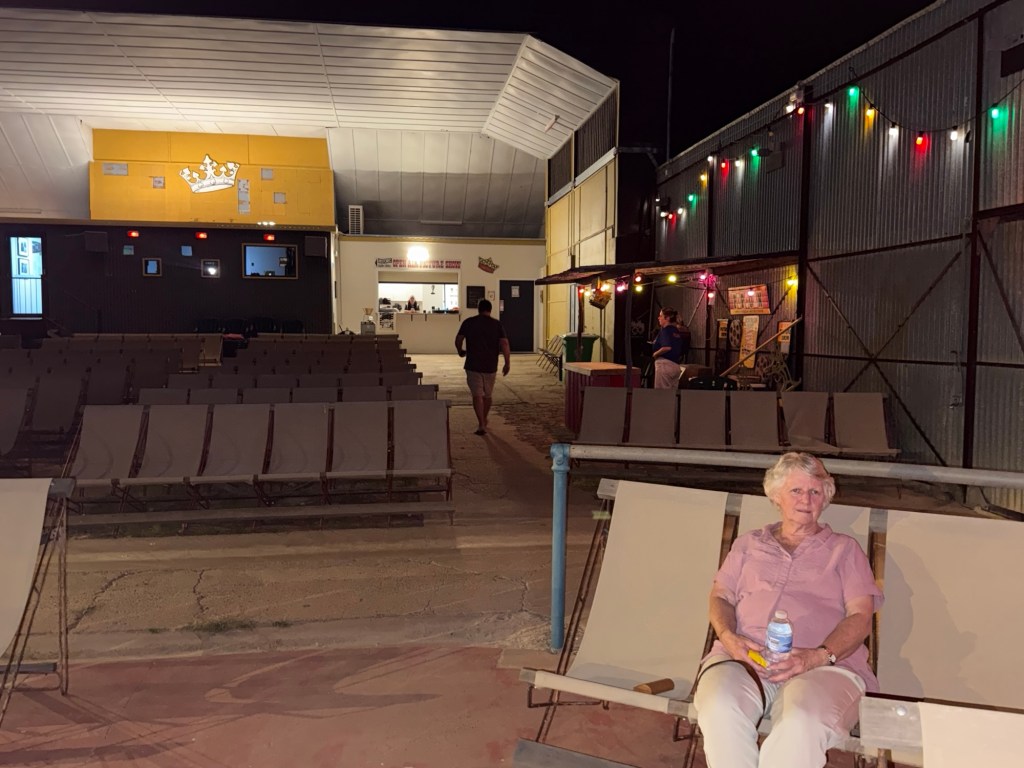
That evening we experienced the charms of the Royal Theatre, a volunteer run open air picture theatre, deck chairs and all! We saw a 1935 John Wayne classic (his 33rd movie), ‘Cold Vengeance’ aka ‘Dawn Rider’. Entertaining 58 minute Western gun fighting, horse riding and fist fighting movie, very 1930s movie making! The Royal operates 5 (or is it 4!) nights a week during the winter touring season with all sorts of old classics and present day attractions.
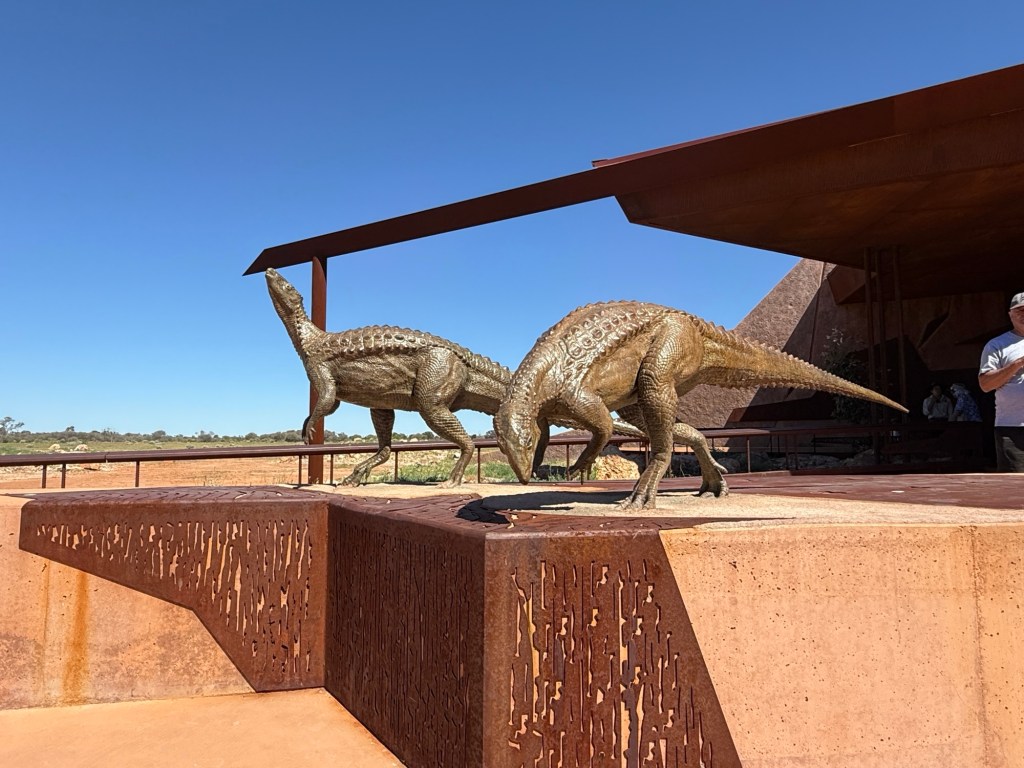
Spent most of day two at the Australian Age of Dinosaurs Museum about 20km out of town. Since our visit way back when the Museum and its environs have come a long way. The eleven kilometre road in has been sealed and new buildings constructed.
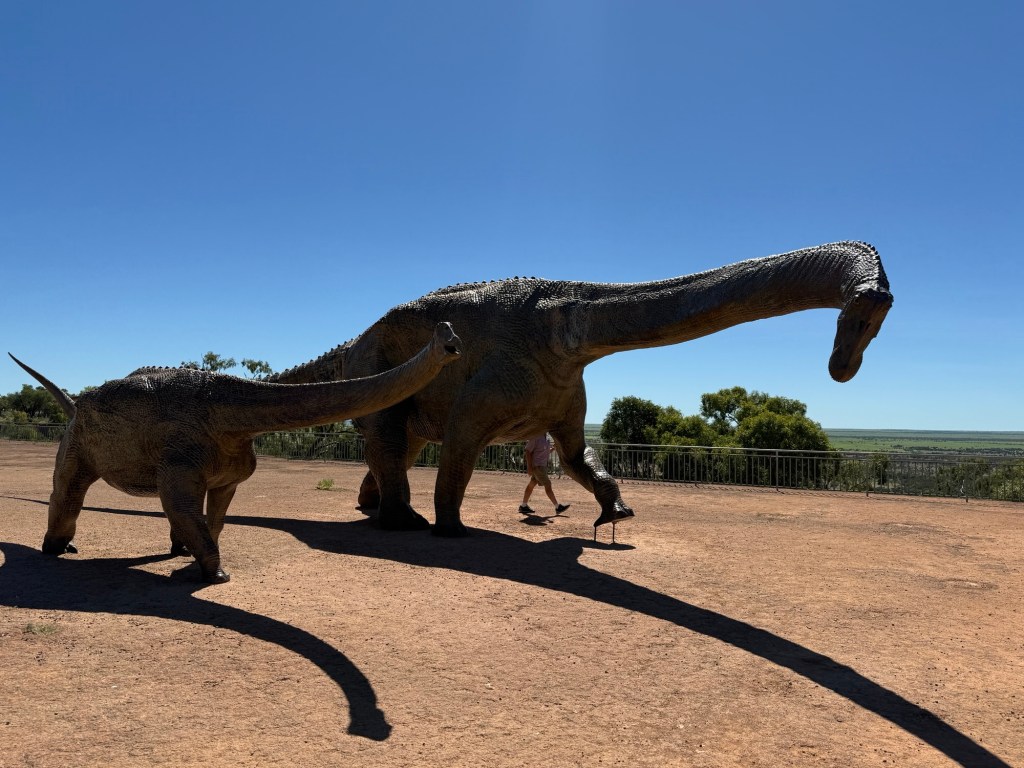
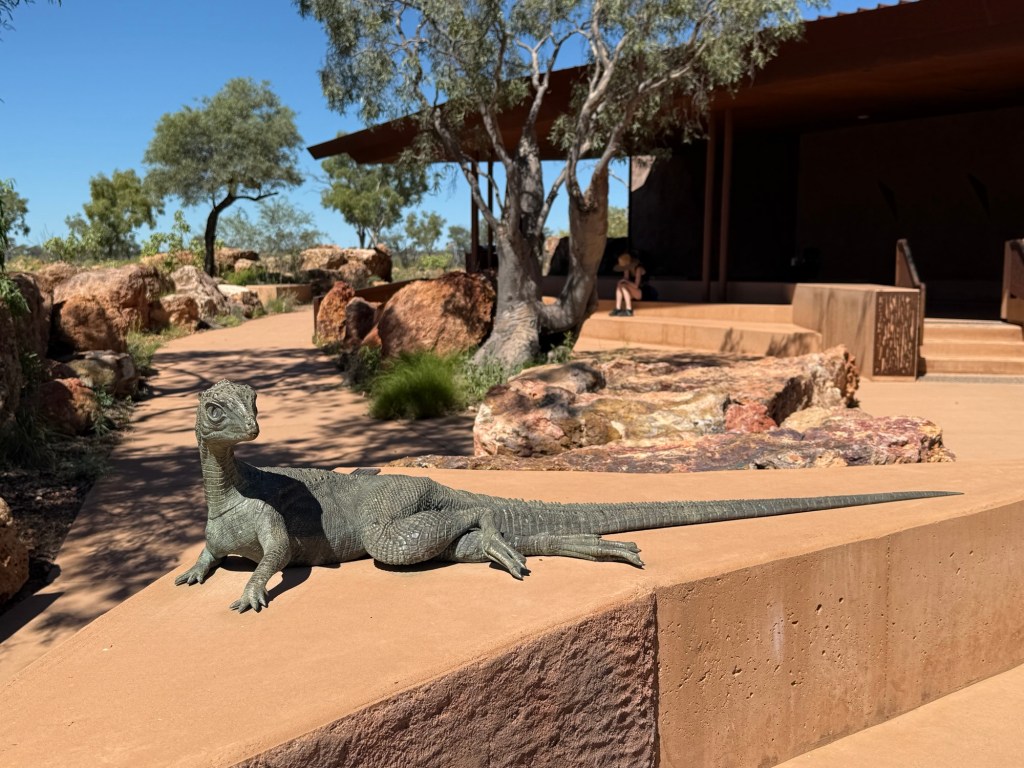
A dinosaur trackway all 52 metres of it is under one roof, a major resource effort. The story behind getting this display from its original creek bed location on a cattle property to the Museum is extraordinary. Great determination and of course some Government grant support helps.
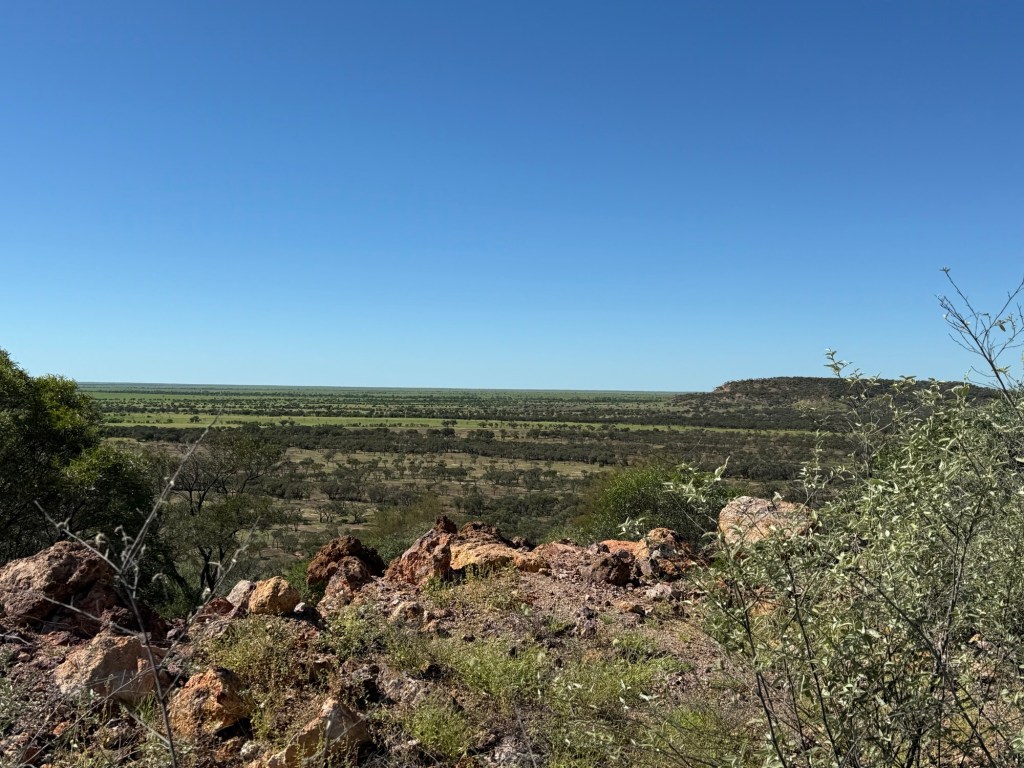
Dinosaur Canyon has a number of displays of the animals ‘out in the wild’, bronze statues of course. Truly impressive place to visit and tour around.
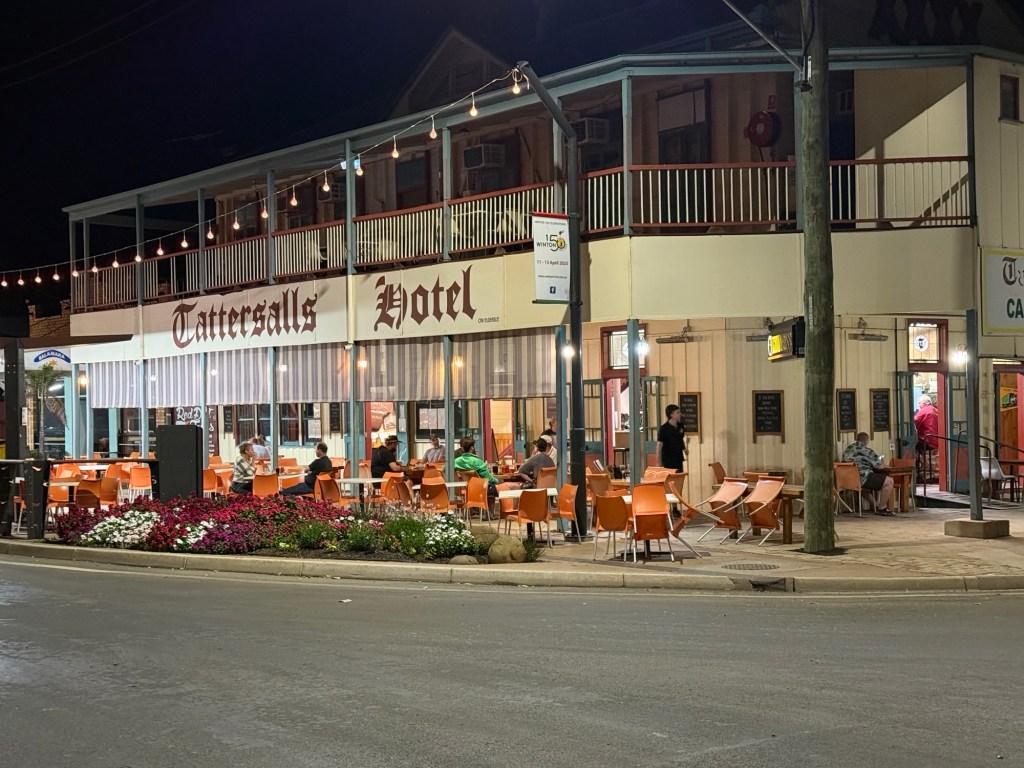
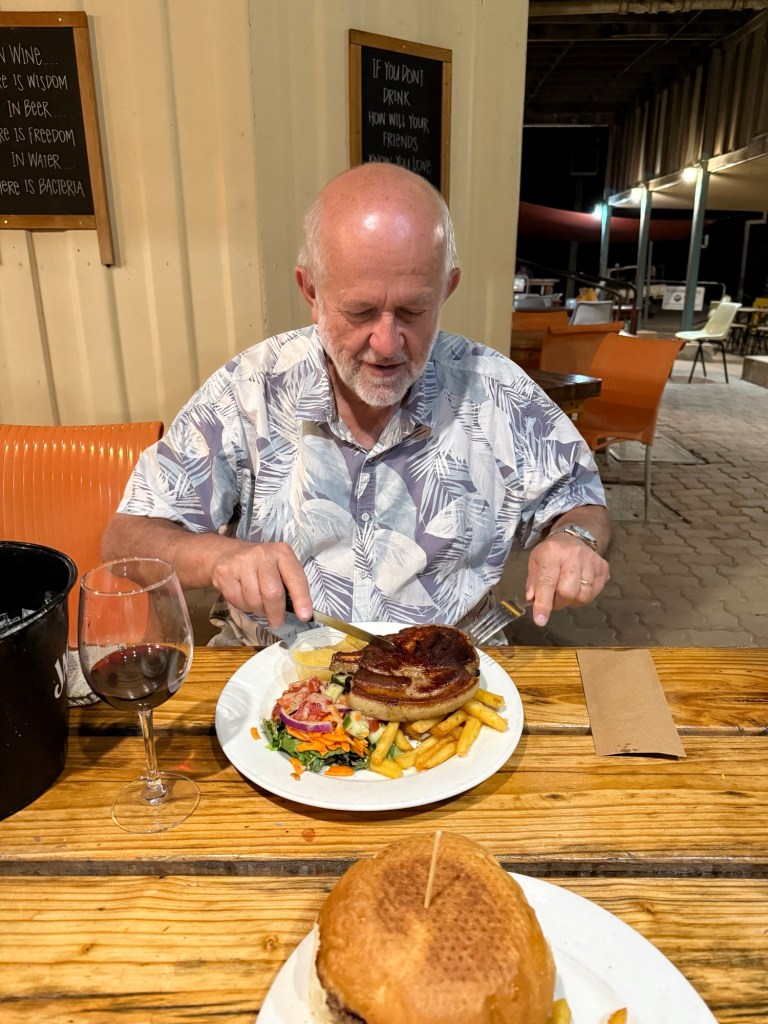
Back in town we enjoyed dinner at the Tatts Hotel, good feed.
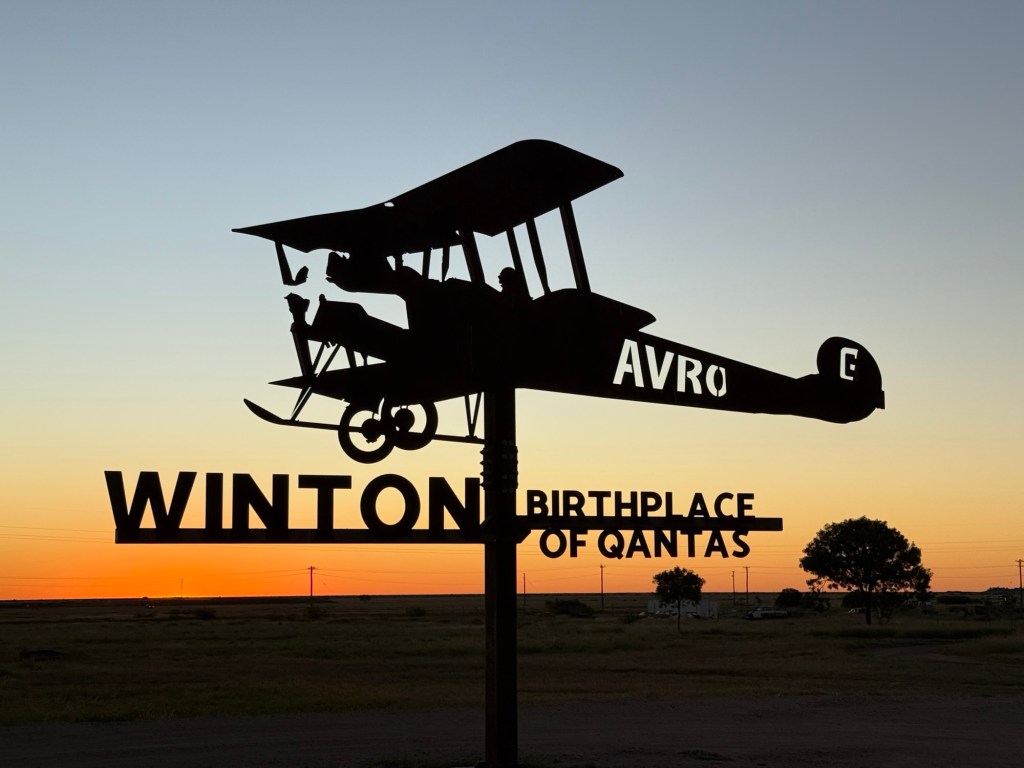
We next head for a free camp, a bit west of Cloncurry, hopefully will be there mid late afternoon for a rest!
Heading north west
We are on a trip to the north west of Western Australia. The Kimberleys. The Gibb River Rd beckons.
It is going to take a little while in the van, some three and a half months for the journey there and back home. We are first covering some well worn ground heading north west from Brisbane through Roma, Barcaldine, Longreach and Winton.
As with all our road trips there is an early playing of Willie Nelson’s ‘On the road again’. Homealone, is not a huge fan and it took till Dalby before it blasted out of the music box!
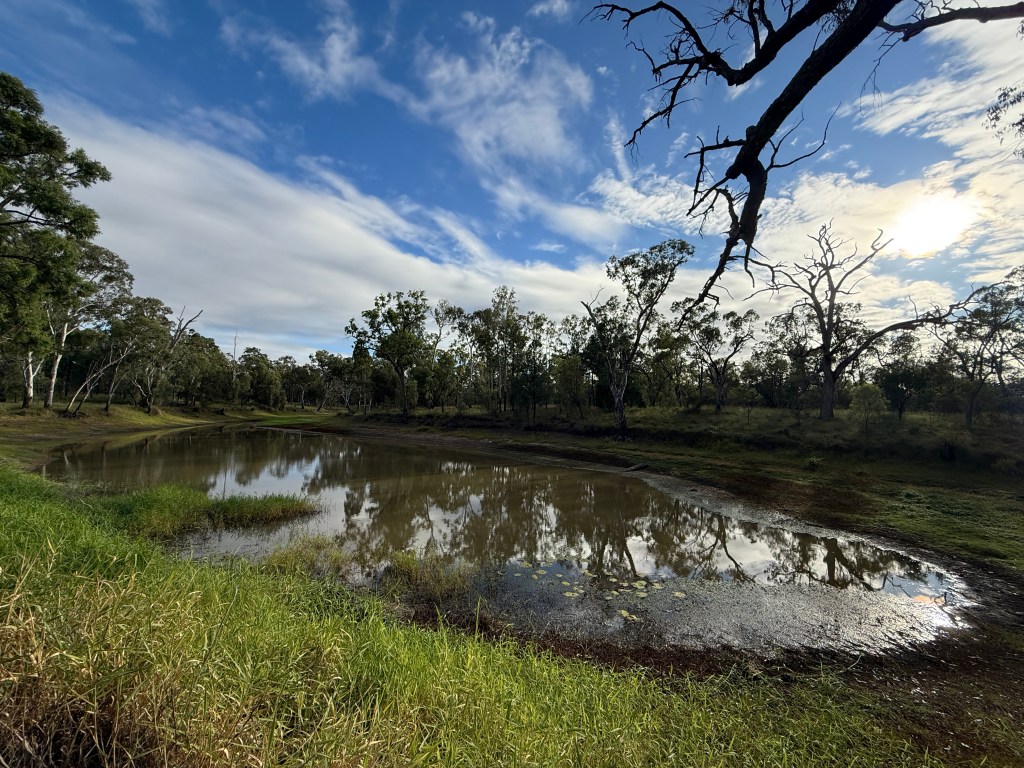
First stop after leaving home, some two hours after the planned time, was at Judds Lagoon, a free camp about 60 km from Roma. A nice little spot off the main drag, very quiet with only three others there.
Next morning was Anzac Day. Judds Lagoon is near Yuleba, its main claim to fame is as a staging post for Cobb & Co back in the 1800s. Not a lot happens in these parts these days. The locals today are very focussed on Anzac Day, everything’s (and thats not much) is shut. This presented our first little travelling drama. The need for a diesel top up at the local service station. We had 60km to go to get to Roma, but the range guidance on the speedo was 70km. Rather tight. Problem was the servo didn’t open till 2pm, Anzac Day activities! Allthego set off nursing the truck and van along the road to Roma. Thankfully, we made it there and topped up with 74.6 litres, capacity is 76 litres. 1.4 litres to spare, which accounts for the difference between 60km to Roma and 70 km range. Judgement!
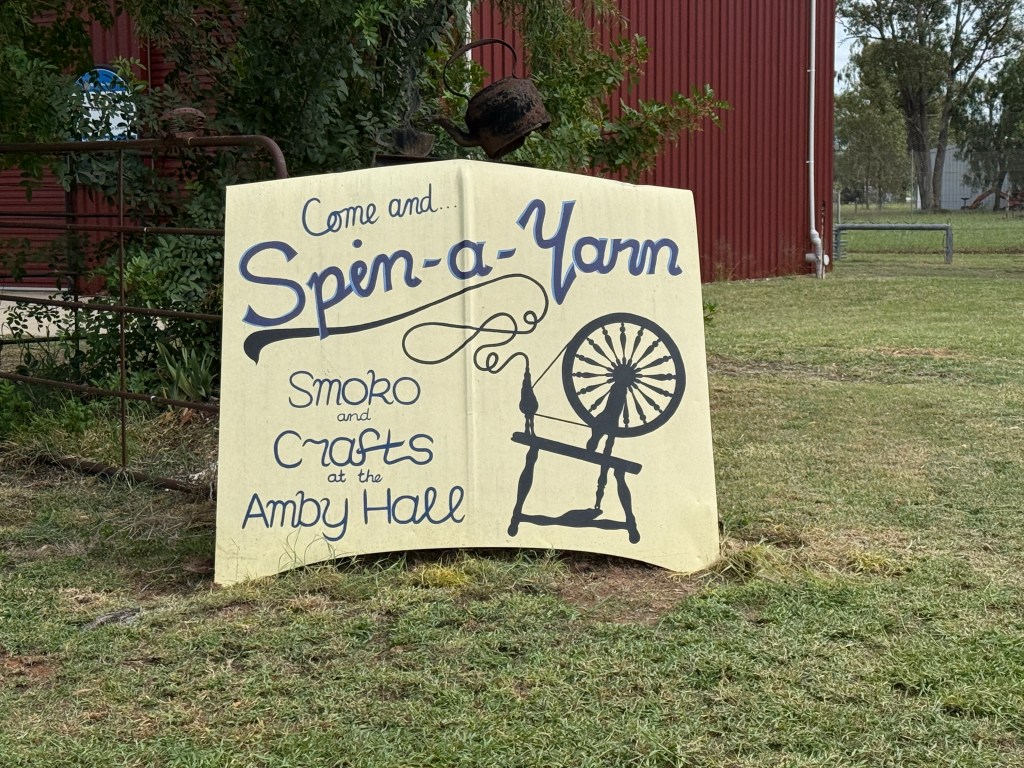
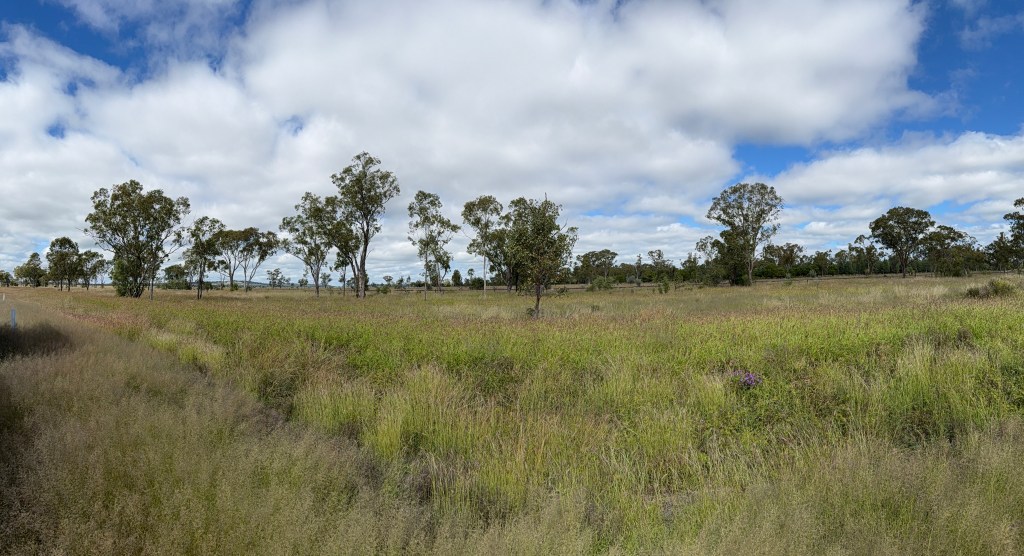
From Roma we made our way through Mitchell and Morven for a night stop over at the Augathella free camp, actually $10. Good facilities here and a number of vans were lined up along the river front. Augathella’s main attraction in the past has been its giant meat ant and a few murals.
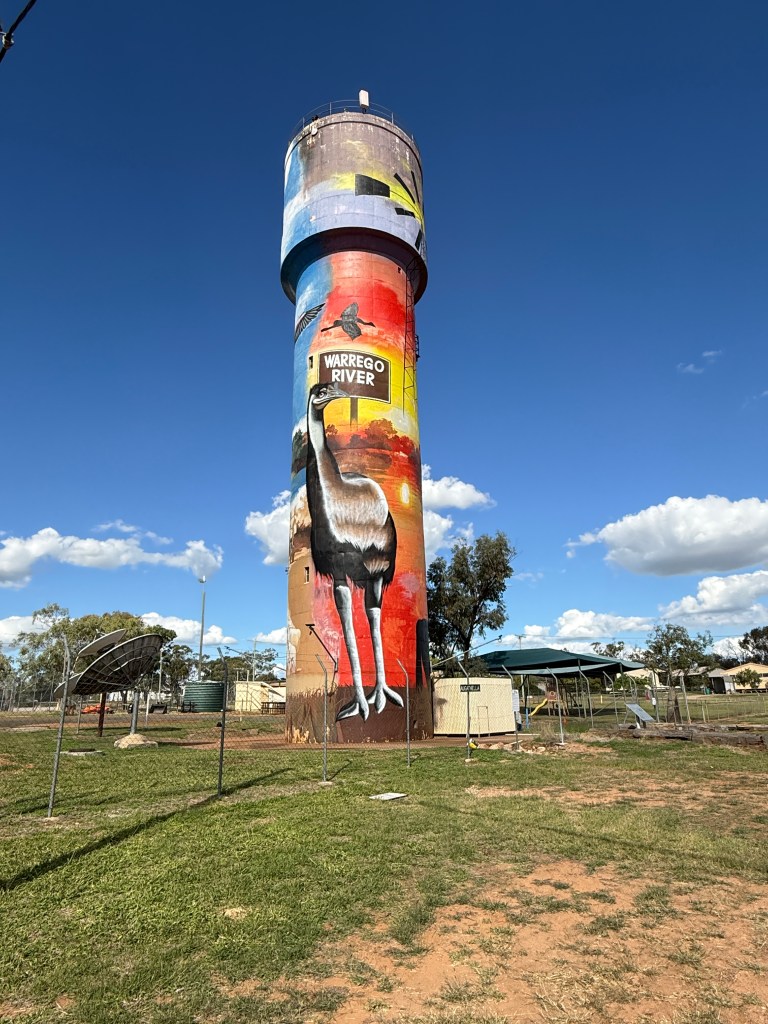
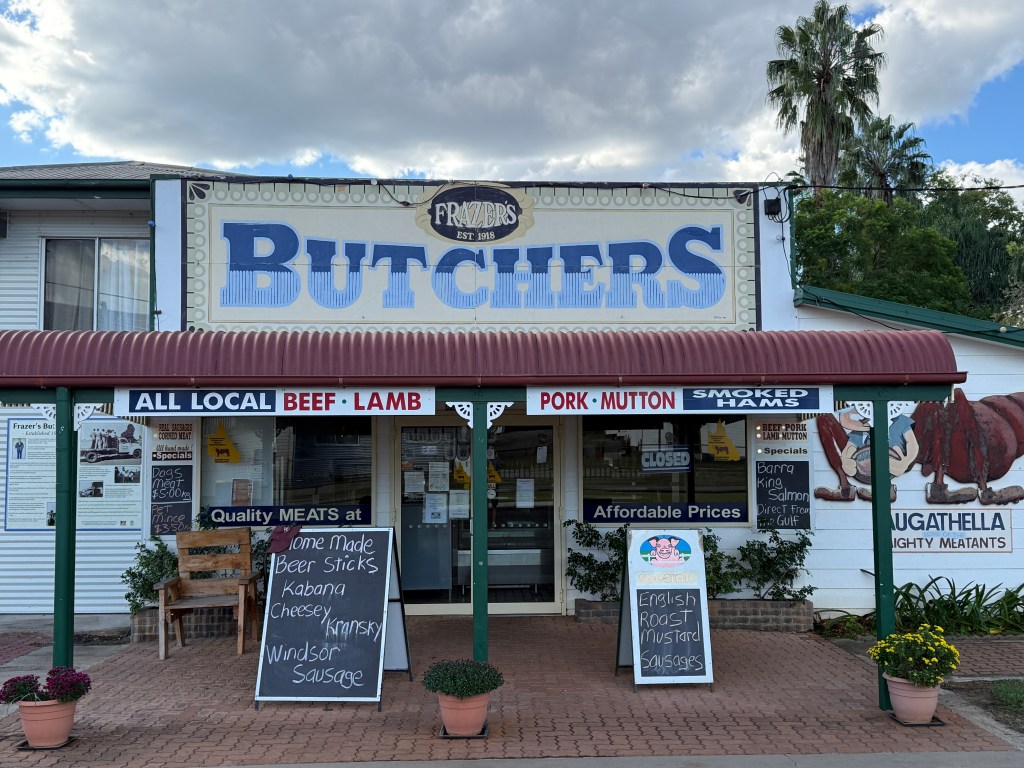
It now has a freshly painted water tower, quite impressive design. We also stocked up on some country killed beef at the old butcher shop. Been in the same family for five generations and is supplied by the family’s local property. The butcher is also the local killer and meat inspector so they have it all tied up nicely.

On the road again we headed for Barcaldine with a short stop at Tambo for morning tea followed by lunch the other side of Blackall.
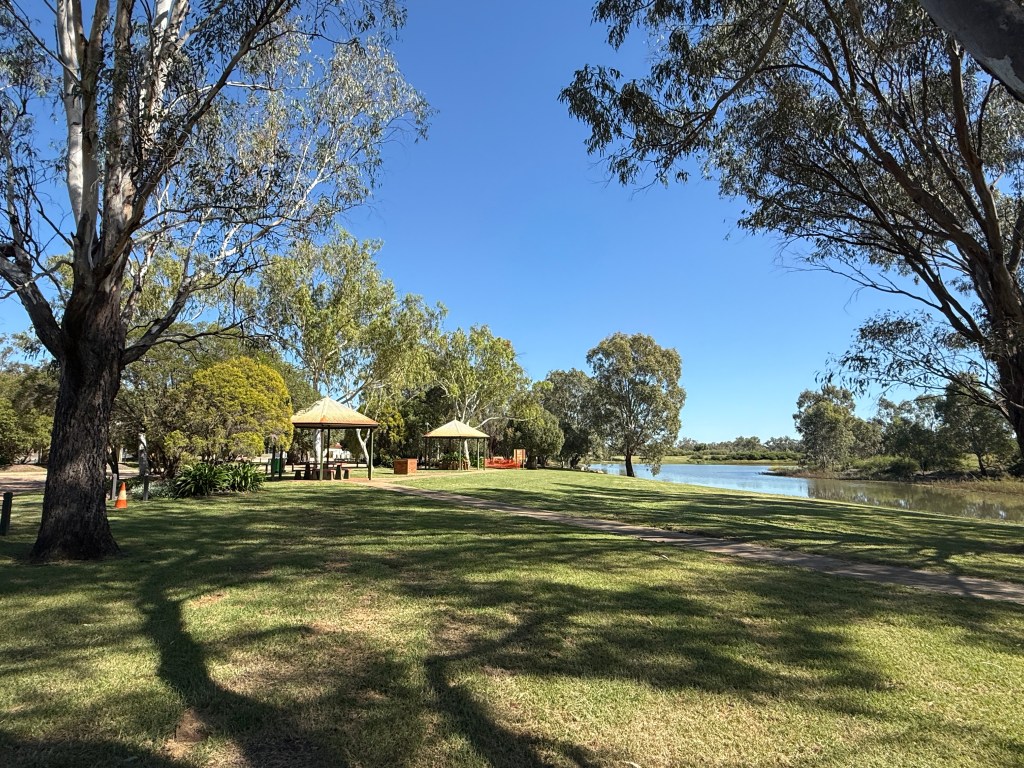
Grasslands are very green and the cattle are up to their thighs in it munching away. Should be a good winter season for the graziers.
Not much has changed in Barcaldine, one of the local motels has set up a small van park with seven grassy drive through powered sites. Only two of us in for the night. Seems to be new for this season, great spot and a block back from the main street.
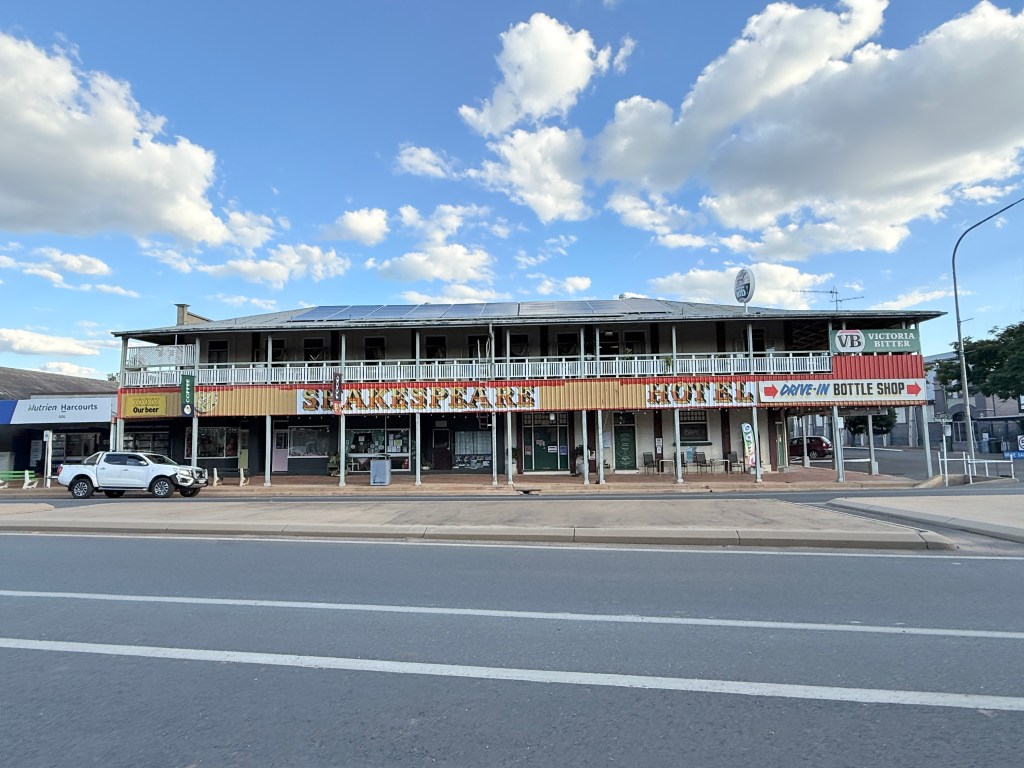
The old Shakespeare Hotel has been done up and reopened. We had dinner there celebrating the Bards recent 528th birthday. Bit empty, seemed to be only two of us there for the night. The owner told us times were tough. The locals don’t go out much any more, the football was on tonight as well. Very dependant on tourists and she was eagerly awaiting the winter travellers.

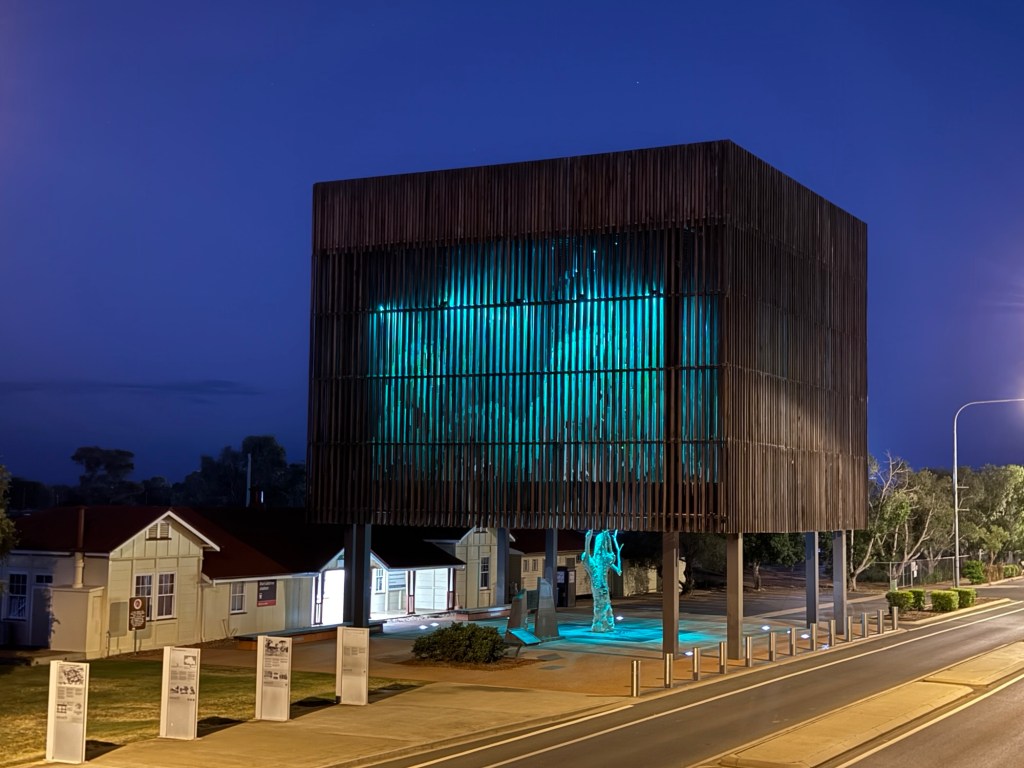
We had dinner on the upstairs balcony overlooking the Tree of Knowledge, the structure made from old timbers supplied by an old colleague some years back.
We are now setting off for Winton with a bright sunny blue sky. Must stop at the petrol station for a top up!
London
It is a very short one night stopover in London before heading home. We had lined up two things in the afternoon to keep us awake. We have a room in a small hotel not far from Waterloo Station and we caught the train there from Tilbury, including a couple of changes, taking about hour and half and got into London about 11am.
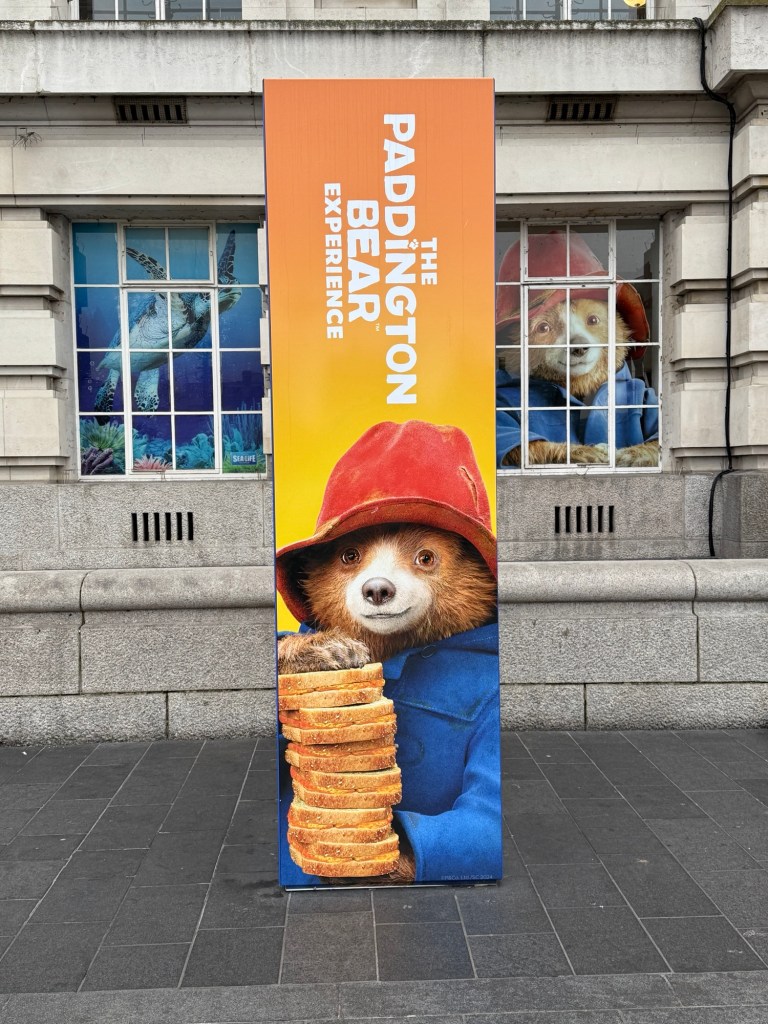
First was a ticket to the Paddington Bear experience, near the London Eye. We have come across Paddington before, a card board cut out of him along Portobello Road a few years ago.
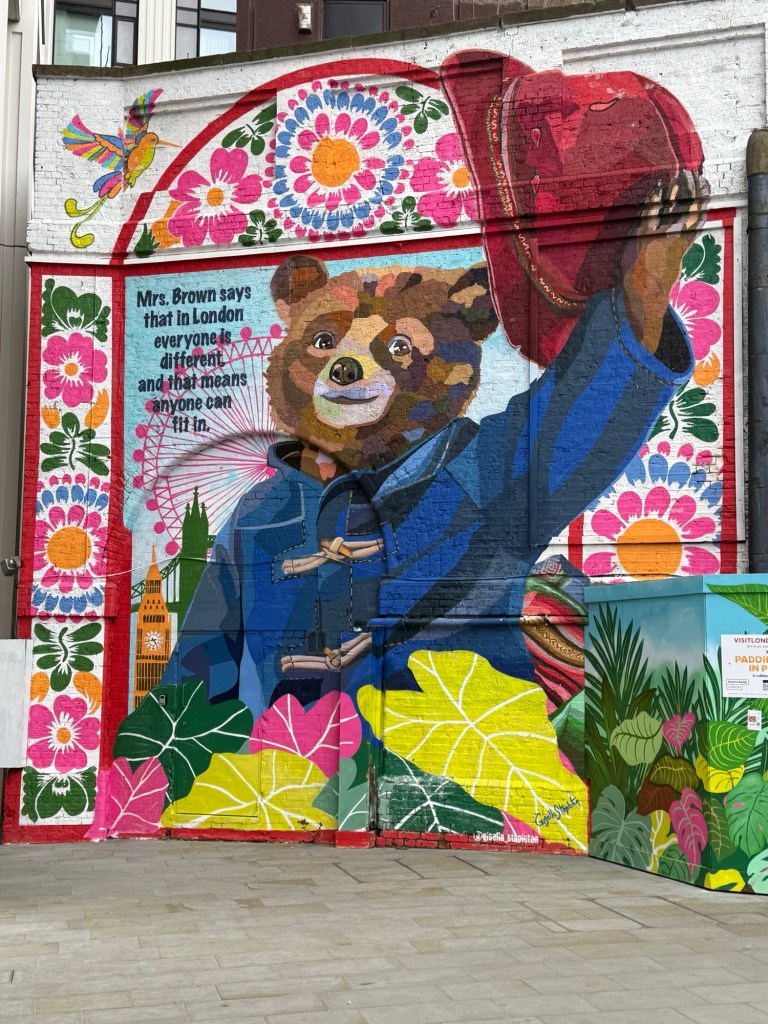
The other time a great big statue of him in Lima, Peru from where his family originates. Peru is also the source of the oranges for the special marmalade jam sandwiches that he likes do much.
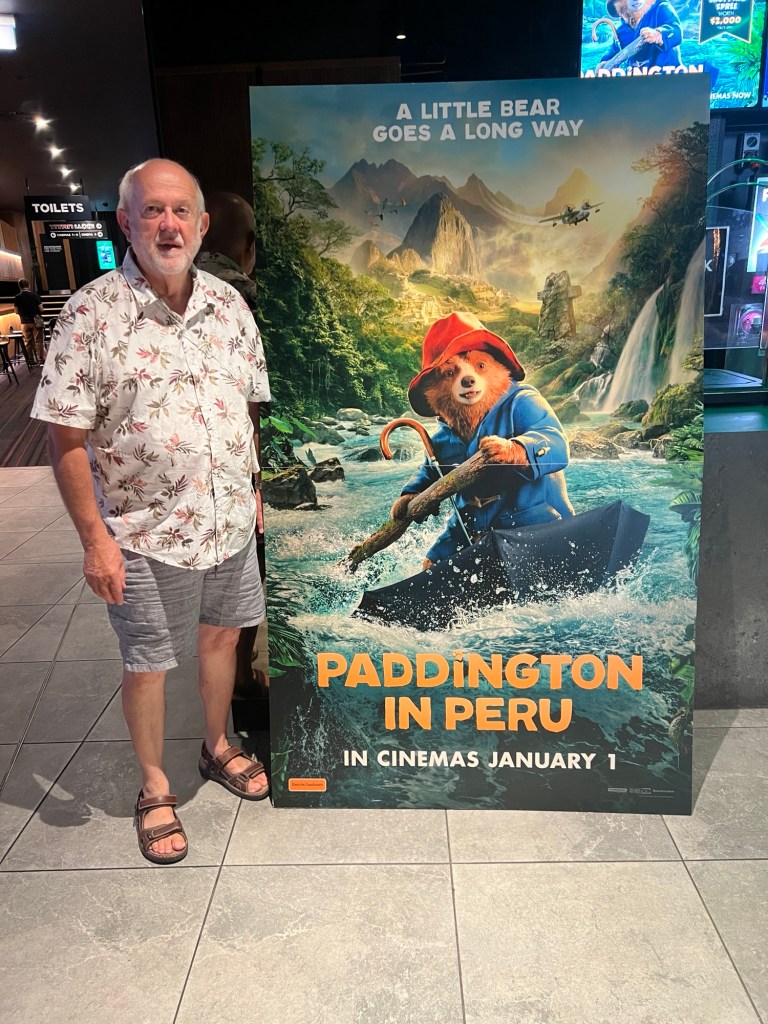
And of course we have seen the Paddington in Peru movie in Brisbane, who hasn’t?
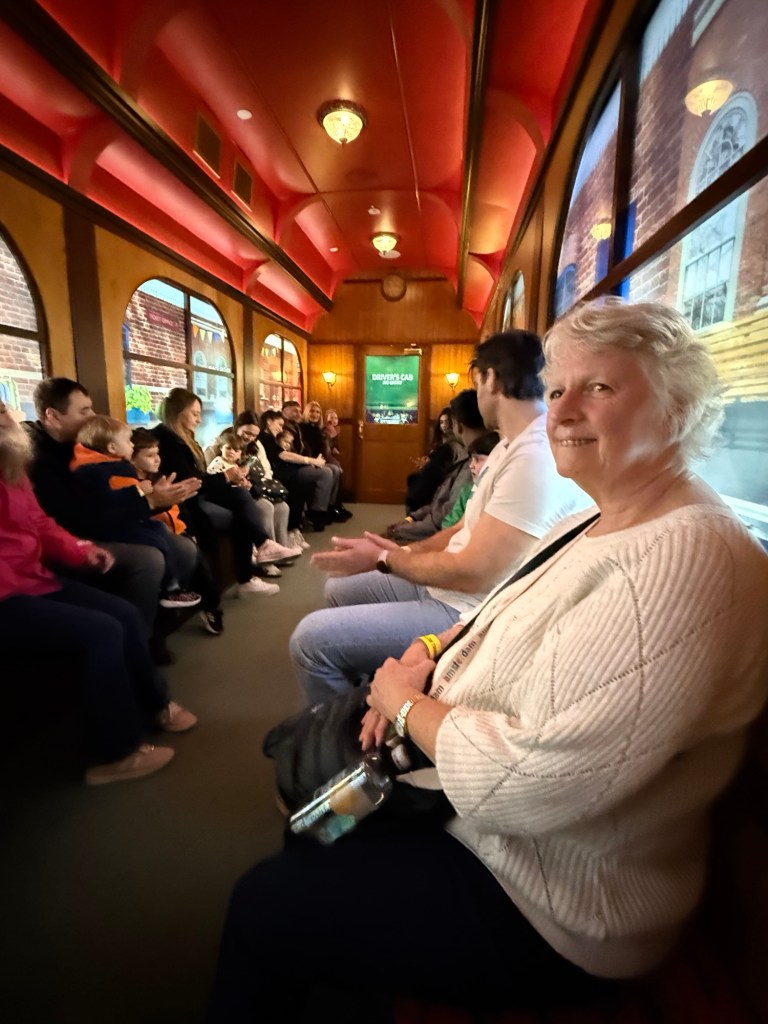
This ‘experience’ though was very much for ‘kids’ and PB fans. One hops aboard the train and then goes on an entertaining journey, narrated by some actors, through the PB world. Takes about an hour and half. If you have done it once it is not necessary to do it twice.
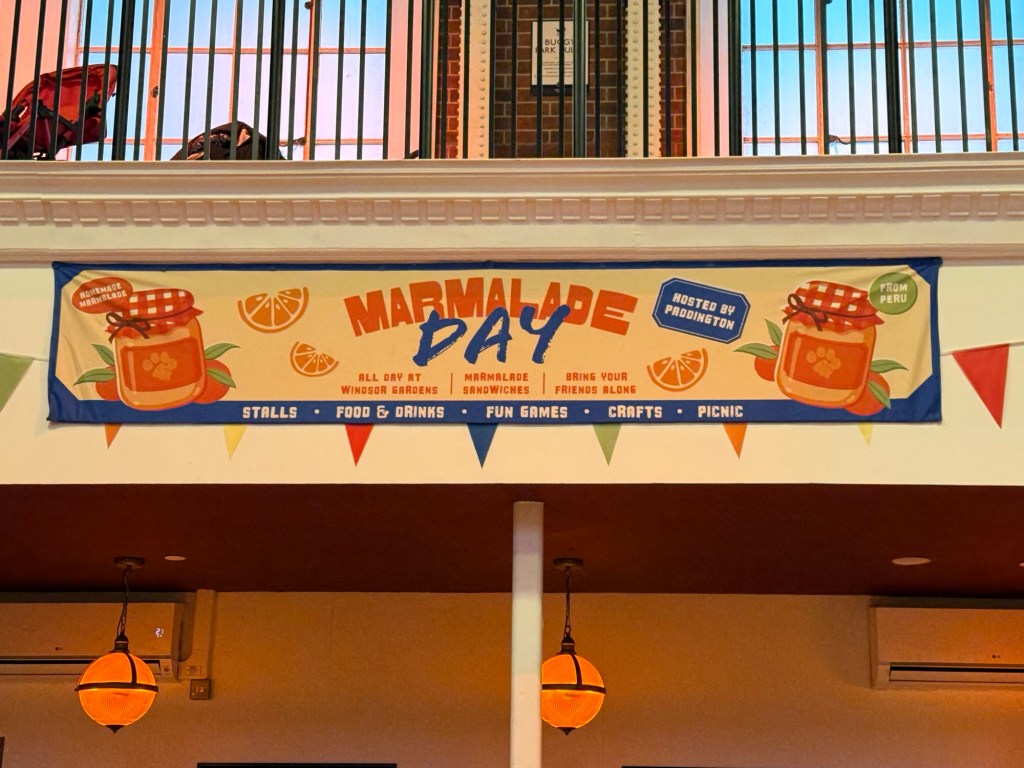
Would have been nice to have had a marmalade sandwich at the end tossed in with the admission price!
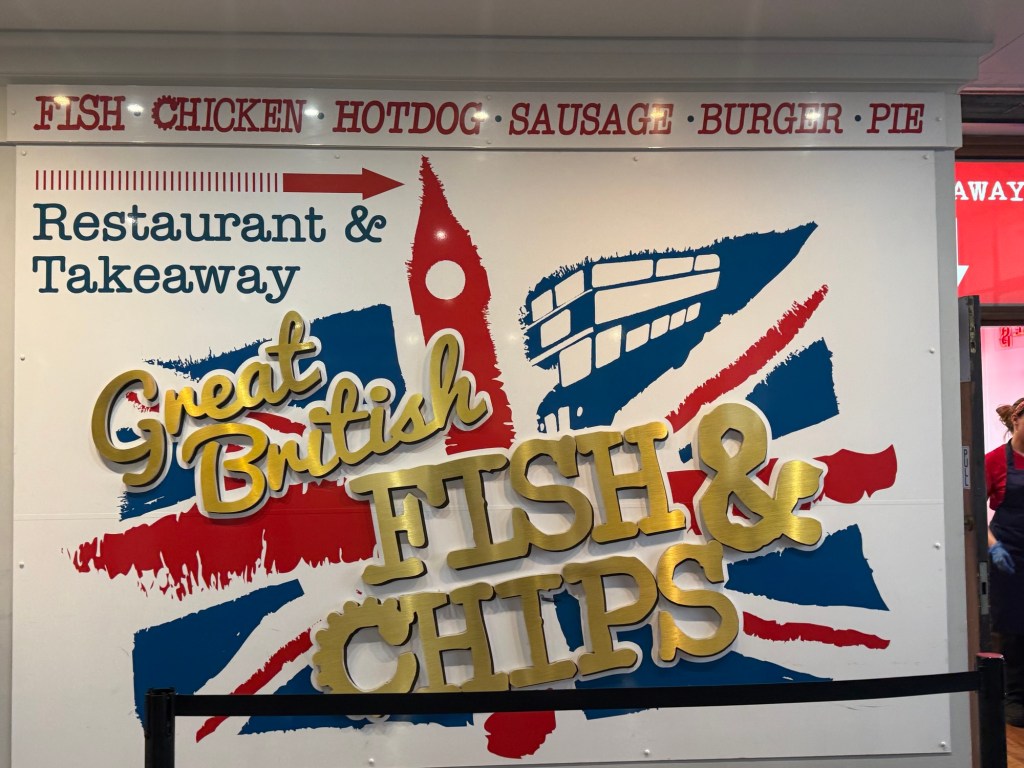
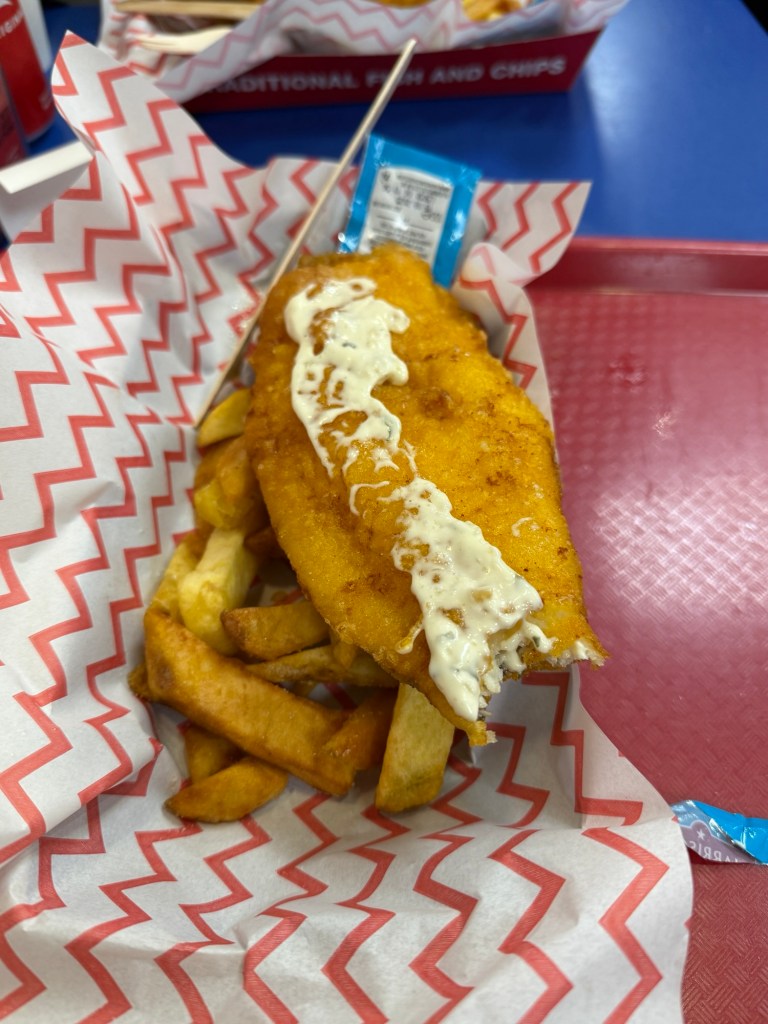
Just had to have something to eat for a late lunch after the PB experience, so we tried some F & C. These were rather good even if they came from a fast food shop where everything was deep fried and self serve. Seemed all of London was there cutting loose on the tantalising tit bits.
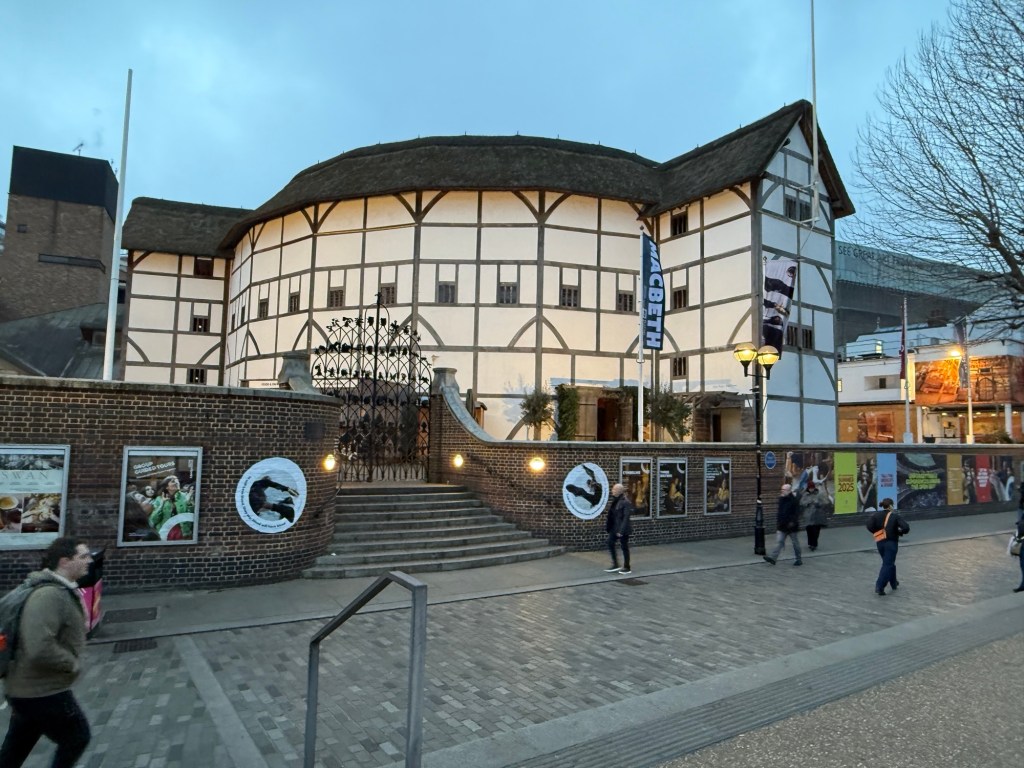
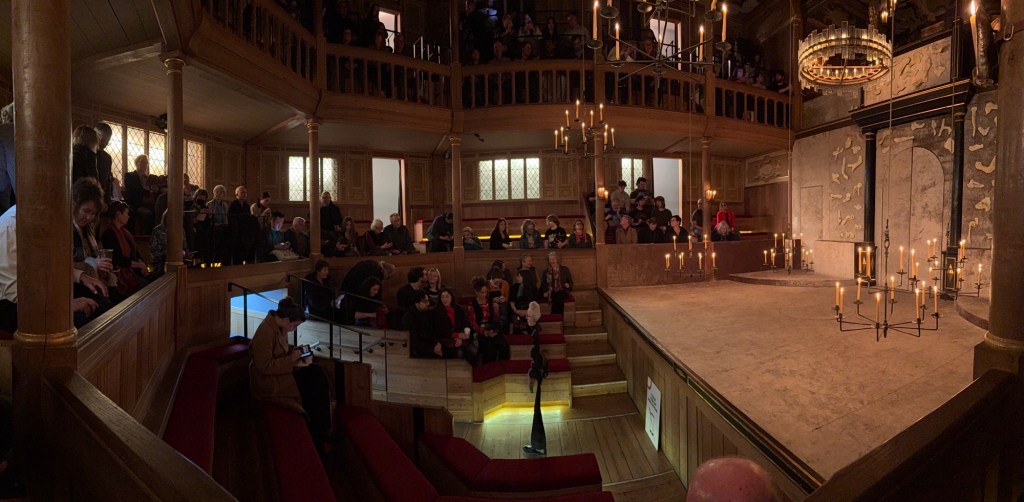
Bit of a slow trudge back to the hotel for a feet up before going to Shakespears Globe for a 6.30 presentation of the little presented Cymbeline. This was rather fun in the small Shakespearean era theatre recreation. The actors were all into it, with side comments to the audience and among themselves. Must read the play now!
So this brings to a close our trip to Norway and a few side locations. We will soon board the Emirates flight to Dubai and then Brisbane. Until next time…..
Keukenhof Gardens
We have had an afternoon stopover at Ijmuiden, the port for Amsterdam. I think the stop here has something to do with getting the arrival time into London right after the three sea days coming down the Norwegian coast from Tromso, well over 1200 km. We are due at Tilbury Docks about 6 am to disembark.
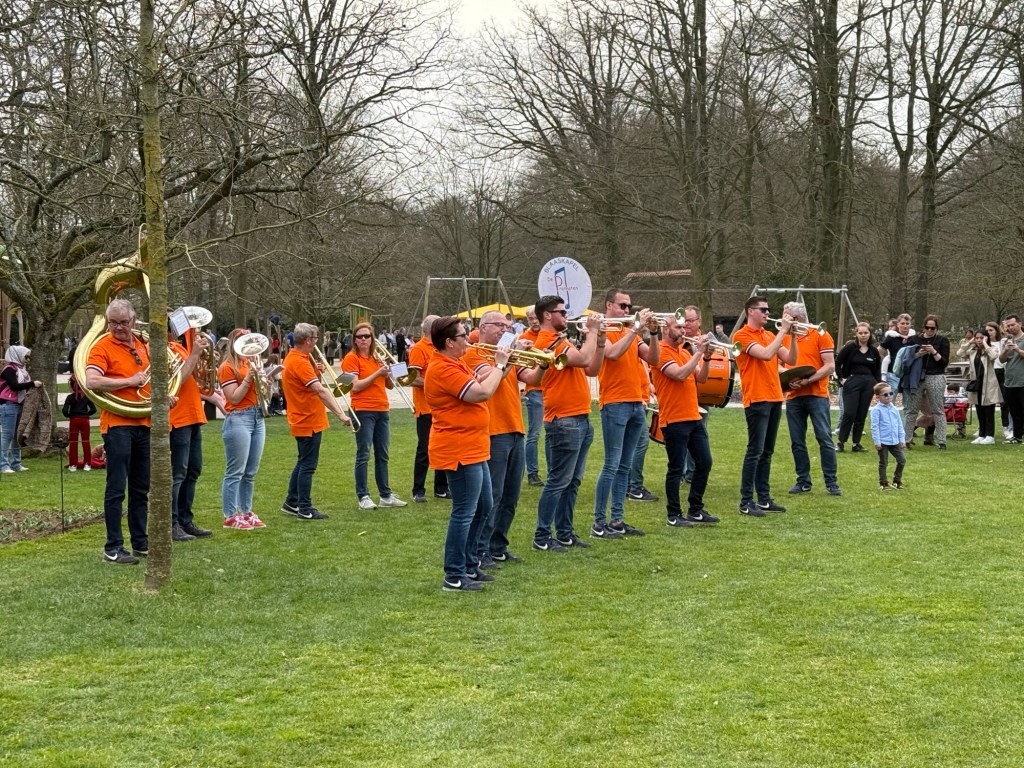
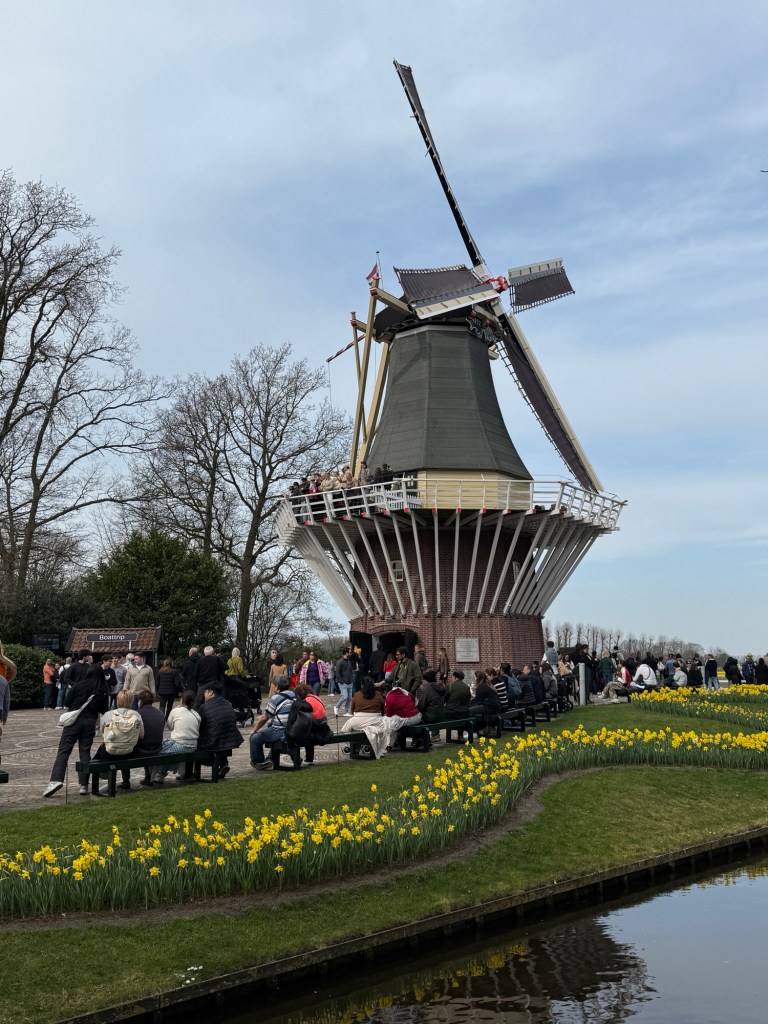
Although, it is the very start of Spring we took the option of doing an excursion to the Keukenhof Gardens, about an hours bus trip from the port. We were in Amsterdam a few years ago, but it was in Autumn and the Gardens were not open.
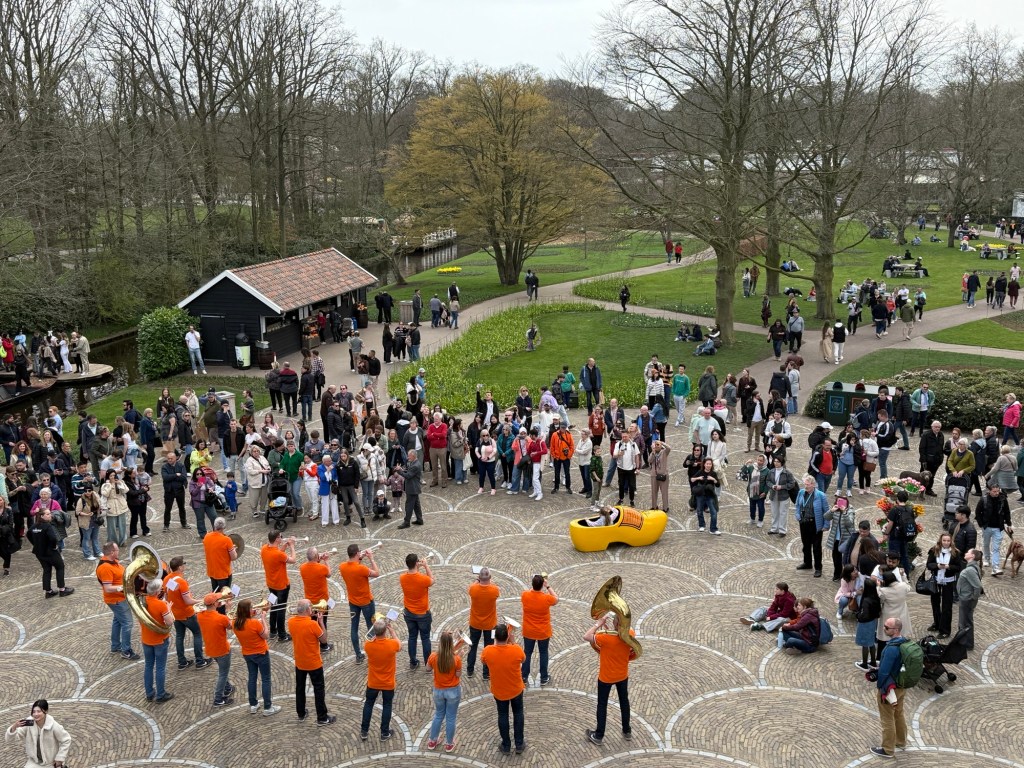
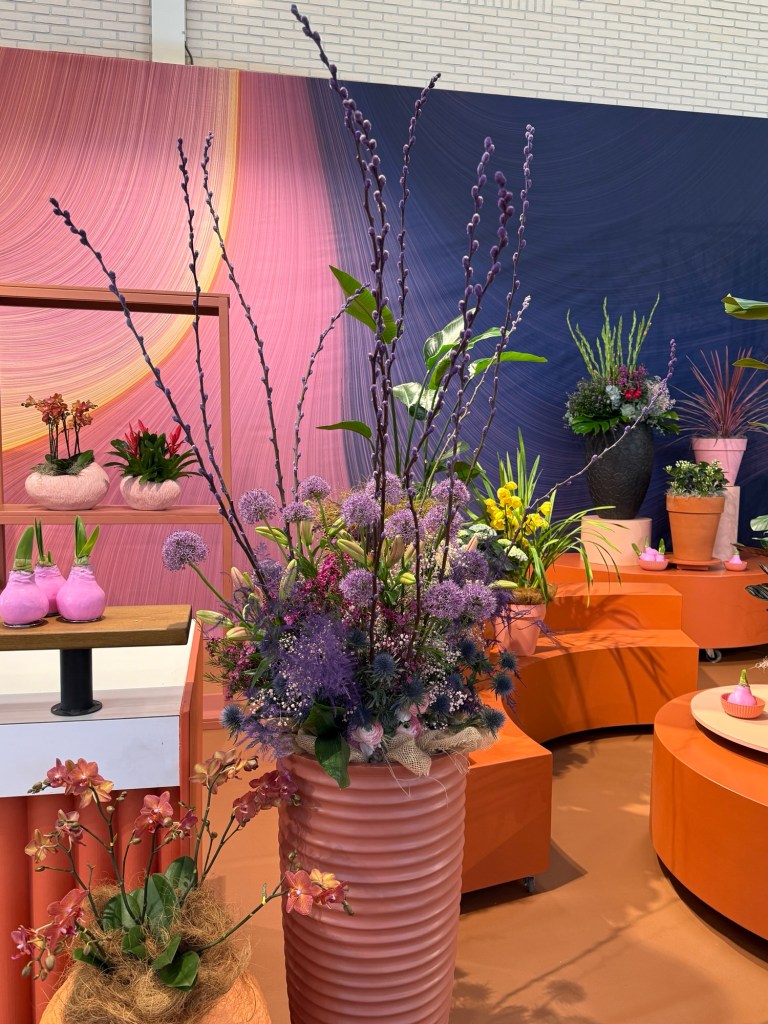
The Gardens showcase the Netherlands love affair with the tulip. There were numerous indoor displays to appreciate.
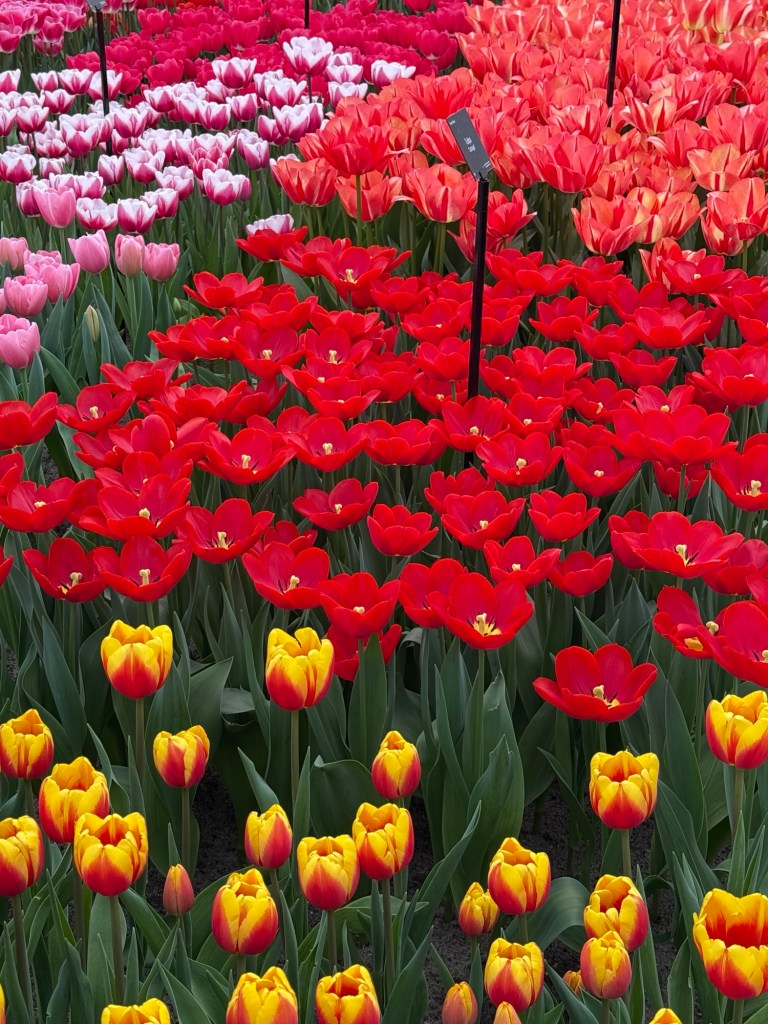
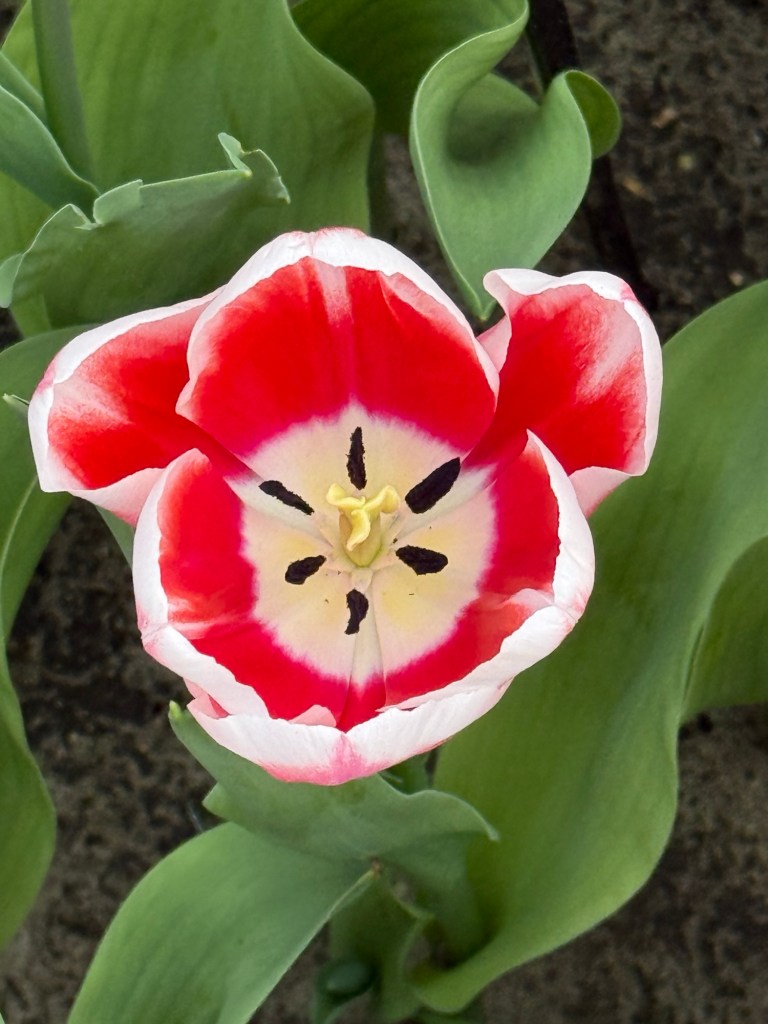
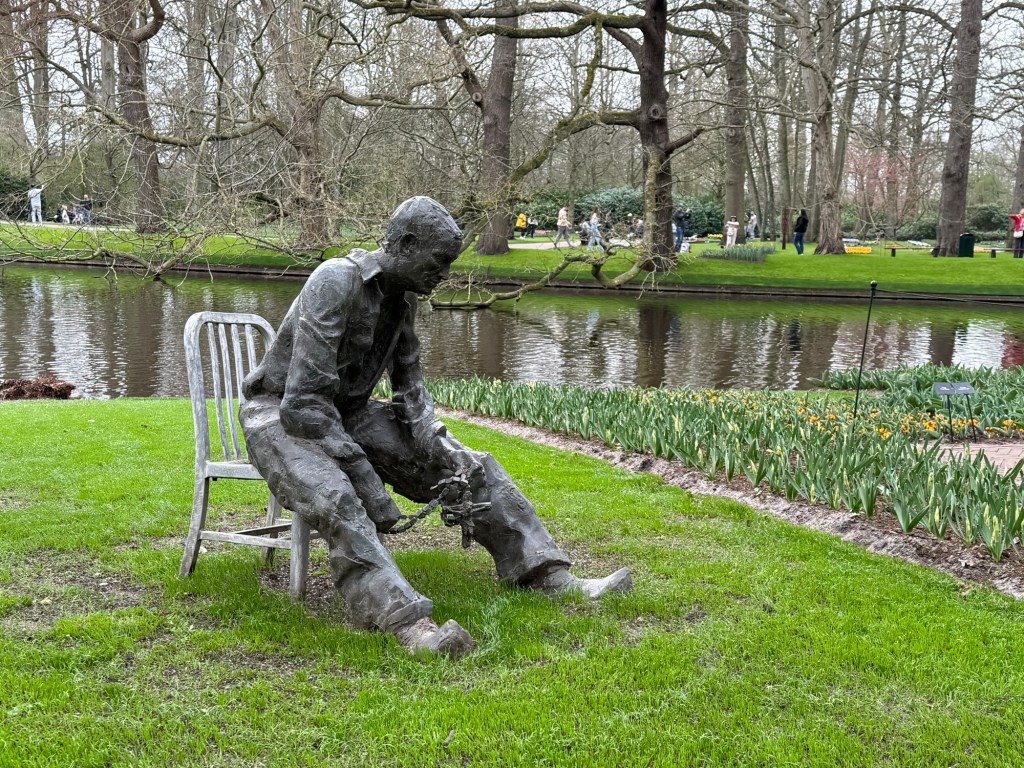
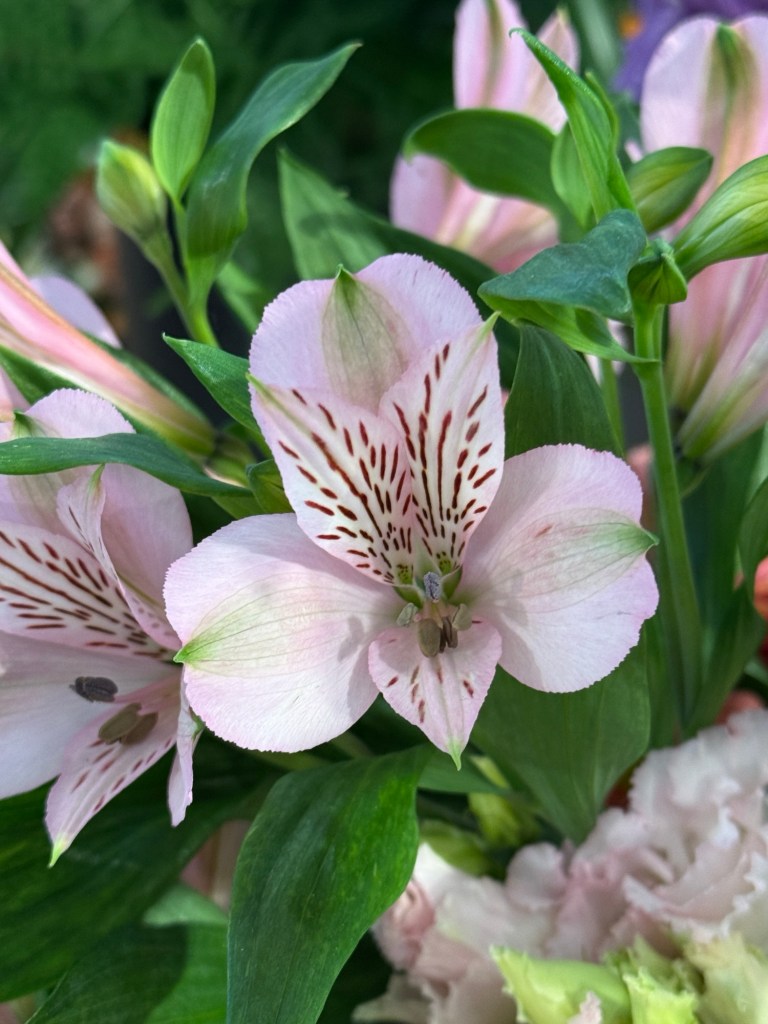
The grounds were just starting to bloom and many of the beds were just about to burst into colourful displays. The weather was kind, some sun and pale blue sky at times. At least the snow and sleet had gone!
The bus got us back to the ship in time for the sail away across the English Channel to London.
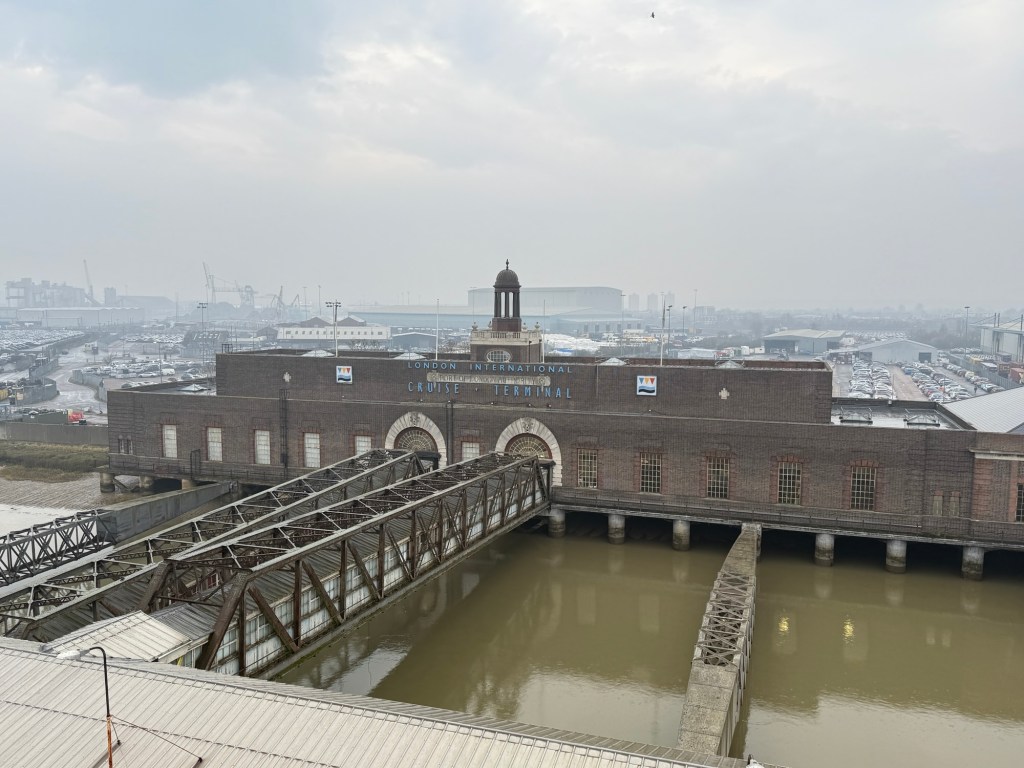
We are disembarking at Tilbury Docks, up the Thames River and about an hour training into the City.
Tromso
Returning from Paeskatun the Viking Vela set off from Alta at midnight thereabouts for Tromso. We collapsed into bed around 1am after a nice warm shower, followed by a couple of sandwiches and pastries left for us in our room by a steward (much appreciated).
It was going to take the night to sail to Tromso through the Inland Passage between the two cities. Tromso has about 70,000 people and regards itself as the big brother of Alta.
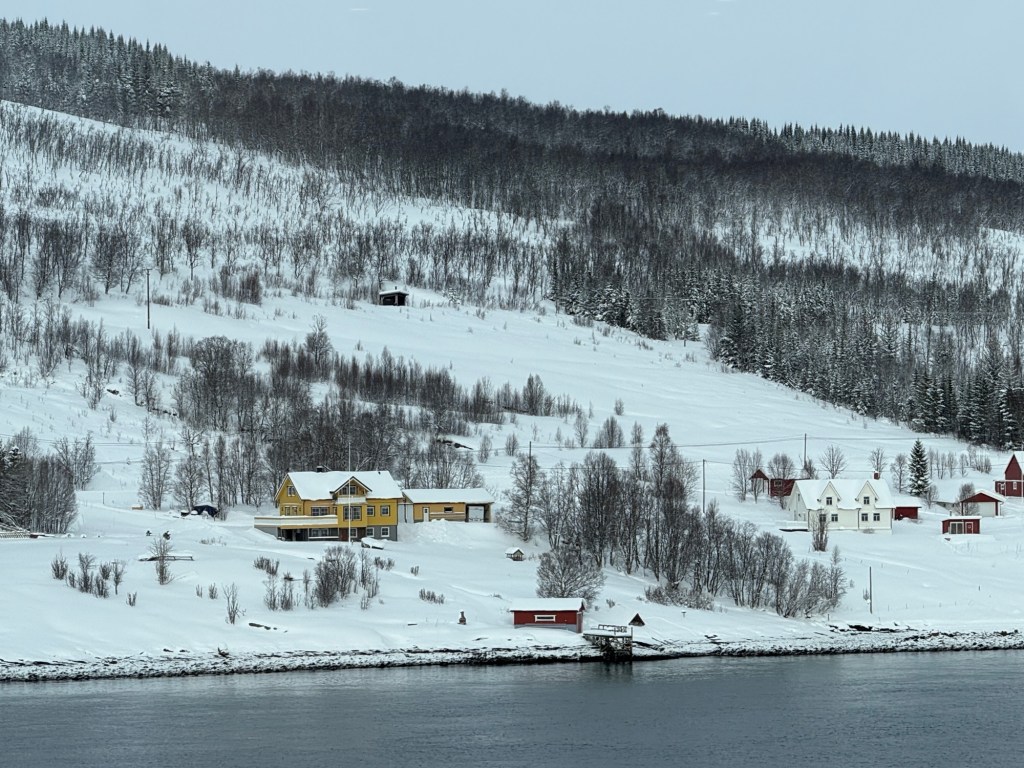
It was about this time though that the weather gods decided to influence things and we arrived in Tromso much later than planned at around 12.30pm. The morning excursions were called off, fortunately our 2pm town tour was ok. The weather was sort of terrible, if you like snow and sleet then it was great!
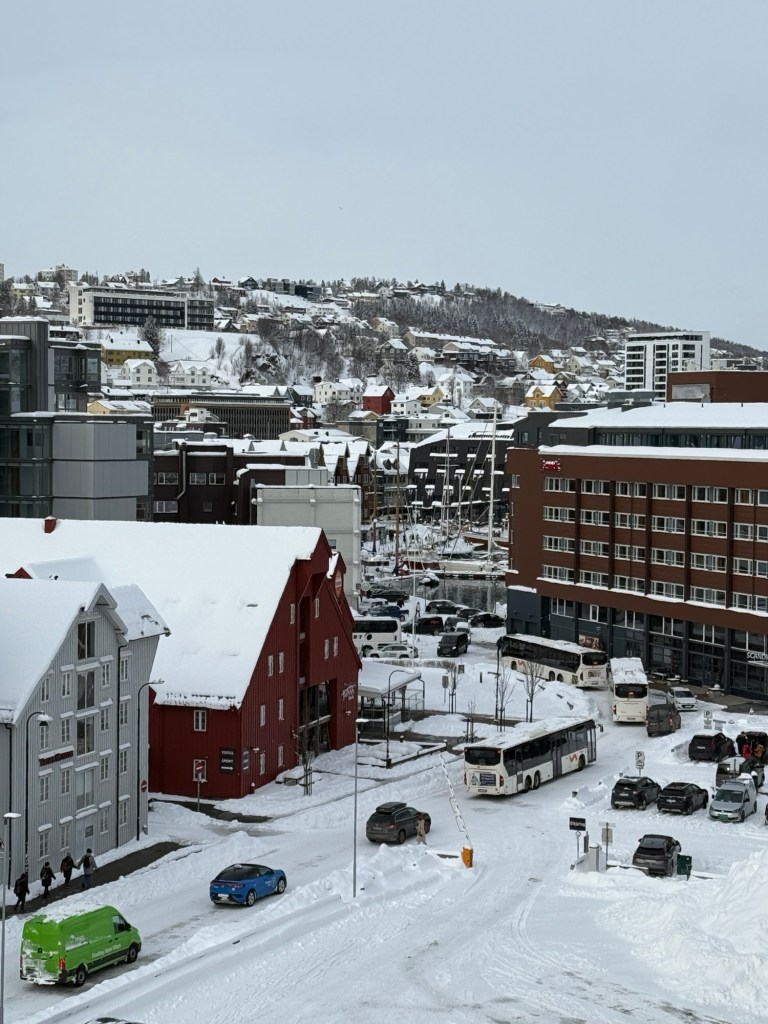
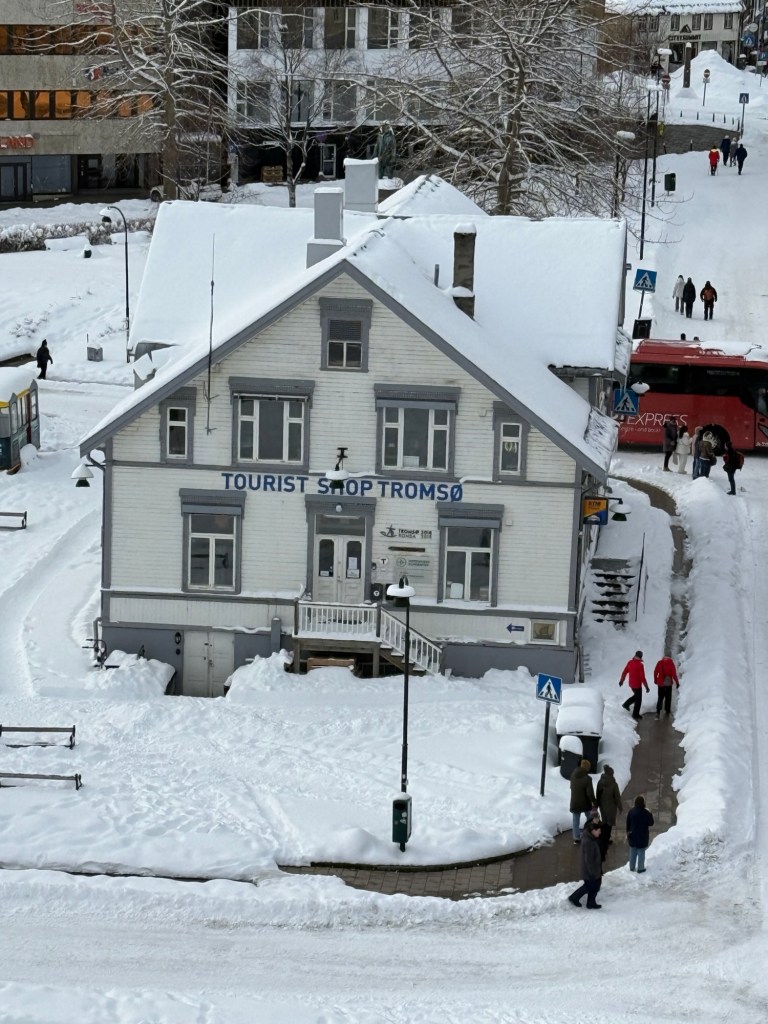
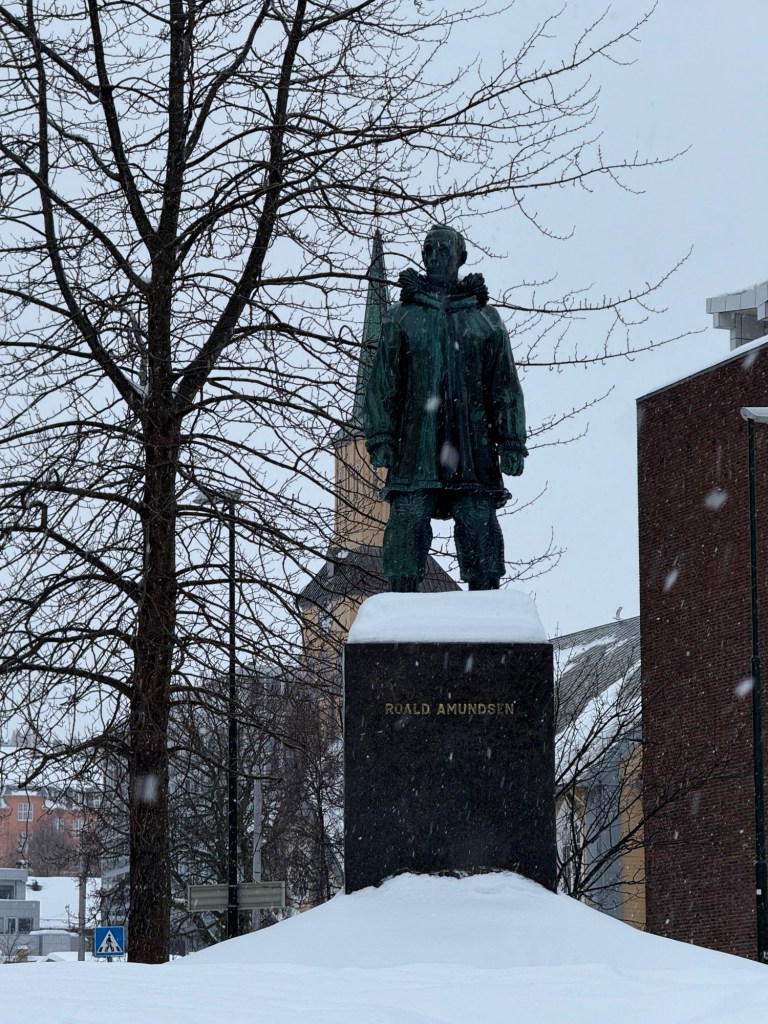
Tromso is on an island and the bus took us around the town and some of the highlights buildings wise. A statue of Amundsen, a favourite of the people here, looks over a snow covered park.
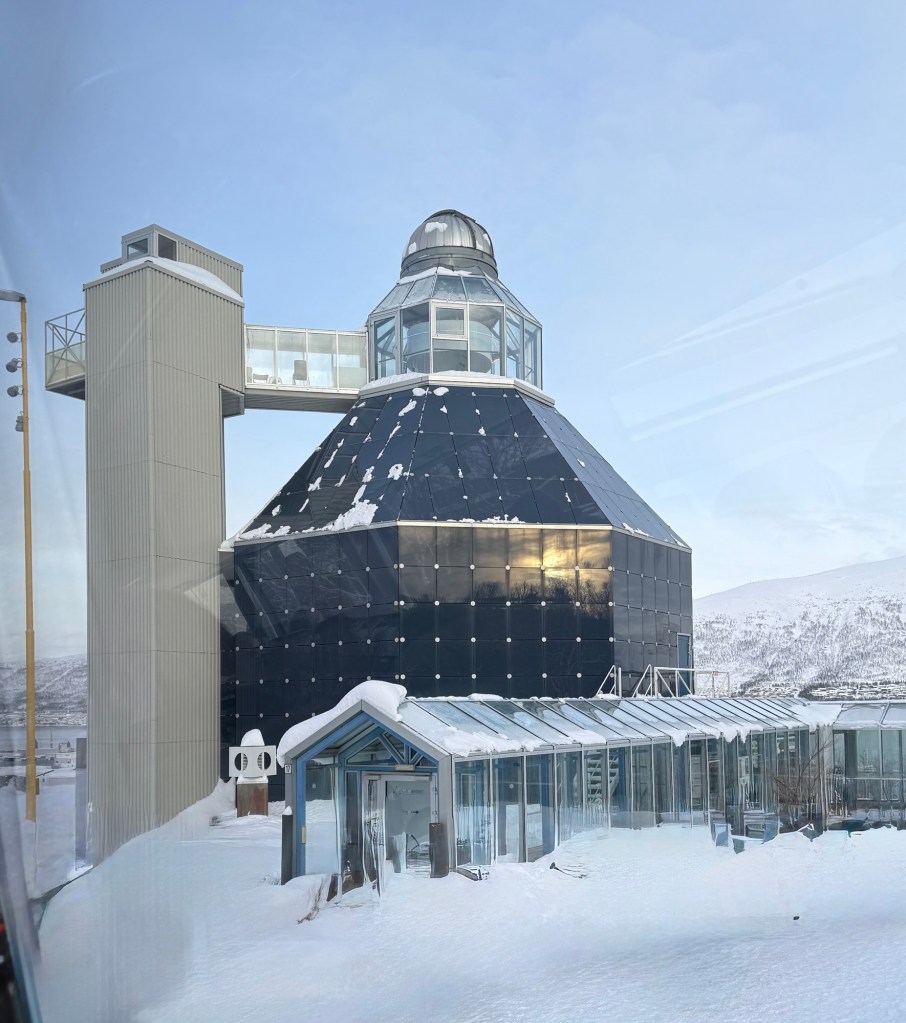
Our first major stop was the local University’s planetarium where the by now obligatory Northern Lights presentation takes place. This one was pretty good with the tremendous videos played across the high domed ceiling. It is unlikely that we will see the real thing given the weather conditions forecast. But that is the luck of the draw in these parts!
Moving on from here the bus entered a tunnel under the fjord and popped up on the mainland. Tromso is spreading out! On this side is the Arctic Cathedral, a modern triangular construction that overlooks the fjord. A bit of blue sky!
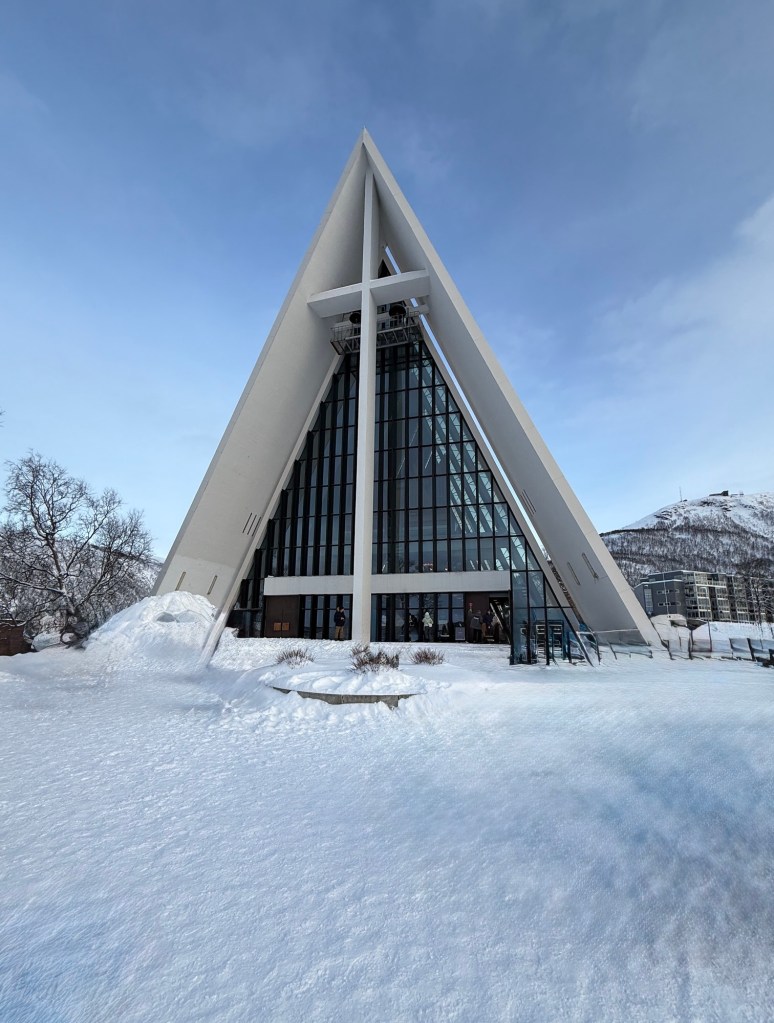
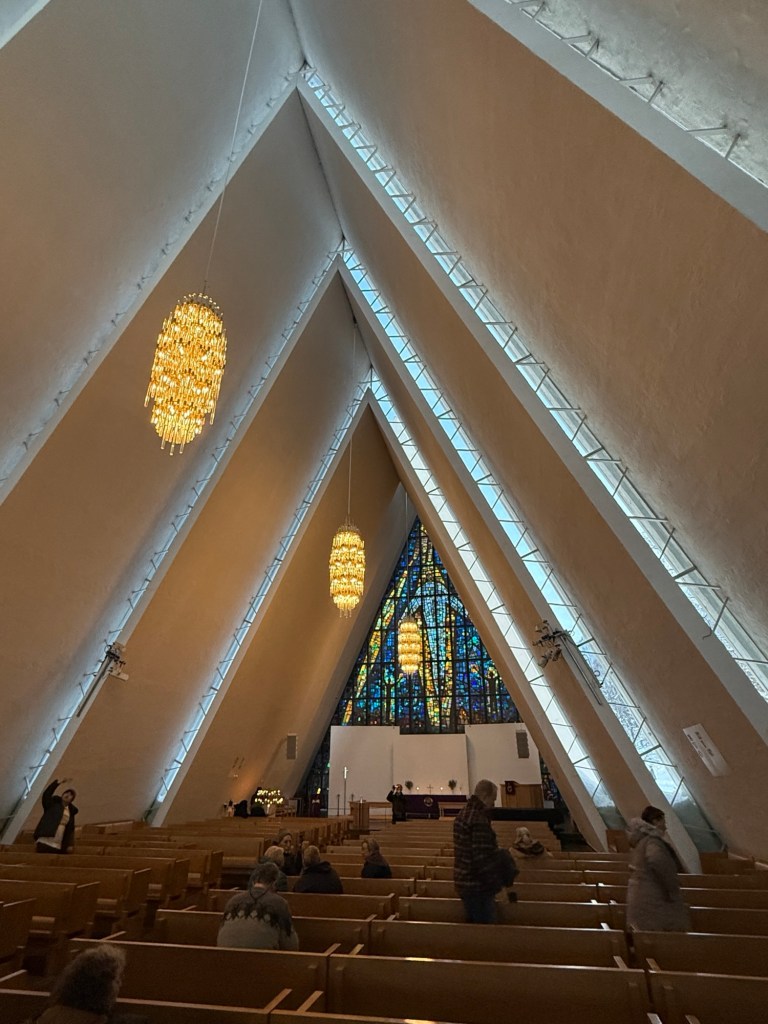
It has a spectacular stained glass window. It was added after the initial construction of the Cathedral to help disperse sunlight spilling into the Cathedral that unintentionally silhouetted the priest, who couldn’t tell whether the congregation were asleep or not.
Back on board the bus we returned to the ship. Here we learned that the itinerary was to change and we would be lurking in Tromso for another night and consequentially having to miss the planned stop at Narvik. This was all in the cause of getting a head start on incoming nasty weather from the north sea.
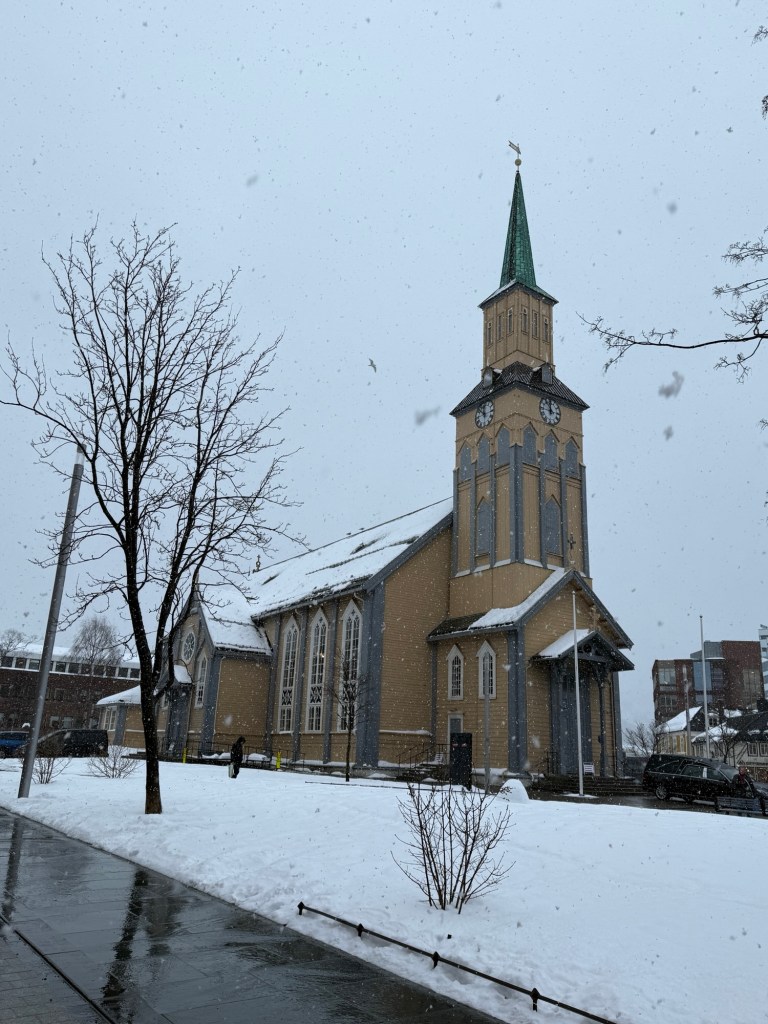
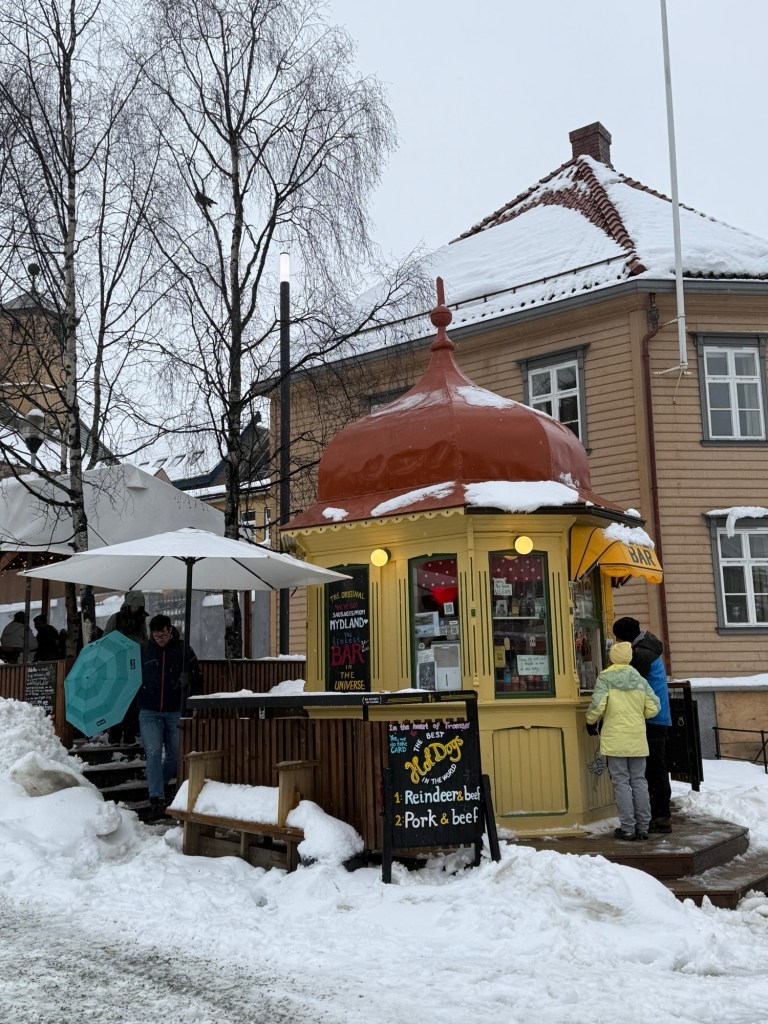
Next morning the weather was no better and we went out for a short stroll around town. Many of the roads and footpaths are heated and are free from snow, plenty of slush around though to get into footwear. Heaped up are small icy in parts ‘snow drifts’ one has to navigate around. Many people wear slip on/off spikes to avoid tumbles. There are numerous arctic memorabilia joints, all with very similar products and prices.
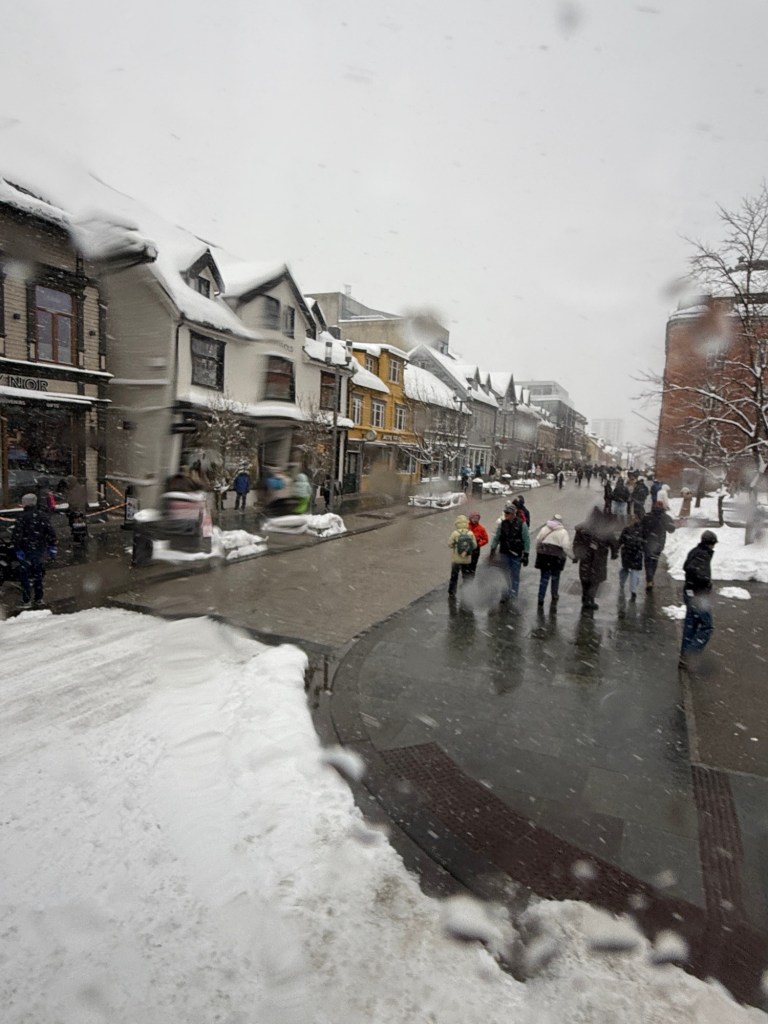
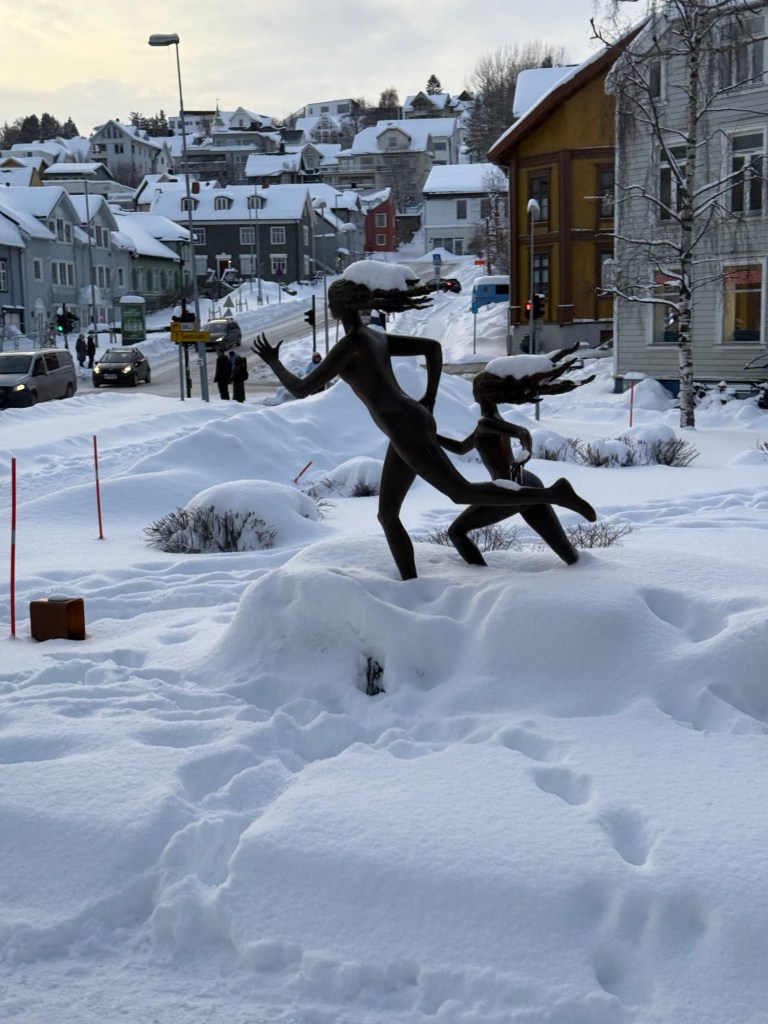
Norway seems to be a proudly expensive place no matter where you go. Largely powered by hydro electricity it has a large take up of electric vehicles, buses, trucks etc. and promotes its green credentials. Ironically, the largess (health, education, public transport) in social services support for the locals is funded by a very large Sovereign wealth fund built from the proceeds from the sale (to the rest of the world) of abundant oil and gas found in the North Sea!
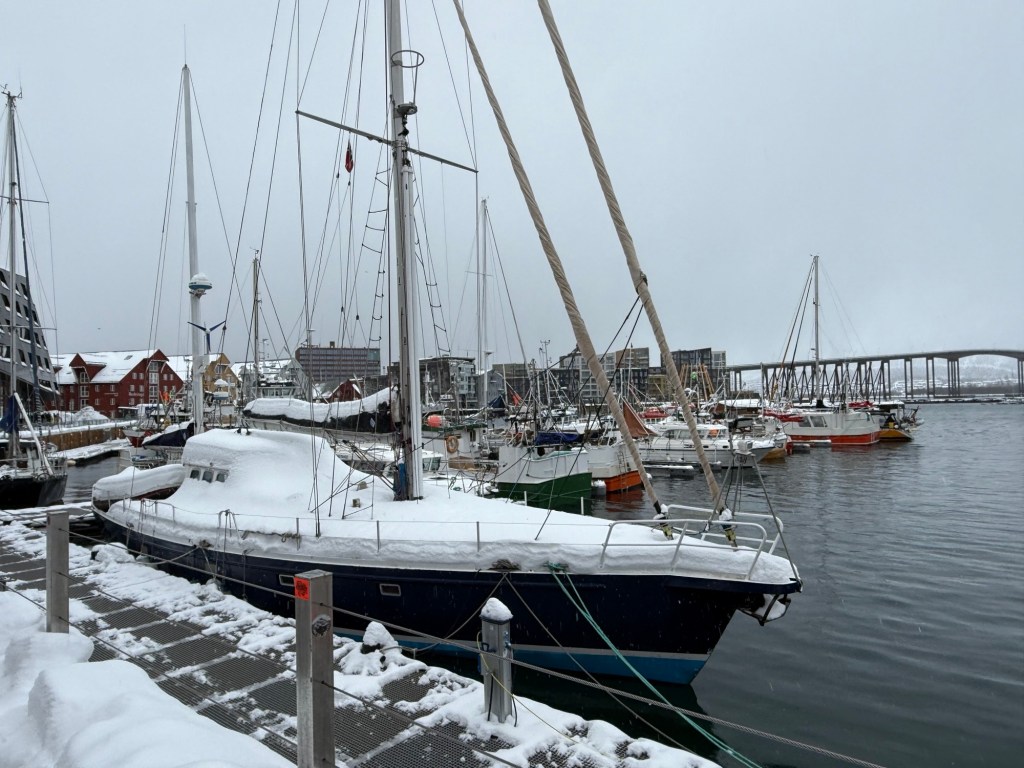
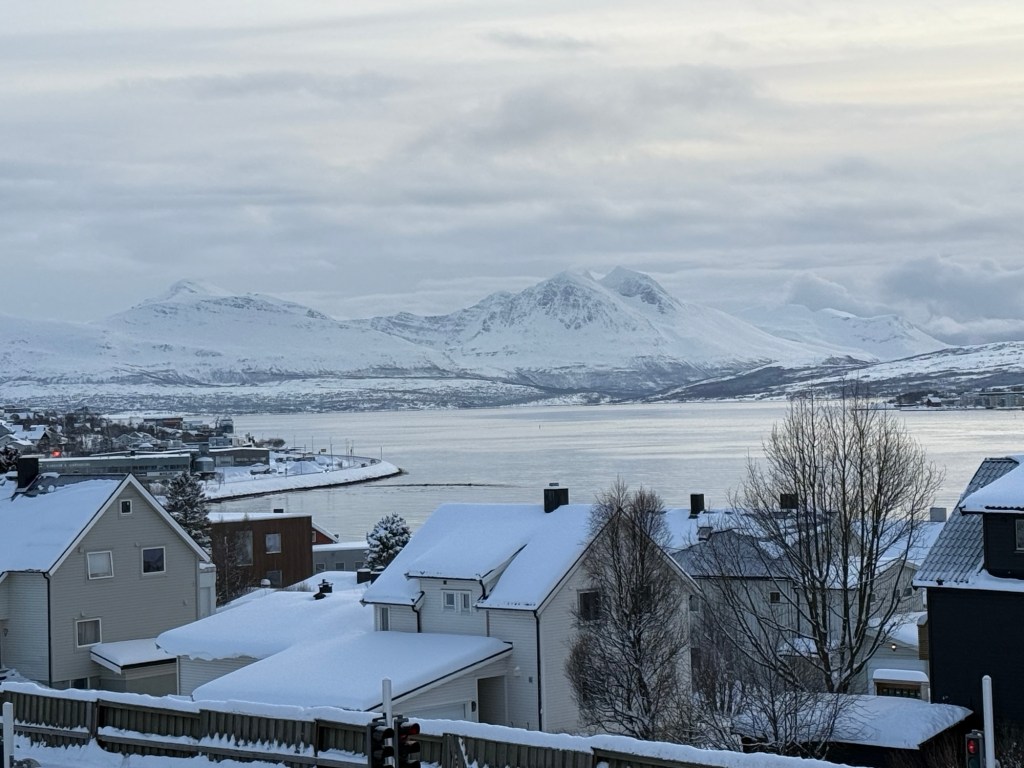
The planned sail away from Tromso was brought forward to early in the morning. The sail out along the fjord was quite smooth before we headed out into open ocean. We were to now have three clear sea days sailing south to Amsterdam. As we sailed south the seas did indeed get up a little. A swell of 3-4 metres had us rocking and rolling a little with some snow and sleet flurries. The ‘sicky bags’ appeared in the lifts, didn’t see any in use!
The Tromso weather had not been to order but nonetheless it had been a great stopover in snow country! Brought back memories for Allthego from many moons ago skiing in Australia’s alps down Perisher way!
Alta
The search for the Northern Lights now starts in earnest. But the weather outlook doesn’t look good.
Alta is 400km north of the Arctic Circle and 2200 km short of the North Pole. There are 20,000 or so people living here and it is the largest city north of the Arctic Circle.
In contrast Tasmania is 5,400km north of the South Pole and there is nothing except penguins, seals and whales etc between there and the Pole. A few scientists and the like huddle in expedition accommodation during the year.
We were due to arrive around midday, but fortunately we were three hours early and the sun was out. Some blue sky as well. So we headed ashore for a wander. Not a lot seems to happen in Alta tourist wise. The tourist bureau has some town maps and an array of souvenirs, Allthego picks up the usual couple of postcards and an Alta stamp to go on them! Bit different to the usual stamp.
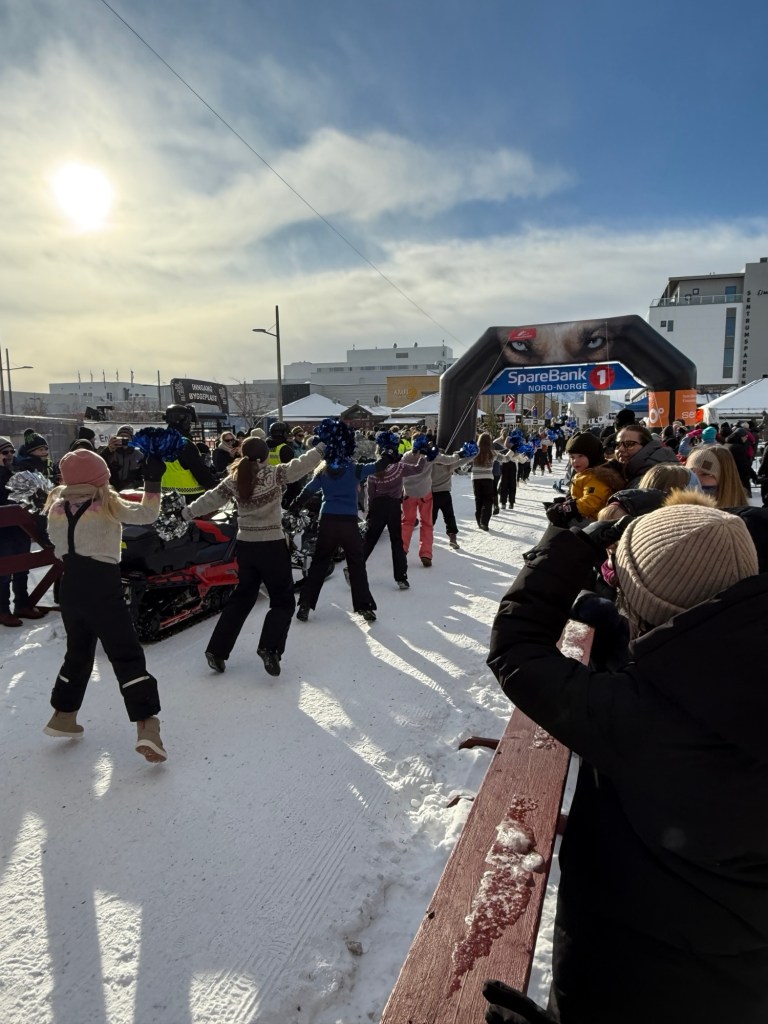
We happen to stumble onto the start of day two of the annual dog sled races. Day before was the big race, 1600 km. Day twos’ races are shorter, one of 600km and the other 400km (these distances are from recall may not be exact).
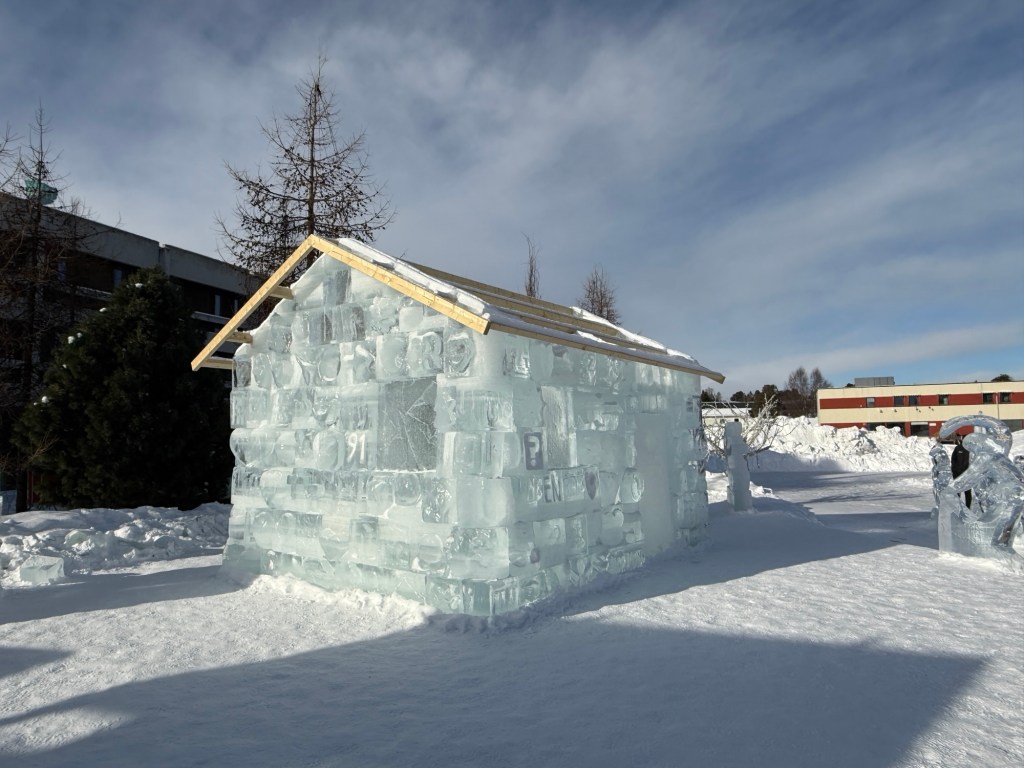
People line the race way start, seems to be a very popular event! Bit of dancing, cheerleader type stuff to introduce the races.
As the morning went on the clouds began to come in, there was a threat of snow overnight. We headed back to the ship for a late lunch and ready ourselves for our own dog sledding experience up in the hills in the late afternoon. This was really super stuff, we were broken into three groups that went off for 40 minutes or so sledding along behind teams of 8 dogs, fortunately we had a dedicated musher.
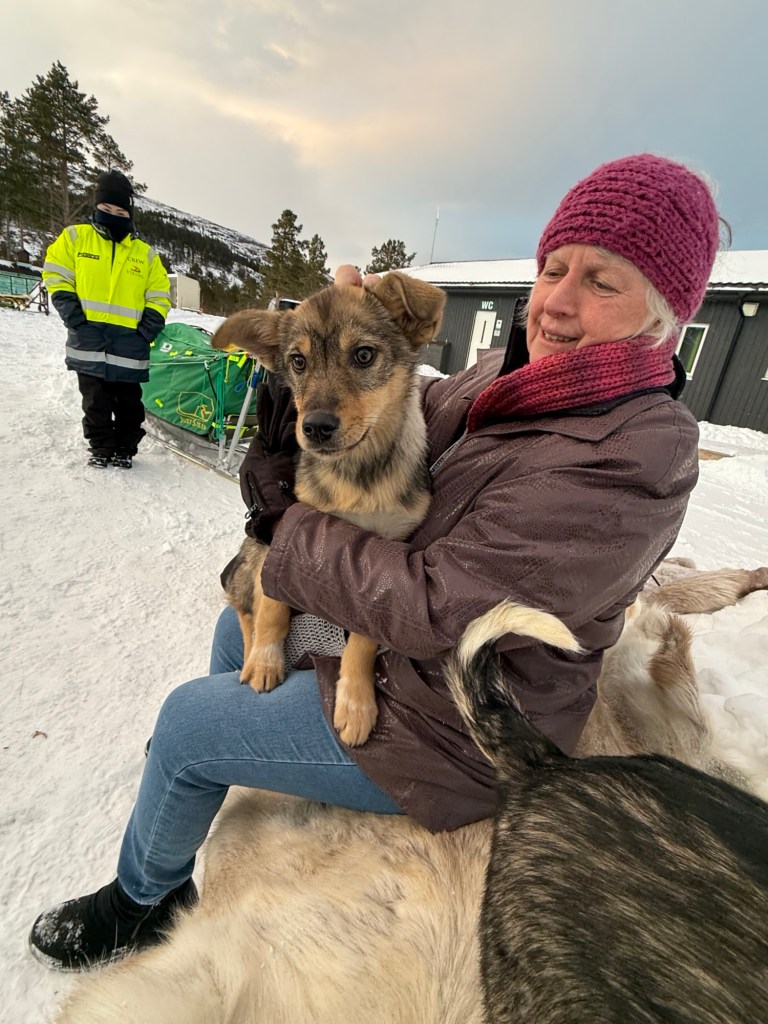
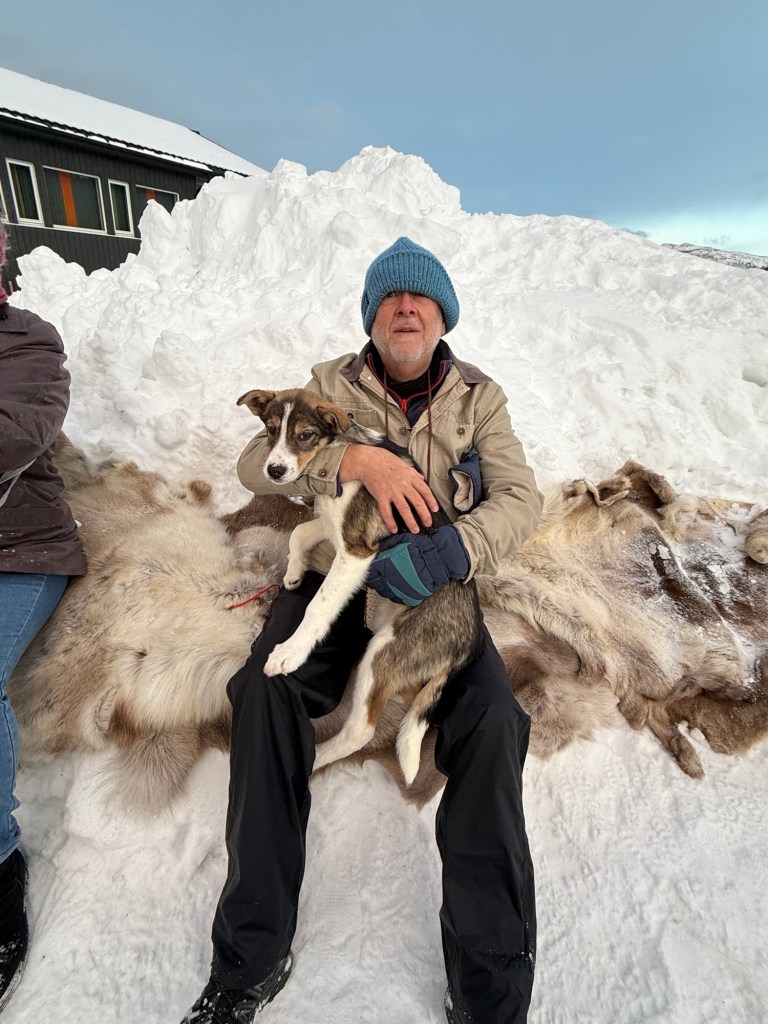
Back and forth along some tracks through a lightly treed valley beside a river, curiously a golf course in Summer! The dogs were really special, very sociable and excited to be pulling the sleds.
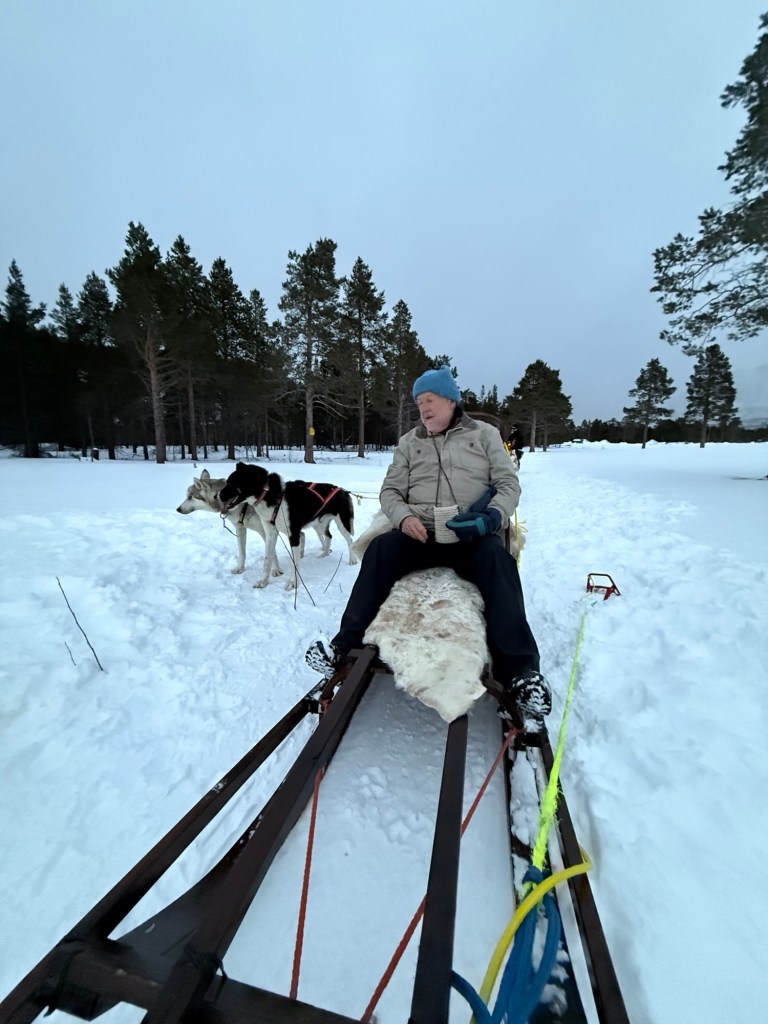
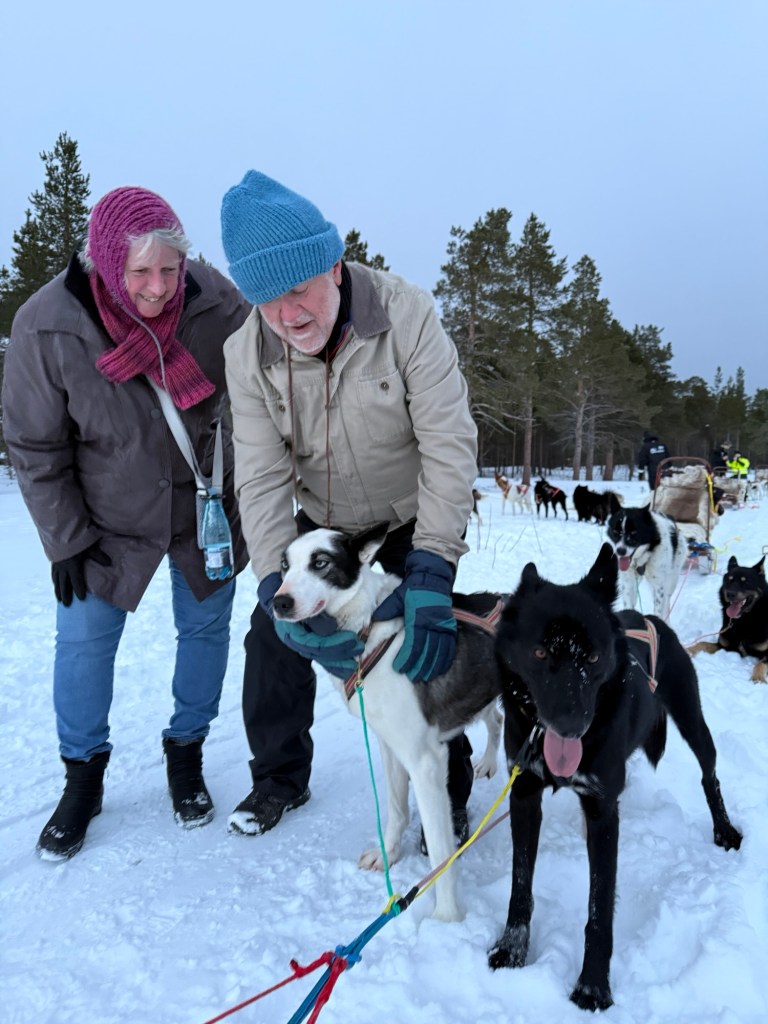
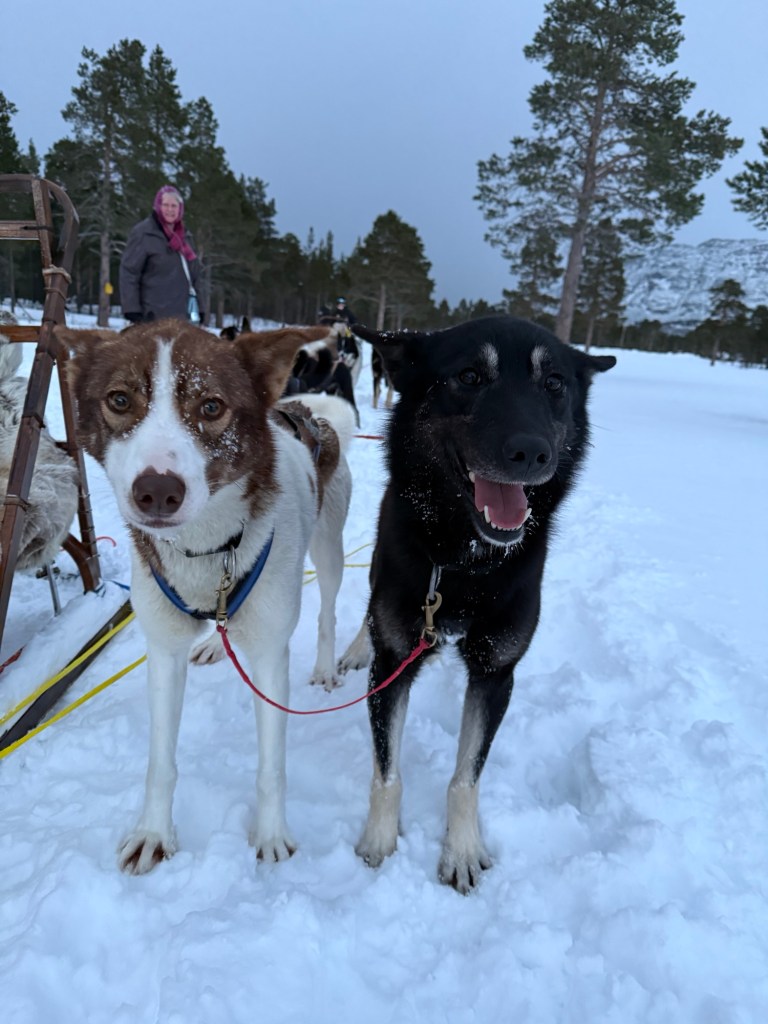
Would do it again. We finished up at dusk, about 7pm. Quite cold and the snow had started to blow around.
Next day we took in a short tour around the town and visited the local museum, focussed particularly on some old rock carvings/engravings dating back for 2,000 to 7,000 years. Pre viking times. Little is known about who did them and where the people ultimately went.
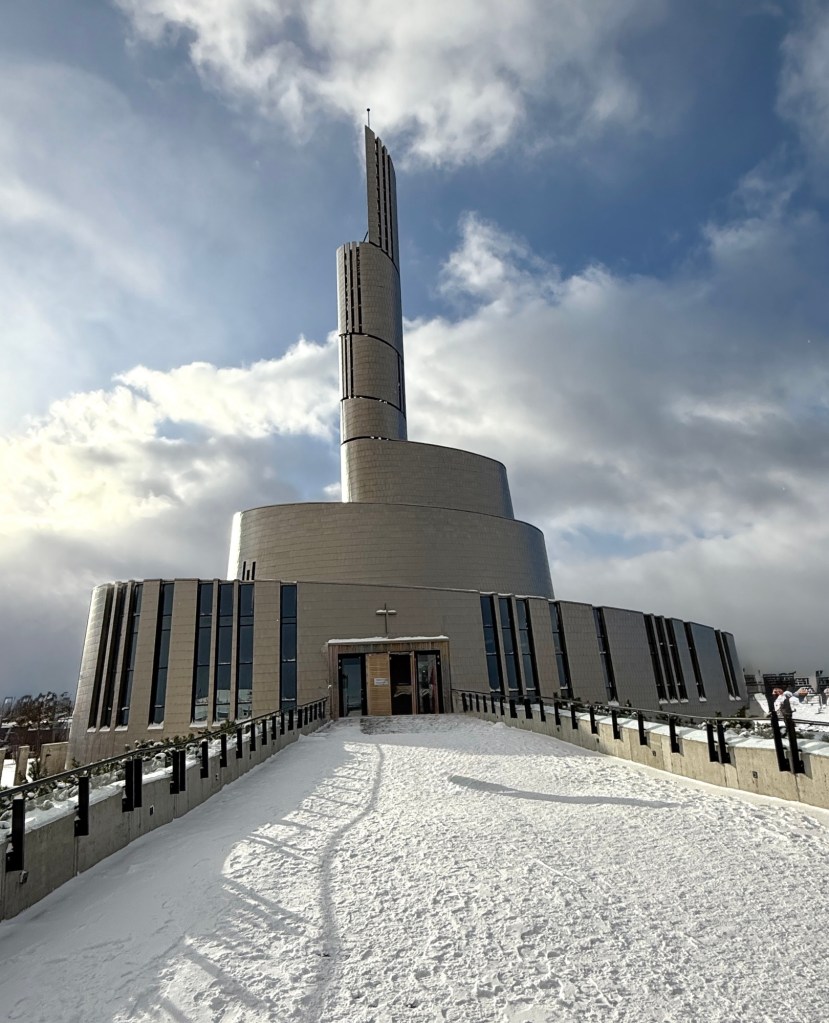
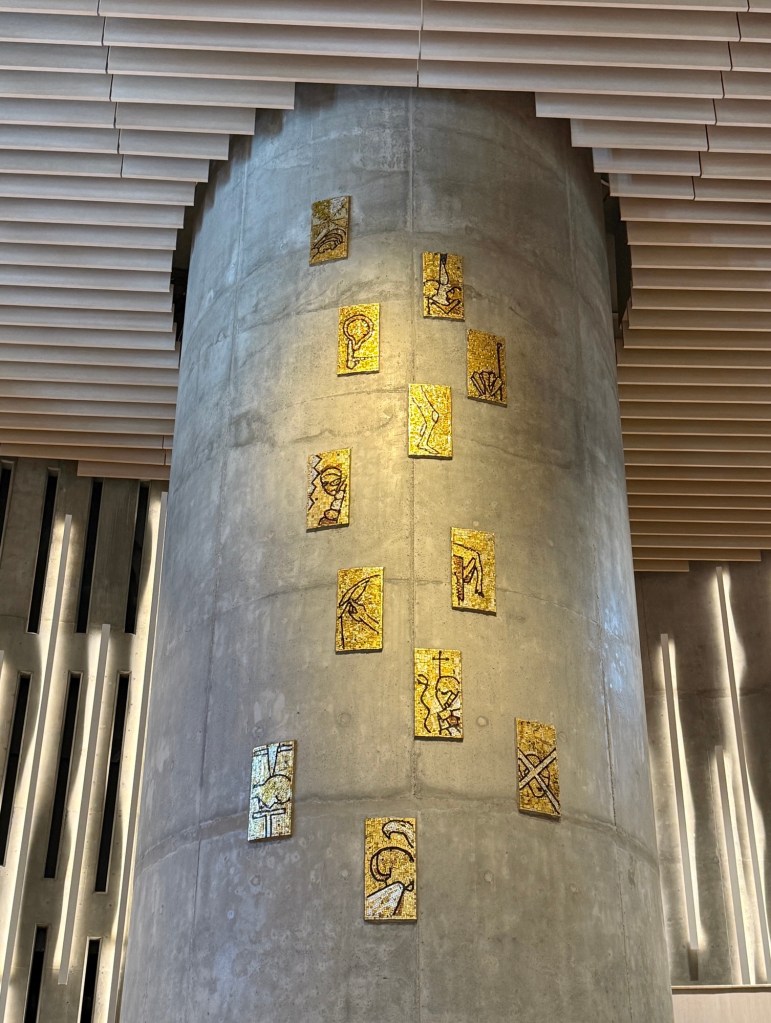
Later the Alta Cathedral called, a Lutheran church, which has a focus on engaging with visitors. A really good video was shown on the Northern Lights, some great photography.
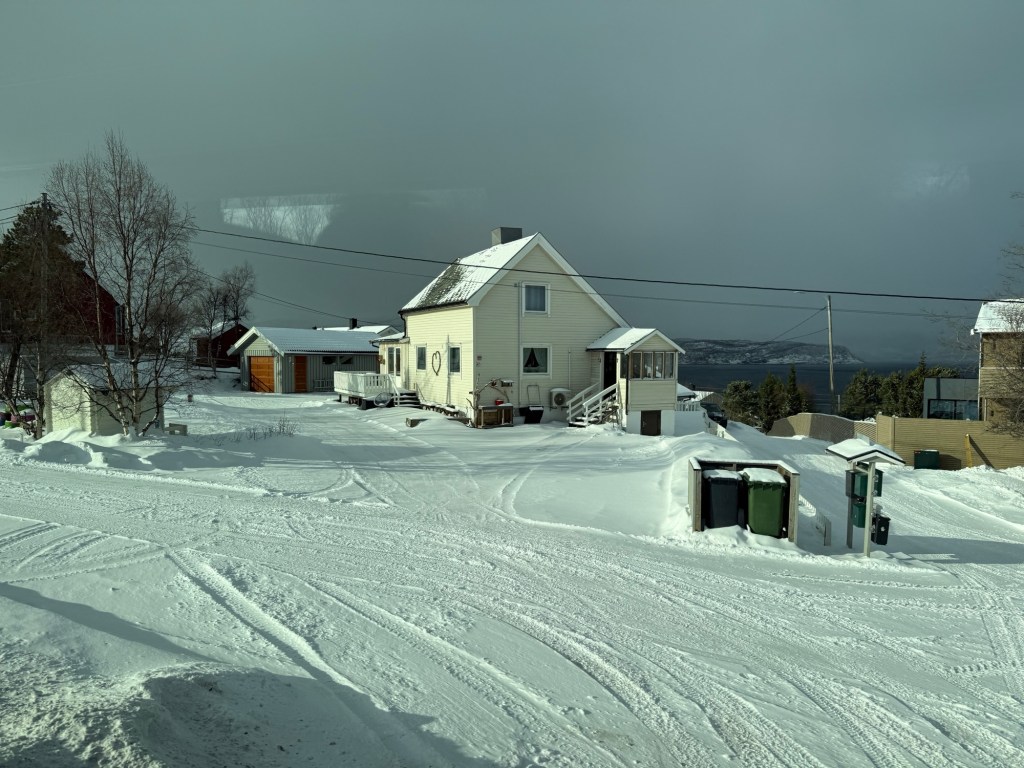
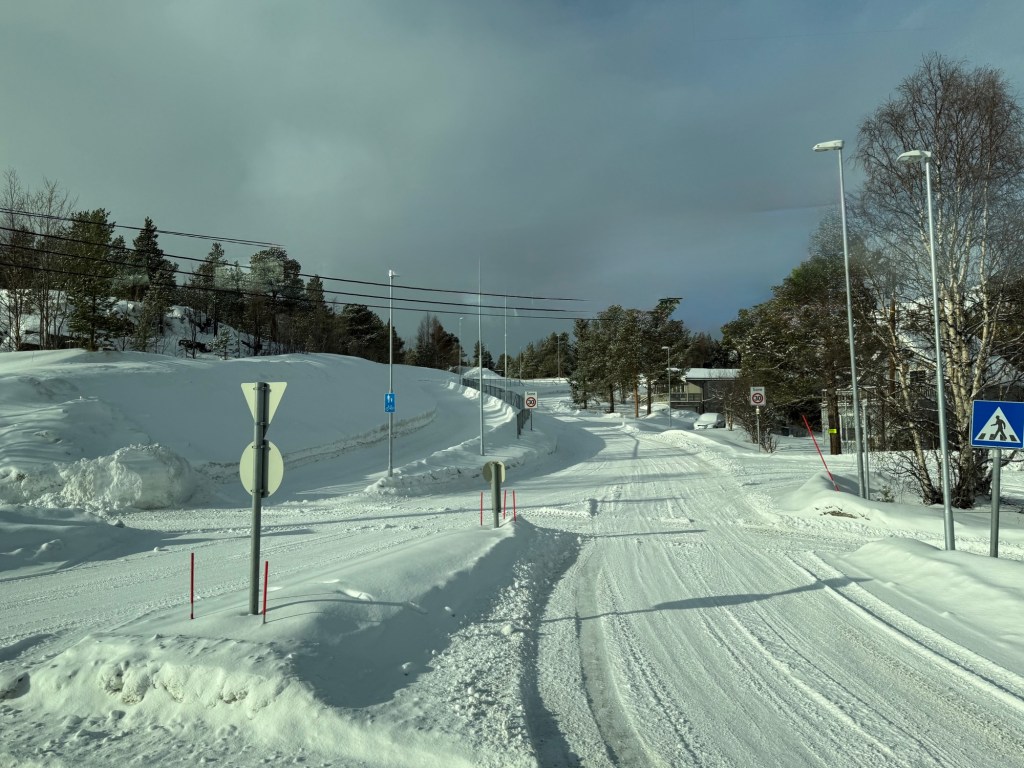
Back at the ship we had dinner before leaving for Paeskatun at 8pm. This was probably the last throw of the dice for seeing the Northern Lights. Paeskatun is up in the mountains behind Alta and is famous for its slate….. best slate in the world some say. But this time we hope to see the lights, not the slate.
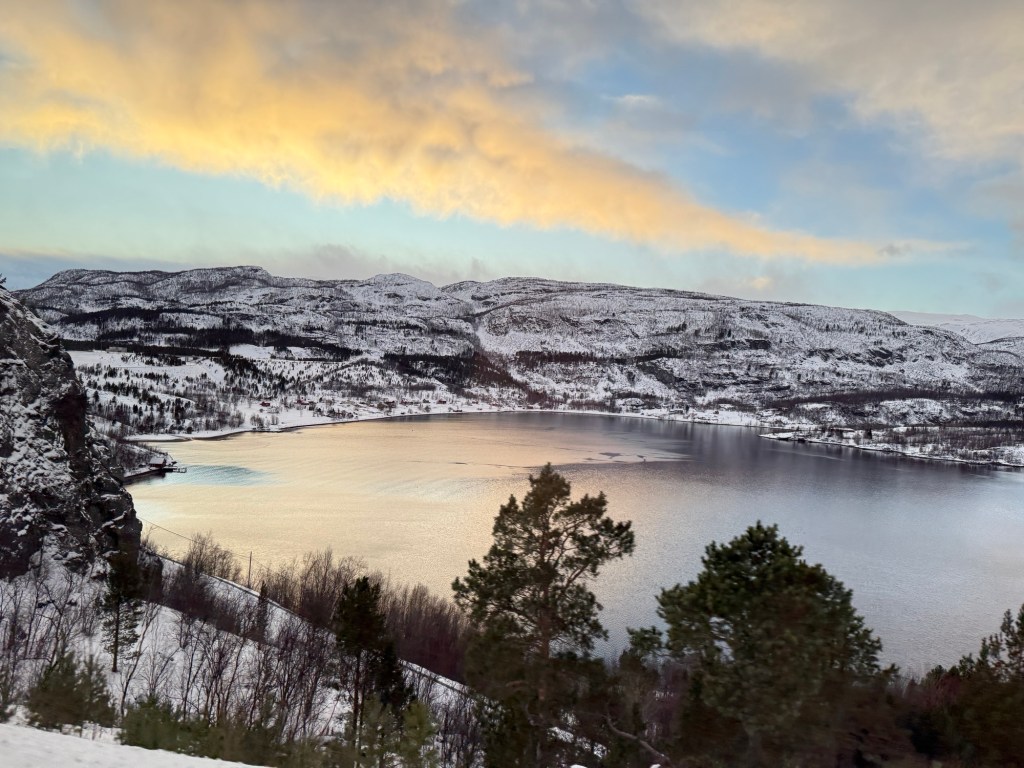
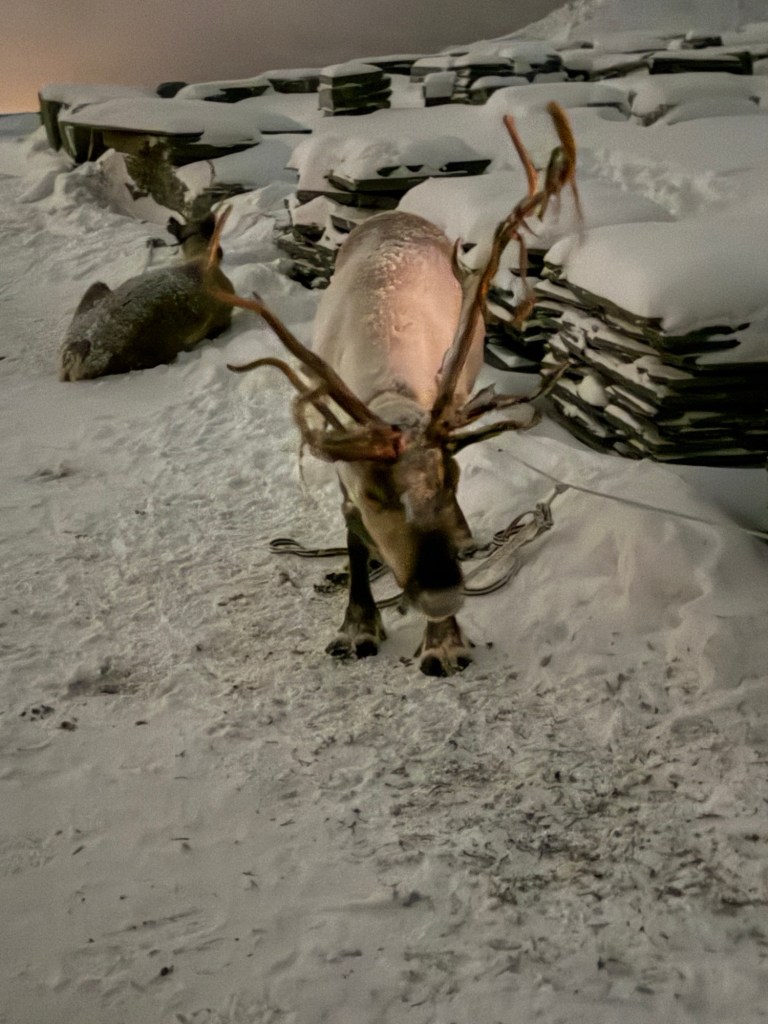
It’s cold up on the mountain, sleet is interrupted by snow and the skies remain clouded. Little chance of seeing any lights. Instead we huddle in some huts and hear tales from the past about slate and the lights. Have a couple of hotdogs and coffee while we wait. A local Sami chap visits for a look and brings a reindeer, poor animal seems to have no interest in amusing the onlookers!
The night drew to an end with more sleet and snow and no lights, all a little disappointed.
Back to the ship for a midnight sail away for Tromso.
Bergen to Alta
We left Bergen around 4.30pm and were due to arrive in Alta sometime before noon in three days. It’s more like three nights and two days cruising time. Depending upon the exact route it is 900-1000 km. The Captain has chosen to seek the open sea earlier than first planned. The seas are calm and we can make good time, we will join the Inside Passage further north.
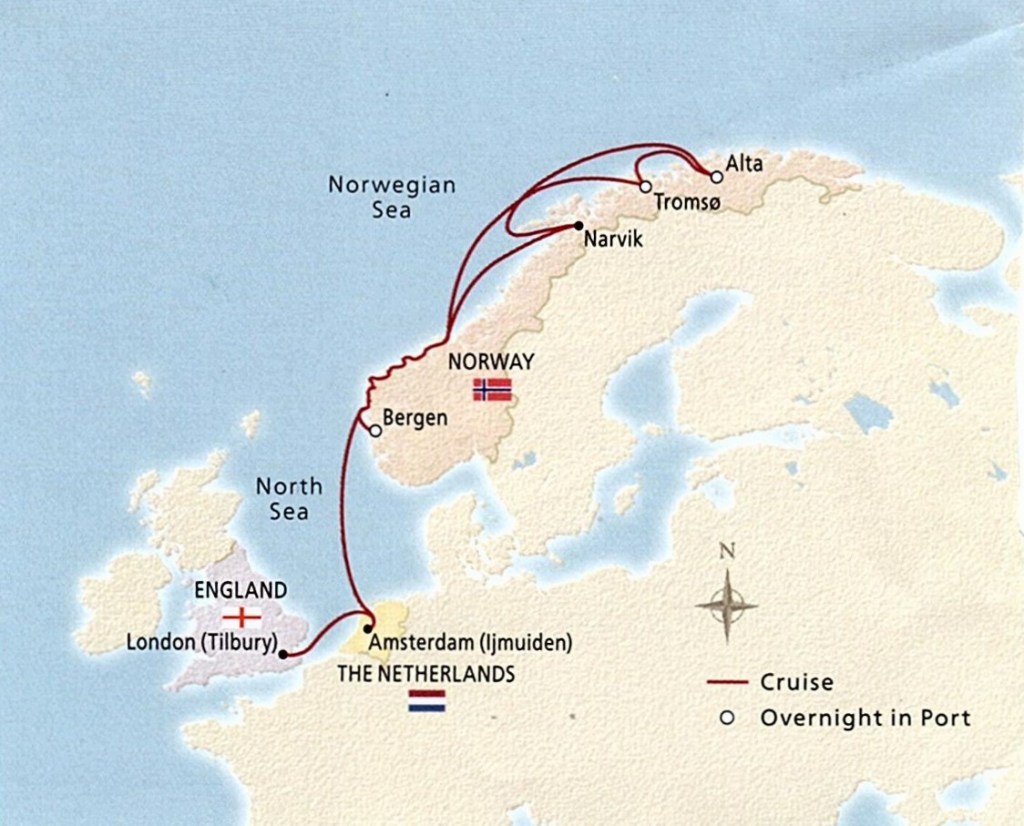
The previous cruise north by the Viking Vela had to abort at Trondheim and head back because of storms and rough seas in the Norwegian Sea. We had encountered the VV in port at Flam and had a brief chat with some passengers that were disappointed in the call made, but appreciative of the focus on safety.
The weather along the way was quite good, but rather chilly. Some sunny patches but plenty of snow flurries.
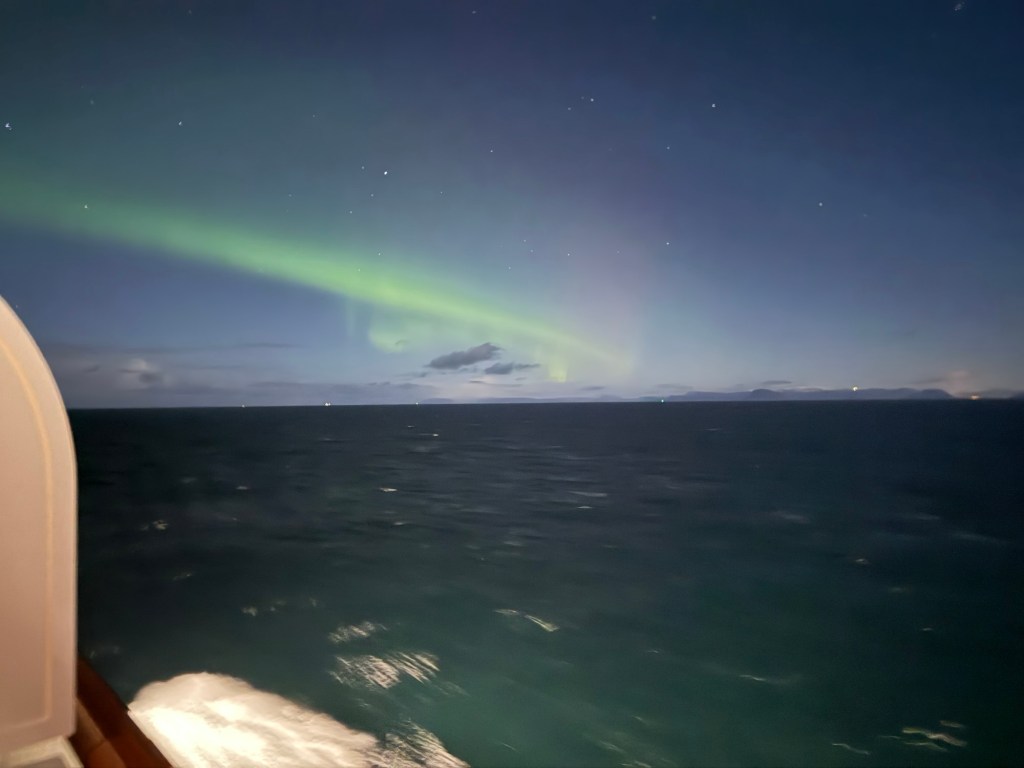
Late on the first evening we had our first Northern Lights sighting. A brief moment in time! We have had the call a couple of other times, but in the early hours. We have arose from slumber and joined some ‘masses’ of rugged up fellow passengers. In our case no sighting, either too late or they disappeared on us before sighting (I suppose that is too late, but not our problem!).
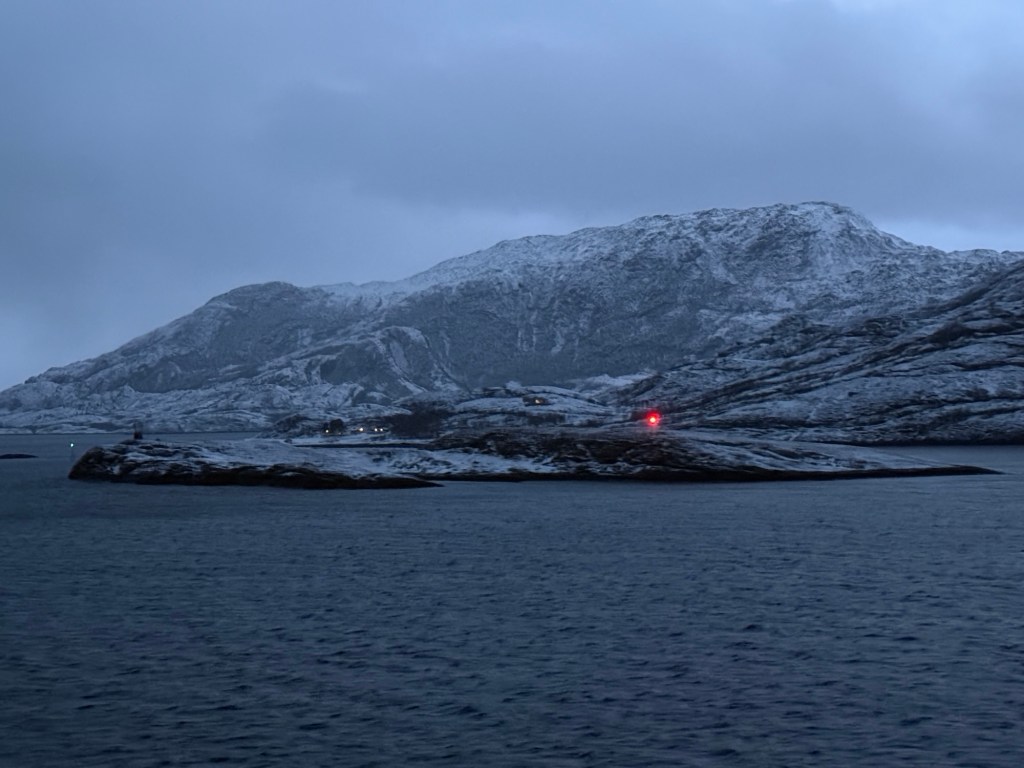
A highlight was passing Vikingen Island through which the Arctic Circle passes. Even if it was about 6am at the time. Interestingly, the Arctic Circle is moving very slowly north and since the island was marked as ‘the spot’ back in the past the Arctic Circle is now about a kilometre further north (a stat Allthego is keen to check on!). It is not so much the geographical Circle but the magnetic north pole that is moving around, about 14 metres a year. This is not a new phenomena or a by product of global warming or cooling whatever. I think the above is an ok summary, obviously a bit more complex.
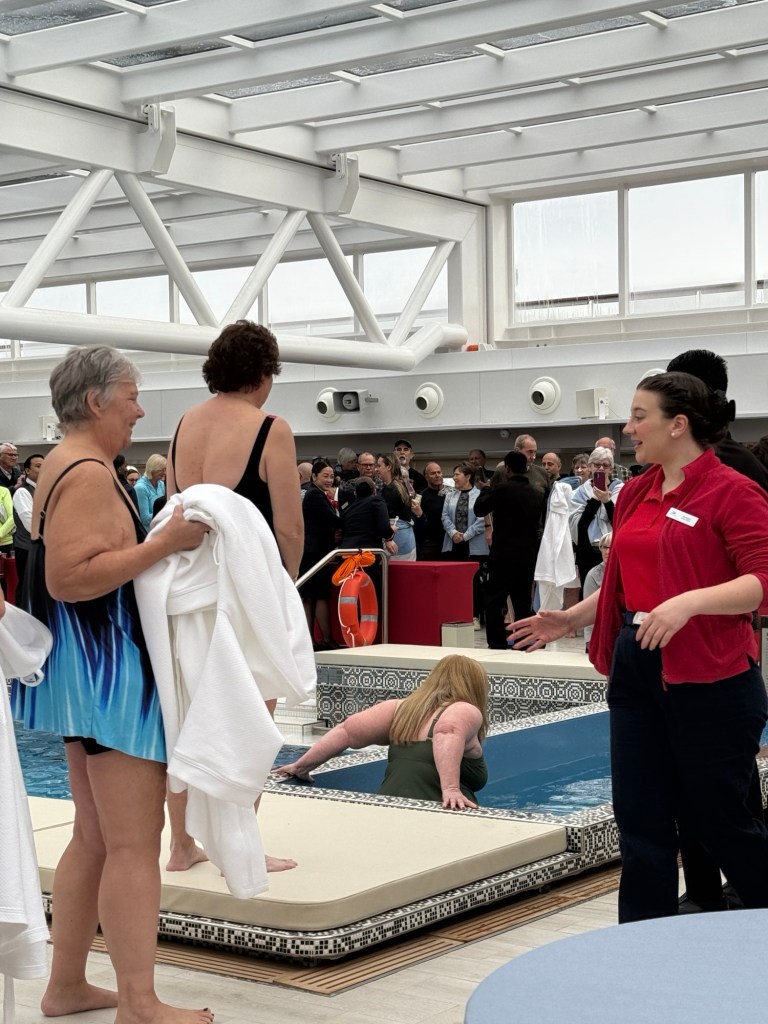
At this time there is also the celebration of the ‘Order of the Blue Nose’, passengers have a plunge in the pool spa that has been topped up with bags of ice. An interesting display of flesh took the plunge. Survival did not appear to be of concern. Allthego was tempted, but it was very cold!! Gave it a miss this time.
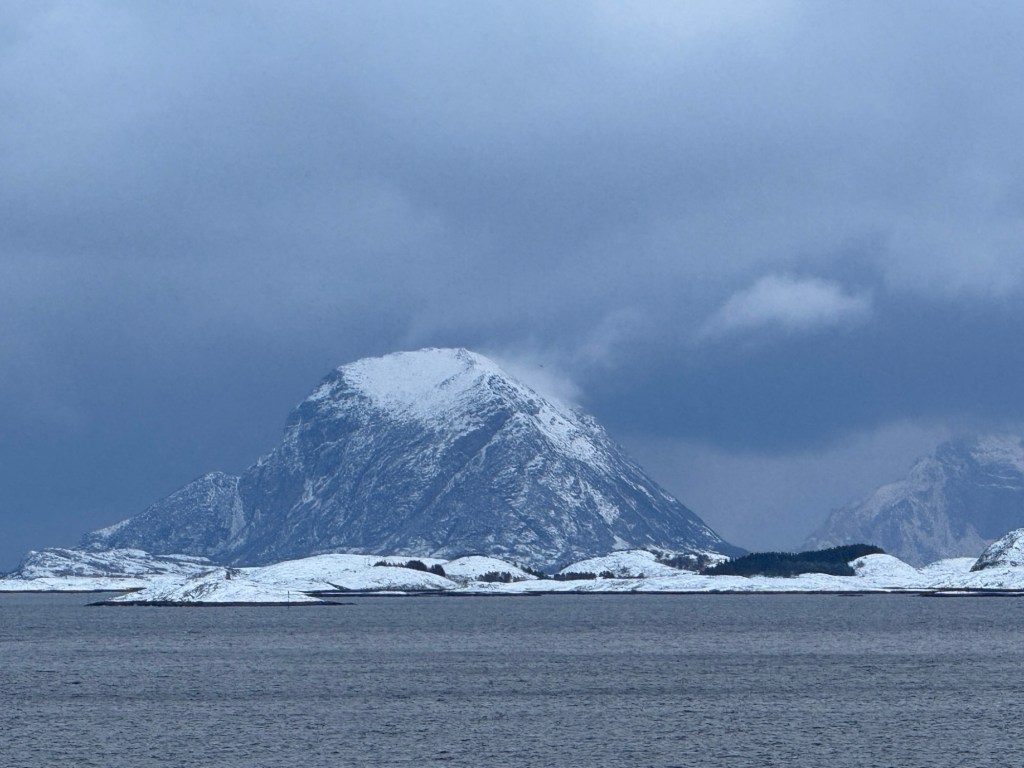
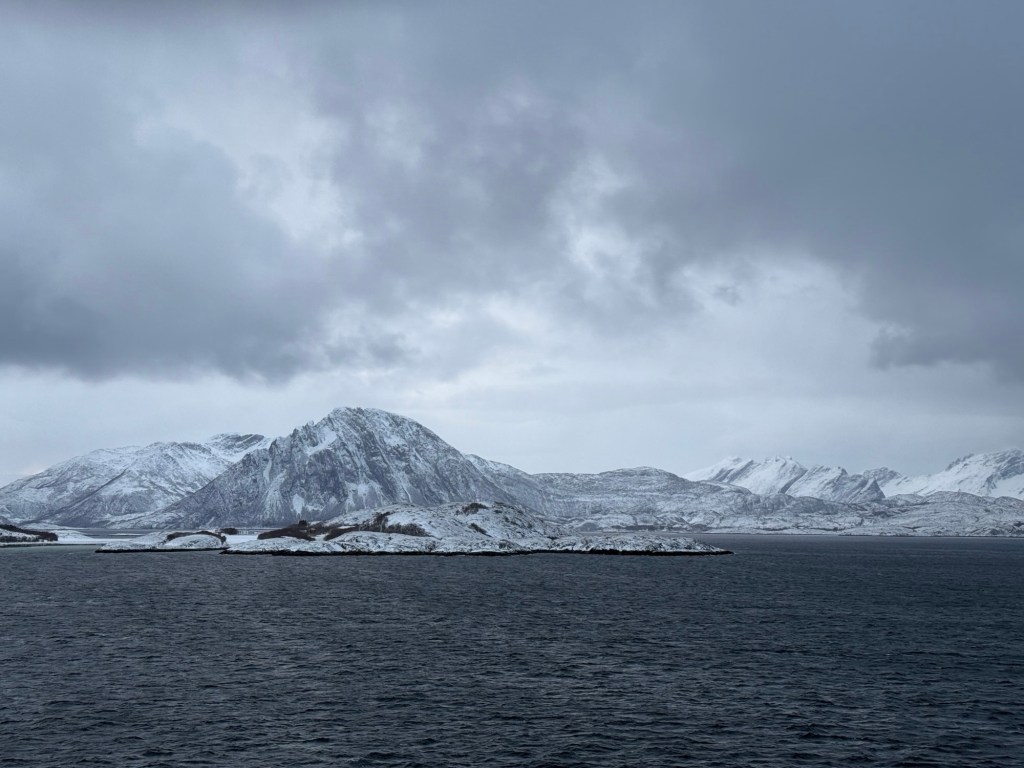
Not long after the Blue Nose event we returned to the Inside Passage route, have made good time and we were going to be a few hours early in Alta.
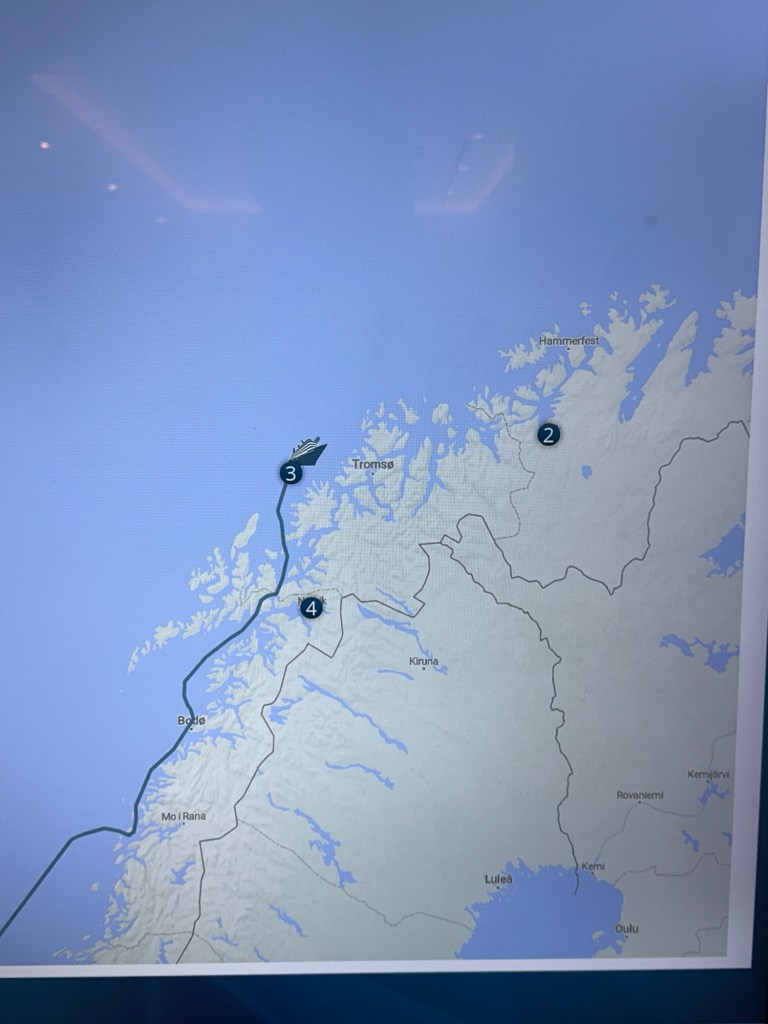
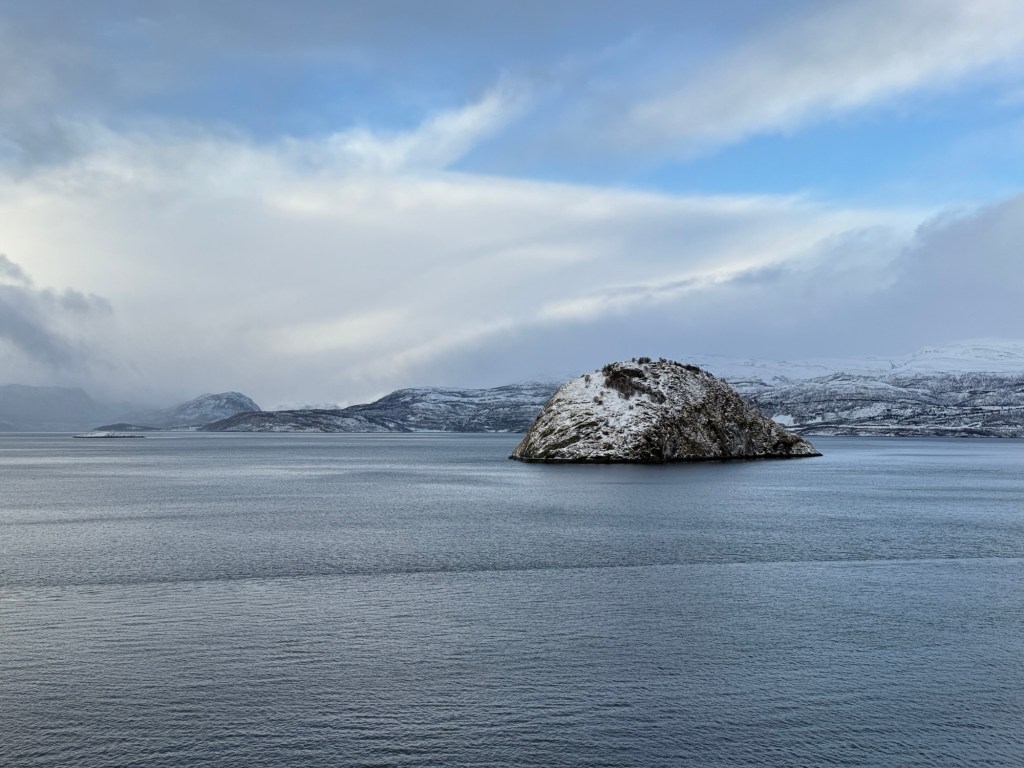
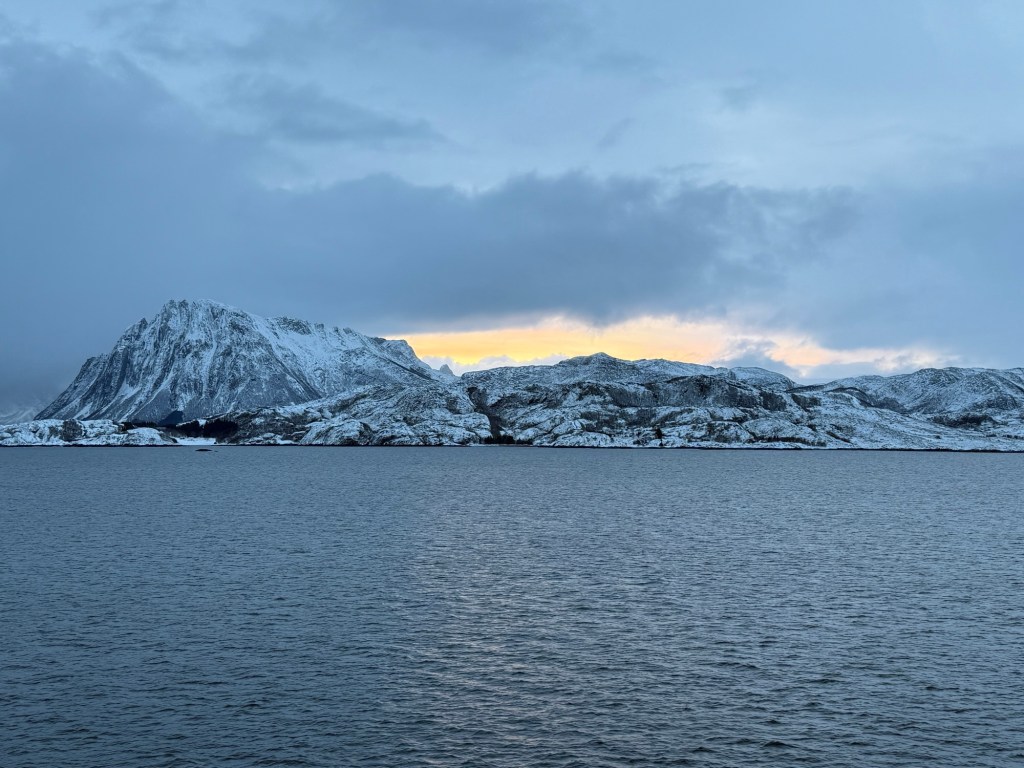
Some great scenery along the way. Allthego had expected it to be a bit less winterish as we were into Spring. But apparently, winter can go on through March. There has been less snow this year and some late rains.
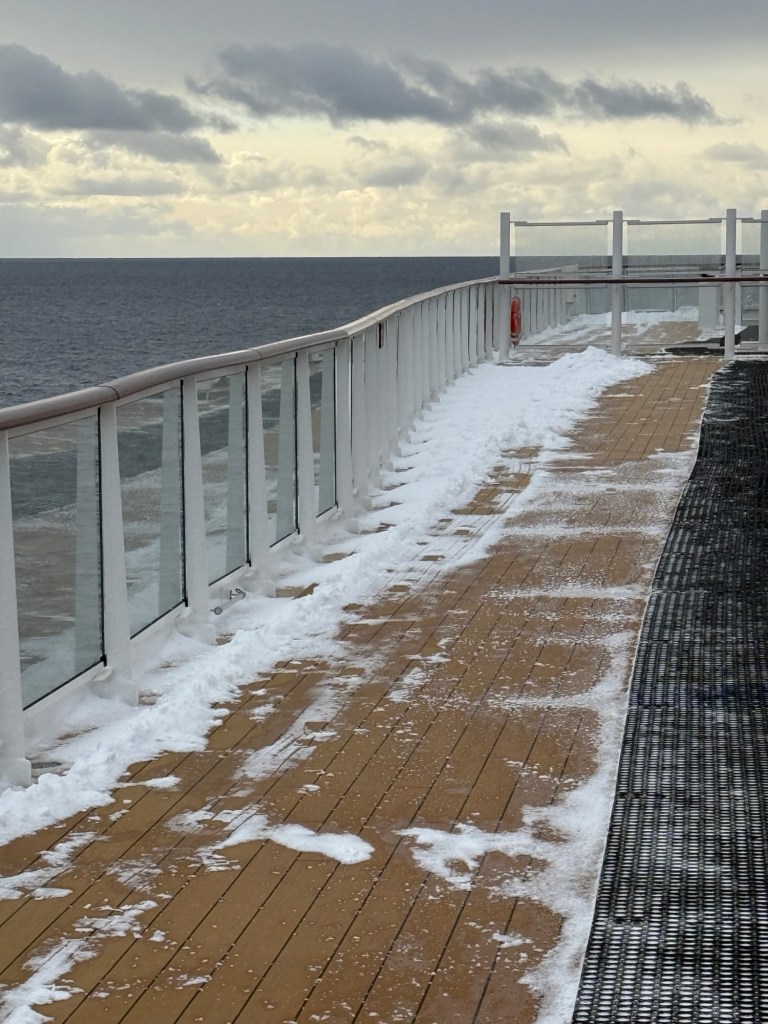
So we have snow and ice on the sun deck and across our balcony, temperatures are sub zero and barely getting to 5 or 6 during the day. Still it is ‘nice’ and a bit sunny from time to time, no need for sunblock.

We get into Alta a bit after 9 am, sun and blue sky greet us. Looks to be a good day ahead!
Bergen
Bergen is Norway’s second largest city after Oslo, the greater Bergen area has about 400,000 people. Just on 300,000 of them live in or around the city, clinging to the shore land and a little way up the mountainside. The old town was founded around 1100, so it is not an old Viking town, post dating the viking era.
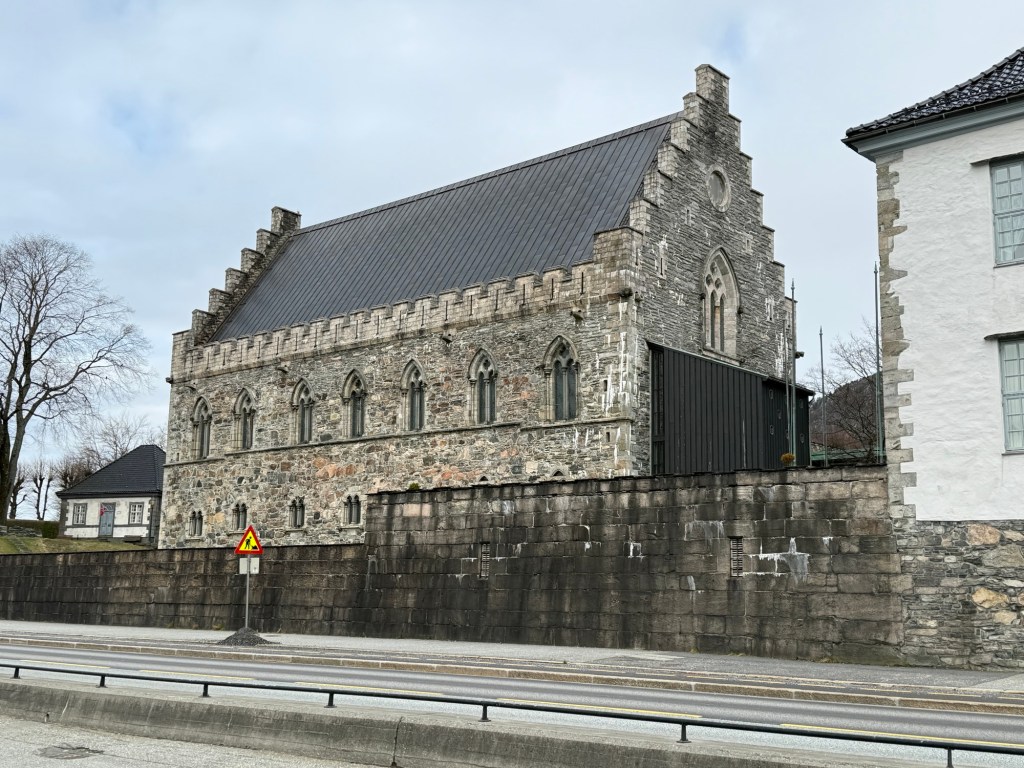
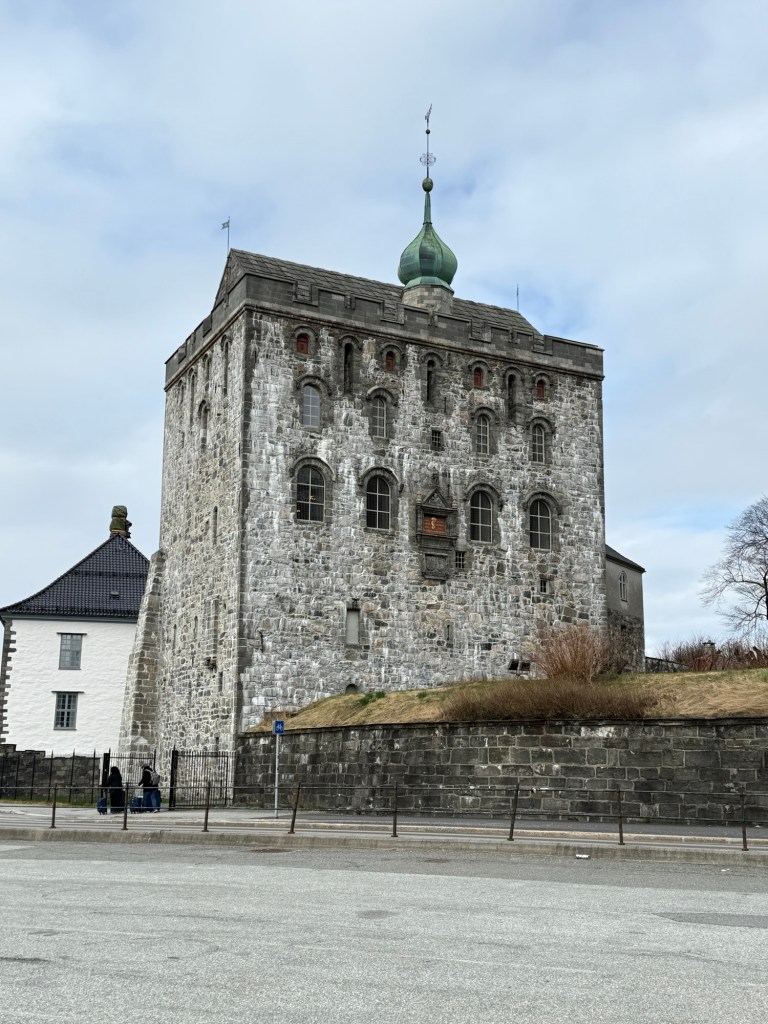
The town had its origins in 1070 when it was founded by King Olav. He was the son of the Viking leader who was defeated by the Anglo Saxons at Stamford Bridge in 1066. This was just a few months before the Normans (who are of old viking stock) invaded England and defeated the English at the Battle of Hastings. Enough English history!
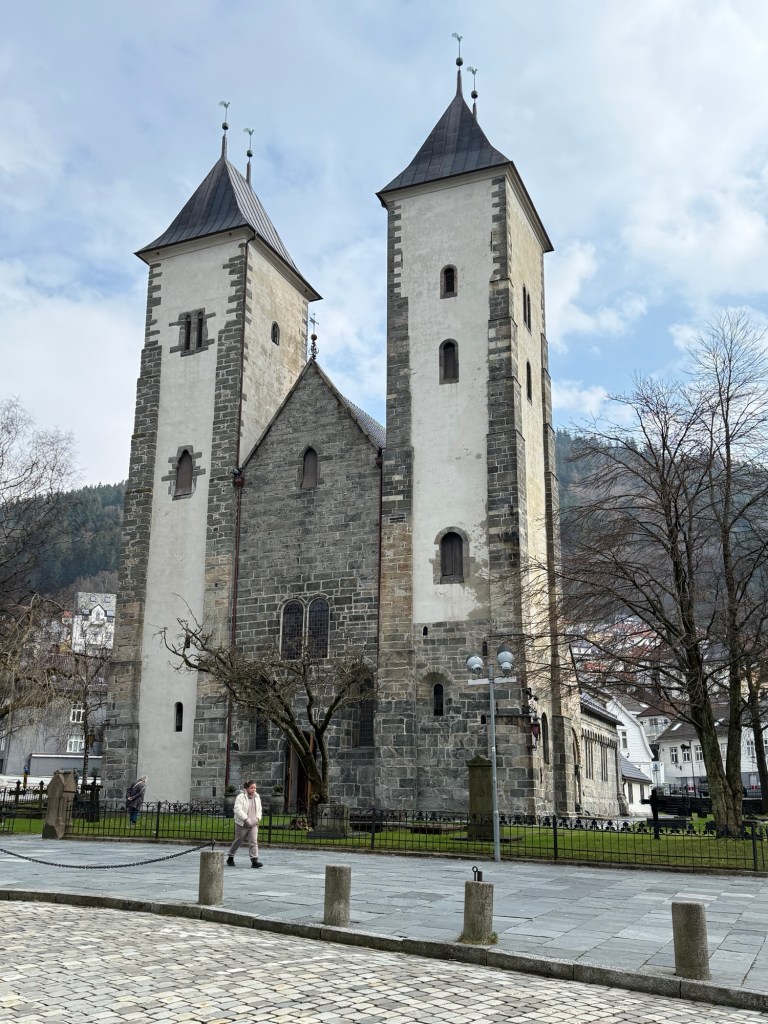
St Mary’s is the oldest building in Bergen, formally a Catholic Church it is now Lutheran. The Anglicans are let in these days, probably pay a premium.
From the 1400s it became an important trade centre for dried cod.The trade being controlled by German merchants for several centuries.
We are here for three days before leaving on the cruise aboard Viking Vela up the Norway coast as far as Alta. We plan to take it easy.
One of the prominent features of Bergen is its wooden houses. The wooden houses and fire we were told is one of the prime architectural drivers of the city. There have been a lot of fires over the last thousand years. Many destroying large swathes of the city scape, by necessity buildings were replaced by more wooden ones. Not a lot of stone available for house building. Only the wealthy and important could do it in stone.
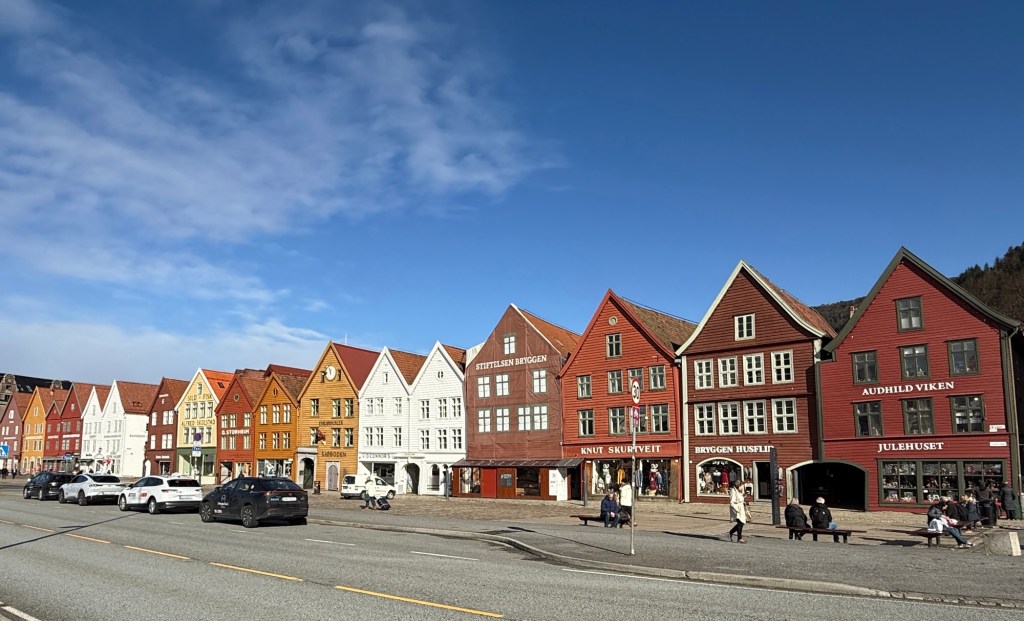
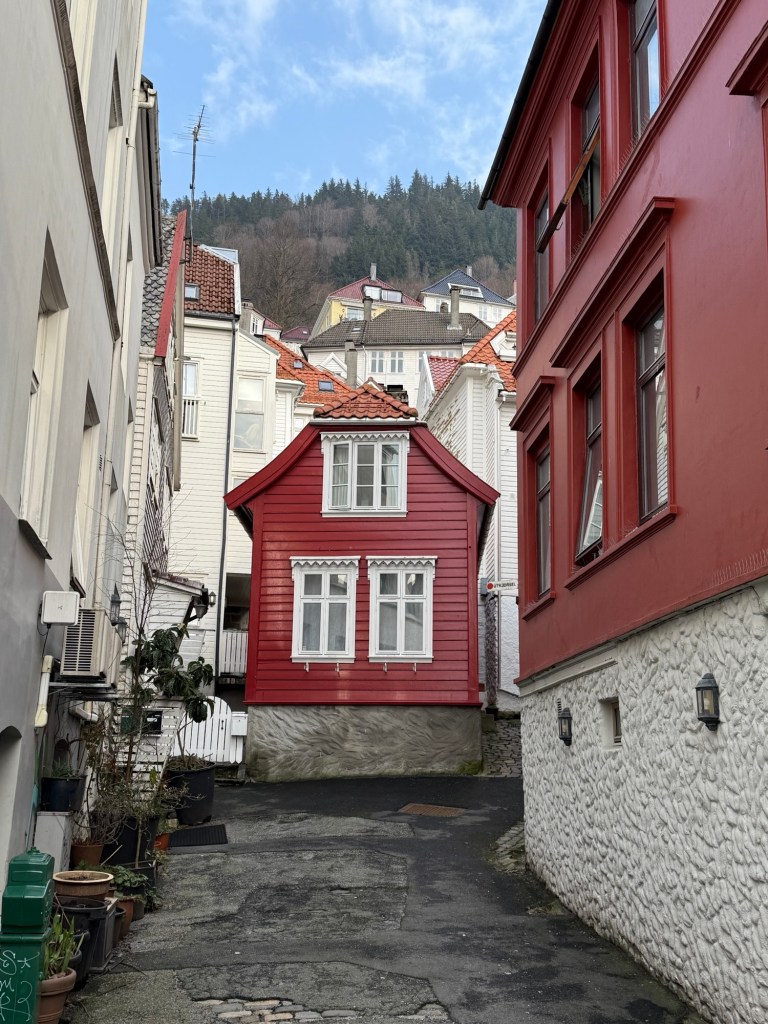
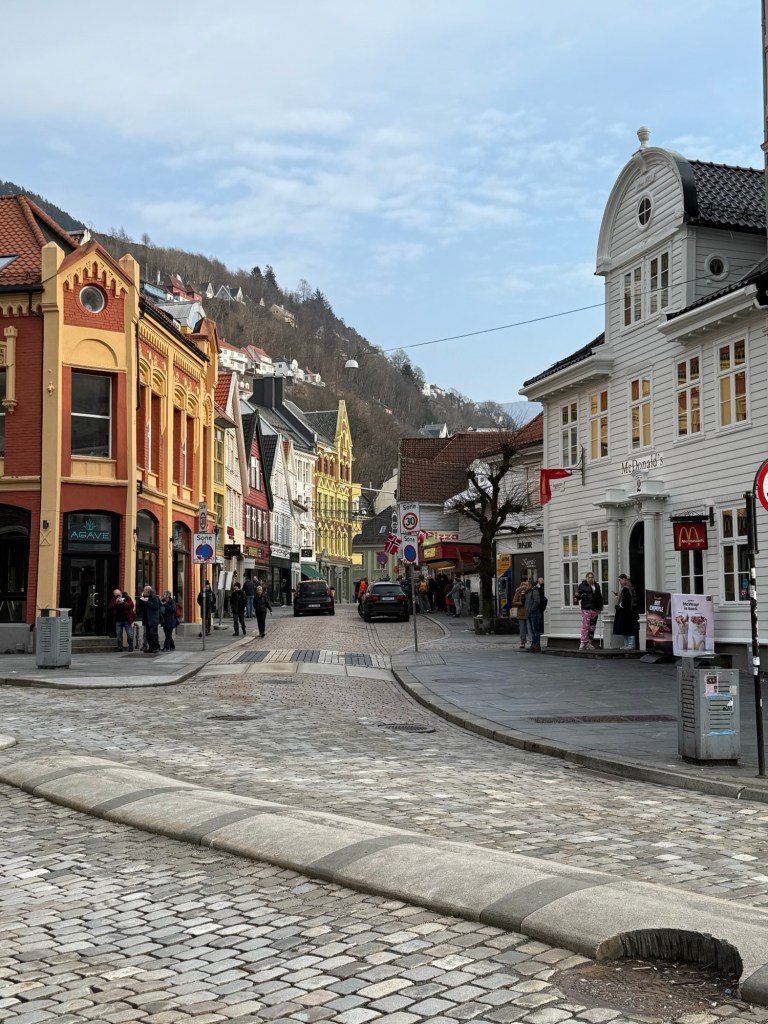
We had several strolls around the old port area. Lots of cobbled footpaths and roads. The residents though don’t seem to have garbage bins like us. The streets are narrow and large dumpster type bins are dropped here and there for people to throw their refuse in. It makes for a rather messy neighbourhood.
The Fish Market is a must stop off point to see the great array of fresh local product available to the residents. Some less than appetising items were on display, plenty of crabs of all shapes and sizes.
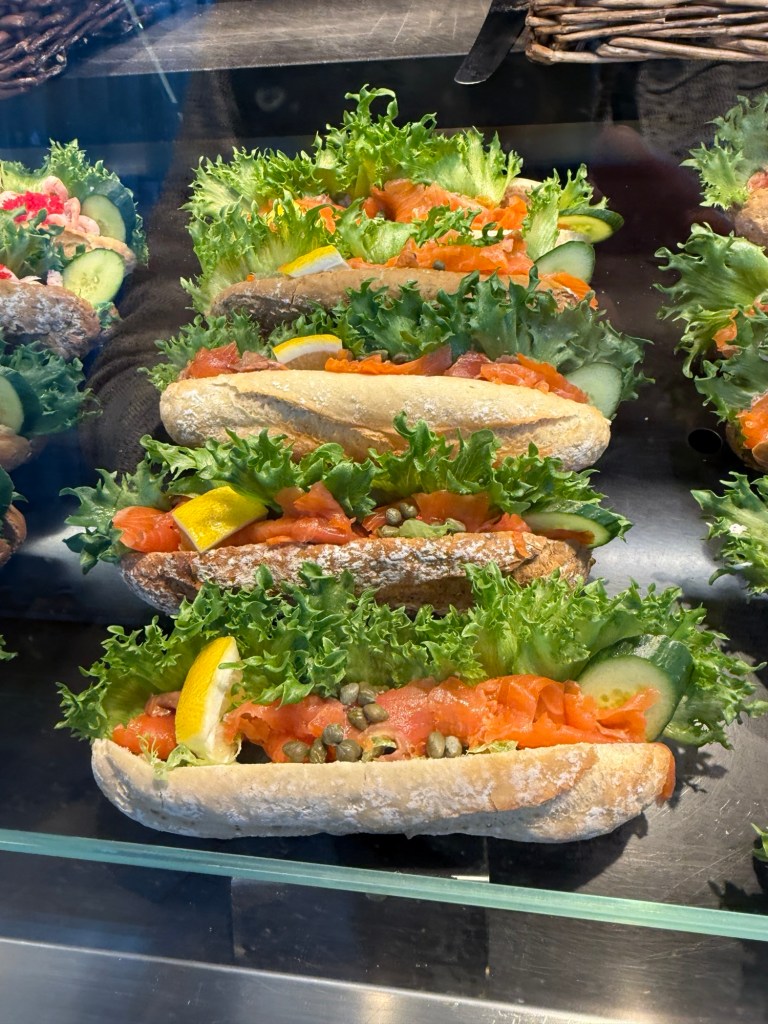
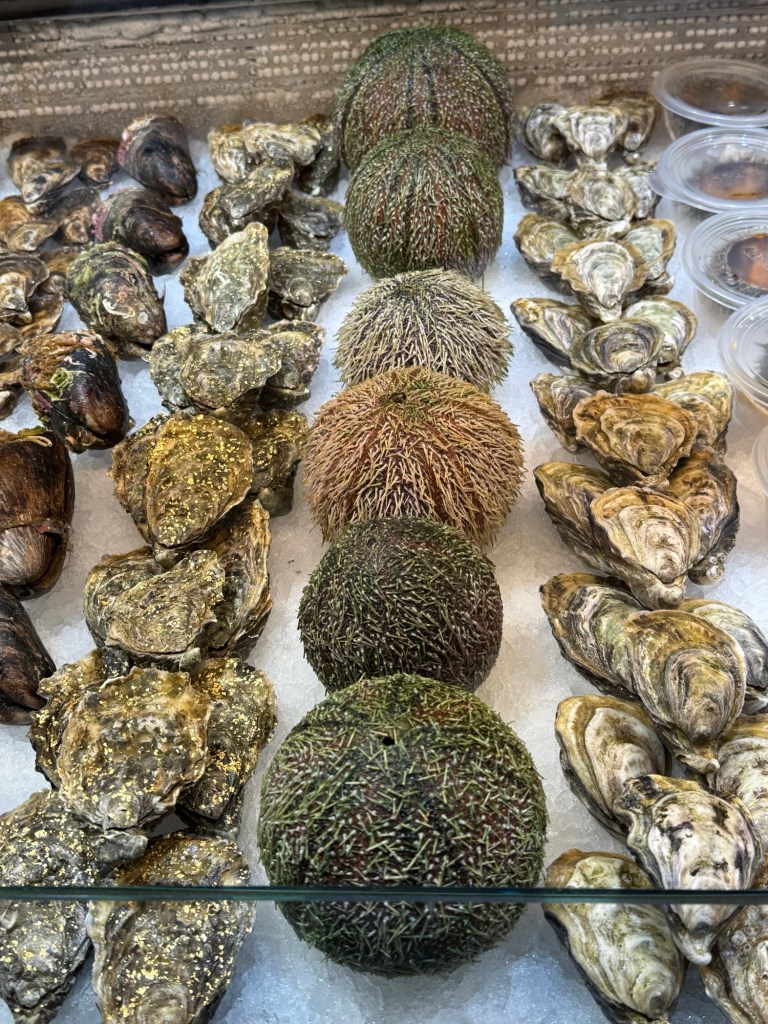
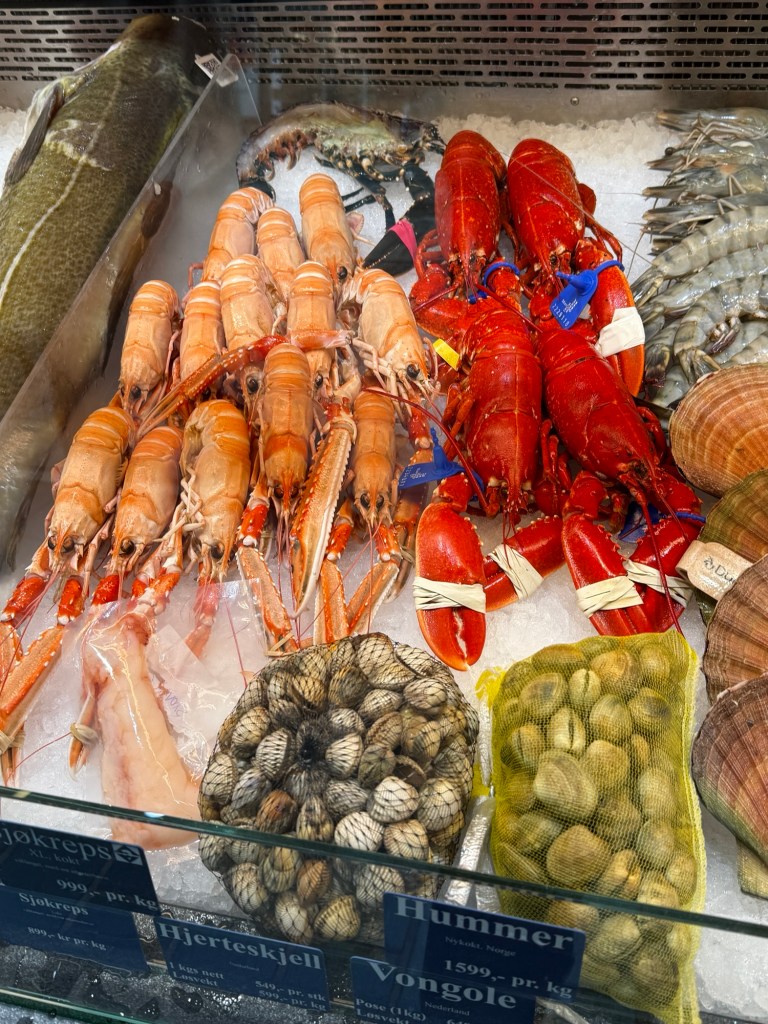
Bergen is also famous for its weather and is the rainiest city in Europe. Two in every three days have rain, we have been lucky as two of our three days have been sunny.
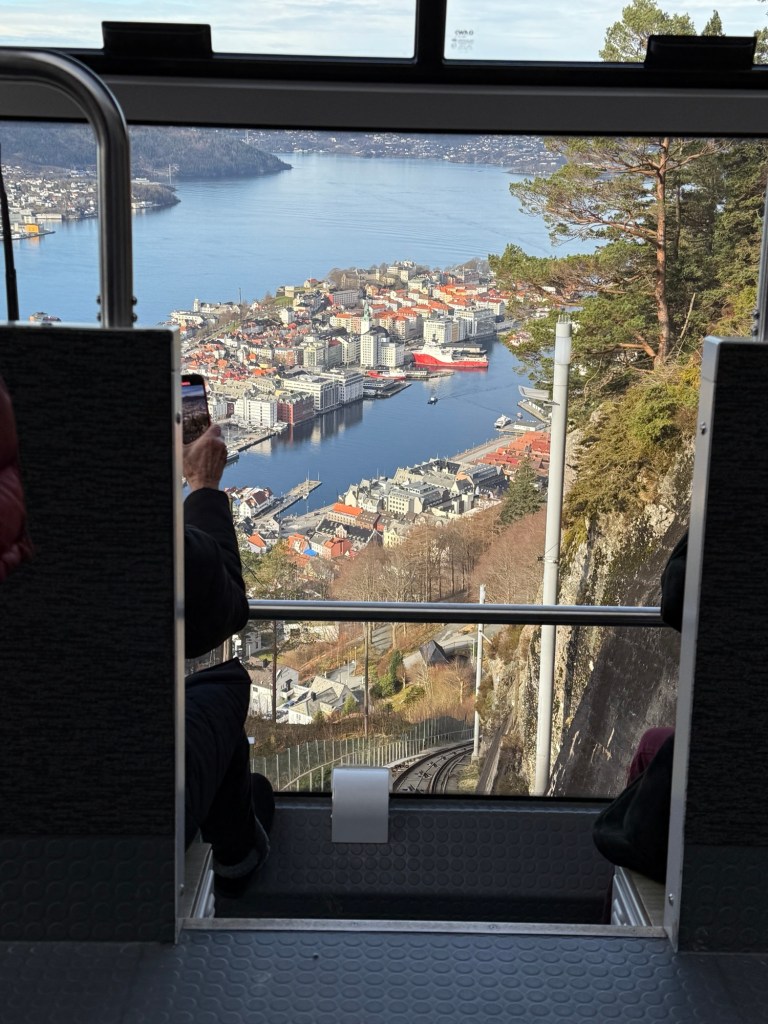
Allthego has been waiting for some clear skies to ride the Funicular up Mt Floyen, one of the seven mountains that lie behind Bergen.
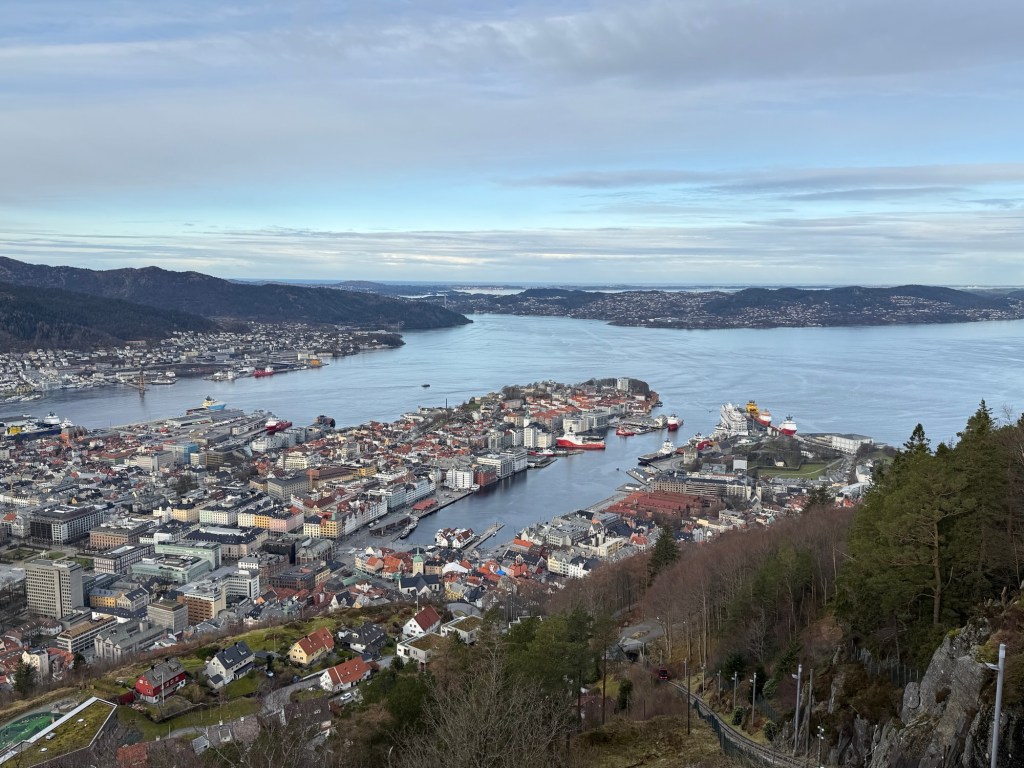
Some great views from the top. Homealone did not join him, a rather steep ascent in glass windowed cars allowed great views as we ascended and descended the track.
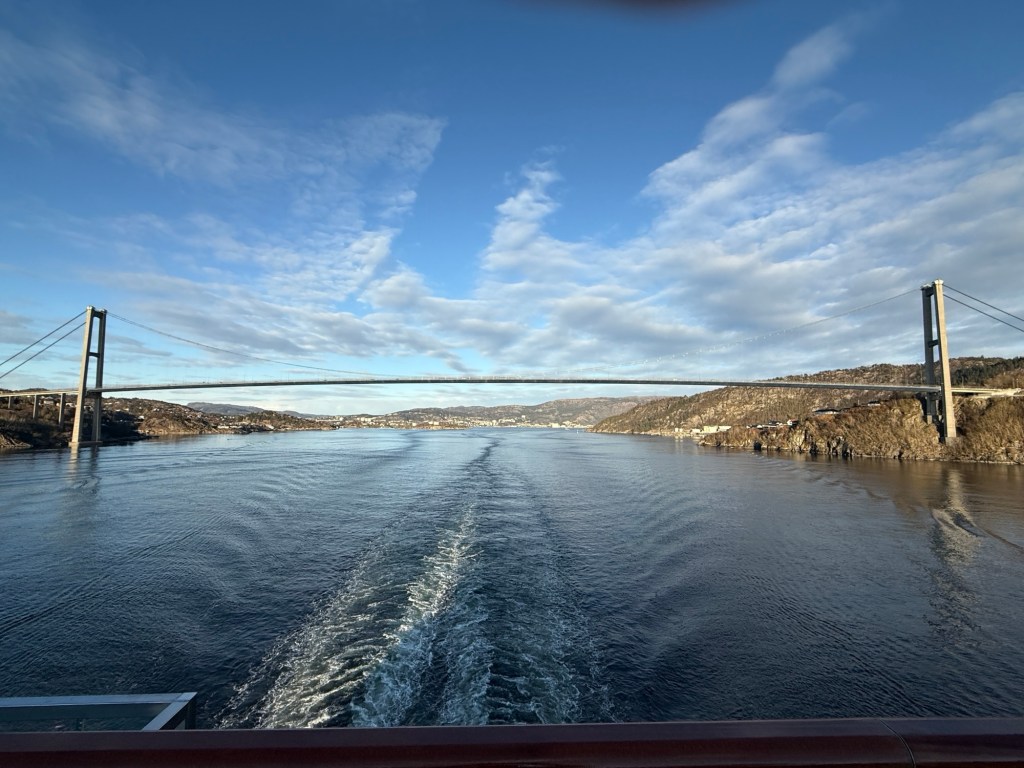
We had a night in Bergen aboard the Viking Vela before leaving the port late in the day and headed up the coast. It was a bit chilly, but not as cold as it would be in Alta.
Fram to Bergen from Flam
Back in Oslo we had spent some time in the Fram Museum. Allthego just recalled after having been advised by Homealone that ‘Fram’ means ‘forward’. So, we are now ‘Fram to Bergen from Flam’. Has a nice ring to it!
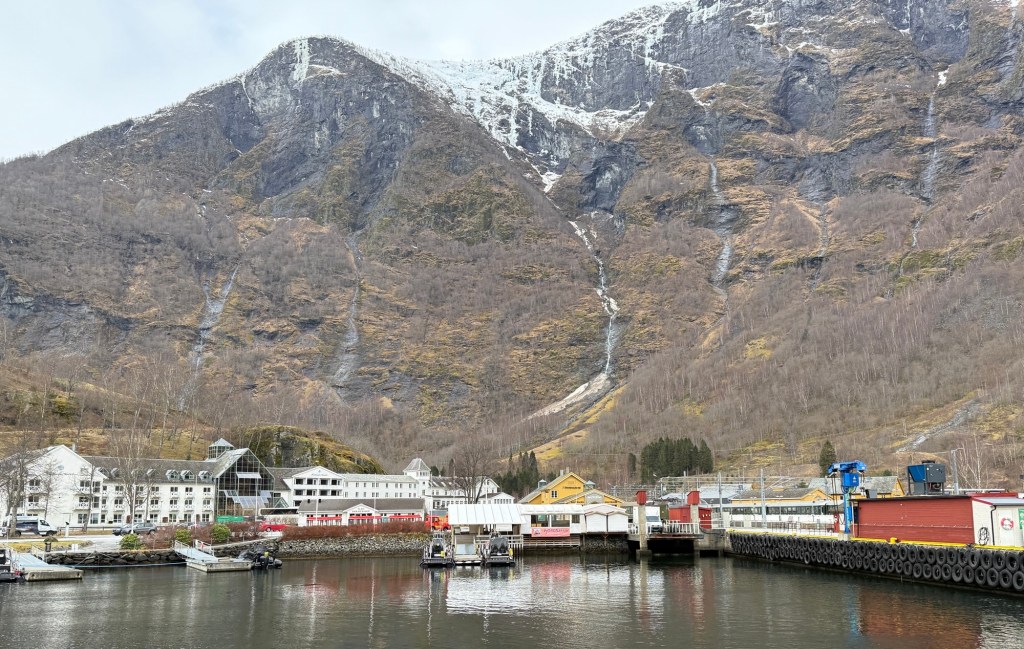
We spent the next day in Flam holed up somewhat in our room. Weather not great, scatty rain and chilly. In between we had a wander in the town shops, not that there are many! The train museum was closed, it is being ‘reimagined’ and restocked for the upcoming busy season. Nice little bakery provided lunch for us. We enjoyed dinner in the Flamsbrygga artisan brewery.
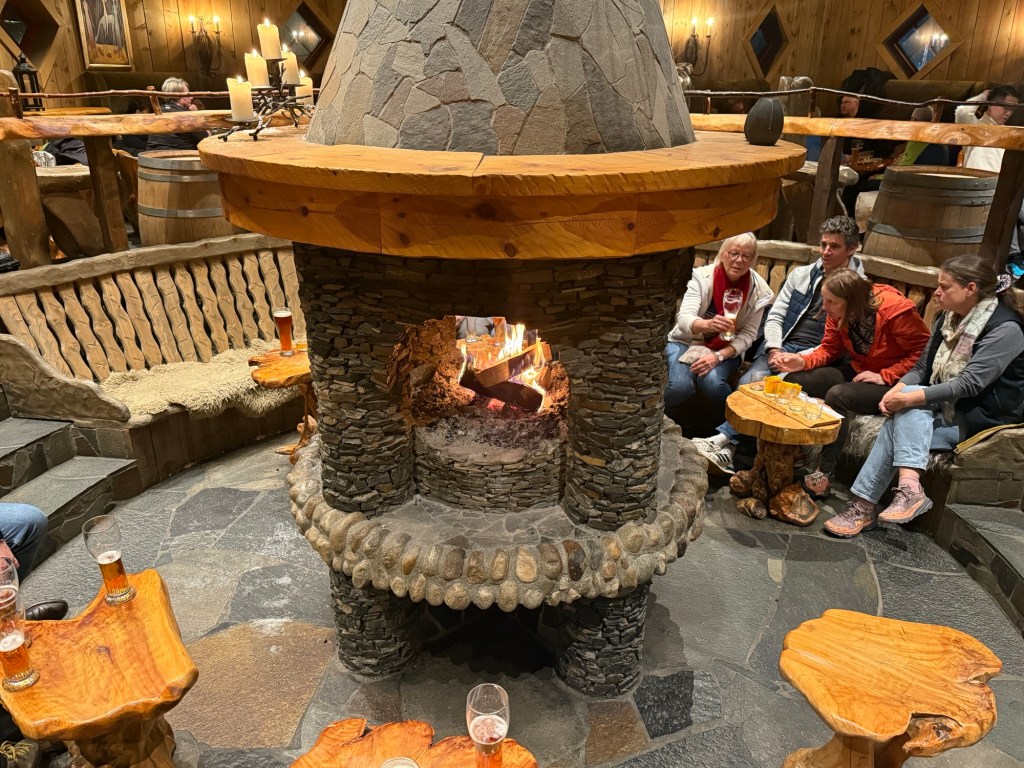
Little disappointed that we couldn’t get out and about the near parts of the Flam Valley for a closer look.
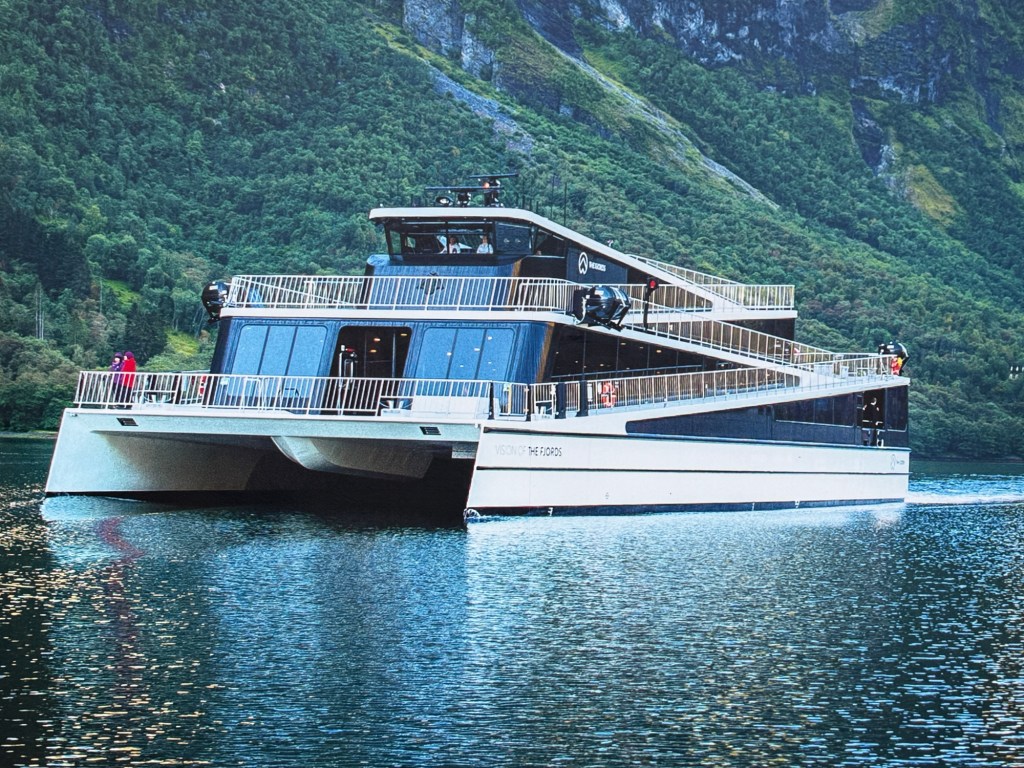
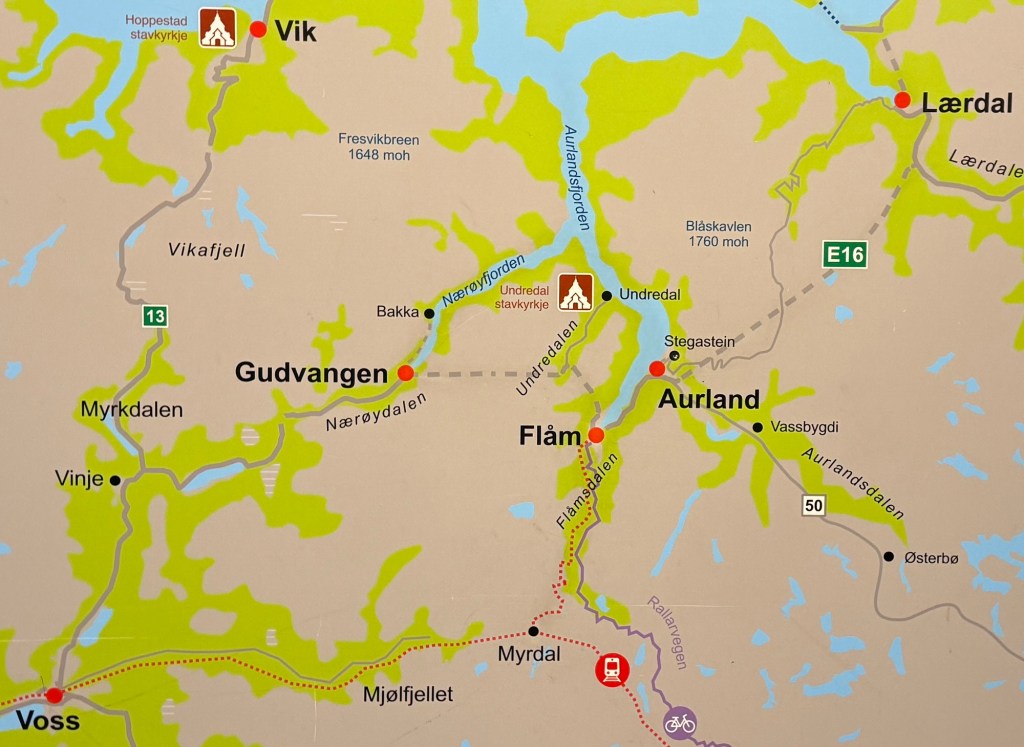
Next morning we had to be ready at 9.30am for the next stage of the journey. This being a ferry ride along the fjord to Gudvagen, which is up around a corner into another branch of the Sognefjord, the Naeroyfjord.
This was a wonderful two hour trip on an electric ferry (‘Future of the Fjords’) that holds 400 people, we probably had only 150 for this trip. Plenty of room and silent, except when side thrusters went on. Big racket! The map below shows the trip from Flam.
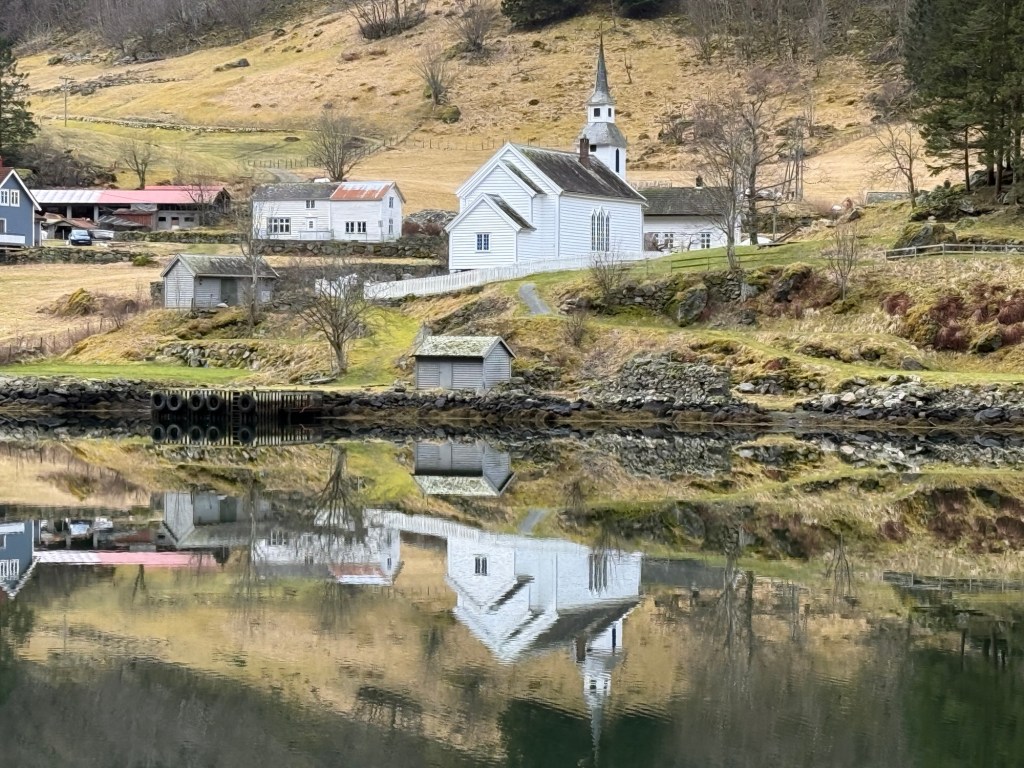
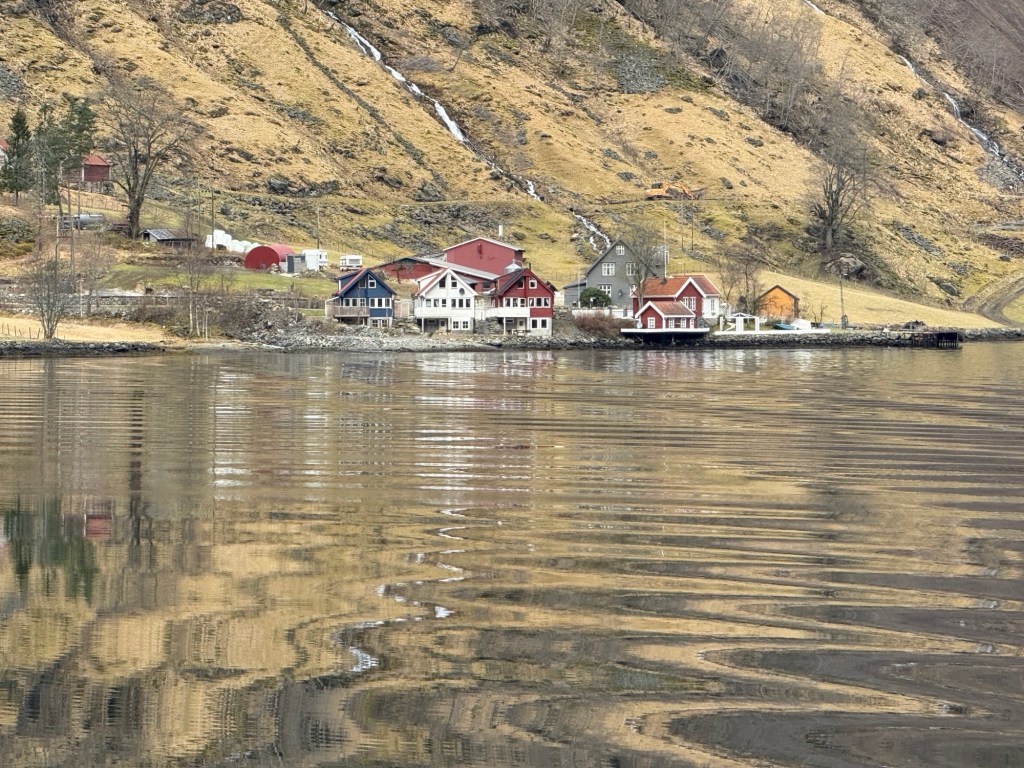
The vessel is fairly advanced and a full battery charge will take it 40km. Not far, just far enough for us! Might need to do some more work on the distance for a full charge!
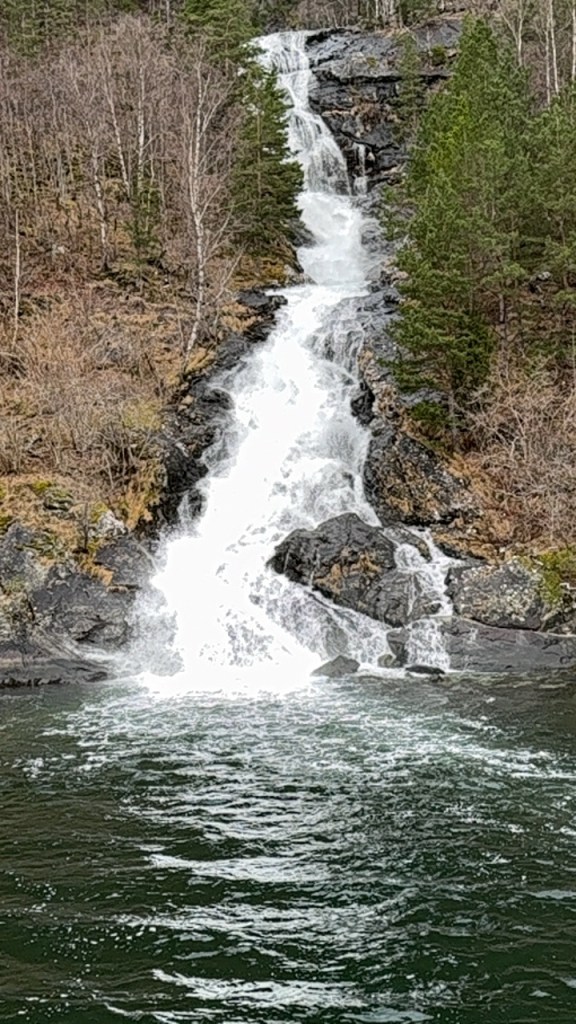
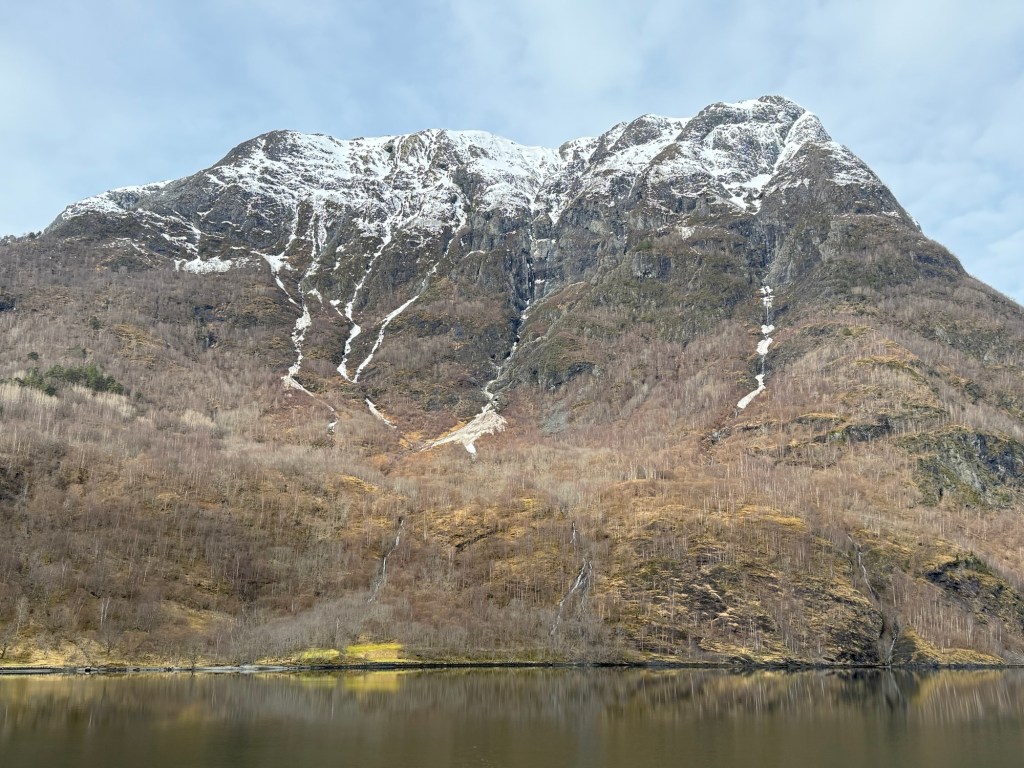
After disembarking at Gudvagen we only had a few minutes to board the bus that would take us up the mountains to Voss. A rather steep drive in places and a couple of long tunnels.
On the road to Voss we followed the course of the Vosser River (got to check that name) that feeds a couple of large lakes. The river is quite unpredictable, in parts very narrow and filled with rapids in other areas it widens out and is quite peaceful. After passing through the lakes and Voss it flows down into a fjord.
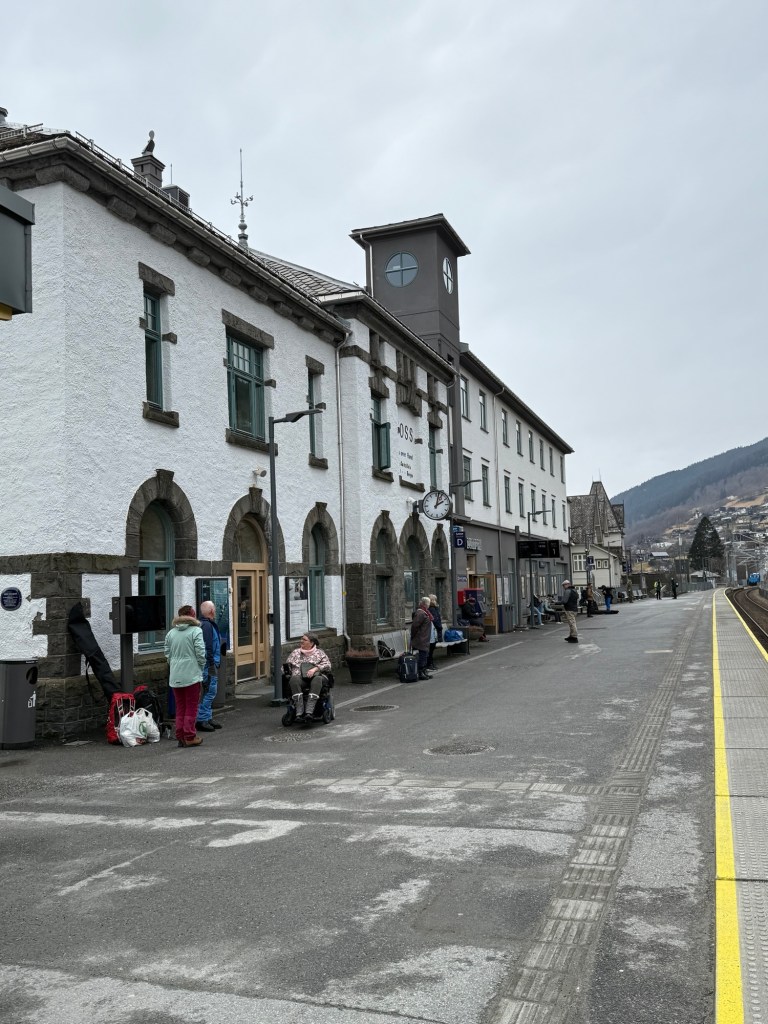
At Voss we have an hour to fill in before the train to Bergen arrives. The Voss gondola leaves from the station and it was tempting to take a ride up….. Homealone reluctant (probably a good idea) so we sat and waited for the train. Along it came, no booked seats this time. We did get a good window seat though, the river continued to be the main attraction. The train got along at a fast pace, so photos didn’t work. Eventually, we pulled into Bergen Railway Station.
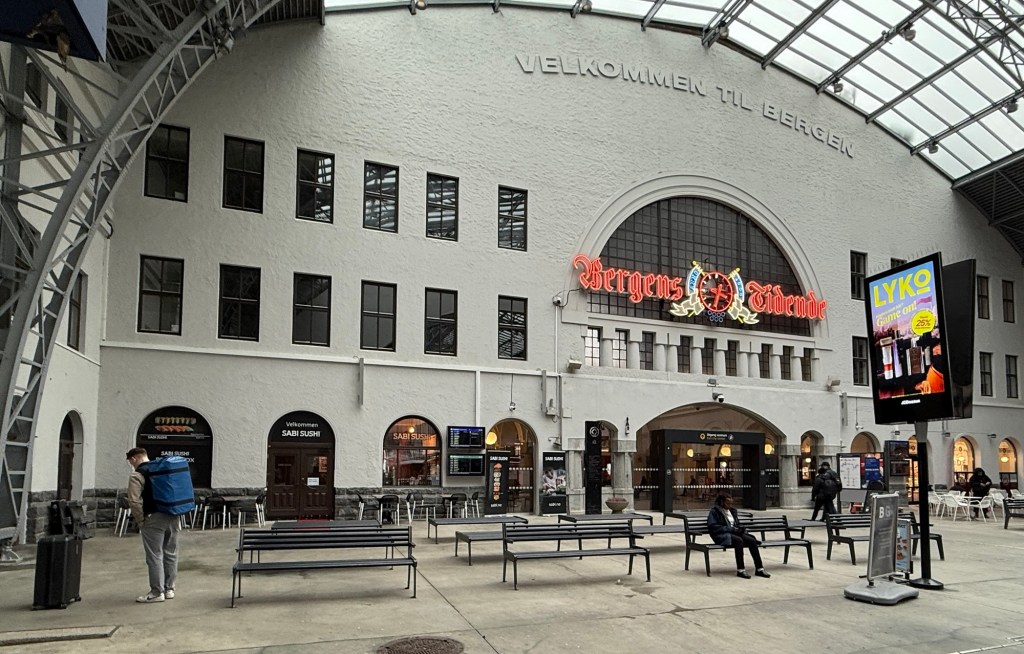
This is where the fun started. Allthego had the hotels name but no idea where it was, the one place we didn’t have directions for of course. And it was drizzling a bit too. After a bit of aimless wandering directions were sought. This happened several times and each time we seemed to get a little closer to the target, albeit going backwards and forwards a bit. At last a young lady suggested we get a tram for a couple of blocks and then catch a bus for another few blocks and lo we would be there! But alas no, the right brand of hotel but not our particular one, which we were told we had passed a block or so back but up the hill in another street. So it was!
We are now in Bergen for three nights before the cruise sets sail.
Oslo to Bergen
We are now starting the overland trip from Oslo to Bergen. Along the way we are stopping for two nights at Flam to break the trip up. Many do it all in a day as the ‘Norway in a Nutshell’ journey. Generally, you might do that in the summer months when the days are longer. But everyone does it then and there are a lot of people looking for seats on trains, ferries and buses. Bit of a mad rush too we think.
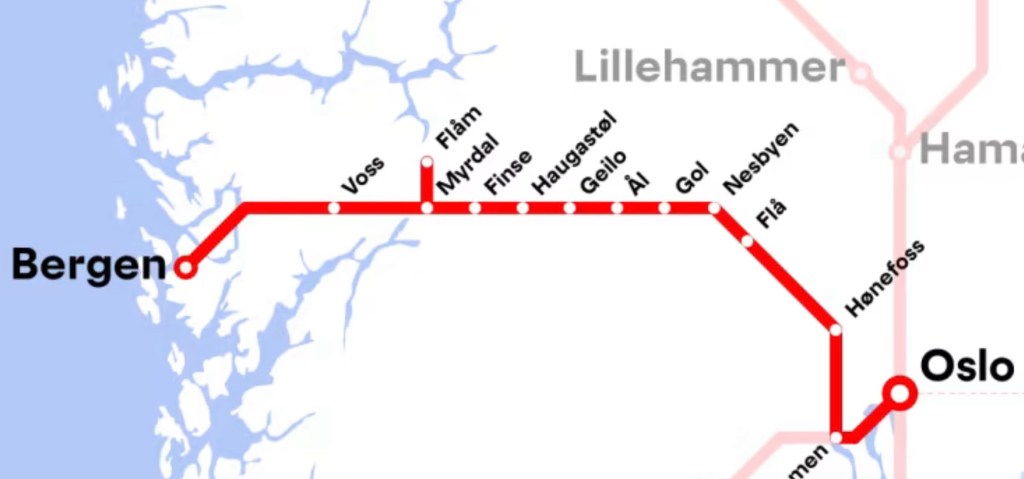
Of course one of the advantages of ‘Norway in a Nutshell’ is that someone buys all the train, bus and ferry tickets for you! But at a very big premium price. Allthego is a bit stubborn when it comes to price. So he hit the internet before leaving Aus and mapped out the itinerary and bought the tickets. Got the dates and times all lined up ok as well. Big saving, can recommend it. Of course we are at the end of winter and it was all pretty easy with availability. Maybe different in summer.
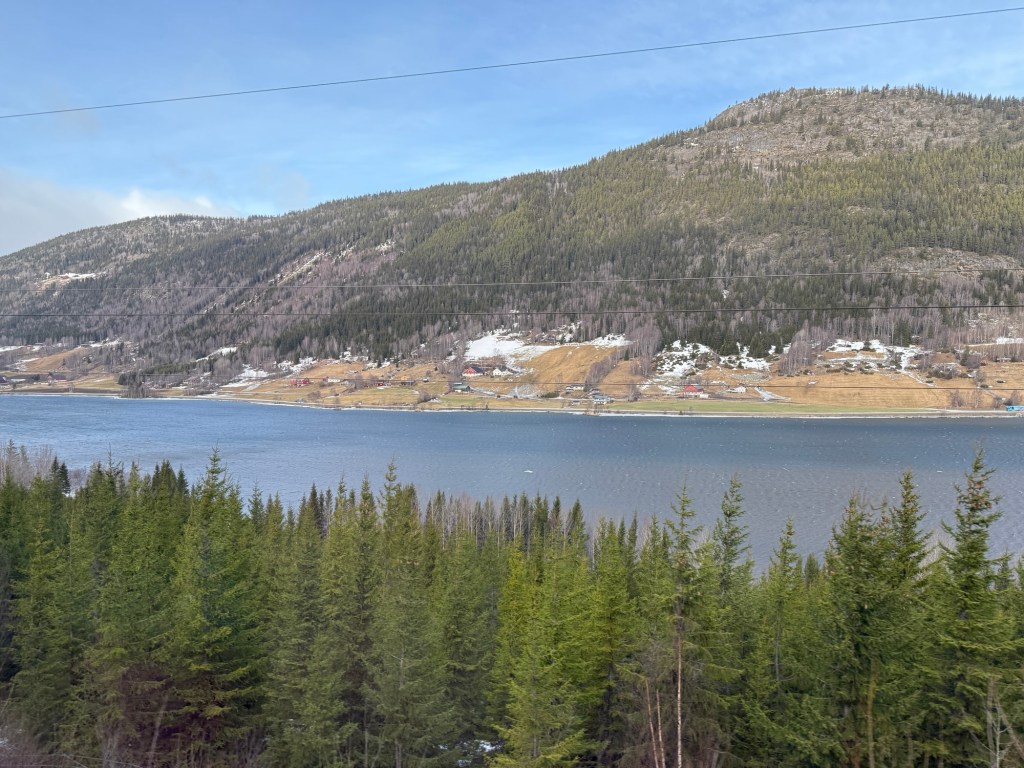
At the appointed hour of 6.25am our train from Oslo departed the station. As planned we were aboard!Fortunately, it was only a 10 min stroll from the hotel to the platform with our overnight bags. The main bags had been taken direct to Bergen by a porter service. Saved a lot of bag hassles. A bit of sun and blue sky to start but it all clouded up as we headed higher into the mountains.
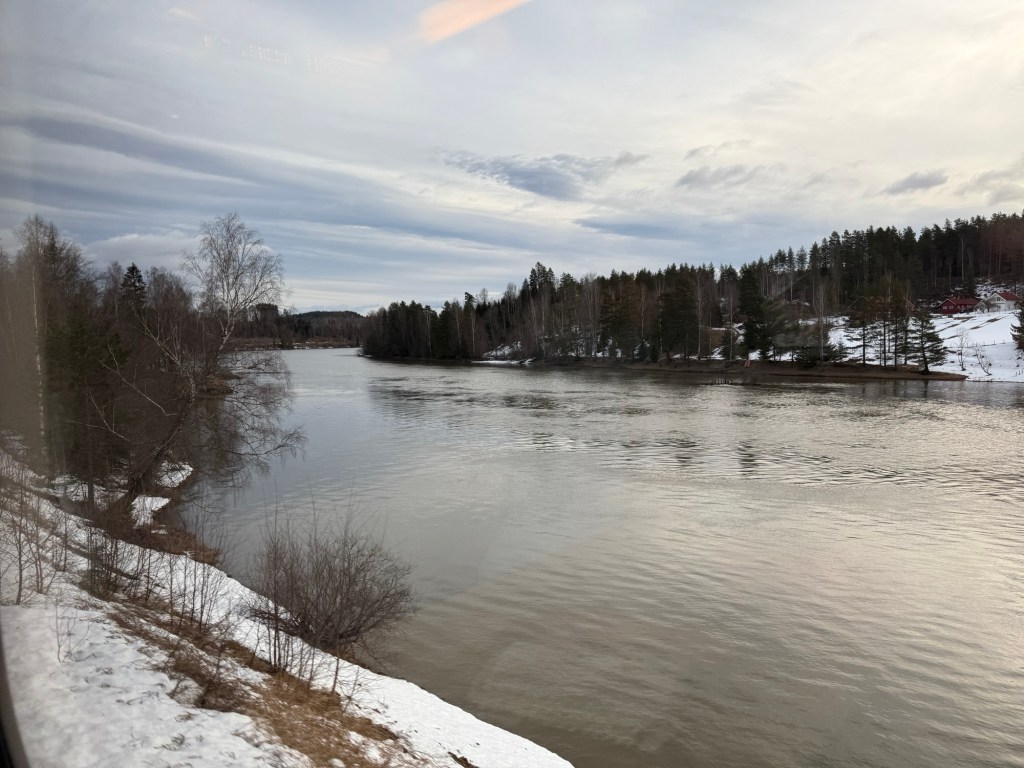
This section of the trip takes us to Myrdal and arrives at 11.15am, a four and three quarter hour trip through the countryside. Myrdal is 866 metres above sea level (Oslo) so it is a steady upward journey, some great scenery and snowy landscapes.
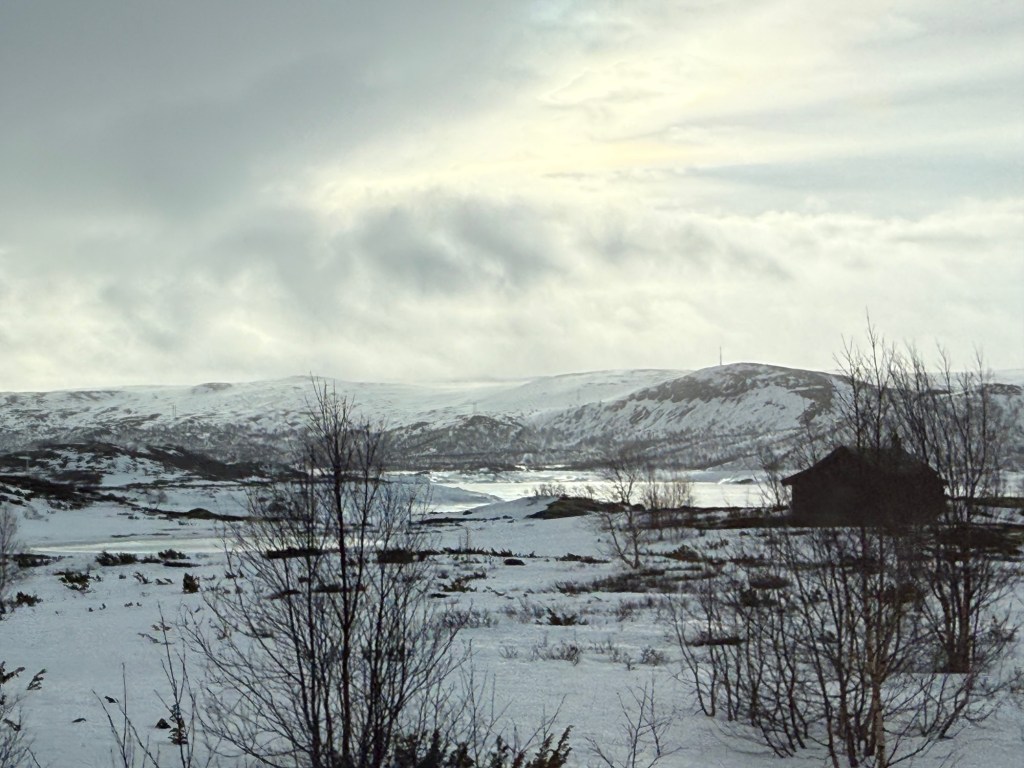
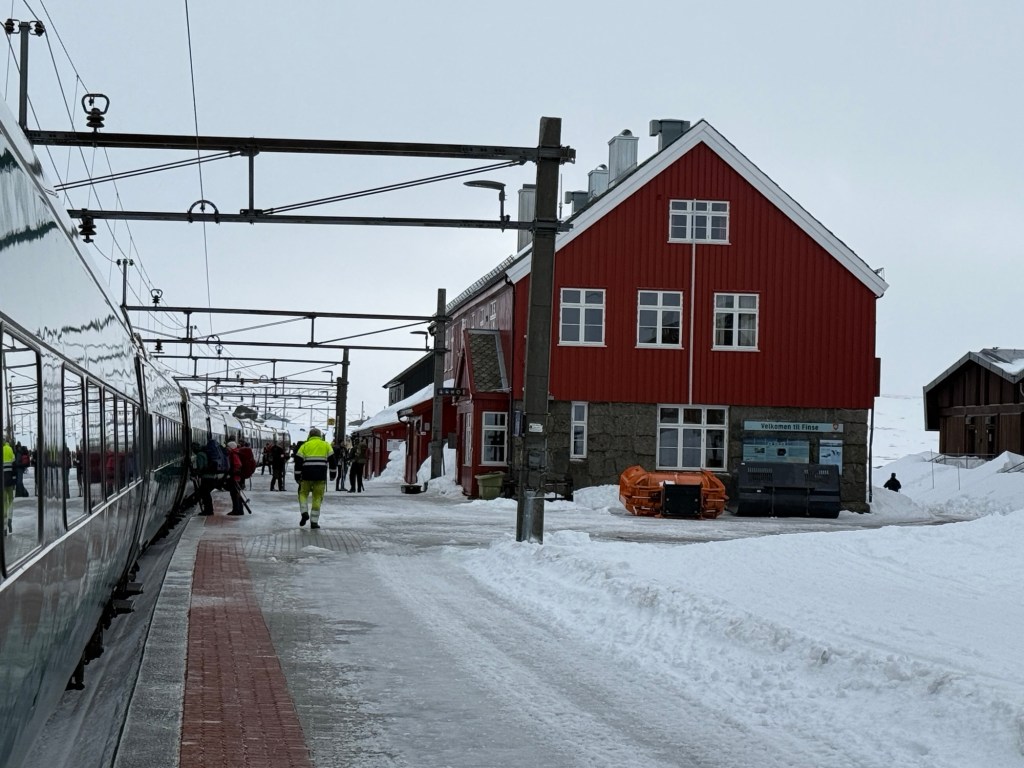
The highest point on the line is at Finse which is 1,222 metres above sea level. Finse is actually the highest railway station in northern Europe, it is really a ski resort. So the line rises and falls along the way.
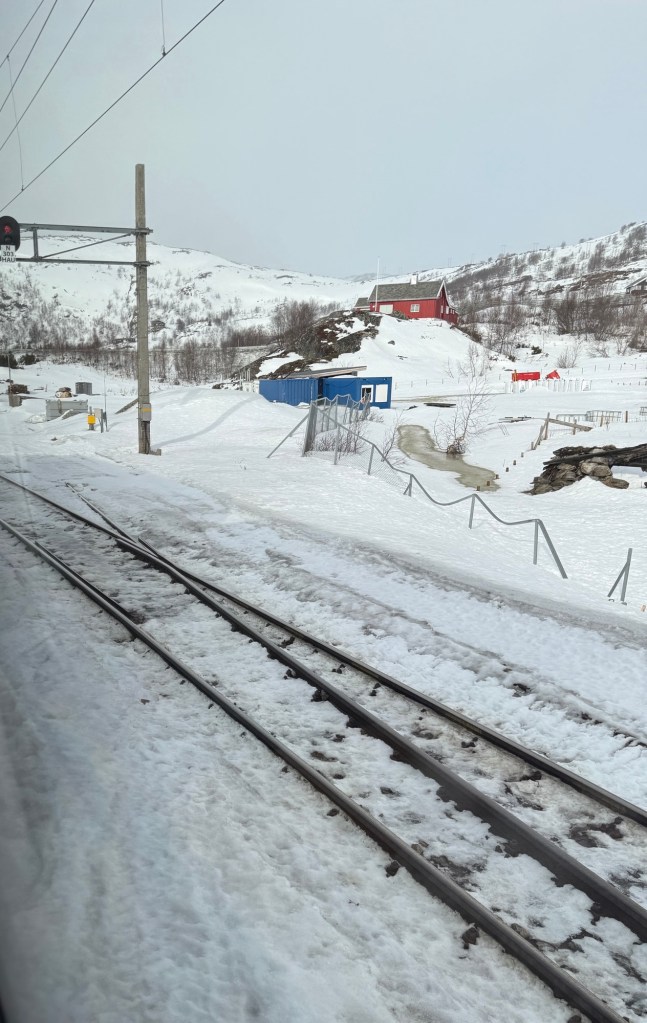
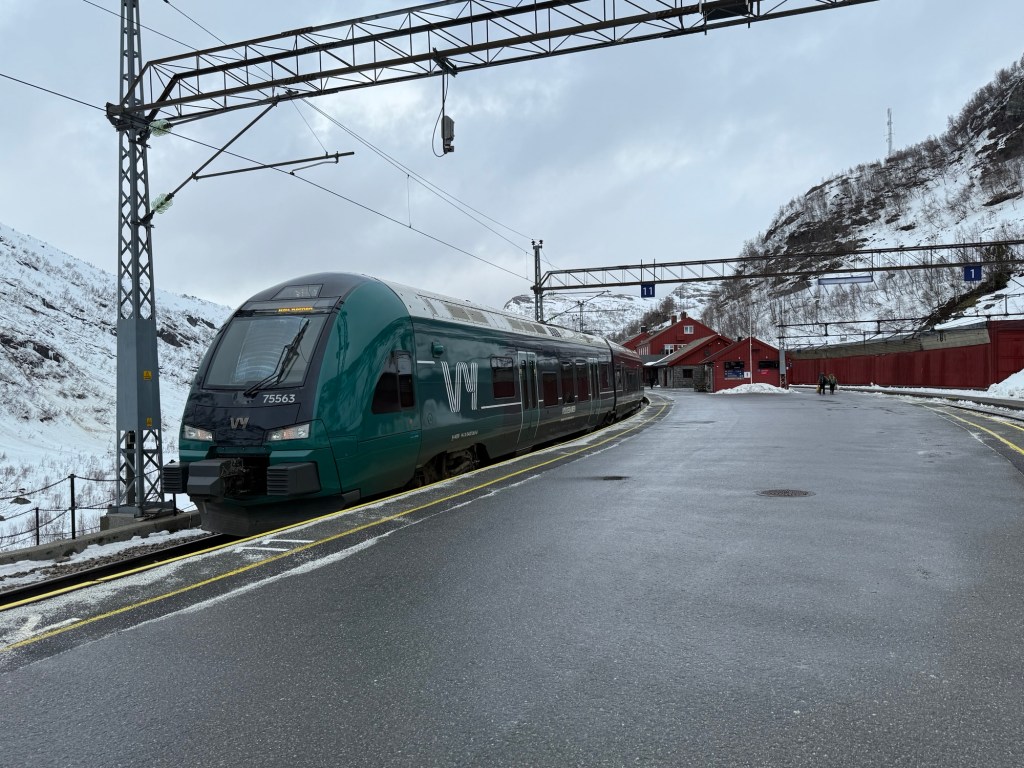
Myrdal is where we got off the train, it would continue along the main line to Bergen. We had a two hour stop over here awaiting the train to Flam on a different line. The train is called the ‘Flamsbana’. The train journey from Myrdal down to Flam on the Auriandsfjorden (I’ll call it ‘A’ next time) and has been included in a list of the ten great train journeys in the world. ‘A’ is a branch of Norway’s longest Fjord, the Sognefjord.
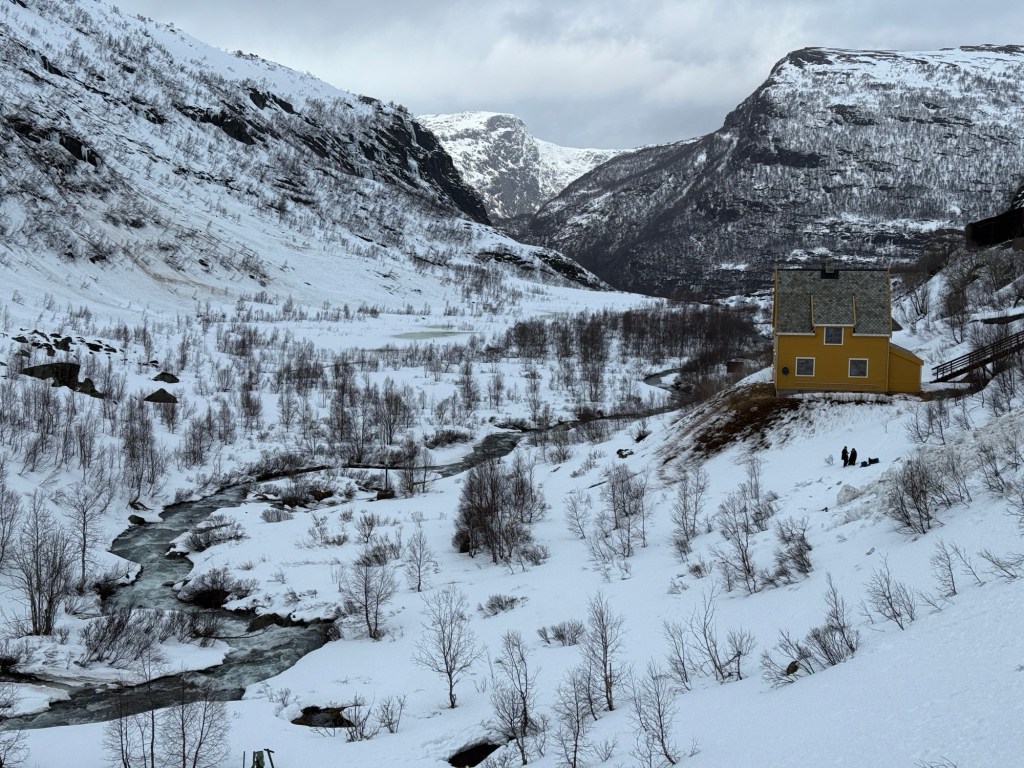
This is where we had to get out our tickets for the Flam train trip and show them to the conductress who strolled through the cabin calling out ‘tickets’. Just prior to this Allthego had checked the tickets and found out that the Brown home computer had put the wrong date on them! Sunday 16th February, not Thursday 6th March. This was a potential problem. A bit of talking got us through ok, no drama, might have been different if the train had been full of bodies. It was only about a third full for the trip. Just got to triple check dates in future not just the times!
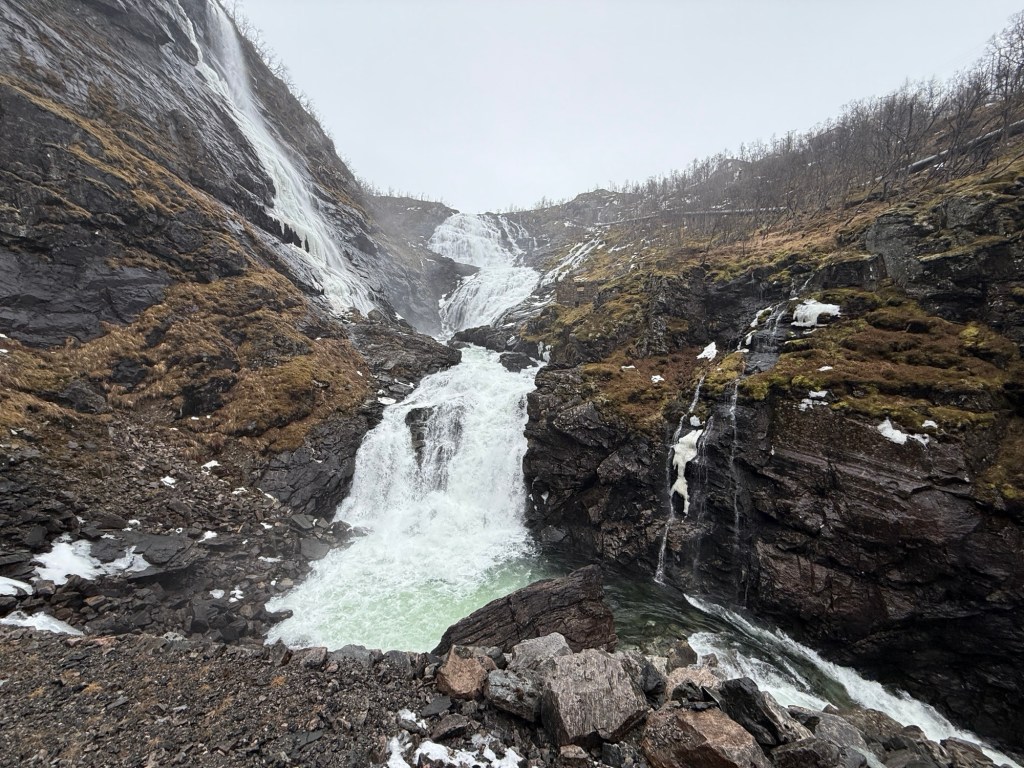
It takes 45 minutes for the train to descend 866 metres over approximately 20 km.
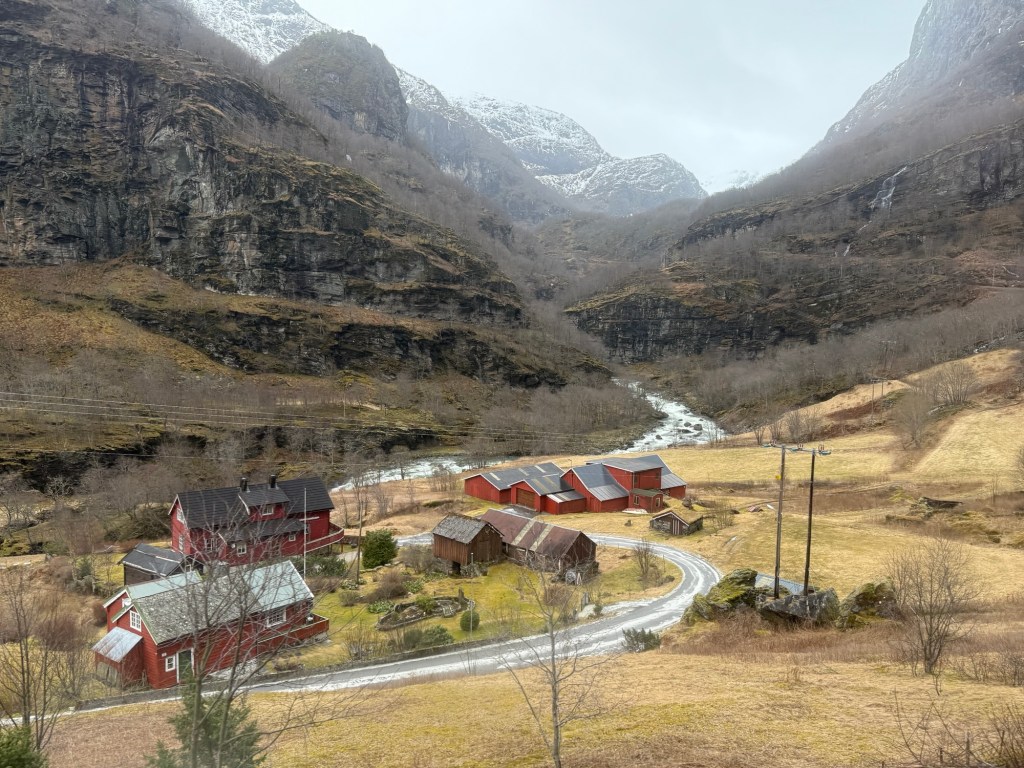
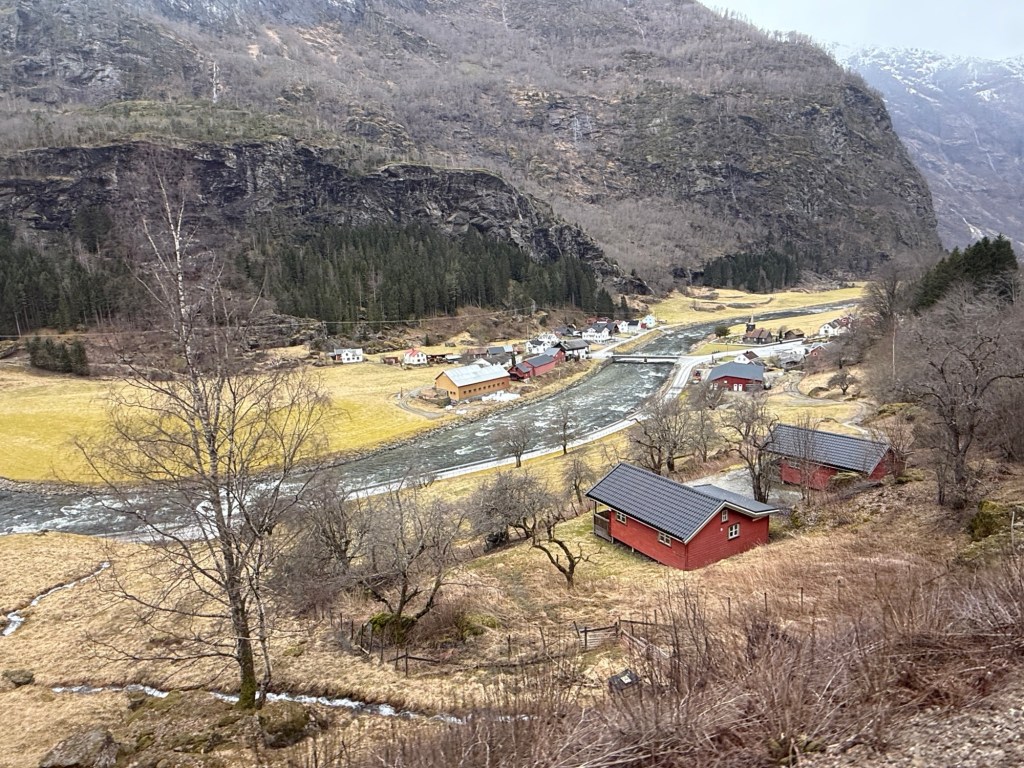
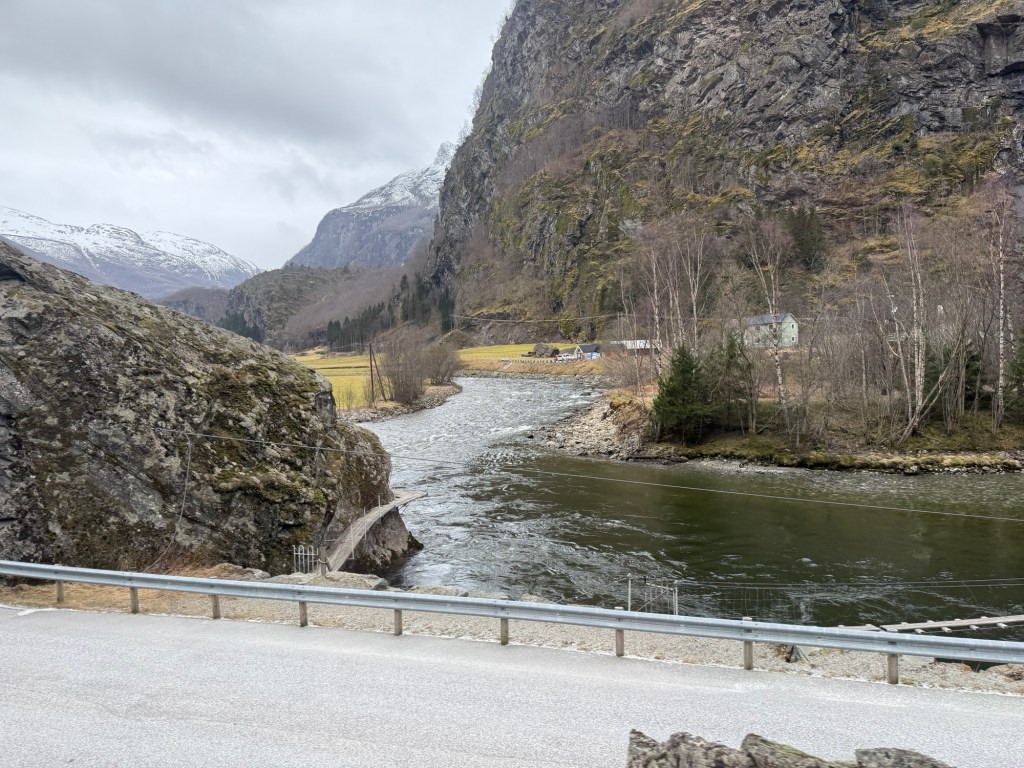
We passed through upwards of 20 tunnels, some corkscrew ones, that were built in the 1920s. A great scenic trip with waterfalls through the Flam Valley, beside the river.
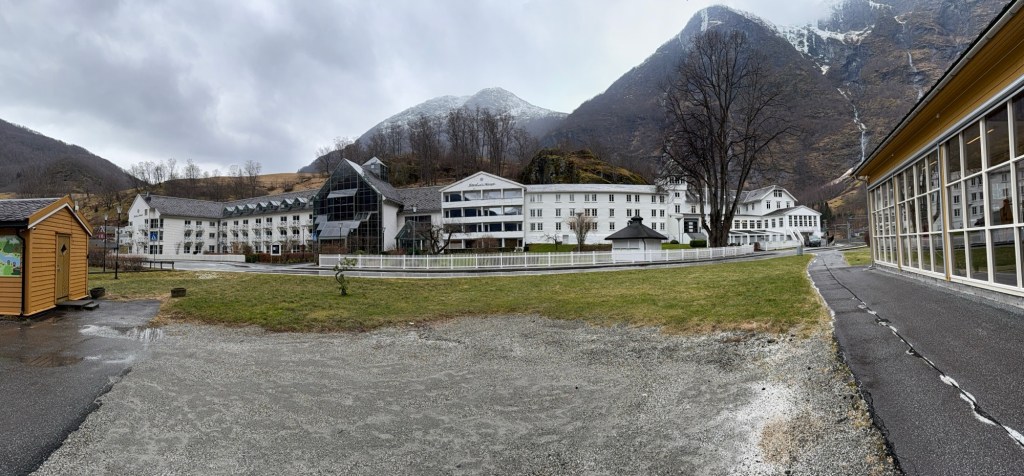
Arrived at the little township of Flam at 4pm and booked into the Fretheim Hotel for our 2 night stay and from where the story will pick up next time.
Oslo, going, going
Our last day in Oslo has reverted back to some sunshine and blue sky. Still a fair bit of cloud. We set off today for a group of three museums way out of town on the fjord shores. Have to catch a local bus to get there, it takes a while and a bit of walking to find the bus stop. Finally, we are on our way and it takes about thirty minutes through the suburbs.
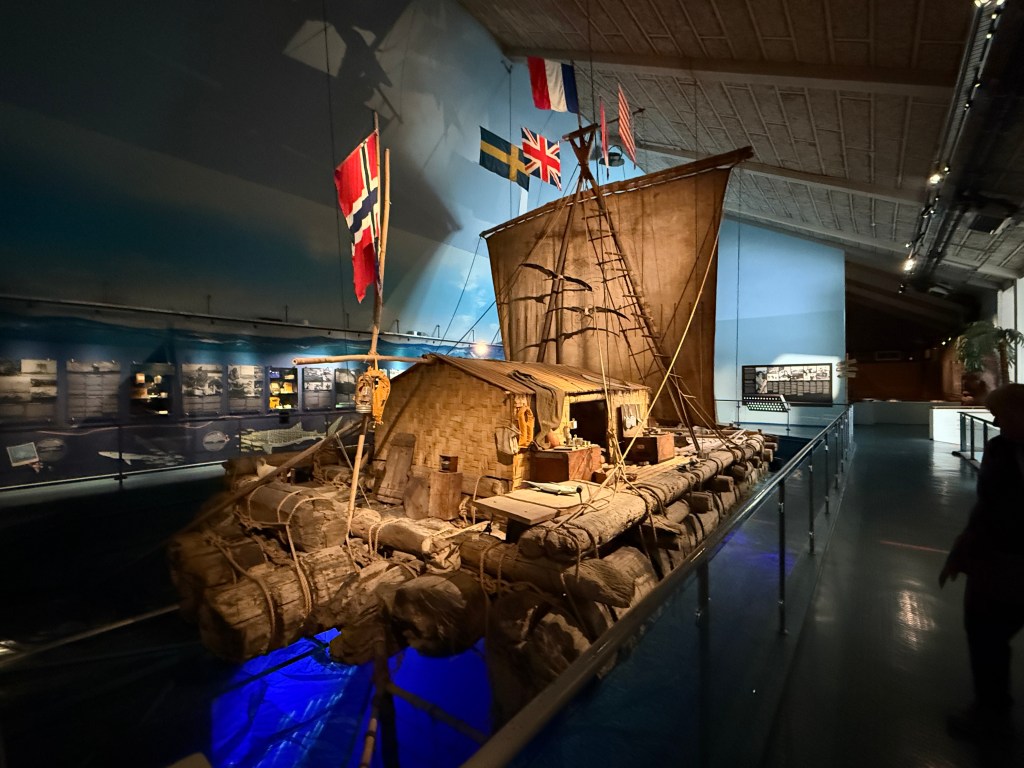
The first is the Kon Tiki museum that records the work of Thor Heyerdahl. He sought to prove that man could have sailed from South America to the Pacific Islands on rafts to establish civilisations of the same ilk as in South America. The success of the Kon Tiki journey certainly established that it could be done. Today, however, there seems to be evidence that the Polynesians came from the north east rather than South America, it is not proven though and doubts remain as to the source of the Pacific populations.
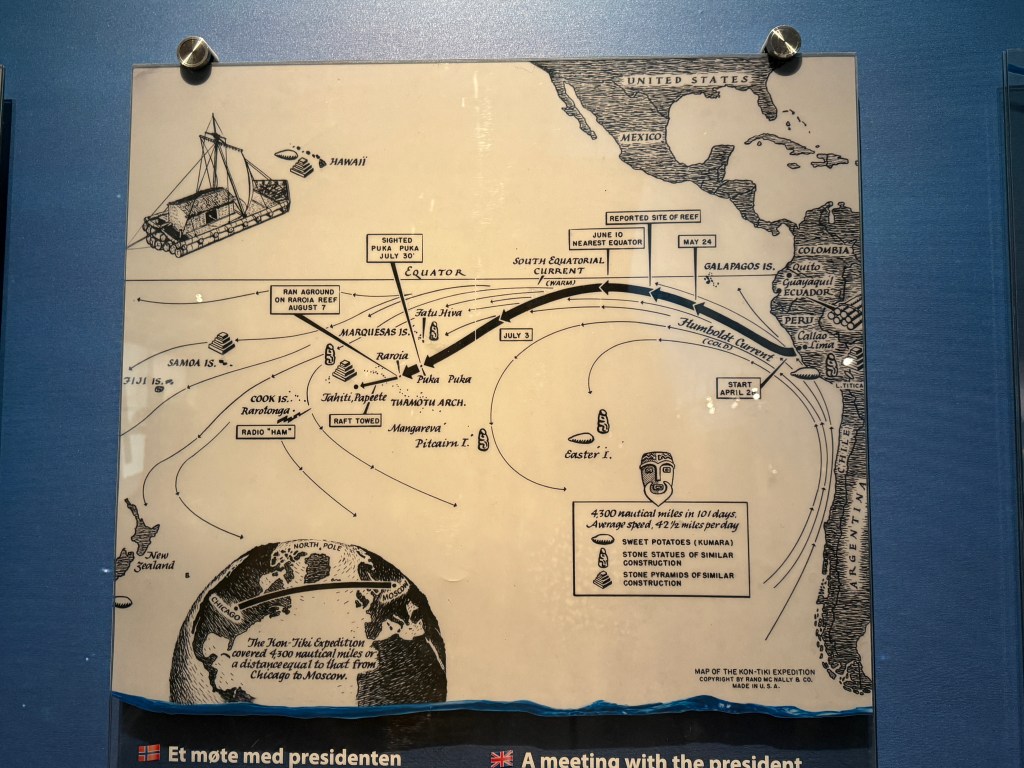
Later Heyerdahl did the same sort of trip on Ra across the Atlantic to prove that man could have sailed from southern Europe on rafts to introduce Egyptian ideas to the Mayan populations in South America. Again there is no conclusive proof. For all his work Thor Heyerdahl has his place in Norwegian history.
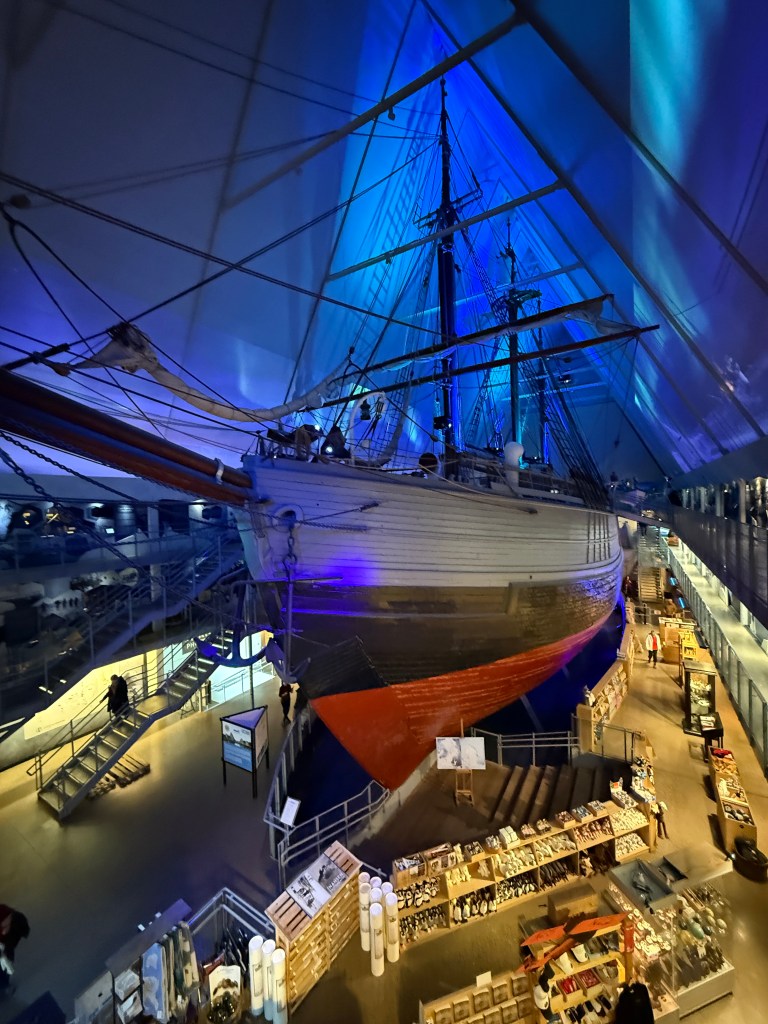
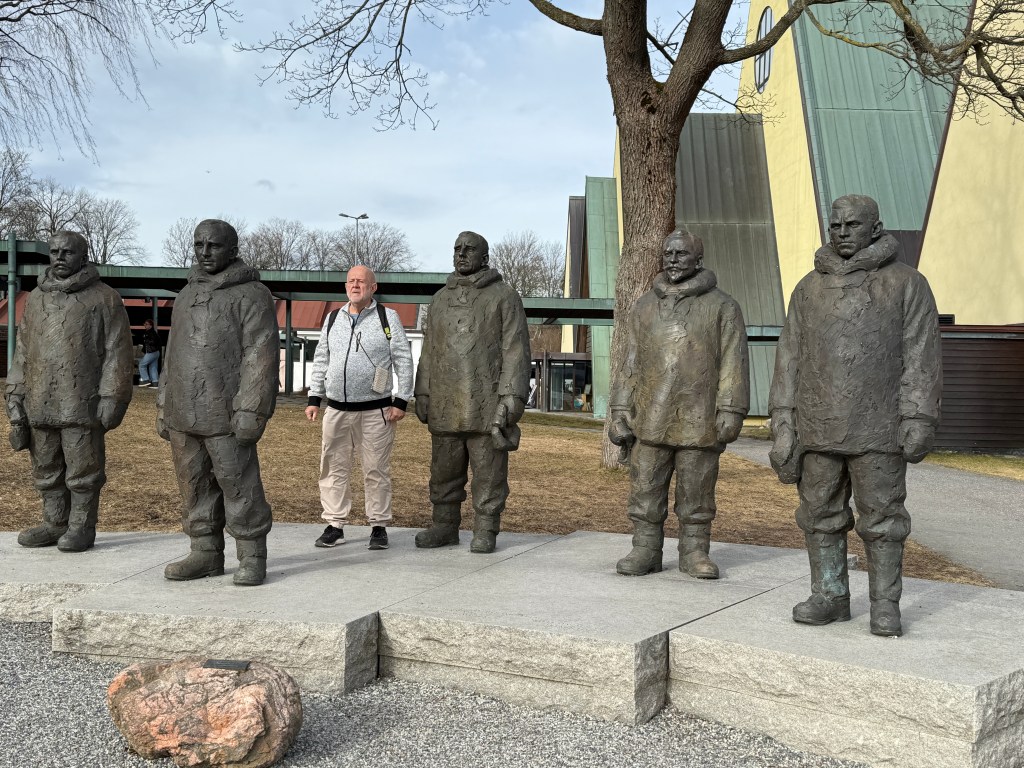
Across the road is the Fram Museum. It is here that the original Fram is securely preserved. The Fram was the ship used by Nansen and Amundsen on their polar explorations. Nansen in the north and Amundsen in the south.
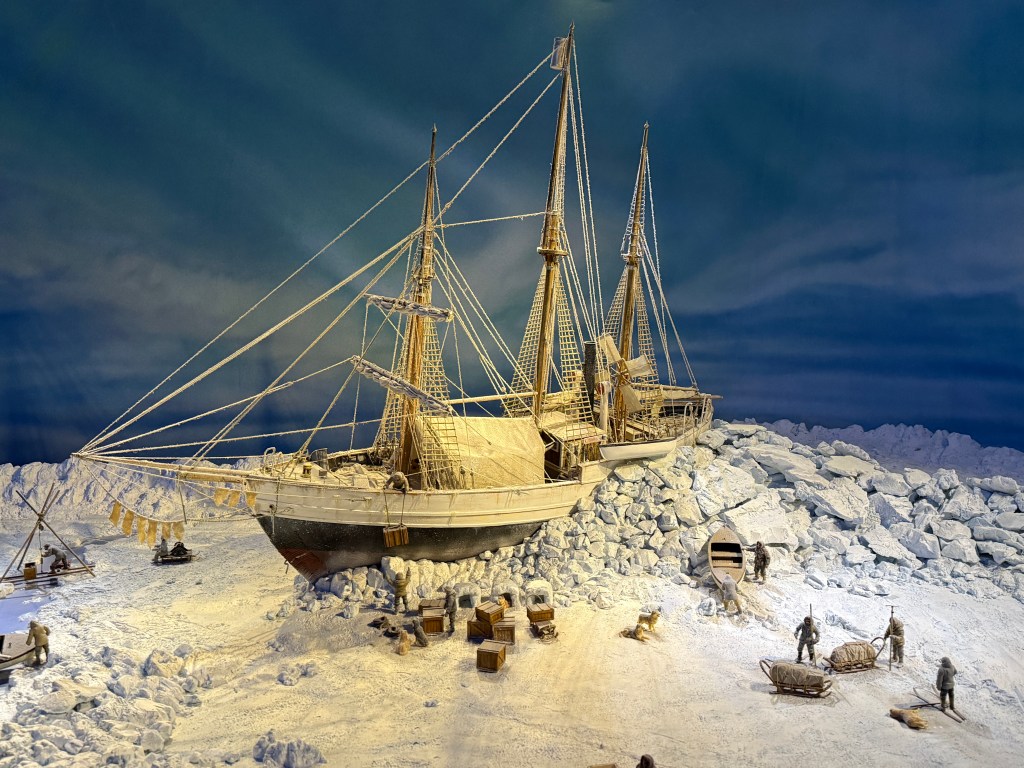
Considerable space is given over in the museum to the race between Amundsen and Scott (the English team) to be the first to reach the South Pole. But it is the Fram that dominates the museum space, an amazing vessel.
Lastly, we moved on to the Maritime Museum which records hundreds of years of Norwegian sea faring. Of interest to us though were some pieces of old Viking boats and the story of how these are being restored. A couple of pieces had been moved here from the Viking Museum which is undergoing a multi year restoration. Some amazing sights here in this museum.

This old canoe is the oldest boat ever found in Norway, some 2,200 years old. The tools are likely to be the sort of items used to make it.
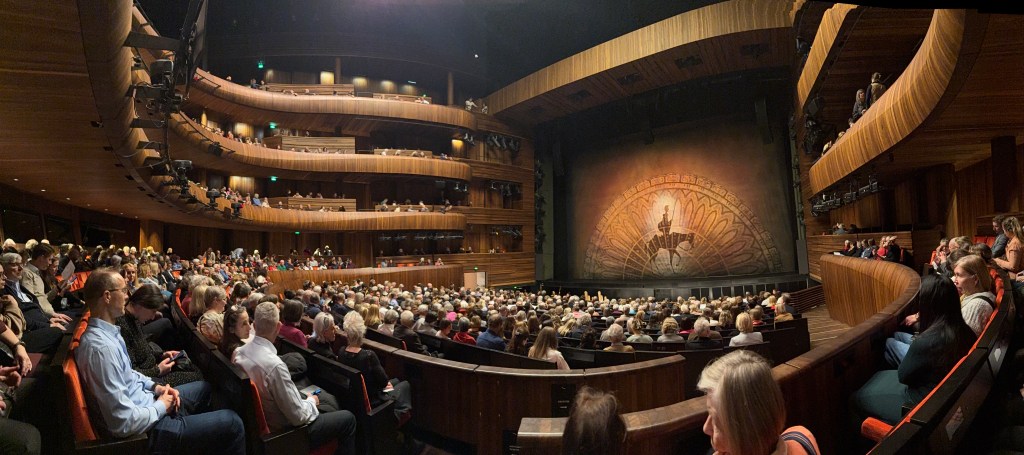
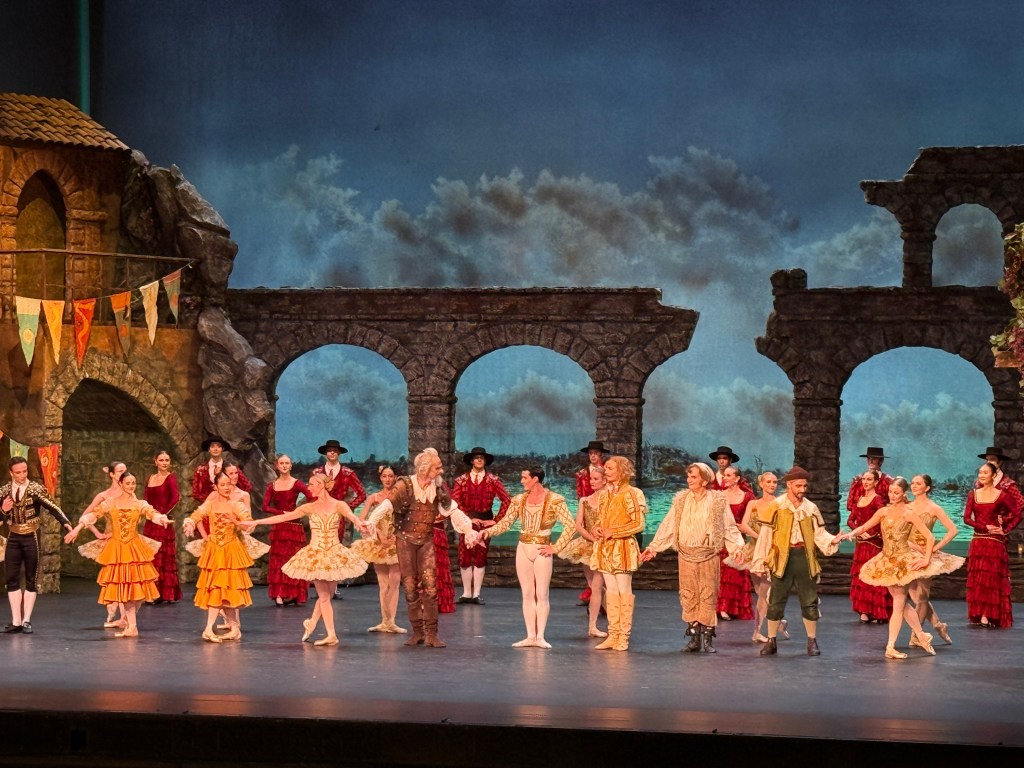
Late in the afternoon we headed back on the bus for the city, arriving without any drama. We had a treat lined up to attend the Oslo Opera House to see the ballet of Don Quixote. Quite an enjoyable show to round out our trip to Oslo.
We head off early in the morning on the Bergen train, stopping at Myrdal to change trains for Flam. More of that next time.
Oslo on the go go
The new day has brought back the unsettled weather. A bit chilly and very overcast. After another healthy breakfast we set off on a walking expedition along the waterfront, which is only about five minutes from the hotel.
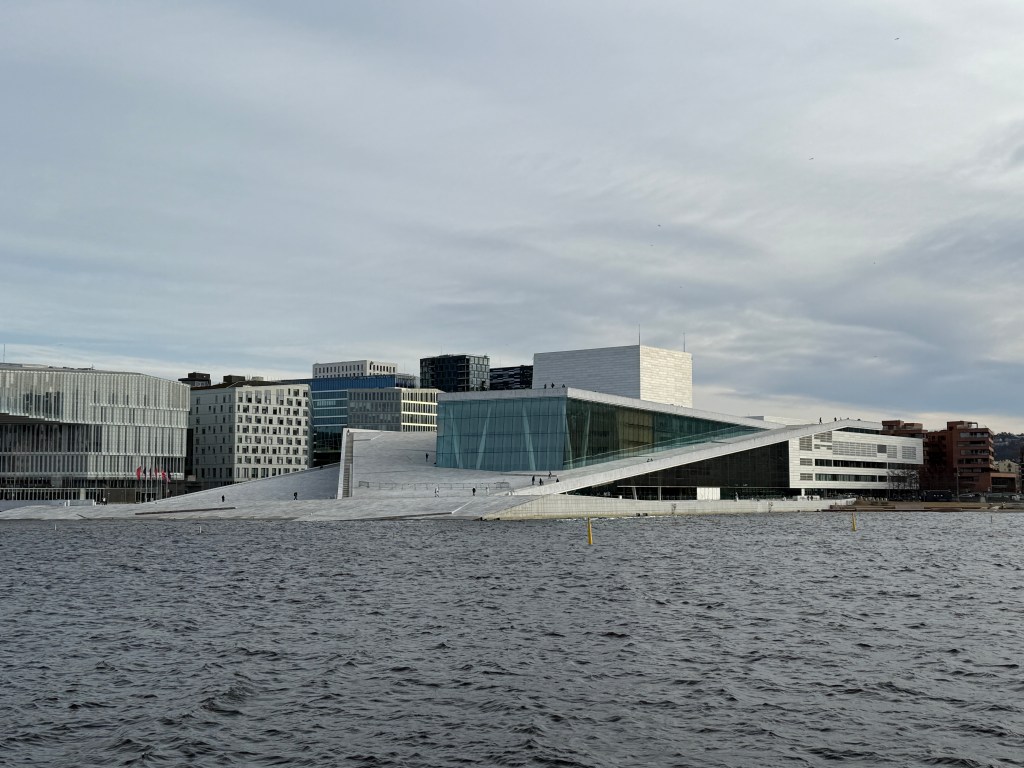
First stop is the Opera House. A big white marble building that sits on the waterfront and rises about three to four stories through various levels. Quite impressive, but one is not quite sure what goes on inside it! It is all a bit austere. Allthego walked up the sloping roofline to the top. Some great views of the harbour and surrounding buildings.
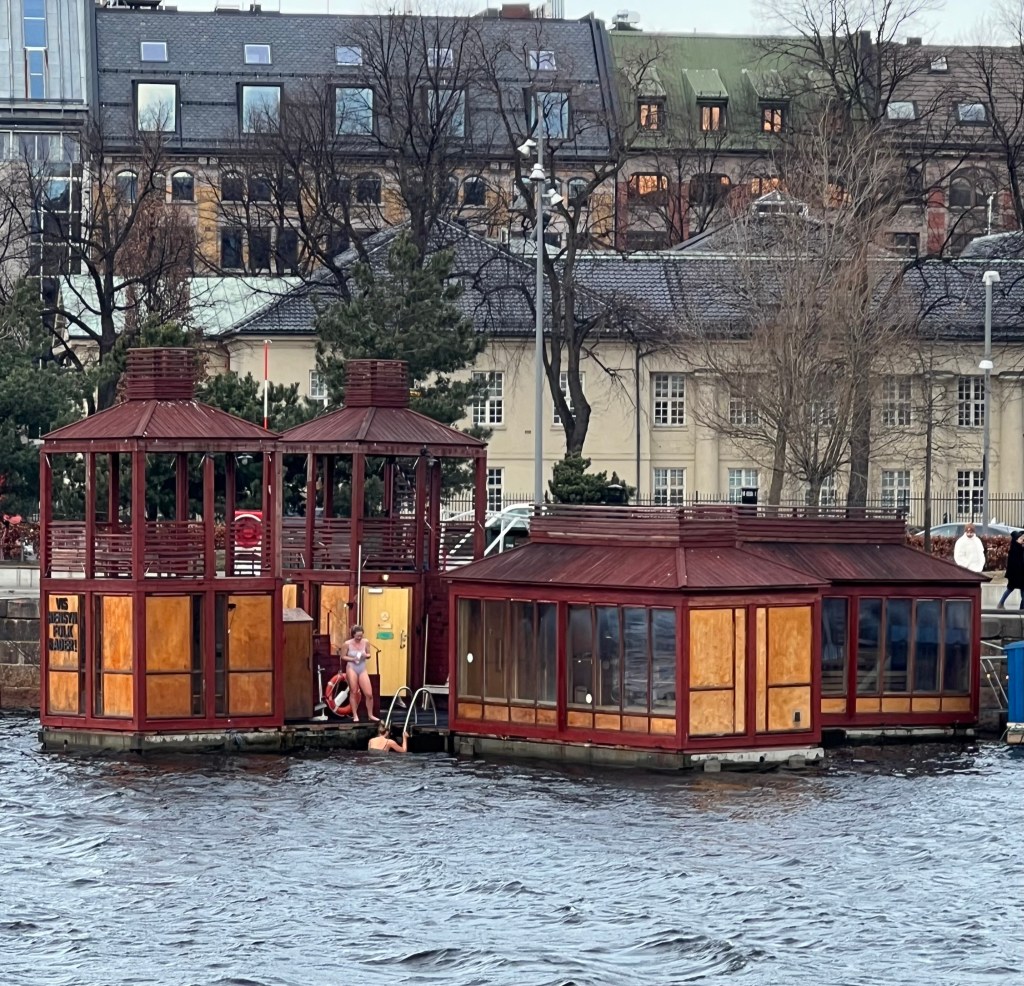
Across the bay there are a few saunas floating on the harbour. The idea is that after the sauna you go for a dunk in the harbour! Quite invigorating, some ladies of various shapes and sizes were having a go. Homealone, managed to get a close up of a couple of gals going in. The sauna would be ok, not sure about the cold plunge!
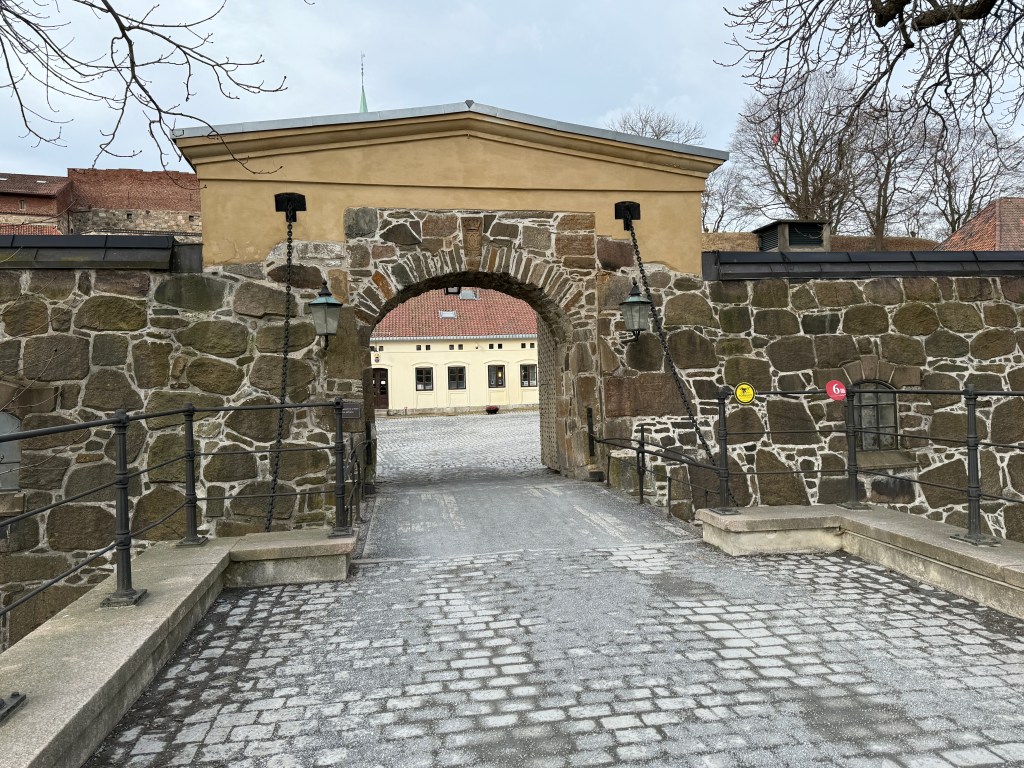
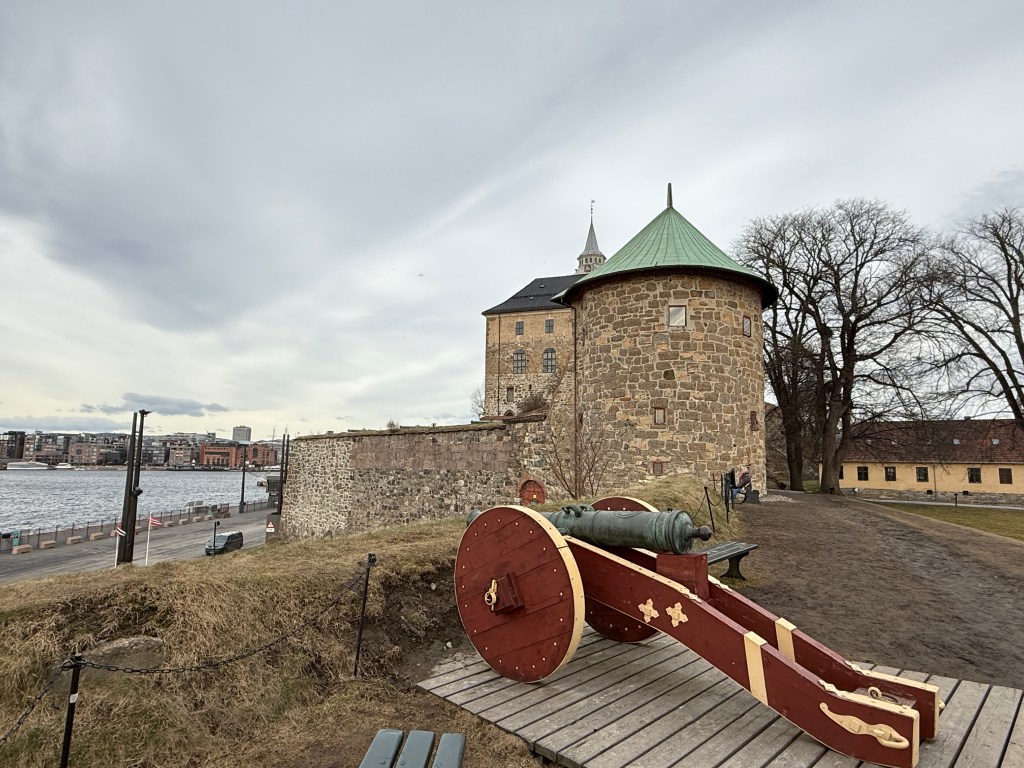
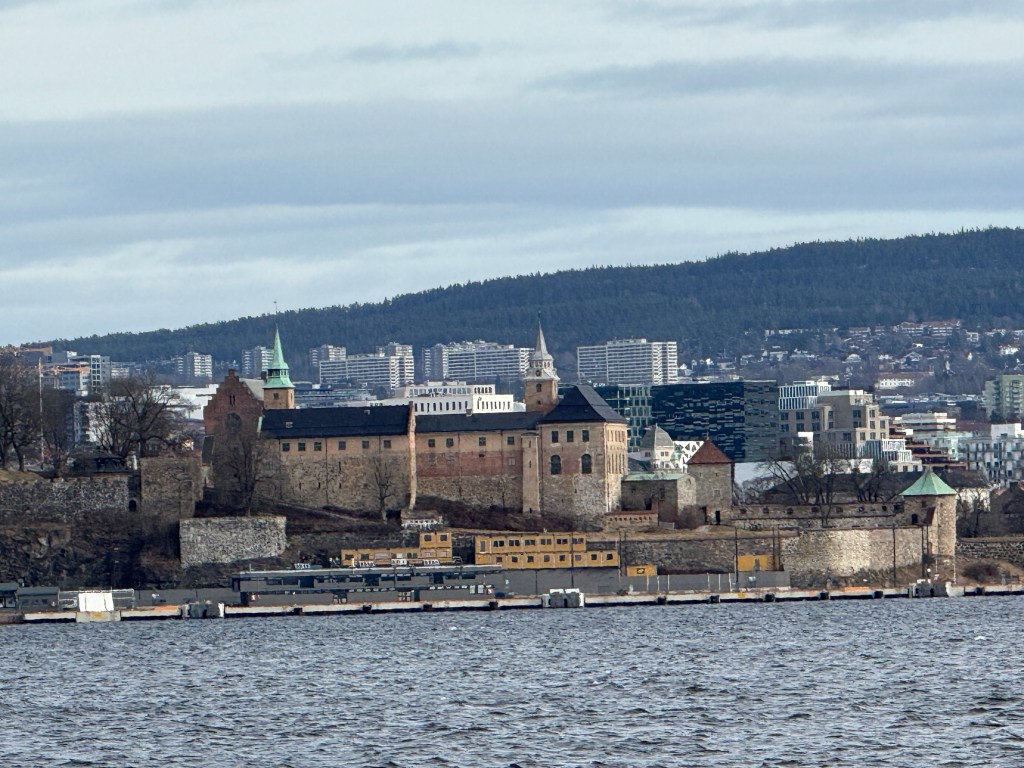
Further around the waterfront the old medieval Akershus Fortress juts out into the harbour. The oldest parts were built around 1300 by Hakon V, the great Norwegian castle builder. Over the centuries it has been added to and under Christian IV in the late 1500s was converted to a renaissance palace for his family. Since then it has served many purposes being added to and today serves as the administrative headquarters for part of the military.
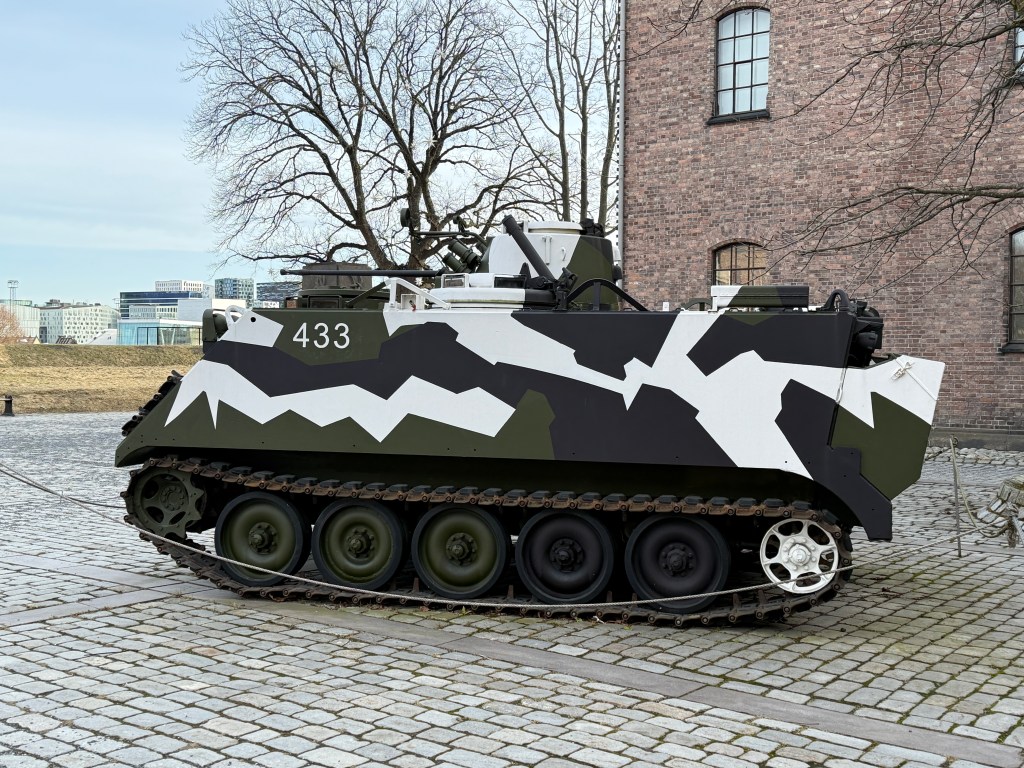
After some time at the Fortress we moved around the harbour line to the ferry terminal area. This is where the Town Hall overlooks the bay alongside the Nobel Peace Prize Centre.
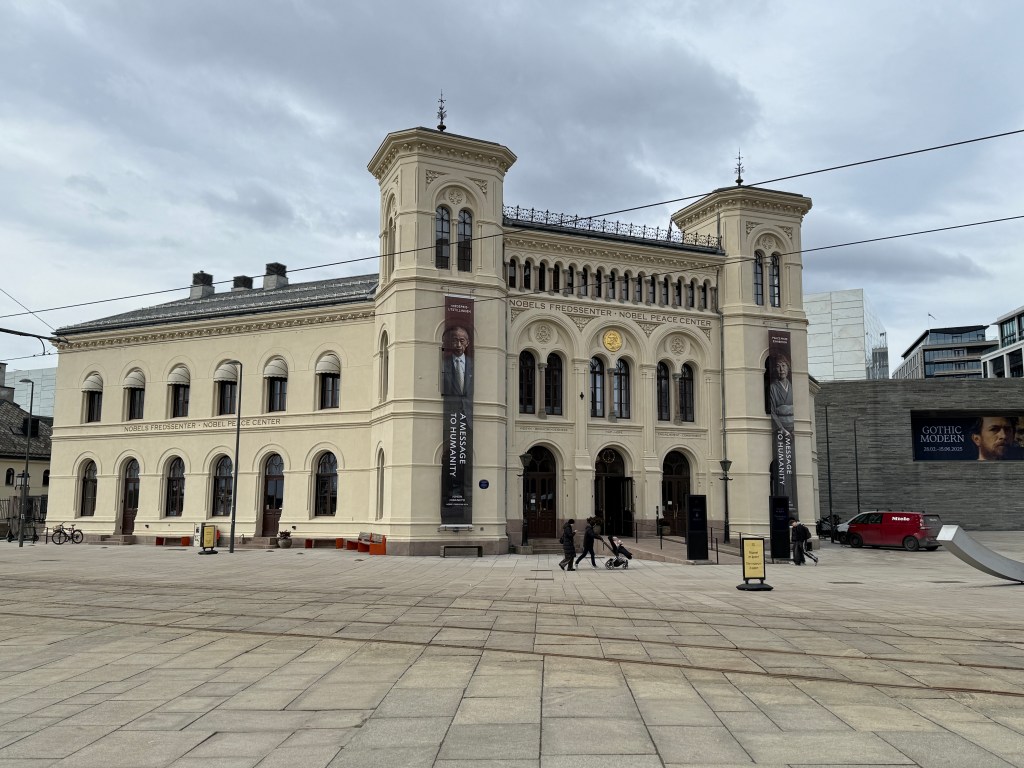
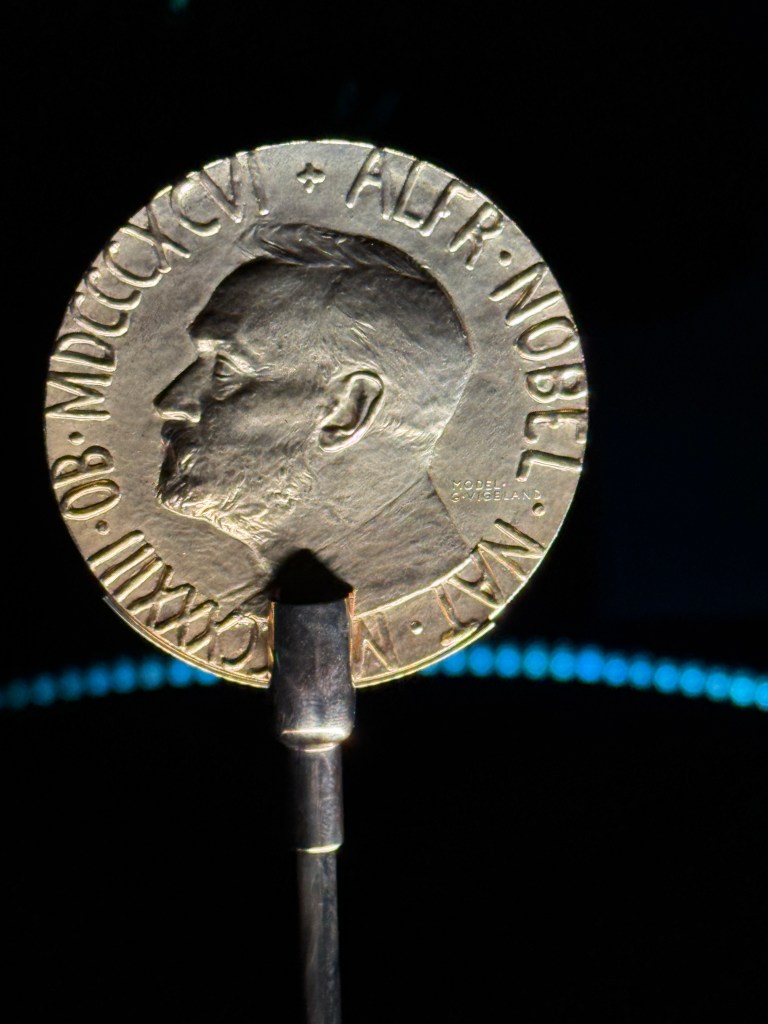
The Peace Prize Centre houses the history of the Nobel Peace Prize. The prize is administered by the Norwegians, apparently to the ‘annoyance’ of the Swedes who handle the other prizes. Nobel was a Swede. The displays are quite impressive and space is given over to the most recent nominee. It explains the background and reasons for the award. The 2024 one was for a Japanese group fighting to prevent nuclear war and using the countries WWII experiences in the presentation.
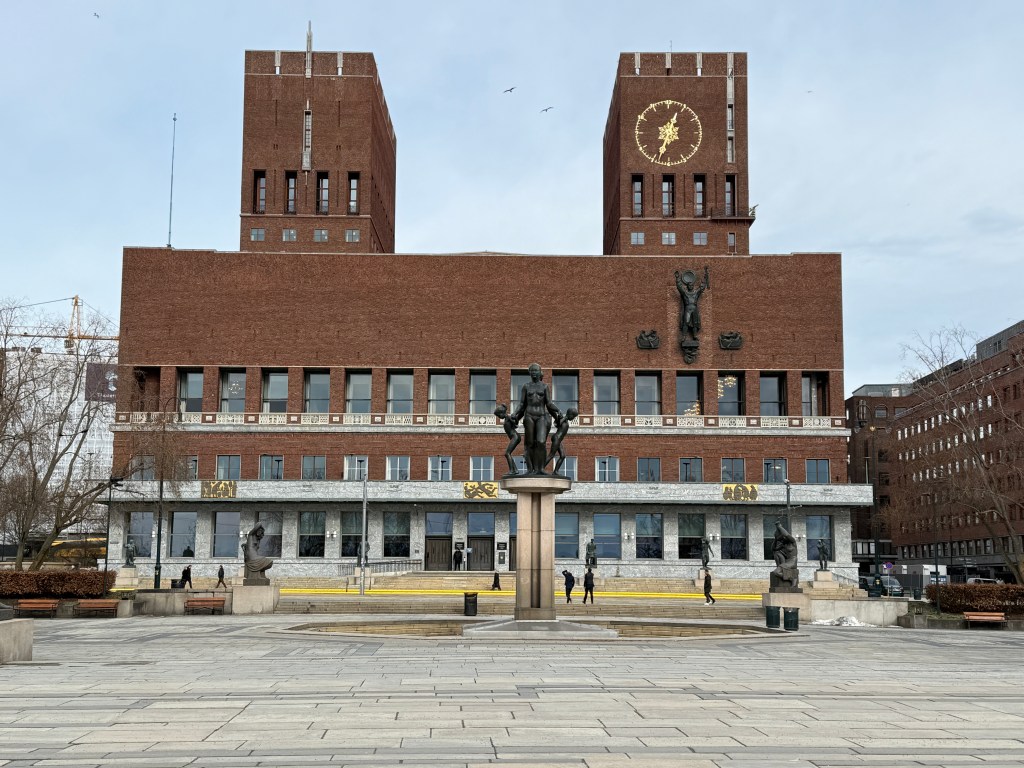
Next stop was the Town Hall. From the outside it looks a little bland, a couple of brick towers and adjoining building. Inside it is a different story. Some highly decorated high ceilinged rooms and spaces. Quite impressive even if all the murals and carpet hangings are not to your taste.


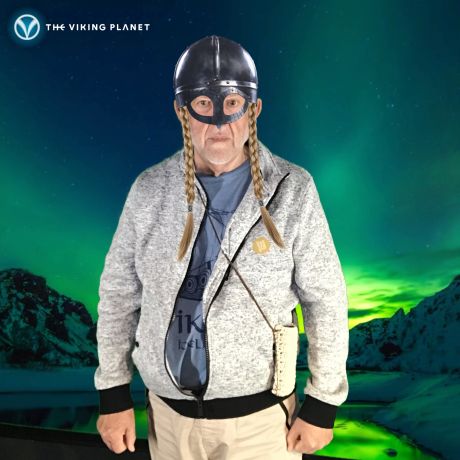
The afternoon was drawing to a close but we still had time to drop into The Viking Planet. This is the sort of place made for the tech savy. Lots of interactive stuff about the Vikings that help explain their lifestyle and beliefs. Not endless reading boards with old photos and drawings! Great place, Slobro was in his element here.
We headed back to the hotel and along the way called into the Sir Winston to see what it was like. True to form it felt like an English pub and it had Guinness on tap, so
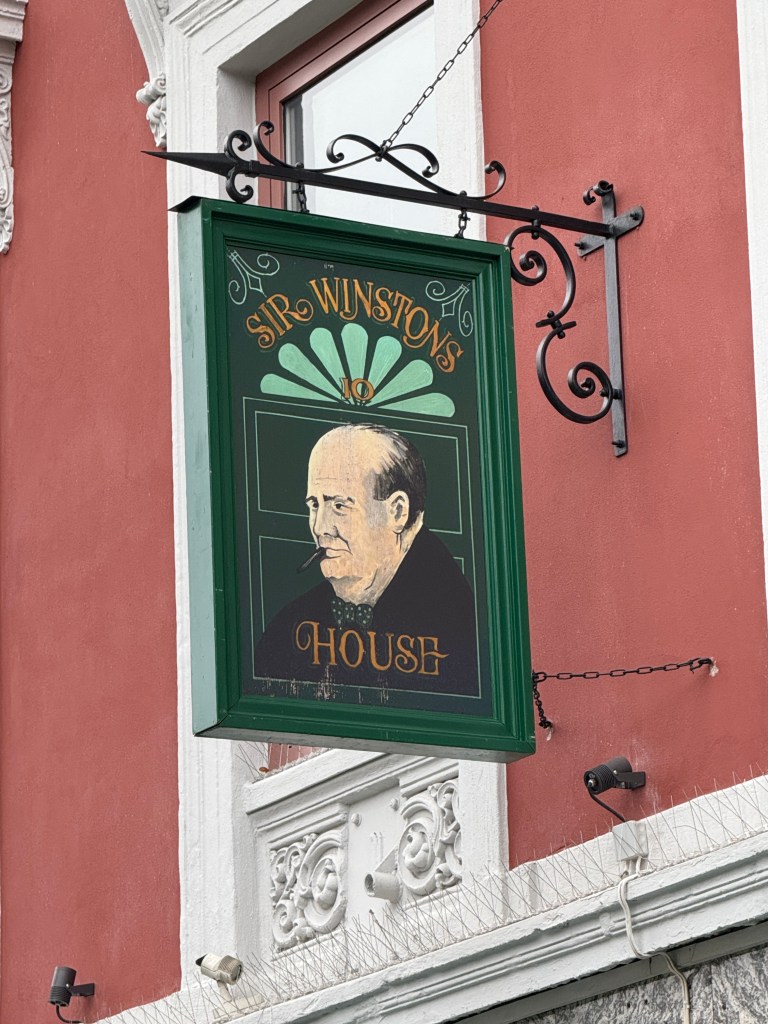
Allthego had a drop. No food!Further down the street the Cathedral Cafe called us in for dinner. Italian. Oslo seems to be going made about Italian food, it is all over the place from pizza chains through to high end establishments. Homeslone settled for a pesto chicken pasta.
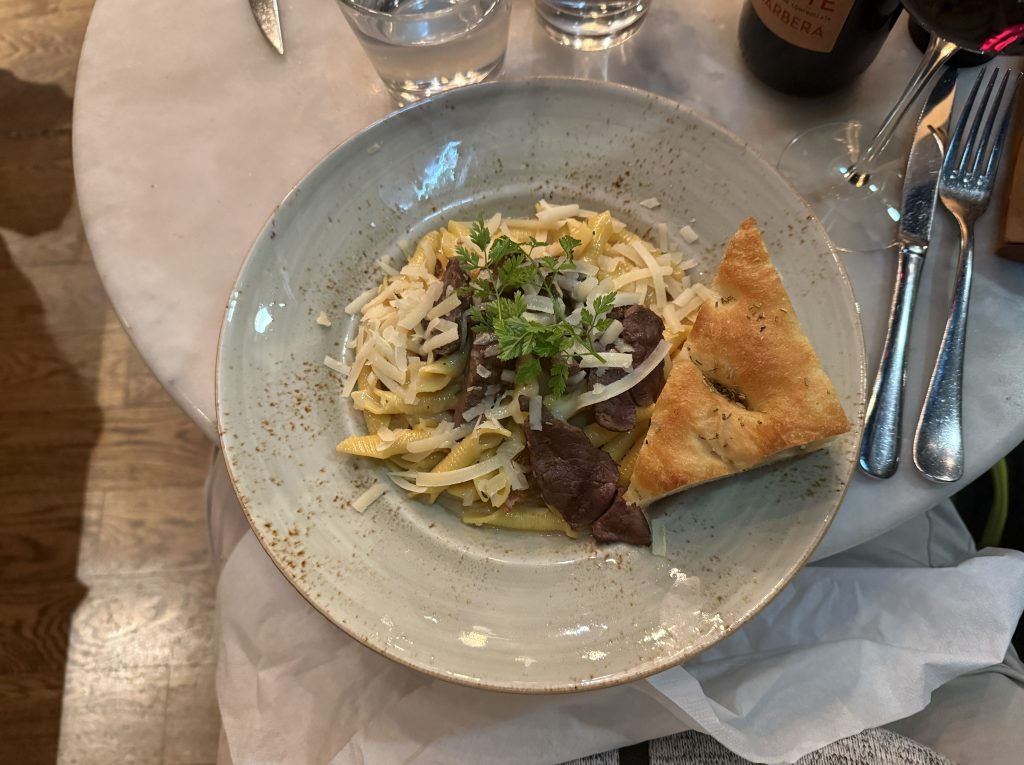
Allthego tried something a little different, reindeer, bacon and mushroom creamy pasta. Rather good, the reindeer very tender and moist!
Back to the hotel for bed, our last day in Oslo to come. Brisbane is battening down for the night in the face of Cyclone Alfred. Will it end up being as bad as predicted? We hope not!
 Allthegobro