Panama Canal
The four days cruising down to the start of the Panama Canal were uneventful. Shipboard life much the same, days punctuated by regular journeys to food locations interspersed with craft, reading, trivia and dozing off occasionally during onboard talks. Some garments appear to have shrunk a little in the ship’s clothes dryers.
The weather noticeably warmed up and became more humid as we passed between Cuba and Haiti into the Caribbean Sea. We caught a glimpse of the tail end of Jamaica a little further on. After that there was no land sightings until we anchored for a time off the breakwater near the entrance to the canal. A bit of rough sea accompanied us on this last section, the ship rocked and rolled a little in the swell. No dramas.
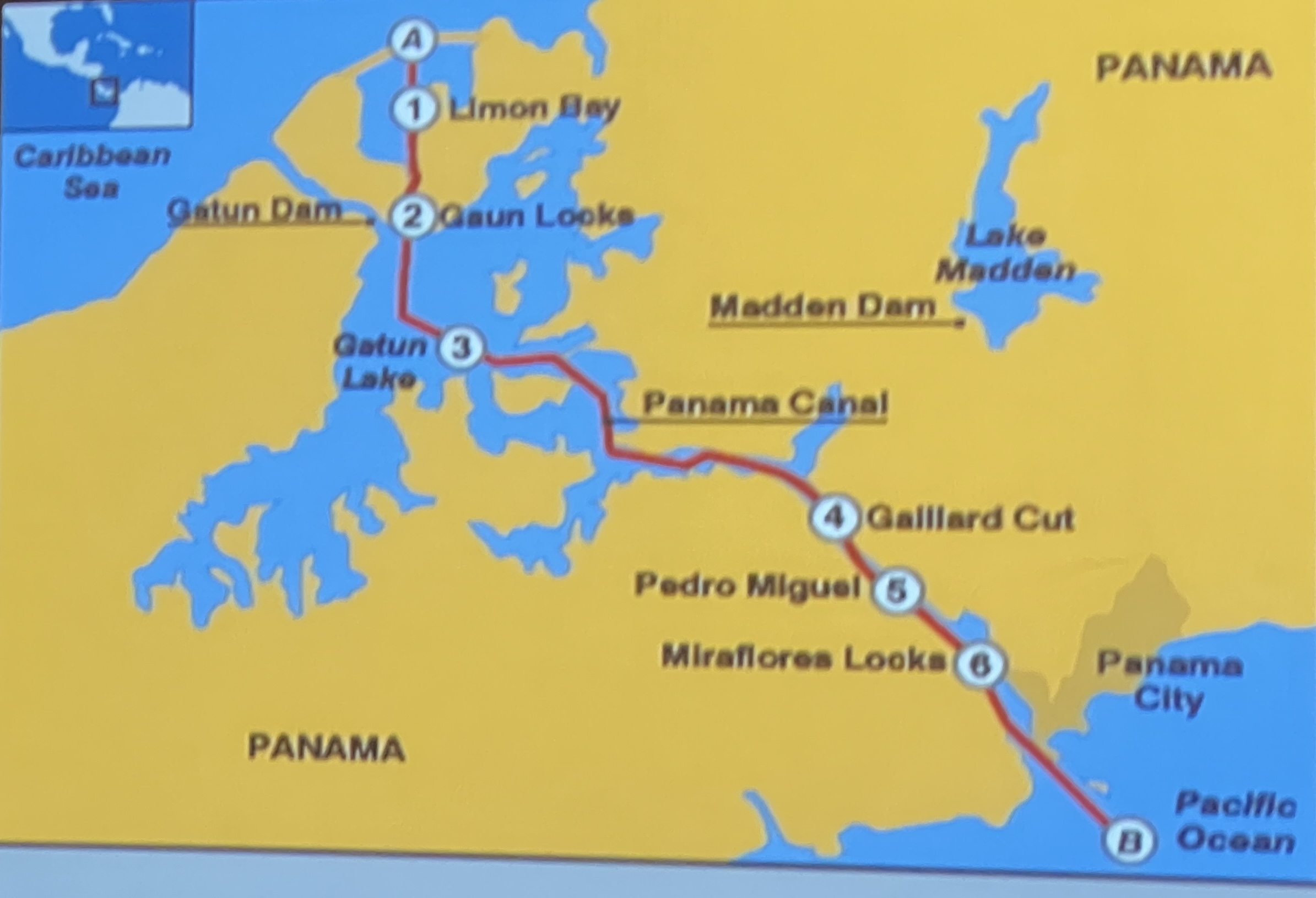
The following is a map of the canal and the numbers are key points in the journey.
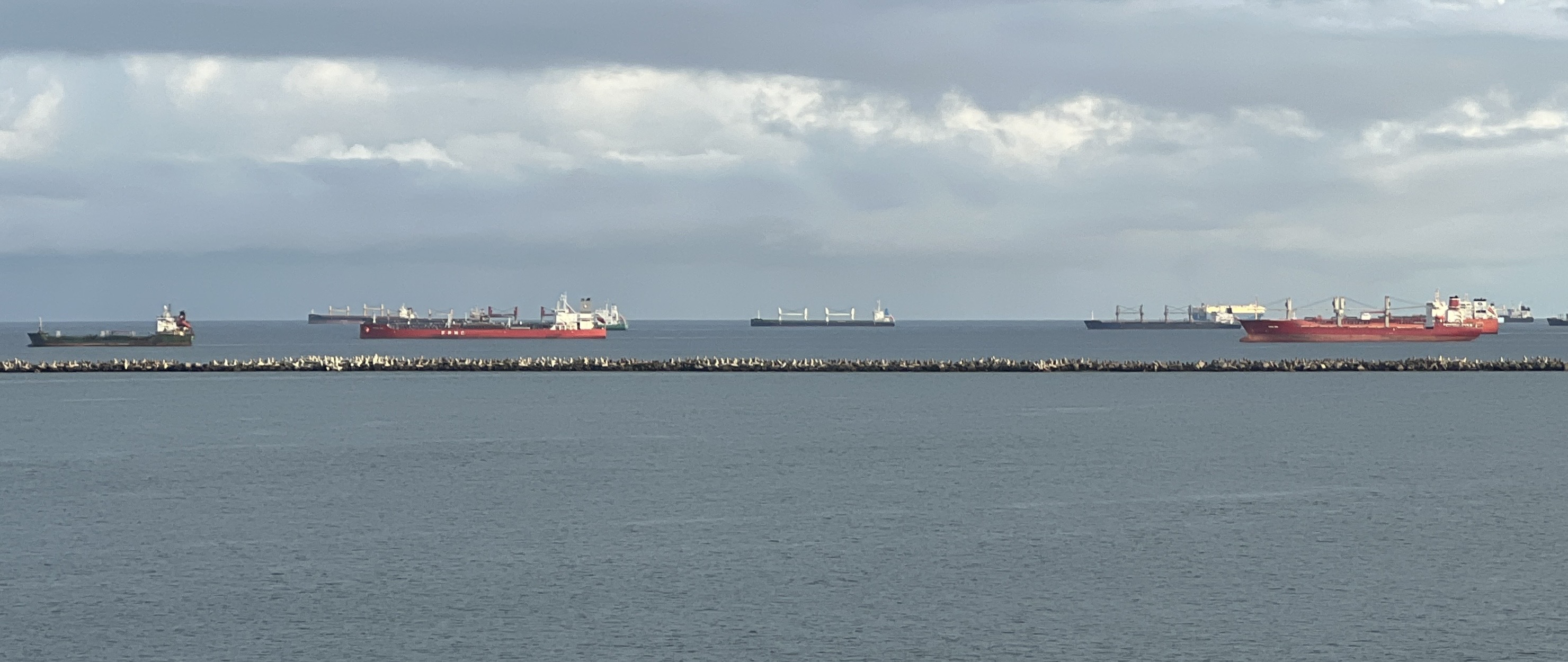
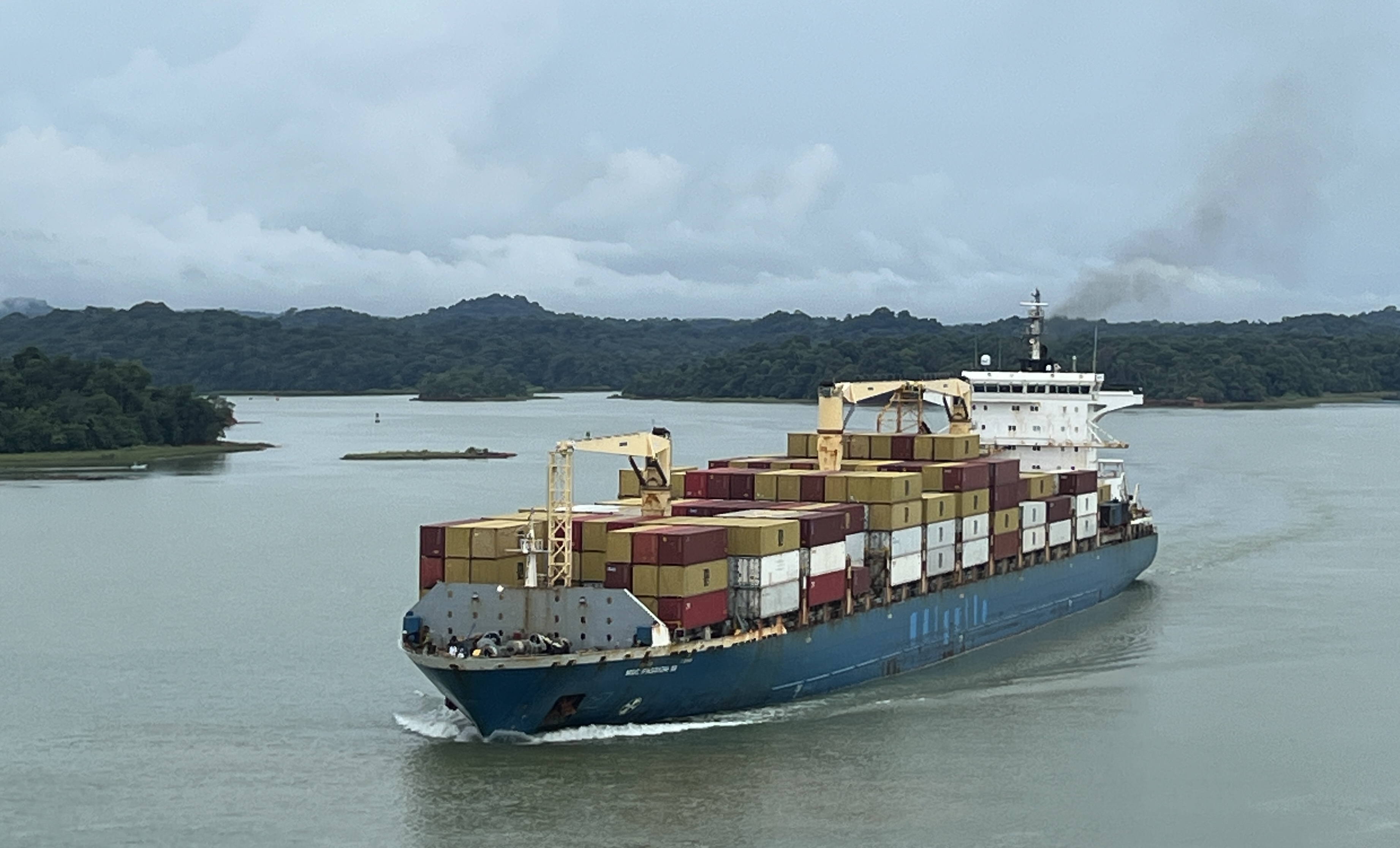
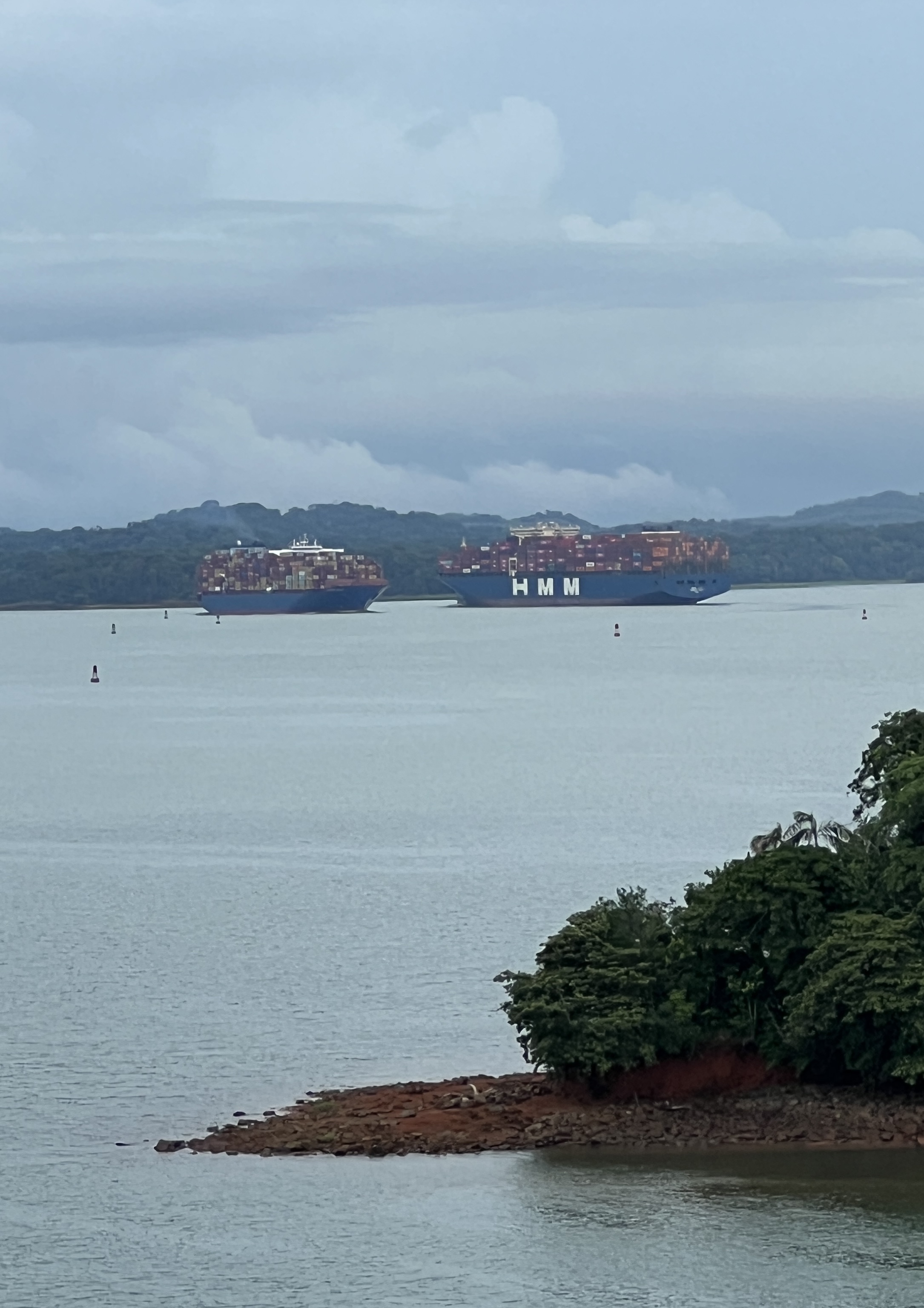
Outside the breakwater there was a great line up of ships. The canal authority has recently reduced the number of ship transits and limited the size of cargoes, due to low water levels following a couple of years of low rainfall. Have read somewhere that there have been well over a hundred ships held up, but I think this is the total at both ends of the canal. Ships can book slots in order to make a transit, this is what cruise ships do and so get preference over other ships that don’t book. I think booking costs more money for the transit, but I could be wrong there.
We arrived outside the breakwater around 5.30am and anchored there until 6.30 or so when the canal pilots boarded the ship and we set off into the inner harbour to form up into a convoy with a number of other ships. There were plenty of ships in this inner harbour waiting as well. The Canal operates 24 hours a day, every day. We had a guy on the bridge who gave a commentary as we went along. He said that there were to be about 17 ships in our convoy, that’s in a 24 hour transit. Probably a similar number coming the other way.
Our transit was being made through the Canal’s old original lock system that was opened in 1913. A newer set of locks have opened alongside the old ones that can carry bigger ships, longer and wider. The Coral Princess was built to the size of the old locks, newer Princess ships have to use the new locks. The chambers in the old locks are 1000 ft long and 110 ft wide, our ship is 954 ft long and 105 ft wide. It just fits in, a couple of feet either side to the lock wall. Stainless steel ‘mules’ are attached by cables to the ship to hold it steady in the locks. No tossing of ropes in this set up! The ‘mules’ run up and down beside the ship on cog rail lines.
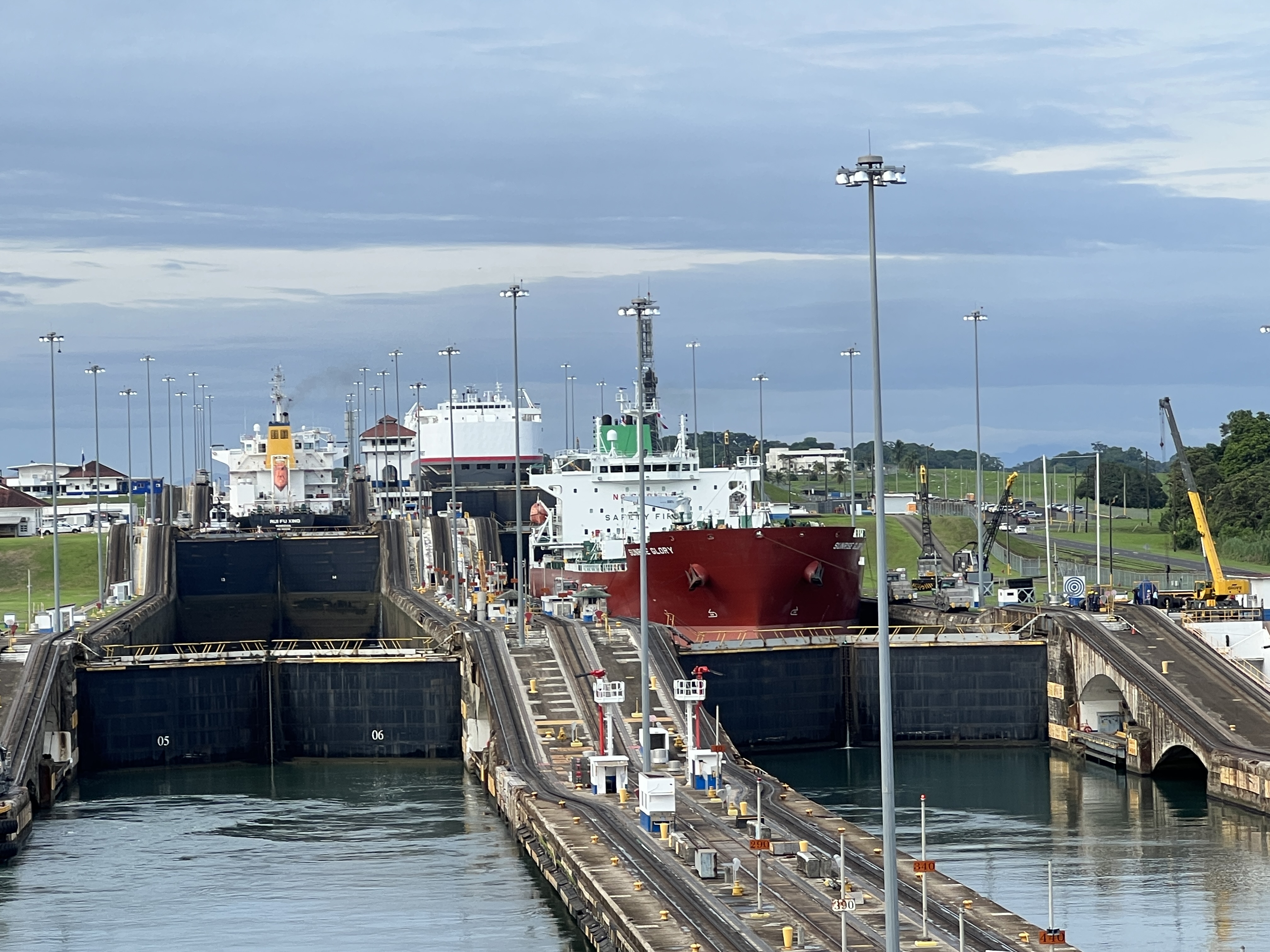
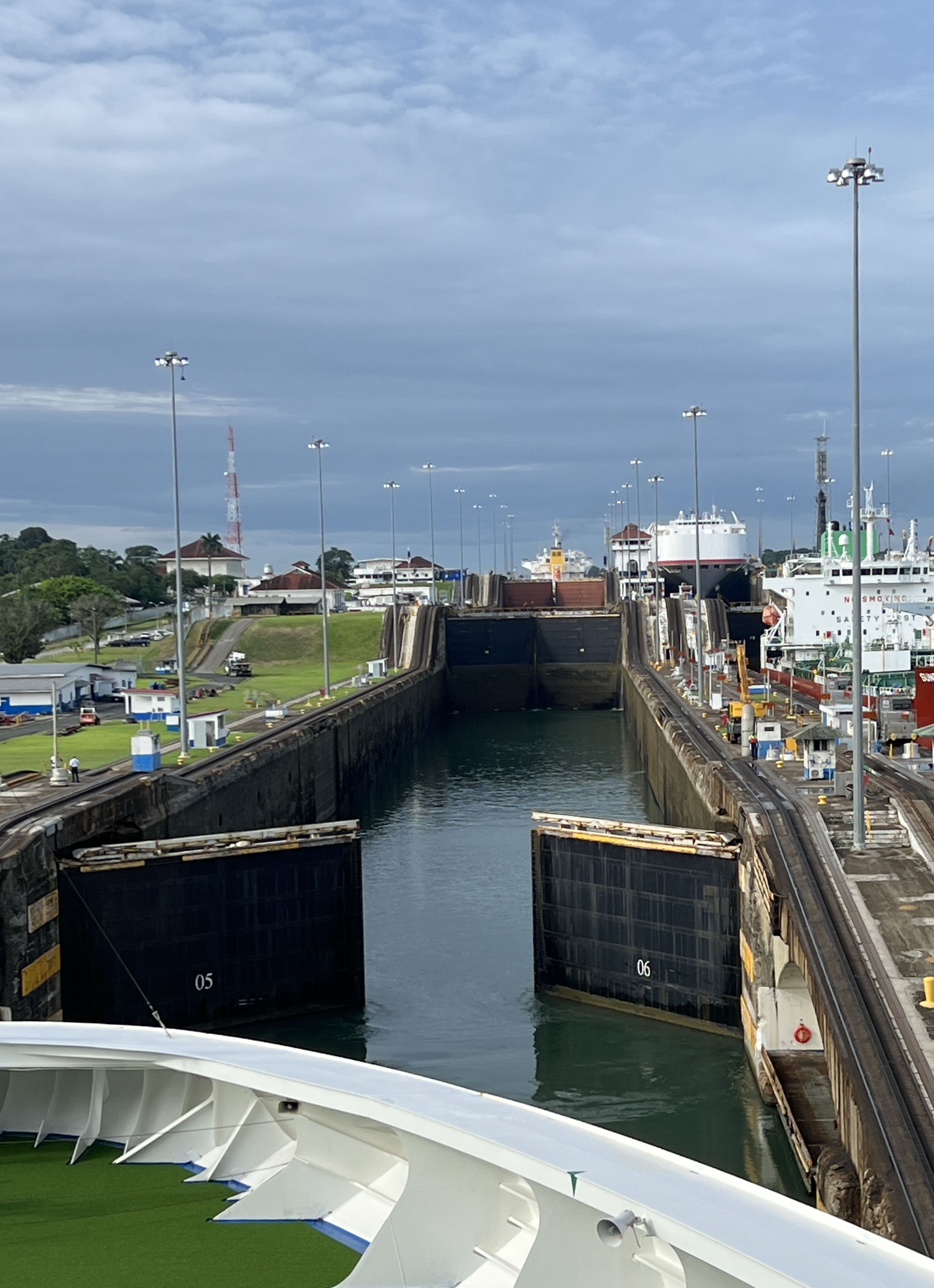
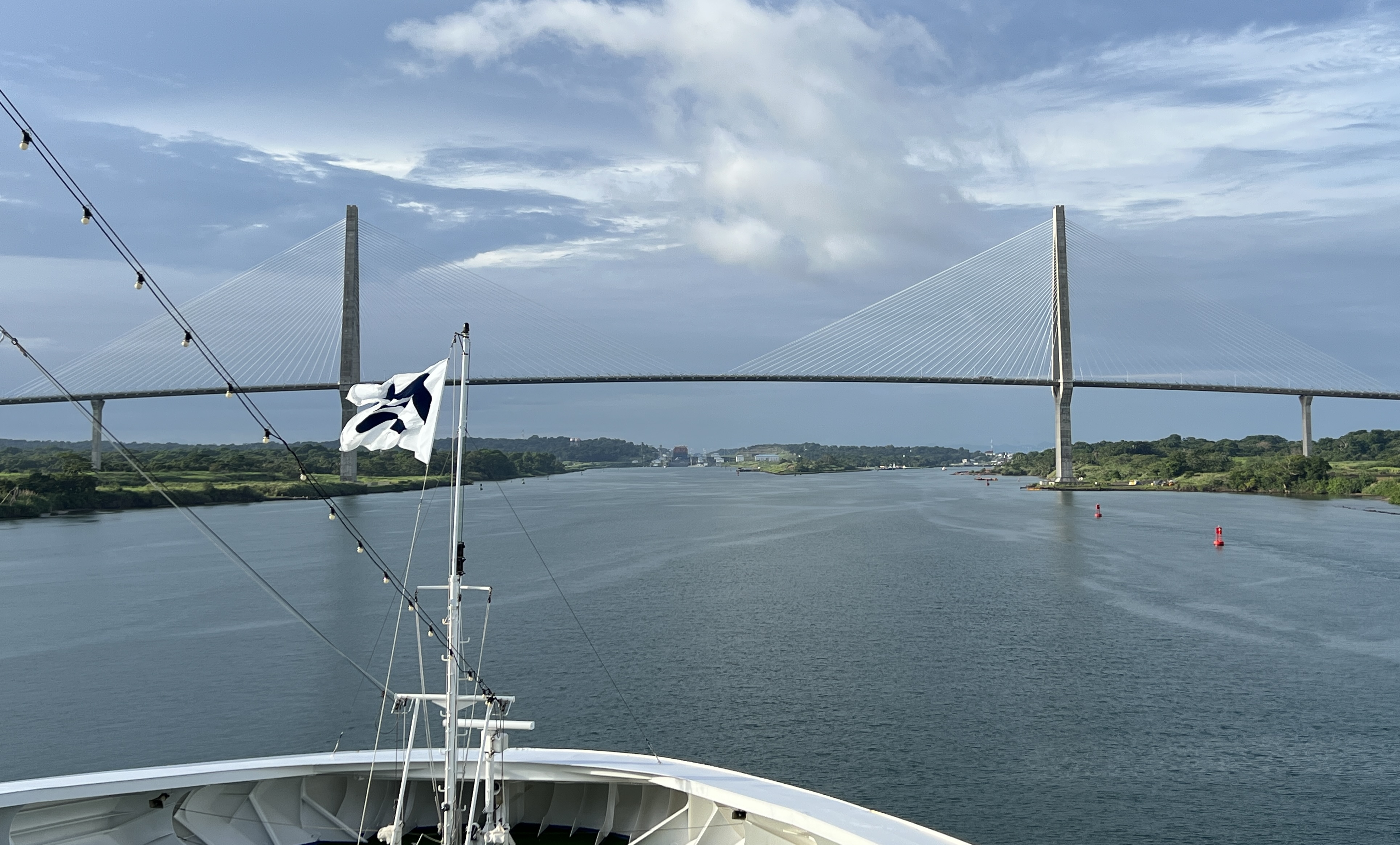
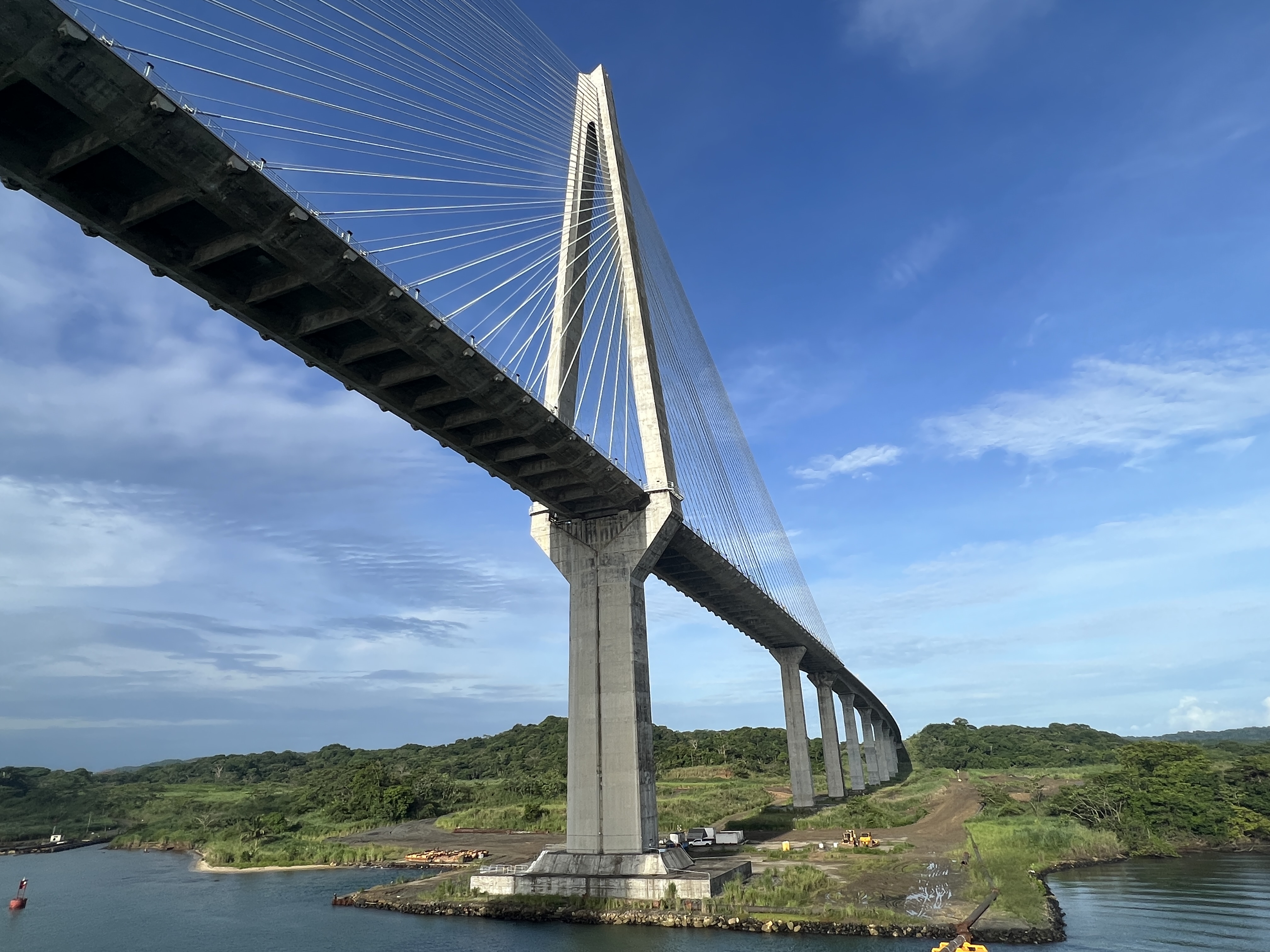
The ship ‘crawled’ along slowly through the Limon Harbour and under the recent Millennium Bridge to make our slot for the transit at 8 am for entry into the lower chamber of the three Gatun locks. These locks raise the ship up 85 ft to Lake Gatun where the Canal starts. The Lake is fresh water, salt sea water is kept out when fresh water is let out of the upper lock to fill the second chamber we enter.
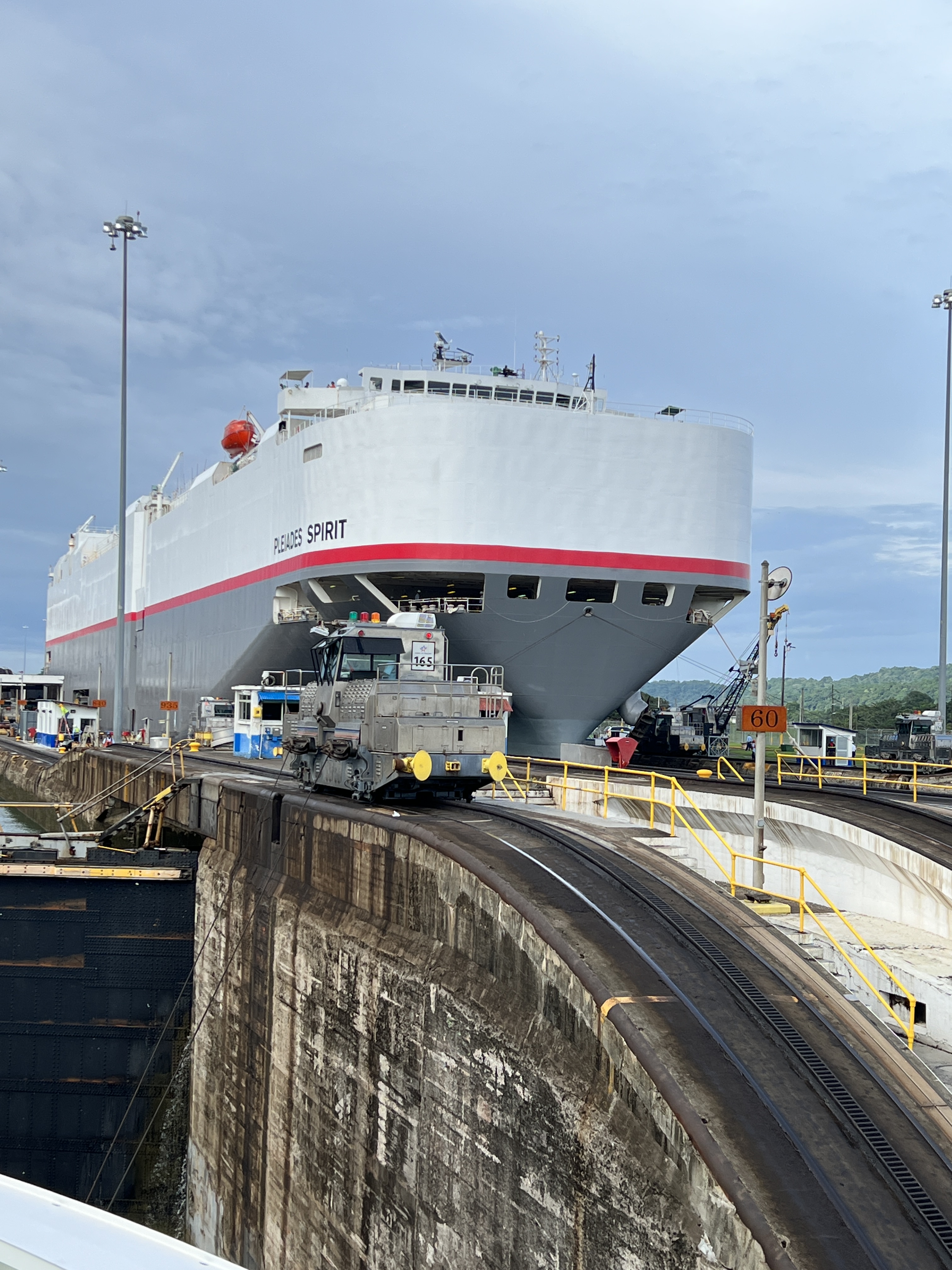
Ships coming the other way descend in the locks beside us.
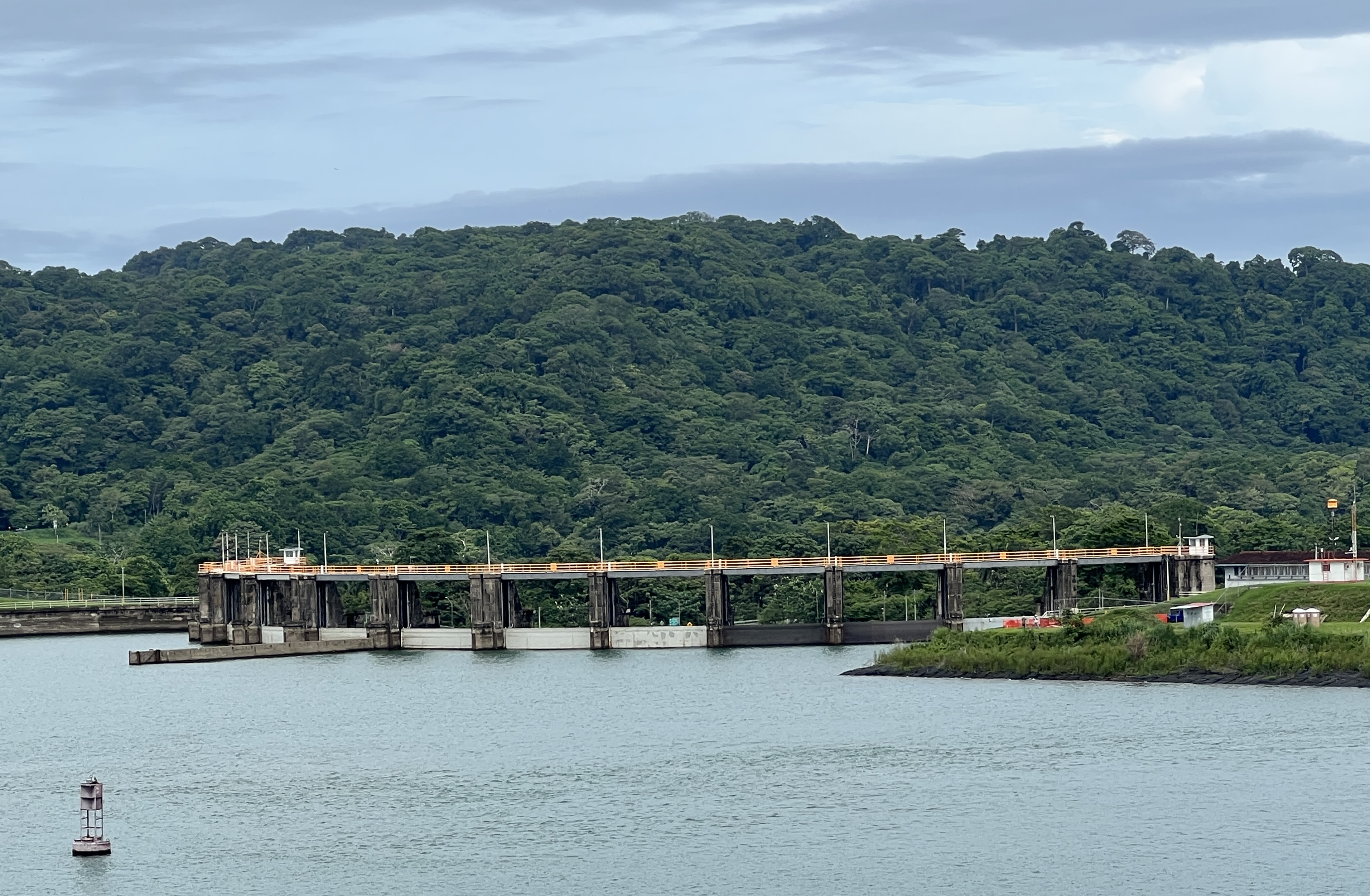
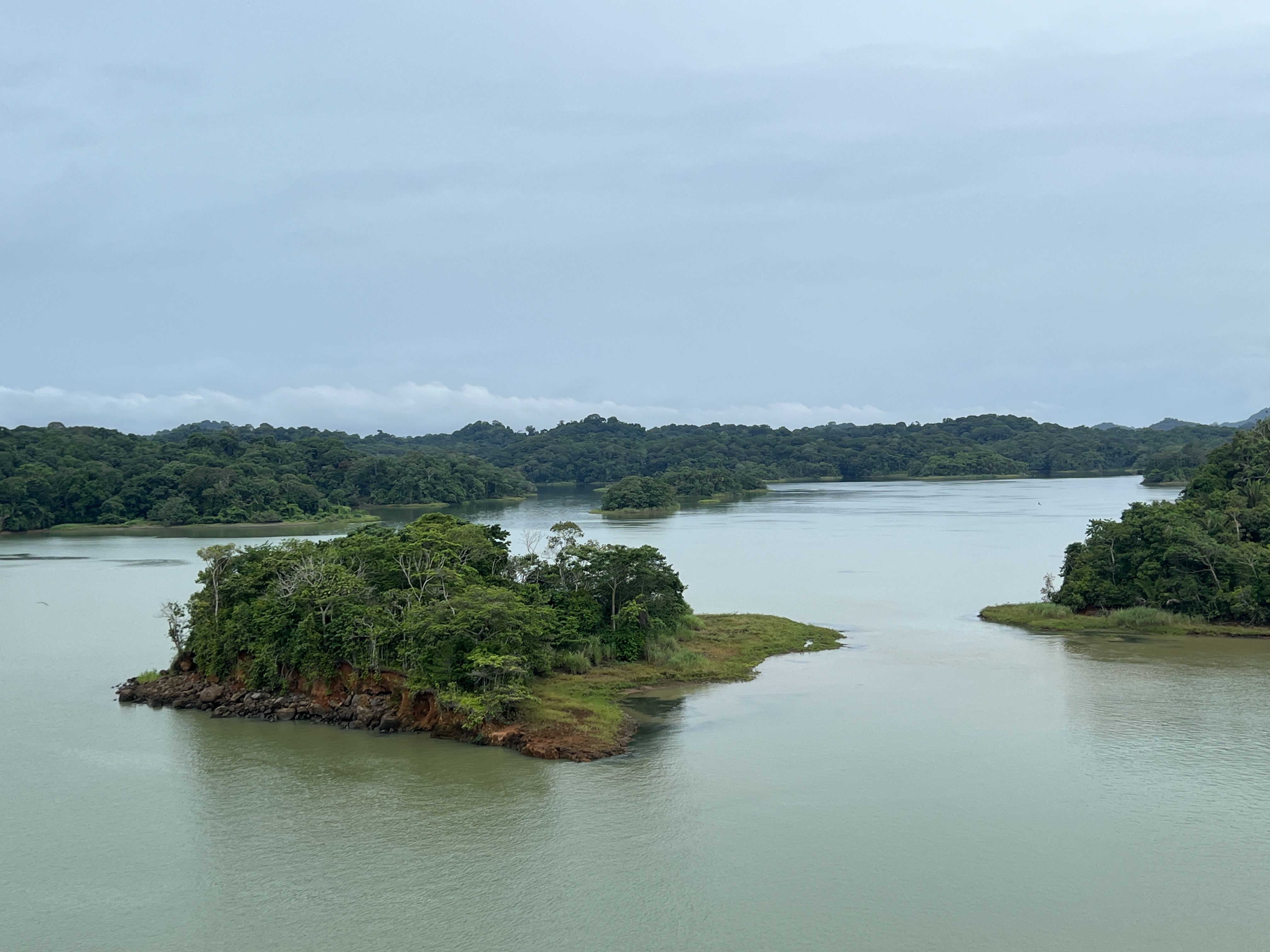
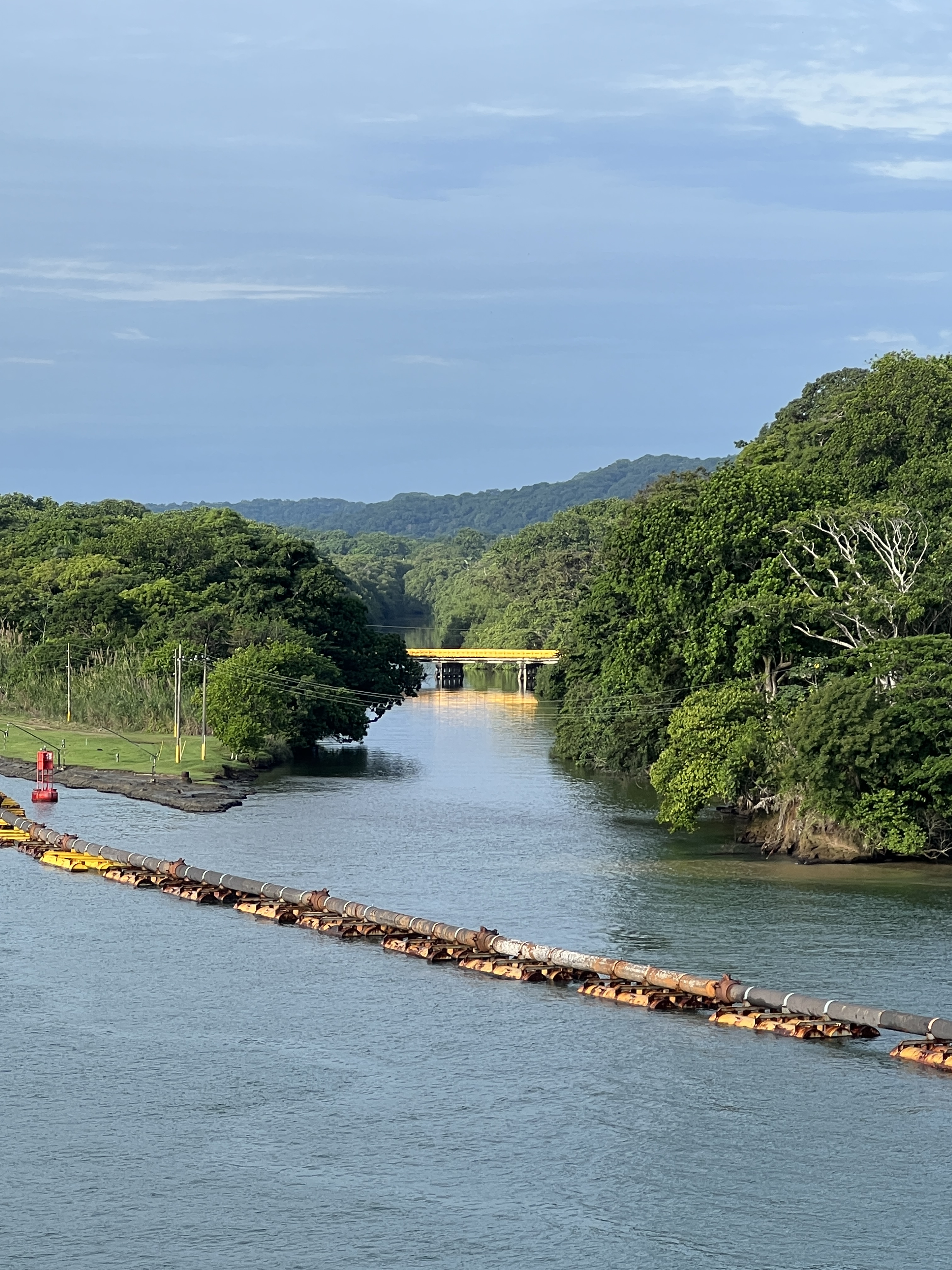
The Canal is actually a narrow channel that twists and turns through the lake. The Lake was formed by damming the Chagres River and its depth varies from 45-85 ft. The channel varies in width from 500-1000 ft. There are numerous islands and nooks and crannies in the shoreline that are actually the tops of the mountain range that was cut through as the Canal was built.
The French started construction of the Canal in 1881, the team was led by de Lesseps who had constructed the Suez Canal in 1869. The French concept was to construct a sea level canal, like the Suez.
This attempt was a massive failure, 22 thousand workers died from yellow fever, typhoid and malaria. The financial costs were enormous and cutting down into the mountain range proved beyond them. The effort was abandoned and the project put on care and maintenance until the Americans took over in 1902. They changed the plan to locks and the lake system we have today.
The project was opened in 1913.
It took us nearly 2 hours to go up the Gatun locks and the rest of the day to cross the Lake and descend the 30 ft Pedro Miguel lock to the small Miraflores Lake.
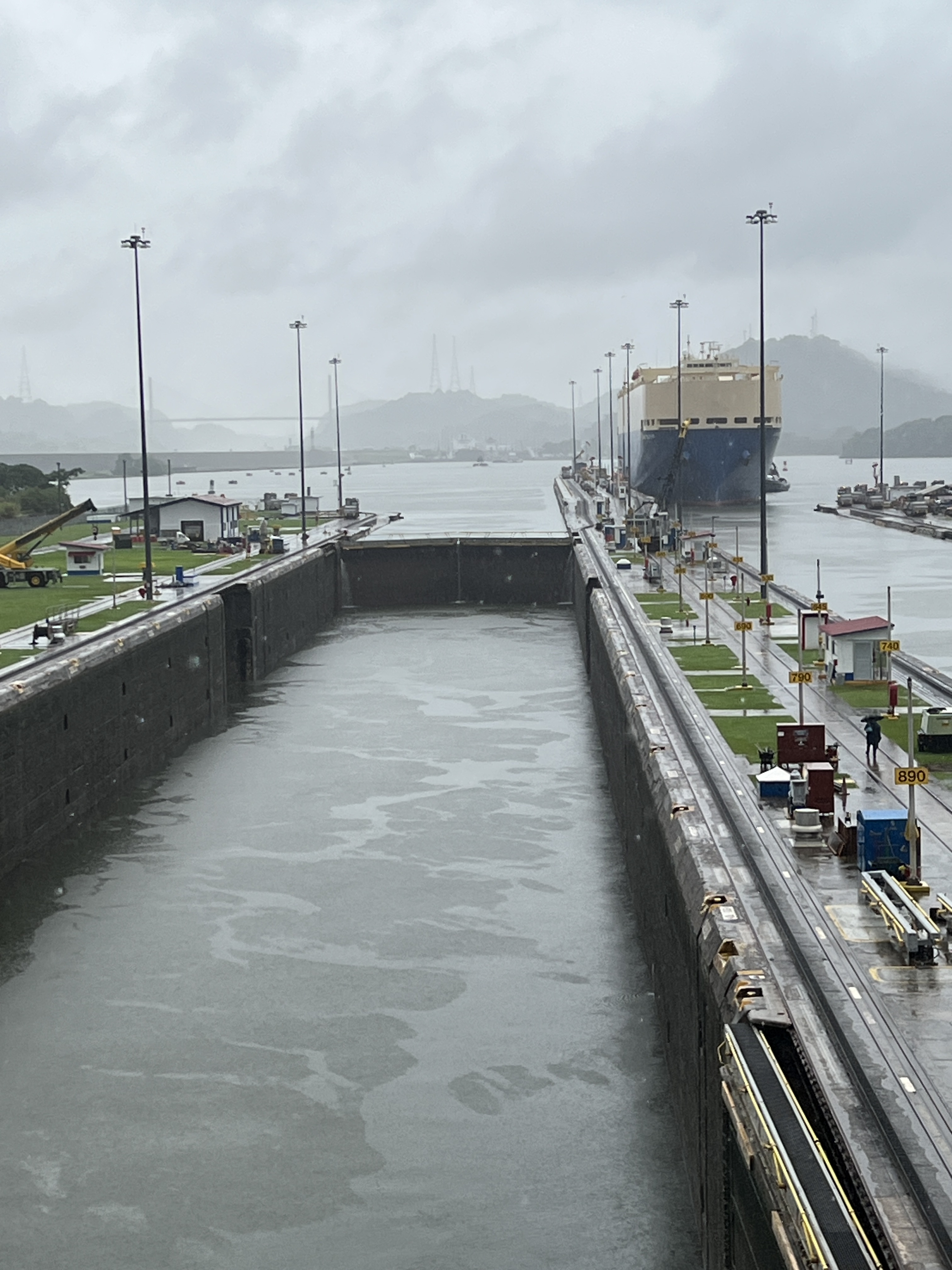
It was then down 55 ft in the two locks at Miraflores before passing under the Bridge of the Americas and into the Pacific Ocean, near Panama City.
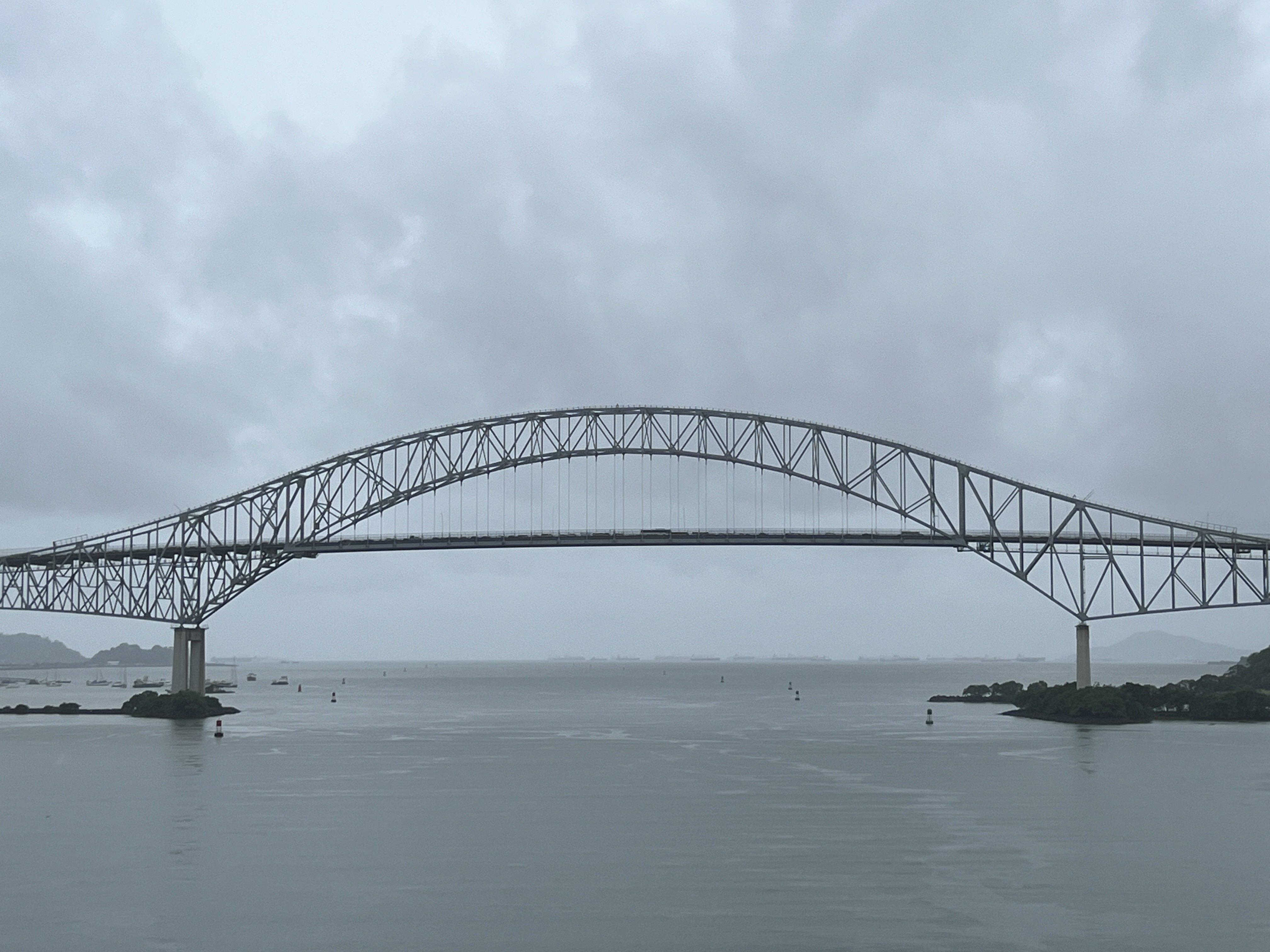
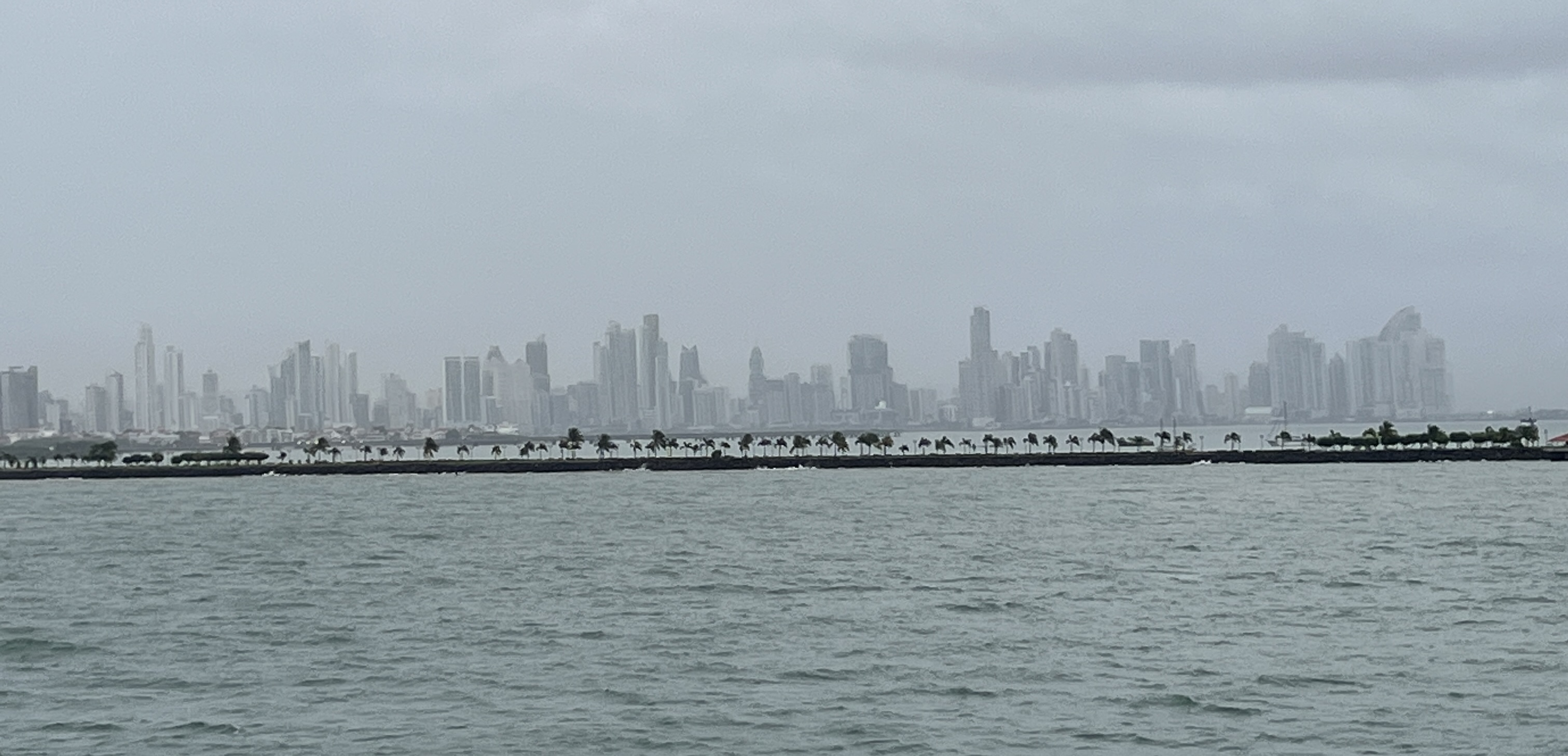
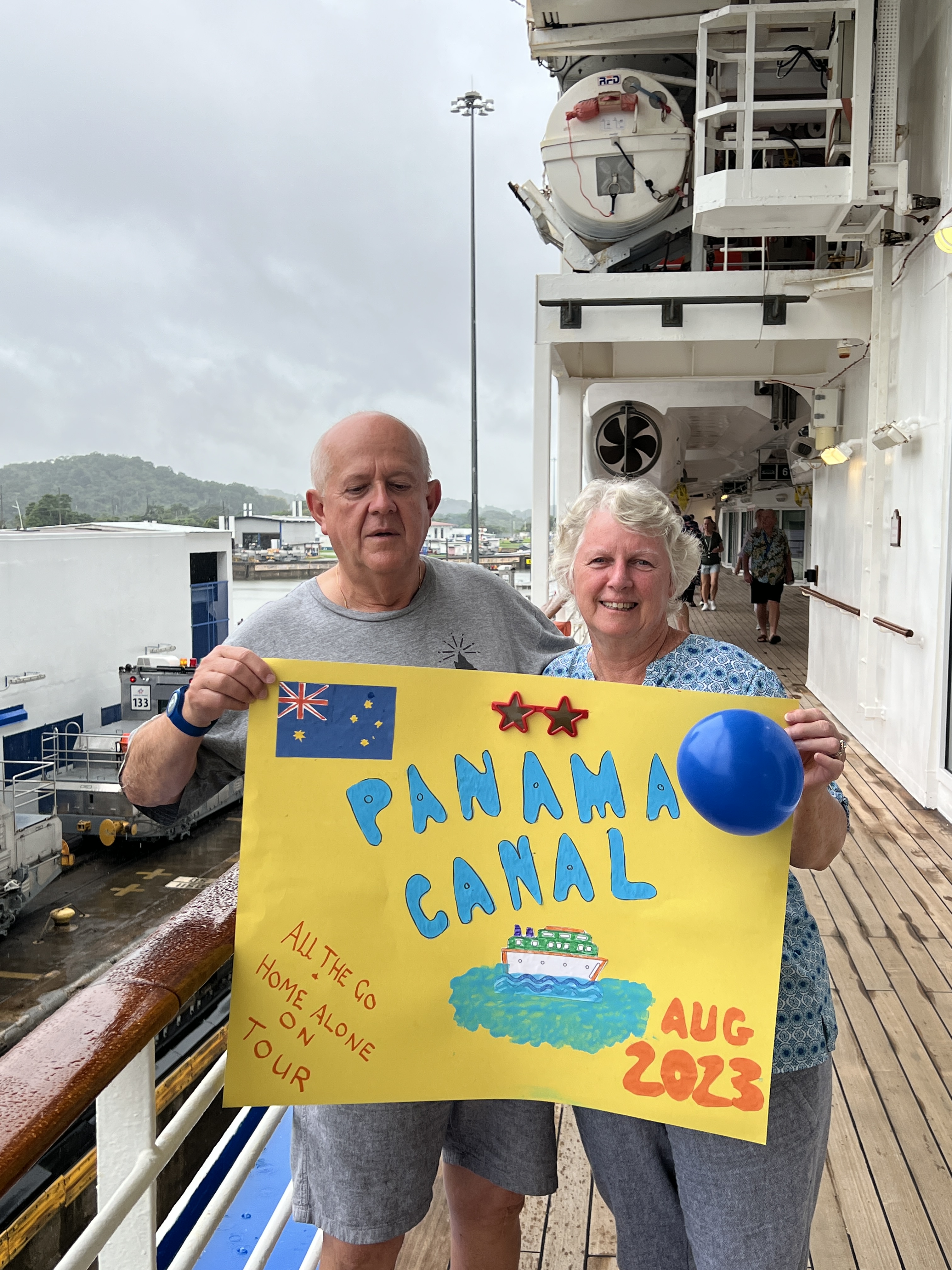
The Canal is amazing engineering accomplishment and a great journey by cruise ship.

Posted on August 27, 2023, in Around the World. Bookmark the permalink. 1 Comment.
 Allthegobro
Sorry for the delay in sending you a reply ….. the canal is so interesting and I think you’ve captured some terrific images – it must have been quite an experience doing the locks in such a large ship – I thought the canals on the Rhine were amazing and don’t really compare to the Panama Canal. I know you still have 3 weeks left on the ship but you must be feeling much closer to home now – I hope the Pacific is being calm and the islands ahead are beautiful 🤩 Keep well👍😘
Sent from my iPhone
>