Author Archives: allthegobro
Drifting on the Douro
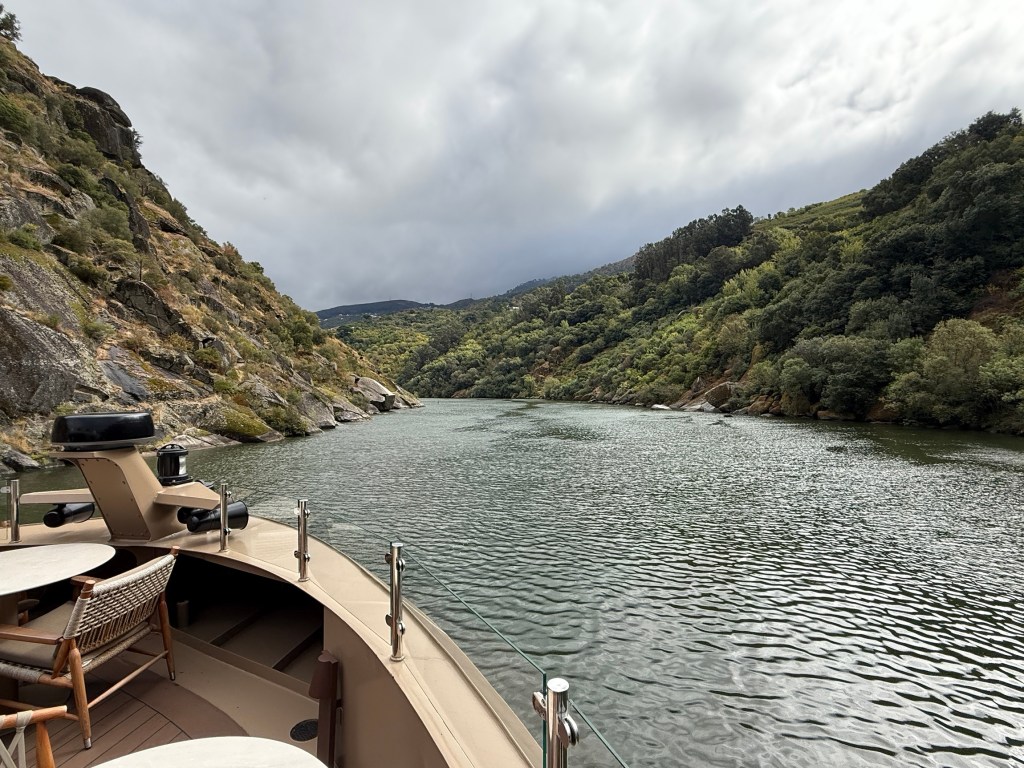
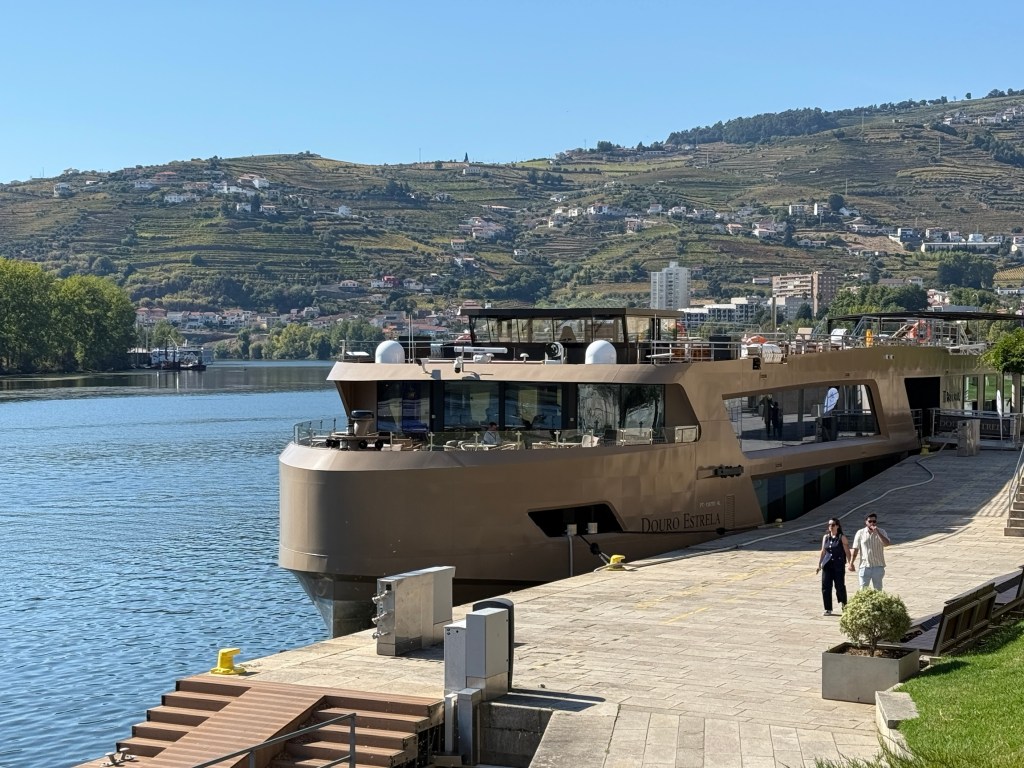
The Douro is the third longest river on the Iberian Peninsula. It rises in the mountains in the north east of Spain and flows 897 km through Spain and Portugal to the Atlantic. 200km of the river is in Portugal, this being the navigable section of the river. It took us five days of river boating aboard the ‘MS Estrela’ to get from Porto to the border town of Vega de Terron. River traffic can only sail during the day light hours, so we were moored up at night in towns along the way.

MS Estrela sailed away in light cloudy skies. There was cloudy o weather during the first two days of the journey, and some very light rain. We were affected by ex cyclone Gabriel which had crossed the coast as a rain depression.
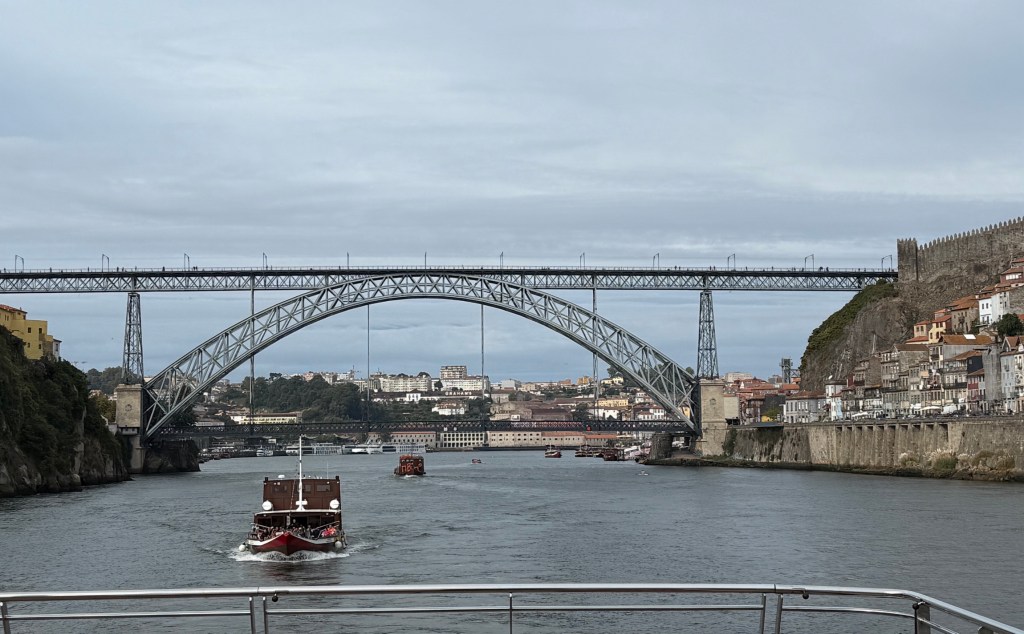
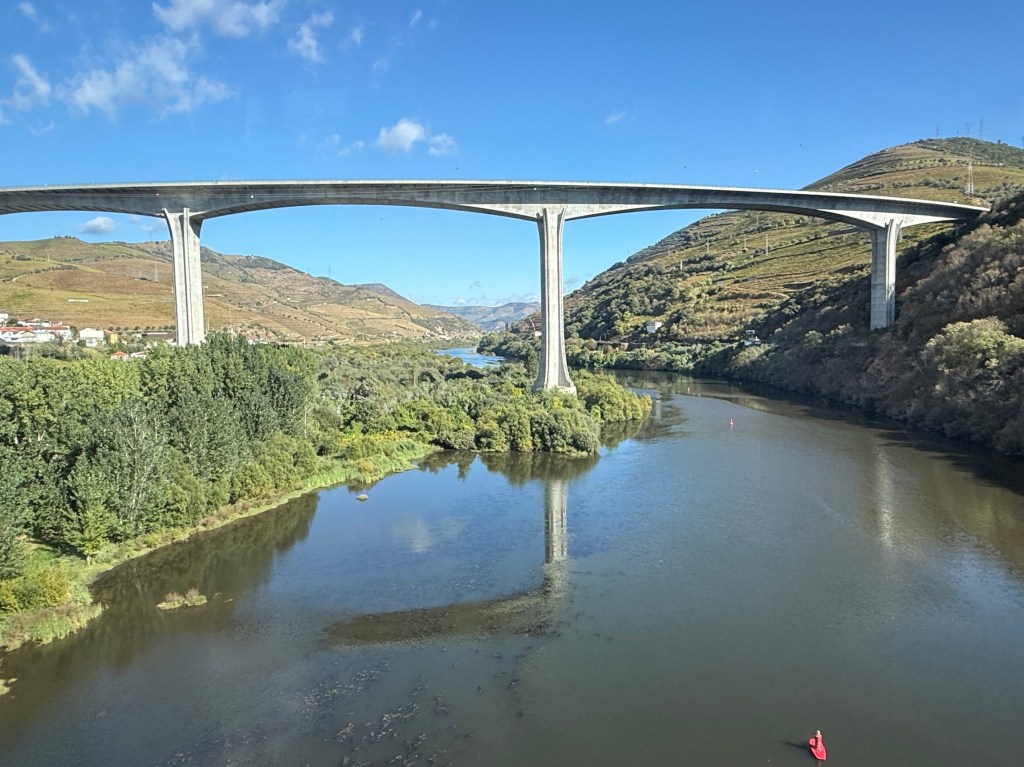
We sailed under the Luis 1 bridge, built in 1881. At that time the longest single span suspension bridge in the world.
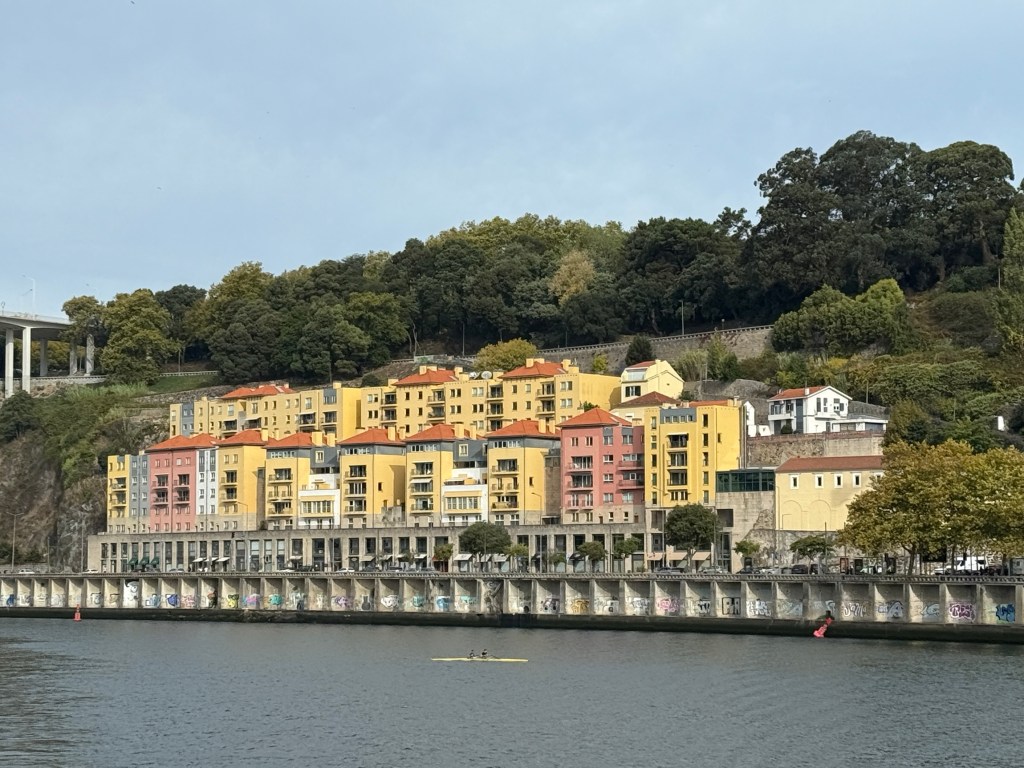
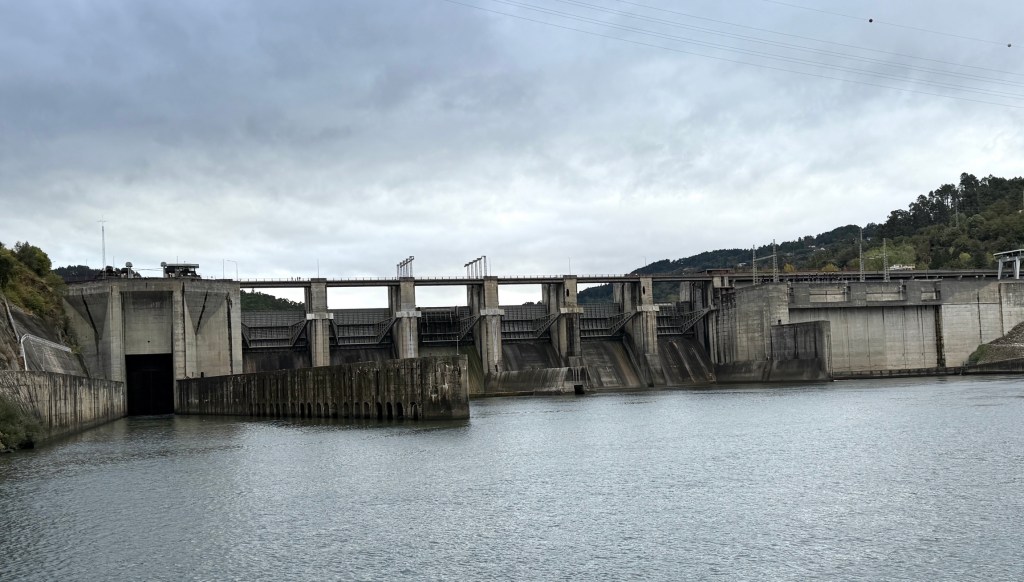
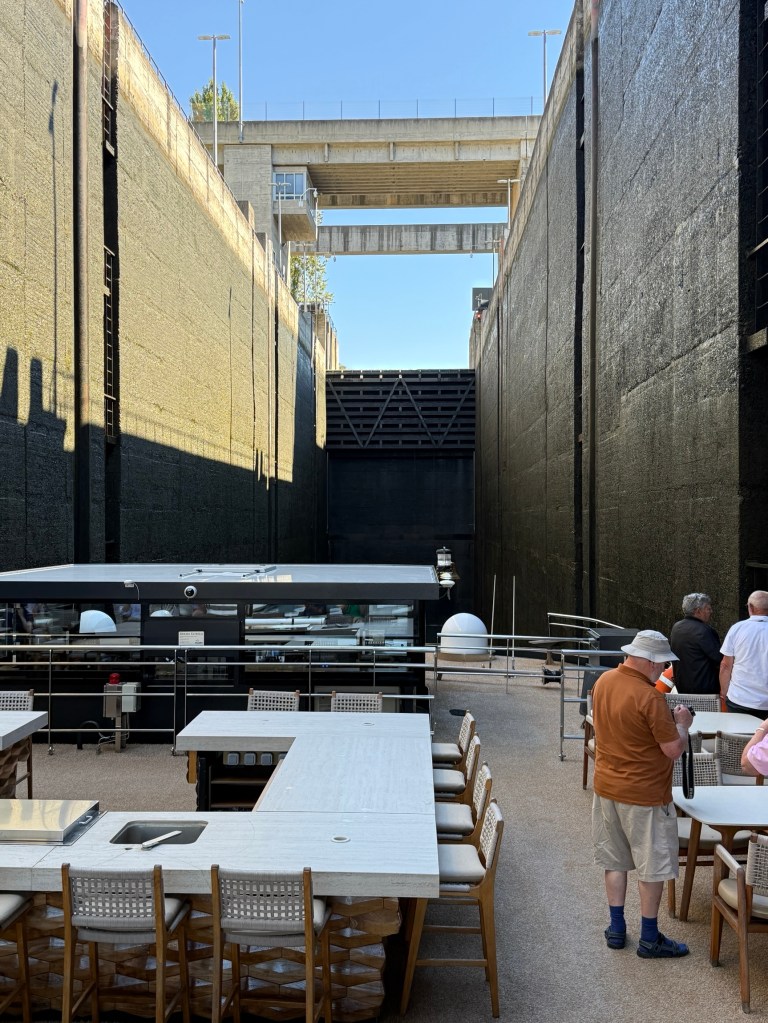
The Douro was a wild river until the mid 1970-80 when the construction of five dams and locks along the Portuguese section of the river changed its character and geography. The dams also provided hydro power.
Prior to this it was a perilous trip up and down the river with cargo, particularly for the famous wines and ports, in the traditional ‘barcos rabelos’ boats.
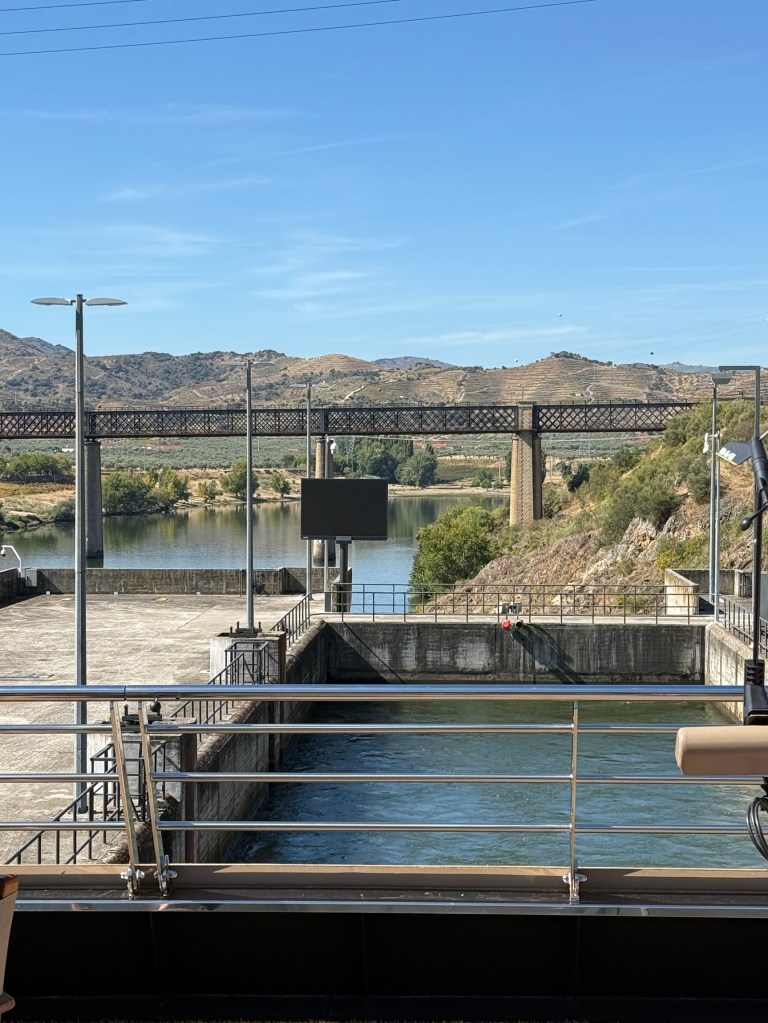
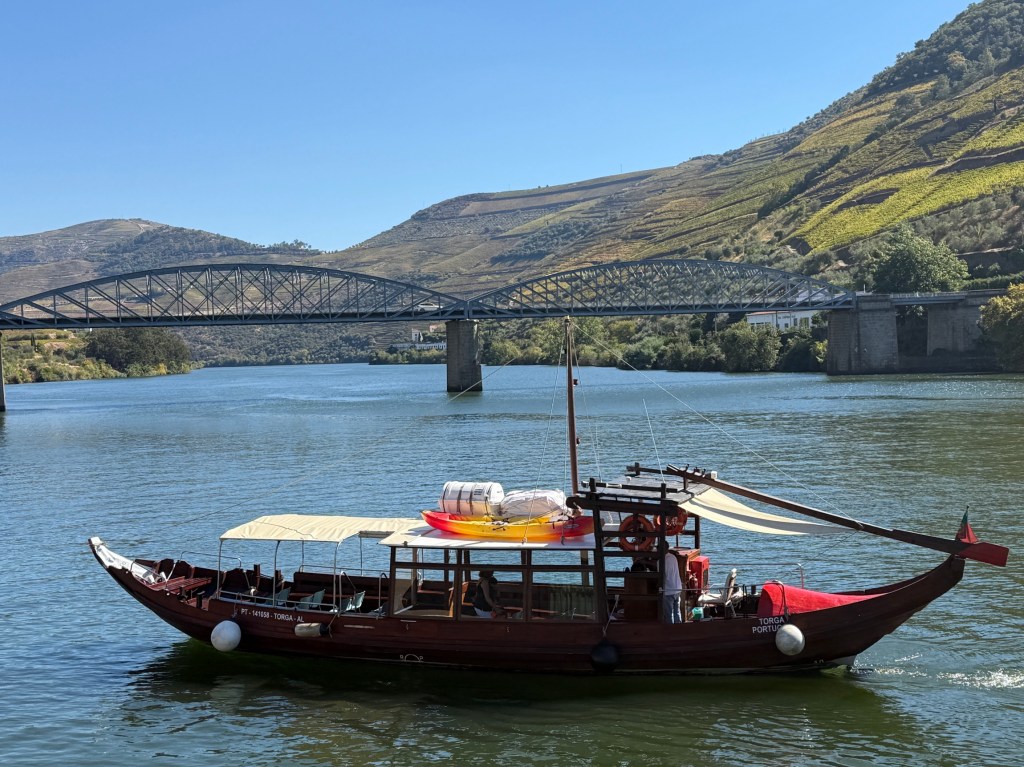
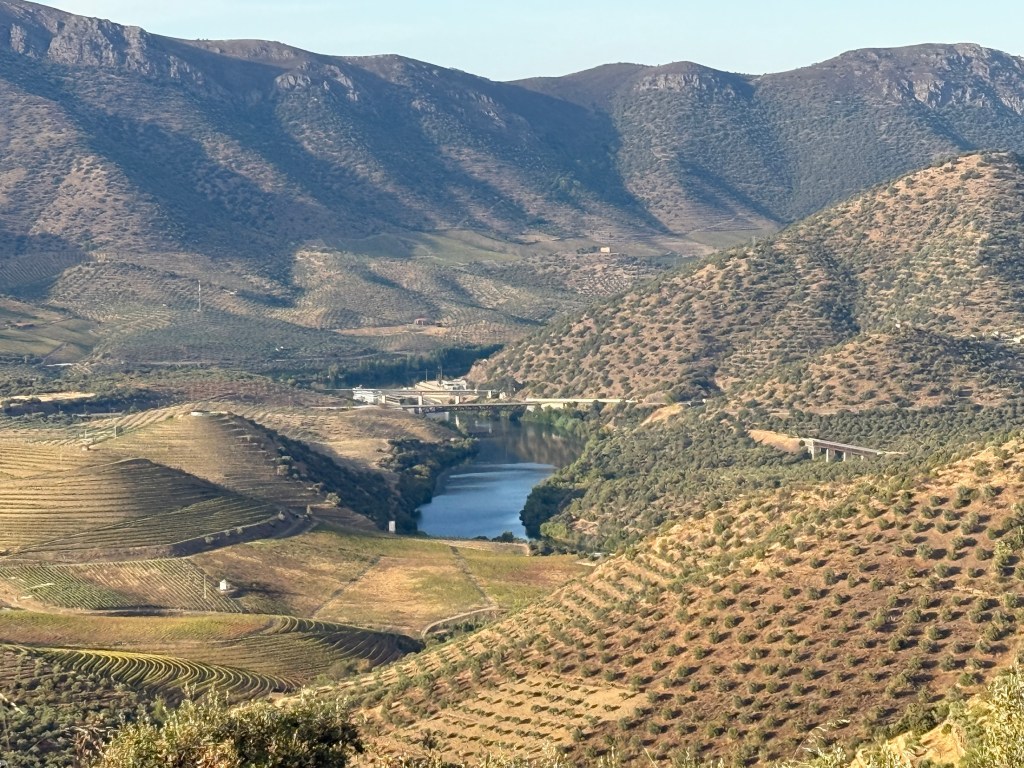
After the damming of the river it has become a series of ribbon lakes at a much higher water level.
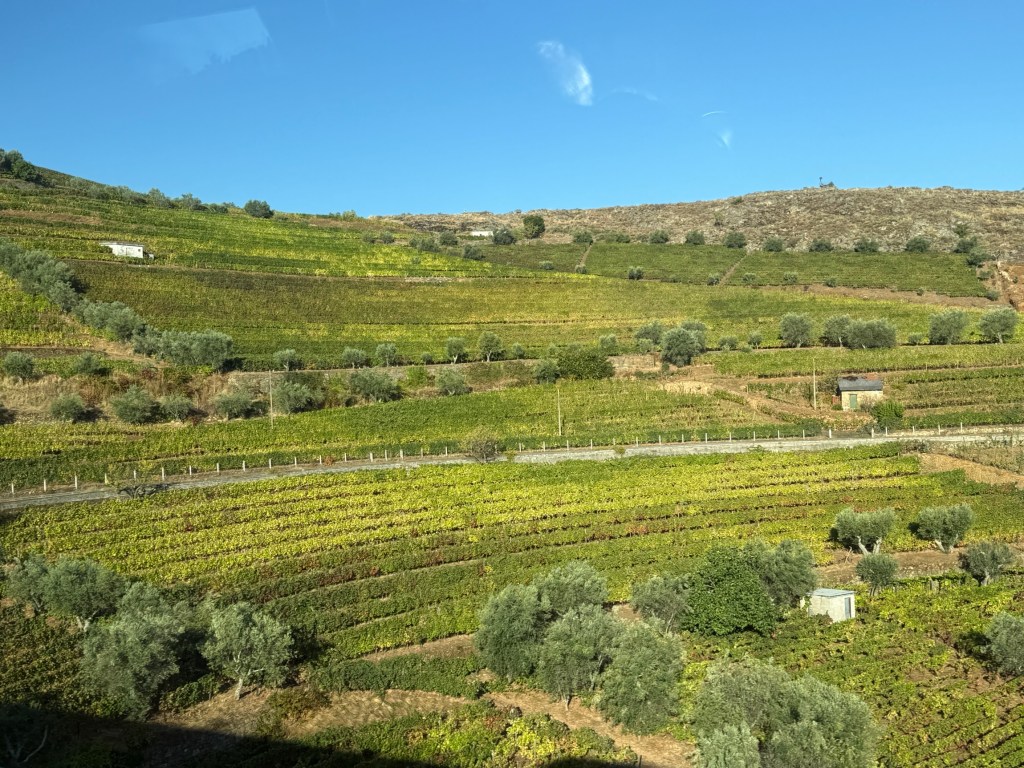
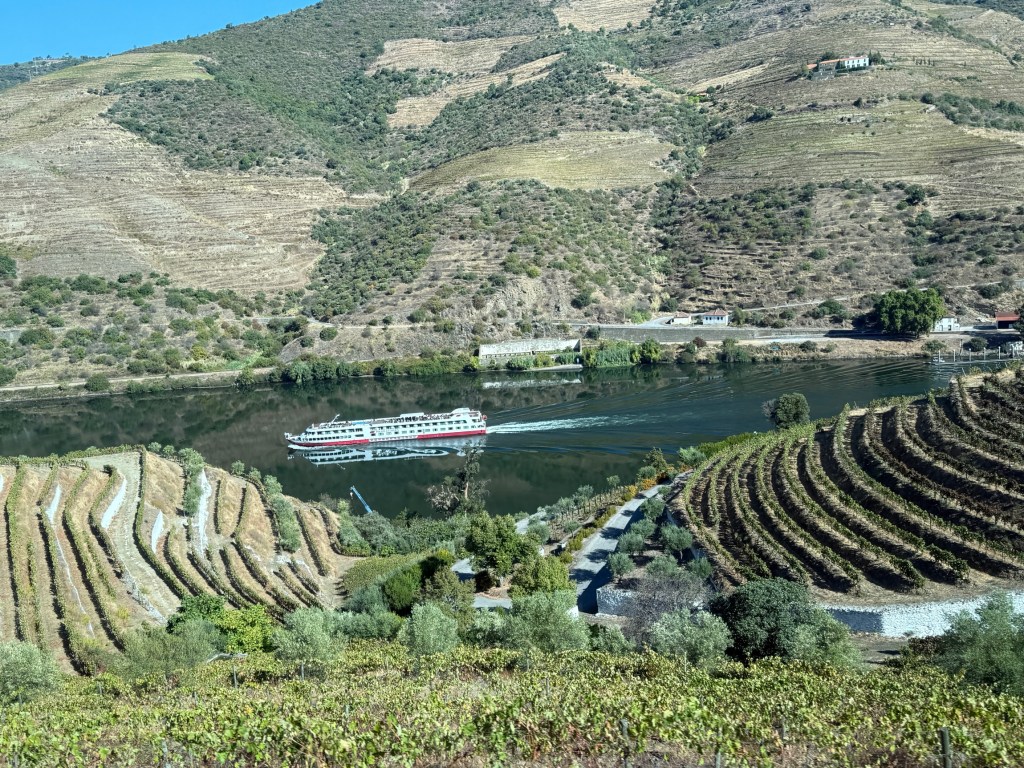
The major feature of this trip has been the riverside with its steep terraced hill sides. Grapes and olives abound. Further inland almonds were also common. Grapes have been grown commercially in the Douro valley for at least the last 380 years.
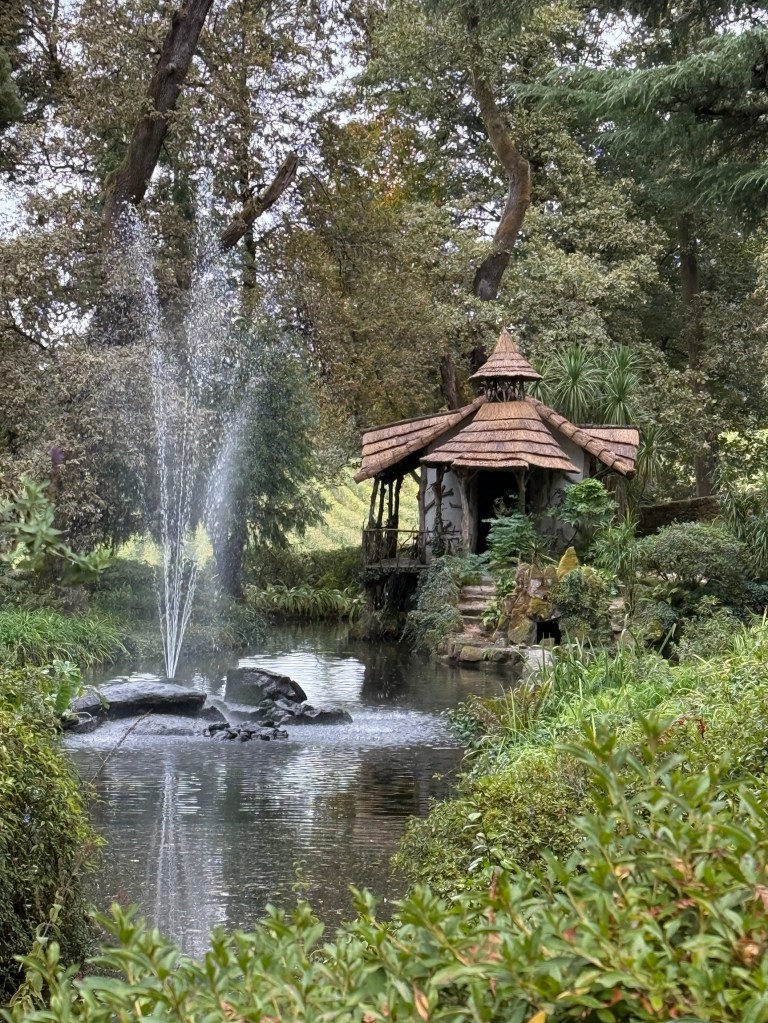
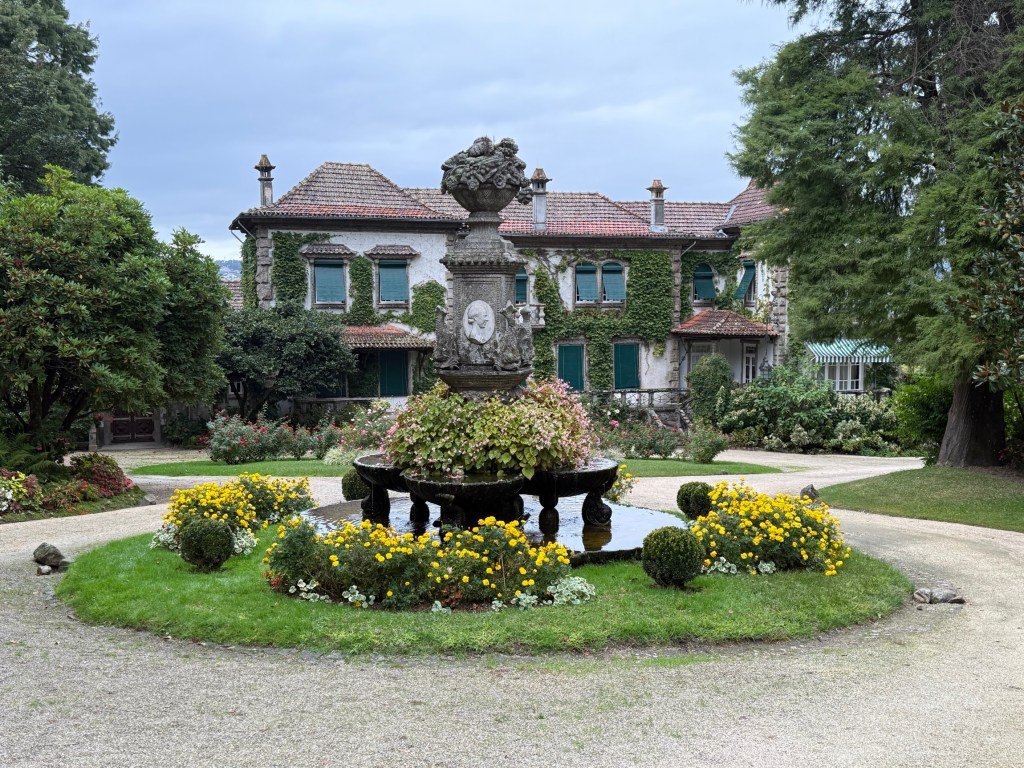
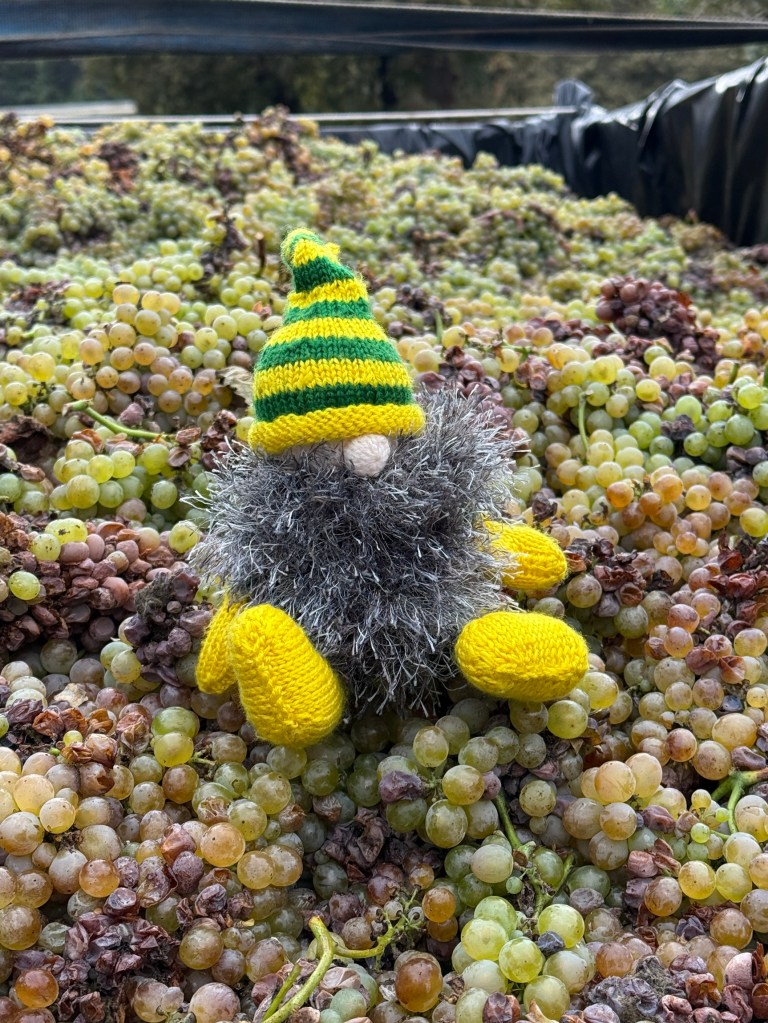
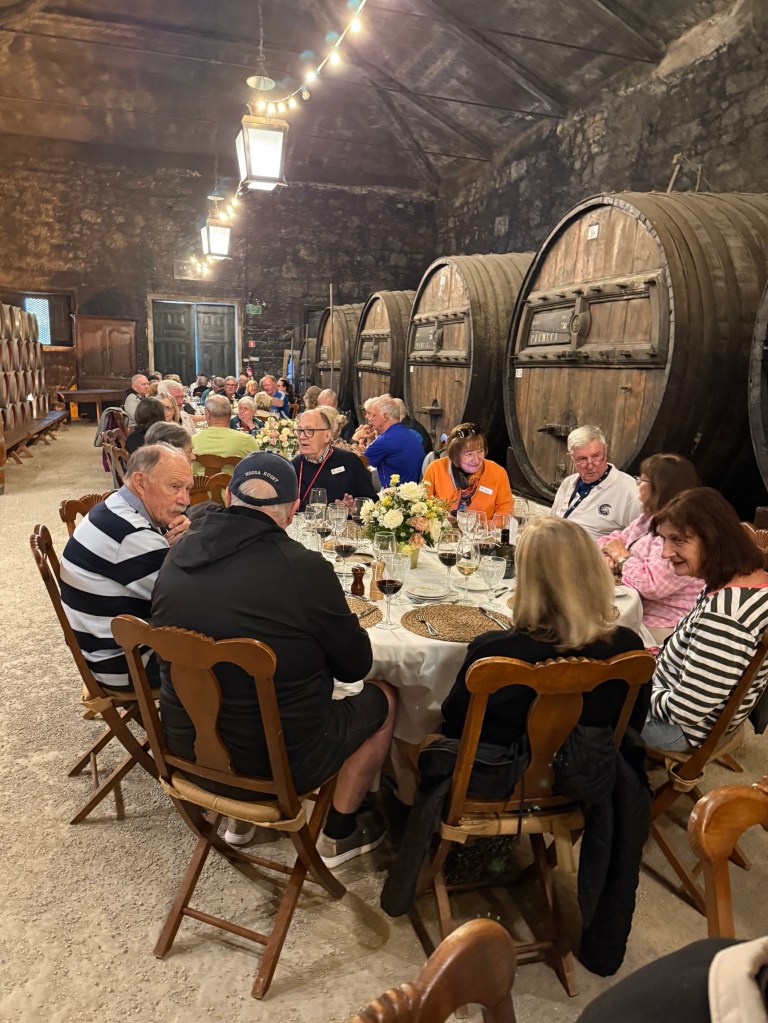
We visited the cellars of the oldest vineyards towards the end of the trip but along the way called into others for tastings and wanders through their gardens (more emphasis sometimes on the gardens than the wine!).
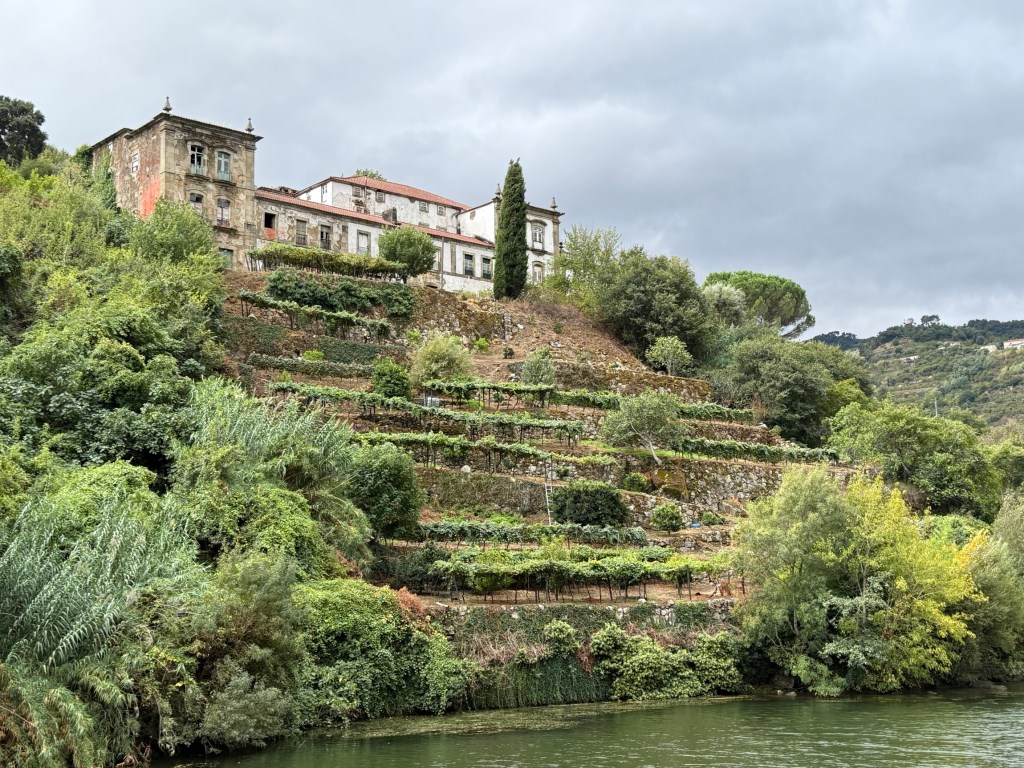
‘Quinta’ is like the word ‘Estate’ in English, referring to a wine brand or locale. Like Taylors or Tyrells in Australia. Perhaps ‘The house of ….’ is better. Anyway they are all over the hillsides!
Vintage ports and tawnies are what this region is famous for, plenty of red and white wine as well. Allthego and Slobro have participated well in the tastings. Like most vineyard tastings we were not presented with the cellar classics, sometimes the wine was fairly average quaffable stuff.
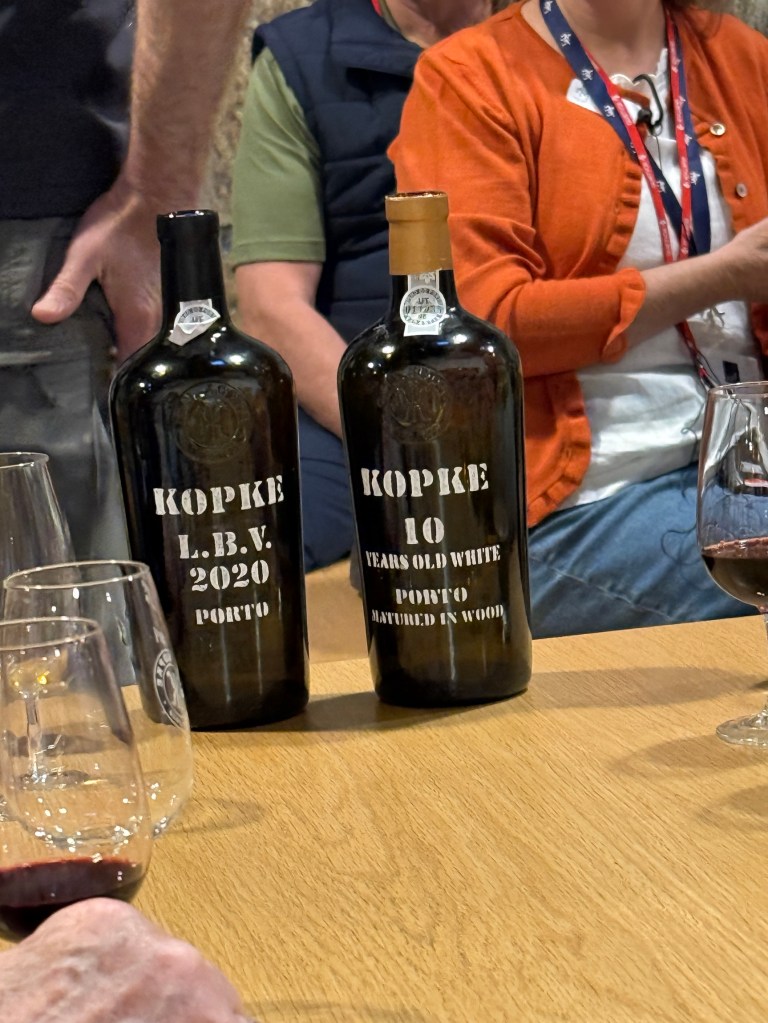
We tasted some nice wines after a vineyard tour of the Quinta Sao Luis estate, which makes the Kopke label that dates back to 1638. We had a very nice ruby port, the style that you need to drink the whole bottle of in no more than a couple of days (just like a red wine). It only improves in the bottle over a couple of years, unlike their vintage ports that go on in the bottle for decades and cost a motza!

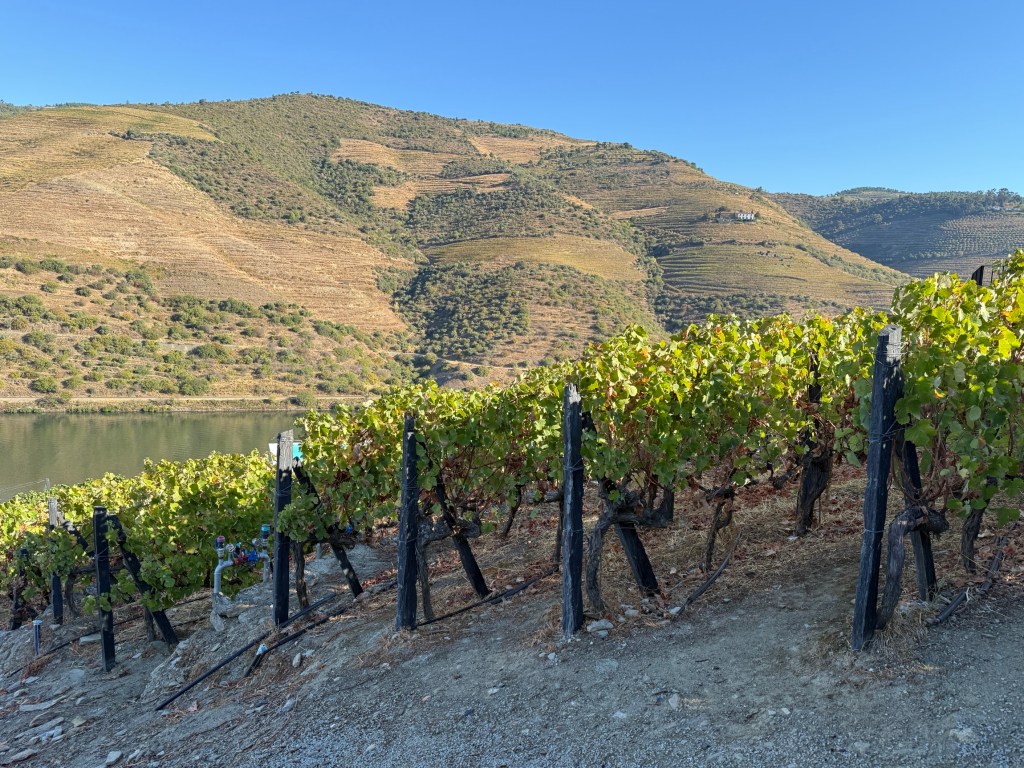
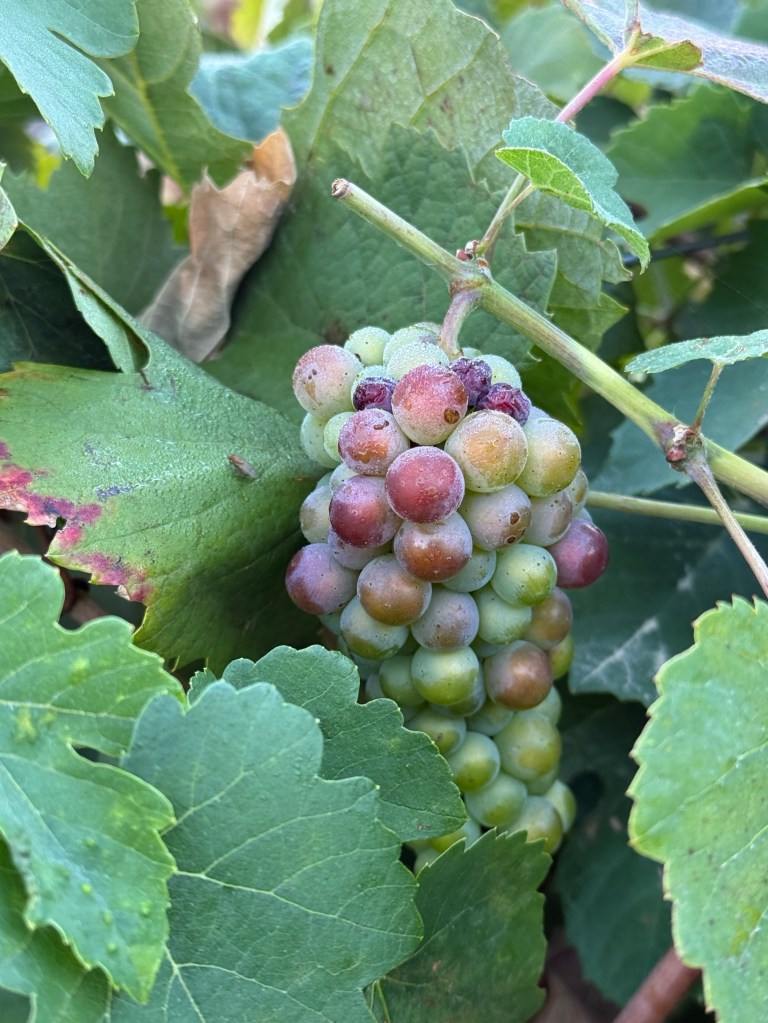
It seems that most of the grapes are harvested by hand, there is simply no room on the steep hillsides for machinery. We were also told that in recent years the harvest is starting earlier compared to say 100 years ago. Global warming in evidence again it seems.
Well so much for vineyards and wines! Next time some experiences in the towns away from the vines!
Cooking up a storm
We have joined the cruise in Porto, settled in and survived the first night aboard!
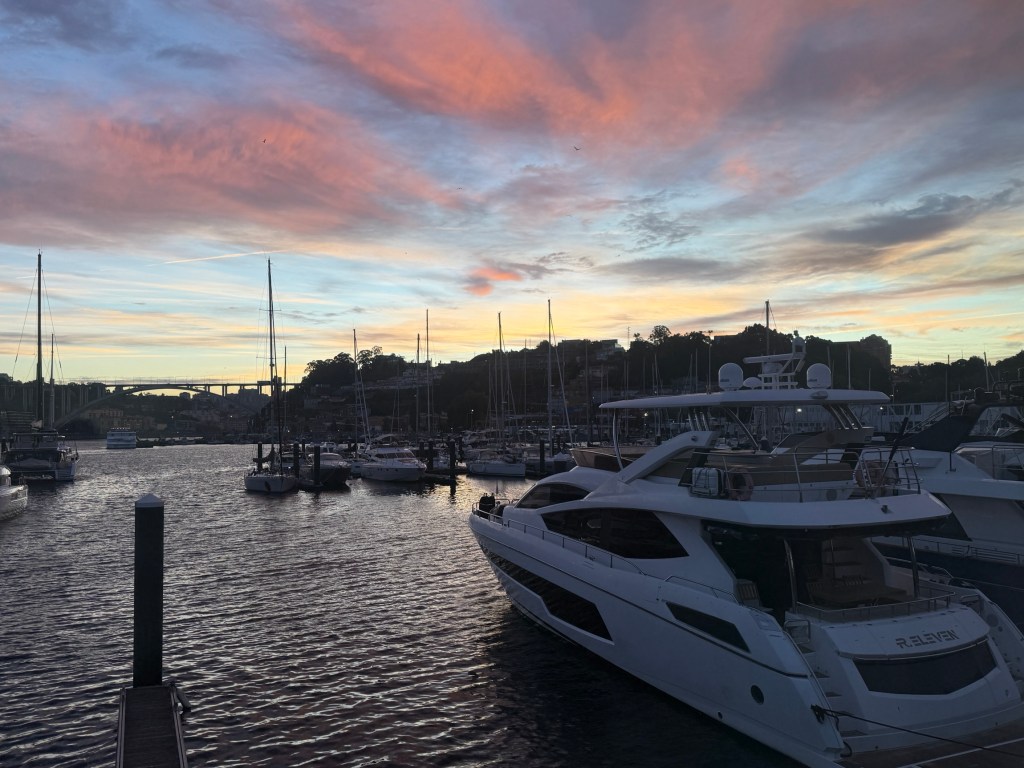
Will we survive the coming day’s excursion and activities? Allthego has always liked to try to improve his cooking expertise. Homealone says it needs improvement. So we are off to participate in a Portuguese cooking experience. What we cook is what we will eat for lunch. Will the mushrooms be ok? Will we need dinner?It was to take most of the day.
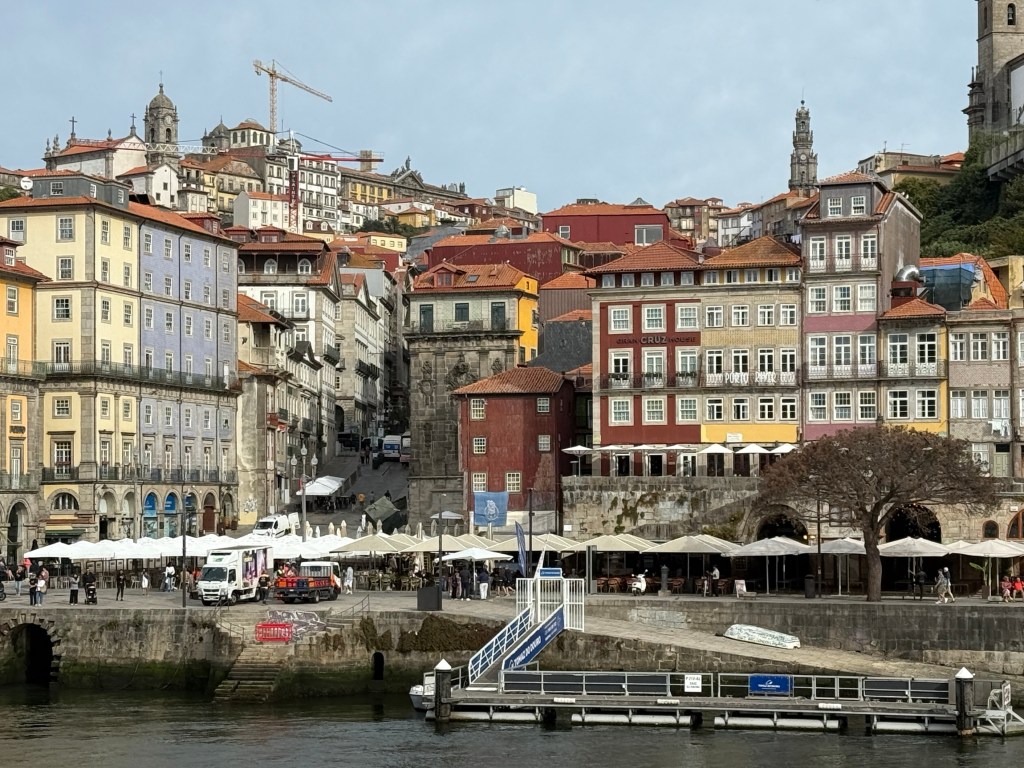
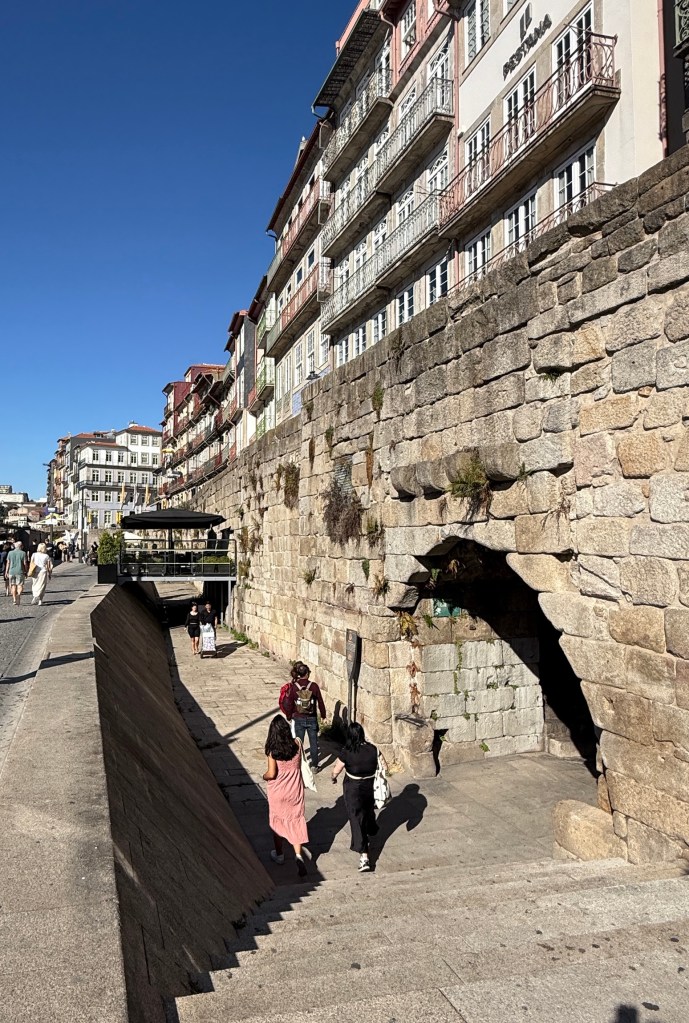

There was a short walking excursion of the old port area prior to the meal prep and ‘cook off’ starting circa 11am, finishing 3 pm after eating it.
A fairly extensive menu was planned. Of course to help us along there is a bit of cheese and wine to drive the creative juices. The chef goes through the ingredients and defines the objectives and techniques required.
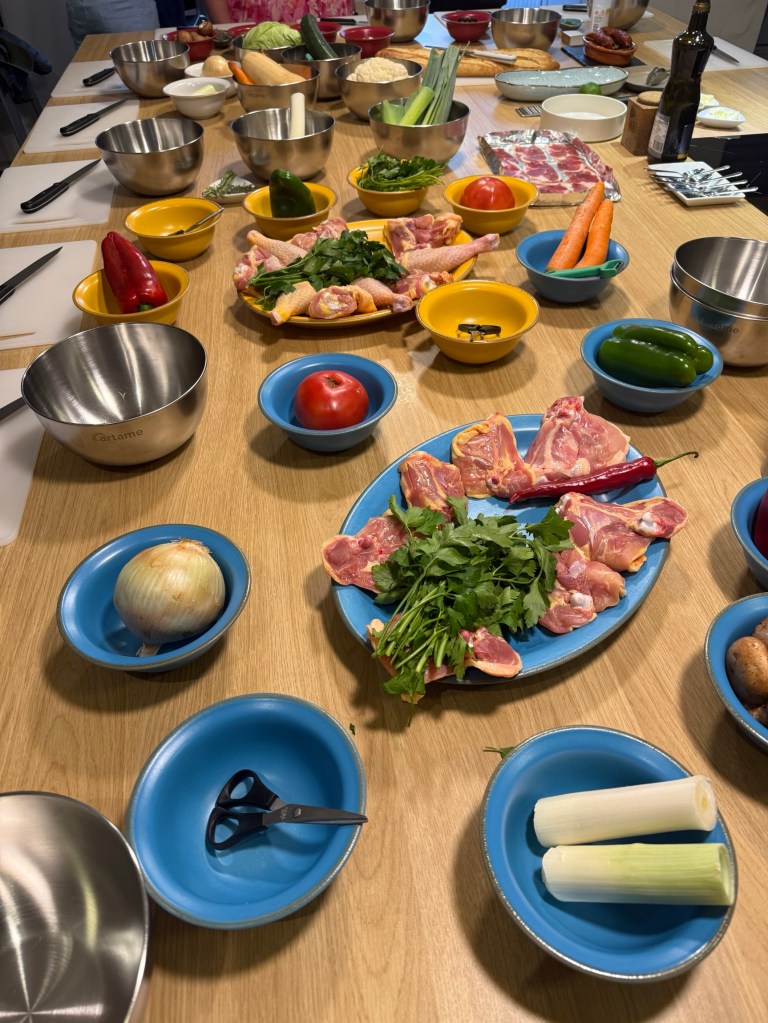
Our group is divided into a number of ‘teams’ to assemble the meal. All the ingredients are laid out before us ready to be prepared. Mushrooms and other vegetables to be peeled, sliced and chopped. There is to be a blended vegetable soup.
Prawns to be peeled, deveined and the heads retained for later squeezing during the sauce stage.
The free range chicken to be skinned and deboned ready for a chicken and vegetable pot stew. Skin and bones headed into a stock pot.
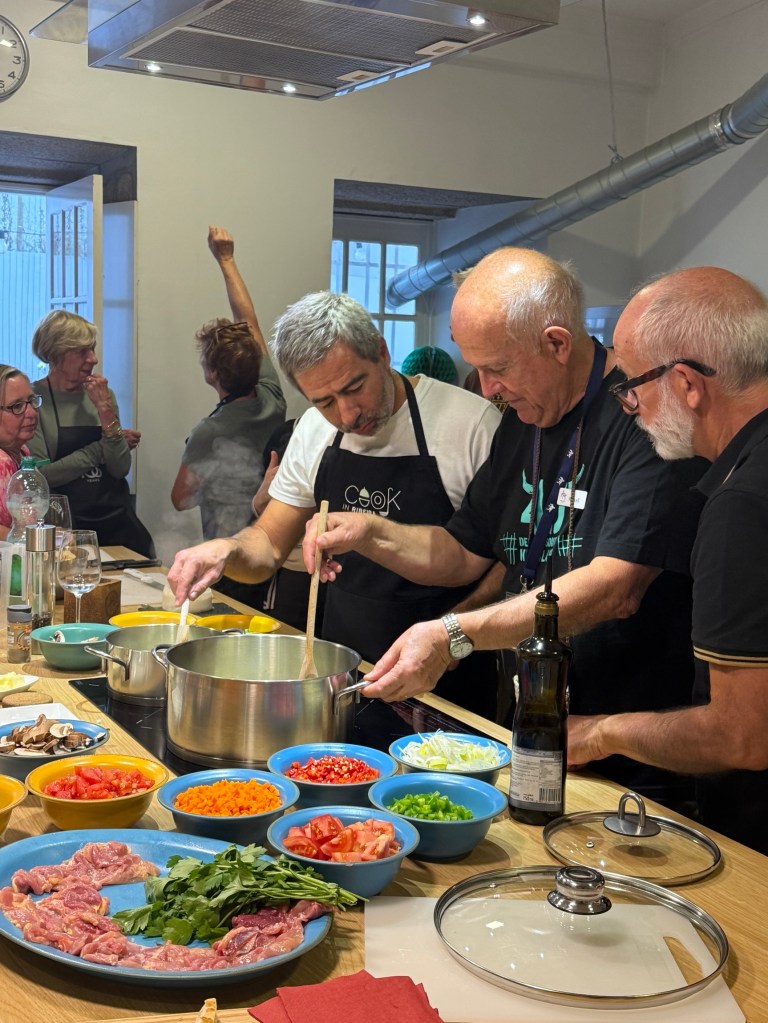
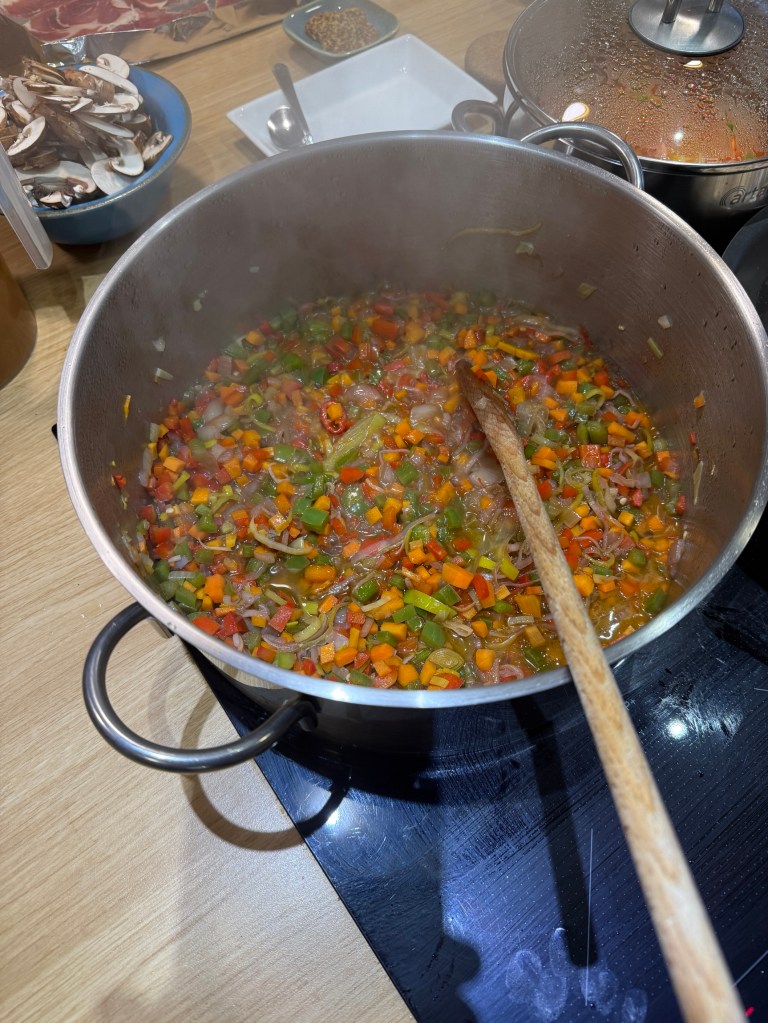
Allthego was part of the chicken team expertly skinning numerous pieces, managed to also deal with some onions and a couple of capsicums utilising newly learned techniques.
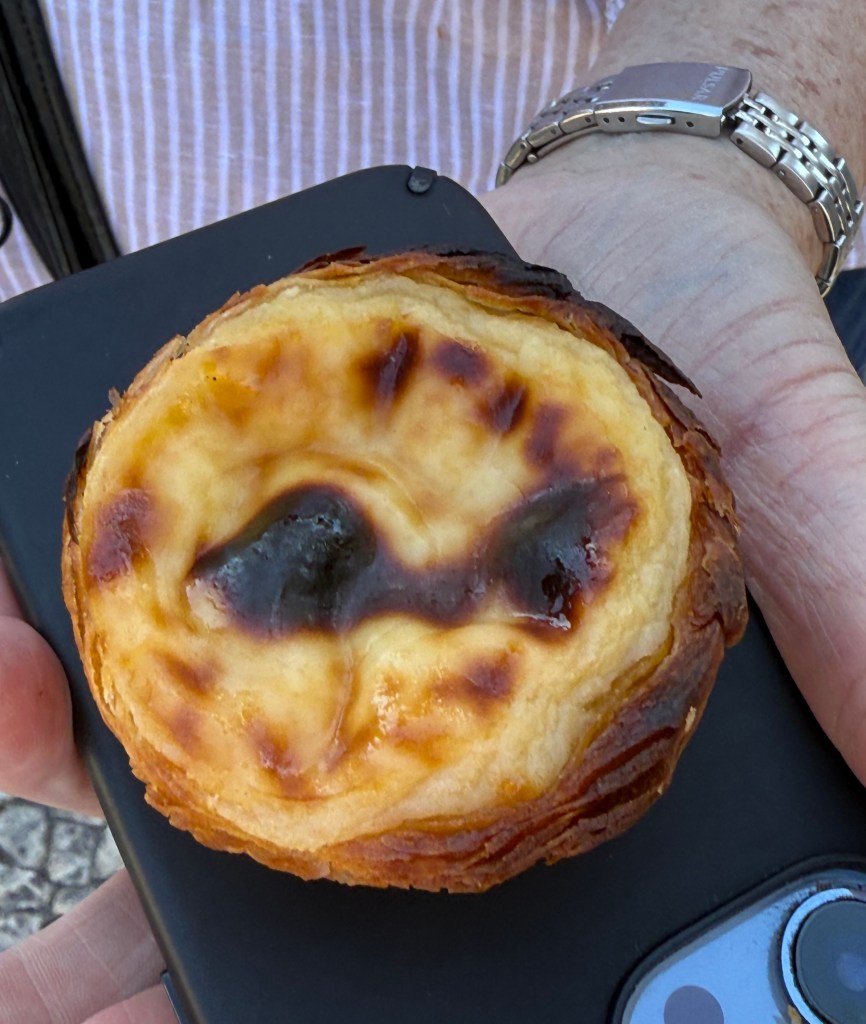
Another team is dedicated to the production of Portuguese Tarts. Homealone brings her pastry skills to this group and manages to secure the recipe.
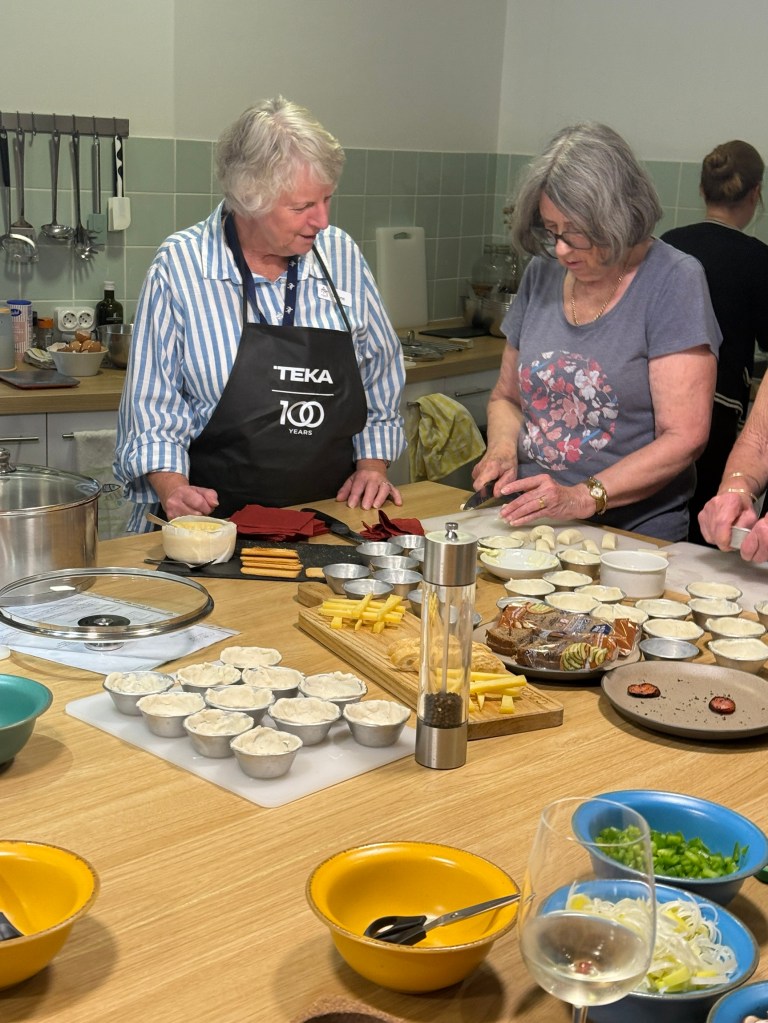
All this seamlessly progresses amid banter from the chef and his assistant George. There are no temperamental Masterchef episodes or walkouts.
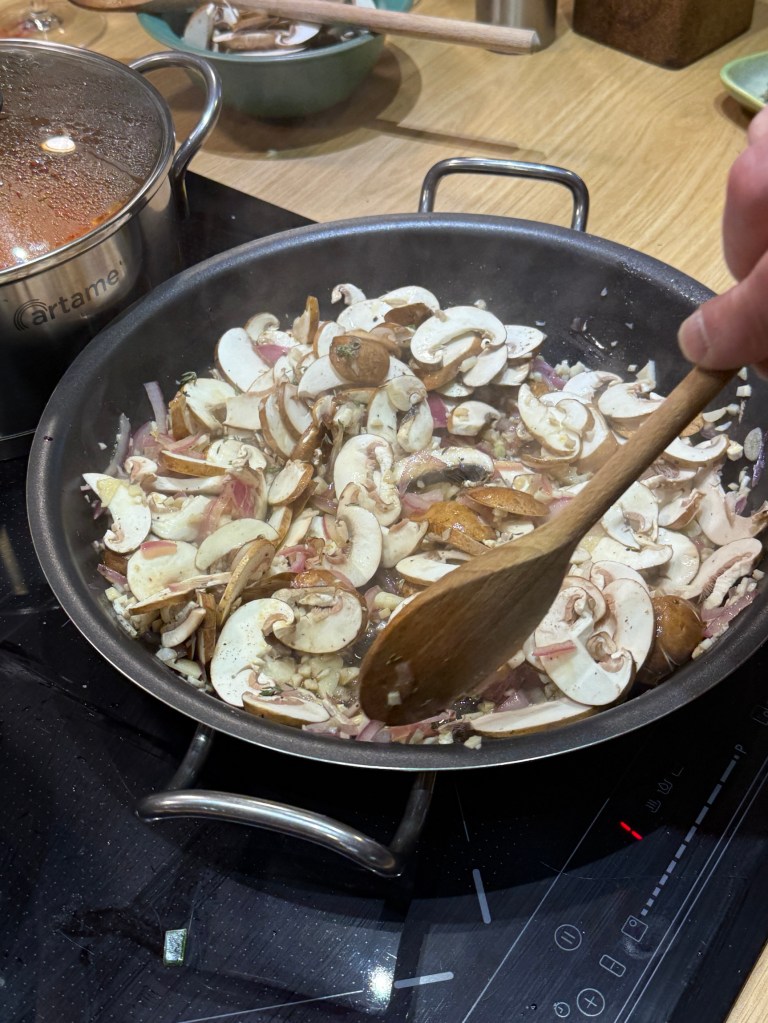
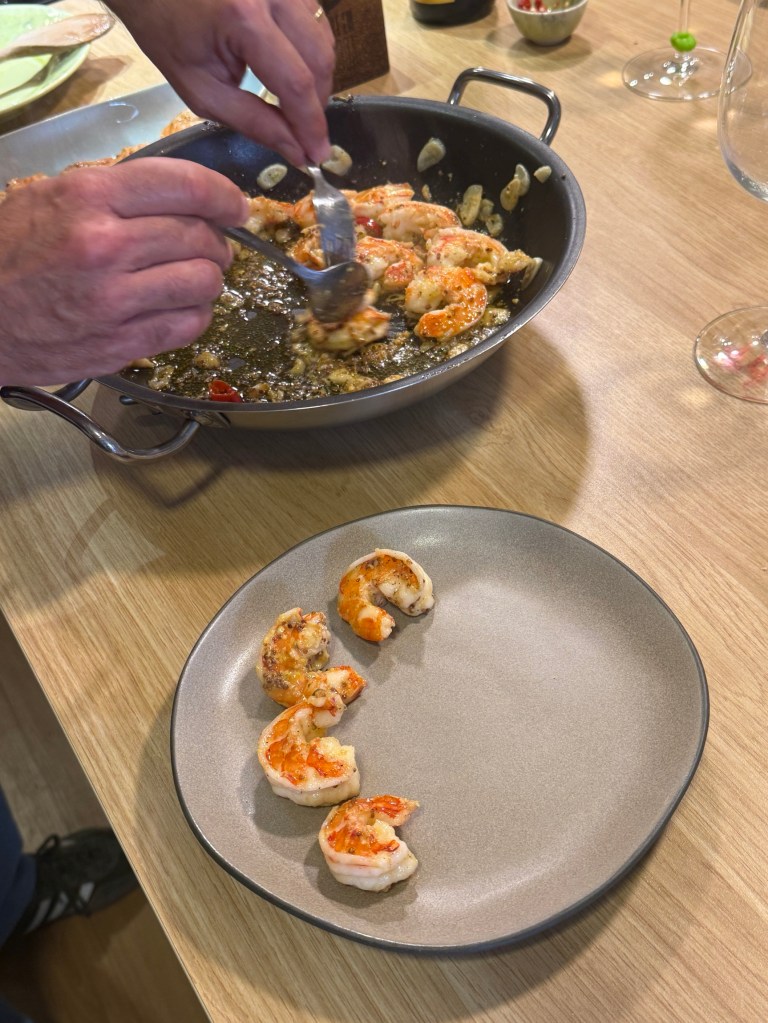
It was a great success. Some great spicy mushroom and prawn nibbles, a smooth velvety vegetable soup and a robust chicken and veg pot stew. And of course some Portuguese tarts to finish off the meal. Some white and red wine helped.
We returned to the boat for a rest. No strange mushroom effects. Dinner was not required!
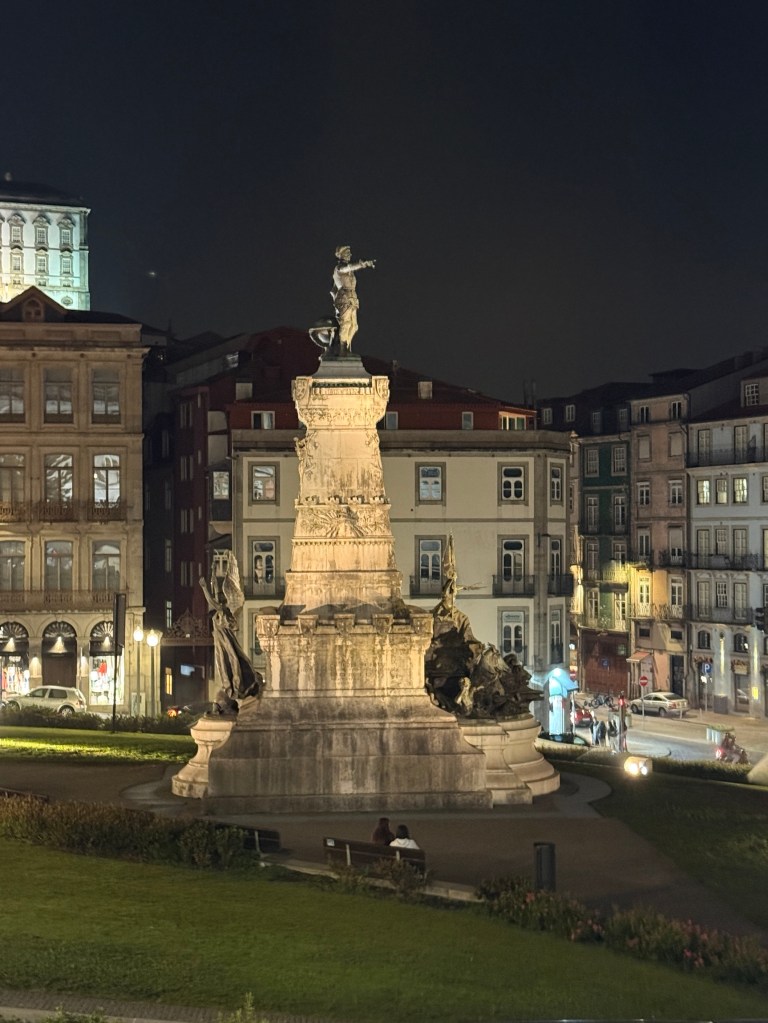
Later that evening we headed out for a musical performance to what is known as the Stock Exchange Palace, built from the mid 1800s. The building is really the very fancy premises of the local Chamber of Commerce. We had a look around the rooms and furnishings. The foyer was a large room with the ceiling surrounds depicting the national shields of all the countries that Porto traded with, around the early 1900s.
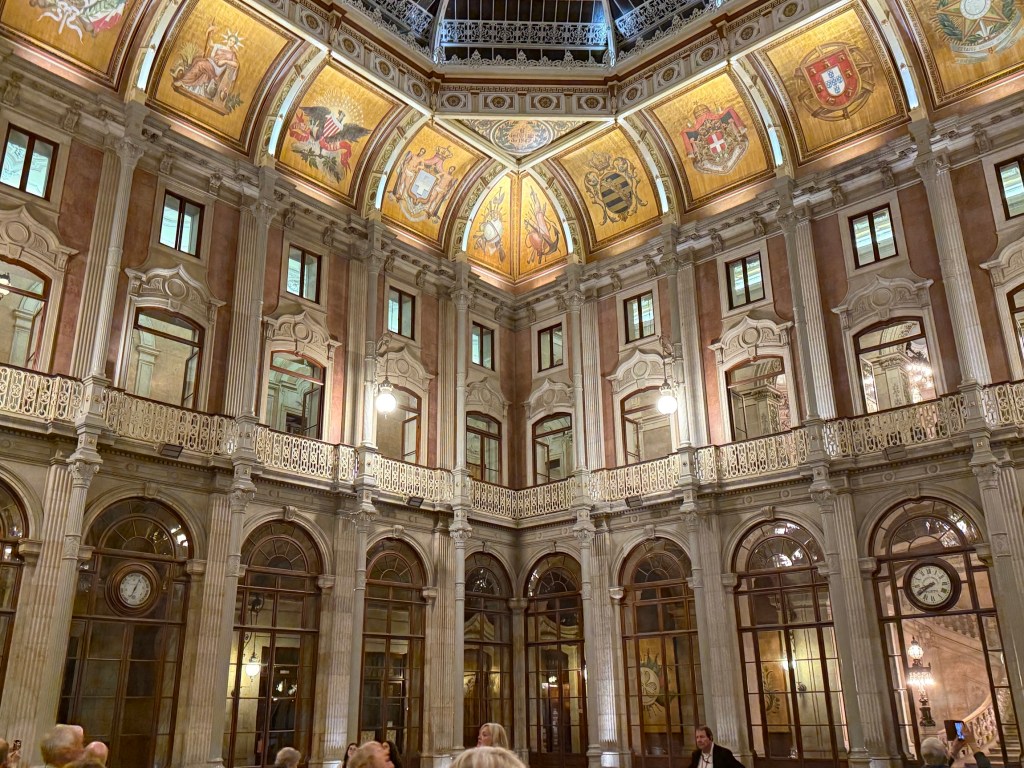
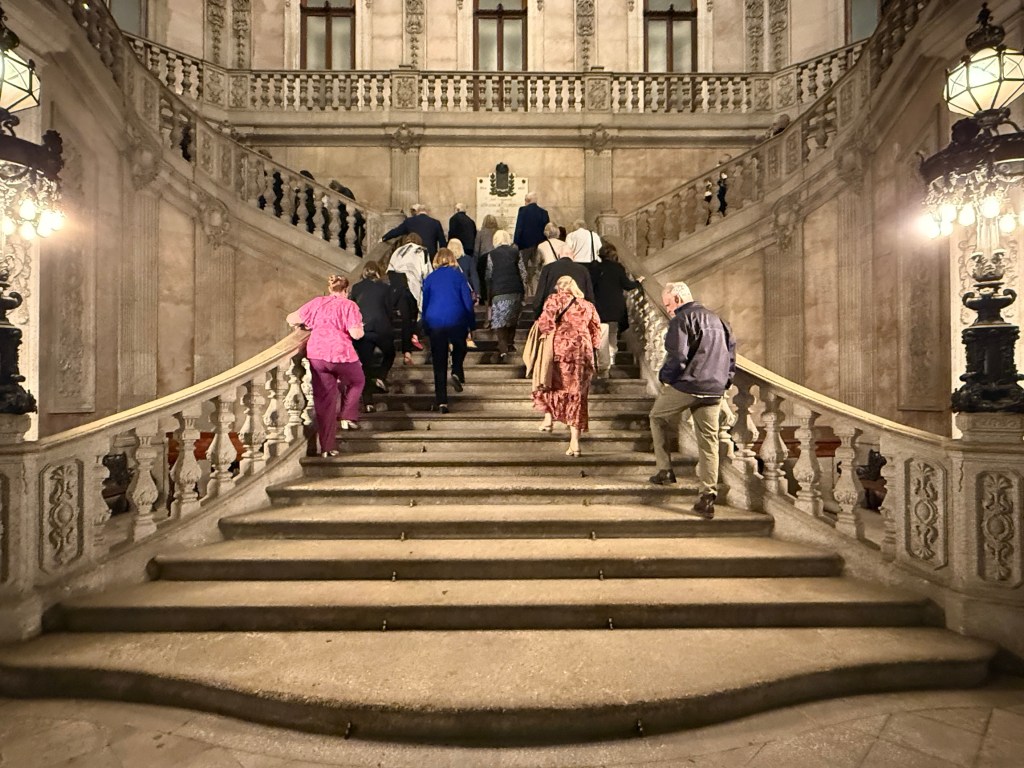
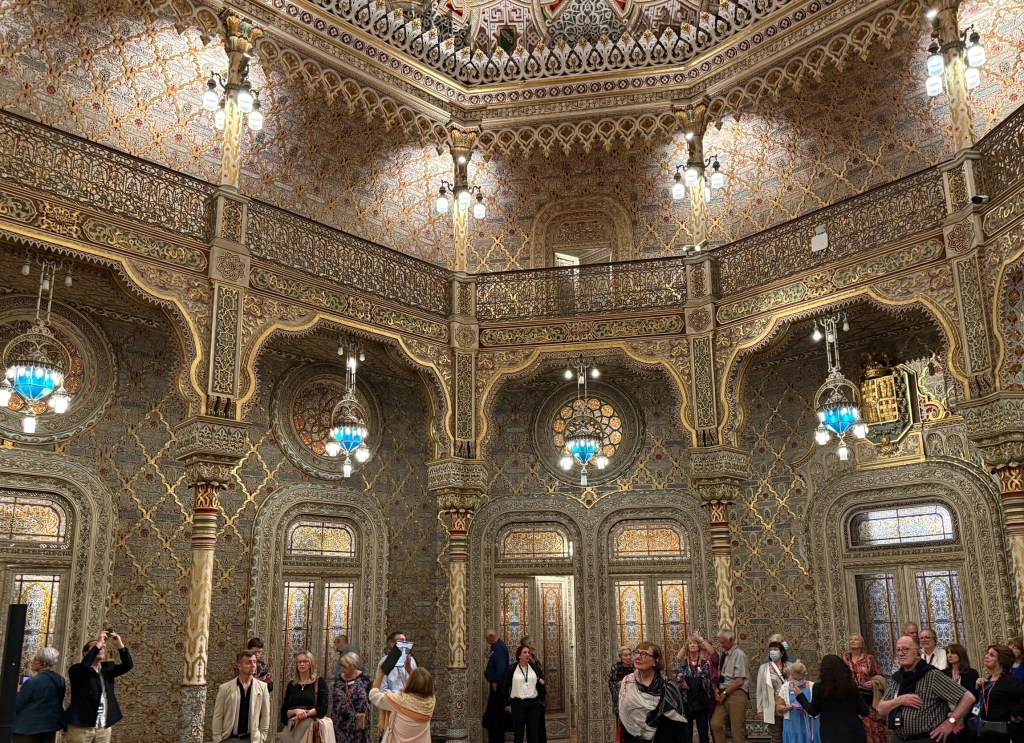
We ended up in the elaborate Arab Room for the musical performance. This room was built especially to impress Arab business visitors, with whom Porto did not trade at the time. Most impressive.
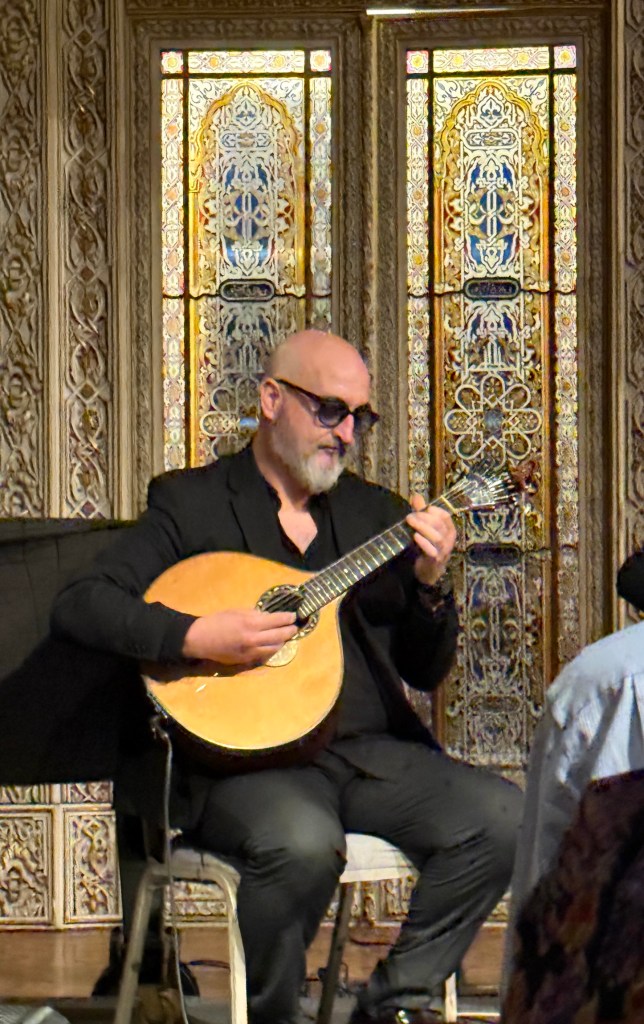
The musical performance was a little ‘ho hum’, three local guitars and singer, probably excellent performers but it was all in Portuguese. Others enjoyed it, depends on one’s taste I suppose.
A rather long day ended back at the boat. We next head off up the river for what promises to be a relaxing few days on the twisting river among the vines.
To Porto
It was more or less a full day’s coach ride to Porto, in the north, from Lisbon. Along the way we passed through rural landscapes; cork trees, closely planted olive trees and vineyards. There was also some paddocks with a mix of black bulls and horses.
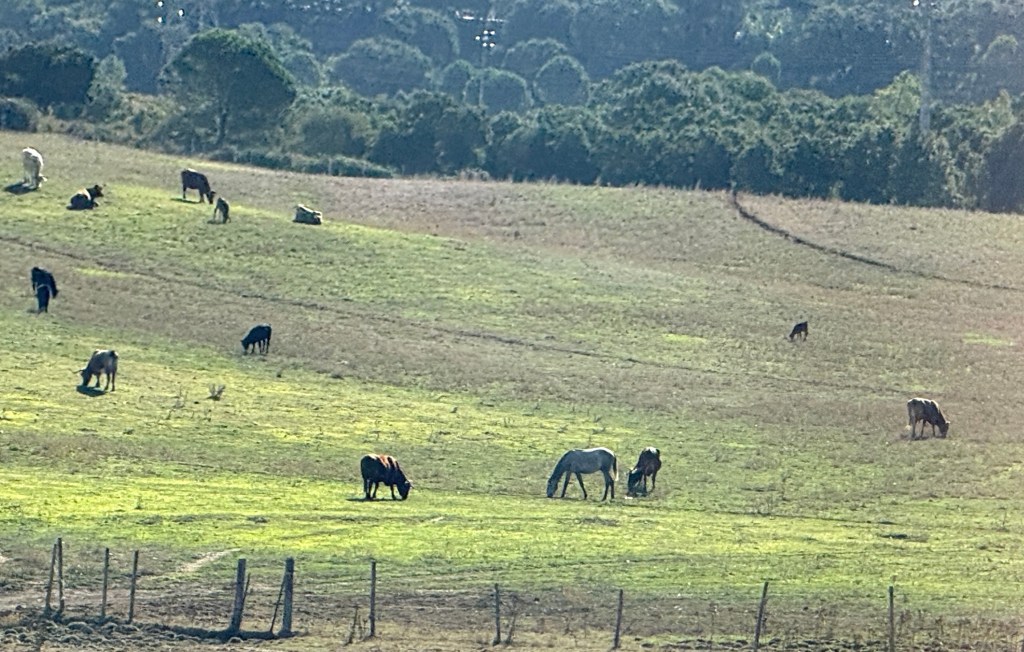
The bulls are destined for Portuguese bull fights. Bull fighting is not as popular as it is in Spain. Our guide suggesting it may well die out given time, he had been to fights in his youth (with his father and grandfather) but his 33 year old son had not set foot in a ring. It seems Bull fighting is a little different to that in Spain. Bulls are not killed in the ring but are ‘dealt with out the back’ if necessary, otherwise they are retired to pasture. They are also wrestled by 8 men one of whom twists the tail vigorously to subdue the animal. Bulls are very sensitive in the tail, as we all are…..
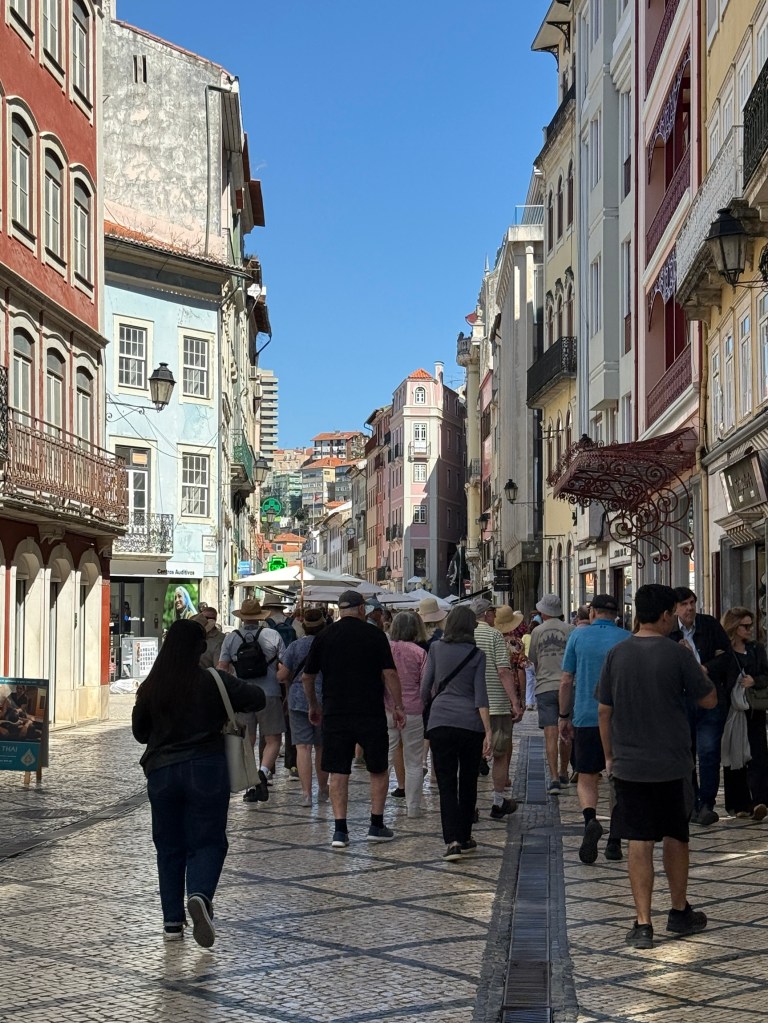

About half way along we stopped for lunch and a short look around the old university town of Coimbra. Coimbra was a former capital of Portugal. The old historical area is very geared to the tourist. Plenty of eateries and souvenir shops to tempt the traveller.
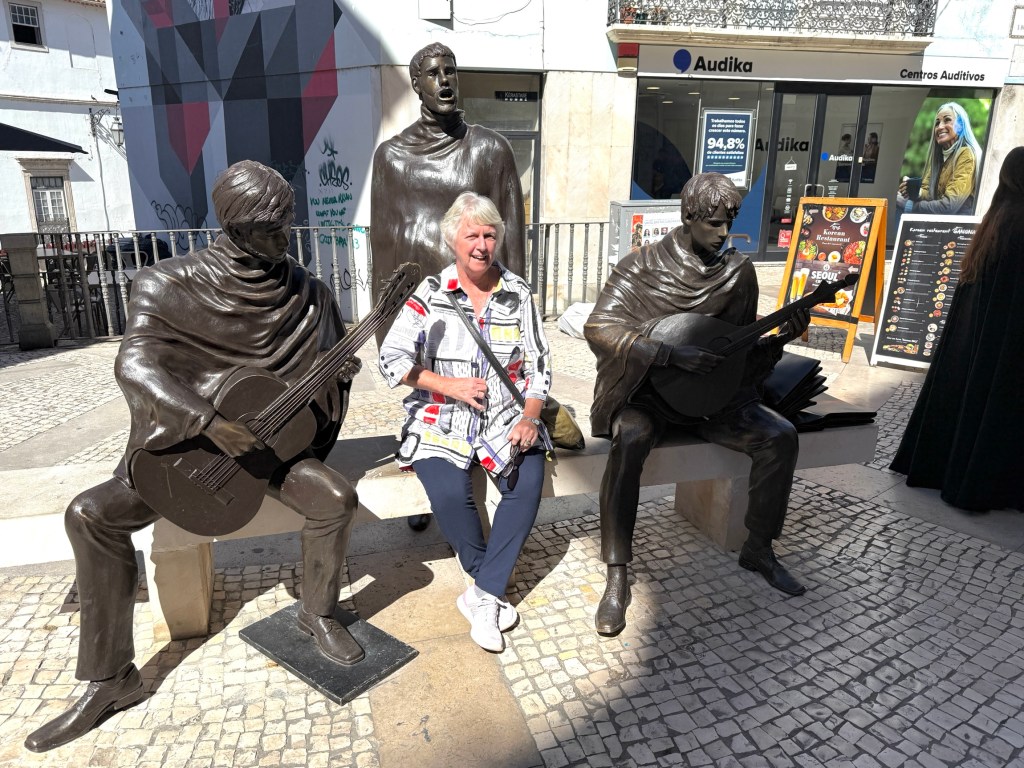
We arrived in Porto around 4pm and wound our way around the streets down to the marina near the mouth of the estuary into the Atlantic Ocean.
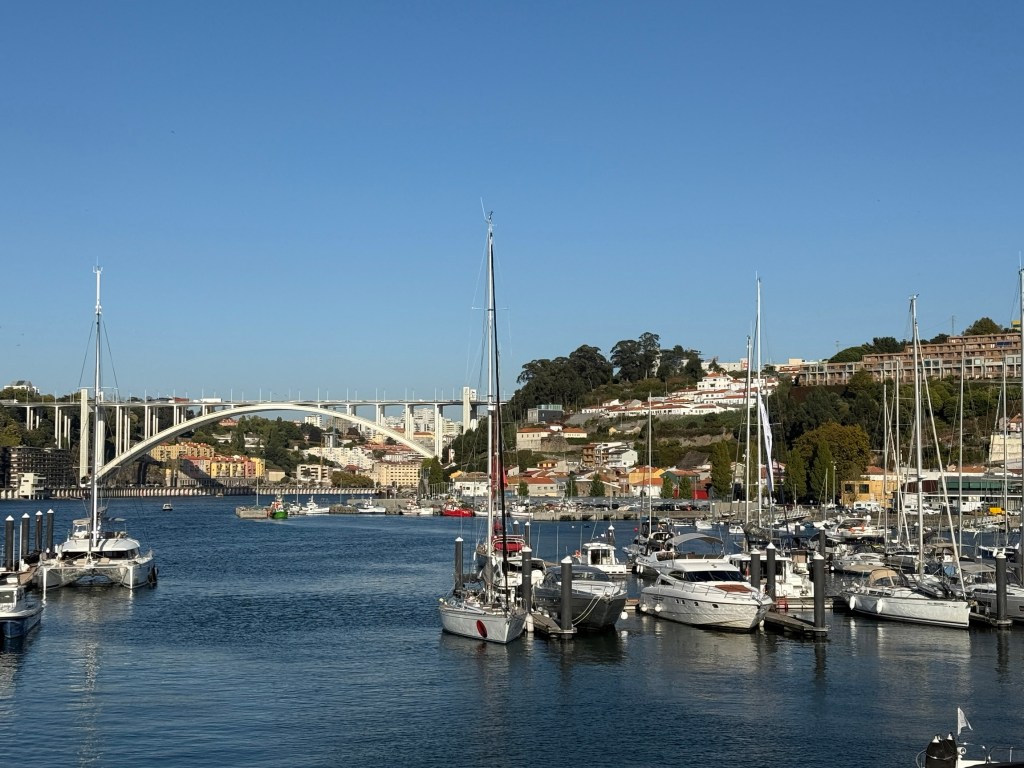
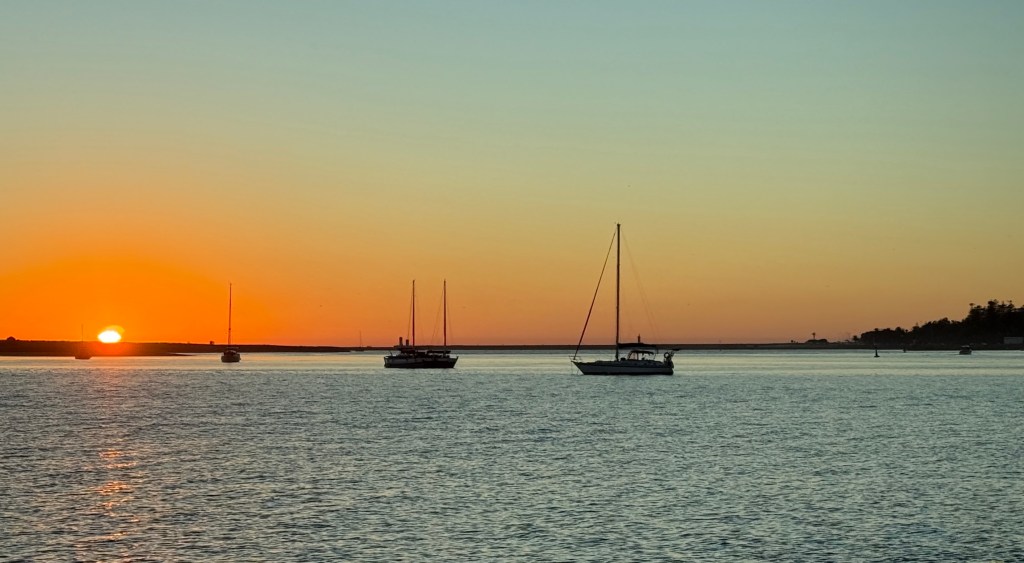
Porto is the largest city in Portugal after Lisbon, and was for a short time a former capital of the country.
We settled into our comfortable cabin and after dinner the boat, it is more a boat than a ship, sailed up into the brightly lit old city centre with its numerous bridges.
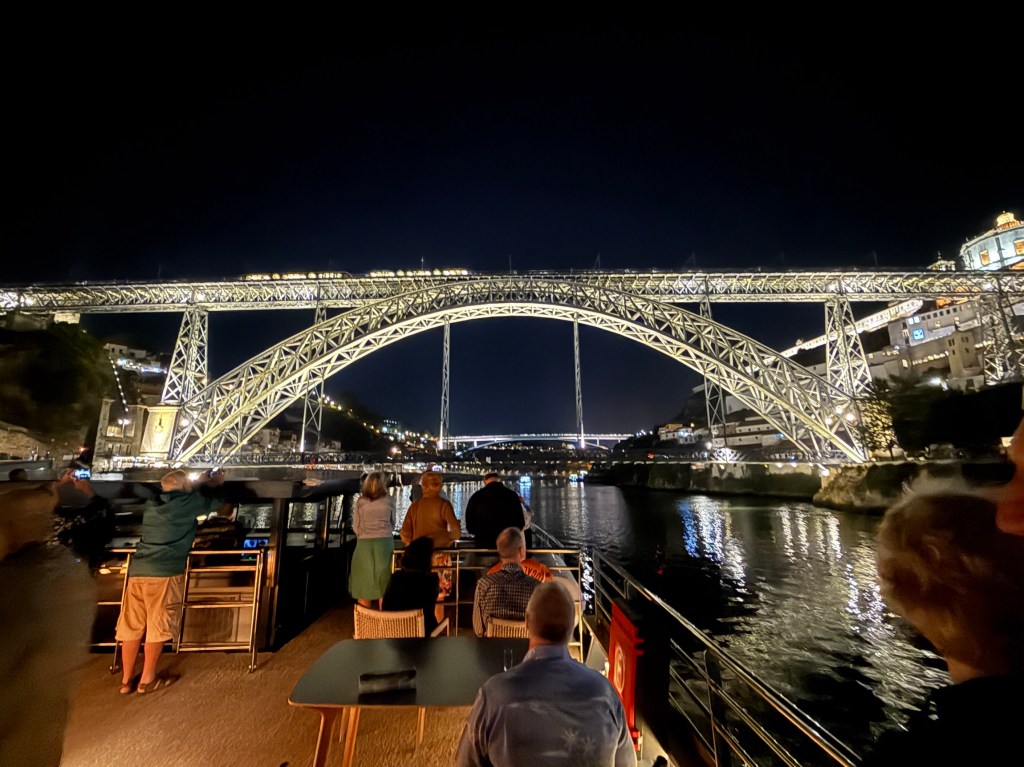
We are here for a couple of nights before starting the journey up the Duoro Ruver.
.
Old rocks turned to stones.
Humans seem to have a fascination for old rocks that have been turned to stones. So when we go off touring around various places we just love standing in queues for a while to look at old buildings. Why is this so?
Is it a fascination for seeing how well to do people lived a long time ago? Or those not so well to do who just existed, perhaps to serve the well to do? There is a tendency to focus on seeing the finery of life, expressed in architecture, enjoyed by kings, queen’s, lords, ladies and the clergy. Not the ‘blood and guts’ of everyday life, just how did the toilets work in those days? Who was in charge of rat control?
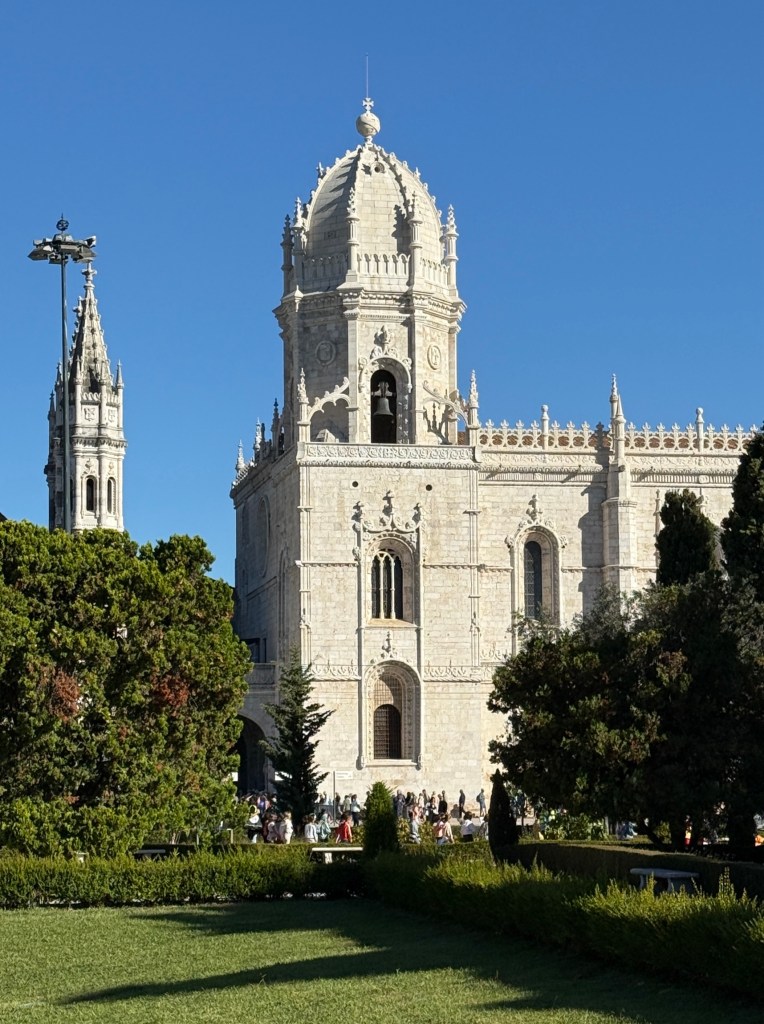
Anyway, Allthego and Homealone have queued up again to see one or two of the old buildings of Lisbon. Of coarse there are not many because of the big earthquake. But some of the grand ones survived, perhaps they survived because they were grand and so well built.
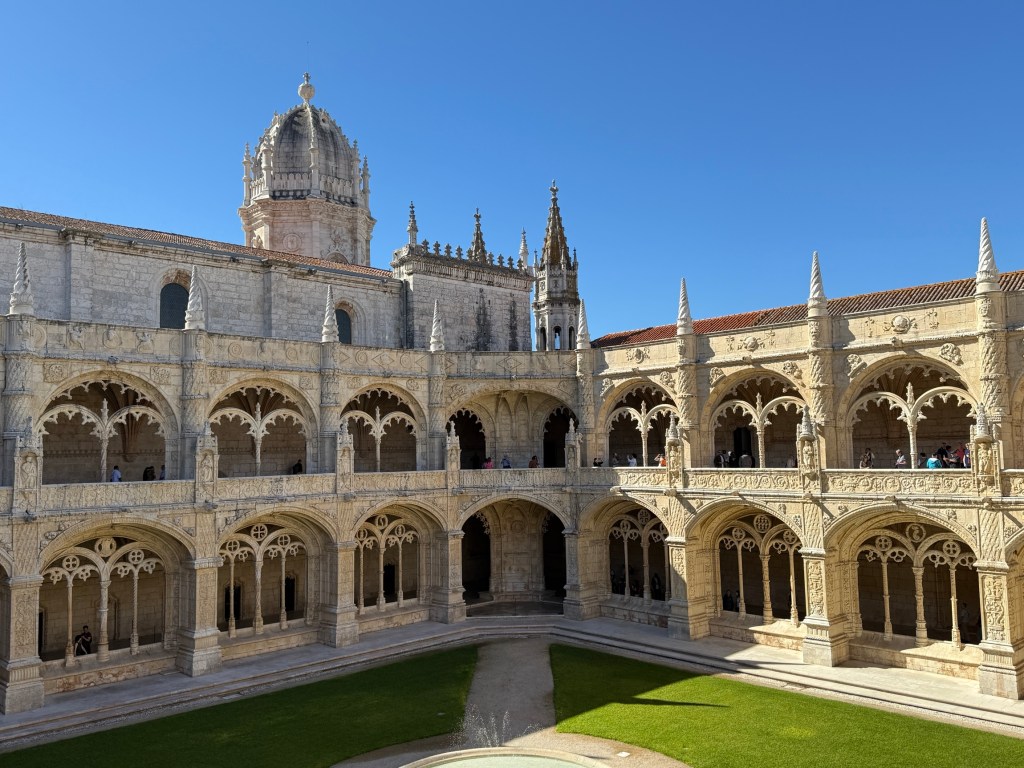
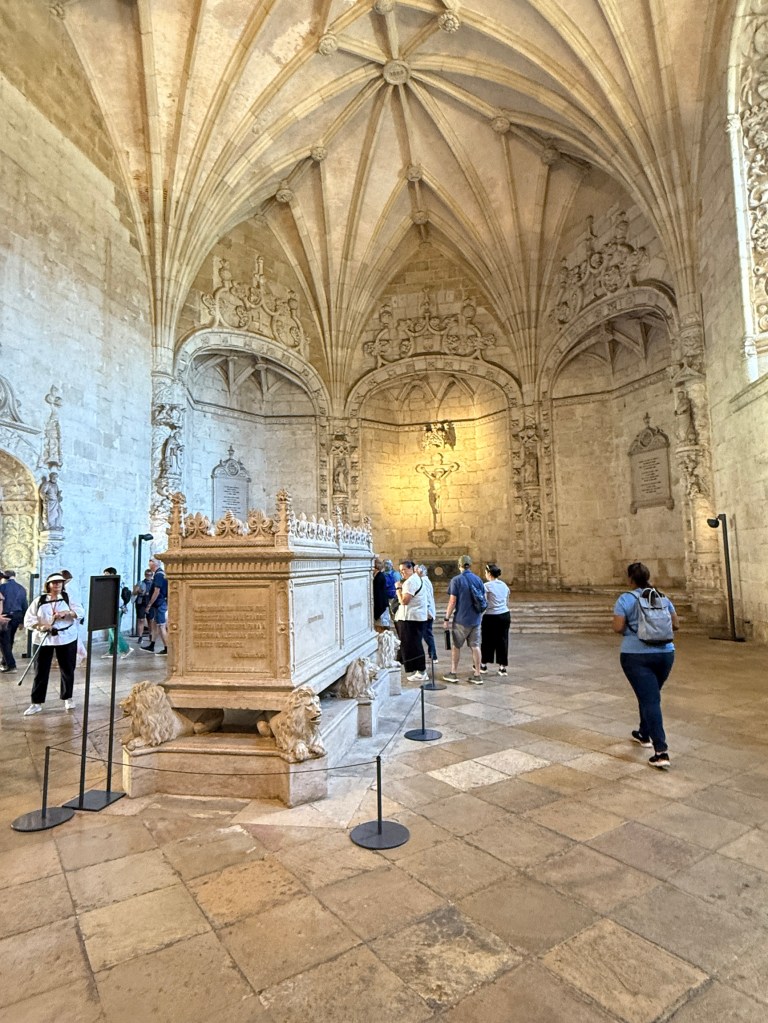
We lined up for a tour of the cloisters of the 16th century Jeronimos Monastery and Church. The Monastery is beside the Tagus River in the Belem quarter, downstream from central Lisbon.
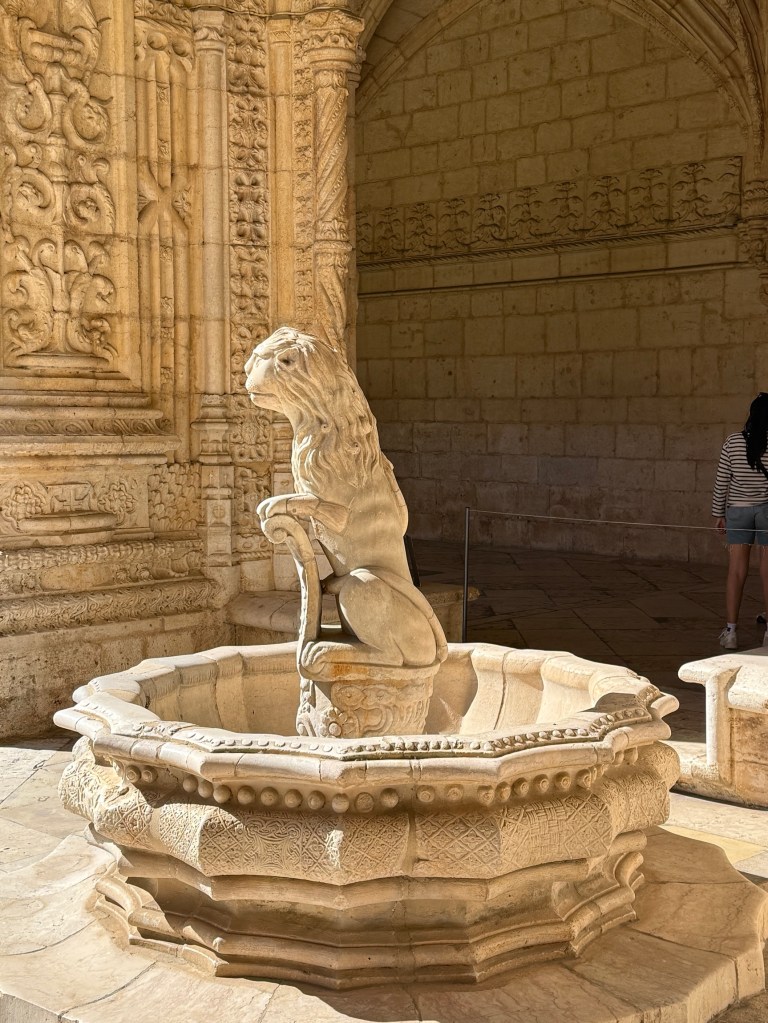
After touring the Monastery we returned to the city centre for a short walk in the historical district. Another Portuguese staple was tried at a cafe, cod fish cakes. A mix of cod flakes, potato and egg, with bread crumbs. Just like our tinned salmon patties! We later had some for a light lunch, some Mateus Rose was needed to wash them down.

Also on our list was Pena Palace sitting high on a hill at Sintra, a few kilometres out of Lisbon near the Atlantic coast.
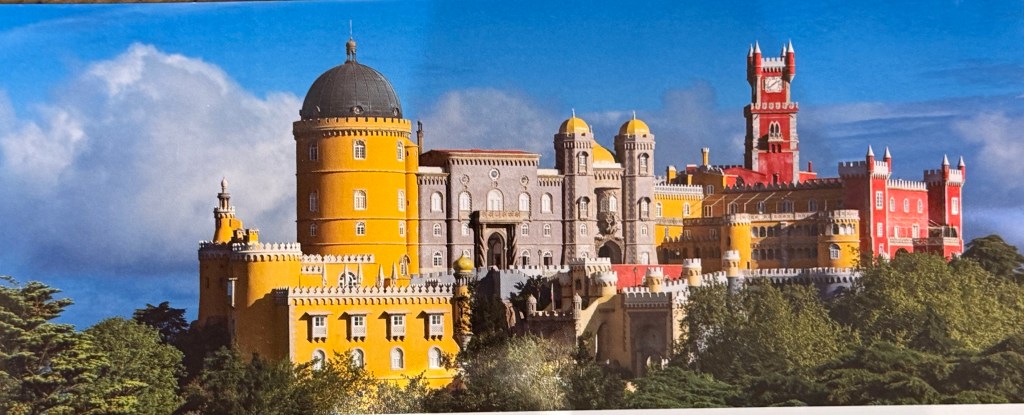
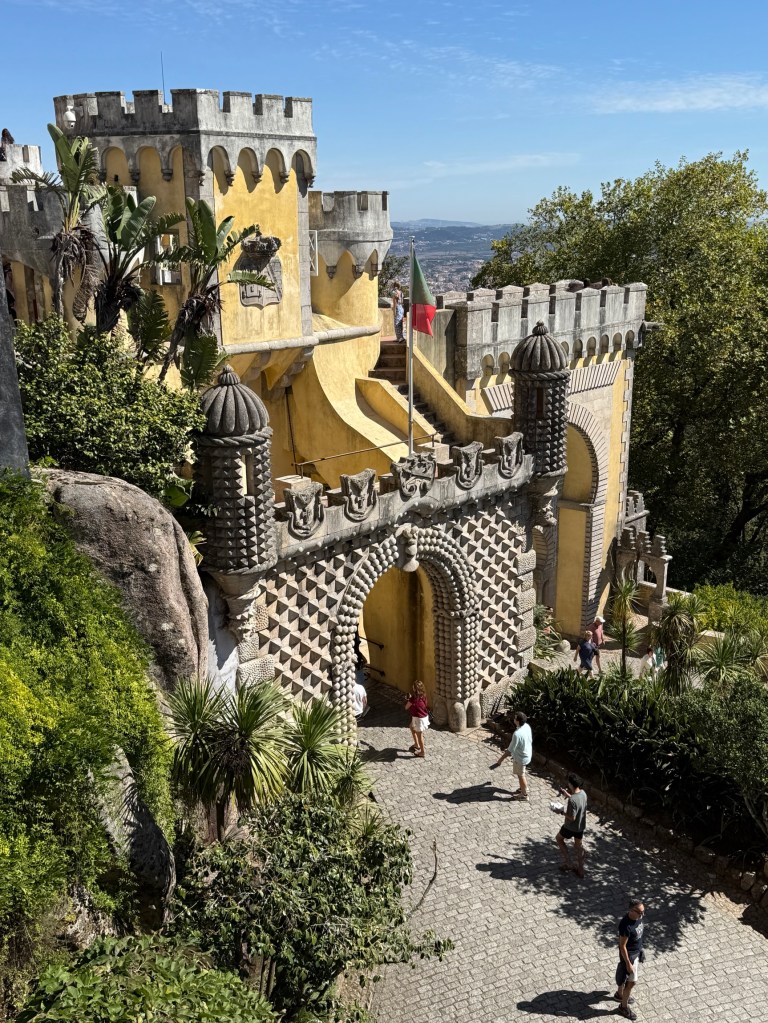
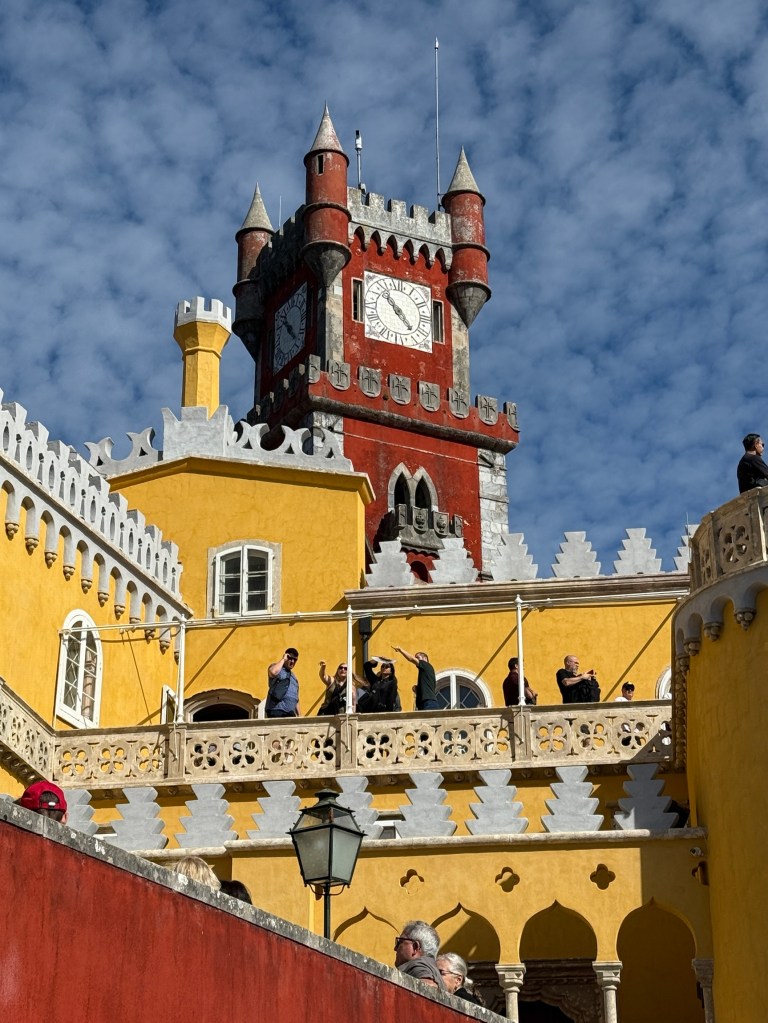
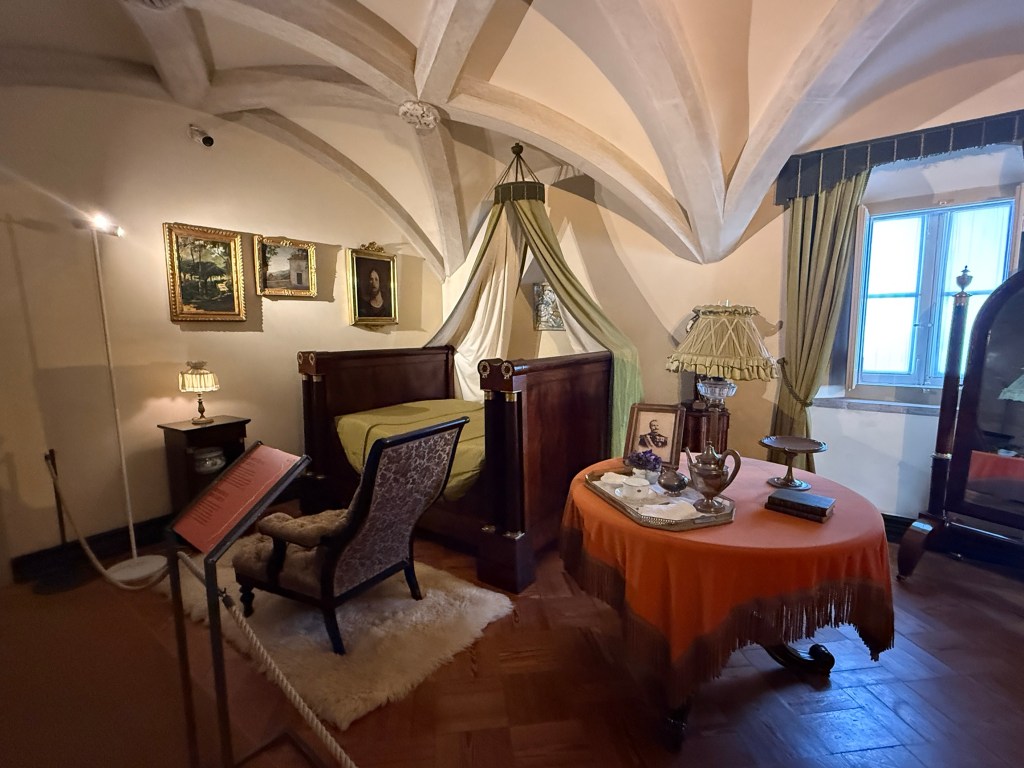
Jerónimos Monastery and Pena Palace are both UNESCO world heritage sites. UNESCO world heritage sites seem to breed endlessly, popping up all the time fuelling tourism as much as preserving the sites! Allthego shouldn’t be so suspicious. The cloisters and palace were very impressive, certainly deserving places on the list.
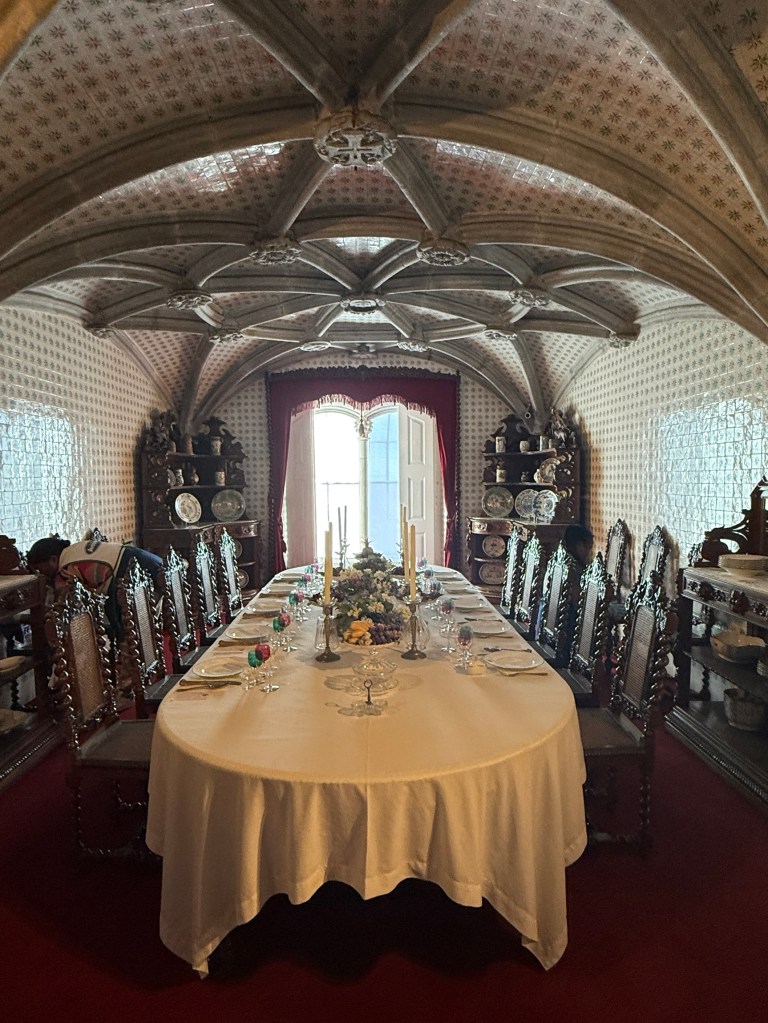
The Pena Palace has its origins as a middle ages monastery that was in part destroyed by the 1755 earthquake and lay in ruins until the mid 1800s. At that time King Ferdinand set about restoring the monastery and expanding the complex. The yellow buildings are the old monastery and the red ones the expanded complex. The rooms in the new areas are bigger and have much higher ceilings. The palace became a summer residence for the Kings and Queens of Portugal until the 1910 republican revolution.
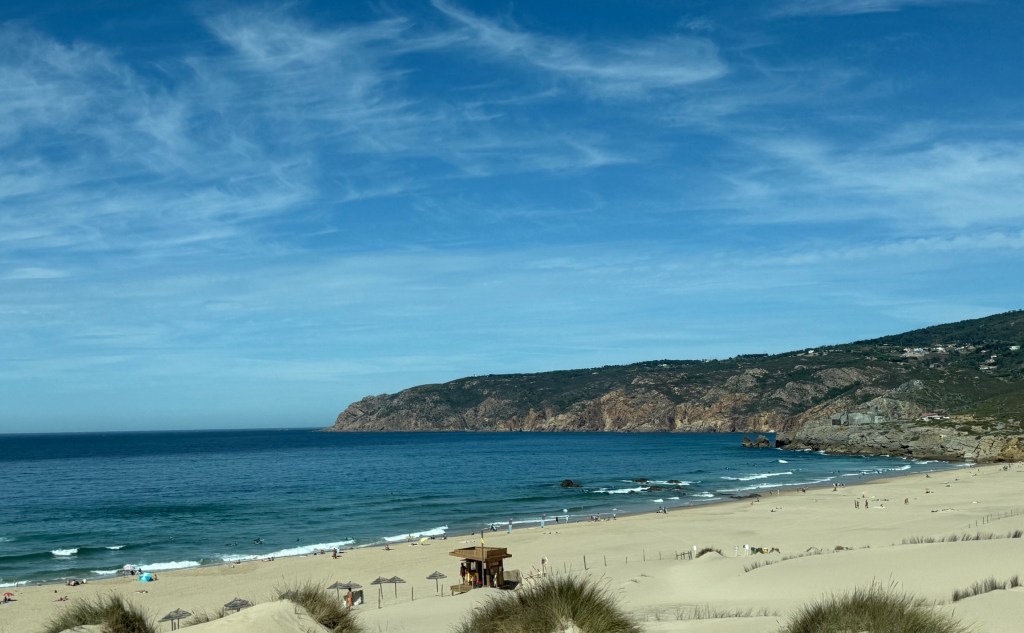
On the way back to Lisbon we detoured to Cascais for a look around the coastal resort town. Before getting there we passed by Cape Roca, the most westerly point in Europe. The beaches in these parts looked pretty good with the Atlantic breaking onto white sand.
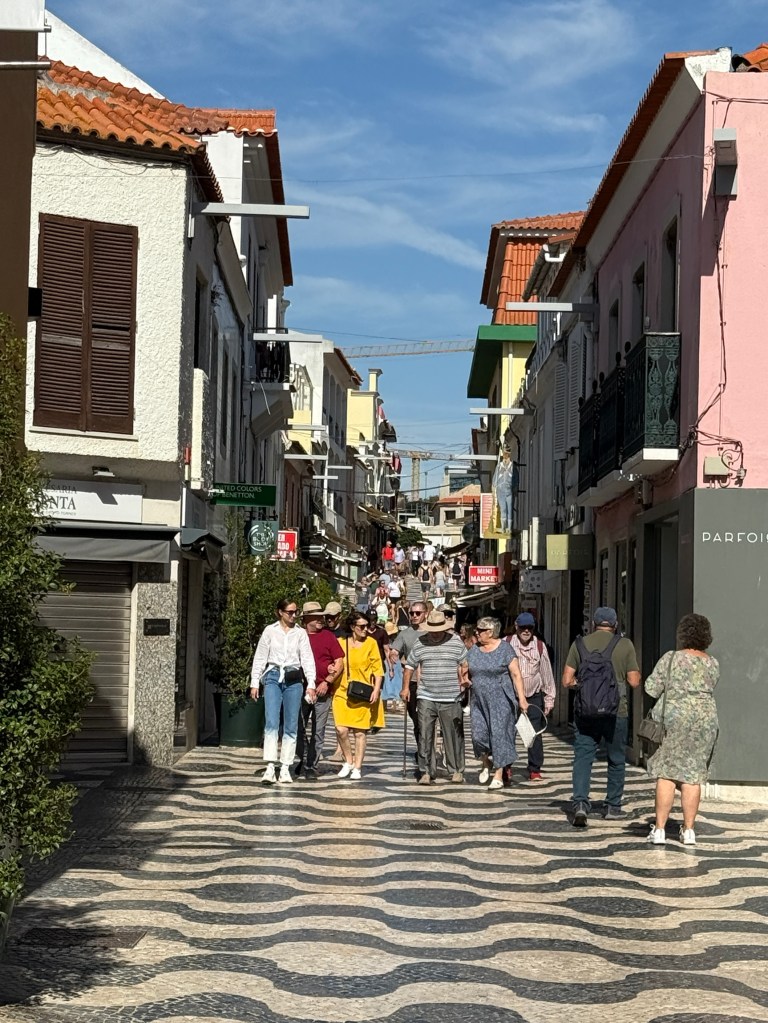
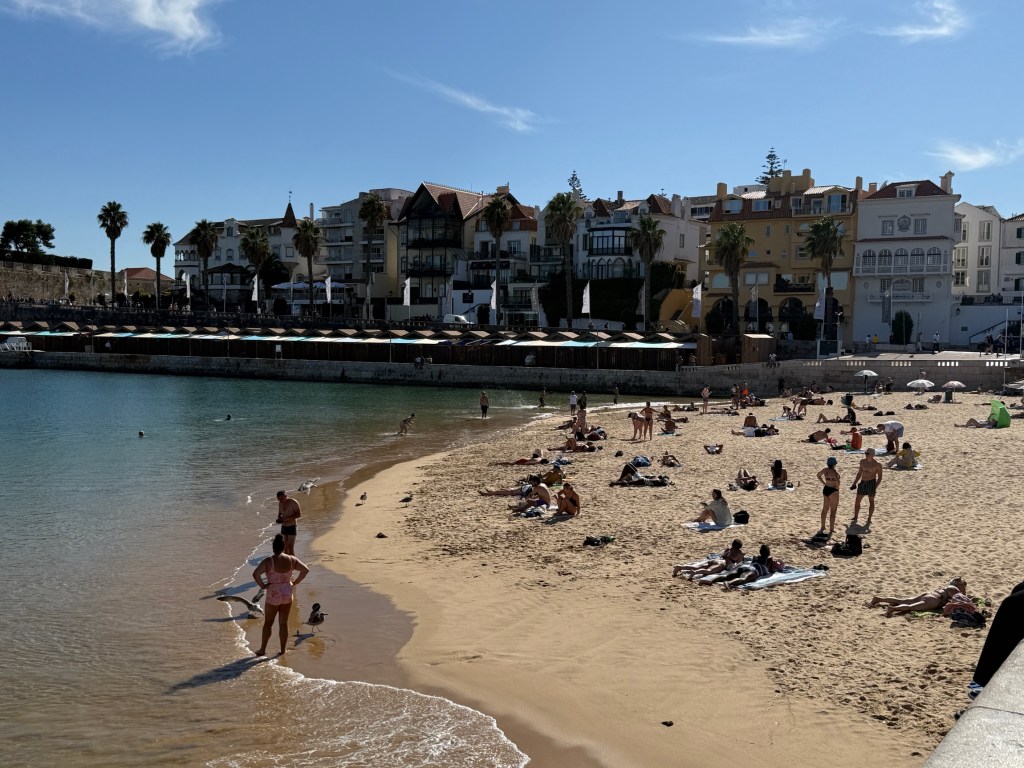
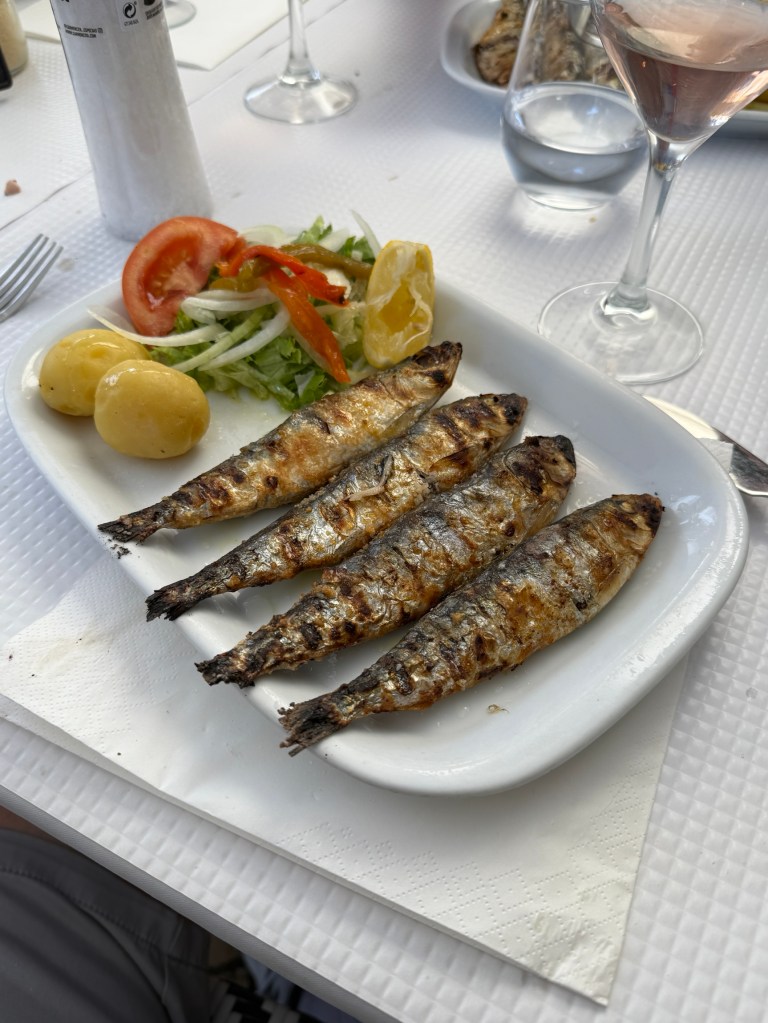
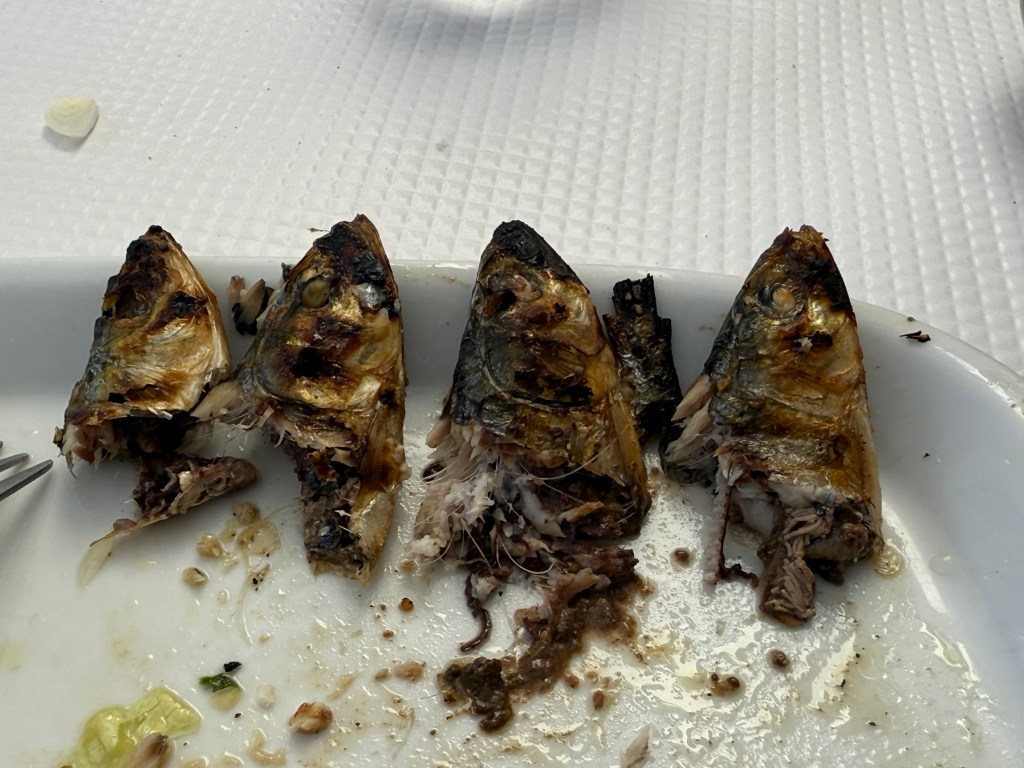
At Cascais Russell and Tony tackled another local specialty. Grilled Sardines, fresh ones not from a tin! It was good to give them a go, but me thinks they are an acquired taste. Salty and fishy; bones, scales and the rest.
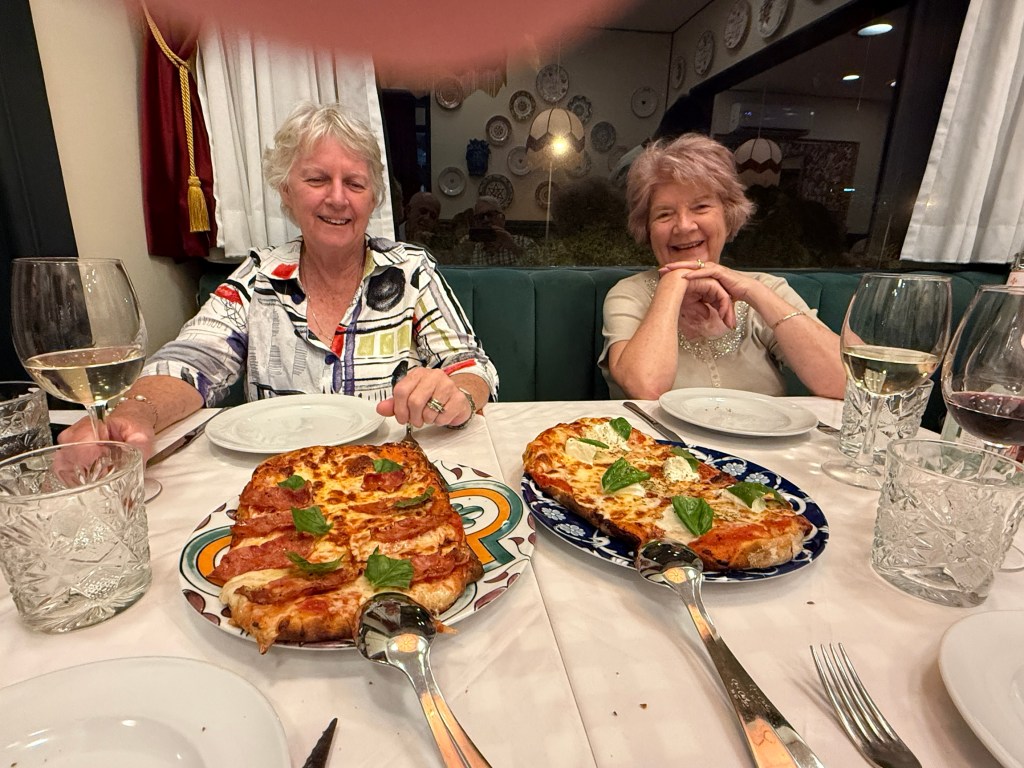
Not a big lunch so back in Lisbon we had a farewell snack for dinner at a pizza place. Pretty good! We next head off to Porto to join the ship on the Douro River.
On the streets
We are now based at the Four Seasons Ritz which is not far from a huge statue of the Marquis de Pombal and the start of the long wide Avenida da Liberdade (‘liberty avenue’),which runs down to the old town area not far back from the riverfront.
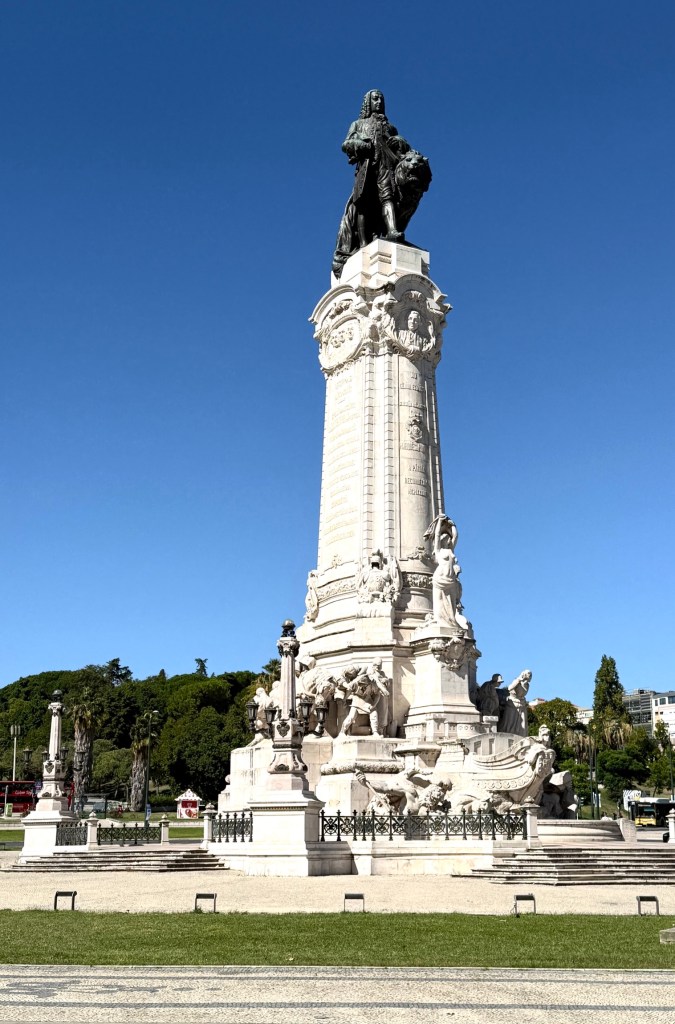
The Marquis was Prime Minister and a powerful autocrat during the period 1750 to 1777. He was responsible for, among other things, the rebuilding of Lisbon after the powerful earthquake of 1755. The earthquake, 8.8 on the scale, subsequent fires and a huge Tsunami killed a large proportion of Lisbon’s population and destroyed much of its urban landscape. The rebuild was monumental and explains why buildings are comparatively modern, early 19th century style.
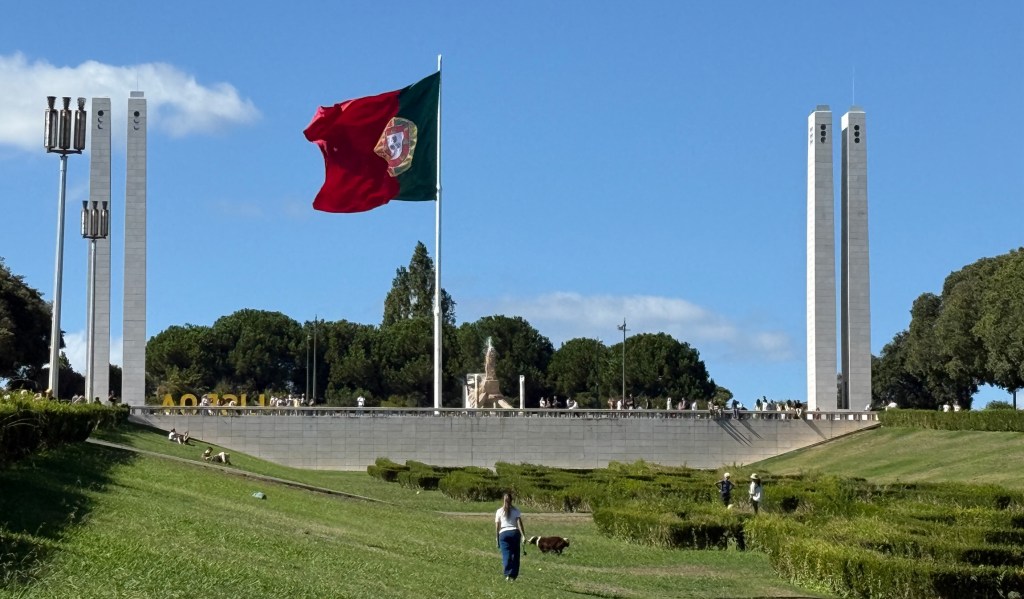
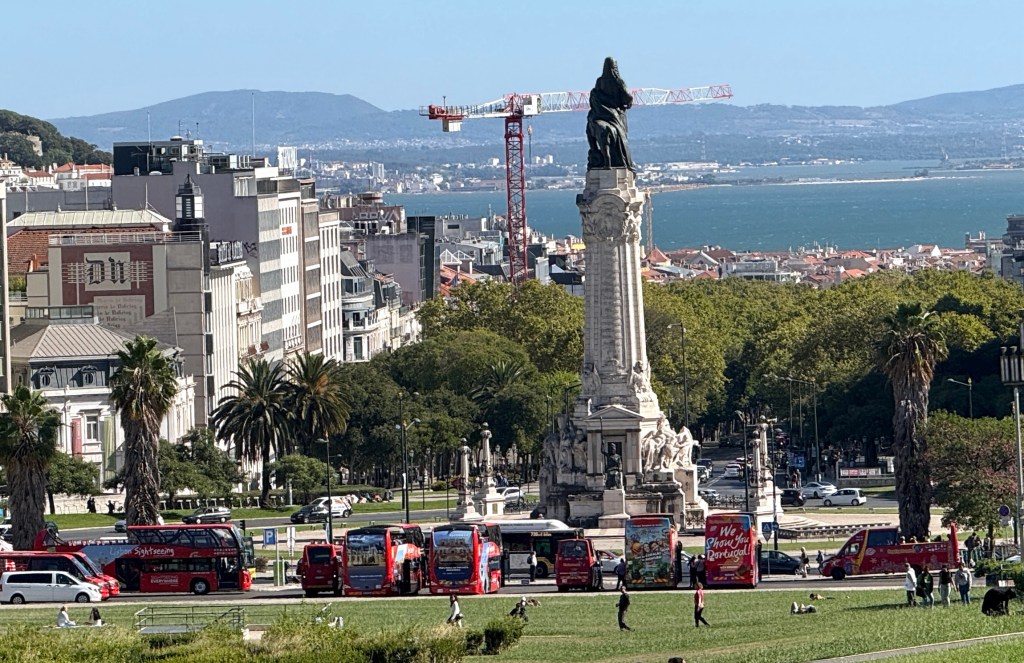
Above the statue is the Eduardo VII park that ends on the top of the hill with a large Portuguese flag flapping in the breeze. Looking down the Avenue of Liberty the Tagus River comes into view.
We met up with the Watts who had got here the day before us and were staying in the Intercontinental Hotel, next door to the Ritz.
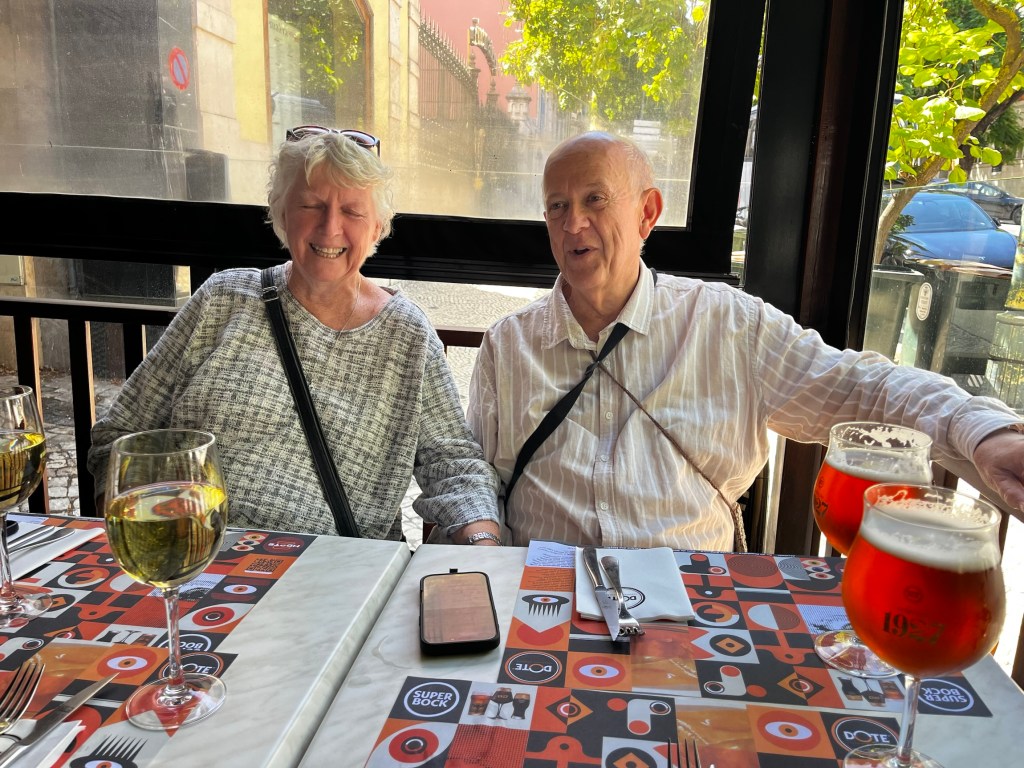
The tour people had recommended Dote as a lunch spot. It is a micro brewery. Had an introduction to some local foods.
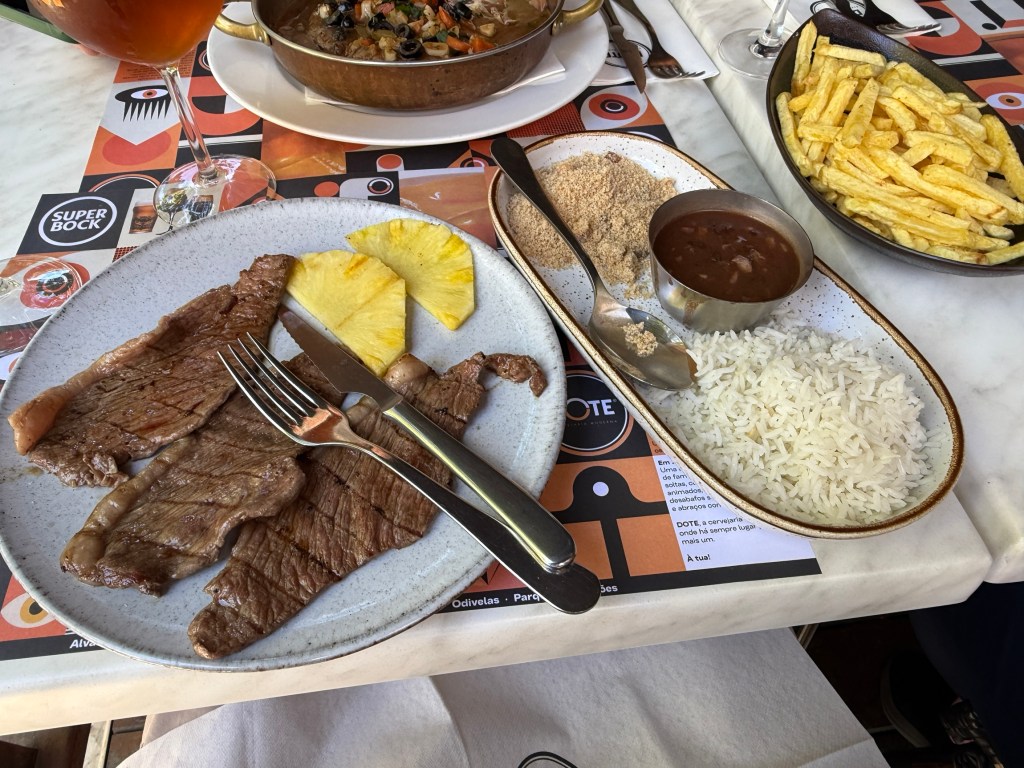
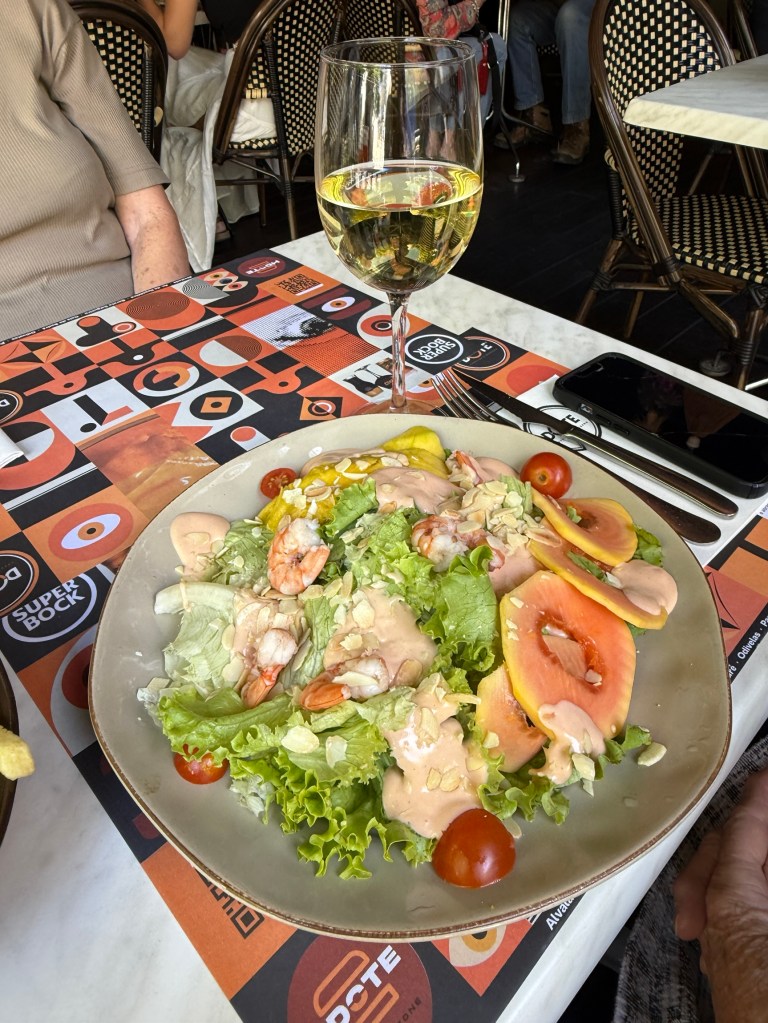
Our stay in Lisbon has been somewhat sedate. One might say there has been an unhealthy focus on food. But hey, when in Lisbon do what the Lisbonians do ……. eat local food. And this has been our focus, as well as seeing some significant sites around the place.
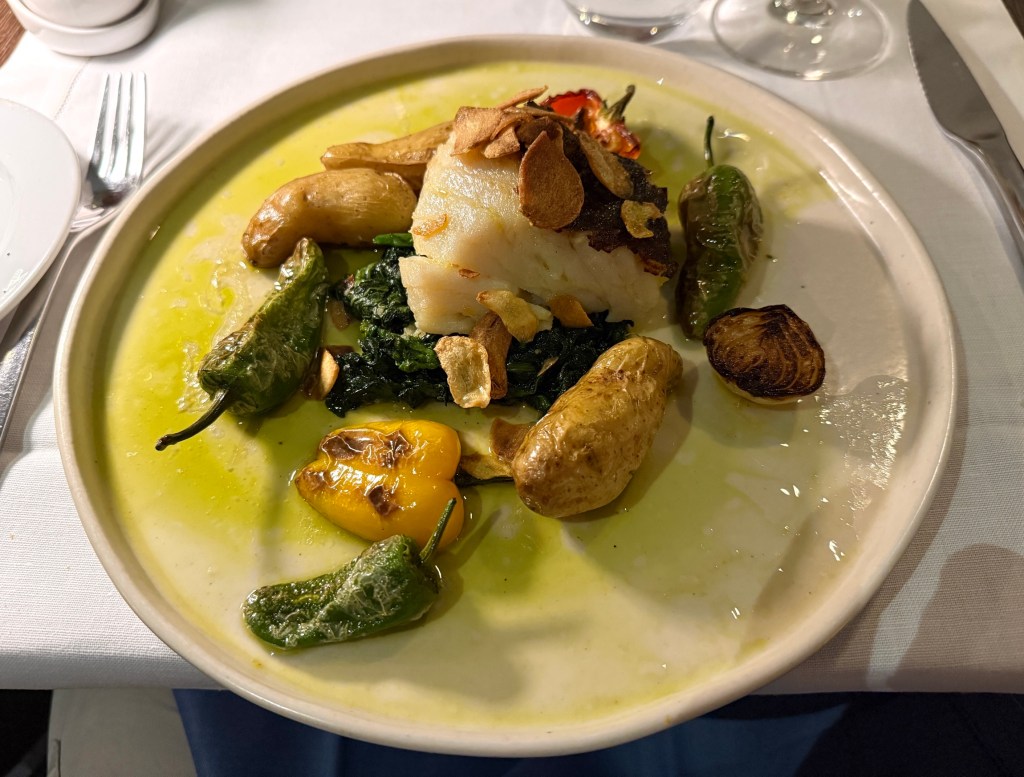
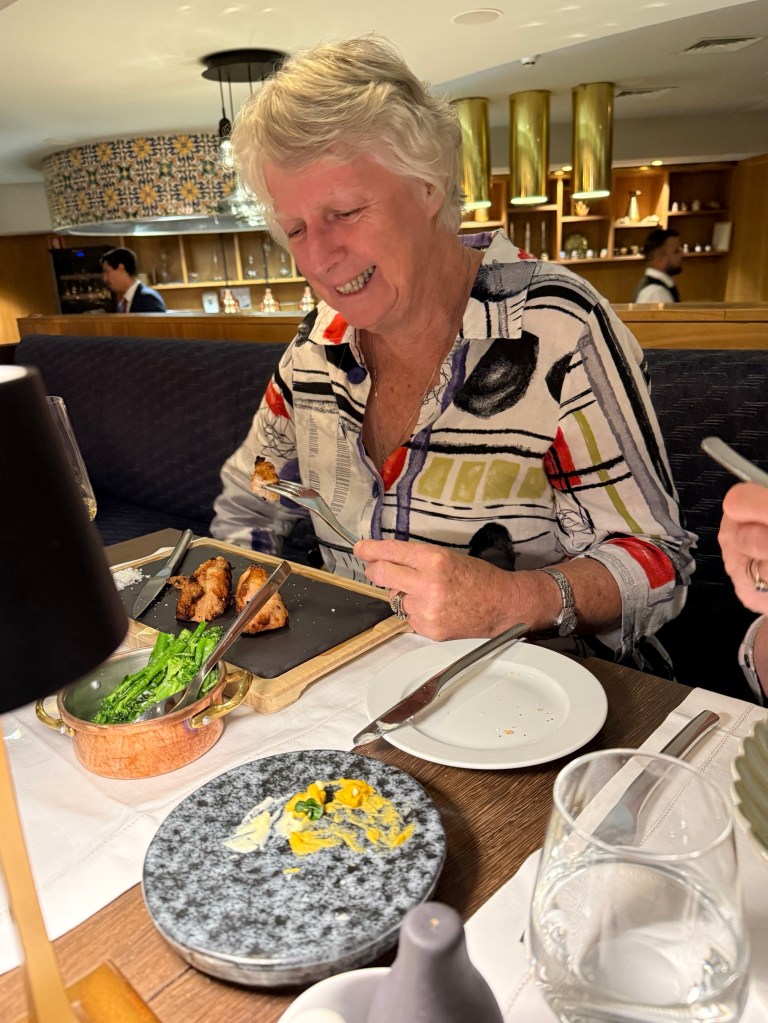
Dinner that night was in the restaurant at the Intercontinental where we enjoyed a couple of local classics. A piece of grilled cod with an almond topping and some grilled chicken with some sort of ‘red’ rubbing. Both rather tasty.
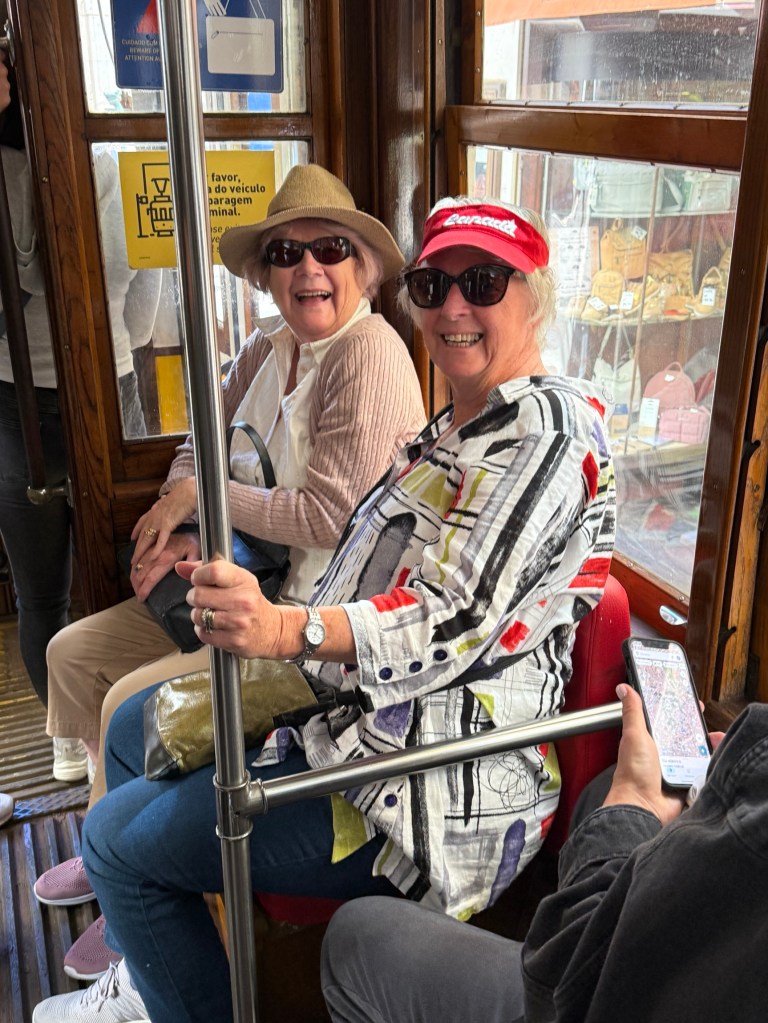
One of the icons in Lisbon is Tram 28 that connects many of the historic neighbourhoods as it goes up and down the hills across the city along narrow streets.

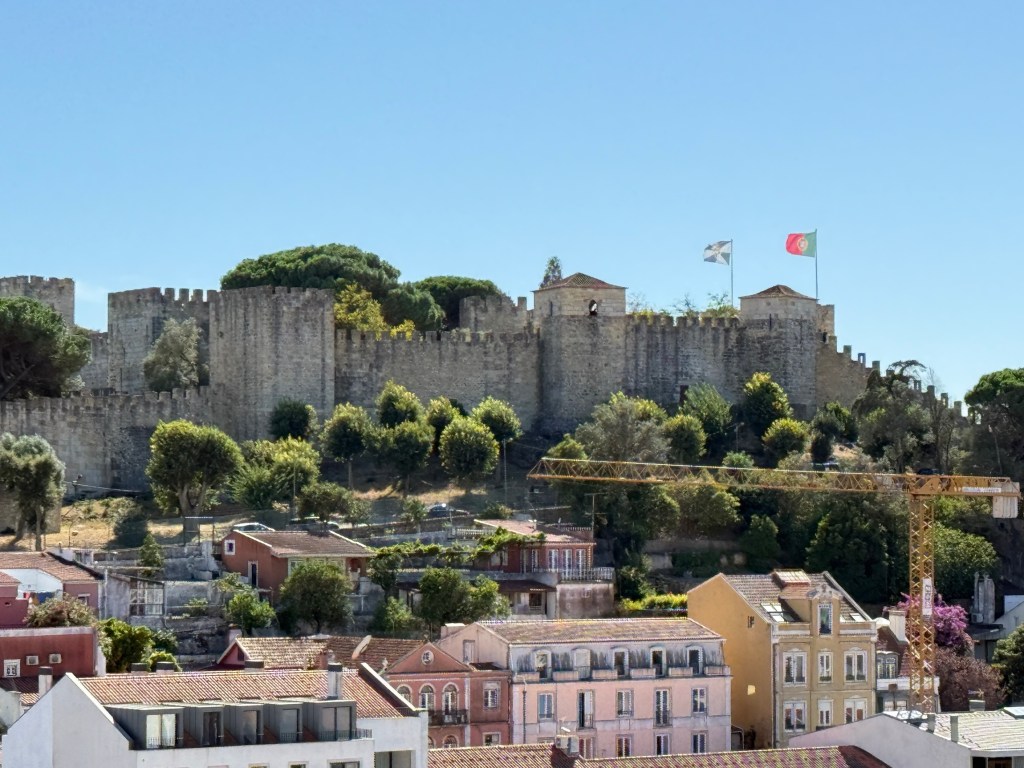
We took a taxi to the starting point about 20 minutes from the hotel with the intention of visiting St Georges Castle (sits high on a prominent hill overlooking the city) at the other end of the tram line. A very crowded ride for us standing all the way. Saw a couple of very animated ladies nattering away in the corner of the tram.
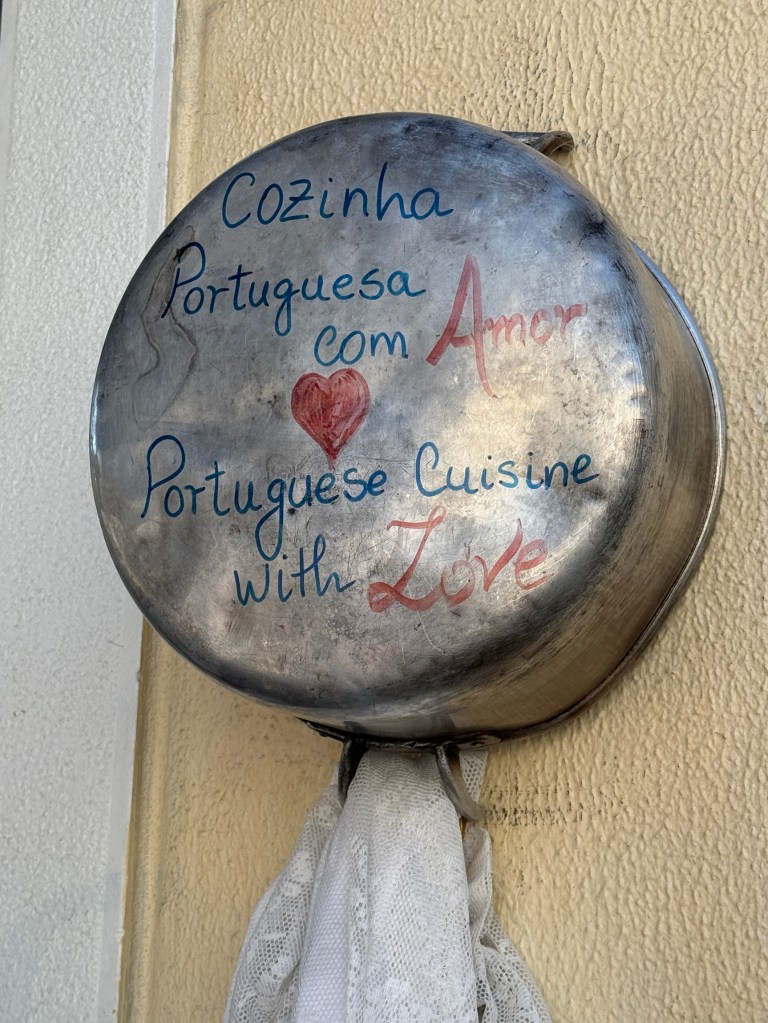
We didn’t make it to the castle but we did make it to lunch. A rather quaint traditional food establishment named Sant’avo meaning something like a ‘ saintly/loving grandmothers kitchen’.
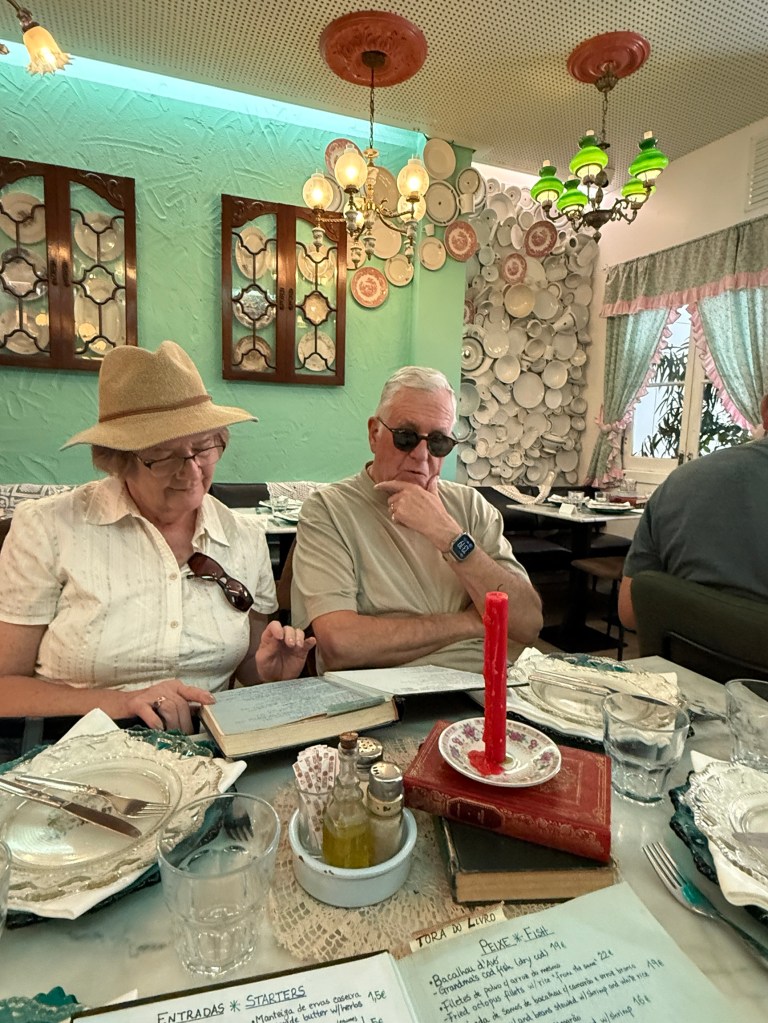
It was full of old world stuff, books as placements, a variety of plates and utensils on the tables etc. 60s music in the background.
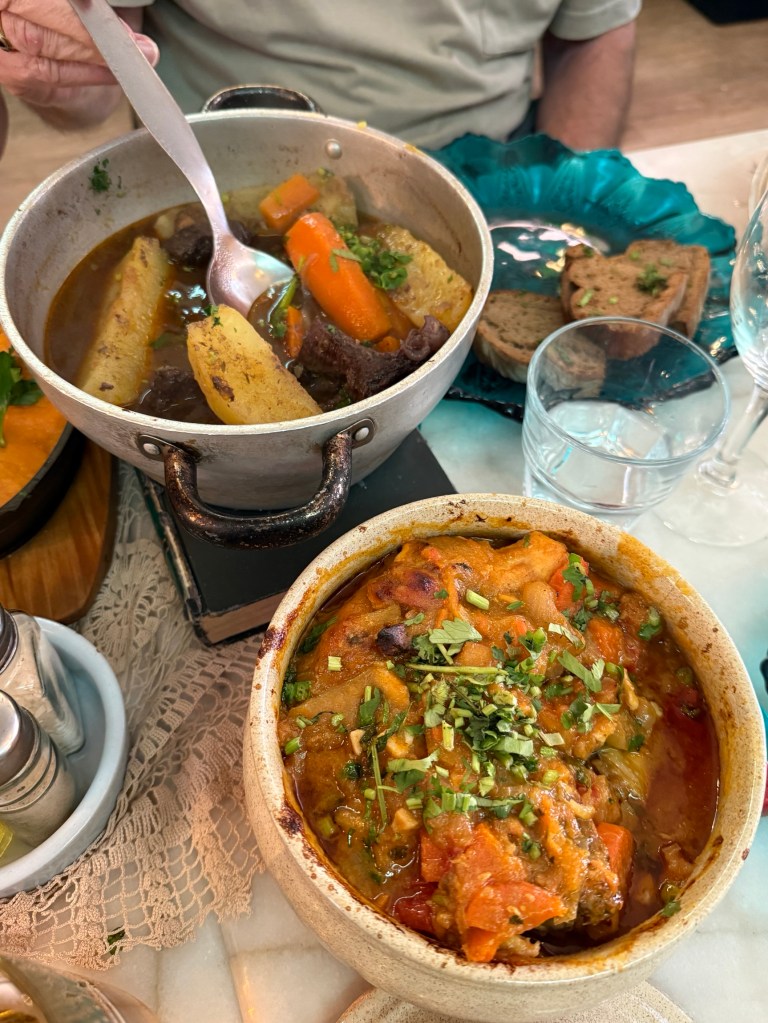
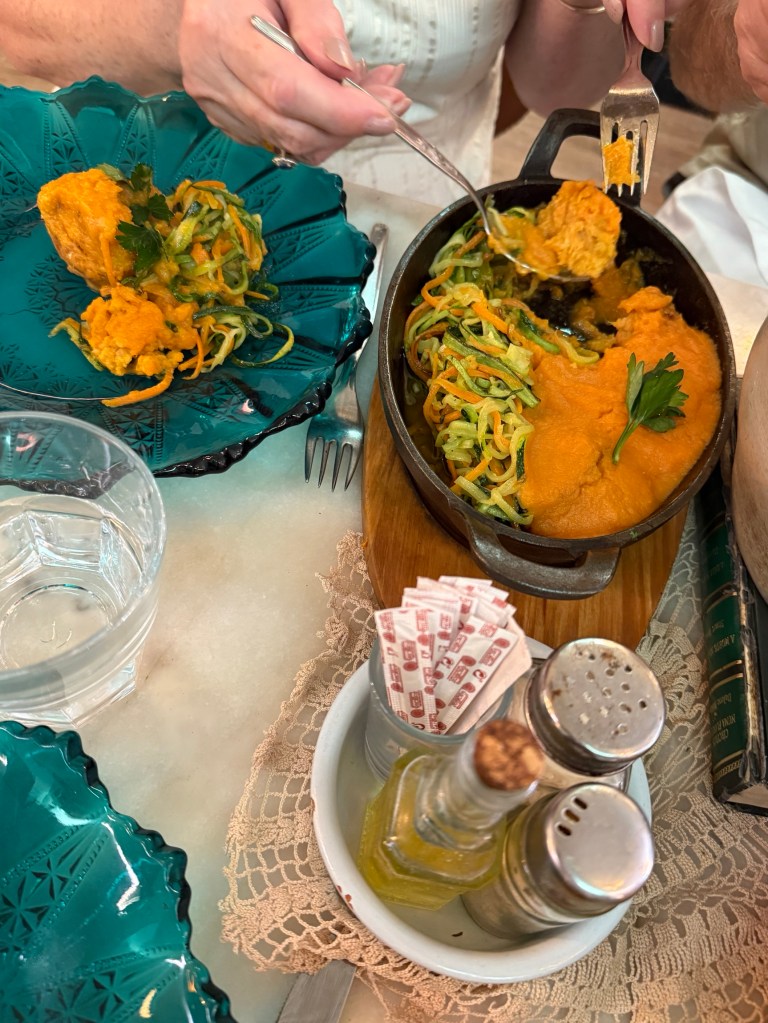
Tony and I tried the goat stew, Leanne the chicken stew and Rosemary a chick pea and sweet potato balls creation. We all enjoyed the food and setting, the goat stew maybe a ‘one-off’ experience!
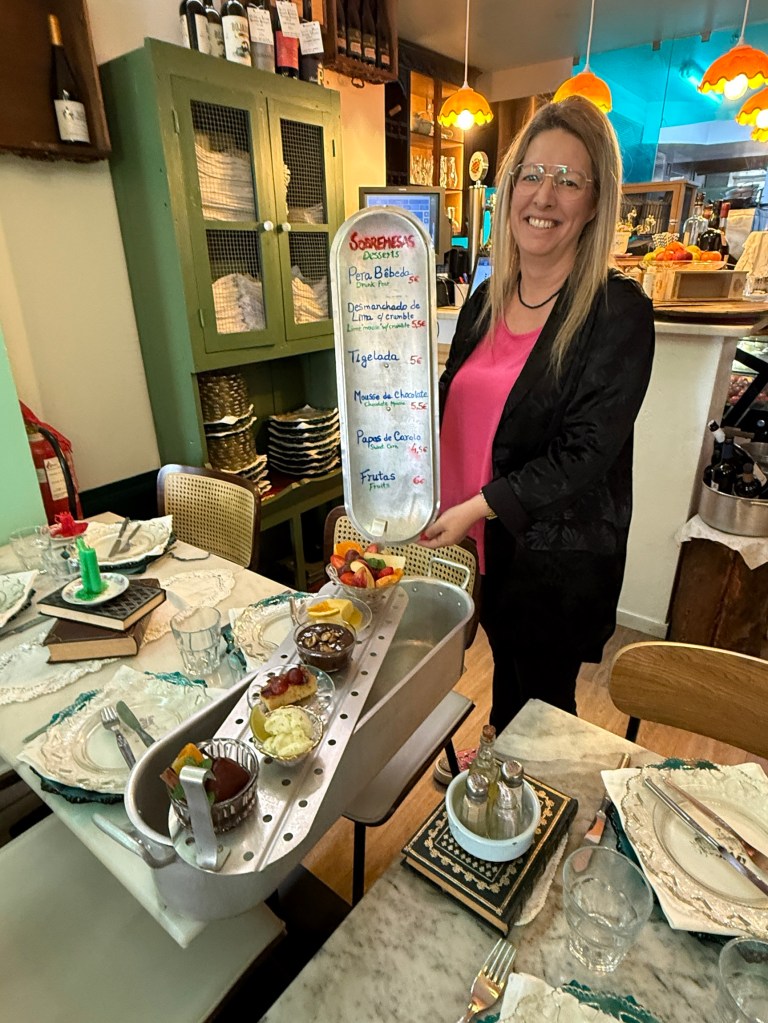
Some deserts afterwards and green wine (more about that some other time) meant we were very well satisfied.
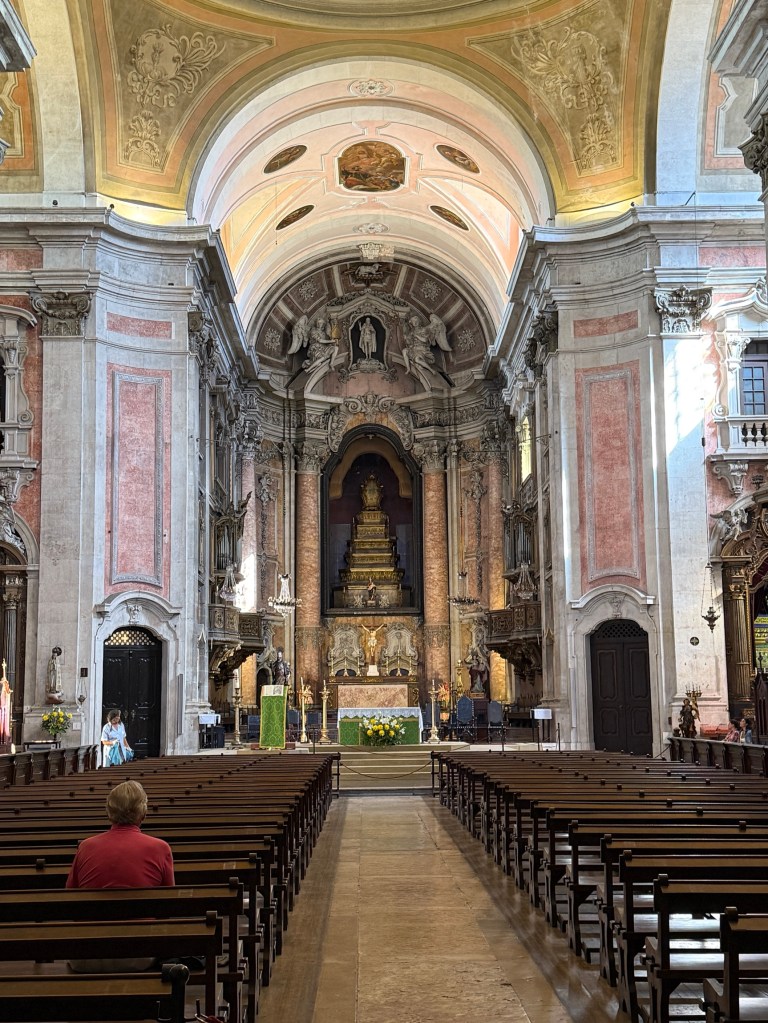
Not far from Sant’avo is a big old church complex. The residential part of the complex is long abandoned and in great disrepair. The Church though is ok but needs extensive roof repairs.
Hopped on a Tuk Tuk to get back to the hotel in time for a tour group Welcome Reception, where we learnt what happens next. Dinner was not needed!
Arrived in Lisboa
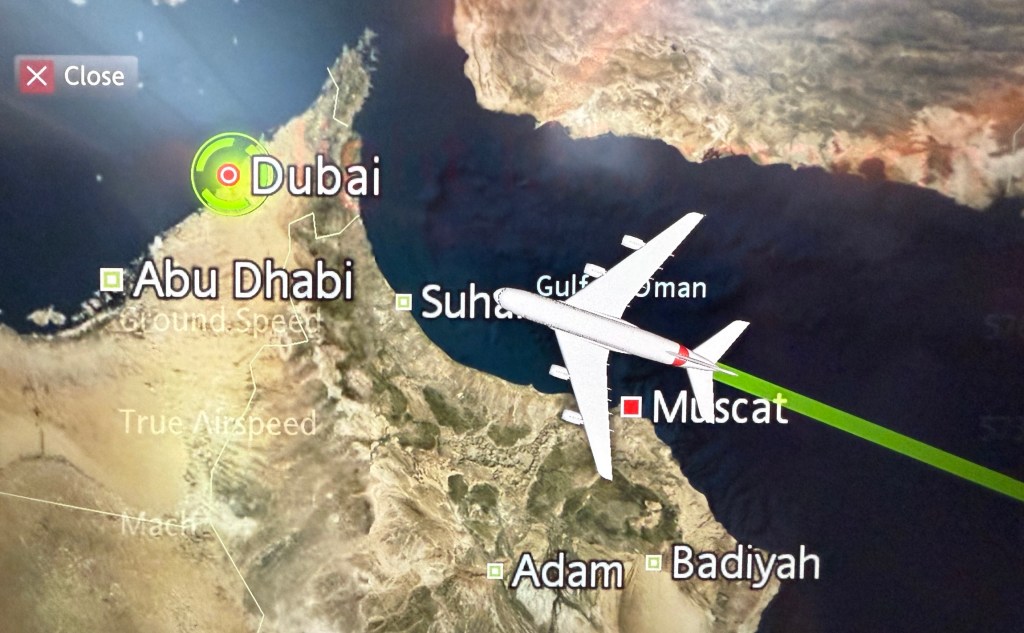
It was an uneventful, smooth and on time fourteen hour Emirates flight to Dubai. The stopover on the way to Lisboa. Lisbon is spelt Lisboa in Portuguese it seems. From here on we are going to stick to Lisbon. Slobro was a little upset at spending the time locked up in a bag in the overhead lockers, came up for air while waiting four hours in Dubai for the connecting flight to Lisbon.
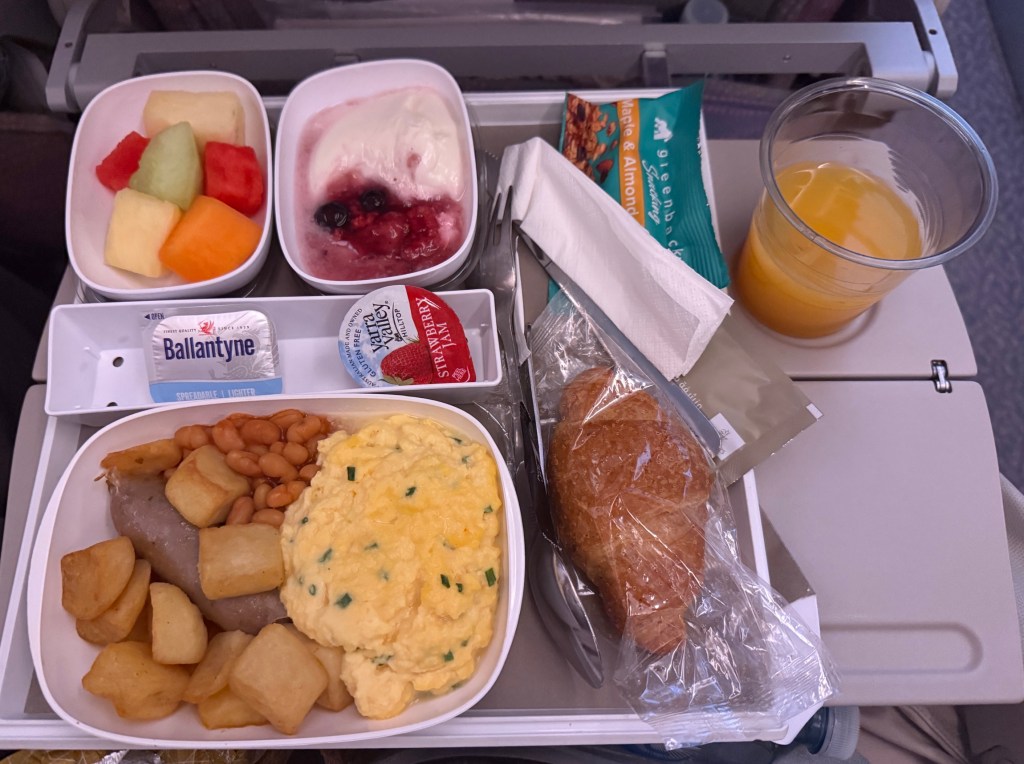
One thing about Emirates is the food in economy is pretty good as far as airline food goes, the soggy potato pieces with Allthego’s scrambled egg for breakfast notwithstanding. Homealone enjoyed the pancakes option.
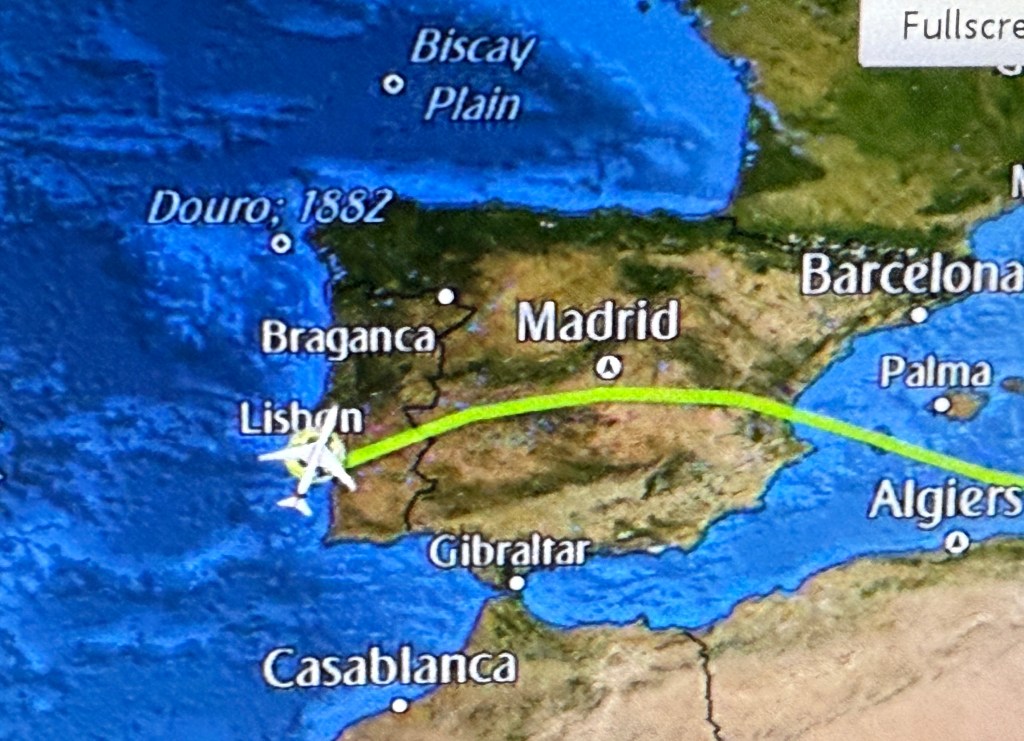
The eight hour flight onwards from Dubai was also smooth going all the way and we landed in Lisbon on time at 7.15pm, just as the sun was going down.
Both fairly tired! No need for dinner though as there had been a rather ‘late’ lunch on the plane.
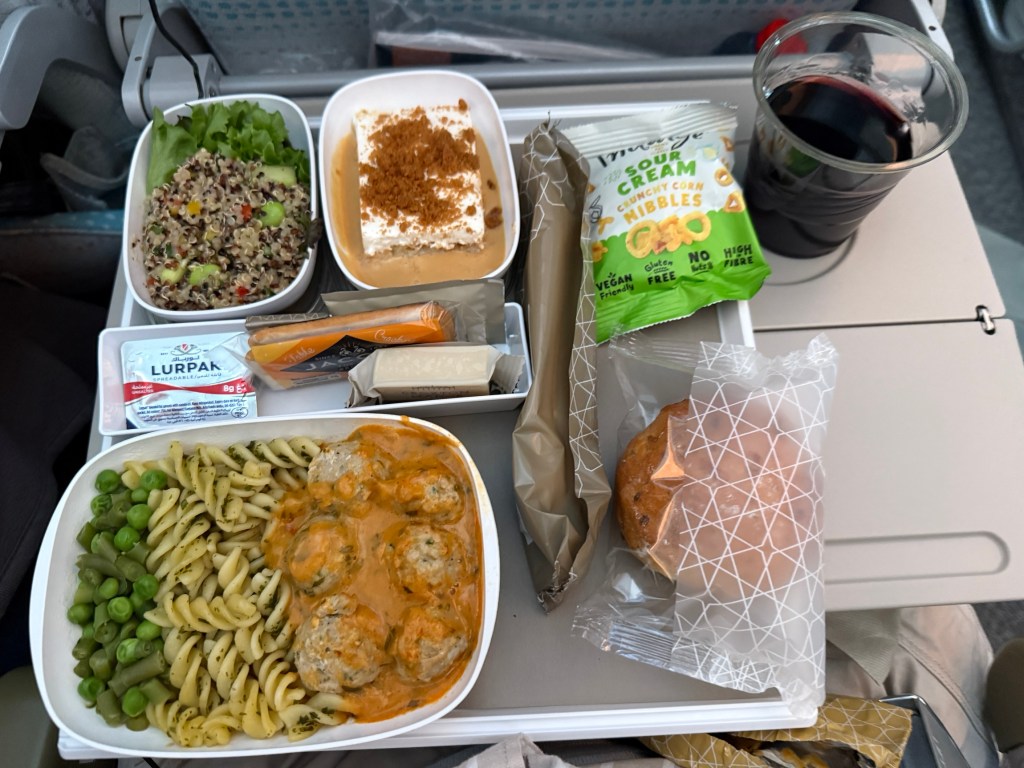
Rather tasty chicken meatballs in a herb cream sauce, Homealone had the excellent beef stroganoff option, with a few bits and pieces of other stuff to fill a hole.
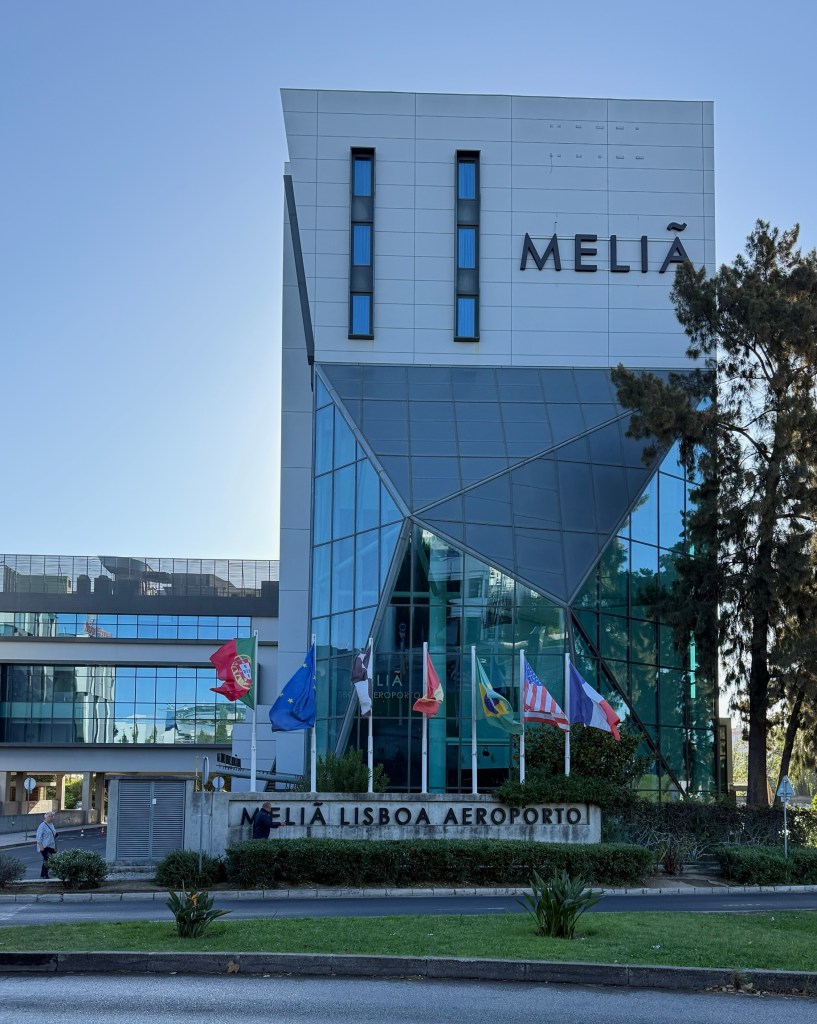
After a lengthy but smooth immigration experience we strolled unchallenged down the ‘nothing to declare’ line and then out of the airport down to the hotel, about 500 metres away.
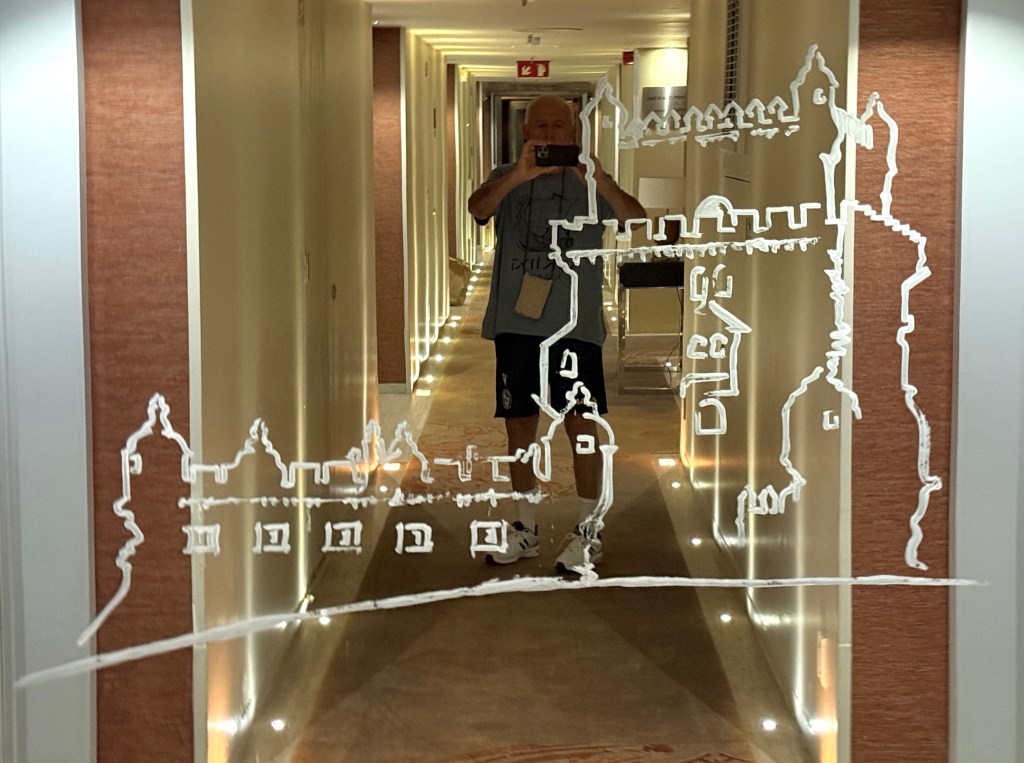
Interesting etchings on the mirror in the hallway outside our room. One of the famous Bellem Towers that sit beside the Tagus River, former guardian posts on the river for the old city.
Crashed for the night! In the morning breakfast called, included a fluffy beetroot roll with some Edam cheese, never had a beetroot roll.

Very colourful with the creamy yellow Edam atop!
After breakfast we caught the hotel’s shuttle bus back to the airport to pick up the APT transfer to the hotel where the Duoro River tour begins in a couple of days.
Off to taste a Gildas
We are going off to Portugal and Spain for another adventure. Apart from a day in Lisbon on a cruise we haven’t been to Portugal. Have had brief stops in Spain’s Barcelona and Malaga.
It’s going to be an interesting time on the Douro River in Portugal and later around the Canary Islands off the coast of Morocco.
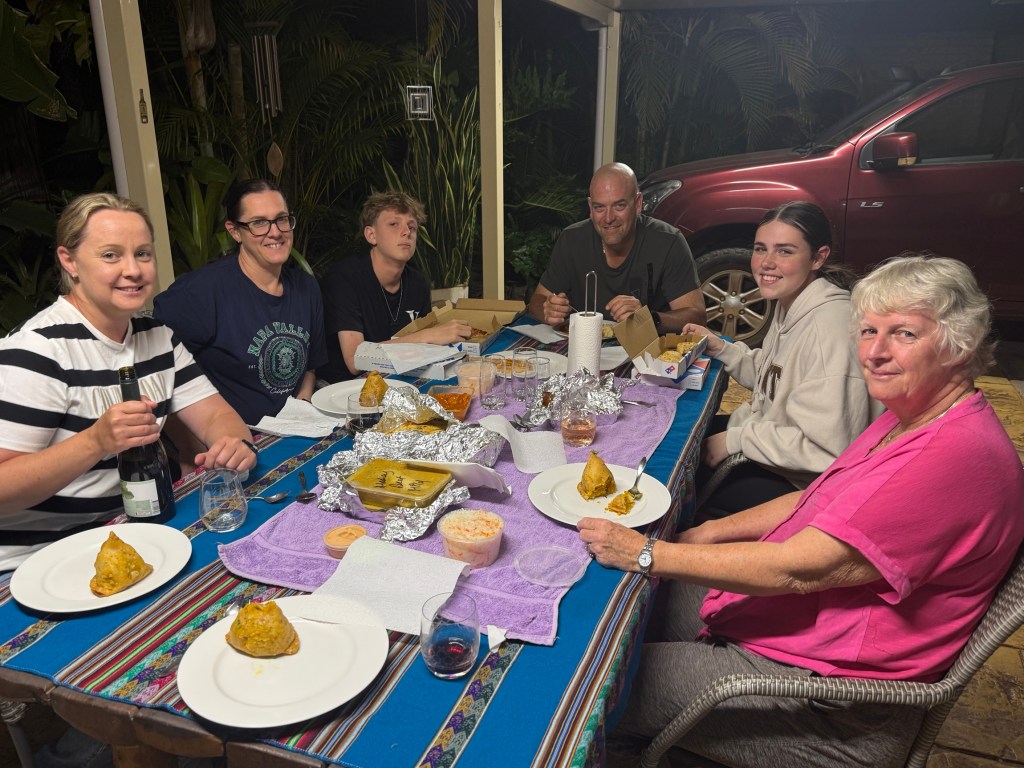
The family farewelled us over some takeaway. Departure is an early morning flight at 2 am to Dubai and then on to Lisbon.
It has been a long day for Homealone getting all those last minute jobs done. Must always get late night or early morning flights in the future!
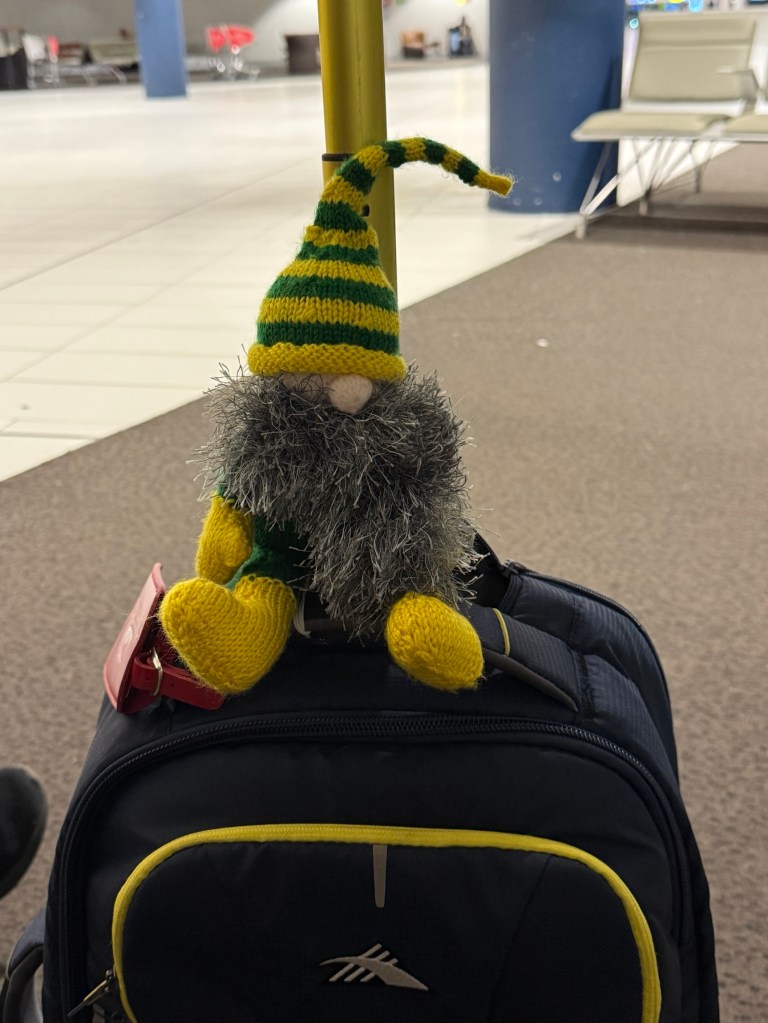
Slobro is joining us again on this journey. He looks quite pleased waiting for our call to board. He is looking forward to a Gildas!
Don’t it make you wanna go home…..
We only have a few more stops before getting back to Brisbane. It was a sunny morning as we left Warrawong on the Darling, getting back on the Barrier Hwy to Cobar for the night.
Since leaving Peterborough a few days ago we have been travelling along the Barrier Hwy. It is a quite depressing piece of roadway. Allthego thinks it should be renamed ‘The Slaughter Way’. Never have we seen so much roadkill.

Bodies litter the roadside in a never ending trail of destruction. Kangaroos of all sizes and states of dismemberment and decomposition. Crows feeding on fresh meat. There are emus and pig carcasses among the victims. Probably the odd fox or goat as well.
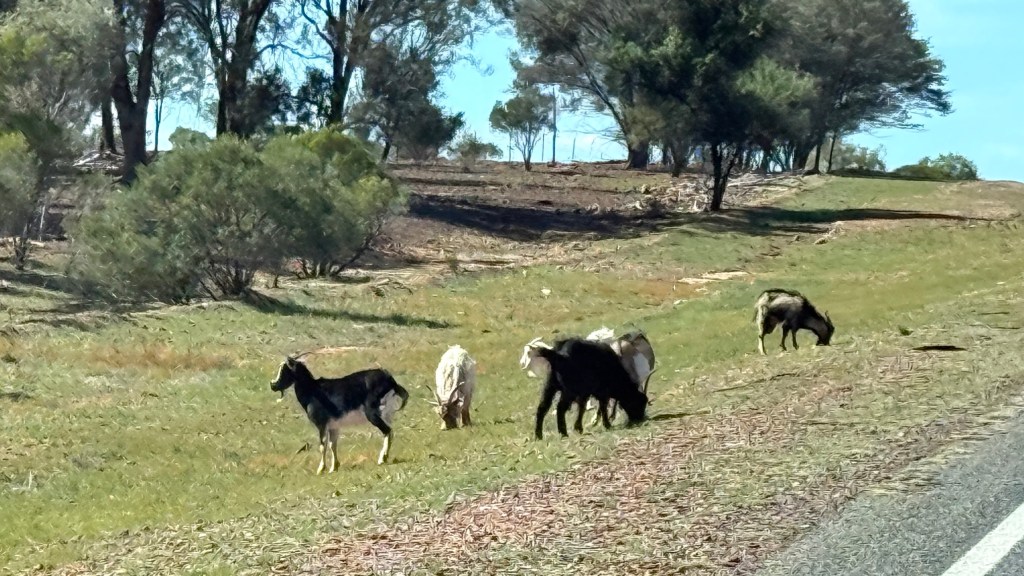
Goats are also present in amazing numbers along the roadside and in paddocks. They are now being farmed like sheep and cattle. There is a big international market for their meat. Small problem is that they are hard to keep in paddocks as they can get through traditional fences set for sheep and cattle. They are smarter than those beasts, so they duck through the fences and wander along the roadside.
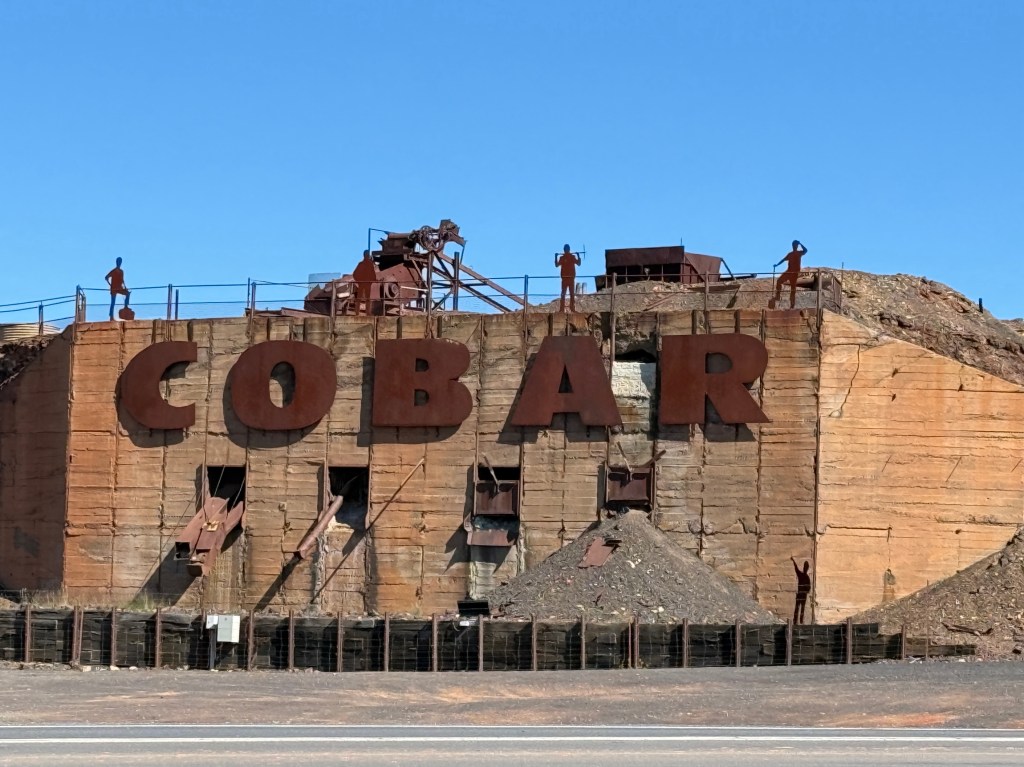
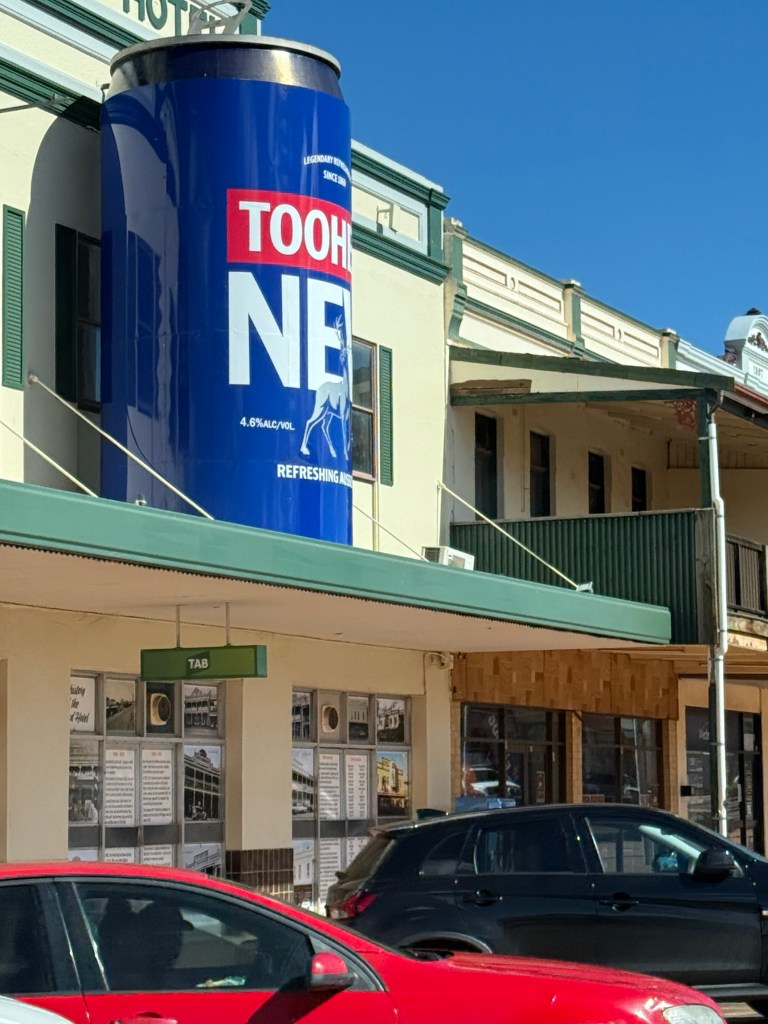
Cobar has its ‘big thing’ like most towns, this one is a 5 metre Tooheys beer can above a hotel on the main street.
Leaving Cobar we continued along through Nyngan and Warren. Nyngan is on the Bogan River which flows north west ultimately ending up in the Darling River to the north of Burke.
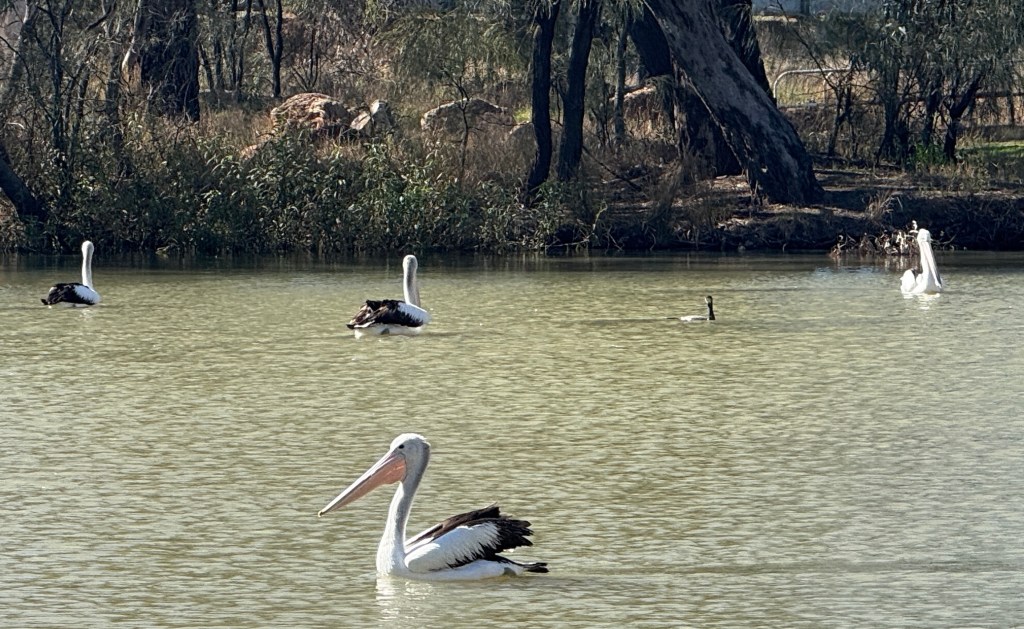

There was plenty of water in the river following some heavy rain in these parts a few days ago. Pelicans were out and about in numbers.
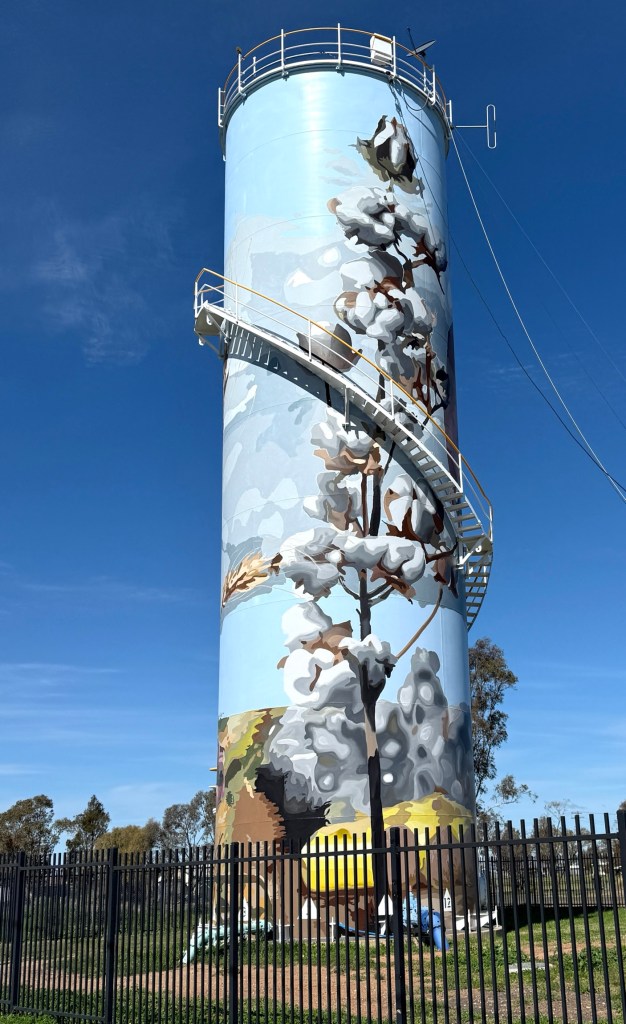
Moving along to Warren we enjoyed a meat pie from Uncle Clarries, even if they came from Dubbo, for lunch by the Macquarie River. Canned tuna and crackers were easy to pass up after a few days of tucking into them for lunch on the road. Sweet corn and mayo is probably our favourite tuna variety and is strongly recommended.
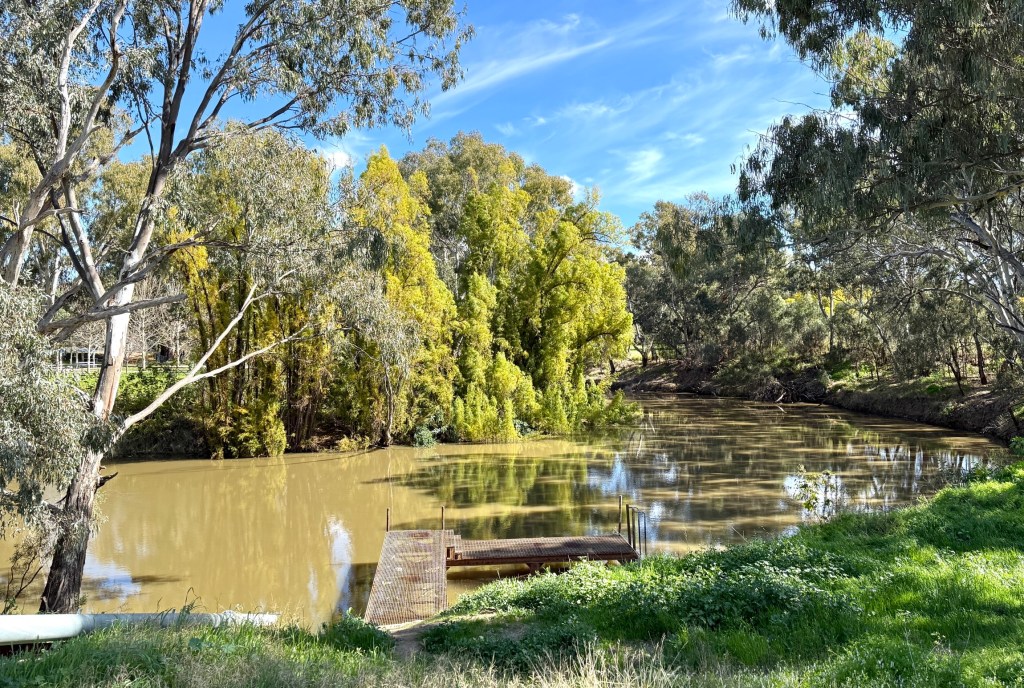
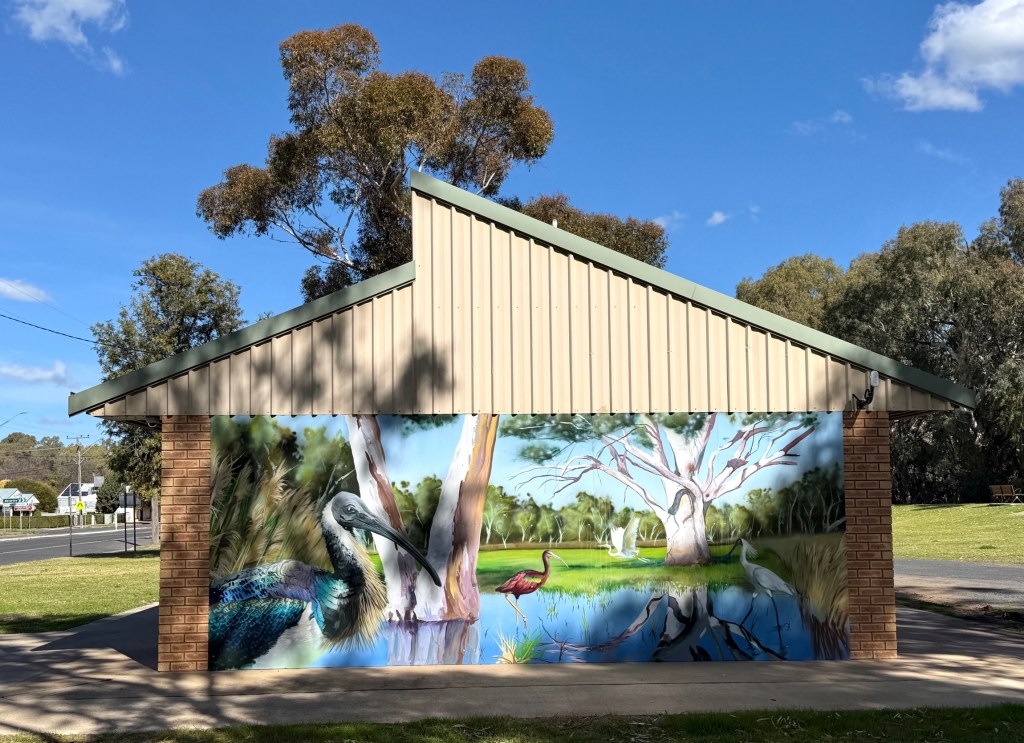
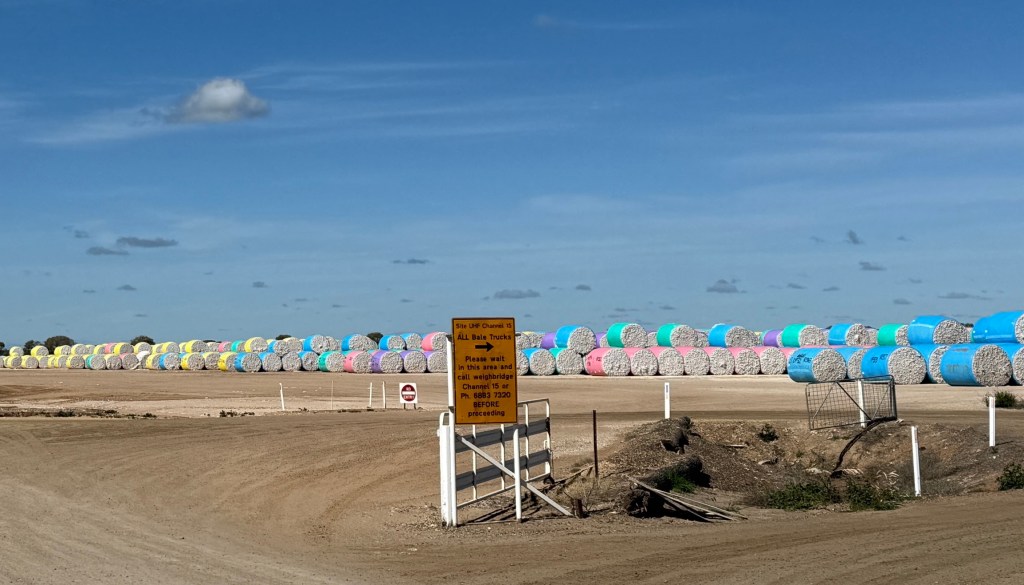
Cotton is big time in these parts and there must have been a recent harvesting of the winter crop. The paddocks are awash with bales of the stuff and the Warren Gin looks to be at full capacity.
We stopped for the night at Gilgandra, having originally planned for a night at the free camp next to the Information Centre. This is an excellent spot. But it is cold and there is nothing like a bit of warmth on these late winter nights on the road. So we had a night in the caravan park with power to run the heater over night. Very toastee, particularly at 3 am in the morning.
North from Gilgandra the Newell Hwy has had some significant improvements since our last time on the journey up to Moree.
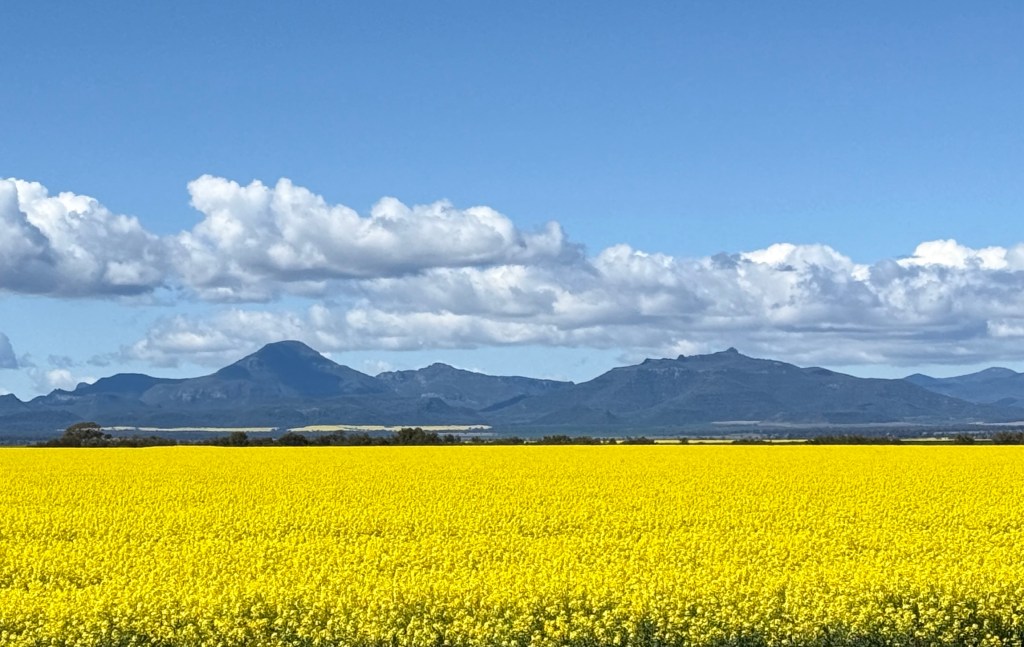
The paddocks are ablaze with the bright yellow Canola crop and the Mt Kaputar ranges in the background look great against the blue sky. The spring crop is presently a bright green contrast, yet to flower.
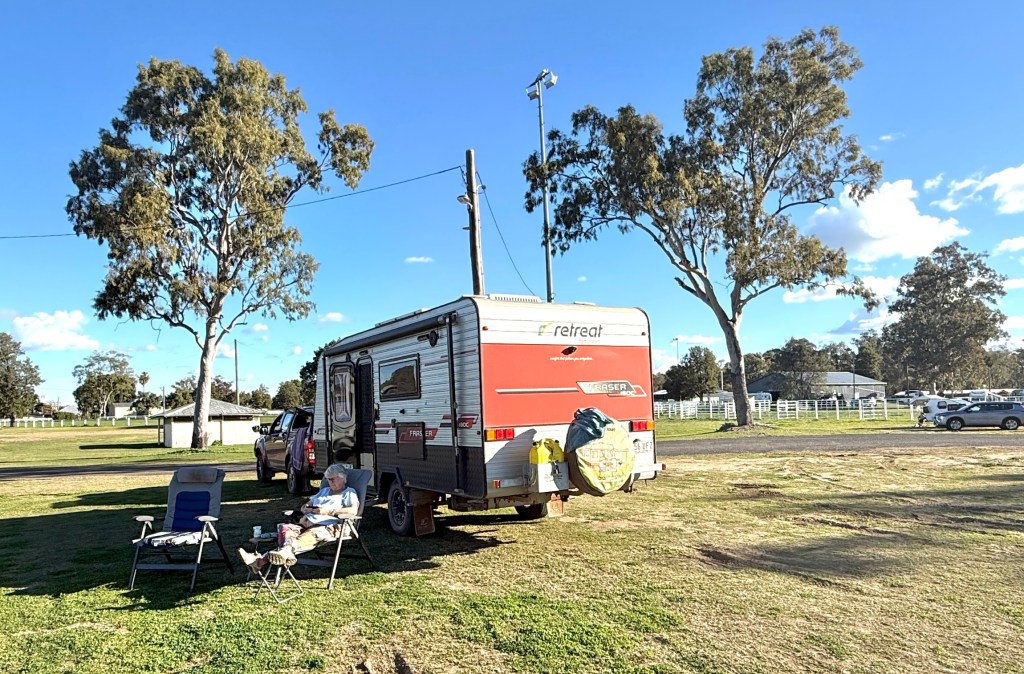
The Moree Showgrounds were too good to pass up for the night, big open sites. We have enjoyed the last couple of late afternoons being able to sit out in the sun. It is noticeably warmer as we have moved north towards Brisbane, though the heater continues to be welcome at night. We survived the night in the Showgrounds and made an early getaway for Goondiwindi and then Inglewood.

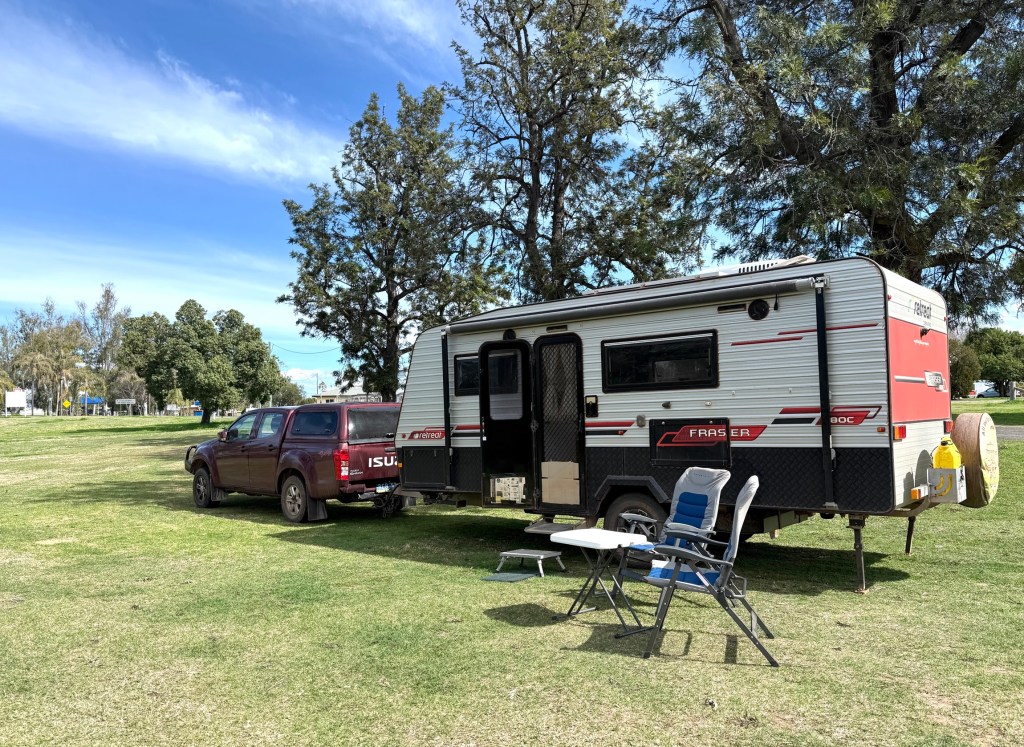
We are now sitting beside the van at Inglewood, about 220km to go tomorrow. This is a regular free camping stop for us, just a short walk to the bakery!
We will be back in Brisbane around lunchtime tomorrow.
It seems appropriate to finish off with a song from two country music icons. They are sadly no longer with us, but their music lives on in the Utube universe.
“All God’s children get weary when they roam…..don’t it make you wanna go home!”
Do we know the way?
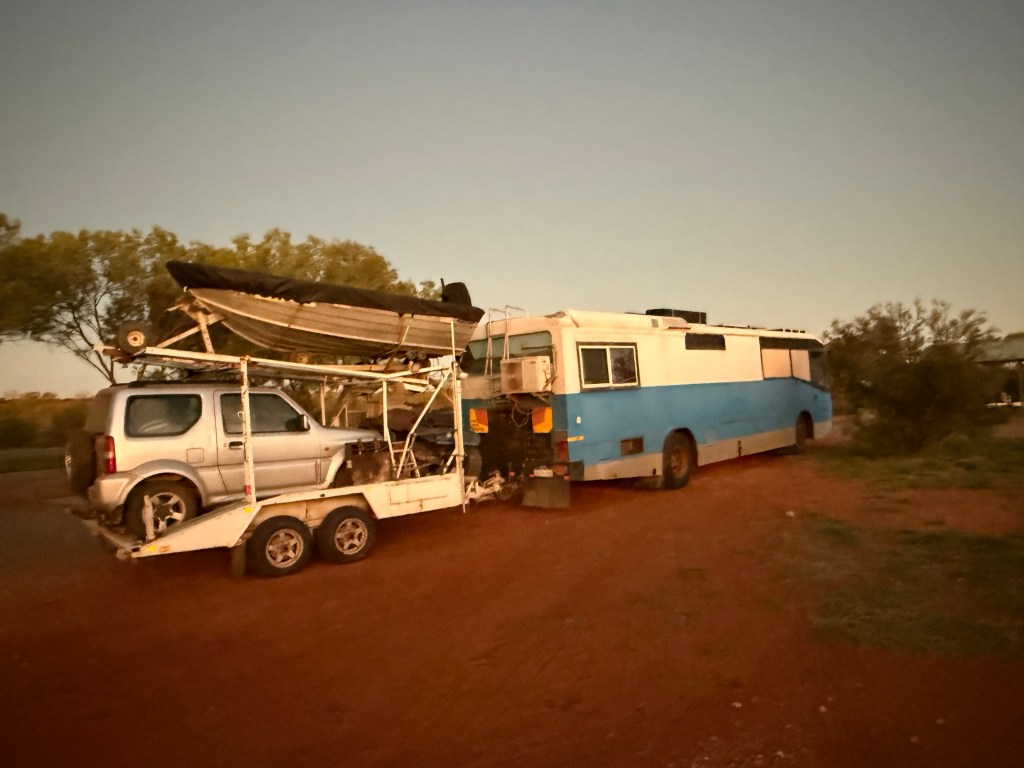
We are now on the last leg of the way home to Brisbane, not San Jose. But we need to get the maps out to find the way. At least in order to do it in 250-350km leaps.

Doing this means Allthego has had to throw out his prearranged stops from nearly four months ago. We are doing it off the cuff and stopping when fatigue sets in and a rest is required, or where it is just a nice spot to stop.
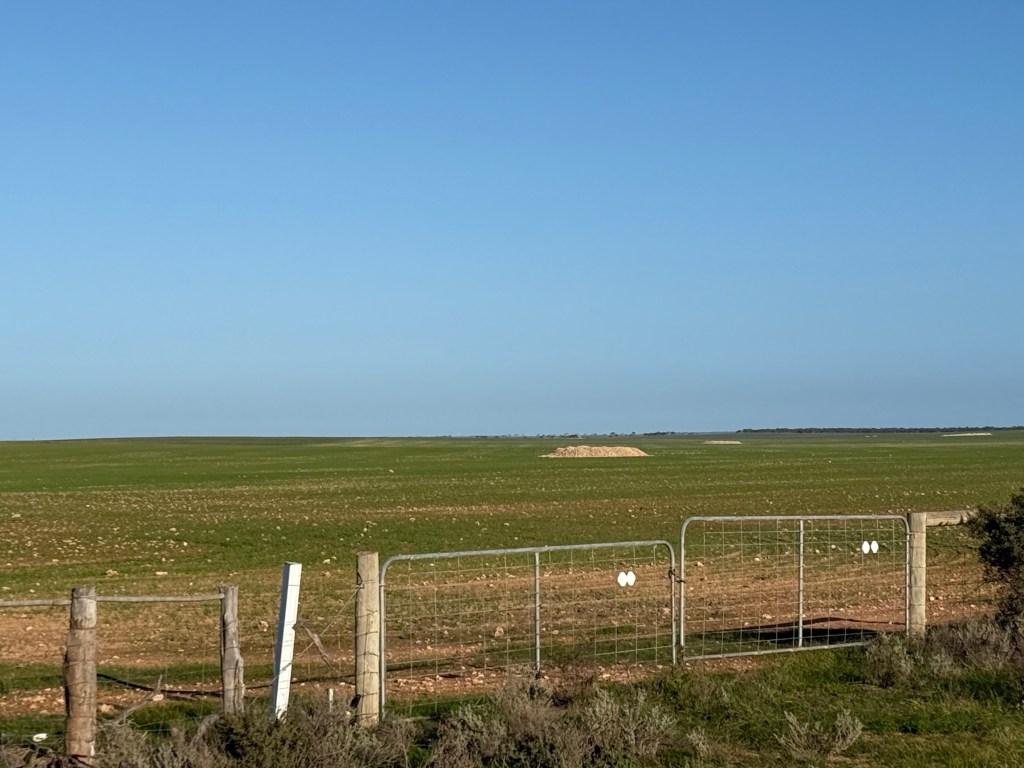
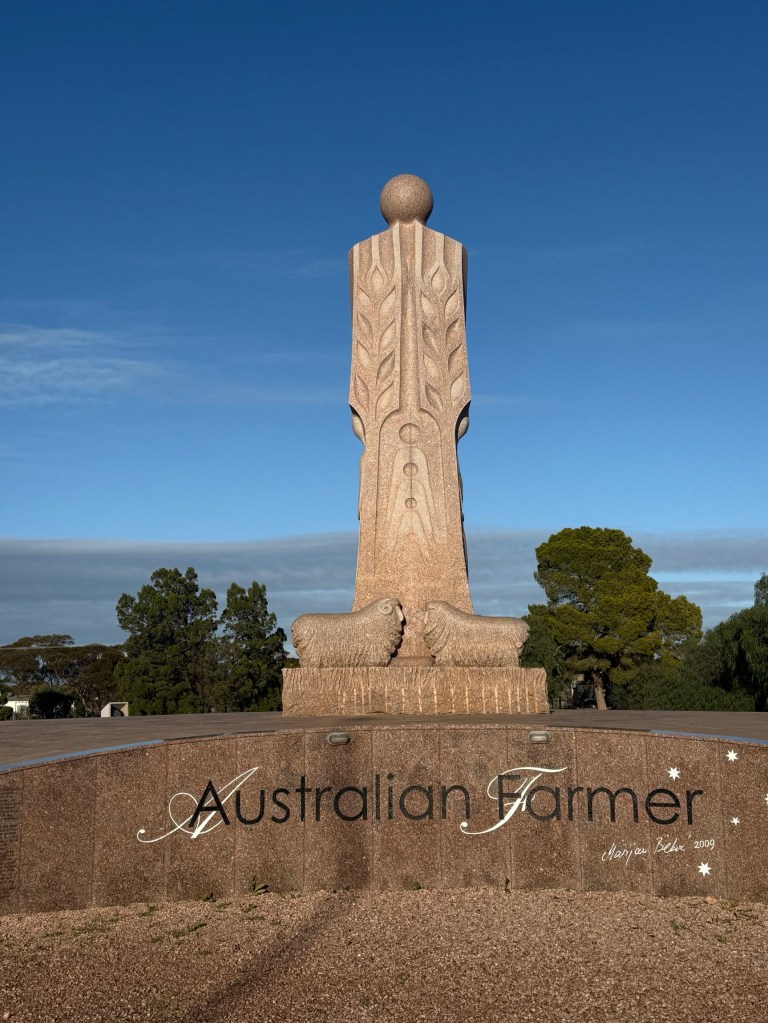
Our first stop after Penong was at Wudinna, a farming community along the Eyre Hwy at the top of the Eyre Peninsula. We stayed in the local Recreation Grounds camping sites. No grass and plenty of loose gravel but it was just an overnighter. There were a lot of young lambs in the paddocks along the way. Allthego saw the opportunity for a lamb chop, but Homealone was reluctant to acquire fresh lamb from the local butcher. We are running down the freezer. Maybe another time!
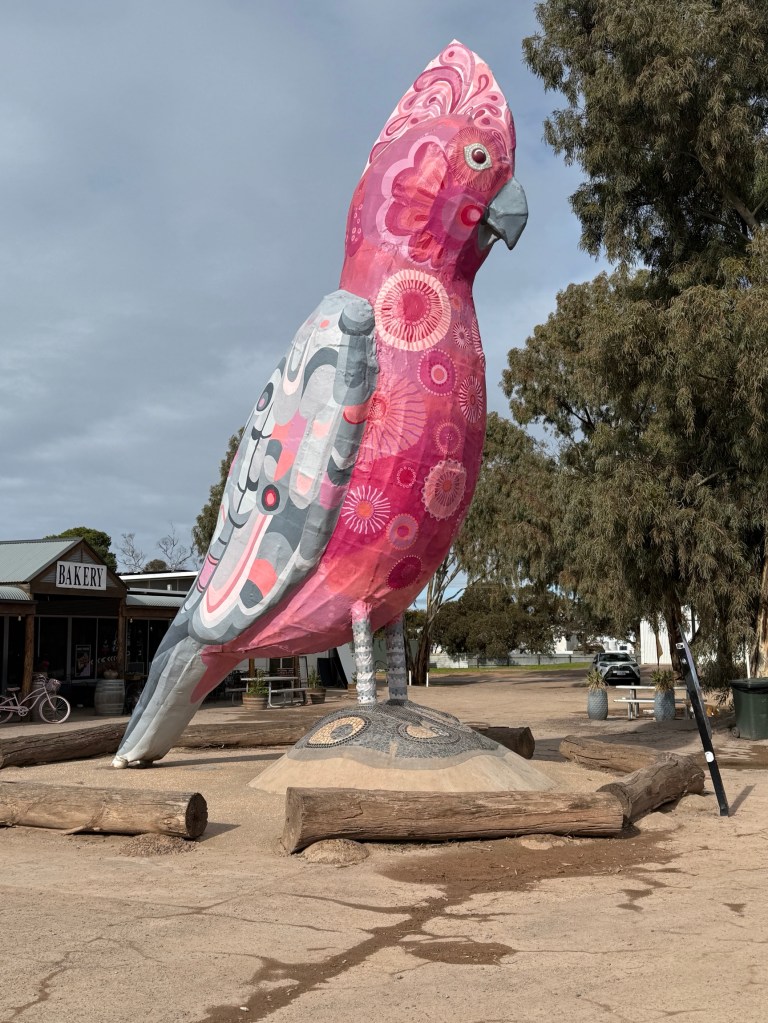
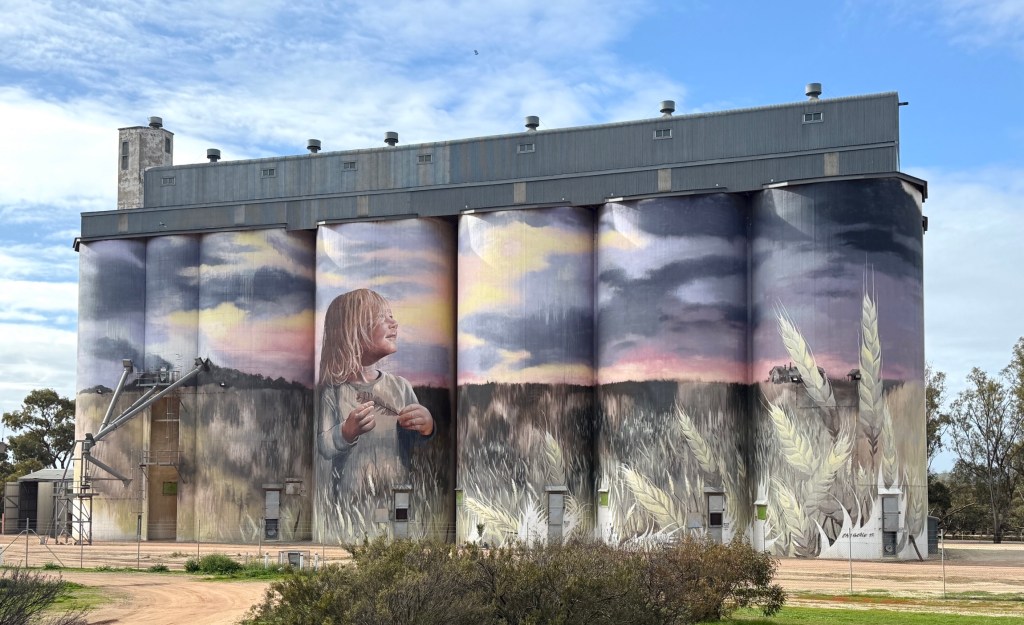
On the way to Port Augusta we passed through Kimba. This town claims to be half way across Australia and has a big galah out the front of a roadhouse. The galah has had a recent refresh and looks superb! There is nearby Silo art as well.
After passing through Port Augusta we crossed over the southern Flinders Ranges and camped for the night at Wilmington at the Stoney Creek Bush Camp.
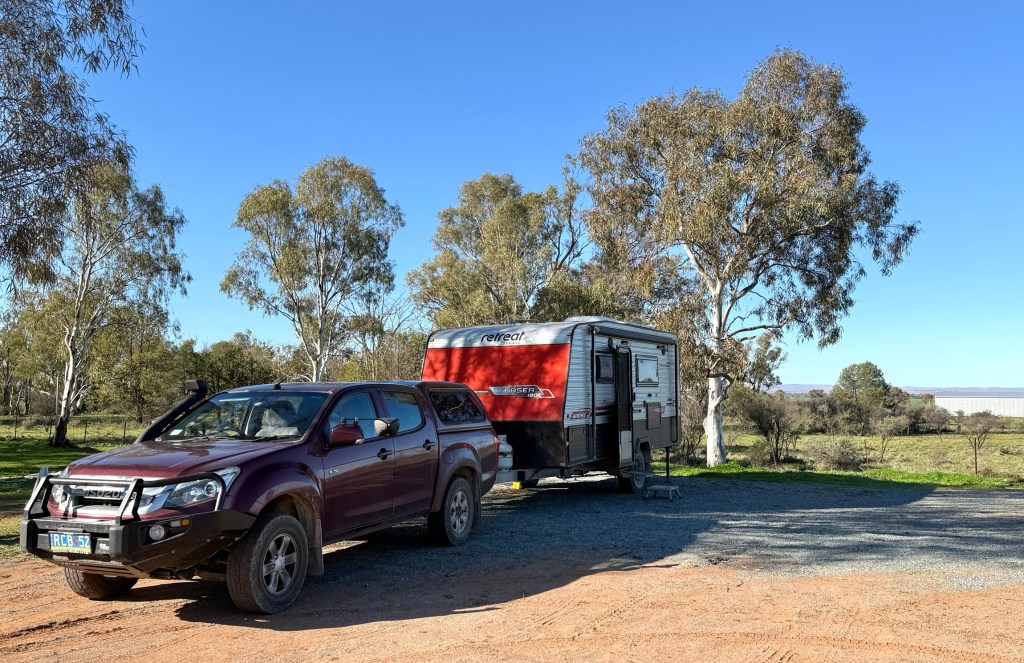
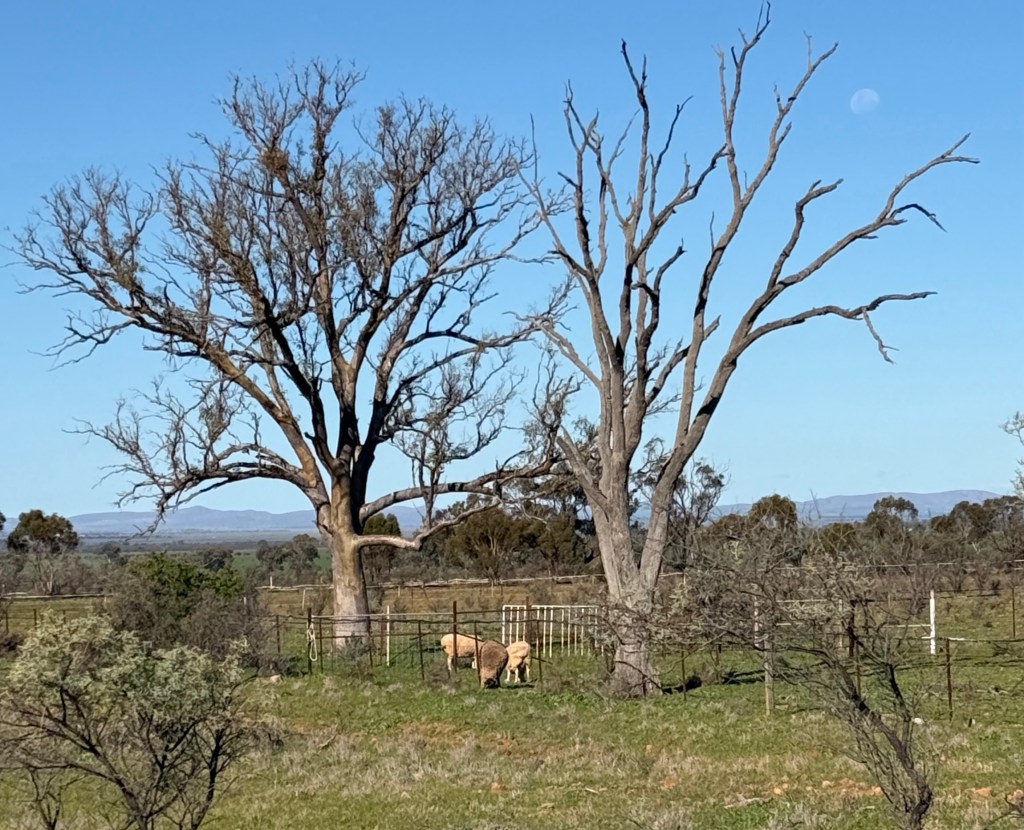
Great spot with big sites overlooking nearby farming land. They had some local olive oil and honey available too for the van’s cellar.
From Wilmington we made our way east through Orroroo to Peterborough.
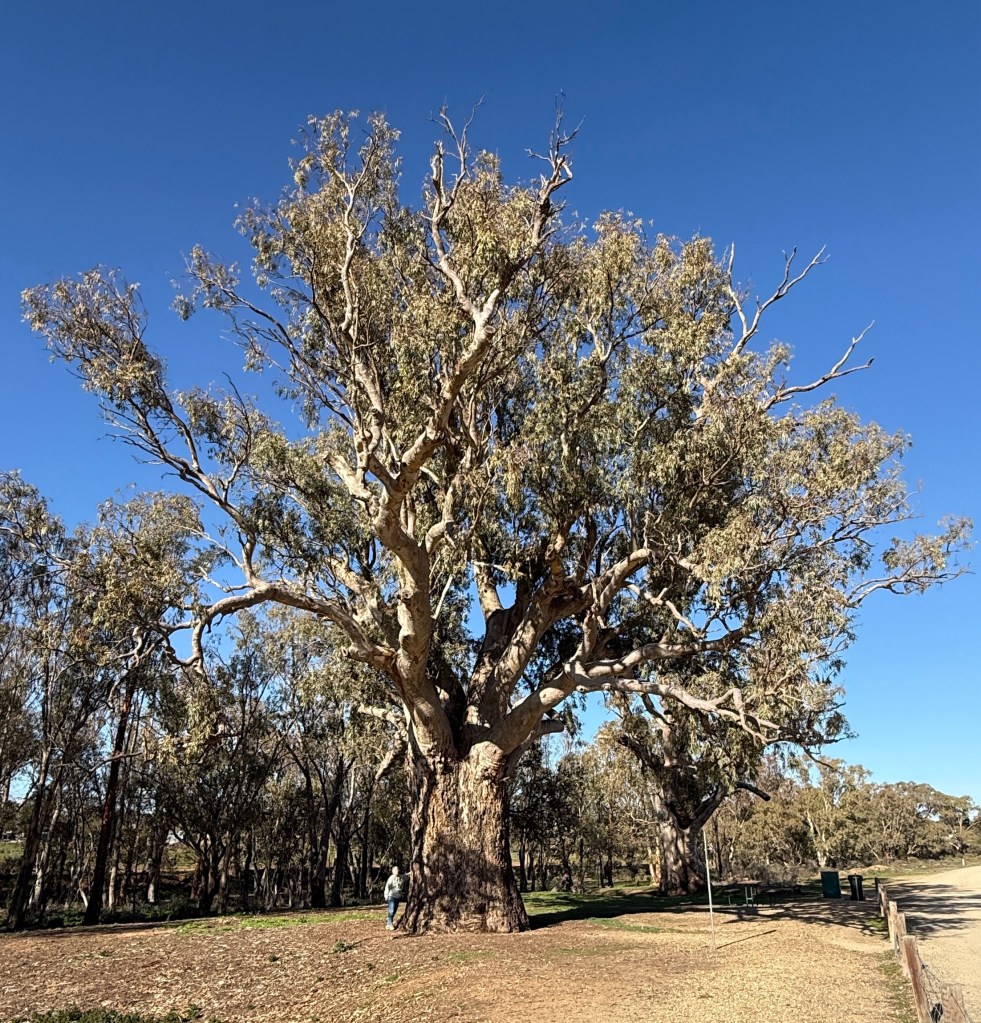
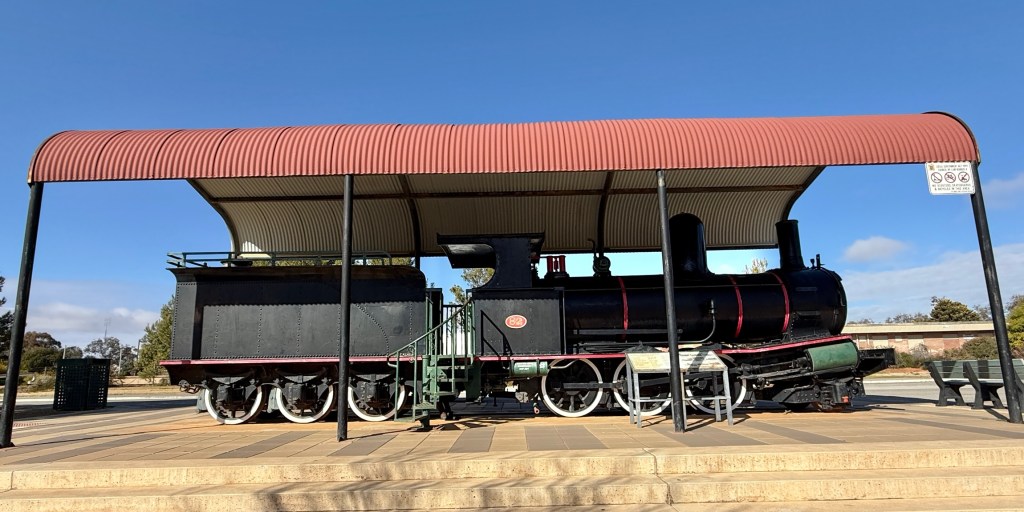
Peterborough was a big rail town in the days of steam and varying gauge widths. It was where many trains terminated because of gauge differences. There is a big rail museum there full of history and story telling from those days.
From Peterborough the Barrier Hwy took us towards the NSW/SA border at Cockburn. Along this section of highway the road tracks very close to the trans continental railway line, the Indian Pacific passes along it between Sydney and Perth. Unfortunately, we were a couple of hours out and missed it en route.
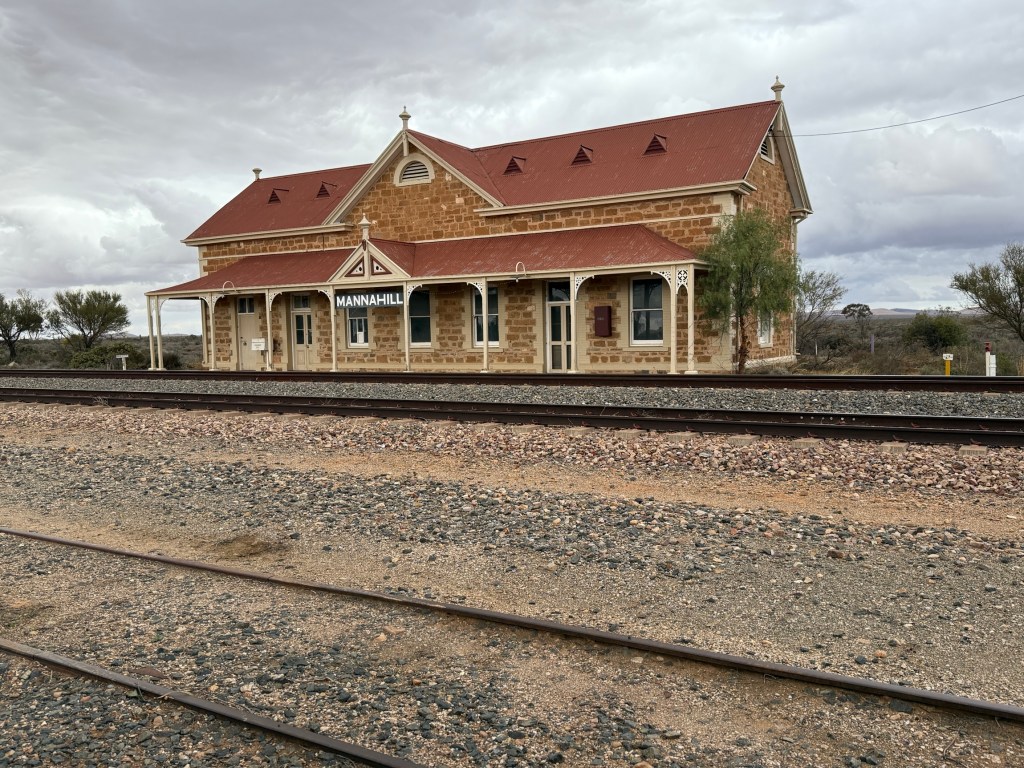
Cockburn has been a location setting for a number of movies (or parts of movies) over the years. ‘Wake in Fright’ (1971) perhaps the best known. There is a bit of memorabilia from the various film sets in the bar area.
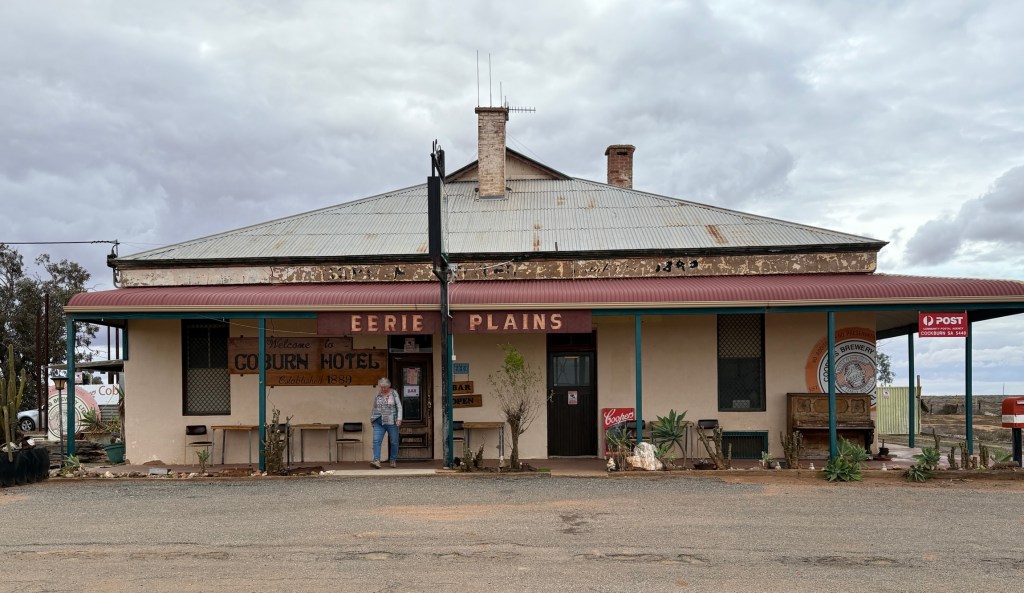
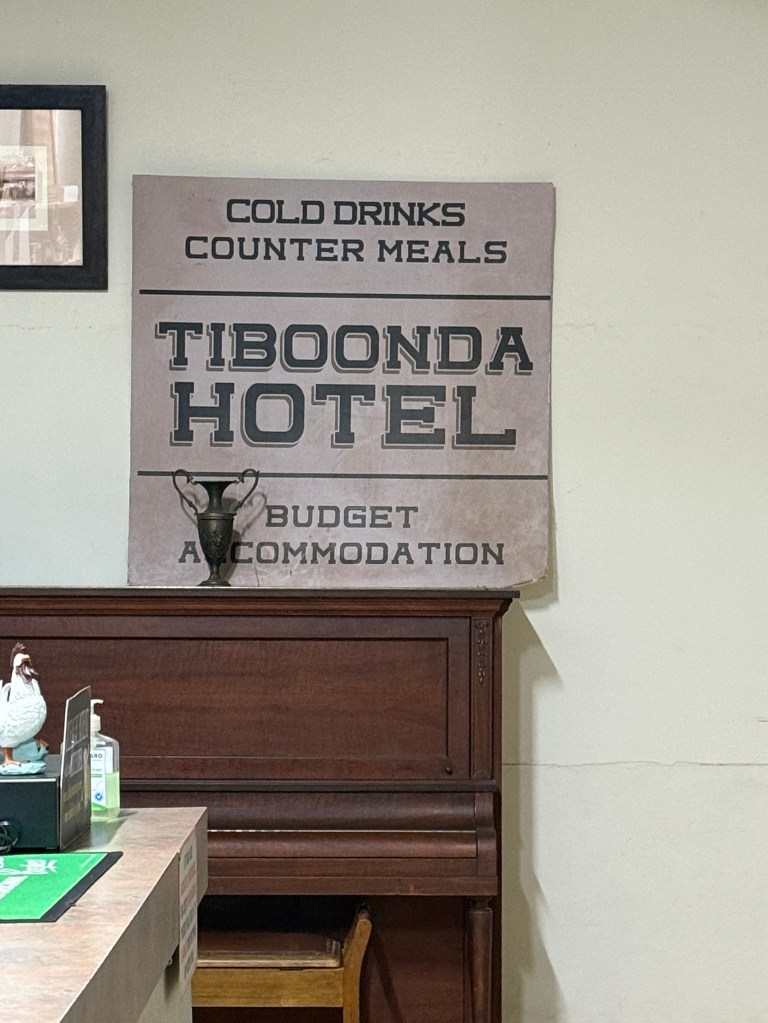
Cockburn is a town of six, two run the hotel and another two the Border Diner (this used to be a hotel). What the other two do we wouldn’t have a clue! But we stayed the night in the modest caravan park with three other vans. The publican runs the park, power but no water. Us nomads eight all up outnumbered the residents! Four of us had dinner in the hotel and were the only customers. Choice of fish n chips, chicken schnitzel and steak schnitzel. Chips and salad, tartare sauce for all three. Not too bad indeed.
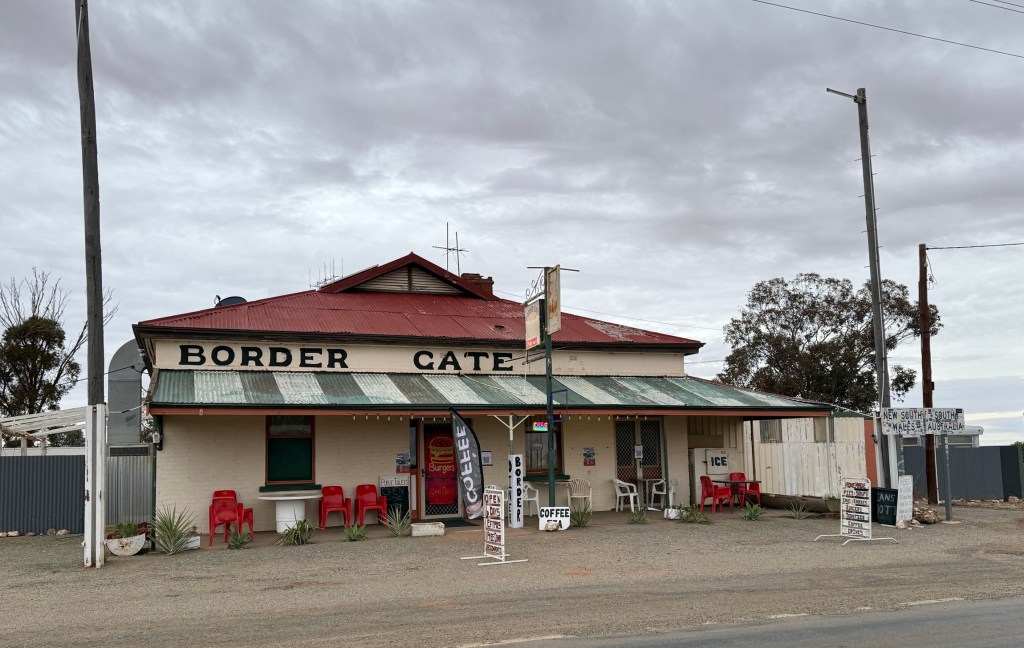
In the morning we tried the Border Diner for a bacon and egg brekkie, also ok. Thoroughly recommend this stop for something different.
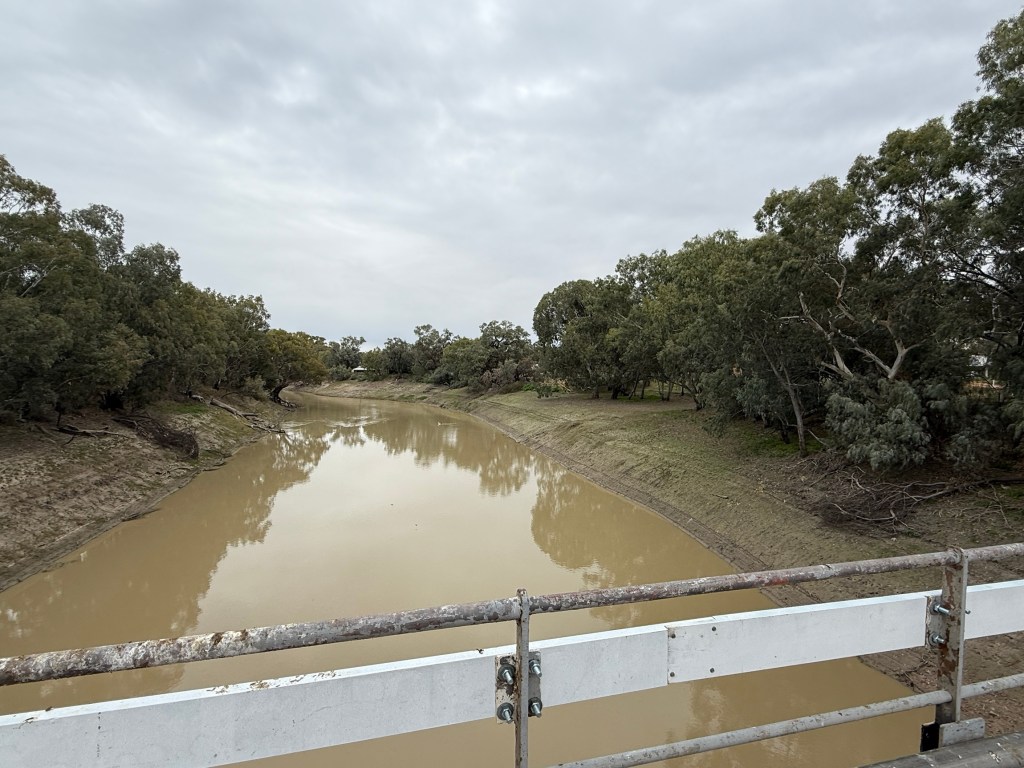
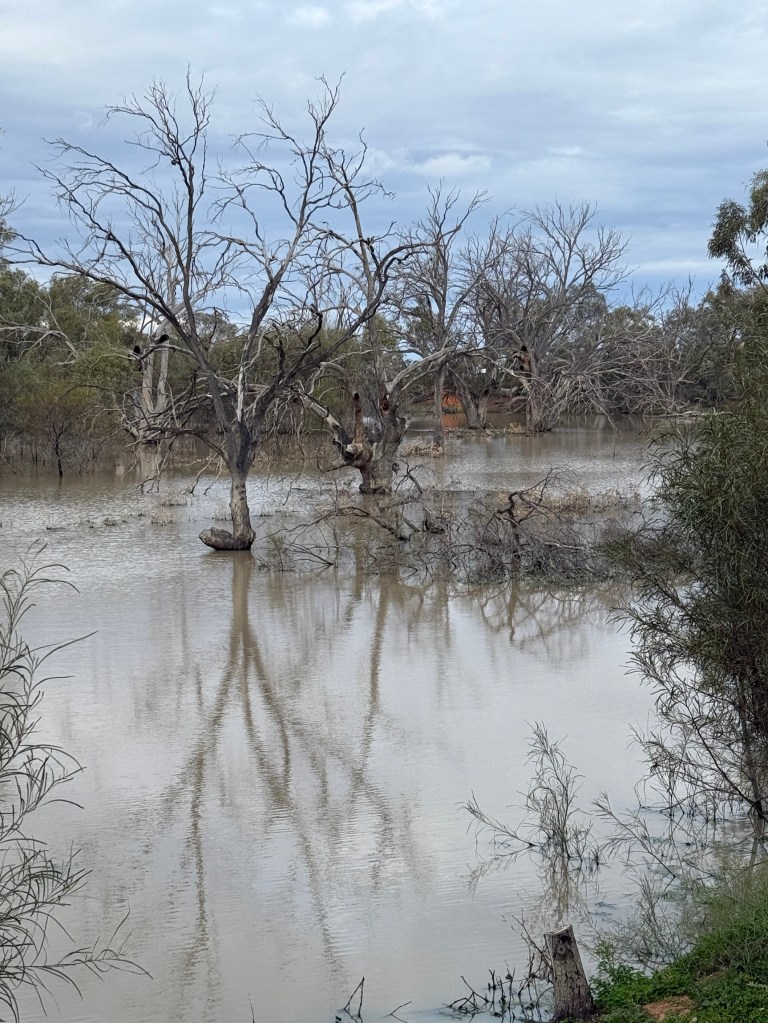
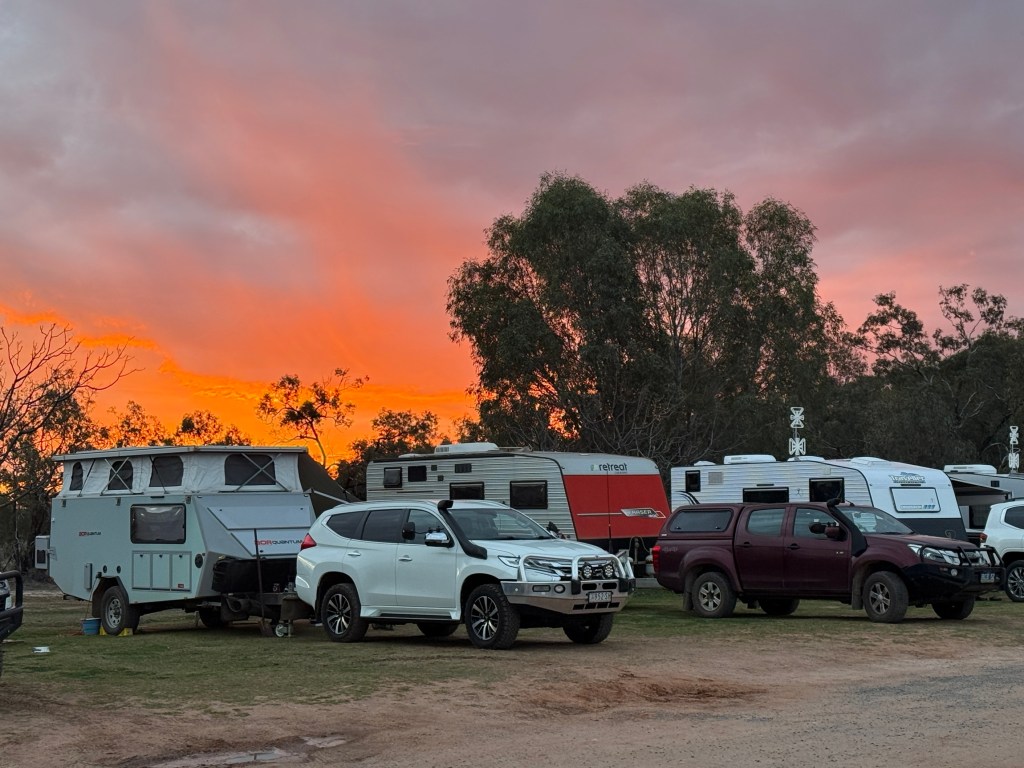
Moving along through Broken Hill we are now at ‘Warrawong on the Darling’. A van park beside a Darling River billabong, just outside Wilcannia.
The long and straight road.
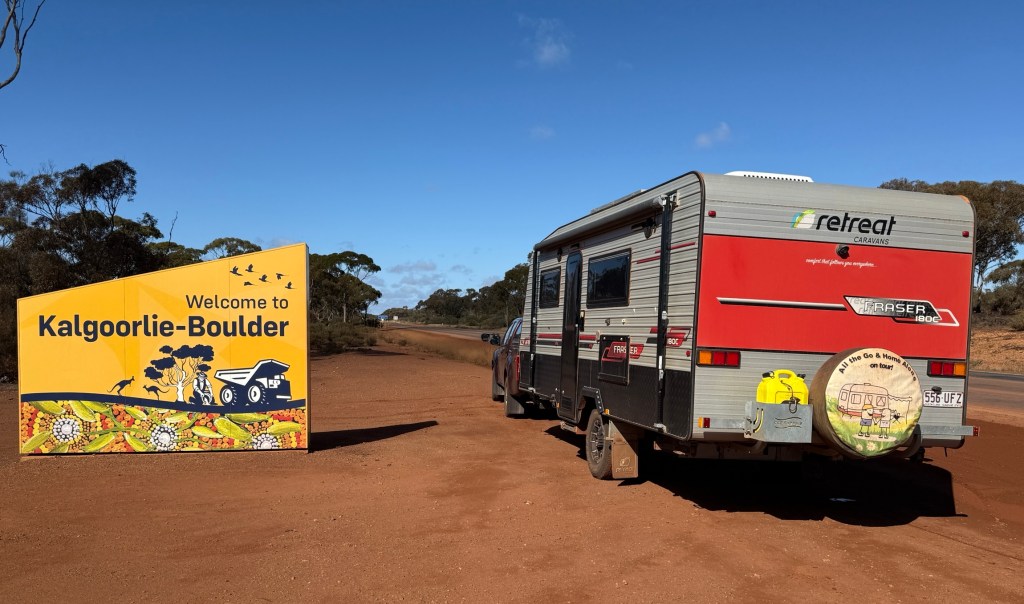
We got to Norseman in good time from Menzies via Kalgoorlie, where we stocked up on a few groceries to get us home across the Nullarbor.
You can park in some funny spots sometimes by total accident, this time it was right outside Kalgoorlie’s house of ill repute in Hay Street.
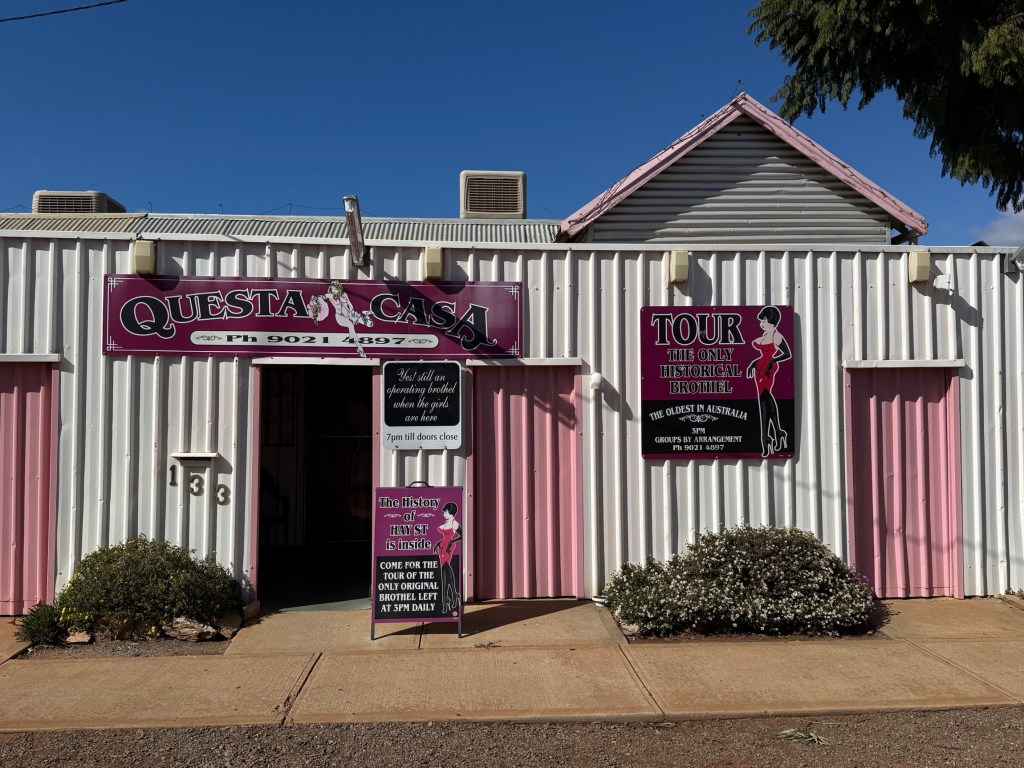
It has been there a long time, since the late 1800s and you can do a tour of the establishment to see what it is all about. We thought better of it and headed for Woolies instead.
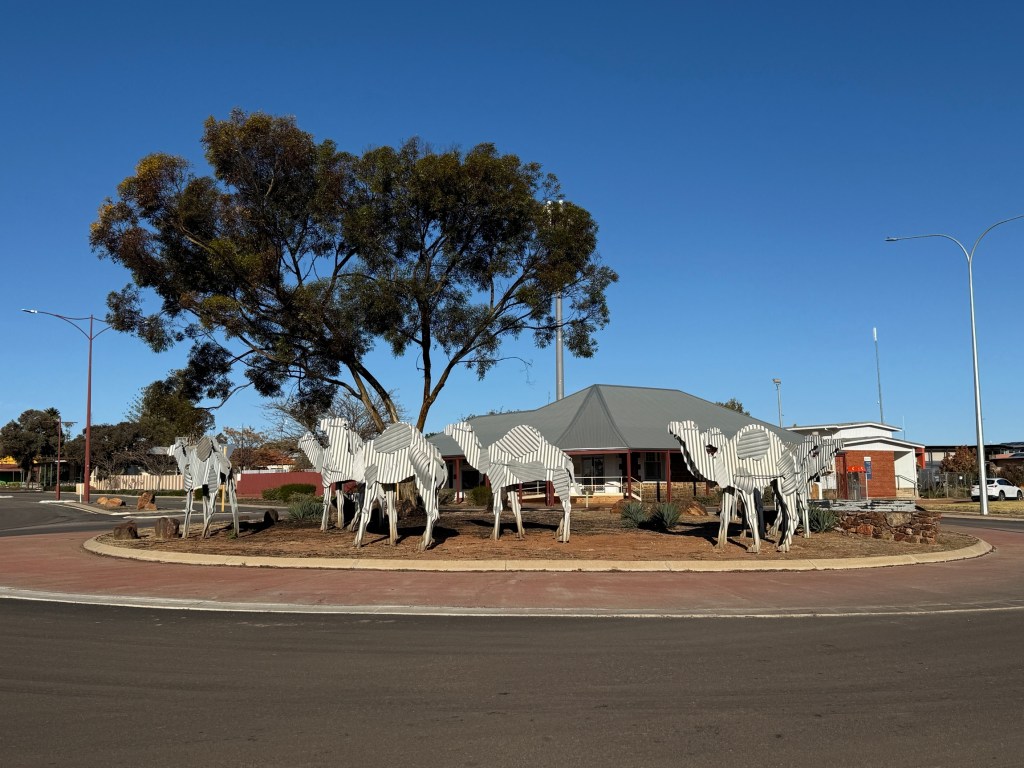
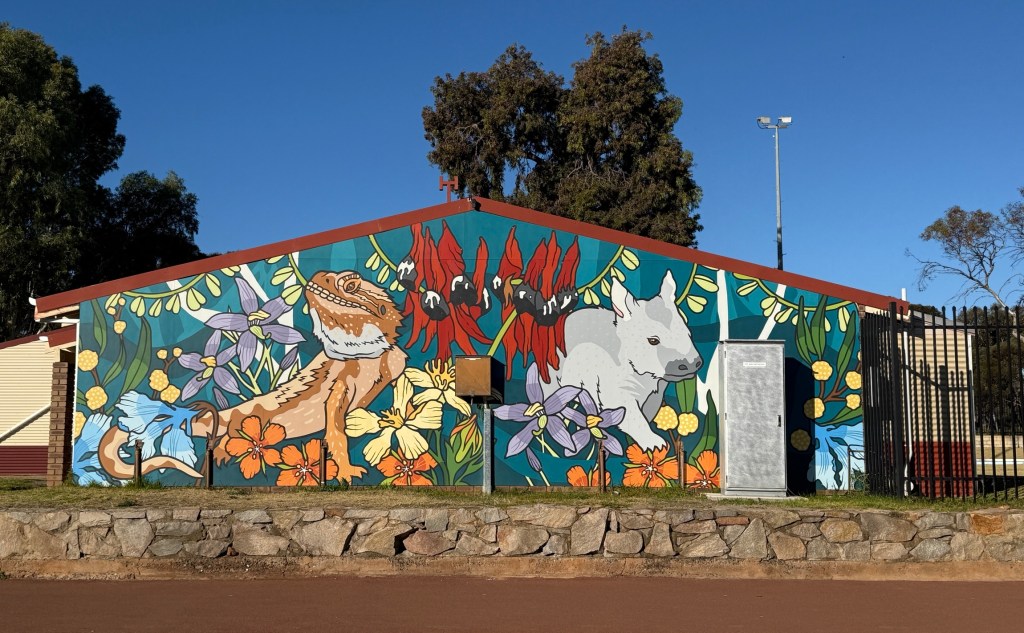
Norseman is an interesting old town at the cross roads of WA’s connection point with eastern Australia. Roads come from the west and meet here to funnel onto the Eyre Hwy for the journey east across the Nullarbor.
We left Norseman early, wiping ice off the windscreen, and made about 320 km to another free camp at a spot named ‘Baxter’. Before reaching Baxter Allthego revisited a tee on the longest golf course in Australia.
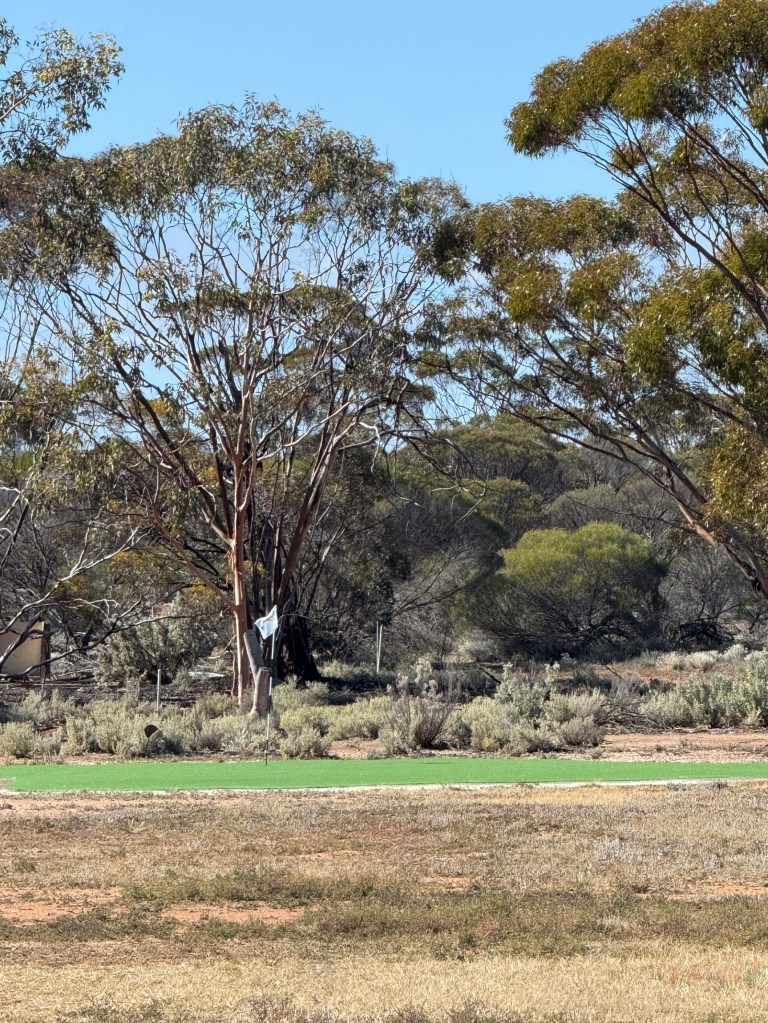
The course stretches across the Nullarbor from Kalgoorlie to Ceduna. Eighteen holes of challenging tees, fairways and greens. They are located at various courses and roadhouses. This one is just out from Norseman and called ‘Golden Eagle’ after a 35kg gold nugget that was found nearby in 1931.
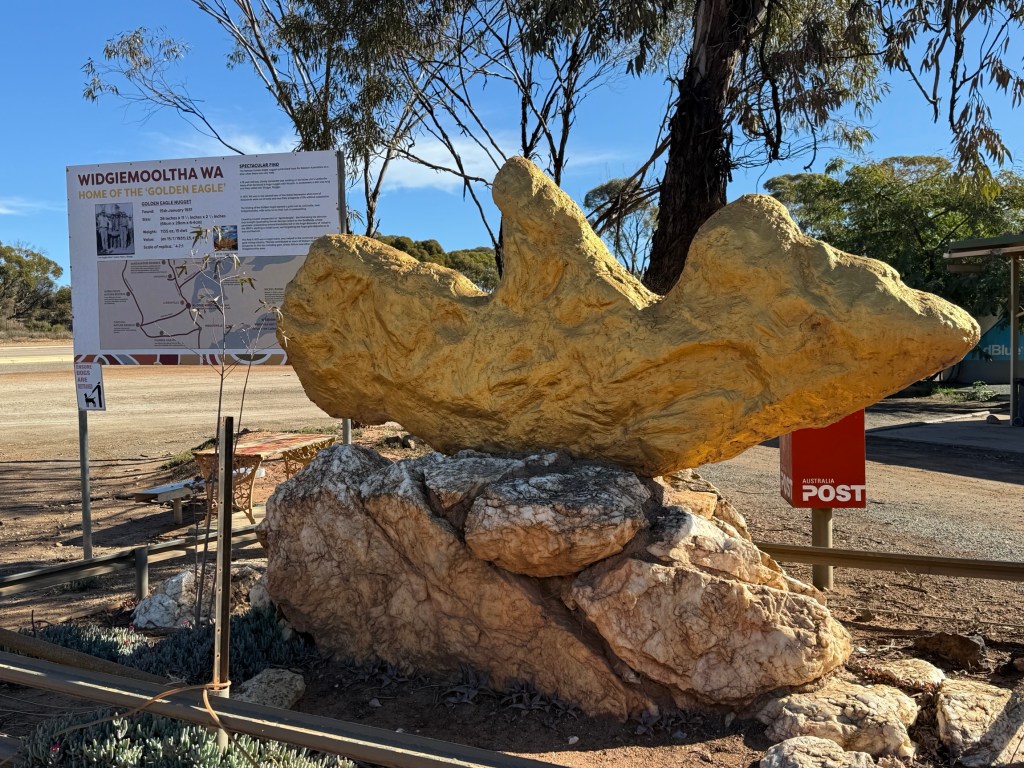
At current prices it would have been worth in excess of $6m. Allthego recommends the course to all travellers, his score a few years back, circa 150 plus.
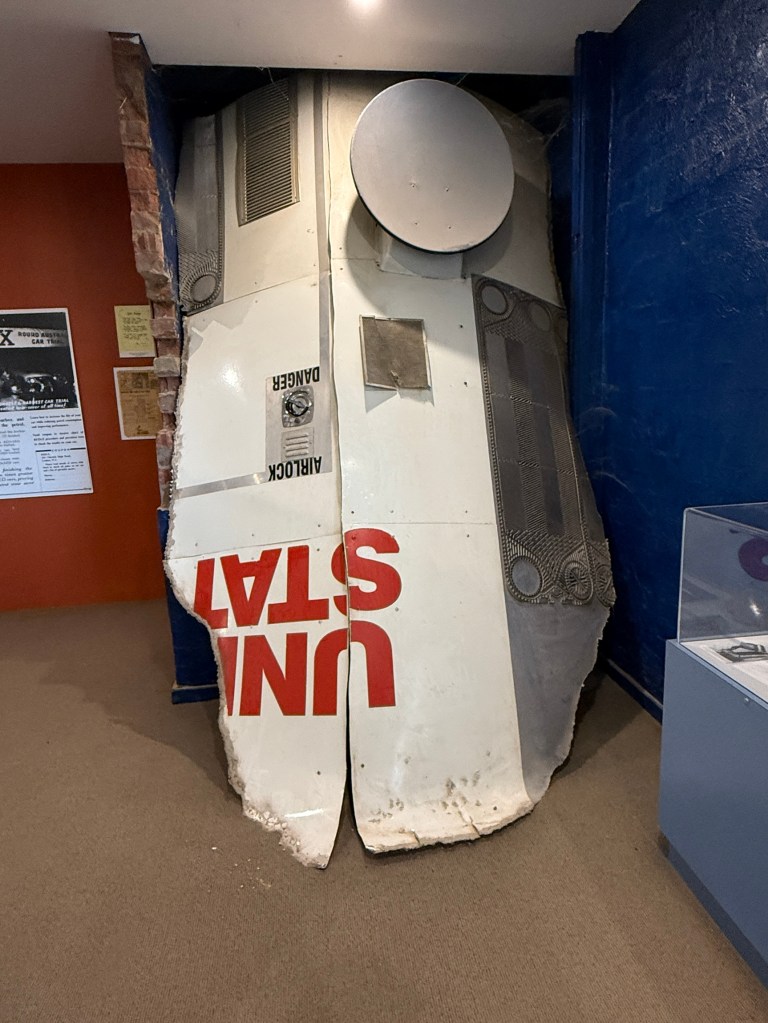
Earlier we had lunch at the Balladonia roadhouse after getting some fuel. The roadhouse’s claim to fame is that parts of the US Space Station ‘Sky Lab’ came down here when it broke up over south west Australia in the 1970s.
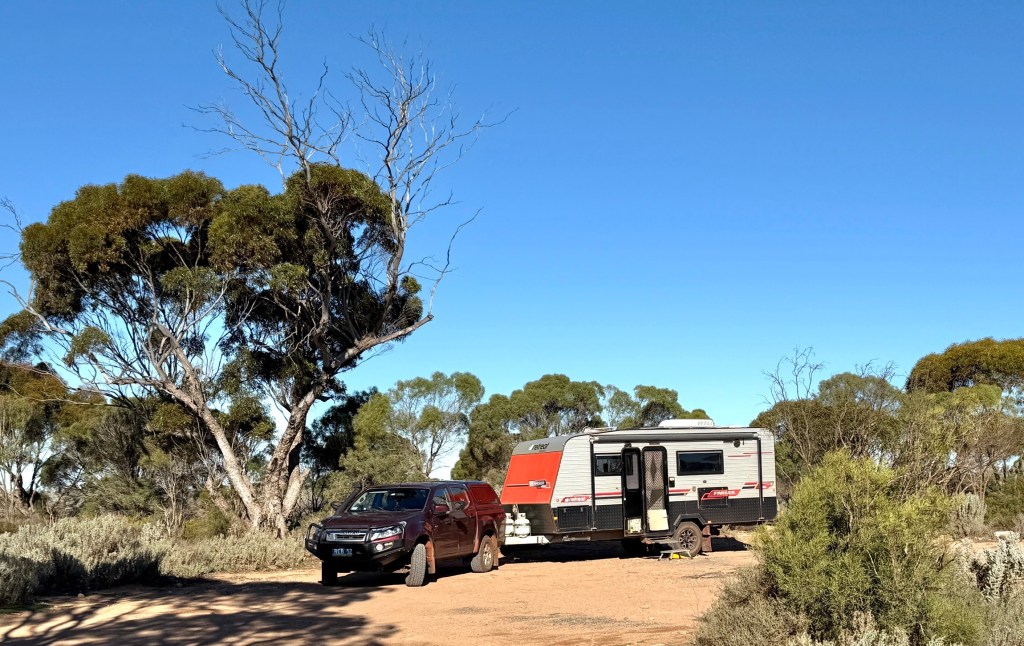
There are about ten other vans keeping us company for the night well back from the Eyre Hwy. Watched the Broncos put the cleaners through Souths!
Moving on our next night was at the Mundrabilla RH. A pleasant spot. The wind started to get up on the way there. Fortunately, from the north west at around 40km an hour up and down. So it was tempting to turn off the engine and put a sail up. It pushed us along quite nicely, a little bit of side wise buffeting but all ok!
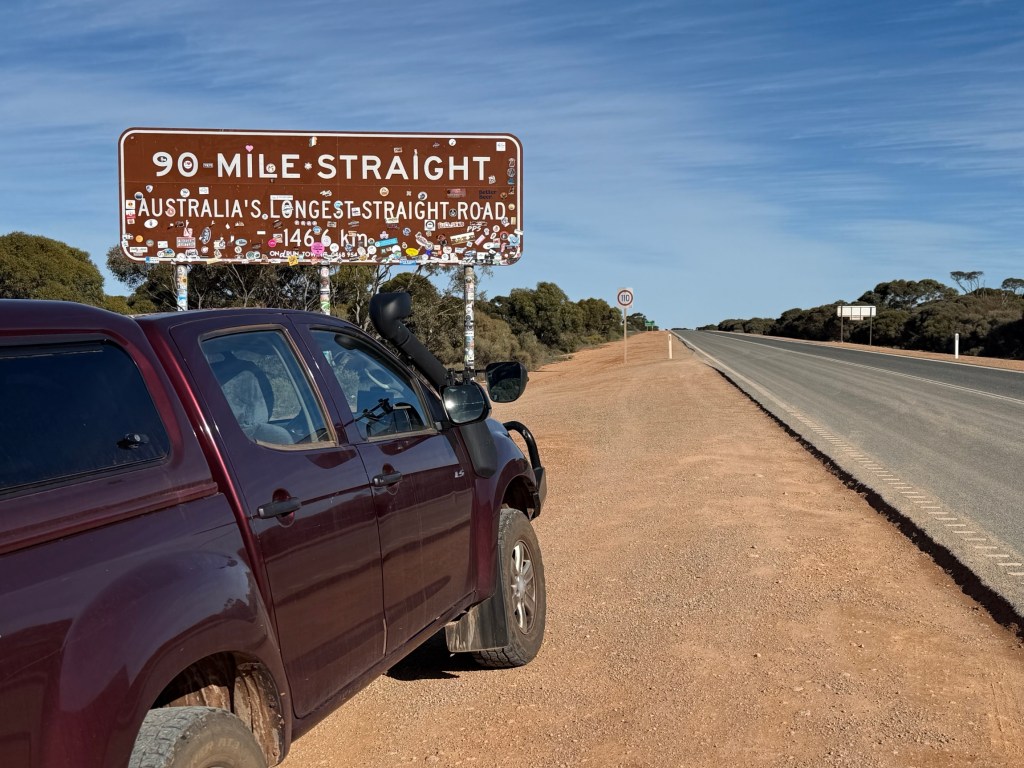
There is a road house at Caiguna, before Mundrabilla, where the longest stretch of straight road in Australia ends. It is 146kms long without any twist or turn, dead straight.
You sort of just point the vehicle straight ahead, it is tempting to put a knee on the wheel and do a blog entry to fill in time! But of course you wouldn’t do that.
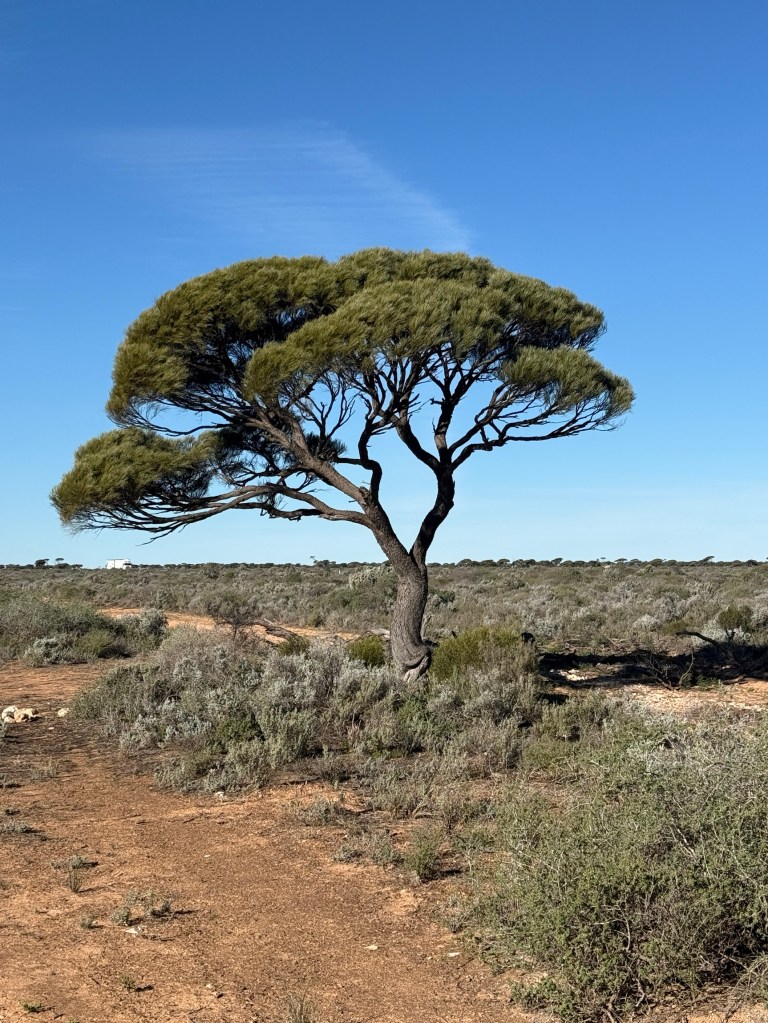
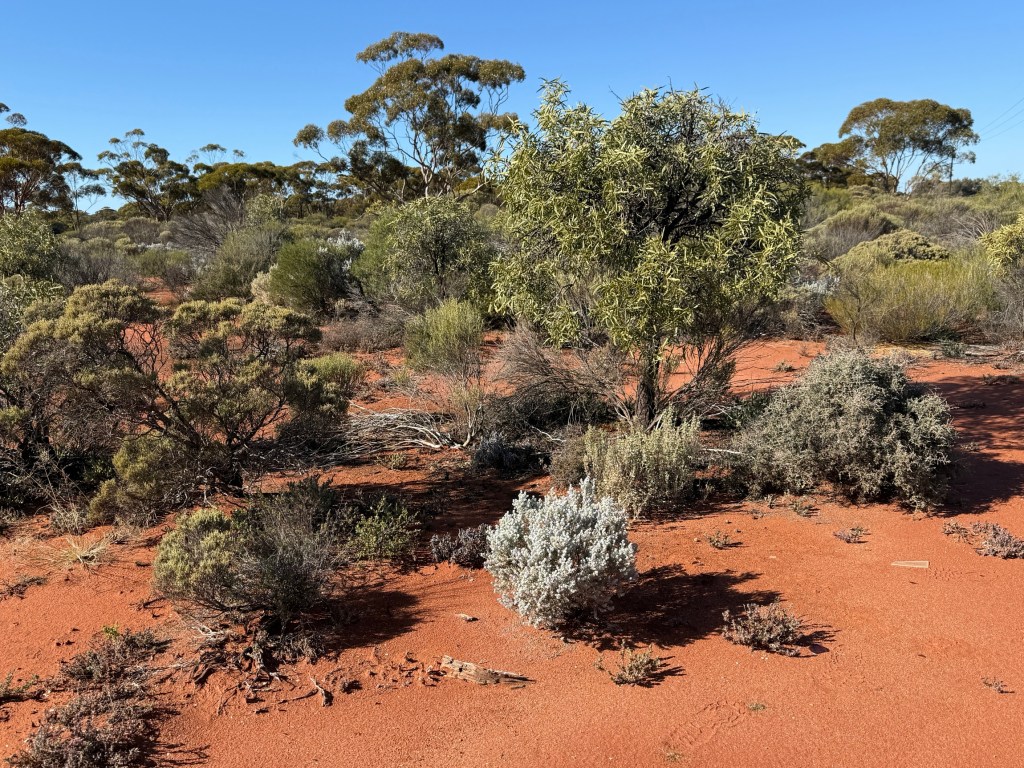
Trees are starting to really thin out too! Endless stumpy bush and grasses stretch out to the horizon.
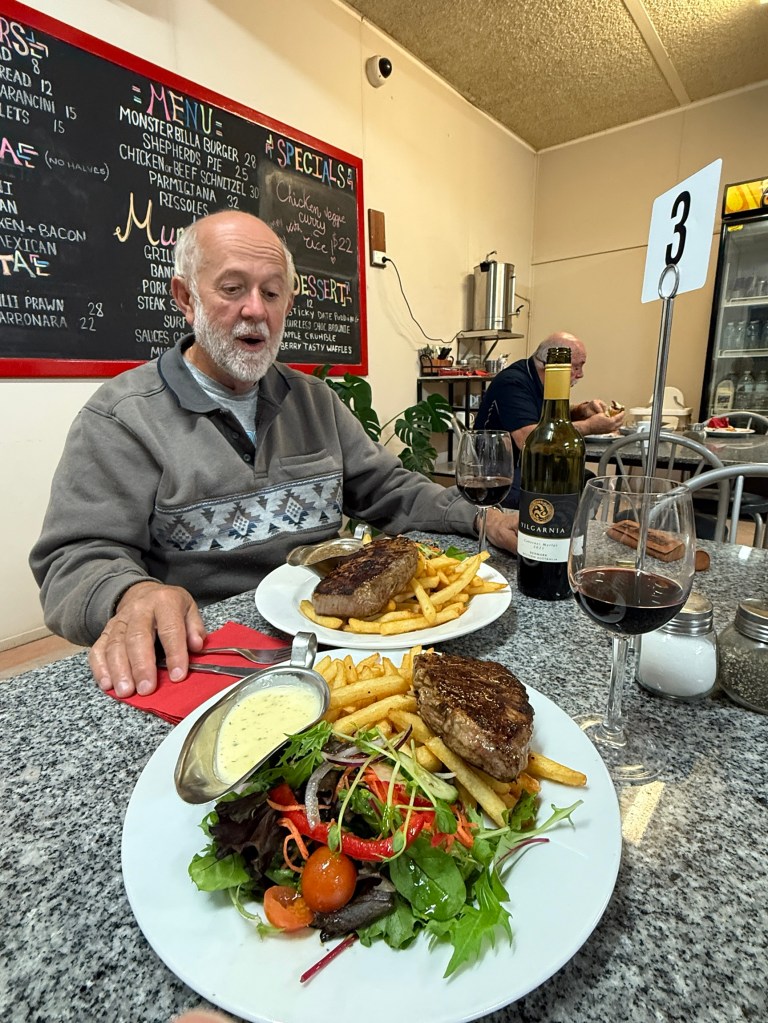
Mundrabilla saw another milestone reached with Allthego notching up 73 years on the road. We celebrated at the RH with a nice scotch filet and a Denmark WA red. All looking foreword to squeezing a few more road trips out of the truck and van.
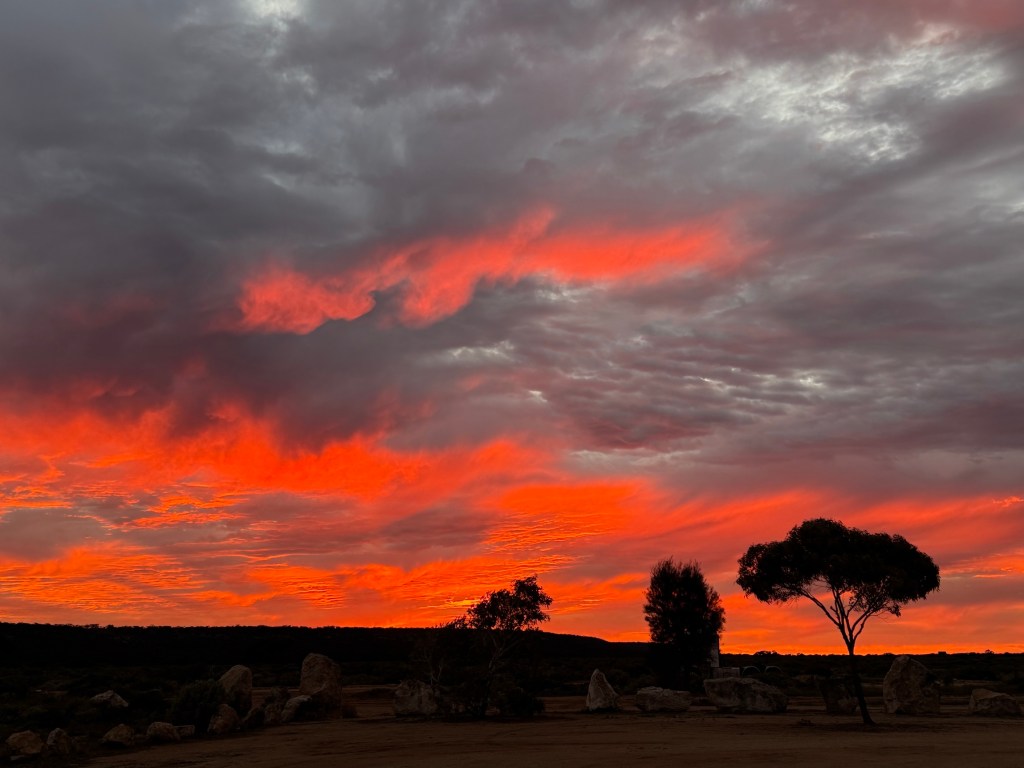
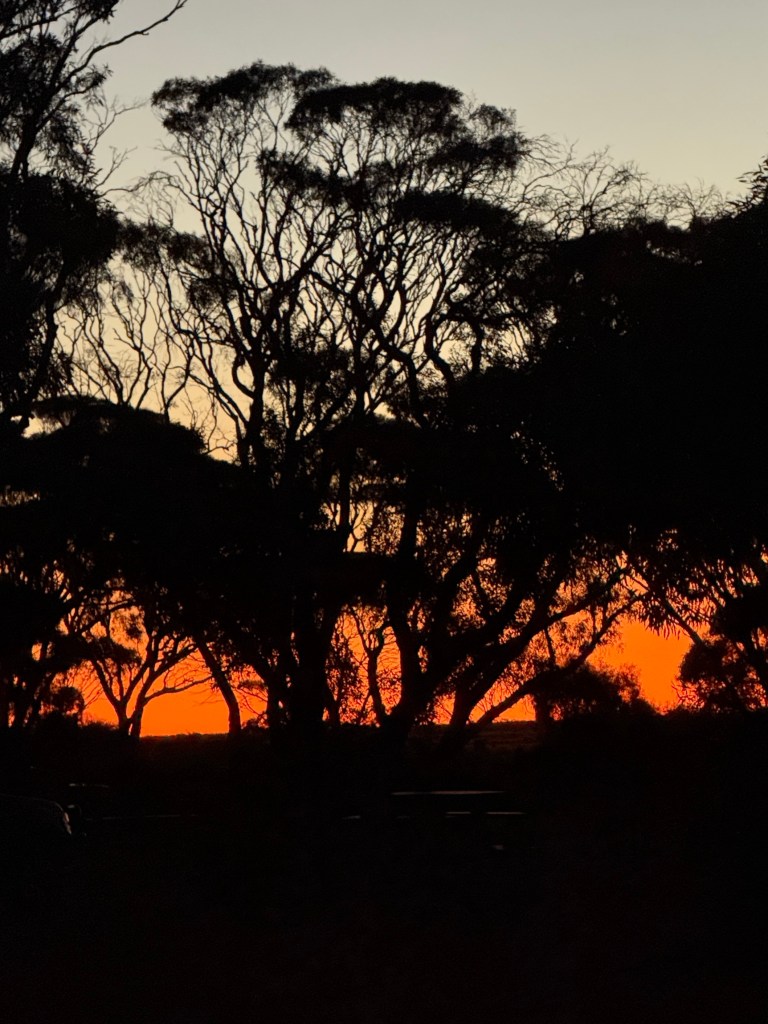
Got away in the morning to a very red morning sky, a shepherd’s warning. But it came to nothing until later that night!
Leaving Mundrabilla the road rises through the Eucla Pass, from the plains that run along the coastline, back to the top of the Nullarbor plateau.
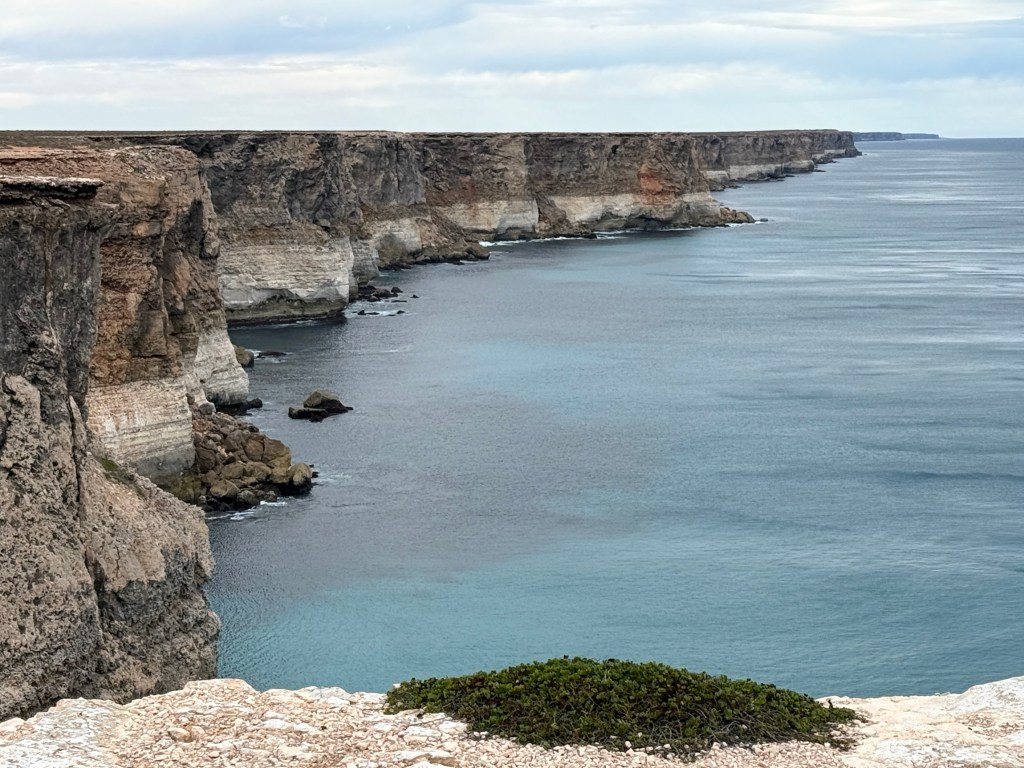
From here to our next stopover at the Nullarbor RH the road tracks close to the spectacular Bunda Cliffs.
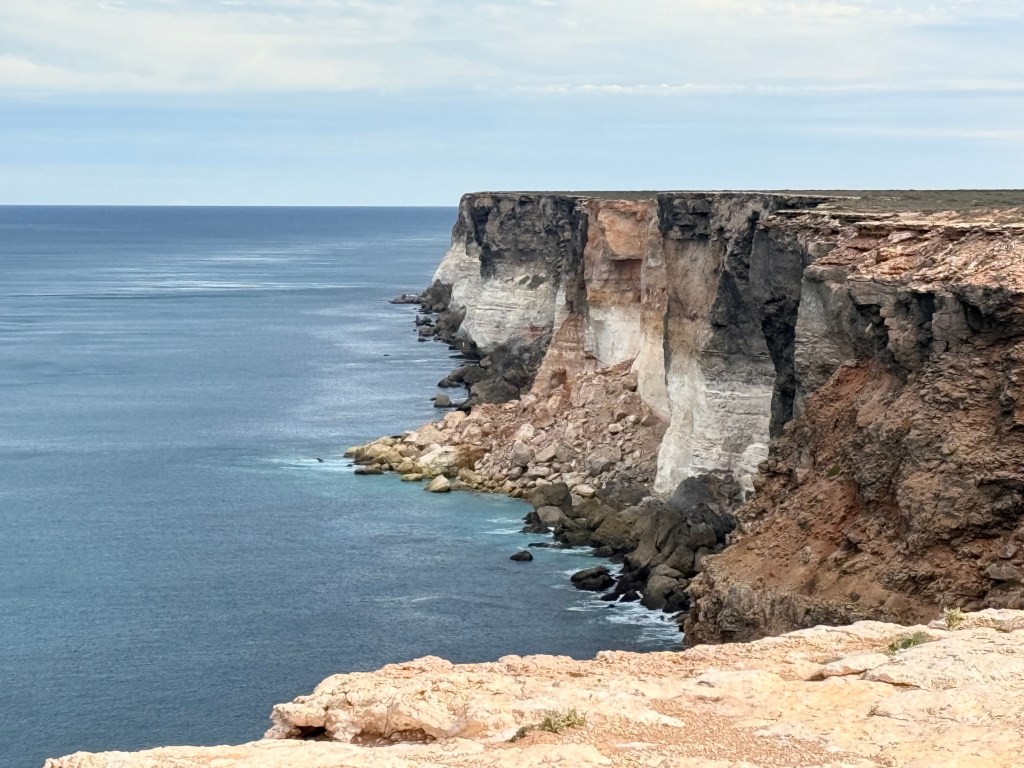
We have been across the Nullarbor on an earlier trip but these cliffs seem to be magnetic, you just have to have another look! And I think they look different depending on the weather, the time of day and even the viewers mood!
The Nullarbor RH is located near what is known as the ‘Head of the Bight’. The road house has been here for a long time and was one of the first on the Nullarbor. It also has the most expensive diesel we have come across on the entire journey, $2.98 a litre. Glad we are going with the wind!
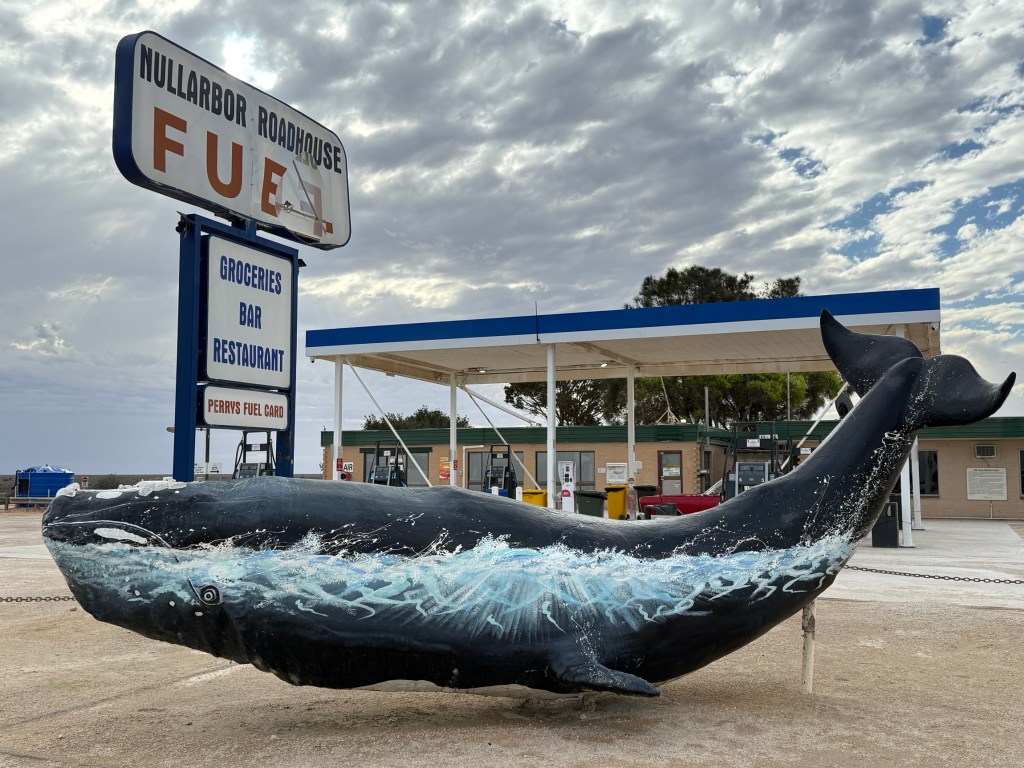
The overnight stop here was so that we could check out the whales at the ‘Head of the Bight’ Whale Centre. This we did the next morning after weathering a pretty fierce overnight rain storm. It came down heavily in a few bursts, particularly early in the morning (like 4am).
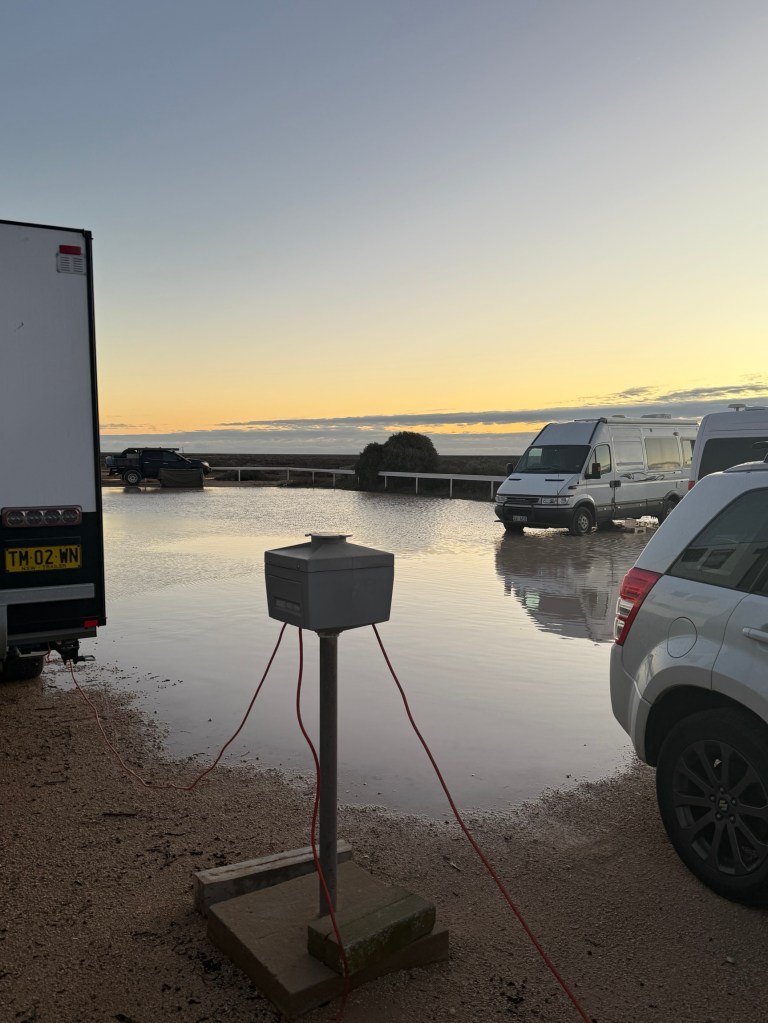
We woke up to a partly flooded van parking area, our feet were not in the water unlike a few other nomads. Those shepherds were right about the red skies yesterday morning.
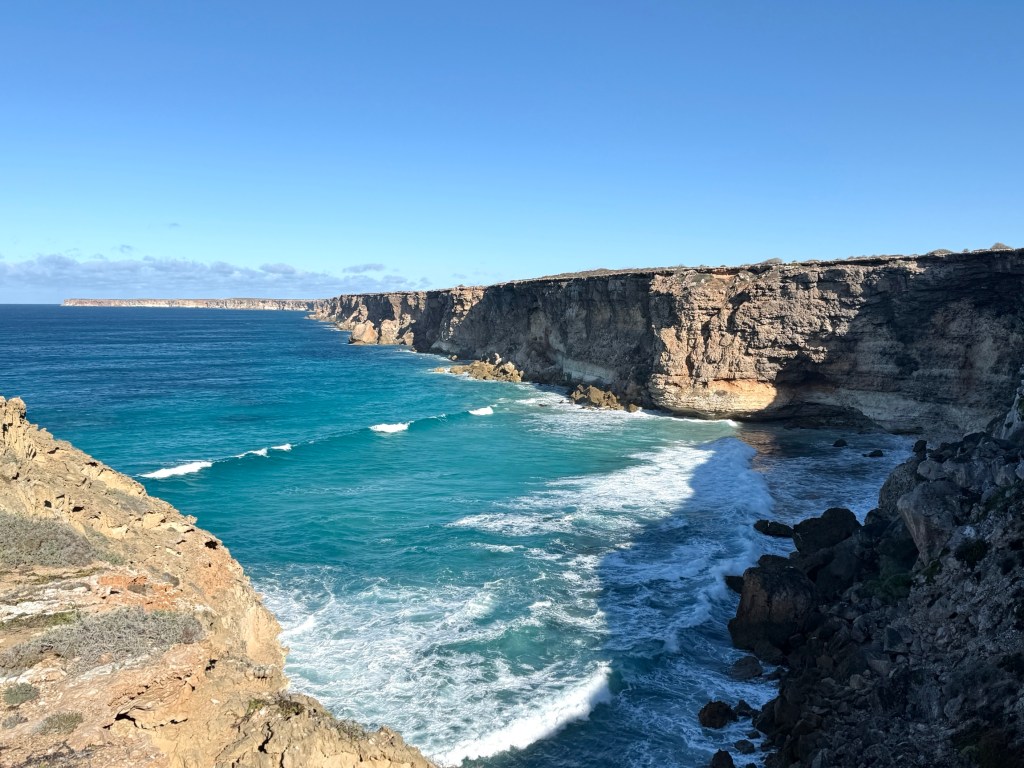
Fortunately, we were relatively dry and quickly made our way the 25 km or so down to the Whale Centre at the Head of the Bight. It was extremely windy and chilly but we had some great views of the whales from the lookouts. A number of ‘mother’ and ‘baby’ whales performing in the waters below.
Here are a couple of videos of ‘whale times’ at the Head of the Bight’.
We are now at Penong not far from Ceduna and settling in for the night, pitter patter of light rain on the roof. Heading across to near Port Augusta tomorrow.
The long and winding road.
We left Carnarvon and moved further south towards Geraldton.
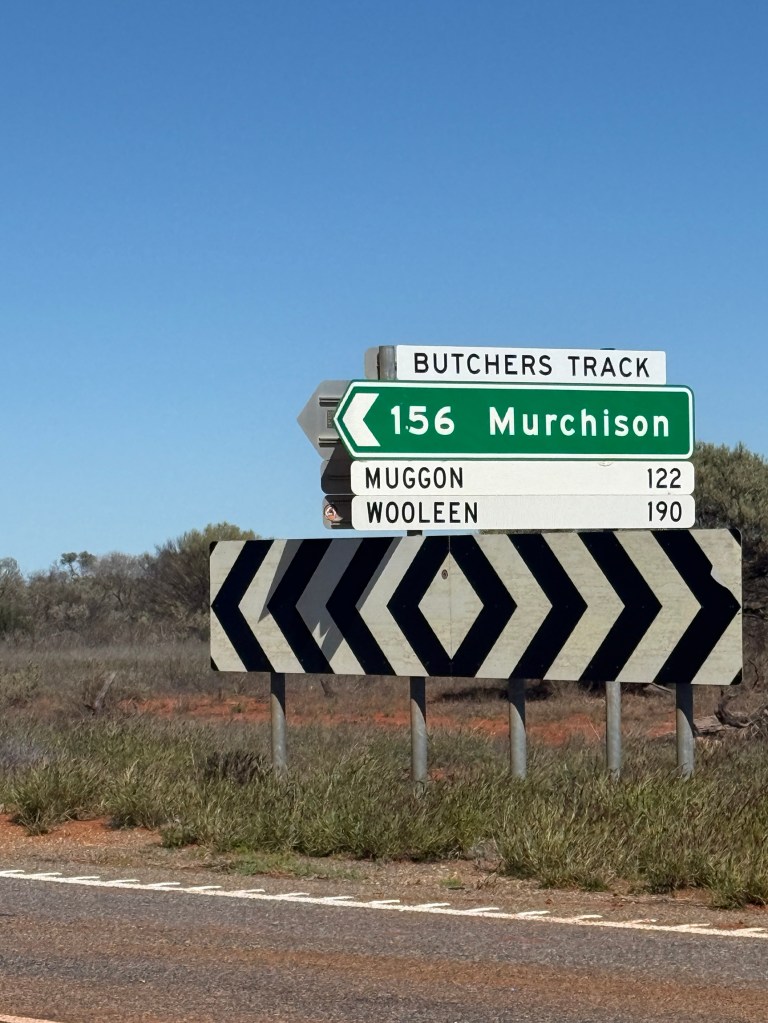
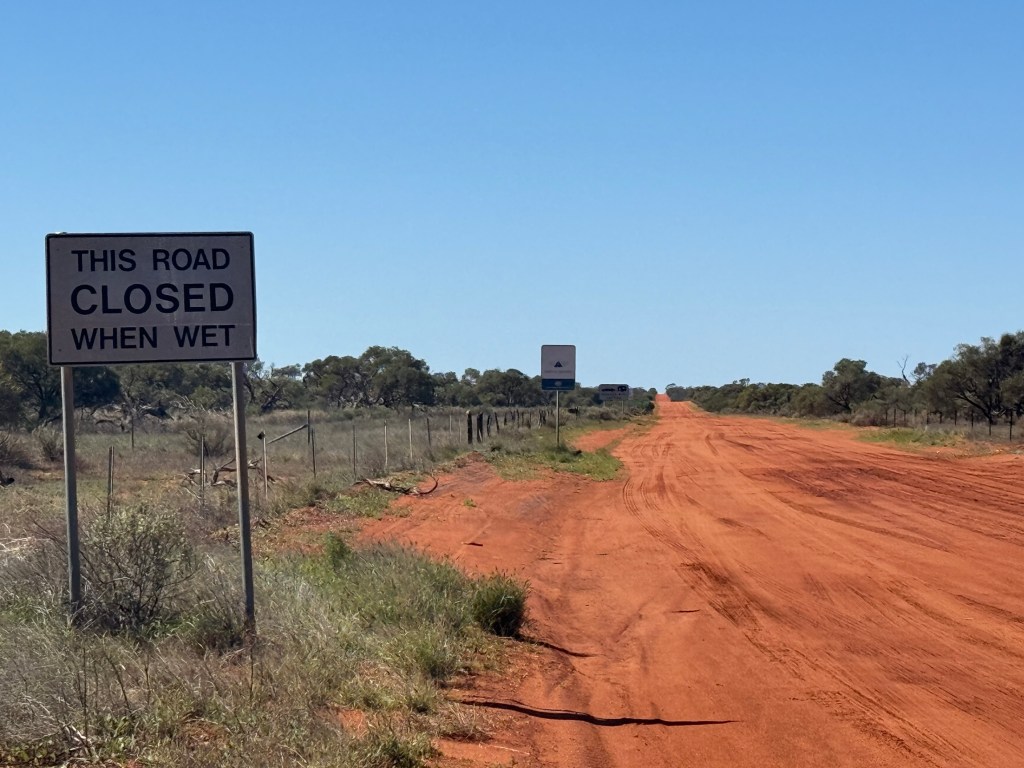
On the way we passed the turnoff along Butchers Track to Murchison. It brought back memories of our last WA trip when we travelled along this 156km of sandy outback road up, over and down sandhills on a well compacted gravel road. Looks a lot slipperier now after recent rain.
A little further along we set up at a well organised free camp beside the Murchison River in a bit of a hollow. Mistake!
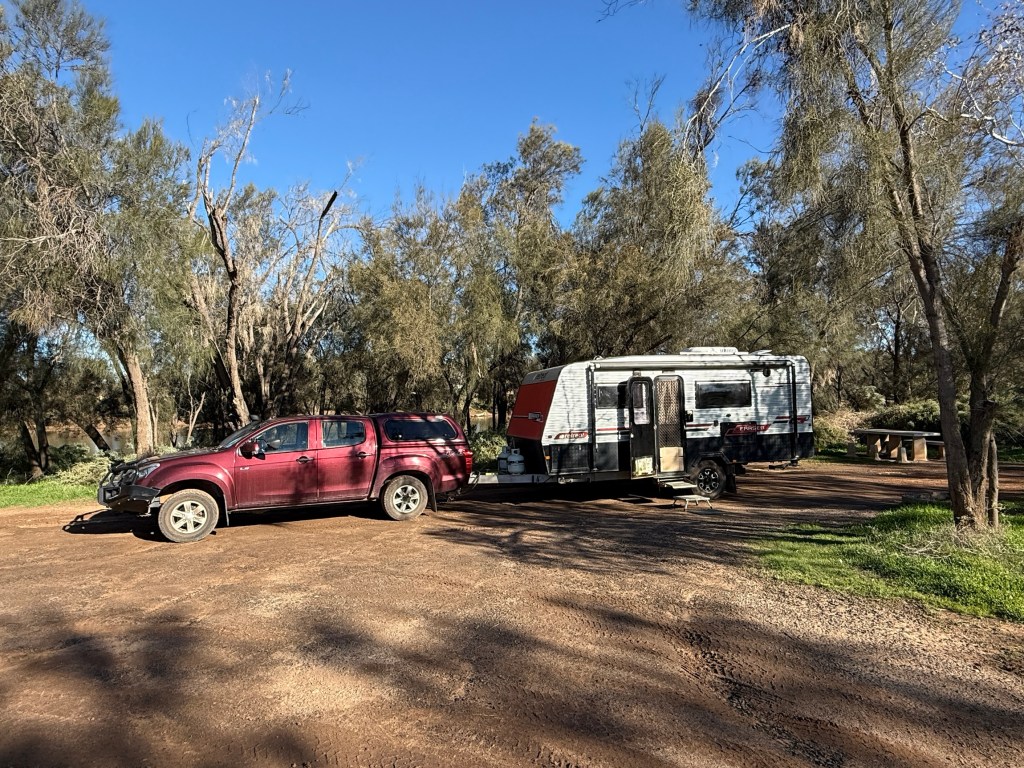
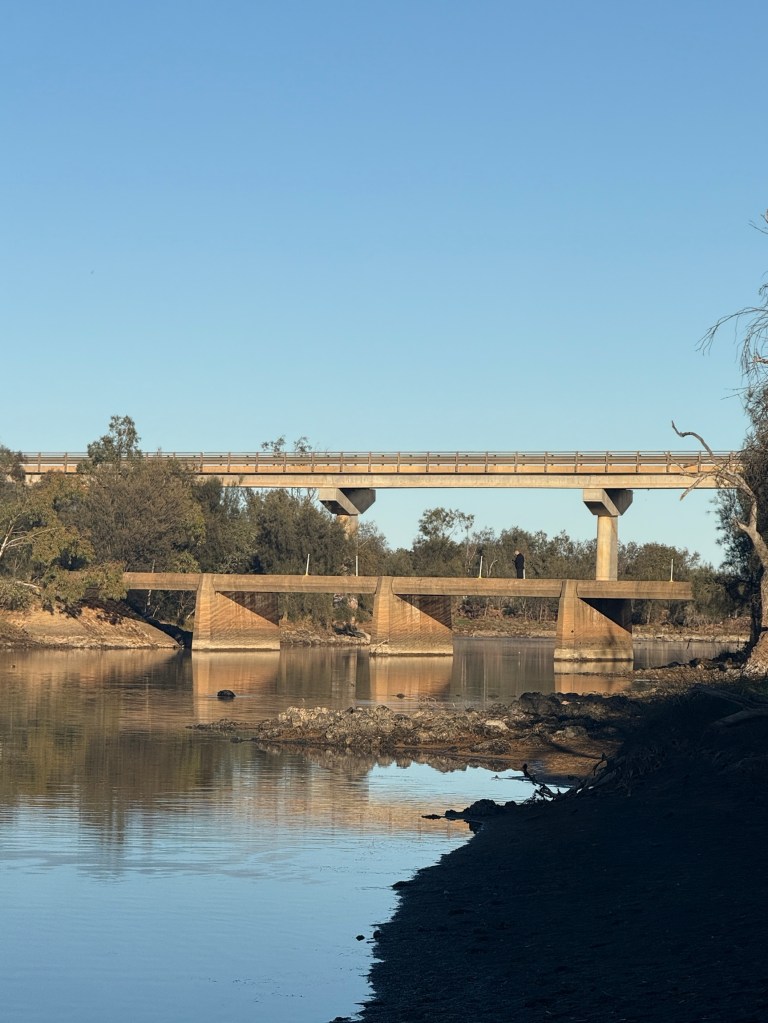
A very cold night, below zero. We woke to an ice covered windscreen and some early morning mist over the river. The mist quickly cleared out as did we! But a good stopping place, might have been warmer away from the river bank, about half way to Mullewa and Yalgoo in the wildflower belt.
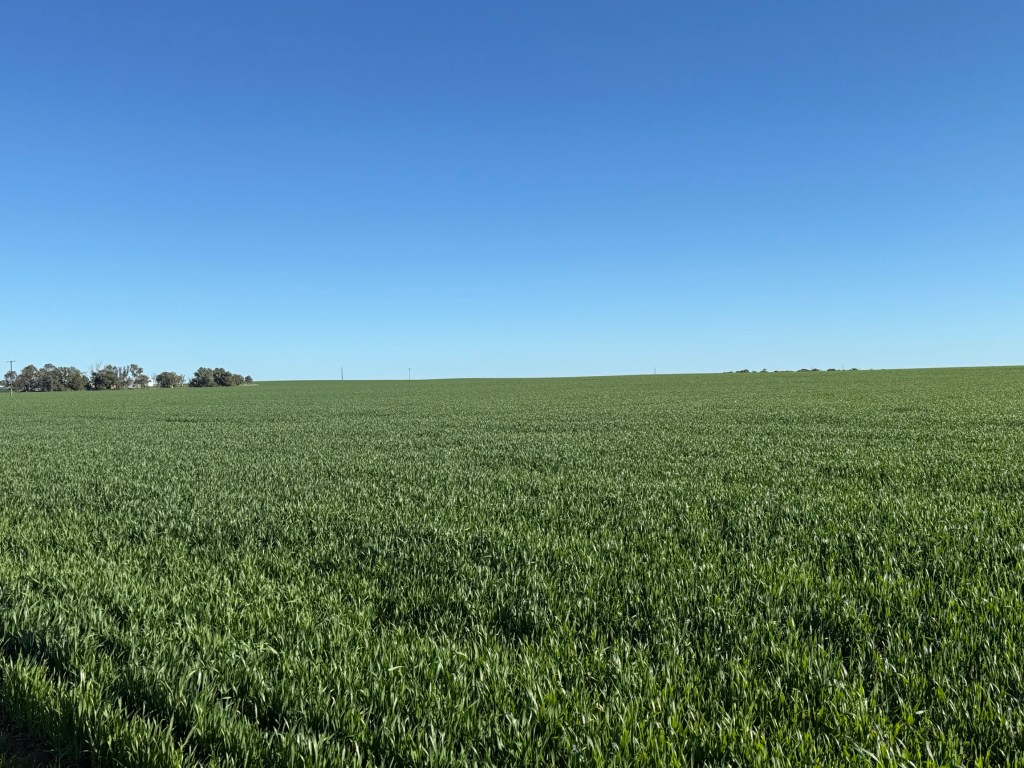
We took a back road to get to these places through the expansive winter wheat and Canola fields. They stretch as far as the eye can see. Look to be good crops coming in the Spring harvest.
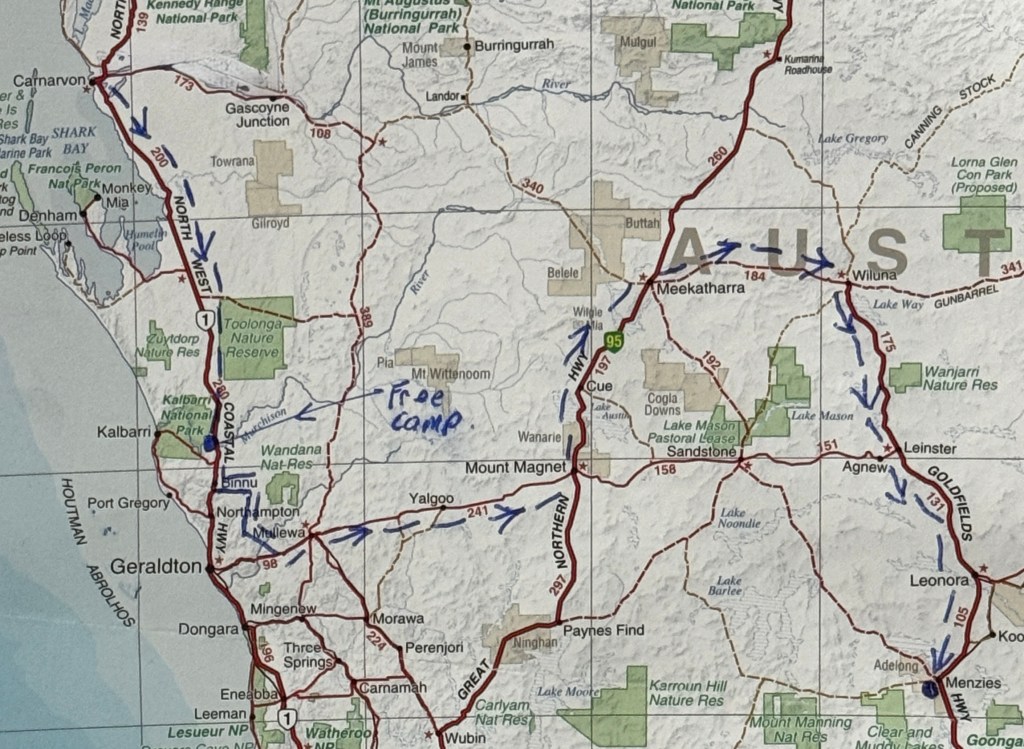
This part of our route through Mullewa, Yalgoo and Mt Magnet is a road we have previously travelled during wild flower season, we are a little early for it this time round. There maybe some early bloomers to appreciate.
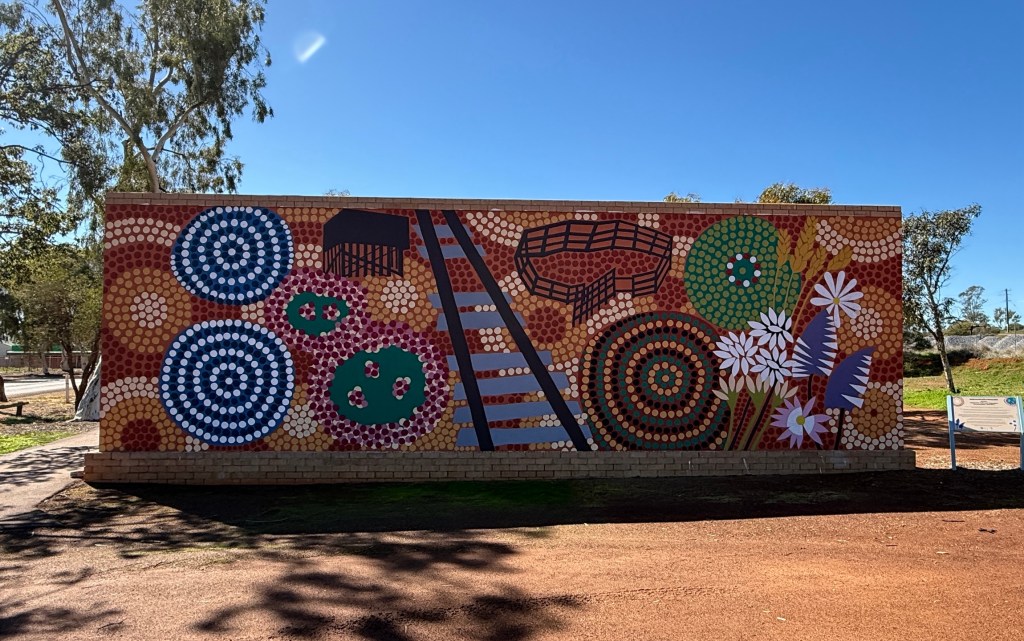
Not a lot seems to have changed in Mullewa since we were here nine years ago. There is a new ‘Reconciliation’ mural coming into the town. It reflects the ancient indigenous past through the period of European settlement to today’s efforts at reconciliation. Completed by members of the local indigenous group.
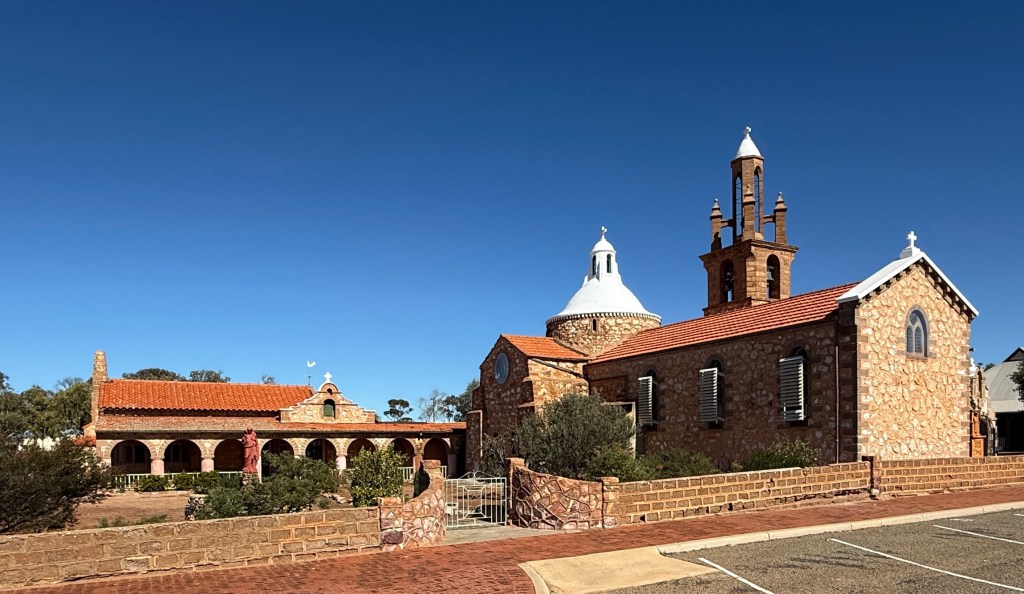
The impressive RC church designed by Monsignor John Hawes still has pride of place in the town. He was responsible for the design and construction between 1915 and 1939 of many of the RC churches in these mid west rural parts of WA.
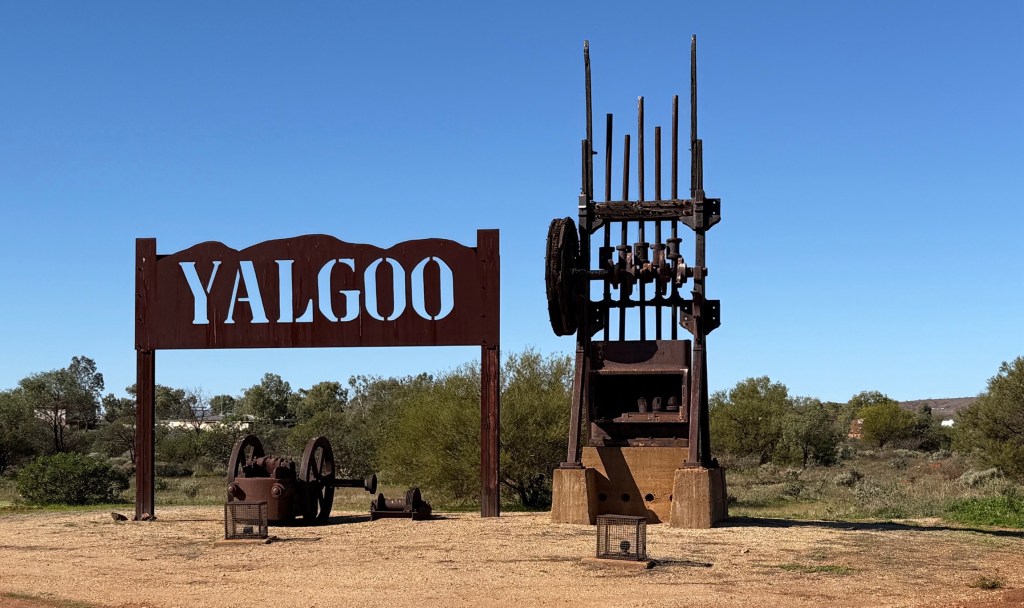

Further along we stopped for the night at Yalgoo, an old gold mining town. The towns CP is relatively new or has had a big refurbishment. Very comfortable place for the night.
The next day we continued east to Mt Magnet before turning north along the Great Northern Hwy for Cue and later Meekatharra.
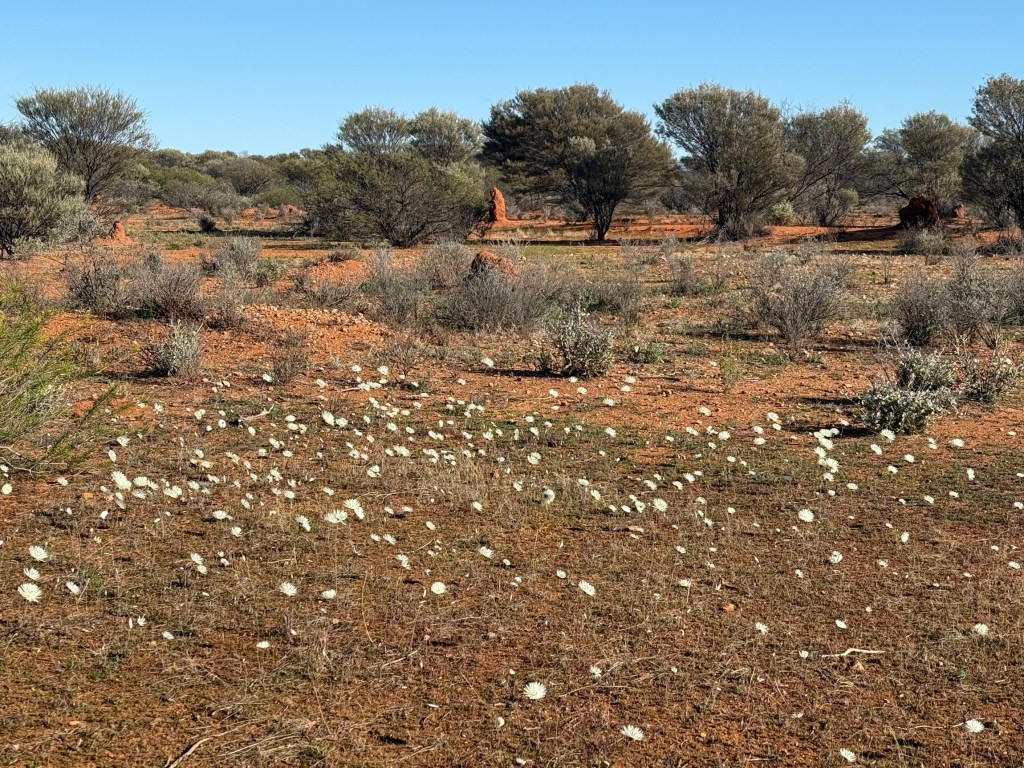
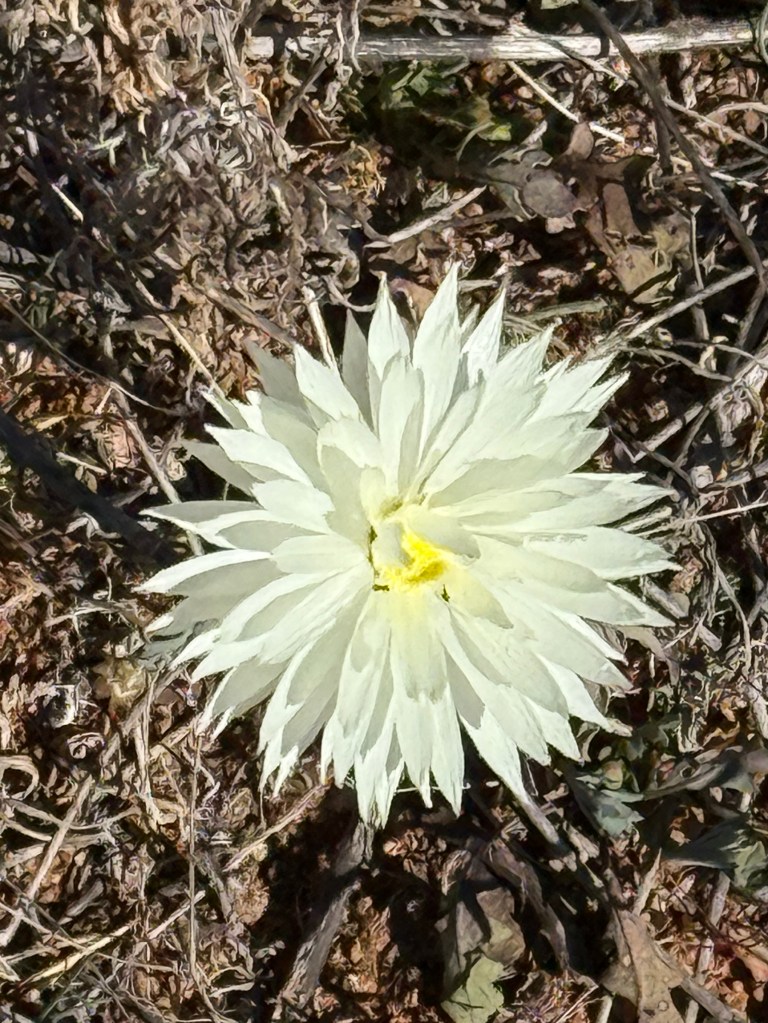
Before Mt Magnet we had our first wildflower sighting, some small patches of these ‘white balls’ beside the road. We haven’t seen any more since!
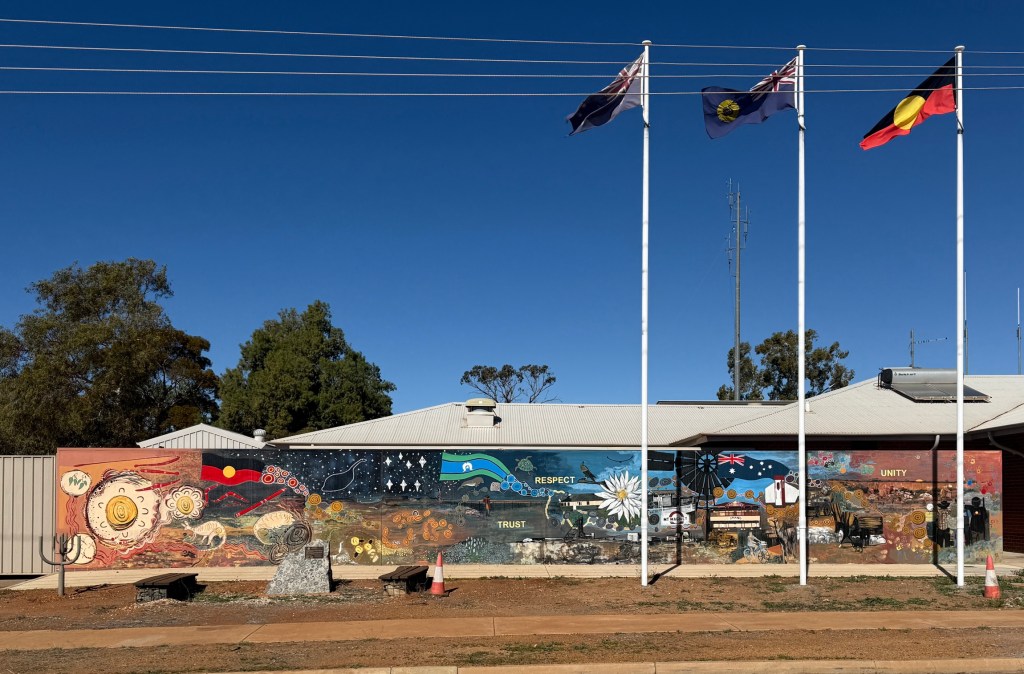
Mt Magnet also has one of those Reconciliation Murals, same sort of idea as in Mullewa, but beside the police station! Maybe too much detail in it for a blog pic. Looks good though!
The town of Cue is remembered as the ‘Queen of the Murchison‘ and in its hey day in the 19th century was a populous place with some magnificent sandstone buildings.
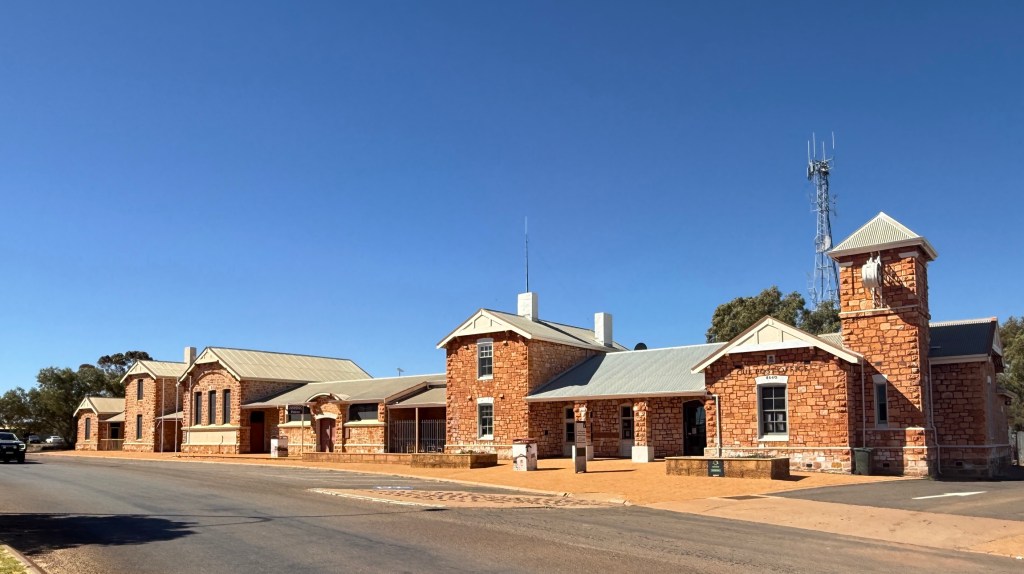
Still impressive today are the old government buildings which house the police station and some council activities.
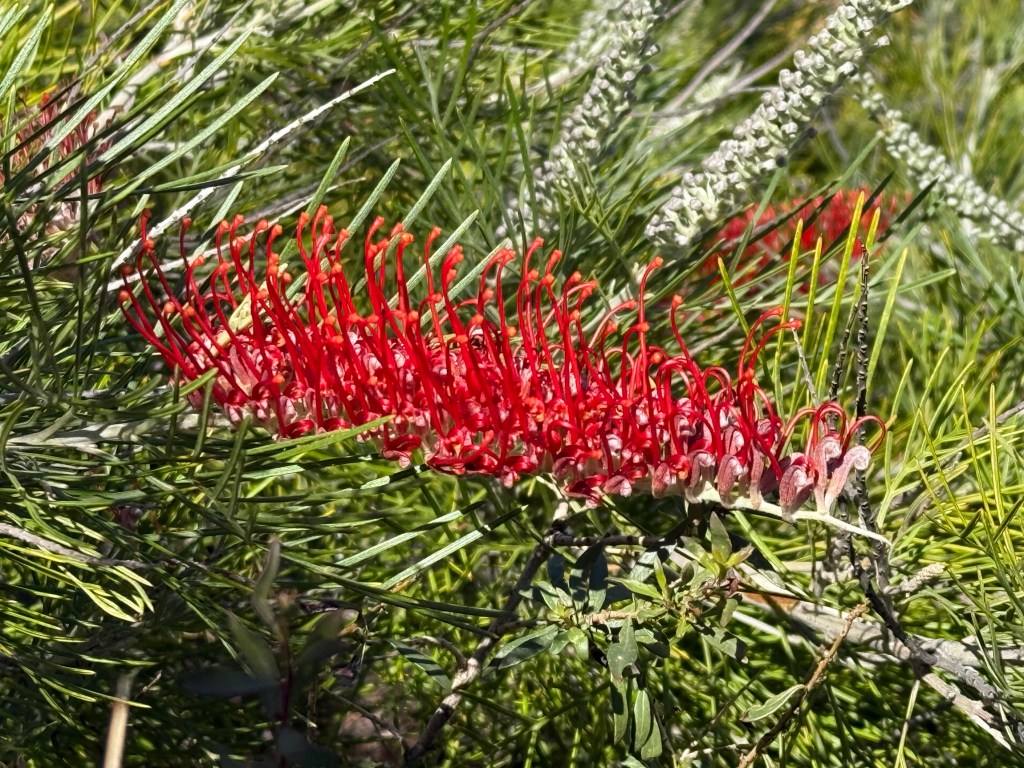
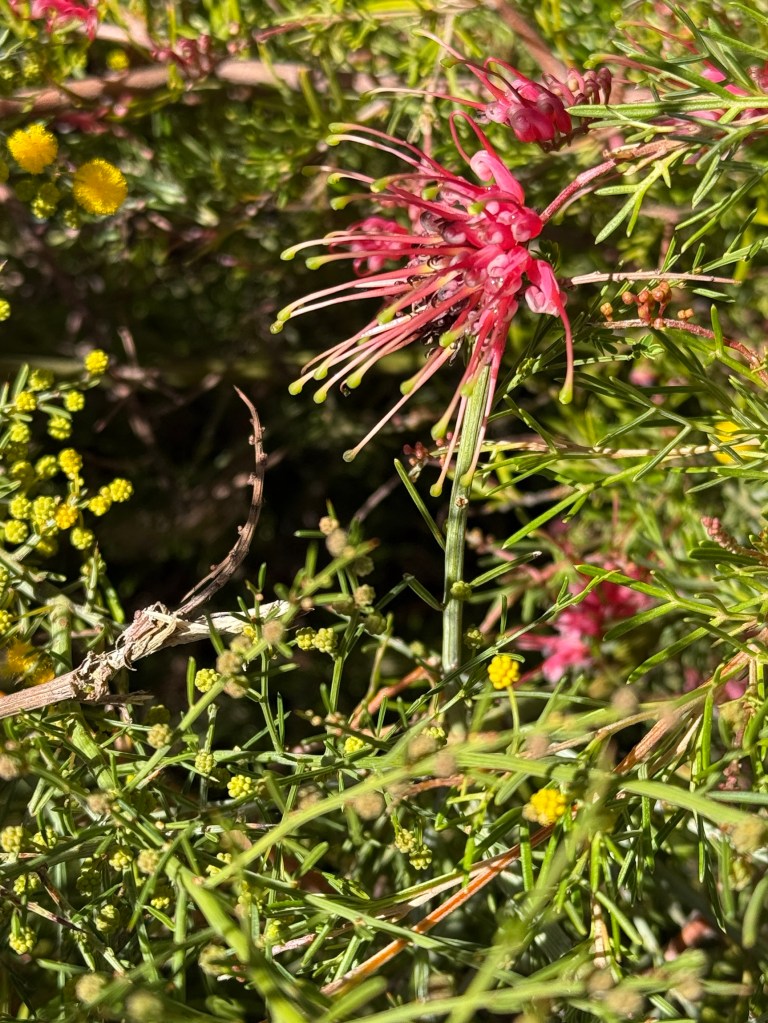
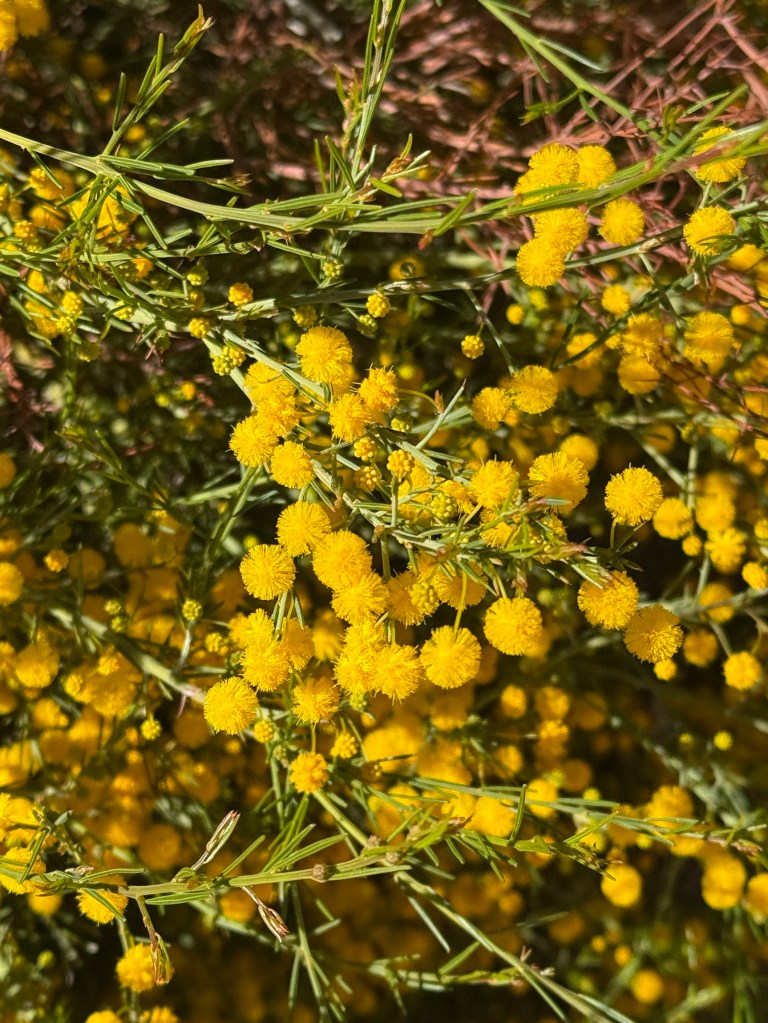
Some more flowers were found in the Cue park, this time some grevillea species and a yellow flower a bit like wattle (maybe it is!).
We have previously not been north of Cue so Meekatharra was to be a new experience. It is at the top of the north eastern gold fields. We spent one night here and were a little disappointed in the town. It was busy with present day enterprise being a business centre for the surrounding new mining activities.
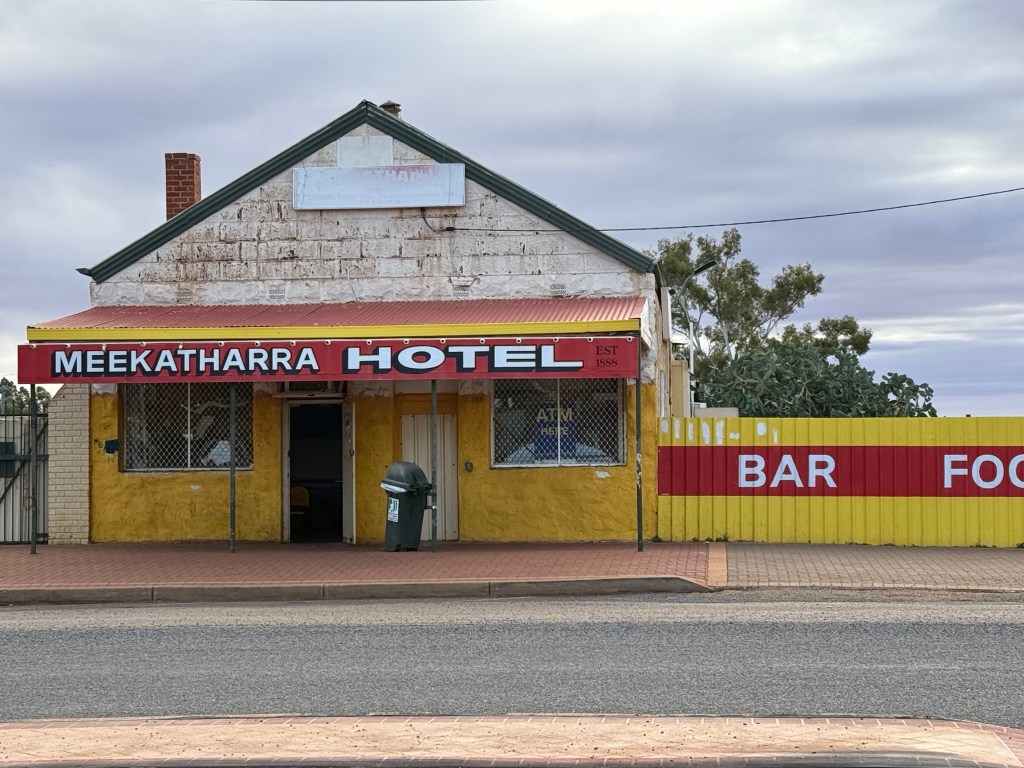
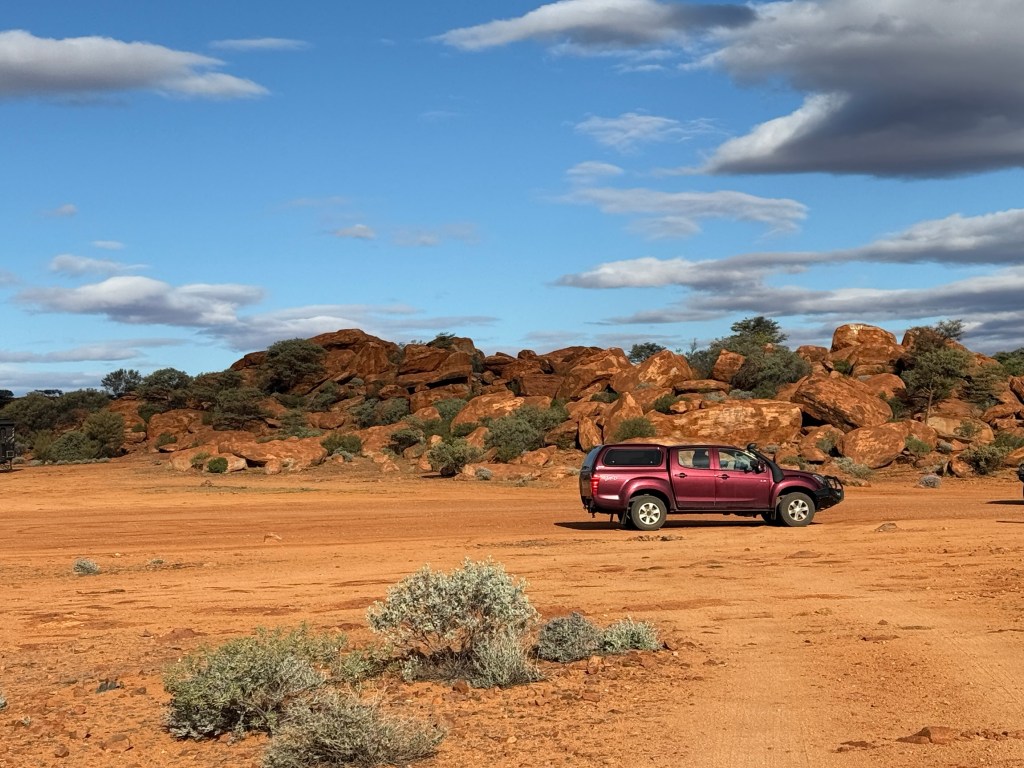
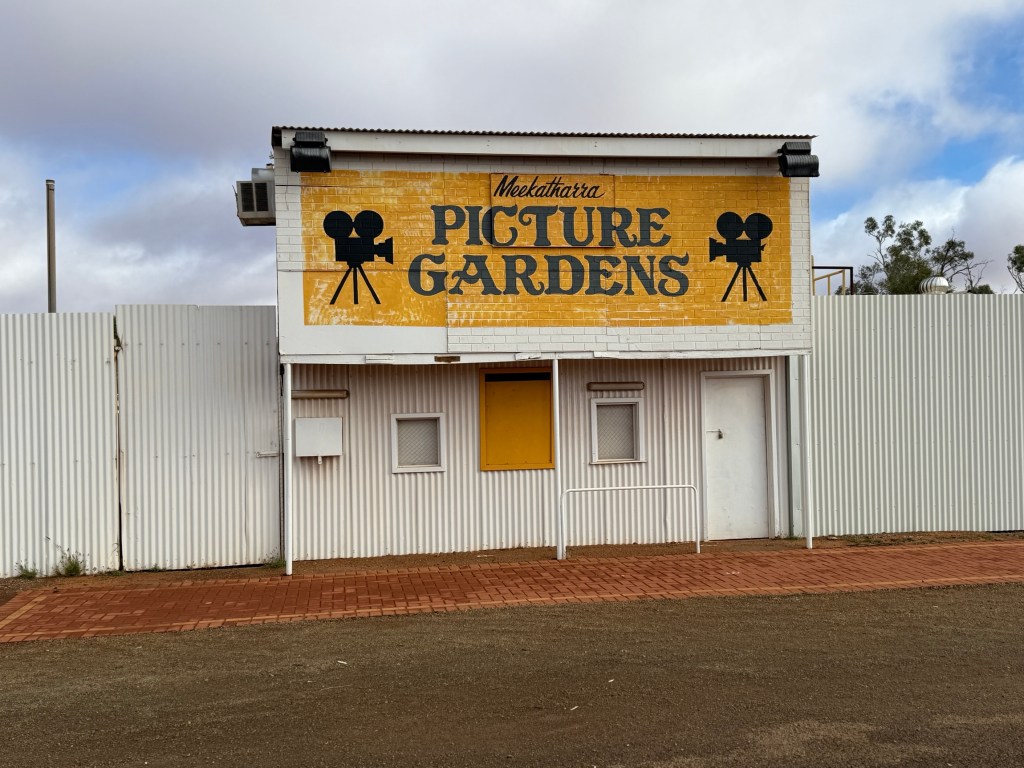
The town’s past seems to have passed! Peace Gorge (big free camping area) about 3km out of town and the lookout the main sights to take in.
From Meekatharra we went east to Wiluna on the Goldfields Hwy. The road was about 170 kms of good gravel interspersed with sealed sections (about 35%). The sealed bits were on sections that would suffer from flood conditions in the surrounding creeks.
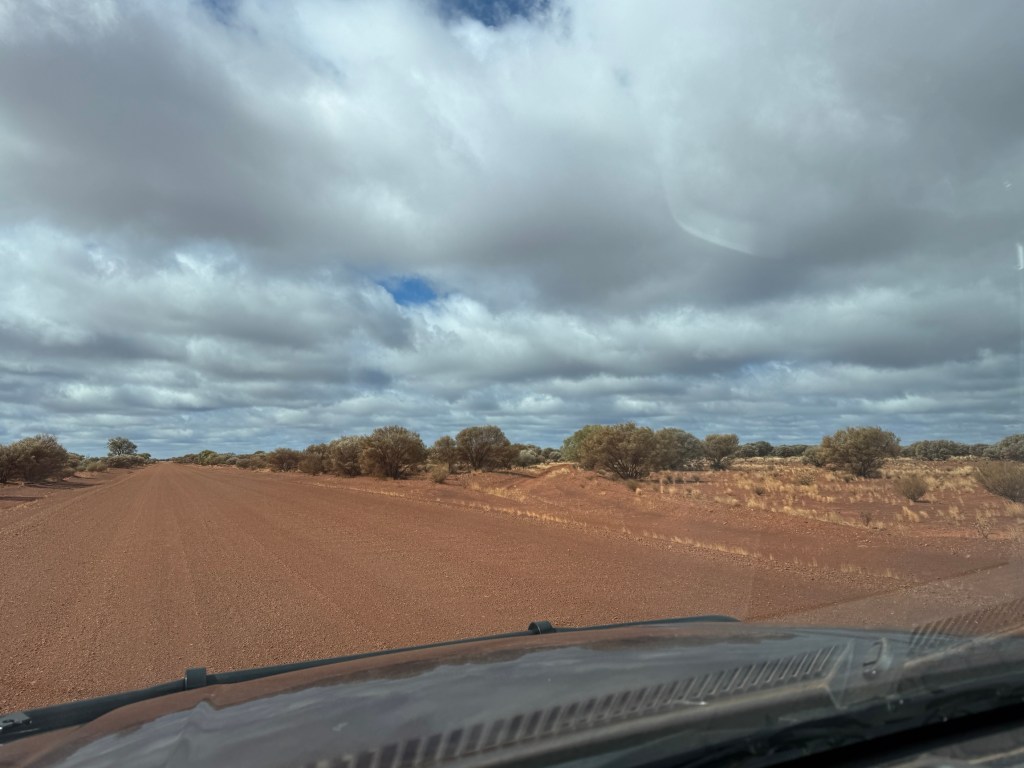
Wiluna is on the edge of ‘no where’ but once had over 10,000 people on the goldfields. Located on the edges of the Gibson and Great Victoria deserts. We stayed a night here in the Councils brand new CP. Excellent and probably the best yet facilities wise. The town has two small convenience stores, no hotel, a cafe that is occasionally open, a school, police of course, some indigenous art enterprises and the Information Centre. A bit to see!
Why come here? You could well ask. Allthego had three reasons for coming. The first two are to do with roads or tracks, to be more correct. Wiluna is the starting point or ending point depending on which way you are going of the Canning Stock Route and the Gunbarrel Hwy.
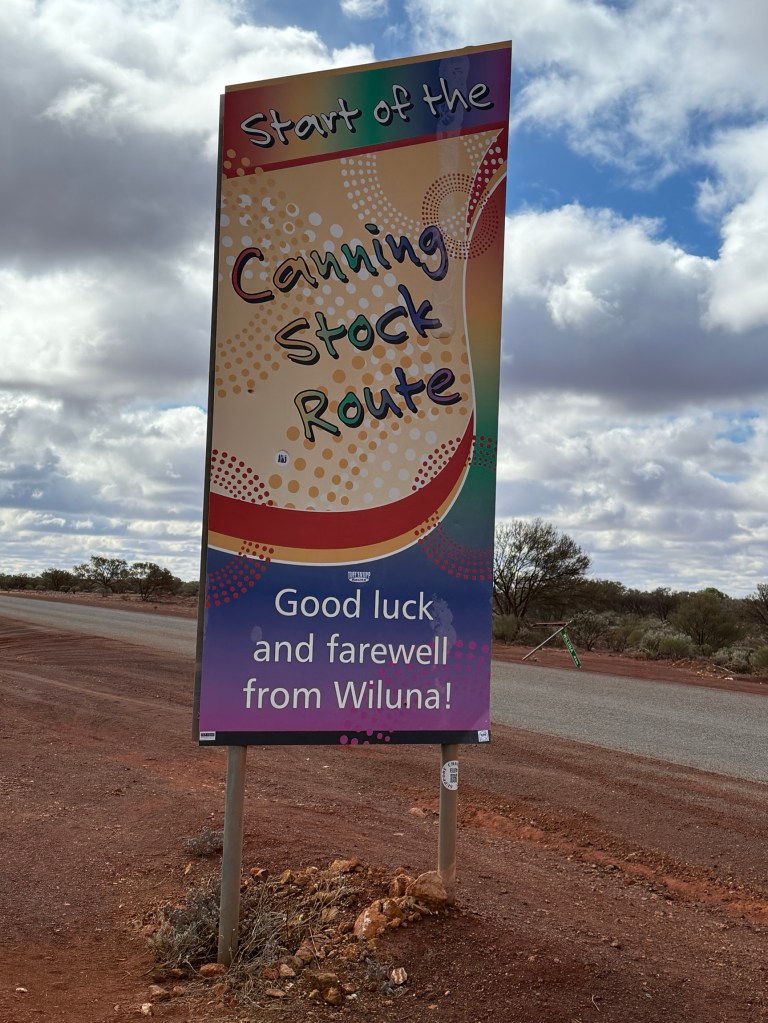
The stock route was developed in the 1906-11 period to move cattle from the Kimberleys, near Halls Creek, to southern markets. The last cattle drive was in 1959.
The Gunbarrel Hwy on the other hand was built as part of a road building project in Central Australia in the mid 1950s early 60s. It runs from Wiluna to Alice Springs. Len Beadell was the main contractor for the road projects and he endeavoured to build this track as ‘straight as a gun barrel’.
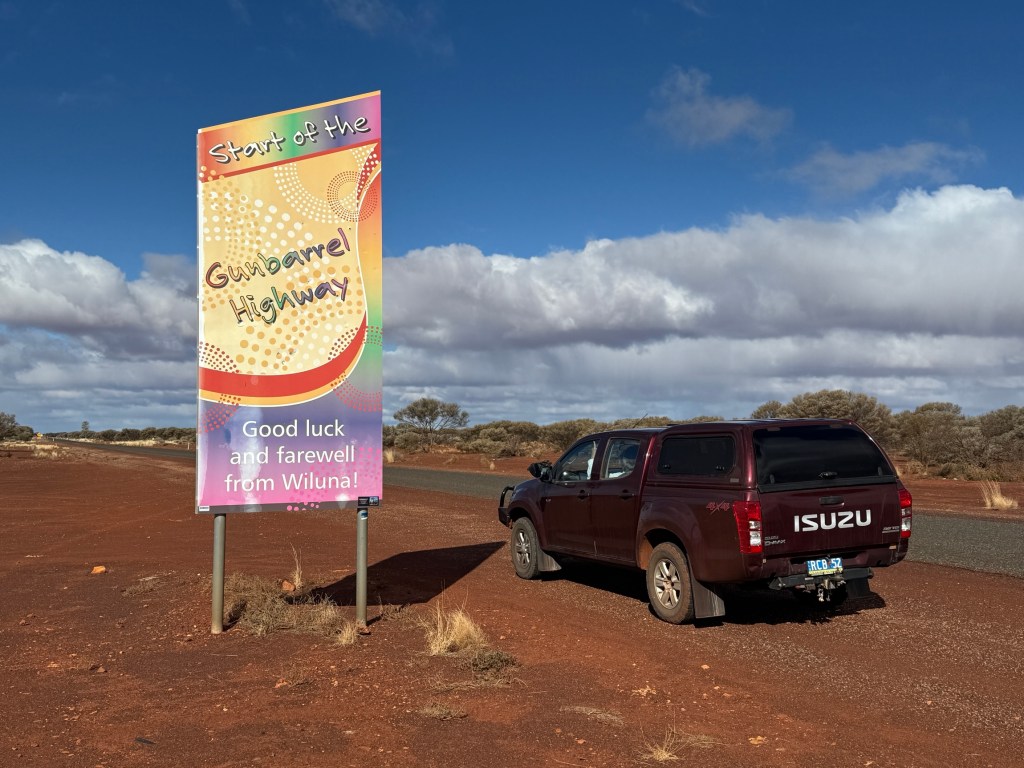
Today, both tracks are for the super 4WD enthusiast with numerous challenges. Allthego and Homealone are unlikely to take them on! But it is good to see them, at least their new sealed starting points!
On the outskirts of Wiluna there are memorial statues of two quite famous desert aboriginals. Warri and Yatungka. The story of their solitary life together in the Gibson Desert, living in tribal exile from the mid 1930s to 1977, made world wide headlines. They came in out of the desert to live in Wiluna following much searching by their tribal folk.
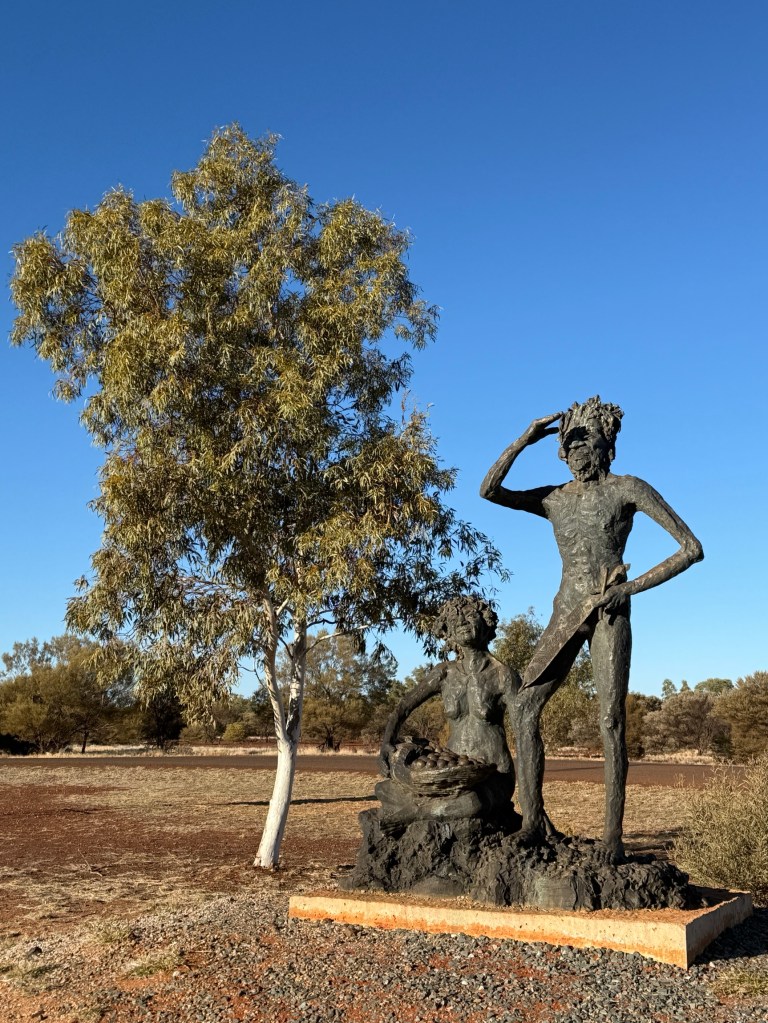
Sadly, the old couple both died just two years later within a few weeks of each other. They are believed to have been the last of the desert nomads leading a traditional lifestyle that had stretched back 40,000 years.
The statues are a fitting monument to them and their life. Something I don’t think I will forget!
We have now moved on from Wiluna down the Goldfields Hwy and are set up in the caravan park at Menzies about 130km north of Kalgoorlie.

We have been in this old gold mining town before, looks about the same except the last pub has closed due to building problems…..it is over 100 years old. Nevertheless, the publican operates for a few hours in the evening from a beer garden set up with food from a food truck parked in the garden. That is enterprise for you. The magnificent old stone Town Hall and clock still stands on the main street as a reminder of a more golden past.
We set off south in the morning for our next stopover at Norseman before hitting the Nullarbor. The blog is now in real time.
Carnarvon
Carnarvon is the most southern point along the coast that we have reached on this trip. It is located just to the north of Shark Bay where we made it to from the south in 2016, nine years ago! Seems like yesterday.
Carnarvon is also the geographical point along the coast where agriculture starts to replace cattle grazing as the main economic activity. To the north of the town along the dry Gascoyne River is quite a maze of plantations. Bananas, mangos, avocados and all sorts of vegetables are grown. There is a food trail which we drove around with a number of road side stalls and farm shops selling ‘overpriced cut priced’ produce. Got to make a buck. But the foodstuff is fresh and the preserves have interesting flavours and combinations. All tempting.
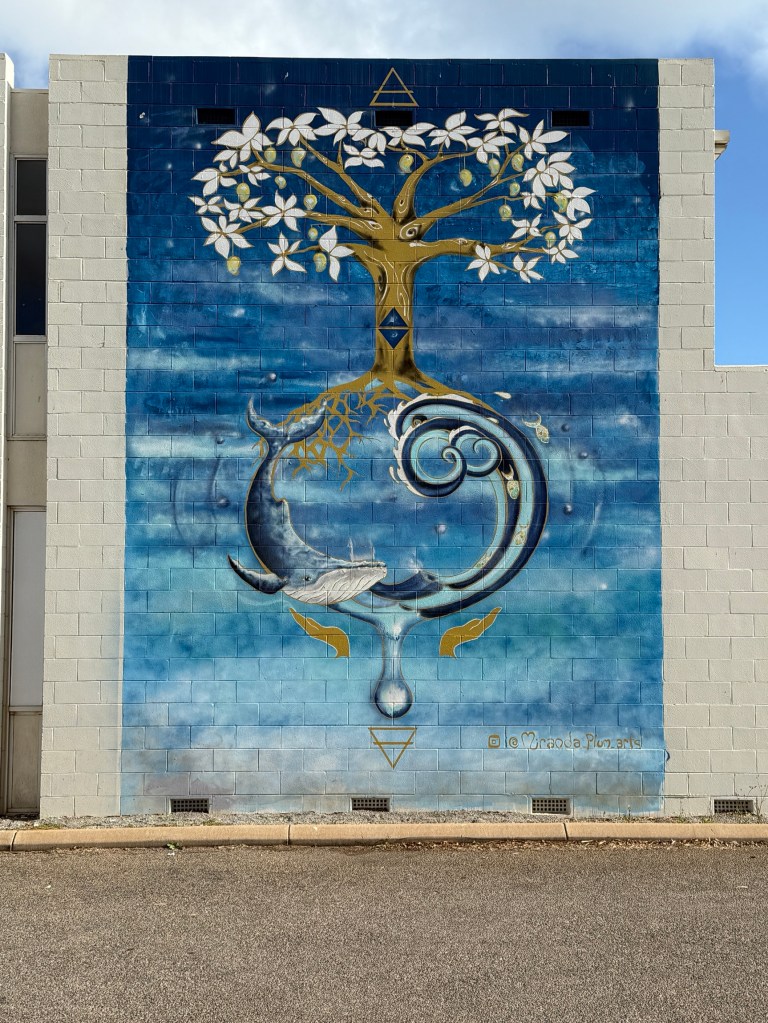
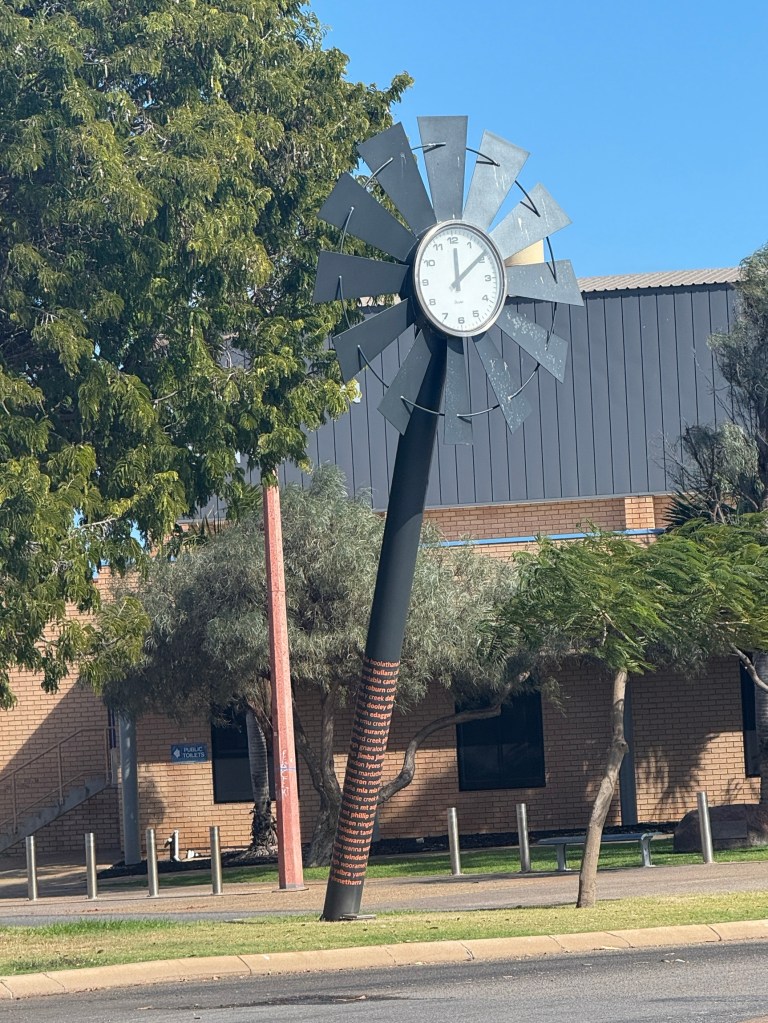
At the other end of town is the mouth of the Gascoyne River and the Indian Ocean, the dry bit stops and water flows to the sea. Must be very sea water influenced at this dry time of year.
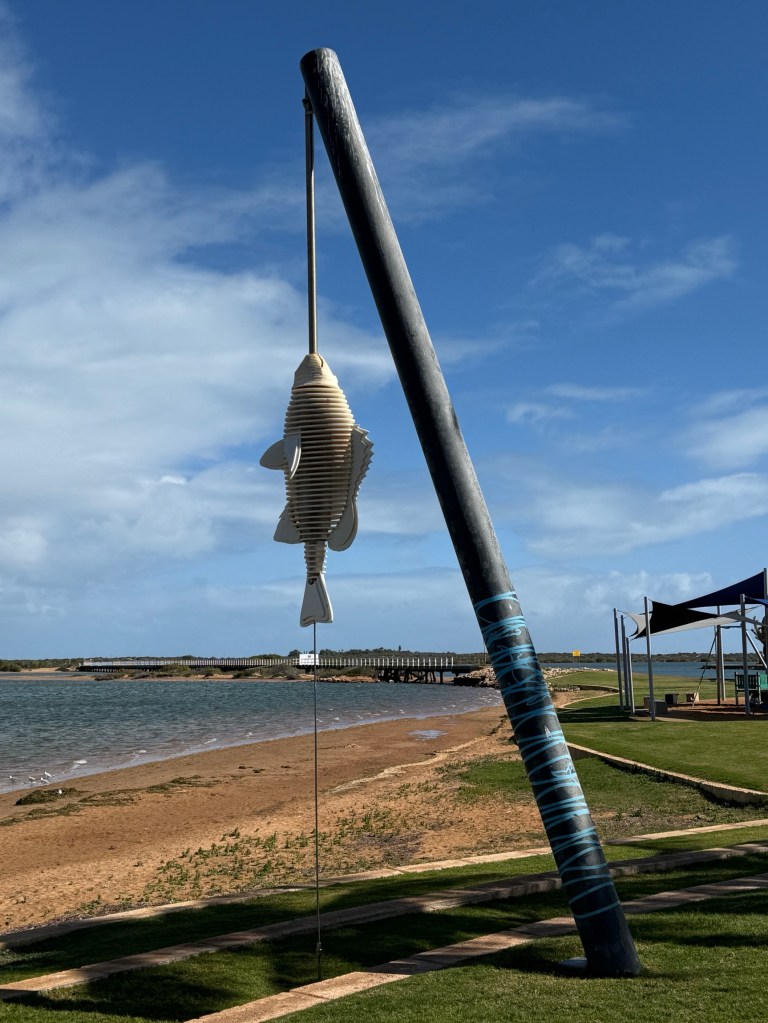
It was a little breezy and chilly and there were not many people around. There are monuments to HMAS Sydney II and HSK Kormoran along the foreshore, the Australian and German ships that fought a sea battle off the coast here in WWII. All of the Sydney’s crew perished and many of the German ship’s crew managed to get ashore and ended up being detained in prisoner of war camps.
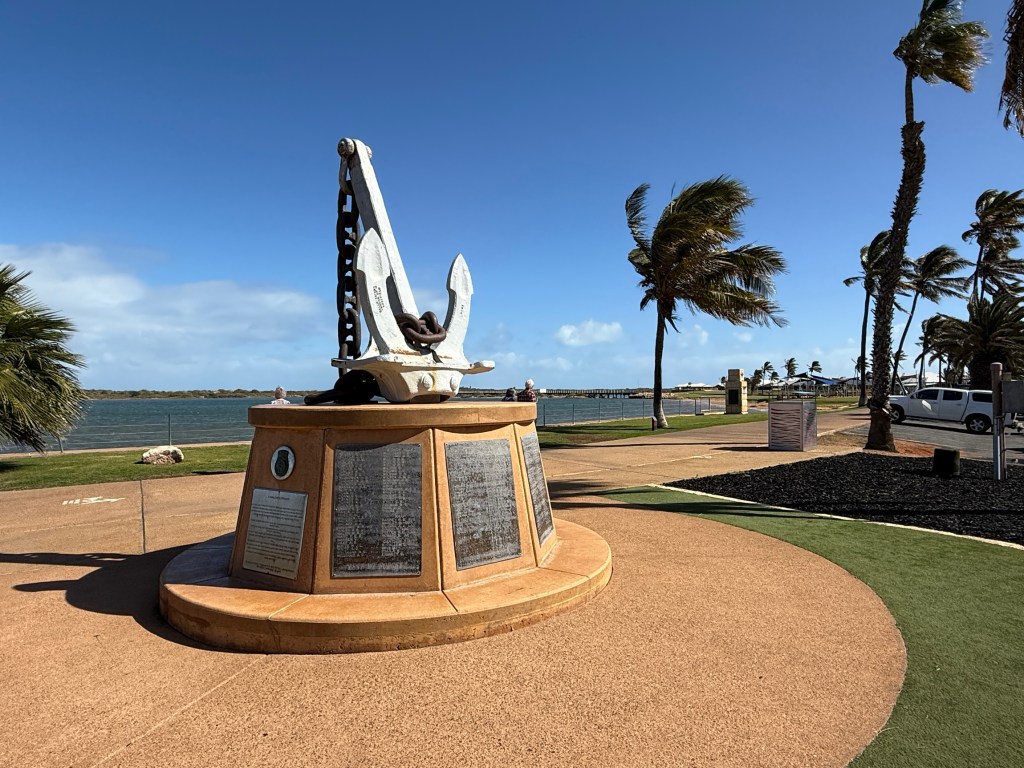
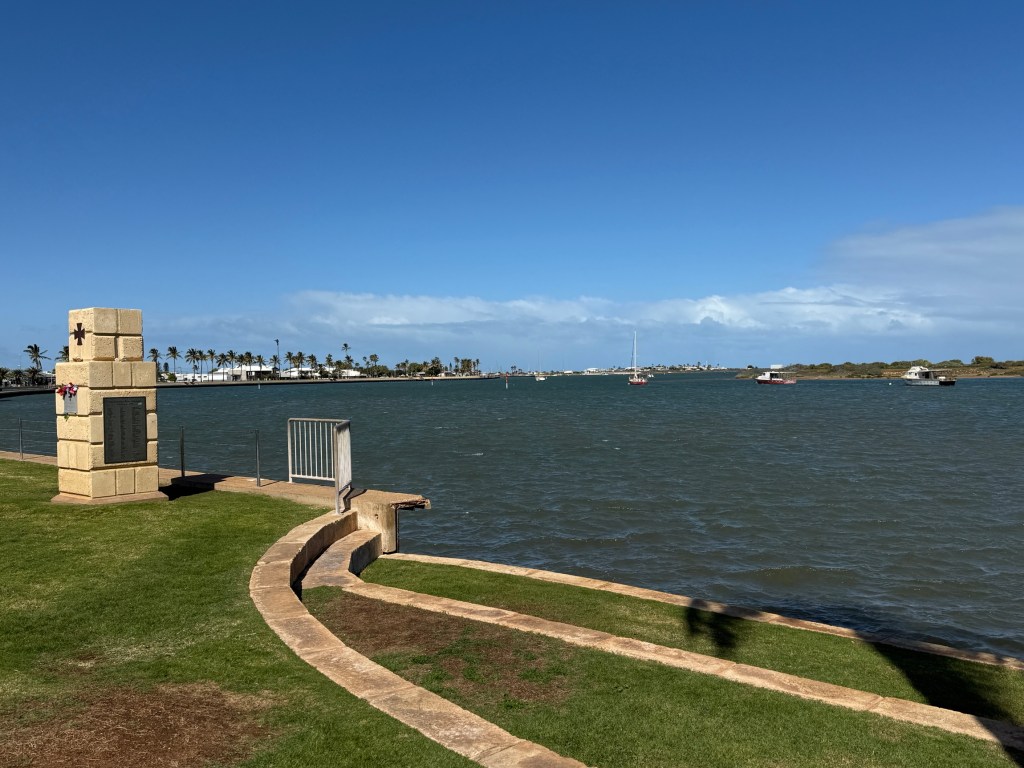
The remains of the two ships were found in 2008 in deep water off Dirk Hartog Island at Shark Bay. There is also a big monument in Geraldton commemorating the battle.
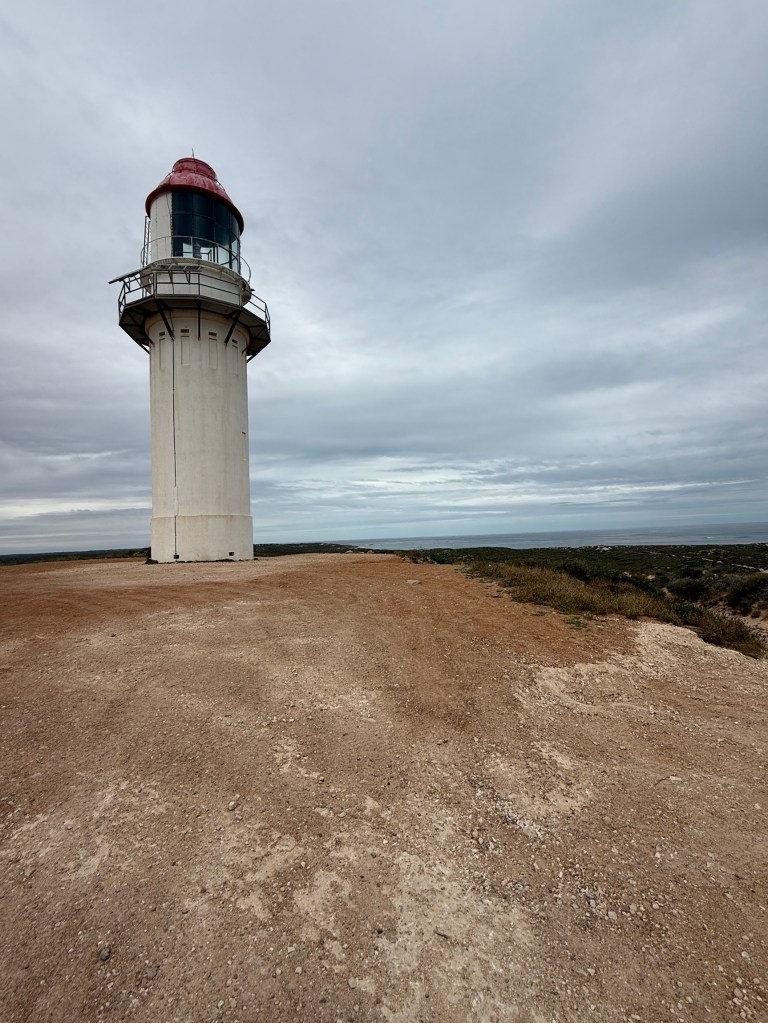
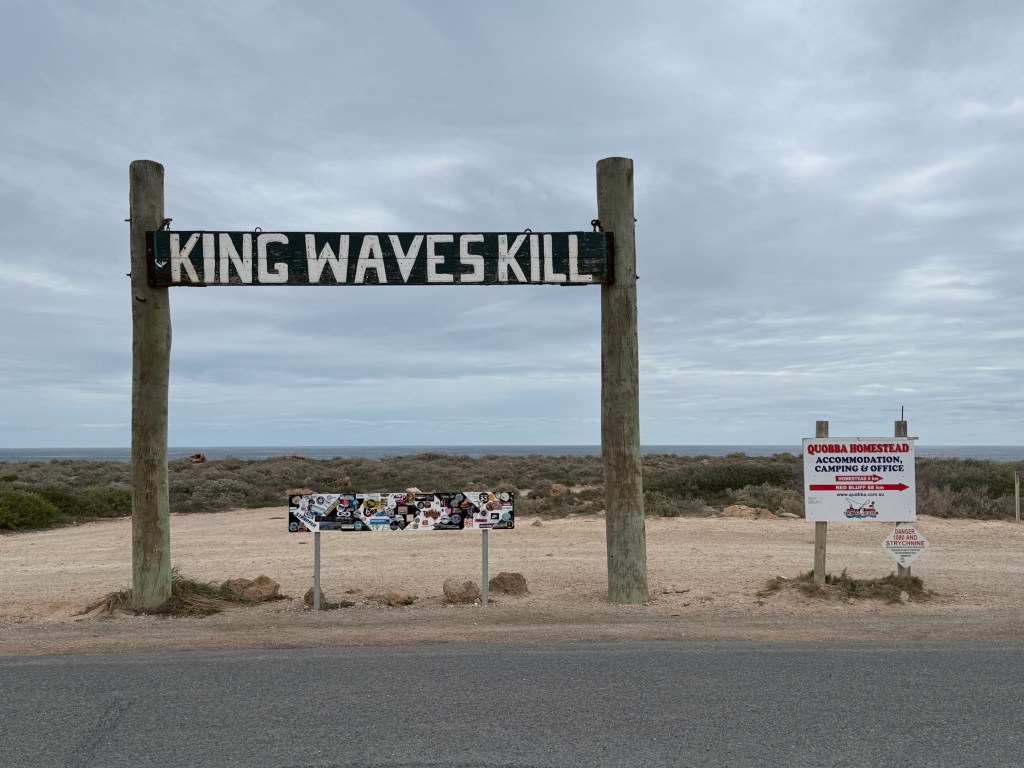
About 50km north of Carnarvon is Quobba Point. Famous for its rugged coastline and blowholes. We made a morning visit to catch the wave action.
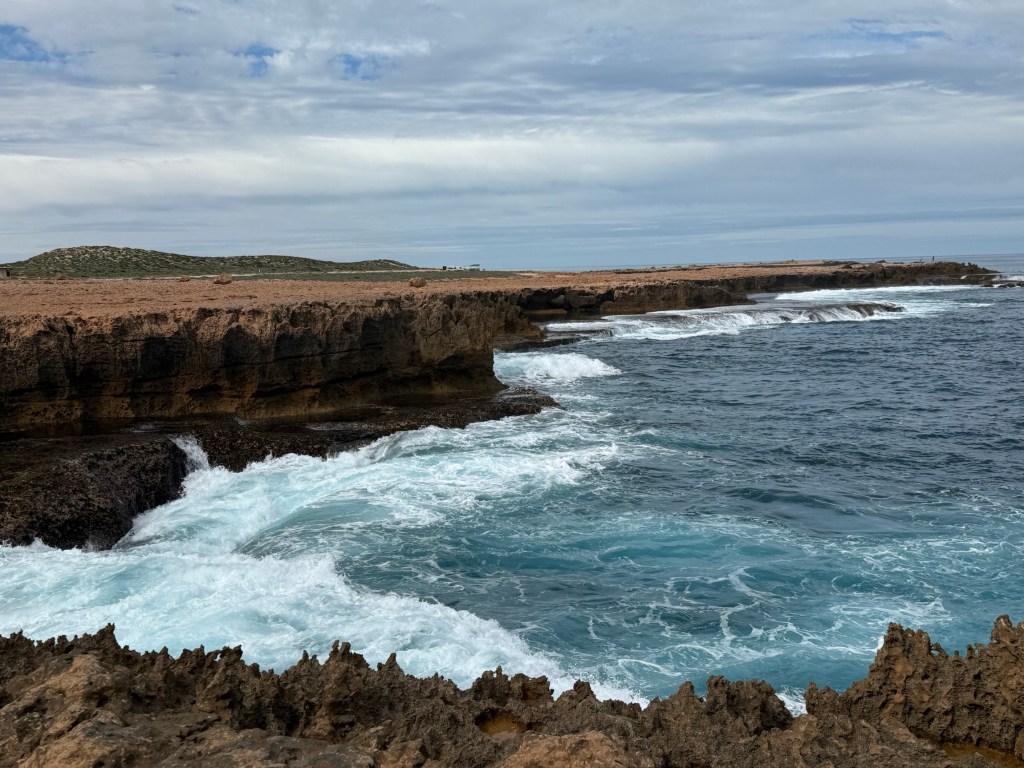
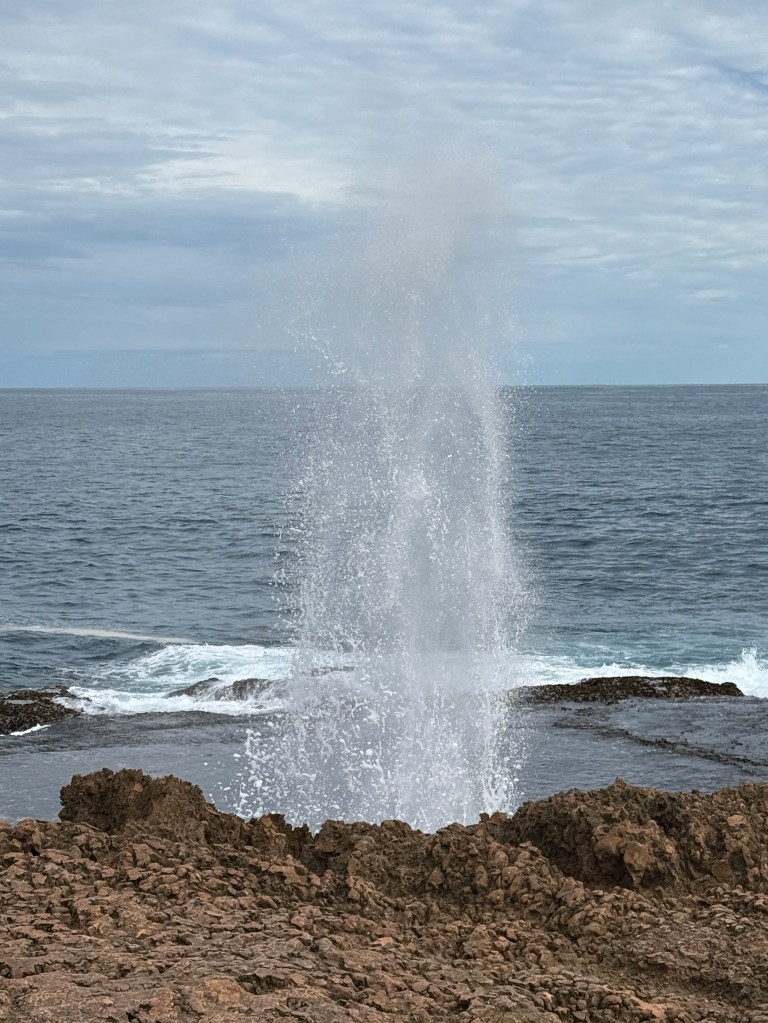
We were also rewarded with a number of whales passing close in putting on a spectacle for the onlookers, sound effects included.

Carnarvon used to have a tourist tram that re enacted the route of a freight train that ran from the town, across an island and then a kilometre out to sea on a jetty to load ships (in the 1800s/1900s). Due to cyclone damage and age it has been closed for safety reasons. Proposals are afoot to restore the jetty and the tram. Tourism people are very keen, it also links the historical part of Carnarvon at the jetty to the town. There used to be a large whaling station there and a lighthouse.
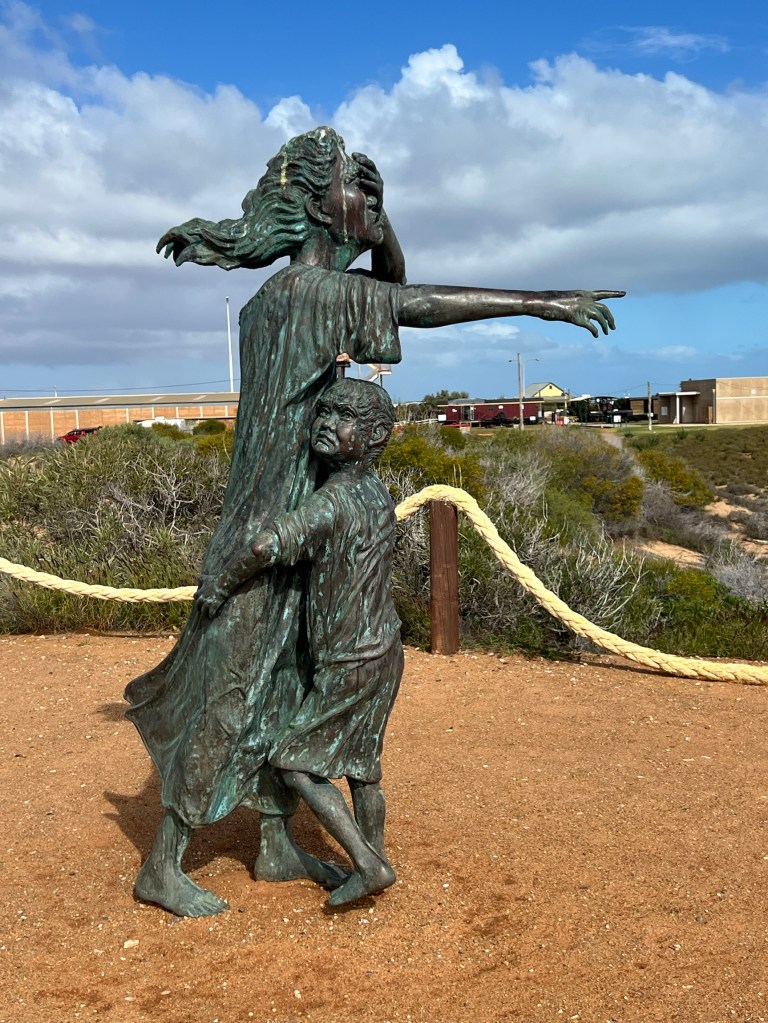
The area was also the spot where for about 12 years up to 1918 indigenous people from all around WA, suffering from diseases like leprosy, were transported to remote islands off Shark Bay. Many had never seen the sea before and died en route or on the islands.There is a bronze statue reflecting the separation from family and the pain of those being transported.
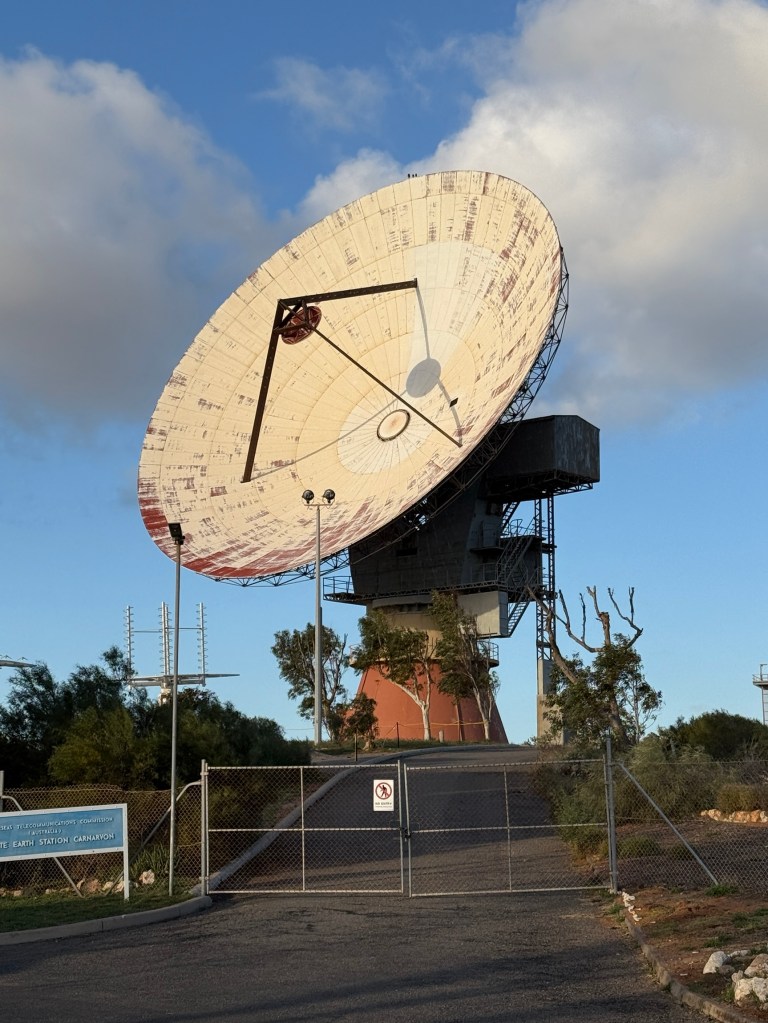
The town is also the site of a former satellite communications base for what is now Telstra. There is a big dish here and other memorabilia of space exploration and the role played by the equipment. It was used to track Apollo 11 on the first moon landing. Now all decommissioned but preserved in a museum.
From Carnarvon we begin the trek back to Brisbane, travelling down towards Geraldton and then turning east to Mullewa in wildflower country. We hope to see a few but are very early in the season.
Ningaloo
We have come to the Ningaloo coast to check out what all the fuss is about with whale sharks and the world famous reef.
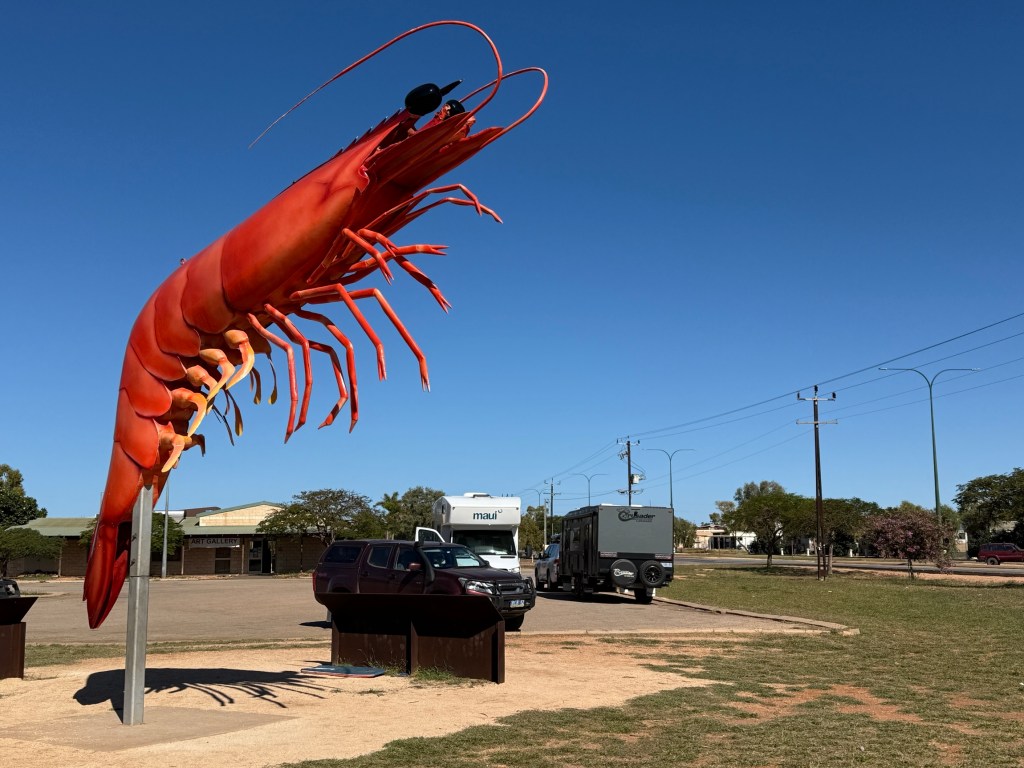
The Ningaloo coral reef is a fringing reef that stretches from north of Exmouth down the coast to near Carnarvon, about 260km. It is never more than 12 kms off the coast and in many places comes close to the shoreline. You can look out from the beach and see waves breaking on the reef out to sea.
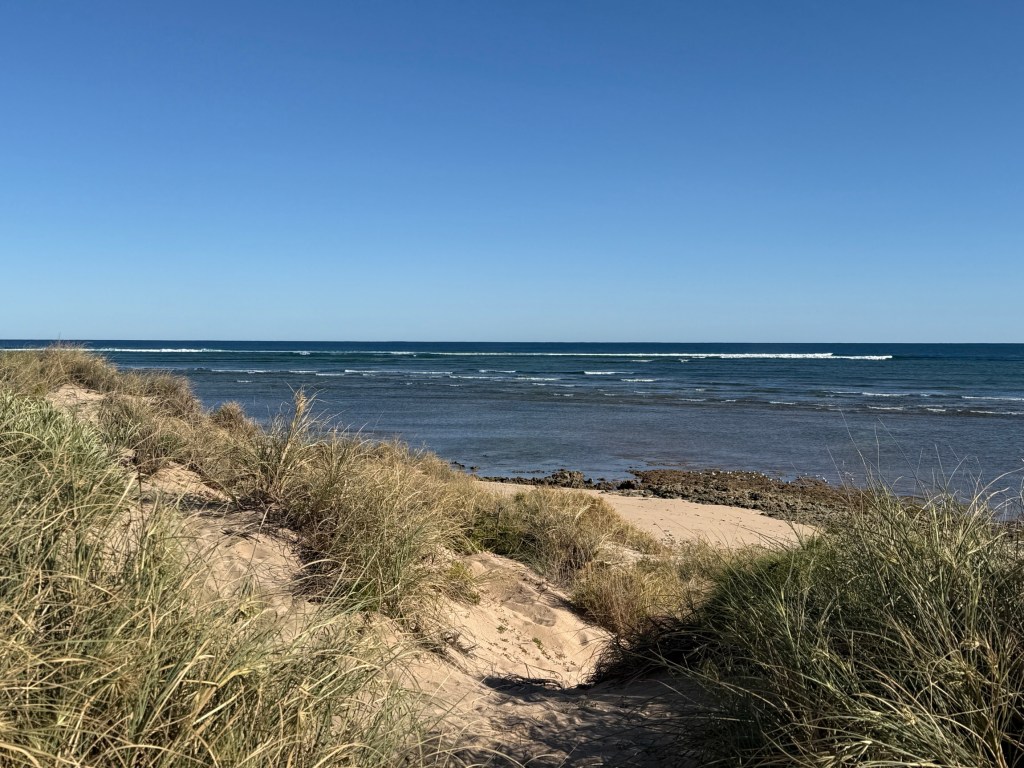
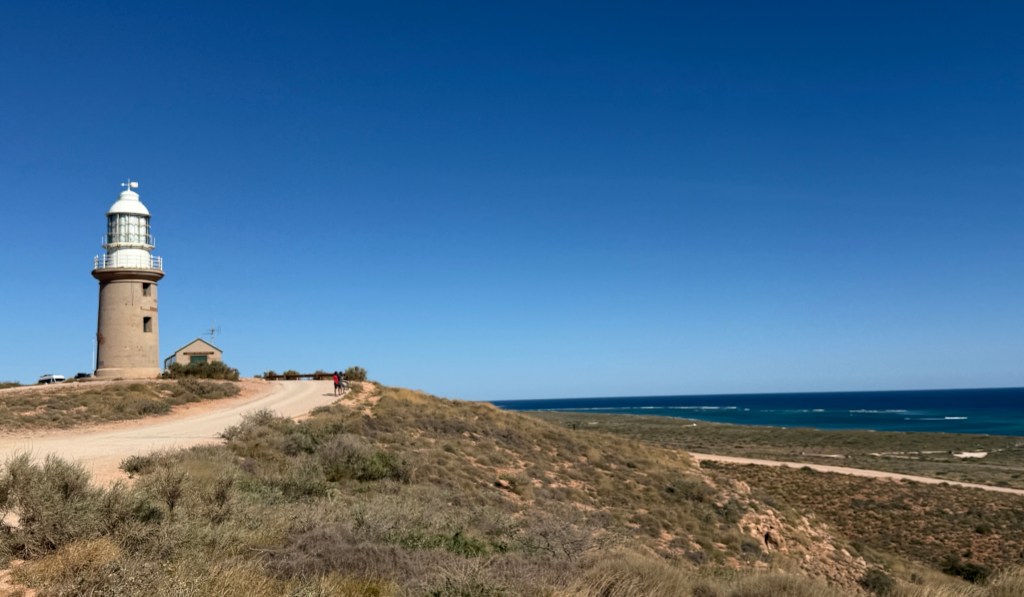
The reef is different from the Great Barrier Reef on the east coast. As its name suggests it is a barrier reef that is from about 16 to 160kms off the coast and stretches from Cape York down to near Bundaberg, about 2,300km. Both reefs are World Heritage Areas.
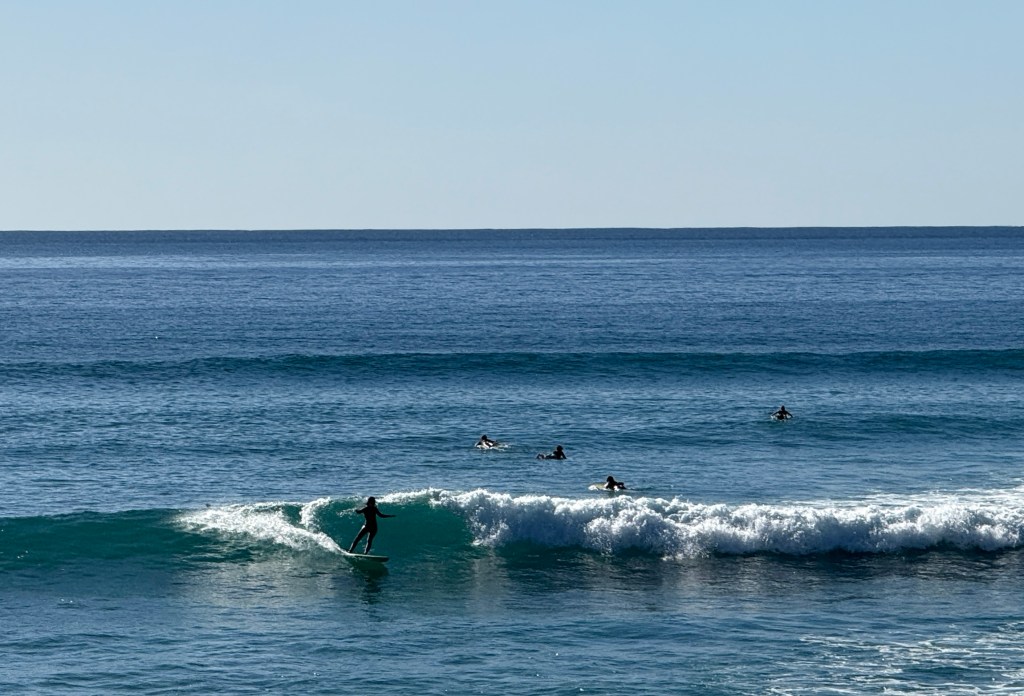
Exmouth is a curious place. It had its origins during WWII, when it served as a submarine base for the United States. Sorties were launched from here into South East Asia, including some Australian chaps in a small boat who blew up some Japanese ships in Singapore Harbour.
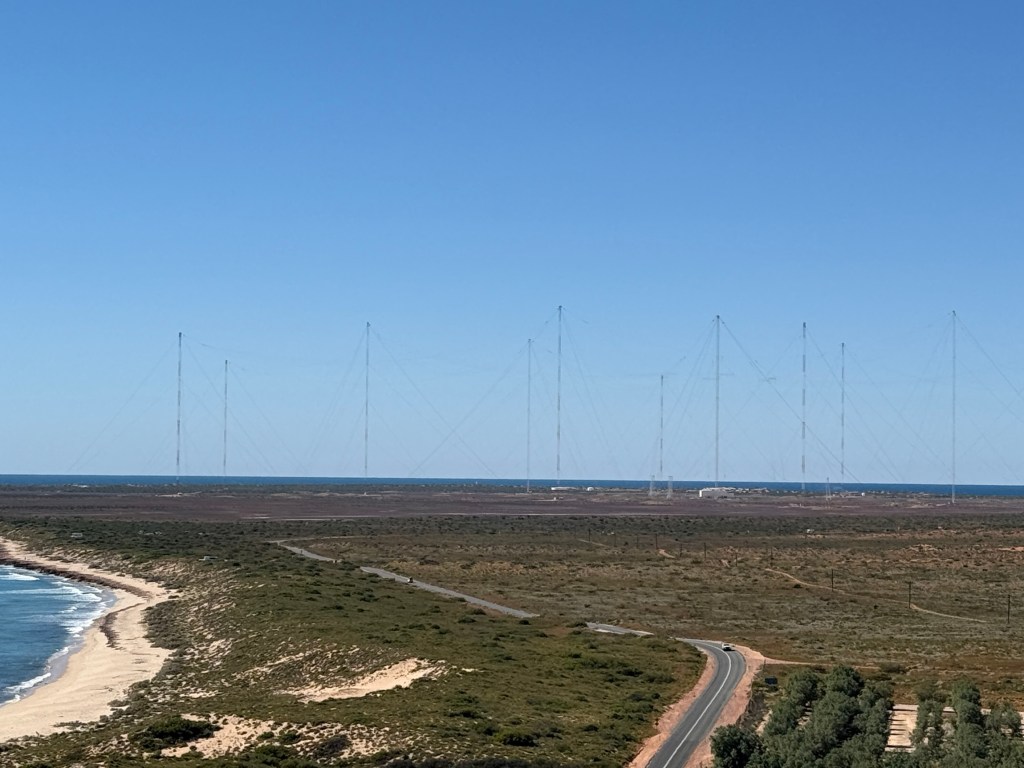
In the 1950s the Americans set up a naval communications base here that was pretty secretive. There are 13 big towers with wires hanging off them that communicate with American subs in the Pacific and Indian Oceans. It was so secretive that even the Australian PM was very vague as to what went on. Allthego remembers a bit of all this when he was at Uni, protests and the like by unions, students and professional rabble rousers etc. Sometime later Bob Hawke (or was it Gough Whitlam?) I think rationalised things and took over the place politely asking the Americans to go somewhere else. They are probably still there in some form keeping an eye on things. Any way when they left town we were told the population dropped to about 400 from 2,000.
They didn’t have a lot to do!

But then something generally comes along to pick up the pieces. This time it was a big blue thing with lots of white spots. Of course whale sharks had been here all along. They were ‘discovered’ along with the reef and all its sea life, and today we have a tourist mecca! The population has grown back to around 2,700 and is busy servicing the tourists and relieving them of their cash.

People come from all over the world to swim with these gentle plankton eating giants of normally about 4-8 metres in length. By the way they are not sharks but fish.
Allthego had hoped to get a chance for a swim, but School Holidays again got in the way. All booked out. The swim involves a day trip in a boat that is assisted by a whale shark spotter plane. The whale sharks cruise along near the surface and when spotted the boat finds it and all (two groups of 10) get in the water and snorkel along beside the creature, it moves slowly.
Allthego had one chance when a vacancy arose but while going through an inquisition as to his physical fitness, swimming ability etc the place was taken by someone else. In retrospect missing out may have been a bit lucky, keeping up with the all the twenty somethings and the shark might have been interesting!
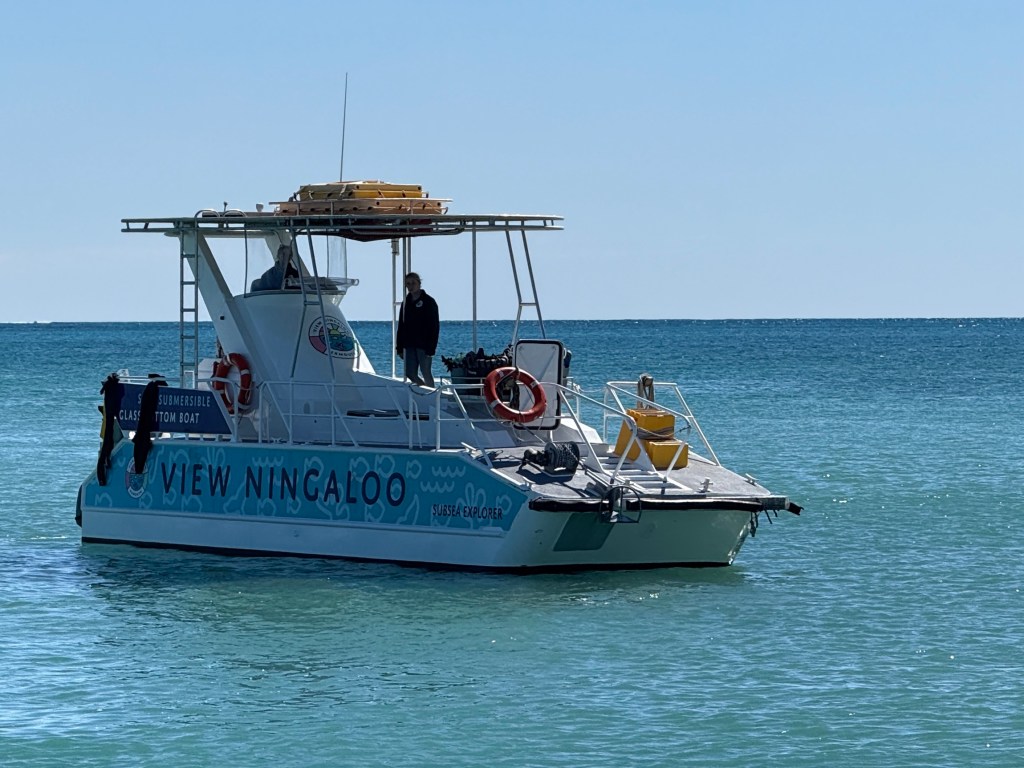
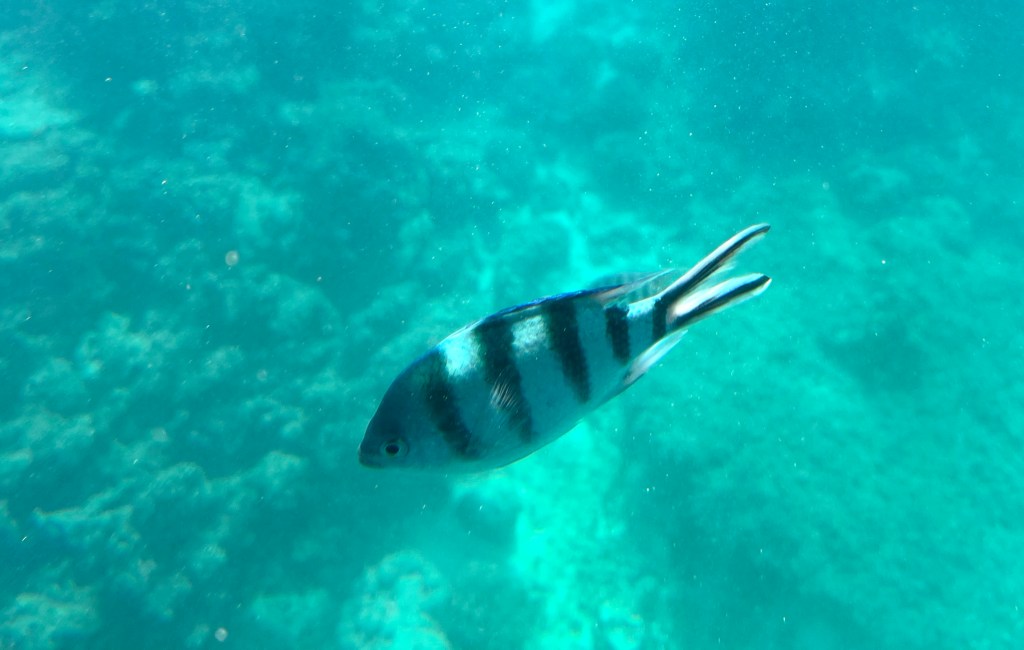
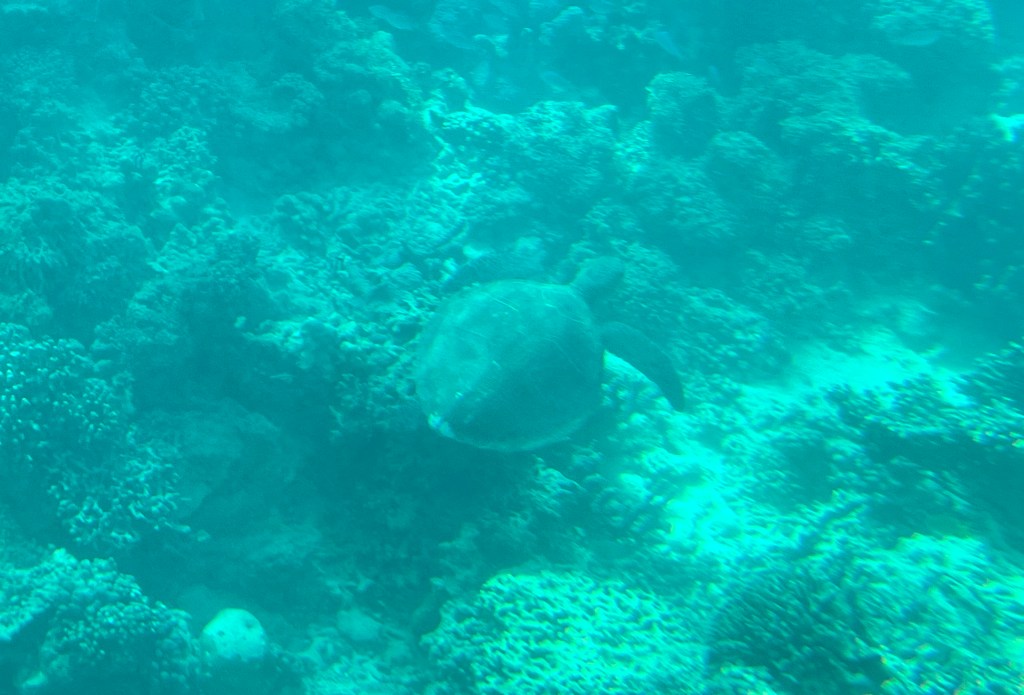
So we settled for something more sedate, a semi submersible boat that we sat in below the waterline and observed the reef and life below the surface. Numerous coloured fish of various sizes and several turtles among the coral structures swam past during the afternoon.
Allthego was able to get off for a snorkel around and managed to get back on the boat.
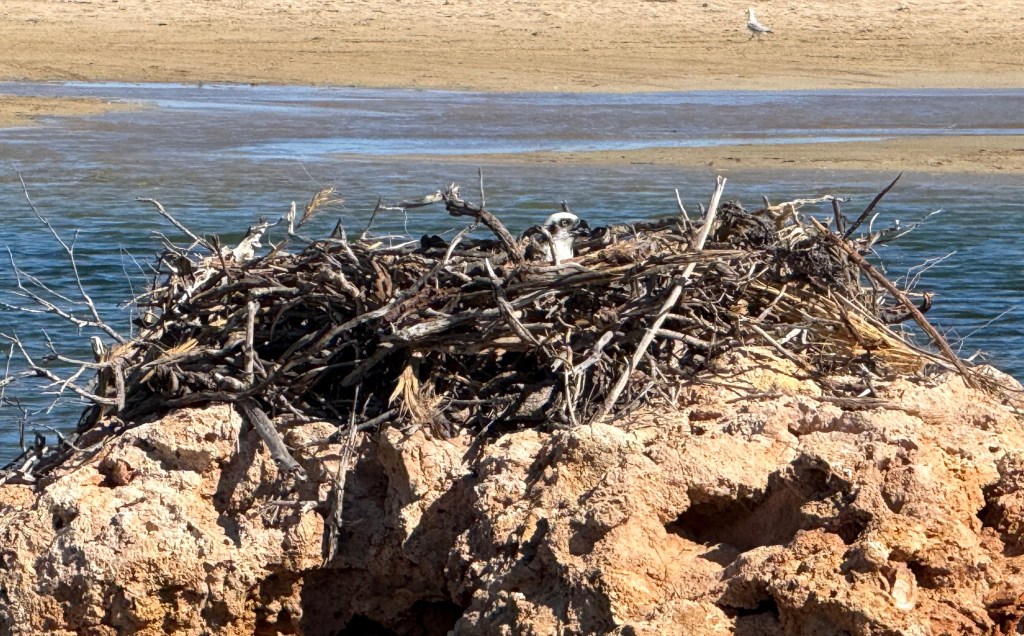
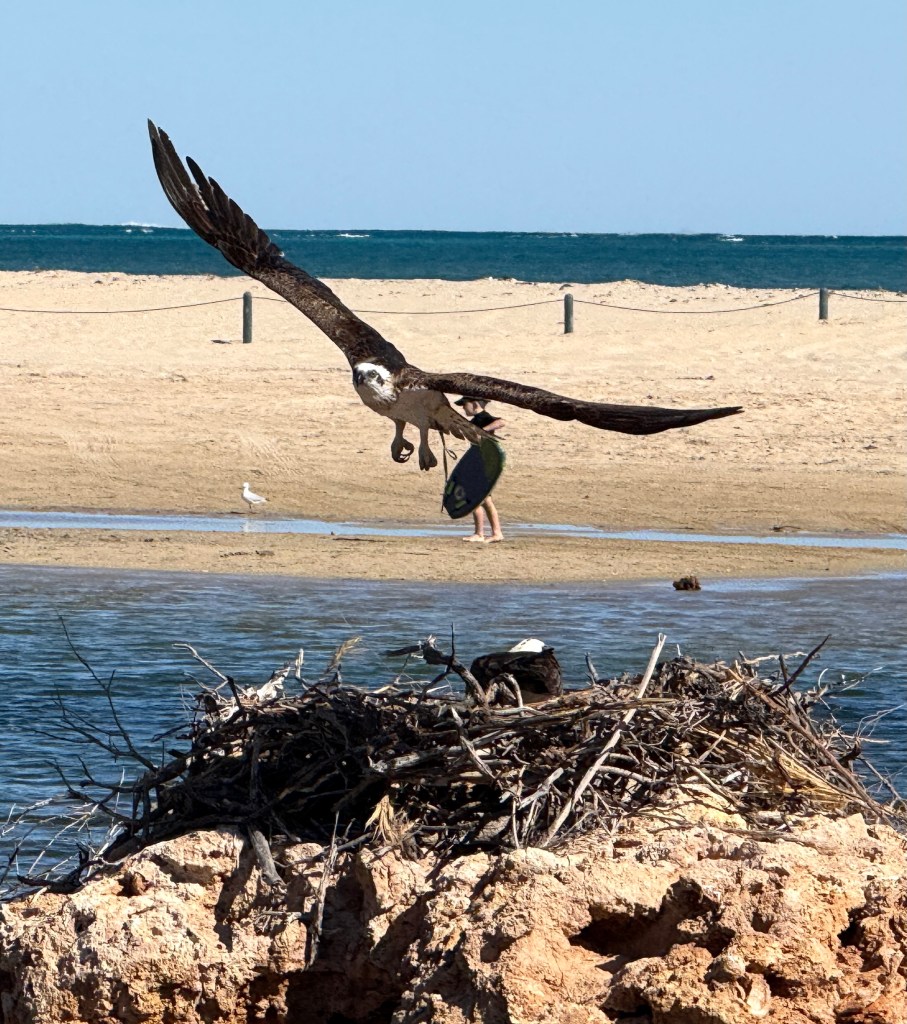
Our other excursion was a short boat cruise up Yardi Creek. The Creek is a short water course into the landscape behind the coast.
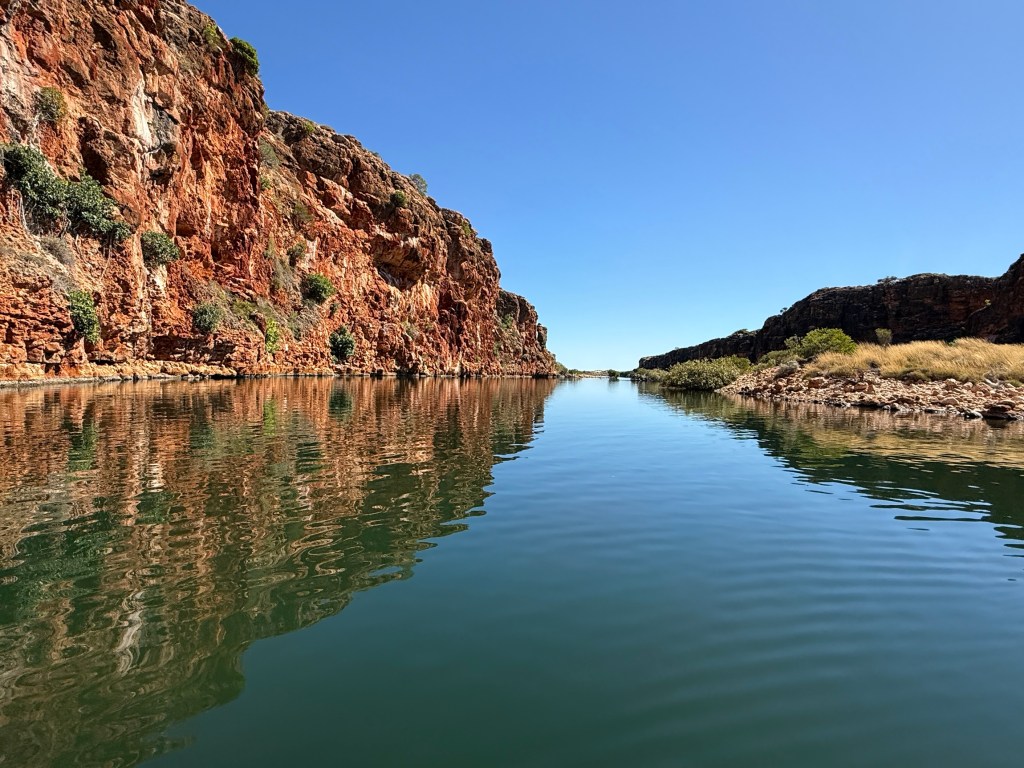
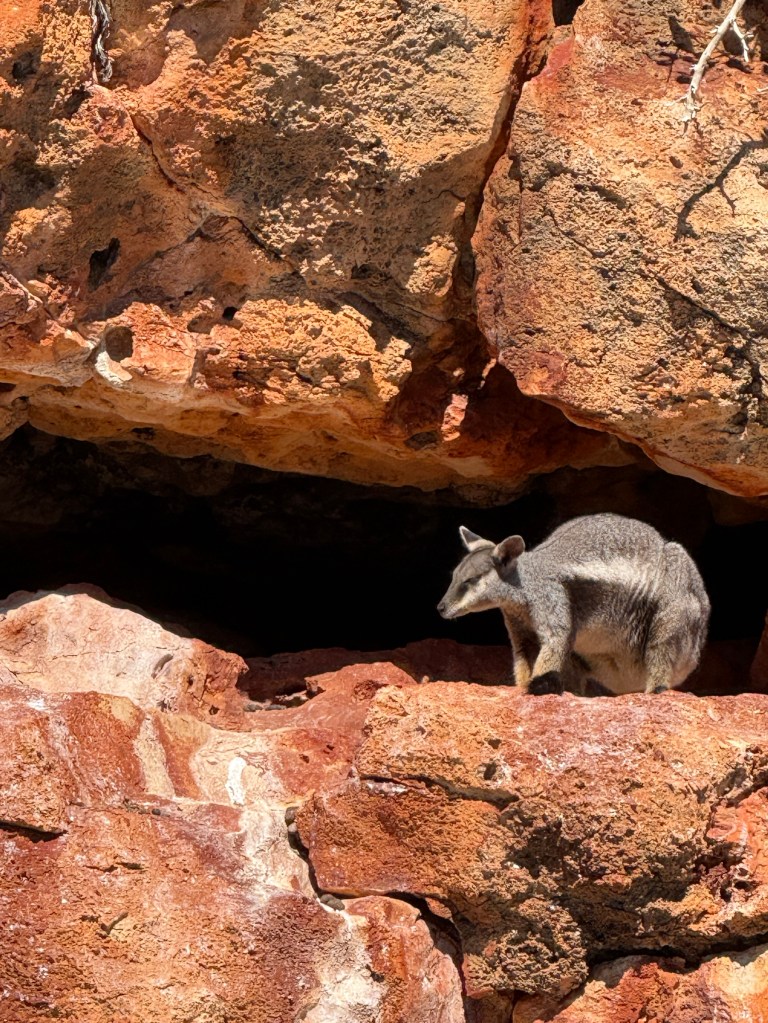
It’s a mini gorge with colourful cliffs and a large population of rock wallabies that somehow cling to the vertical rock faces while moving around into caves and crevices. Quite a few resident fish and birdlife as well. An enjoyable jaunt.
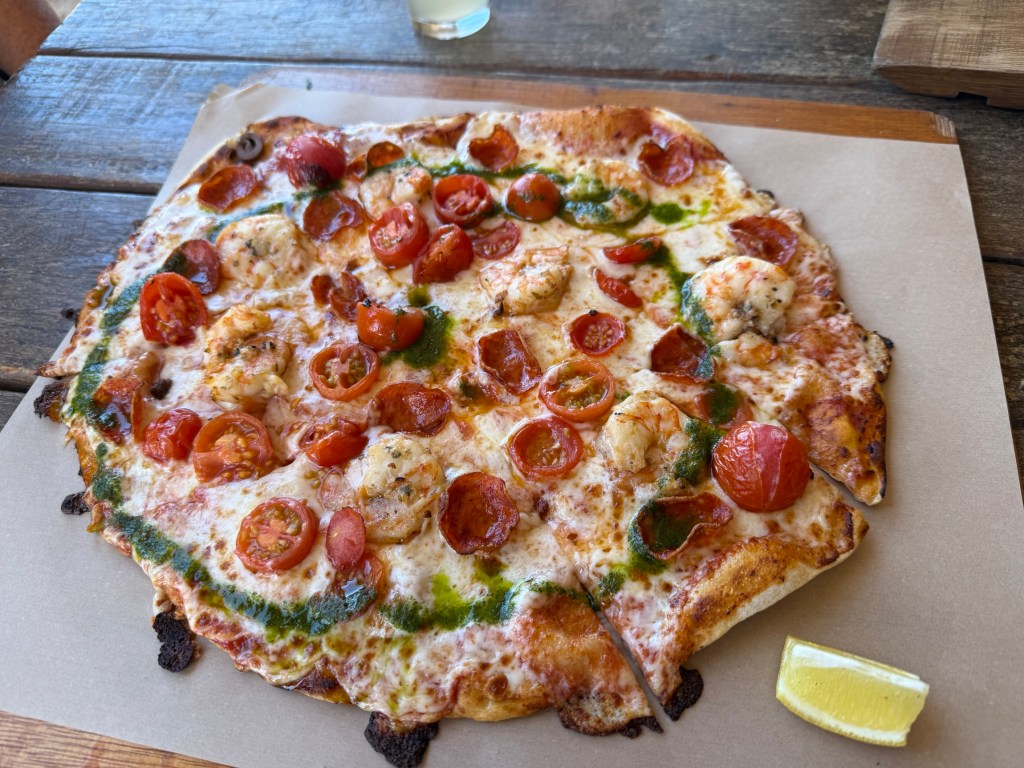
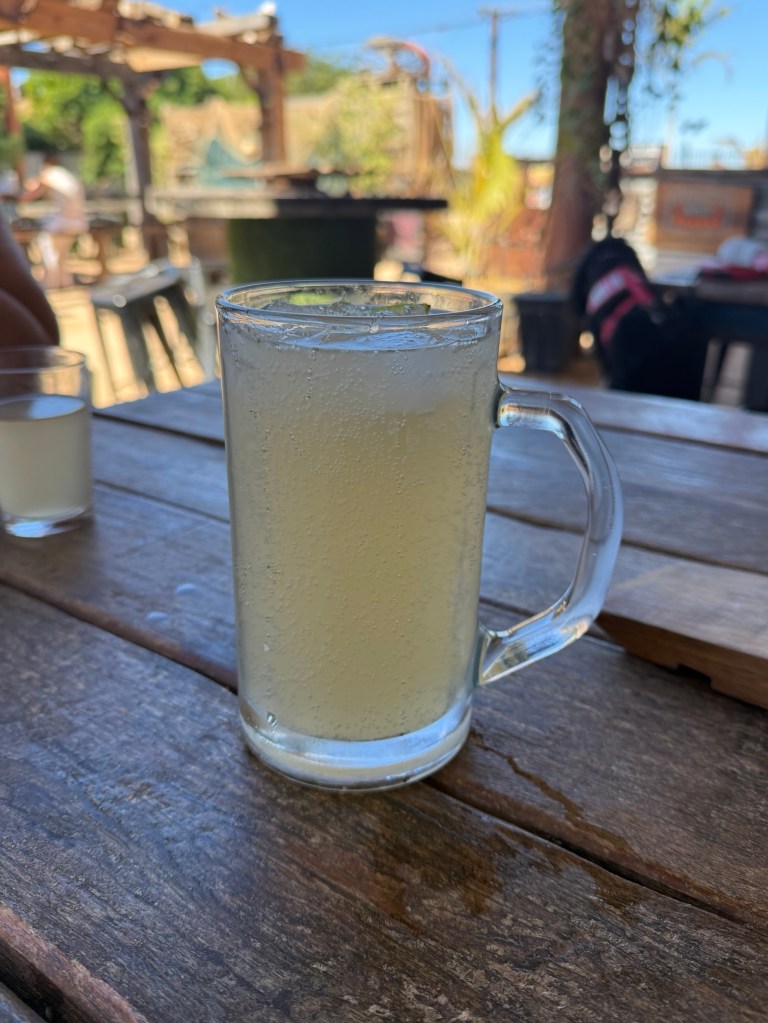
The town has two craft breweries and we tried one out for lunch. An Exmouth prawn pizza was washed down with a selection of their product including a tasty ginger beer, there is a 4 pack in the van cellar to take back to Brisbane.
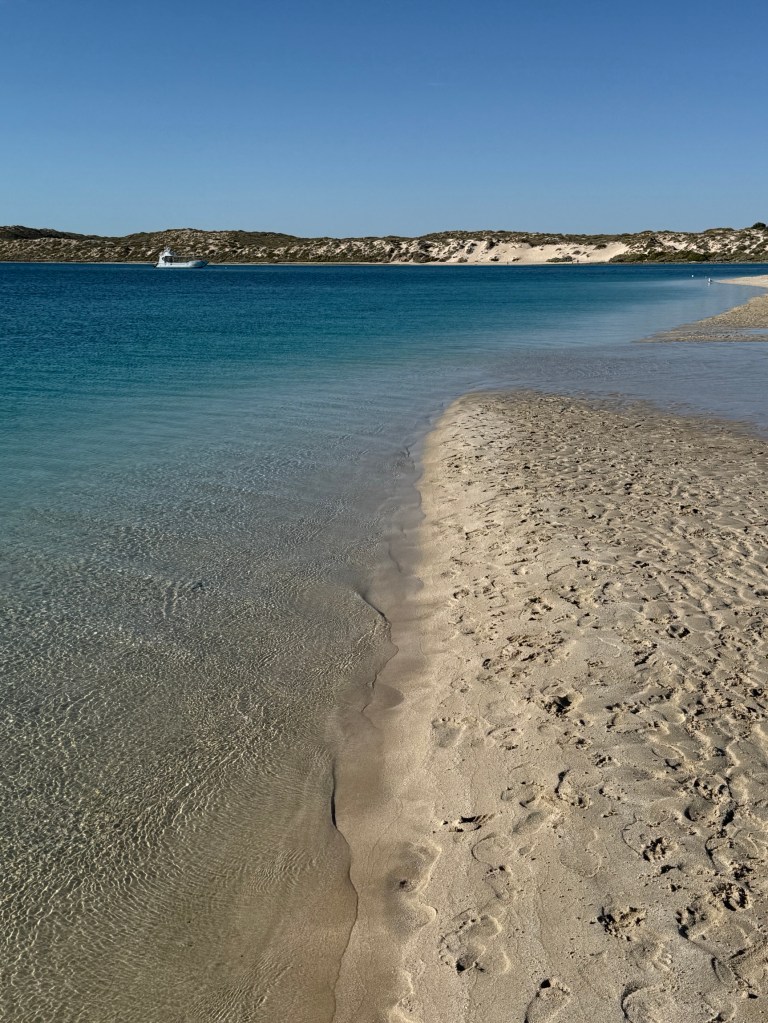
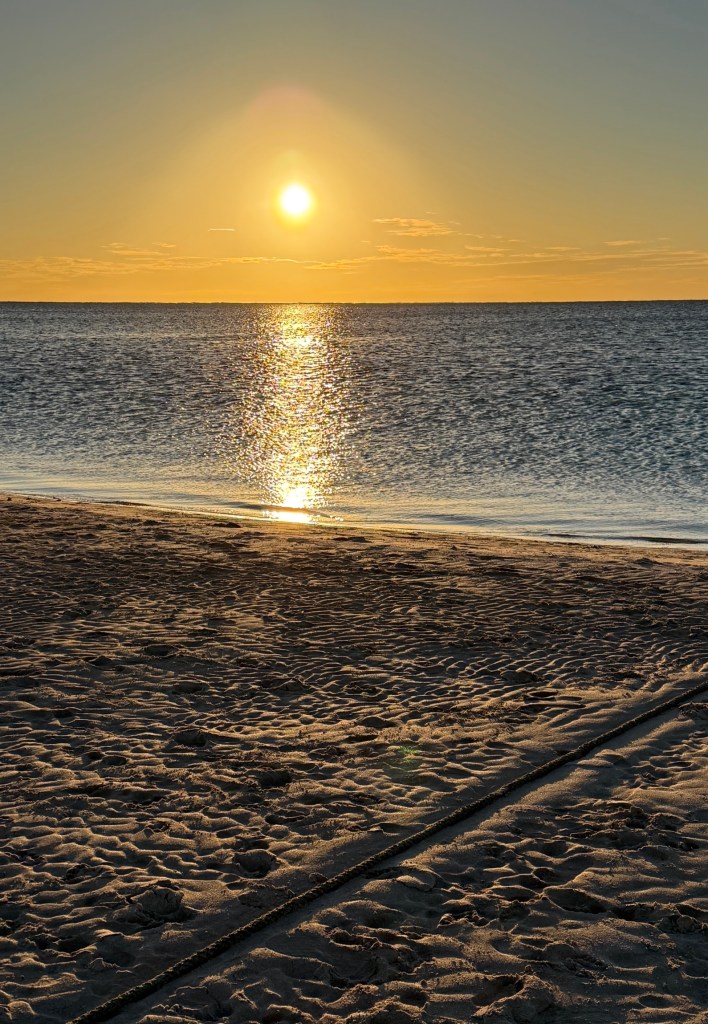
From Exmouth we moved 130km or so south to Coral Bay for a night on the way back down the coast to Carnarvon. Very crowded place. The reef comes right in close to the beach here for snorkelers to safely potter around in. Looks a good spot for youngsters compared to Exmouth.
We have now retraced our steps back to Carnarvon for a few nights before commencing the long haul back to Brisbane.
Going on a loop
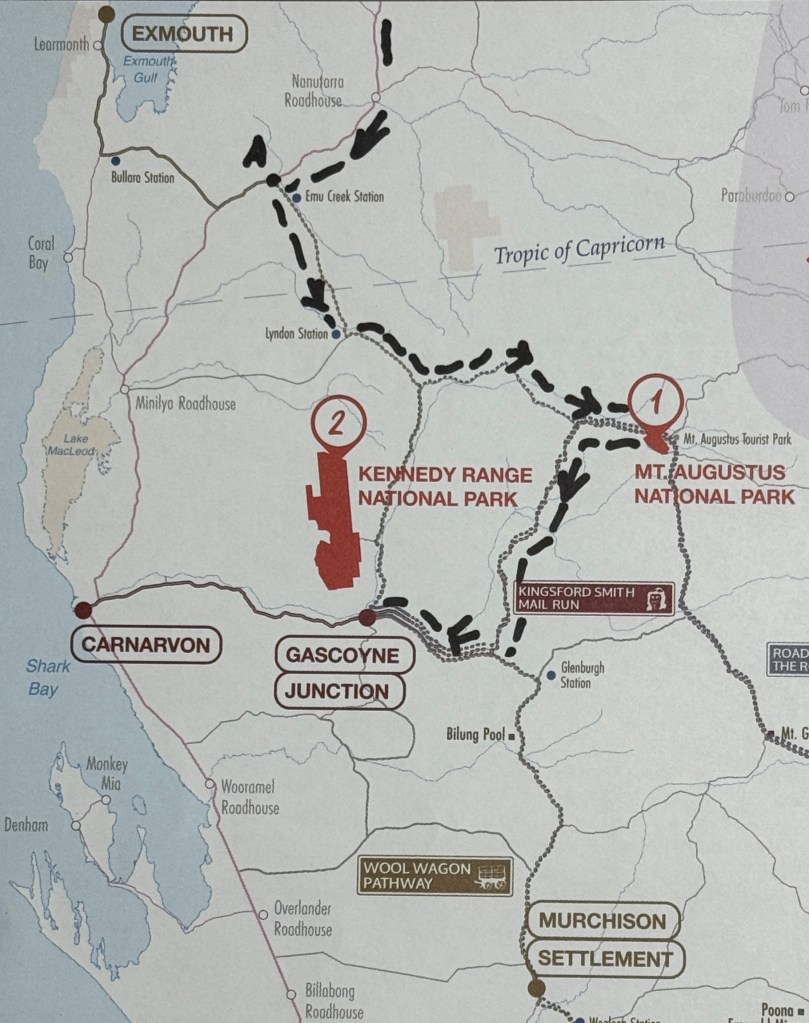
On the way to Gascoyne Junction (GJ) we retraced part of the route we took to get to Mt Augustus before diverting down what is called Dairy Creek Rd. This took us all the way down to a T junction where we went right to GJ, on a sealed road.
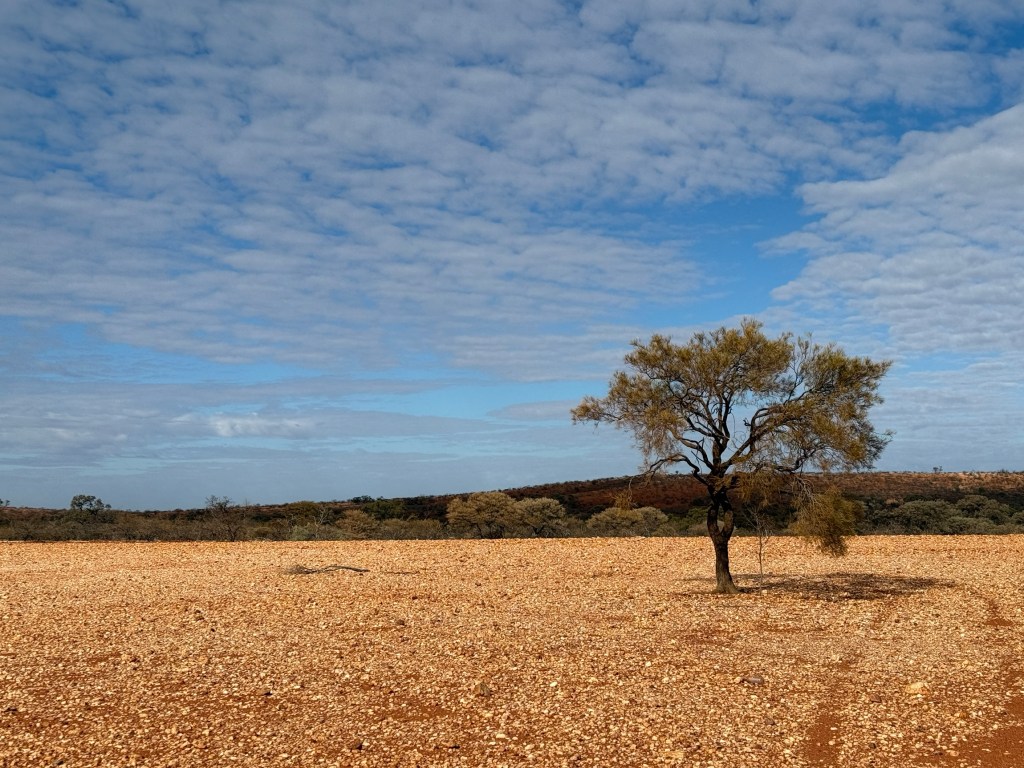
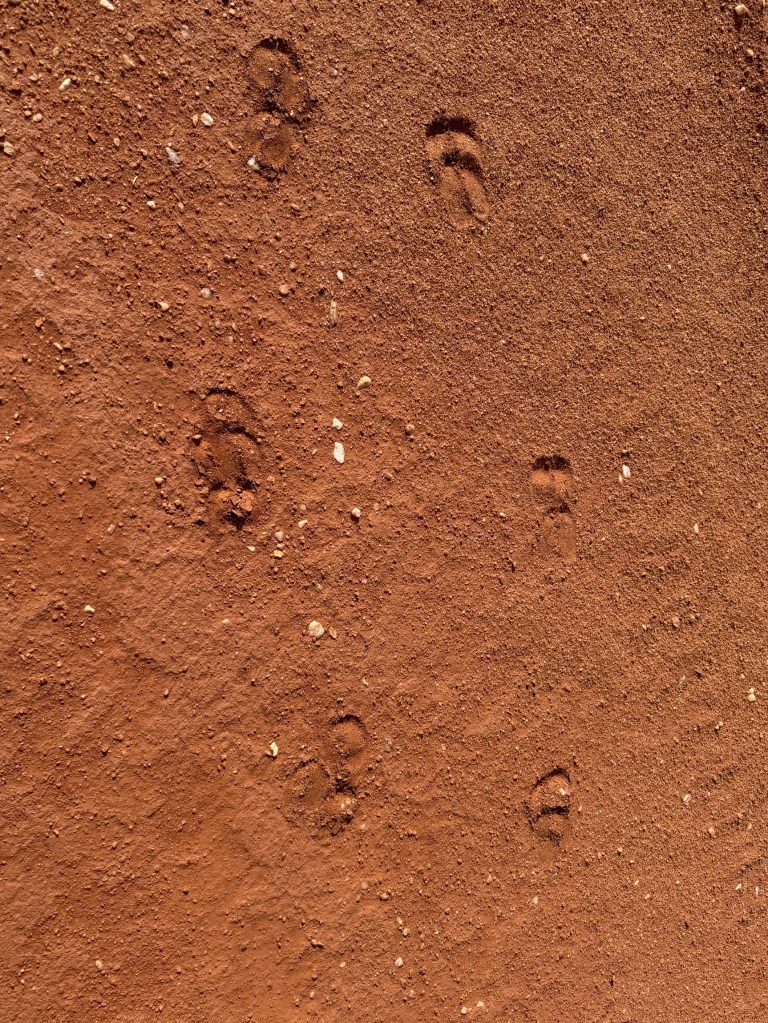
The scenery continued to be the gibber like plains with hardy shrubs. Trees lined the currently dry water courses. This country used to be sheep stations before WWII. Pastoralists had pushed too far north and in so doing ended up extensively over grazing the land, basically destroying it. After the war sheep eventually gave way to the more land friendly cattle industry which continues to this day as the pastures are slowly rejuvenated by the land owners.
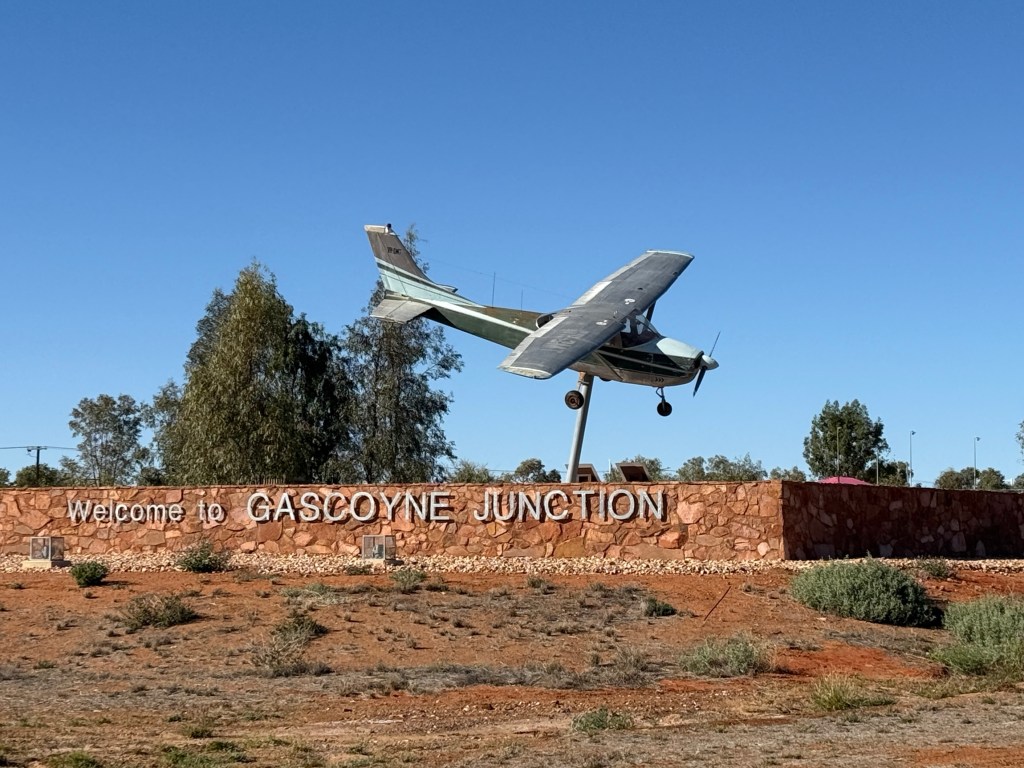
GJ was our base for a few nights to ‘recover’ from the dust and a bit of touring around, including a visit to the Kennedy Ranges to the north. An interior van clean up was the order of the day for Homealone as well.
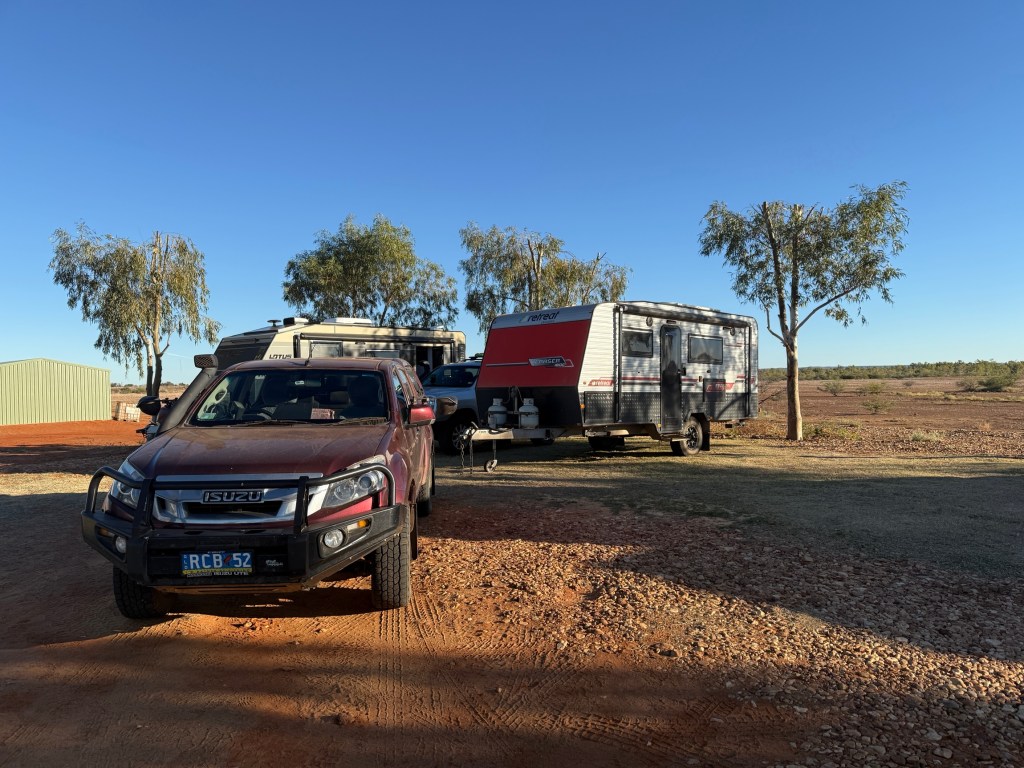
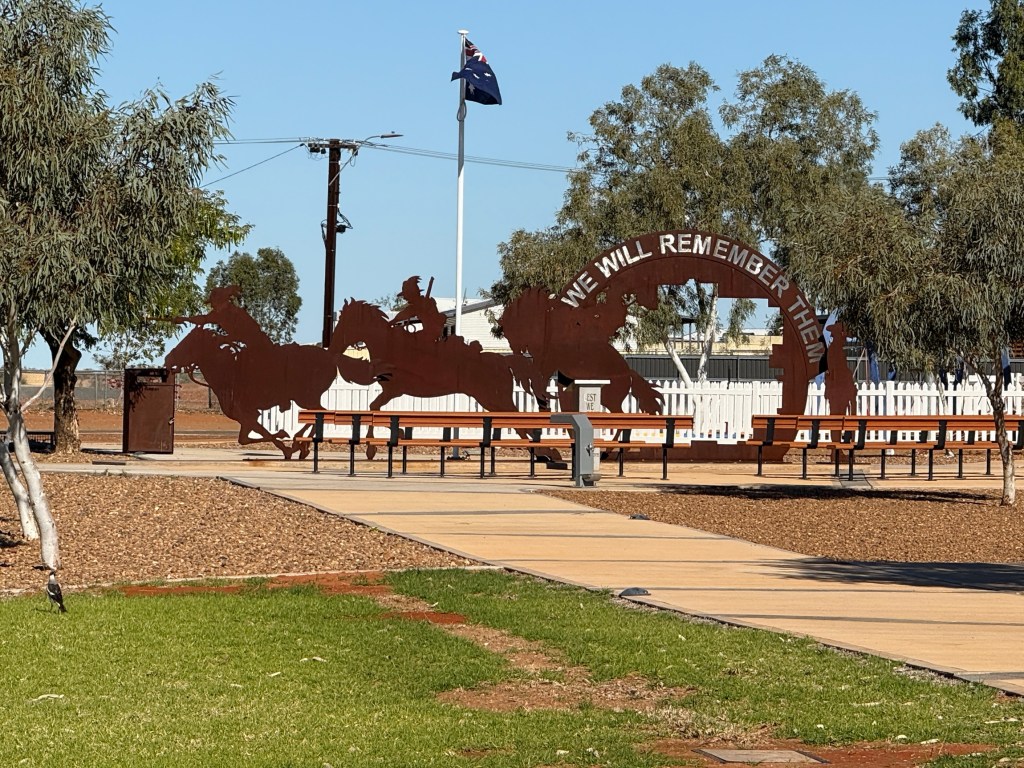
GJ is a small town of 150 or so people that serves as the administrative centre for the Upper Gascoyne Council. The town sits beside the Gascoyne River, it is called ‘Junction’ because the Lyons River joins the Gascoyne downstream from the town. The town actually looks ‘brand new’. It has a sparkling appearance.
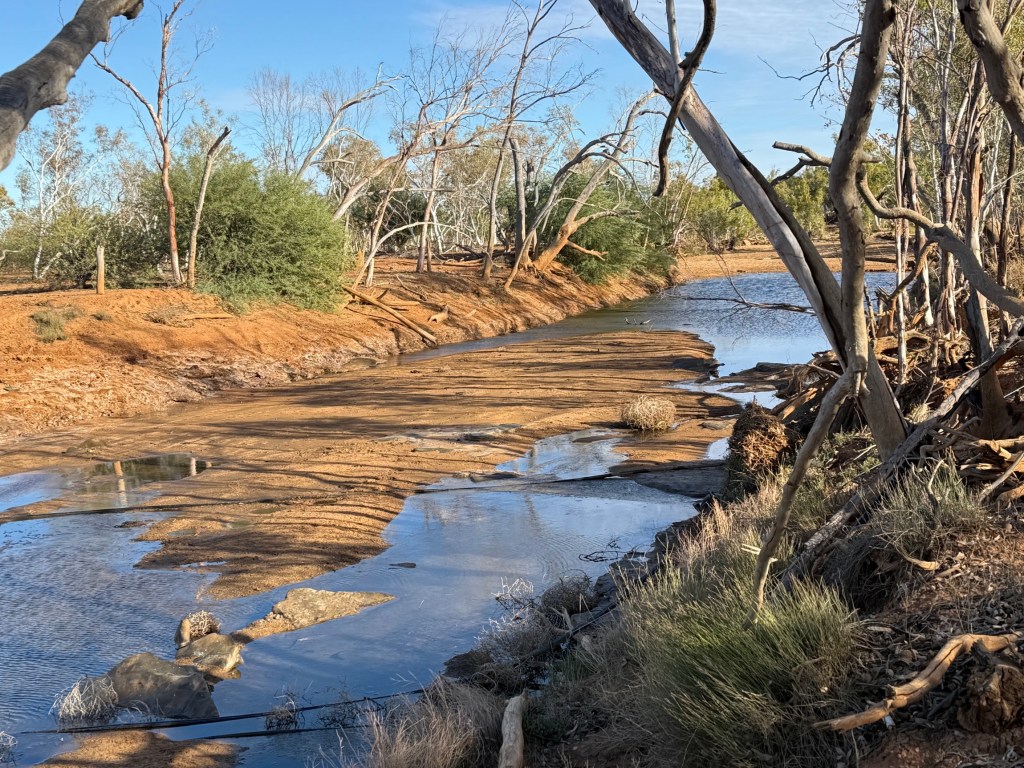
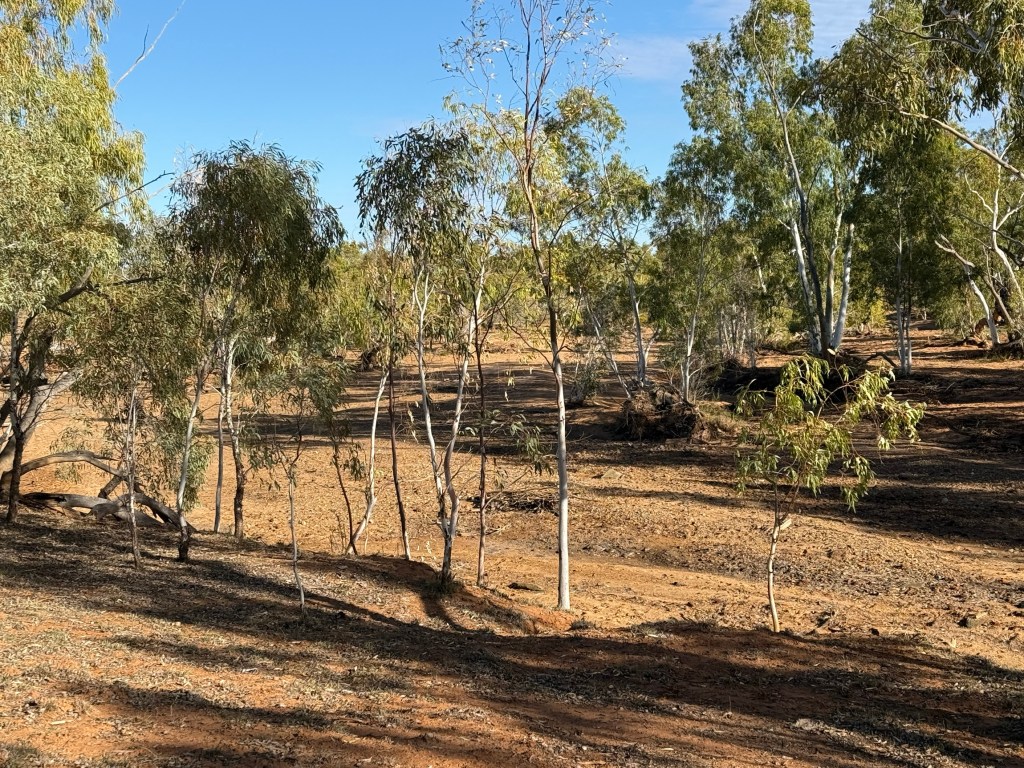
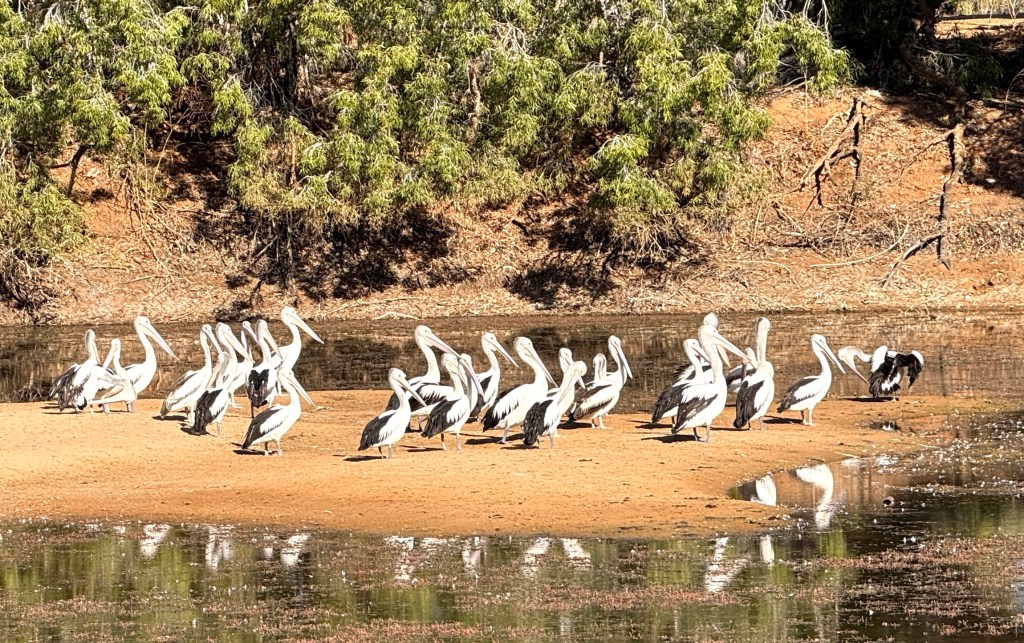
In actual fact it is a ‘new’ town. The old GJ was destroyed in a flood in 2010 and has been rebuilt on slightly higher ground further back from the river. The van park is excellent and has the advantage of a tavern being adjacent.
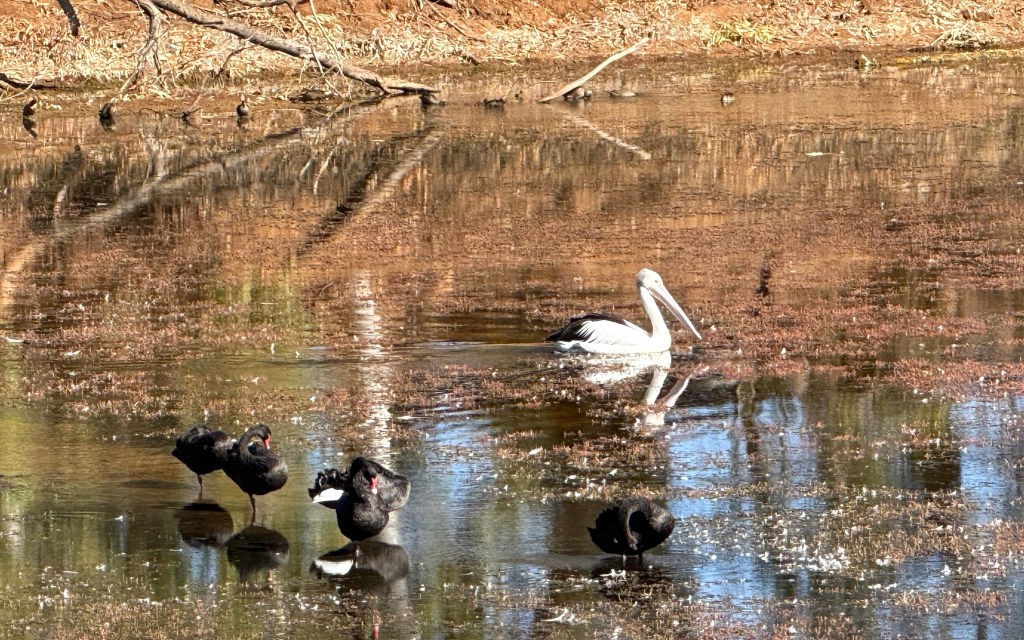
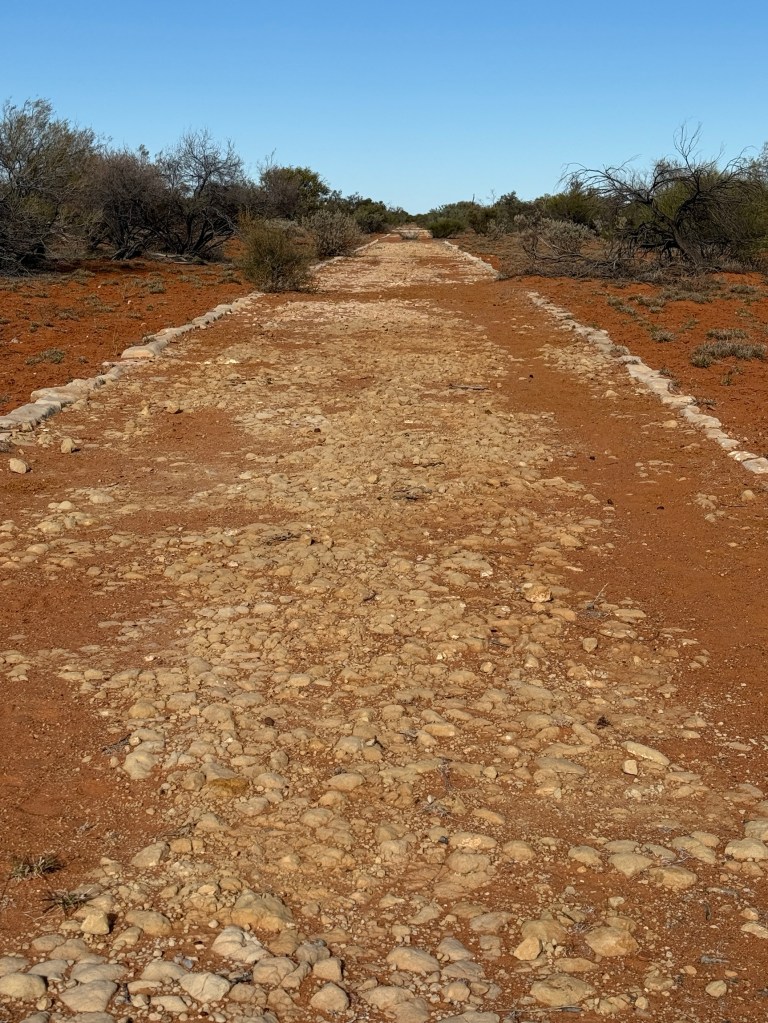
From GJ we did a day trip up to the Kennedy Ranges NP. The road up there was again pretty good gravel, no dramas. It was about 150km there and back. The Range sits up above the surrounding plain like a big Mesa.
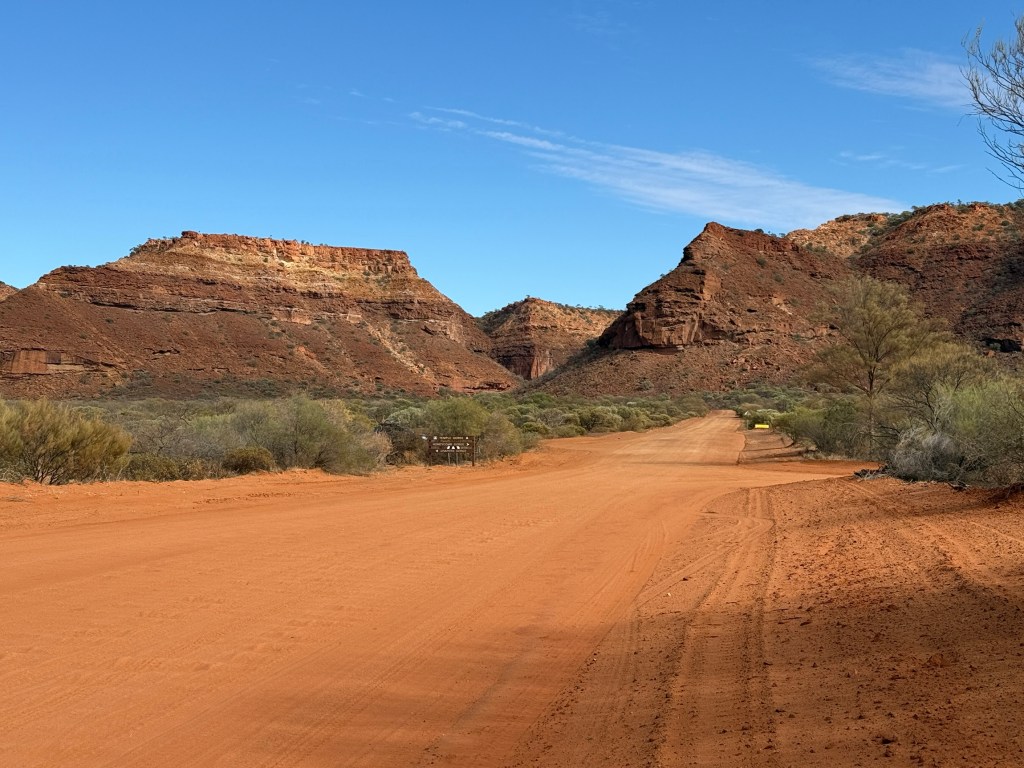
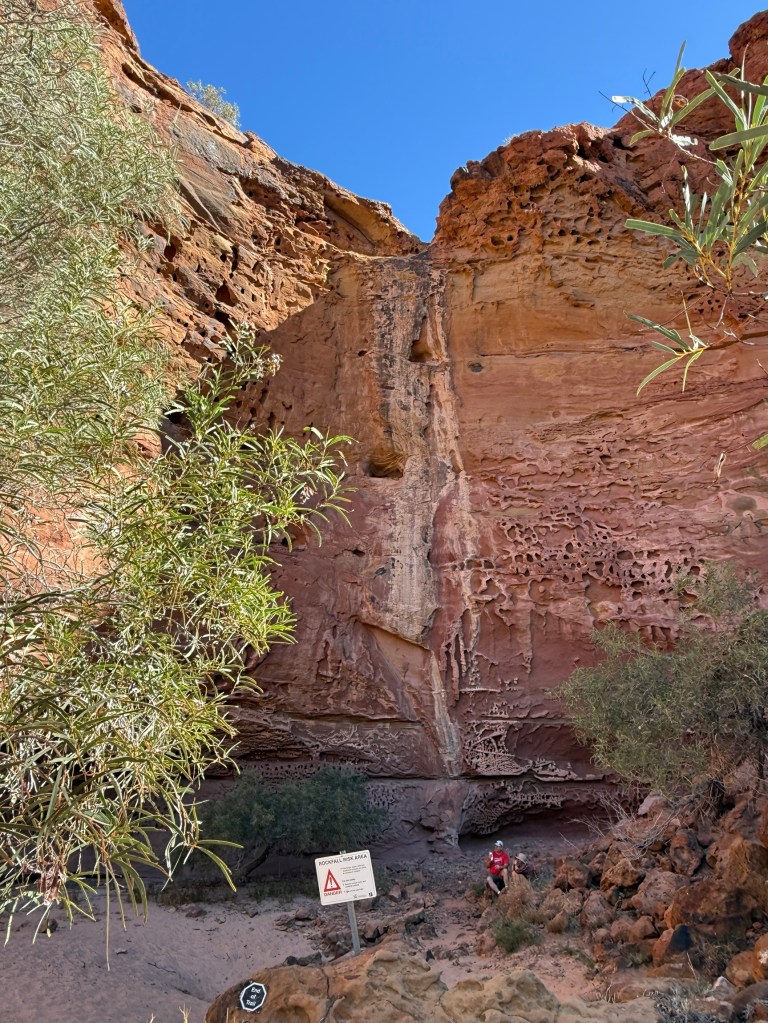
The water run off has cut deep gorges along the escarpments. These are the sort of gorges you walk into and look up. Not the ones you walk down into and then look up. Much more benign!
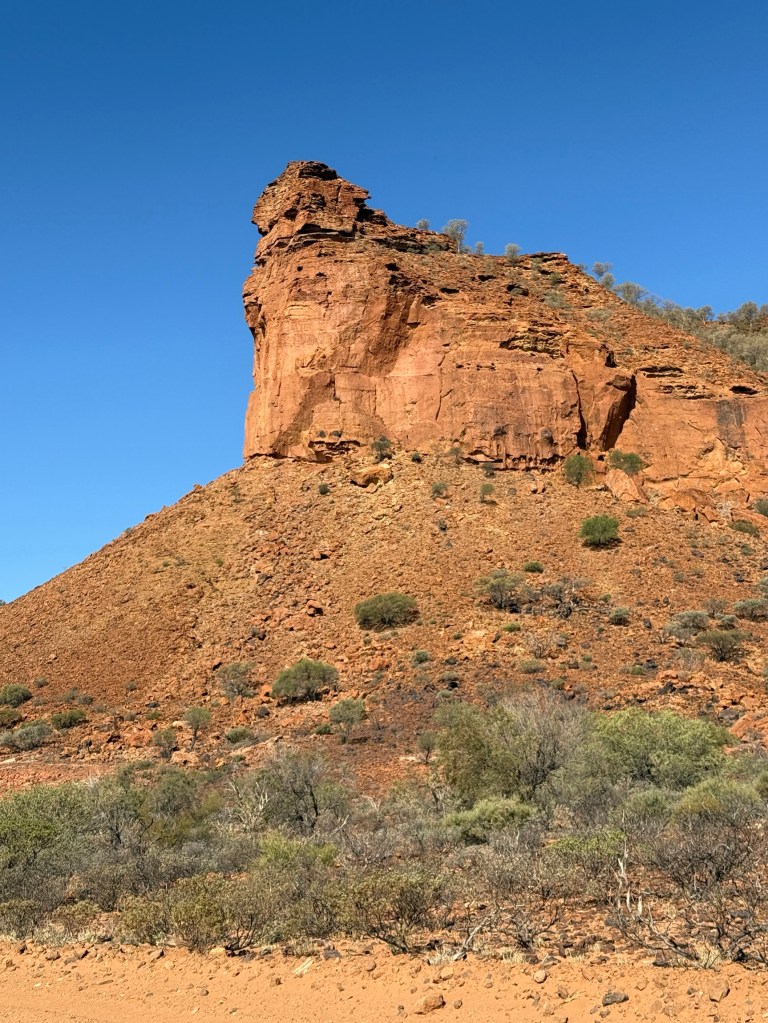
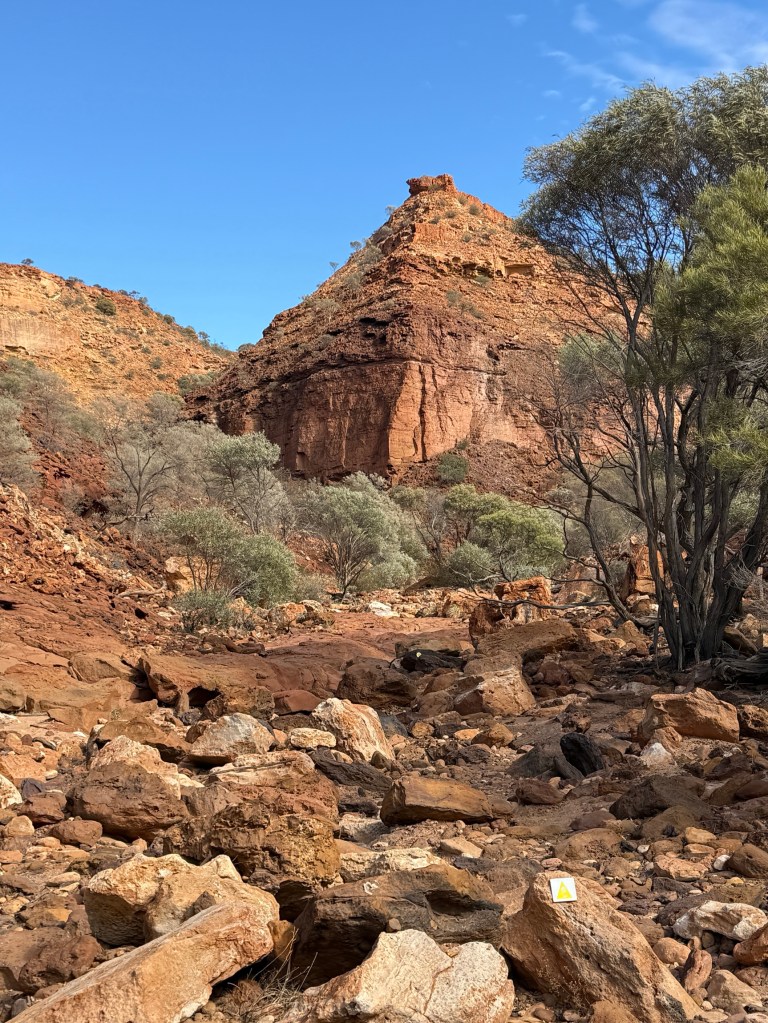
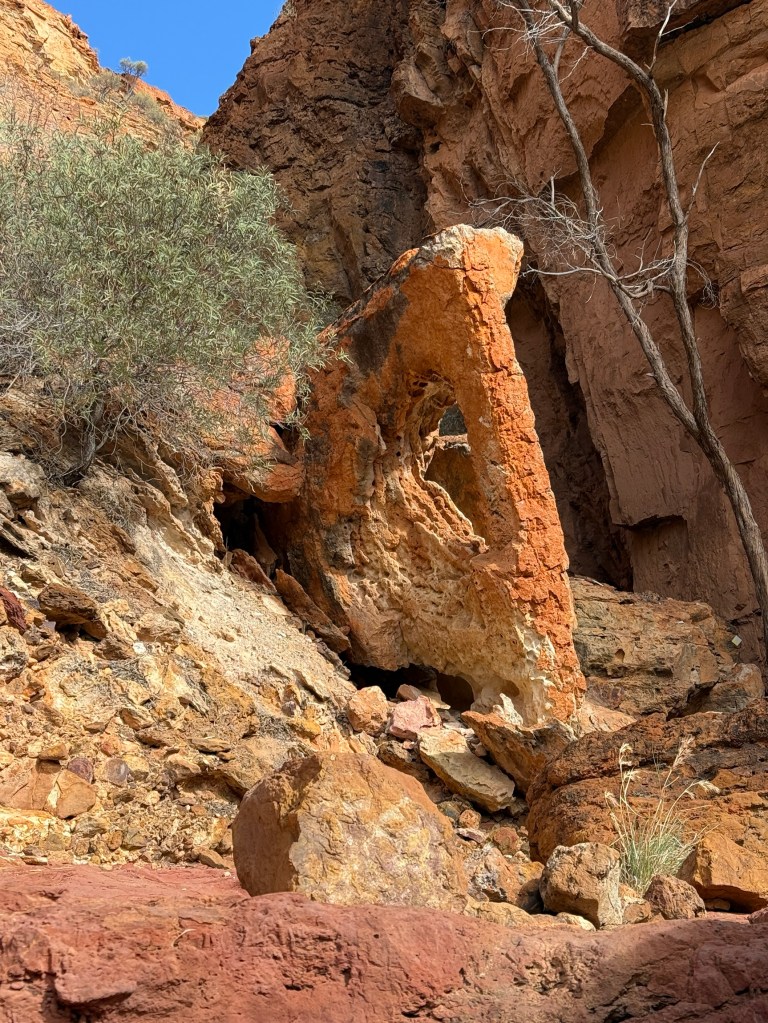
Allthego had a couple of short walks, one into Temple Gorge and the other Honeycomb Gorge. Both involved a bit of rock hopping along dry creek beds. Very pretty.
We had a minor drama as we left GJ to return to the coast. On the morning of departure a rear tyre on the truck was displaying a rather flat appearance. It was the old spare we had put on back in Karratha. It had a slow leak somewhere.
So, a change was required before we left. A young chap, looked about 55, gave us a hand and the job was done quite quickly. We later got a new tyre fitted as we passed through Carnarvon on the coast.
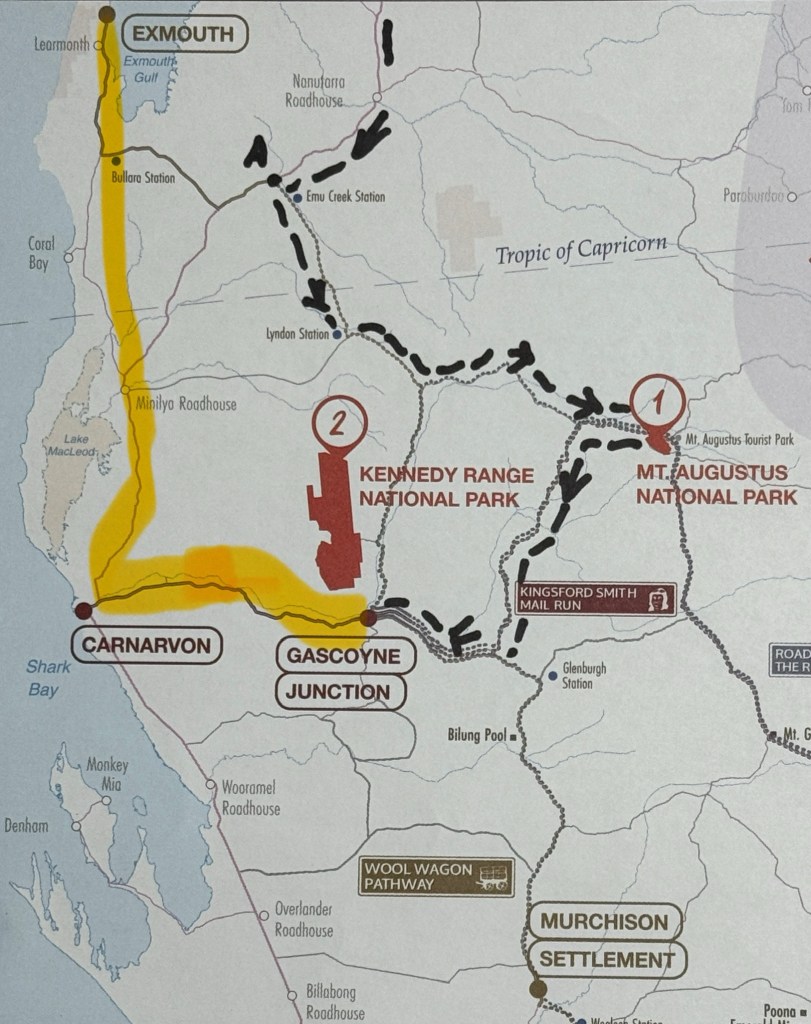
We did a loop and headed back north to Exmouth and Coral Bay on the Ningaloo coast. Hoping to swim with a whale shark. Have had to do this back tracking because of the WA school holiday camp ground book outs. We just couldn’t get a booking on the way south from Karratha and had to go out to Mt Augustus/GJ to fill in time.
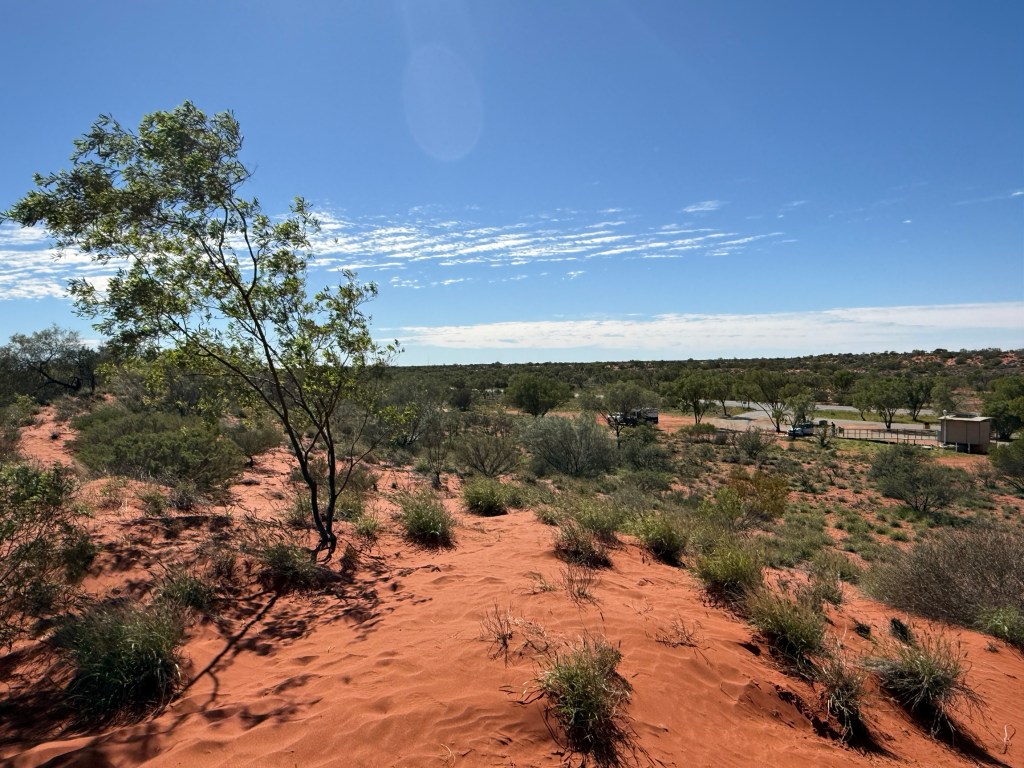
But we are now on our way and have stopped at a free camp for an overnighter about half way up the yellow line on the map.
The Upper Gascoyne
Mt Augustus is in the region known as the Upper Gascoyne, about a thousand kms north of Perth and about 400 km inland from the coast at Carnarvon. This is the area in which the Gascoyne River rises.
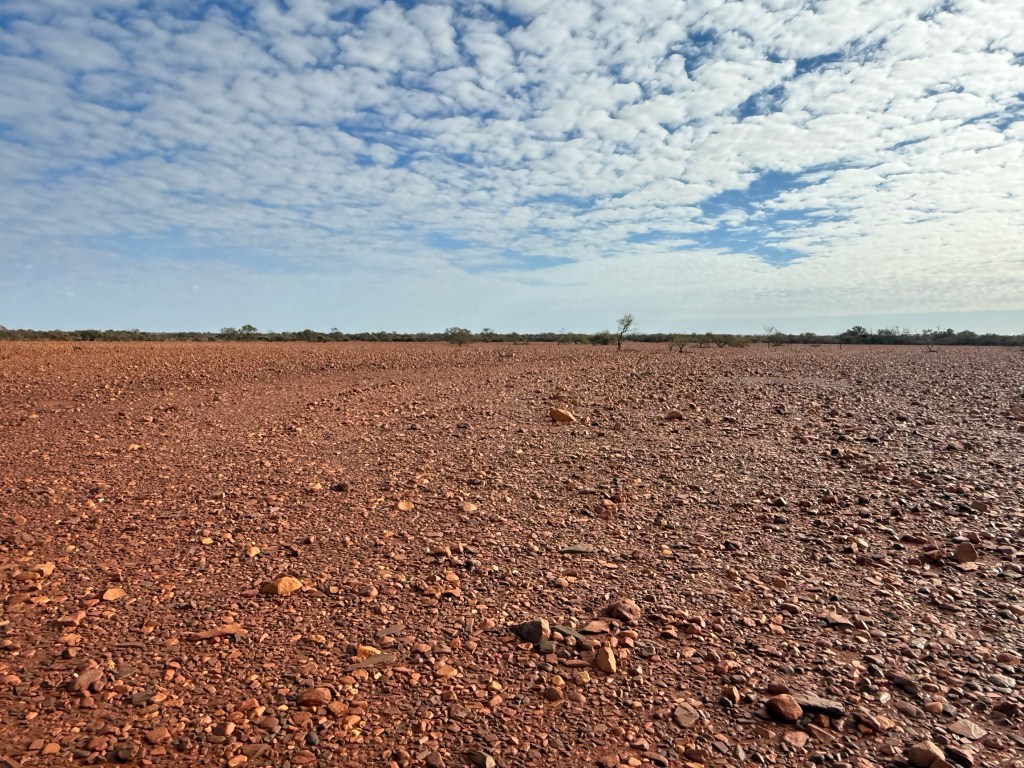
The Gascoyne is WAs longest river, for much of the year though it is dry and only runs after heavy rain. It is called the ‘upside down river’ as its water flow is below the thick sand beds. It flows into the sea at Carnarvon, we will see it there in a few days. The river has numerous tributaries that criss cross the landscape. One of these is the Lyons River, also generally dry, which we cross on the way to Mt Augustus. Its floodplain is to the north west of Mt Augustus.
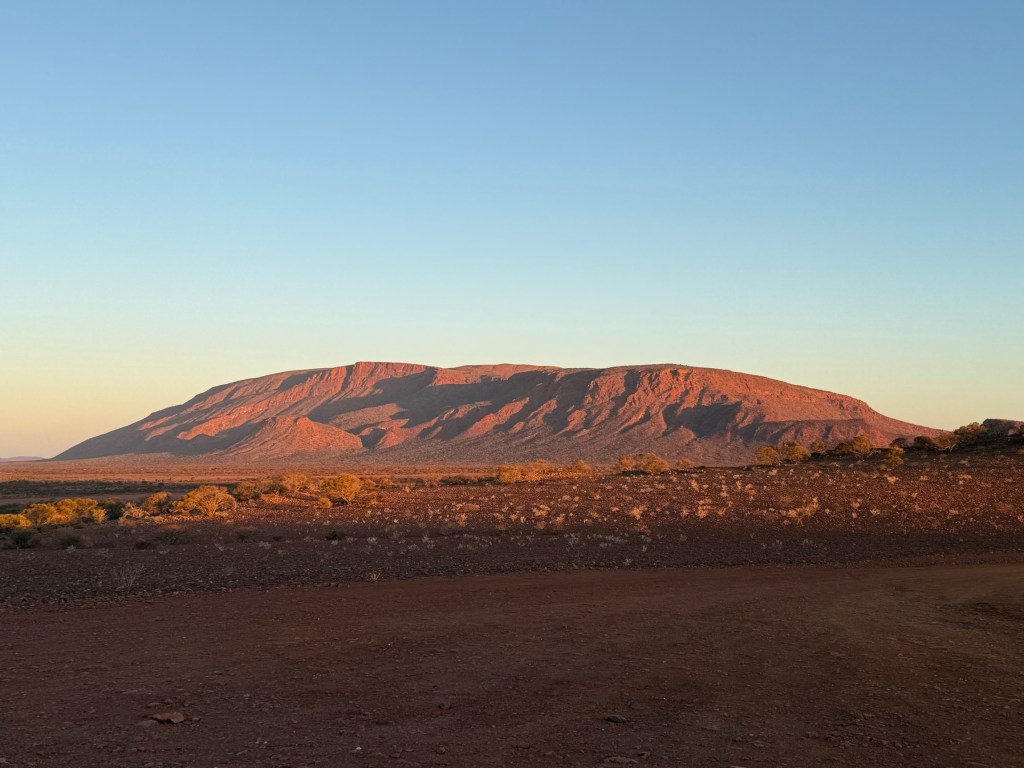
Mt Augustus is quite striking when it first appears on the horizon. It is big, in fact at about 860m above the plain it is about twice as high as Uluru and in area about 1.5 times bigger. It is 8 km long. It is also very old, much older than Uluru. The other noticeable difference is that it has lots of vegetation, unlike Uluru.
Uluru and Mt Augustus are both known as inselbergs, or single mountains rising above flat plains.
Uluru is Australia’s biggest ‘rock’ inselberg. It is a single rock ‘stranded’ in among the surrounding strata. Totally different to Mt Augustus. Mt Augustus is what is known as a monocline, it’s not a ‘rock’ like Uluru. It has an underlying granite base that was covered by millions of years of sandstone deposits. The whole structure was ultimately buckled and folded into an arch. The sandstone has been eroded away leaving today’s big ‘rock’, Mt Augustus. The granite is partly exposed in some places on the mountain, but the last ‘layers’ of sandstone are still there.
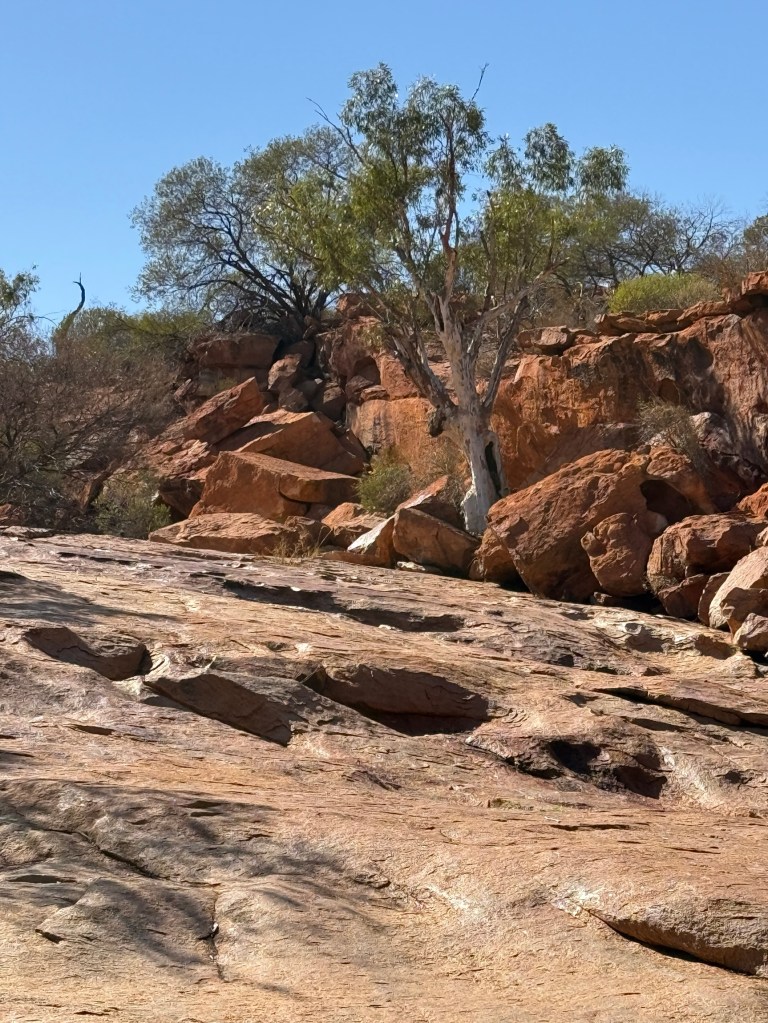
Sorry, to tire my readers with a bit of very rough geology. Allthego finds this stuff interesting, Homealone is not stimulated at all by it and sympathises with readers of the same ilk!
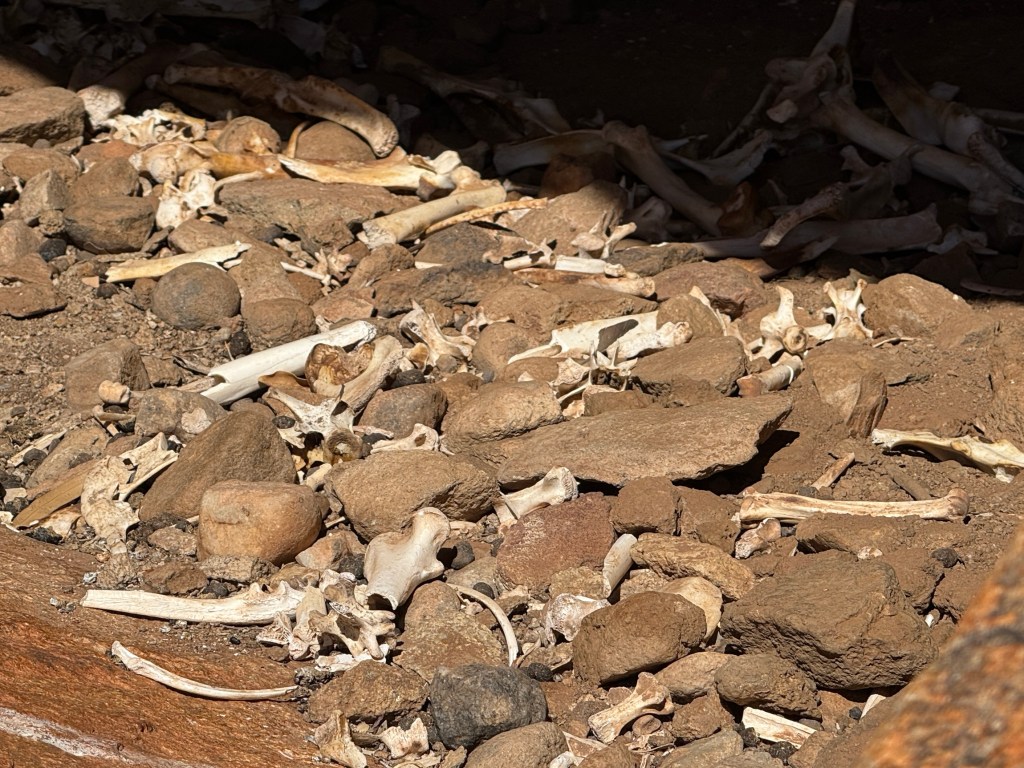
The local indigenous people have a traditional dreamtime approach to explaining Mt Augustus. They know the mountain as Burringurrah.
It is a short story about a boy, Burringurrah, under going initiation into manhood. He got stressed about this and ran away, so breaking the law. He was pursued and speared in the right leg as punishment. He fell to the ground and the spear broke leaving the stump in his leg. He was then severely beaten and died, lying on his belly with his left leg (circled in white below) bent up beside his body, right leg stretched out. Head circled in yellow. He turned to stone.
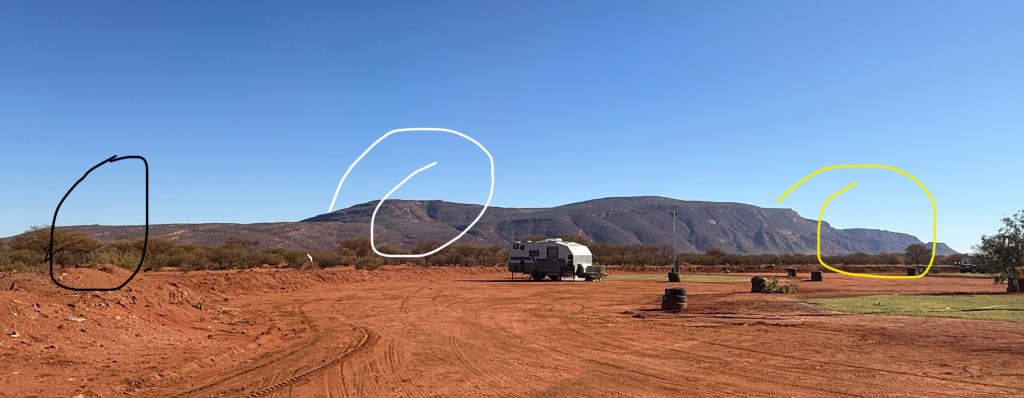
This is a photo of the mountain showing all this for you to see, a little imagination is required.
Now Allthego spent quite a bit of time trying to see all this, but got a bit lost in the detail. The photo has the spear stump circled (very small and hard to see) in black, it is now a lookout. Homealone, was less concerned in detecting this detail.
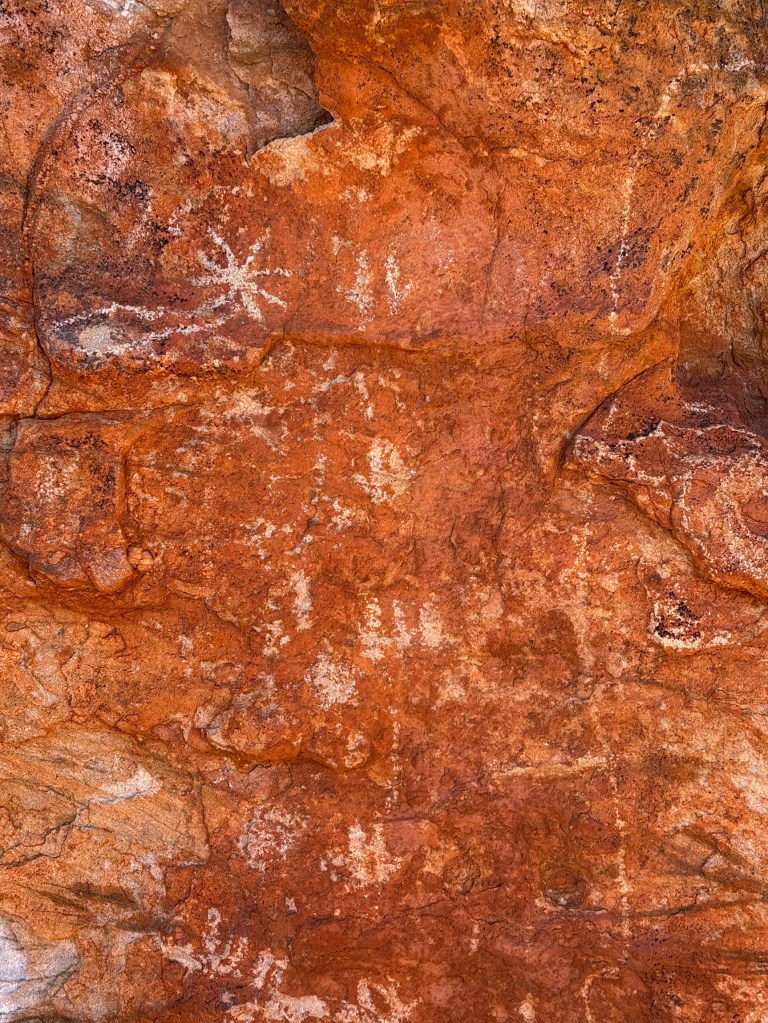
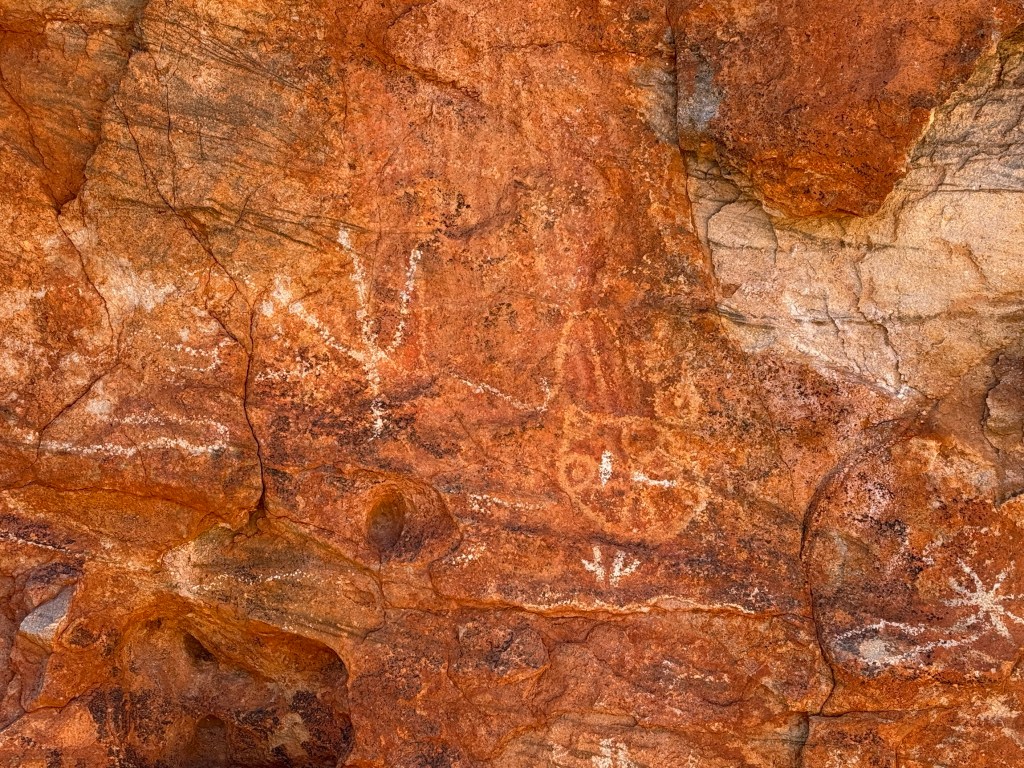
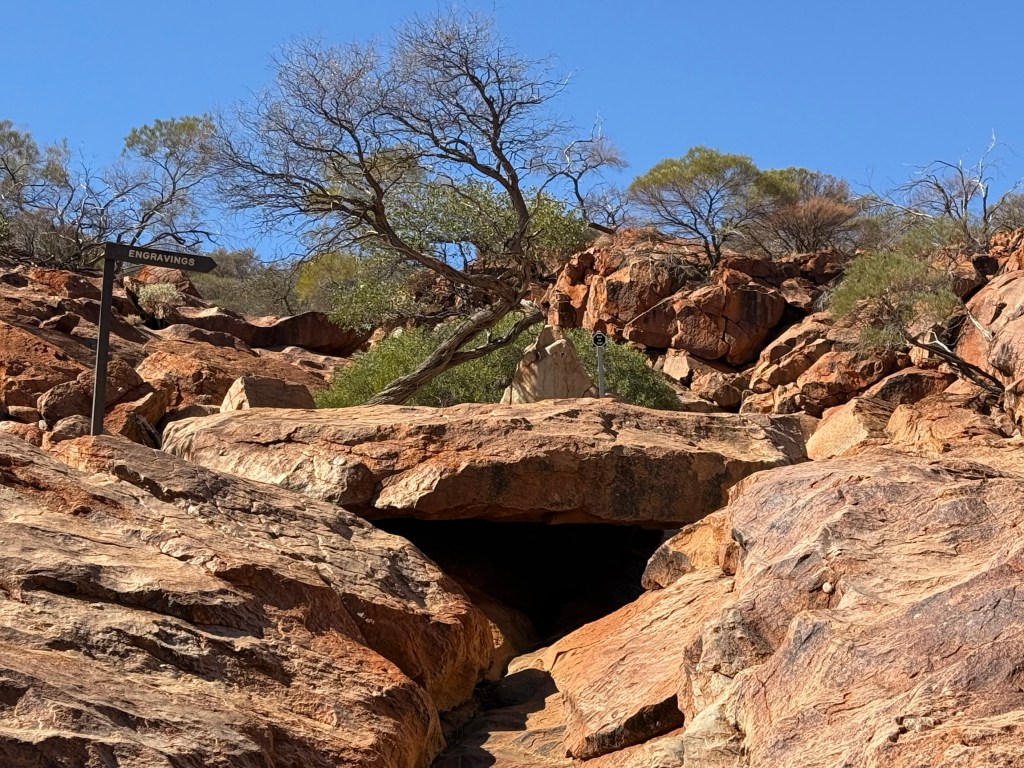
We did three short walks up the slopes of the mountain to check out some petroglyphs and generally take in the mountains presence. Allthego didn’t venture to the summit, a full days walk there and back and apparently strenuous in parts.
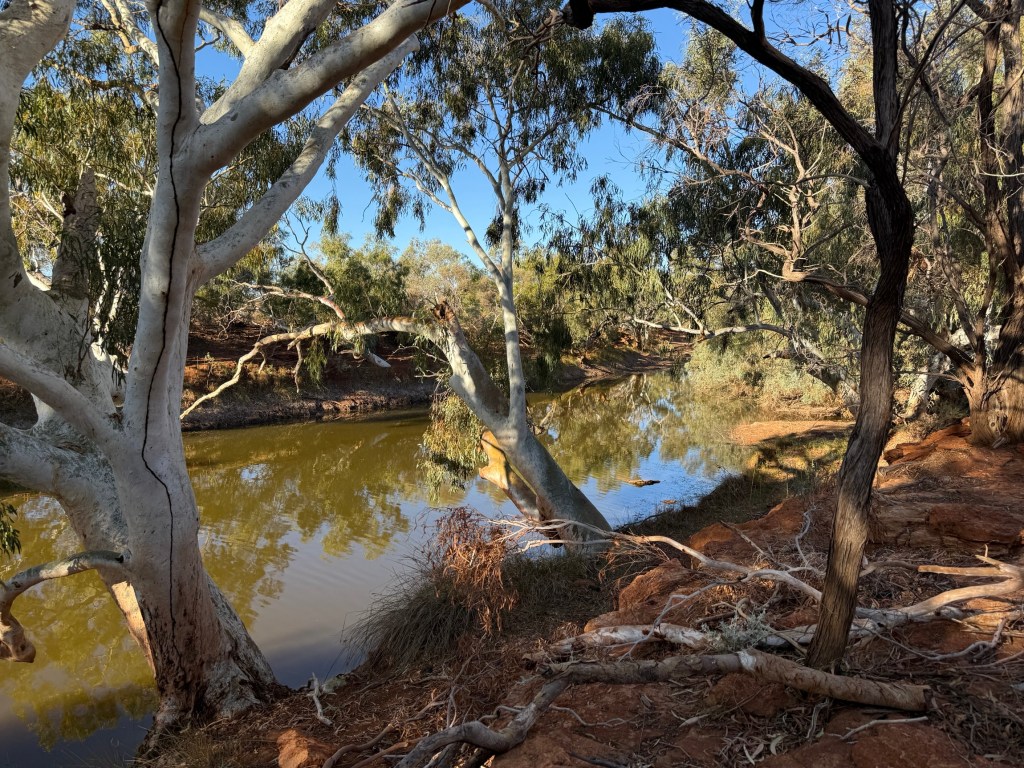
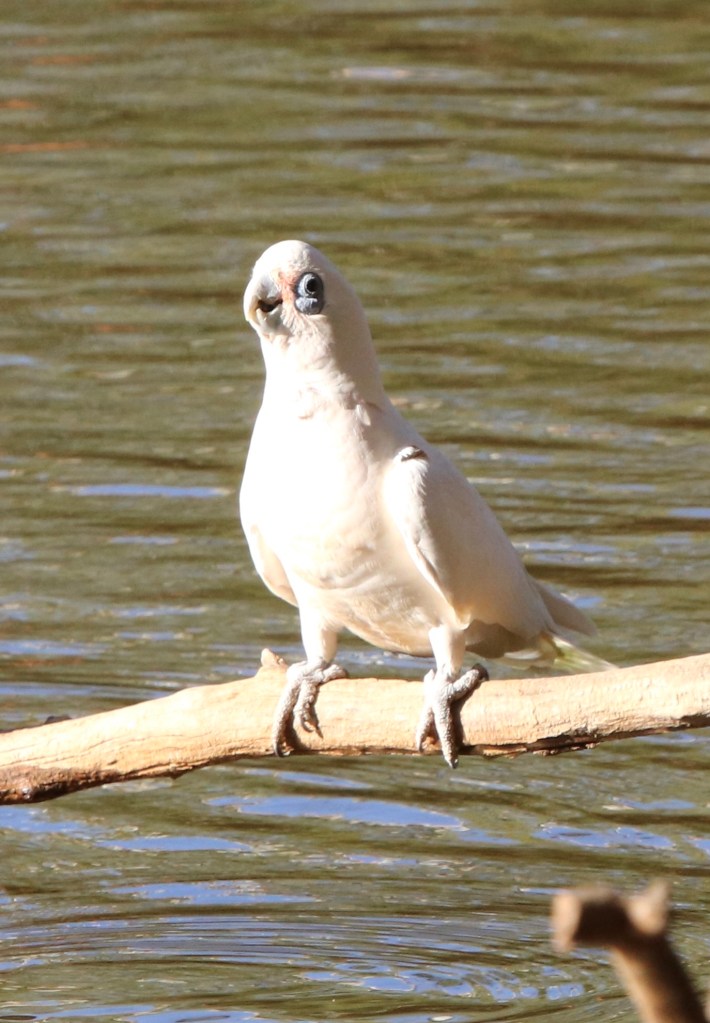
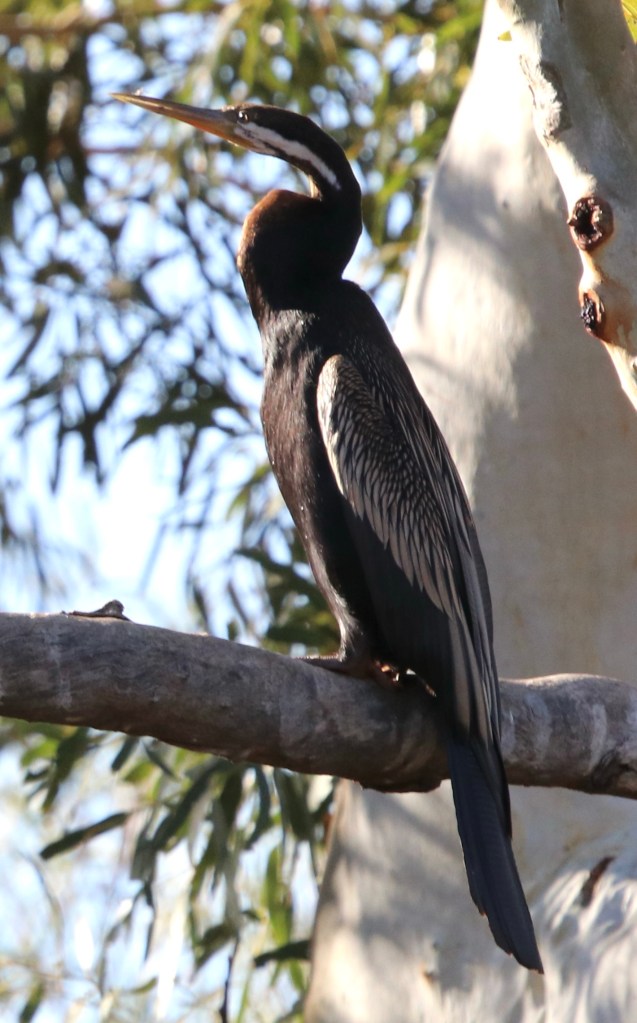

An interesting spot was the Cattle Pool, a deep waterhole on the otherwise dry Lyons River. Plenty of birdlife here, especially Corellas.
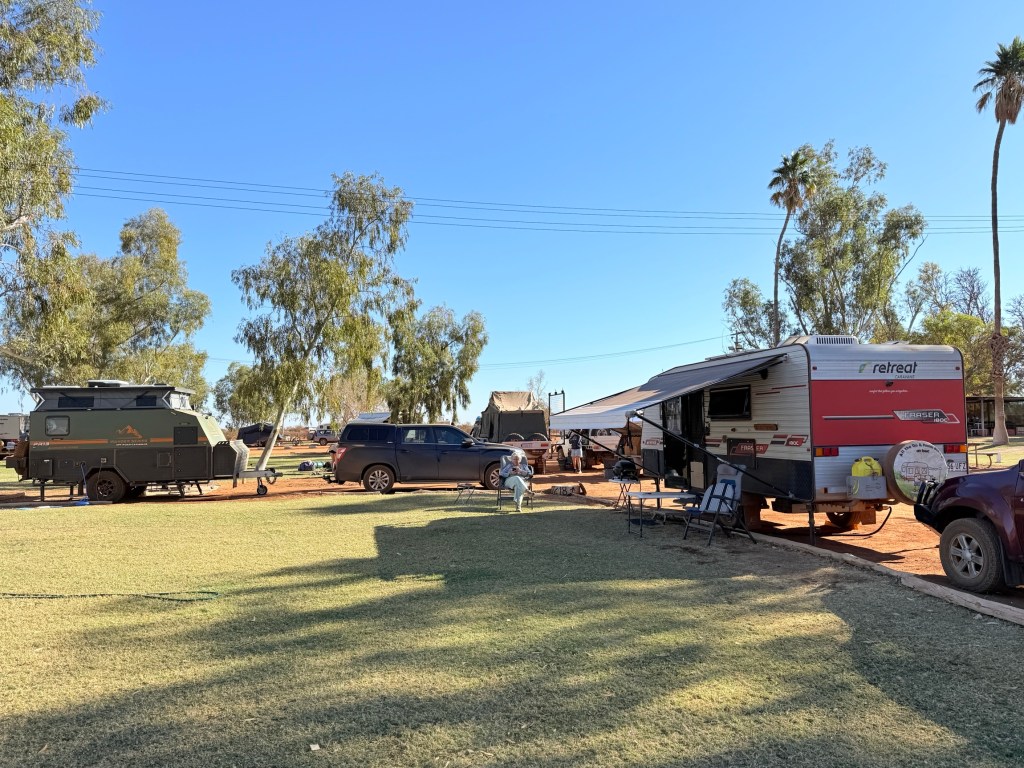
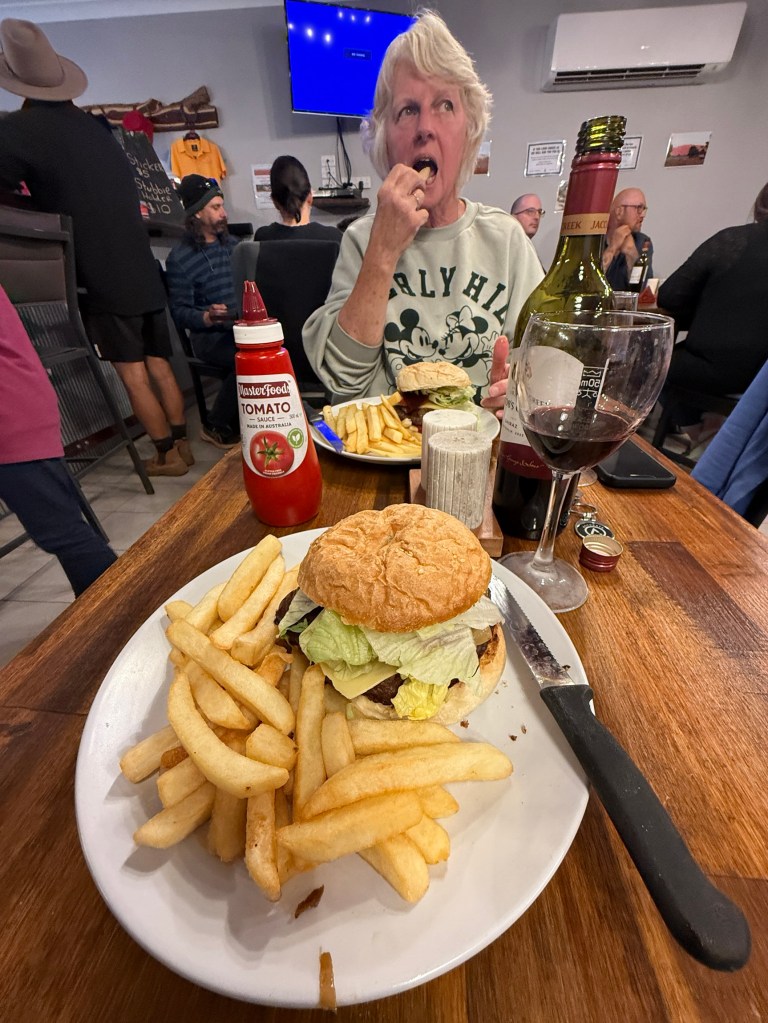
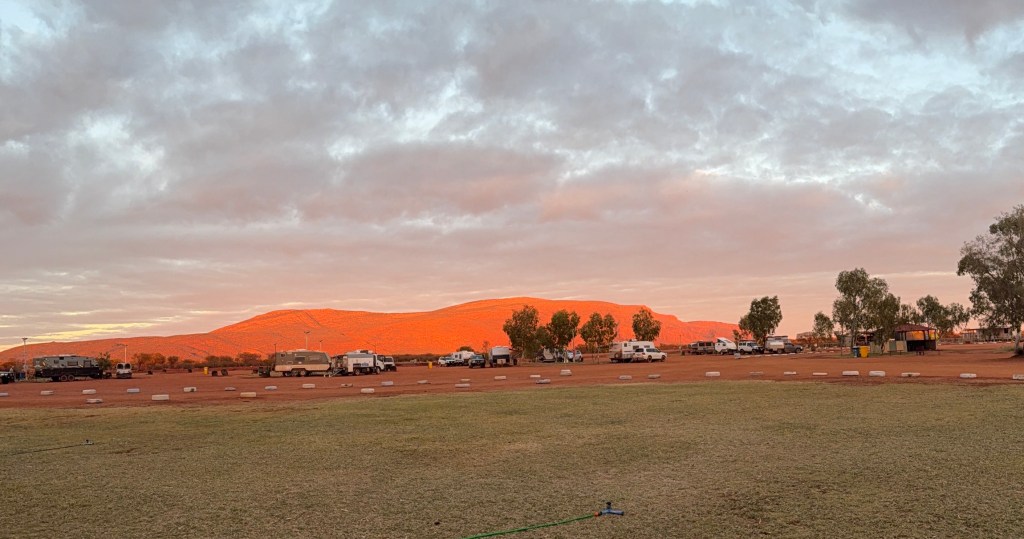
Mt Augustus is the sort of place where you can do a lot or little. Just sitting in the van park taking in the mountain is special. Its colours change as the sun moves across the sky.
We had four nights here before packing up and heading, another day along the dusty gravel roads, to the small town of Gascoyne Junction.
 Allthegobro