Santa Cruz De La Palma
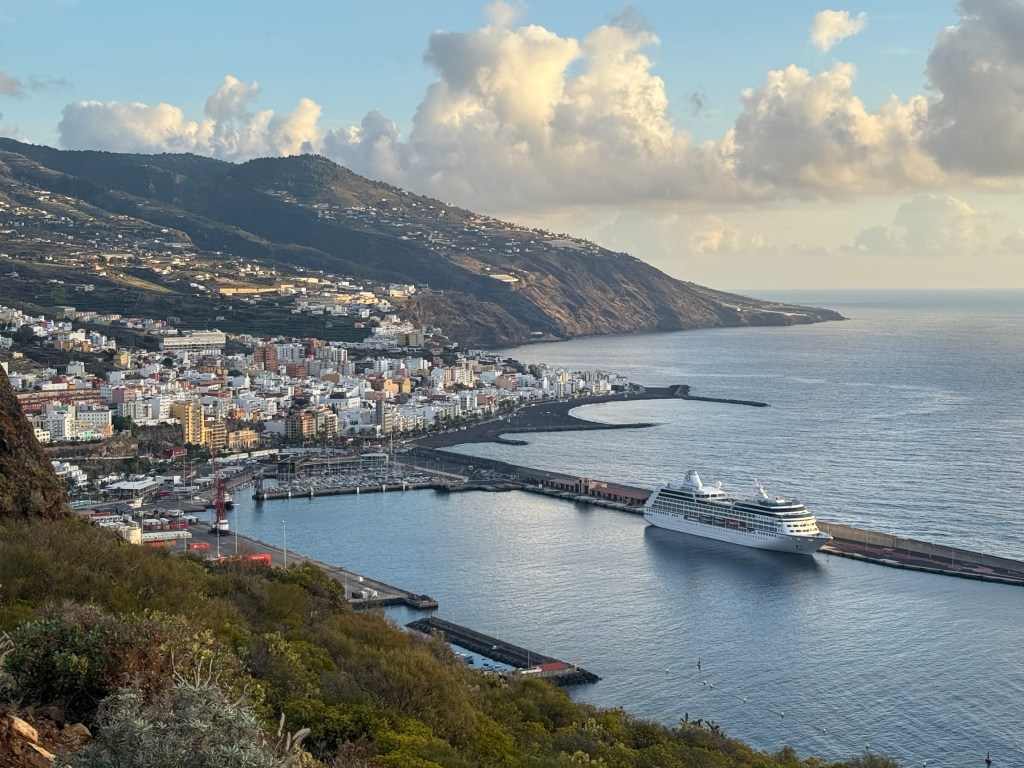
It was smooth sailing overnight to La Palma where we tied up at the port with the city behind. The town is known as Santa Cruz De La Palma. Santa Cruz De Tenerife is similarly named. Whats the ‘Santa Cruz’? It is Spanish for ‘Holy Cross’ and a throw back to when these places were established towards the end of the 15th century. The conquering Spanish forces carried wooden crosses with them as symbols of their religious authority given by the Pope. The Pope had gifted the islands to Spain, not sure what his authority to do this was, but he did it anyway and the Spanish accepted. They still had to conquer the locals which they eventually did across the Canaries. What is claimed to be one of the original crosses is held as a relic in one of the churches on Gran Canaria.
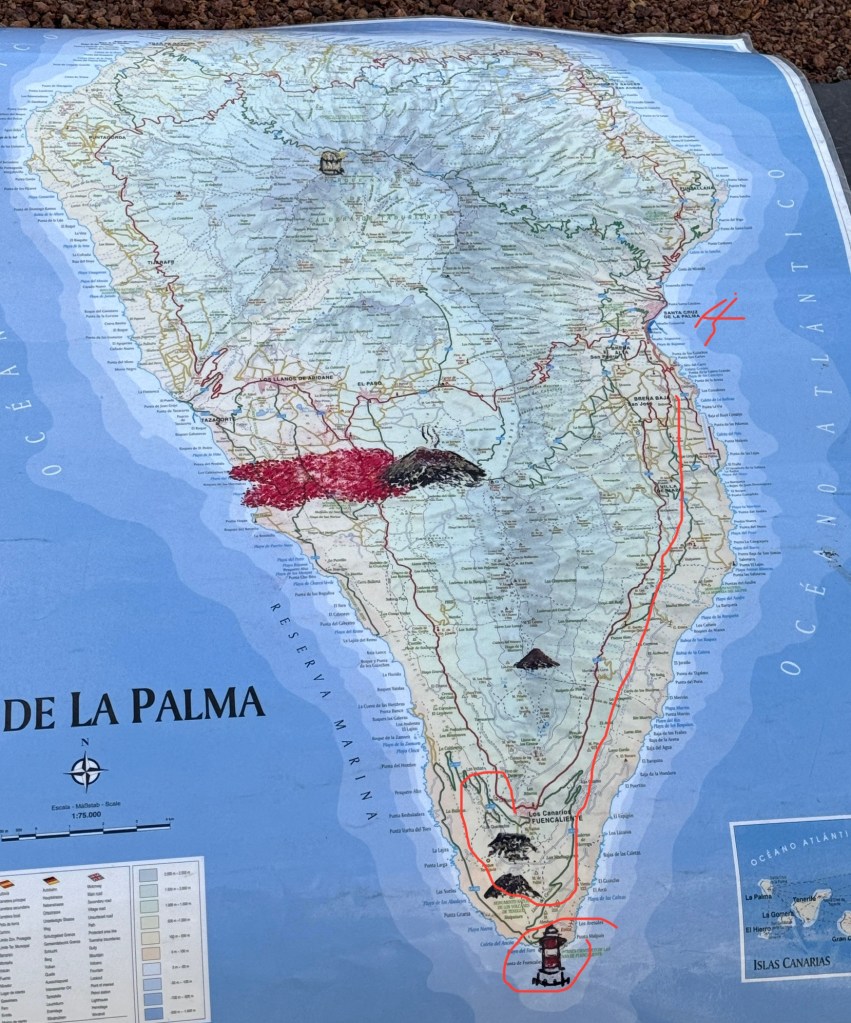
Our excursion on La Palma was to the south of the island to see more volcanic landscapes. The map below shows where we went.
La Palma is an interesting island. At 3m years it is one of the youngest islands geologically in the Canaries and is on the western edge of the group. It was an important stopover point for ships going to the Americas in the 16th and 17th centuries. On the other hand Lanzarote (our first port of call) is on the north eastern edge, is 15-20m years old. The southern half of the island is also much younger and is more volcanically active than the northern half.

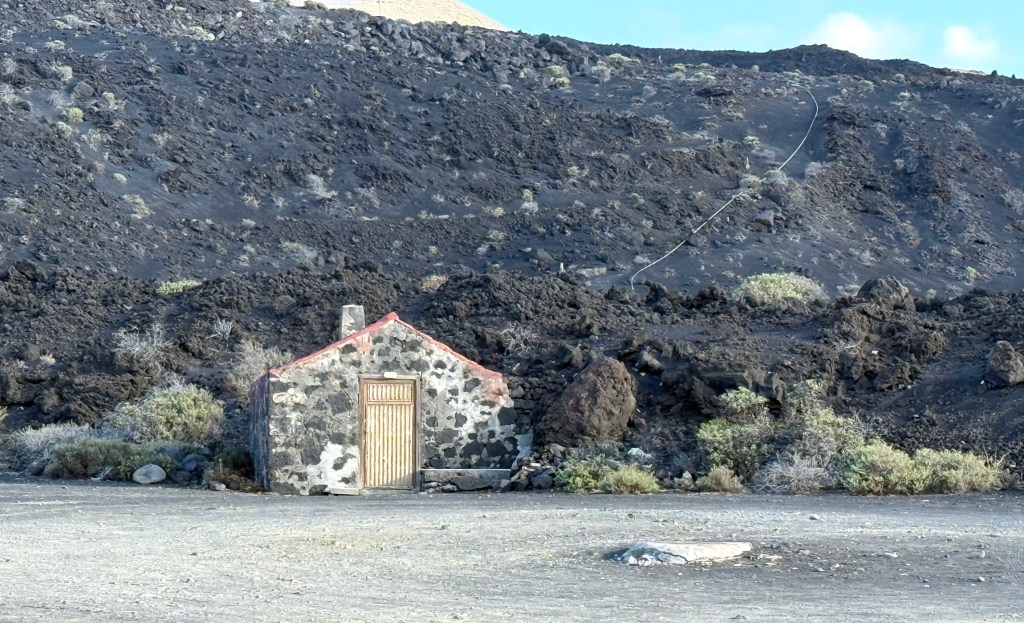
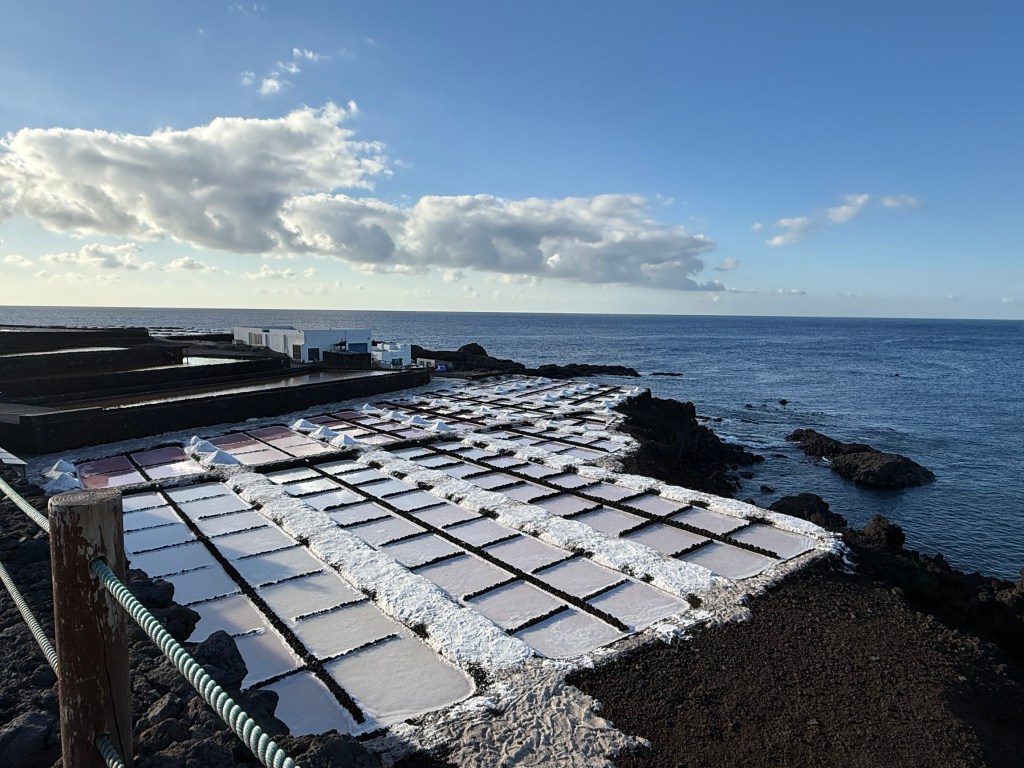
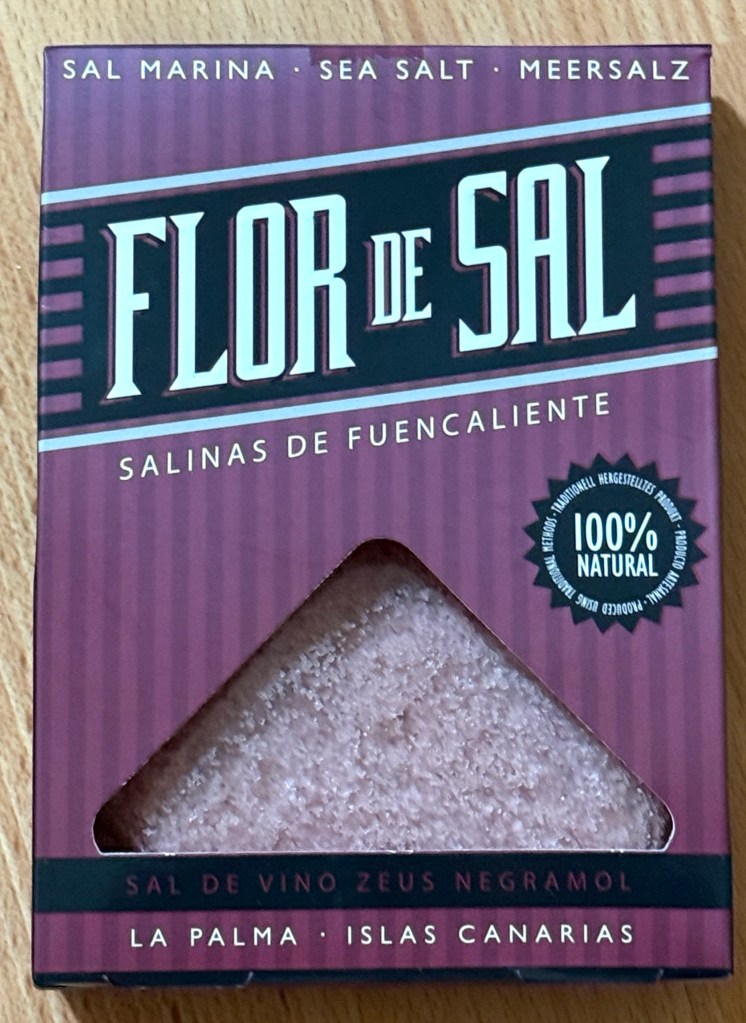
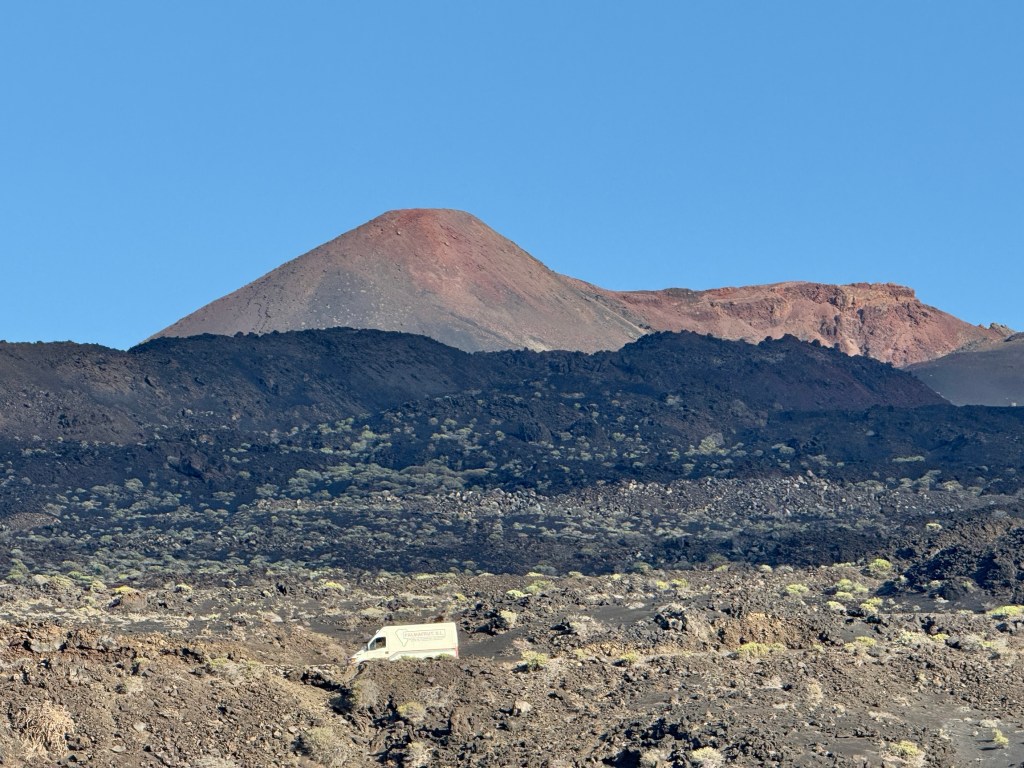
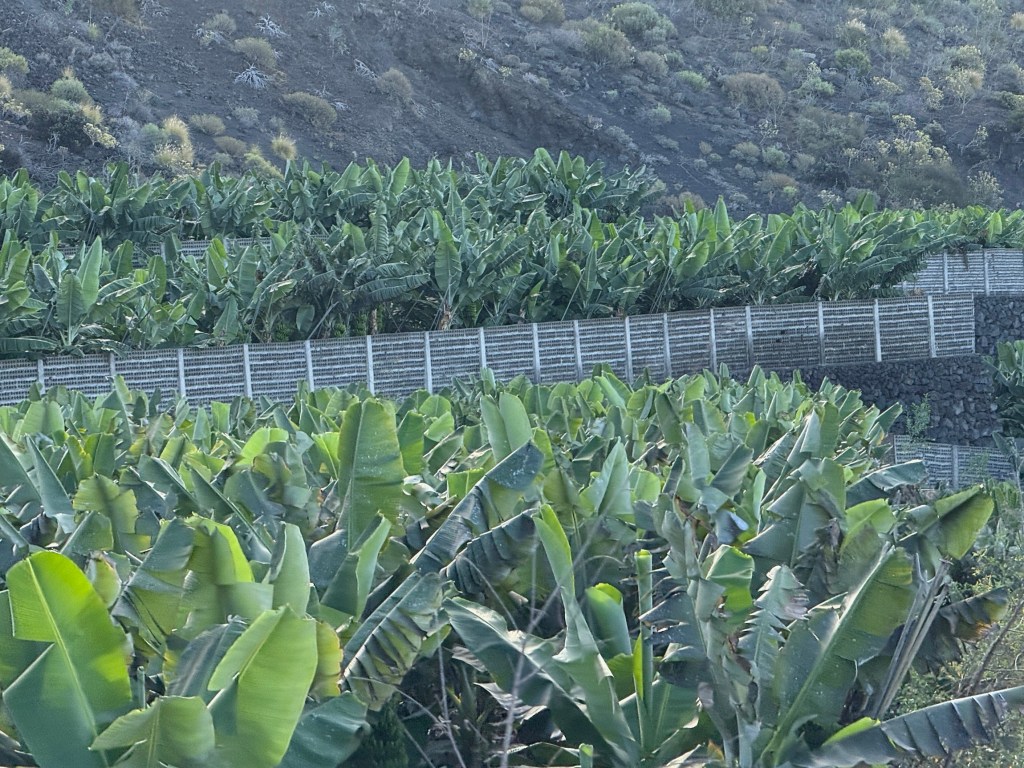
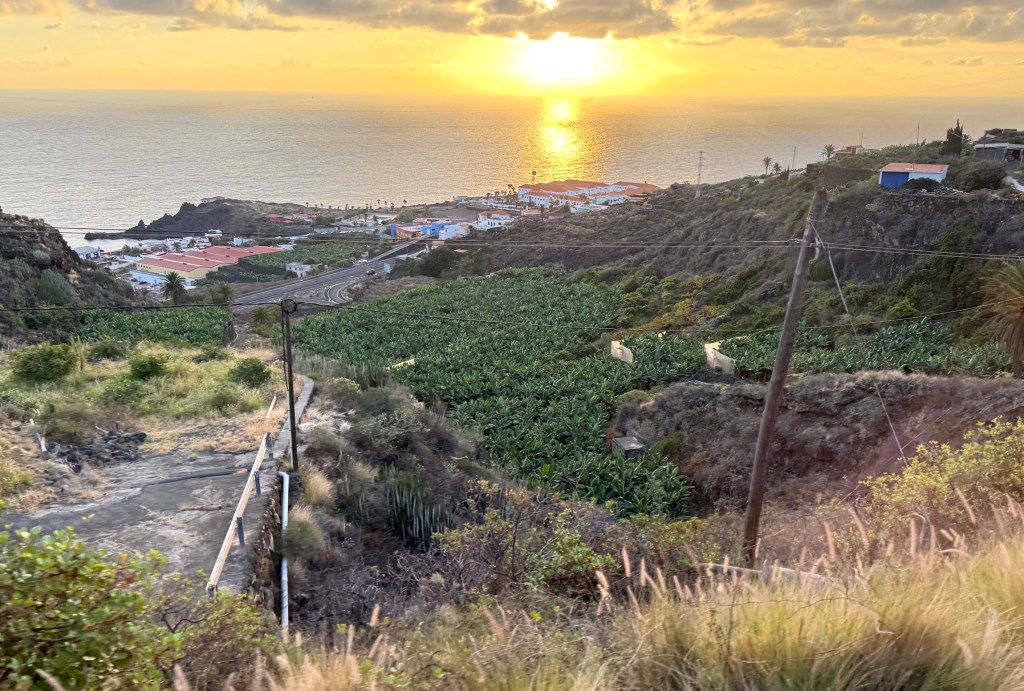
Bananas are a major crop for the island and dominate the flat areas of land around the coastline caused by lava flows from San Antonio extending the land area into the then sea.
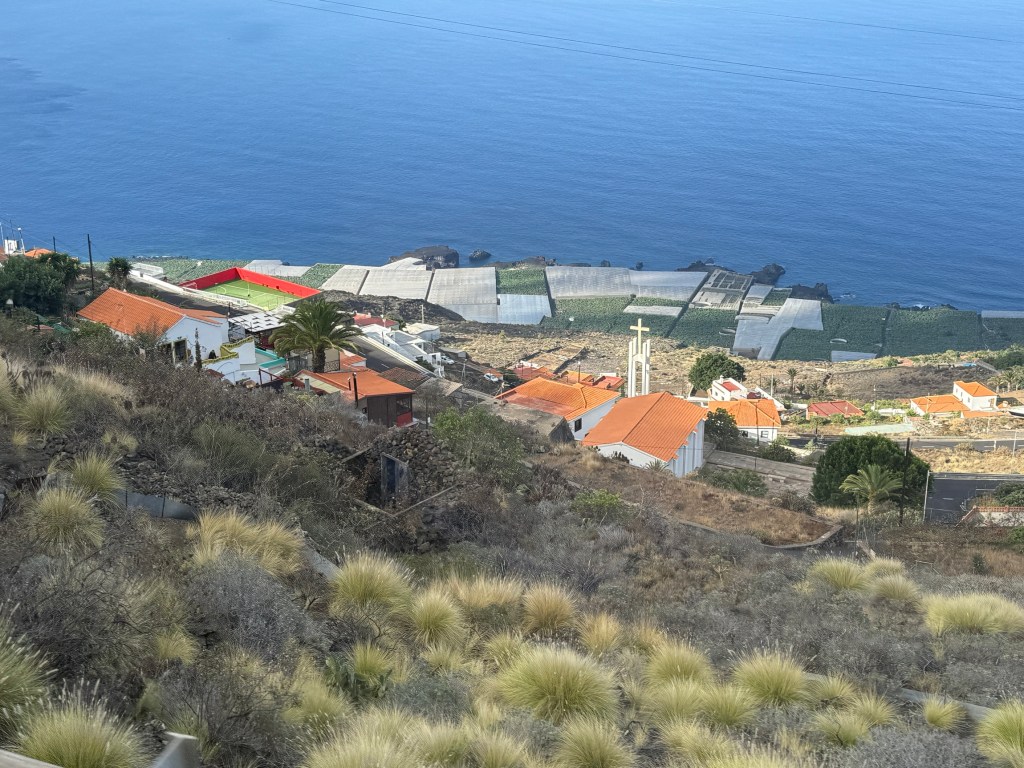
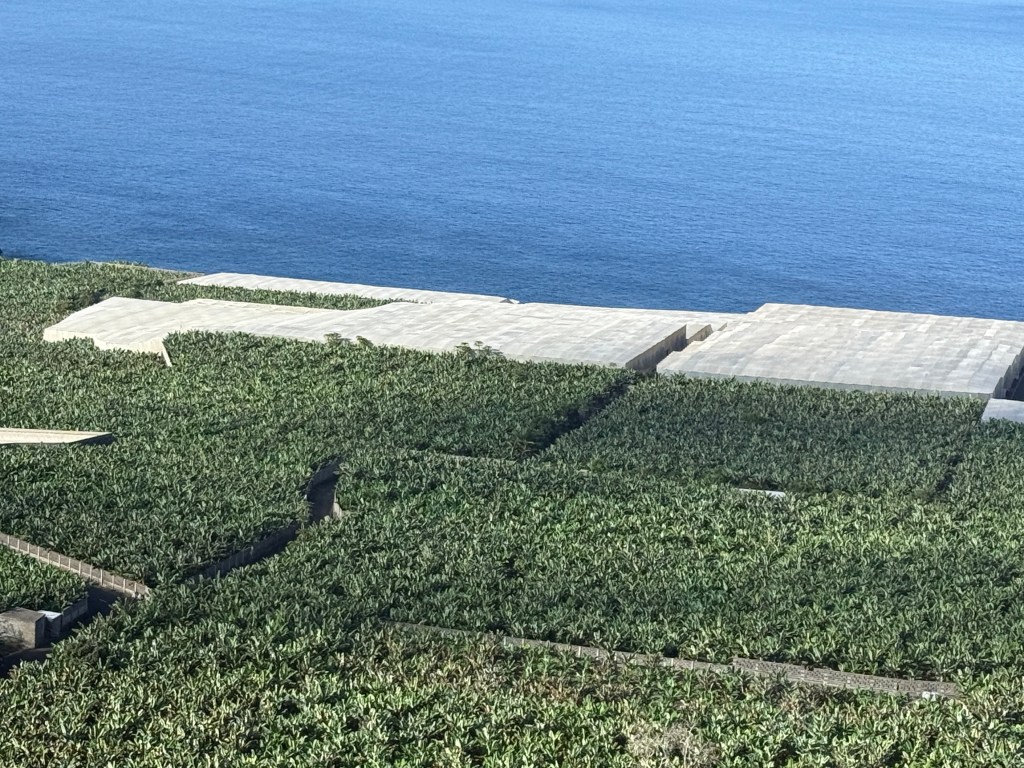
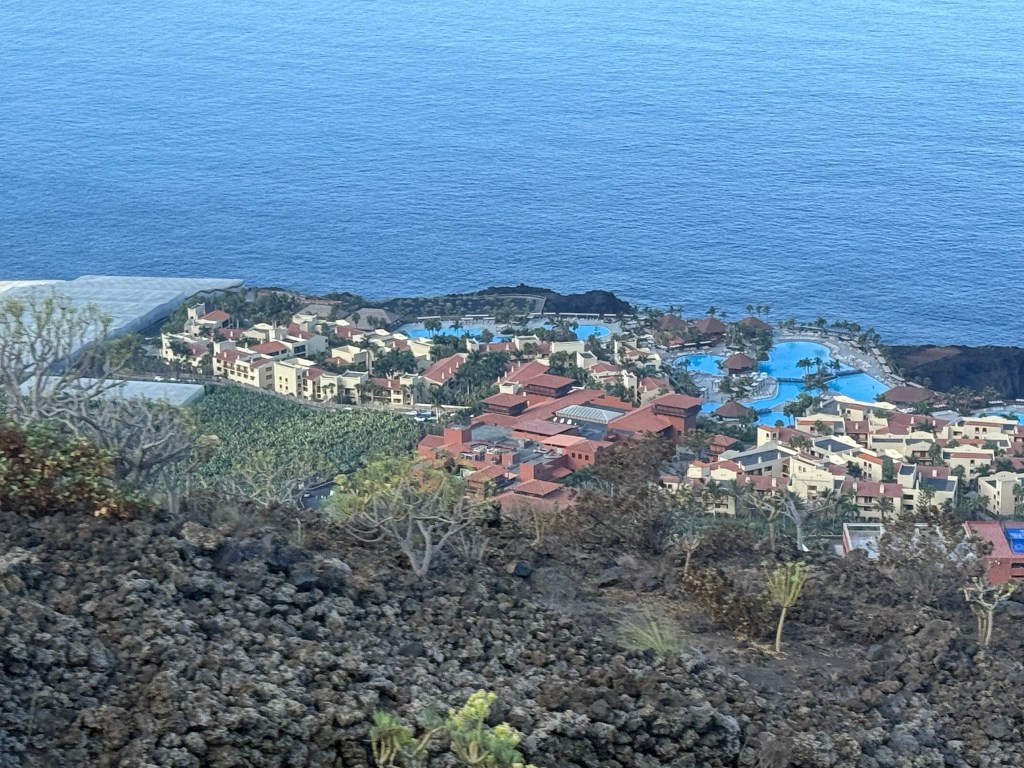
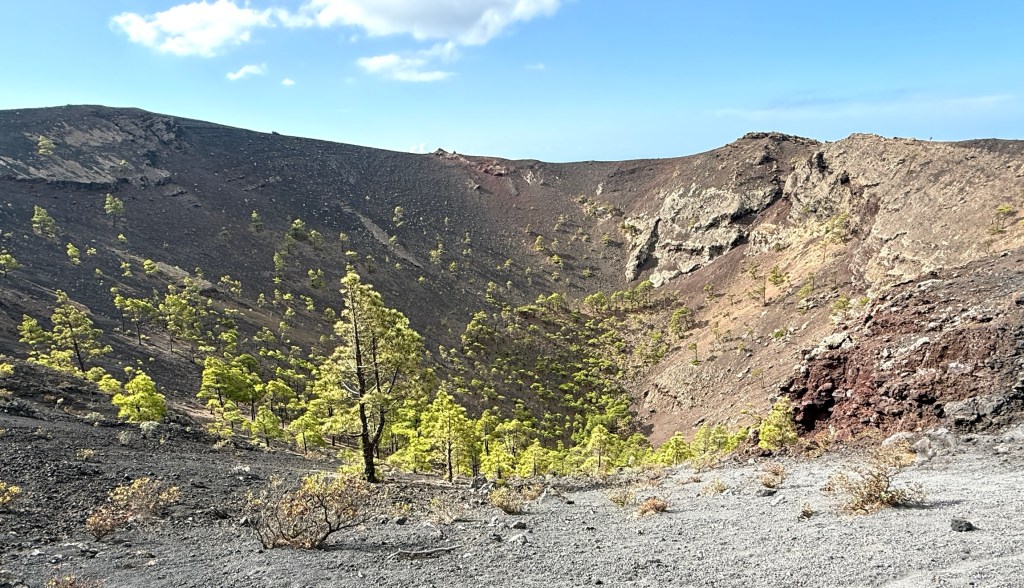
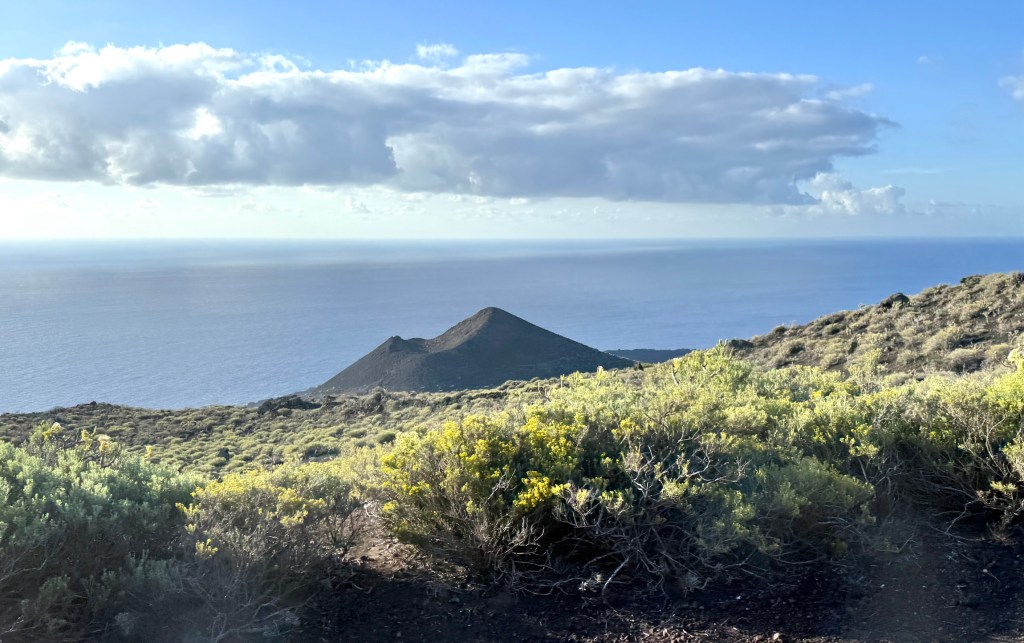
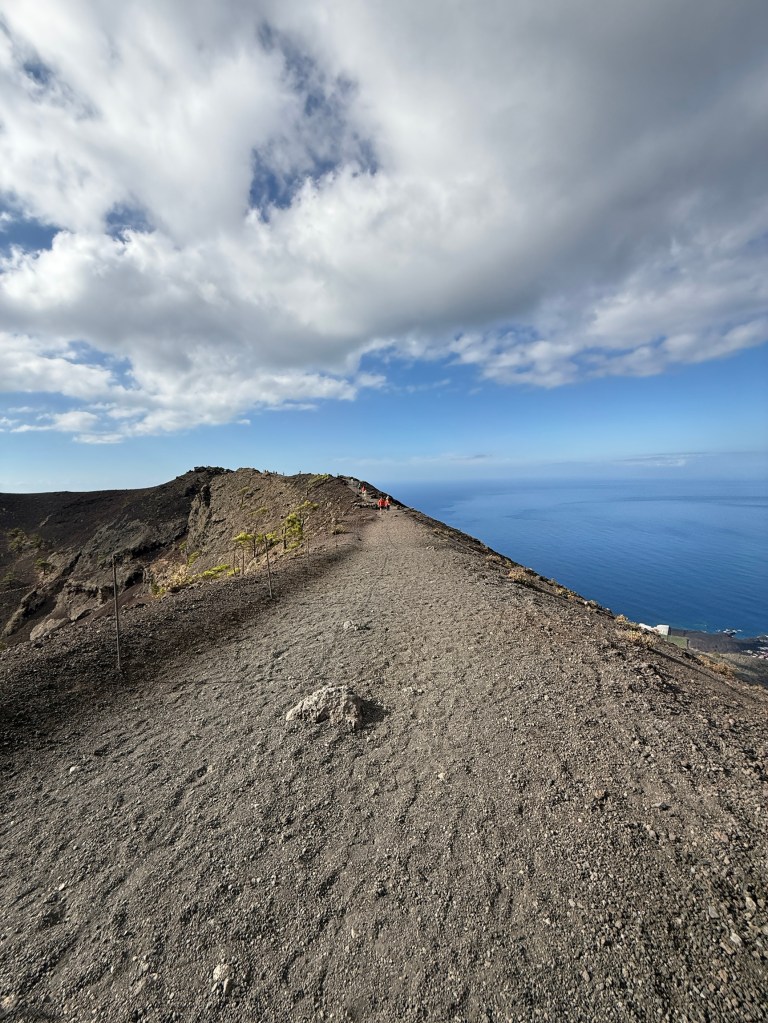
San Antonio last erupted in 1677-78, with lava flows from cracks and vents around the base of the old volcano. It would have been an extraordinary sight. It was a fairly steep drive getting up to the crater but the road wasn’t particularly narrow. Some great views down the slopes to the sea.
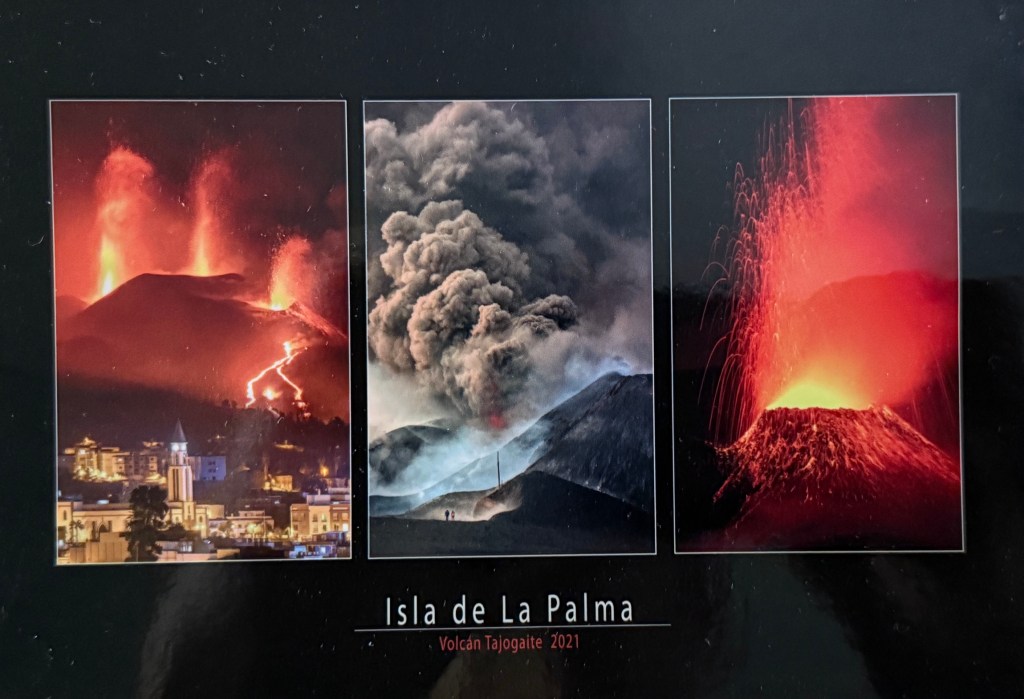
This is a postcard pic of the most recent eruption on La Palma over an 85 day period in 2021. It was fairly destructive with over 3000 properties destroyed. The Tajogaite eruption is shown as a red blob made by the guide on the map above.
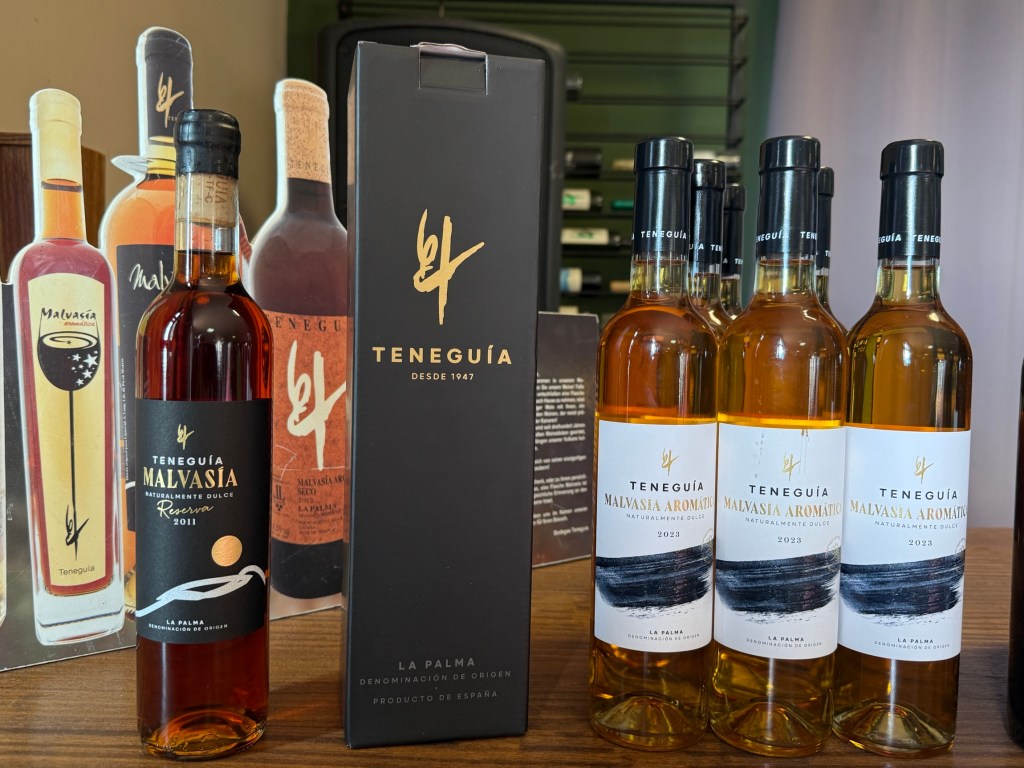
On the way back to the ship we called into a winery to taste some of the famous local drop made from Malvasia grapes, it ranges from being dry through to a desert style depending upon the way it is made. We found the sweeter style rather good and acquired a small bottle, it will go well with the Christmas pudding. If it lasts that long! The grapes are grown higher up the slopes than the bananas, between them are a range of other vegetable and fruit crops.
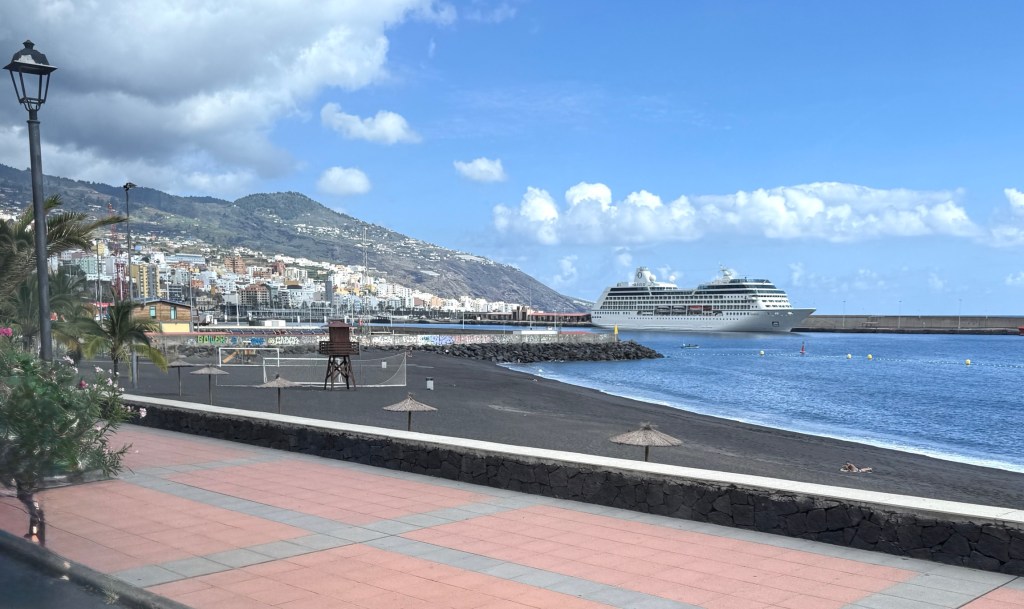
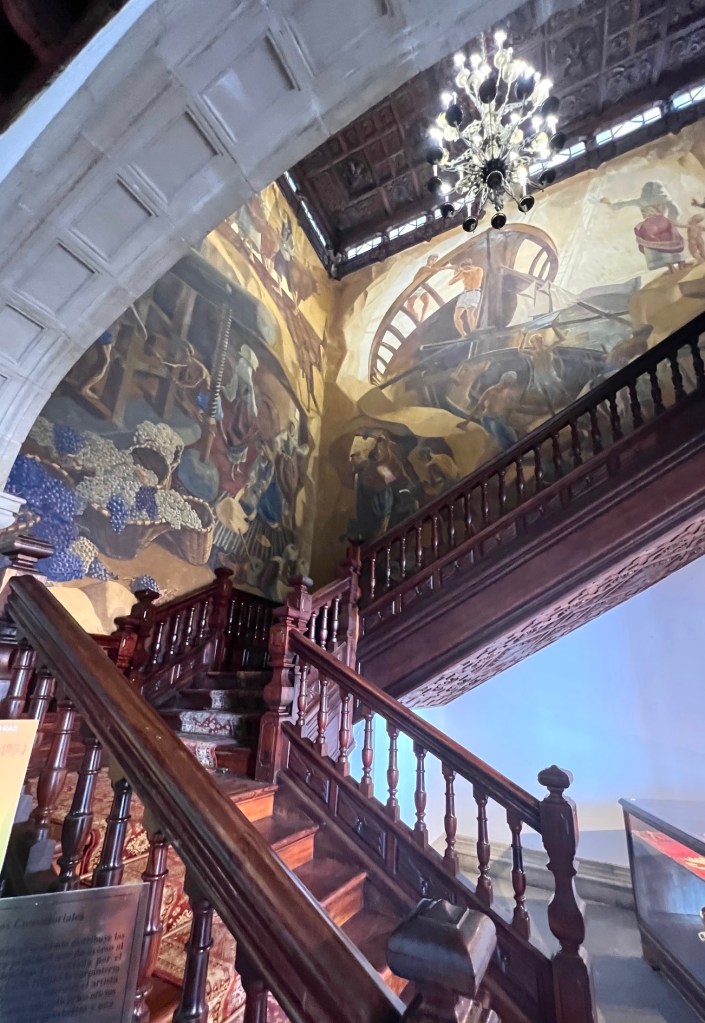
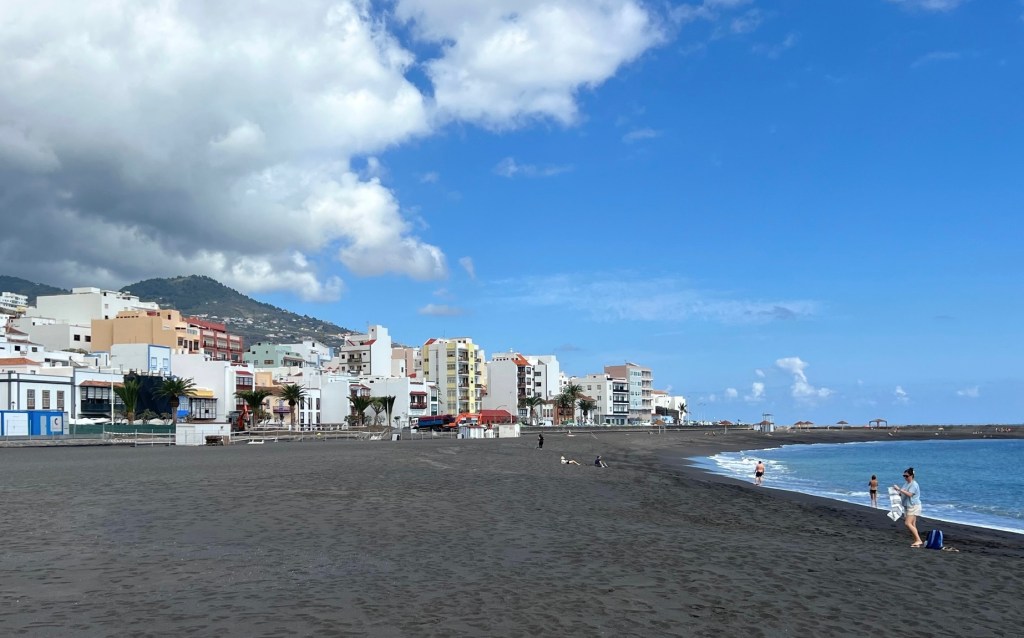
Back in the port we had a stroll through the old town looking for a local spot for a quick lunch.
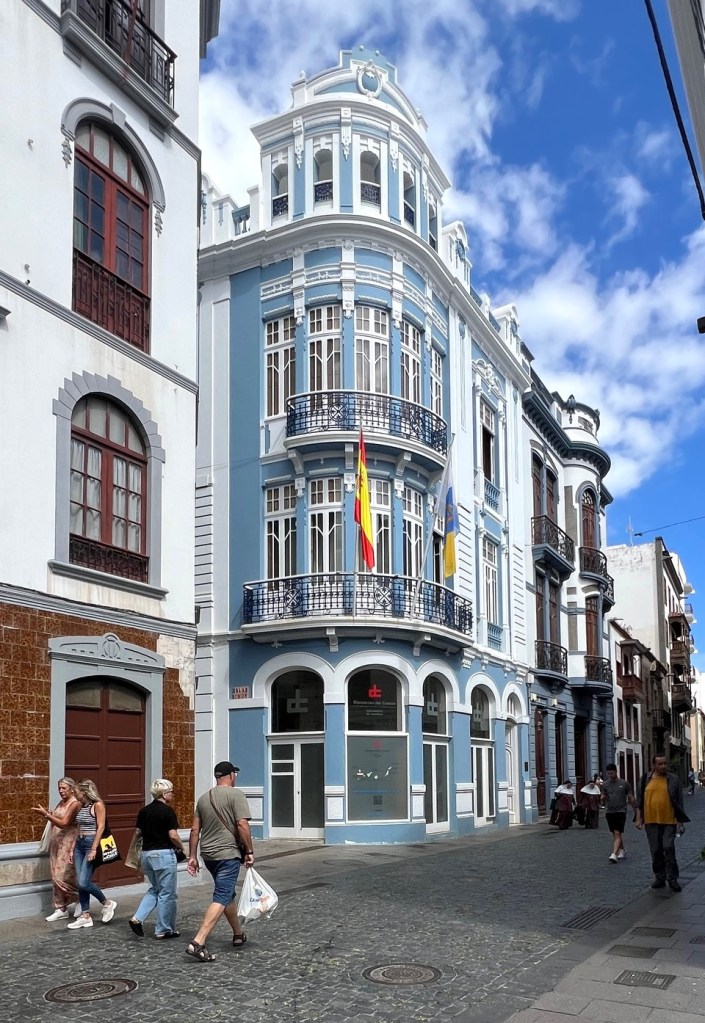
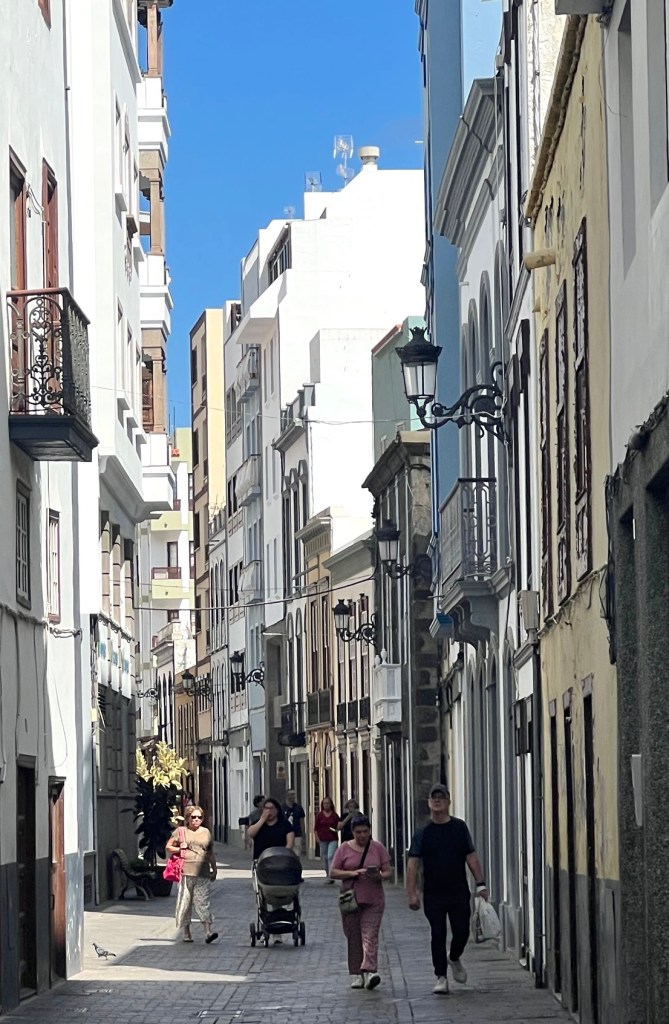
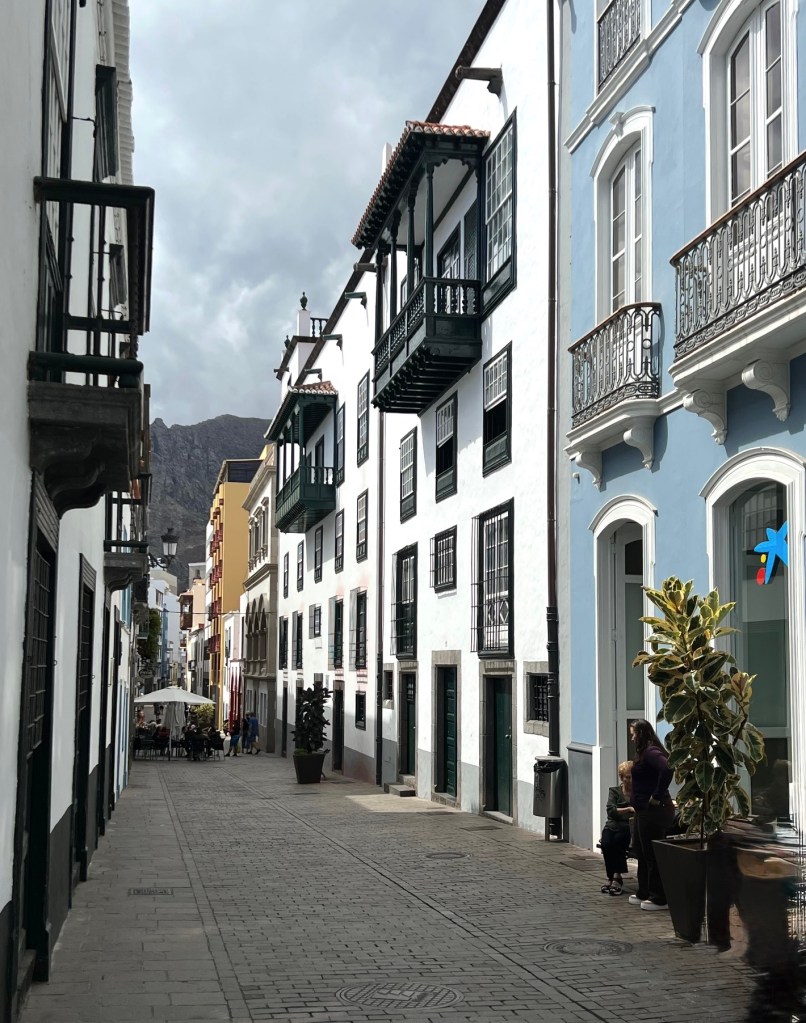
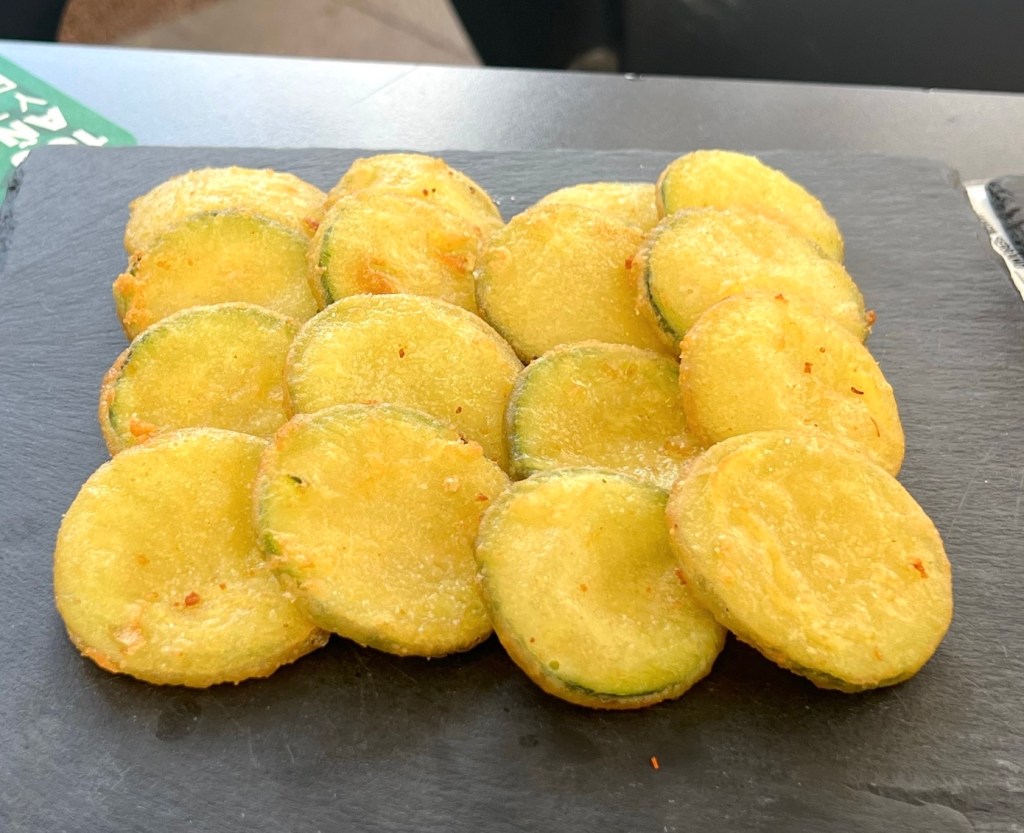
We settled on a small establishment for lunch, facing but set back from the waterfront. Four tapas pieces, a local beer and some quaffing wine to put it all away. Very tasty.



Back on board we had a light dinner of pizza at the Waves Grill & Pizzeria.
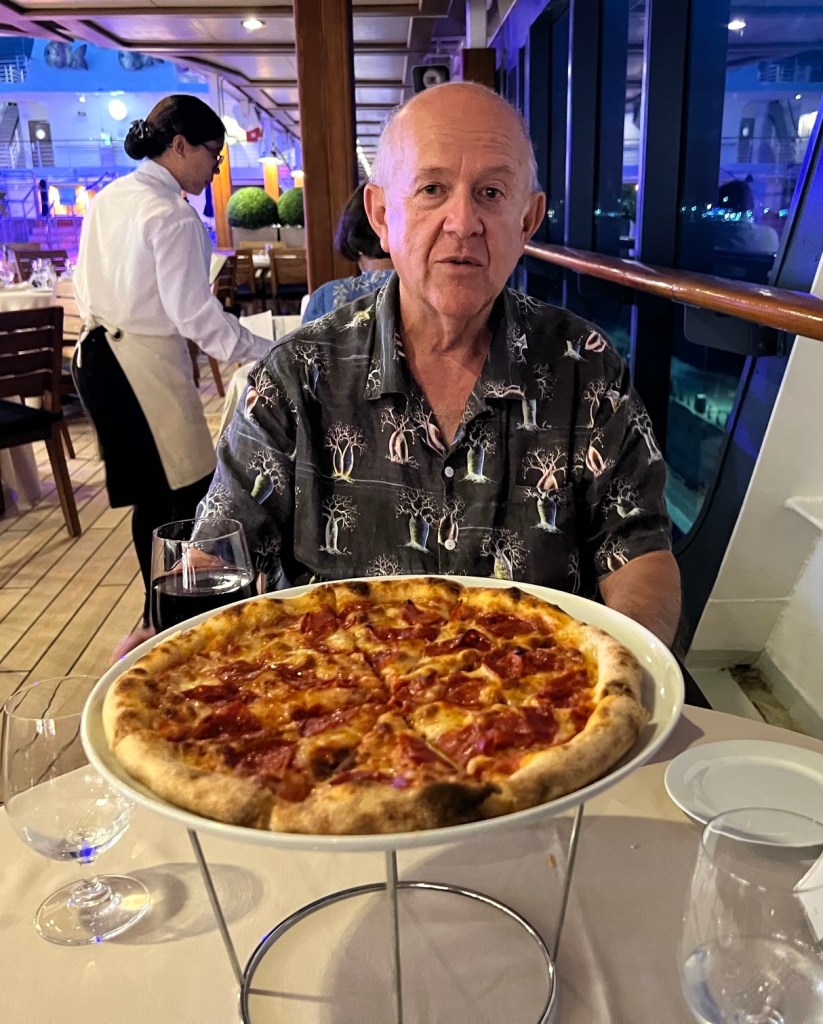
This was our last evening in the Canaries and we later sailed north for the city of Funchal on Madeira.

Posted on October 23, 2025, in Portugal and Spain 2025. Bookmark the permalink. Leave a comment.
 Allthegobro
Leave a comment
Comments 0