Derby
The Gibb River Rd ends on the outskirts of Derby where it intersects the Derby Highway.
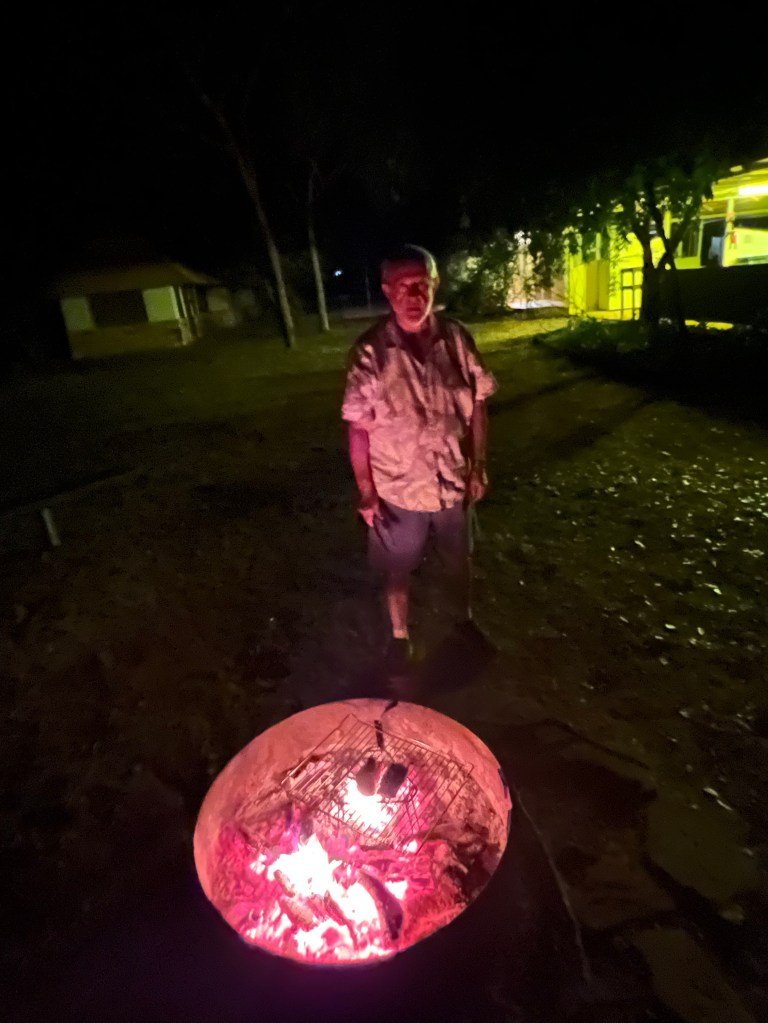
Birdwood Downs is about 10 km from the end of the Gibb. It is a sister station of Mt Elizabeth Station (one of our earlier stops), owned by the Burton family. The camp is run in a similar way, no power or water to sites but good facilities compensate. Homealone was in luck because we arrived on a Saturday and Saturday night is burger night around the campfire. All up sixty seven burgers were consumed by travellers. Dinner all done!
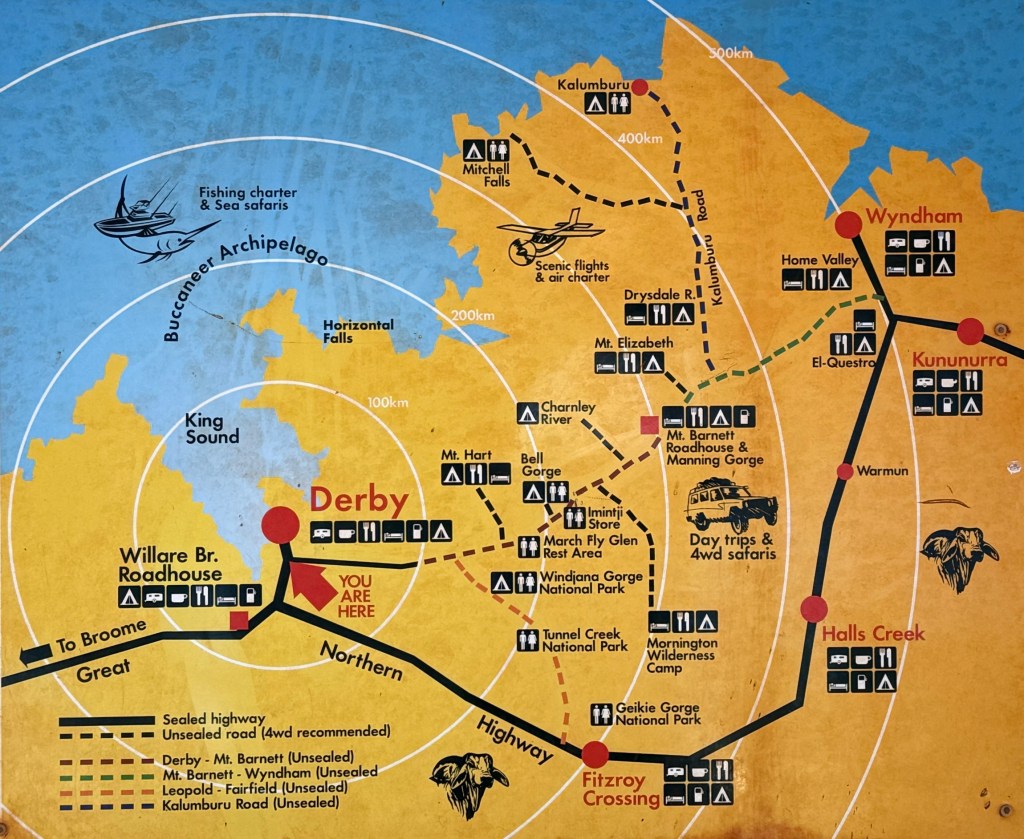
Here is a map of the journey along the Gibb, starting at Kununurra and ending at Derby. Many of our stops are marked on it.
We stayed at Birdwood for two days to explore Derby and restock the pantry after nearly a month following the Gibb.
Derby is a quiet but interesting town. We saw no unrest among the residents. In the late 1800s it was a centre of indigenous unrest, significant resistance was mounted against the expansionary pastoralists.
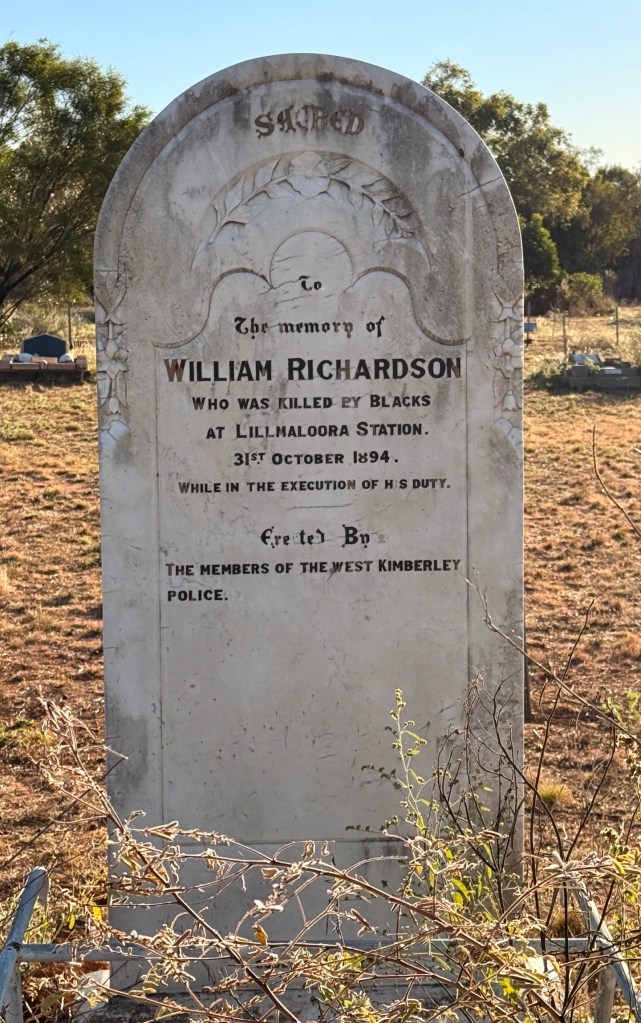
This resulted in numerous arrests and gaol time for aboriginals, possession of cattle meat a frequent offence. There were white deaths as well. There were revenge executions and rounding up, ‘black birding’, of aboriginals for work on properties and pearling enterprises.
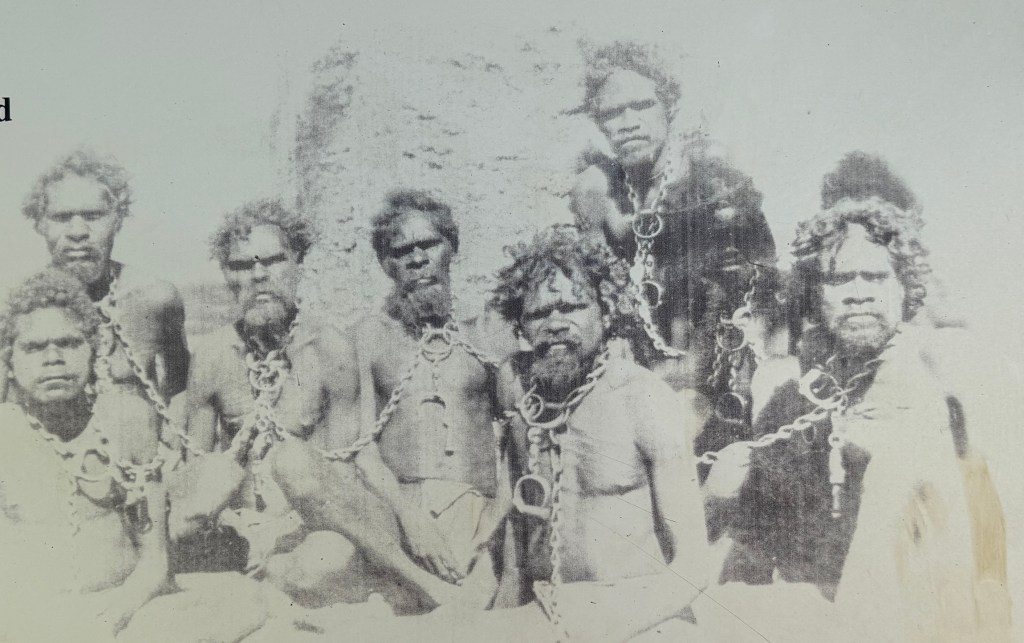
Another example of the ‘frontier wars’, of which our and earlier generations learnt little about in school.
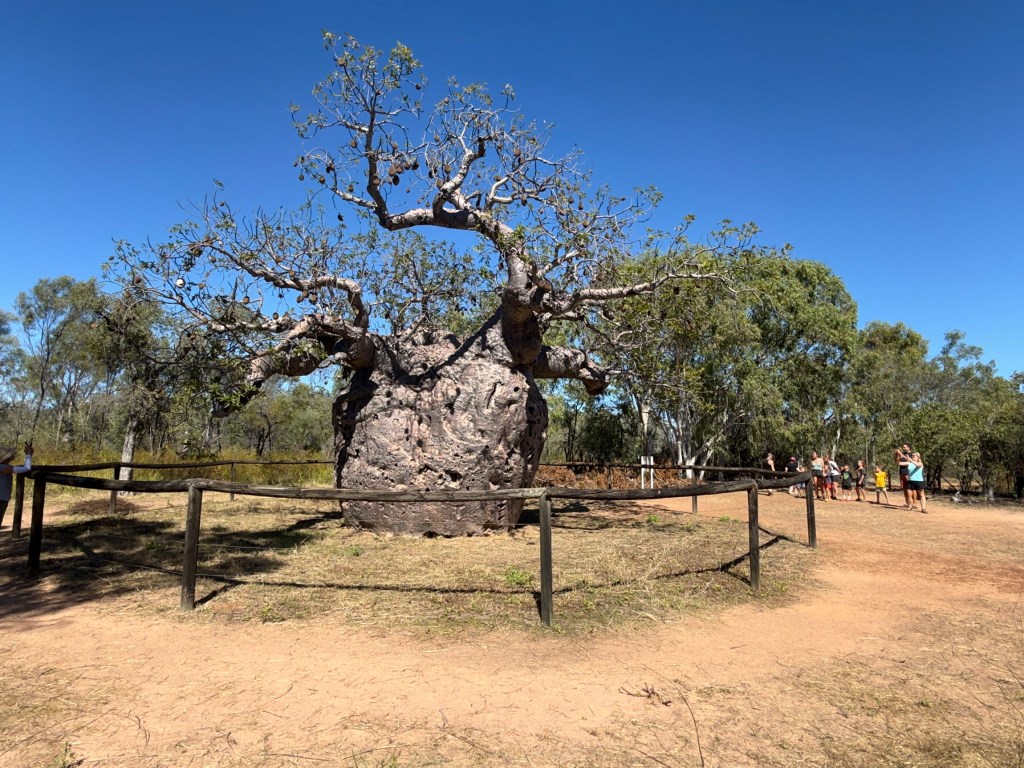
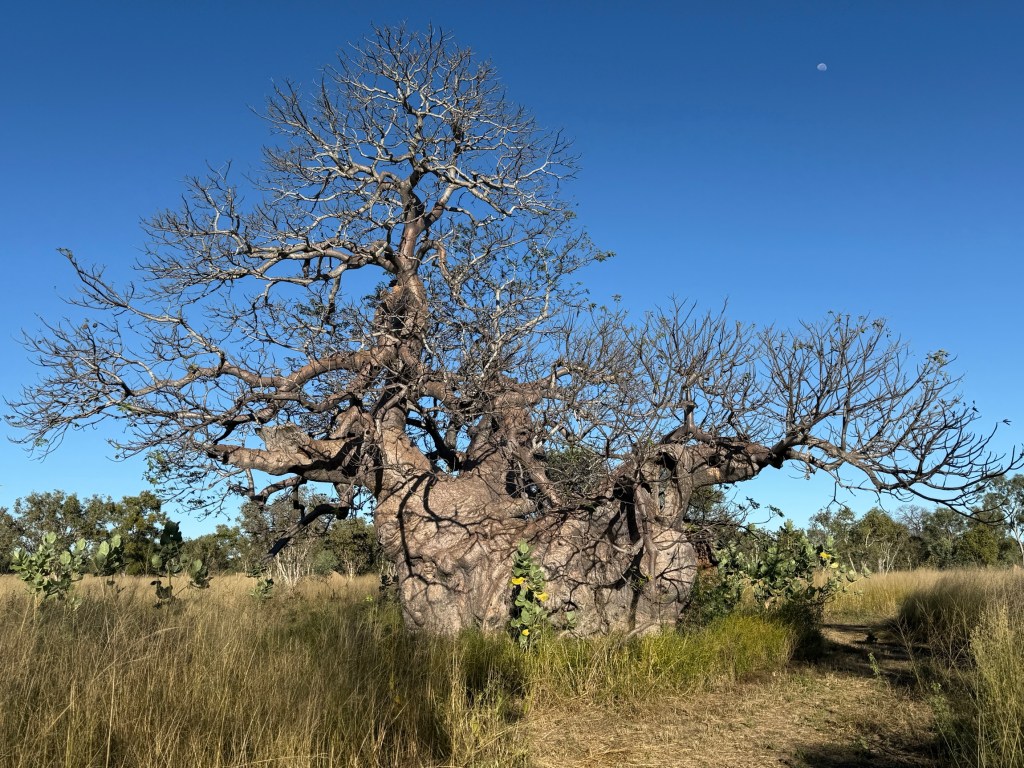
On the outskirts of Derby is the ‘prison tree’, an old hollow boab tree, used as a holding cell for aboriginals being sent to Derby gaol. The tree is thought to be 1500 years old.
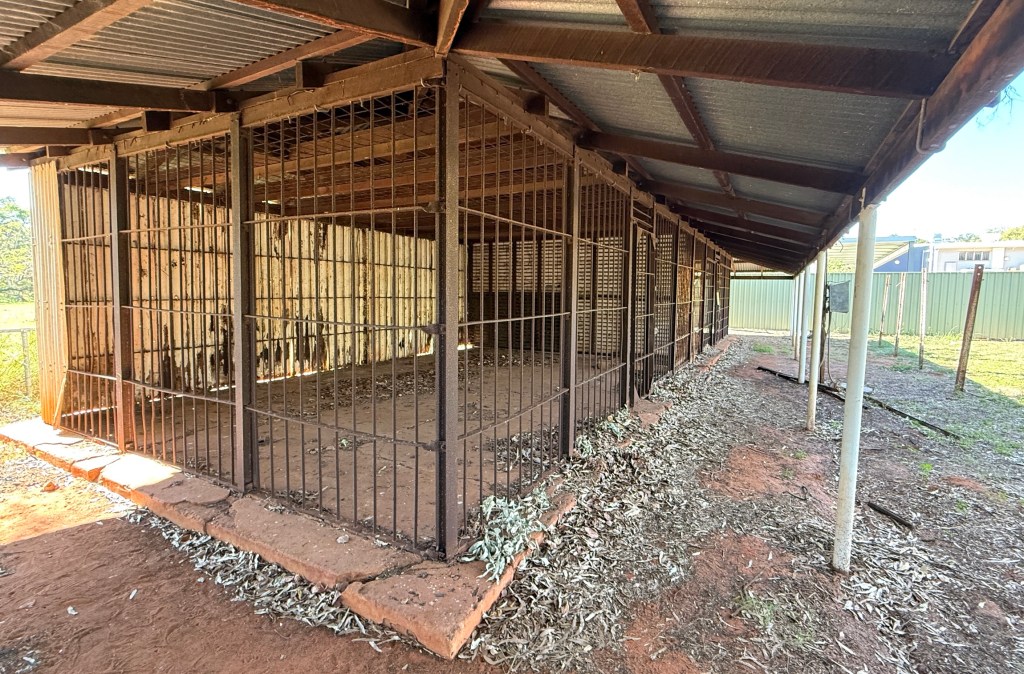
The old Derby gaol is still standing as an historical site. Not pleasant days.
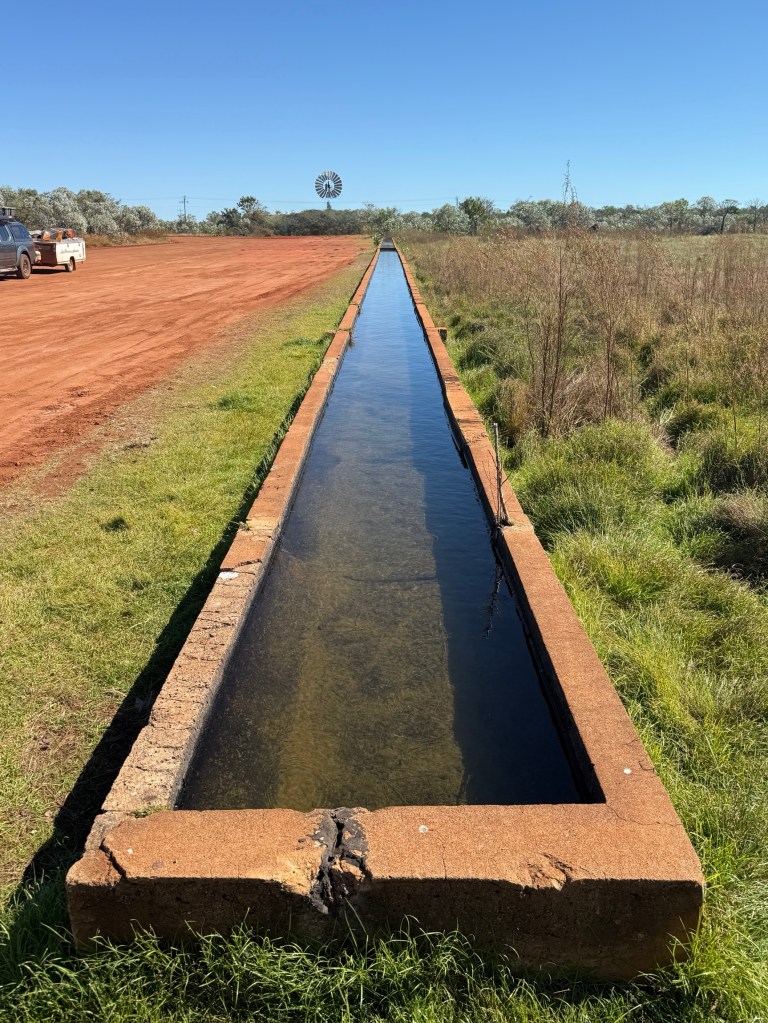
Near the ‘prison tree’ is another relic from the early 1900s, what is thought to be the longest cattle drinking trough in the Southern Hemisphere at 120 metres. Five hundred bullocks could breast this bar! Originally it was directly fed by a bore, a windmill now pumps water into it. No bullocks seen, I suppose they still come along at times; only tourists.
The town itself is a bit non de script, a good bakery from which we had some steak and cheese pies for lunch one day.

There is an interesting art gallery and gardens, the Norval Gallery. He Mark Norval is a long term resident and it would seem a leading artistic light in the town.
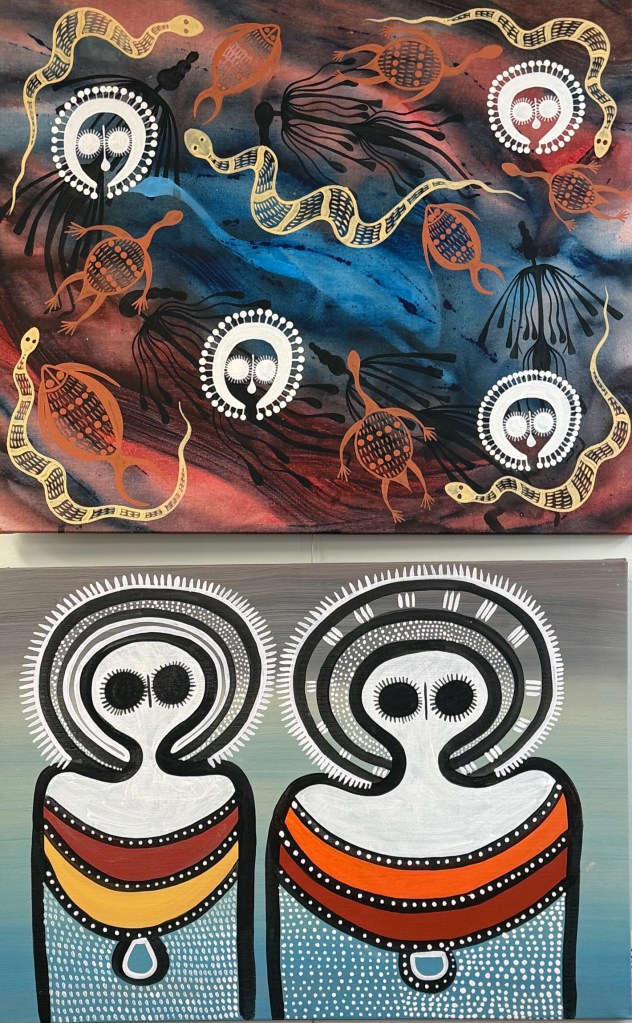
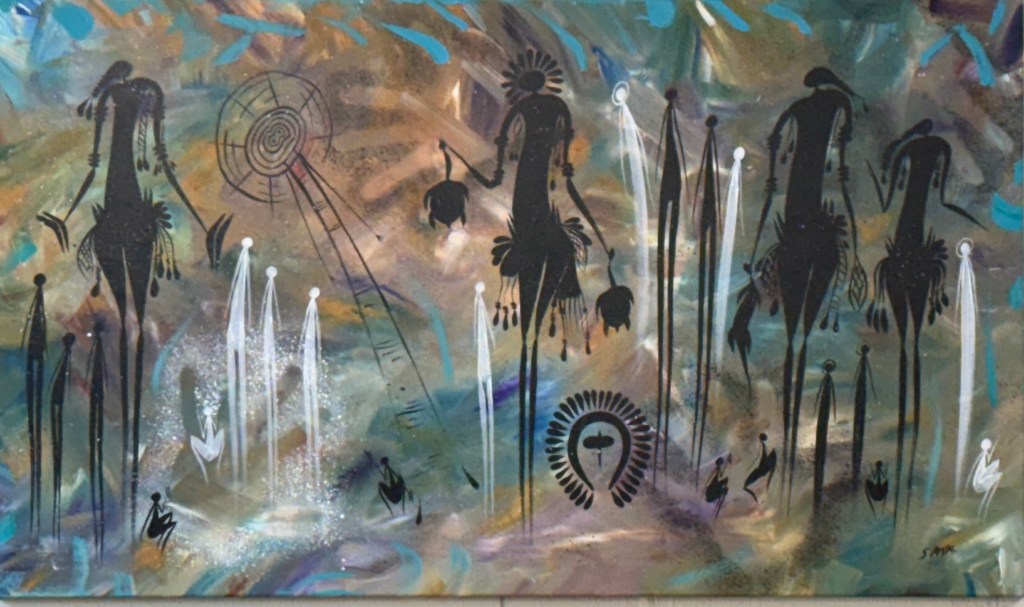
Some interesting works by him and others on display. Indigenous themes, many Wandjina and Gwion Gwions (Bradshaws), the later are the sticklike figures. We had a lunch snack here while looking around.
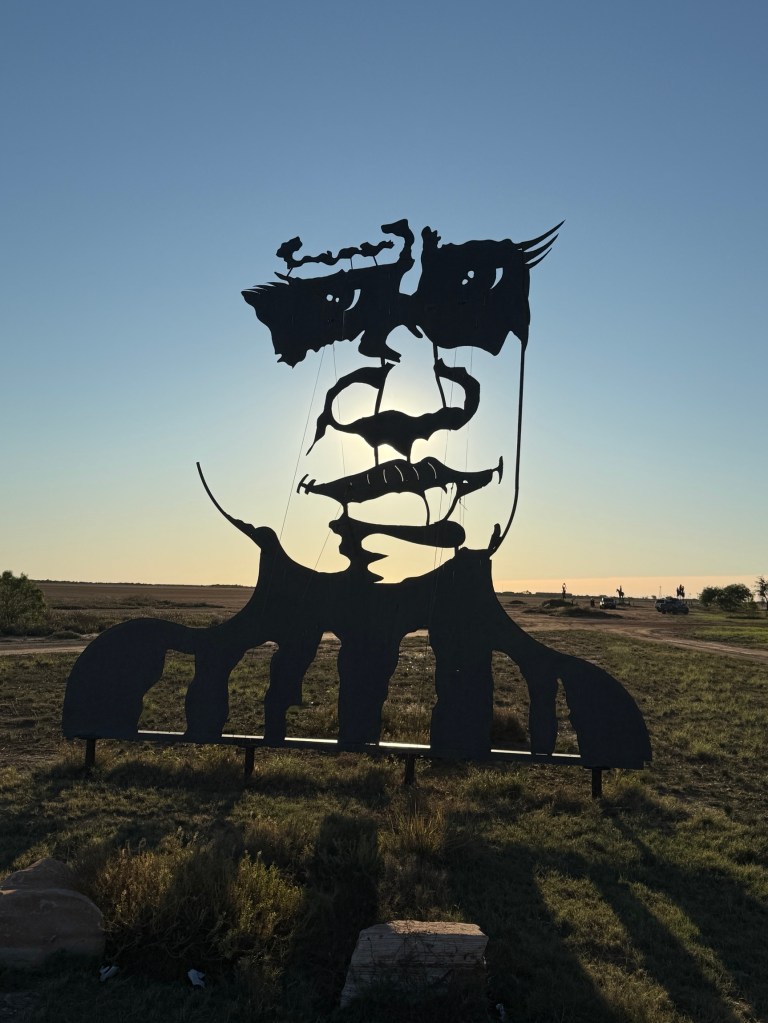
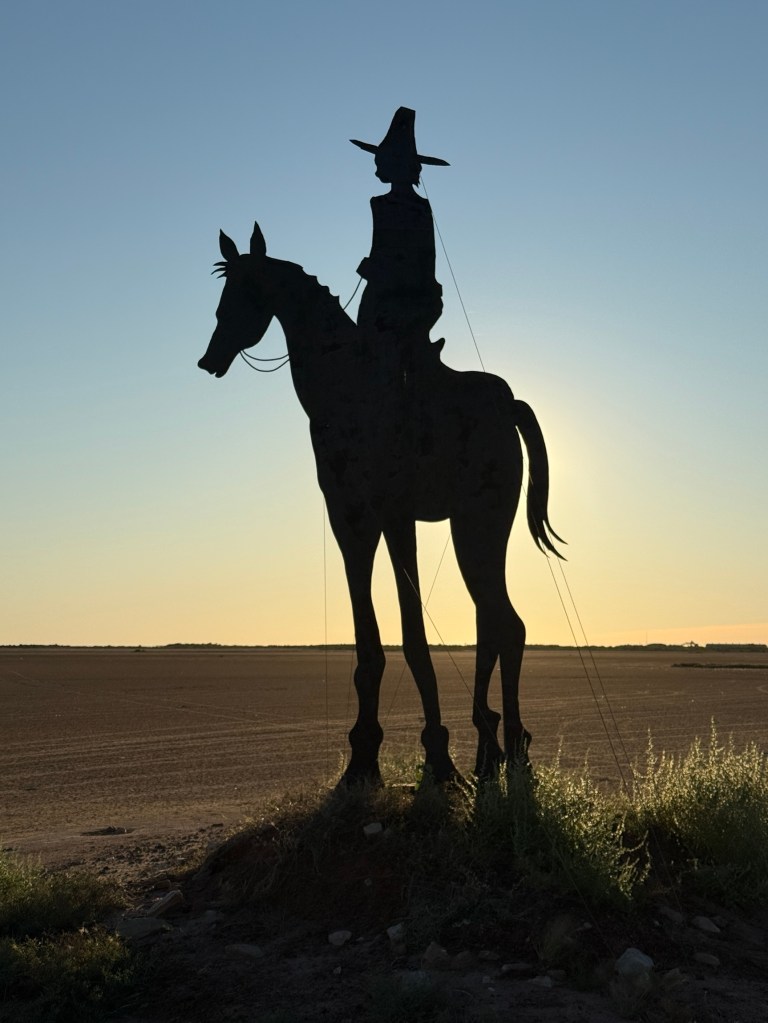
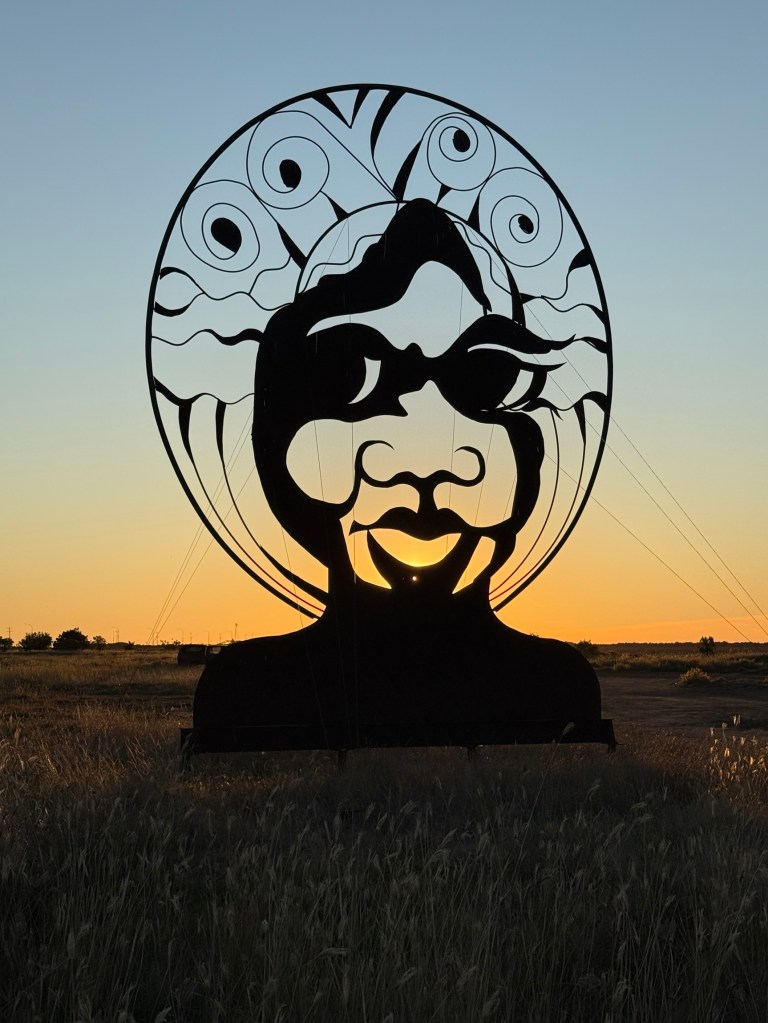
Mark Norval was also instrumental in organising the installation of the sculptures on the mud flats surrounding the town.
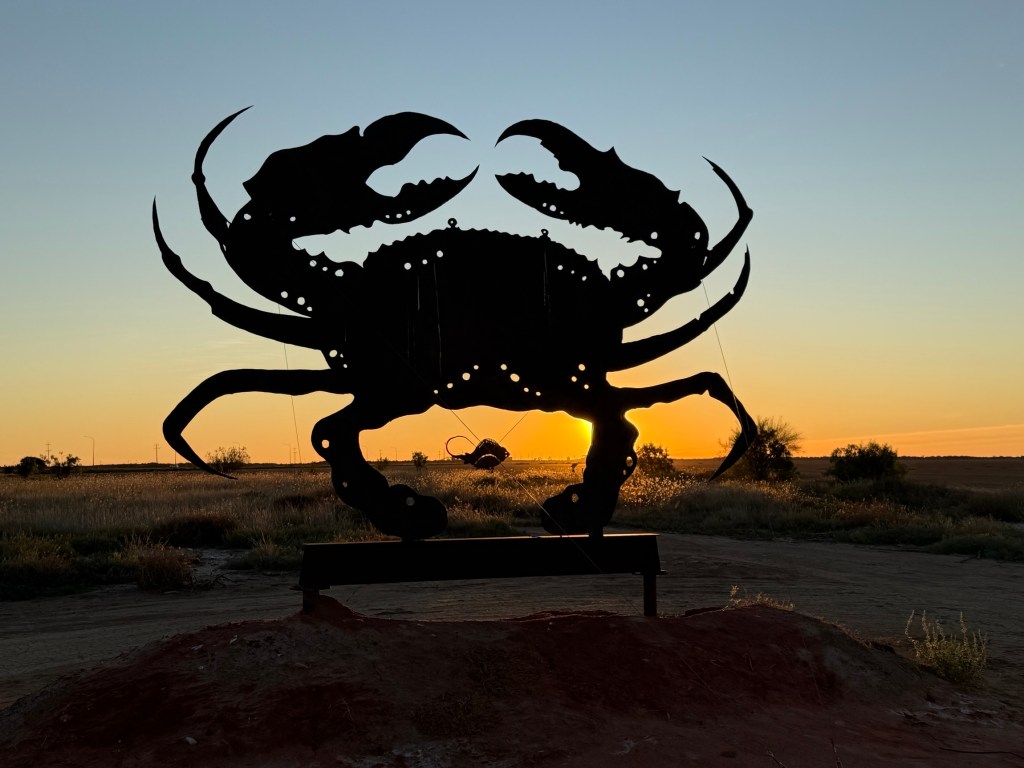
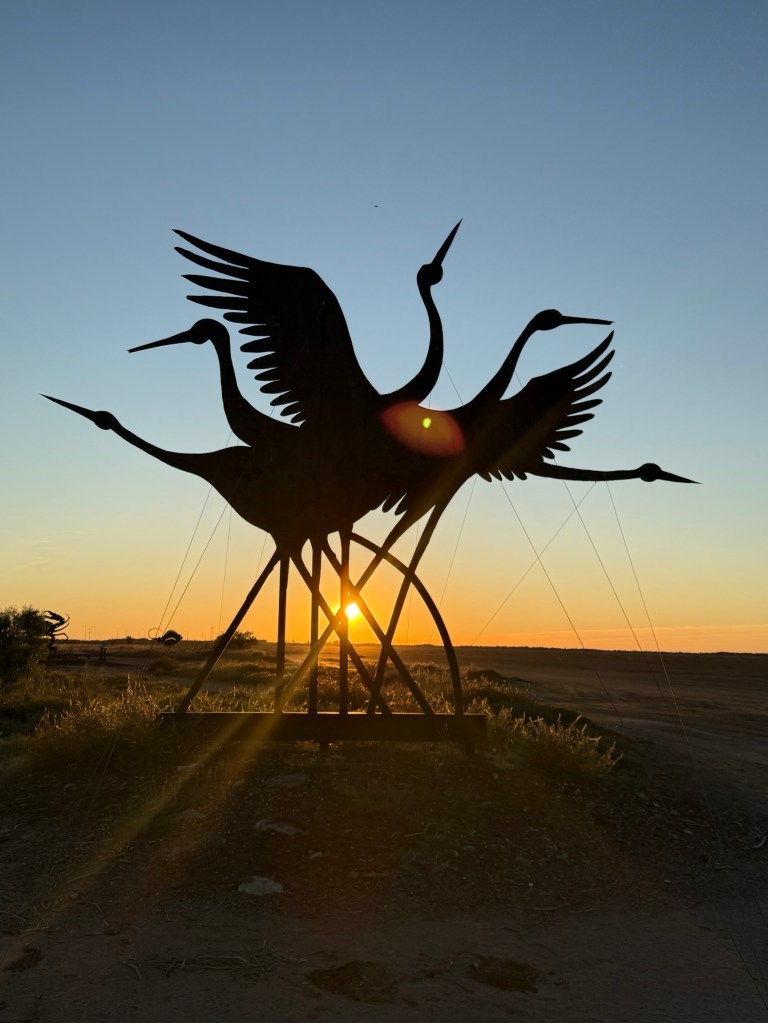
Very flat, bone dry (different story during the wet) and seemingly endless. Some of the sculptures are his and the others by locals. Very impressive as the sun sets.
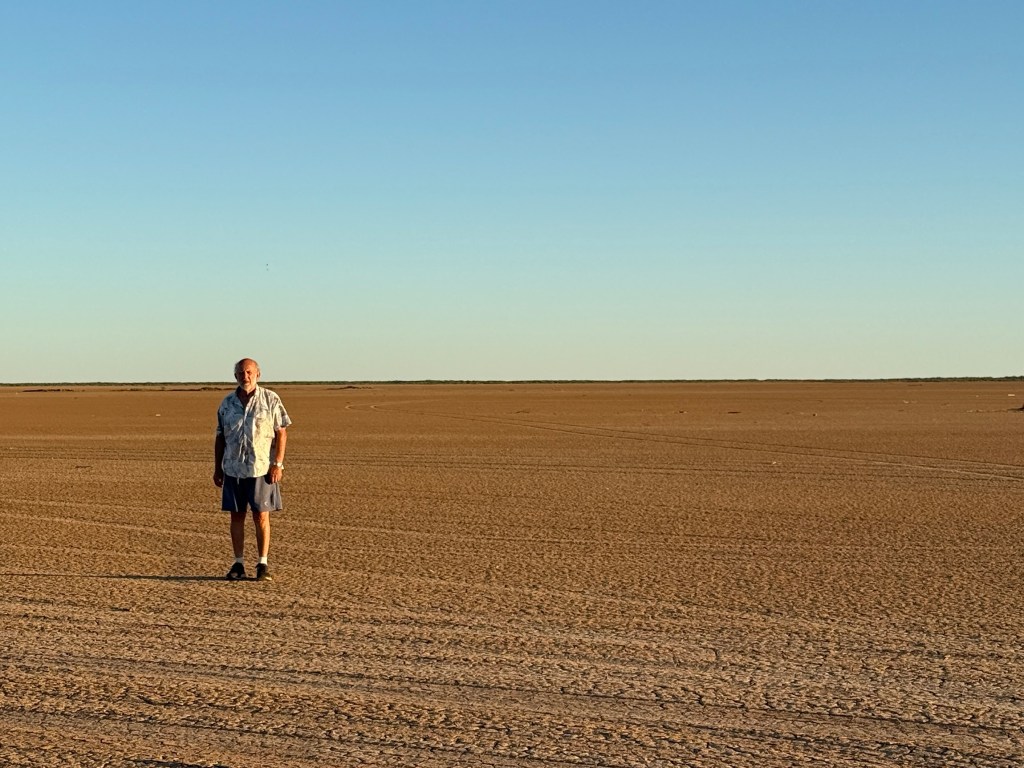
The Derby port is not very busy these days. It looks out over King Sound and the estuary of the Victoria River. Tide movements here are enormous, upwards of 11 metres between high and low. Reputedly the largest in Australia and second to someplace in Canada.
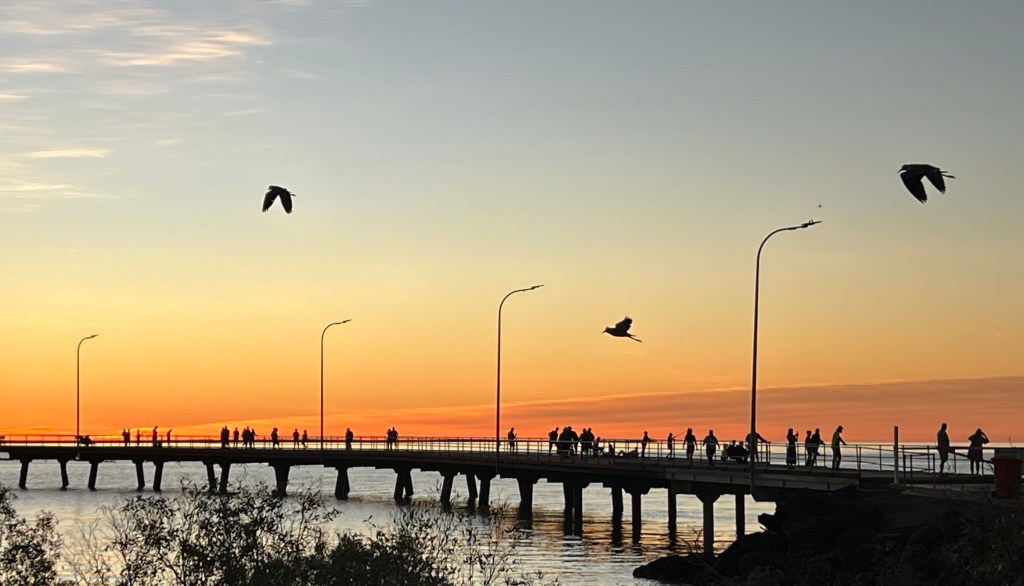
The sun sinking into the Indian Ocean is memorable. It is a favourite spot for the nomads as the sun goes down.
We pack up in the morning and head down to Broome.

Posted on June 20, 2025, in Western Australia 2025. Bookmark the permalink. Leave a comment.
 Allthegobro
Leave a comment
Comments 0