Temples, Tombs and Tales III
It seems that the people who put our itinerary together have us going to a variety of temples, each (as a generality) dedicated to a different god or in one case, two gods. The temples though were used by all the kings of the period, each adding their touch to the place over many reigns.
Our small group of 8 (no French) had the same guide for the entire trip. Dr Mahamod, he has a PhD in Nubian studies of some sort, gregarious fellow. We thought he was good, knew what he was taking about…..or so it seemed to us…… and didn’t swamp us with information.
At Karnak.
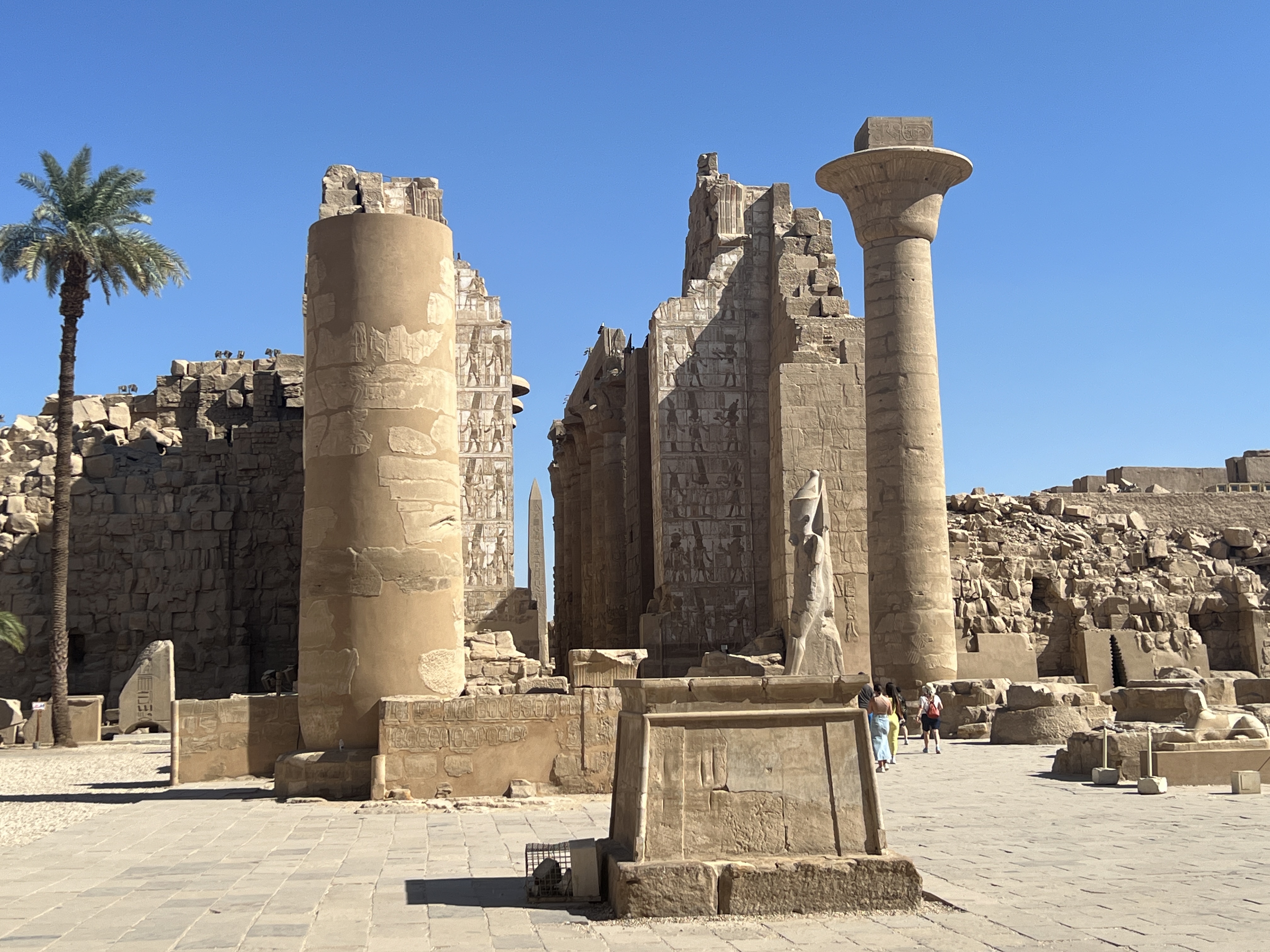

Over the five days we steamed to Aswan Mahamod guided us through the mysteries of six temples, generally starting early in the morning with a six o’clock breakfast and getting back at 1pm or so for lunch.
At Abydos
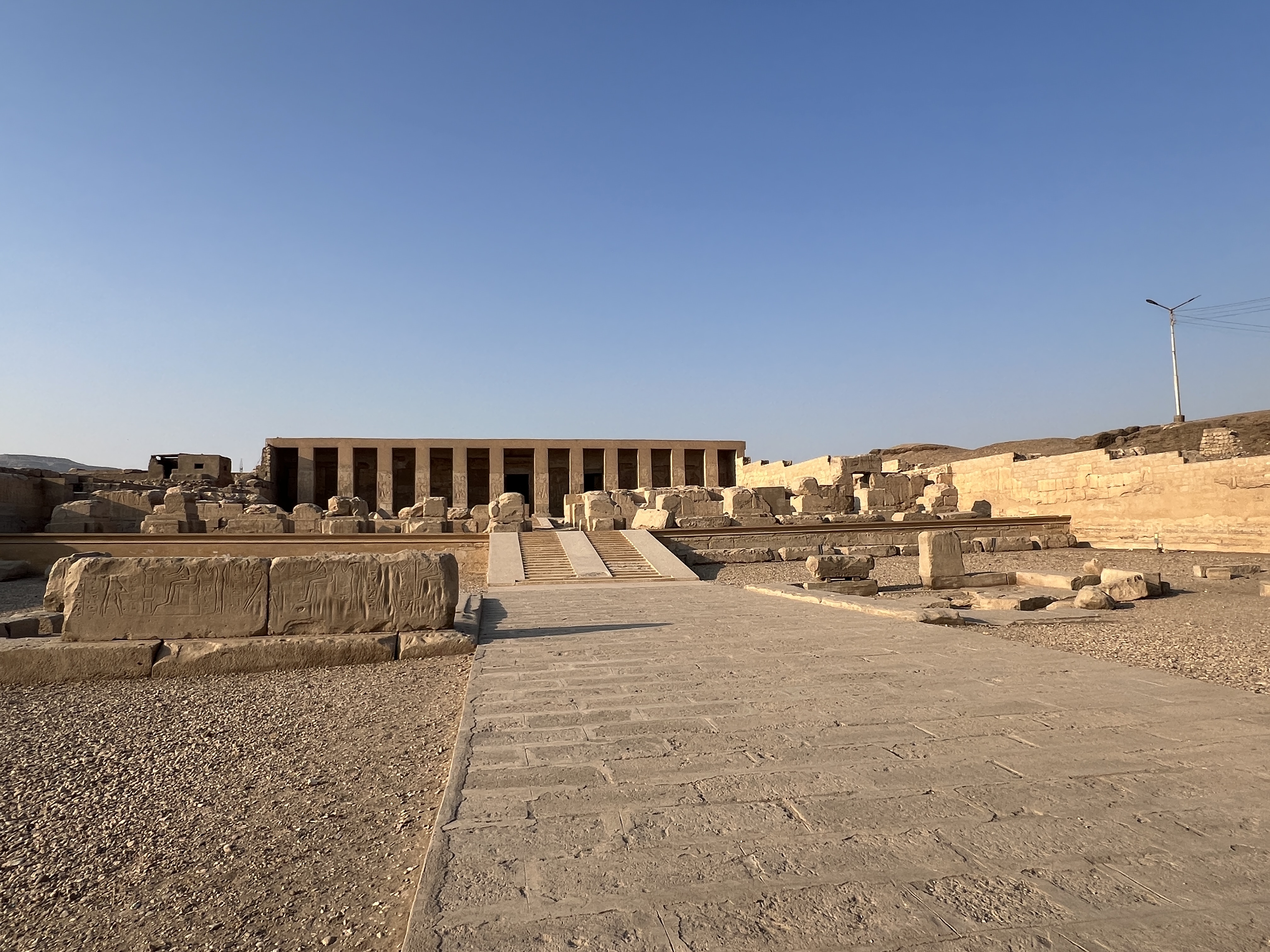
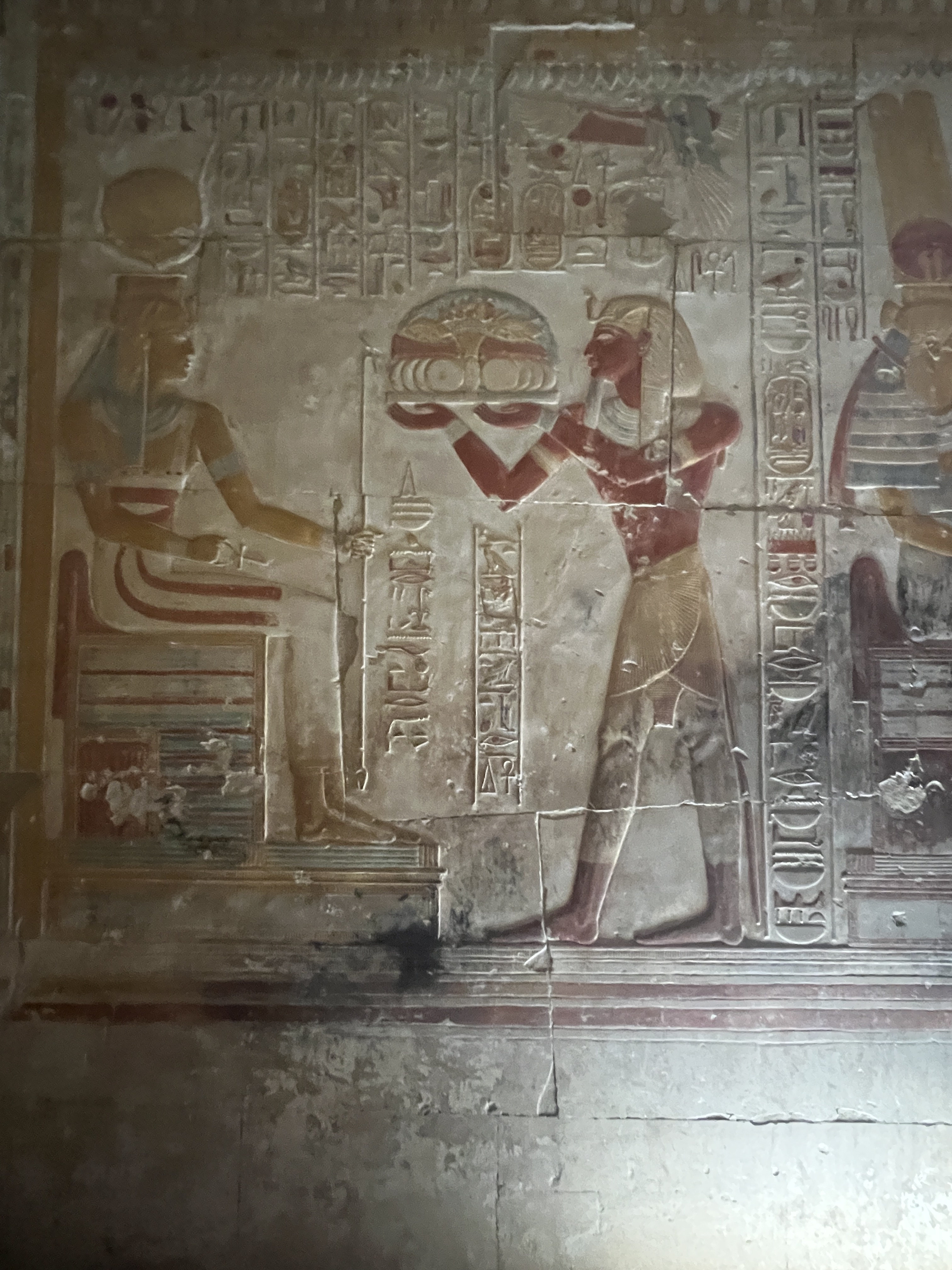
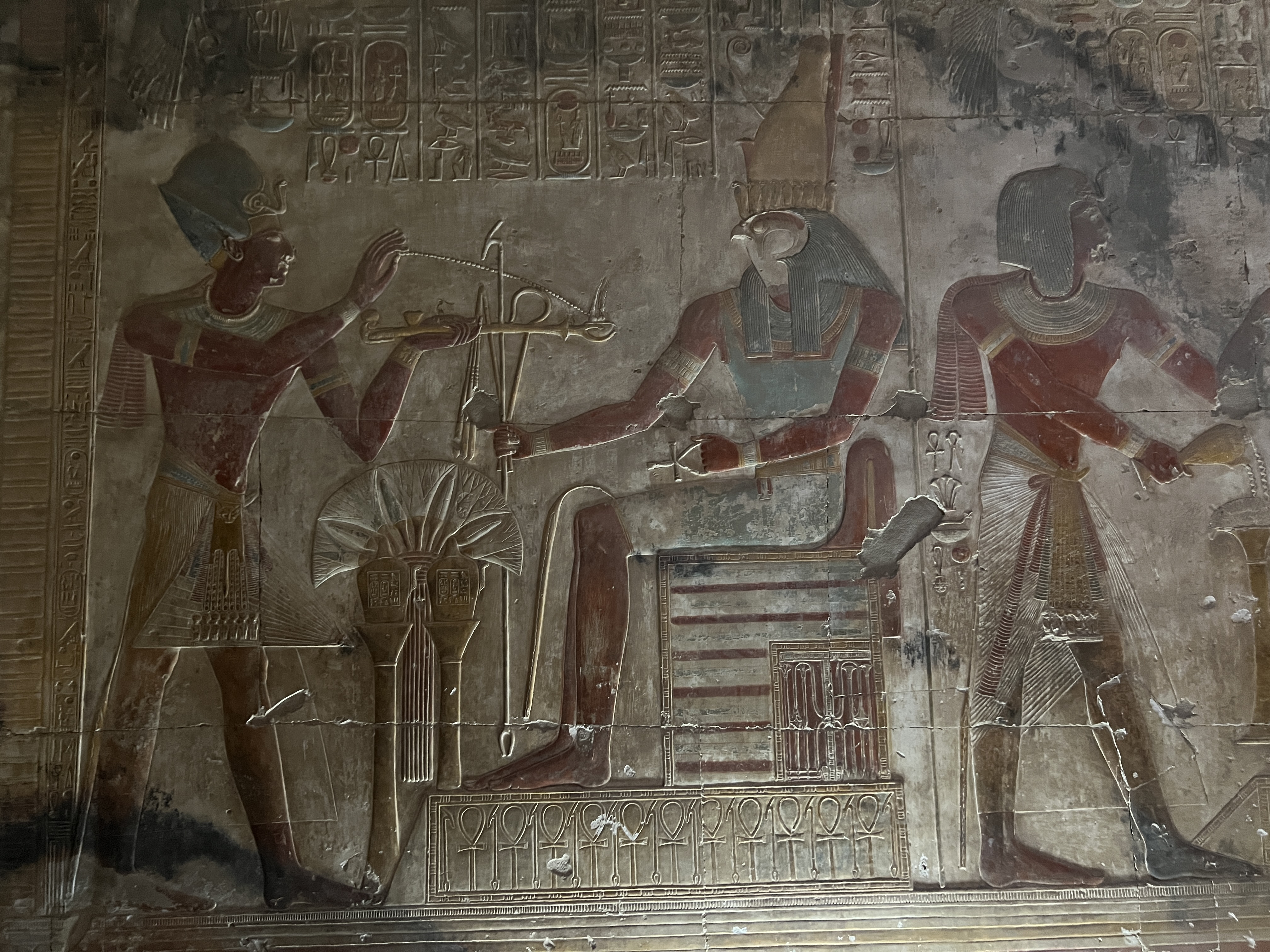
The temples are these days devoid of all the fineries of the time…..god statues, ornaments etc. These are in the museums in Luxor and Cairo. Or have been pinched in antiquity after the decline of the civilisation, or in more recent times by the British, European and American collectors/museums.
At Denderah
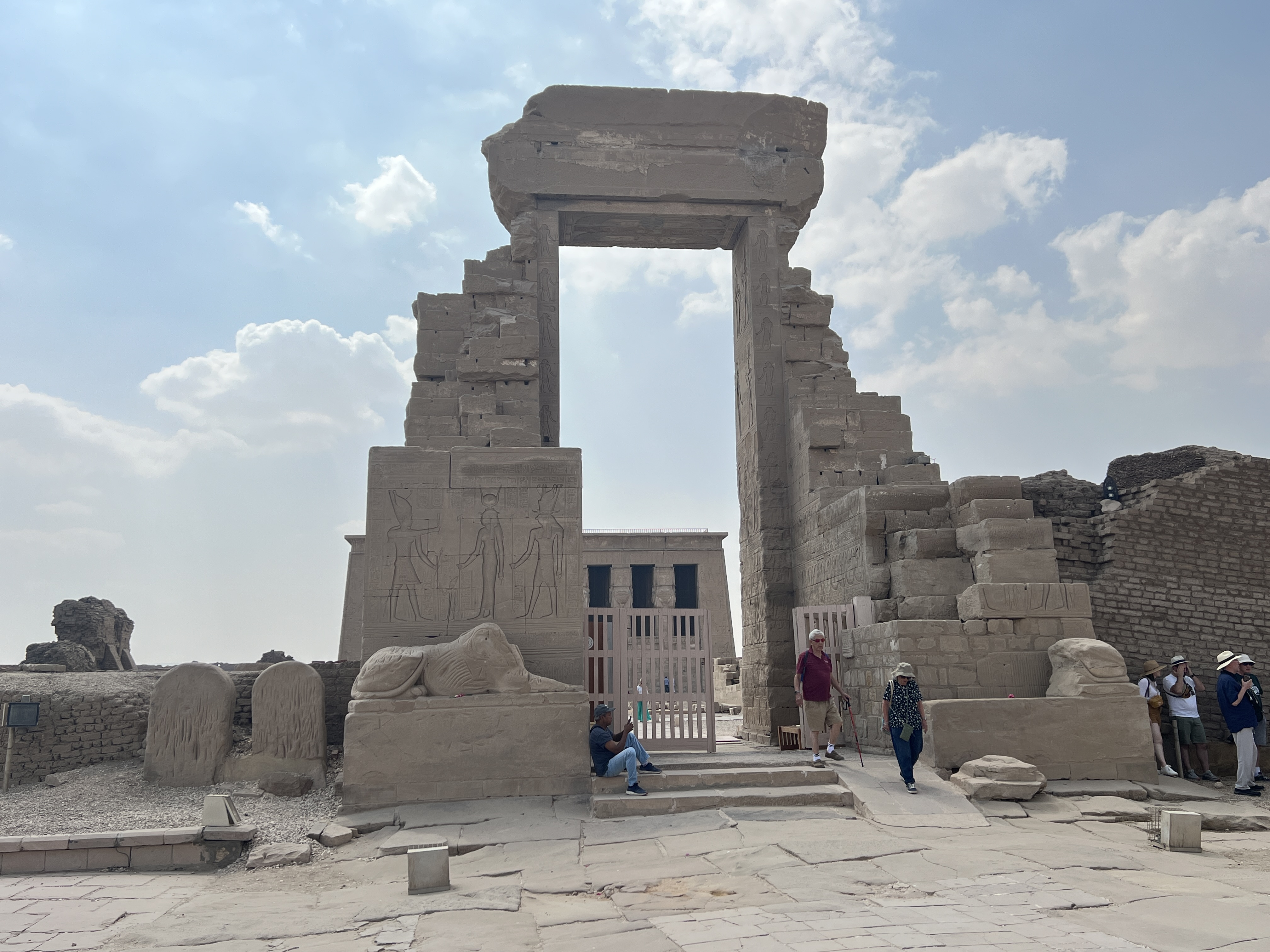
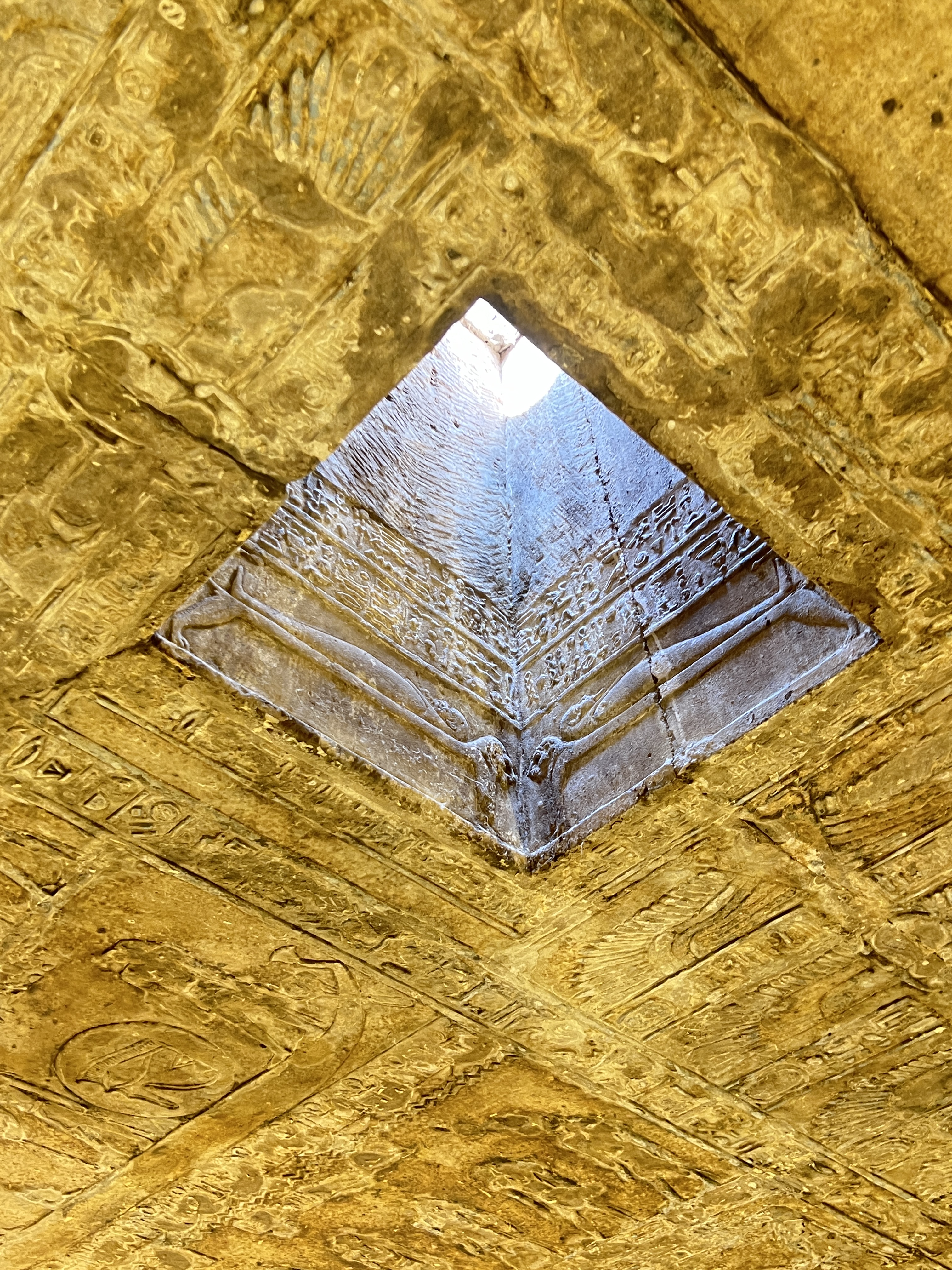
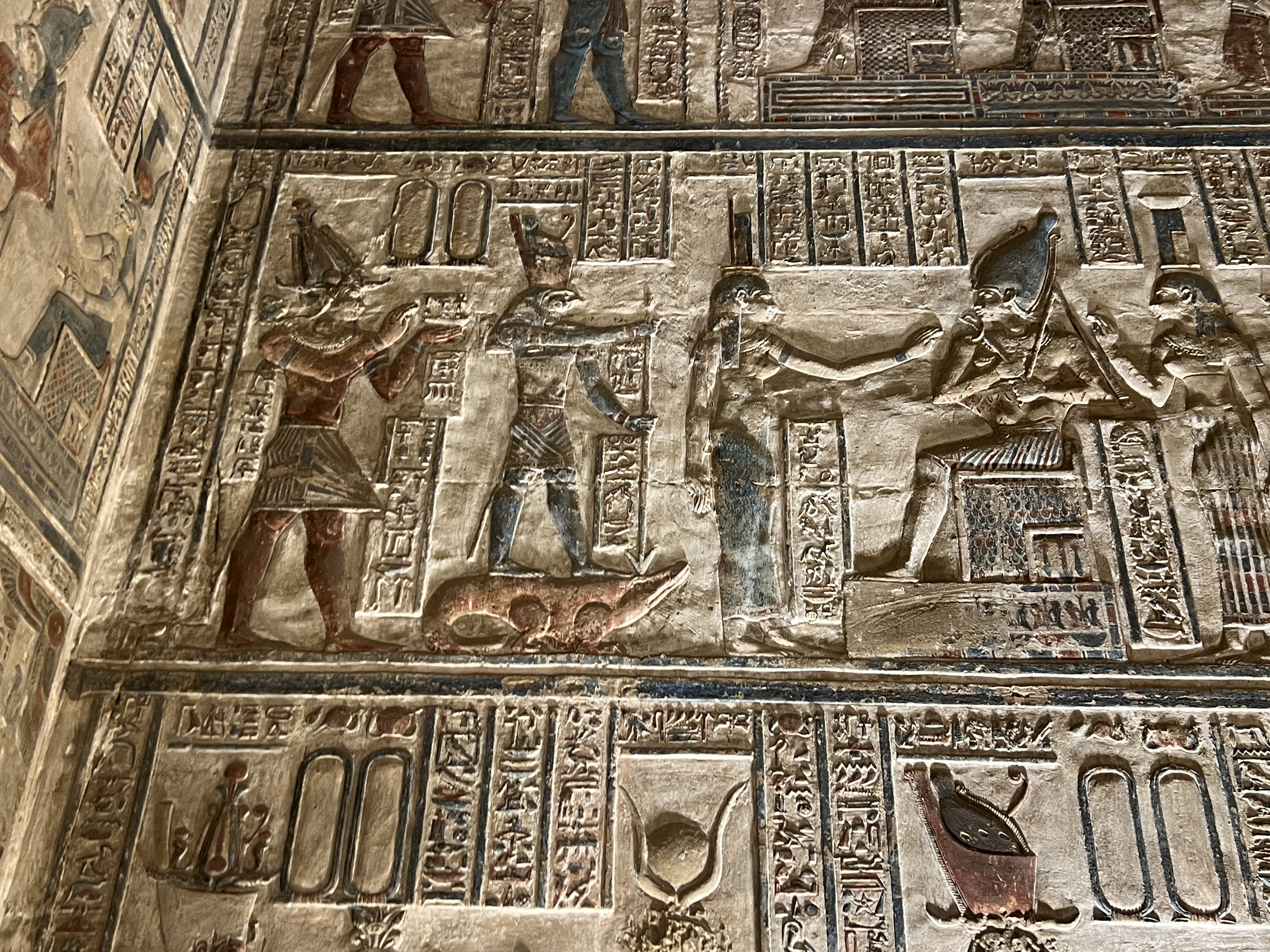
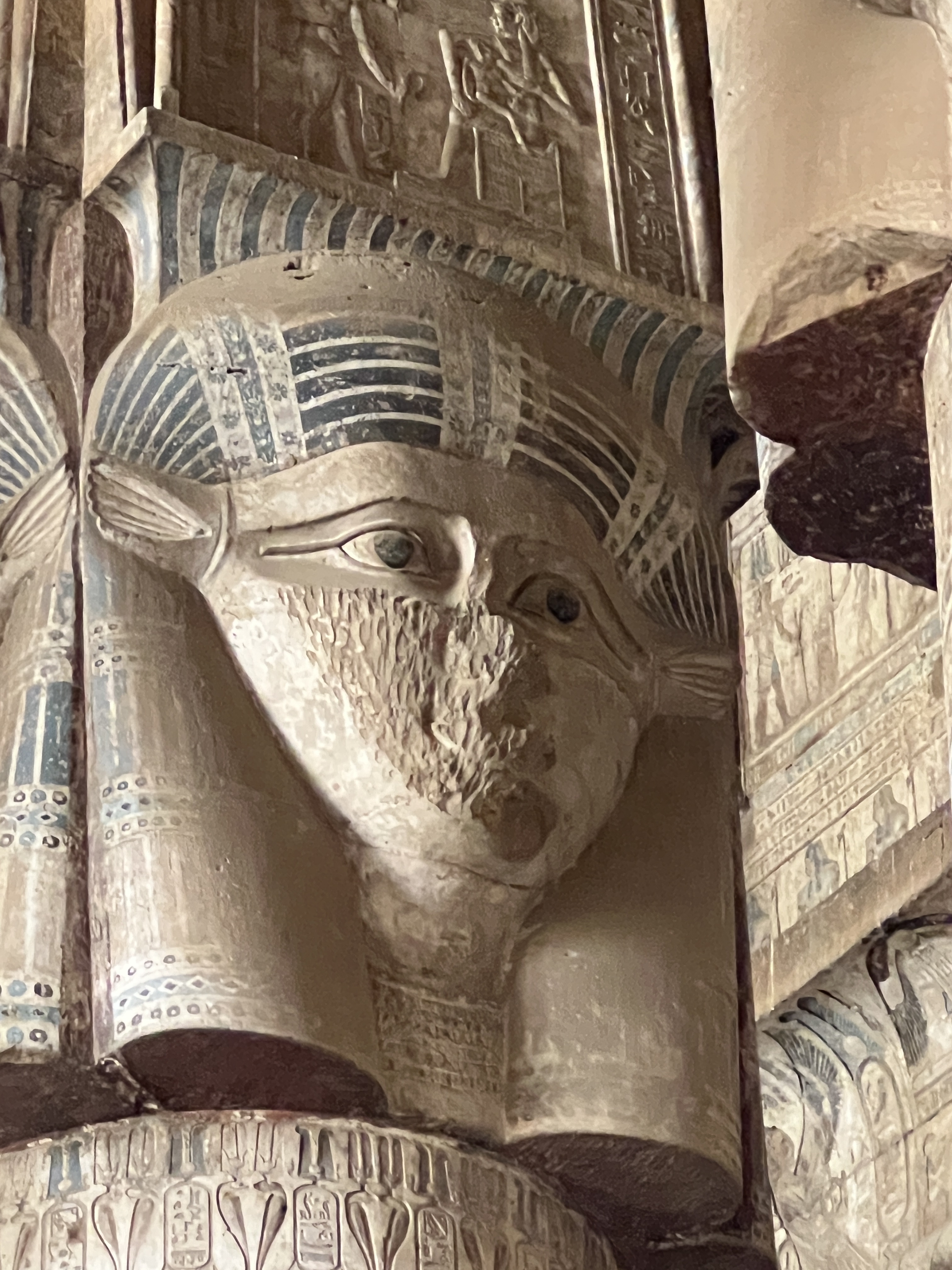
But what is left is still awe inspiring for its size and detail. Massive statues of the pharaohs and queens. Temple walls covered with carvings, paintings and hieroglyphs. Mahamod gave us a spirited commentary, some of which has stuck in the recesses. I wont attempt to regurgitate any of it here!
At Edfu
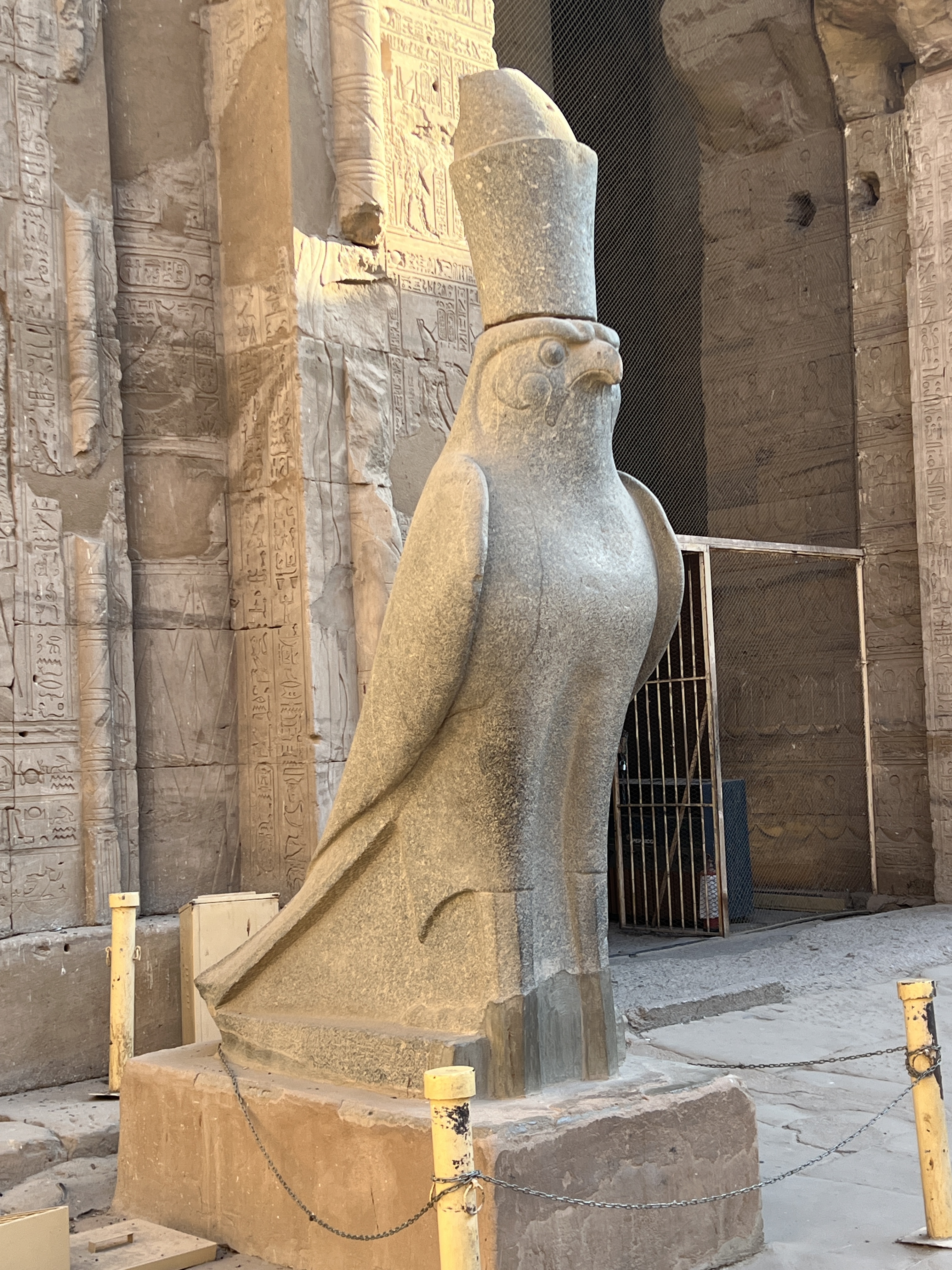
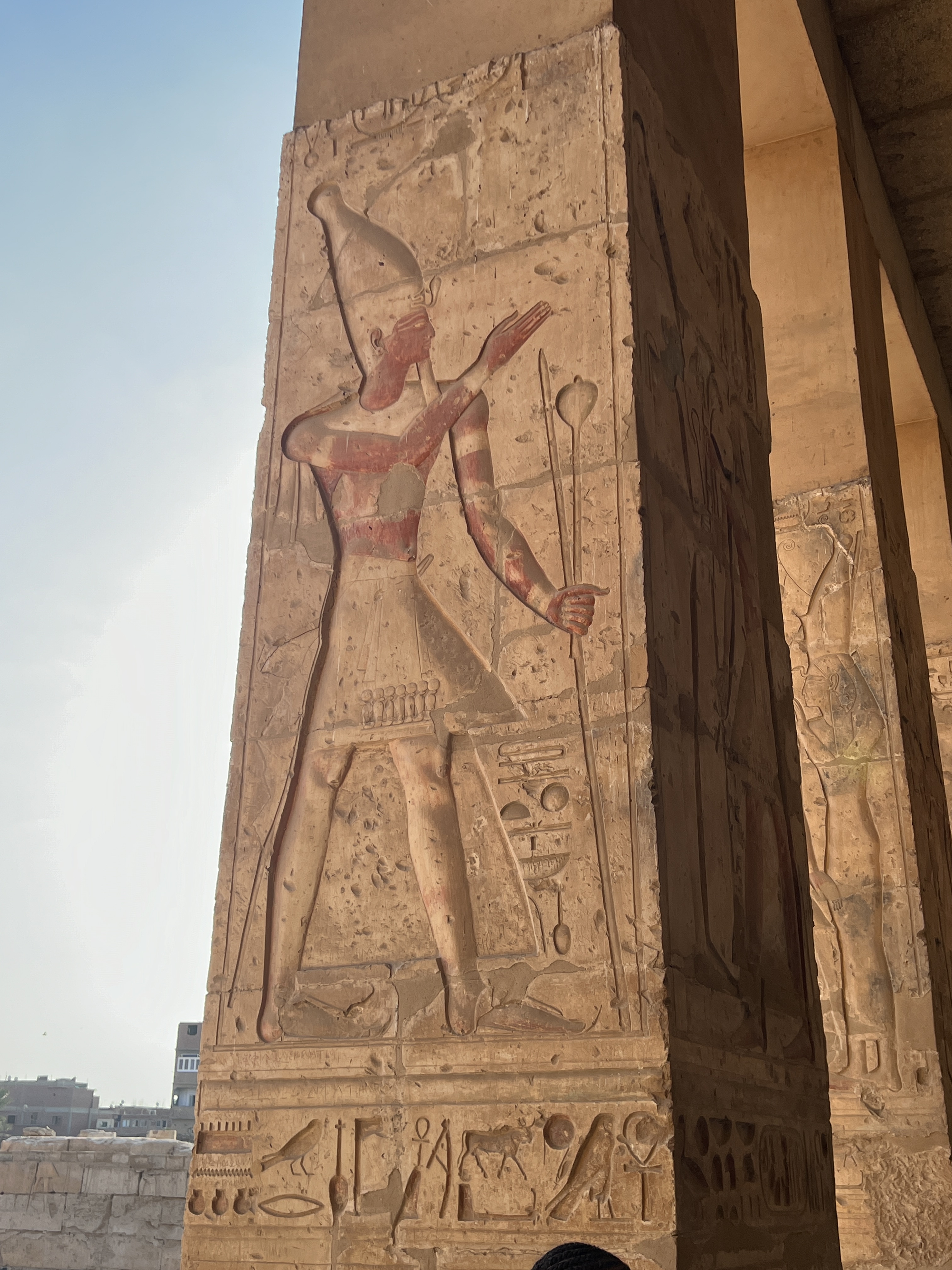
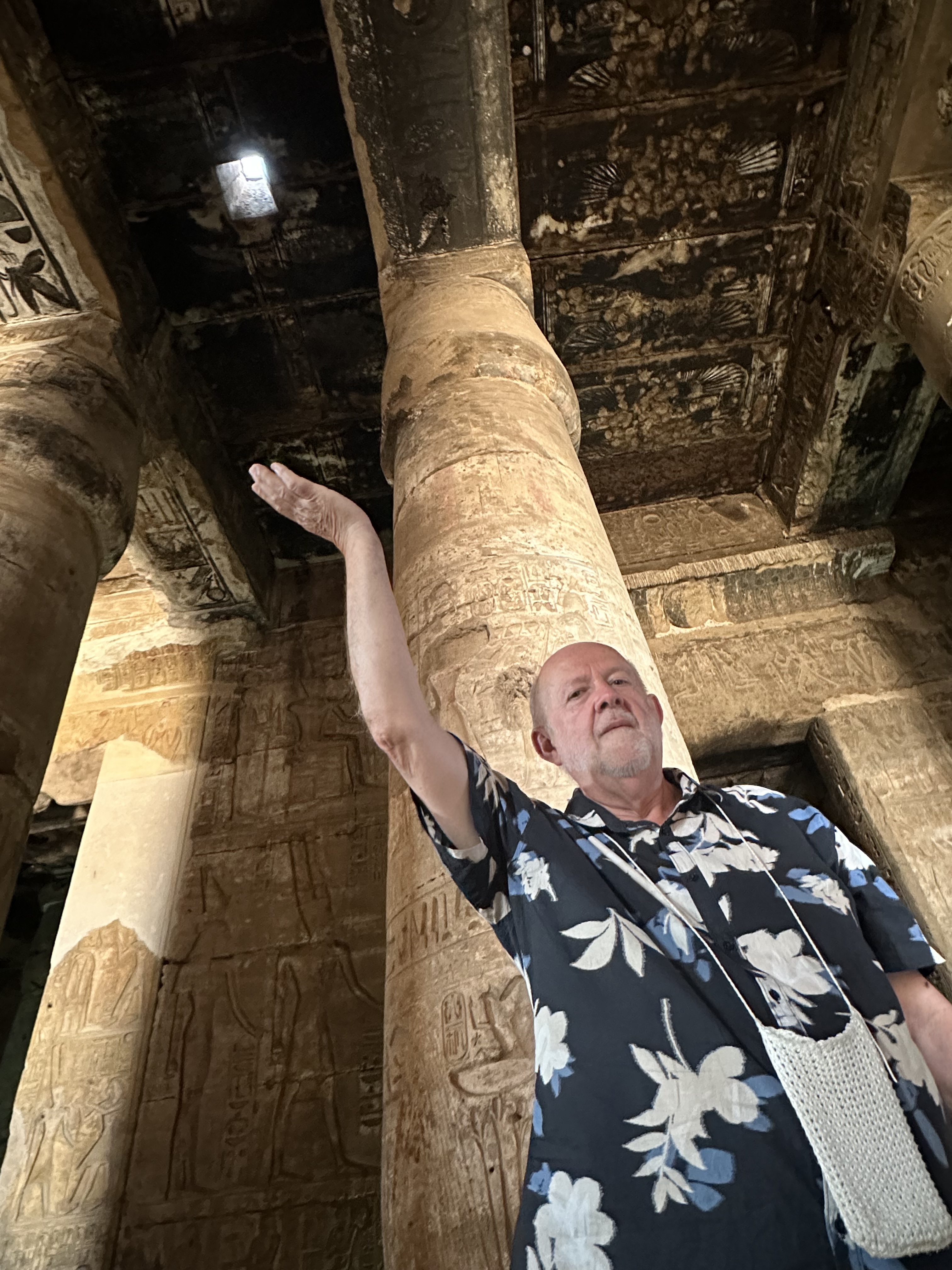
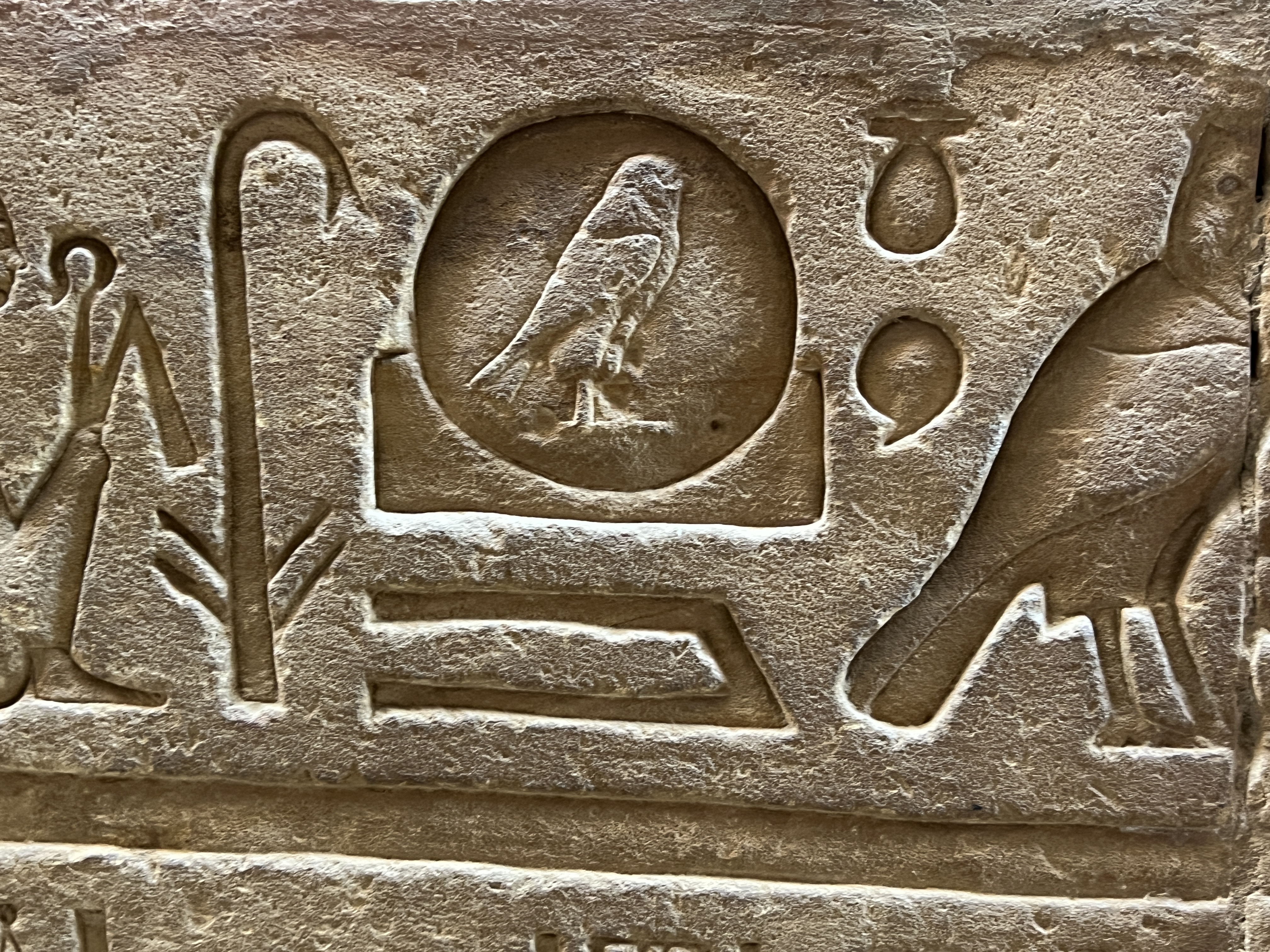
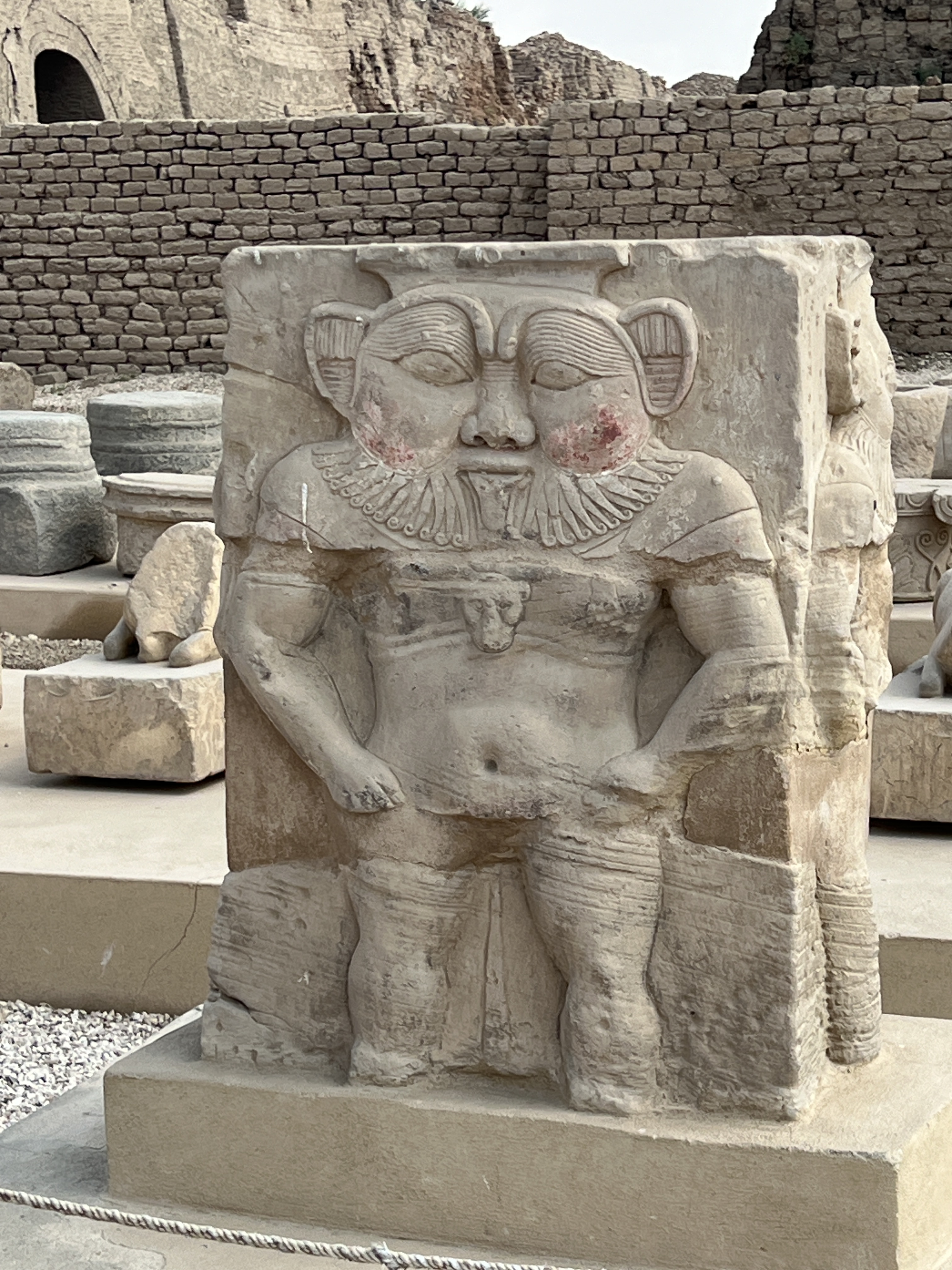
The art and hieroglyphs are in the main documenting and describing the relationship of the kings and queens with the gods. And what the king brings with him during the procession to meet the god. Along with events of the times and seasonal changes.
At Kom Ombo (a night visit)
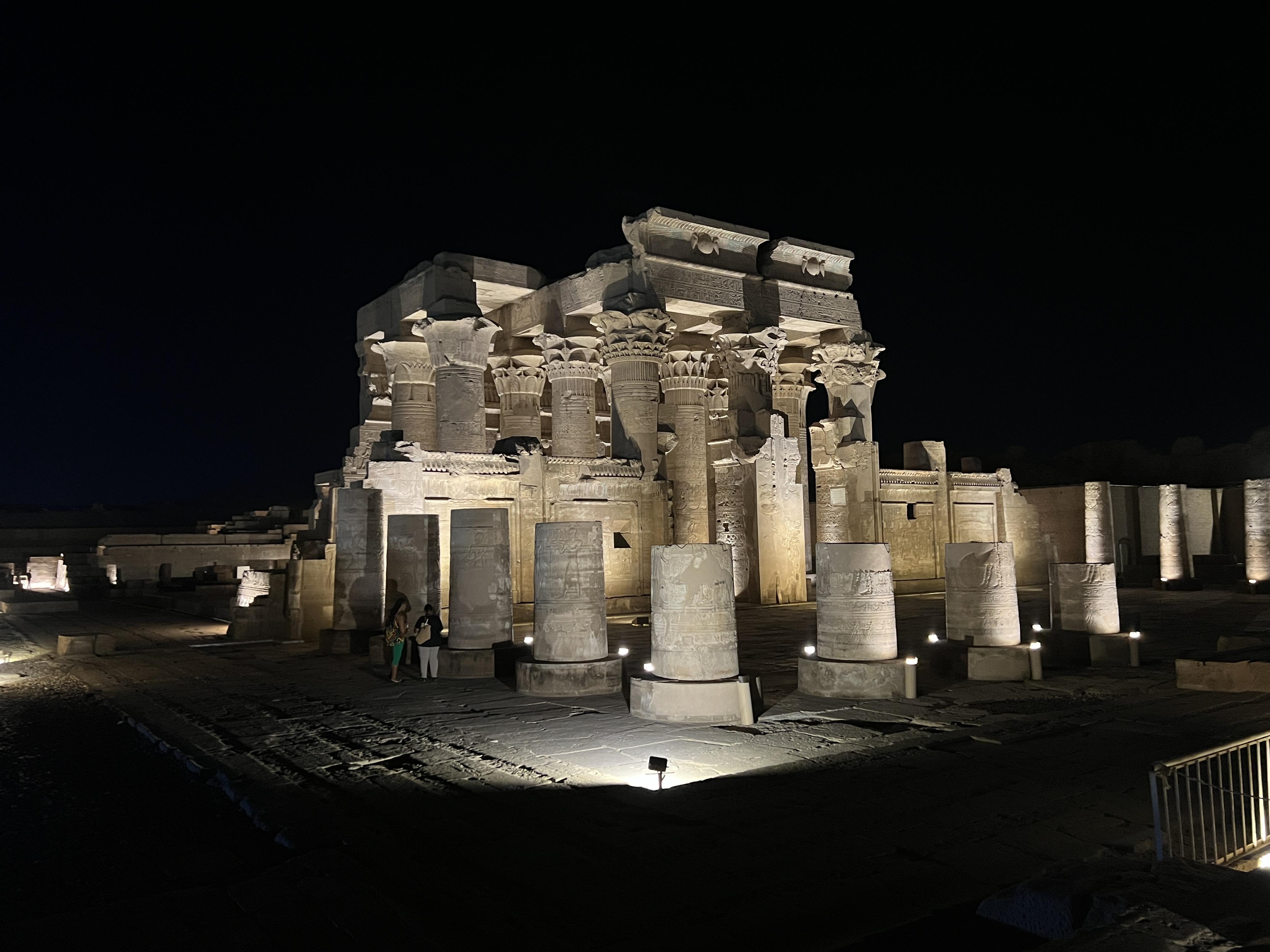
At times it felt a bit like visiting the castles, churches and cathedrals of Britain and Europe. ABC, ‘another bl….dy castle, church etc’, but this time ABT ‘another bl….dy temple’! The point though is the icons of Britain and Europe are at most like 300-800 years old or so, whereas these Egyptian icons are like 3-4,000 years old. Many of them buried under sand for hundreds of years. Quite remarkable.
The tombs in the hills behind Luxor tell a different story. That will be for next time!

Posted on October 24, 2024, in Africa 2024. Bookmark the permalink. Leave a comment.
 Allthegobro
Leave a comment
Comments 0