Rapa Nui
Rapa Nui is the indigenous name for Easter Island, the remotest populated island in the world. It is a volcanic island which rises 3000 metres above the sea floor, the area of its base on the sea floor is 50 times bigger than the area on the surface. It is about 2300 miles from Chile’s coast and 2500 miles east of Tahiti.
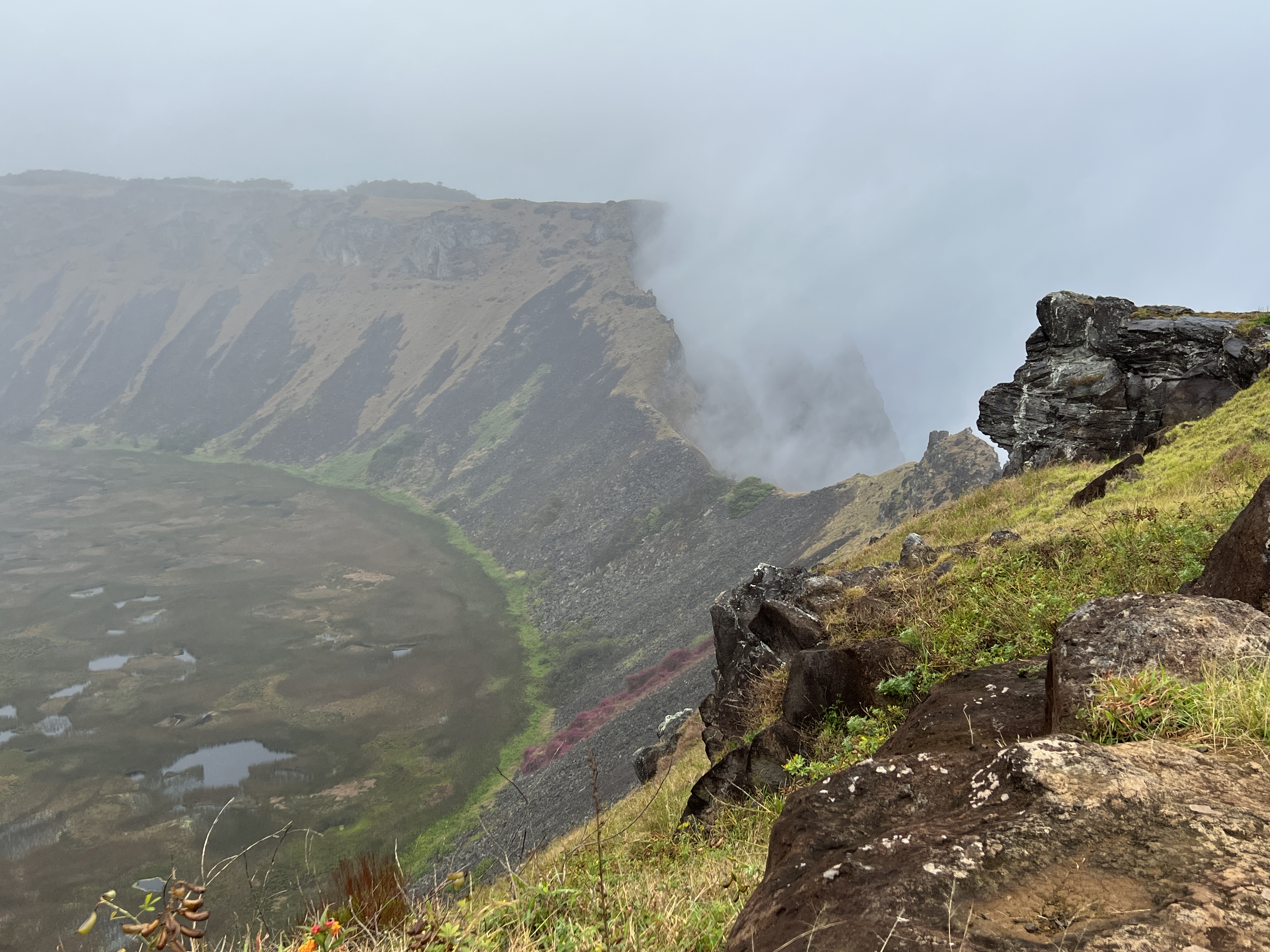
It is a triangular shape with three dormant volcanoes of various ages at each corner. The land mass between the volcanoes was slowly formed following eruptions from the numerous cones, mounds and vents within the triangle. It is quite a dramatic landscape.
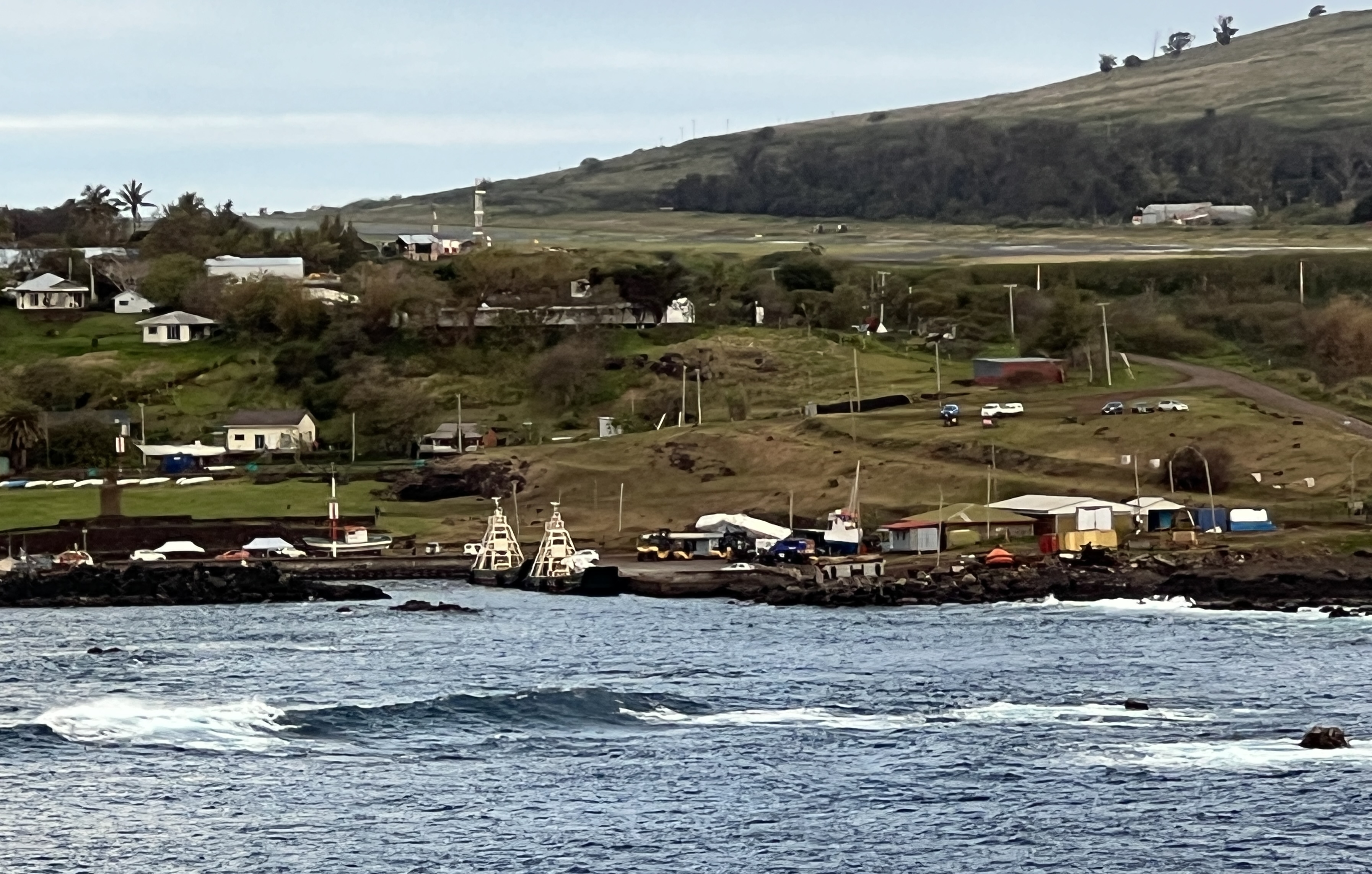
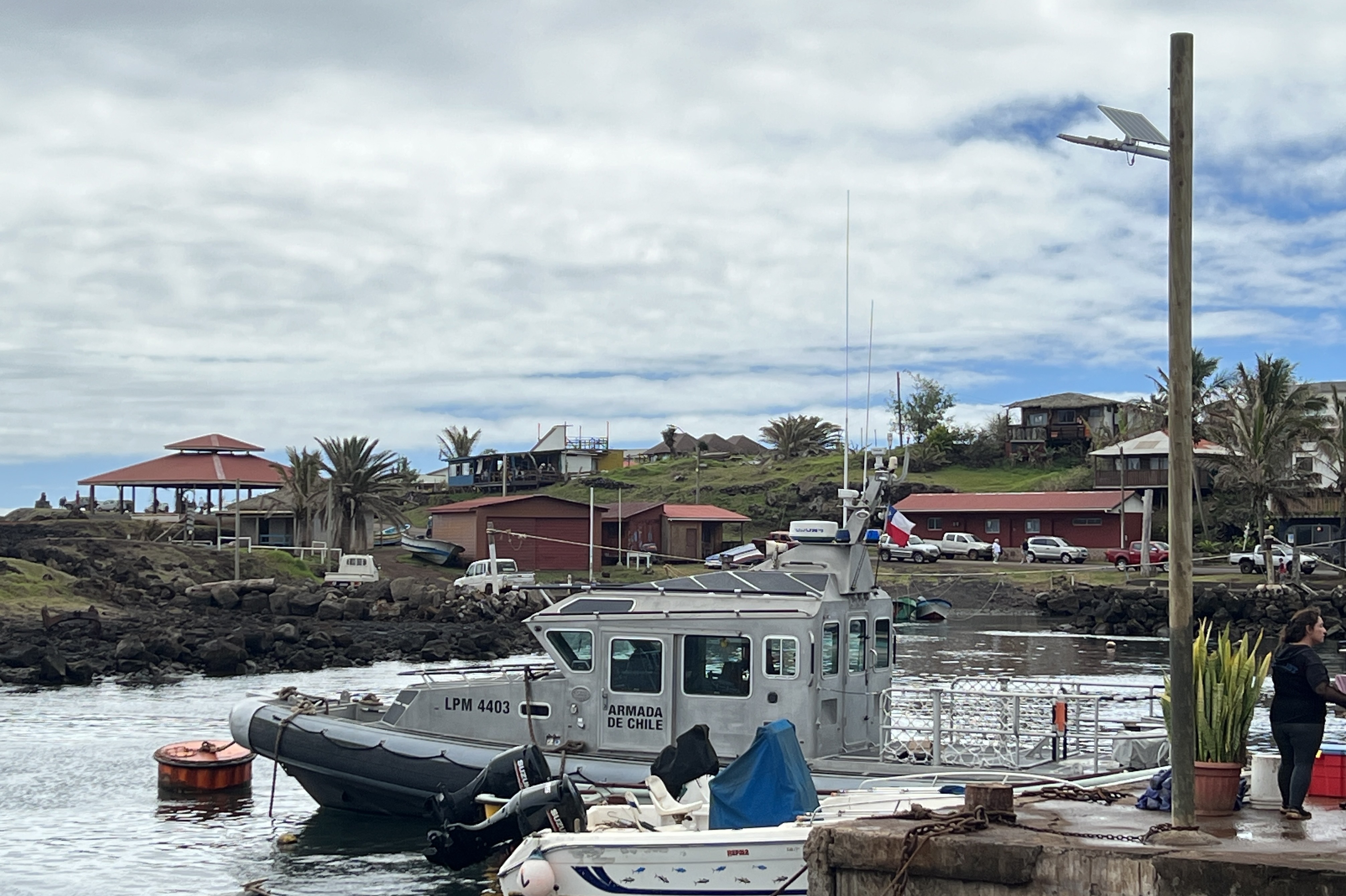
It is a bit of pot luck as to whether we were going to be able to get ashore. The ship has to anchor offshore and there is frequently a swell that prevents tenders from getting ashore. We are in luck though and whilst there is a bit of a swell it is just short of the size that would prevent us getting off. People though who are ‘unstable’ on their feet are discouraged from the attempt and some are just stopped by the crew. The tender boat does jump around a bit beside the pontoon making it a little concerning for Slobro.
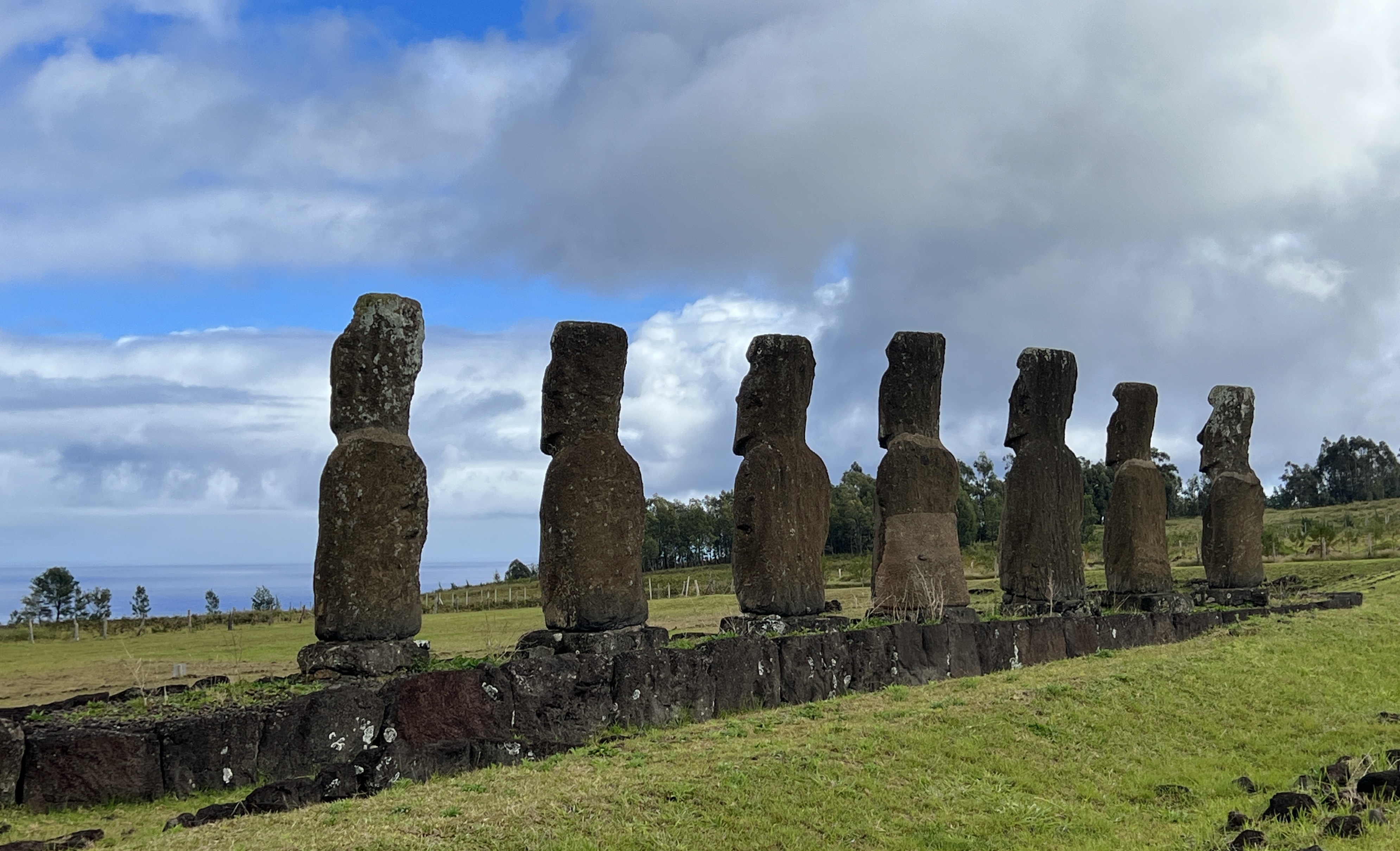
We have stopped here to have a look at the famous massive stone carvings known as Moai (statues). They are quite fascinating and one wonders why and how they were made in the first place. Let alone how they were transported from the quarry where they were carved to where they were erected. Up to 18 kilometres by a society that had no mechanical aids. Then why were they all knocked over, in the main ‘face first’?
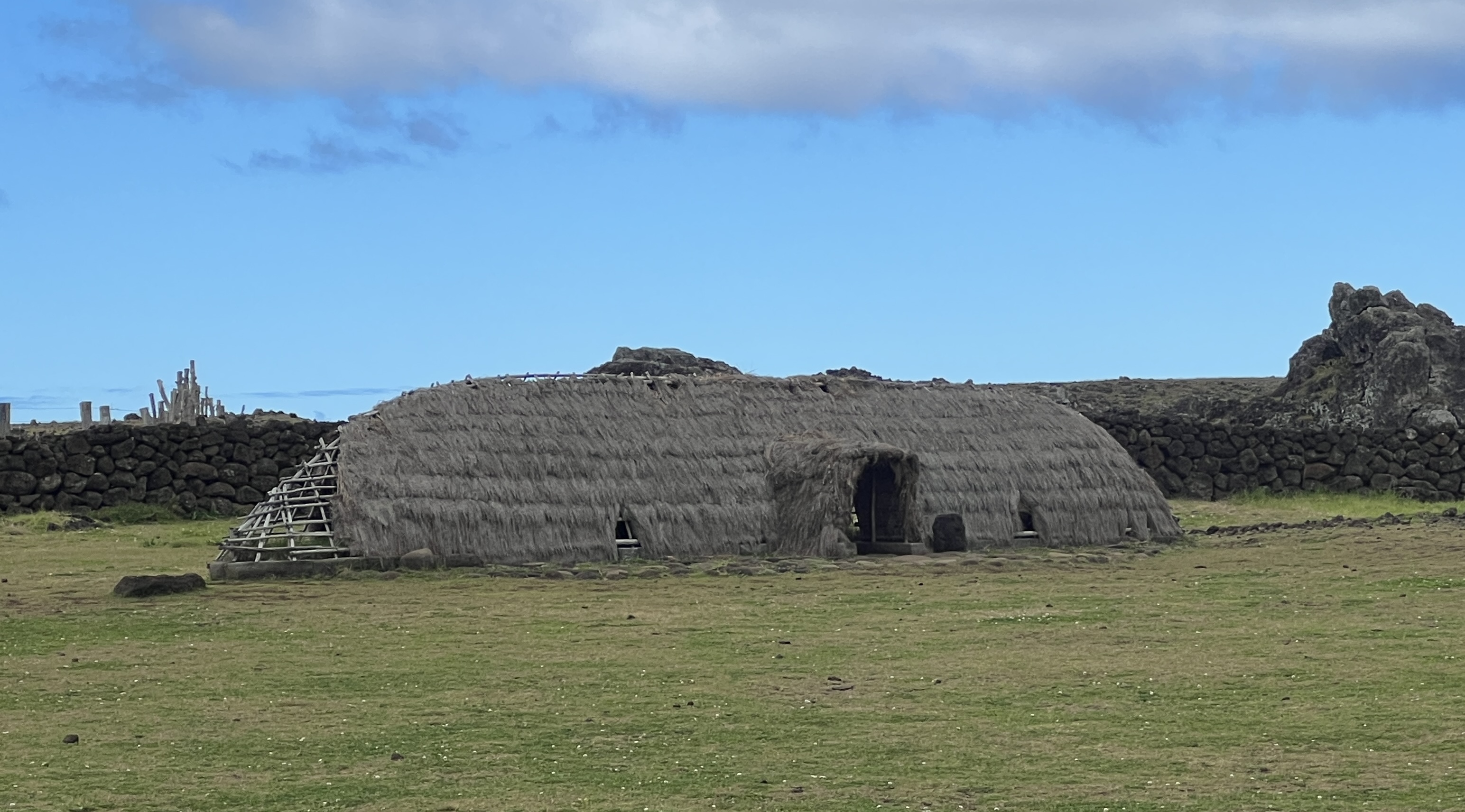
The answers to these questions we were told are far from fully understood. It is believed that the island was settled by Polynesians from other parts of the Pacific around 800-1200 AD. The Moai are thought to be representations of these people’s deified ancestors. They were erected on flat rock platforms where the ancestors were buried.
Apart from one case the Moai all face inland and away from the sea and the people tended to gather in a village in front of the statues, as if the statues are looking over them. In one case seven statues look out over the ocean, it is thought these statues (the seven explorers) are looking towards where they have come from across the sea. Who knows!
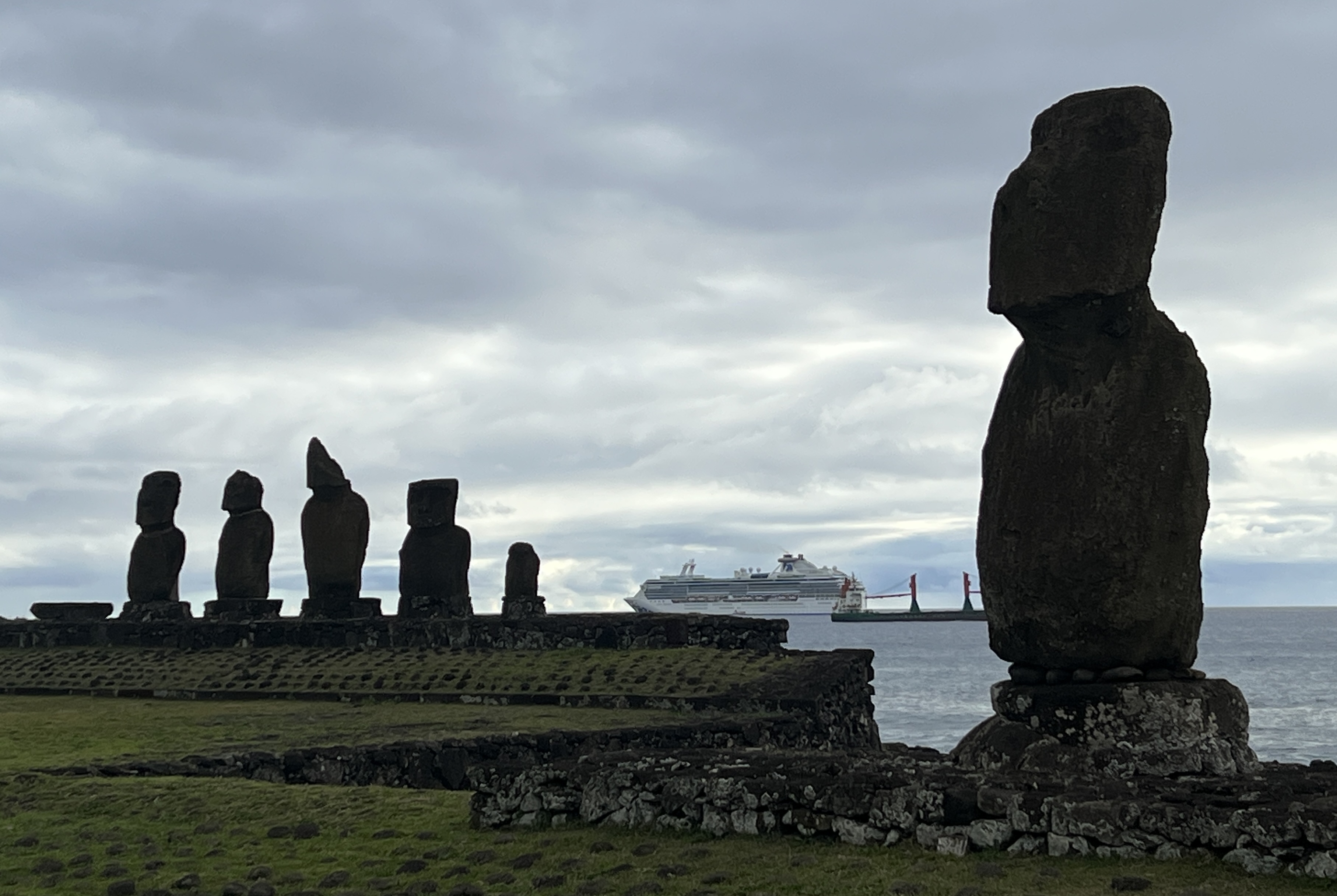
The misty rainy weather we experienced in the morning gave way to sun and blue sky in the afternoon. So we have seen the Island in both moods.
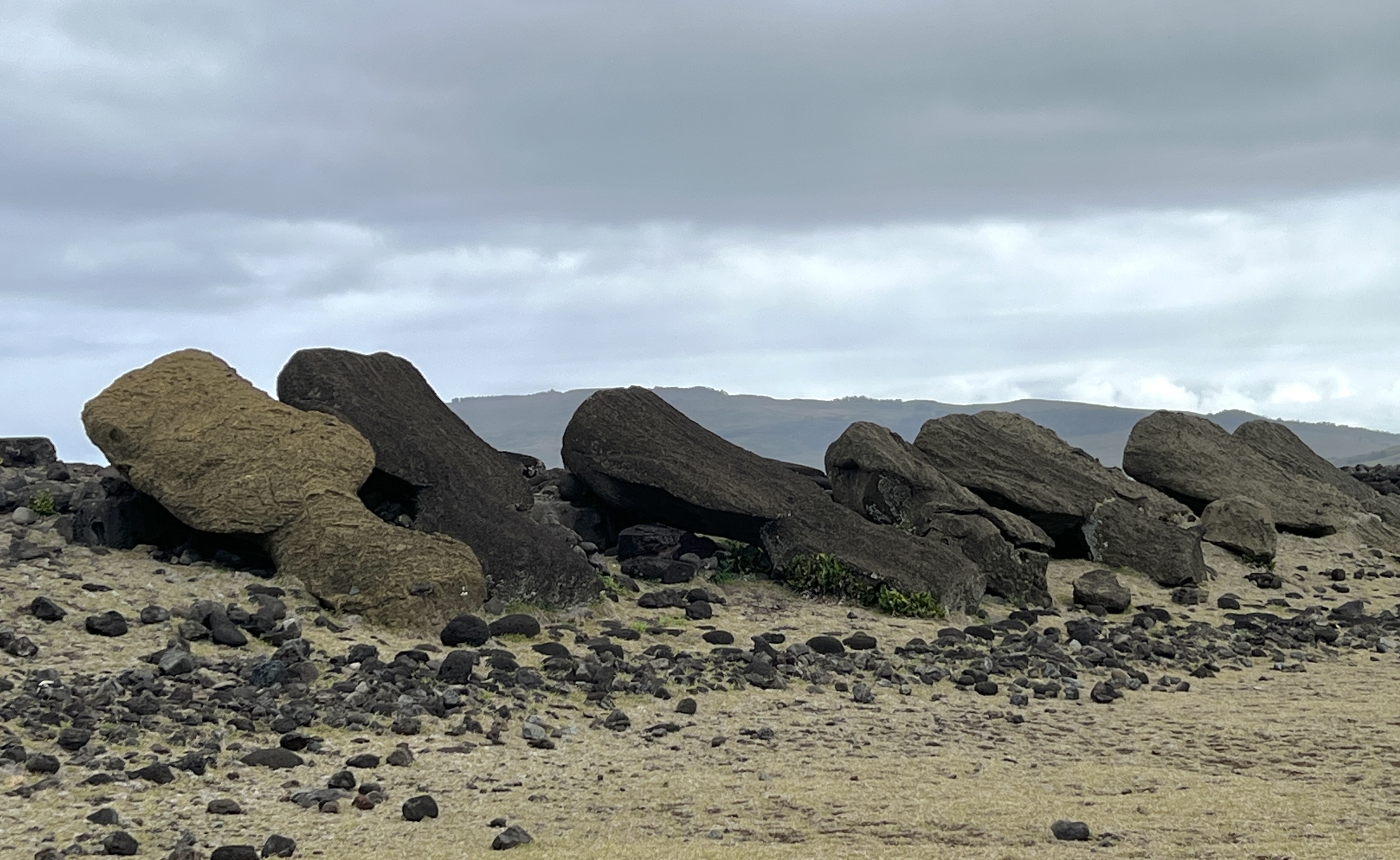
Then around 1500-1850 the carving stopped and the Moai were all knocked down, perhaps part of some change in society structure or beliefs.
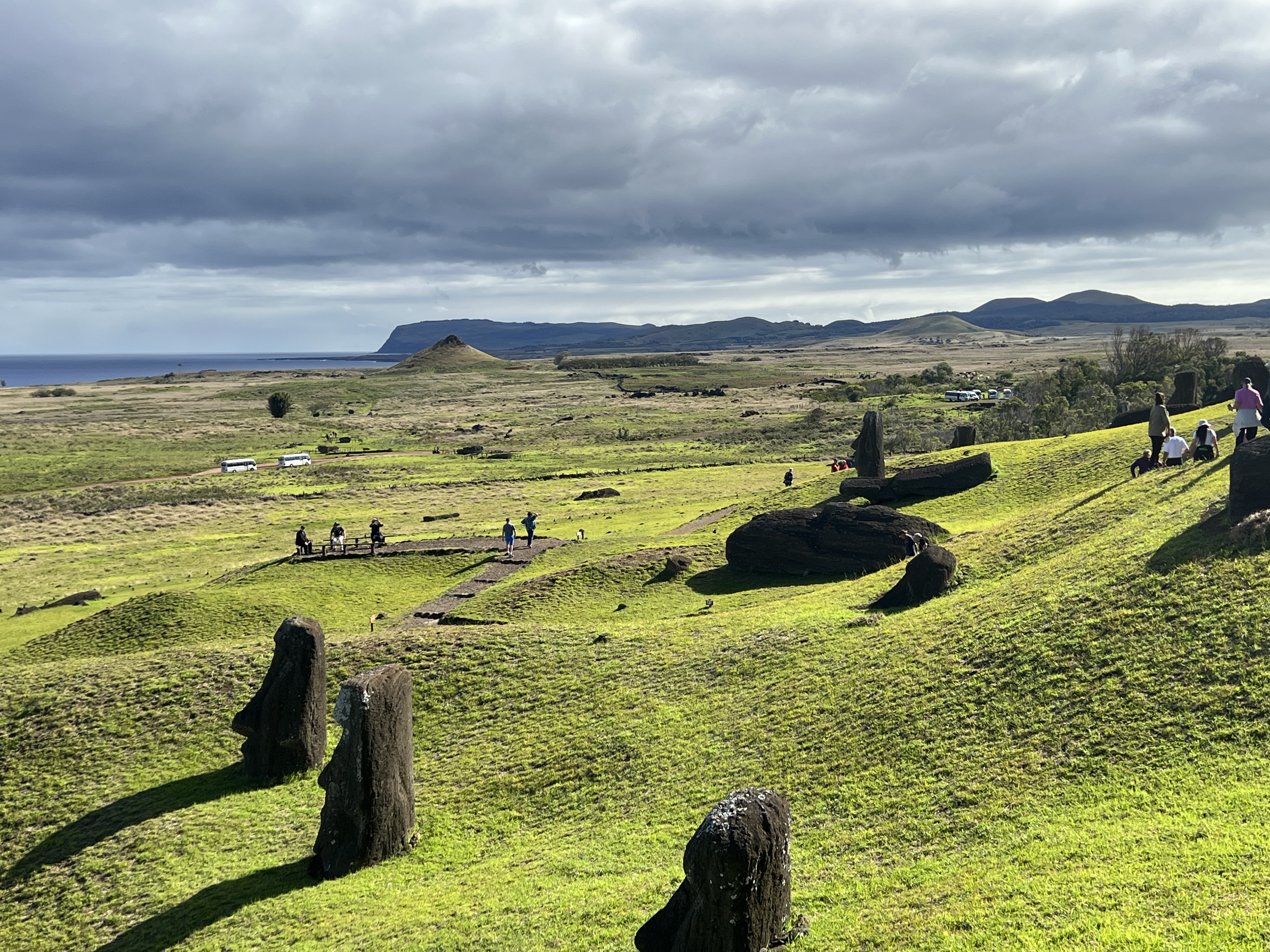
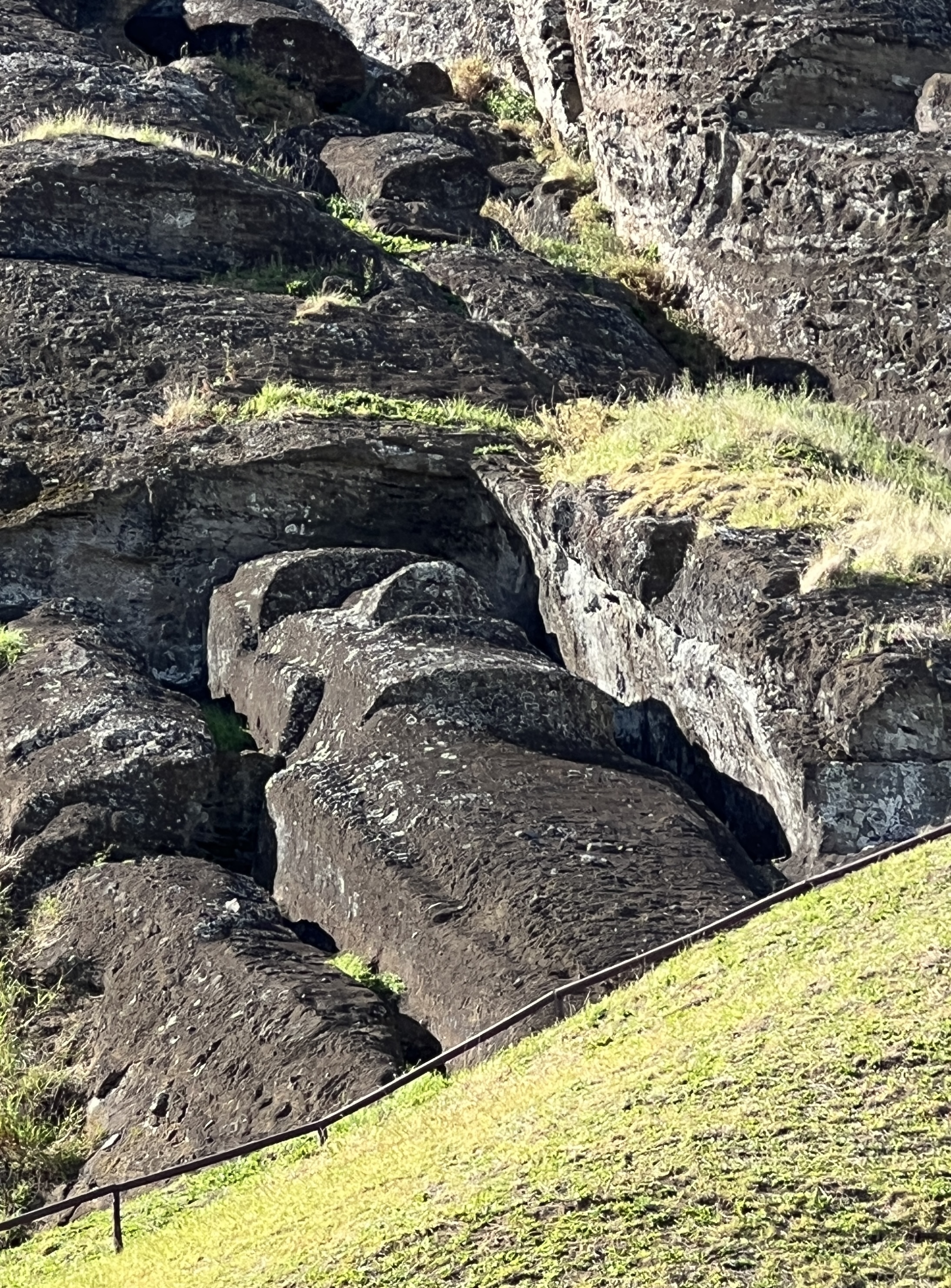
On our walk around the ‘quarry’ area we saw numerous partly finished Moai, including one where the statue was partly carved and still in place in the rock bed. It is all a bit complicated to explain, but once the carving was partially complete and the statue ‘released’ from the bed rock it was slid somehow down the hill into a hole so that it could be stood up.
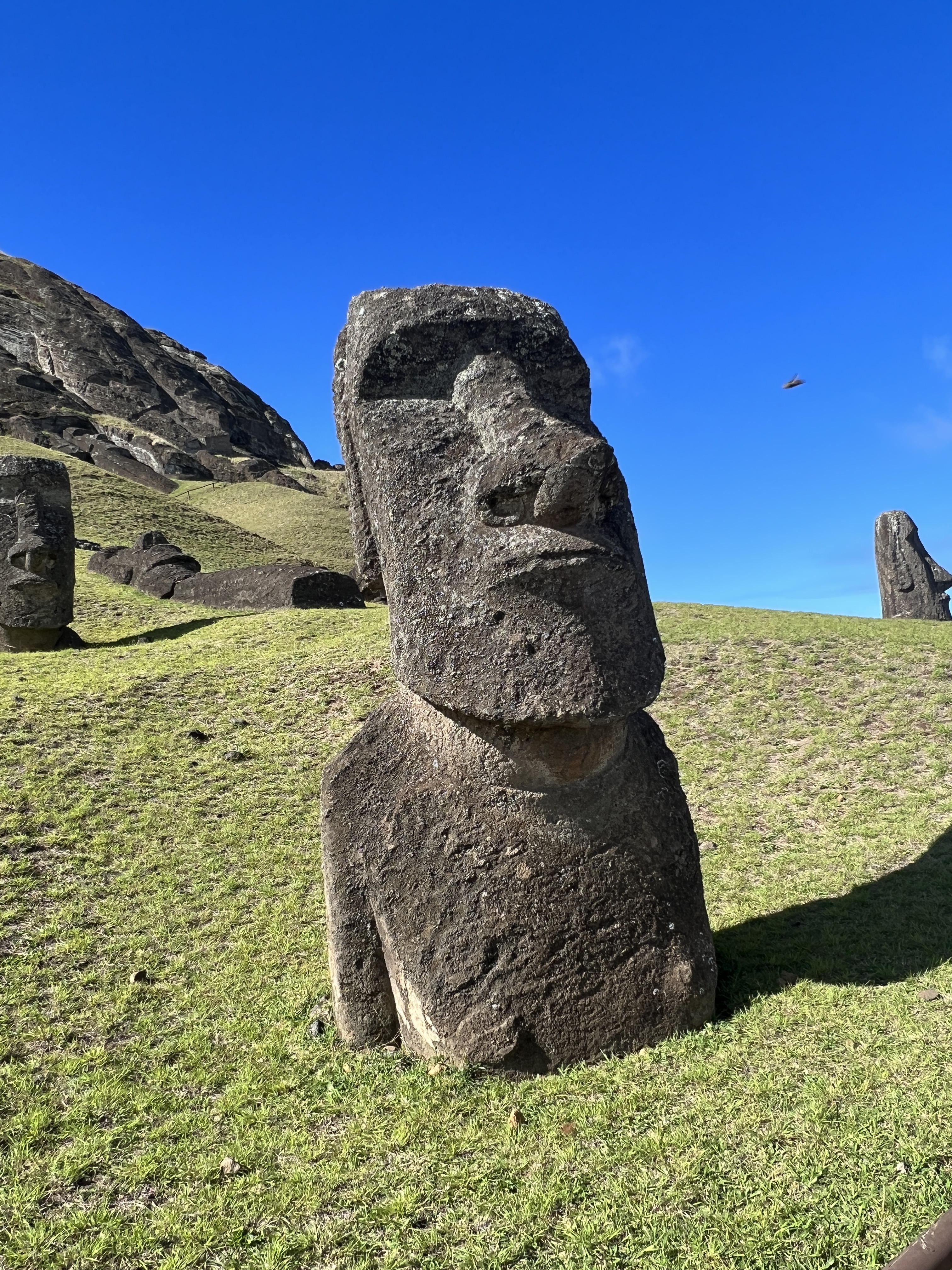
The workers would then complete the finer details before then transporting it somehow to the prescribed destination. We saw many of the statues still in the holes on the side of quarry, the carving aborted, staring out across the landscape. Some were also partially buried with the holes having filled with debris and earth over the years.
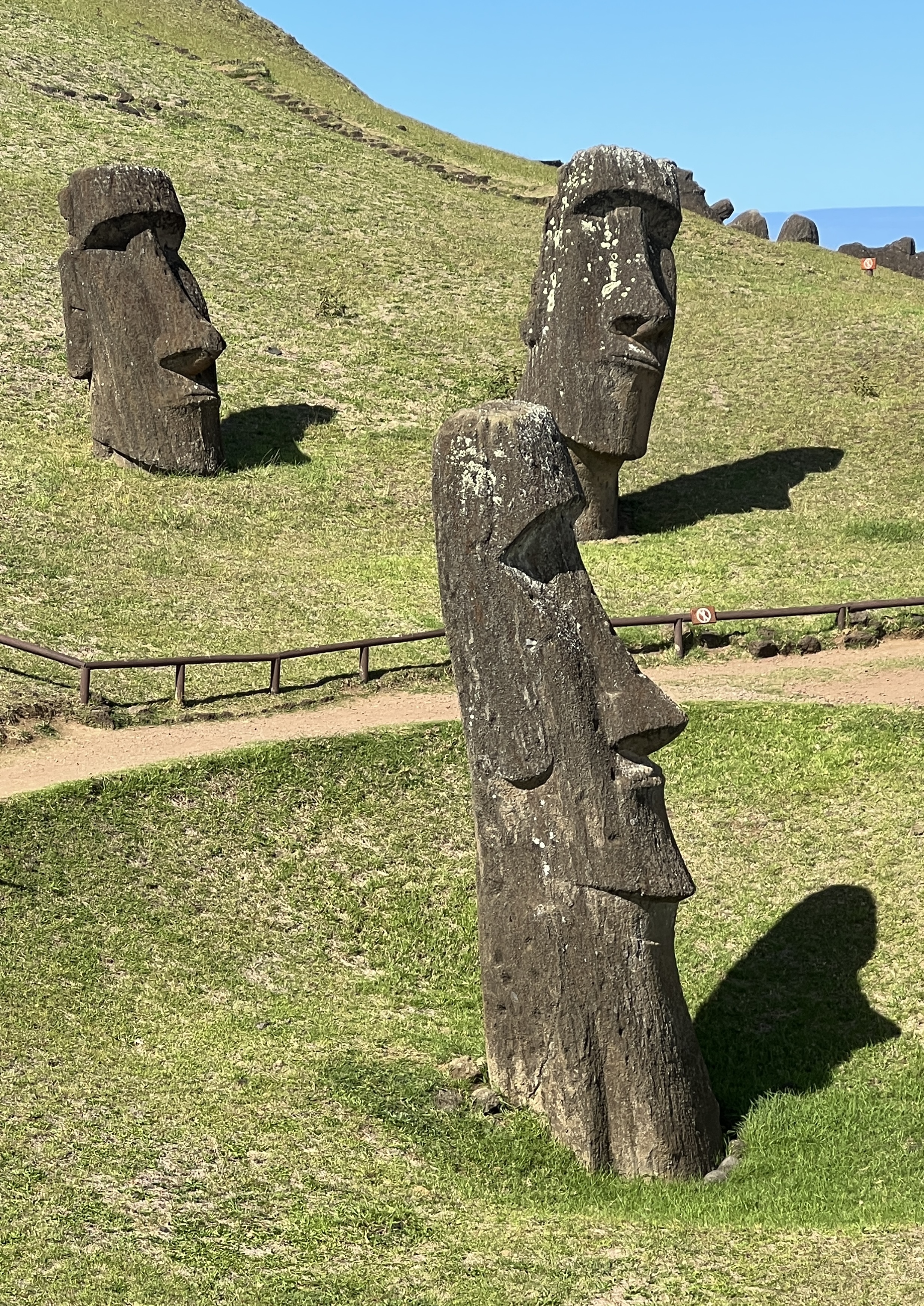
There have been many theories as to how they were moved. From being rolled along on logs to the current favourite of being ‘walked’ much like we ‘walk’ fridges around houses today. Ropes were tied to the Moai’s head and it was then rocked to move it along. There was a team on either side to do this and another at the back to stabilise the movement. This theory follows the traditional belief of the people that the Moai walked themselves through spiritual power.
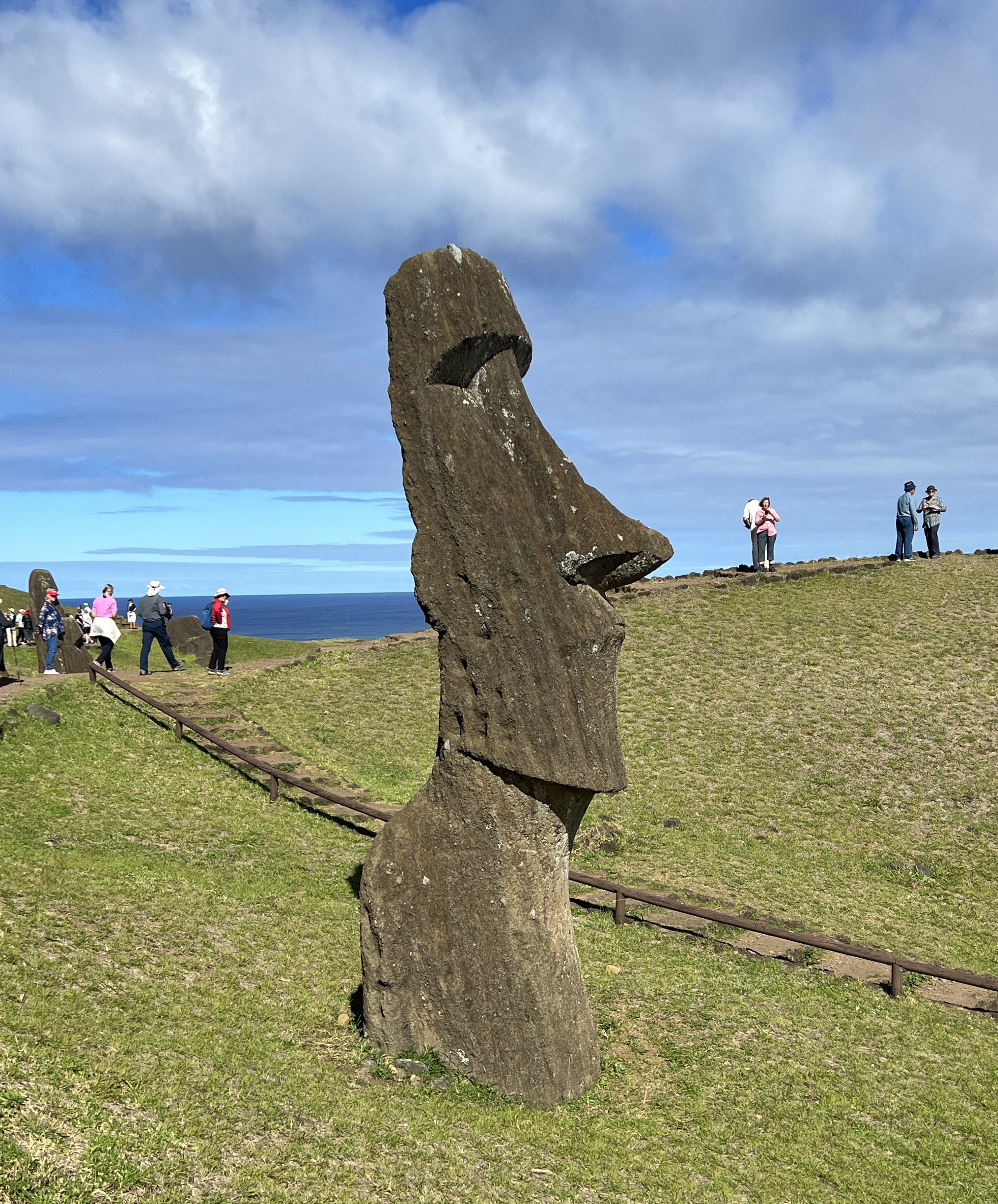
Archaeologists have reerected about 50 of the Moai, there are about 850 remaining in their knocked over positions.
All quite fascinating.
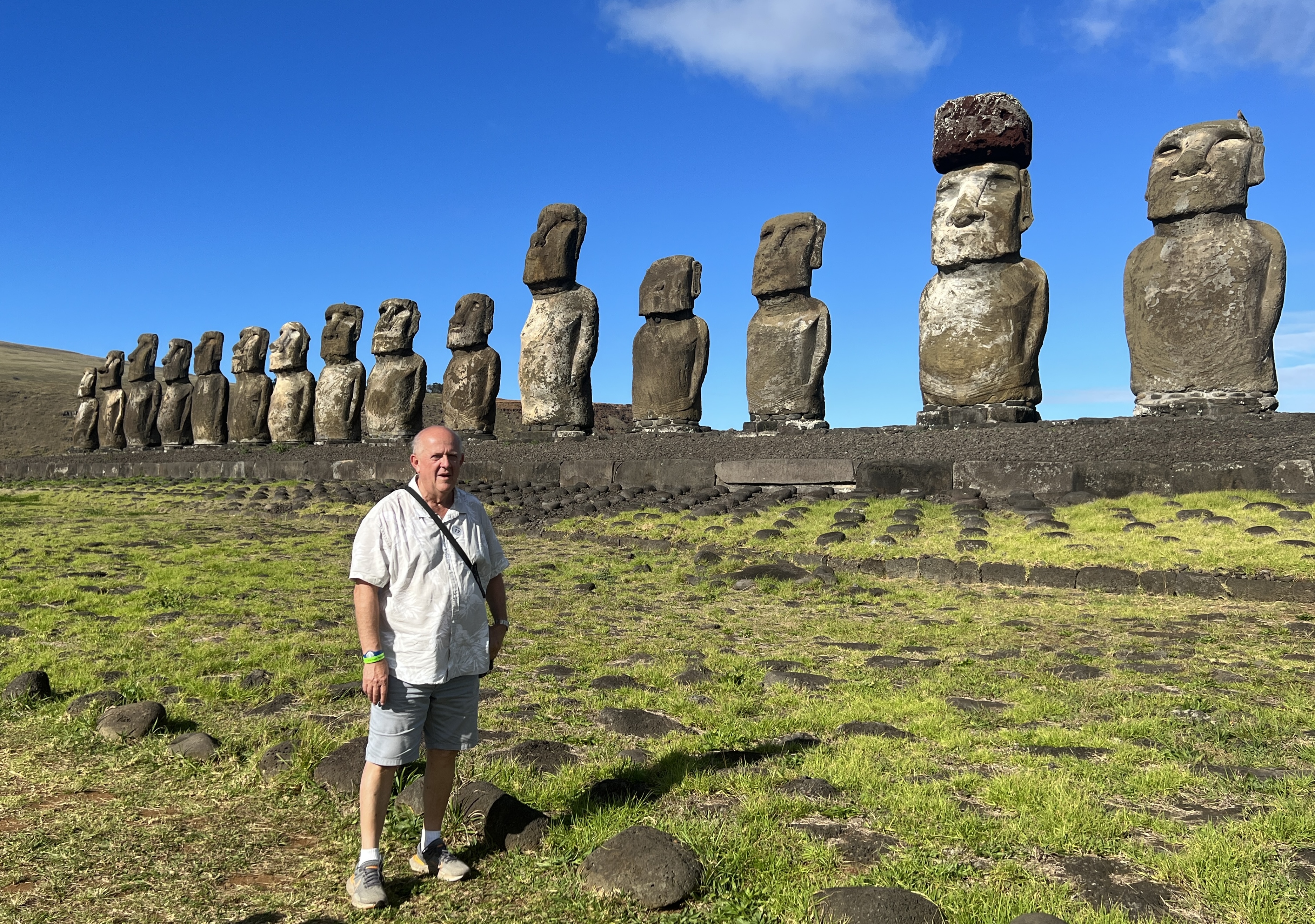
The last group of Moai we see are the famous 15 that we often see in tourist magazines. They sit beside the sea where they have been reerected. Quite a spectacular sight!
Our tour was a bit late back to the pier and we got back onboard about 7.30pm. We are setting a course for Pitcairn Island, it will take a couple of days to get there and already Mutiny on the Bounty tales are being told.

Posted on September 6, 2023, in Around the World. Bookmark the permalink. Leave a comment.
 Allthegobro
Leave a comment
Comments 0